Imagine walking into a bustling Madrid tavern on a warm evening. The sound of laughter fills the air, and a waiter places before you a small plate — golden cubes of potato glistening under a blanket of vibrant red sauce.
That’s Patatas Bravas — simple yet bold, humble yet proud. It’s not just food; it’s an attitude and a celebration of Spain’s fearless approach to flavor.
📖 Explore More: To understand the full spectrum of these flavors, start with our Spanish Cuisine hub.
Table of Contents
Toggle🏛️ Born in Madrid – Where It All Began
Patatas Bravas were born in Madrid, sometime after the Spanish Civil War. During a time when ingredients were scarce, creative tavern owners turned the humble potato into something extraordinary.
The Innovation: They fried potatoes to a perfect crisp and covered them in a spicy sauce unlike anything else in the country.
The Craze: It became so popular that people lined up outside bars just to try this “brave” snack.
The Legacy: Today, it is an essential part of the Ultimate Madrid Travel Guide, where every bar claims to serve the “original” version.
🔥 The Meaning Behind “Bravas”
In Spanish, bravas translates to “fierce” or “brave.” The dish was named not for the potato, but for the sauce — bold, spicy, and unapologetically flavorful. It’s a dish that dares you to take another bite, even as the heat builds on your tongue.
This courage — to turn simplicity into intensity — is the very essence of Spanish cooking.
🌶️ The Legendary Brava Sauce
There are hundreds of variations, but one rule remains: Brava sauce must wake you up. Unlike many mild Spanish dishes, this sauce is designed to be bold.
Typical ingredients that create this magic include:
Smoked Paprika (Pimentón): The smoky heart of Spanish heat.
Garlic & Olive Oil: The essential Mediterranean foundation.
Vinegar or Sherry Wine: Added for a perfect acidic balance.
Regional Twists: In Catalonia or Andalusia, tomato is often added for a touch of sweetness.
In many modern bars, it’s served with a swirl of creamy allioli (garlic mayonnaise), creating the ultimate harmony of heat and creaminess.
🥔 The Art of the Potato
Making good Patatas Bravas is a true art form. These are not simple fries; they are thick, uneven chunks—crispy on the outside and pillow-soft inside.
The Secret to Perfection:
The Double Fry: First at a low temperature to cook the inside, then at a high heat to achieve that golden crunch.
Quality Oil: Always use Extra Virgin Olive Oil for an authentic taste.
The Salt Rule: Salt only after frying to maintain the maximum crunch.
💡 Local Secret: Some Spanish grandmothers oven-roast the potatoes before the final fry, creating a “crunch that sings.”
🗺️ From Madrid to the Coast – Regional Flavors
As Patatas Bravas spread across Spain, every region added its own personality, turning the dish into a culinary map of the country:
Madrid: The purest form – crispy potatoes with fiery red pimentón sauce.
Catalonia: Often served with a “duo” of sauces: spicy brava and creamy allioli.
Canary Islands: While they love bravas, their true potato soul belongs to the salty Papas Arrugadas, served with mojo sauce.
Andalusia: A richer, tomato-based version that leans towards sweetness.
🍻 Tapas, Friendship, and the Spanish Way of Life
In Spain, you never eat Patatas Bravas alone. Tapas culture is built on sharing, talking, and living in the moment. A table full of friends, plates scattered with bites, and stories flowing as fast as the wine—this is where “bravas” truly belong.
Whether you are enjoying savory tapas or looking for a sweet finish like the Mallorcan Ensaimada, the Spanish way of life is always about the joy of the table.
👨🍳 Recipe: Create Your Own “Bravas Moment”
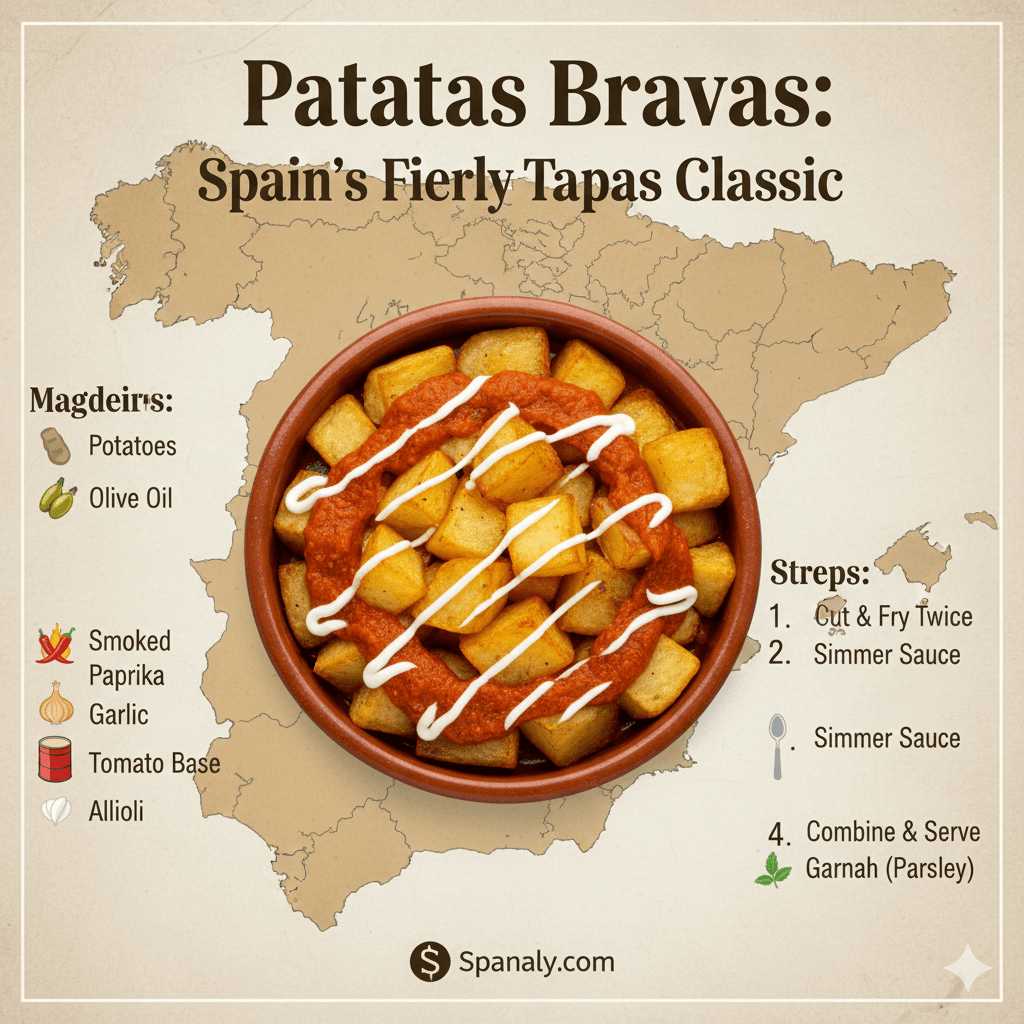
Bringing the taste of Madrid to your kitchen is easier than you think. The secret lies in the temperature and the smokiness of the sauce.
🛒 Ingredients
The Base: 3–4 medium potatoes, peeled and cut into bite-sized cubes.
Frying: High-quality Olive oil (enough for deep frying).
The Sauce: 1 garlic clove (minced), 1 tbsp flour, 1 tsp smoked paprika, ½ cup tomato paste, and ½ cup broth (or water).
The Finish: 1 tbsp white wine vinegar, salt, cayenne pepper, and a dollop of creamy allioli.
👨🍳 Method: The Step-by-Step Art
The Double Fry Technique: This is crucial! Fry potatoes first at 160°C until soft, let them rest, then fry again at 190°C until golden and extra crispy.
Craft the Sauce: Sauté garlic in oil, stir in the paprika and flour to create a base, then slowly add the tomato paste and broth.
Simmer & Balance: Add the vinegar and spices, simmering until the sauce reaches a thick, velvety consistency.
The Plating: Drizzle the fiery sauce over the hot potatoes, add the allioli, and optionally sprinkle fresh parsley for a vibrant finish.
📍 Where to Eat the Best Patatas Bravas in Spain
If you are traveling through Spain, these legendary spots are considered “sacred” by locals and tapas lovers alike:
Docamar (Madrid): Iconic, crisp, and fiery—the undisputed “original” legend of the capital.
Bar Tomás (Barcelona): A must-visit for those who love the perfect balance of spicy sauce and creamy allioli.
La Bomba Bistrot (Barcelona): Offers a gourmet twist with smoky elegance and premium ingredients.
Casa Julio (Granada): Experience authentic vibes where the bravas are served in a lively, traditional setting.
🍰 Sweet Conclusion: After enjoying the spicy heat of bravas, many travelers love to cool down with a slice of Tarta de Santiago, Galicia’s famous almond cake.
💡 Fun Fact: The Mystery of the Brave Potato
Did you know that despite being one of Spain’s simplest dishes, the exact origin of Patatas Bravas remains a mystery?
The 1950s Spark: Some say it first appeared in Madrid’s taverns in the 1950s, providing a rare “spicy thrill” in traditional Spanish cooking.
Regional Pride: Today, every city claims its version is the best. In Madrid, it’s all about the red pimentón; in Barcelona, the garlic allioli takes center stage. Every bite tells a local story!
🥔 Visitor FAQs – Mastering Patatas Bravas
🌶️ Is Patatas Bravas actually spicy?
By Spanish standards, yes. While most Spanish food is mild, "Bravas" sauce is designed to have a kick. In Madrid, it's spicier due to the pimentón, while in Barcelona, the addition of creamy allioli often mellows the heat.
🥘 Is the sauce made with tomatoes?
It depends on the region! In traditional Madrid style, there are no tomatoes; the red color comes purely from smoked paprika (pimentón). In Catalonia and Andalusia, however, tomato paste is commonly added for sweetness.
🥔 What is the secret to the perfect crunch?
The secret lies in using starchy potatoes like Kennebec or Agria and the "double-fry" method. This ensures the outside is golden and crispy while the inside remains light, fluffy, and creamy.
🥗 Can they be made vegan or gluten-free?
Yes! For a vegan version, use vegetable broth and egg-free allioli. For gluten-free, the flour in the sauce can be replaced with cornstarch (Maizena) as a thickener without losing the authentic texture.
🍴 How should I order them in a Spanish bar?
You can order a "Ración" (full plate) or a "Media Ración" (half plate). Simply say: "Una ración de bravas, por favor." It’s the ultimate social dish designed for sharing with friends over a cold drink.
Created by Spanaly.com
✨ More Than Tapas, It’s an Emotion
Patatas Bravas are Spain in a dish: passionate, bold, and endlessly sociable. They remind us that great food doesn’t need complexity—it needs heart. Every bite is a spark of history, and every plate is a reason to gather friends around the table.
Next time you visit Spain, don’t just rush to see the monuments—find a local bar, order a plate of bravas, and let the country’s spirit unfold in every flavorful bite.