
🧀 Spain’s cheese heritage is one of the richest in Europe—rooted in ancient traditions, shaped by dramatic landscapes, and celebrated in local cuisine from Galicia to the Balearic Islands. Each region has its own identity, livestock breeds, climate, and culinary philosophy, giving Spanish cheese a depth and variety unlike anywhere else.
This guide takes you on a regional journey through Spain’s most iconic cheeses—exploring flavor profiles, cultural origins, pairing ideas, textures, and essential gourmet tips.
Whether you’re planning a culinary trip or simply expanding your cheese board at home, this is the ultimate introduction to Spain’s regional cheeses.
Table of Contents
Toggle🇪🇸 🌄 What Makes Spanish Cheeses Unique?
Spanish cheeses reflect centuries of craftsmanship, local pride, and distinctive environments. Several elements make them truly special :
✔ Diverse Milk Sources
Sheep (Manchega, Latxa), goat (Murciana-Granadina), and cow (Frisona, Menorquina).
✔ Geographic Influence
Cool northern mountains → sharp & smoky
Dry central plains → firm, nutty
Coastal & island climates → buttery, aromatic
✔ Ancient Aging Techniques
Cave aging 🕳️
Olive oil preservation 🫒
Natural smoking 🌫️
Wine-washed rinds 🍷
This results in cheeses with extraordinary character—mild and creamy, bold and spicy, or deeply smoky and earthy.
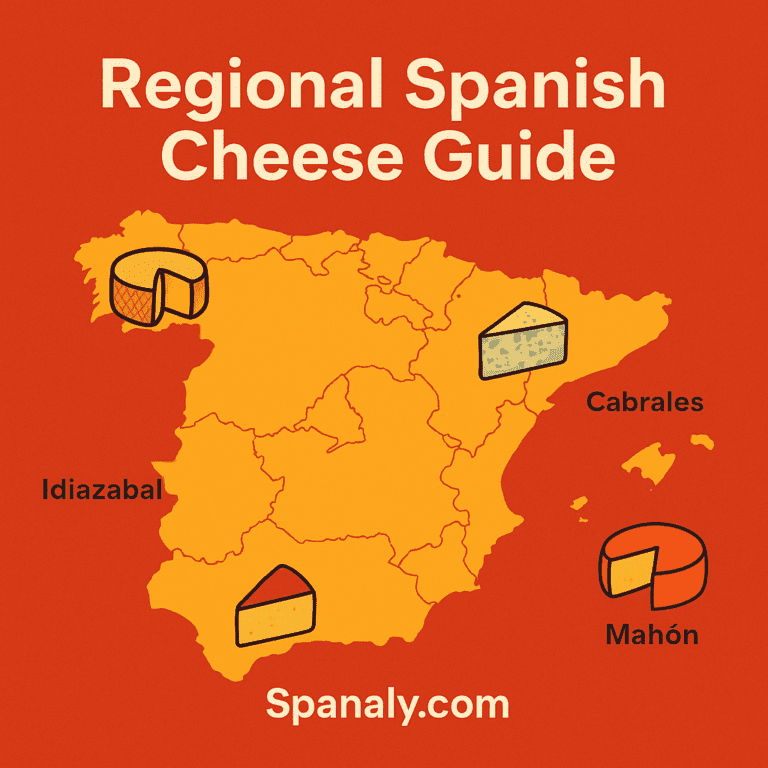
🧀 🌍 Spain’s Most Iconic Regional Cheeses
Manchego (Castilla–La Mancha)
Spain’s national cheese—instantly recognizable and protected by PDO status.
Milk: Sheep (Manchega)
Texture: Firm, compact
Flavor: Nutty, buttery, lightly salty
Pairs best with:
Membrillo (quince paste)
Rioja & Ribera wines
Jamón ibérico
Why it’s special: Its traditional herringbone rind and deep, savory aroma make it a Spanish culinary symbol.
💙 Cabrales (Asturias)
A legendary blue cheese matured inside natural caves in the Picos de Europa.
Milk: Blend of cow, sheep, and goat
Texture: Creamy, veined
Flavor: Intense, spicy, pungent
Pairs best with:
Local Asturian cider
Honey & figs
Crusty bread
Why it’s special: Cave aging gives it a wild complexity unmatched by other blue cheeses.
🔥 Idiazabal (Basque Country & Navarra)
A rustic, ancient cheese known for its smoked character.
Milk: Latxa or Carranza sheep
Texture: Firm, slightly oily
Flavor: Smoky, savory, aromatic
Pairs best with:
Txakoli white wine
Almonds & charcuterie
Grilled vegetables
Why it’s special: Many producers still smoke it using beechwood or cherry wood—keeping original Basque traditions alive.
🟧 Mahón-Menorca (Balearic Islands)
A Mediterranean treasure shaped into its famous square form.
Milk: Cow
Texture: Semi-firm to hard
Flavor: Buttery, tangy, slightly salty
Pairs best with:
Olive oil & paprika
Menorcan wines
Tomatoes and rustic bread
Why it’s special: Sea breezes influence the cow’s diet, giving the cheese its unique coastal aroma.
🧈 Tetilla (Galicia)
Soft, creamy, and shaped like a gentle teardrop—one of Galicia’s most beloved cheeses.
Milk: Cow
Texture: Soft, elastic
Flavor: Mild, buttery, fresh
Pairs best with:
Albariño wine
Soft bread
Fresh fruit
Why it’s special: Its extremely smooth profile makes it a favorite for children and cheese beginners.
🍷 Murcia al Vino (Murcia)
A goat cheese bathed in deep red wine during aging.
Milk: Goat
Texture: Firm, smooth
Flavor: Tangy, fruity, aromatic
Pairs best with:
Jumilla red wines
Nuts & figs
Tapas boards
Why it’s special: Its burgundy-colored rind is visually stunning—perfect for cheese plates.
🧺 🍽️ How to Build the Perfect Spanish Cheese Board
Building a Spanish cheese board is an art that reflects the country’s diversity. To present the authenticity of Spanish heritage, follow these steps :
1️⃣ Step 1: Choose 4 Diverse Types
To guarantee a complete sensory experience, select 4 cheese types that represent different regions and textures. The aim is contrast:
The Strong/Pungent: 1 (e.g., the blue Cabrales)
The Smoked/Aged: 1 (e.g., Idiazabal or Manchego Curado)
The Soft/Creamy: 1 (e.g., Tetilla or Torta del Casar)
The Mild/Semi-Aged: 1 (e.g., Manchego Semicurado)
2️⃣ Step 2: Add Traditional Sides (Accompaniments)
Select elements that balance the saltiness and acidity of the cheese:
Sweeteners: Membrillo (quince paste), Honey (especially chestnut honey), fresh or dried figs.
Crunch & Nuts: Rustic bread, Marcona almonds, or hazelnuts.
Salty Bits: High-quality Spanish olives.
3️⃣ Step 3: Pick Regional Drinks (Beverages)
Match your drinks to the regional specialty cheeses:
Red: Rioja or Ribera del Duero wines with aged, hard cheeses.
White/Sparkling: Albariño wine or Cava with soft cheeses.
Traditional: Asturian Cider (Sidra) with Cabrales blue cheese.
4️⃣ Step 4: Serve Beautifully (Presentation Tips)
Temperature: Let the cheeses warm up for 20 minutes at room temperature before serving; this releases their full flavour and aroma.
Cutting: Use different knives for each cheese type to prevent flavour cross-contamination.
📊 🧀 Regional Cheese Table (Spanaly Style)
| Cheese | Region | Milk Type | Flavor Profile |
|---|---|---|---|
| Manchego | Castilla–La Mancha | Sheep | Nutty, firm, buttery |
| Cabrales | Asturias | Cow/Goat/Sheep blend | Strong, spicy, blue-veined |
| Idiazabal | Basque Country & Navarra | Sheep | Smoky, savory |
| Mahón | Balearic Islands | Cow | Buttery, tangy |
| Tetilla | Galicia | Cow | Mild, creamy, buttery |
| Murcia al Vino | Murcia | Goat | Tangy, fruity (Wine-washed) |
🧀 Visitor FAQs – Authentic Spanish Cheese Guide
🧀 What is the most iconic Spanish cheese I must try?
The Manchego cheese is the undisputed king of Spanish cheeses. Made from Manchega sheep's milk in the Castilla-La Mancha region, it’s famous for its zigzag rind and nutty flavor. For a mild taste, ask for Semicurado; for a stronger, sharper experience, look for Curado or Viejo.
💙 Which Spanish cheese has the strongest flavor?
If you love bold flavors, try Cabrales. This is a blue cheese from Asturias, aged in natural limestone caves. It is incredibly intense, spicy, and creamy. It’s traditionally paired with Asturian cider or sweet dessert wines like Pedro Ximénez to balance its powerful saltiness.
🧺 How do I assemble a traditional Spanish cheese board?
A great board (Tabla de Quesos) should include a mix: Manchego (hard), Tetilla (creamy/soft), and Idiazabal (smoked). Always serve them with Membrillo (quince paste), Marcona almonds, and some crusty bread. Tip: Always serve cheese at room temperature to fully enjoy the aromas.
🍷 What are the best wine pairings for Spanish cheeses?
Red wines like Rioja or Ribera del Duero pair perfectly with aged sheep cheeses like Manchego. For soft, creamy cheeses like Tetilla, a crisp white Albariño is ideal. If you're having a smoked cheese like Idiazabal, try a glass of Basque Txakoli for a refreshing contrast.
🛍️ Can I take Spanish cheese home in my luggage?
Yes, but it's best to buy vacuum-sealed (envasado al vacío) wedges. Hard cheeses like Manchego or Mahón travel very well. If you're traveling outside the EU, check your destination's customs regulations regarding dairy products to ensure a smooth trip home with your gourmet souvenirs.
Gourmet Heritage Guide by Spanaly.com
🍽️ For a complete overview of Spanish cuisine, start with our main guide: Spanaly Gastronomy Hub (Recipes, Tapas, & Regions)
✅ Spanish cheese is not just food—it’s a journey through history, culture, and geography, all wrapped in rich, distinctive flavors.
From the smoky, rugged Basque mountains to the sun-soaked Mediterranean coasts, each cheese reflects the story of its land, people, and traditions.
Use this guide to discover authentic regional varieties, savor unique pairings, and elevate your culinary adventure across Spain. Let your taste buds explore the heart and soul of Spanish gastronomy.