Table of Contents
Toggle🍷 Is Ronda Worth Visiting for Wine?
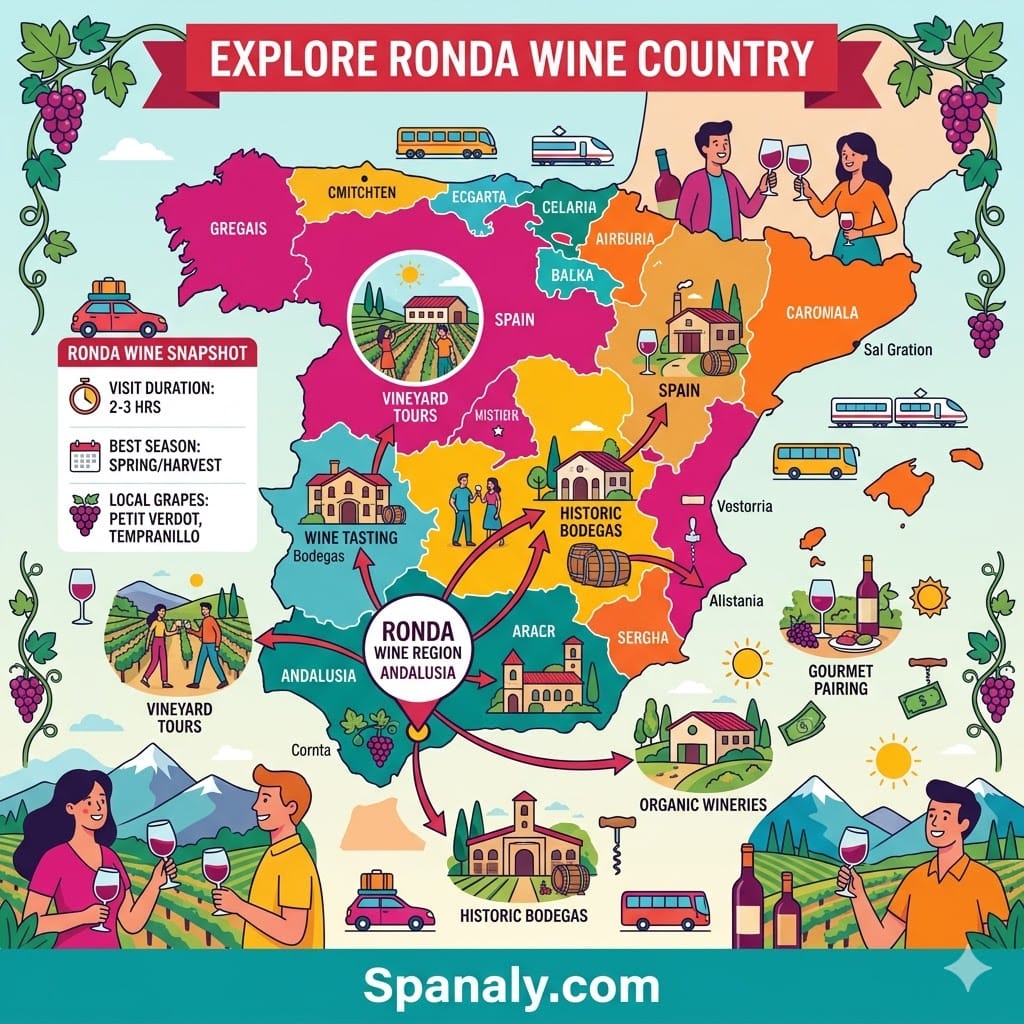
If you are looking for a wine experience that goes beyond the usual vineyard stroll, Ronda is exactly where you need to be. Unlike the massive, industrial wineries found in other parts of Spain, Ronda focuses on boutique, high-altitude production. This means you get smaller batches, more unique flavors, and a much more personal connection to the winemakers.
The Altitude Factor: Most vineyards sit between 700 and 1,000 meters, which keeps the grapes fresh and the acidity crisp.
Small-Scale Charm: Most bodegas here are family-run, producing fewer than 20,000 bottles a year.
Unique Grapes: While Andalusia is famous for Sherry, Ronda stands out for its bold reds like Petit Verdot and Syrah.
Visiting Ronda’s wine country is a smart move if you prefer quality over quantity. With over 20 professional wineries tucked into the surrounding valleys, you can easily visit two or three in a single afternoon without spending hours on the road. For a complete look at planning your time in the city, check out our Ultimate Ronda Travel Guide.
📊 Ronda Wine Snapshot: Essential Data for Travelers
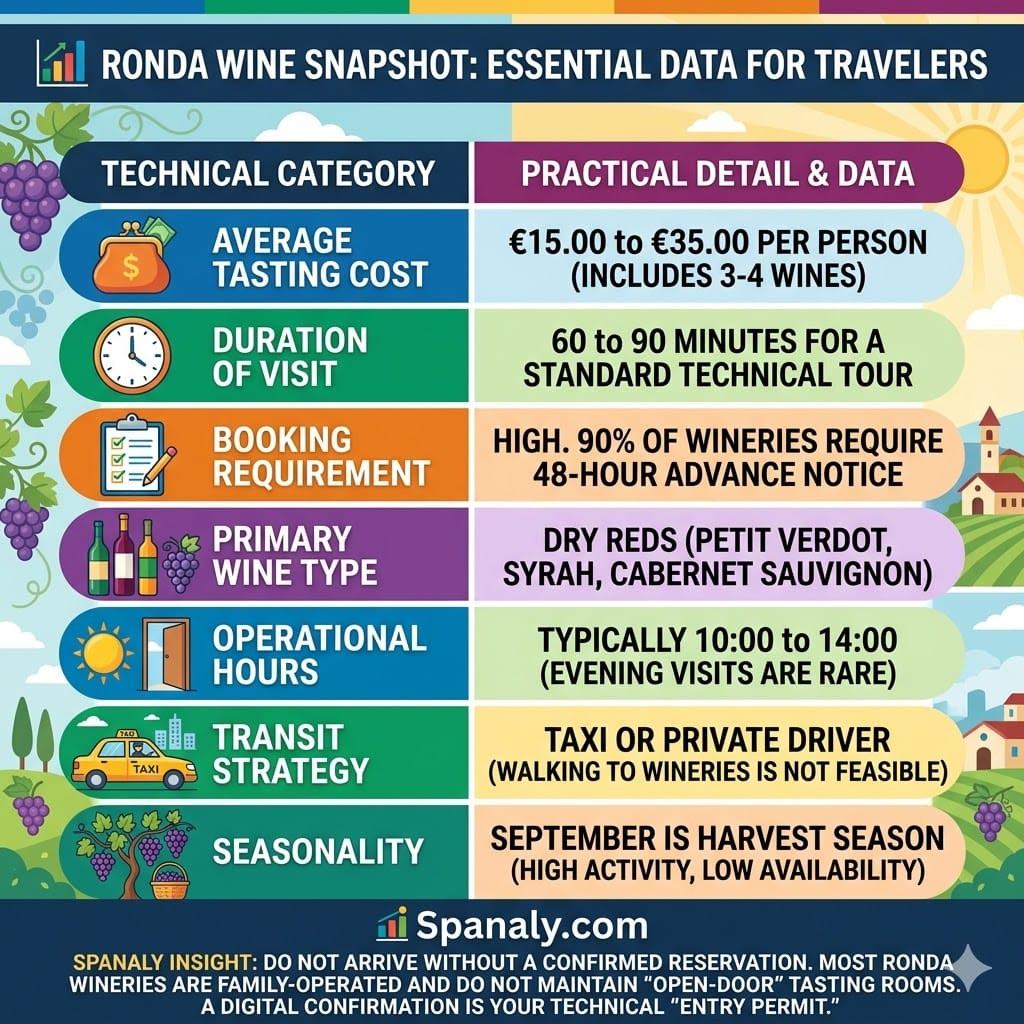
Before booking your route, check these practical tips to make sure your winery visits go smoothly.
| Category | Practical Detail & Data (2026) |
|---|---|
| Average Tasting Cost | €20.00 to €40.00 per person (usually includes 3-4 wines + local snacks). |
| Duration of Visit | 60 to 90 minutes for a full guided tour and tasting. |
| Booking Requirement | Mandatory. 90% of wineries require at least 48-hour advance notice. |
| Primary Wine Type | Bold Dry Reds (Petit Verdot, Syrah, and Cabernet Sauvignon). |
| Operational Hours | Typically 10:00 to 14:00. Most wineries close for the “Siesta Gap.” |
| Transit Strategy | Taxi or Private Driver. Walking is not safe or feasible due to narrow rural roads. |
| Seasonality | September is harvest season. It’s vibrant, but bookings are very limited. |
💡 Spanaly Insight: Do not just show up at a winery and expect a tasting. Most Ronda bodegas are small, private estates and don’t have a permanent “open-door” staff. Think of your digital booking confirmation as your “entry ticket”—without it, you’ll likely find the gates locked.
📍 The Terroir: Why Ronda is a Unique Wine Destination
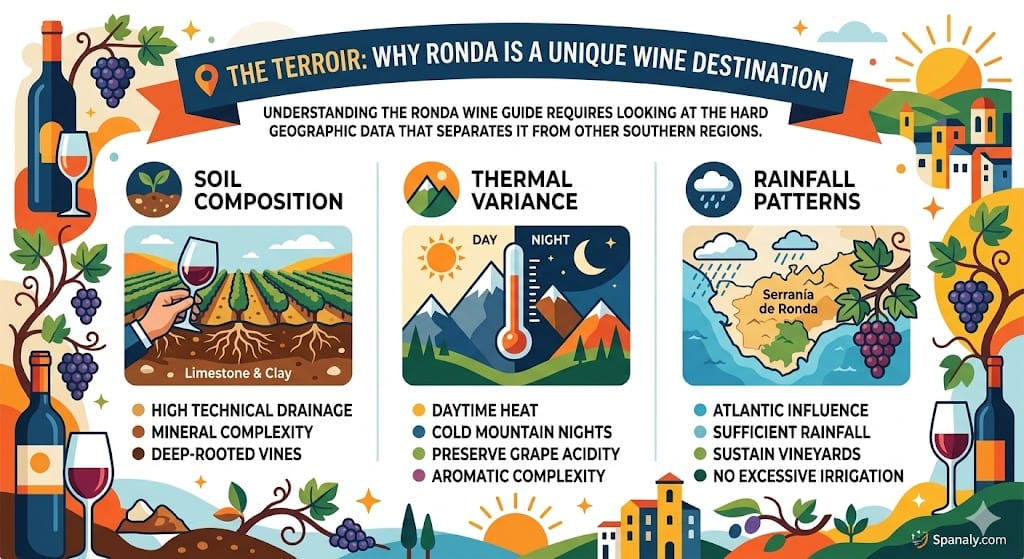
To understand why Ronda’s wine is gaining a world-class reputation, you have to look at the unique mountain landscape that sets it apart from the rest of Andalusia. Ronda isn’t a typical “hot” southern wine region; its high altitude creates a microclimate that winemakers elsewhere can only dream of.
Mountain Altitude: Vineyards sitting at 700 to 1,000 meters mean the air is thinner and cooler. This prevents the grapes from “cooking” in the Spanish sun, keeping the wine fresh and elegant.
The “Thermal Switch”: This is Ronda’s secret weapon. The hot sunny days develop deep flavors, while the freezing mountain nights lock in the acidity. This balance is what gives the wine its character.
Limestone Soil: The rocky, limestone-rich ground forces the vines to dig deep for water, resulting in a mineral-rich taste that you won’t find in the sandy plains of the coast.
Atlantic Influence: Unlike the dry eastern plains, Ronda catches enough breeze and rain from the Atlantic to keep the vineyards healthy without needing constant irrigation.
These natural advantages allow local families to produce robust reds and crisp whites that feel surprisingly “light” and fresh. It’s this combination of mountain air and ancient soil that makes Ronda a true standout among Spanish Attractions.
🏆 The Elite Bodegas: Best Wineries for Tasting in Ronda
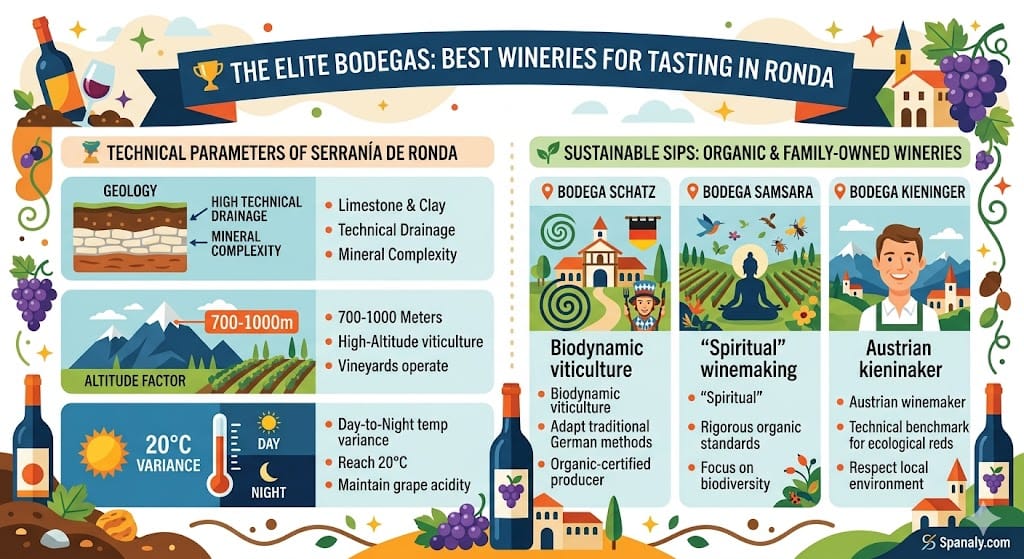
To get the most out of your wine tour, you should select wineries based on the “vibe” and specialty they offer. These top estates are all within a 15-minute drive of the center, making them perfect additions to a one day Ronda itinerary.
Bodega Descalzos Viejos (The Historic Choice):
Distance: 2.5 km from the city center.
Cost (2026): €30.00 – €45.00 per person.
Why Visit: This is arguably the most beautiful winery in Spain, located inside a restored 16th-century chapel. Go here for the atmosphere and their elegant reds influenced by the limestone cliffs.
Bodega Doña Felisa – Chinchilla (The Quality Benchmark):
Distance: 9 km from Ronda.
Cost (2026): €25.00 – €35.00 for a full tour and tasting.
Why Visit: If you want to taste the best Petit Verdot in the region, this is the place. It’s a modern, professional operation known for high-end precision and award-winning wines.
Bodega Cortijo Los Aguilares (The Award-Winner):
Distance: 9 km from Ronda.
Cost (2026): €25.00 – €40.00 per person.
Why Visit: A high-end estate famous for proving that Pinot Noir can thrive in the south. It is one of the most prestigious names in the region, offering a very polished and world-class tasting experience.
Bodega García Hidalgo (The Family Tradition):
Distance: 7 km from Ronda.
Cost (2026): €20.00 – €30.00 per person.
Why Visit: A charming, family-run spot where you’ll feel like a guest in their home. It is perfect if you want a relaxed, non-commercial atmosphere and to see the winemaking process up close.
Bodega Joaquín Fernández (The Organic View):
Distance: 8 km from Ronda.
Cost (2026): €22.00 to €30.00 depending on the wine flight.
Why Visit: A 100% organic winery located on a steep mountain slope. It offers incredible views of the valleys and is famous for its Garnacha, which thrives in the intense mountain sun.
These boutique estates focus on quality over volume, often producing fewer than 30,000 bottles a year. Because they are small, you will often have your wine poured by the owner or the head winemaker themselves, giving you a personal insight you won’t find in larger regions.
🌿 Sustainable Sips: Organic & Family-Owned Wineries
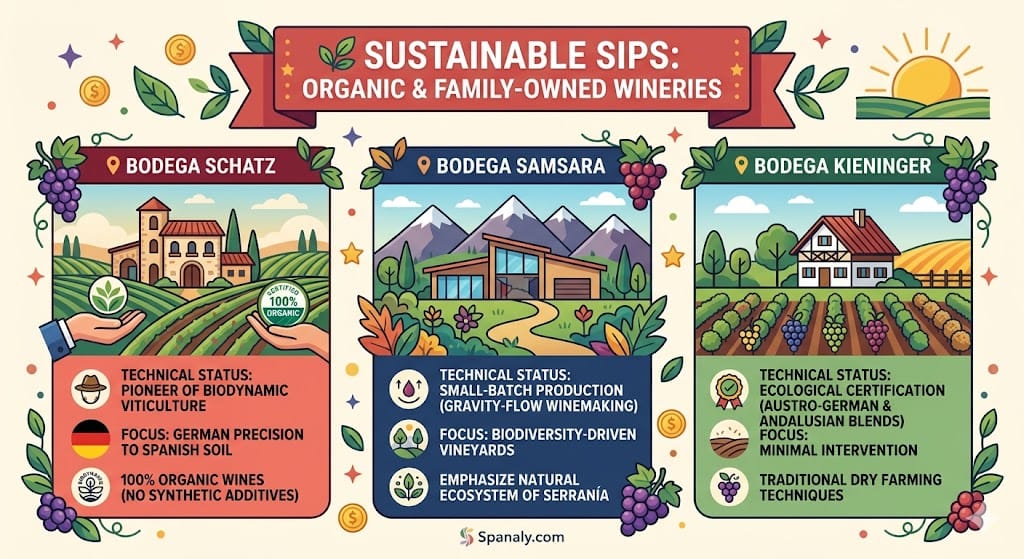
For travelers who care about how their wine is made, Ronda is a goldmine. Because the wineries here are small, many have embraced organic and biodynamic farming. These family estates are perfect stops if you are following a 3 days in Ronda itinerary.
Bodega F. Schatz (The Pioneer):
Status: The first to bring organic farming to Ronda.
The Vibe: German precision meets Spanish soul. Friedrich Schatz produces 100% organic wines that are incredibly clean and natural, without any chemical additives.
Bodega Samsara (The Naturalist):
Status: Uses gravity instead of pumps to move the wine (Gravity-flow).
The Vibe: A deep respect for the mountain ecosystem. Their vineyards are full of biodiversity, and the wine is a pure reflection of the wild Serranía landscape.
Bodega Kieninger (The Austrian Touch):
Status: Ecological certification with a focus on rare grape blends.
The Vibe: Martin Kieninger brings Austrian tradition to Andalusia, using traditional “dry farming” (no irrigation) to create intense, flavorful wines.
Most of these organic gems produce fewer than 15,000 bottles a year. This tiny scale means you get a very personal experience. For more tips on driving the narrow rural roads to reach these hidden spots, check our Ronda Travel Tips.
🚗 Logistics: How to Visit (Self-Drive vs. Guided Tours)
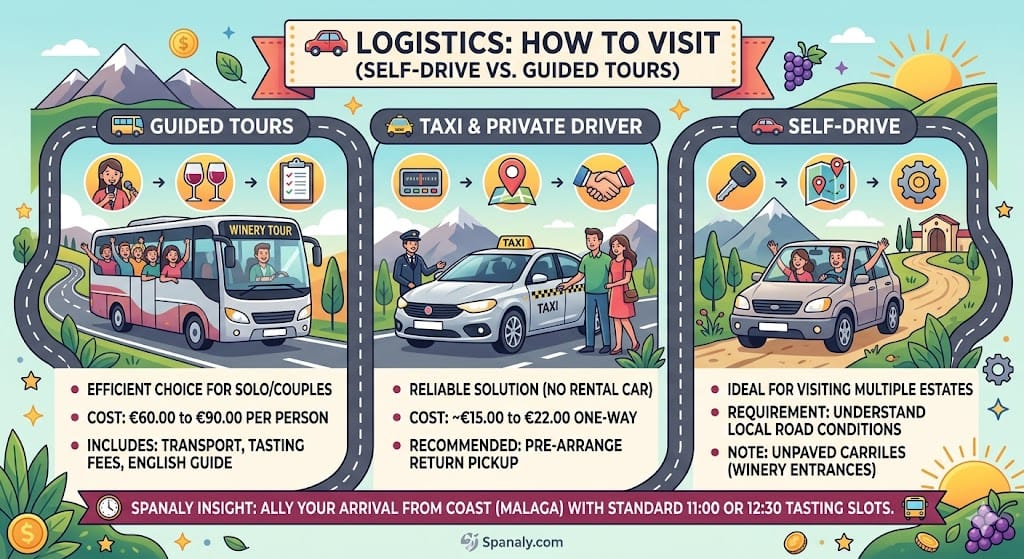
Getting to the wineries is the only tricky part of the trip. Most bodegas are tucked away in the valleys outside the city center, and you won’t find any public buses heading that way. Choosing the right transport is key to enjoying your tastings safely.
Guided Tours (The Easiest Way): This is the best move if you want to drink without worrying about driving. Tours usually cost between €70.00 and €110.00 per person. This typically covers your transport from Ronda, all tasting fees, and an expert guide who knows the local stories.
Taxi & Private Driver (The Flexible Choice): If you prefer your own schedule, a local taxi is a reliable fix. A one-way trip costs about €18.00 to €25.00. Pro Tip: Cell signal is very weak in the valleys, so always ask the winery staff to call your return taxi about 20 minutes before you finish.
Self-Drive (For Adventurers): Great if you want to visit multiple spots. Just be ready for narrow, unpaved country roads (carriles). If you’re driving, make sure you have a spot for your car back in town by checking our Parking in Ronda Guide.
If you’re coming from the coast just for the day, check our Malaga to Ronda Day Trip guide. Most tastings start at 11:00 AM or 12:30 PM, so you’ll want to time your arrival perfectly to avoid missing your slot.
🍷 The Grape Portfolio: Ronda’s Best Reds, Whites & Rosés
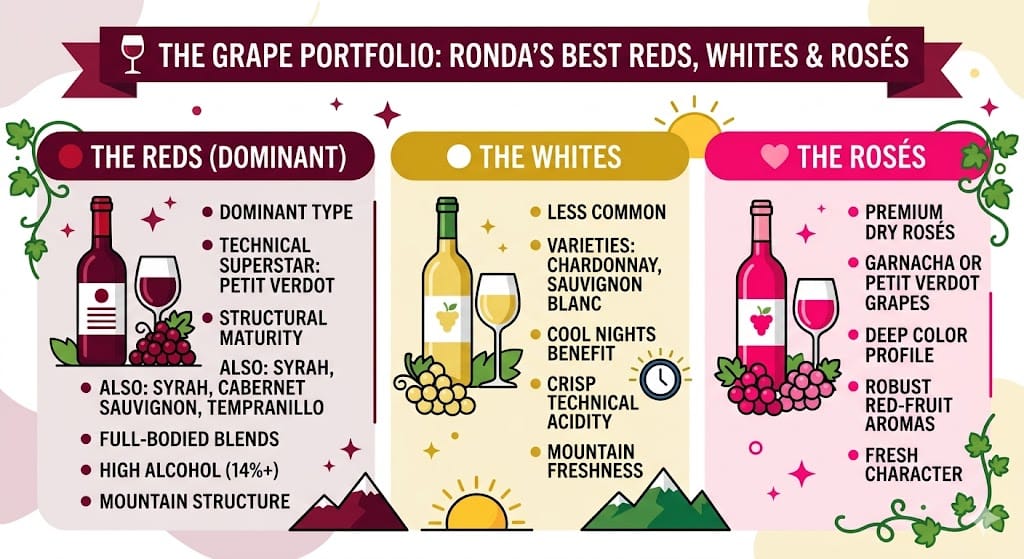
What makes Ronda stand out in Andalusia is that it doesn’t focus on the sweet Sherries the south is famous for. Instead, the mountain climate allows winemakers to produce world-class dry wines using grapes that usually only thrive in much cooler parts of Europe.
The Red Superstars: Petit Verdot is the undisputed king of Ronda. While it’s usually just a blending grape in France, here it reaches full maturity to create bold, deep, and complex wines. You’ll also find excellent Syrah, Cabernet Sauvignon, and Tempranillo, often blended to create rich reds with a high alcohol content (14%+).
The Crisp Whites: White wines are less common but very refreshing. Thanks to the cold mountain nights, grapes like Chardonnay and Sauvignon Blanc keep a bright, zesty acidity that feels perfect on a warm afternoon.
The Deep Rosés: Ronda produces premium dry rosés, mostly from Garnacha. They are known for their vibrant pink color and intense flavors of red berries—nothing like the mass-produced, pale rosés you see elsewhere.
For a bigger picture of how these mountain drinks compare to the rest of the country, check out our guide to Spanish Drinks. The real magic of Ronda’s wine is its “freshness”—a direct result of that cool mountain air we mentioned earlier.
🍽️ Beyond the Glass: Wineries with Food & Scenic Views
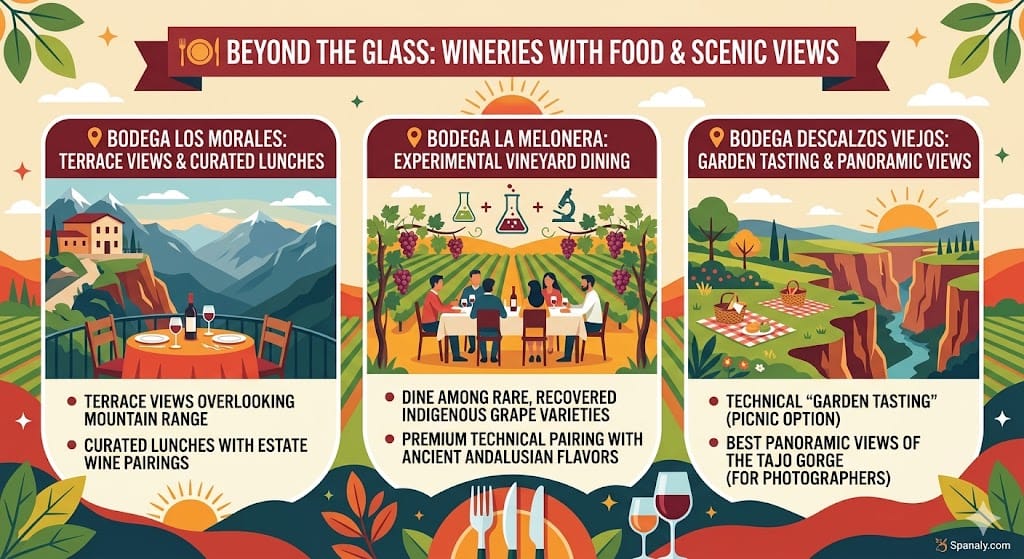
Combining a wine tasting with a local meal is the best way to experience Spanish Cuisine without leaving the vineyards. While most spots offer light tapas, these estates provide a deeper connection between the plate and the pour:
📍 Bodega Los Morales: This winery is famous for its terrace views overlooking the mountain range. They offer curated lunches where each course is perfectly paired with a specific estate wine.
📍 Bodega La Melonera: Known for its “Experimental Vineyard,” here you can dine among rare grape varieties recovered from history. Their premium pairings highlight authentic Andalusian flavors in a stunning setting.
📍 Bodega Descalzos Viejos (Picnic Option): While they don’t have a full restaurant, their “Garden Tasting” offers the best panoramic views of the Tajo gorge, making it a top choice for photographers.
For those who prefer to head back to the city for dinner, consult our guide to the Best Restaurants in Ronda to find venues that maintain an extensive local wine cellar.
🍷 Wine Tasting in the City Center: Bars vs. Bodegas
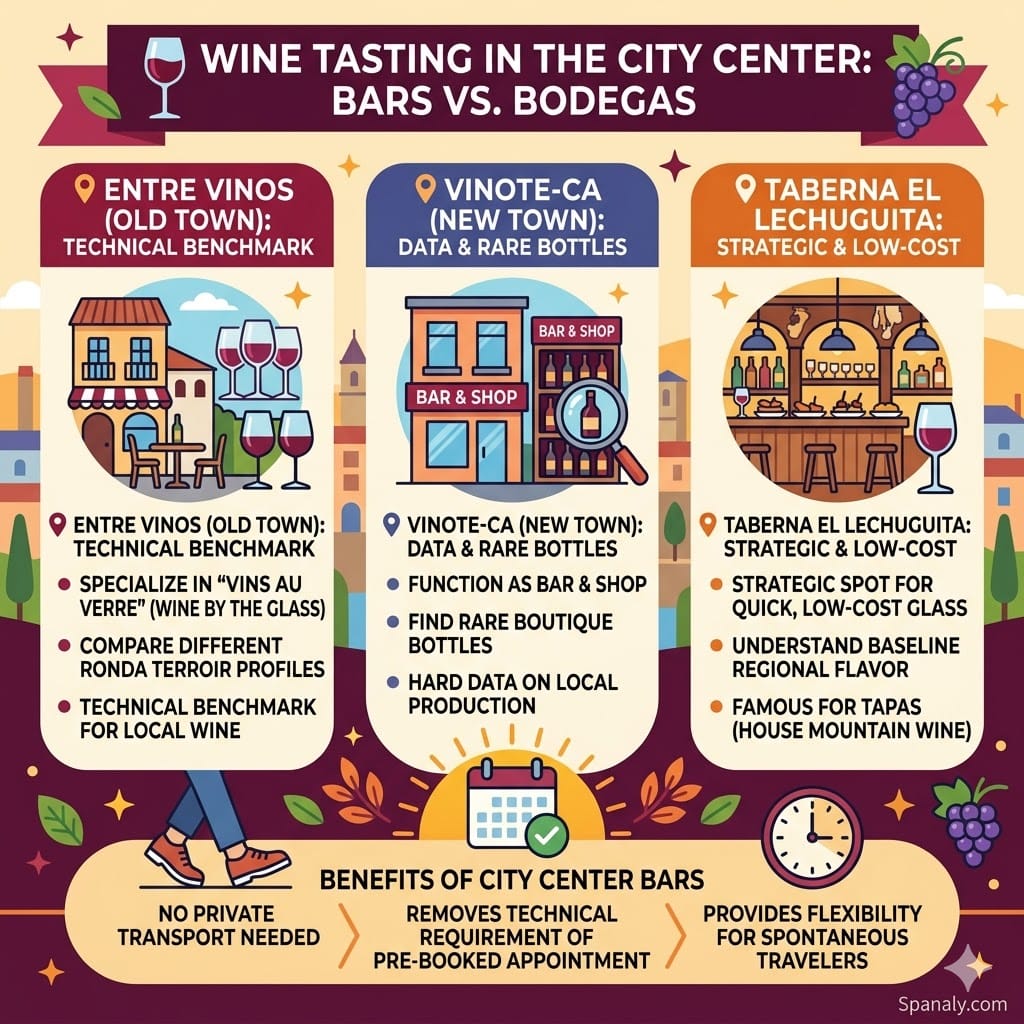
If your one day Ronda itinerary does not allow for a 90-minute commute to the valleys, you can still execute a professional tasting within the city walls. Ronda’s specialized wine bars offer a broader vertical selection of local labels than a single winery visit.
📍 Entre Vinos (Old Town): A benchmark for local wine. They specialize in “vins au verre” (wine by the glass), allowing you to compare different Ronda terroir profiles in one sitting.
📍 Vinote-ca (New Town): Ideal for travelers seeking hard data on local production. They function as both a bar and a shop, where you can find rare boutique bottles often missing from major Spanish Attractions.
📍 Taberna El Lechuguita: While famous for its tapas, it remains a strategic spot for a quick, low-cost glass of the house mountain wine to understand the baseline regional flavor.
Choosing a city-center bar is the most efficient logistical solution for those without private transport. It removes the requirement of a pre-booked appointment, providing flexibility for spontaneous travelers.
📅 Timing & Reservations: Best Season & How to Book
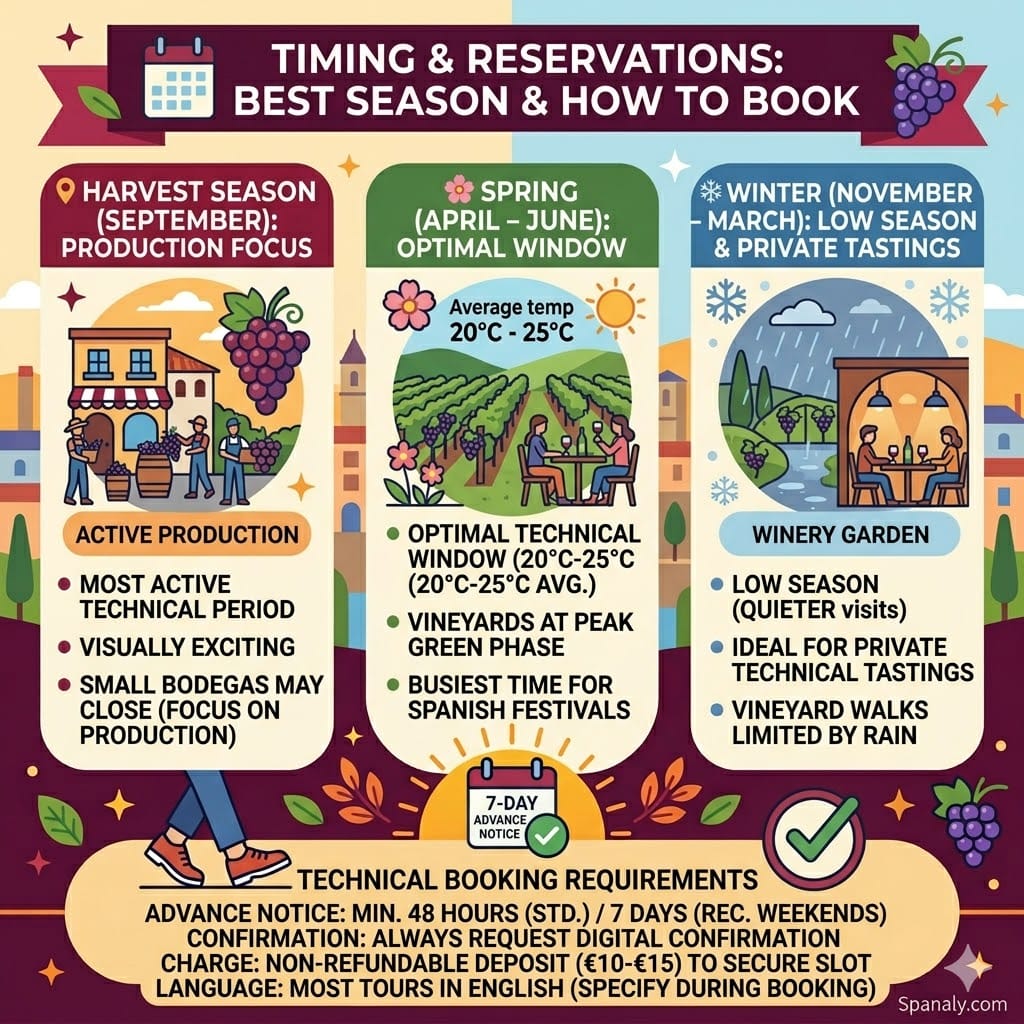
To make your wine tour a success, you need to time your visit with the local vineyard cycle. While Ronda is beautiful year-round, the wineries change their opening hours depending on the season. For more details on the city’s weather, check our guide on the Best time to visit Ronda.
🍇 Harvest Season (September): This is the busiest time of the year. While it’s exciting to see the grapes being picked, many small bodegas close their doors to tourists to focus entirely on production.
🌸 Spring (April – June): This is the perfect window. The weather is mild (20°C to 25°C), the vineyards are bright green, and it aligns perfectly with the famous Spanish Festivals across Andalusia.
❄️ Winter (November – March): The quiet season. It’s great for private tastings, but keep in mind that rain might limit your walks through the vineyards.
⚠️ Strict Booking Requirements: 90% of Ronda wineries operate on a “By Appointment Only” basis. Do not attempt a “walk-in” visit at rural estates; you will likely find the gates locked and no staff on-site to welcome you.
Advance Notice: A minimum of 48 hours is the absolute standard. However, if you plan to visit on a weekend, we strongly recommend booking at least 7 days in advance.
Confirmation: Always request a digital confirmation. Most wineries now charge a non-refundable deposit (around €10.00 – €15.00) to secure your spot.
Language: Most tours are offered in English, but you must specify this during the booking process to ensure an English-speaking guide is available for your slot.
💰 Planning Your Budget: Prices & Buying Direct
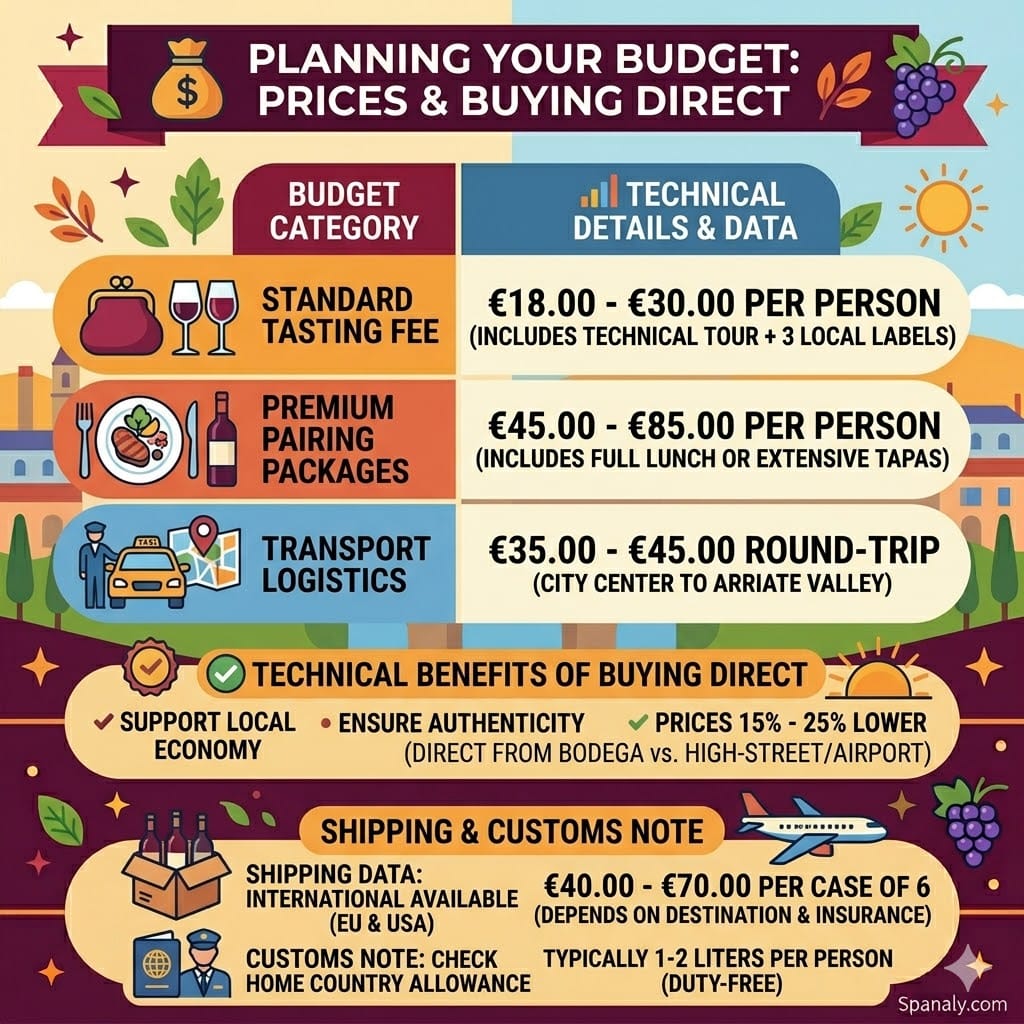
Managing your Ronda travel budget requires a clear understanding of the costs associated with mountain viticulture. Tasting experiences in Ronda are generally priced higher than in the Sherry triangle due to the limited production volumes and the personalized nature of the tours.
📊 Standard Tasting Fee: Expect to pay between €18.00 and €30.00. This typically includes a technical tour of the facilities and a tasting of 3 different local labels.
🍽️ Premium Pairing Packages: Tours that include a full lunch or extensive tapas pairings range from €45.00 to €85.00 per person.
🚕 Transport Logistics: A round-trip taxi from the city center to the Arriate valley will add approximately €35.00 to €45.00 to your total daily cost.
Benefits of Buying Direct
Buying wine directly from the bodega is the most efficient way to support the local economy while ensuring product authenticity. Prices at the winery are 15% to 25% lower than in high-street wine shops or airports.
Shipping Data: Many wineries offer international shipping (primarily to the EU and USA). A case of 6 bottles typically costs between €40.00 and €70.00 to ship, depending on the destination and insurance.
Customs Note: Always verify your home country’s duty-free allowance. Most travelers can carry 1-2 liters of wine per person without additional taxes when returning from traveling Spain.
💡 Spanaly Pro Tips: Perfecting Your Ronda Wine Day
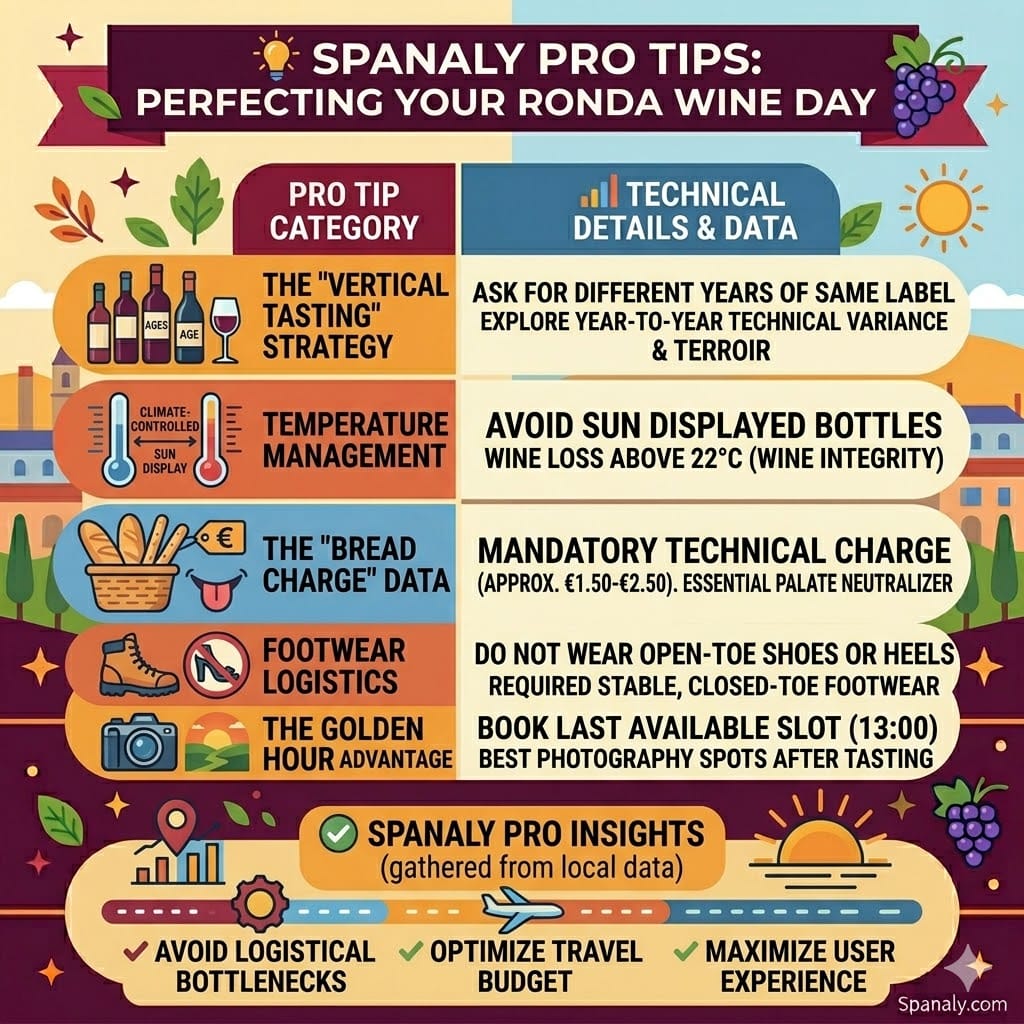
To master your Ronda Wine Guide experience, you must look beyond the brochures. These insights are gathered from local industry data and field observation to help you avoid logistical bottlenecks.
🛡️ The “Vertical Tasting” Strategy: When booking, ask specifically for a “Vertical Tasting” (sampling different years of the same label). Because of Ronda’s high-altitude climate, the year-to-year variance is fascinating and provides a deeper understanding of the terroir than a standard multi-grape flight.
🌡️ Temperature Management: Avoid buying premium bottles from shops that display wine in windows facing the afternoon sun. Ronda’s sun is intense; technically, wine stored above 22°C for long periods loses its structural integrity. Only purchase from cellars or shops like those mentioned in our Ronda Travel Tips that use climate-controlled storage.
🥖 The “Bread Charge” Data: In winery restaurants, the “Pan y Picos” (bread and breadsticks) is often a mandatory charge (approx. €1.50 – €2.50 per person). It is not “free,” but it is essential for neutralizing your palate between bold Petit Verdot tastings.
👟 Footwear Logistics: Do not wear open-toe shoes or heels. Most Ronda vineyards are located on limestone-heavy slopes with loose gravel. A “vineyard walk” is physically demanding and requires stable, closed-toe footwear to prevent injury.
📸 The Golden Hour Advantage: If you are a photographer, book the last available slot (usually 13:00). While most wineries close at 14:00, the light hitting the Serranía peaks during your post-tasting walk offers the best photography spots in Spain data for your social media.
🛡️ Visitor FAQs – Master Your Ronda Wine Experience
🍷 Can I visit Ronda wineries on Sundays or holidays?
Most Ronda bodegas are closed on Sundays and local holidays as they are small family operations. However, some larger estates like Doña Felisa may open for pre-booked groups. Always verify the technical schedule at least 72 hours in advance to avoid a wasted trip to the valley.
🤰 Are there non-alcoholic options during a winery tour?
Yes. While the focus is on viticulture, most professional tours provide locally produced organic grape juice (Mosto) or artisanal olive oil tastings for non-drinkers or children. Technically, you are still paying for the full tour experience and the expert guide’s data, so prices rarely drop for non-drinkers.
📦 How do I safely transport wine bottles on a flight?
Technically, you cannot carry wine in your hand luggage due to liquid restrictions. Most wineries sell protective "Wine Skins" or specialized cardboard boxes for checked luggage. We recommend buying these at the source to ensure your boutique bottles withstand the pressure and temperature changes in the aircraft's hold.
🚕 Is Uber or Cabify available for winery transfers in Ronda?
No. Ridesharing apps like Uber do not operate in Ronda. You must rely on the local "Radio Taxi" service. The logistical challenge is that many wineries have poor cell reception; we highly recommend asking the winery staff to call a taxi for your return at least 20 minutes before you finish your tasting.
🍇 Can I participate in the grape harvest (Vendimia)?
True hands-on participation is rare due to strict Spanish labor and safety regulations. However, some wineries offer special "Harvest Tours" in late August and September where you can observe the sorting process. These are premium events and usually sell out months in advance.
Ronda Wine Guide by Spanaly.com
Ronda is more than just a scenic bridge; it is a professional high-altitude wine sanctuary. Whether you are a casual sipper or a serious collector, the Serranía mountains offer a depth that is hard to find elsewhere in Andalusia.
🍷 Quality Over Quantity: Focus on one or two boutique bodegas to truly appreciate the mountain terroir.
🚗 Plan Your Transit: Secure your taxi or driver in advance to enjoy the tastings without logistical stress.
🍇 Explore Further: Ronda is just one chapter in the rich story of Spanish Wine Regions.
✨ Book Early: Remember that these family estates prioritize quality and have limited daily visitor slots.
We hope this guide helps you navigate the vineyards of Ronda with confidence. Grab a glass of local Petit Verdot, enjoy the gorge views, and toast to the incredible flavors of the south.
¡Salud and enjoy your Ronda wine adventure!