
Table of Contents
Toggle🏛️ A City of Light and Legacy
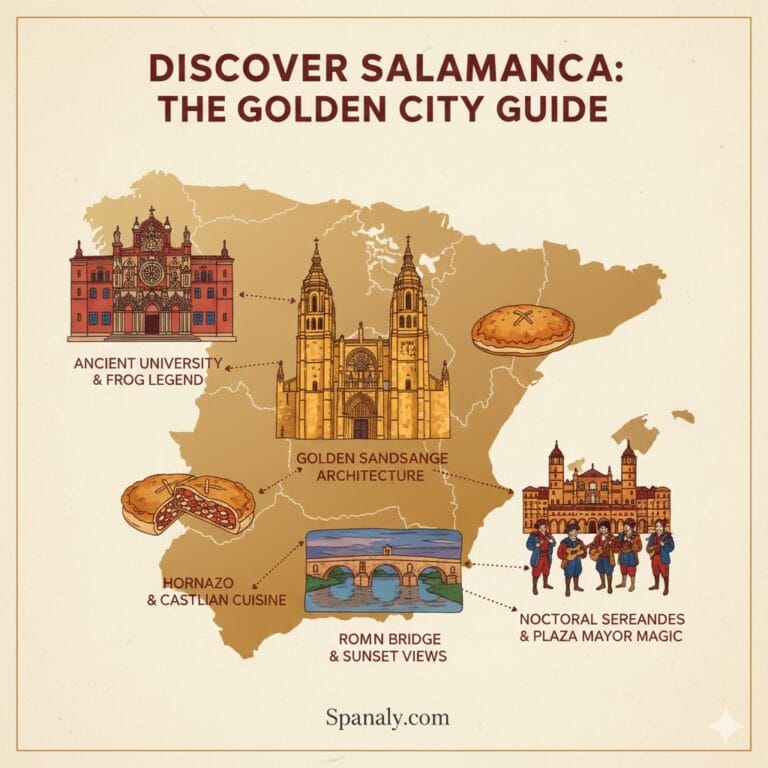
Salamanca shines as one of Spain’s most enchanting destinations. Notably, travelers call it the “Golden City” due to its unique Villamayor sandstone. Specifically, the city offers a flawless blend of historic gravity and vibrant student life. Consequently, the streets do not just display history; they breathe it through every glowing archway.
✨ The Golden Glow: The iron-rich stone oxidizes over time. Therefore, the entire city turns into a shimmering masterpiece at sunset.
🎓 Intellectual Heart: Legendary scholars and explorers paced these streets for centuries. Notably, it houses one of the world’s oldest universities.
🏛️ UNESCO Heritage: The historic core serves as a perfectly preserved museum. Specifically, it merges Romanesque, Gothic, and Baroque styles seamlessly.
🥘 Castilian Spirit: The city vibrates with energy and world-class gastronomy. In addition, a thousand years of stories live within its walls.
Indeed, visiting Salamanca is like stepping into a living history book. Furthermore, this city remains an unmissable cultural anchor whether you are exploring Madrid Hidden Gems or heading west. Ultimately, you do not merely see this place; you experience its unique atmosphere.
💡 Spanaly Insight: Timing is everything! In fact, you should stand in the Plaza Mayor 20 minutes before sunset. Notably, you will witness the stone transform into a deep, fiery orange-gold.
📚 The University: A Legacy of Art
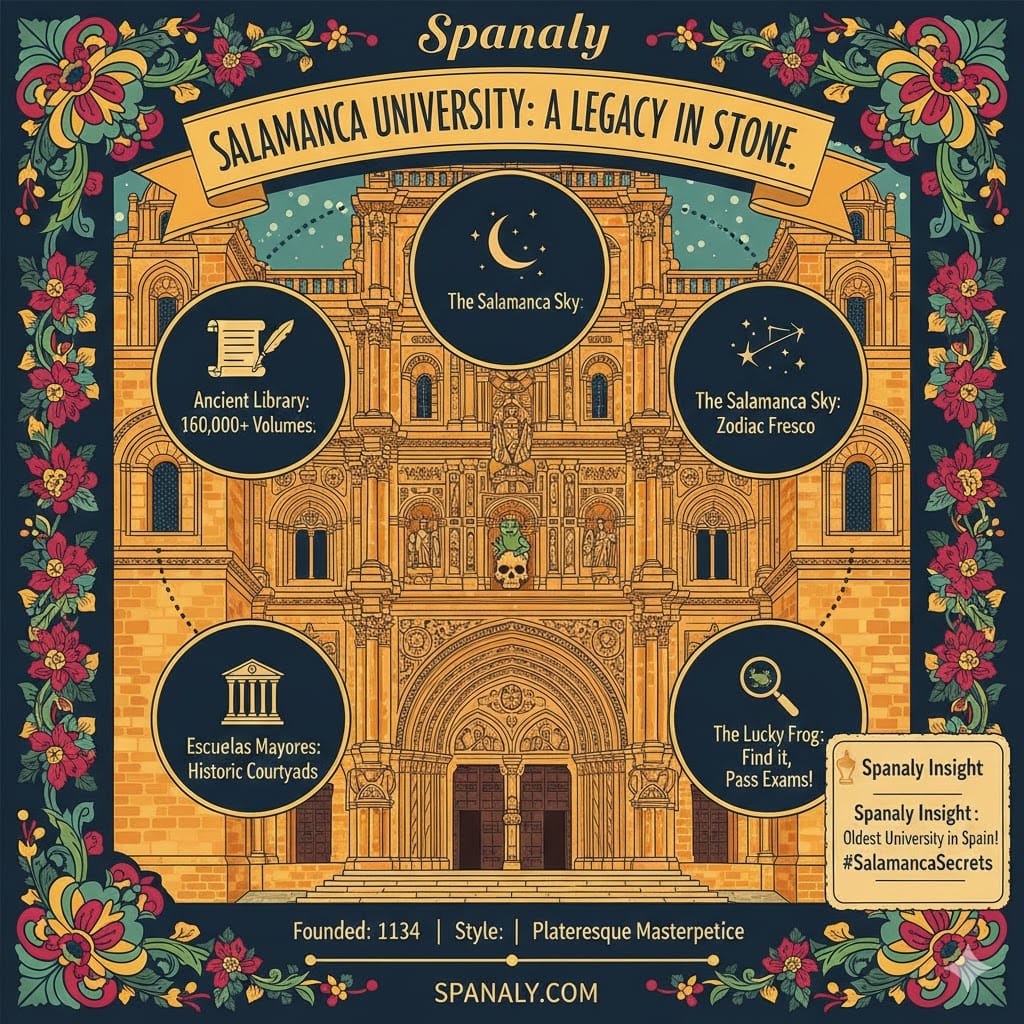
The University of Salamanca has shaped intellectual history since 1134. Notably, it stands as the oldest university in Spain. Specifically, its buildings showcase the brilliant “Plateresque” style. Consequently, this uniquely Spanish movement mimics the intricate work of silversmiths. Indeed, it remains a global symbol of academic prestige.
🏛️ The Grand Façade: This stunning tapestry in stone captures every eye. Notably, you should look for intricate carvings of royalty and mythical creatures.
📚 Ancient Library: This sanctuary of wood and silence houses over 160,000 historic volumes. In addition, it preserves centuries of human knowledge.
🌿 Escuelas Mayores: You can wander through serene courtyards. Specifically, legendary scholars once debated vital ideas in these very spaces.
🌌 The Salamanca Sky: You must see the breathtaking zodiac fresco in the Escuelas Menores. Furthermore, this artwork (El Cielo de Salamanca) defines the city’s artistic soul.
Indeed, the university’s influence runs deep. Furthermore, it mirrors the cultural roots you might find in Santa Cruz de Tenerife. Ultimately, this institution keeps the “Golden City” forever young and relevant.
💡 Spanaly Insight: Time for a challenge! In fact, a tiny stone frog sits hidden on a skull within the facade. Notably, local legend says students who find it without help will pass their exams. Therefore, will you be the next to find it?
⛪ The Twin Cathedrals: Gothic & The Astronaut
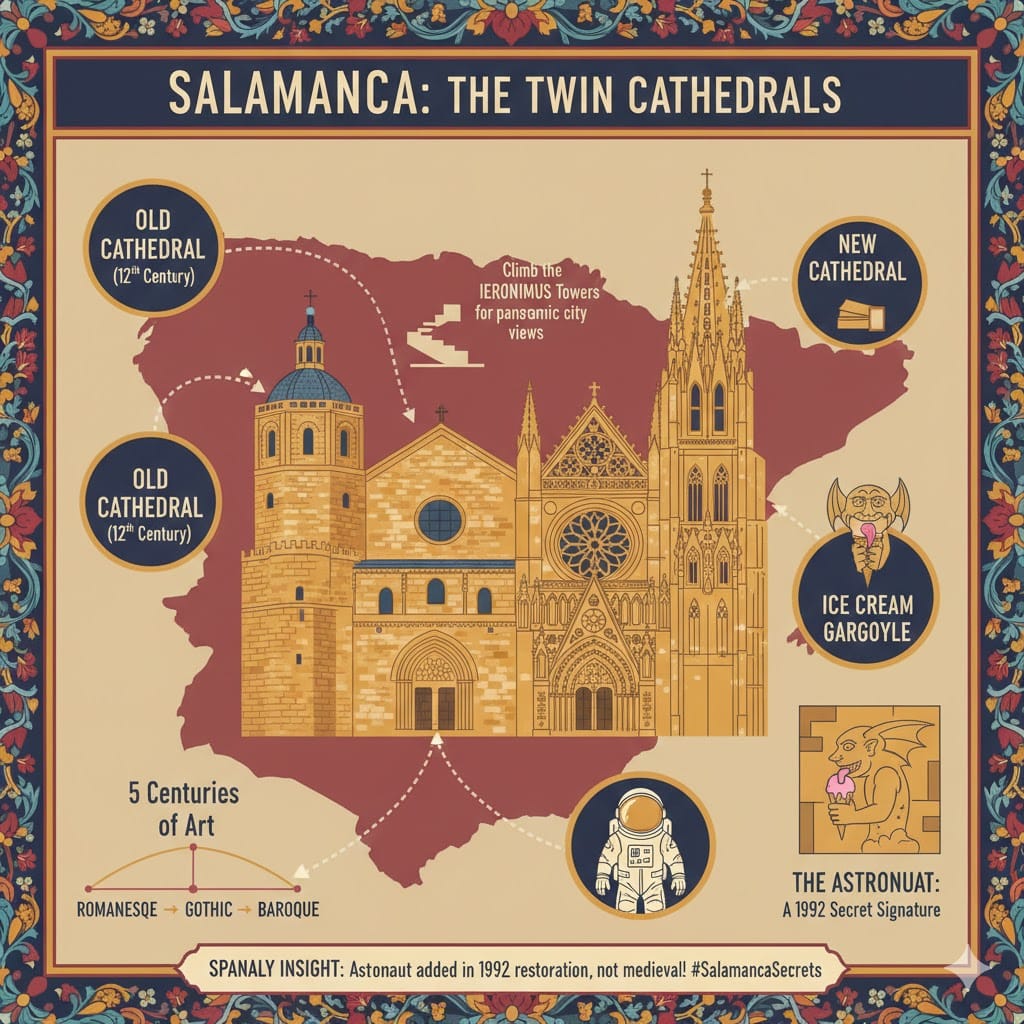
Salamanca hosts a rare architectural phenomenon: two cathedrals joined together. Notably, this complex represents a seamless transition through five centuries of European art. Specifically, the Old Cathedral offers Romanesque sobriety. Meanwhile, the New Cathedral dazzles with late Gothic and Baroque grandeur.
⛪ The Old Cathedral: Workers built this fortress-like structure in the 12th century. Notably, it remains famous for its unique “Torre del Gallo.”
🏙️ The New Cathedral: This massive masterpiece dominates the city’s skyline. Furthermore, architects took over 200 years to complete its intricate design.
🚀 The Space Mystery: You should examine the northern entrance (Puerta de Ramos). Specifically, you will find a modern astronaut among the 16th-century carvings.
🍦 The Ice Cream Gargoyle: Another curious addition sits right next to the astronaut. Notably, this modern gargoyle appears to be eating a scoop of ice cream!
Indeed, this blend of ancient and modern surprises every visitor. Furthermore, the experience is as rewarding as discovering the natural wonders of Gran Canaria. Ultimately, climbing the “Ieronimus” towers provides the best panoramic view of the golden roofs.
💡 Spanaly Insight: It’s not a time travel miracle! In fact, artisans added the astronaut during a restoration in 1992. Notably, they used it as a “signature” of the 20th century. Therefore, it has become a modern icon of the city.
🏛️ Plaza Mayor: Spain’s Finest Square
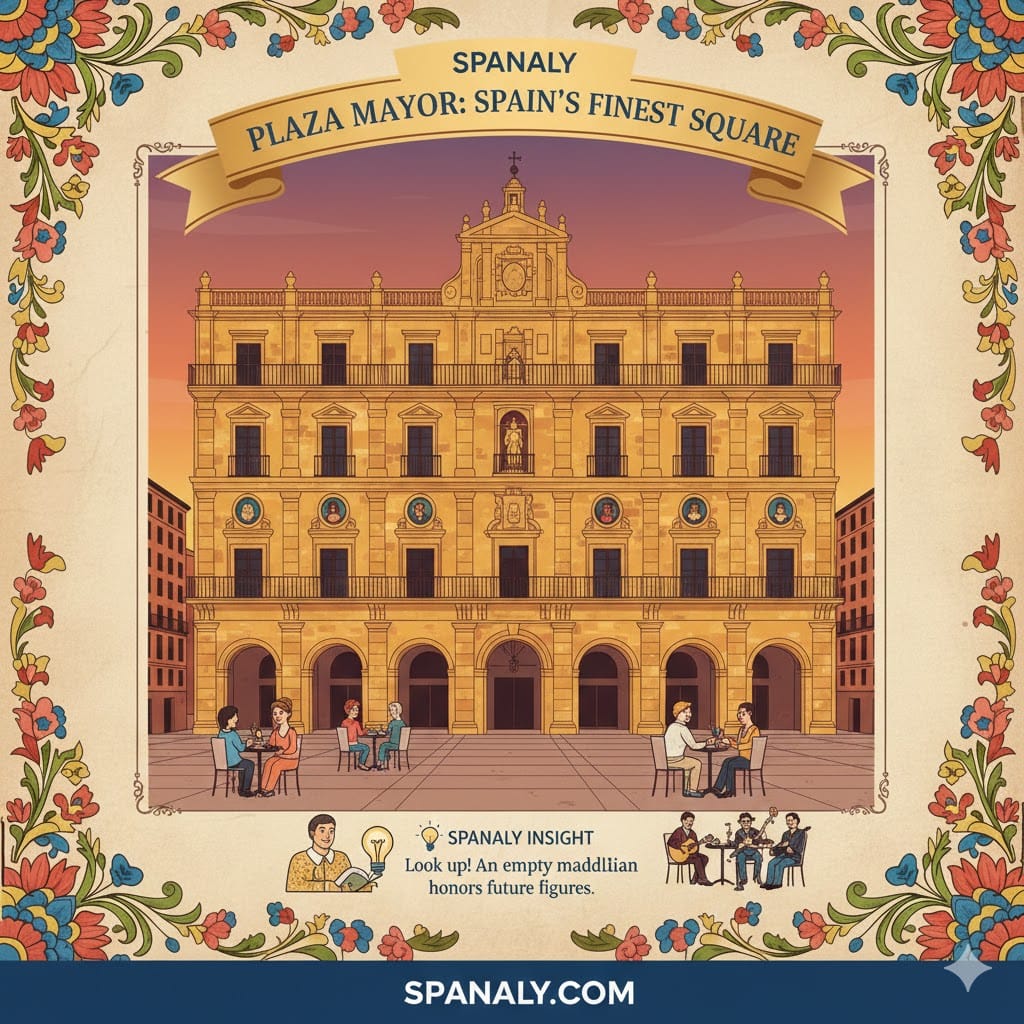
Many travelers agree that Salamanca’s Plaza Mayor is the most beautiful square in Spain. Notably, it shares a name with the famous red-brick square in Madrid. However, Salamanca’s version is a late-Baroque masterpiece. Specifically, its harmonious arches and bustling atmosphere create a cinematic experience for every visitor.
🏛️ Baroque Symmetry: You can admire 88 arches decorated with carved medallions. Notably, these carvings feature Spanish kings and historic figures.
☕ Cafe Culture: You should join the locals at Café Novelty. In fact, the great Miguel de Unamuno once frequented this historic spot.
✨ The Golden Distinction: This square glows with unique Villamayor stone. Specifically, the architecture turns a fiery orange-gold at sunset.
🎵 Nightlife Energy: The square transforms into a vibrant stage as darkness falls. Consequently, students and street performers fill the area with life.
Indeed, the architectural perfection here is truly iconic. Furthermore, it matches the coastal beauty you might find in Ibiza. Ultimately, this Plaza remains the undeniable heart of the city whether you visit by day or night.
💡 Spanaly Insight: Look at the medallions! In fact, you will notice some empty spaces. Notably, builders left these blank for future historical figures. Therefore, the square remains a living monument awaiting new legends.
🤫 Mysteries: The Frog & Devil’s Cave
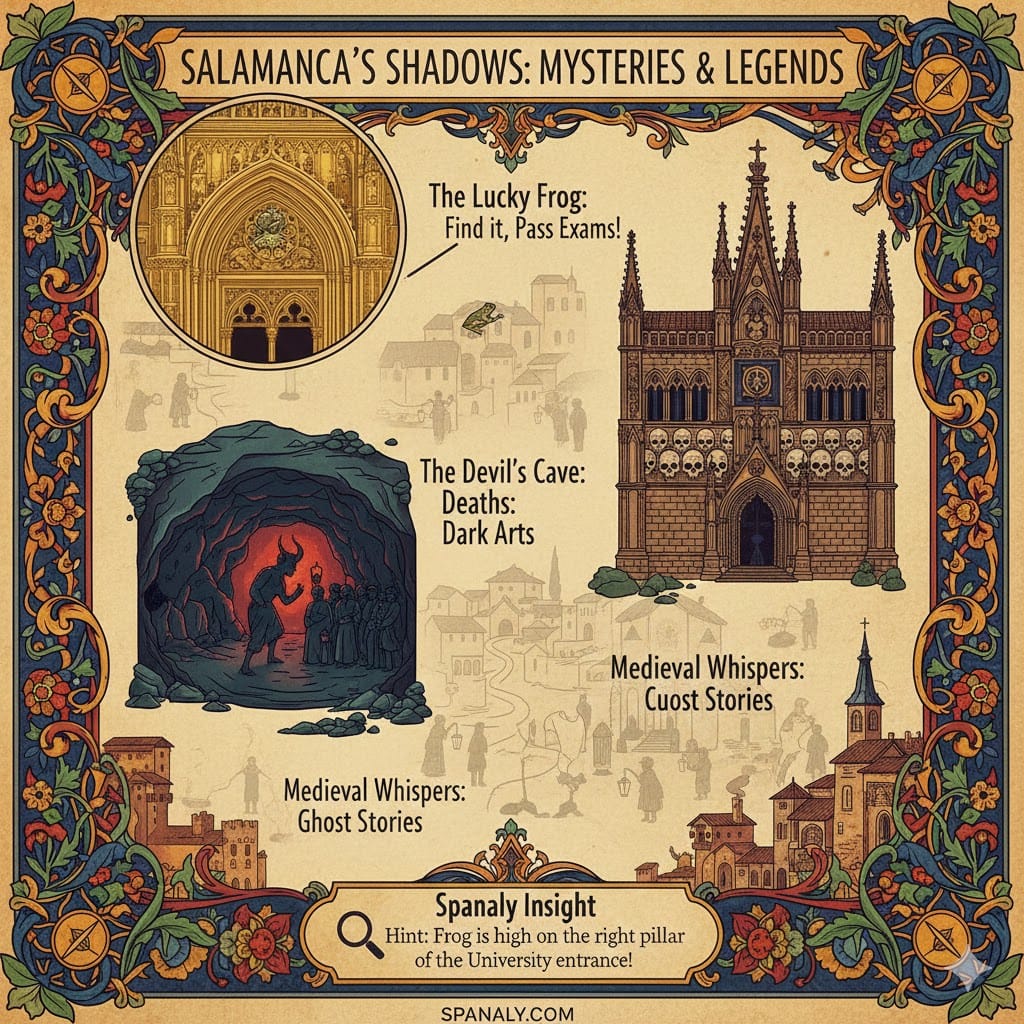
Salamanca is a city built on captivating legends. Notably, it hides mystical secrets that have fascinated travelers for centuries beyond its academic prestige. Specifically, the city’s folklore ranges from academic superstitions to dark tales of the occult. Consequently, it possesses a deep symbolic weight similar to our Alhambra Granada Guide.
🐸 The Lucky Frog: You can find this hidden gem on the University’s ornate façade. Specifically, legend says students who spot the stone frog on a skull enjoy academic success.
🕯️ The Devil’s Cave: This mystery lies in the crypt of San Cebrián. Notably, stories claim the Devil taught dark arts to a chosen few here for seven years.
💀 The House of Deaths: This palace features stone skulls on its exterior. Furthermore, haunting tales of ancient family curses and mysterious events shroud the building.
👥 Medieval Whispers: The narrow streets of the historic quarter act as a stage for ghost stories. Indeed, these tales keep the city’s ancient spirit alive.
Indeed, these tales are woven into the very stones of the city. Ultimately, exploring the mysteries of Salamanca proves one thing. Notably, the “Golden City” possesses a shadow side that is just as captivating as its sunlit cathedrals.
💡 Spanaly Insight: Need a hint? In fact, do not just stare at the entire facade. Notably, look at the right-hand pillar of the University entrance. Specifically, the frog sits quite high up on one of the three carved skulls!
🐚 Architectural Jewels: Casa de las Conchas
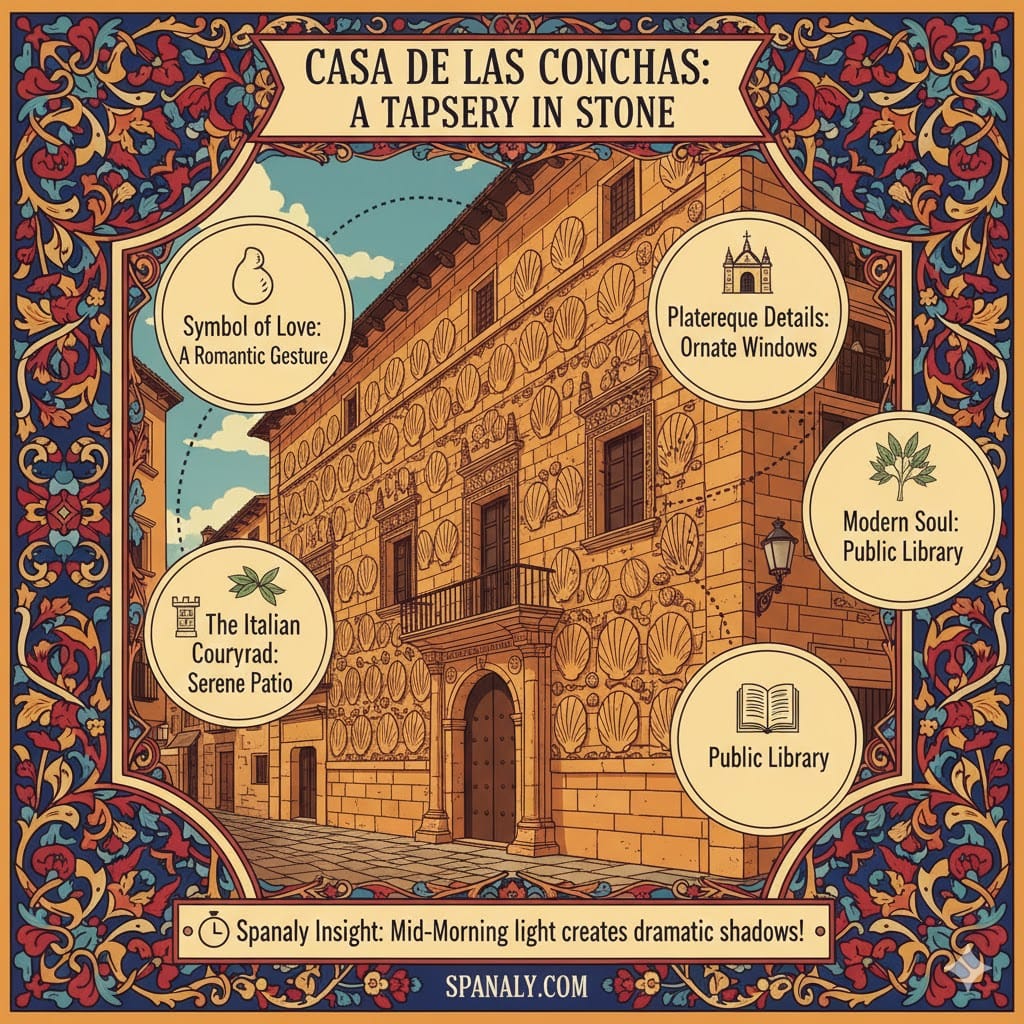
The Casa de las Conchas stands as the most iconic civil building in the city. Notably, workers completed this masterpiece in 1517. Specifically, over 300 stone scallop shells adorn its exterior walls. Consequently, these shells represent more than decoration; they symbolize the Order of Santiago and the city’s pilgrimage roots.
❤️ Symbol of Love: Rodrigo Arias Maldonado commissioned these shells as a romantic gesture. Specifically, he honored his wife whose family coat of arms featured the shell.
🪟 Plateresque Details: You should admire the delicate ironwork on the windows. In fact, experts consider this ironwork some of the finest in Spain.
🏛️ The Italian Courtyard: You can discover a serene two-story patio inside. Notably, this space blends Gothic, Moorish, and Renaissance elements perfectly.
📚 Modern Soul: This historic palace now serves as the city’s public library. Furthermore, it creates a unique space where ancient stone meets modern knowledge.
Indeed, the architectural uniqueness of this palace is truly captivating. Furthermore, it rivals the historic beauty of the Alcazar of Segovia. Ultimately, the Casa de las Conchas stands as a testament to Salamanca’s rich personal and religious legacy.
💡 Spanaly Insight: Look for the shadows! In fact, mid-morning is the best time to photograph the facade. Notably, the sun creates a rhythmic pattern of light and shadow across the golden shells.
🌉 The Roman Bridge: A Walk Across Time
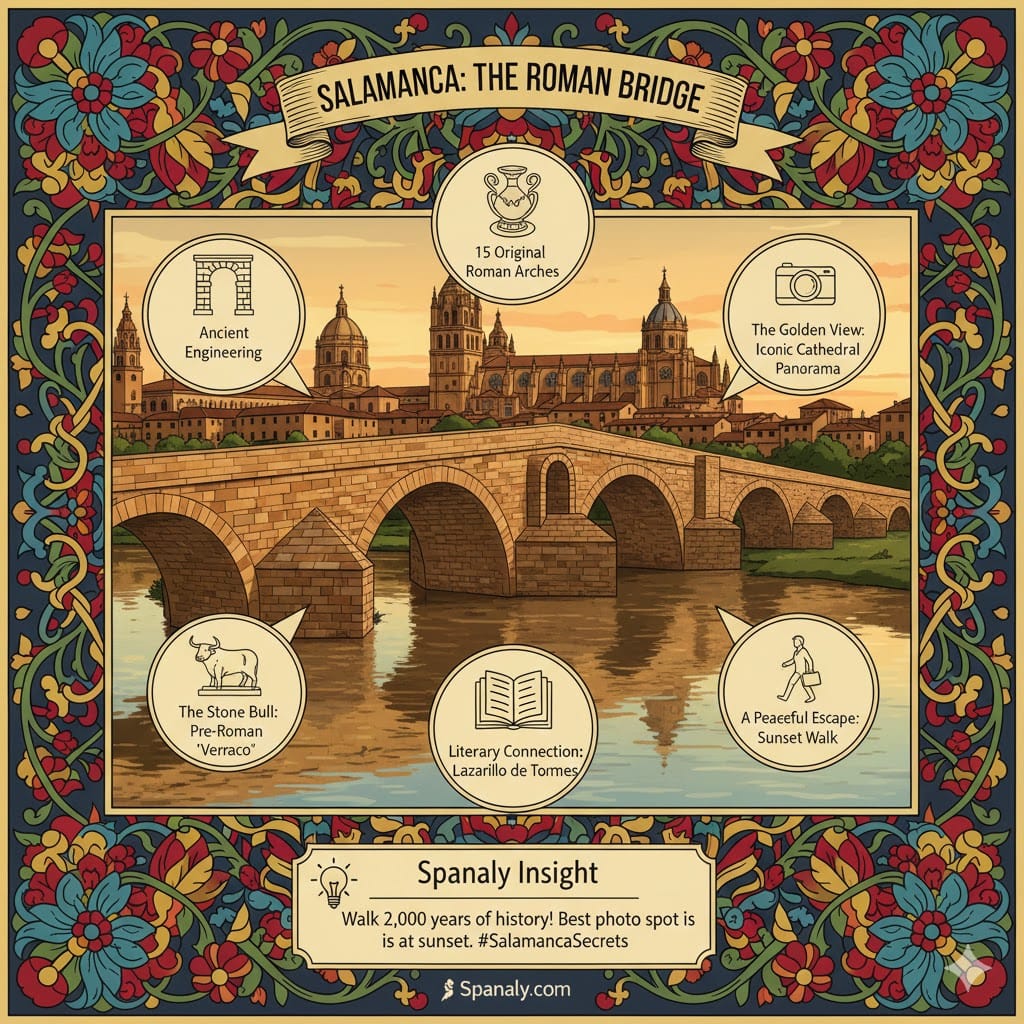
The Roman Bridge (Puente Romano) serves as a monumental link to Salamanca’s ancient origins. Notably, it dates back to the 1st century AD during Emperor Trajan’s reign. Specifically, it has stood firm against the Tormes River for two millennia. Consequently, it remains a vital part of the historic “Vía de la Plata” route.
🏗️ Ancient Engineering: Original Roman structures form 15 of its 26 arches. Notably, these arches showcase incredible durability after centuries of use.
🐂 The Stone Bull: You will find a pre-Roman Celtic statue (Verraco) at the entrance. In fact, this bull symbolizes the city’s ancient Vaccaei roots.
📸 The Golden View: This spot attracts photographers from around the world. Specifically, it offers the most famous panoramic view of the Cathedrals reflecting in the water.
🌿 A Peaceful Escape: Walking across the bridge at sunset provides a tranquil break. Furthermore, it allows you to escape the bustling university streets.
Indeed, the historic weight of this bridge is truly significant. Furthermore, it matches the cultural importance found in our Seville Travel Guide. Ultimately, crossing these ancient stones is a journey through 2,000 years of Spanish history.
💡 Spanaly Insight: Look for the literary connection! In fact, this bridge appears in the famous 16th-century novel Lazarillo de Tormes. Notably, you can find a small statue nearby honoring this masterpiece of Spanish literature.
🥘 Culinary Identity: Hornazo & Beyond

The gastronomy of Salamanca is a hearty celebration of Castilian tradition. Notably, the city is famous for its high-quality meats and cured hams, but its true culinary soul lies in the “Hornazo.” Specifically, this savory meat pie is the undisputed king of local festivals, representing a rich blend of history and flavor in every bite.
🥧 The Hornazo: A golden pastry stuffed with pork loin, chorizo, and hard-boiled eggs. Traditionally eaten on “Lunes de Aguas” (Water Monday) to celebrate the end of Lent.
🥓 Ibérico Excellence: As part of the Guijuelo region, Salamanca offers some of the world’s finest Jamón Ibérico. Don’t leave without tasting it!
🍲 Farinato: A unique local sausage made with breadcrumbs, lard, and spices—often served with fried eggs for a traditional “power breakfast.”
🍬 Sweet Traditions: Try the Bollo Maimón, a light sponge cake, or Amarguillos (almond cookies) crafted in the city’s historic convents.
Indeed, the depth of flavor found in these traditional dishes is as authentic as the recipes you’ll discover in a Traditional Spanish Food Guide. Ultimately, a meal in Salamanca is not just about eating; it’s about savoring the rustic and honest spirit of central Spain.
💡 Spanaly Insight: Timing is everything! In fact, if you visit on a Monday, you might find many locals heading to the riverbanks. Notably, this is a centuries-old tradition where friends gather to share a large Hornazo in the open air.
🌙 The Nocturnal Glow: Salamanca by Night
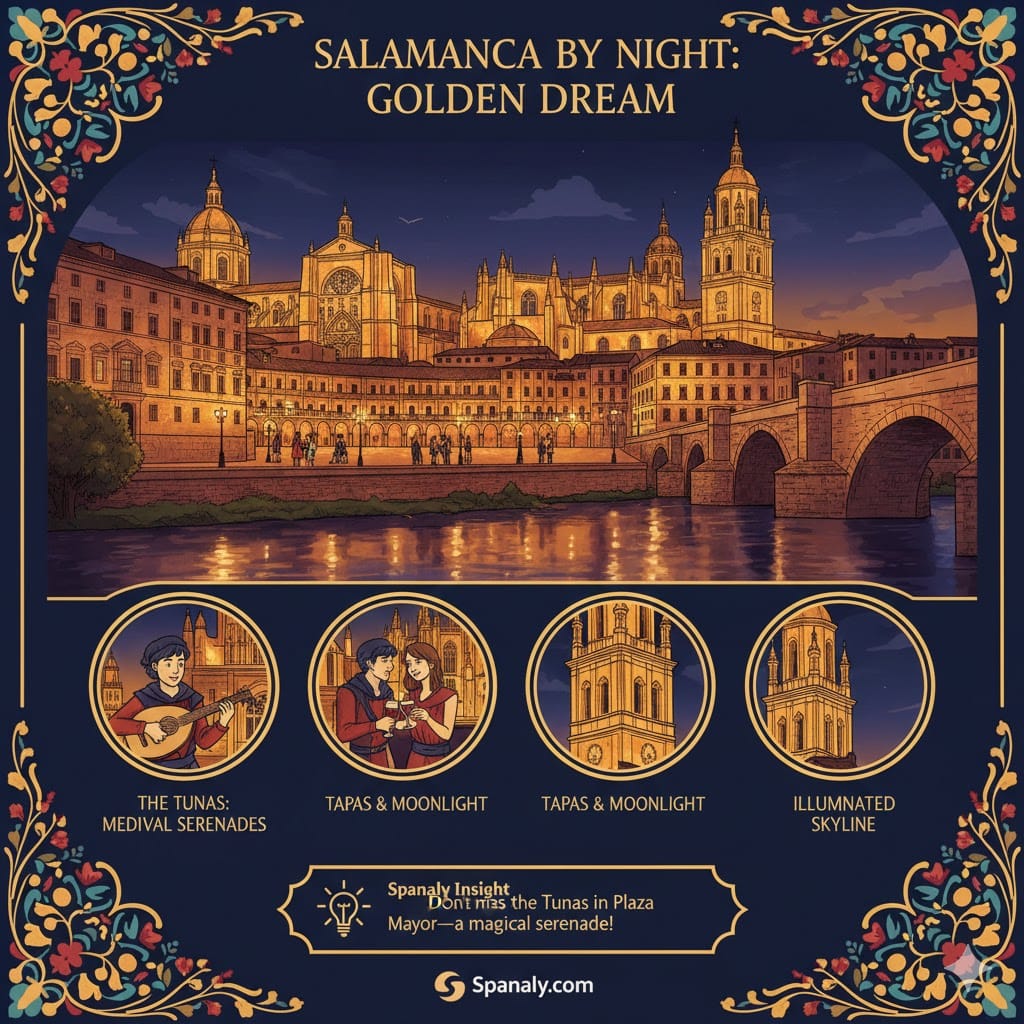
When the sun sets, Salamanca undergoes a breathtaking transformation. Notably, the city is famous for its award-winning night lighting, which accentuates the golden hues of the Villamayor stone. Specifically, walking through the streets after dark feels like stepping into a romantic, living museum where every arch and tower glows with a warm, amber intensity.
✨ The Golden Facades: See the Cathedrals and the University in a whole new light. The shadows highlight intricate carvings that are often missed during the day.
🎻 Plaza Mayor Magic: The main square becomes a vibrant theater of light, filled with students, street musicians, and a lively, safe atmosphere.
🌉 Illuminated Skyline: For the best view, head back to the Roman Bridge. In fact, the reflection of the illuminated cathedrals in the Tormes River is the city’s most iconic night-time photo.
🍷 Tapas & Moonlight: The historic center stays alive well into the night, offering a perfect blend of silent, moonlit alleys and bustling tapas bars.
Indeed, the nighttime energy here is as captivating and safe as the famous Night Safety in Barcelona guidelines suggest for top Spanish cities. Ultimately, you haven’t truly seen Salamanca until you have walked its streets under the nocturnal golden glow.
💡 Spanaly Insight: Don’t rush to sleep! In fact, Salamanca is known for its “Tunas”—groups of university students dressed in traditional medieval costumes who roam the streets playing mandolins and singing serenades. Notably, catching a performance in the Plaza Mayor under the night lights is a quintessential local experience.
🌿 Hidden Sanctuaries: The Garden of Calixto and Melibea
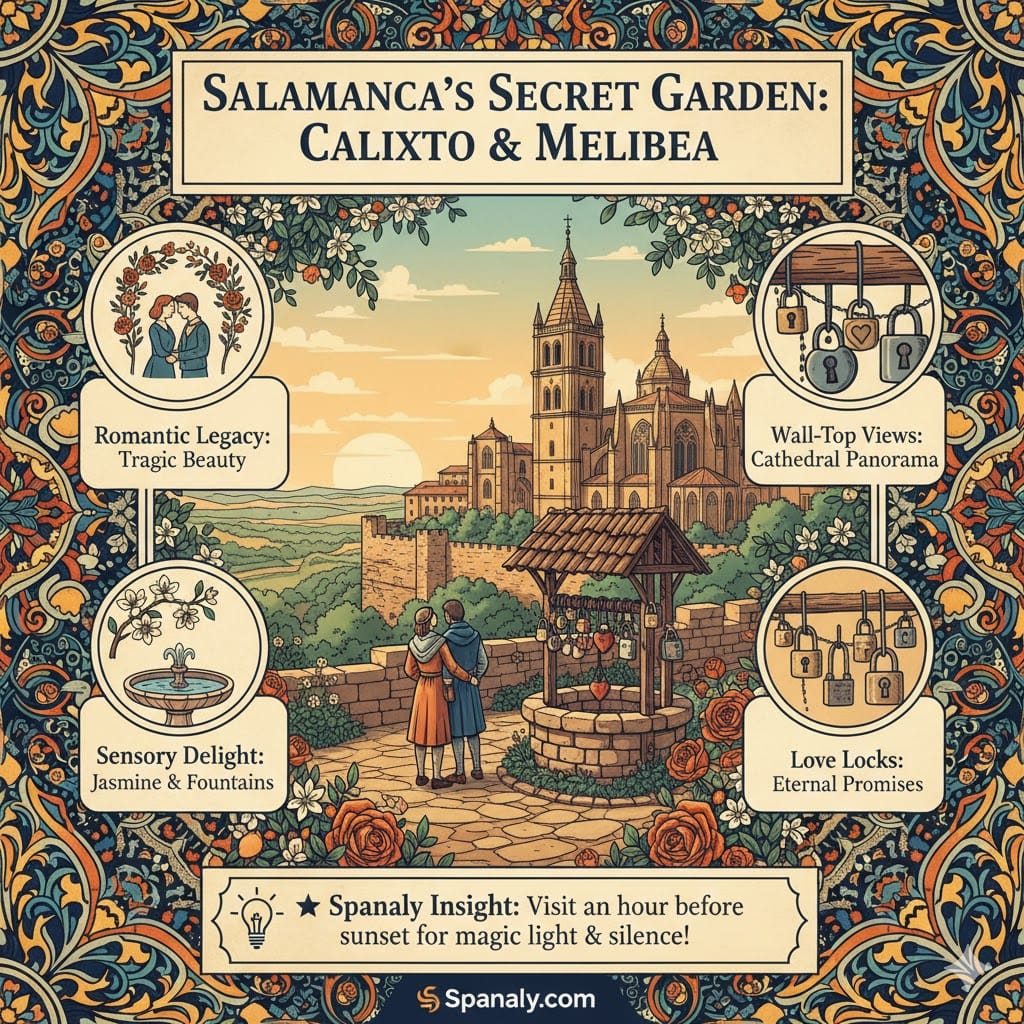
High above the city walls lies a secret paradise: the Huerto de Calixto y Melibea. Notably, this lush garden is believed to be the setting of the tragic 15th-century masterpiece La Celestina. Specifically, it offers a serene escape from the stone-paved streets, providing a green sanctuary where time seems to stand still.
🌹 Romantic Legacy: Named after the star-crossed lovers of Spanish literature, the garden is a symbol of romance and tragic beauty.
🏰 Wall-Top Views: Stroll along the ancient fortifications for a unique perspective of the Cathedrals and the Tormes river valley.
🍃 Sensory Delight: Wander through its well-kept paths filled with the scent of jasmine, roses, and the sound of trickling fountains.
🗝️ Love Locks: Much like the famous bridges in Europe, you’ll find the “Well of Desires,” where couples leave locks to seal their eternal love.
Indeed, the peaceful charm of this garden is as restorative as a morning walk through Maria Luisa Park in Seville. Ultimately, the Huerto is the perfect place to pause and reflect on the layered history of the Golden City.
💡 Spanaly Insight: Timing is key! In fact, while beautiful all day, the garden is most magical an hour before sunset. Notably, you can watch the light hit the Cathedral towers while enjoying the relative silence of this hidden gem.
🚉 Practical Logistics: Your Perfect Trip to Salamanca

Planning a visit to the Golden City is remarkably easy, whether you are staying for a weekend or visiting as a day trip from Madrid. Notably, the city is compact and pedestrian-friendly, making it one of the most accessible cultural escapes in central Spain.
🚆 Getting from Madrid: The best way is via the ALVIA high-speed train from Chamartín Station. Specifically, the journey takes about 1 hour and 40 minutes, bringing you directly to the heart of the city.
📅 Best Time to Visit: Spring (April-June) and Autumn (September-October) offer the most pleasant weather. In fact, avoid mid-August if you dislike intense Castilian heat.
👟 Footwear is Key: Salamanca’s historic center is entirely paved with ancient stones. Notably, wearing comfortable walking shoes is essential to enjoy the climbs up the cathedral towers.
💡 The Day Trip Strategy: If visiting for just one day, arrive by 10:00 AM. Ultimately, this allows you to see the University and Cathedrals before the midday “Siesta” and enjoy the sunset at Plaza Mayor before your return train.
Indeed, the ease of travel here is comparable to the seamless connections found in our Getting Around Madrid guide. Ultimately, Salamanca is a destination where the logistics are simple, allowing you to focus entirely on its historic beauty.
💡 Spanaly Insight: Book in advance! In fact, the high-speed trains to Salamanca are very popular and often sell out on weekends. Notably, buying your Renfe tickets at least two weeks early can save you both money and stress.
🎓 Visitor FAQs – Salamanca: The Golden City
✨ Why is Salamanca known as the "Golden City"?
The nickname comes from the Villamayor sandstone used in its monuments. High iron content in the stone oxidizes over time, creating the warm, amber glow that defines the skyline, particularly during the sunset hours.
🐸 How can I find the famous "Frog" at the University?
Look at the right-hand pillar of the main entrance (Plateresque façade). The stone frog is perched atop one of three skulls. Legend holds that students who spot it without assistance are granted academic success—a long-standing tradition in this university city.
🥪 What are the must-try local specialties?
Don't miss the Hornazo, a savory meat pie emblematic of the region. For the full experience, pair it with local Ibérico ham, widely considered some of the best in the world due to the nearby Guijuelo curing traditions.
🏰 Are both Cathedrals accessible with one ticket?
Yes. The Old and New Cathedrals are physically integrated, and a single visit allows you to witness the evolution from Romanesque to Baroque styles. Be sure to climb the Ieronimus towers for the best panoramic views.
🚆 What is the most efficient way to reach Salamanca?
The Alvia high-speed train from Madrid-Chamartín is the fastest option (approx. 1h 40m). The city is very pedestrian-friendly, so once you arrive at the station, a short taxi ride or a 15-minute walk will bring you to the historic heart.
🖋️ Salamanca’s Lasting Glow
Salamanca is more than a destination; it is a living masterpiece where golden stones meet youthful energy. Notably, the city leaves an indelible mark on every traveler through its timeless beauty and hidden stories.
✨ Eternal Radiance: The memory of the amber sunset at Plaza Mayor stays with you long after you leave.
🎓 Living History: From university legends to cathedral mysteries, every corner tells a story.
🥘 True Flavors: The rustic taste of Hornazo remains the ultimate symbol of Castilian hospitality.
📜 Iconic Heritage: This city stands as a crown jewel within our Spain historical monuments guide.
Indeed, Salamanca proves that history is not just found in books, but in every glowing alleyway. Ultimately, we hope this guide helps you unlock the magic of the Golden City.
👋 Safe Travels! May your journey through the heart of Spain be as bright and unforgettable as the stones of Salamanca itself.