Table of Contents
Toggle📋 Ultimate Spain Trip Checklist
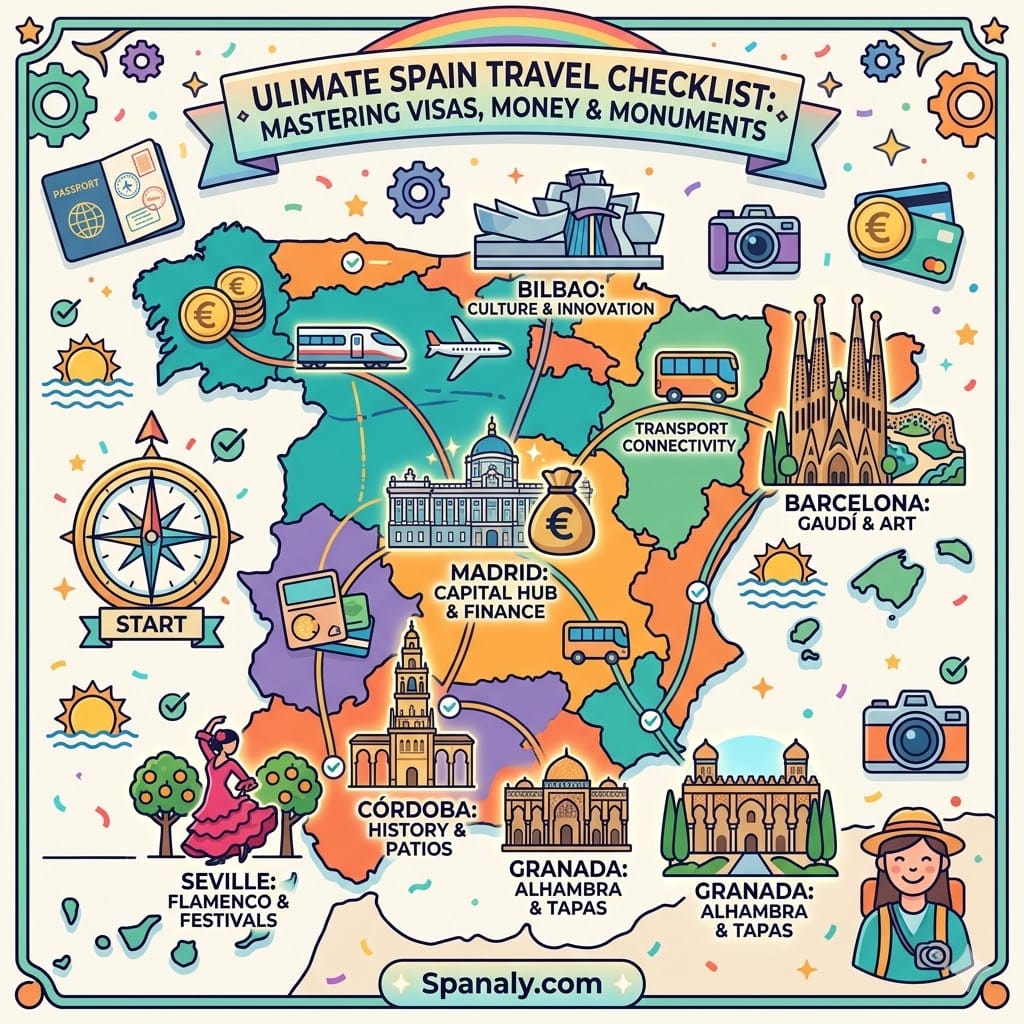
Planning a journey to the land of passion, tapas, and sun-drenched plazas is exhilarating, yet forgetting a single document can turn a dream into a logistical headache. To ensure your adventure remains seamless, we have crafted the ultimate Spain trip checklist—a comprehensive tool designed to cover every detail from legal requirements to local etiquette.
🚀 Why You Need This Checklist Today:
🛡️ Total Preparation: We cover the “unspoken” essentials that general guides often overlook.
💸 Budget Mastery: Avoid hidden fees and master the local currency rules before you land.
🚆 Logistics Simplified: From high-speed rail hacks to the most reliable Essential Spain Travel Tips for navigating the peninsula.
🕒 Time-Saving: Stop searching through dozens of tabs; everything you need is consolidated right here.
💡 Spanaly Insight: A successful trip to Spain isn’t just about packing your suitcase; it’s about aligning your rhythm with the Spanish soul. Specifically, understanding the daily flow—from late dinners to the afternoon siesta—is the secret to traveling like a local rather than a tourist.
✅ Quick Spain Checklist: Must-Haves
Specifically, verify these seven essentials before heading to the airport.
✓ Passport valid (6+ months)
✓ Comprehensive Travel insurance
✓ Cash (Euros) + Travel card
✓ Universal power adapter (Type F/C)
✓ Offline maps (Google/Maps.me)
✓ Train/Flight tickets (Digitals + PDFs)
✓ Confirmed Accommodation bookings
🛂 Essential Travel Documents: Your Legal Shield
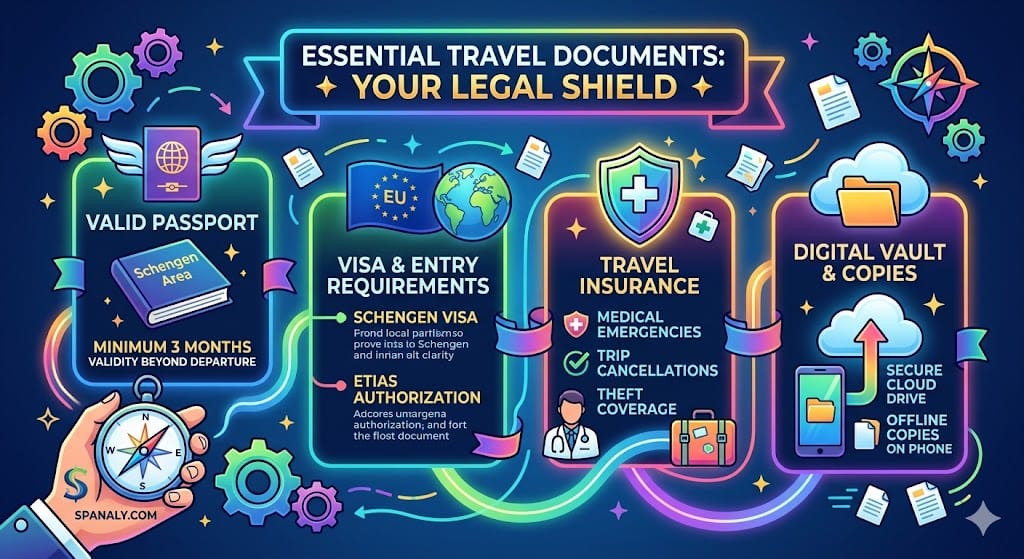
Before you even think about packing your suitcase, ensuring your legal documents are in order is non-negotiable. Spain’s entry requirements are strict but straightforward if you follow this checklist.
📋 Documentation Checklist:
🛂 Passport Validity: Your passport must be valid for at least three months beyond your intended departure date from the Schengen Area.
🇪🇺 Visa Requirements: Check if you need a Schengen Visa or an ETIAS authorization. Specifically, visitors from non-EU countries should verify their status via our Spain Visa Entry Requirements guide to avoid airport surprises.
🛡️ Travel Insurance: This is more than just a recommendation; it is a safety net. Ensure your policy covers medical emergencies, trip cancellations, and theft. In fact, we have detailed everything you need in our Travel Insurance Spain Guide.
📁 The “Digital Vault”: Always keep digital copies of your passport, insurance, and flight tickets on a secure cloud drive (like Google Drive) and an offline version on your phone.
💡 Spanaly Insight: Never rely solely on your smartphone. Specifically, print one physical copy of your Travel Insurance policy and hotel bookings. If your battery dies or you lose connection in a historic stone building, having that piece of paper is a lifesaver.
💳 Money & Payments: Cash vs. Card in Spain
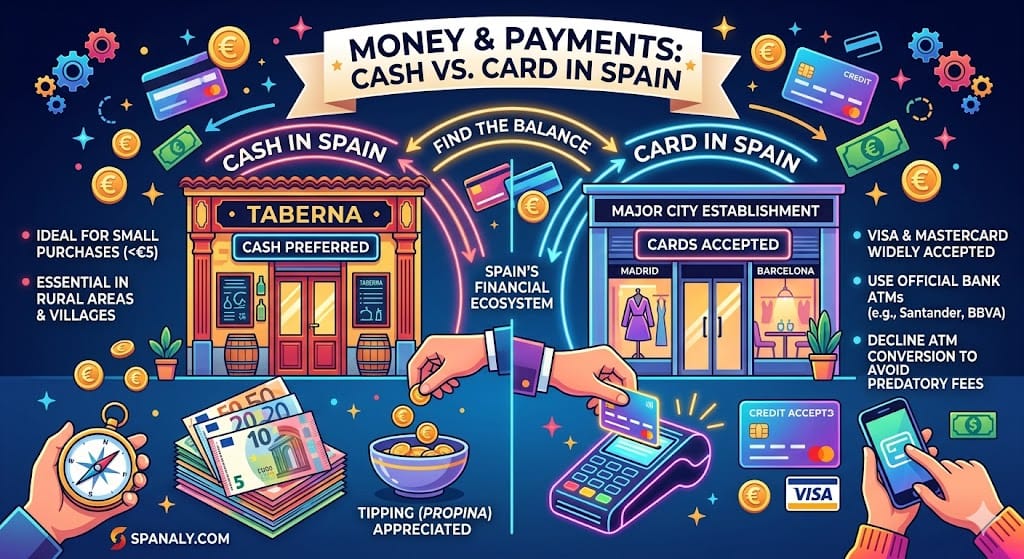
Managing your finances in Spain requires a blend of modern tech and old-school pocket change. While major cities are highly digitized, Spain’s soul often hides in small “Tabernas” where cash is still king.
💰 Financial Checklist & Pro-Tips:
💳 Card Acceptance: Most establishments in cities like Madrid and Barcelona accept Visa and Mastercard. However, for small purchases (under €5), many local shops prefer cash to avoid high merchant fees.
🏦 ATM Strategy: Always choose “Decline Conversion” at ATMs to let your home bank handle the exchange rate. Specifically, seek out official bank ATMs (like Santander or BBVA) and avoid independent “Euronet” kiosks to bypass predatory fees.
💶 The “Rural Cash” Rule: If you are exploring the white villages of Andalusia or remote parts of the North, always carry at least €50 in small denominations. Many family-owned spots do not accept cards.
☕ Tipping Etiquette (The Propina): Tipping is not mandatory but appreciated. Specifically, for a coffee or a quick tapas round, leaving the small change is enough. For a full sit-down dinner, a 5-10% tip is considered generous for excellent service.
💡 Spanaly Insight: Don’t let your budget catch you off guard. In fact, checking our Spain Travel Budget guide before you land will help you estimate daily costs—from the morning café con leche to your evening flamenco show—ensuring you stay within your limits.
🎒 Packing Checklist: Smart Gear for Every Season
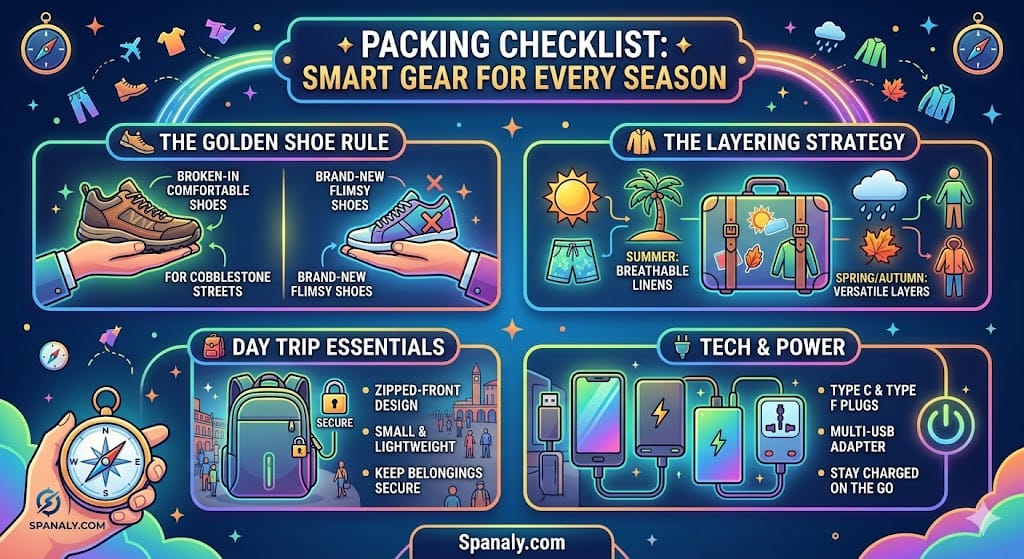
Packing for Spain is an art of balance. Whether you are strolling through the Gothic Quarter in Barcelona or hiking the rugged Picos de Europa, your suitcase needs to be versatile, lightweight, and culturally appropriate.
👟 The Essential Packing Checklist:
🚶 The Golden Shoe Rule: Spain is best explored on foot. Specifically, bring broken-in walking shoes or high-quality sneakers. Avoid brand-new shoes or flimsy flip-flops, as the historic cobblestone streets in cities like Toledo or Seville are unforgiving.
🧥 The Layering Strategy: Coastal breezes in San Sebastian differ greatly from the dry heat of Madrid. Pack breathable linens for summer and a versatile light jacket for spring or autumn evenings.
🎒 Day Trip Essentials: A small, anti-theft backpack is vital. Specifically, ensure it has a zipped-front design to keep your belongings secure in crowded plazas.
🔌 Tech & Power: Spain uses Type C and Type F plugs (two round pins). In fact, a universal adapter with multiple USB ports is the most efficient way to keep your devices charged.
💡 Spanaly Insight: Don’t overpack “just in case” items. Spain is a global fashion hub with excellent local brands like Zara and Mango. If you forget something, specifically a seasonal layer, buying it locally is often cheaper and serves as a functional souvenir. For a deeper dive into seasonal specifics, check our complete guide on What to Pack for Spain.
🚆 Transportation & Logistics: Seamless Connectivity
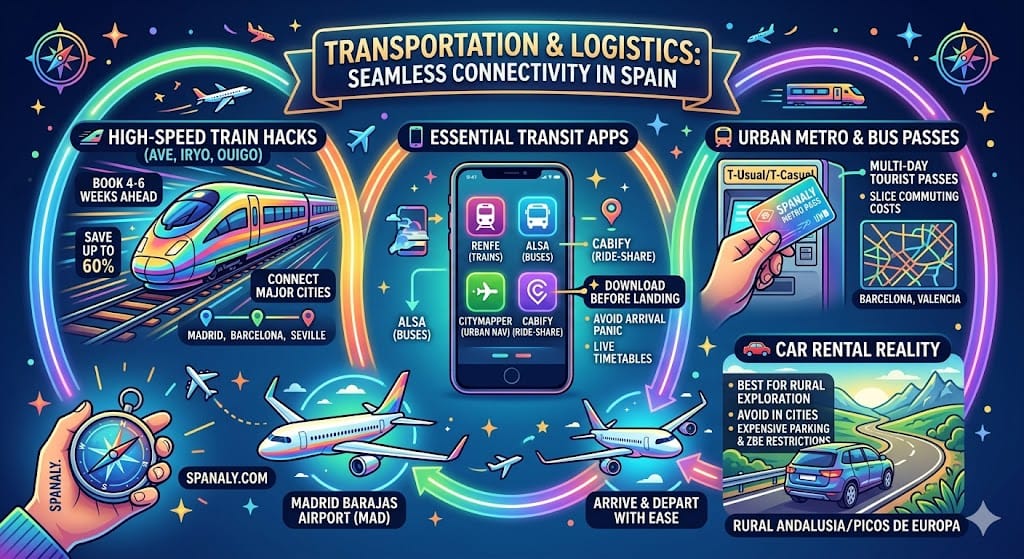
Navigating Spain is a highlight of the trip itself if you know which wheels to choose. Whether you are landing at Madrid Barajas Airport or taking the high-speed rail to the coast, efficiency is your best friend.
🎫 The Transit Checklist:
🚄 Train vs. Bus: For long distances, the high-speed train (AVE, Iryo, or Ouigo) is king. Specifically, book tickets at least 4-6 weeks in advance to save up to 60%. For budget-conscious travelers or shorter regional hops, buses like Alsa are reliable and modern.
📱 Essential Transit Apps: Download Renfe for trains, Citymapper for urban navigation in Madrid and Barcelona, and Cabify or Uber for ride-sharing. In fact, having these ready before you land will save you from the “Arrival Panic.”
🚇 The Metro Pass: Major cities offer multi-day tourist passes. Specifically, in Barcelona, the Public Transport Barcelona Guide explains how a T-Usual or T-Casual card can slash your commuting costs.
🚗 Car Rental Reality: Only rent a car if you are exploring rural Andalusia or the Picos de Europa. Inside cities, parking is expensive and many historic centers are “ZBE” (Zero Emission Zones) with restricted access.
💡 Spanaly Insight: Don’t forget to validate your ticket! Specifically on buses and local “Cercanías” trains, failing to scan your card upon entry—even if you have a pass—can lead to heavy on-the-spot fines. For a full breakdown of your options, check our guide on Getting Around Spain.
🏨 Accommodation Planning: Staying in the Heart of Spain
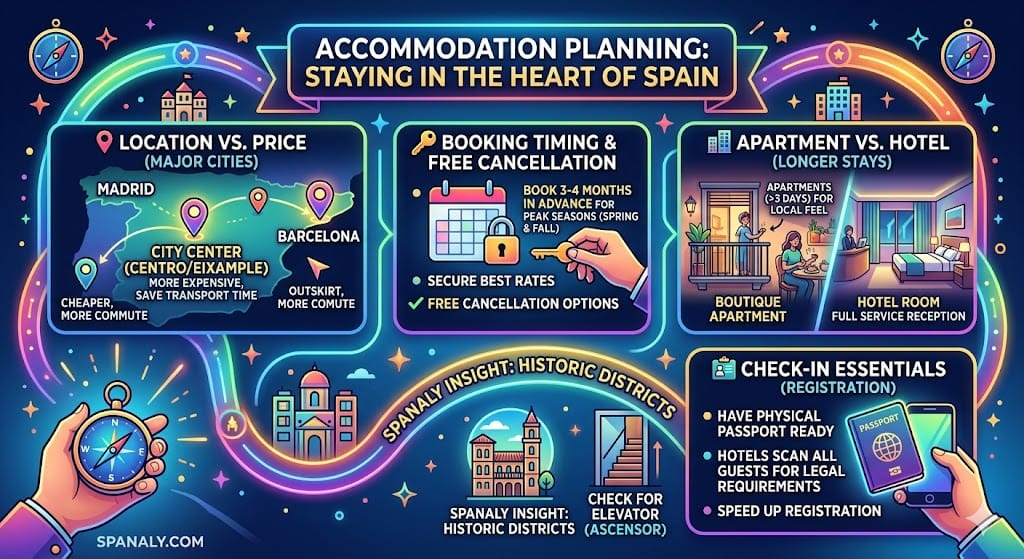
Choosing where to lay your head is one of the most critical decisions in your Spain Travel Itineraries. From historic “Paradores” to modern boutique apartments, the right location can save you hours of commuting time.
🏠 The Accommodation Checklist:
📍 Location vs. Price: In major cities, specifically Madrid and Barcelona, staying in the city center (Centro or Eixample) is more expensive but saves on transport. Use our Best Areas to Stay in Seville guide as a blueprint for choosing neighborhoods with character.
🔑 Booking Timing: Spain is a year-round destination. Specifically, for peak seasons (Spring and Fall), aim to book your stays at least 3-4 months in advance to secure the best rates and “Free Cancellation” options.
🏙️ Apartment vs. Hotel: For stays longer than 3 days, consider an apartment. This allows you to visit local markets and enjoy a slow breakfast like a local. In fact, checking our Barcelona Apartment Rentals Guide will give you a clear view of the pros and cons.
🛂 Check-in Essentials: In Spain, hotels are legally required to scan the passports of all guests. Specifically, have your physical passport ready at the front desk to speed up the registration process.
💡 Spanaly Insight: Always check for “Elevator” (Ascensor) in the description if you are booking in historic districts like the Gothic Quarter or Albaicín. Many charming, older buildings only have narrow staircases—a tough challenge if you are carrying heavy luggage!
📱 Tech & Connectivity: Staying 5G Ready
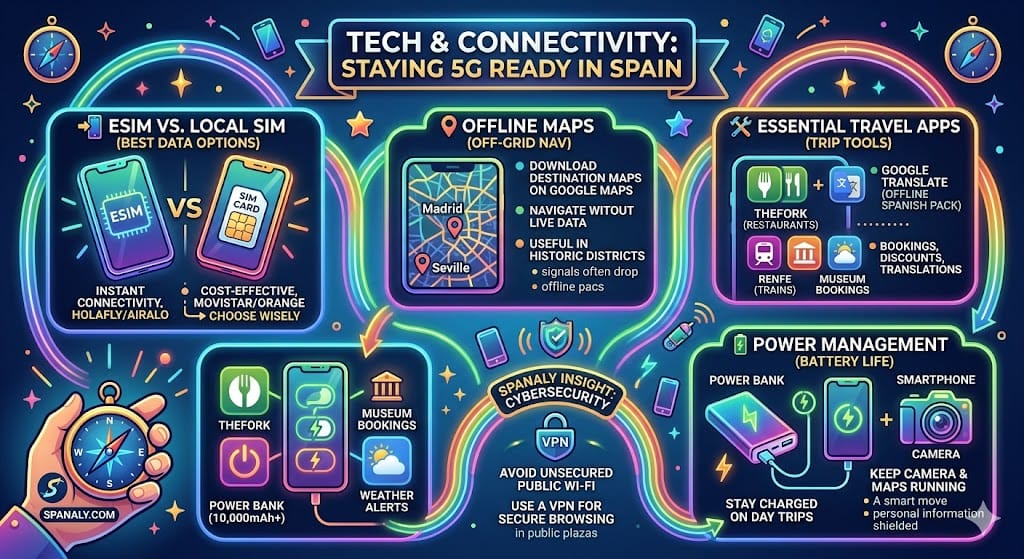
A seamless trip to Spain depends on your digital lifeline. From navigating the white villages of Andalusia to translating a menu in a remote Galician tavern, having the right tech setup is a game-changer.
📶 The Connectivity Checklist:
📲 eSIM vs. Local SIM: For instant connectivity, an eSIM (like Holafly or Airalo) is the most convenient option. However, if you need a local number for long stays, purchasing a physical SIM from Movistar or Orange is more cost-effective. Specifically, check our Internet and SIM Cards in Spain guide for the best providers.
📍 Offline Maps: Don’t rely solely on live data. Specifically, download offline versions of your destination cities on Google Maps. This ensures you can navigate even in historic stone districts where signals often drop.
🛠️ Essential Travel Apps: Beyond transport, ensure you have TheFork for restaurant discounts and Google Translate with the Spanish offline pack. In fact, our list of Top Tourist Apps in Spain covers everything from museum bookings to weather alerts.
🔋 Power Management: Spain’s beauty will drain your battery quickly. Specifically, carry a high-capacity power bank (10,000mAh+) to keep your camera and maps running during long day trips.
💡 Spanaly Insight: Public Wi-Fi in Spain is common but often unsecured. Specifically, avoid accessing your banking apps or sensitive data on “Free City Wi-Fi.” Using a VPN is a smart move to keep your personal information shielded while you browse in public plazas.
💃 Cultural Etiquette: Living Like a Spaniard
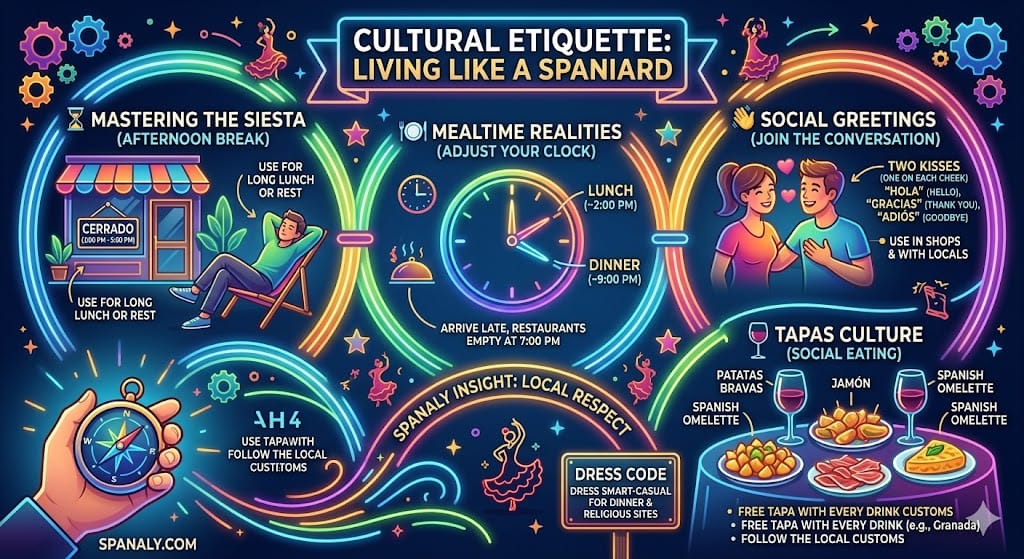
Spain is a country of deep traditions and a unique daily rhythm. To truly blend in, you must adjust your internal clock and follow the unwritten rules of social interaction that define the Spanish lifestyle.
🇪🇸 The Cultural Checklist:
⏳ Mastering the Siesta: Between 2:00 PM and 5:00 PM, many local shops in smaller cities close for the afternoon break. Specifically, use this time for a long lunch or a rest. Don’t expect full service in residential neighborhoods during these hours.
🍽️ Mealtime Realities: Spaniards eat late. Specifically, lunch starts around 2:00 PM, and dinner rarely begins before 9:00 PM. In fact, our Spain Daily Rhythm: Siesta & Mealtimes guide explains why showing up at 7:00 PM for dinner will often find you in an empty restaurant.
👋 Social Greetings: A simple “Hola” when entering a shop and “Gracias” or “Adiós” when leaving goes a long way. Specifically, when meeting locals, the “two kisses” (one on each cheek) is the standard social greeting, though a handshake is perfectly fine for formal encounters.
🍷 Tapas Culture: Tapas are often a social event, not just a meal. Specifically, in cities like Granada, you might get a free tapa with every drink. For the best experience, follow our guide on Cultural Etiquette in Spain to avoid common tourist faux pas.
💡 Spanaly Insight: Dress code matters more than you think. Specifically, while shorts and flip-flops are fine for the beach, Spaniards tend to dress “smart-casual” for dinner or when visiting religious sites like the Cathedral of Santiago de Compostela. Dressing up a bit will often get you better service and more respect from locals.
🎟️ Attraction & Activity Planning: Beating the Crowds
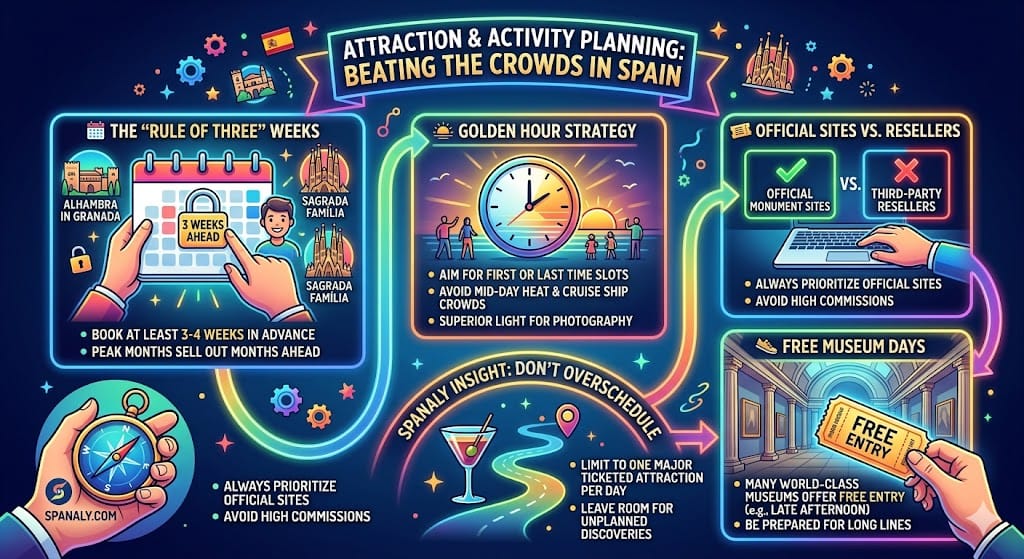
Mastering Spain’s iconic sights requires more than just showing up. With millions of visitors annually, the “spontaneous traveler” often faces “Sold Out” signs at the most breathtaking locations.
🏰 The Sightseeing Checklist:
📅 The “Rule of Three” Weeks: For world-class sites like the Alhambra in Granada or the Sagrada Família, specifically book your tickets at least 3-4 weeks in advance. During peak months, these can sell out months ahead.
🌅 Golden Hour Strategy: To avoid the mid-day heat and the cruise ship crowds, specifically aim for the first time slot in the morning (8:30 AM) or the last two hours before closing. The light for photography is also superior during these windows.
🎫 Official Sites vs. Resellers: Always prioritize booking through official government or monument websites. In fact, checking our Best Attractions in Spain guide will provide you with direct links to avoid paying high commissions to third-party resellers.
👟 Free Museum Days: Many world-class museums, specifically the Prado Museum in Madrid, offer free entry hours (usually late afternoon). However, be prepared for long lines and a more crowded experience.
💡 Spanaly Insight: Don’t overschedule your day with “Must-See” monuments. Specifically, limit yourself to one major ticketed attraction per day. Spain’s true magic lies in the unplanned hours spent getting lost in historic quarters or lingering over a second glass of vermouth in a hidden plaza.
💰 Budgeting Your Adventure: Daily Cost Breakdown
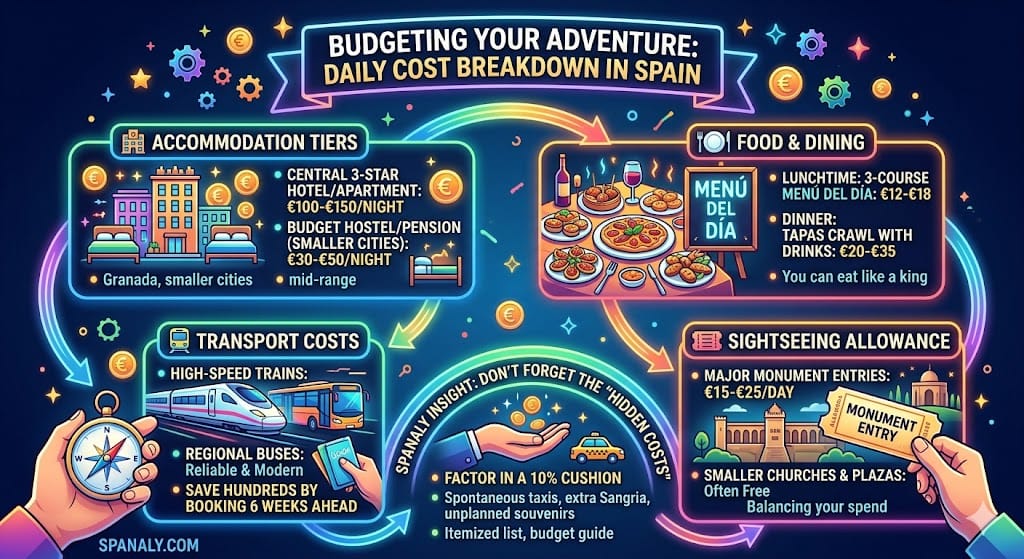
Financial planning is the backbone of a stress-free trip. Spain offers incredible value, but costs vary significantly between the bustling streets of Madrid and the quiet white villages of Andalusia.
📊 The Daily Budget Checklist:
🏨 Accommodation Tiers: For a mid-range experience, specifically budget €100-€150 per night for a central 3-star hotel or a boutique apartment. If you are on a budget, hostels or pensions in smaller cities like Granada can drop to €30-€50.
🍽️ Food & Dining: You can eat like a king without breaking the bank. Specifically, look for the “Menú del Día” (Menu of the Day) at lunchtime, which usually costs €12-€18 for three courses. For dinner, specifically budget €20-€35 for a tapas crawl with drinks.
🚆 Transport Costs: High-speed trains are efficient but pricey if booked late. In fact, our Spain Travel Budget shows how using regional buses or booking trains 6 weeks ahead can save you hundreds of euros.
🎟️ Sightseeing Allowance: Specifically set aside €15-€25 per day for major monument entries. Many smaller churches and local plazas are free, balancing out your daily spend.
💡 Spanaly Insight: Don’t forget the “Hidden Costs.” Specifically, factor in a 10% cushion for spontaneous taxi rides, unplanned souvenirs, or that extra round of Sangria in a sunset plaza. For a complete itemized list, check our Spain Travel Budget Calculator.
🌦️ Weather & Best Time to Visit: Regional Variations
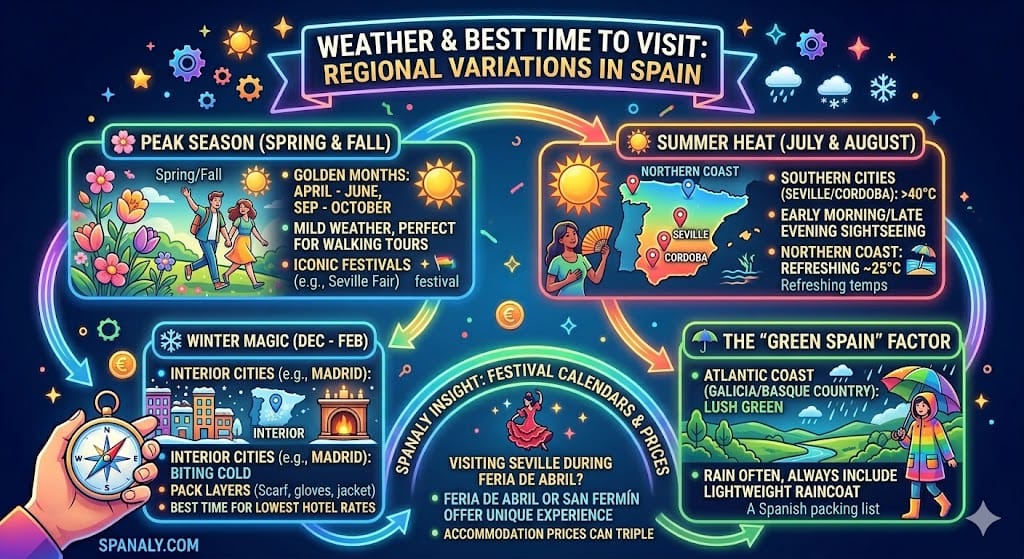
Spain’s diverse geography means you can experience “four seasons in one day.” Understanding the regional climate shifts is essential for a comfortable journey, especially when moving between the Atlantic north and the Mediterranean south.
🌤️ The Seasonal Checklist:
🌸 Peak Season (Spring & Fall): April to June and September to October are the “Golden Months.” Specifically, the weather is mild, perfect for walking tours. In fact, our Best Time to Visit Spain guide highlights these months for the iconic festivals.
☀️ Summer Heat (July & August): Southern cities like Seville and Cordoba can soar above 40°C. Specifically, plan your sightseeing for early morning and late evening. If you visit during summer, head to the Northern Spain Coast for refreshing 25°C temperatures.
❄️ Winter Magic: While the coast stays mild, Madrid and the interior can be biting cold. Specifically, pack layers if you are visiting between December and February. This is also the best time for budget travelers to find the lowest hotel rates.
☔ The “Green Spain” Factor: Don’t let the sun fool you; regions like Galicia and the Basque Country are lush because it rains often. Specifically, always include a lightweight, packable raincoat in your Spain Packing List.
💡 Spanaly Insight: Check the local “Feria” calendars before booking. Specifically, visiting Seville during Feria de Abril or Pamplona during San Fermín will offer a unique cultural experience, but accommodation prices can triple during these specific weeks.
⏱️ The 48-Hour Countdown: Final Pre-Departure Tasks
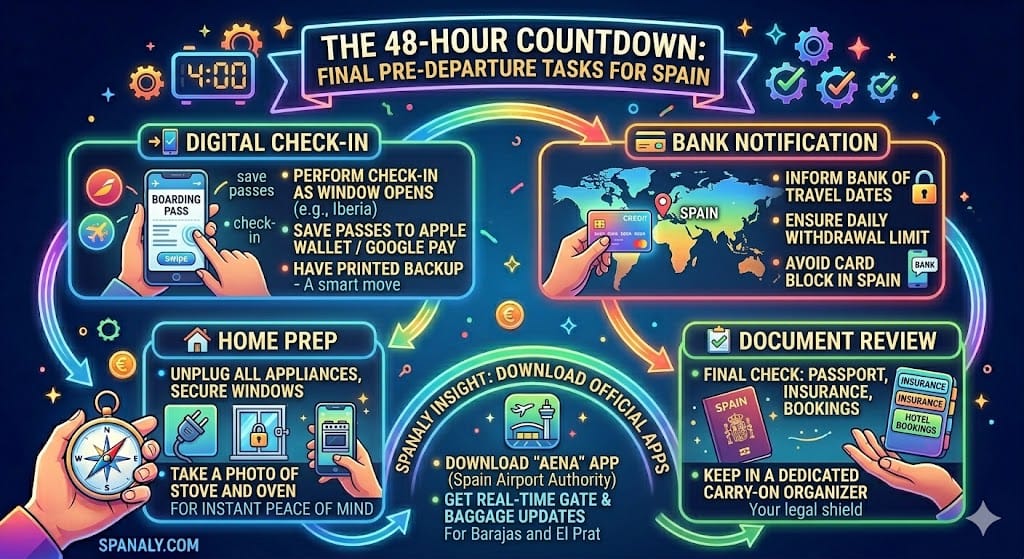
The bags are almost packed, and the excitement is building. However, the last 48 hours are crucial for ensuring a smooth entry into Spain. Specifically, following this clinical countdown will prevent any “airport-gate panics.”
⏳ The Final Checklist:
📲 Digital Check-in: Perform your airline check-in as soon as the window opens. Specifically, save your boarding passes to your Apple Wallet or Google Pay. In fact, our Barcelona ELPART Airport Guide recommends having a printed backup just in case of battery failure.
Bank Notification: Inform your bank of your travel dates to Spain. Specifically, ensure your daily withdrawal limit is sufficient for initial costs. You don’t want your card blocked during your first tapas dinner in Madrid!
🏠 Home Prep: Double-check that all appliances are unplugged and windows are secured. Specifically, take a photo of your stove and oven—this simple “Spanaly Tip” provides instant peace of mind during your long-haul flight.
🛂 Document Review: One last check for your physical passport, travel insurance policy, and hotel booking confirmations. Specifically, keep these in a dedicated “Travel Organizer” in your carry-on bag, not in your checked luggage.
💡 Spanaly Insight: Download the official “Aena” app (Spain’s airport authority). Specifically, it provides real-time updates on gate changes and baggage carousel numbers for all major Spanish airports like Barajas and El Prat, saving you from searching for monitors upon arrival.
🛡️ Health, Safety & Pro-Tips: Traveling with Peace of Mind
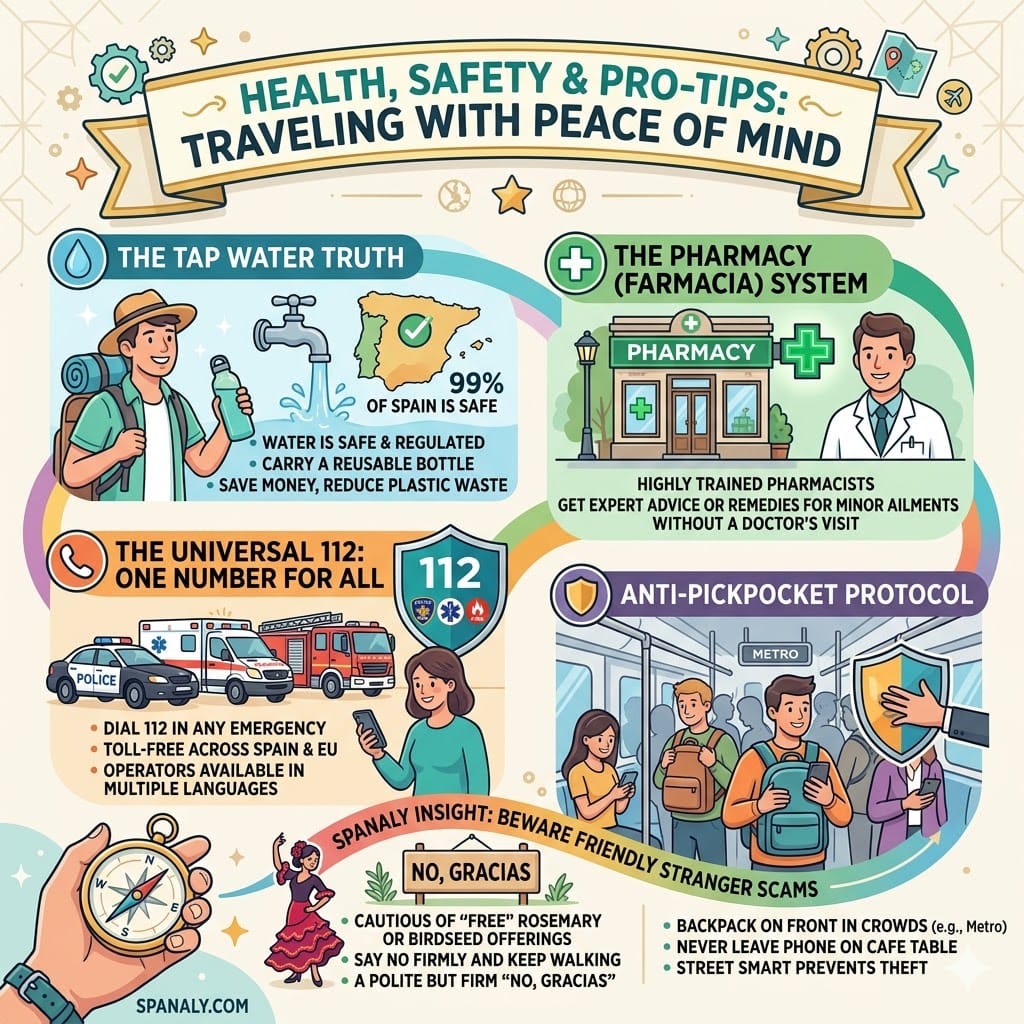
Your safety and well-being are the foundation of a great holiday. Spain is generally very safe, but being “street smart” and knowing the local health protocols ensures your adventure remains flawless.
🚑 The Health & Safety Checklist:
💧 The Tap Water Truth: In 99% of Spain, tap water (Agua del Grifo) is perfectly safe and highly regulated. Specifically, carry a reusable bottle to save money and reduce plastic waste during your city walks.
🟢 The Pharmacy (Farmacia) System: Look for the glowing green cross. Specifically, Spanish pharmacists are highly trained and can provide expert advice or over-the-counter remedies for minor ailments without a doctor’s visit.
📞 The Universal 112: In any emergency (Police, Fire, or Medical), specifically dial 112. This is the toll-free emergency number across Spain, with operators usually available in multiple languages for tourists.
🛡️ Anti-Pickpocket Protocol: In crowded areas like the Metro, specifically wear your backpack on your front. Specifically, never leave your phone or wallet on a cafe table, even for a few seconds.
💊 Prescription Backup: If you take regular medication, specifically bring the physical prescription and the generic chemical name. This ensures any local pharmacy can identify the correct Spanish equivalent if you run out.
💡 Spanaly Insight: Beware of the “Friendly Stranger” scams in tourist plazas. Specifically, avoid individuals offering “free” flowers, rosemary sprigs, or birdseed for photos. A polite but firm “No, gracias” while keeping your pace is the best way to handle these situations.
🛡️ Visitor FAQs – Essential Spain Trip Guide
🛍️ Are shops and museums open on Sundays in Spain?
🔌 Do I need a specific power adapter for my electronics?
💶 How much cash should I bring to Spain?
🎒 What should I not forget when traveling to Spain?
💵 Is tipping mandatory in Spanish restaurants and bars?
🚉 Can I use my contactless card directly on public transport?
🍷 Is it true that I have to pay for water in restaurants?
Ultimate Checklist Guide by Spanaly.com
You are now equipped with the ultimate expert checklist. From legal shields to cultural secrets, your Spanish adventure is no longer a dream—it’s a solid plan.
✅ Checklist Complete: You have the documents, the budget, and the tech ready.
💃 Embrace the Vibe: Spain is about the soul, not just the sights.
🎒 Travel Smart: Use these tips to stay safe and beat the crowds.
📅 Plan for Joy: Specifically, don’t forget to align your trip with local celebrations.
💡 Spanaly Final Tip: Want to see Spain at its most vibrant? Specifically, check our Major Spanish Festivals Guide to add a touch of local magic and fireworks to your itinerary.
Buen Viaje! Your unforgettable Spanish story starts the moment you land. 🇪🇸✨