
Table of Contents
Toggle🚀 Mastering Valencia
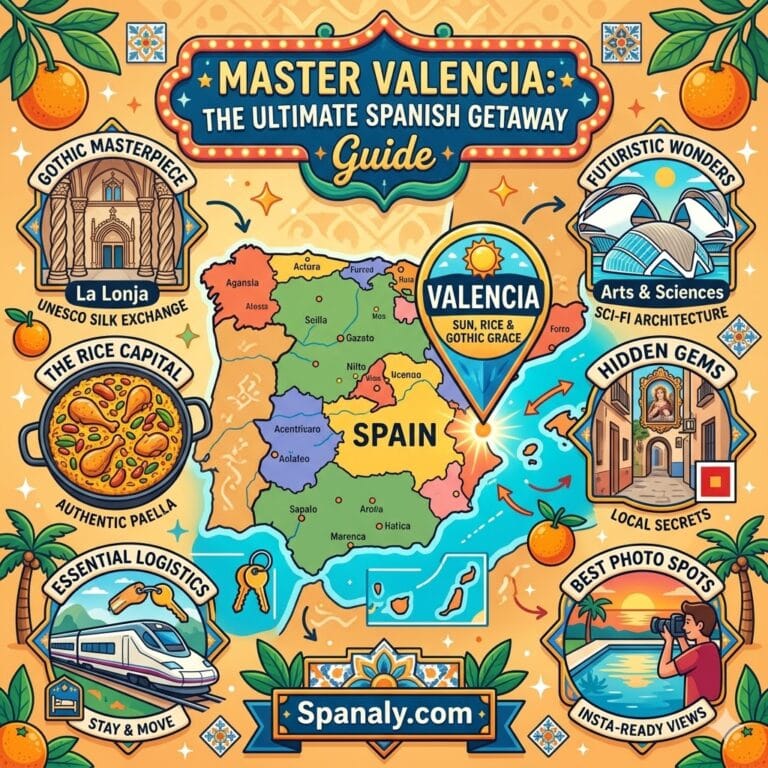
Valencia is Spain’s most underrated powerhouse—a city where futuristic Sci-Fi architecture collides with ancient Roman streets, and where the only authentic Paella was born.
Looking for the best Things to Do in Valencia? You’ve just landed on the ultimate insider playbook. This isn’t just a list of beaches; it’s a high-speed journey from the ultra-modern curves of the future to the deep, golden secrets of the Mediterranean past.
The Vibe Check 🌊
The Atmosphere: A sun-drenched fusion of Mediterranean “Chill” and bold innovation.
The Scent: Fresh orange blossoms at sunrise and wood-fired saffron at noon.
The Pace: More vibrant than Seville, yet far more “Zen” than the chaos of Madrid.
The Style: Sleek, artistic, and proudly rooted in its fertile Huerta heritage.
⚡ Valencia at a Glance (The Spanaly Quick-Box)
| Feature | The Essential Detail |
| 🏰 Main Icons | City of Arts & Sciences, The Cathedral, Central Market. |
| 🥘 Must Eat | Authentic Paella Valenciana (No seafood—this is the real deal!). |
| ⏱️ Ideal Stay | 2 to 3 days for a complete “Deep Dive” experience. |
| 🚲 Pro Move | Rent an E-bike and glide through the Turia Gardens—the city’s green lung. |
📍 Explore Valencia's Top Landmarks
Spanaly Travel GuidePlanning your trip? Use our interactive map to navigate between the City of Arts and Sciences, The Central Market, and the Turia Gardens.
Open Full Map in Google Maps ↗📍 Why Visit Valencia?
Valencia is the city that refused to choose between the past and the future—so it conquered both. While Madrid is royal and Barcelona is bohemian, Valencia is innovative yet deeply traditional.
Here is why it deserves a top spot on your Spanish bucket list:
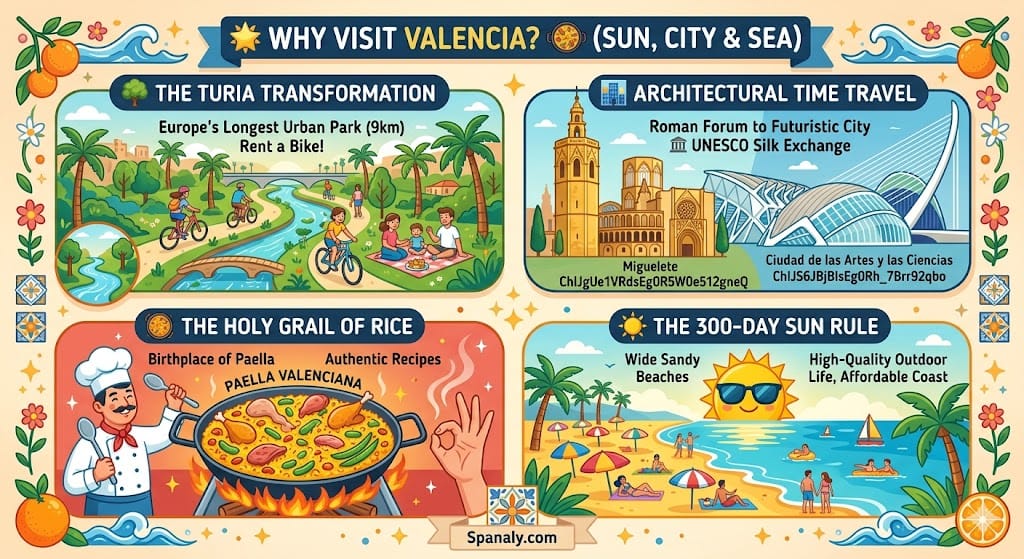
🌳 The Turia Transformation: Imagine a massive riverbed converted into a 9km lush green park that cuts through the entire city. It is Europe’s most successful urban park and the best way to explore Valencia on two wheels.
🏙️ Architectural Time Travel: Walk for 15 minutes and you’ll travel 2,000 years. You can start your morning at a Roman Forum, have lunch in the Gothic La Lonja Valencia, and end your day in a futuristic space-age city.
🥘 The Holy Grail of Rice: This is the birthplace of Paella. Visiting Valencia and not eating rice is like visiting Paris and ignoring the Eiffel Tower. To truly master the local flavors, check out our guide to Spanish Cuisine.
☀️ The 300-Day Sun Rule: With over 300 days of sunshine a year and wide Mediterranean beaches, Valencia offers a high-quality outdoor lifestyle that is much more affordable than its northern neighbors.
💡 Spanaly Pro Tip & The Verdict: Valencia is perfectly connected to Spain’s major hubs. If you are coming from the capital, our Madrid to Valencia Travel Guide is your best friend for a seamless 1.5-hour high-speed train journey.
Our Decision: Many travelers make the mistake of visiting Valencia as a hurried day trip from Barcelona. Don’t do that. Give this city at least 48 hours to breathe; its magic is found in the slow sunset walks, not in a rushed checklist.
🏰 Top 5 Must-See Landmarks (The Icons)
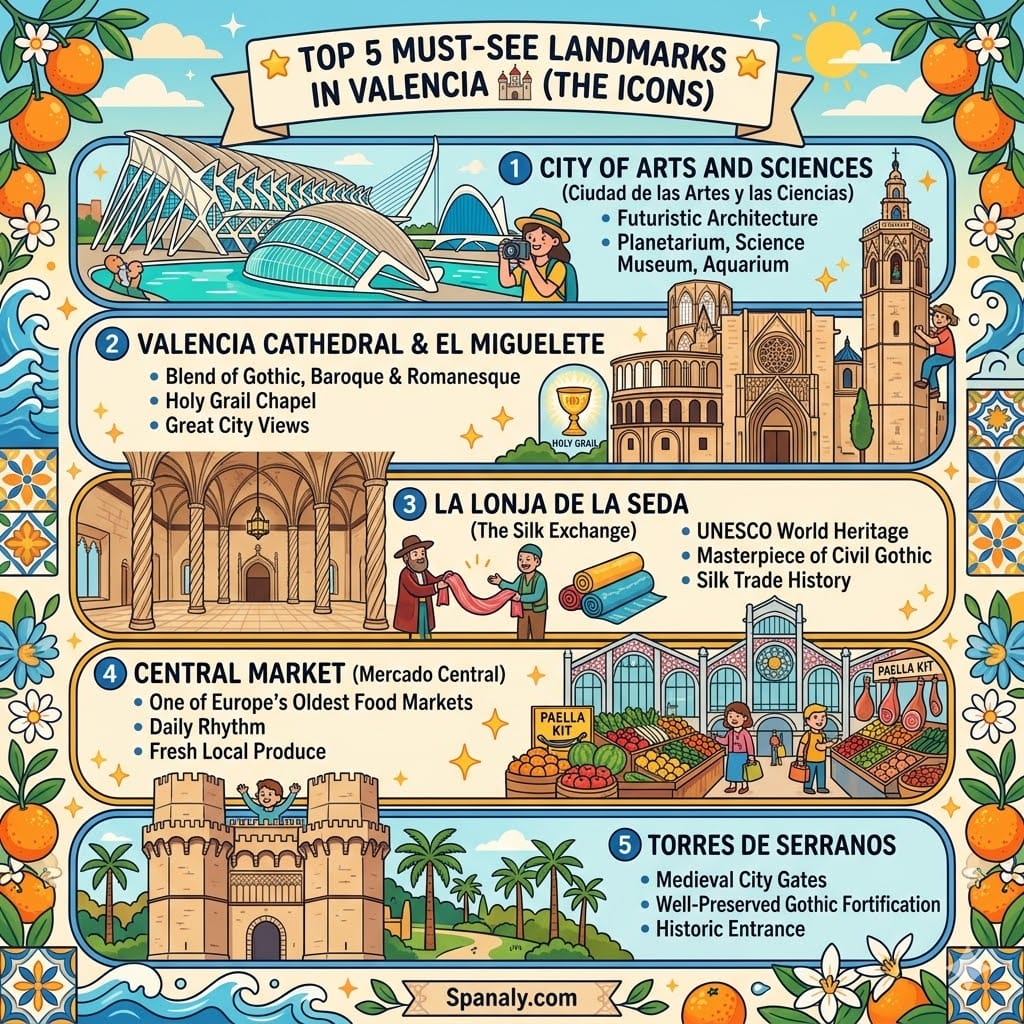
Valencia’s skyline is a conversation between a futuristic tomorrow and a medieval yesterday. If you only have a limited time, these are the five spots that define the city’s soul:
1. City of Arts and Sciences (Ciudad de las Artes y las Ciencias): This is the “Star Wars” side of Spain. Designed by Santiago Calatrava, this massive complex looks like a fleet of white spaceships. Even if you don’t enter the museums, walking around the turquoise pools is a surreal experience.
2. Valencia Cathedral & El Miguelete: A blend of Gothic, Baroque, and Romanesque styles. Inside, you’ll find the side chapel housing what many believe is the Holy Grail. Climbing the 207 steps of the Miguelete bell tower offers the best 360-degree view of the orange-tiled rooftops.
3. La Lonja de la Seda (The Silk Exchange): A UNESCO World Heritage site and a masterpiece of civil Gothic architecture. Its twisting columns and grand “Contract Hall” tell the story of Valencia’s golden age. For a deep dive into its history, check our dedicated guide to La Lonja Valencia.
4. Central Market (Mercado Central): One of Europe’s oldest and largest running food markets. The Modernista iron and glass structure is a temple to Mediterranean produce. It’s the ultimate place to understand the local “Daily Rhythm.”
5. Torres de Serranos: These massive Gothic gates were once the main entrance to the walled city. They are remarkably well-preserved, and climbing to the top gives you a perfect view of how the Turia Gardens wrap around the old town.
💡 Spanaly Pro Tip & The Verdict: If you are planning to visit the City of Arts and Sciences, book your tickets online at least 48 hours in advance, especially for the Oceanogràfic. Lines in the summer can be brutal.
Our Decision: Don’t try to “do” the entire City of Arts and Sciences in one afternoon. It’s physically exhausting. We recommend visiting the historic center (Cathedral & La Lonja) in the morning when it’s cool, and leaving the futuristic complex for the “Golden Hour” when the white buildings glow against the sunset.
🎨 Hidden Gems & Local Secrets
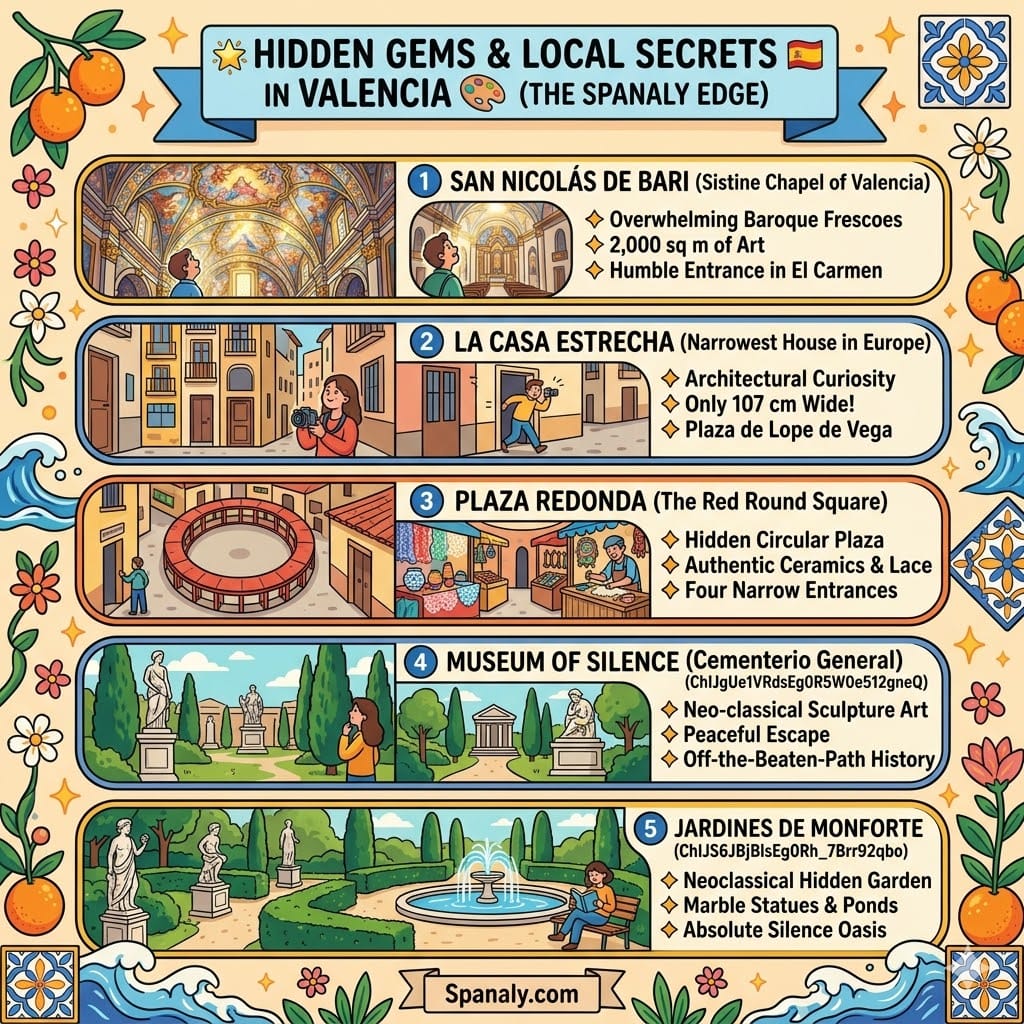
Beyond the iconic white curves of the City of Arts and Sciences, Valencia hides its best secrets in plain sight. These are the spots where the “Mainstream” tourists don’t go:
The Sistine Chapel of Valencia (San Nicolás de Bari): Don’t let the modest exterior fool you. Inside, the ceiling is covered in nearly 2,000 square meters of breathtaking Baroque frescoes. It is visually more dense and vibrant than many Italian cathedrals, yet most people walk right past its small wooden door in the El Carmen district.
The Narrowest House in Europe (La Casa Estrecha): Tucked away in Plaza de Lope de Vega, this building is only 107 centimeters wide. It’s a “blink-and-you-miss-it” architectural curiosity that was once a jewelry workshop.
The Red Round Square (Plaza Redonda): A perfectly circular plaza hidden inside a block of traditional buildings. You can only enter through four narrow alleys. It’s a quiet haven for traditional lace, handmade ceramics, and high-quality local crafts that haven’t been “industrialized” for mass tourism.
The Museum of Silence (Cementerio General): For those who love “Dark Tourism” and peace, this cemetery is an open-air museum of neo-classical sculpture and history. It’s a reflection of Valencia’s wealthy past that 99% of travel blogs ignore.
Monforte Gardens (Jardines de Monforte): While everyone crowds the Turia, this neoclassical hidden garden is an oasis of marble statues, ponds, and absolute silence. It’s the ultimate spot for a “Zen” break in the middle of the city.
💡 Spanaly Pro Tip & The Verdict: If you visit the San Nicolás Church, go at 10:00 AM sharp right when it opens. The light hitting the frescoes through the stained glass is magical, and you’ll have the “Sistine Chapel” almost to yourself before the small group tours arrive at 11:30 AM.
🍽️ Gastronomy: The Rice Capital of the World
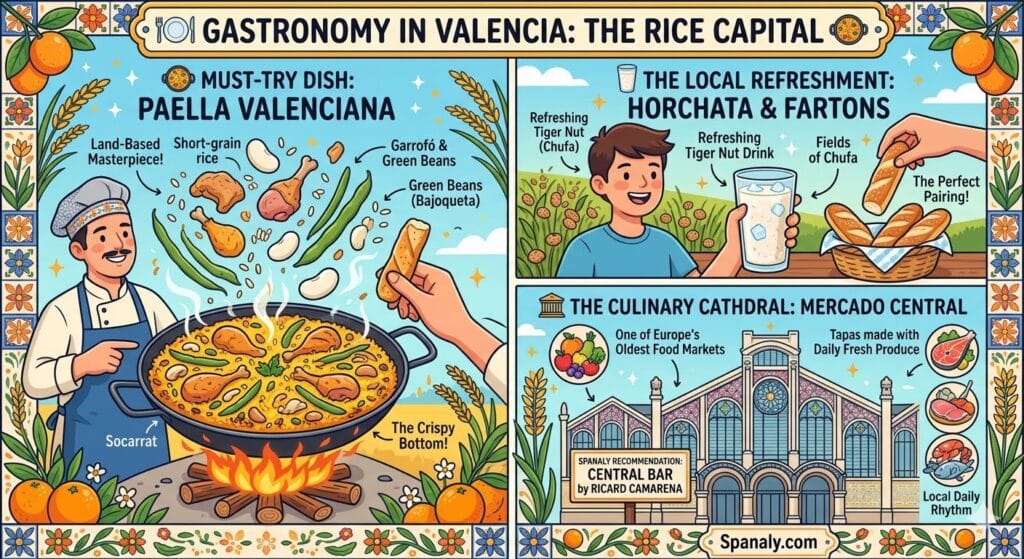
In Valencia, food is more than a meal—it is a cultural identity. While you might think you’ve had Paella before, your first bite here will prove you wrong.
🥘 The Must-Try Dish: Paella Valenciana
Forget the mixed seafood and chorizo versions found in tourist traps. The real Paella Valenciana is a land-based masterpiece.
Ingredients: Short-grain rice, chicken, rabbit, green beans (Bajoqueta), and large white lima beans (Garrofó).
The Golden Rule: If you see “Paella” on a dinner menu at 9:00 PM, walk away. Locals eat it only for lunch because it’s a heavy, sun-fuelled ritual.
🥛 The Local Refreshment: Horchata & Fartons
You cannot leave without visiting a traditional Horchatería. This milky, refreshing drink is made from tiger nuts (Chufas) grown in the local fields.
The Pairing: Dip a Farton (a long, glazed sweet pastry) into your Horchata for the ultimate Valencian afternoon snack. It’s the city’s favorite “merienda.”
🏛️ The Culinary Cathedral: Mercado Central
This is one of the largest and most beautiful markets in Europe. A temple of iron and glass dedicated to fresh Mediterranean produce.
Spanaly Recommendation: Visit Central Bar by Ricard Camarena inside the market. No reservations needed—just high-end tapas made with ingredients sourced from the stalls right next to you.
💡 Spanaly Pro Tip & The Verdict: For the most authentic experience, take a 20-minute trip to the village of El Palmar in the Albufera wetlands. It is the literal birthplace of Paella, surrounded by the rice paddies themselves.
Our Decision: When eating Paella, look for the Socarrat—that crispy, caramelized layer of rice at the bottom of the pan. It’s the soul of the dish. If the rice is mushy and yellow with food coloring instead of saffron, you’re in a tourist trap. Stick to our Spanish Cuisine guide to spot the difference.
📸 Best Photo Spots: Framing Valencia’s Soul
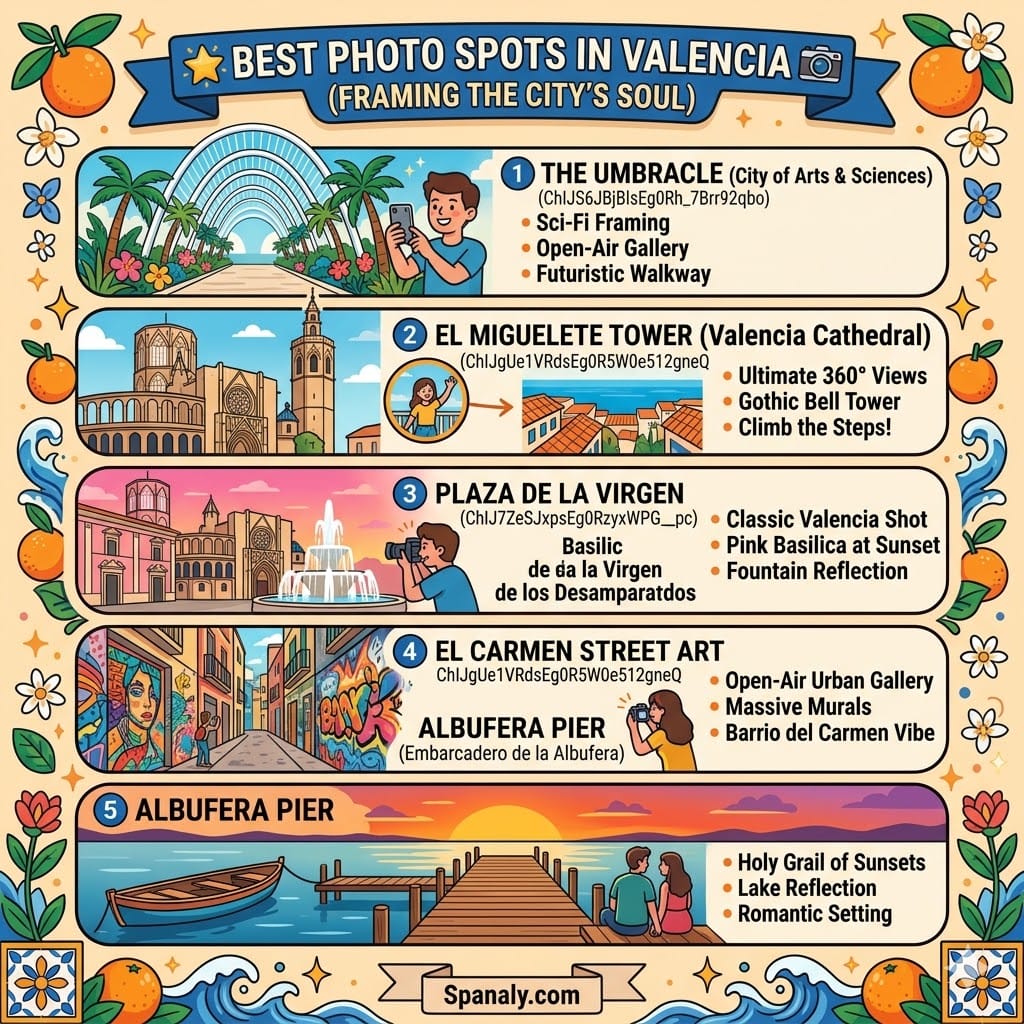
Valencia is a playground for both architectural and street photographers. From the futuristic curves of Calatrava to the medieval grit of El Carmen, here is where to point your lens:
📍 The Umbracle (City of Arts & Sciences): This open-air gallery with its white arches and tropical plants provides a perfect “Sci-Fi” framing for your shots.
📍 The Miguelete Tower: Climb for the ultimate 360-degree cityscape. The contrast between the orange-tiled roofs and the blue Mediterranean horizon is unmatched.
📍 Plaza de la Virgen: Capture the pink facade of the Basilica against the white marble fountain at sunset. It’s the most “Classic Valencia” shot you can get.
📍 El Carmen Street Art: Wander the alleys of the old town (Barrio del Carmen) to find massive, colorful murals that turn the crumbling walls into an open-air urban gallery.
📍 The Albufera Pier (Embarcadero de la Albufera): This is the holy grail of sunset spots. The reflection of the orange sky on the still lake water is a masterpiece in every frame.
💡 Spanaly Pro Tip & The Verdict: For the City of Arts and Sciences, don’t just take the standard front-facing photo. Go to the lower level by the pools to capture the symmetry and reflections in the water.
✨ Quick Photo Checklist:
The Reflection: Use the pools at the City of Arts & Sciences for symmetrical shots.
The Contrast: Combine a medieval gate (Serranos) with a modern tram passing by.
The Detail: Close-ups of the ceramic tiles (Azulejos) in the North Station (Estación del Norte).
🗺️ Suggested Itineraries: Mastering Valencia
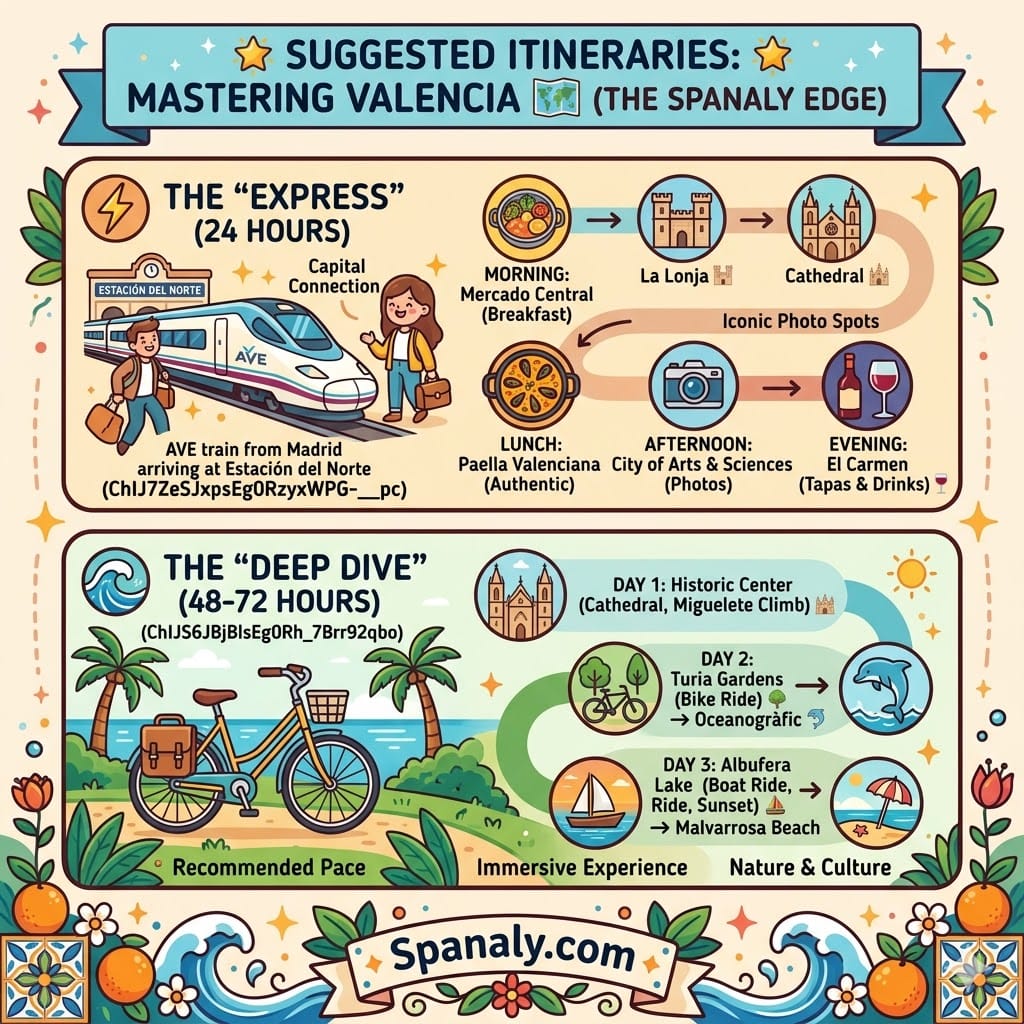
Whether you are here for a lightning visit or a slow Mediterranean soak, these plans ensure you don’t miss the soul of the city.
⚡ The “Express” (24 Hours)
Perfect for those arriving on the high-speed train from the capital (Check our Madrid to Valencia Travel Guide).
Morning: Start at Mercado Central for breakfast, then walk to La Lonja and the Cathedral.
Lunch: An authentic Paella Valenciana in the historic center.
Afternoon: Take a bus or bike to the City of Arts and Sciences for those iconic futuristic photos.
Evening: Tapas and drinks in the vibrant Barrio del Carmen.
🌊 The “Deep Dive” (48-72 Hours)
The recommended way to truly “feel” the city. (For a day-by-day breakdown, see our Valencia 3-Day Itinerary).
Day 1: The Classics. Historic center, climbing El Miguelete, and exploring the Silk Exchange.
Day 2: The Future & The Park. Spend the morning in the Turia Gardens on a bike, then the afternoon at the Oceanogràfic.
Day 3: The Lake & The Sea. Head to the Albufera Natural Park for a boat ride at noon, and spend the late afternoon at Malvarrosa Beach.
💡 Spanaly Pro Tip & The Verdict: If you have 3 days, don’t stay exclusively in the city center. Valencia’s magic is its connection to water.
Our Decision: Spend your final sunset at the Albufera Lake. Most tourists stick to the city beaches, but the lake offers a silent, golden experience that is the “True Valencia.” It’s the perfect way to end your trip before heading to your next stop, like exploring Things to Do in Barcelona.
🧳 Essential Logistics: Planning Your Arrival
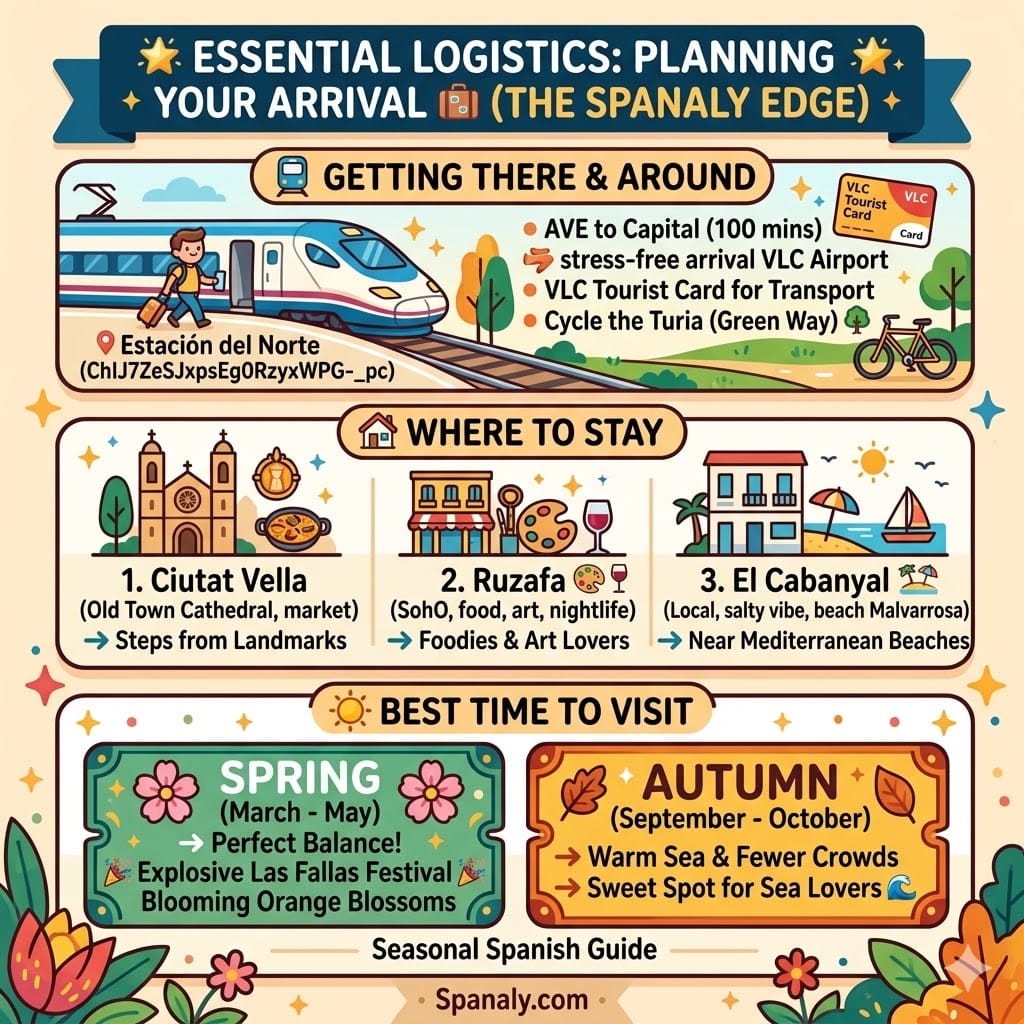
Valencia is one of the most accessible cities in Spain, but knowing the “local hacks” for transport and stay will save you both time and Euros.
🚆 Getting There & Around
By Train: The high-speed AVE connects you to the capital in just 100 minutes. If you are starting your journey there, don’t miss our Getting Around Madrid guide for a smooth transition.
By Air: Valencia Airport (VLC) is well-connected. For a stress-free arrival, grab a Valencia Tourist Card at the terminal for unlimited public transport and museum discounts.
The “Green Way”: Valencia is flat and bike-friendly. Renting a bicycle to ride through the Turia Gardens is often faster (and much more scenic) than the metro.
🏠 Where to Stay
Ciutat Vella (Old Town): Best for first-timers who want to be steps away from the Cathedral and Central Market.
Ruzafa: The “SohO” of Valencia. Ideal for foodies, art lovers, and those looking for the best nightlife.
El Cabanyal: Stay here if you want a local, salty vibe near the Mediterranean beaches and the iconic Malvarrosa.
☀️ Best Time to Visit
Spring (March – May): The perfect balance. You get the explosive energy of Las Fallas Festival in March or the blooming orange blossoms in April.
Autumn (September – October): Warm sea temperatures and fewer crowds. It’s the ultimate “sweet spot” for Mediterranean lovers.
💡 Spanaly Pro Tip & The Verdict: Avoid staying in the immediate vicinity of the City of Arts and Sciences if you want “soul.” While the hotels there are modern and sleek, the area becomes a “ghost town” at night.
Our Decision: For an authentic experience, pick a boutique hotel in Barrio del Carmen. You’ll trade a bit of room space for centuries of history right outside your door. If you are coming from the south, our Valencia to Malaga Travel Guide can help you plan your next leg of the journey perfectly.
💡 Spanaly Insider Tips: The Real Game Changers
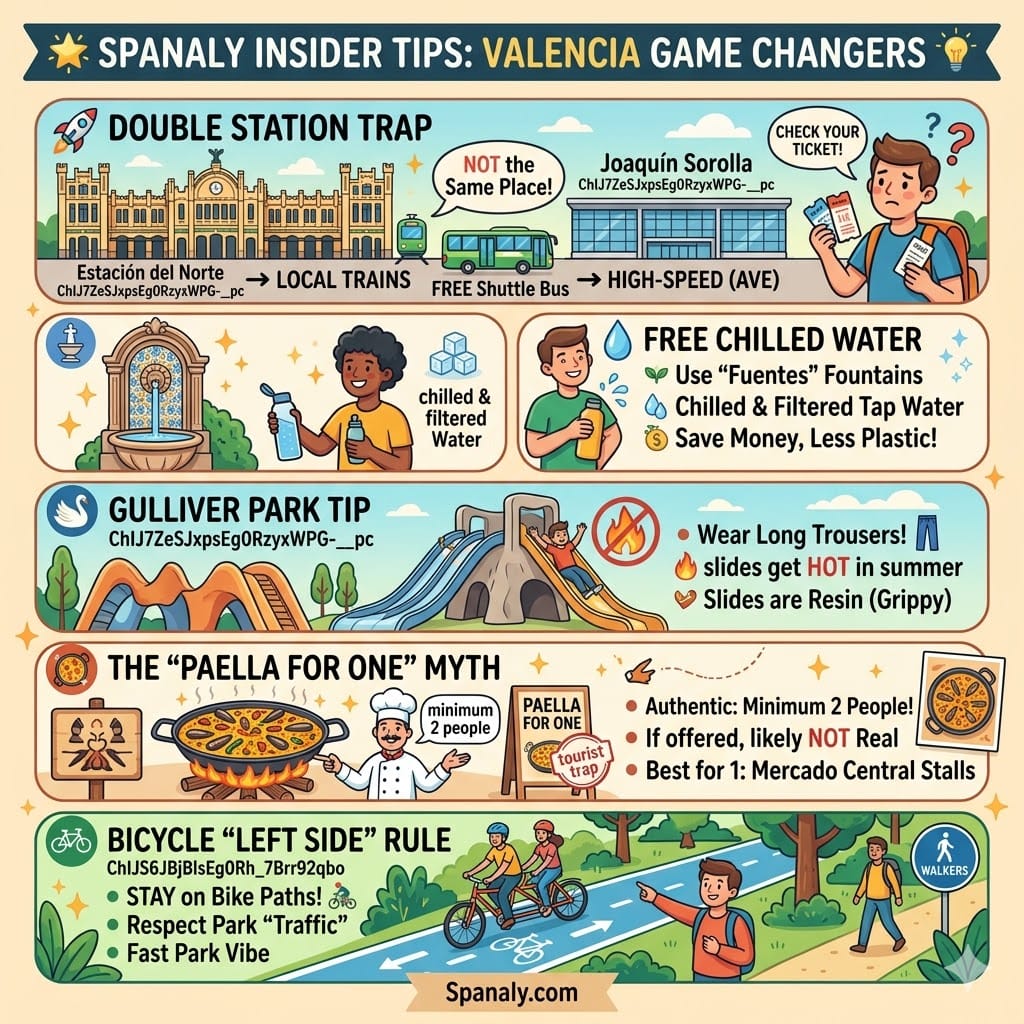
To truly master Valencia, you need to know the unwritten rules that separate a stressed tourist from a savvy traveler.
🚀 The “Double Station” Trap: Many travelers get confused between Estación del Norte (the beautiful historic station in the center) and Joaquín Sorolla (the high-speed AVE station). They are NOT the same place, but there is a free shuttle bus connecting them if you have a train ticket. Check your ticket carefully!
💧 Free Water is Everywhere: Don’t keep buying plastic bottles. Valencia is full of “Fuentes” (ornamental and drinking fountains). The tap water in Valencia is safe but has a strong mineral taste; however, the public drinking fountains are chilled and filtered.
🦢 The “Gulliver” Gravity: If you are visiting the Gulliver Park in the Turia, wear long trousers even in summer. The giant slides are made of resin and can get very hot and “grippy”—shorts are a recipe for skin burns!
🥘 The “Paella for One” Myth: Authentic Paella is cooked in a flat pan for a minimum of two people. If a restaurant offers “Paella for one,” it’s almost certainly pre-cooked or frozen (Arroz a banda). To eat the real deal alone, head to the food stalls in Mercado Central.
🚲 The “Left Side” Rule: When cycling in the Turia Gardens, stay on the designated bike paths. Walking on the bike lane is the fastest way to get a stern “look” from a local. Also, the park is 9km long—rent an Electric Bike if you plan to see both ends and the City of Arts and Sciences in one go.
💡 Spanaly Pro Tip & The Verdict: If you plan to visit multiple museums and use the metro, the Valencia Tourist Card is a lifesaver. But here is the secret: You can buy it online and load it onto your phone, saving you the hassle of finding a physical kiosk at the airport.
Our Decision: Valencia is a city of “Hidden Squares.” If a main plaza (like Plaza de la Reina) feels too crowded, walk just two blocks into the side streets. You’ll find tiny squares like Plaza del Negrito where the drinks are half the price and the vibe is 100% local.
🛡️ Visitor FAQs – Valencia Travel Safety & Logistics
🛡️ Is Valencia safe for solo travelers at night?
Yes, Valencia is consistently ranked as one of Spain’s safest cities. The historic center (Ciutat Vella) and the Turia Gardens are well-lit and frequented by locals until late. While standard precautions against pickpockets in crowded areas apply, you can feel secure walking through most central neighborhoods at any hour.
🎫 Do I need to book the City of Arts and Sciences in advance?
For the Oceanogràfic (Aquarium) and the Hemisfèric, booking online is highly recommended to secure your time slot and avoid long queues. Authentic tickets should be purchased via the official website to avoid reseller surcharges. Walking around the outdoor complex itself is free and requires no ticket.
🥘 Can I find vegetarian or vegan Paella in Valencia?
Absolutely. While the traditional version uses meat, almost every authentic restaurant offers Paella de Verduras (Vegetable Paella). It uses the same high-quality saffron and local rice. Just ensure you ask for "Sin carne" (No meat) to confirm the stock used is also vegetable-based.
🚑 How do I access medical help as a foreign visitor?
For minor health issues, head to a Farmacia (look for the green neon cross). For emergencies, dial 112. Valencia has excellent public and private hospitals. If you have international travel insurance, private clinics in the Ruzafa or City Center areas provide fast service and often have English-speaking staff.
🚲 Is the city truly accessible by bicycle for beginners?
Valencia is one of the flattest cities in Europe, making it a paradise for cyclists of all levels. The 9km Turia Park is entirely car-free, allowing you to cross the city without stress. For street cycling, follow the clearly marked green bike lanes (Carril Bici) and avoid riding on pedestrian sidewalks to prevent fines.
Expertly curated for travelers by Spanaly.com
Valencia is more than just a destination; it’s a lifestyle. It’s the sound of the Mediterranean waves, the scent of orange blossoms, and the taste of the perfect golden rice.
🍊 Why Wait? Valencia is the perfect bridge between Spain’s deep history and its bold future.
🚲 Pro Tip: Don’t rush. The city is best enjoyed on a slow bike ride through the Turia or a quiet sunset at the lake.
🥘 The Reward: Your first authentic Paella will change your perspective on Spanish food forever.
🚀 What’s Next on Your Journey? If you’ve fallen in love with the Mediterranean soul of Valencia, you’ll definitely want to explore the passionate heart of Andalusia. Check our guide to the best Things to Do in Seville to plan your next legendary stop!