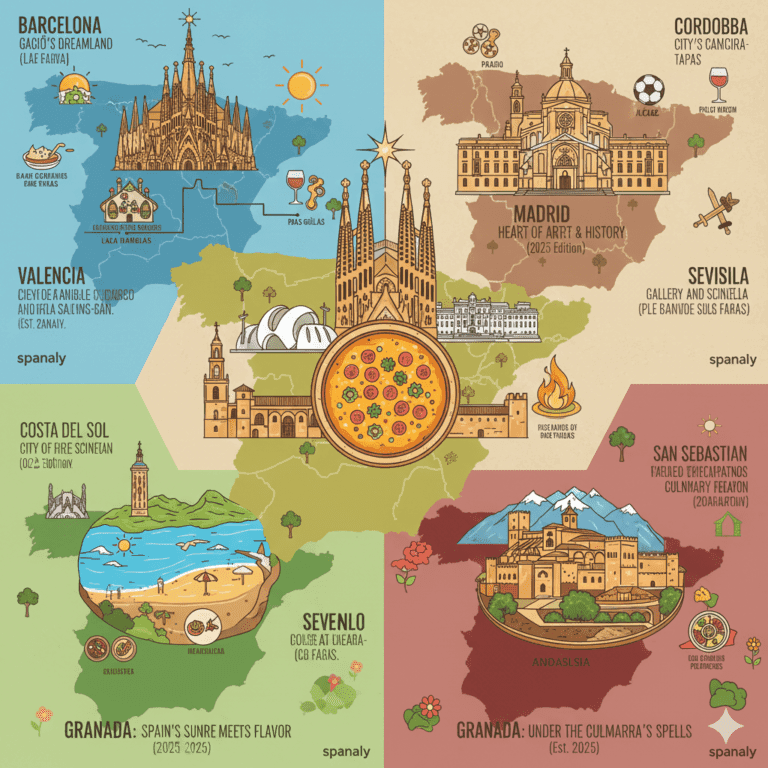

🌍 Spain is a vibrant tapestry where ancient Moorish history, avant-garde architecture, and breathtaking natural beauty interweave. Consequently, in 2026, the country remains a premier global destination. It offers a unique journey from the futuristic skyline of Valencia to the soul-stirring rhythms of Seville’s Flamenco. Furthermore, this year marks a significant milestone for many iconic landmarks, making it the perfect time for an Iberian adventure.
Why this guide is your best companion:
Curated Selection: We’ve handpicked the 11 iconic locations that define the Spanish spirit.
2026 Updates: Additionally, we include the latest news on landmarks like the completion of the Sagrada Família’s main towers.
Local Insights: Beyond the typical tourist traps, we offer the “Spanaly” perspective for a deeper, more authentic experience.
Moreover, whether you are a first-time visitor or a seasoned traveler, this guide to Spanish Attractions will help you navigate the very best of the peninsula.
Table of Contents
Toggle🎨 Barcelona: The Masterpiece of Modernism
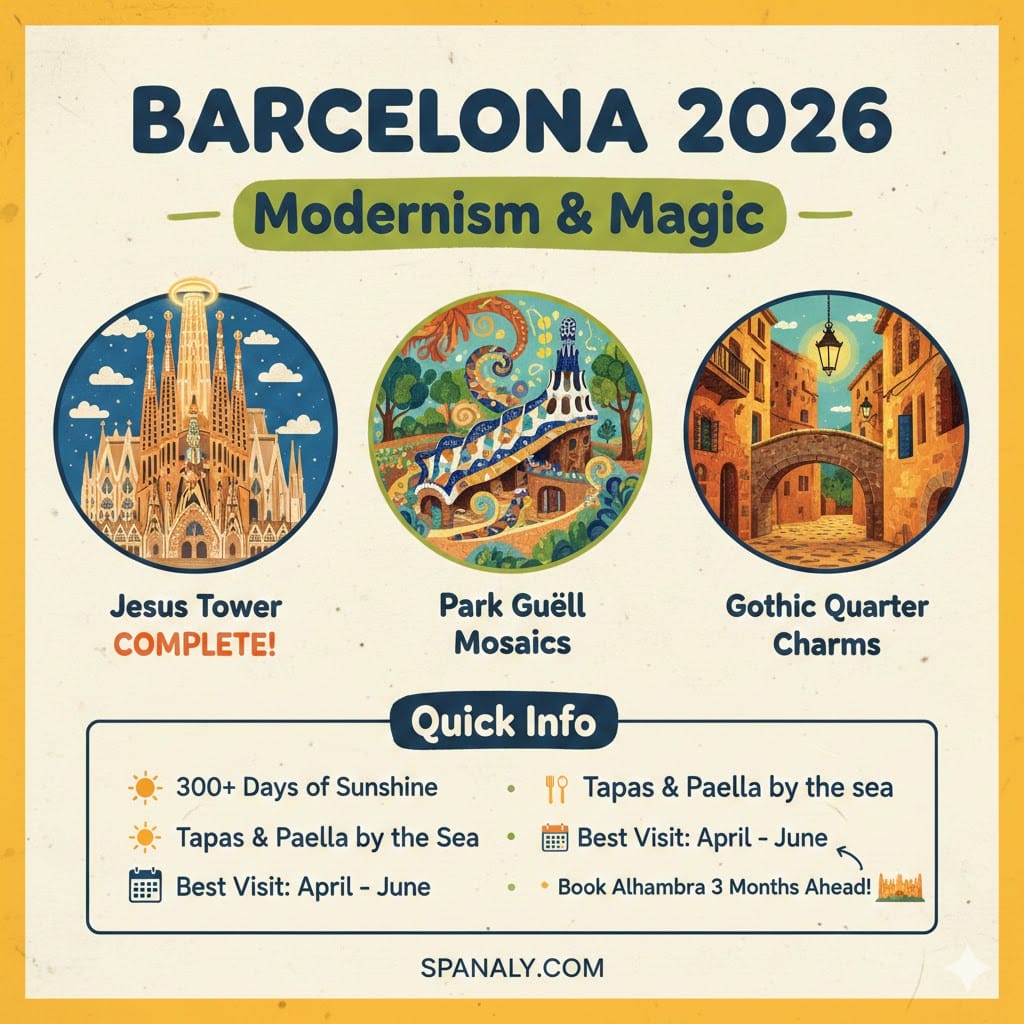
Barcelona continues to captivate with its Mediterranean charm and Gaudí’s surreal imagination. 2026 is a milestone year as the Jesus Tower of the Sagrada Família finally reaches its full height, forever transforming the city’s skyline.
📍 Iconic Landmark: The Sagrada Família (Pro tip: Book your sunset slot 2 months in advance).
✨ Must-See: Beyond the basilica, explore the mosaic wonders of Park Güell and the historic secrets of the Gothic Quarter.
🌆 Vibe: A coastal metropolis where Gothic cathedrals stand alongside futuristic architecture.
🧭 Traveler’s Insight: For a deep dive into the city’s hidden plazas and local haunts, check our [Ultimate Barcelona Travel Guide].
👑 Madrid: The Royal & Artistic Heart
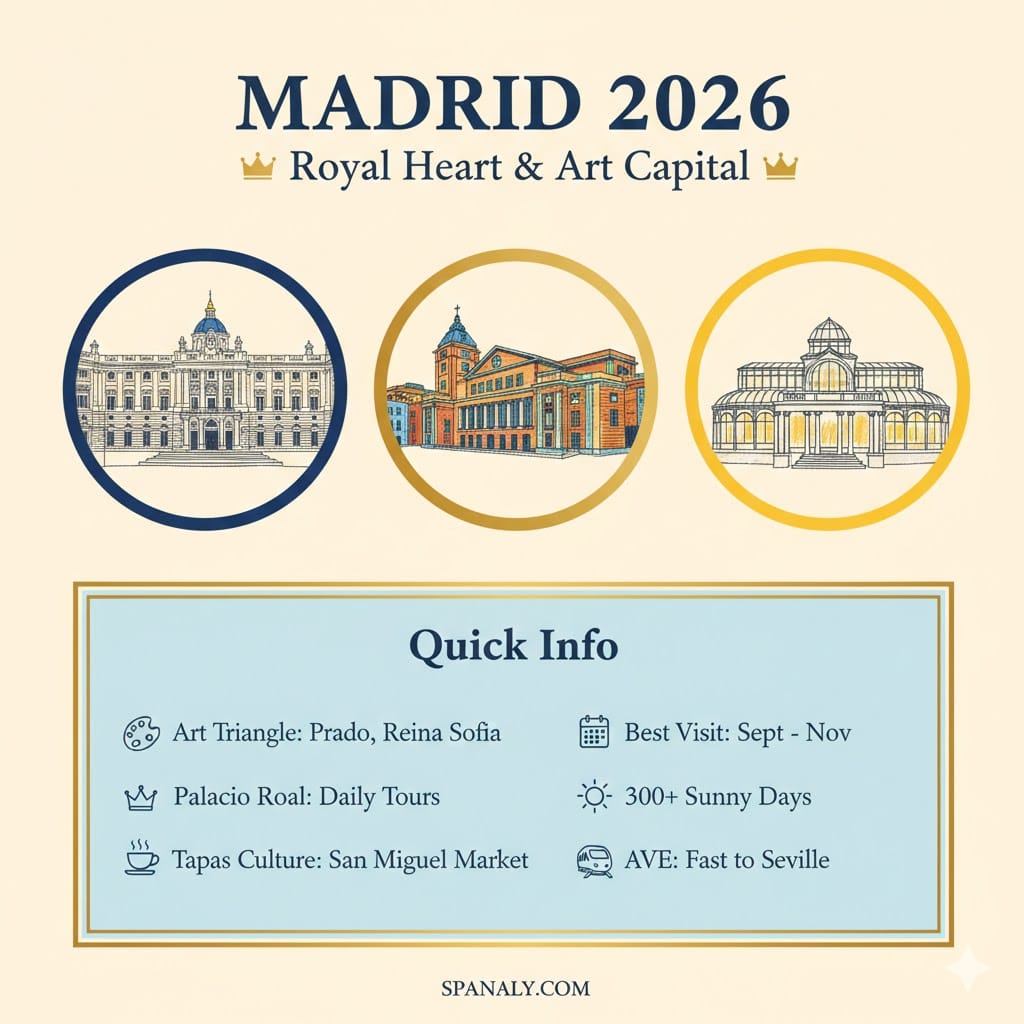
As the dynamic capital, Madrid is the beating heart of Spanish history. Furthermore, it is a global hub for art and nightlife. In 2026, the city has solidified its status with the opening of the Gallery of the Royal Collections. Consequently, this new landmark is located right next to the Royal Palace.
🎨 The Art Triangle: Visit the Prado Museum for Goya and Velázquez. Additionally, explore the Reina Sofía for Picasso’s Guernica. You should also visit the Thyssen-Bornemisza for a global journey through art.
👑 Royal Grandeur: Explore the Palacio Real, the largest functioning royal palace in Europe. Specifically, do not miss the changing of the guard ceremony.
🌳 Green Escape: Relax in Retiro Park, a UNESCO World Heritage site. Afterward, admire the stunning Crystal Palace within the park grounds.
🍽️ Spanaly Foodie Tip: Experience the soul of Spanish Cuisine by trying a Bocadillo de Calamares. For instance, Plaza Mayor offers the most authentic ones.
🥘 Valencia: Where Future Meets Tradition
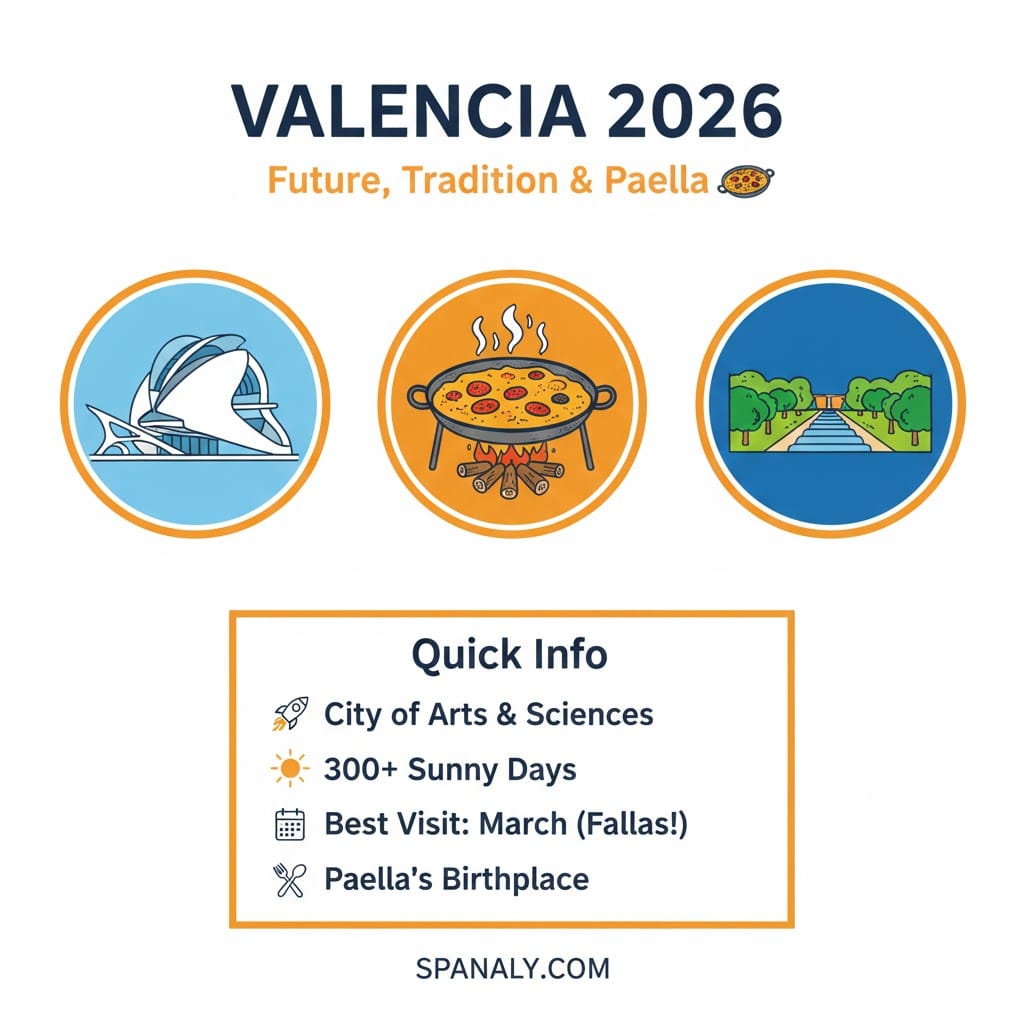
Valencia is a stunning blend of avant-garde architecture and Mediterranean tradition. In 2026, it stands as a global leader in sustainable tourism. The city offers a perfect balance between urban life, lush parks, and sprawling beaches.
🚀 The Future is Here: Explore the City of Arts and Sciences (Ciudad de las Artes y las Ciencias), a futuristic architectural complex that looks like something out of a sci-fi movie.
🌿 Green Urbanism: Walk or cycle through the Turia Gardens, a 9-kilometer lush park situated in a former riverbed that snakes through the city center.
⛪ Historic Core: Visit the Valencia Cathedral, home to what many believe is the authentic Holy Grail.
🎭 Pro Tip: If you visit in March, you will witness the world-famous [Spanish Festivals] during Las Fallas, where giant satirical monuments are burned in a spectacular display of fire and art.
🏖️ Costa del Sol: The Mediterranean’s Sun-Soaked Jewel

Stretching along the coast of Málaga, the Costa del Sol is Spain’s premier destination for luxury. Specifically, it offers a perfect blend of relaxation and Andalusian heritage. With over 300 days of sunshine a year, it remains a year-round paradise for 2026 travelers.
🌴 Iconic Destinations: Explore the glamour of Marbella’s Puerto Banús. Alternatively, wander through the historic “white village” of Mijas for breathtaking sea views.
🏖️ Pristine Beaches: Beyond the famous resorts, visit Nerja to see the stunning Balcón de Europa. Additionally, enjoy the crystal-clear waters of Burriana beach.
🖼️ Cultural Gateway: Málaga has transformed into a world-class cultural hub. For instance, it features the Picasso Museum and the historic Alcazaba fortress.
💡 Spanaly Travel Tip: For an unforgettable adventure, hike the Caminito del Rey. Previously, it was known as the world’s most dangerous path. However, it is now a safe and spectacular aerial walkway.
💃 Seville: The Soul of Andalusia
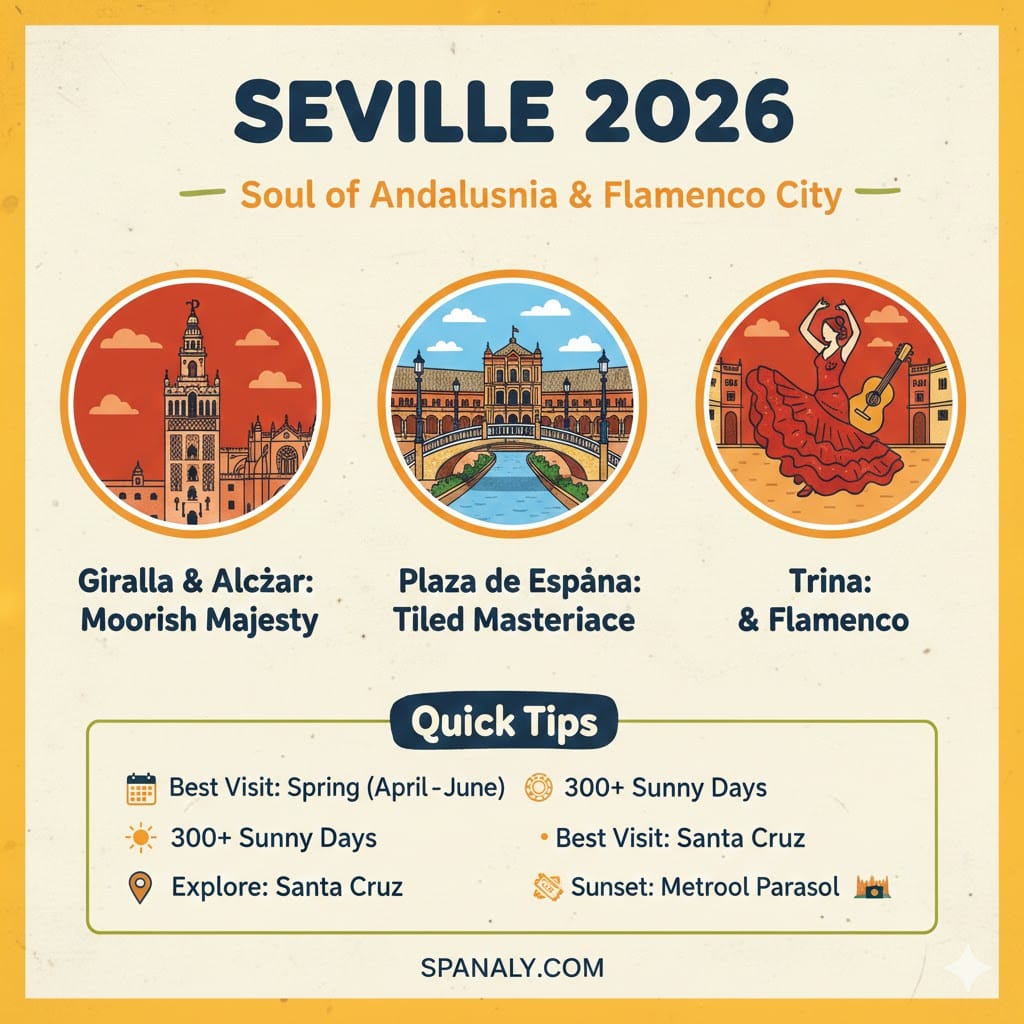
Seville is a city that breathes passion. From the orange-scented streets to the rhythmic clicking of Flamenco heels, it is the quintessence of the south. Moreover, in 2026, the city continues to enchant visitors with its blend of Mudéjar architecture.
🏰 Landmark Grandeur: Scale the Giralda Tower for the best city views. Then, wander through the stunning Real Alcázar. It is a famous filming location for Game of Thrones.
⛲ Architectural Marvels: Visit the Plaza de España, a masterpiece of tiled fountains. Additionally, walk across the modern Metropol Parasol at sunset.
💃 Flamenco Roots: Experience an authentic show in the Triana district. In fact, this area is the true cradle of this art form.
💡 Spanaly Insider Tip: To avoid long queues, follow our essential Travel Tips for Spain . Specifically, learn how to book monument tickets early. This will help you navigate public holidays like a local.
🕌 Granada: The Last Moorish Frontier
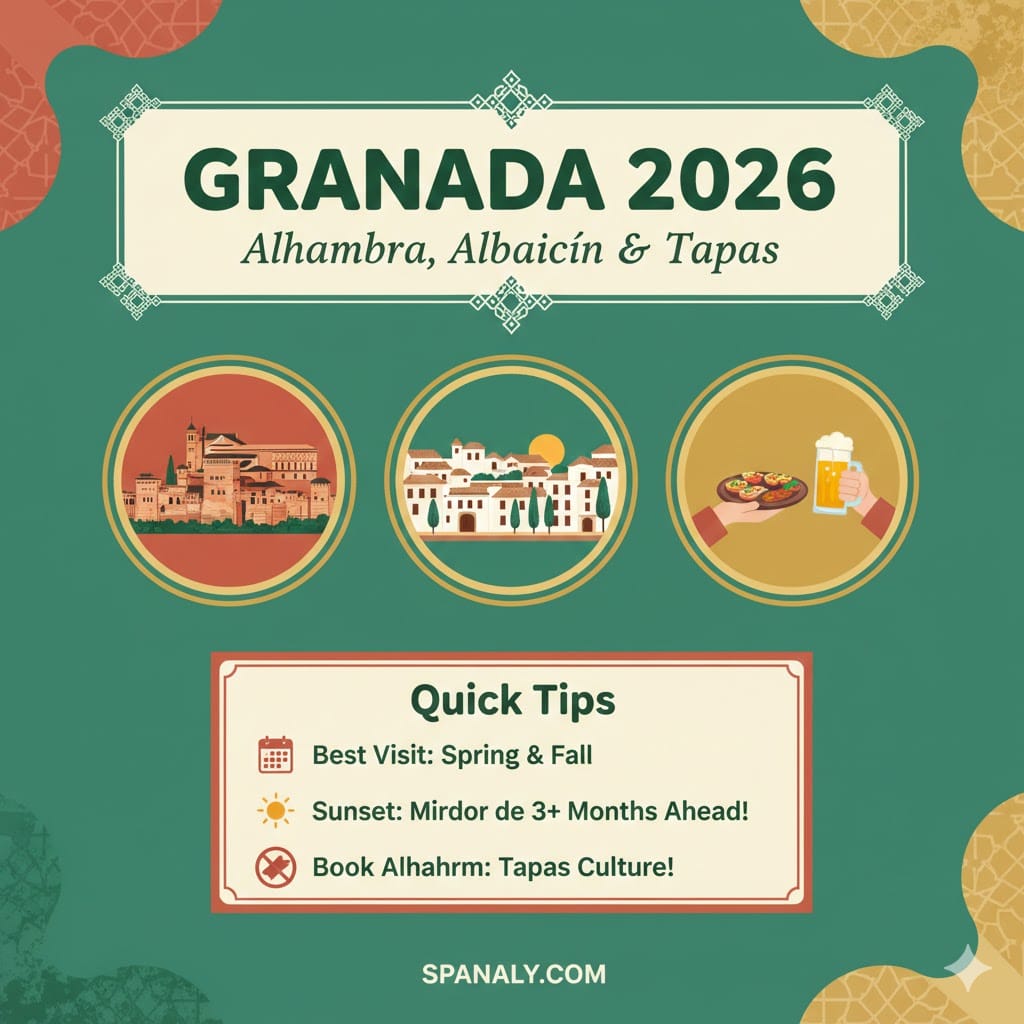
Granada is a poetic convergence of Islamic art and Spanish history. Nestled at the foot of the Sierra Nevada mountains, this city offers a soul-stirring journey. Consequently, visitors can explore the profound echoes of the Nasrid dynasty.
🏰 The Crown Jewel: The Alhambra Palace is a UNESCO World Heritage site. Additionally, it is arguably the world’s most stunning example of Islamic architecture. Its intricate carvings and the lush Generalife Gardens remain a top experience in 2026.
🏘️ Albaicín Quarter: Wander through the narrow, whitewashed streets of the old Moorish district. For instance, head to the Mirador de San Nicolás for the most iconic sunset.
🍽️ Tapas Culture: Granada is famous for its traditional free tapas culture. Therefore, every drink you order comes with a delicious, complimentary plate of local flavors.
💡 Spanaly Booking Tip: Due to extreme demand in 2026, Alhambra tickets often sell out months in advance. Similarly, make sure to check our Alhambra guide. This will help you learn the best strategies for securing your entry and choosing the right time for your visit.
🍴 San Sebastián: The Gastronomic Mecca
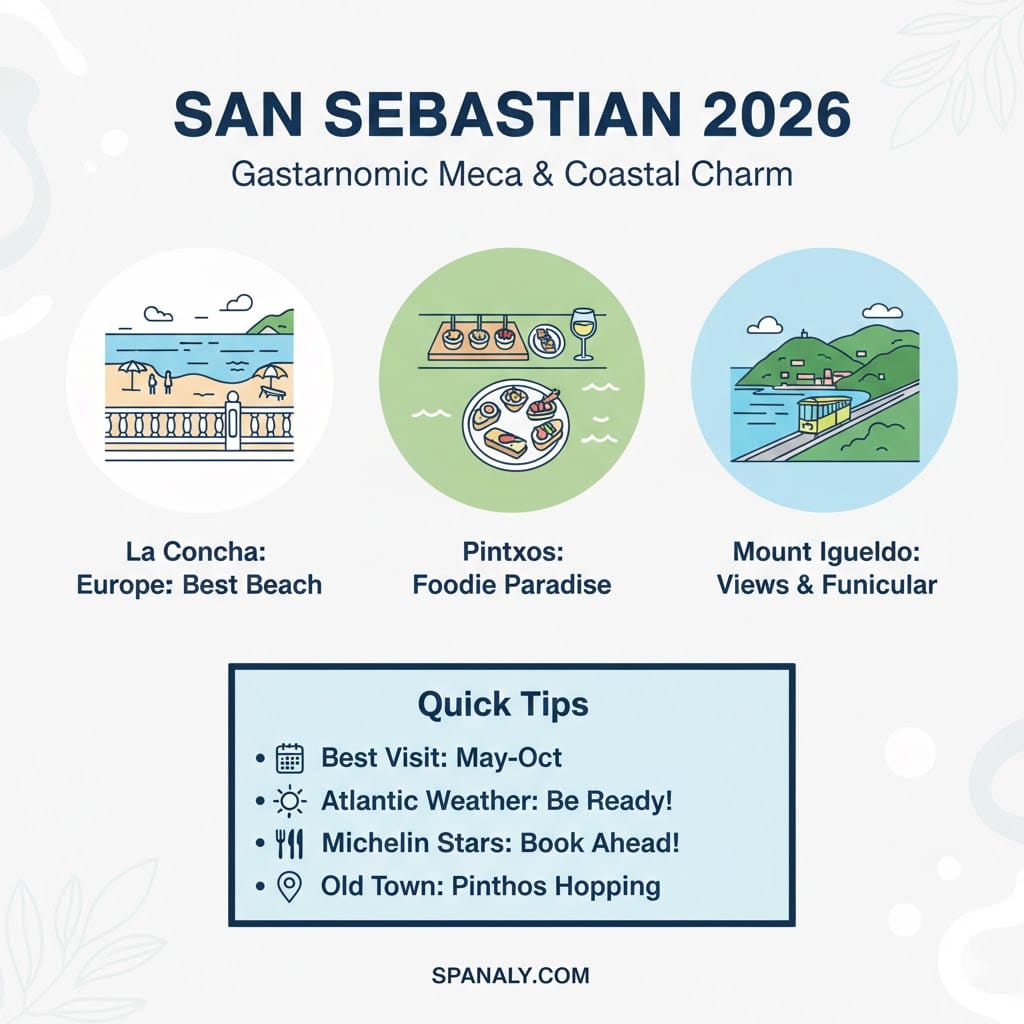
Located in the heart of the Basque Country, San Sebastián is a city that delights all the senses. Famed for having one of the highest concentrations of Michelin stars per square meter, it is the ultimate destination for foodies in 2026.
🏖️ Coastal Elegance: Relax at La Concha Beach, often cited as one of the most beautiful city beaches in Europe, with its iconic white railings and golden sands.
🍢 Pintxos Hopping: Wander through the Parte Vieja (Old Town) and experience “Pintxos”—the Basque version of tapas. Each bar offers a unique culinary masterpiece.
⛰️ Panoramic Views: Take the funicular up to Mount Igueldo for a breathtaking bird’s-eye view of the crescent-shaped bay and the surrounding emerald hills.
📅 Spanaly Planning Tip: The weather in northern Spain can be unpredictable even in summer. Check our [Best Time to Vist Spain] to find the best seasonal windows for visiting the Basque Country and what to pack for the Atlantic breeze.
🏝️ Majorca: The Mediterranean Paradise
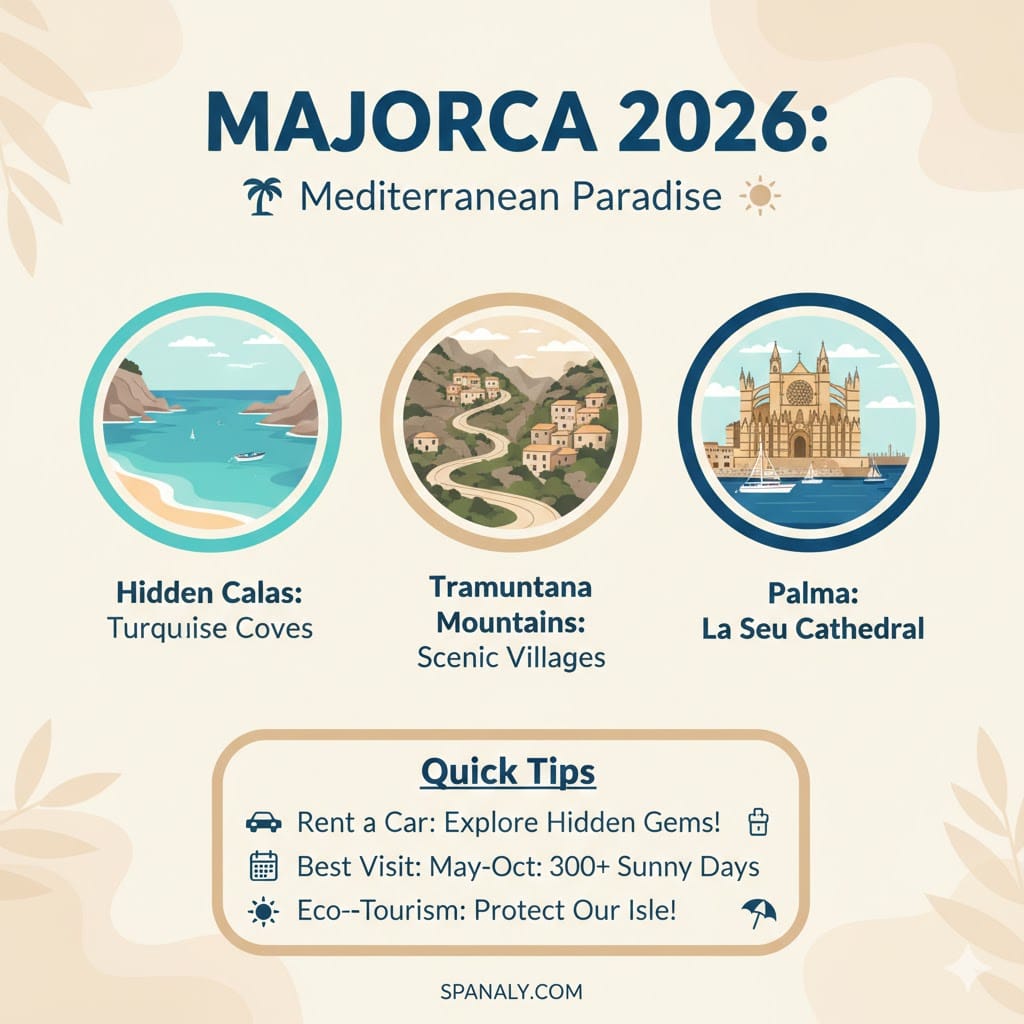
Majorca (Mallorca) is much more than just a sun-and-beach destination. While its turquoise coves are legendary, the island’s rugged interior and cultural heritage offer a sophisticated escape for travelers in 2026.
💎 Hidden Calas: Discover the crystal-clear waters of Cala Llombards or take a boat trip to the secluded Cabrera Archipelago National Park.
⛰️ Sierra de Tramuntana: Drive through this UNESCO-listed mountain range to find stone-built villages like Valldemossa and Deià, perched between the cliffs and the sea.
⛪ Gothic Splendor: Explore the capital, Palma, and its magnificent La Seu Cathedral, an architectural masterpiece overlooking the Mediterranean harbor.
🚗 Spanaly Road Trip Tip: To truly discover the island’s hidden gems, we highly recommend renting a car. Check our [How to Drive in Spain] for essential advice on international driving permits and navigating the winding scenic roads of the Balearic Islands.
⚔️ Toledo: The City of Three Cultures
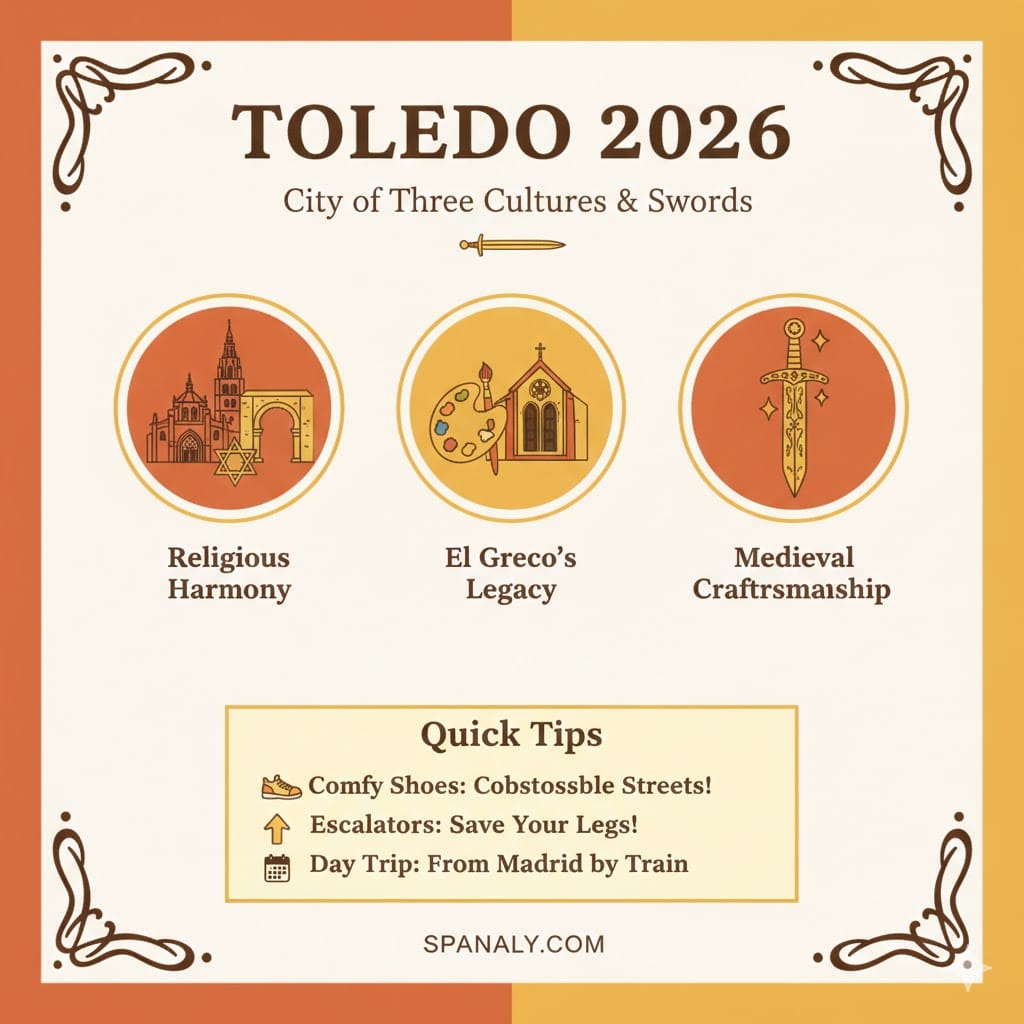
Just a short train ride from Madrid, Toledo is a living museum. As the former capital of the Spanish Empire, it is perched on a hilltop surrounded by the Tagus River, offering one of the most dramatic skylines in Spain for 2026 travelers.
⛪ Religious Harmony: Explore how Christian, Muslim, and Jewish cultures coexisted, leaving behind a legacy of stunning Synagogues, Mosques, and one of the world’s most impressive Gothic Cathedrals.
🎨 El Greco’s Legacy: Visit the Monastery of San Juan de los Reyes and see the masterpiece paintings of the famous artist El Greco scattered throughout the city’s churches.
🛡️ Medieval Craftsmanship: Toledo is world-renowned for its Damascene metalwork and legendary sword-making traditions that date back centuries.
👟 Spanaly Walking Tip: Toledo is famously steep and paved with cobblestones. Before you head out, check our [Travel Tips for Spain] for advice on the best walking shoes and how to use the city’s outdoor escalators to save your energy!
🏗️ Bilbao: The Industrial Renaissance
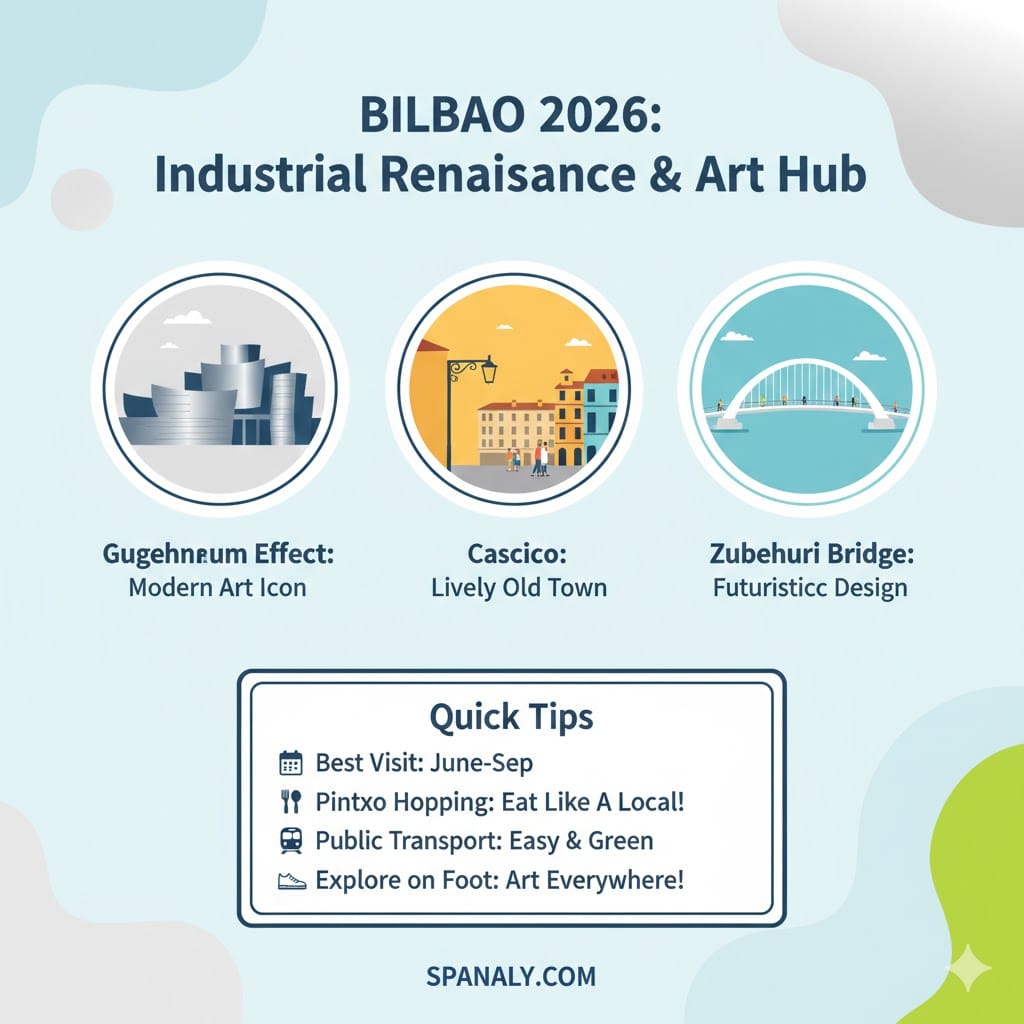
In the heart of the Basque Country, Bilbao stands as a testament to urban transformation. Once an industrial port, it has reinvented itself into a futuristic hub of design and gastronomy, making it a must-visit destination in 2026.
🖼️ The Guggenheim Effect: Marvel at the titanium-clad Guggenheim Museum, an architectural masterpiece by Frank Gehry that put Bilbao on the global art map.
🏮 Casco Viejo: Wander through the “Seven Streets” (Siete Calles) of the Old Town, where medieval charm meets vibrant local boutiques and traditional Basque culture.
🌉 Zubizuri Bridge: Walk across this iconic white footbridge designed by Santiago Calatrava, which symbolizes the city’s modern and sleek identity.
🍛 Spanaly Foodie Tip: Bilbao is just as famous for its food as its art. Before you go, check our [Bilbao Travel Guide] to learn about the etiquette of “Pintxo hopping” in the Basque Country and how to order like a local in the Plaza Nueva.
🕌 Córdoba: The Golden Caliphate Legacy
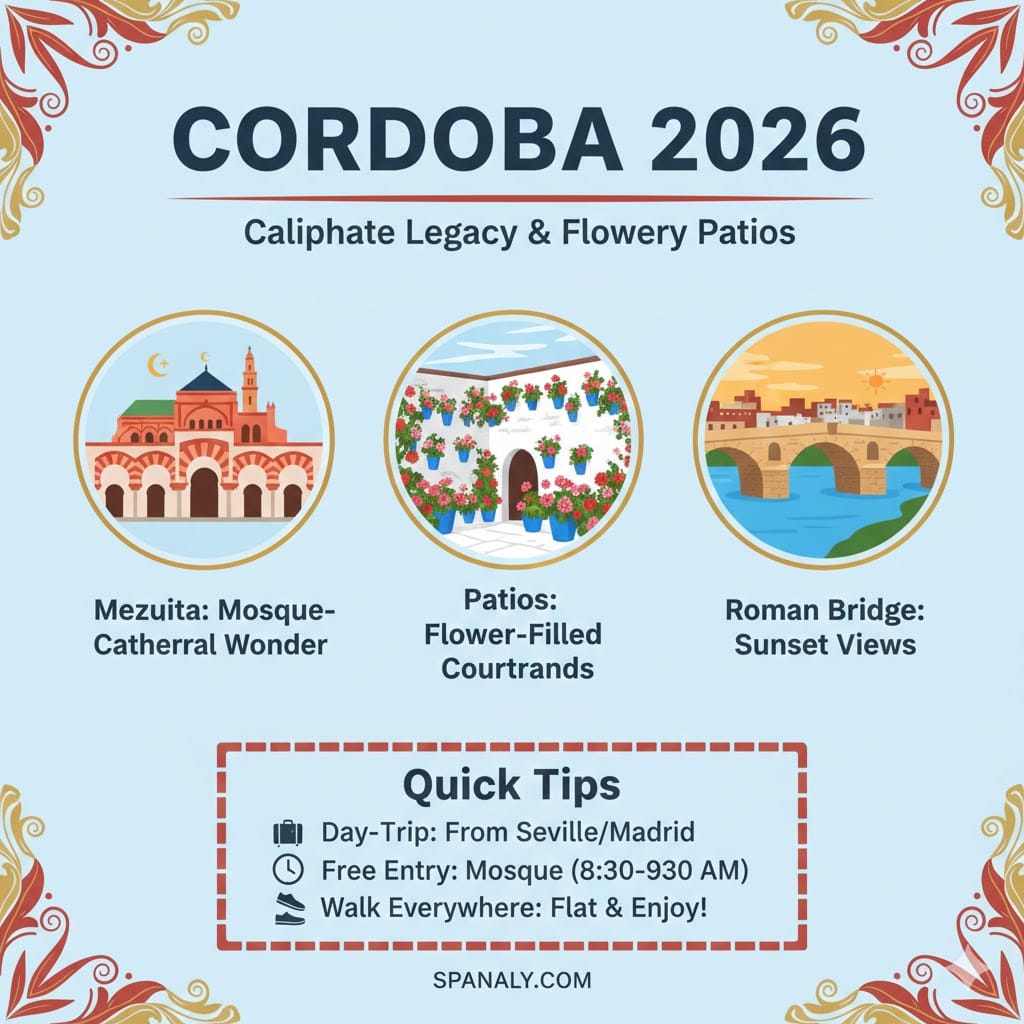
Step back in time to the era of the Caliphate. Córdoba was once the most advanced city in Europe, and in 2026, its quiet charm and flower-filled courtyards continue to captivate those looking for the soul of Andalusia.
🕋 The Great Mosque-Cathedral: Marvel at the forest of red-and-white arches in the Mezquita, a unique architectural wonder that symbolizes the layers of Spanish history.
🌸 The Patios of Córdoba: Wander through the San Basilio neighborhood to see the famous whitewashed courtyards overflowing with colorful geraniums—a living tradition of the city.
🌉 Roman Bridge at Sunset: Walk across the ancient Guadalquivir River via the Roman Bridge for a stunning view of the city’s skyline as the golden hour hits the stone walls.
🧳 Spanaly Day-Trip Tip: Córdoba is perfectly connected via the high-speed AVE train. Before you visit, check our [Travel Tips for Spain] for advice on luggage storage and how to time your visit to catch the monuments during their free-entry hours.
🛡️ The Ultimate 2026 Spain Insider Guide: Pro Tips You Won't Find Elsewhere
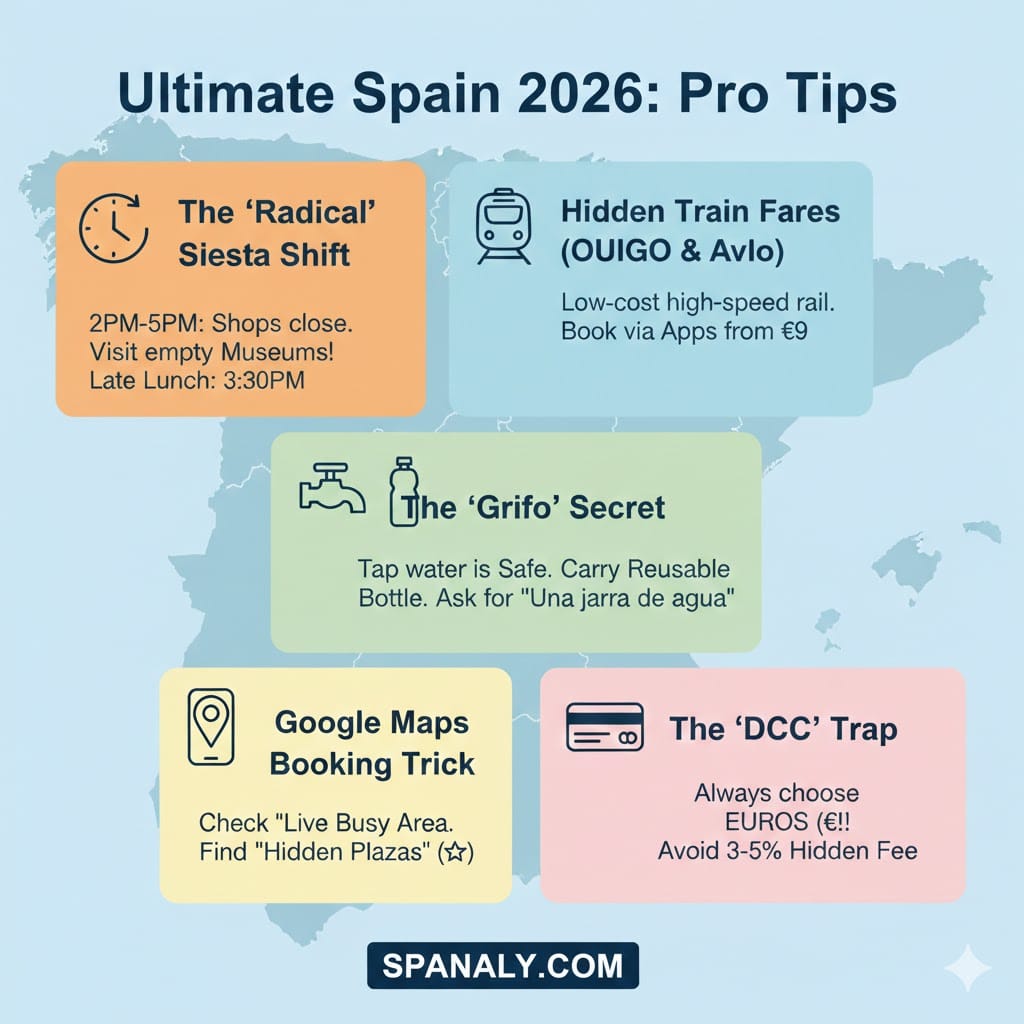
To make your Spanish adventure seamless and authentic, we’ve gathered these “hidden” tips that go beyond the standard tourist handbooks. Master these, and you’ll navigate Spain like a local.
📱 The “Radical” Siesta Shift: While major shops stay open, many authentic local spots still close from 2:00 PM to 5:00 PM. Don’t just wait; use this time to visit museums (which are often empty) or book a “Late Lunch” at 3:30 PM to eat with the locals and avoid tourist prices.
🚆 The “Hidden” Train Fares (OUIGO & Avlo): Beyond the famous AVE trains, 2026 sees a boom in low-cost high-speed rail. Check for OUIGO or Avlo tickets; you can often travel between Madrid and Barcelona for as little as €9 if you book via their specific apps rather than the general station counters.
💧 The “Grifo” Secret: Spain’s tap water (Agua del Grifo) is perfectly safe and highly regulated. Stop buying plastic bottles and carry a reusable one instead. In cities like Madrid or Valencia, the water quality is excellent. Just ask for “Una jarra de agua” at restaurants. It is free by law!
🎟️ The “Google Maps” Booking Trick: For popular attractions, don’t just search on Google. Look at the “Live Busy Area” feature on Google Maps. If a monument is crowded, head to a nearby “Hidden Plaza” (marked by a small star icon) to find authentic cafes that don’t even have English menus yet.
💳 The “DCC” Trap: When paying by card, the machine might ask: “Pay in your currency or Euros?” Always choose Euros when paying by card. Choosing your home currency triggers a “Dynamic Currency Conversion.” This process often includes a hidden 3-5% fee from the bank.
💡 Spanaly Pro Note: If you want to dive deeper into regional secrets, don’t forget to revisit our comprehensive [Travel Tips for Spain] section, where we update the latest digital nomad laws and festival dates for 2026 weekly.
🌍 Visitor FAQs – Essential Spain Travel Guide 2026
⏰ What are the typical mealtimes in Spain?
💶 Is tipping mandatory in Spanish restaurants?
🚆 Should I book my train tickets (AVE/OUIGO) in advance?
🚇 Can I use one transport card for all cities?
🛡️ How can I avoid pickpockets in big cities?
🛍️ Are shops open on Sundays in Spain?
Essential Spain Guide by Spanaly.com
✨ Your Spanish Adventure Awaits in 2026
Spain is more than just a destination; it is a feeling, a rhythm, and a celebration of life. Whether you are wandering through the futuristic streets of Valencia, touching the ancient stones of Toledo, or enjoying a sunset in Ibiza, 2026 is the perfect year to experience the soul of the Mediterranean.
Final Thoughts for Your Trip:
Embrace the Pace: Don’t rush. Spain is best enjoyed slowly, one tapa at a time.
Beyond the Icons: While Madrid and Barcelona are essential, the “magic” often happens in the smaller courtyards of Córdoba or the mountains of Mallorca.
Stay Updated: Travel trends and local events change frequently.
🌍 Ready to Start? > We hope this guide helps you plan the journey of a lifetime. Spain is ready to welcome you with open arms, legendary history, and unforgettable flavors