
Table of Contents
Toggle🌊 The Saltwater Soul of Barcelona
Barcelona is more than just stunning architecture and vibrant nightlife. Indeed, it is a true paradise for seafood lovers. The Mediterranean breeze brings the freshest daily catch straight to the city’s famous kitchens.
Culinary Variety: From traditional Valencian-style paella to modern seafood tapas.
Freshness: Locally sourced ingredients from the Mediterranean Sea.
Vibe: Dining with views of Barceloneta Beach or hidden in historic alleys.
Notably, for a complete guide on how to navigate the city safely, check our . Whether you are looking for the perfect “socarrat” (the crispy rice layer) or creative shellfish dishes, this guide will lead you to the best tables in town.
Consequently, we have curated this list to ensure your dining experience is unforgettable. For a deeper dive into the roots of these flavors, explore our article on .
💡 Spanaly Insight: In Barcelona, seafood is not just food; it is a way of life, a culture of passion, and a history served on a plate.
✨ The Golden Rules: How to Spot Authentic Paella vs. Tourist Traps
Before you sit down at a terrace, you must know that not all rice dishes are created equal. Specifically, many places in crowded areas serve mass-produced versions that don’t reflect the true soul of Spanish Cuisine – Best Dishes & Traditions.
To enjoy the real deal, follow these Spanaly insider rules:
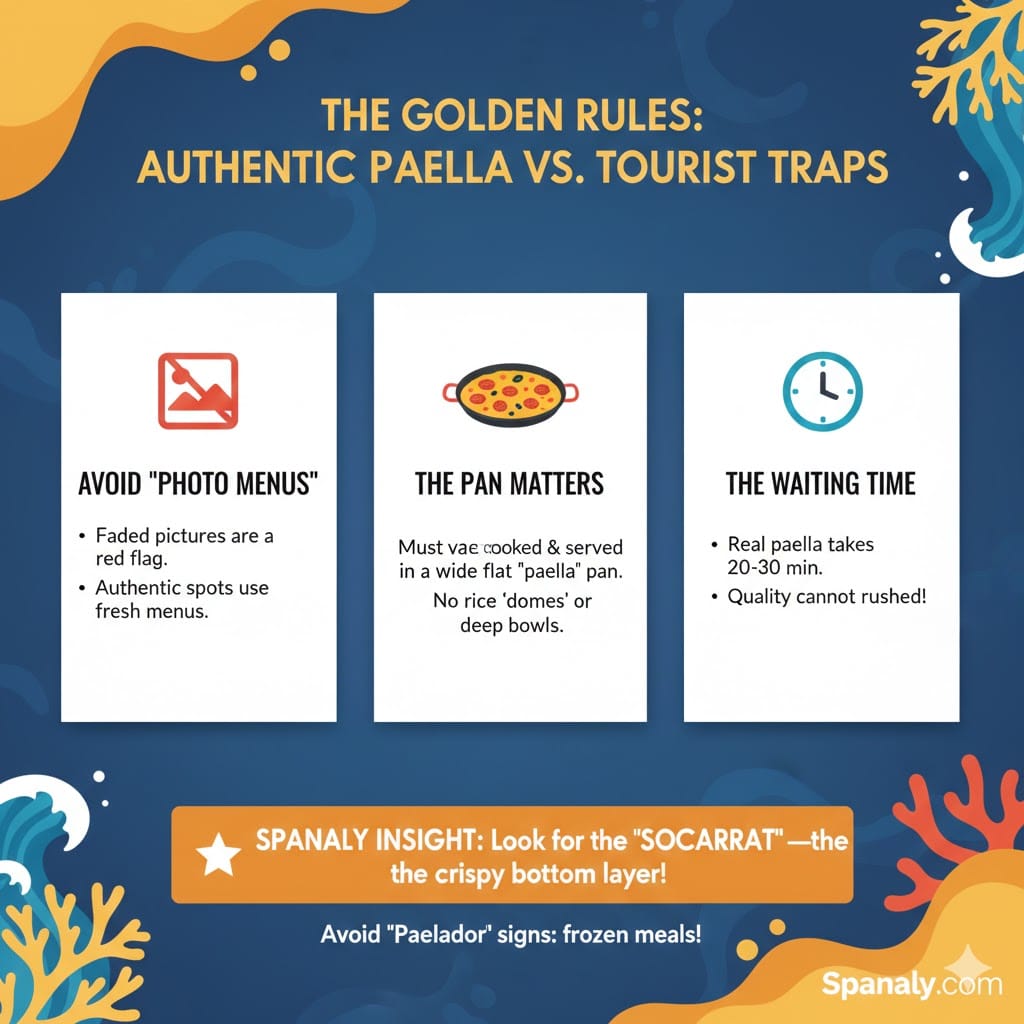
🖼️ Avoid “Photo Menus”: If you see large boards with faded photos of paella outside the door, keep walking. Notably, authentic restaurants rely on fresh, seasonal ingredients.
🥘 The Pan Matters: Real paella is cooked and served in the same wide, shallow pan. If it looks like a “rice dome,” it is likely pre-made.
🕒 The Waiting Time: Great paella takes 20 to 30 minutes to prepare. Indeed, quality cannot be rushed.
Consequently, looking for the “Socarrat”—the delicious, caramelized crispy layer—is the ultimate sign of a master chef. For a deeper understanding of regional flavors, don’t miss our Spanaly Gastronomy Hub where we break down recipes and traditions.
💡 Spanaly Insight: Avoid any place displaying the “Paellador” sign. These are franchised, frozen meals that lack the authentic soul of the Mediterranean.
🏛️ The Traditional Giants: Best Paella Spots in Barcelona
If you are looking for the “Holy Trinity” of traditional rice dishes, these three icons are essential. Each offers a different vibe, from seaside relaxation to historic elegance:
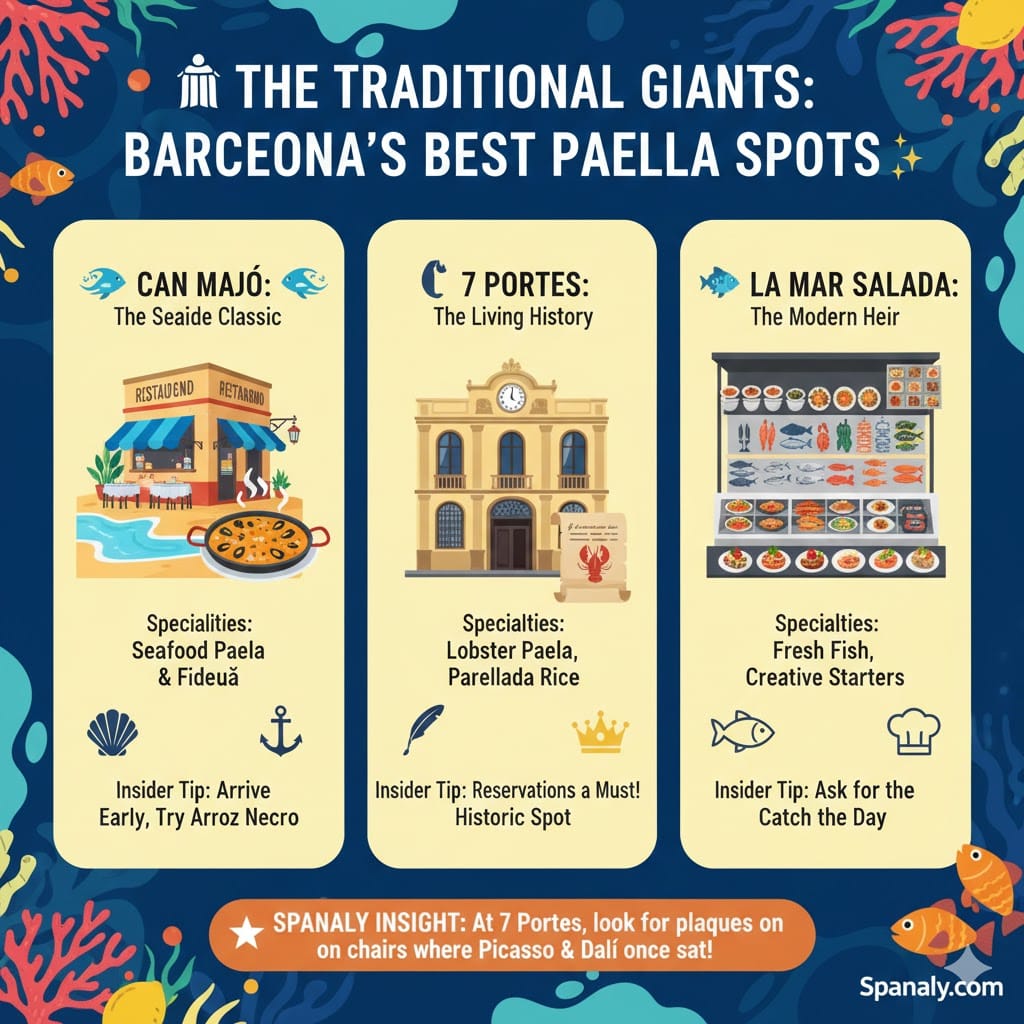
🌊 Can Majó: The Seaside Classic
Specialties: Traditional seafood paella and fideuà (noodle-based paella).
Vibe: A cozy, family-run atmosphere right by the waves in Barceloneta.
Insider Tip: Arrive early for a terrace table. Specifically, try their Arroz Negro (squid ink rice) for a bold Mediterranean flavor.
📜 7 Portes: The Living History
Specialties: Signature Lobster Paella and classic mixed “Parellada” rice.
Vibe: Elegant and grand, located near the Gothic Quarter with over 180 years of history.
Insider Tip: This is a top Barcelona Attraction in itself; reservations are absolutely essential to secure your spot.
🐟 La Mar Salada: The Modern Heir
Specialties: Fresh monkfish paella and creative seafood starters.
Vibe: Located near the port, offering a refined and intimate family heritage experience.
Insider Tip: Always ask for the “Catch of the Day.” Indeed, their commitment to daily freshness sets them apart from the tourist crowds.
💡 Spanaly Insight: At 7 Portes, look for the plaques on the chairs—they mark where famous figures like Picasso and Dalí once sat to enjoy their meal!
⏳ The "Paella Calendar": Why Timing is Everything in Barcelona
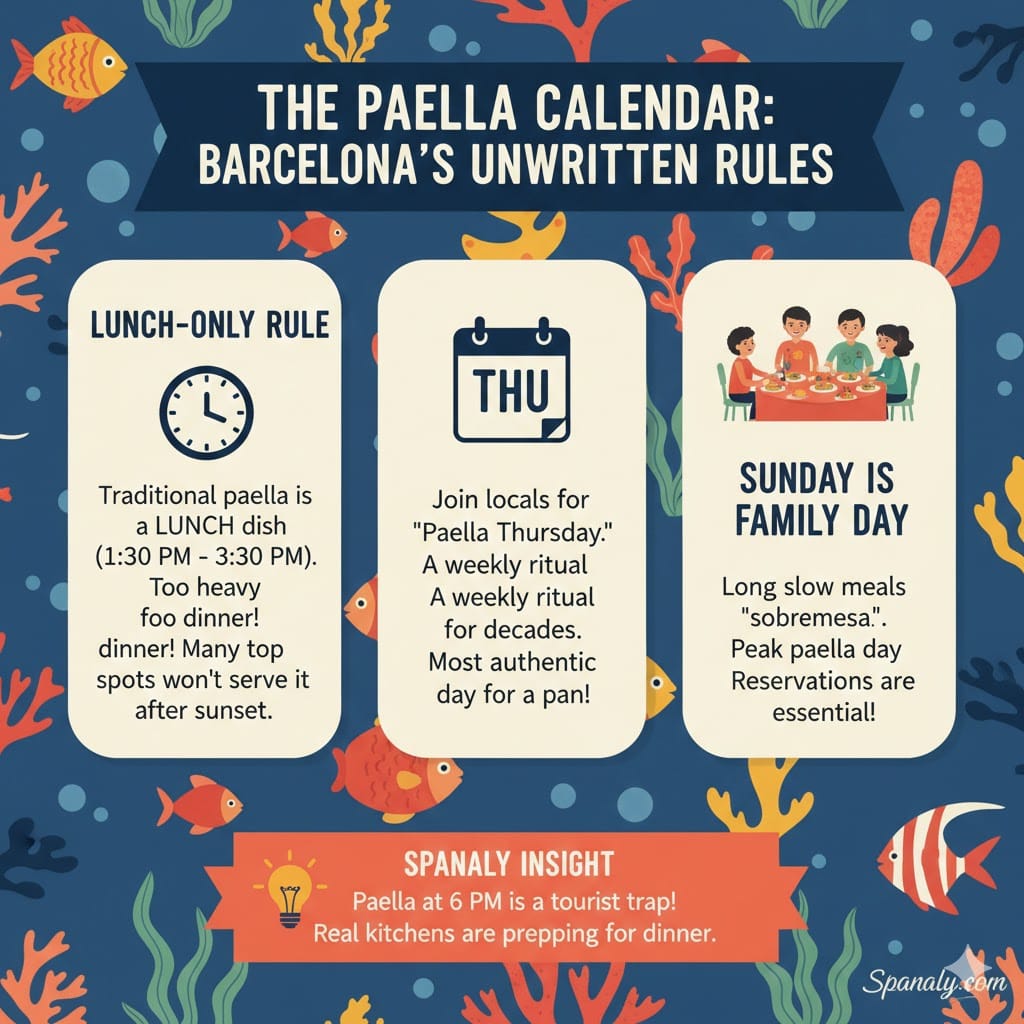
In Barcelona, eating paella is not just about the recipe; it’s about the ritual and the timing. If you want to avoid looking like a typical tourist, you must understand the “Unwritten Spanish Clock.”
The “Lunch-Only” Rule: Authentic paella is traditionally a lunch dish (served between 1:30 PM and 3:30 PM). Specifically, locals believe that rice is too heavy for dinner. Indeed, many of the best traditional restaurants won’t even serve it after sunset.
The Famous “Thursday Paella” Tradition: If you walk through the streets on a Thursday, you’ll notice almost every local menu features paella. Notably, this tradition dates back decades—some say it was to give maids their day off, while others believe it was the day fresh fish reached inland. Regardless of the origin, consequently, Thursday is the most “authentic” day to join the locals for a pan.
Sunday is Family Day: Sunday lunch is the peak of the paella week. Families gather for long, slow meals (sobremesa). To participate, make sure you understand the local Cultural Etiquette in Spain to blend in perfectly.
💡 Spanaly Insight: If a restaurant is aggressively promoting paella at 6:00 PM, it’s a major red flag for a “Tourist Trap.” Real kitchens are usually closed or prepping for dinner at that time!
✨ Beyond Rice: Seafood Tapas & Modern Gourmet Excellence
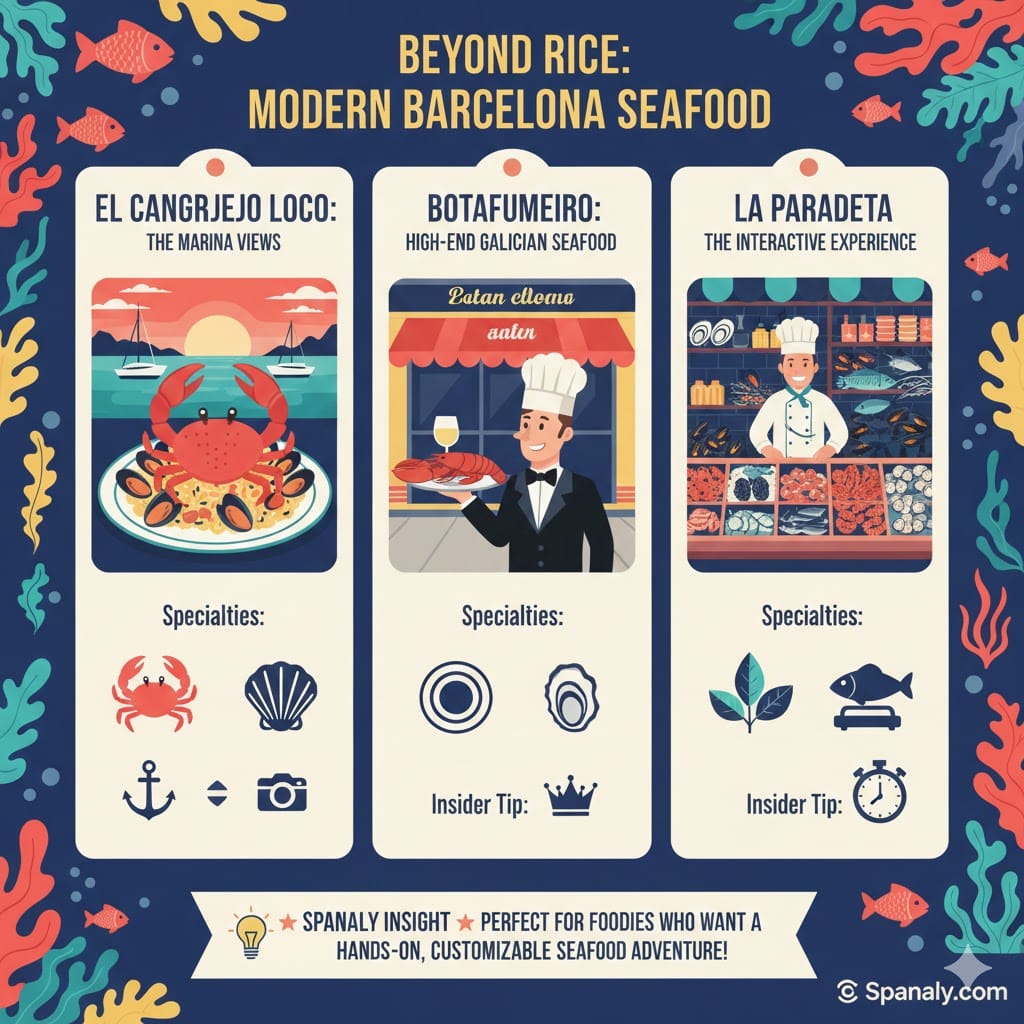
While paella is the star, Barcelona’s seafood scene offers much more through modern gourmet experiences. Specifically, if you crave shellfish platters or avant-garde tapas, these venues are world-class:
🦀 El Cangrejo Loco (The Crazy Crab):
Specialties: Crab and shellfish platters with a modern twist.
Vibe: Lively atmosphere in the Marina with breathtaking sunset views.
Insider Tip: Ideal for photography lovers—the Mediterranean light here is perfect. Notably, try their shellfish risotto for a creamy alternative to paella.
🦪 Botafumeiro: The High-End Icon:
Specialties: Galician-style seafood, fresh oysters, and lobster.
Vibe: Upscale and elegant, located in the sophisticated Gràcia district.
Insider Tip: This is the place for special occasions. Indeed, it is the perfect spot to practice your skills from our guide on How to Order Food Like a Local in Spain.
Consequently, exploring these modern venues gives you a complete picture of the city’s culinary evolution. If you are planning to enjoy the nightlife after dinner, remember that safety is key; check our tips on Night Safety in Barcelona.
💡 Spanaly Insight: Modern seafood restaurants in Barcelona often change their menu seasonally. Always ask the waiter for the “Sugerencia del día” (Suggestion of the day) to taste the freshest catch.
🦀 Interactive Dining: The "Pick & Cook" Experience in Barcelona
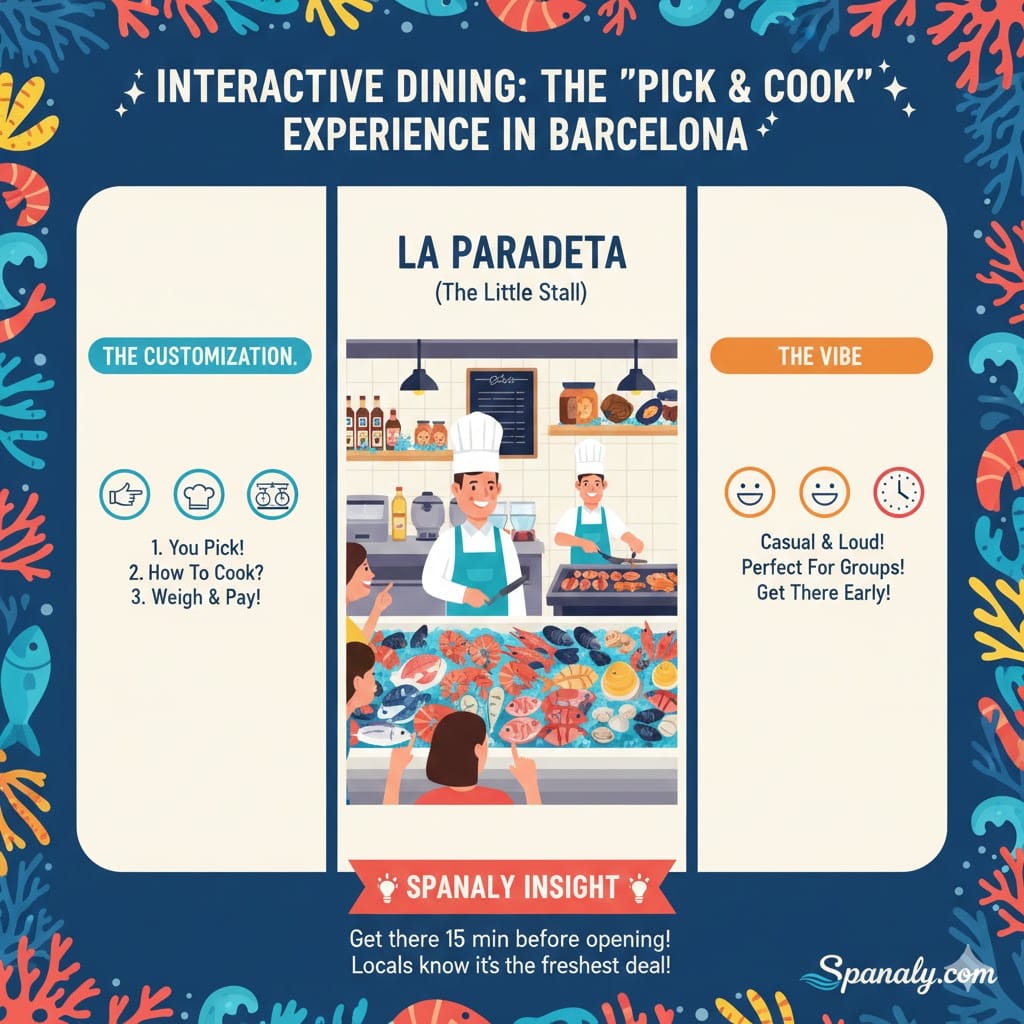
For those who want to skip the formal white tablecloths and get “hands-on” with their food, Barcelona offers a unique, market-style dining concept. Specifically, the legendary La Paradeta has turned seafood dining into an interactive adventure that feels like a festival of freshness.
How it Works: You enter and face a large counter filled with ice and the morning’s freshest catch—from giant prawns to exotic shellfish.
The Customization: You point to what you want, decide the weight, and tell the chef how to cook it (grilled, steamed, or fried).
The Vibe: Casual, loud, and incredibly fun. Notably, it is perfect for families and groups who want to share a variety of tastes.
Consequently, this “fish market to table” approach ensures you get the best value for your money. To ensure you can navigate the city’s transport to reach their various locations, check out our Barcelona Public Transport Guide.
Indeed, if you are visiting during a major event like the Primavera Sound Barcelona, these casual spots are the best way to get high-quality food quickly without the long wait times of traditional sit-down restaurants.
💡 Spanaly Insight: Get there 15 minutes before they open! The queues at La Paradeta form fast because both locals and tourists know it’s the freshest deal in town.
📖 The "Arroz" Dictionary: Mastering the Seafood Menu
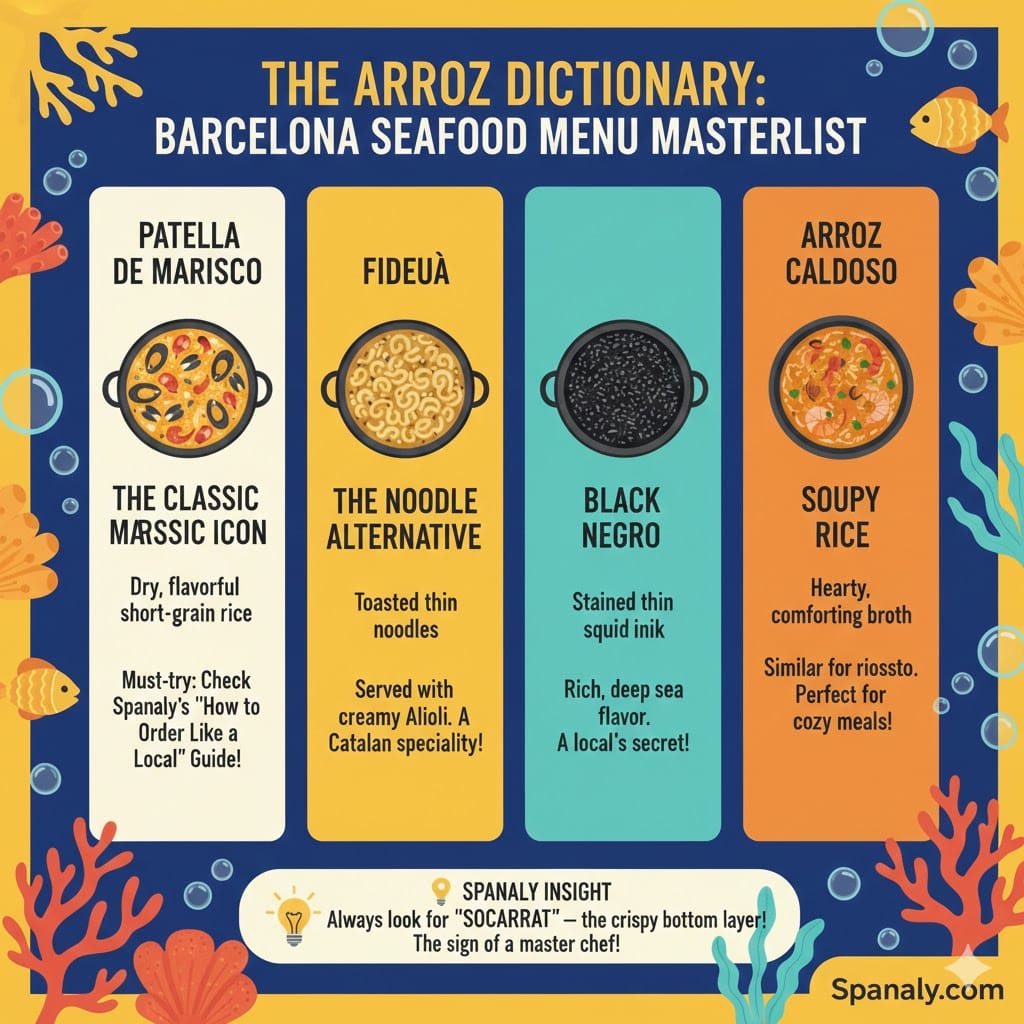
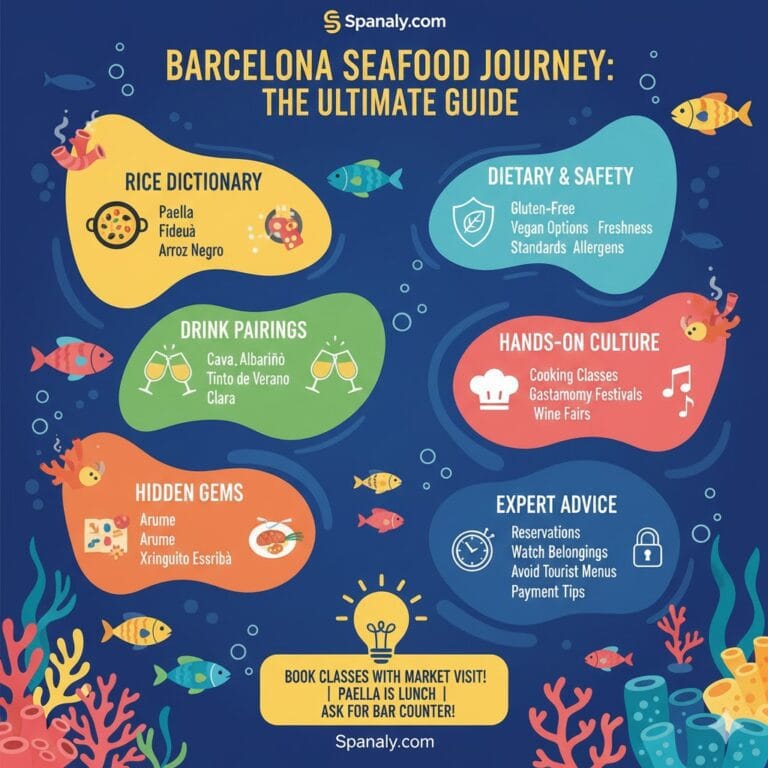
Walking into a traditional restaurant can be overwhelming when you see various rice dishes on the menu. To help you order like a connoisseur, here is your Spanaly guide to the most iconic seafood styles in Barcelona:
🥘 Paella de Marisco (Seafood Paella): The classic icon. It features short-grain rice cooked with saffron, squid, and fresh shellfish. Specifically, it should be dry with every grain separate. If you’re unsure how to handle the formal setting of a traditional paella house, check our guide on How to Order Food Like a Local in Spain.
🥘 Fideuà (The Noodle Alternative): A beloved Catalan specialty born in fishing ports. It uses the same rich seafood broth but replaces rice with short, thin noodles. Notably, it’s a must-try for those exploring Spanish Cuisine – Best Dishes & Traditions.
🖤 Arroz Negro (Black Rice): Naturally stained with squid ink, this dish offers a deep, savory sea flavor. Indeed, it is often considered the “locals’ secret” for a more intense culinary experience than standard paella.
🍲 Arroz Caldoso (Soupy Rice): Perfect for those who love heartier meals. It is cooked in a generous amount of broth, resulting in a consistency similar to a rich seafood risotto.
Consequently, mastering these terms will transform your dining experience from a simple meal into a cultural journey.
💡 Spanaly Insight: Always look for the “Socarrat”—the toasted, crispy bottom layer of the rice. In Barcelona, the quality of a chef is often judged by their ability to create this perfect caramelized crust!
📊 Quick Comparison: At-a-Glance Dining Guide & Tips
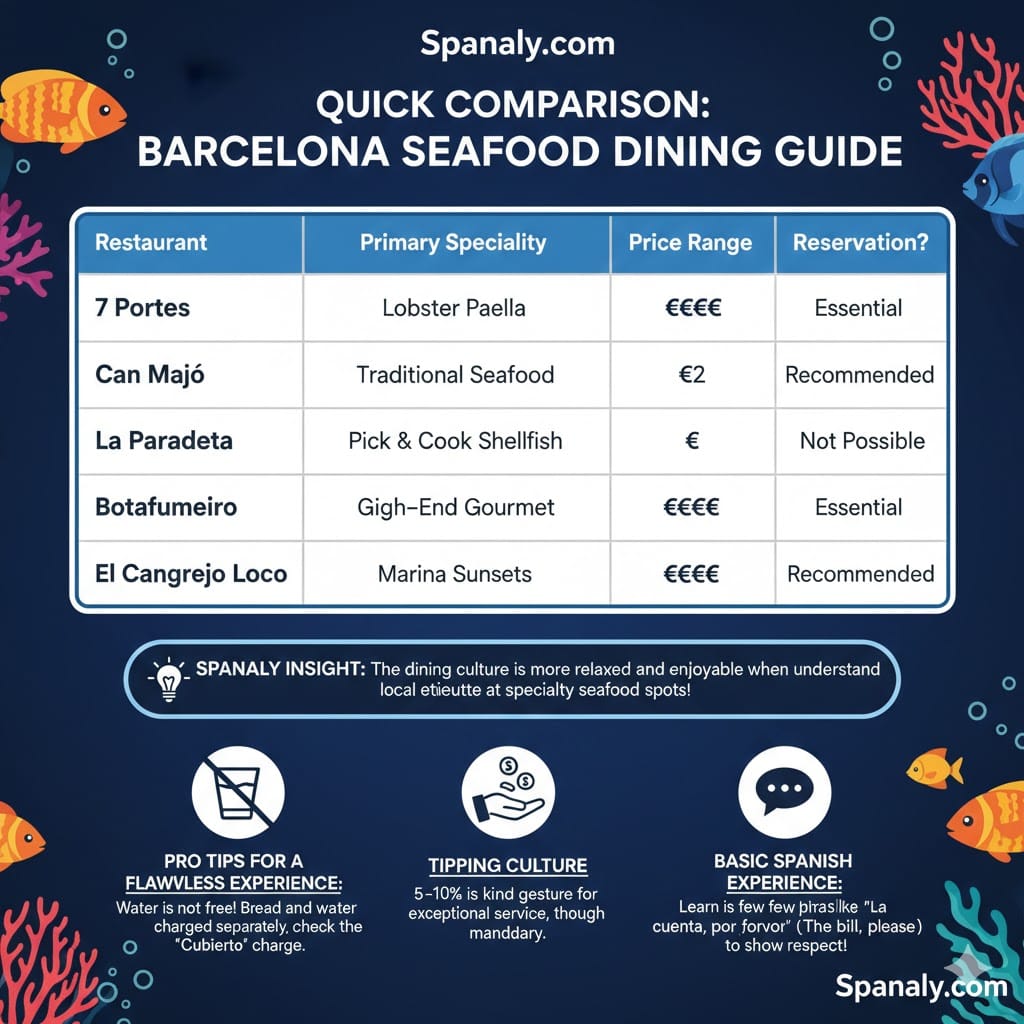
To make your decision easier, we’ve summarized the top seafood experiences in Barcelona. Whether you are looking for a historic feast or a casual market-style lunch, this table helps you find the perfect match for your mood and budget.
| Restaurant | Primary Specialty | Best For… | Price Range | Reservation? |
| 7 Portes | Lobster Paella | Historic Elegance | €€€ | Essential |
| Can Majó | Traditional Seafood | Beachfront Views | €€ | Recommended |
| La Paradeta | Pick & Cook Shellfish | Casual/Family Fun | € | Not Possible |
| Botafumeiro | Galician Oysters | High-End Gourmet | €€€€ | Essential |
| El Cangrejo Loco | Crab & Shellfish | Marina Sunsets | €€€ | Recommended |
💡 Pro Tips for a Flawless Experience:
Water is not free: Unlike some countries, bread and water served at the start of the meal are usually charged separately. Notably, check the “Cubierto” charge on the bill.
Tipping Culture: While not mandatory, leaving a 5-10% tip for exceptional service is a kind gesture that locals often do.
Language Matters: Knowing a few words like “La cuenta, por favor” (The bill, please) will go a long way. Indeed, it shows respect for the local culture.
Consequently, having this guide handy ensures you won’t just eat, but you’ll dine like a true Barcelonian. For more practical advice on enjoying the city without overspending, don’t miss our expert tips on How to Save Money While Traveling in Spain.
💡 Spanaly Insight: In many traditional spots, the bread brought to your table (Pan con Tomate) isn’t free—it’s usually charged per person. If you’re on a budget, simply say “No, gracias” when they bring it, though we highly recommend trying it at least once for the authentic experience!
🍷 Sipping the Mediterranean: Perfect Drink Pairings for Seafood
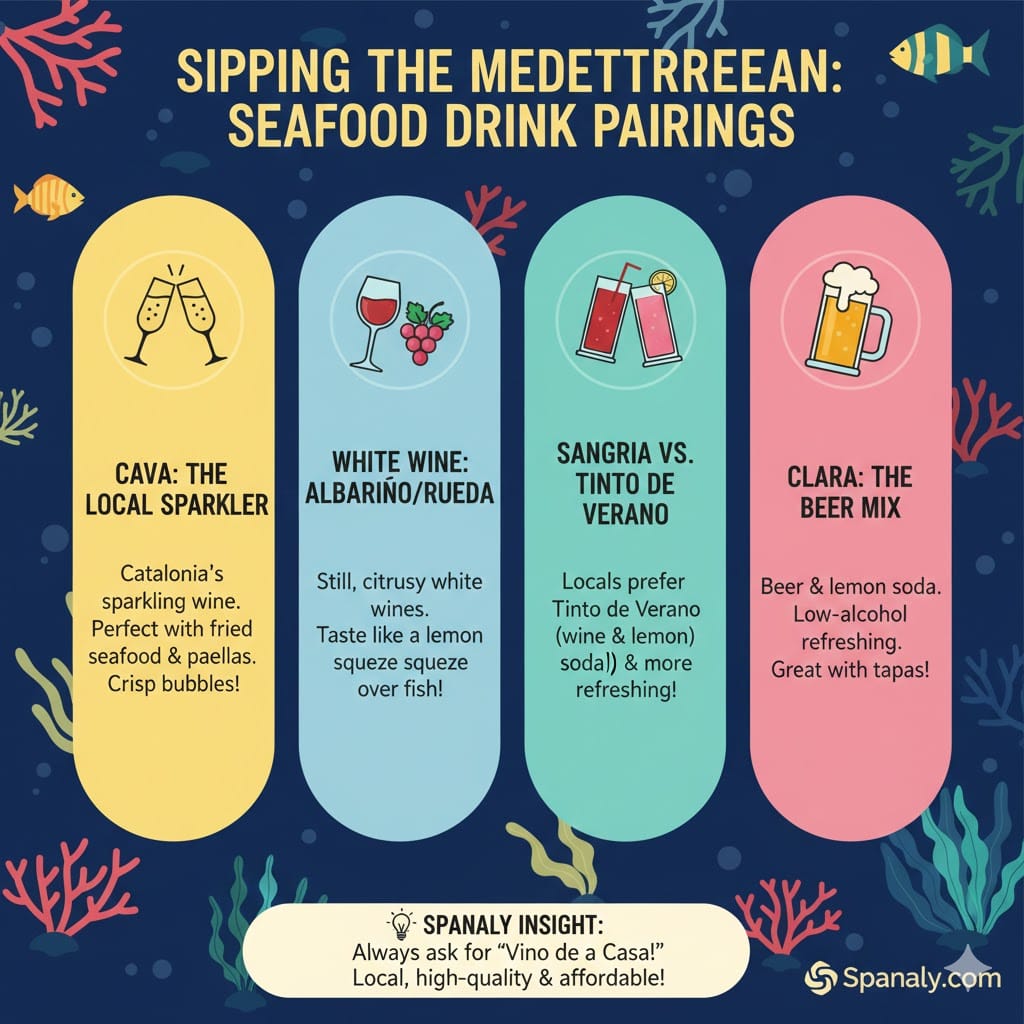
To truly elevate your meal, choosing the right pairing is essential. In Barcelona, the drink is just as important as the dish itself. Specifically, the acidity and bubbles of local favorites are designed to cut through the richness of the olive oil and seafood.
🥂 Cava (The Local Sparkler): Catalonia’s answer to Champagne. This sparkling wine is the ultimate companion for fried seafood and heavy paellas. Notably, its crisp bubbles cleanse the palate between every bite.
🍷 Albariño or Rueda: If you prefer still white wine, look for an Albariño (from Galicia) or a Rueda (Verdejo). Indeed, these wines are famous for their citrusy notes that act like a squeeze of fresh lemon over your fish.
🍹 Sangria vs. Tinto de Verano: While tourists flock to Sangria, locals often prefer Tinto de Verano (red wine mixed with lemon soda). Consequently, if you want to feel like a true resident, give the latter a try—it’s lighter and more refreshing for a hot afternoon.
🍺 Clara (The Beer Mix): A popular choice at beachside Chiringuitos. It is a mix of beer and lemon soda, perfect for those who want a low-alcohol, refreshing drink with their tapas.
Indeed, knowing these pairings will make you look like a pro. To ensure you can navigate the city safely after a few glasses, don’t forget to review our guide on Night Safety in Barcelona.
💡 Spanaly Insight: Always ask for a “Vino de la Casa” (House Wine). In many traditional Barcelona seafood spots, the house wine is locally sourced, high quality, and surprisingly affordable!
📍 Hidden Gems: Secret Seafood Spots Only Locals Know
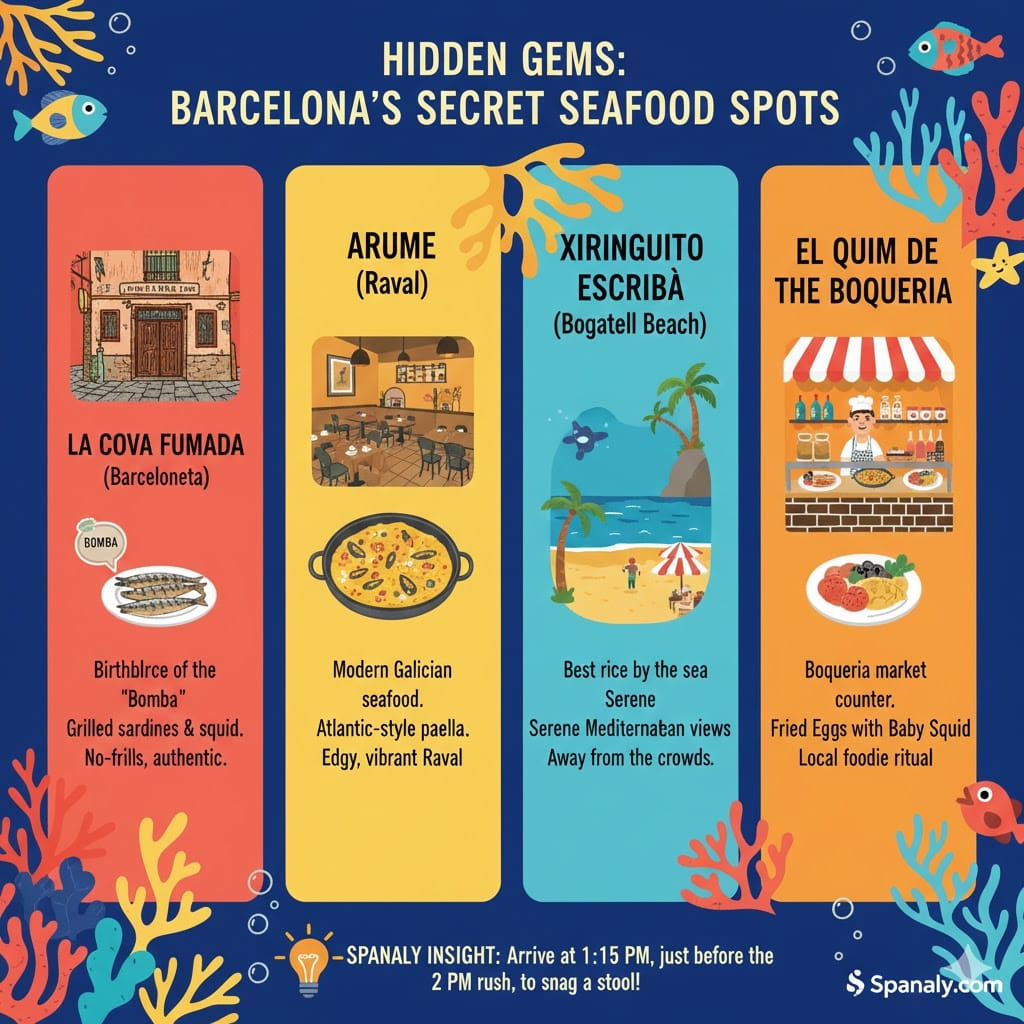
If you want to escape the crowded terraces of Las Ramblas, you need to head where the locals go. These “Hidden Gems” offer authentic flavors, often at a better price, and a much more intimate atmosphere. Specifically, these spots are where you will hear more Catalan than English.
🏘️ La Cova Fumada (Barceloneta): Hidden in the narrow streets of the old fishing quarter, this place doesn’t even have a sign! Notably, it is the birthplace of the “Bomba” (a spicy potato and meat ball), but their grilled sardines and squid are legendary. It’s the definition of a “no-frills” authentic experience.
🥘 Arume (Raval): While the Raval district is known for its edgy vibe, Arume offers a modern, cozy take on Galician seafood. Their Atlantic-style paella is a game-changer. Indeed, exploring the Raval is essential for any Barcelona Attraction list, and this is the perfect place to refuel.
⚓ Xiringuito Escribà (Bogatell Beach): A bit further down the coast from the main tourist beaches, this spot is famous among locals for having some of the best rice in the city. Consequently, the views of the Mediterranean here are much more serene.
🍷 El Quim de la Boqueria: While the market itself is famous, sitting at Quim’s counter for “Fried Eggs with Baby Squid” is a ritual for local foodies. To make sure you navigate these local spots with confidence, don’t forget to check our guide on Cultural Etiquette in Spain.
💡 Spanaly Insight: Many of these hidden gems are small and don’t take reservations. The golden rule? Arrive at 1:15 PM—just before the local lunch rush starts at 2:00 PM—to snag a stool!
🛡️ Dietary & Safety: Gluten-Free, Vegan & Freshness Standards
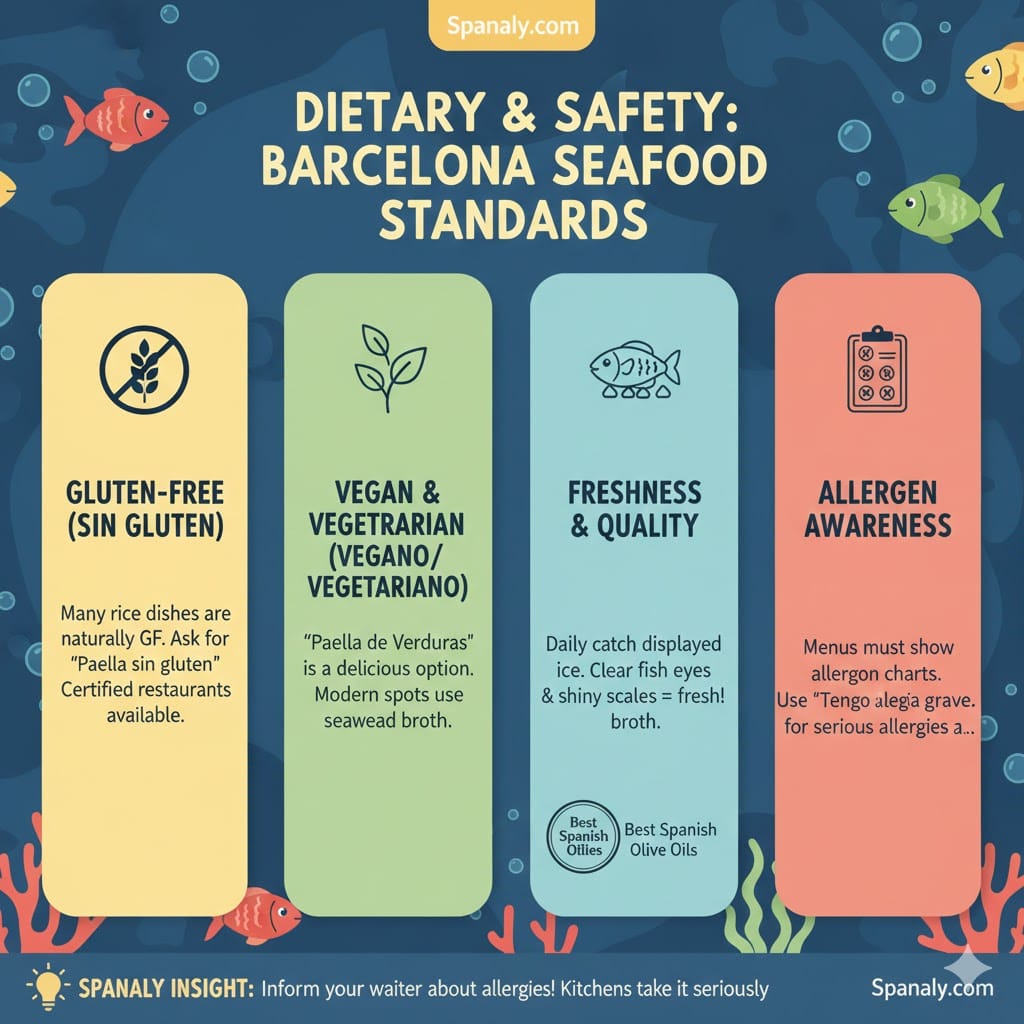
Dining out with dietary restrictions doesn’t mean you have to miss out on the Mediterranean feast. Barcelona has become one of the most dietary-friendly cities in Europe. Specifically, the city’s food culture is evolving to ensure everyone can enjoy a seat at the table safely.
🌾 Gluten-Free (Sin Gluten): You’ll be surprised to know that many rice dishes are naturally gluten-free. Notably, always ask for “Paella sin gluten” to ensure no cross-contamination. Many restaurants are now certified by the Celiac Association of Catalonia to ensure maximum safety.
🌱 Vegan & Vegetarian (Vegano/Vegetariano): While seafood is the star, “Paella de Verduras” (Vegetable Paella) is a delicious alternative. Indeed, many modern spots now use seaweed-based broths to replicate that “sea flavor” without the animal products.
🌊 Freshness & Quality Standards: In Barcelona, freshness is a legal and cultural standard. Consequently, most top-tier seafood restaurants display their daily catch on ice near the entrance. Beyond the fish, the secret to a healthy and tasty meal lies in the oil used; to learn more about the gold standard of Spanish cooking, see our guide on the Best Spanish Olive Oils.
📜 Allergen Awareness: By law, Spanish menus must display an allergen chart. To better understand how to navigate these menus and stay protected, check our Safety Tips for Travelers in Spain.
💡 Spanaly Insight: Always inform your waiter about an allergy before ordering by saying: “Tengo una alergia grave a…” (I have a serious allergy to…). Spanish kitchens take this very seriously and will often have the chef personally oversee your plate.
👨🍳 Hands-on Culture: Paella Cooking Classes & Gastronomy Festivals
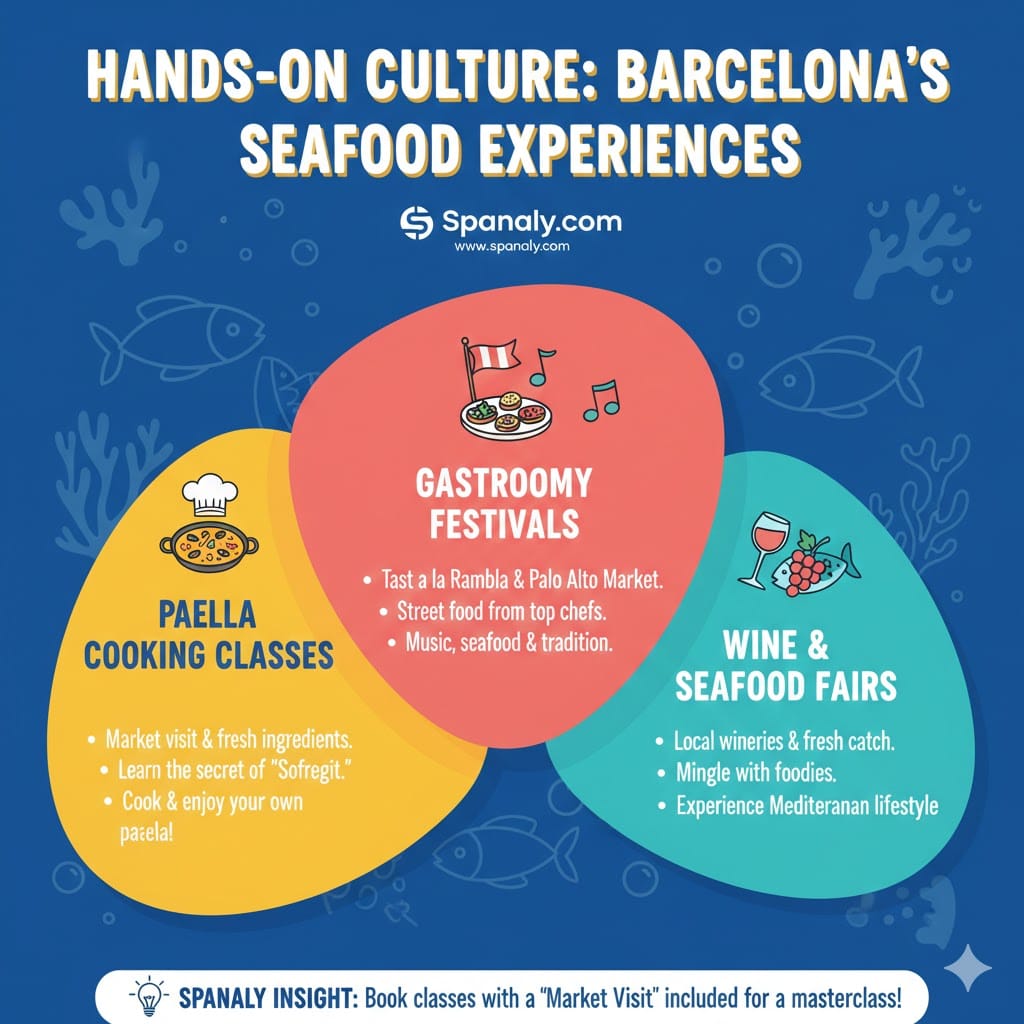
If eating isn’t enough and you want to bring the taste of the Mediterranean home, Barcelona offers incredible interactive experiences. Specifically, engaging in the local food scene through education or celebration is the best way to understand the heart of Catalan culture.
🥘 Paella Cooking Classes: Many local chefs offer workshops that start with a trip to the market to pick fresh ingredients and end with you enjoying the paella you made. Notably, learning the secret of the Sofregit (the tomato and onion base) is a skill that will stay with you forever.
🎉 Gastronomy Festivals: If you visit during certain times of the year, you might catch vibrant events like Tast a la Rambla. These celebrations are a core part of any major Spanish Festival where seafood, music, and tradition blend together on the city streets. Indeed, these events offer a unique chance to taste dishes from top chefs at street-food prices.
🍷 Wine & Seafood Fairs: Keep an eye out for seasonal fairs where local wineries pair their best bottles with freshly caught seafood. It’s a fantastic way to mingle with local foodies and experience the Mediterranean lifestyle firsthand.
Consequently, participating in a class or festival transforms your trip from a simple vacation into a deep cultural immersion that satisfies both your curiosity and your appetite.
💡 Spanaly Insight: When booking a cooking class, look for those that offer a “Market Visit” included. Seeing how a professional chef selects their shellfish at the market is a masterclass in itself!
🛡️ Expert Advice: Staying Safe & Managing Reservations in Busy Districts
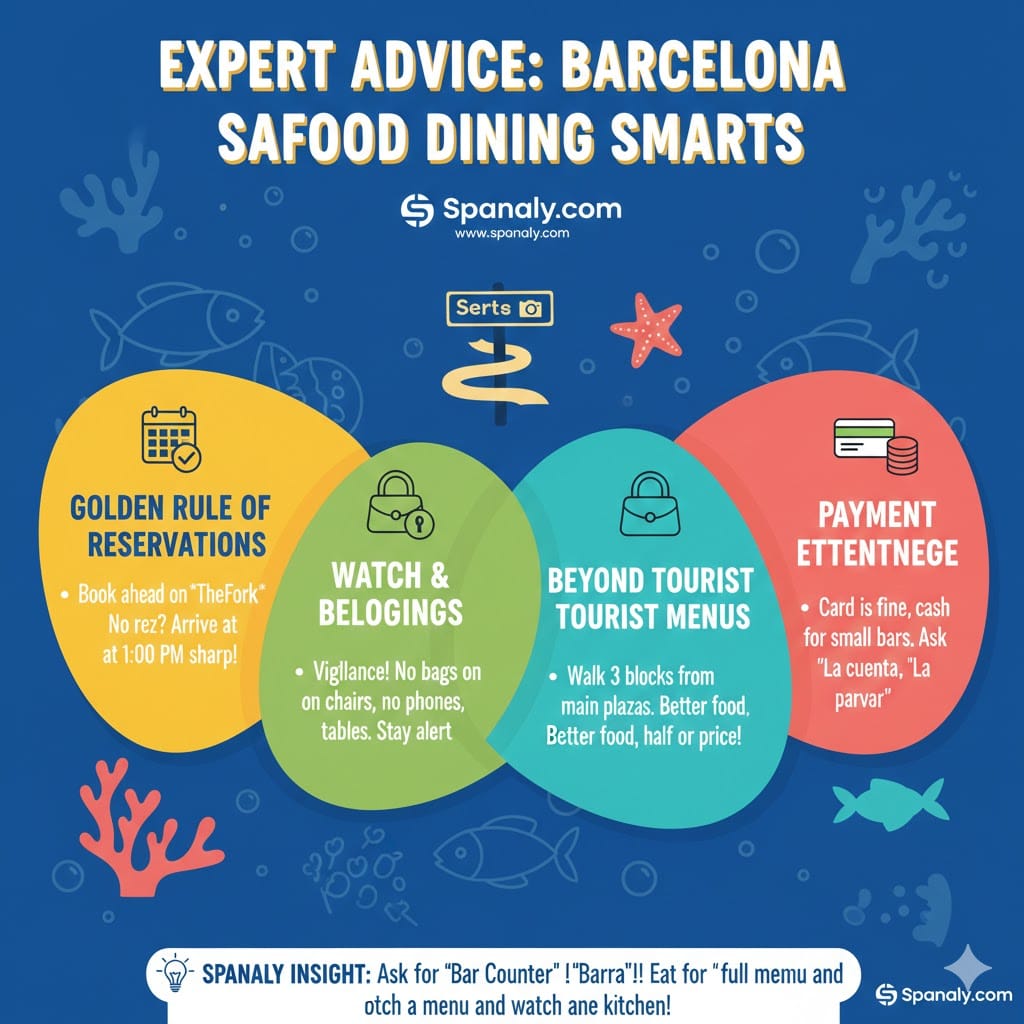
Navigating Barcelona’s seafood scene requires more than just a good appetite; it requires a bit of strategy. Specifically, the most popular dining districts like Barceloneta and Eixample can be as challenging as they are charming if you aren’t prepared.
📅 The Golden Rule of Reservations: In Barcelona, the best seafood spots fill up days in advance, especially for Sunday lunch. Notably, use apps like TheFork or the restaurant’s official website. If you don’t have a reservation, try showing up at 1:00 PM—just as they open—to catch an unreserved table.
🕵️ Watch Your Belongings: Busy districts are magnets for pickpockets. While enjoying your meal on a terrace, never hang your bag on the back of your chair or leave your phone on the table. Indeed, staying vigilant ensures your only memory of the meal is the delicious food. For more detailed safety tips, check our guide on Safety Tips for Travelers in Spain.
🚶 Explore Beyond the “Tourist Menus”: If a restaurant has someone outside waving a laminated menu with photos of food, it’s likely a tourist trap. Consequently, walking just two blocks away from the main plazas often leads to higher-quality food at half the price.
💳 Payment Etiquette: Most places accept cards, but it’s always wise to carry some cash for smaller, traditional bars. Also, remember that “the bill” isn’t brought to the table until you ask for it—it’s considered rude in Spain to rush guests!
Indeed, a little preparation goes a long way. To ensure you can navigate the city’s nightlife with the same confidence, don’t miss our insights on Night Safety in Barcelona.
💡 Spanaly Insight: If a restaurant is fully booked, ask if they have a “Bar Counter” (Barra). Often, you can enjoy the full menu while sitting at the bar, and it’s a much more authentic way to watch the kitchen in action!
🥘 Quick Answers: Seafood & Paella in Barcelona
🕘 What is the best time to order Paella?
Paella is traditionally a lunch dish (2:00 PM – 4:00 PM). While available at dinner, ordering it midday ensures the freshest rice and stock. Avoid spots with "Paellador" signs; they typically serve frozen, pre-made meals.
💶 How much should I expect to pay?
Prices range from €25 to €60 per person. Iconic venues like 7 Portes sit at the higher end, while family-run spots in neighborhoods like Poble-sec or Gràcia offer authentic quality at a mid-range price.
📅 Why is Thursday special for Paella?
In Barcelona, Thursday is traditionally "Paella Day." Many restaurants offer it as part of their Menú del Día. Booking 2-3 days in advance is essential for popular venues, especially for weekend seaside dining.
🌱 Is "Vegetable Paella" always vegan?
Not always. While Paella de Verduras uses seasonal Catalan produce, some kitchens use fish-based broth (*caldo*). Always verify with the waiter that the broth is 100% vegetable-based to ensure it's truly vegan.
🌊 How do I know the seafood is fresh?
Barcelona's proximity to the Llotja (fish market) guarantees world-class quality. Freshness is key: look for glossy scales and clear eyes on displayed fish. High-quality Mediterranean prawns and squid are usually caught the same morning.
Barcelona Gourmet Guide by Spanaly.com
✨ Your Seafood Journey Awaits
Barcelona is more than just a city. It is a celebration of the sea.
From the first bite of grilled sardines to the last grain of saffron rice, the flavors here tell a story of passion and tradition. Whether you love fine dining or hidden local gems, this city has a seat waiting for you.
To make your trip perfect, remember:
Eat like a local: Choose lunch for your big seafood feast.
Stay curious: Explore the neighborhoods beyond the tourist tracks.
Savor the moment: Good food in Spain is meant to be enjoyed slowly.
Ready for more flavors? After enjoying the sea, you might want something cool and refreshing. You absolutely must try the Salmorejo Spanish Cold Soup. It is the creamy, golden soul of Spanish cuisine and the perfect way to start any Mediterranean meal.
Bon profit and happy dining! 🥂🇪🇸