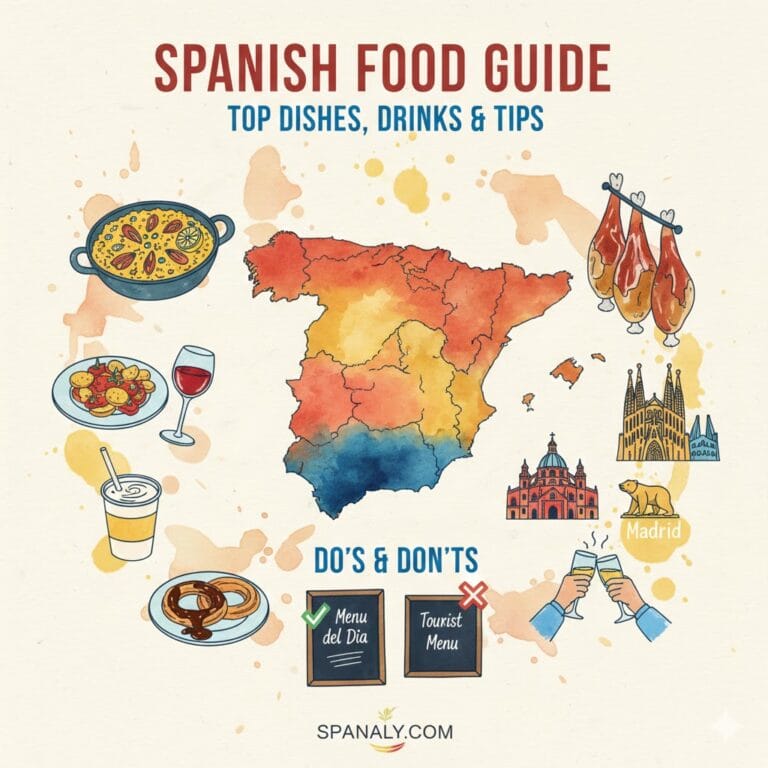

🍲 Spanish cuisine is not just food; it is a vibrant journey through centuries of history, culture, and regional diversity. Specifically, each dish tells a story: from the sun-drenched Mediterranean coast to the lush mountains of Galicia.
💡 Master the Art: To truly understand these flavors, we recommend exploring our comprehensive Spanish Cuisine hub, the foundation of Spain’s gastronomic heritage.
Table of Contents
ToggleThe Essence of Spanish Gastronomy
What makes Spanish Gastronomy unique? It is a blend of three core pillars:
🫒 Core Ingredients: The magic starts with golden olive oil, garlic, and fresh Mediterranean produce.
📍 Regional Identity: Every province, from Andalusia’s streets to Castilla’s plains, offers a distinct signature.
🍷 Social Rituals: Meals are expressions of local identity—celebrations and rituals, not just sustenance.
Spanaly Insight: Exploring Spanish food is a sensory adventure. In fact, by diving into these traditional dishes, you are connecting with the very soul of the Spanish people.
✨ Iconic Dishes of Spain: The Pillars of Flavor
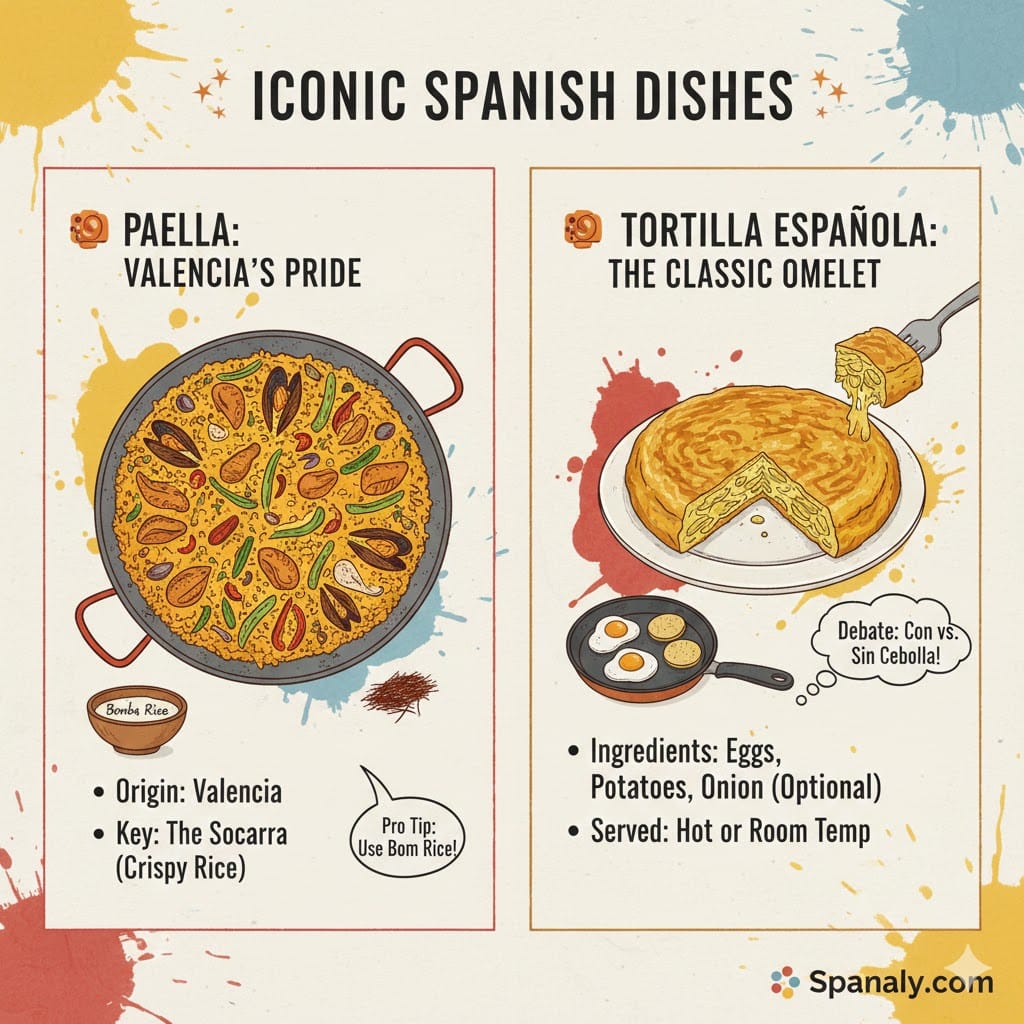
Spain’s culinary identity is built on a few legendary dishes that have gained worldwide fame. Specifically, these iconic creations are more than just recipes; they are cultural symbols that represent the pride of their respective regions.
🥘 Paella: The King of Valencian Rice
Originating from the rice fields of Valencia, Paella is undoubtedly Spain’s most famous export. Traditionally cooked over an open wood fire, it features short-grain rice infused with saffron. Moreover, while many variations exist—including seafood and vegetable versions—the authentic Paella Valenciana usually includes chicken and rabbit.
The Secret: The Socarrat (the crispy, caramelized rice layer at the bottom) is the most prized part of the dish.
Pro Tip: For the best results, always use authentic [Spanish Rice Brands] like Bomba or Calasparra for the perfect texture.
🍳 Tortilla Española: The Classic Omelet
This humble yet delicious staple consists of just three main ingredients: eggs, potatoes, and olive oil. In fact, the debate over whether to include onions (con cebolla) or not (sin cebolla) is a national conversation in Spain.
Serving Style: It is equally delicious whether served hot as a main meal or at room temperature as a snack.
Variety: You will find it in every corner of Spain, from family kitchens to the most modern tapas bars.
❄️ Regional Comfort: Gazpacho, Fabada, and Seasonal Traditions
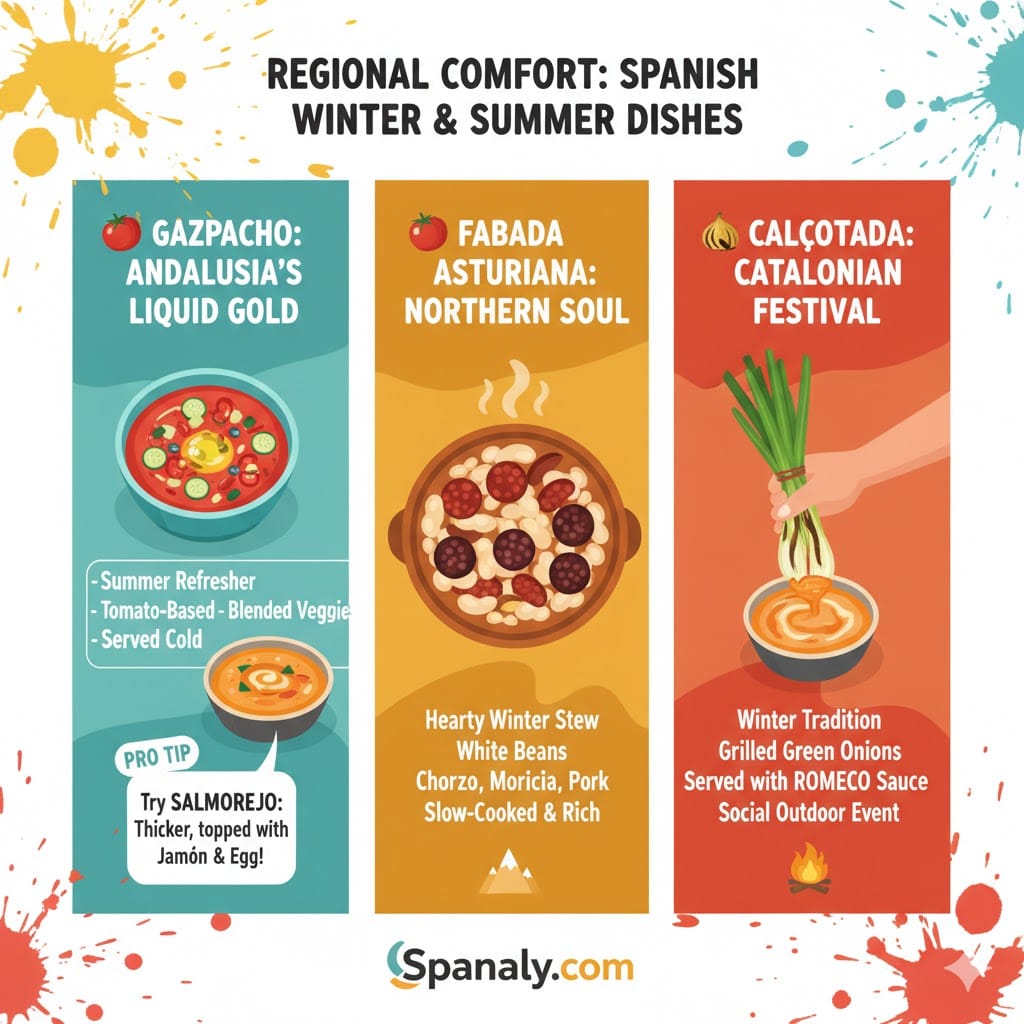
Spanish cuisine excels at adapting to the climate. Specifically, while the south focuses on refreshing cold dishes, the north is famous for its hearty, warming stews.
🍅 Gazpacho: Andalusia’s Liquid Gold
This cold tomato-based soup is the ultimate summer refresher. Blended with cucumbers, peppers, onions, garlic, and high-quality olive oil, it is both healthy and cooling.
Variation: If you prefer a thicker texture, you must try Salmorejo Cordobés, which is often topped with crispy jamón and hard-boiled eggs.
🍲 Fabada Asturiana: The Northern Soul
When the temperatures drop, the people of Asturias turn to this rich white bean stew. It is slow-cooked with compango (a mix of chorizo, morcilla, and pork shoulder).
Characteristic: It is one of the most substantial meals in Spain, designed to provide energy during the cold mountain winters.
🧅 Calçotada: A Winter Celebration
In Catalonia, the arrival of winter means the Calçotada festival. This tradition revolves around calçots (long, thick green onions) grilled over an open flame until charred.
The Ritual: You peel off the blackened outer layer with your hands and dip the tender heart into a rich, nutty Romesco sauce. Moreover, this is often a social event celebrated in outdoor farmhouses called Masias.
🍢 Tapas and Small Plates: The Art of Social Dining
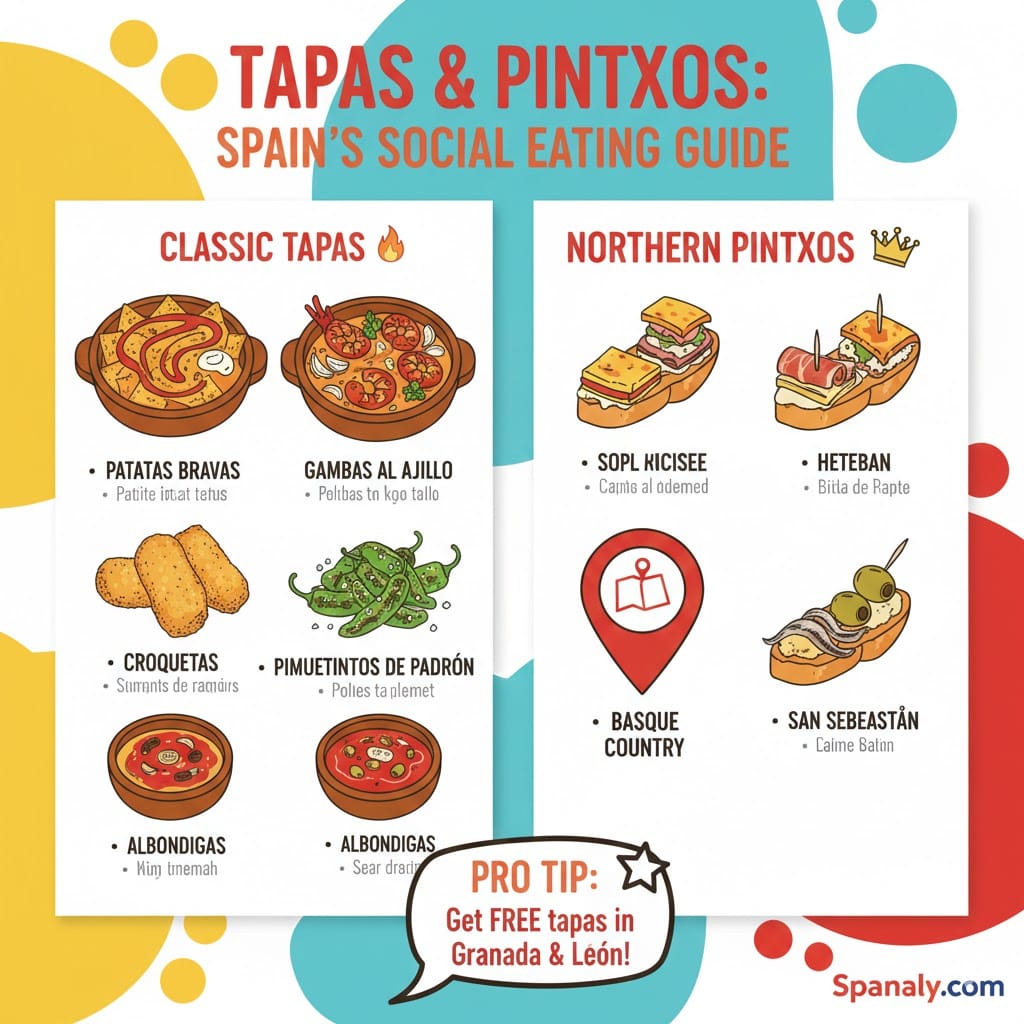
In Spain, tapas are more than just appetizers; they represent a lifestyle. Specifically, the term “tapeo” refers to the act of hopping from one bar to another, enjoying a small bite and a drink at each stop. In fact, this social ritual is the heartbeat of Spanish gastronomy.
🔥 Must-Try Classic Tapas
If you are starting your culinary journey, these “essential five” should be on your plate:
Patatas Bravas: Golden fried potatoes topped with a spicy tomato-based “brava” sauce.
Gambas al Ajillo: Sizzling prawns sautéed in high-quality olive oil with plenty of garlic and a touch of chili.
Croquetas: Creamy, béchamel-filled fried balls, traditionally stuffed with Jamón Ibérico or chicken.
Pimientos de Padrón: Small green peppers from Galicia; most are mild, but “one or two are spicy” (unos pican, otros no).
Albondigas: Savory Spanish meatballs simmered in a rich, aromatic tomato sauce.
🏙️ Regional Variations
While tapas are found everywhere, they change character by region. For instance, in northern Spain, particularly in San Sebastián and Bilbao, they are called Spanish Pintxos, which are usually served on a slice of bread and secured with a toothpick.
💡 Spanaly Tip: In many traditional cities like Granada and León, your tapa is often served complimentary (for free) with every drink you order!
🧀 Cured Meats and Cheeses: The Gourmet Heritage
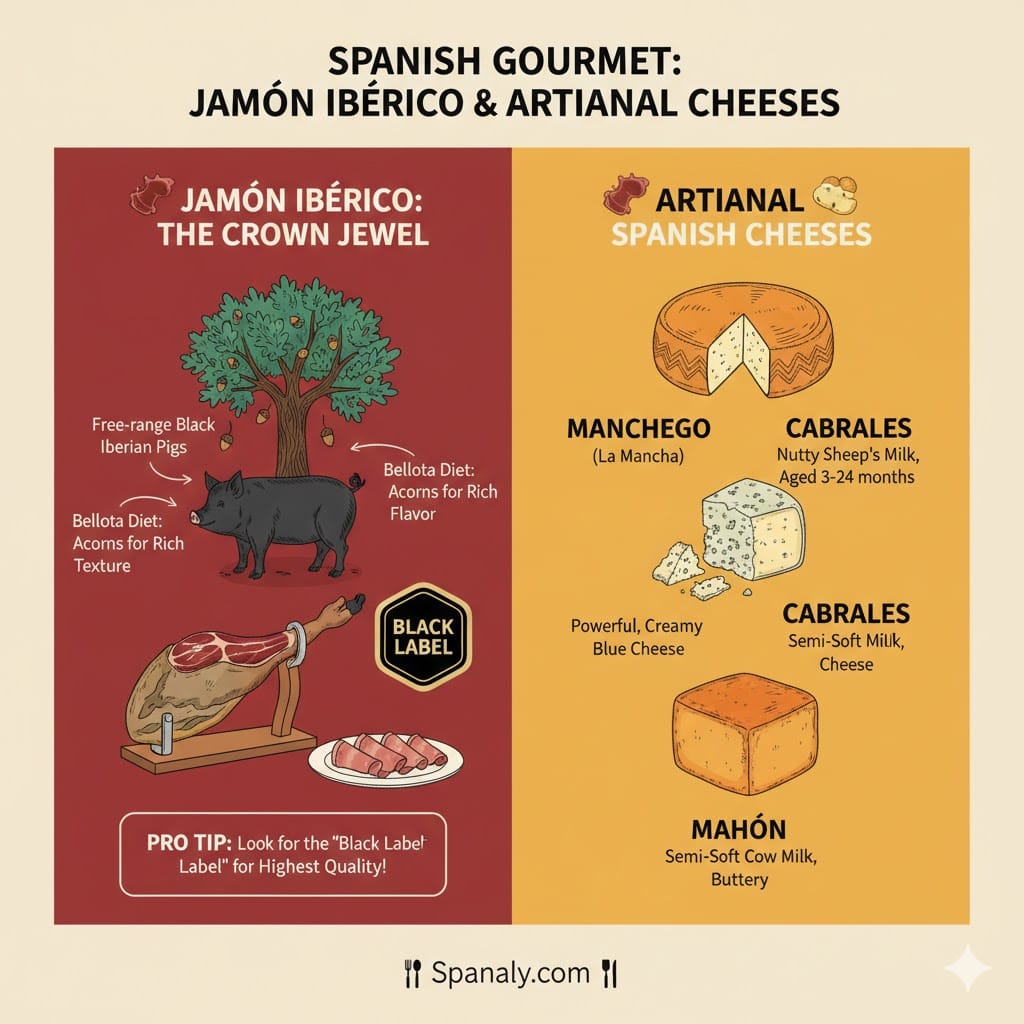
No Spanish table is complete without a platter of cured meats and artisanal cheeses. Specifically, these products are the result of centuries of traditional preservation methods and a deep respect for the land.
🥩 Jamón Ibérico: The Crown Jewel
Often considered the finest ham in the world, Jamón Ibérico comes from free-roaming black Iberian pigs. Moreover, the most prestigious grade, Bellota, comes from pigs fed exclusively on acorns, giving the meat a unique nutty flavor and a melt-in-your-mouth texture.
Selection Tip: Look for the “Black Label” for the highest quality.
Complement: To learn more about how these delicacies are served in local markets, visit our guide on [Spanish Markets].
🧀 Artisanal Cheeses (Quesos)
Spain offers a staggering variety of cheeses, each reflecting its local climate:
Manchego: A nutty sheep’s milk cheese from the plains of La Mancha, aged for 3 to 24 months.
Cabrales: A powerful, creamy blue cheese from the limestone caves of Asturias.
Mahón: A cow’s milk cheese from Menorca with a distinctive orange rind and a buttery finish.
🏛️ Food Markets & Dining Etiquette

To eat like a Spaniard, you must understand where the food comes from and when it is eaten. In fact, the local market is the heart of every Spanish neighborhood.
🛒 Market Culture: Destinations like Mercado de San Miguel in Madrid or La Boqueria in Barcelona are not just for shopping; they are gastronomic hubs where you can enjoy fresh tapas and wine.
🕙 The Spanish Clock: Dining in Spain happens later than in the rest of Europe. Lunch (La Comida) usually starts at 2:00 PM, and dinner (La Cena) rarely begins before 9:00 PM.
🥖 The Bread Rule: Bread is almost always present on the table, often used as a tool to help push food onto the fork or to soak up delicious sauces.
🍰 Traditional Spanish Desserts: A Sweet Finale
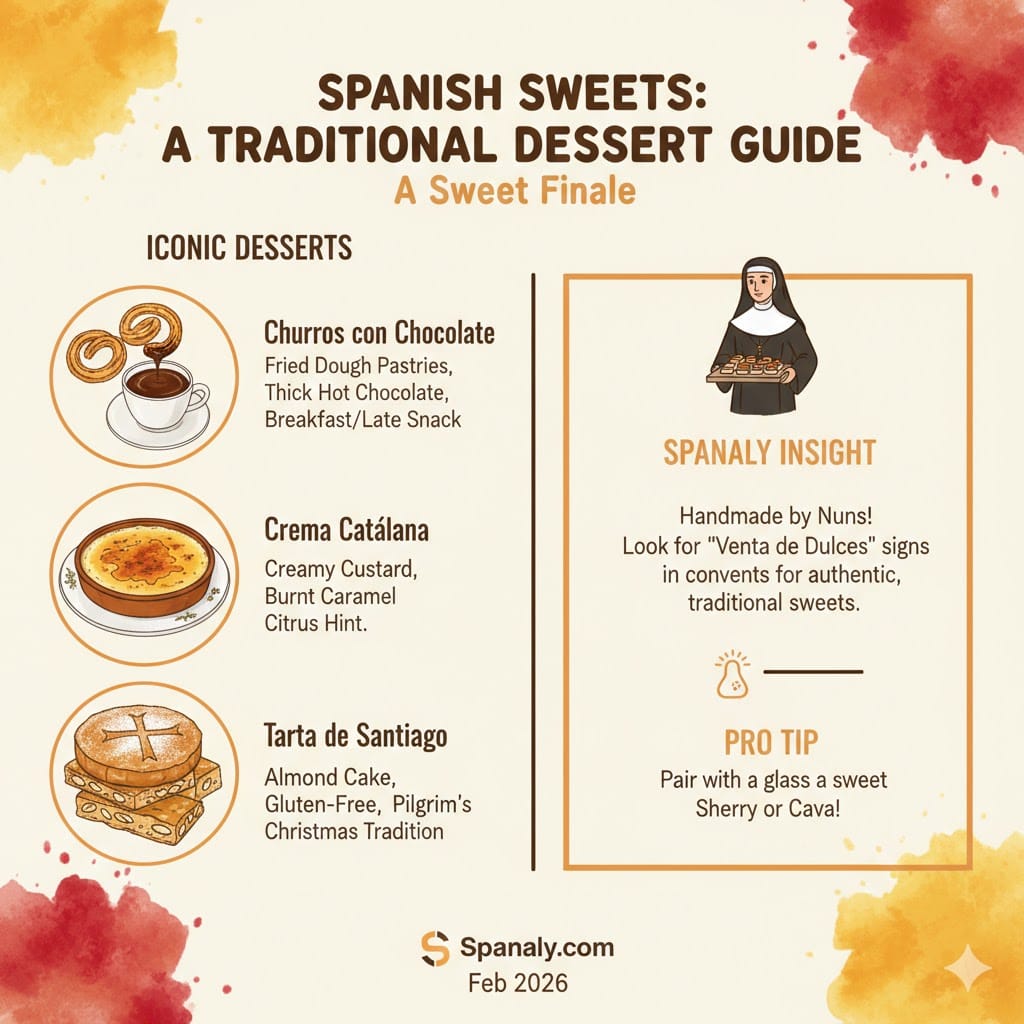
Spanish desserts are deeply rooted in history, with many recipes originating from ancient convents and Moorish influences. Specifically, they rely on simple, high-quality ingredients like honey, almonds, and eggs to create rich, comforting flavors.
Iconic Sweets You Can’t Miss
Churros con Chocolate: The ultimate Spanish treat. These fried dough pastries are best enjoyed dipped into a cup of thick, velvet-like hot chocolate. In fact, they are a favorite for breakfast or a late-night snack.
Crema Catalana: Often compared to Crème Brûlée, this Catalonian masterpiece features a creamy custard base with a crisp, burnt caramel crust and a hint of cinnamon and lemon zest.
Tarta de Santiago: A traditional almond cake from Galicia, naturally gluten-free and decorated with the Cross of Saint James. It is a staple for pilgrims finishing the [Camino de Santiago] route.
Turrón: A nougat made of honey, sugar, and toasted almonds, traditionally served during the Christmas season but loved year-round.
Spanaly Insight: Many of the best traditional sweets are still handmade by cloistered nuns in convents across Spain—look for signs that say “Venta de Dulces” for a truly authentic experience.
🌿 The Spanish Pantry: Secrets of the Authentic Flavor
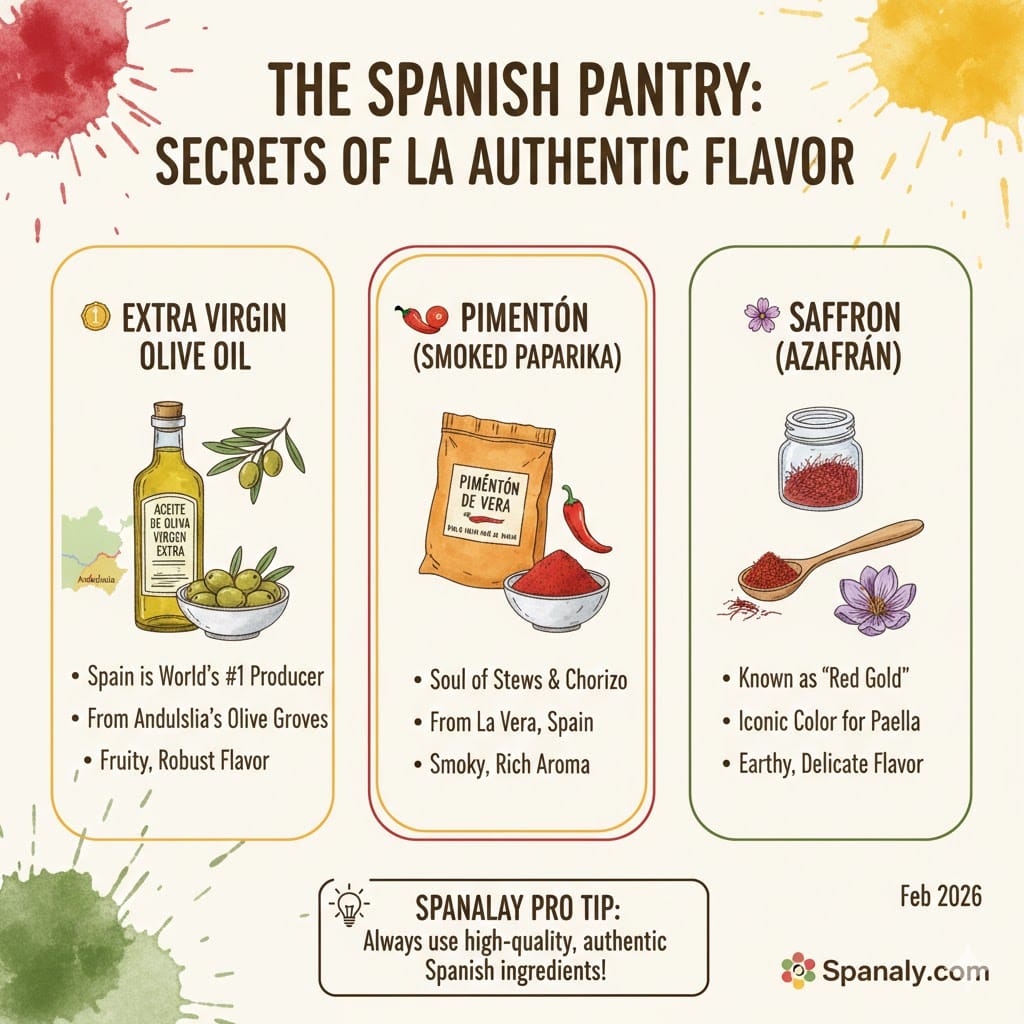
What makes Spanish food taste so distinct? Specifically, it’s not about complex techniques, but about the quality of a few “holy” ingredients. In fact, every Spanish kitchen relies on these three essentials to create magic.
🥇 Extra Virgin Olive Oil (Liquid Gold): Spain is the world’s leading producer. For the most authentic experience, look for oils from Andalusia’s Olive Groves, known for their robust and fruity profiles. It is used for everything from frying to finishing a dish.
🔴 Pimentón (Smoked Paprika): This is the soul of Spanish stews and chorizos. The best comes from La Vera, where peppers are dried over oak wood fires to give that signature smoky aroma.
🌸 Saffron (Azafrán): Known as “Red Gold,” this delicate spice provides the iconic color and earthy aroma to Paella. Spain produces some of the highest-quality saffron in the world, particularly in La Mancha.
🍷 Spanish Drinks: From Vineyards to Celebrations
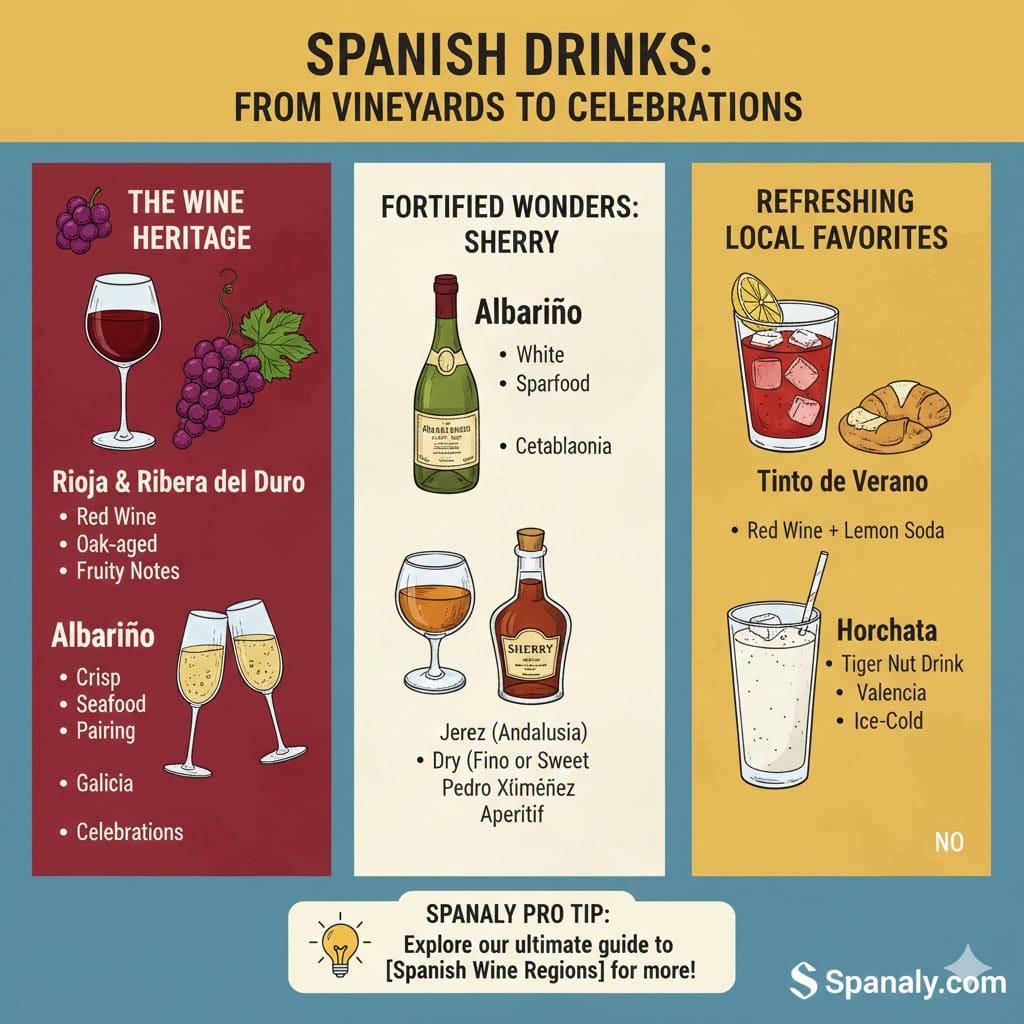
No culinary journey through Spain is complete without exploring its world-class beverages. Specifically, Spain boasts more vineyard surface area than any other country. To navigate this vast world, you can explore our ultimate guide to Spanish Wine Regions.
🍇 The Wine Heritage
Rioja & Ribera del Duero: These regions produce Spain’s most famous red wines, known for their oak-aged complexity and fruity notes.
Albariño: A crisp, aromatic white wine from Galicia, perfect for pairing with seafood.
Cava: Spain’s answer to Champagne. This sparkling wine from Catalonia is essential for any celebration, offering a refined and bubbly experience.
🥃 Fortified Wonders: Sherry
Coming from the “Sherry Triangle” in Andalusia, Jerez (Sherry) ranges from bone-dry Fino to the sweet and dark Pedro Ximénez. In fact, it is a traditional masterpiece often enjoyed as an aperitif with salty snacks.
🥤 Refreshing Local Favorites
Tinto de Verano: While Sangria is famous, locals often prefer this lighter mix of red wine and lemon soda—the perfect companion for a sunny afternoon.
Horchata: A creamy, non-alcoholic treasure from Valencia made from tiger nuts (chufas), best enjoyed ice-cold during the summer months.
📍 Recommended Culinary Destinations: Your Gastronomic Roadmap
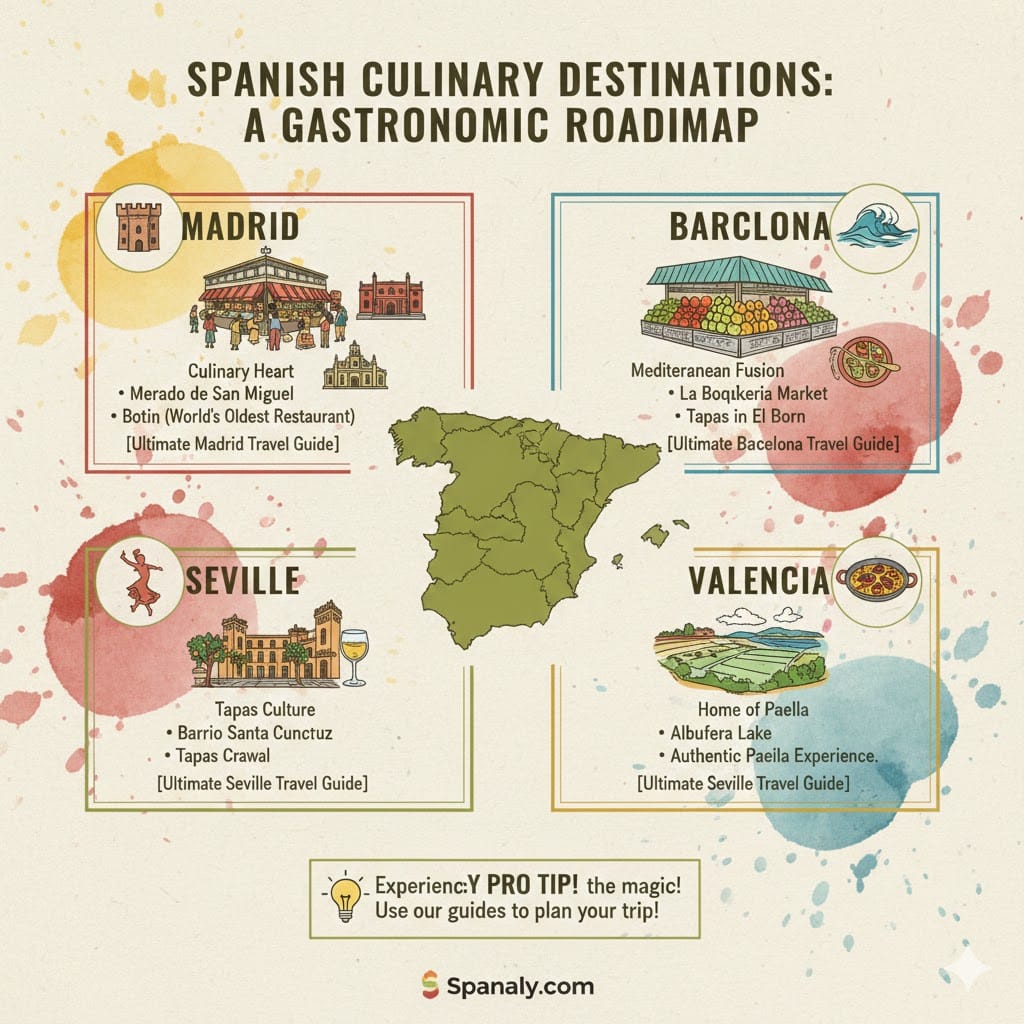
To truly master Spanish cuisine, you must experience it in its natural habitat. Specifically, each city offers a distinct “flavor profile” that defines its identity. Here are the top destinations to include in your itinerary:
🏰 Madrid: The culinary heart of the country. Beyond the famous Mercado de San Miguel, you can dine at Botín, the world’s oldest restaurant. For a complete plan, check our Ultimate Madrid Travel Guide .
🌊 Barcelona: A fusion of Mediterranean freshness and avant-garde cooking. From the iconic La Boqueria to the hidden gems of El Born, find every detail in our Ultimate Barcelona Travel Guide .
💃 Seville: The birthplace of traditional tapas culture. Getting lost in the Barrio Santa Cruz with a glass of Sherry is a rite of passage. Plan your visit with our Ultimate Seville Travel Guide .
🥘 Valencia: The undisputed home of Paella. For the most authentic experience, visit the rice fields of Albufera Lake, where tradition meets the sea.
✨ The Enduring Legacy of Spanish Food
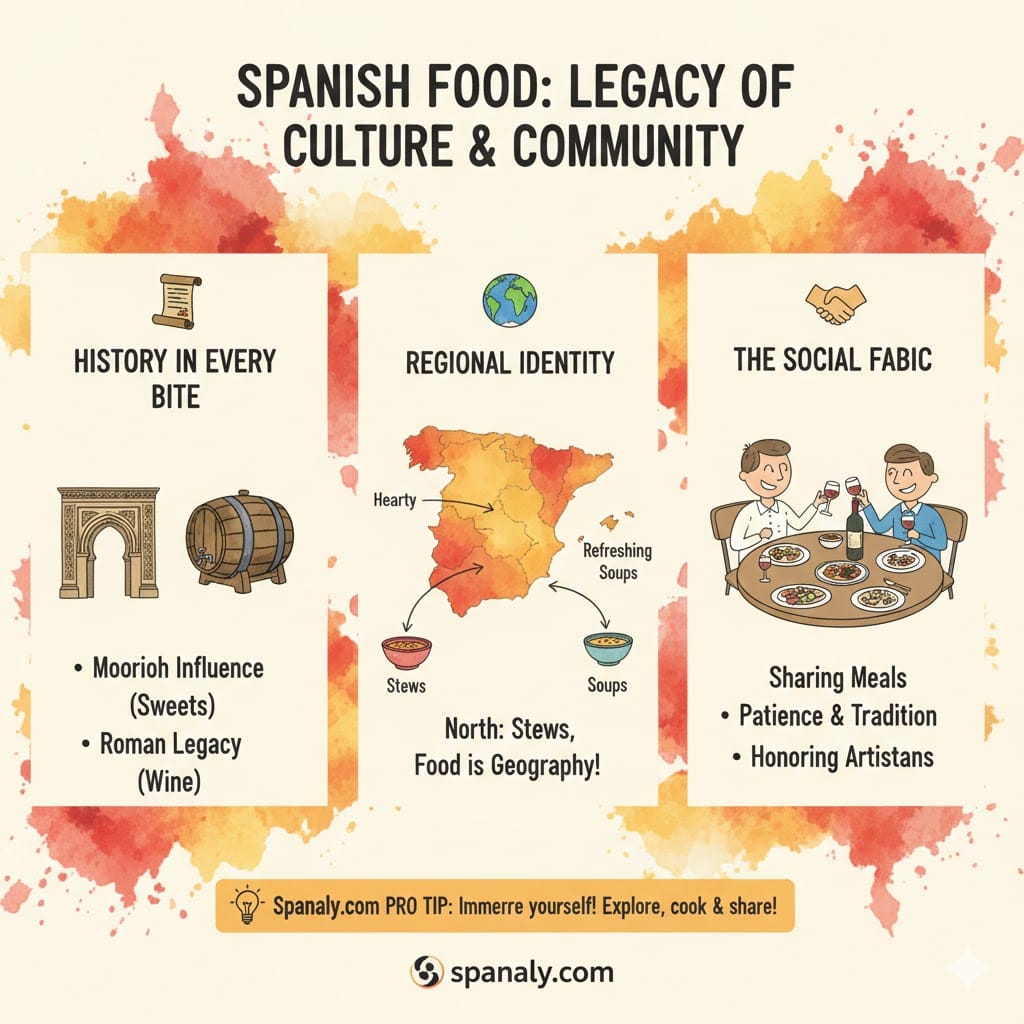
Spanish cuisine is far more than just a set of recipes; it is a celebration of local ingredients, culinary creativity, and the communal spirit of sharing life around a table.
📜 History in Every Bite: From the Moorish influence in sweets to the Roman legacy in wine, every dish tells a story of cultural fusion.
🌍 Regional Identity: Whether it’s the hearty stews of the north or the refreshing soups of the south, food is the primary language of Spanish geography.
🤝 The Social Fabric: Exploring this landscape teaches us patience, respect for tradition, and an appreciation for the artisans who keep these treasures alive.
This guide serves as your comprehensive reference here at Spanaly.com. We invite you to fully immerse yourself in Spain’s gastronomic landscape—whether you are walking the historic streets of Spain or bringing its magic into your own kitchen.
💡 Pro Tips for a Seamless Spanish Dining Experience
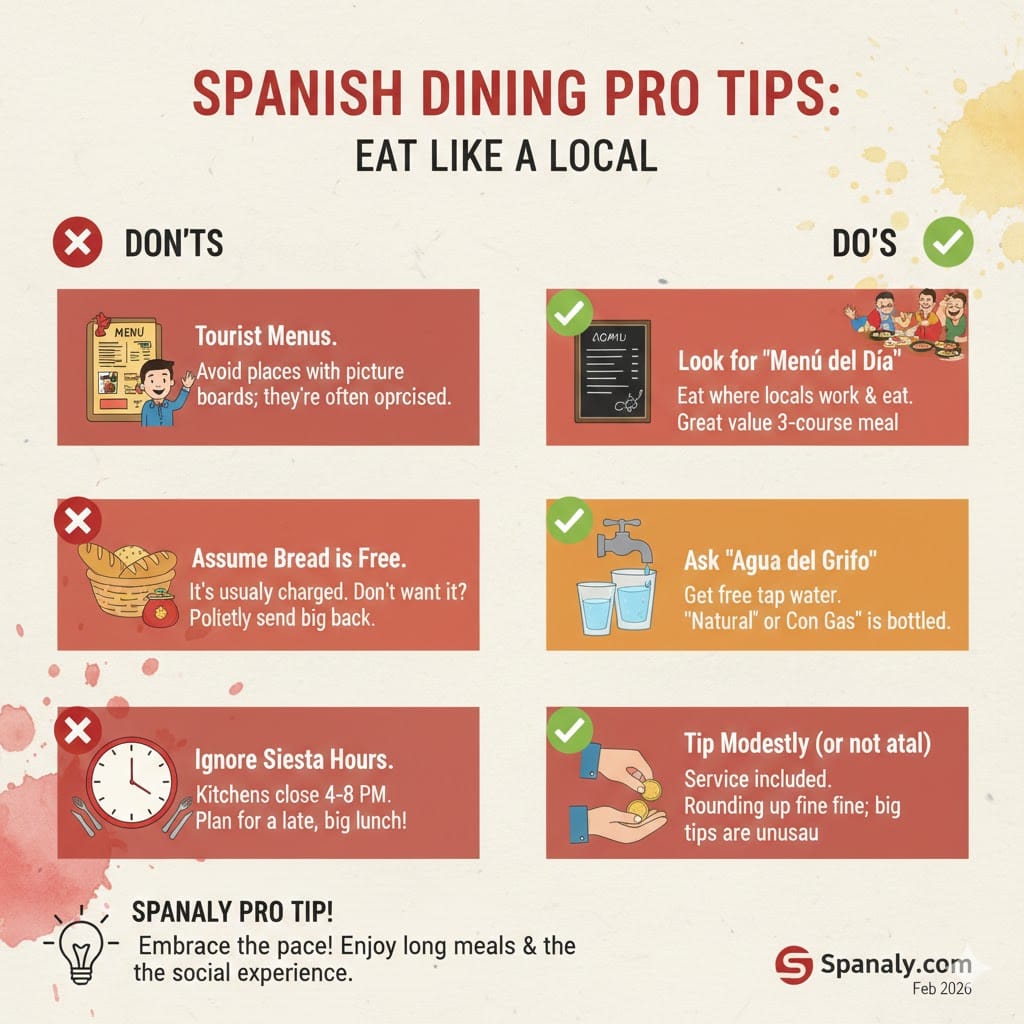
To eat like a local, you need to know more than just the menu. In fact, small cultural nuances can make a huge difference in your gastronomic journey.
❌ Skip the “Tourist Menus”: Avoid restaurants with large picture boards outside or staff trying to pull you in. Instead, look for the Menú del Día (Menu of the Day)—a three-course meal at a fixed price, usually where you see local workers eating.
🥖 Don’t Wait for the Bread Bill: In Spain, bread is often placed on the table automatically. Specifically, it is not free (unless stated), and you will be charged a small “cubierto” or bread fee. If you don’t want it, ask the waiter to take it away immediately.
🥤 Water is “Natural” or “Con Gas”: If you ask for water, you will get bottled water. If you want free tap water, ask specifically for “un vaso de agua del grifo”.
🧾 Tipping isn’t Mandatory: Service is included in the price. Moreover, while leaving a few coins (rounding up) is appreciated, a 10% or 20% tip is not expected and can sometimes feel out of place in casual bars.
🕒 Embrace the “Siesta” Gap: Remember that many traditional kitchens close between 4:00 PM and 8:00 PM. Plan your heavy meal for lunch (2:00 PM) to avoid being left with only fast-food options.
❓ 💬 FAQ – Spanish Cuisine
Your quick guide to the most common questions about Spain's gastronomic treasures.
🥘 What are the must-try traditional Spanish dishes?
🍤 What are the most popular tapas in Spain?
🍖 What is Jamón Ibérico?
🍮 What are the best traditional Spanish desserts?
🍷 What drinks are essential to the Spanish experience?
✨ Your Journey is Just Beginning
Spanish cuisine is more than a meal; it is a way of life.
In fact, every flavor tells a story of history and passion.
Savor the Moment: Don’t rush your meals.
Explore Deeply: Try regional specialties beyond the classics.
Eat Like a Local: Follow the local rhythms for the best experience.
Ready to start your adventure? Spain is waiting to surprise your senses.
Whether you are dining in a bustling market or a quiet village square, the magic is in the shared experience.
Buen Provecho! See you in Spain.