
Table of Contents
Toggle🎶 The Heartbeat of Spanish Heritage
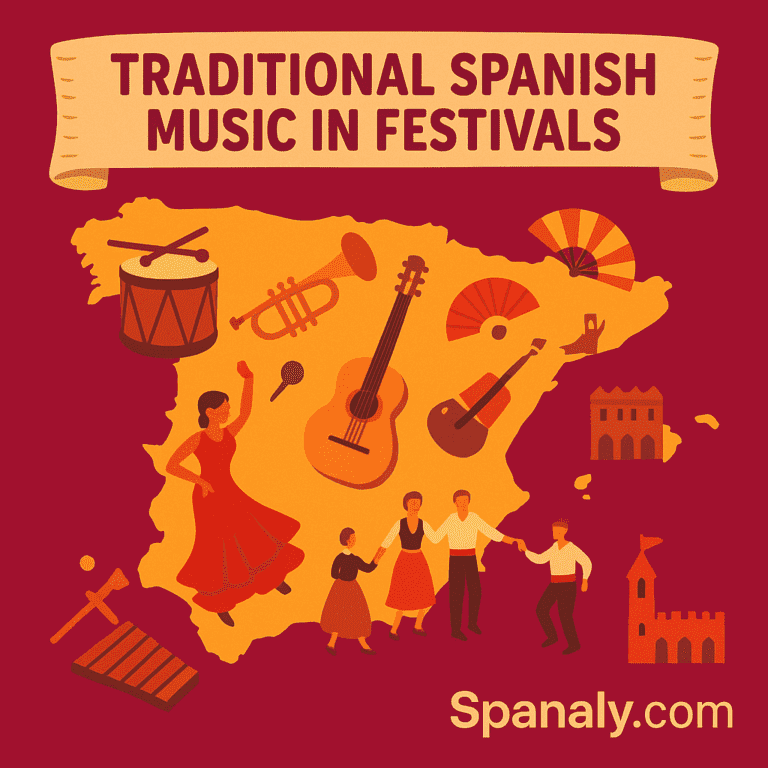
Traditional Spanish music is the soulful heartbeat that brings every celebration to life. From the powerful drums of the north to the haunting guitar melodies of Andalusia, each sound reflects centuries of local culture. Consequently, understanding these rhythms is essential for anyone attending the most iconic festivals in Spain .
What to Expect:
🎸 Regional Diversity: Experience everything from Celtic-style bagpipes to passionate Flamenco guitars.
🥁 Rhythmic Traditions: Furthermore, many festivals feature unique instruments that have been used for generations.
🌍 Cultural Connection: Therefore, this guide helps travelers connect more deeply with the music that defines Spain’s festive spirit.
🎶 1. Why Music Is Central to Spanish Festivals
Authentic Spanish music is not merely an “addition” to festivals; rather, it is the festival itself
🎧 A. It Creates the Emotional Identity of the Celebration
Each festival has its own sound profile. The music sets the rhythm of the day, guiding when the crowd gathers, dances, walks, or celebrates.
Intense and resonant: Tamborrada in San Sebastián
Festive and bright: San Fermín in Pamplona
Warm and expressive: Andalusian fairs
Mystical and solemn: Holy Week processions
🎭 B. Music Preserves History
Spanish rhythms are centuries old. Consequently, they carry echoes of Roman military marches, Moorish instruments and Andalusi melodies, Celtic heritage in northern Spain, Medieval Christian chants, and local dances passed down from village to village.
🤝 C. It Connects Travelers With Locals
Festivals are communal acts. Ultimately, music dissolves barriers—everyone claps, dances, and celebrates together.
🥁 2. Iconic Instruments That Shape Festival Soundscapes
Understanding the key instruments is essential to appreciating the depth of the music. In fact, these instruments define the unique soundscapes of each region.
🥁 Drums (Tambor, Bombo, Redoblante)
Drums serve as the backbone of many festivals. Specifically, they lead military-style parades, religious processions, and town celebrations. During Tamborrada, more than 20,000 drums echo through the city for 24 straight hours.
🎺 Brass Instruments (Trompetas, Trombones, Tubas)
Brass instruments form the soul of street parade bands (Peñas). Their sound is energetic, joyful, and impossible to ignore. Brass bands are common in San Fermín (Pamplona), Fiestas del Pilar (Zaragoza), and local fiestas across central Spain.
🎸 Spanish Guitar (Guitarra Española)
Perhaps the most recognizable symbol of Spanish music. The guitar’s warm tones accompany Flamenco, Sevillanas, Rumba catalana, and plaza performances. Moreover, in festivals, the guitar often leads spontaneous dancing circles.
👏 Cajón & Palmas (Rhythmic Clapping)
Rhythmic clapping is essential in Andalusian festivals. Here, performers use Palmas Sordas (soft, warm claps) and Palmas Fuertes (sharp, fast claps). Combined with the Cajón (a wooden percussion box with deep bass), they create one of the richest rhythmic traditions in Europe.
🎶 Gaita (Spanish Bagpipe)
Galicia and Asturias bring Celtic flare to Spanish festivals. The Gaita’s soaring melodies accompany parades, folk dances, pilgrim celebrations, and summertime festivals in northern towns.
🪵 Txalaparta (Basque Country)
This is a rare, ancient wooden percussion instrument played by two musicians. Its vibrating, resonant sound fills Basque festivals with deep intensity.
🗺️ 3. Regional Music Styles Showcased in Festivals
🔵 Basque Country – Drums, Strength & Rhythm
Music here is powerful, communal, and deeply emotional. The festivals feature military-inspired drumming, Txalaparta performances, and mass nighttime parades. The sound is unmistakably strong and unified.
🟡 Andalusia – Flamenco & Festival Passion
No region expresses emotion like Andalusia. Consequently, festival music blends Flamenco guitar, Cajón rhythms, Palmas (clapping), and Cante jondo (deep emotional singing). Nights are filled with shows, street dancing, and spontaneous performances.
🟢 Galicia & Asturias – Celtic Spain
Music here feels like a blend of Spain and Ireland. Visitors can expect Gaita bagpipes, Tamboril drums, lively folk dances (Muiñeira), and harmonious choral groups. Ultimately, it adds a mystical air to northern festivals.
🔴 Catalonia – Sardana & Cobla Bands
Catalan festivals celebrate unity. During these events, people join hands in circles to dance the Sardana while a Cobla band plays its traditional wind instruments. The experience is peaceful, communal, and uniquely Catalan.
🎉 4. Spain’s Festivals With Legendary Music Traditions
🥁 Tamborrada (San Sebastián)
This festival features 24 hours of nonstop drumming with thousands of participants. It is considered one of Spain’s purest musical celebrations, carrying deep emotional significance.
🎺 San Fermín (Pamplona)
Famous for the bull runs—however, the festival is also known for its Peñas musical groups. These groups perform upbeat, joyful songs all day and night.
🎸 Feria de Abril (Seville)
This is a paradise for music lovers, offering flamenco-filled nights, Sevillanas dancing, street guitarists, and caseta music booths.
🎷 Fiestas del Pilar (Zaragoza)
This festival offers a rare mix of Folk music, Brass bands, Procession drumming, Plaza concerts, and Traditional Aragonese melodies, creating a culturally rich soundscape.
🧭 5. Tips for Travelers: How to Fully Experience Festival Music
🥁 Stand Near the Drummers & Bands
The energy and best sound are always concentrated at the source. Get close to the main band or, in events like Tamborradas, stand near the central drum sections for the full sonic experience.
💃 Engage in the Open-Air Dances
Don’t be shy! Whether it’s the communal Sardana in Catalonia or the Sevillanas at a Feria, locals genuinely appreciate it when travelers attempt to join. It is a sign of respect and enthusiasm for the culture.
🌙 Prioritize Late-Night Performances
The main concerts and most captivating traditional performances often occur late in the evening (after 10 PM). The lighting, atmosphere, and energy levels are generally better under the night sky.
👑 Observe Regional Costumes & Dress
Musicians and dancers frequently wear specific historical or regional attire. Taking note of these vibrant outfits, which often signify the region or the type of music being played, adds cultural depth to the experience.
🙏 Maintain Respect for Rituals
Many musical performances are linked to deep-rooted religious or historical ceremonies (e.g., Semana Santa). Silence your phone and follow the crowd’s lead, especially during solemn processions or ritual dances.
| 📌 Section | 🎧 What to Expect | 🥁 Key Instruments | 📍 Example Festivals | 💡 Quick Tip |
|---|---|---|---|---|
| Role of Music | Music defines festival identity, sets pace for processions, and fosters communal moments. | Drums, Brass, Guitar | Tamborrada, Holy Week, Local Peñas | Follow bands early to get best sound and view. |
| Basque Country | Powerful, rhythmic drumming dominates parades and night processions—very communal and intense. | Tambor, Txalaparta | Tamborrada (San Sebastián) | Bring ear protection for prolonged drum events. |
| Andalusia | Flamenco-driven nights with expressive singing, guitar solos, and clapping rhythms. | Spanish Guitar, Cajón, Palmas | Feria de Abril (Seville) | Learn a few flamenco steps or join a caseta to experience intimacy. |
| Galicia & Asturias | Celtic-flavored melodies with bagpipes and lively folk dances—mystical northern atmosphere. | Gaita (bagpipe), Tamboril | Local romerías, summer folk festivals | Look for outdoor daytime parades and community dances. |
| Catalonia | Civic and communal dances (Sardana) performed to the distinct sound of a Cobla band. | Cobla winds (tenora, tible), Percussion | Local festa majors, national Catalan events | Join the circle—Sardana welcomes both locals and visitors. |
| Practical Tips | Best times, how to approach bands, respectful recording, and safety near loud parades. | — | Applies across Spain | Arrive early, respect rituals, and ask locals for seating or viewing tips. |
🎶 Visitor FAQs – Traditional Spanish Music Guide
🎶 What makes Spanish festival music so special?
Spanish festival music is a living history. It’s not just for shows; it’s a communal ritual. You’ll experience regional diversity: the deep soul of Flamenco in the South, the Celtic Gaita (bagpipes) in Galicia, and the thunderous Tamborrada drumming in the Basque Country. It’s the heartbeat of local identity.
🥁 Are music performances free during festivals?
Yes. Most traditional music during festivals is performed in public plazas and streets, making it completely free for everyone to enjoy. Whether it's a marching brass band or a spontaneous flamenco gathering in a park, you don't need a ticket to experience the best of Spain's musical heritage.
📍 Where can I find the best live traditional music?
It depends on the region. For Drums, visit San Sebastián in January. For Flamenco, Seville’s Feria de Abril is unmatched. If you want to hear Bagpipes, head to Galicia during any local pilgrimage (Romería). For a unique experience, watch the Cobla bands in Catalonia performing the traditional Sardana dance.
🔊 Is the music very loud? Should I bring ear protection?
Some events, particularly Drumming parades or large brass band processions, can be extremely loud for several hours. If you are sensitive to noise or traveling with small children, bringing light ear protection is a smart move. It allows you to feel the energy without the discomfort of peak volume levels.
📸 Is it okay to film or take photos of the musicians?
Photography is generally encouraged! However, always respect the performers' space. Don’t block the path of a moving procession and avoid using flash during solemn religious ceremonies. Most musicians love seeing the audience's appreciation, but keeping a respectful distance ensures the tradition continues smoothly.
Cultural Soundscape Guide by Spanaly.com
🌟 The music of Spain’s festivals is the living spirit of its culture. It echoes centuries of history, celebrates local identity, and invites travelers into the heart of Spanish tradition. Whether it’s the echo of drums in the Basque Country, the fiery guitar of Andalusia, or the mystical sound of the northern gaita, these rhythms define the entire festival experience.
For visitors, the music is not just something to listen to—it’s something to feel, join, and remember.