
Table of Contents
Toggle🌉 Triana District Seville
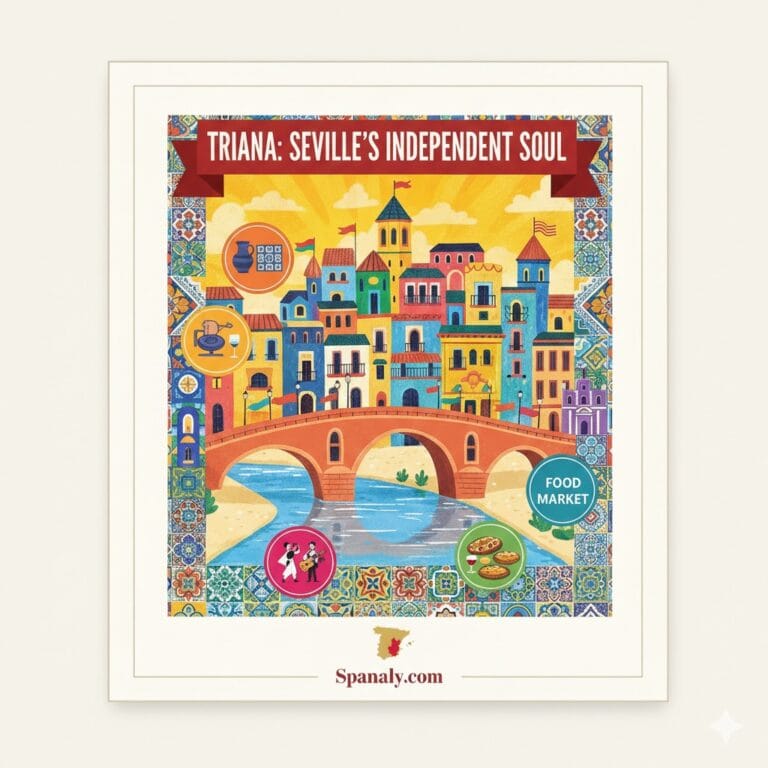
Crossing the iron bridge into the Triana District Seville is more than a simple walk. It is an entry into a “cultural republic” with a fierce identity. Notably, this isn’t just a neighborhood. It is a fortress of art where the “Trianero” spirit lives in every ceramic tile.
Many travelers start their journey with our comprehensive Seville Travel Guide. However, those seeking the city’s raw soul must visit the Triana District Seville. Specifically, this west-bank area is where ancient pottery kilns and Flamenco legends collide. This mixture creates the most authentic lifestyle in Andalusia today.
🏺 Pottery Roots: The global heart of Andalusian ceramic mastery for centuries.
💃 Flamenco Cradle: The undisputed birthplace of the most legendary artists.
🏘️ Fierce Identity: A maze of streets where locals feel “Trianero” before “Sevillian.”
💡 Spanaly Insight: Don’t just stick to the riverfront. In fact, the true Triana District Seville reveals itself in hidden backstreets. There, the scent of river air and the sound of a distant guitar merge into one perfect moment.
⏳ History & Cultural Significance: The Complex Roots

Triana’s history is a fascinating tapestry. It was woven by artisans, sailors, and flamenco rebels. Historically, the Triana District Seville functioned as the city’s industrial powerhouse. The river separated this rugged area from the luxury of the center. Specifically, its identity was forged by the “Three Cultures.” This long-standing spirit of independence persists today.
Cultural Pillars of the District
The district’s heritage is unique in Andalusia. It combines maritime grit with artistic elegance. You can see this legacy in every corner of the Triana District Seville.
| Icon | Cultural Pillar | Why It Matters |
| 🏺 | Pottery Hub | The local red clay and easy river access made Triana the global center for Sevillian Ceramics. |
| 💃 | Flamenco Cradle | Birthplace of the “Pata Negra”—the most authentic and deeply rooted flamenco artists in Spain. |
| ⛪ | Religious Heart | Home to the Santa Ana Church, the oldest in Seville (13th Century), and the revered Esperanza de Triana. |
| 🧭 | Maritime Legacy | For centuries, Triana was the neighborhood of the sailors who first charted the routes to the New World. |
A Fierce Sense of Belonging
Indeed, the local identity is incredibly strong. Residents often refer to crossing the bridge as “going to Seville.” They feel like they are visiting another city entirely. Notably, this belonging is most visible during Semana Santa in Spain. The processions in the Triana District Seville are among the most emotional. Consequently, you must understand these roots to truly “feel” the neighborhood.
💡 Spanaly Insight: Cumin and exotic spices arrived at these river docks first. In fact, this maritime influx created iconic local dishes. You can still find Espinacas con Garbanzos in the taverns of the Triana District Seville.
🏺 Pottery & Artisanal Craft: The Soul in the Clay
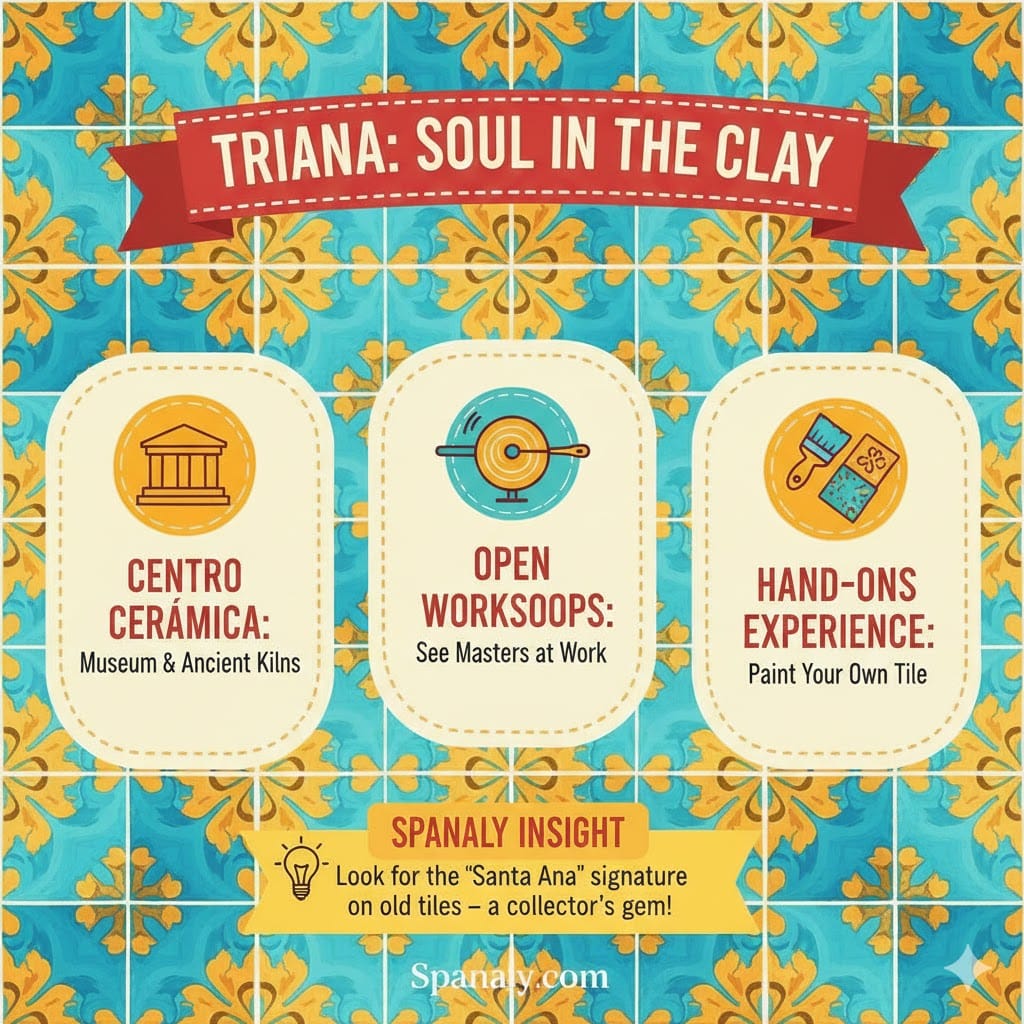
Triana’s ceramic tradition is globally recognized as the heart of Andalusian tile-making. Historically, this craft defined the aesthetic of Seville, from the grand pavilions of the Plaza de España Seville to the humble facades of local homes. Specifically, the art of the Azulejo (ceramic tile) is a skill passed down through generations, making it a living heritage you can still witness today.
🏛️ Centro Cerámica Triana: This is far more than a museum; it is a preserved archaeological site of the last major pottery factory (Fábrica Santa Ana). Indeed, you can explore original ancient kilns and manufacturing equipment that date back centuries.
🌀 Open Workshops: Visiting active studios like Cerámica Triana allows you to see master artisans at the wheel. Notably, observing the intricate hand-painting process is the best way to understand the district’s industrial roots.
🎨 Hands-on Experience: For a unique souvenir, many studios now offer short workshops. Consequently, participating in a tile-painting session is the most personalized way to take a piece of Seville home with you.
Indeed, the vibrant colors and patterns you see here are a direct result of the local red clay found along the riverbanks. Notably, this artisanal legacy is so vital that it influences everything from the local architecture to the presentation of food. Ultimately, no visit to Triana is complete without running your fingers over the cool, glazed surface of an authentic Triana tile.
💡 Spanaly Insight: Look for the “Santa Ana” signature on the back of older tiles. In fact, these are highly prized by collectors as they represent the golden era of Triana’s industrial craft before the modern factories took over.
🌉 The Triana Bridge: Crossing the Iron Gateway

The Isabel II Bridge, universally known as the Triana Bridge, is more than an engineering marvel; it is the emotional umbilical cord of the city. Historically, completed in 1852, it stands as the oldest preserved iron bridge in Spain, replacing an ancient Moorish “bridge of boats.” Specifically, crossing this structure is a ritual that signals your transition from the monumental center of Seville to the soulful, rebellious streets of Triana.
📸 The Ultimate Viewpoint: Stop exactly in the middle of the bridge. Notably, this is the premier spot to capture the multicolored facades of Calle Betis and the distant Torre del Oro reflecting in the Guadalquivir river.
🏗️ Industrial Elegance: Inspired by the Pont du Carrousel in Paris, its distinctive iron rings have become a symbol of the district. Indeed, you will see this silhouette repeated in local ceramic designs and even jewelry.
🔒 A Path of Traditions: Walking across at sunset is a local favorite. Consequently, you will often see couples, street musicians, and Trianeros returning home, creating an atmosphere that feels like a scene from a classic movie.
Indeed, the bridge acts as a threshold between two different worlds. Notably, the moment you step off the iron planks and onto the pavement of the Plaza de Altozano, you are officially in “The Republic of Triana.” Ultimately, if you want to understand the city’s scale, there is no better vantage point than the very center of this iron gateway.
💡 Spanaly Insight: Look closely at the ironwork near the entrance. In fact, you can still see the markings of the original foundries. For the best experience, cross from the Seville side during the “Golden Hour” to watch the sun ignite the ceramic tiles of Triana in shades of deep orange and gold.
🌊 Calle Betis: The Most Iconic Balcony of Seville
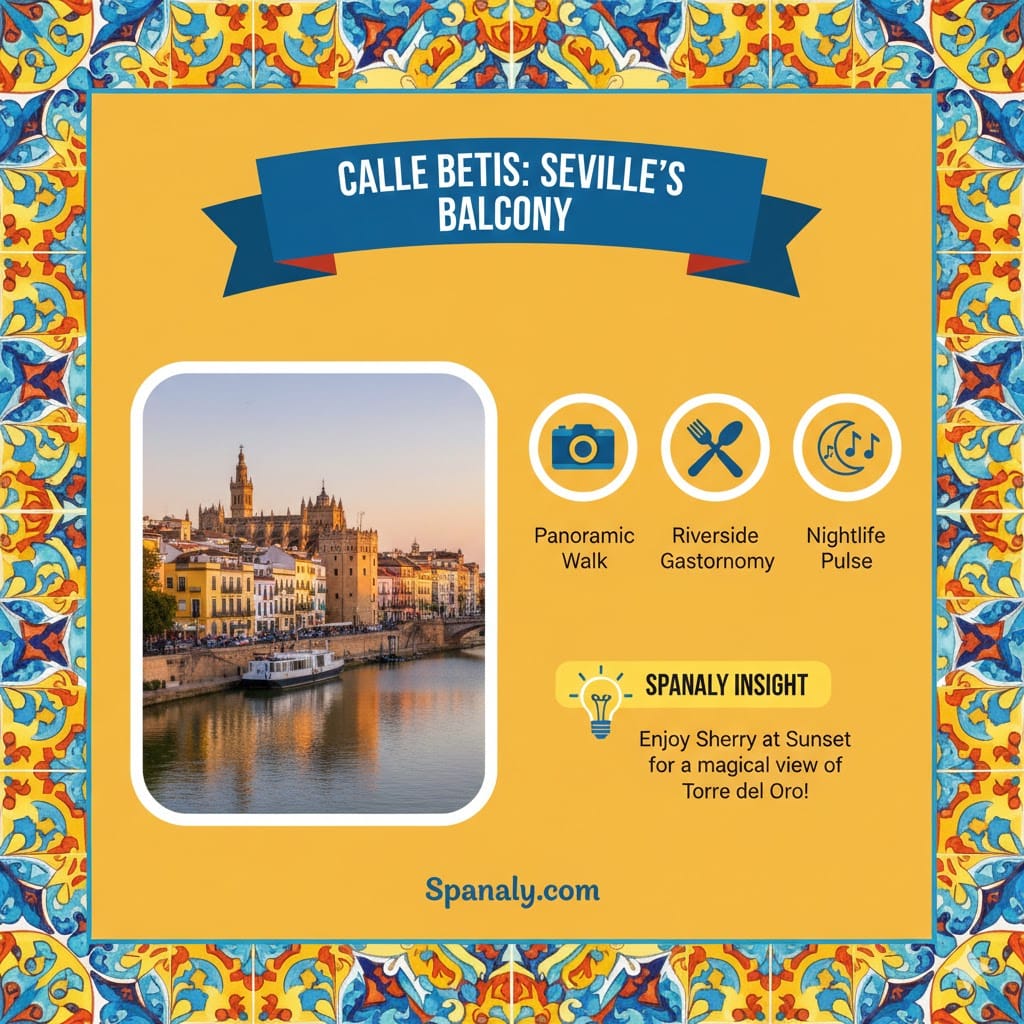
Strolling along Calle Betis is a sensory experience that perfectly captures the essence of Andalusian life. In the past, this riverfront promenade served as the vital maritime gateway where ships returning from the Americas would first dock. Today, it has evolved into a breathtaking parade of colorful facades, earning its reputation as the “Great Balcony” overlooking the Giralda and the monumental heart of the city.
📸 A Front-Row Seat to History: The street runs parallel to the Guadalquivir, offering an unobstructed view of the skyline. Because of this positioning, it is arguably the most photographed spot in Seville, particularly during the “blue hour” when the Cathedral lights begin to shimmer across the water.
🍽️ Riverside Gastronomy: The sidewalk is lined with a mix of historic taverns and sun-drenched terraces. Whether you are stopping for a quick drink or a long dinner, the atmosphere remains unmatched, blending the cool river breeze with the rhythmic hum of local life.
🌙 The Pulse of the Night: As the sun dips below the horizon, the buildings take on a fiery glow and the district’s social energy peaks. This transition makes it an essential stop for anyone looking to explore the Madrid Nightlife Guide style of energy but with a uniquely relaxed, Sevillian twist.
The true magic of Calle Betis lies in its dual nature; it is a peaceful morning retreat for locals and a vibrant social hub by night. While it is a magnet for visitors, it never loses its “Trianero” soul, remaining a sacred meeting ground for the neighborhood’s residents. To miss this stroll is to miss the very reflection of Seville itself.
💡 Spanaly Insight: For a truly authentic moment, find a small table at a riverside bar just before twilight. Instead of a standard cocktail, order a chilled glass of local Sherry. Watching the sky turn violet behind the Torre del Oro while sipping on Andalusian “liquid gold” is the ultimate Triana experience.
💃 The Cradle of Flamenco: Finding the "Pata Negra" Spirit

Triana is not just a place where Flamenco is performed; it is the ground where its most raw and authentic roots were planted. Notably, this district is the birthplace of the “Pata Negra” style—a term used to describe the purest, unrefined talent of the local Gitanos (Gypsies). Indeed, while many cities offer staged shows, Triana offers a living, breathing art form that echoes through its narrow alleys long after the sun sets.
🎭 Tablaos vs. Peñas: For a formal yet intimate setting, visit a local Tablao. However, for the ultimate experience, seek out a Peña Flamenca. Specifically, these are private cultural clubs where locals gather to sing and dance for the love of the art, far from the typical tourist crowds.
🏺 The Flamenco Geometry: Notice the posture and the hand movements (braceo) of the performers here. Because of Triana’s pottery history, it is often said that Flamenco dancers from this side of the river move their arms as if they are still shaping clay on a potter’s wheel.
🕰️ Night Sessions: The most authentic moments often happen spontaneously after midnight in small taverns. Consequently, if you want to understand the stamina required for these late-night artistic marathons, it’s worth checking the Spain Daily Rhythm: Siesta & Mealtimes to adjust your internal clock.
The true magic of Triana Flamenco lies in the “Duende”—that elusive moment of spiritual connection between the artist and the audience. While it is difficult to define, you will certainly feel it in the gravelly voices and the thunderous footwork that shakes the floors of the district’s oldest bars. Ultimately, to experience Flamenco in Triana is to witness a conversation between the soul and history.
💡 Spanaly Insight: Avoid the venues with large neon signs and “all-inclusive” dinner deals. In fact, the best Flamenco in Triana is usually found in places where the only thing on the menu is a glass of wine and a performer who looks like they’ve lived a thousand lives.
🏰 Castillo de San Jorge: The Dark Side of the River
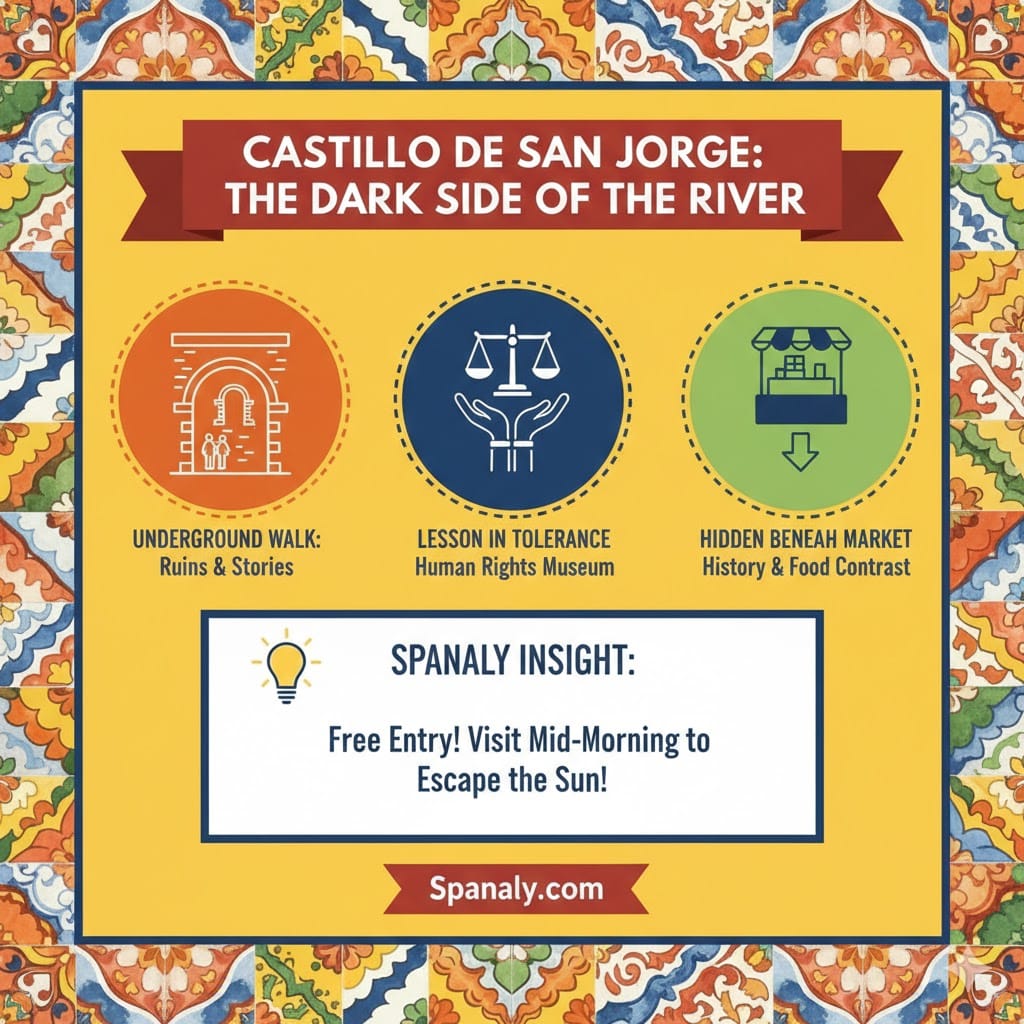
Beneath the vibrant modern market lies a silent witness to a chilling past: the Castillo de San Jorge. Historically, this fortress served as the headquarters of the Spanish Inquisition for over three centuries. Specifically, it was the place where religious trials were conducted and prisoners were held, making it a somber yet essential site for anyone wanting to understand the full spectrum of Seville’s history.
🚶 The Underground Sensory Walk: Today, the site is a museum of conscience. Notably, the walk takes you through the excavated remains of the courtrooms and prison cells, using atmospheric lighting to tell the stories of those who were once silenced.
⚖️ A Lesson in Tolerance: Rather than focusing solely on the dark acts, the museum emphasizes the importance of human rights and religious freedom. Indeed, it serves as a powerful contrast to the lively, independent spirit that Triana is known for today.
📍 Hidden Beneath the Market: Most visitors walk right over it without realizing what lies beneath. Consequently, if you find yourself overwhelmed by the intensity of the ruins, you can step back up into the sunlight of the Mercado de Triana for some immediate culinary comfort.
The juxtaposition of this dark fortress directly below a bustling food market is perhaps the most “Triana” thing about the location. While the ruins evoke a sense of mystery, they also highlight the resilience of the district’s people. Ultimately, visiting the Castillo provides a necessary balance to the sun-soaked terraces of Calle Betis, reminding us that history has many layers.
💡 Spanaly Insight: Entrance is usually free, making it one of the best cultural values in the city. In fact, the best time to visit is mid-morning; the cool temperature of the underground ruins offers a perfect escape from the Andalusian sun before you head out for tapas.
🍎 Mercado de Triana: A Culinary Journey Above Dungeons
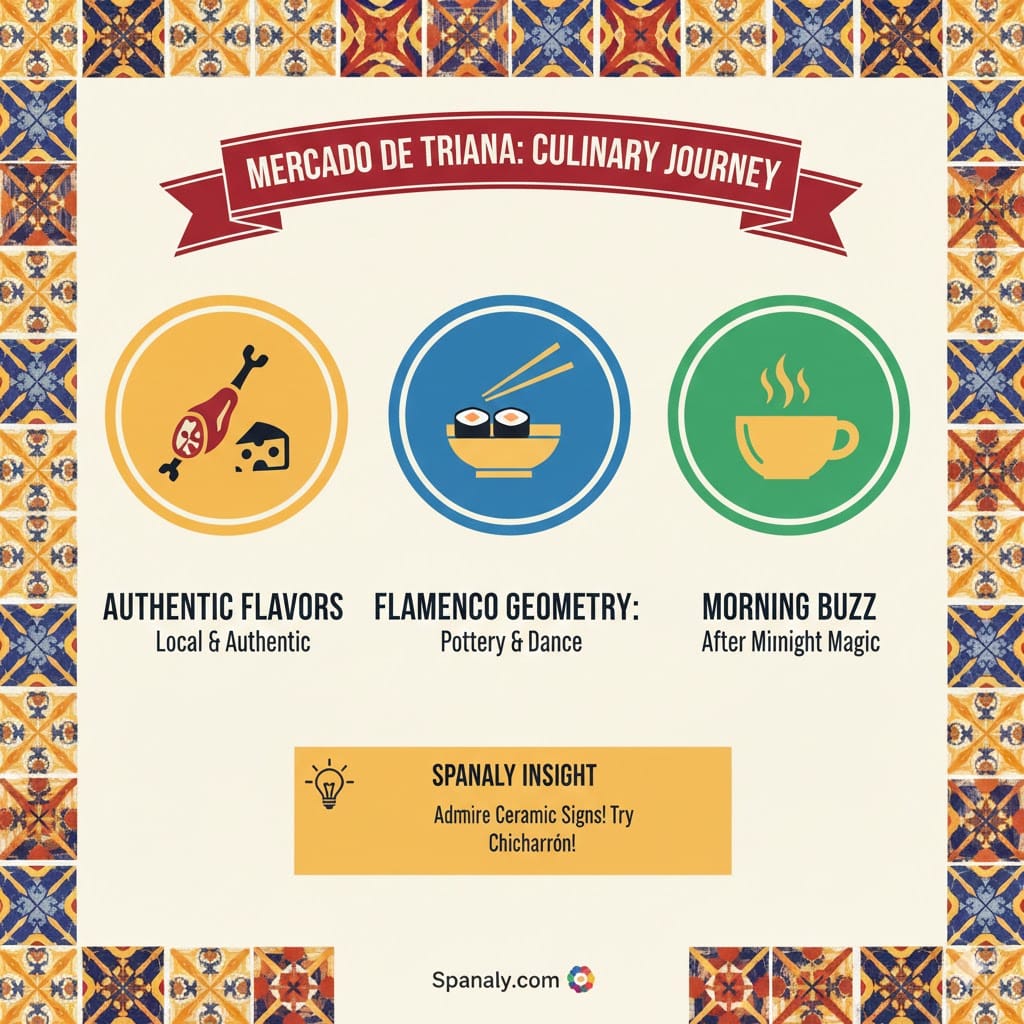
The Mercado de Triana is not just a place to shop; it is the beating gastronomic heart of the district. Constructed directly on top of the ruins of the Castillo de San Jorge, this market serves as a vibrant symbol of Triana’s resilience. Specifically, it offers a fascinating blend of traditional market stalls and contemporary “gastro-corners” where you can taste the freshest produce Seville has to offer.
🧀 Authentic Flavors: From acorn-fed Iberian ham to local goat cheeses, the quality here is exceptional. Notably, many stallholders are third-generation vendors who take immense pride in explaining the origins of their products.
🍣 Modern Gastronomy: Beside the traditional butchers, you will find oyster bars, sushi spots, and even a cooking school. Indeed, this mix makes it a perfect destination for foodies who want to explore both Spanish traditional cuisine and international trends.
☕ The Morning Buzz: The best time to visit is during the morning hours. Consequently, grabbing a coffee and a “tostada” while watching the locals haggle over the daily catch is an essential Sevillian experience.
The atmosphere inside the market is a chaotic yet harmonious blend of colors, smells, and sounds. While it is popular with tourists, it remains a functional market where Trianeros buy their daily groceries. Ultimately, eating here is a way to literally “taste” the history of the neighborhood, sitting atop the very foundations that shaped its identity.
💡 Spanaly Insight: Don’t just look at the food; look up at the architecture. In fact, the ceramic signs above each stall are works of art themselves, reflecting the pottery heritage we explored earlier. For a perfect snack, try the Chicharrón de Cádiz from one of the specialized deli stalls.
🏘️ Architectural Gems: The Corrales de Vecinos
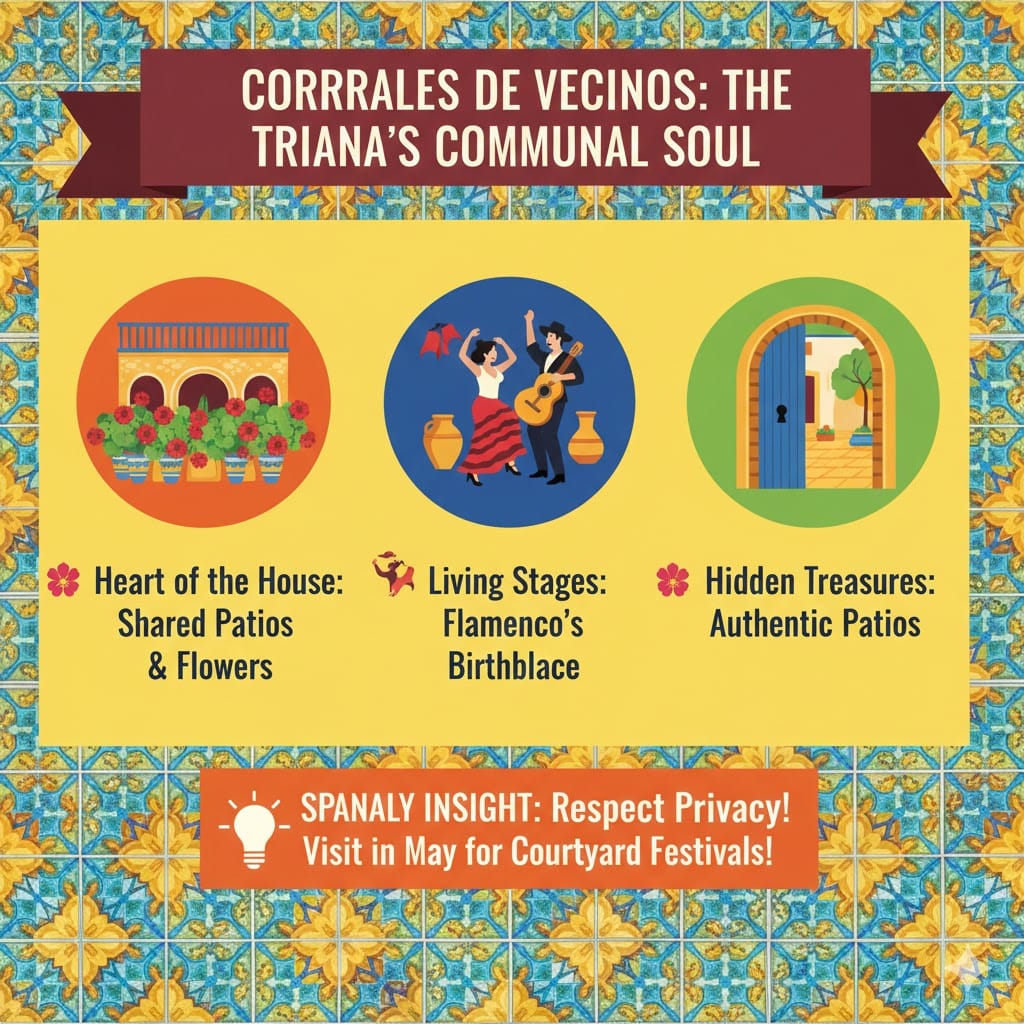
To truly understand Triana, you must look behind the colorful facades and into the Corrales de Vecinos. Historically, these communal housing complexes were the backbone of the district’s social fabric. Specifically, they consist of private rooms arranged around a shared central patio, where life, art, and Flamenco were shared among dozens of families.
🌺 The Heart of the House: The central courtyard is always decorated with an explosion of geraniums and traditional ceramics. Notably, this shared space acted as a communal living room, fostering a sense of solidarity and neighborhood pride that still exists today.
🎭 Living Stages: These patios were the original “stages” for Flamenco. Indeed, many legendary singers and dancers practiced their first steps here, surrounded by the rhythm of daily chores and neighborly chatter.
🏺 Hidden Treasures: While many have been modernized, several authentic corrales remain. Consequently, if you want to explore more hidden architectural gems across the city, our Seville Travel Guide offers a curated list of the most beautiful courtyards worth a detour.
The architecture of the Corrales is a testament to the “Republic of Triana’s” communal spirit. While they were originally born out of economic necessity, they evolved into a unique lifestyle that celebrates togetherness. Ultimately, catching a glimpse of a sun-drenched patio through an open doorway is like seeing the true, unpolished soul of Seville.
💡 Spanaly Insight: Be respectful! These are still private residences. In fact, the best time to see them is during the month of May, when many owners participate in courtyard competitions and proudly open their doors to share their floral displays with the world.
⛪ Calle Pureza & Santa Ana: The Religious Heart
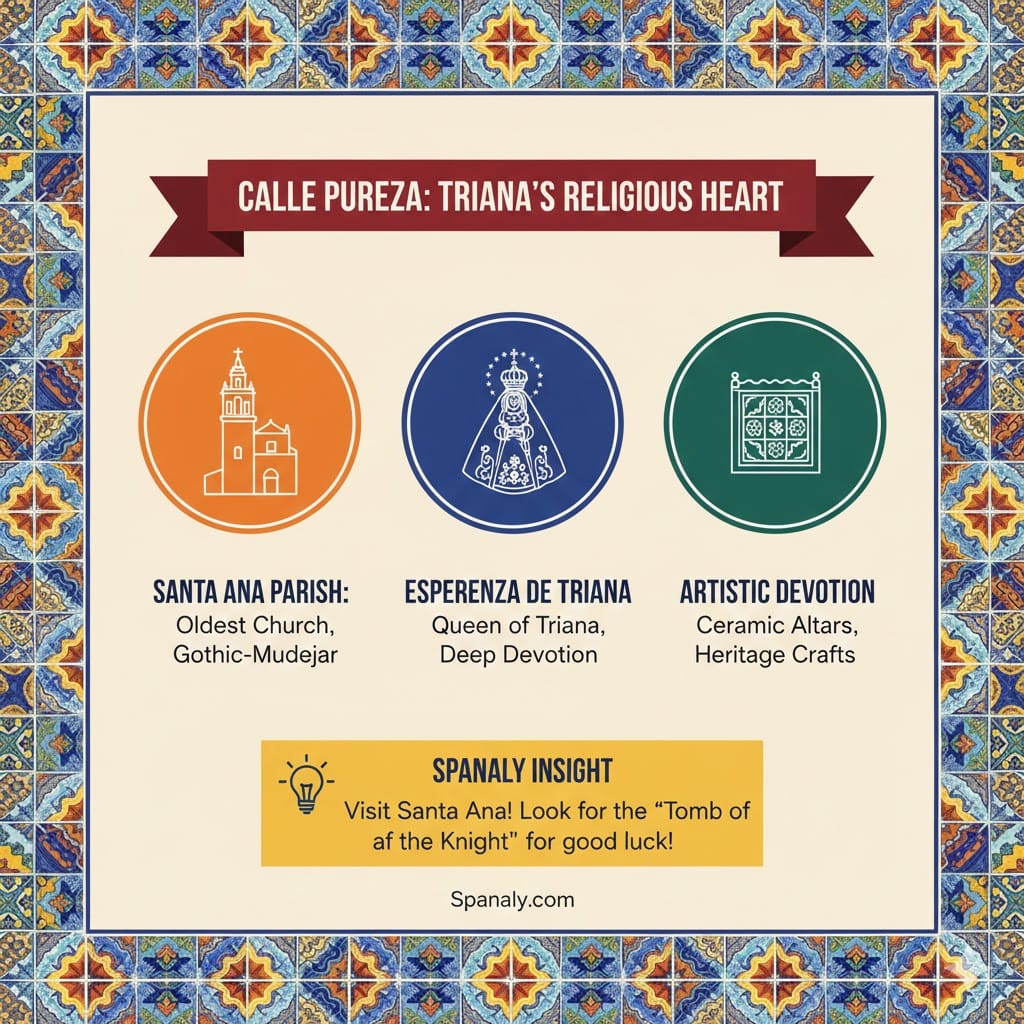
Strolling through Calle Pureza offers a profound look into the spiritual soul of the district. Historically, this street has stood as the epicenter of Triana’s identity for over seven centuries. Today, it remains home to the most cherished local icons and the “Cathedral of Triana,” creating a space where deep-seated tradition and artistic beauty intersect.
🏛️ The Parish of Santa Ana: Known as the neighborhood’s cathedral, this church was commissioned in 1276 by King Alfonso X. Because of its age, it stands as the oldest parish in Seville, showcasing a stunning Gothic-Mudejar style that remains an architectural marvel.
🙏 Esperanza de Triana: This street is the permanent home of the Capilla de los Marineros, where the Virgin of Hope resides. Indeed, she is considered the spiritual protector of the district, and the local devotion to her is a cultural phenomenon that defines the Seville Travel Guide experience.
🎨 Devotion in Ceramics: Every few meters, you will encounter intricate tile altars (azulejos) depicting religious scenes. These artistic displays are not merely decorative; they are a testament to the master craftsmen who have kept the neighborhood’s pottery heritage alive for generations.
The atmosphere in Calle Pureza is a captivating blend of quiet reverence and vibrant community life. While the churches provide a sanctuary of peace, the surrounding street is always buzzing with the energy of locals and the scent of orange blossoms. To walk here is to understand that faith and neighborhood pride are woven into the very fabric of every Trianero’s life.
💡 Spanaly Insight: If you visit during the early evening, the lighting inside Santa Ana is magical. In fact, look for the legendary “Tomb of the Knight”; local folklore suggests that a respectful visit ensures a safe return to the city—a perfect excuse to start planning your next Spanish adventure.
🎉 La Velá de Santa Ana: The Great Summer Festival

If you happen to visit Seville in late July, you will witness the district’s most vibrant celebration: La Velá de Santa Ana. Historically, this festival dates back to the 13th century, originally a religious vigil that has evolved into a week-long street party. Specifically, it transforms the riverfront into a spectacle of light, music, and local “joy de vivre” that captures the true independent spirit of Triana.
🚣 The “Cucaña” Challenge: Perhaps the most iconic event is the Cucaña. Notably, participants try to walk across a greased pole suspended over the Guadalquivir river to grab a flag. Consequently, watching the hilarious splashes and the cheering crowds from the bridge is a quintessential summer memory.
💃 Casetas and Sevillanas: Unlike the more exclusive Spring Fair, the Velá is open and inclusive. Indeed, anyone can enter the riverside tents (casetas) to dance Sevillanas and enjoy the local atmosphere. Ultimately, it’s the perfect time to practice the steps we mentioned in our Spain Cultural Festivals insights.
🍤 Fried Fish and Cold Beer: The smell of Pescaíto frito (fried fish) fills the air. In fact, there is no better way to beat the Andalusian heat than sitting by the river with a cold drink and a plate of fresh seafood while the sun sets behind the city.
The energy of the Velá is the perfect conclusion to our journey through Triana. While the neighborhood is beautiful year-round, during this week, its soul is laid bare for everyone to see. To experience the Velá is to understand why Trianeros say their district is not just a place, but a feeling of belonging that lasts a lifetime.
💡 Spanaly Insight: The festival officially starts on the night of July 21st and ends on the 26th. In fact, the midnight of the 25th is particularly magical as the entire neighborhood gathers around the Santa Ana church to sing to their patron saint. Don’t forget your fan—it’s going to be hot, but absolutely worth it!
🗓️ The Ultimate Triana Day Trip: From Sunrise to "Duende"
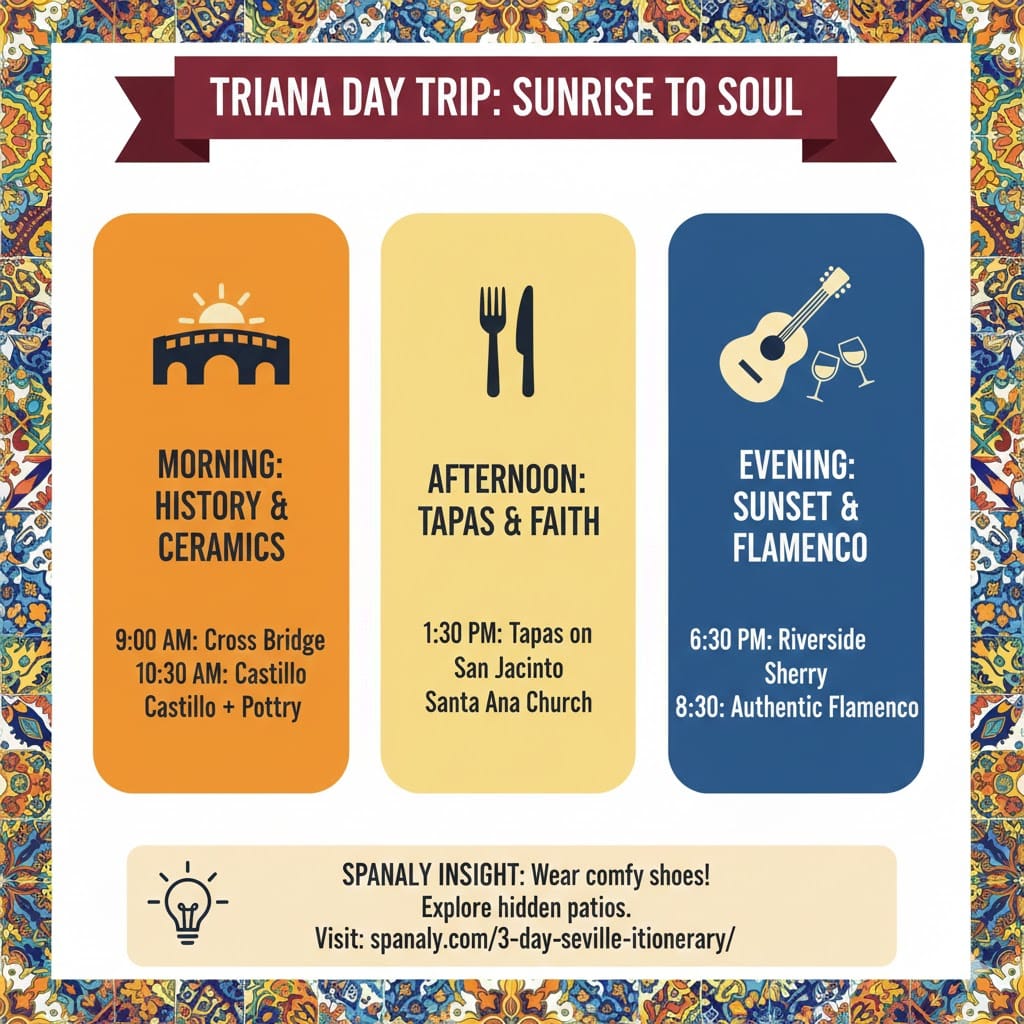
If you only have one day to dedicate to the “Independent Republic of Triana,” you must plan your time strategically to capture its multifaceted soul. While many visitors simply cross the bridge for a quick photo, the best way to experience the district is by following the rhythmic flow of local life. Consequently, this curated day trip ensures you hit every cultural high point without feeling rushed.
🌅 09:00 AM – The Riverfront Awakening: Begin your journey by crossing the Isabel II Bridge. Before the crowds arrive, head straight to the Mercado de Triana for a traditional breakfast of tostada con tomate and coffee while watching the vendors set up their stalls.
🏰 10:30 AM – Layers of History: Descend into the Castillo de San Jorge beneath the market to explore the somber history of the Inquisition. Afterward, walk five minutes to the Centro Cerámica Triana to see how the neighborhood’s famous tiles are crafted.
🍽️ 01:30 PM – The Tapas Trail: Join the locals on the pedestrianized Calle San Jacinto. Indeed, for the most authentic experience, hop between three different taverns, trying one signature tapa at each rather than having a seated meal in just one place.
⛪ 04:00 PM – Spiritual & Architectural Gems: Wander through the cool interiors of the Parish of Santa Ana. Then, head to Calle Pureza to admire the azulejo altars. If you are exploring the wider city, this stop fits perfectly into a larger 3-Day Seville Itinerary for a complete Andalusian experience.
💃 08:30 PM – The Flamenco Finale: End your day in a local Peña or a small Tablao on the riverfront. Ultimately, witnessing a raw Flamenco performance in its birthplace is the only way to truly say goodbye to Triana.
By following this route, you transition from the historical depths of the dungeons to the vibrant heights of the nightlife. While Triana is a small district, its density of culture is immense. To conclude, this 24-hour immersion will leave you with a sense of “Duende” that lingers long after you’ve crossed the bridge back to the main city.
💡 Spanaly Insight: Wear comfortable shoes! Triana’s charm is found in its uneven, cobbled alleys. In fact, the best “shortcuts” are the ones you take by accident, as they often lead to the most beautiful hidden Corrales de Vecinos (communal patios).
🌟 Pro-Traveler Tips: Mastering the Triana Experience

Navigating Triana like a true “Trianero” requires more than just a map. While the district is welcoming, these local nuances will elevate your visit. Indeed, they help you save time and money. Use these insights to blend in seamlessly.
💧 Free Hydration: Seville’s heat is legendary. Instead of buying plastic bottles, use the historical cast-iron fountains. Notably, the water is fresh and safe. This is a local secret for staying hydrated.
🕒 Mirror Sunset: Most people watch the sunset from Calle Betis. However, try walking halfway across the bridge instead. Consequently, you will see the colorful facades reflecting in the river. It is a photographer’s dream.
🛍️ Sunday Energy: Many Seville shops close on Sundays. Specifically, Triana remains vibrant and social. Locals gather for long “aperitivos” during the morning. Therefore, head here if the city center feels too quiet.
👟 Smart Footwear: Triana’s charm lies in its uneven cobblestones. To avoid fatigue, prioritize sturdy shoes over fashion. This is a key part of our Essential Spain Travel Tips for any traveler.
By applying these tips, you move beyond surface-level sightseeing. Ultimately, Triana rewards the observant visitor. To conclude, the best experiences are often unplanned. Look for them in the quietest corners of the district.
🎭 Essential Visitor FAQs – Triana Guide 2026
🏺 Is Triana safe for tourists late at night?
Absolutely. Triana is one of Seville's most vibrant and safe districts. Indeed, the streets are often busier at midnight than at midday. The local culture revolves around late-night socializing, making it perfectly safe to wander through the illuminated alleys and enjoy the riverside atmosphere well after dark.
🎨 Can I find vegan or vegetarian food in Triana?
Yes! While Triana is known for tradition, the 2026 culinary scene is very diverse. Notably, many "Gastro-stalls" inside the local market and modern bars on Calle San Jacinto offer creative plant-based versions of Andalusian classics, such as dairy-free Salmorejo or grilled seasonal vegetables with Romesco sauce.
💃 Do I need to book Flamenco tickets in advance?
For popular venues like Orillas de Triana, booking 24–48 hours in advance is highly recommended. However, for the smaller, raw "Peñas," you can often walk in. Consequently, if you are visiting during peak season or a festival, securing your spot online will save you from long queues or disappointment.
📸 Where is the best photo spot in the district?
The most iconic shot is taken from the Muelle de la Sal (on the city side) looking back at the colorful houses of Calle Betis. Alternatively, for a hidden gem, head to the balcony of the Paseo de la O. Ultimately, the reflection of the Triana Bridge in the water during the "Blue Hour" provides the most magical lighting for your photos.
🌉 Are there public restrooms available in Triana?
Clean public facilities are primarily located inside the Mercado de Triana (available during market hours). Furthermore, it is common local etiquette to buy a small coffee or drink in a tavern to use their facilities. Specifically, the museums and cultural centers also provide well-maintained restrooms for their visitors.
Seville Local Culture Guide by Spanaly.com
✨ Farewell from the “Independent Republic”
Triana is not just a stop on your itinerary; it is a feeling that stays with you. Crossing the bridge back to the main city, you carry the echo of Flamenco and the scent of the river. Ultimately, this district proves that Seville’s heart beats strongest on the west bank.
🏺 Take a Piece Home: Don’t forget that handmade ceramic tile.
💃 Keep the Rhythm: The “Duende” you felt is Triana’s true gift.
🌉 Return at Sunset: The view never gets old, no matter how many times you see it.
Are you ready for a change of scenery? While Triana represents the warm soul of the south, Spain’s north offers a completely different world of art and gastronomy. Consequently, if you crave green landscapes and avant-garde architecture, dive into our Bilbao Spain Travel Guide for your next big adventure.
Safe travels, and as they say in the streets of Pureza: ¡Hasta pronto! 🥂