📂Best Time to Visit Ronda
Choosing the best time to visit Ronda is the first step toward a perfect Andalusian escape. This dramatic “City of Dreams” perched atop the Tajo Gorge offers vastly different experiences depending on the month. Specifically, the weather can shift from misty mountain mornings to sun-drenched Mediterranean afternoons. Consequently, timing your visit perfectly ensures you witness the Puente Nuevo in its most stunning light.
🌟 Why Timing Your Ronda Visit Matters:
🌸 Peak Beauty: Spring offers lush green valleys and blooming wildflowers across the Serranía de Ronda.
🎭 Cultural Immersion: September hosts the legendary Feria de Pedro Romero and iconic Goyesca bullfights.
📸 Photography Gold: Autumn light provides the most dramatic shadows and colors for the perfect canyon shot.
🥾 Outdoor Freedom: Mild temperatures are essential for hiking the trails beneath the historic 18th-century bridge.
🏰 Essential Prep: For a complete itinerary, consult our Ultimate Ronda Travel Guide, the jewel of Andalusia’s white villages.
💡 Spanaly Insight: The “Micro-Climate” Factor
Ronda sits 750 meters above sea level, creating a unique mountain climate. It stays significantly cooler than Seville or Córdoba during the height of summer. Consequently, it remains a refreshing sanctuary even during the warmest Spanish months.
📸 Ronda Seasonal Snapshot: Quick Travel Guide
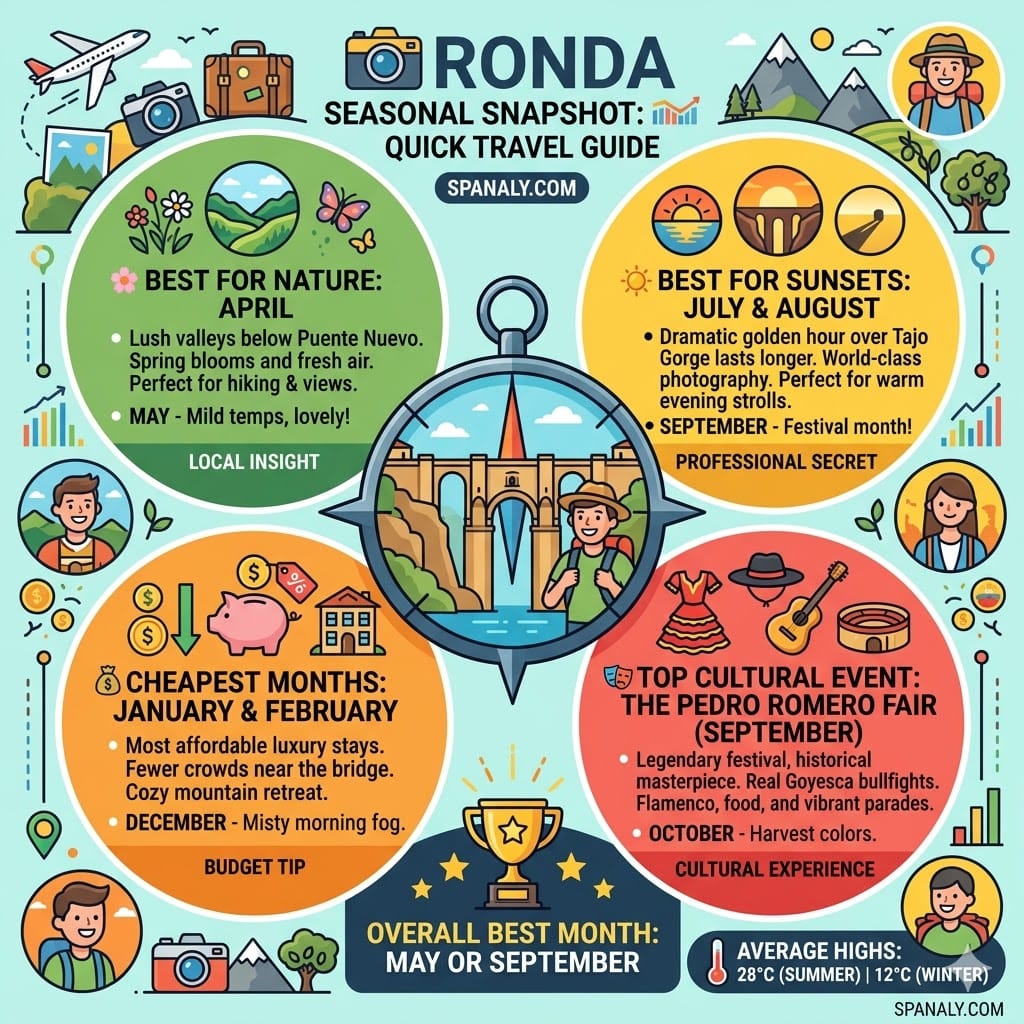
Planning your trip shouldn’t be complicated. Specifically, this quick snapshot provides the essential data points for the best time to visit Ronda. Whether you prioritize perfect weather or cultural immersion, these highlights help you decide in seconds. Consequently, you can align your itinerary with Ronda’s unique mountain rhythm.
🌟 At a Glance:
🏆 Overall Best Month: May or September. These months offer the perfect balance of mild temperatures and vibrant local life.
☀️ Best for Sunsets: July and August. The golden hour over the Tajo Gorge lasts longer, providing world-class photography opportunities.
💰 Cheapest Months: January and February. These are the most affordable months for luxury stays with fewer crowds near the bridge.
🎭 Top Cultural Event: The Pedro Romero Fair (September). This legendary festival transforms the city into a living historical masterpiece.
🌸 Nature Lovers: April. The valleys below the Puente Nuevo are exceptionally green and filled with spring wildflowers.
🌡️ Average Highs: 28°C (Summer) | 12°C (Winter). The mountain air remains crisp and refreshing even in the warmer months.
💡 Spanaly Pro Tip: The “Morning Mist” Rule
If you visit during the cooler months, November to March, expect dramatic morning mist in the gorge. Consequently, plan your photography for late morning when the sun clears the fog for the clearest canyon views.
🌡️ Ronda Weather Overview: Understanding the Mountain Climate
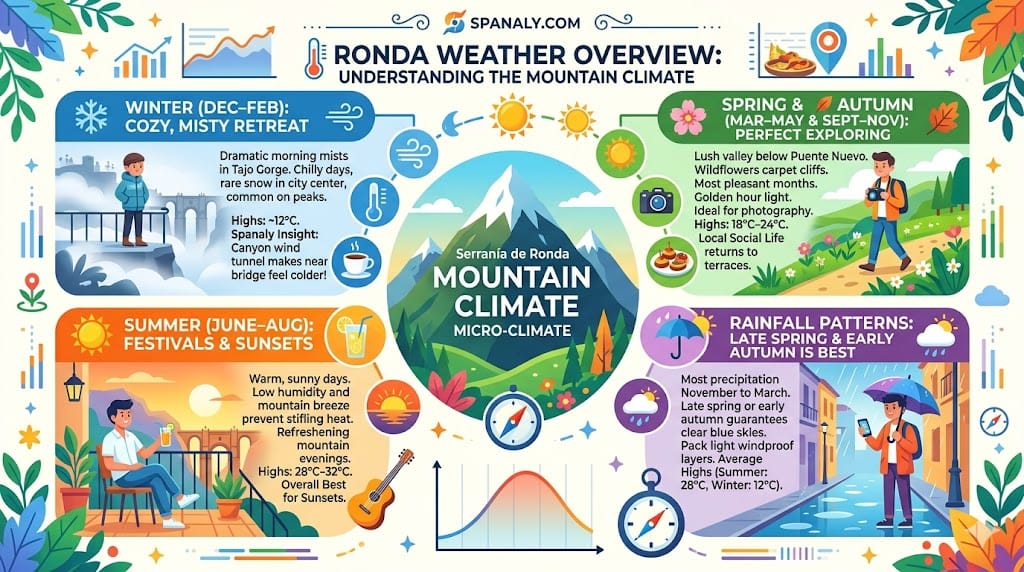
Ronda sits prominently atop a limestone plateau, creating a distinct mountain climate far cooler than the coastal plains. Specifically, this elevation means the best time to visit Ronda for mild weather differs from nearby Malaga or Seville. Winter mornings often bring dramatic mists to the Tajo Gorge, while summer evenings remain refreshingly crisp. Consequently, understanding these seasonal shifts is essential before exploring the things to do in Ronda, ensuring you pack correctly for every outdoor adventure.
📊 Seasonal Temperature Breakdown:
🌡️ Summer (June–August): Days are warm and sunny, reaching average highs of 28°C to 32°C. The low humidity and mountain breeze prevent the stifling heat found in the interior valleys.
🌡️ Spring & Autumn (March–May & Sept–Nov): These are the most pleasant months, with daytime temperatures hovering between 18°C and 24°C. These seasons offer the most comfortable climate for walking the historic Puente Nuevo.
🌡️ Winter (December–February): Expect chilly mornings and evenings, with highs around 12°C. While snow is rare in the city center, it is common on the surrounding Serranía de Ronda peaks.
🌧️ Rainfall Patterns: Most precipitation occurs between November and March. Consequently, visiting in late spring or early autumn guarantees the highest probability of clear blue skies.
💡 Spanaly Insight: The “Canyon Wind” Effect
The Tajo Gorge acts as a natural wind tunnel, specifically during the winter months. Even on a sunny February day, the wind-chill factor near the bridge can feel significantly colder. We recommend bringing a light, windproof jacket regardless of the forecast for your gorge walks.
🌸 Spring in Ronda (March–May): The Golden Window
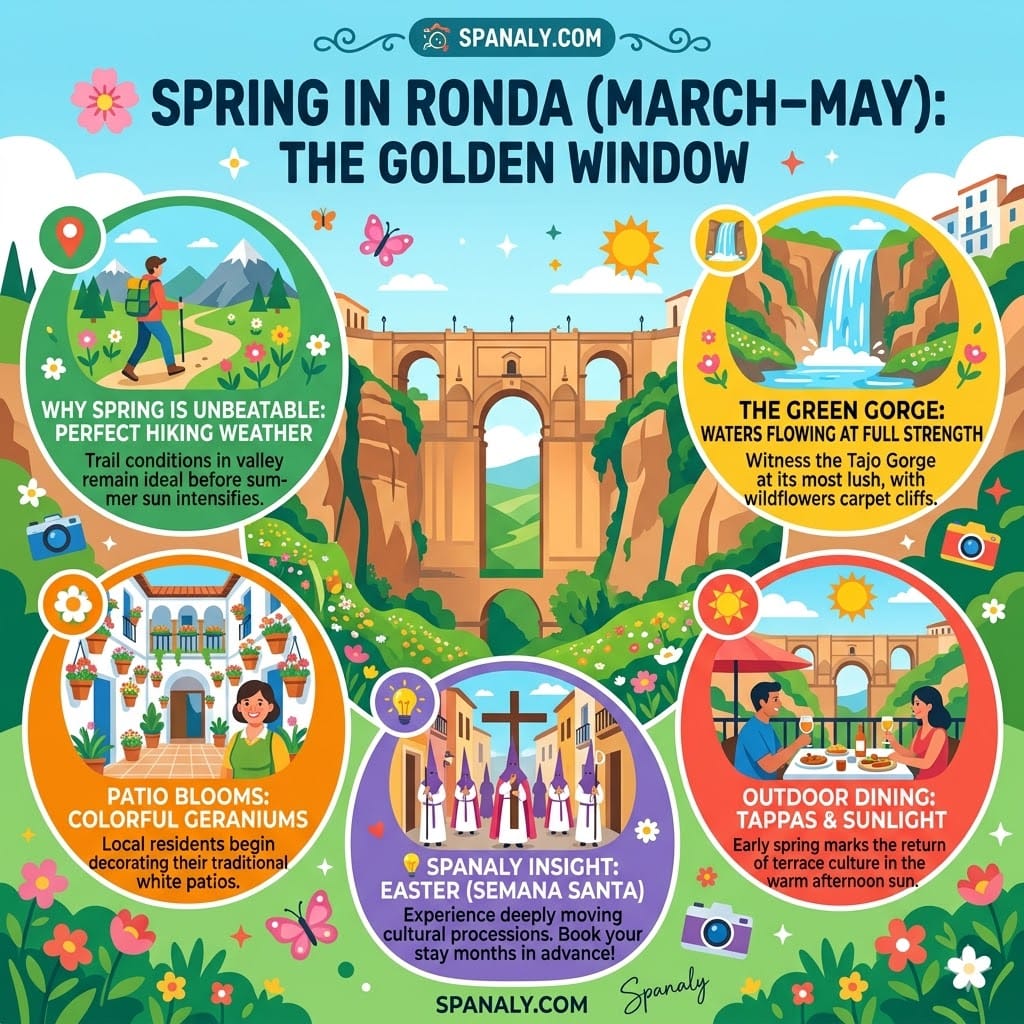
Spring transforms the Serranía de Ronda into a vibrant Mediterranean paradise. As winter mists lift, the entire Guadalevín valley turns an intense shade of emerald green. Wildflowers carpet the cliffs beneath the Puente Nuevo, creating a dreamlike backdrop for your photos. Many travelers consider this the absolute peak season because the air remains crisp and the sun feels gentle. Additionally, the crowds haven’t yet reached their summer highs, allowing for a more intimate exploration.
📍 Why Spring is Unbeatable:
Perfect Hiking Weather: Trail conditions in the valley stay ideal before the intense summer heat arrives.
The Green Gorge: You’ll witness the Tajo Gorge at its most lush, with waterfalls flowing at full strength.
Patio Blooms: Local residents begin decorating their traditional Andalusian courtyards with colorful geraniums and jasmine.
Outdoor Dining: Early spring marks the return of terrace culture for enjoying tapas in the warm afternoon sun.
Smart Planning: If you have more time, consider a 3 days in Ronda itinerary to fully experience the blooming countryside.
💡 Spanaly Insight
Don’t forget that Easter (Semana Santa) often falls during these months. If your visit coincides with this holy week, you will experience deeply moving processions through the narrow white streets. It is a powerful cultural experience, though we recommend booking your stay months in advance to secure a spot near the historic center.
☀️ Summer in Ronda (June–August): Festivals & Golden Sunsets

Summer in Ronda offers a unique escape compared to the sweltering heat of interior Andalusia. While cities like Seville can feel overwhelming, Ronda’s high altitude provides a refreshing mountain breeze. Days are long and filled with bright Spanish sunshine, making it the perfect season for those who love vibrant street life and late-night tapas. You will find the city buzzing with energy, especially during the many open-air concerts and local festivities.
📍 How to Master a Ronda Summer:
Evening Magic: The “Golden Hour” over the Puente Nuevo lasts longer, offering incredible light for your canyon photography.
Al Fresco Dining: Enjoying local wine on a terrace is a must. If you’ve experienced the Madrid food guide, you’ll find Ronda’s summer dining much cooler and more relaxed.
Strategic Sightseeing: We recommend exploring the historic sites early in the morning and retreating to a shaded patio during the mid-afternoon peak.
Poolside Retreats: Many boutique hotels in the old town feature stunning pools overlooking the gorge, perfect for a refreshing dip.
Spanaly Insight: Although days are warm, temperatures drop significantly once the sun sets behind the mountains. Even in July, you might find yourself reaching for a light sweater while dining outdoors. This natural air-conditioning is exactly what makes Ronda a favorite summer sanctuary for locals and travelers alike.
🍂 Autumn in Ronda (September–November): Harvest & Scenic Hues
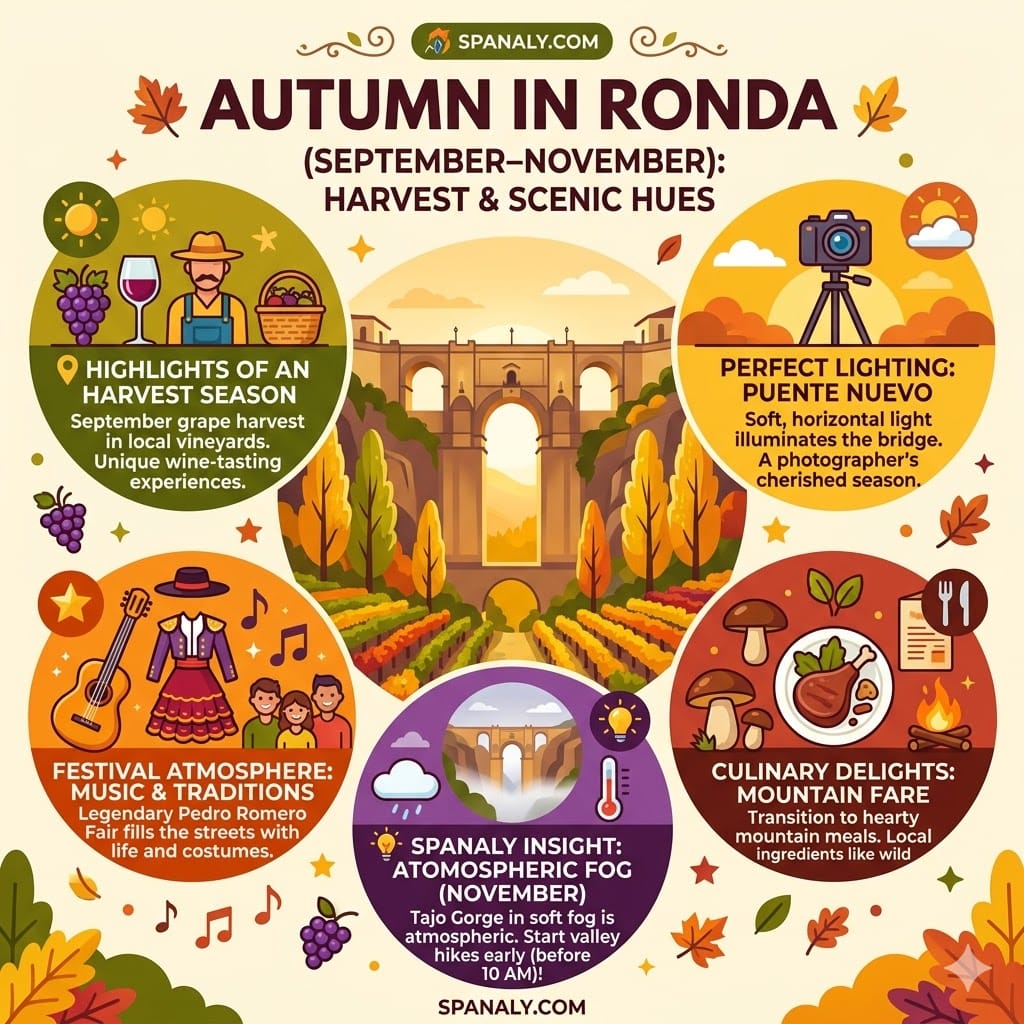
Autumn brings a sense of poetic transformation to the Serranía de Ronda. As the summer heat fades, the vineyards and poplar trees in the valley below turn brilliant shades of gold and deep amber. This season is particularly beloved by foodies and hikers who enjoy the crisp air and the scent of woodsmoke beginning to drift from traditional chimneys. If you are coming from the sunny streets of the Ultimate Seville Travel Guide, the cooler mountain air here will feel like a refreshing change of pace.
📍 Highlights of an Autumn Visit:
Harvest Season: September marks the grape harvest in local vineyards, offering unique wine-tasting experiences.
Perfect Lighting: Photographers cherish the soft, horizontal light that illuminates the Puente Nuevo during these months.
Festival Atmosphere: The city comes alive with the legendary Pedro Romero Fair, filling the streets with music and traditional costumes.
Culinary Delights: Menus transition to hearty mountain fare, featuring wild mushrooms and locally sourced game.
Spanaly Insight: November is a hidden gem for nature lovers in Ronda. While you might encounter a few misty mornings, the sight of the Tajo Gorge wrapped in soft fog is incredibly atmospheric. Just remember that daylight hours begin to shorten, so we recommend starting your valley hikes before 10:00 AM to make the most of the afternoon glow.
❄️ Winter in Ronda (December–February): The Cozy, Misty Retreat
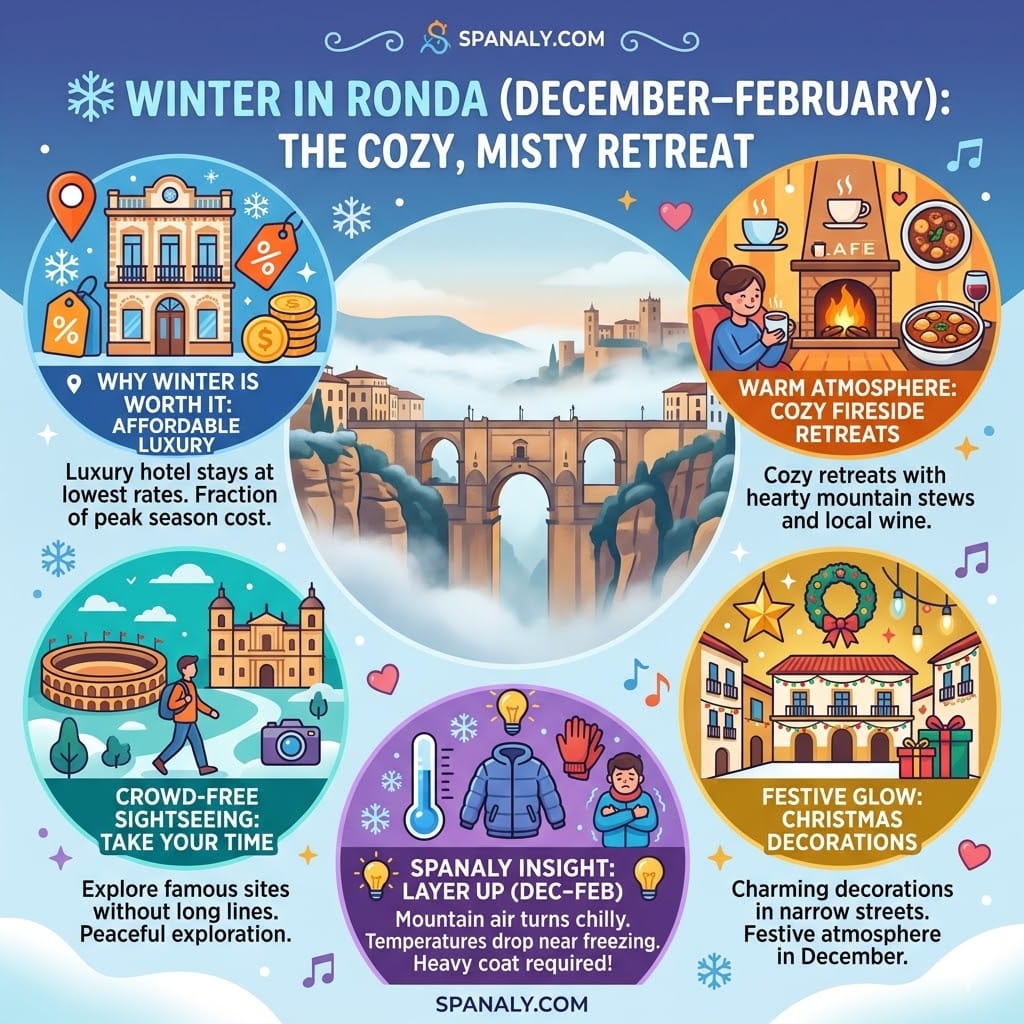
Winter in Ronda is a season of quiet magic and atmospheric beauty. While the mountain air turns chilly, the city takes on a peaceful rhythm that allows you to explore the Puente Nuevo without the typical tourist buzz. Mornings often begin with a dramatic blanket of fog filling the Tajo Gorge, creating a mysterious and romantic backdrop. If you are looking to save, this is the perfect time to consult our Spain travel budget guide, as luxury hotels in Ronda often offer their lowest rates during these months.
📍 Why Winter is Worth It:
Affordable Luxury: Enjoy stays in historic boutique hotels at a fraction of their peak-season cost.
Warm Atmosphere: Traditional cafes and restaurants offer cozy retreats with roaring fireplaces and hearty mountain stews.
Crowd-Free Sightseeing: Take your time at the Plaza de Toros or the Mondragón Palace without waiting in long lines.
Festive Lights: December brings charming Christmas decorations to the narrow streets, adding a festive glow to the ancient architecture.
Spanaly Insight: Don’t let the southern Spain location fool you; winter in the mountains requires proper layers. We recommend bringing a heavy coat for the evenings, as temperatures can drop near freezing once the sun sets. However, the reward of having the entire bridge almost to yourself at sunrise is an experience you won’t forget.
📊 Quick Comparison: Which Month Suits Your Travel Style?

Finding the perfect time to visit Ronda depends entirely on your travel priorities. While some seek the lush greenery of spring, others prefer the festive energy of late summer. To help you decide, we have organized the best months into this easy-to-read comparison. If your trip includes multiple Spanish attractions, use this guide to sync your visit perfectly with the rest of Andalusia.
| Travel Priority | Best Months | Why Visit Then? |
|---|---|---|
| 🌿 Nature & Hiking | April – May | Enjoy emerald green valleys and blooming wildflowers before the summer heat. |
| 📸 Photography | October – November | Capture the Puente Nuevo in soft autumn light with dramatic morning mists. |
| 🎭 Local Culture | September | Experience the legendary Pedro Romero Fair and traditional Goyesca costumes. |
| 💰 Budget Travel | January – February | Secure luxury boutique stays at their lowest rates with zero crowds. |
| ☀️ Sun & Sunsets | July – August | Benefit from long daylight hours and refreshing, cool mountain evenings. |
Spanaly Insight: If you want the absolute “sweet spot,” aim for May or September. These months offer a flawless balance of pleasant temperatures and vibrant local life. It is the best way to experience Ronda as a refreshing mountain sanctuary without the winter chill or the peak summer rush.
🎭 Ronda’s Cultural Calendar: Iconic Local Festivals

Ronda doesn’t just offer stunning views; it is a city that knows how to celebrate its deep-rooted traditions. Throughout the year, the cobblestone streets transform into stages for music, history, and religious devotion. If you are a fan of the vibrant energy found in the major Spanish festivals guide, you will find that Ronda’s celebrations offer a more intimate and authentic mountain flair that is truly unforgettable.
📍 Key Festivals to Experience:
Feria de Pedro Romero (September): The crown jewel of Ronda’s events. You’ll see locals dressed in 18th-century “Goyesca” costumes and experience the world-famous traditional bullfight in the historic ring.
Ronda Romántica (May): A colorful step back in time. The city recreates the 19th-century era of “Bandoleros” (bandits) and romantic travelers with parades, historical reenactments, and street markets.
Semana Santa (March/April): A deeply spiritual week where heavy, ornate floats are carried through narrow medieval streets. The atmosphere of incense and silent devotion is incredibly powerful.
Cante Grande Festival (August): One of the oldest Flamenco festivals in Andalusia. It is an absolute must for music lovers wanting to hear authentic, soulful performances under the stars.
Spanaly Insight: During Ronda Romántica, many locals dress in full historical attire. Don’t be shy—feel free to join in the fun by wearing a traditional flat cap or a flower in your hair. It’s the easiest way to bridge the gap between being a tourist and feeling like a local guest in this high-altitude celebration.
🎒 What to Pack: Seasonal Dress Code for Ronda

Ronda is a high-altitude mountain city, which means the weather can be quite deceptive. Even on a sunny afternoon, the shade of the narrow Moorish streets or the wind tunnel effect near the Puente Nuevo can make it feel much cooler. To ensure you stay comfortable while exploring the steep cobblestone paths, we recommend checking our what to pack for Spain guide, but here are the specific essentials for Ronda’s unique micro-climate.
📍 Seasonal Packing Essentials:
Spring & Autumn: Think in layers. A light jacket or a stylish pashmina is essential for the transition between the warm sun and the cool canyon breeze.
Summer: Breathable fabrics like linen are your best friend. However, always bring a light sweater for the evening, as temperatures drop significantly after sunset.
Winter: You will need a proper warm coat and gloves. The humidity from the gorge can make the cold feel sharper than it appears on the thermometer.
Year-Round Must-Have: Comfortable, high-grip walking shoes. Ronda is famous for its uneven, slippery limestone streets and steep hiking trails.
Spanaly Insight: If you plan to hike down to the base of the Puente Nuevo for that iconic photo, leave the sandals at the hotel. The trail is dusty and rocky, so sturdy sneakers or hiking boots are a non-negotiable requirement for a safe and enjoyable descent into the valley.
🥾 Outdoor Adventures: Best Time for Hiking & Nature

Ronda is a gateway to some of Andalusia’s most breathtaking natural landscapes, from the depths of the Tajo Gorge to the rugged peaks of the Sierra de las Nieves. Choosing the right month for your trek is vital, as the steep limestone paths can become quite challenging under the peak summer sun or during winter rains. For a seamless experience, we suggest integrating these hikes into one of our Spain travel itineraries plans to ensure you balance adventure with city exploration.
📍 Best Windows for Nature Lovers:
The Flower Bloom (March – May): This is the ultimate time for the “Camino de los Molinos” trail. You’ll walk through fields of poppies and yellow mustard flowers with the waterfalls crashing above you.
The Chestnut Harvest (October – November): Head to the nearby Genal Valley to witness the “Copper Forest” (Bosque de Cobre), where the chestnut trees turn a fiery orange.
Summer River Treks (June – September): While mountain peaks are hot, the hidden river pools of the Cueva del Gato offer a refreshing natural escape for experienced hikers.
Crisp Winter Walks (January – February): Perfect for high-altitude mountain biking or bird watching, as the clear skies provide visibility for miles across the horizon.
Spanaly Insight: If you plan to hike the popular trail down to the base of the Puente Nuevo, aim for early morning (before 10:00 AM) or late afternoon. Not only is the temperature more comfortable, but the sun will hit the canyon walls at the perfect angle for that “National Geographic” shot without the harsh midday glare.
📸 Photography Guide: Capturing the Iconic Puente Nuevo
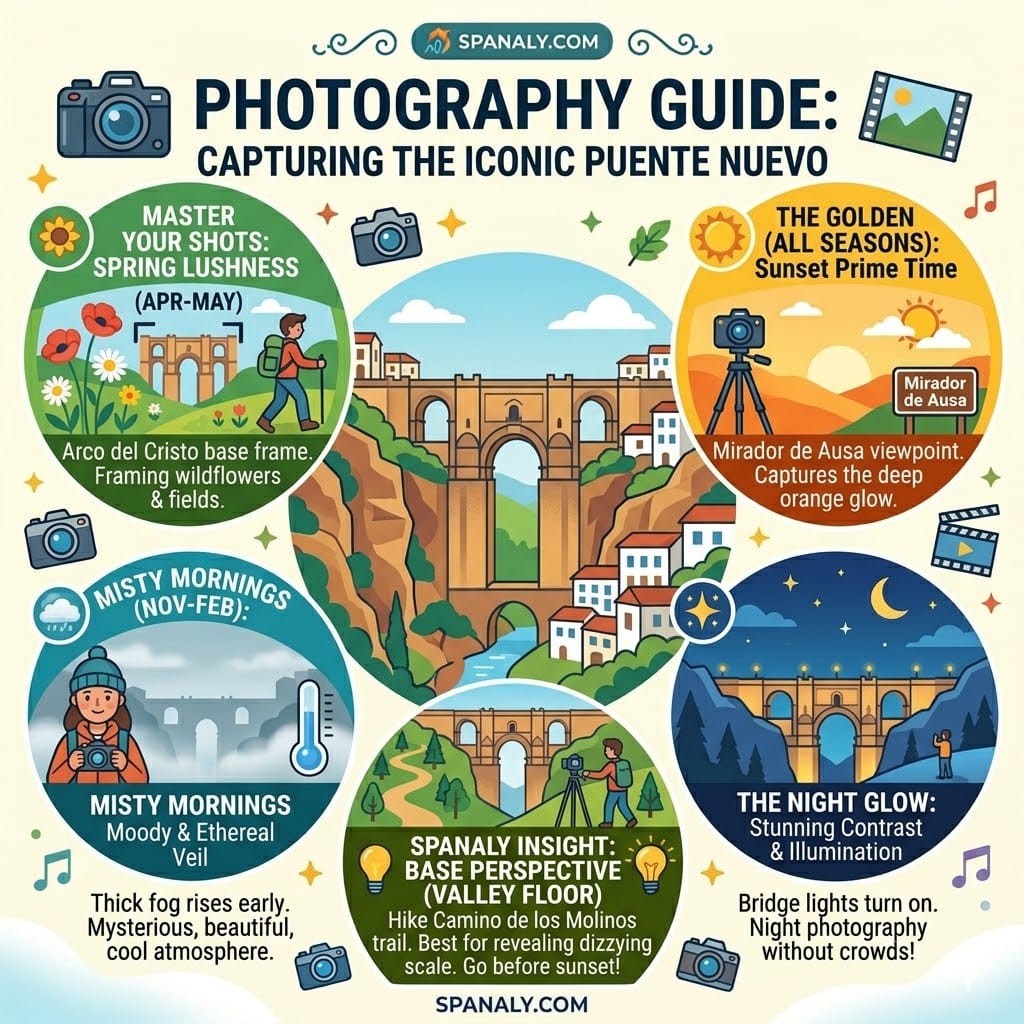
The Puente Nuevo is one of the most photographed landmarks in Spain, but capturing it like a professional requires mastering Ronda’s unique light and mountain atmosphere. Whether you are shooting with a high-end DSLR or a smartphone, the seasons and times of day will drastically change the mood of your shots. If you have already practiced your skills in the historic squares of the Ultimate Seville Travel Guide, you will find Ronda’s vertical landscapes a thrilling new challenge.
📍 Master Your Shots:
The Golden Hour (All Seasons): Sunset is the prime time. Position yourself at the “Mirador de Ausa” to capture the orange glow hitting the stone bridge and the white-washed houses of the old town.
Misty Mornings (November – February): For a moody, ethereal look, head to the gorge early. The thick fog rising from the valley often wraps the bridge in a mysterious veil.
Spring Lushness (April – May): Hike down to the “Arco del Cristo” at the base of the gorge to frame the bridge with vibrant green fields and blooming wildflowers.
The Night Glow: Don’t pack up your tripod too early. The bridge is beautifully illuminated at night, creating a stunning contrast against the deep blue mountain sky.
Spanaly Insight: For the absolute best perspective without the crowds, walk down the “Camino de los Molinos” trail. Most tourists stay on top of the bridge, but the view from the valley floor looking upward reveals the true, dizzying scale of the architecture. Aim to be there about 45 minutes before sunset for the softest lighting.
🚶 Crowds & Peace: The Best Time for Quiet Exploration
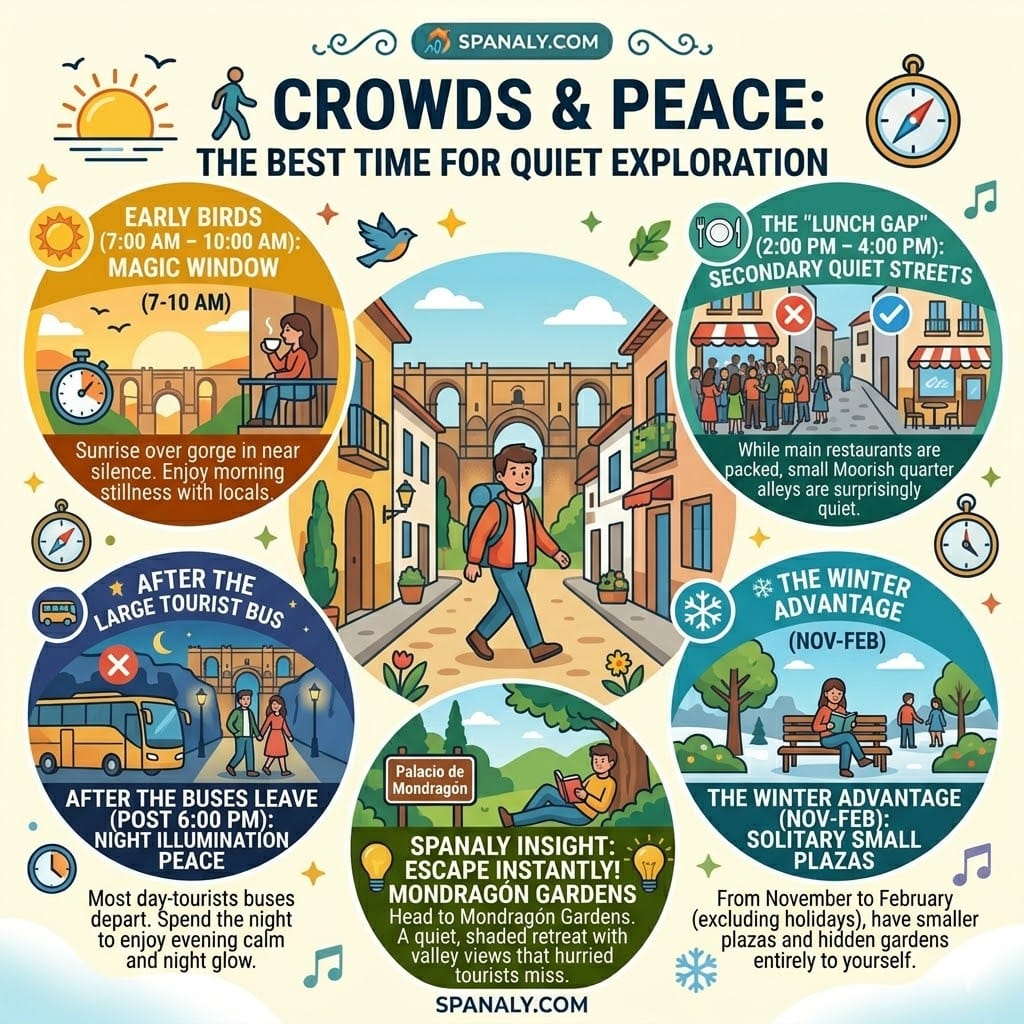
Ronda is a popular destination for day-trippers from the Costa del Sol, which can sometimes lead to a crowded atmosphere during the middle of the day. To truly feel the “soul” of this ancient city, timing is everything. If you prefer the serene and slow-paced vibe mentioned in our Spain travel itinerary, you will need to plan your strolls through the Moorish quarter (La Ciudad) with strategy in mind.
📍 How to Find Your Peaceful Moment:
Early Birds (7:00 AM – 10:00 AM): This is the magic window. The city belongs to the locals and the mountain birds. Watching the sunrise over the gorge in near silence is a spiritual experience.
The “Lunch Gap” (2:00 PM – 4:00 PM): While the main restaurants are packed, the secondary viewpoints and narrow side streets of the old town are surprisingly quiet.
After the Buses Leave (Post 6:00 PM): Most day-tourist buses depart by late afternoon. Spending the night in Ronda allows you to enjoy the illuminated streets in peace.
The Winter Advantage: From November to February (excluding holidays), you can often have the smaller plazas and hidden gardens almost entirely to yourself.
Spanaly Insight: To escape the crowd instantly, head away from the Puente Nuevo and walk toward the Palacio de Mondragón. Its gardens offer a quiet, shaded retreat with stunning valley views that many hurried tourists overlook. It’s the perfect spot to sit with a book and soak in the mountain silence.
💰 Budget Travel: The Most Affordable Months in Ronda

Ronda offers incredible value if you know when to book. While it is a mountain sanctuary, it follows the typical Andalusian seasonal pricing trends. By aligning your visit with the quieter months, you can enjoy boutique hotels and traditional dining at a fraction of the cost seen in Seville or Marbella. To plan your overall expenses, we recommend checking our Spain travel budget guide to see how Ronda fits into your financial plan.
📍 Best Strategies for Savings:
The Winter Window (January – February): This is the ultimate period for budget travelers. Luxury hotels often drop their prices by up to 40% to fill rooms during the quietest mountain months.
Mid-Week Advantage: Regardless of the month, booking your stay from Tuesday to Thursday is significantly cheaper than weekend stays when coastal locals head to the mountains.
The “Shoulder” Value (November & March): You get the benefit of lower airfare and accommodation rates while still enjoying manageable weather for outdoor exploration.
Dining Savvy: During the off-season, many local “Tabernas” offer excellent “Menú del Día” deals aimed at residents rather than tourists, providing authentic food for less.
Spanaly Insight: Avoid the weeks of Semana Santa (Easter) and the Feria de Pedro Romero (September) if you are on a strict budget. During these iconic events, hotel prices can triple, and many accommodations are booked out months in advance. If you must visit then, book your stay at least 6 months early to lock in the “Early Bird” rates.
⏰ Day Trip vs. Overnight Stay: Master Your Timing
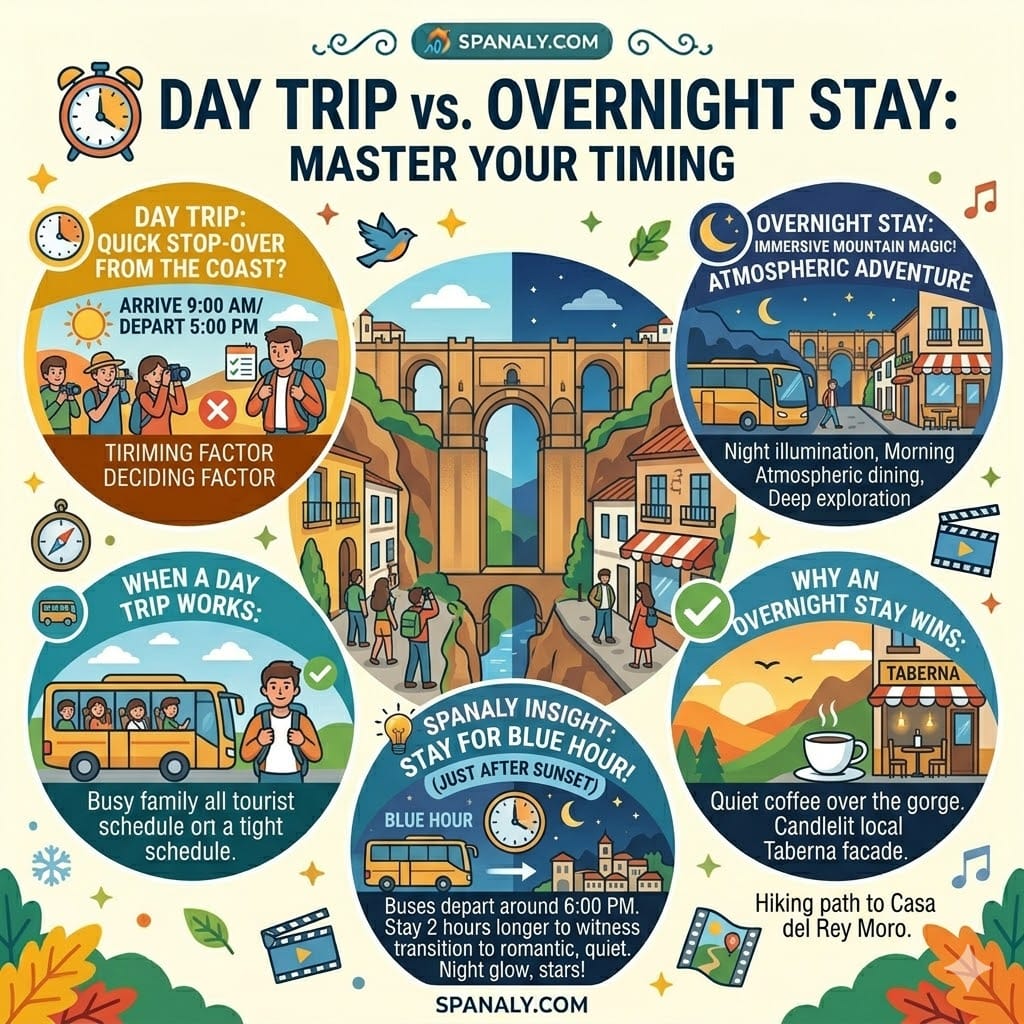
Ronda is often mistakenly viewed as a quick stop-over from the coast, but the experience of the city changes completely once the sun begins to set. Deciding between a fleeting visit or an immersive night is the most critical part of your planning. While the fast-paced energy of the Ultimate Madrid Travel Guide is perfect for urban exploration, Ronda demands a slower, more atmospheric approach to truly capture its mountain magic.
📍 Why an Overnight Stay Wins:
The Night Illumination: Seeing the Puente Nuevo lit up against the pitch-black canyon is a sight day-trippers never get to witness.
Morning Serenity: You get a head start on the crowds. While others are still on the bus from Malaga, you’ll be enjoying a quiet coffee overlooking the gorge.
Atmospheric Dining: The best local “Tabernas” in the old Moorish quarter truly come to life at night with a more local, authentic vibe.
Deep Exploration: One day is rarely enough to hike the valley floor and explore hidden gems like the Casa del Rey Moro.
📍 When a Day Trip Works:
Time Constraints: If you are based in Seville or Marbella and only have one spare day, arriving by 9:00 AM can still cover the main landmarks.
Budget Focus: If your accommodation is already paid for in a nearby city, a day trip avoids the higher cost of boutique mountain hotels.
Spanaly Insight: If you choose the day trip option, try to stay until the “blue hour” (just after sunset). Most tour buses depart around 5:00 PM or 6:00 PM. By staying just two hours longer, you’ll witness the city transition from a busy tourist spot into a romantic, quiet village under the stars.
📅 Monthly Breakdown: Ronda’s Complete Month-by-Month Guide

Understanding the nuances of each month allows you to tailor your trip to your personal interests. While cities like Barcelona offer a Mediterranean rhythm as seen in our Ultimate Barcelona Travel Guide, Ronda’s mountain climate creates a more dramatic seasonal shift. Use this guide to find your perfect window.
📍 The Seasonal Snapshot:
January & February: The coldest months. Expect misty mornings and cozy nights by the fireplace. Perfect for budget travelers and quiet photography.
March & April: Spring awakening. The gorge is lush and green, and the waterfalls are at their peak. Semana Santa brings deep cultural intensity.
May: The “Golden Month.” Ideal temperatures (22°C/72°F) and the colorful Ronda Romántica festival make this a top choice for hikers.
June: The start of the dry heat. Evenings are perfect for outdoor dining in the old Moorish plazas.
July & August: Peak summer. Temperatures can hit 35°C (95°F) during the day. Focus on early morning walks and late-night Flamenco festivals like Cante Grande.
September: A cultural highlight. The Feria de Pedro Romero transforms the city with traditional costumes and historic bullfights.
October: The most balanced autumn month. Mild weather and the beginning of the “Copper Forest” transformation in nearby valleys.
November: The rainiest month, but also the most atmospheric for those who love the sight of clouds rolling through the Tajo Gorge.
December: Festive and crisp. The city is beautifully decorated, and the clear mountain air makes the sunset views exceptionally sharp.
Spanaly Insight: If you are visiting in May or September, you are entering Ronda’s “Super Peak” seasons. During these months, don’t just book your hotel; make sure to reserve your table at popular restaurants like Tragatá at least a week in advance to avoid long wait times.
🏁 Final Verdict: The Absolute Best Time for Your Visit

Choosing the perfect time to visit Ronda depends entirely on your travel DNA. While the mountain climate creates dramatic seasonal shifts, your decision should align with your overall itinerary goals. If you are still in the early stages of organizing your journey, we recommend starting with our guide on how to plan a trip to Spain to see how Ronda’s unique timing fits into your broader Spanish adventure.
📍 The Winner by Category:
For the Perfect Weather: May and October are the undisputed champions. You’ll enjoy mild daytime temperatures and crisp, clear evenings perfect for walking the gorge.
For the Cultural Soul: September is your month. Witnessing the Feria de Pedro Romero is a bucket-list experience that captures the true essence of Spanish tradition.
For Budget Explorers: January and February offer the best value. You can secure luxury boutique stays for a fraction of the peak season price.
For Nature Photographers: April provides the lush, green backdrop and powerful waterfalls that make the Tajo Gorge look its most dramatic.
📍 The Verdict:
If we had to pick just one “Golden Window,” Late May takes the crown. It perfectly balances the floral beauty of spring, the excitement of local festivals, and the ideal hiking climate before the intense summer sun arrives.
Spanaly Insight: No matter when you choose to visit, remember that Ronda is a “Slow Travel” destination. Don’t rush through the Puente Nuevo just for a photo; sit at a local cafe, watch the light change on the canyon walls, and let the mountain pace dictate your day. That is the secret to truly discovering Ronda’s soul.
🎭 Visitor FAQs – Best Time to Visit Ronda Guide
🚗 Is it safe to drive to Ronda through the mountain roads in winter?
Yes, the roads connecting Ronda to Malaga and Seville are well-maintained and safe. However, during winter months, you might encounter thick mountain fog (Niebla) in the early mornings. We recommend driving between 11:00 AM and 4:00 PM to ensure maximum visibility and avoid any rare icy patches on higher altitude curves.
🦟 Are there mosquitoes or pests in Ronda during the summer?
Due to its high-altitude and dry mountain air, Ronda has significantly fewer mosquitoes than coastal areas or marshy plains. Even in peak summer, you can enjoy outdoor dining without much bother. However, if you are hiking near the Guadalevín river at the base of the gorge, a light natural repellent is always a smart addition to your day pack.
👗 Is there a specific dress code for visiting the Ronda Bullring?
For general museum visits, the dress code is casual and respectful. However, if you are attending the prestigious Goyesca bullfight in September, locals dress in high-fashion traditional or formal attire. For a regular visit, ensure you wear shoes with good grip, as the historic sandy arena and stone steps can be slippery.
📶 How is the mobile signal and Wi-Fi in the gorge area?
Connectivity in the town center is excellent with 5G coverage. If you hike down to the valley floor (the base of the Puente Nuevo), the signal might drop slightly due to the thick limestone walls, but it rarely disappears completely. Most boutique hotels in the old quarter provide strong Wi-Fi suitable for digital nomads who want a mountain office view.
🧺 Can I have a picnic at the bottom of the Tajo Gorge?
Absolutely! Spring and Autumn are the best times for this. There are several flat rocky areas near the old flour mills (Molinos) that offer spectacular views of the bridge from below. Just remember to pack out all your trash, as Ronda is a protected natural heritage site and maintaining its cleanliness is vital for the local ecosystem.
Ronda Guide by Spanaly.com
Ronda is more than just a bridge; it is a timeless mountain sanctuary that changes its soul with every season. Whether you chase the blooming flowers of May or the misty mysteries of January, this city promises a breathtaking escape from the ordinary.
✨ Quick Takeaways:
Best for Weather: Aim for the “Golden Windows” of May or October. 🌡️
Best for Budget: Embrace the cozy and affordable Winter months. 💰
Best for Culture: Experience the legendary September festivals. 🎭
Pro Tip: Always stay overnight to witness the Puente Nuevo’s night glow. 🌙
🚗 Where to Next?
If you are planning to head down from the mountains to the sunny coast, don’t miss our guide on the best things to do in Malaga. It is the perfect Mediterranean follow-up to your rugged Ronda adventure!