🛫 Ronda Travel Tips
Most travelers treat Ronda as a quick “stop-and-snap” photo op from the coast. This is a tactical mistake. To truly feel the soul of the city of dreams, you need to navigate its vertical geography like an insider. Whether you are following our Ultimate Ronda Travel Guide or wandering solo, these essential Ronda travel tips will help you avoid the crowds and find the authentic Andalusian magic hidden beyond the bridge.
🚀 Quick Start: Your 30-Second Ronda Briefing
The Golden Rule: Stay overnight. Ronda’s atmosphere transforms into a silent, romantic mountain retreat once the tour buses depart at 5:00 PM.
Navigation Reality: Wear shoes with serious grip. The cobblestones in the Old Town (La Ciudad) are polished smooth by centuries of foot traffic and can be treacherous.
Dining Truth: Avoid any restaurant with a view of the bridge for your main meal. You are paying for the scenery, not the seasoning.
The Secret View: The best perspective of the Puente Nuevo isn’t from the top, but from the valley floor via the Camino de los Molinos.
Spanaly Insight: Don’t waste your morning queuing for the Bullring (Plaza de Toros) right at opening time. Instead, head straight to the Casa del Rey Moro first. Its 200+ water-mine steps are physically demanding; doing this climb in the cooler morning air before the midday heat hits the gorge is a game-changer for your energy levels.
🏔️ Why Visit Ronda? A Quick High-Altitude Overview
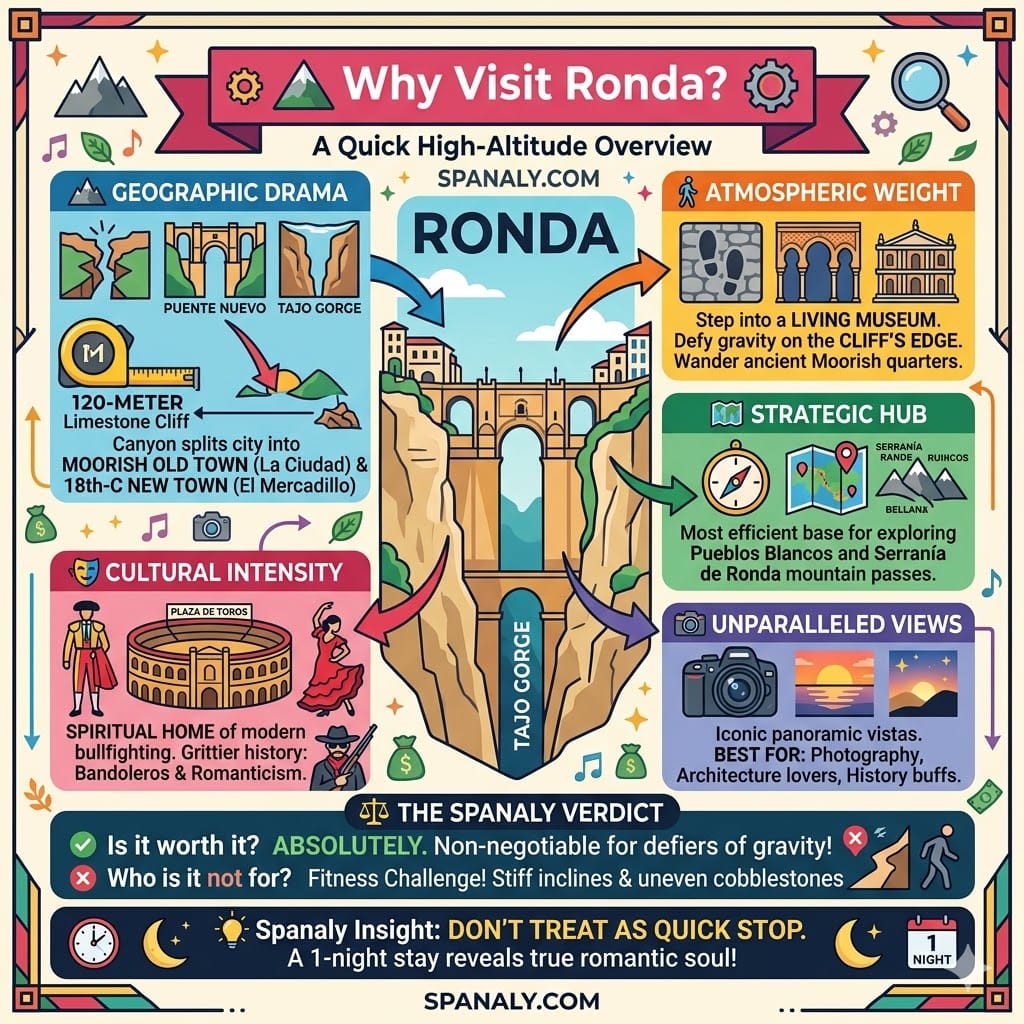
Ronda isn’t just another stop on the Andalusian map; it is a geological and historical drama carved into a 120-meter limestone cliff. While the grand monuments in the Ultimate Seville Travel Guide showcase the peak of Mudejar luxury, Ronda offers a raw, vertical scale that feels almost prehistoric. Understanding this contrast is the first step in planning a balanced southern Spain itinerary.
📍 The Tactical Breakdown:
Geographic Drama: The Tajo Gorge splits the city into two distinct eras: the Moorish Old Town (La Ciudad) and the 18th-century New Town (El Mercadillo).
Atmospheric Weight: Walking through the historic district feels like stepping into a living museum where Islamic and Renaissance architecture defy gravity on the cliff’s edge.
Strategic Hub: Ronda serves as the most efficient mountain base for exploring the surrounding Sierra de las Nieves and the famous Pueblos Blancos circuit.
Cultural Intensity: As the spiritual home of modern bullfighting and romantic banditry (Bandoleros), it offers a grittier, more untamed history than Malaga or Granada.
⚖️ The Spanaly Verdict:
Is it worth the winding mountain drive? Absolutely. If you appreciate architecture that survives on a precipice and want to see how a city integrates with a canyon, Ronda is non-negotiable. However, be honest with your fitness level: if you hate steep inclines and uneven cobblestones, this city will challenge your patience more than your camera roll.
📍 Where Is Ronda Located? Mapping the Heart of Andalusia
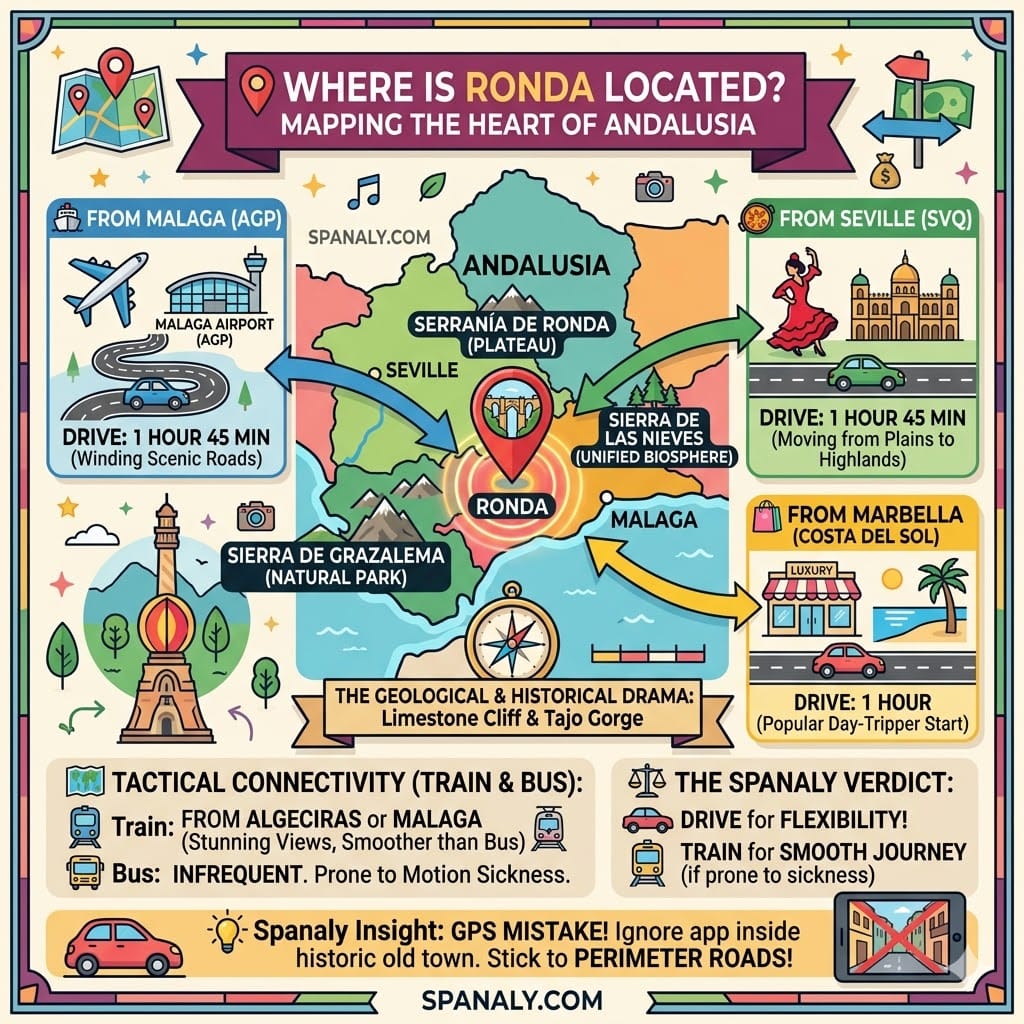
Ronda sits perched on an inland plateau in the province of Malaga, approximately 750 meters above sea level. It is the crown jewel of the Serranía de Ronda, strategically positioned between the Sierra de las Nieves and the Sierra de Grazalema. While it feels worlds away from the Mediterranean coast, it is actually a manageable mountain drive from major Andalusian hubs.
📍 Tactical Connectivity:
From Malaga: A 1 hour 45 minute drive through winding but scenic mountain passes. Most international travelers arrive via the Malaga Airport (AGP) Guide before heading inland.
From Seville: Roughly 1 hour 45 minutes, moving from the flat Guadalquivir plains into the rugged highlands.
From Marbella: Only 1 hour away, making it the most popular starting point for high-end day-trippers.
The Terrain Reality: You are heading into a high-altitude environment. The roads are excellently paved but feature sharp hairpins that require steady nerves.
⚖️ The Spanaly Verdict:
Don’t rely solely on public transport if you want flexibility. While trains and buses exist, they are infrequent. If you are prone to motion sickness, take the train from Algeciras or Malaga; the views are equally stunning but far smoother than the mountain bus routes.
Spanaly Insight: Most GPS apps will try to lead you through the narrowest parts of the Old Town (La Ciudad) to reach the center. Ignore them. Stick to the main perimeter roads until you reach a designated parking garage like Parking Martínez Astein. Driving into the historic Moorish quarter without a local permit is a recipe for a trapped car and a hefty fine.
📅 Best Time to Visit Ronda: Weather & Crowd Strategy

Timing is everything in Ronda. Unlike the sprawling urban heat of the Ultimate Madrid Travel Guide, Ronda’s mountain climate can be unpredictable. You are looking for a balance between clear photography light and manageable temperatures.
📍 The Seasonal Tactical Review:
The Golden Window (May & October): These are the elite months. Temperatures hover around 22°C (72°F), and the gorge is either lush green (Spring) or copper-toned (Autumn).
The Summer Heat (July & August): Avoid midday exploration. The stone streets radiate heat, and the gorge traps it. If you visit now, do your walking before 11:00 AM.
The Winter Mist (January & February): Surprisingly romantic. You’ll find the best hotel deals, but be prepared for thick mountain fog that can obscure the bridge views for hours.
The Crowd Factor: Monday to Thursday are your tactical allies. Weekends see a massive influx of coastal day-trippers that can double the wait times at major sites.
⚖️ The Spanaly Verdict:
If you want the absolute best experience, book for Late May. You’ll catch the Ronda Romántica festival atmosphere without the punishing 35°C (95°F) heat of August. It is the perfect compromise between vibrant local life and physical comfort.
Spanaly Insight: Don’t trust the weather forecast for Malaga or Seville when visiting Ronda. The Serranía has its own microclimate. Always pack a light windbreaker or layer, even in summer; as soon as the sun dips behind the mountains, the temperature drops significantly faster than it does on the coast.
🚆 How to Get to Ronda: Trains, Buses, and Scenic Drives
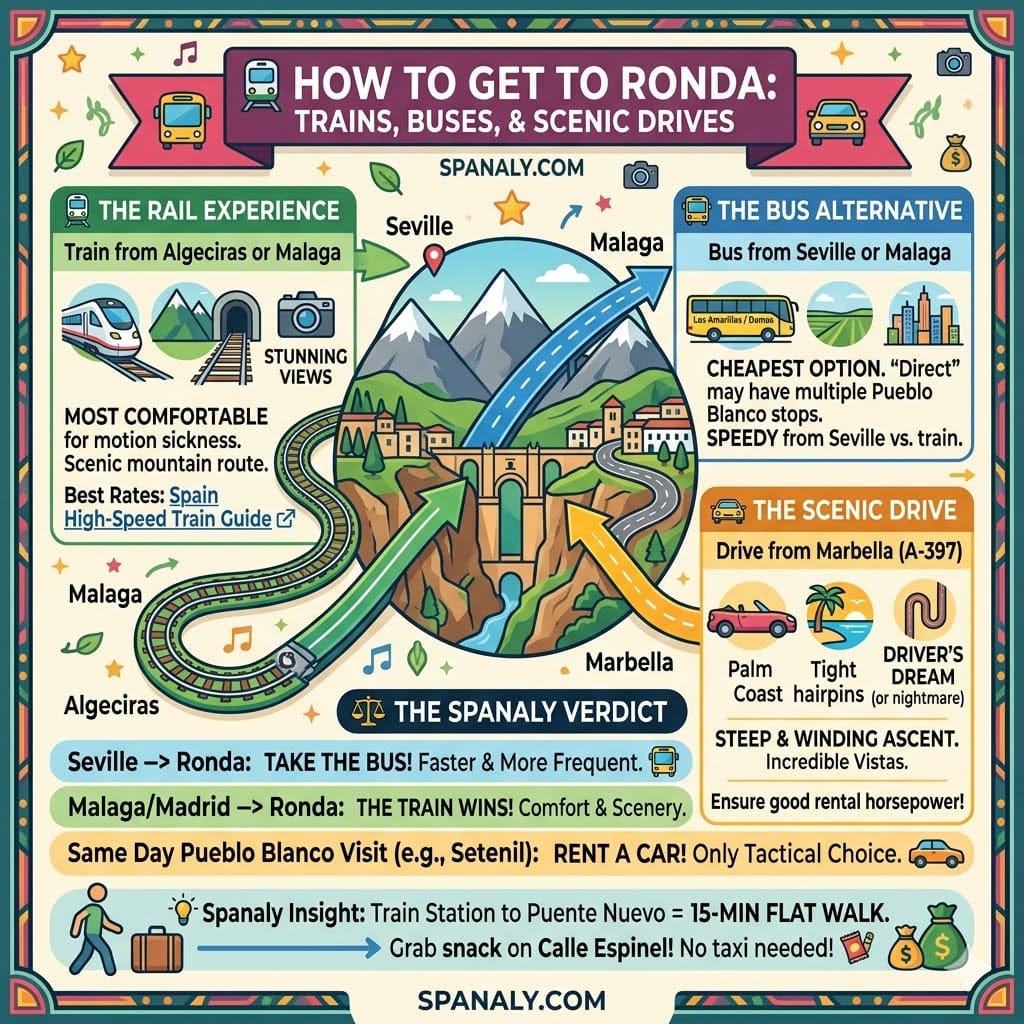
Getting to Ronda is part of the adventure, but choosing the wrong mode of transport can drain your energy before you even see the bridge. While the city feels isolated, it is well-connected if you understand the logistical hierarchy.
📍 The Tactical Transport Guide:
The Rail Experience: The train journey from Algeciras or Malaga is legendary for its views. It is far more comfortable than the bus for those who get motion sickness. For the best rates and schedules, check our Spain High-Speed Train Guide.
The Bus Alternative: Los Amarillos (Damas) operates the primary bus routes from Seville and Malaga. It is the cheapest option, but the “Direct” bus isn’t always direct—expect several white village stops.
The Scenic Drive: Taking the A-397 from Marbella is a driver’s dream (or nightmare). It is a steep, winding ascent with incredible vistas. Ensure your rental has decent horsepower to handle the mountain incline.
⚖️ The Spanaly Verdict:
If you are coming from Seville, take the bus; it’s faster and more frequent than the train. If you are coming from Malaga or Madrid, the train wins for comfort and scenery. However, if your goal is to visit Setenil de las Bodegas on the same day, renting a car is the only tactical choice that works.
Spanaly Insight: The Ronda train station is about a 15-minute flat walk from the Puente Nuevo. Don’t waste money on a taxi at the station unless you have heavy luggage. The walk takes you through the main shopping street (Calle Espinel), allowing you to get your bearings and grab a quick snack immediately upon arrival.
⏳ How Many Days Do You Need in Ronda? Timing Your Stay
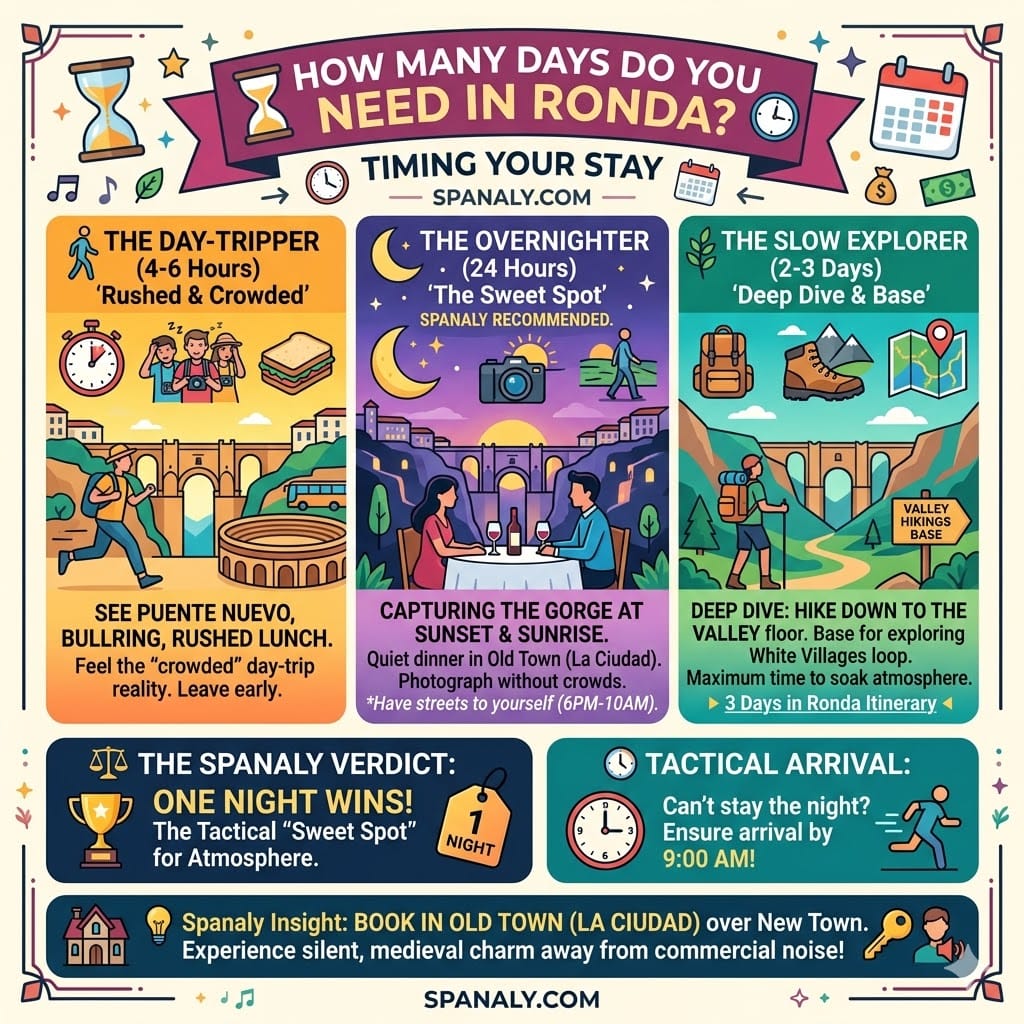
The most common tactical error travelers make is treating Ronda as a 4-hour day trip. While the city is compact, its beauty is tied to the rhythm of the sun and the departure of the tour buses. To truly capture the “City of Dreams,” you need to strategically time your presence.
📍 The Tactical Stay Breakdown:
The Day-Tripper (4-6 Hours): You will see the Puente Nuevo, the Bullring, and have a rushed lunch. You will likely leave feeling that Ronda was “too crowded,” because you were there at peak tourist hours.
The Overnighter (24 Hours): The Spanaly Recommendation. Arriving in the late afternoon allows you to see the gorge at sunset, enjoy a quiet dinner in the Old Town, and photograph the bridge at sunrise before the buses arrive from the coast.
The Slow Explorer (2-3 Days): Ideal if you plan to hike down into the valley or use the city as a base for the white villages. For this, we recommend following our 3 Days in Ronda Itinerary to maximize your time.
⚖️ The Spanaly Verdict:
If you are short on time, one night is the absolute “Sweet Spot.” It gives you the tactical advantage of having the streets to yourself after 6:00 PM and before 10:00 AM. If you can’t stay the night, at least ensure you arrive by 9:00 AM to beat the first wave of excursions.
Spanaly Insight: If you stay overnight, book a hotel in the Old Town (La Ciudad) rather than the New Town. While the New Town has more shops, the Old Town offers a silent, medieval atmosphere at night that makes you feel like you’ve traveled back in time, away from the modern neon lights and commercial noise.
🏰 Top Things to Do: Iconic Landmarks You Can't Miss
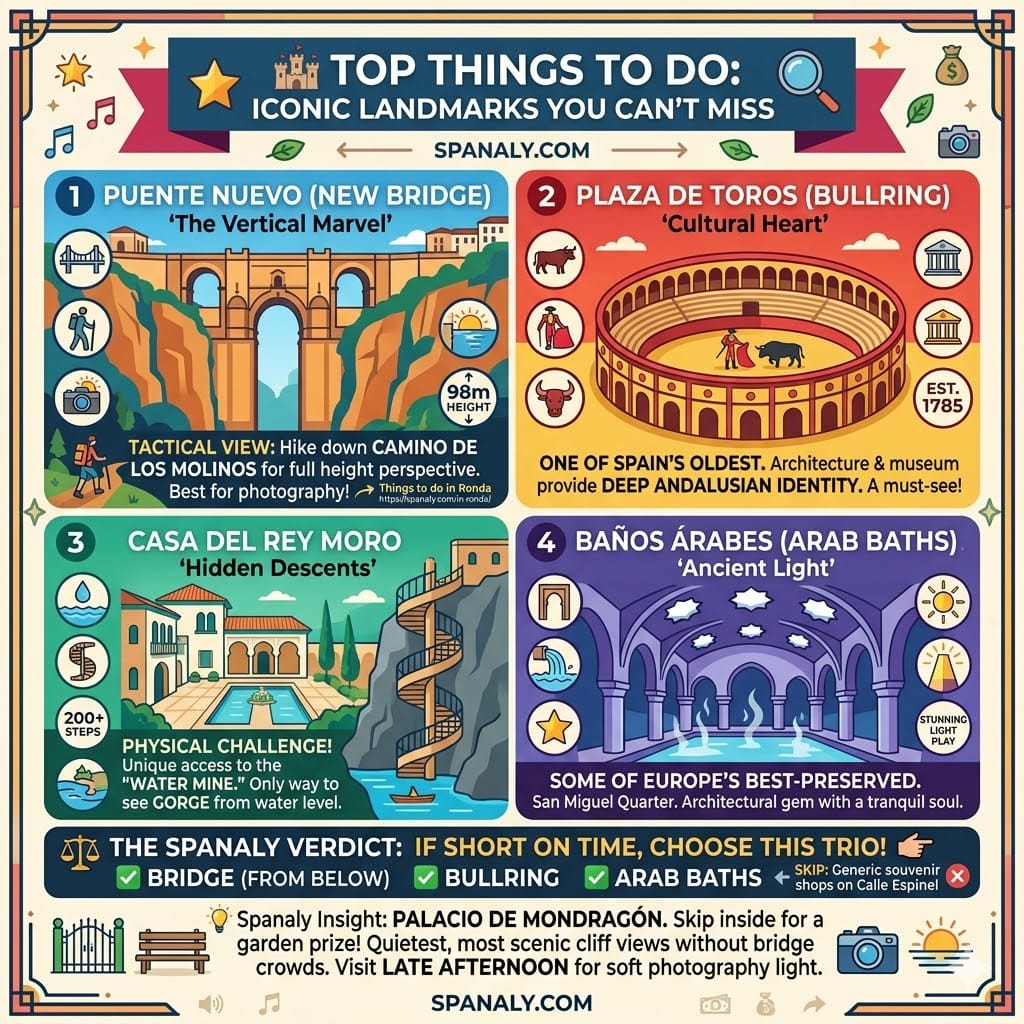
Ronda’s landmarks are world-famous, but visiting them in the wrong order is a classic tourist trap. To see the best of the city without burnout, you must prioritize the sites that offer the most historical and visual impact. For a complete list of every hidden corner, check our guide on Things to do in Ronda.
📍 The Tactical Landmark Checklist:
Puente Nuevo (New Bridge): This is the heart of Ronda. Don’t just walk across it; for the best tactical view, hike down the Camino de los Molinos trail for a perspective that captures the bridge’s full 98-meter height.
Plaza de Toros (Bullring): One of the oldest and most beautiful in Spain. Even if you aren’t a fan of the sport, the architecture and the museum inside provide a deep understanding of Andalusian identity.
Casa del Rey Moro: Often overlooked, this house offers access to the “Water Mine.” Descending the 200+ steps carved into the rock is a physical challenge, but it is the only way to see the gorge from the water level.
Baños Árabes (Arab Baths): Located in the San Miguel quarter, these are some of the best-preserved Islamic baths in Europe. The star-shaped vents in the ceiling create a stunning play of light.
⚖️ The Spanaly Verdict:
If you only have time for three things, choose the Bridge (from below), the Bullring, and the Arab Baths. This trio gives you the perfect mix of engineering marvels, cultural tradition, and ancient history. Skip the generic souvenir shops on Calle Espinel to save time for the scenic viewpoints (Miradores).
Spanaly Insight: Most people pay to enter the Palacio de Mondragón for its history, but the real prize is its gardens. They offer some of the quietest and most scenic views over the cliffside without the crowds of the main bridge. Visit this in the late afternoon for the softest photography light.
💎 Hidden Gems: Ronda’s Secret Corners Beyond the Bridge
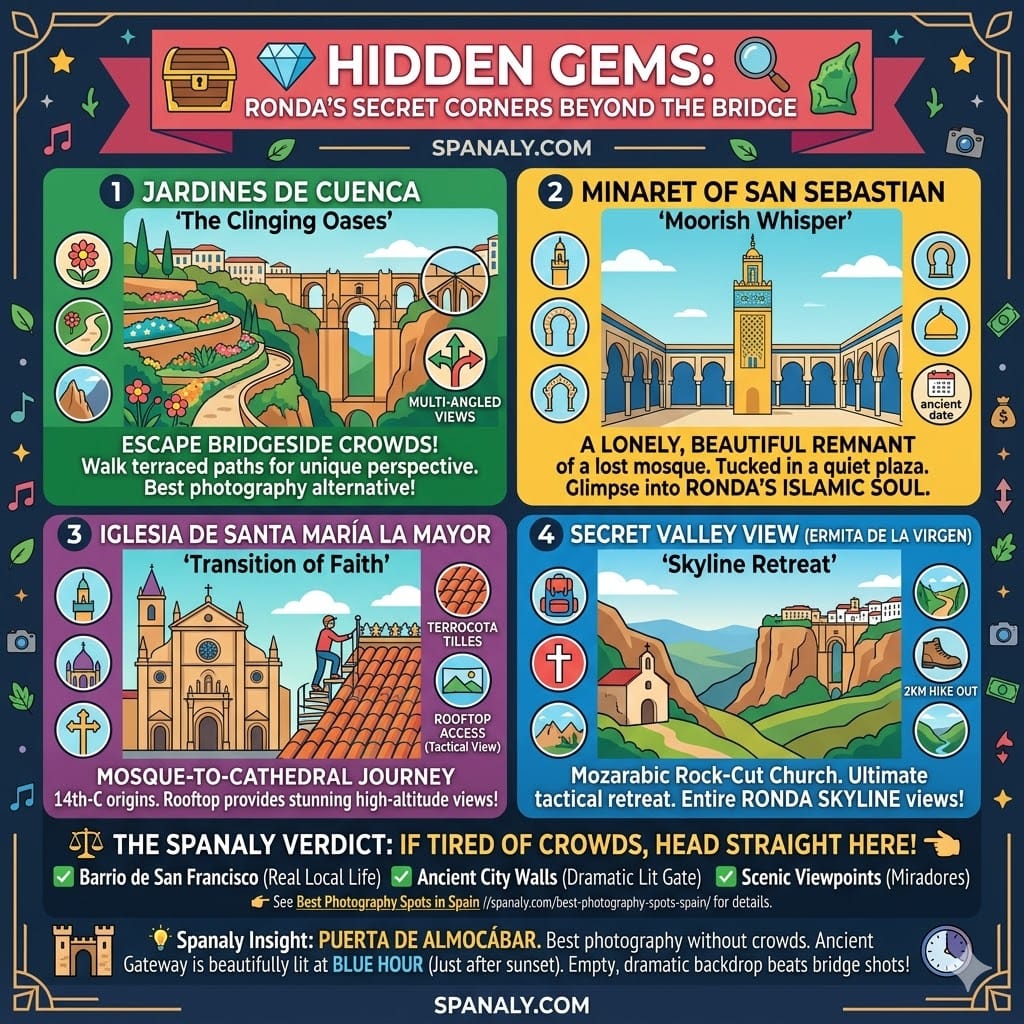
If you only see the Puente Nuevo, you haven’t seen Ronda; you’ve only seen its postcard. To escape the magnetic pull of the tourist crowds, you must cross into the deeper, quieter layers of the old Moorish quarter where the true “City of Dreams” hides.
📍 The Tactical Secret List:
Jardines de Cuenca: These terraced gardens cling to the opposite side of the Tajo Gorge. While everyone is fighting for space on the bridge, you can walk these paths for a multi-angled view of the architecture that most people only see from a distance.
The Minaret of San Sebastian: A lonely, beautiful remnant of a long-lost mosque. It’s tucked away in a quiet plaza and offers a hauntingly beautiful glimpse into Ronda’s Islamic soul without the entry fees of larger monuments.
Iglesia de Santa María la Mayor: Don’t just look at the facade. Go inside to see the transition from a 14th-century mosque to a Gothic cathedral. The rooftop access provides a tactical, high-altitude view of the city’s terracotta tiles that rivals any “mirador.”
The Secret Valley View (Ermita de la Virgen de la Cabeza): A 2km hike out of town leads to a Mozarabic rock-cut church. This is the ultimate tactical retreat for those who want to see the entire skyline of Ronda perched on its cliff from across the valley.
⚖️ The Spanaly Verdict:
If you are tired of the selfie-stick crowds, head straight to the Barrio de San Francisco. It’s located just outside the old city walls. It’s where locals actually live and eat, offering a grounded, authentic atmosphere that the “New Town” commercial center simply cannot replicate.
Spanaly Insight: For the best photography without the crowds, visit the Puerta de Almocábar at blue hour (just after sunset). This ancient gateway to the city is beautifully lit and almost completely empty, providing a dramatic, medieval backdrop that beats the overcrowded bridge shots every time. Check our Best Photography Spots in Spain for more lighting tips.
🛌 Where to Stay: The Best Neighborhoods for Every Style
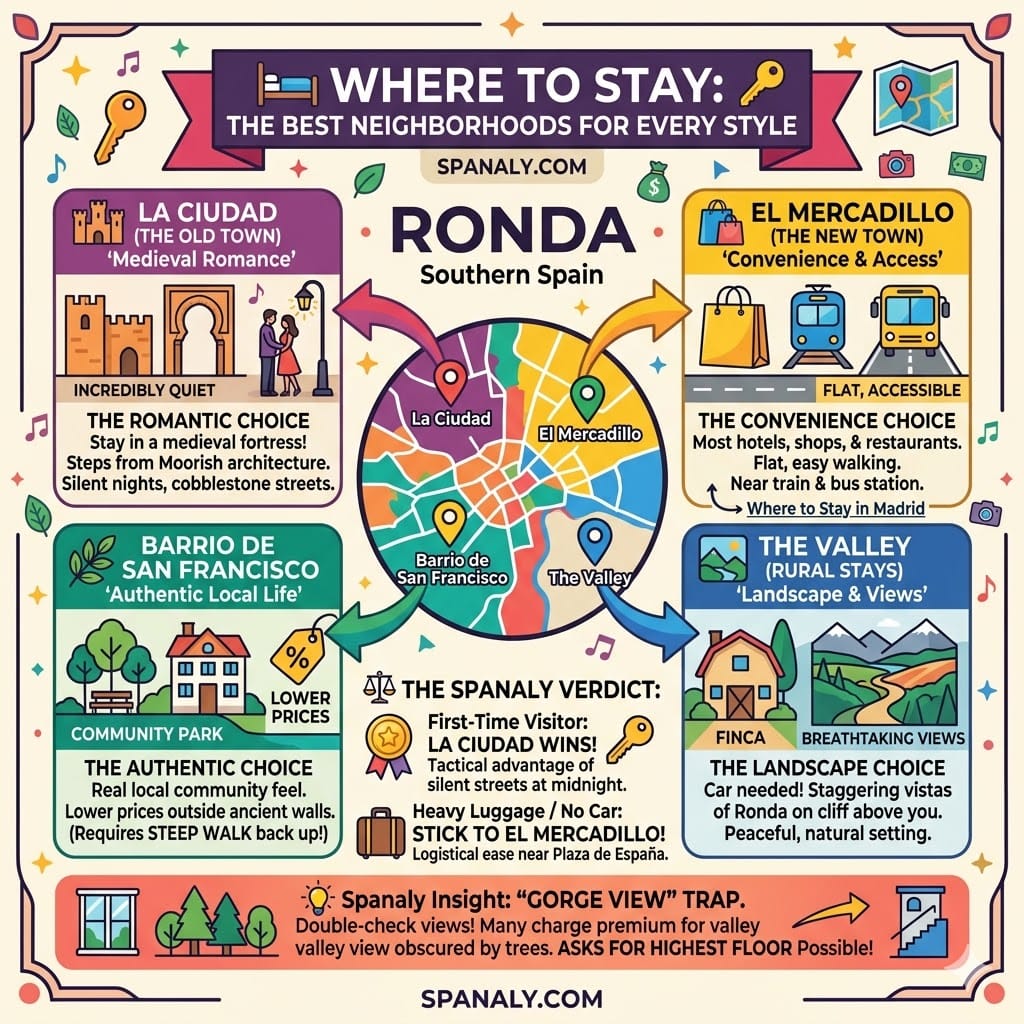
Choosing where to stay in Ronda is more than just picking a hotel; it’s about choosing your relationship with the terrain. Unlike the sprawling districts you’ll find in the Where to Stay in Madrid guide, Ronda is compact, but the difference between “up hill” and “down hill” will define your entire experience.
📍 The Tactical Neighborhood Review:
La Ciudad (The Old Town): The Romantic Choice. Staying here feels like living in a medieval fortress. It is incredibly quiet at night and puts you steps away from the Moorish architecture.
El Mercadillo (The New Town): The Convenience Choice. This is where most hotels, shops, and restaurants are located. It’s flat, accessible, and perfect if you want to be near the train or bus station.
Barrio de San Francisco: The Authentic Choice. Located just outside the ancient walls, this is where locals live. It offers a authentic community feel and lower prices, though it requires a steep walk to reach the main bridge.
The Valley (Rural Stays): The Landscape Choice. If you have a car, staying in a finca in the valley floor offers a breathtaking view of the city perched above you.
⚖️ The Spanaly Verdict:
For a first-time visitor, La Ciudad wins. The tactical advantage of walking these cobblestone streets at midnight, when the day-trippers are long gone, is worth every penny. However, if you have heavy luggage and no car, stick to El Mercadillo near Plaza de España to avoid the logistical nightmare of dragging suitcases over stone inclines.
Spanaly Insight: When booking, double-check if your “Gorge View” hotel actually overlooks the bridge or just the valley. Many hotels in El Mercadillo charge a premium for a “view” that is obscured by trees or buildings. Always ask for a room on the highest floor possible to ensure you are truly looking into the abyss of the Tajo.
🥘 Where to Eat: Authentic Flavors vs. Tourist Traps

In Ronda, the view often comes with a steep “scenery tax” on your plate. While dining on the edge of a cliff sounds romantic, the most tactical foodies know that the best Rabo de Toro (Oxtail stew) is usually found in the narrow alleys where the view is of a brick wall, but the kitchen is run by a local grandmother. To master the art of ordering, check our Spanish Cuisine Guide.
📍 The Tactical Dining Map:
The Cliffside Trap: Most restaurants with direct views of the Puente Nuevo serve mediocre, overpriced frozen tapas. If you must have the view, go for a drink only, then move elsewhere to eat.
The Ronda Specialty (Rabo de Toro): This is the city’s culinary signature. Look for places in Barrio de San Francisco or near the Plaza de Toros that slow-cook it for hours until the meat falls off the bone.
Tapas Strategy: Head to Calle Almendra or the area around Plaza del Socorro. Follow the noise—if you hear locals shouting over a football match, the tapas are guaranteed to be fresh and fairly priced.
Sweet Secrets: Visit the Convent of Corazón de Jesús. You can buy traditional handmade sweets from the cloistered nuns through a wooden revolving window (el torno). It’s a centuries-old tactical tradition that supports the convent.
⚖️ The Spanaly Verdict:
Avoid any restaurant with “Tourist Menu” boards in five languages. Instead, seek out Casa Maria or Tragatá (by Michelin-starred chef Benito Gómez) for a modern tactical twist on traditional flavors. If you are on a budget, a simple Bocadillo from a local bakery enjoyed at one of the free viewpoints (miradores) beats a 50-euro mediocre cliffside meal every time.
Spanaly Insight: Lunch in Ronda is the main event (2:00 PM – 4:00 PM). If you try to eat dinner before 8:30 PM, you will be surrounded only by other tourists. For a tactical authentic experience, wait until the sun goes down and the locals emerge for their Paseo and late-night tapas.
👟 Getting Around: Is Ronda Truly Walkable?
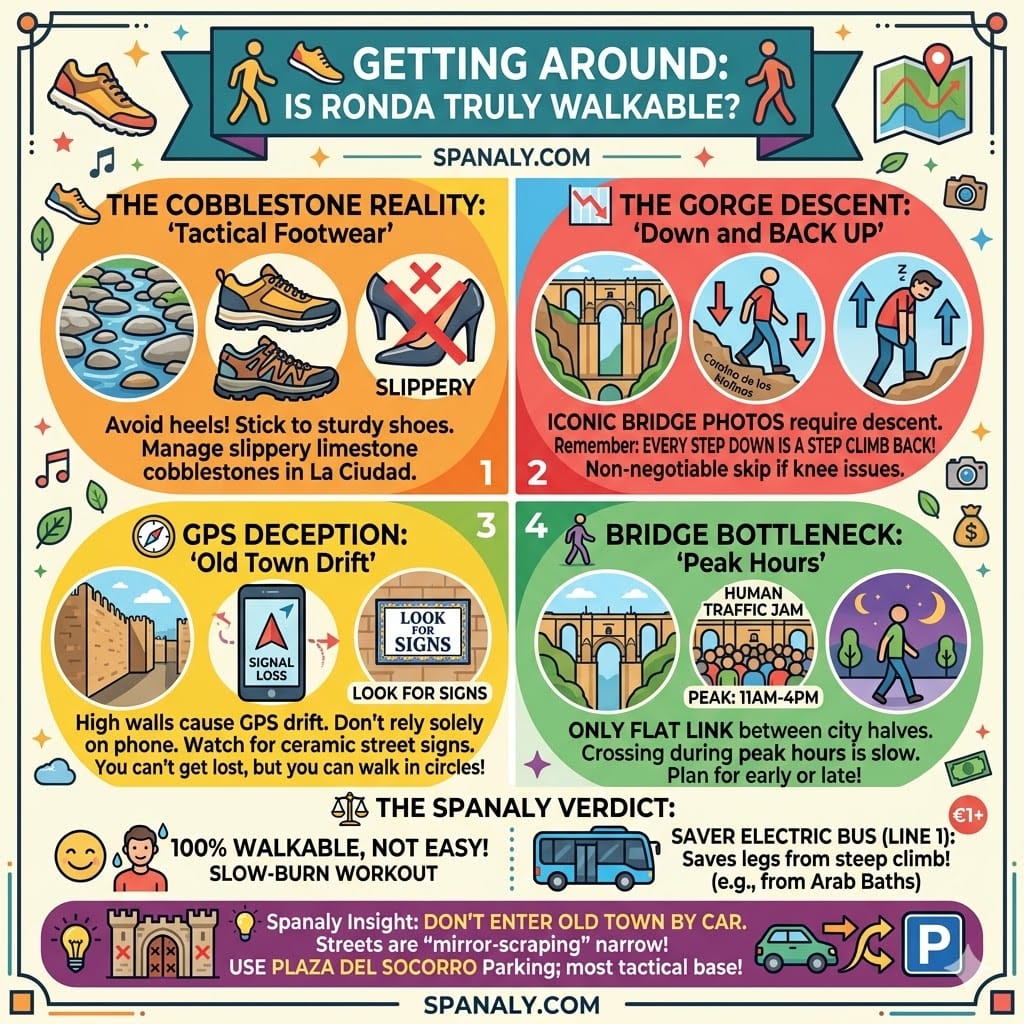
Once you arrive, the tactical question changes from “how do I get here” to “can my legs handle this?” Ronda is a vertical city. While the distances are short on a map, the elevation changes and 18th-century cobblestones create a unique physical challenge that catches many travelers off guard.
📍 The Tactical Movement Guide:
The Cobblestone Reality: The Old Town (La Ciudad) is paved with uneven river stones. Wearing heels or thin-soled dress shoes is a tactical disaster. Stick to sturdy sneakers or hiking sandals with good grip to manage the slippery limestone.
The Gorge Descent: To get those iconic bridge photos from below, you must descend the Camino de los Molinos. Remember: every step down is a step you must climb back up. If you have knee issues, this is a non-negotiable “skip.”
GPS Deception: Inside the Moorish quarter, high stone walls often cause GPS “drift.” Don’t rely solely on your phone; look for the ceramic street signs on the corners. The city is small enough that you can’t truly get lost, but you can certainly walk in circles.
The Bridge Bottleneck: The Puente Nuevo is the only flat link between the two halves of the city. During peak hours (11:00 AM – 4:00 PM), this becomes a human traffic jam. Plan your crossings for early morning or late evening.
⚖️ The Spanaly Verdict:
Ronda is 100% walkable, but it is not “easy” walking. It is a slow-burn workout. If you are staying in the New Town and want to explore the Arab Baths, expect a 20-minute steep descent and a 30-minute grueling climb back. There is a small electric circular bus (Line 1) that can save your legs for just over 1 euro if you get stuck at the bottom of the hill.
Spanaly Insight: If you are driving, do not attempt to enter the Old Town with your car. The streets are “mirror-scraping” narrow and many are restricted to residents only. Use the underground parking at Plaza del Socorro; it’s the most tactical base to leave your vehicle while you explore the city on foot.
🚗 Parking Tips: Navigating the Narrow Mountain Streets
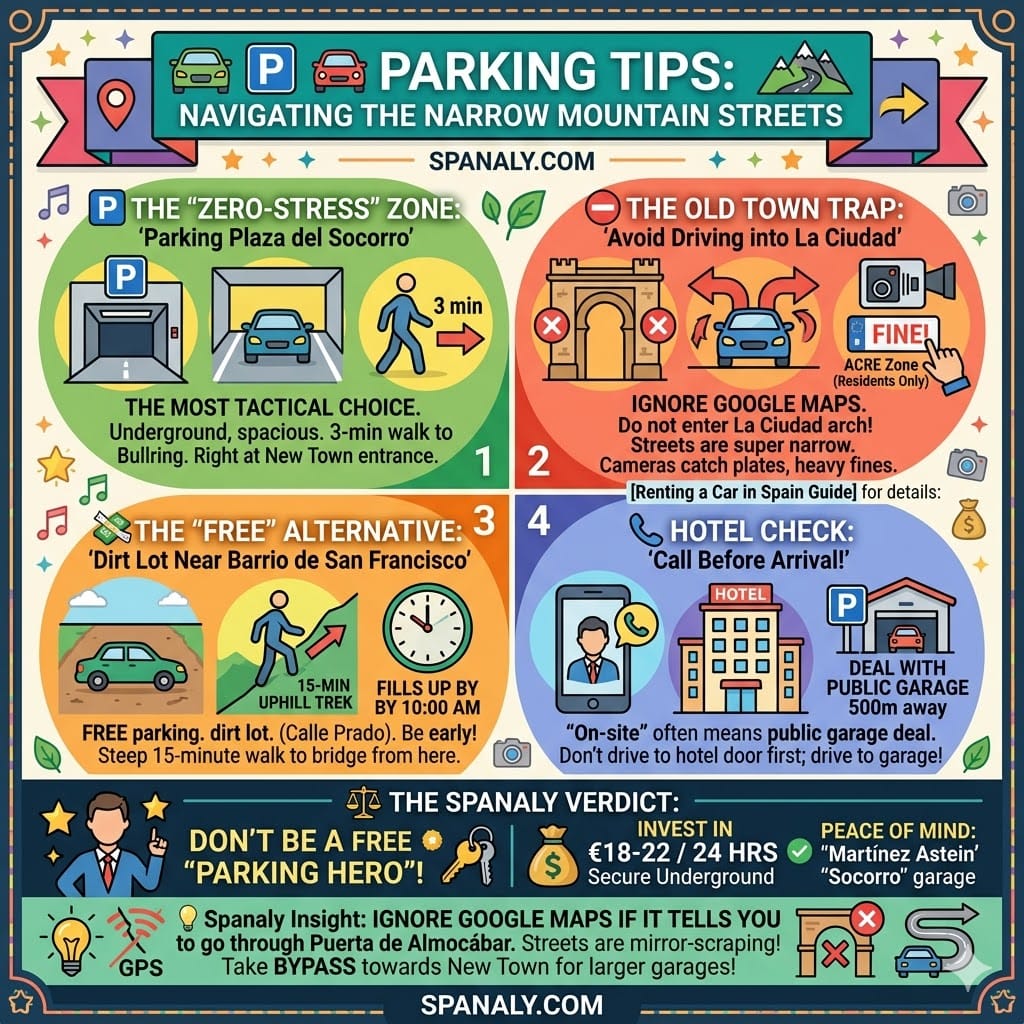
Driving into Ronda is a scenic dream, but parking is a tactical nightmare. The city’s medieval layout was designed for horses, not SUVs. If you ignore the signs and try to find “free street parking” in the Old Town, you will likely end up with a scratched rental or a heavy fine. For more on driving in Spain, check our Renting a Car in Spain Guide.
📍 The Tactical Parking Strategy:
The “Zero-Stress” Zone: Parking Plaza del Socorro. This is the most tactical choice. It is underground, spacious, and puts you right at the entrance of the New Town and a 3-minute walk to the Bullring.
The Old Town Trap: Avoid driving into La Ciudad. Many streets are “ACRE” zones (Resident Only). Cameras will catch your plate, and the fine will reach your rental agency before you even get home.
The “Free” Alternative: There is an open-air dirt lot near the Barrio de San Francisco (Calle Prado). It’s free, but it fills up by 10:00 AM. It’s a 15-minute uphill trek to the bridge from here.
Hotel Check: If your hotel claims to have “on-site parking,” call them. Often, it means they have a deal with a public garage 500 meters away. Don’t drive to the hotel door first; drive to the garage.
⚖️ The Spanaly Verdict:
Don’t be a “Parking Hero.” The 18–22 euros for a 24-hour stay in a secure underground garage like Parking Martínez Astein or Socorro is a smart investment for peace of mind. The streets are too narrow, and the risk of losing your rental deposit to a stray stone or a tight corner is simply too high.
Spanaly Insight: If you are arriving from Marbella (A-397), you will enter Ronda from the south. Don’t follow Google Maps if it tells you to go through the narrow arch of Puerta de Almocábar. Instead, take the bypass road toward the New Town to reach the larger garages safely. Your car’s side mirrors will thank you.
🗺️ Day Trips: Exploring the White Villages (Pueblos Blancos)
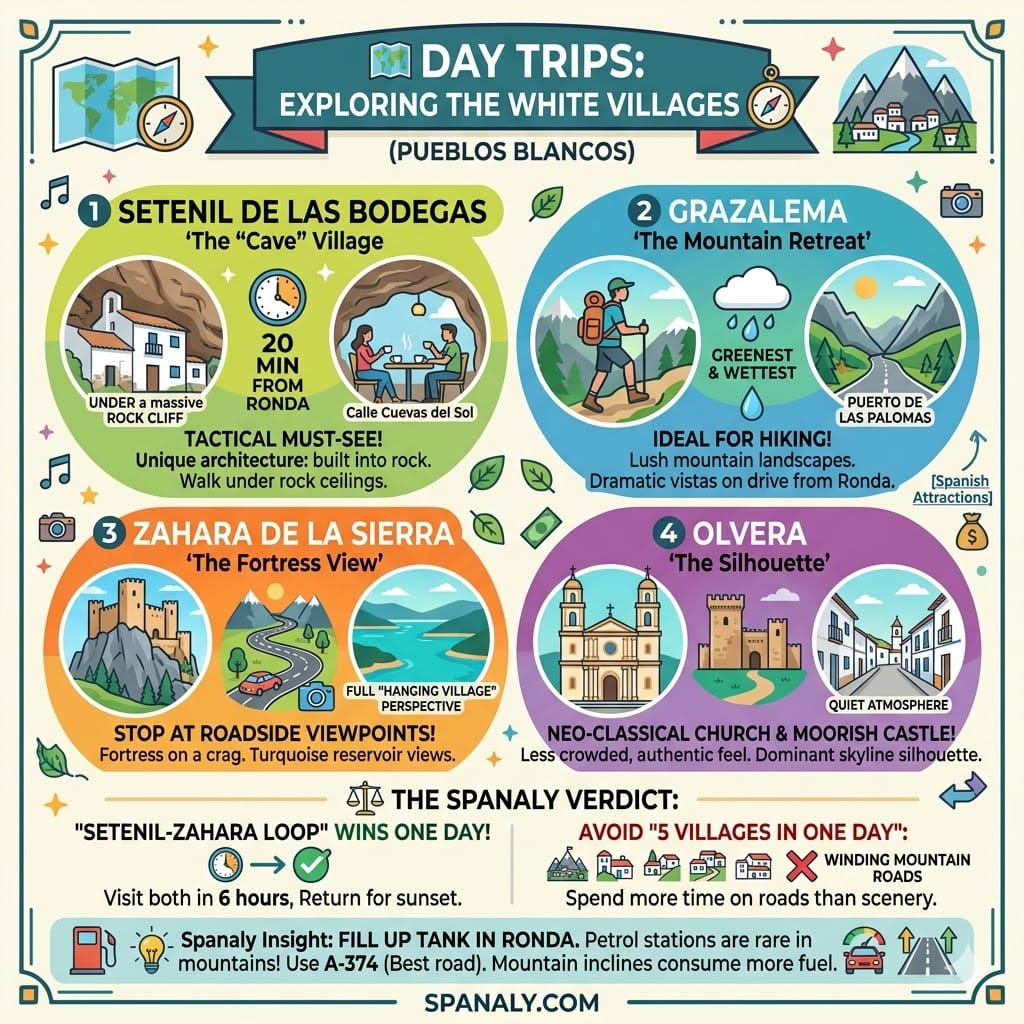
Ronda is the undisputed capital of the Spanish Attractions in the south, but its true magic lies in how it serves as a tactical base for the surrounding Pueblos Blancos. If you don’t venture into the Serranía de Ronda, you are missing half the story. To see them properly, you need a car and a clear priority list.
📍 The Tactical Village Circuit:
Setenil de las Bodegas: The “Cave” Village. Located just 20 minutes from Ronda, this is a tactical must-see. People didn’t build on the rocks here; they built under them. Walk along Calle Cuevas del Sol for a coffee under a million-ton rock ceiling.
Grazalema: The Mountain Retreat. This is the greenest and wettest village in Spain. It’s perfect for a tactical hiking break. The drive from Ronda to Grazalema over the Puerto de las Palomas pass offers the most dramatic mountain vistas in Andalusia.
Zahara de la Sierra: The Fortress View. Perched on a crag overlooking a turquoise reservoir. For the best photo, don’t go into the village first—stop at the roadside viewpoints on the way in for the full “hanging village” perspective.
Olvera: The Silhouette. Dominated by a massive neo-classical church and a Moorish castle. It’s less crowded than the others, offering a more authentic, quiet atmosphere.
⚖️ The Spanaly Verdict:
If you only have one day for a road trip, choose the “Setenil-Zahara Loop.” You can visit both in 6 hours, return to Ronda for sunset, and experience two completely different architectural styles. Avoid trying to see five villages in one day; the mountain roads are winding and slow, and you’ll spend more time looking at your GPS than the scenery.
Spanaly Insight: When driving the “White Village Loop,” always fill your tank in Ronda. Petrol stations are surprisingly rare in the mountain passes, and your car will consume more fuel than usual navigating the steep inclines of the Sierra. Tactical tip: Use the A-374 as your main artery—it’s the best-maintained road in the region.
📉 Budget Tips: Saving Costs Without Sacrificing Experience
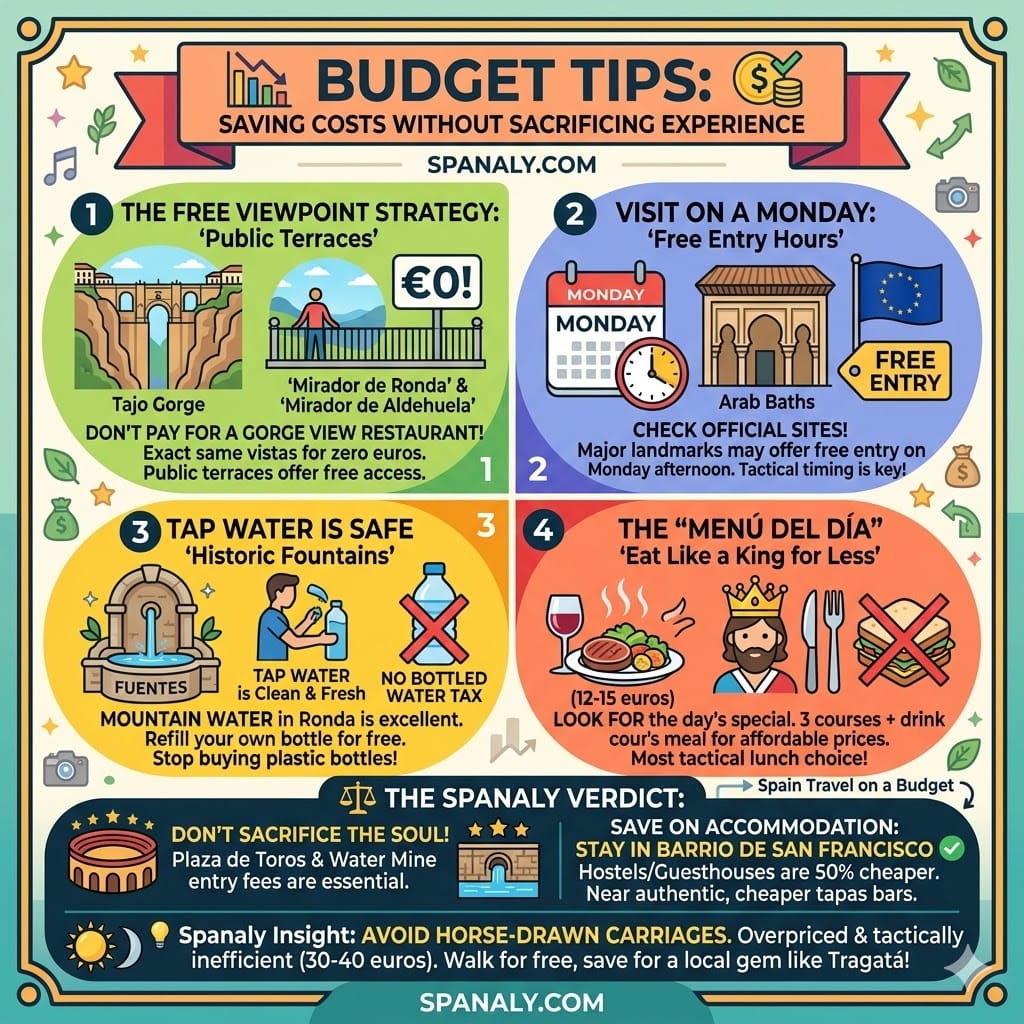
Ronda can be as expensive or as affordable as your tactical planning allows. While it is a major tourist hub, it remains part of Andalusia—a region known for its relative affordability compared to Madrid or Barcelona. To master the art of traveling Spain on a budget, see our Spain Travel on a Budget guide.
📍 The Tactical Savings List:
The Free Viewpoint Strategy: You don’t need to pay for a “Gorge View” restaurant to see the Tajo. Public terraces like Mirador de Ronda and Mirador de Aldehuela offer the exact same vistas for zero euros.
Visit on a Monday: Many major landmarks, including the Arab Baths, often offer free entry for European citizens (and sometimes all visitors) during specific hours on Monday afternoons. Check the official city website for the latest tactical timing.
Tap Water is Safe: The mountain water in Ronda is exceptionally clean and fresh. Stop buying plastic bottles; refill your own at the historic stone fountains (fuentes) scattered around the Old Town.
The “Menú del Día”: Avoid ordering à la carte at lunch. Look for the “Menú del Día” (Menu of the Day), which usually includes three courses and a drink for 12–15 euros. It’s the most tactical way to eat like a king for the price of a sandwich.
⚖️ The Spanaly Verdict:
Don’t sacrifice the Plaza de Toros or the Water Mine entrance fees to save money; these are the soul of the city. Instead, save by staying in a high-quality hostel or a guesthouse in Barrio de San Francisco rather than a cliffside hotel. You’ll save 50% on accommodation while being closer to authentic, cheaper tapas bars.
Spanaly Insight: The most expensive mistake in Ronda is taking a horse-drawn carriage. They are charming for photos, but they are tactically inefficient and overpriced (often 30–40 euros for 20 minutes). Walk the same route for free and spend that money on a high-end dinner at a local gem like Tragatá instead.
🛡️ Safety & Common Mistakes: Travel Like a Pro
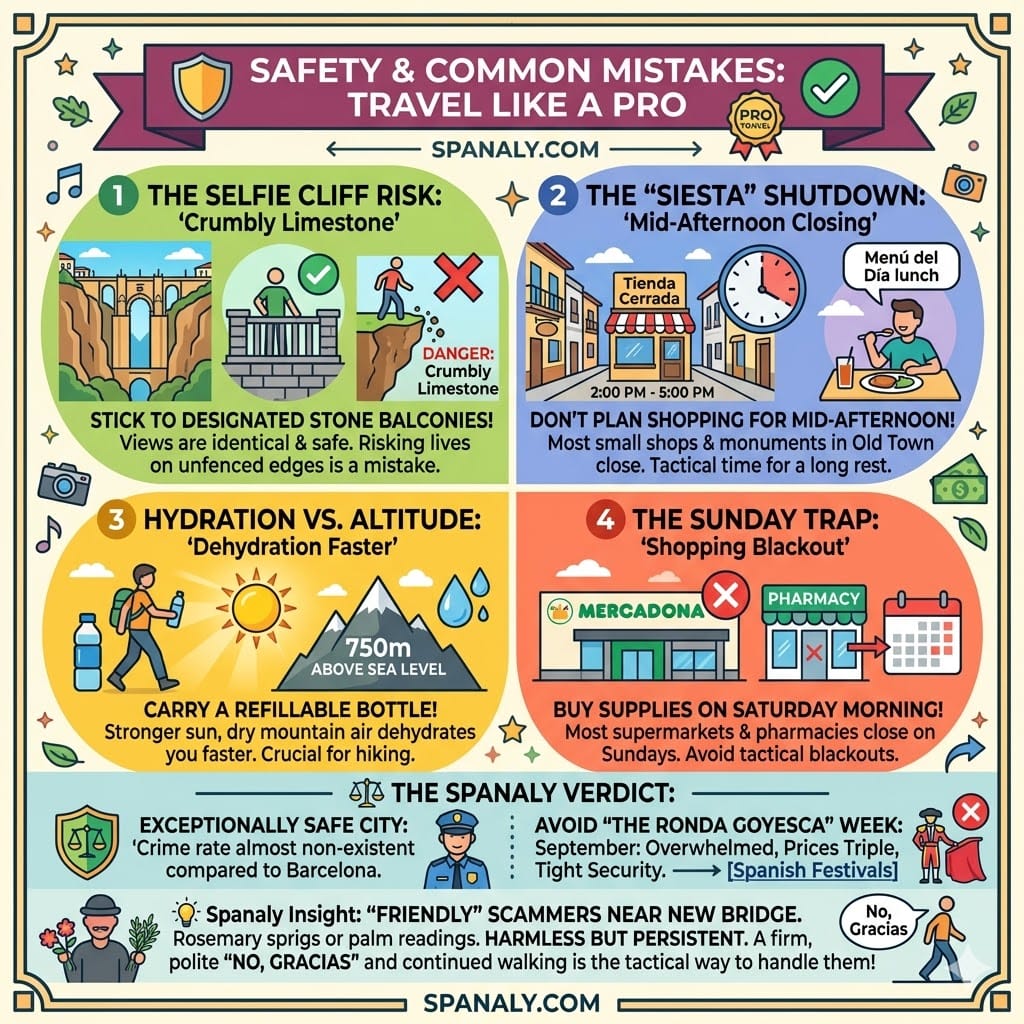
Ronda is exceptionally safe, with a crime rate that is almost non-existent compared to major hubs like Barcelona. However, the biggest “dangers” here aren’t pickpockets—they are logistical errors and geographical overconfidence. To avoid visiting during the most overcrowded (and expensive) peak periods, check our Spanish Festivals calendar.
📍 The Tactical Safety & Pro Checklist:
The Selfie Cliff Risk: It sounds obvious, but every year travelers risk their lives for “the shot” on the unfenced edges of the Tajo. The limestone can be crumbly and unstable. Stick to the designated stone balconies (miradores)—the view is identical and much safer.
The “Siesta” Shutdown: Between 2:00 PM and 5:00 PM, many smaller shops and even some secondary monuments in the Old Town close. Don’t plan your shopping or museum hopping for mid-afternoon. This is the tactical time for a long lunch or a rest.
Hydration vs. Altitude: Ronda is 750 meters above sea level. The sun is stronger here than on the coast, and the dry mountain air dehydrates you faster. Always carry a refillable bottle, especially if you are hiking down the gorge.
The Sunday Trap: Most supermarkets (like Mercadona) and many local pharmacies close on Sundays. If you need supplies or specific medication, buy them on Saturday morning to avoid a tactical blackout.
⚖️ The Spanaly Verdict:
Ronda’s safety is its greatest asset, but don’t let your guard down regarding “The Ronda Goyesca” week in September. During this time, the city is overwhelmed, prices triple, and security is tight. Unless you are there specifically for the bullfighting festival, it is a tactical mistake to visit during this window.
Spanaly Insight: While pickpockets are rare, “friendly” scammers offering sprigs of rosemary or wanting to read your palm occasionally appear near the New Bridge. They are harmless but persistent. A firm, polite “No, gracias” and continued walking is the most tactical way to handle them without losing your momentum.
🛡️ Visitor FAQs – Ultimate Ronda Travel & Logistics Guide
🌉 Can I walk inside the Puente Nuevo bridge structure?
Yes, there is a small museum located inside the central arch of the bridge. It served as a prison in the past. Access is via a discreet door near the bridge's edge. It provides a unique tactical perspective of the gorge from the "inside out," which most tourists walk right over without noticing.
🔋 Are there public charging stations for electric vehicles (EV) in Ronda?
Absolutely. The latest parking facilities like Parking Martínez Astein and Plaza del Socorro are equipped with modern EV charging points. If you are driving a Tesla or a hybrid rental, we recommend using these secure underground garages to recharge while you explore the pedestrian-only Old Town.
🧺 Is it allowed to have a picnic in the Tajo Gorge valley?
It is a popular local tradition. The area around the Ermita de la Virgen de la Cabeza or the base of the Camino de los Molinos offers essential spots for a scenic break. Just ensure you carry all trash back up with you to preserve the natural beauty of the UNESCO-protected biosphere.
🧥 What is the weather really like at night in the mountains?
Ronda's altitude means temperatures drop significantly after sunset, even in summer. While the day might be hot, the mountain breeze can be chilly. A lightweight jacket is a tactical necessity if you plan on enjoying late-night tapas in an outdoor terrace in La Ciudad.
🚑 Is there a 24-hour pharmacy or medical center in the Old Town?
Most essential medical services and 24-hour "Farmacias de Guardia" are located in the New Town (El Mercadillo), near the main hospital. If you have a minor emergency in the Old Town, the fastest tactical move is to cross the bridge into the commercial district where most professional healthcare providers are concentrated.
Latest Ronda Guide by Spanaly.com
Ronda is more than just a bridge over a gorge; it is the heartbeat of Andalusia. By following this tactical guide, you’ve moved beyond the surface-level tourist experience to discover the true soul of the cliffside city.
📍 Final Spanaly Takeaways:
⏳ Respect the Pace: Ronda reveals its magic to those who stay overnight and walk its silent, moonlit alleys.
👟 Trust Your Gear: Never underestimate the 18th-century cobblestones; your footwear is your best tactical ally.
🥘 Eat with Intent: Skip the cliffside “frozen tapas” and seek out the authentic flavors in the backstreets.
🗺️ Look Beyond the Bridge: Use the city as your base to explore the surrounding white villages and mountain passes.
🚀 Ready to Level Up Your Adventure?
Planning a journey through Spain requires more than just a map; it requires a strategy. To ensure every detail of your itinerary is optimized for the best experience, visit our Plan a Trip to Spain master guide.
Spanaly Insight: Don’t just visit Ronda—feel it. Stand on the Puente Nuevo at dawn, listen to the wind in the gorge, and remember that you are standing on centuries of history. The most tactical move you can make is to put down your phone for a moment and simply breathe in the Andalusian air.