📊 Ronda Daily Expense Overview
Is Ronda expensive? Most generic travel sites give you outdated prices that don’t reflect the reality of the Andalusian highlands. After multiple missions to this cliffside gem, our Ronda Budget Guide confirms one truth: Ronda offers incredible value if you avoid the “Day Trip Traps” near the bridge. Whether you are a minimalist backpacker or seeking cliffside luxury, mastering your spending starts with understanding the local “Burn Rate.”
📍 The Tactical Cost Breakdown:
Low-Cost Mission: €50 – €65 per day. (Hostels, tapas-hopping, and free viewpoints).
The “Flashpacker” Sweet Spot: €90 – €130 per day. (Boutique guesthouses, Menús del Día, and 2-3 paid monuments).
High-End Strategy: €220+ per day. (Parador stays, fine dining, and private guided tours).
The Hidden Variable: Accommodation prices fluctuate by 30% between mid-week and weekends.
⚖️ The Spanaly Decision:
If you are coming from Madrid or Barcelona, you will find Ronda surprisingly affordable. However, compared to nearby Seville or Malaga, the “Cliffside Premium” for dining can be steep. To truly balance your costs and experience, we recommend using this guide alongside our Ultimate Ronda Travel Guide to prioritize your time and euros effectively.
⚖️ The Spanaly Verdict: Is Ronda Cheaper Than Seville?
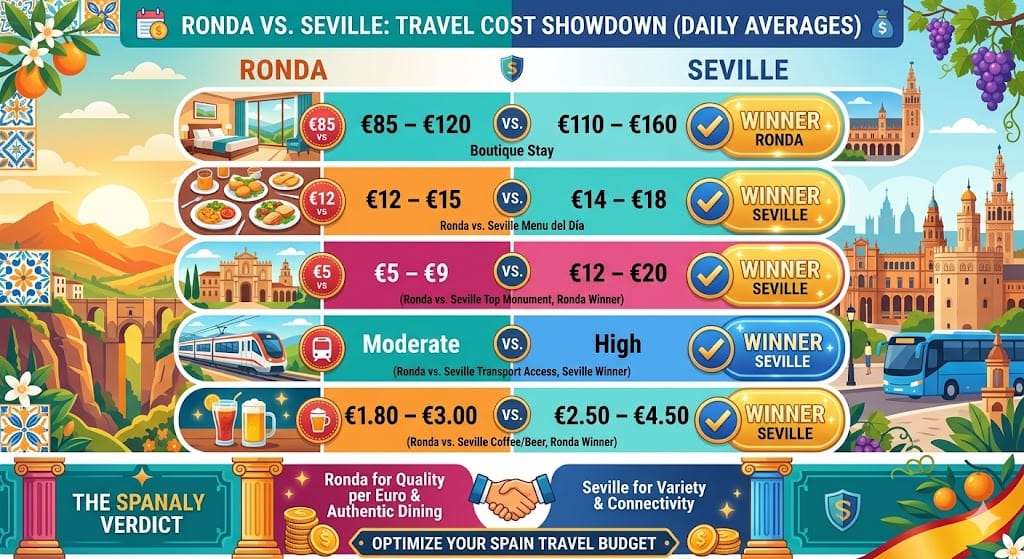
Many travelers assume Seville is more expensive because it is a major capital. However, our Ronda Budget Guide reveals a complex economic duel between these Andalusian stars. While Seville offers more variety, Ronda’s “Cliffside Premium” can surprise unprepared tourists. Understanding these differences is essential for your broader Spain Travel Budget planning.
📊 The Economic Duel: Ronda vs. Seville (Daily Averages)
| Expense Category | Ronda (The Cliffside) | Seville (The Capital) | The Spanaly Winner |
|---|---|---|---|
| Boutique Stay | €85 – €120 | €110 – €160 | Ronda (Better Value) |
| Menu del Día | €12 – €15 | €14 – €18 | Ronda (Authenticity) |
| Top Monument | €5 – €9 | €12 – €20 | Ronda (Budget Friendly) |
| Transport Access | Moderate (Bus/Train) | High (Airport/AVE) | Seville (Logistics) |
| Coffee/Beer | €1.80 – €3.00 | €2.50 – €4.50 | Ronda (Local Prices) |
📍 The Comparative Breakdown:
Accommodation ROI: Seville wins on variety. The massive hotel market creates competitive prices for mid-range stays.
The Gastronomy Battle: Ronda wins on quality. Tapas and Menús del Día are generally 20% cheaper than Seville’s historic center.
Monument Logistics: Ronda wins. You can visit three top sites for the price of one Seville Cathedral ticket.
The Transport Factor: Seville wins. Major hubs offer cheaper budget flights and high-speed rail connections.
⚖️ The Spanaly Decision:
If you are on a strict “Micro-Budget,” Seville is easier to navigate. However, Ronda offers a higher quality of life per euro for mid-range travelers. You can dine like royalty in Ronda for a standard price.
Spanaly Insight: Weekend prices in Ronda can skyrocket by 40% due to high demand. Visit between Tuesday and Thursday to snag luxury views for hostel prices. This simple shift in timing is your best tactical move for saving money.
🛏️ Accommodation Tactics: From Old Town Luxury to Budget Gems
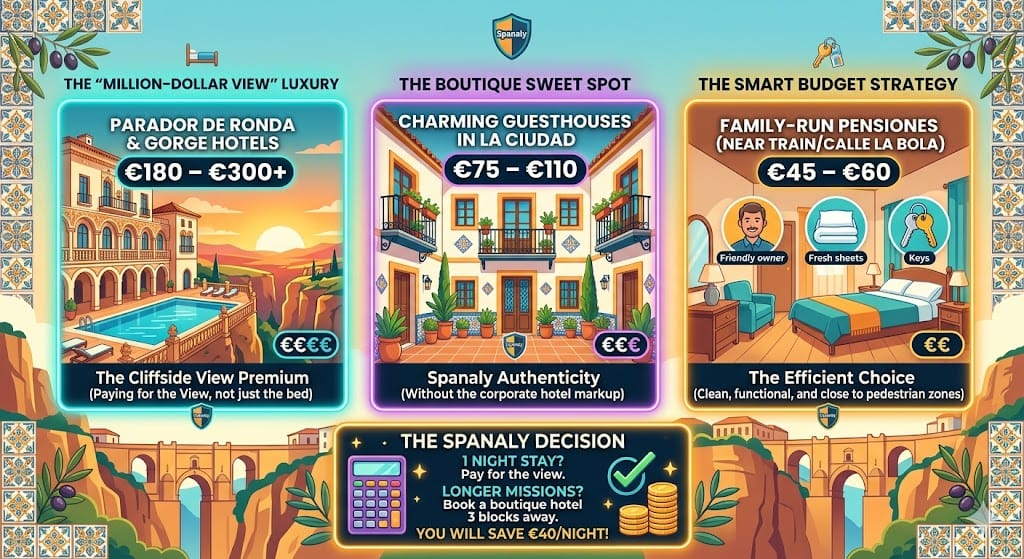
Choosing where to sleep in Ronda is a strategic decision. The city is divided into the historic La Ciudad and the modern El Mercadillo. Your mission is to balance the “Cliffside View” premium with actual comfort. If you are comparing stay options across Andalusia, check our guide on Accommodation in Spain for broader market insights.
📍 Strategic Stay Profiles:
The “Million-Dollar View” Luxury: Staying at the Parador de Ronda costs between €180 – €300. You are paying for the balcony, not just the bed.
The Boutique Sweet Spot: Charming guesthouses in the Old Town range from €75 – €110. These offer authenticity without the corporate hotel markup.
The Smart Budget Strategy: Family-run pensiones near the train station offer clean rooms for €45 – €60.
⚖️ The Spanaly Strategic Pick:
If staying for only one night, pay for the view. For longer missions, book a boutique hotel three blocks away. You will save €40 per night while remaining close to the abyss.
Spanaly Insight: Avoid hotels offering expensive breakfasts for €15. Local cafeterías serve traditional pitufos and coffee for under €4. Save your budget for the room and eat like a local to save €20 daily.
🍽️ Gastronomy Economics: Tapas, Menus del Día, and Cliffside Dining
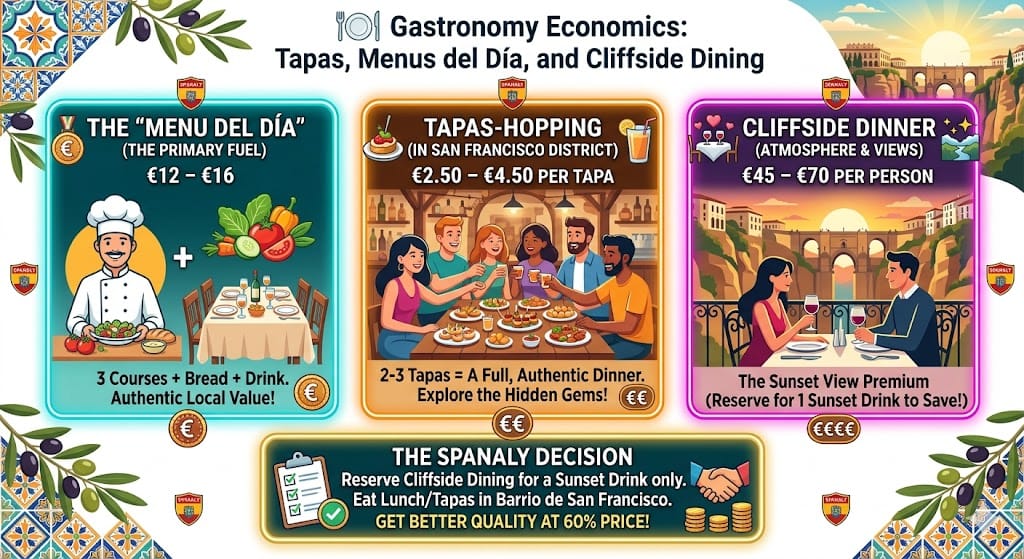
Eating in Ronda is a high-reward mission if you know where the locals hide. While restaurants overlooking the Tajo Gorge charge a “View Tax,” walking just 200 meters inland can cut your bill by half. To truly master the local flavors, we recommend learning How to Order Food Like a Local in Spain before your arrival.
📍 The Tactical Dining Price List:
The “Menu del Día” (Lunch): €12 – €16. This is your primary fuel. It usually includes three courses, bread, and a drink.
Tapas-Hopping Mission: €2.50 – €4.50 per tapa. Two or three tapas in the San Francisco district equal a full, authentic dinner.
The Cliffside Dinner: €45 – €70 per person. This is where you pay for the atmosphere and the sunset views.
Coffee & Pastries: €3.50. Avoid the main plazas and find the small pastelerías in the modern quarter.
⚖️ The Spanaly Expert Consensus:
Reserve your “Cliffside Dining” for a single sunset drink rather than a full meal. Spend your lunch budget in the Barrio de San Francisco south of the city walls. You will get better quality meat and authentic Andalusian recipes at 60% of the price.
Spanaly Insight: Look for the “Working Class” crowd at 2:00 PM. If a restaurant is packed with locals and has a handwritten menu, you’ve found a goldmine. In Ronda, the best Spanish Cuisine isn’t found on glossy laminated menus with pictures, but in the noisy, crowded bars tucked away in side streets.
🚆 The Transport Mission: Getting to Ronda (Train vs. Bus vs. Car)
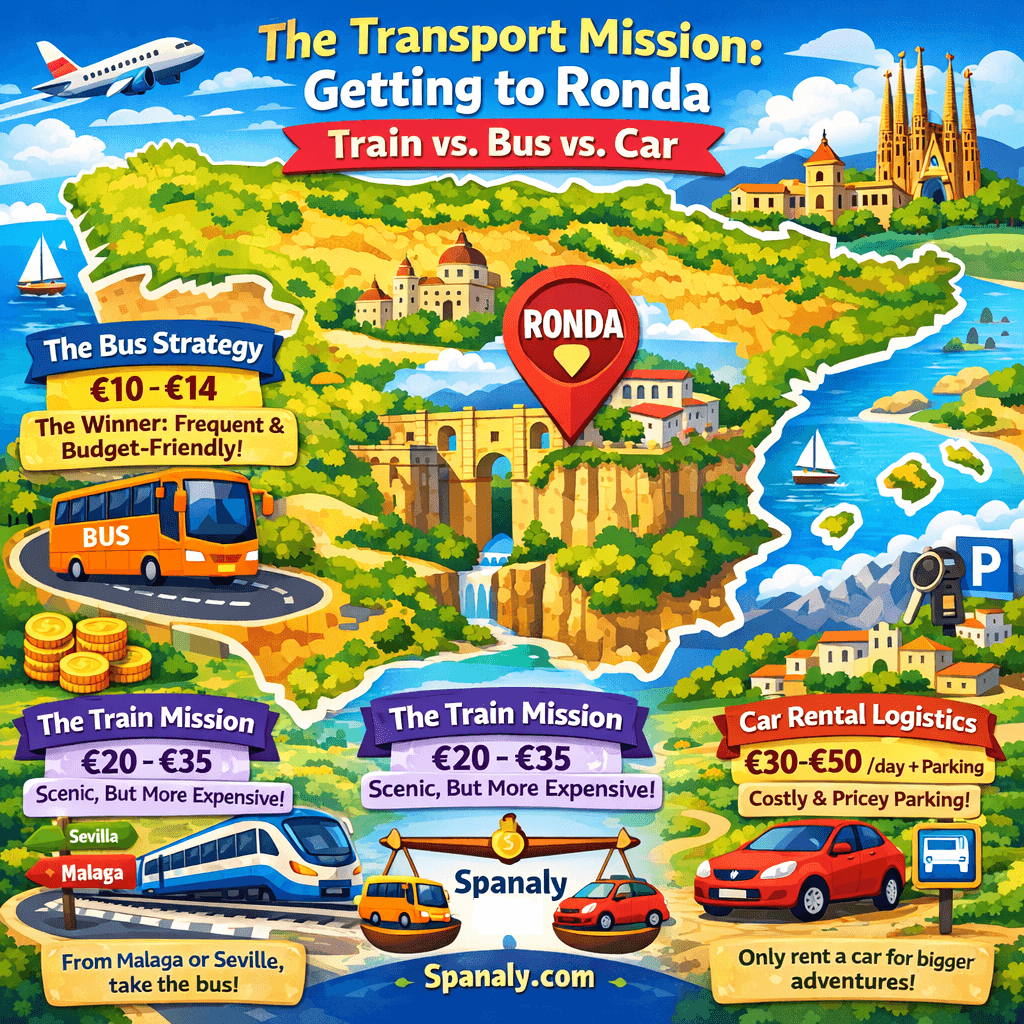
Ronda sits high in the Serranía, meaning your transport choice directly impacts your Ronda Budget Guide. While the train ride is iconic, it isn’t always the most efficient or cheapest tactical move. Understanding the logistics of Traveling Spain by Bus versus the rail system is key to saving your euros.
📍 Logistics & Pricing Strategy:
The Bus Strategy (The Winner): €10 – €14. Buses from Seville or Malaga are the most frequent and budget-friendly options. They drop you at the central station, a 10-minute walk from the bridge.
The Train Mission: €20 – €35. The ride from Algeciras is one of Europe’s most beautiful. However, direct trains from Madrid are limited and significantly more expensive.
Car Rental Logistics: €30 – €50 per day + Parking. A car is only worth it if you are planning a White Villages Road Trip. Inside Ronda, a car is a liability due to expensive parking (€18/day).
⚖️ The Spanaly ROI Insight:
If traveling from Malaga or Seville, take the bus. You will save 50% compared to the train and arrive closer to the historic center. Only rent a car if Ronda is a pitstop on a larger Andalusian mission.
Spanaly Insight: Once you arrive in Ronda, your transport budget is Zero. The city is a pedestrian’s paradise. Do not waste money on taxis or local buses unless you have heavy luggage. Walking from the “New Town” to the “Old Town” takes less than 15 minutes and offers the best free views of the gorge.
🎟️ Monument Logistics: Admission Fees and Secret Free Access Windows
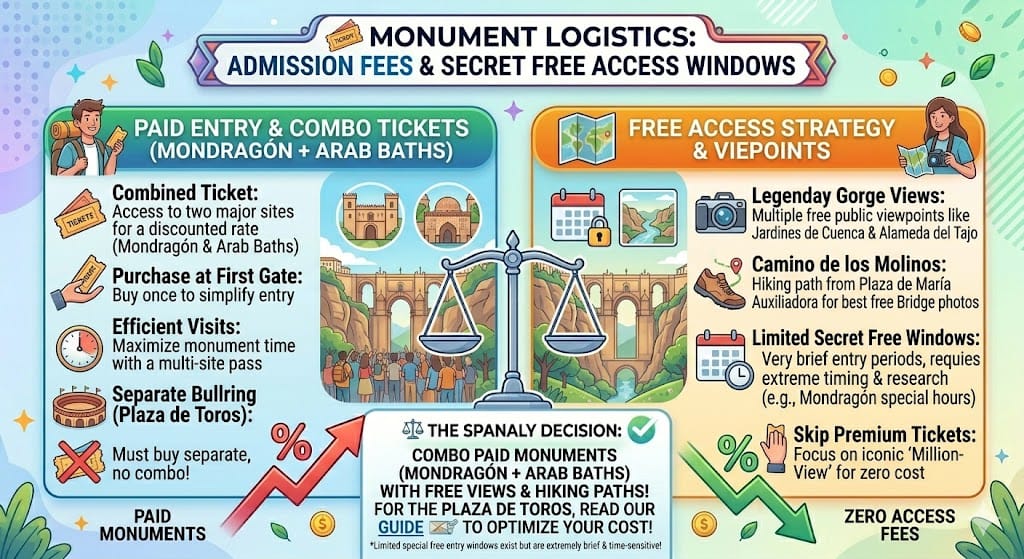
Ronda’s monuments are affordable, but costs add up if you visit every site. Your Ronda Budget Guide mission is to prioritize the icons while leveraging “Free Access Windows” that most tourists ignore. Before booking individual tickets, check our Spain Attraction Tickets Guide for broader saving strategies.
📍 The Entry Fee Mission:
Plaza de Toros (Bullring): €9.00. The most expensive site, but essential for history lovers.
Puente Nuevo Interpretation Center: €2.50. A tiny fee for a massive view from inside the bridge.
Mondragón Palace: €3.75. Incredible gardens and Moorish history for less than a coffee.
Arab Baths (Baños Árabes): €3.50. One of the best-preserved sites in Spain.
⚖️ The Spanaly Verdict:
If you are on a tight budget, prioritize the Puente Nuevo Guide viewpoints. Most are free. Combine the Arab Baths and Mondragón Palace for a “History Mission” under €8.
💡 Spanaly Insight
The Secret Free Window: Did you know that the Arab Baths and Mondragón Palace are often free for EU citizens (and sometimes all visitors) on Tuesday afternoons after 3:00 PM? Always check the local tourism board’s latest schedule upon arrival. This tactical move saves you enough for a celebratory dinner!
💸 Travel Style Profiles: Backpacker vs. Mid-Range vs. Luxury Burn Rates

Understanding your spending profile is the core of any Ronda Budget Guide. Ronda is a rare destination where a budget traveler and a luxury seeker can walk the same cobblestone streets but experience two different “economic worlds.” Your mission is to identify which “Burn Rate” fits your mission goals.
📍 The Daily Burn Rate Profiles:
The Backpacker Strategy: €50 – €65. * Focus: Dorm beds, supermarket picnics, free viewpoints, and one paid monument.
Tactical Move: Stick to the San Francisco district for authentic, cheap tapas.
The “Flashpacker” Sweet Spot: €95 – €135. * Focus: Boutique guesthouses, a sit-down Menú del Día, and 2-3 major monuments.
Tactical Move: Use our Ronda Travel Tips to find high-value boutique stays.
The Cliffside Luxury Mission: €250+. * Focus: Parador suites, fine dining with gorge views, and private guided tours.
Tactical Move: Invest in the view; it is the primary asset of this premium tier.
⚖️ The Spanaly Decision:
The “Flashpacker” tier offers the best Return on Investment (ROI) in Ronda. For approximately €110, you get the full Andalusian experience—cliffside atmosphere, authentic food, and deep historical access—without the stress of extreme budgeting.
Spanaly Insight: Don’t forget to budget for “The Small Costs.” While Ronda is walkable, small expenses like water, coffee, or a glass of local Serranía wine can add €10 to your daily burn rate. Carry a reusable bottle and refill it at the historic stone fountains around the Old Town—the water is cold, fresh, and free.
📅 The Time-Value Factor: 1-Day vs. 3-Day Budget Breakdown
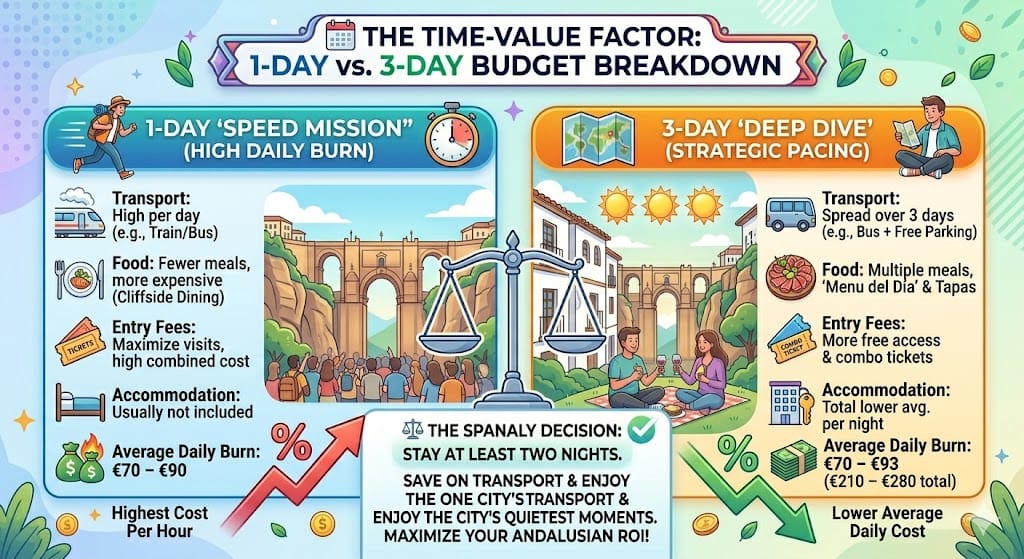
Time is money in Ronda. A single day trip can feel expensive due to high transport and dining costs. However, extending your stay to a 3 Days in Ronda Itinerary significantly lowers your average daily burn rate. Your mission is to maximize your Andalusian ROI through strategic pacing.
📍 The Comparative Breakdown:
The 1-Day “Speed Mission”: €70 – €90.
Costs: High transport, expensive lunch, and entry fees.
Verdict: Highest cost per hour for limited exploration.
The 3-Day “Deep Dive”: €210 – €280 total.
Costs: Lower average accommodation and more “free” time.
Verdict: Best value for a complete Serranía experience.
⚖️ The Spanaly Decision:
Stay at least two nights. You will save on transport stress and enjoy the city after the day-trippers leave. This “slow travel” approach is the ultimate hack for any Ronda Budget Guide.
Spanaly Insight: Weekday stays are 25% cheaper than weekends. If you visit between Tuesday and Thursday, you can upgrade your room type for the price of a standard weekend stay. Always plan your Best Time to Visit Ronda with these mid-week savings in mind.
💸 Payment Tactics: Mastering ATMs and Cash in Ronda
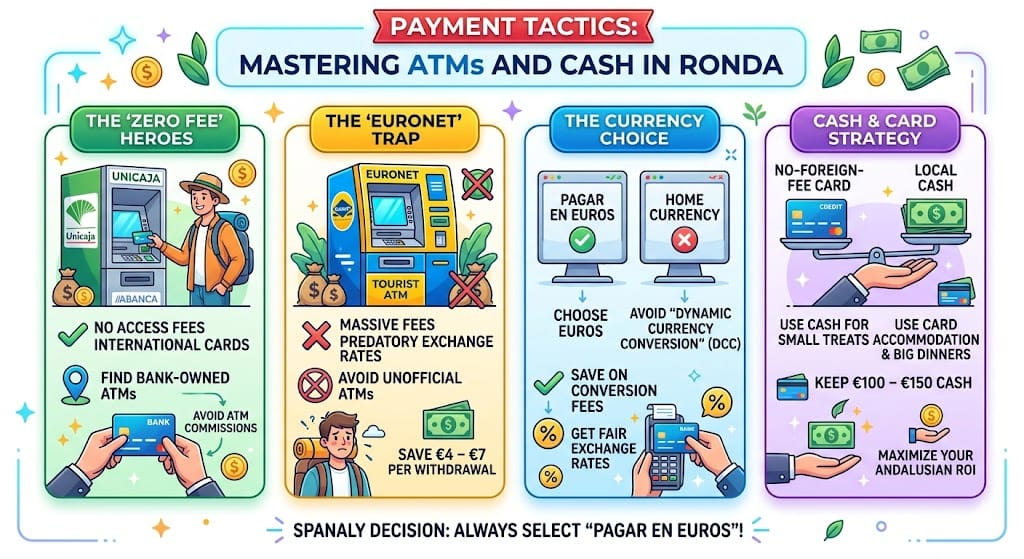
Ronda’s historic charm comes with a modern financial challenge: ATM fees. While major hotels and restaurants accept cards, many authentic tapas bars and small craft shops in the Old Town still prefer cash. Mastering your Money in Spain Guide tactics here is essential to avoid losing 10% of your budget to commissions.
📍 The ATM & Cash Mission:
The “Zero Fee” Heroes: Look for Unicaja or Abanca ATMs. Latest, these are often the only machines in Ronda that do not charge a direct access fee (usually €4 – €7 elsewhere) for international cards.
The “Euronet” Trap: Avoid the bright blue and yellow ATMs in tourist squares. They charge massive fees and offer predatory exchange rates.
The Currency Choice: Always select “Pagar en Euros” (Pay in Euros) when prompted by an ATM or card terminal. Choosing your home currency triggers “Dynamic Currency Conversion,” which is a legal way for banks to overcharge you.
⚖️ Bottom Line:
Withdraw €100 – €150 at a reputable bank-owned ATM (like Unicaja) once you arrive. Use this cash for small treats, tips, and traditional bars, while using a “no-foreign-fee” credit card for accommodation and large dinners.
Spanaly Insight: Never exchange physical cash at “Cambio” shops in the town center. The rates are significantly worse than what you’ll get at a standard ATM. If you need a bank with a person, find the branches on Calle La Bola; they are used to international travelers but still offer fair local rates.
🏷️ Seasonal Savings: When Ronda Becomes 30% Cheaper
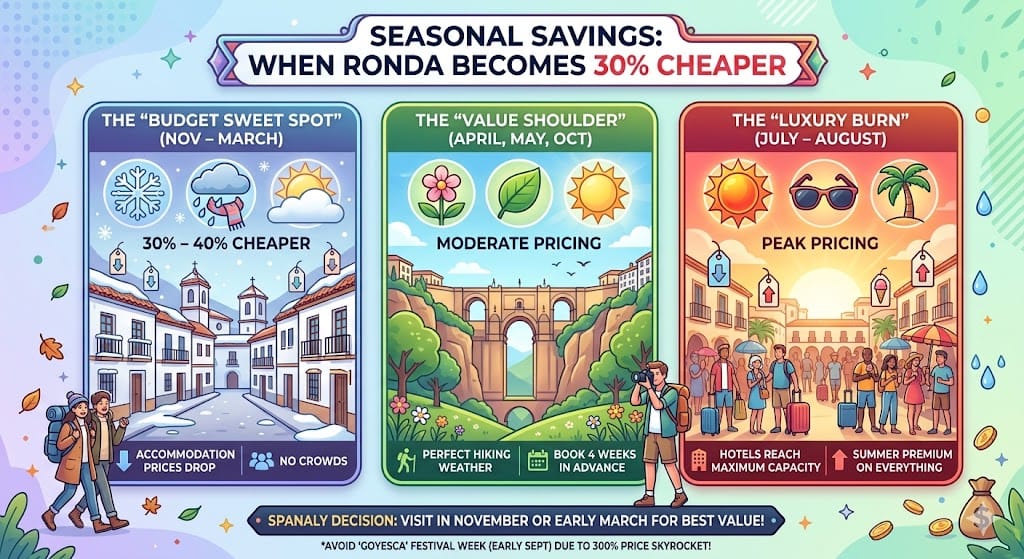
Timing is the ultimate budget hack for your Ronda Budget Guide. While Ronda is beautiful year-round, visiting during “High Season” can double your accommodation costs. Understanding the Best Time to Visit Ronda is the difference between a budget mission and a financial drain.
📍 The Seasonal Price Mission:
The “Budget Sweet Spot” (Nov – March): 30% – 40% Cheaper.
Accommodation prices drop significantly. The air is crisp, and the crowds disappear.
The “Value Shoulder” (April, May, Oct): Moderate Pricing.
Perfect weather for hiking the gorge. Book 4 weeks in advance for best rates.
The “Luxury Burn” (July – August): Peak Pricing.
Hotels reach maximum capacity. Expect to pay a “Summer Premium” on everything.
⚖️ The Spanaly Decision:
Visit in November or early March. You will get clear blue skies, snowy mountain views, and luxury boutique stays for the price of a budget hostel in July.
Spanaly Insight: Avoid the “Goyesca” Festival week in early September if you are on a budget. Hotel prices in Ronda skyrocket by 300%, and restaurant reservations become impossible. Unless you are here specifically for the festival, this is the most expensive week of the year.
💡 Tactical Hacks to Save €50+ on Your Ronda Mission
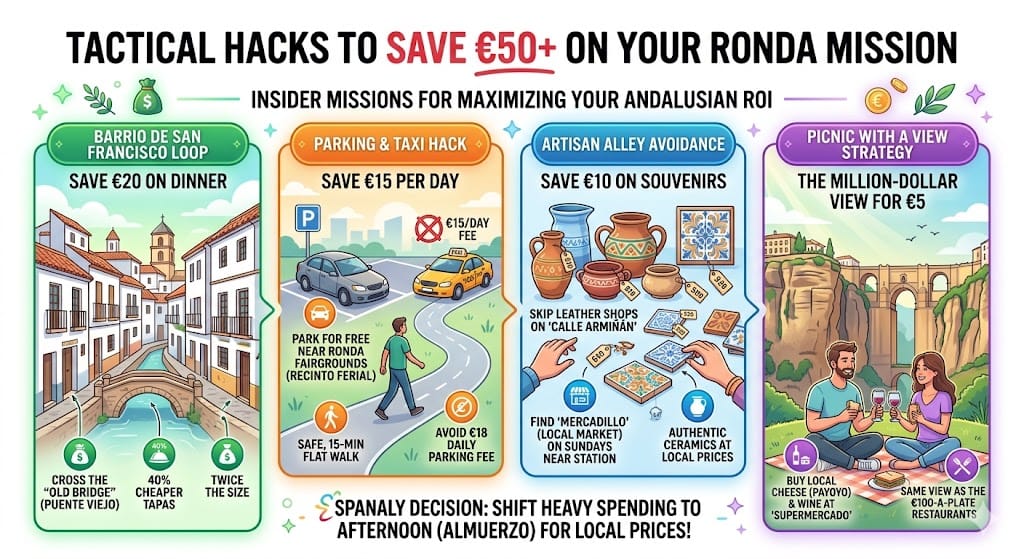
To truly master your Ronda Budget Guide, you must look beyond the typical tourist traps. These are “Insider Missions” designed to save you hard cash while enhancing your experience. For even more broad strategies, check our Save Money Travel Spain masterclass.
📍 The “Invisible” Saving Tactics:
The “Barrio de San Francisco” Loop: Save €20 on Dinner.
Most tourists stay near the Bullring. Cross the “Old Bridge” (Puente Viejo) to this local barrio. Tapas here are nearly 40% cheaper and twice the size of those near the gorge.
The “Parking & Taxi” Hack: Save €15 per day.
Never park in the center. Park for free near the Ronda Fairgrounds (Recinto Ferial). It’s a safe, 15-minute flat walk to the center, saving you the €18 daily parking fee.
The “Artisan Alley” Avoidance: Save €10 on Souvenirs.
Skip the leather shops on Calle Armiñán. Instead, find the “Mercadillo” (local market) on Sundays near the station for authentic ceramics at local prices.
The “Picnic with a View” Strategy: The Million-Dollar View for €5.
Buy local cheese (Payoyo) and wine at a supermercado. Head to the Jardines de Cuenca at sunset. You get the same view as the €100-a-plate restaurants for the cost of a snack.
⚖️ Smart Move:
Eat your main meal at 2:00 PM (Almuerzo). Dinner in Ronda is always more expensive. By shifting your “Heavy Spending” to the afternoon, you access the Traditional Spanish Food Guide prices designed for locals, not the evening “Tourist Rates.”
Spanaly Insight: The Secret “Gorge Access”: Don’t pay for “private” trail access. There is a public, free path starting from Plaza de María Auxiliadora. Follow the “Camino de los Molinos” for the most iconic photos of the bridge from below. This hike is free, legendary, and saves you the cost of any “Viewpoint” tickets.
⚖️ The Spanaly Final Verdict: Is Ronda Worth Your Mission?
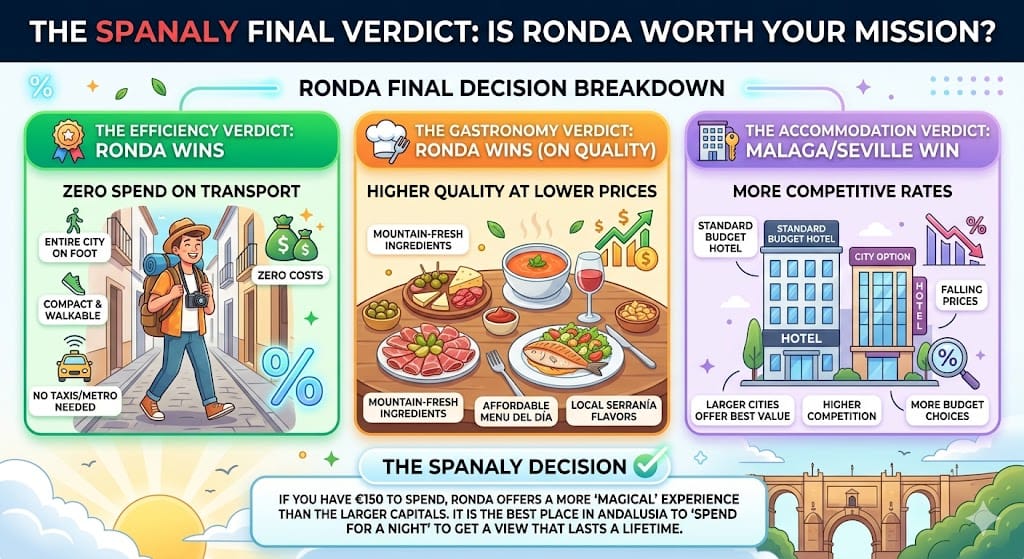
Ronda is a “high-impact” destination where your Ronda Budget Guide tactics define your final bill. While it can be more expensive per square meter than Malaga, its compact nature allows for massive savings on transport and time. To plan your complete trip, don’t forget our Ultimate Seville Travel Guide for the perfect Andalusian pairing.
📍 The “Final Decision” Breakdown:
The Efficiency Verdict: Ronda Wins. You can see the entire city on foot, spending Zero on taxis or metro.
The Gastronomy Verdict: Ronda Wins (on quality). You get higher quality mountain-fresh ingredients for lower “Menu del Día” prices.
The Accommodation Verdict: Malaga/Seville Win. Larger cities offer more competitive rates for standard budget hotels.
⚖️ Quick Take:
If you have €150 to spend, Ronda offers a more “Magical” experience than the larger capitals. It is the best place in Andalusia to “spend more for a night” to get a view that lasts a lifetime.
Spanaly Insight: Don’t just “visit” Ronda; stay there. Day-trippers from Malaga or Seville pay a massive “Time Tax” on transport and only see the crowded hours. By staying overnight, you access the city’s quietest, cheapest, and most authentic moments for a fraction of the stress.
🛡️ Visitor FAQs – Ultimate Ronda Money & Budgeting Guide
🛡️ Should I carry a lot of cash, or is card payment common in Ronda?
While most businesses accept major credit cards, Ronda’s authentic soul lies in its small family-run tapas bars and local craft shops in the Old Town. Many of these hidden gems still have a "Cash Only" policy or a minimum spend for cards. We recommend keeping around €40 in small bills for tips, coffee, and traditional snacks to avoid awkward payment moments.
🎫 Can I buy a "Combo Ticket" to save on Ronda’s main monuments?
Currently, Ronda does not offer a single official "City Pass." However, you can find a combined ticket for the Mondragón Palace and the Arab Baths at a discounted rate if purchased at the first gate. For the Bullring, you must buy a separate ticket. To save the most, prioritize the free viewpoints of the Puente Nuevo which offer the most legendary photographic ROI.
💧 Is it expensive to stay hydrated while hiking the Tajo Gorge?
Not at all! You can save at least €10 per day by carrying a reusable bottle. Ronda is famous for its ancient stone fountains (Fuentes) located throughout the historic quarter. The water is safe, tested, and remarkably cold even in summer. Look for the fountain in Plaza de la Duquesa de Parcent—it’s a local favorite for fresh, free mountain water.
🚑 Are there any hidden "Tourist Taxes" in Ronda hotels?
Unlike Barcelona or the Balearic Islands, Andalusia does not currently charge a mandatory daily tourist tax. The price you see on booking platforms is generally the final price (including VAT). However, always double-check if "City View" supplements are added to your bill, especially in hotels overlooking the gorge, as these are often priced separately as a premium service.
🏰 Is the 15-minute walk from the station to the bridge easy with luggage?
The walk is mostly flat and manageable, but the cobblestone streets in the historic center can be brutal on small suitcase wheels. To save your luggage (and a €7 taxi fare), stick to the main pedestrian street, Calle Espinel (La Bola), which has smoother paving. If your hotel is deep in the Old Town (La Ciudad), we highly recommend a short taxi ride to avoid a steep uphill climb with heavy bags.
Ronda Budget Guide by Spanaly.com
Ronda is more than just a cliff; it is a lesson in strategic travel. By choosing the right “Burn Rate” and timing, you transform a potentially expensive trip into a high-value Andalusian victory.
📍 Your Quick Tactical Checklist:
🚉 Transport: Choose the bus for a 50% saving over the train.
🍽️ Dining: Avoid the “Gorge View Tax” by eating in Barrio de San Francisco.
🛏️ Stay: Book a boutique hotel 3 blocks away to save €40 per night.
💧 Hydration: Use the historic stone fountains for free, fresh water.
🏛️ The Next Step in Your Mission:
No visit to Ronda is complete without understanding its soul. Before you finalize your budget, make sure to read our Plaza de Toros Ronda Guide to master the history of Spain’s most iconic bullring.
Spanaly Insight: The best things in Ronda—the sunsets over the Tajo, the mountain air, and the cobblestone charm—are completely free. Spend your money on quality local experiences, and let the city’s natural magic handle the rest.