Table of Contents
Toggle🌊 Discovering Galicia’s Stone Cathedral
Imagine walking on the ocean floor surrounded by towering stone arches. Playa de las Catedrales (As Catedrais) is a true Galician wonder. Here, the Atlantic Ocean has sculpted massive caves into a natural Gothic cathedral.
Walking between these dark slate formations is an unforgettable experience. However, this beauty comes with strict conditions. The tides and a mandatory permit system control all access.
📍 Location: Ribadeo, Lugo. This beach sits along the rugged Cantabrian coast.
⏳ The Core Secret: You can only walk among the arches during low tide.
🎟️ Entry Requirement: A free digital permit is mandatory during peak season and holidays.
📸 Why Visit: It is a unique geological masterpiece. It stands out even among Spain’s most beautiful beaches.
This guide helps you plan your visit properly. Timing and preparation make all the difference for photographers and nature lovers alike.
⚡ Quick Snapshot: Essential Logistics Before You Go
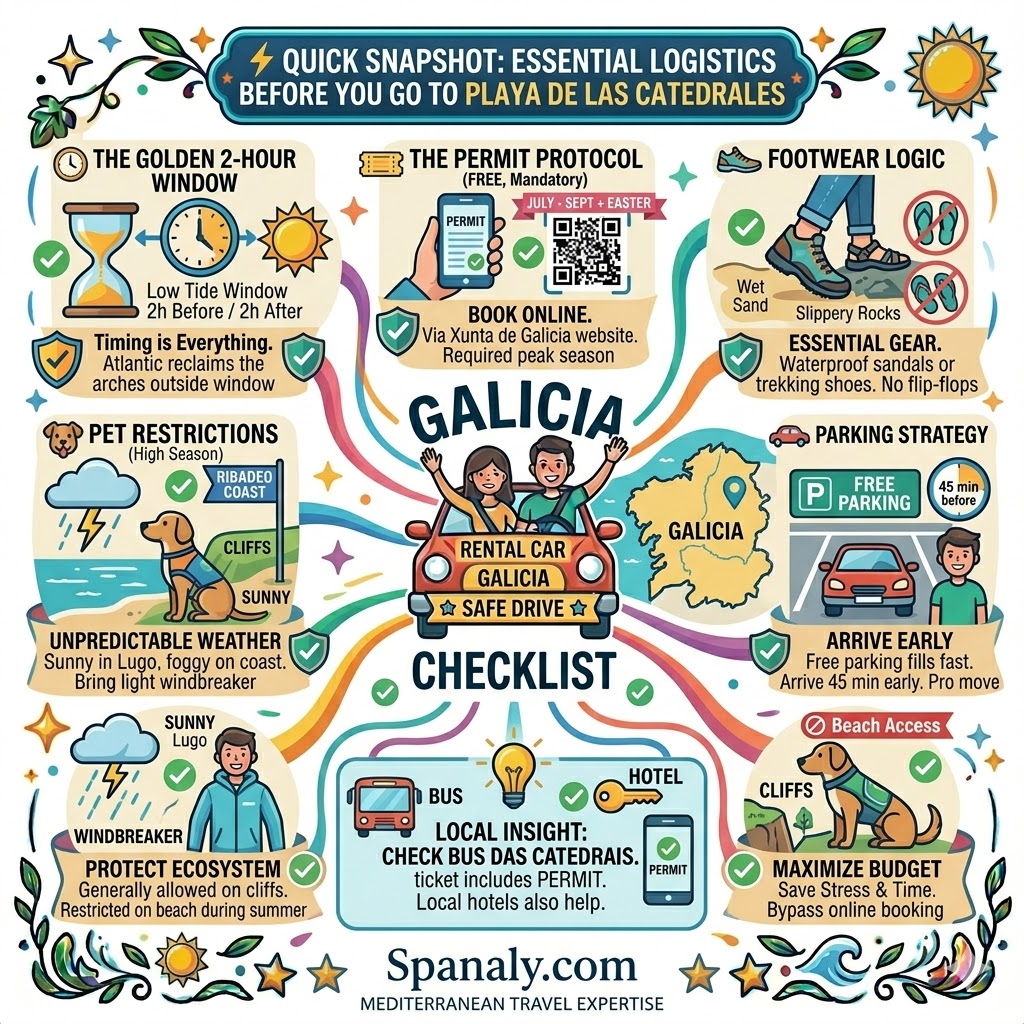
Planning a visit to Playa de las Catedrales requires good timing and preparation. Unlike the busy urban beaches of Barcelona, this Atlantic coastline is governed by the tides and specific access rules.
🕒 The Golden 2-Hour Window: You can only walk among the arches within roughly 2 hours before and after the lowest point of the tide. Outside this window, the sea covers the formations completely.
🎫 The Permit System: Entry is free, but during the summer months and Easter holidays, you need to book a free digital permit in advance through the official Xunta de Galicia website.
👟 Footwear Recommendation: Leave the flip-flops behind. The beach has wet sand, sharp rocks, and slippery surfaces — sturdy waterproof sandals or light trekking shoes are highly recommended.
🚗 Parking: There is a large free parking area near the entrance, but it fills up quickly during peak times. Arriving at least 45 minutes before your tide window is advisable.
🌡️ Microclimate Note: Galicia’s weather can change fast. Even if it’s sunny inland, the coast in Ribadeo may be foggy or windy. Bring a light windbreaker just in case.
🐕 Pet Restrictions: Dogs are usually allowed on the cliffs, but they are often restricted from the beach itself during busy periods to protect the sensitive ecosystem.
Pro Tip: If the official permit website shows fully booked dates, don’t worry. Many local hotels and licensed tour operators in Ribadeo have reserved quotas for their guests. Taking the local “Bus das Catedrais” is another good option, as the ticket often includes the entry permit and saves you from booking separately during peak summer weeks.
⚖️ The Twin Choice: Playa de las Catedrales vs. Playa de la Concha
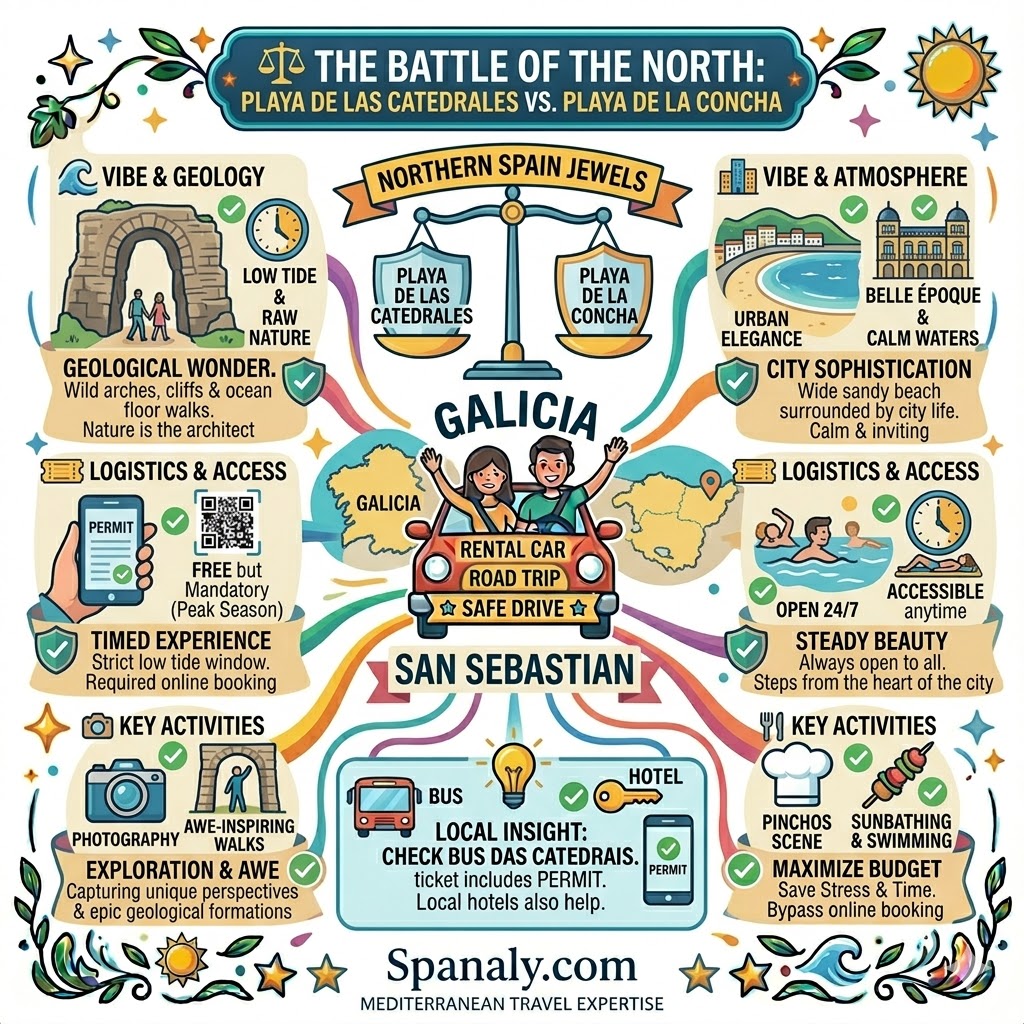
Choosing between the dramatic wild arches of Playa de las Catedrales and the elegant urban bay of Playa de la Concha in San Sebastián depends on the type of coastal experience you prefer. Both are highlights of Spain’s northern coastline, but they offer very different atmospheres.
The Vibe: Playa de las Catedrales feels raw and geological — a natural monument shaped by the Atlantic. In contrast, Playa de la Concha offers a refined, crescent-shaped bay lined with Belle Époque buildings and a more sophisticated city-beach atmosphere.
Accessibility: La Concha is open all day and sits right in the heart of San Sebastián. Playa de las Catedrales is a timed experience that requires a 15-minute drive from Ribadeo and careful planning around the tide schedule.
Activities: You visit las Catedrales mainly for photography, exploration, and walking beneath the impressive stone arches. You go to La Concha for relaxed sunbathing, calm swimming, and enjoying excellent restaurants and pintxos bars just steps from the sand.
Logistics: La Concha is freely accessible to everyone, while Playa de las Catedrales requires a free permit during peak season, making it a more structured and planned visit.
Pro Tip: If your itinerary is tight and you cannot align your visit with low tide at las Catedrales, it’s better not to force it. At high tide, you can only view the arches from the cliffs above — which is beautiful, but misses the unique experience of walking among the formations. In that case, heading to the reliable beauty of Playa de la Concha in San Sebastián can be a more satisfying choice.
🌊 The Tide Factor: Why Timing is Everything at As Catedrais
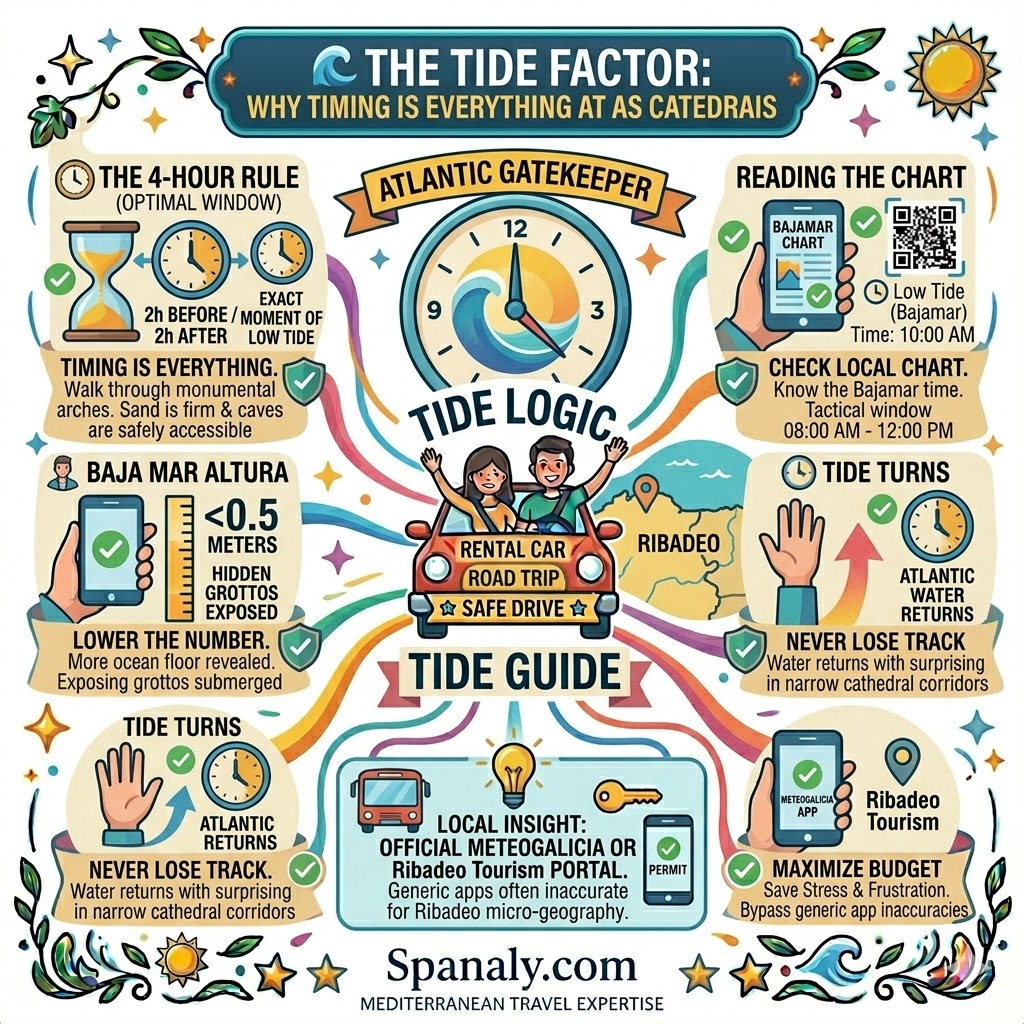
At Playa de las Catedrales, the Atlantic Ocean controls the clock. During high tide, the beach disappears completely. You can only view the arches from the cliffs above. To walk on the ocean floor, you must master the tide schedule.
⏱️ The 4-Hour Rule: Your window is roughly two hours before and after the lowest tide point. This timing ensures firm sand and safe access to the deepest caves.
📊 Reading the Chart: Look for the exact time of “Low Tide” (Bajamar). If it peaks at 10:00 AM, your safe exploration window is 08:00 AM to 12:00 PM.
📏 The Height Metric: Aim for days when the low tide is below 0.5 meters. A lower number means more seabed is exposed. This reveals hidden grottos and wider paths.
🌕 Spring Tides (Mareas Vivas): Visit during a Full Moon or New Moon for the best experience. These tides cause the sea to recede much further. Consequently, the formations look significantly more dramatic.
⚠️ Safety First: Always keep a close eye on the time. The Atlantic turns surprisingly quickly in narrow sections. Never let the tide trap you between the arches.
Planning your route around these shifts is essential. Tide times change by about 50 minutes daily. Always verify these details when building your Spain travel itinerary.
Spanaly Insight: Don’t trust generic weather apps for tide data. They often lack accuracy for the Ribadeo coastline. Use the official MeteoGalicia website instead. For the ultimate “Pro Move,” catch a sunrise low tide. You will avoid crowds and capture stunning reflections in the tidal pools before the afternoon winds arrive.
🎫 Booking: How to Secure Your Entry Permit

While access to Playa de las Catedrales is free, it is not always unrestricted. To protect this fragile natural monument from over-tourism, the Galician government (Xunta de Galicia) implements a mandatory permit system during peak periods.
📅 When is it Mandatory? You must have a permit if you visit between July 1st and September 30th, or during the Easter (Semana Santa) holidays.
🖱️ The Official Portal: Permits are exclusively available through the official Xunta de Galicia website. The process is digital, straightforward, and costs €0.
⏳ Booking Window: You can typically secure your spot up to 30 days in advance. During August, slots for the “Golden Window” of low tide disappear within hours of being released.
📱 Digital vs. Paper: There is no need to print your permit. A digital copy (PDF) or a screenshot of the QR code on your smartphone is perfectly acceptable at the entrance checkpoint.
🛤️ The Alternative Route: If you arrive by the local train (FEVE) or the dedicated “Bus das Catedrais” from Ribadeo, your transport ticket often serves as your entry permit.
This management system is a common practice for preserving Spain’s top sites, much like the ticketing logic used for Spain attraction tickets in major cities.
🗺️ Exploring the Arches: Key Highlights and Photography Spots
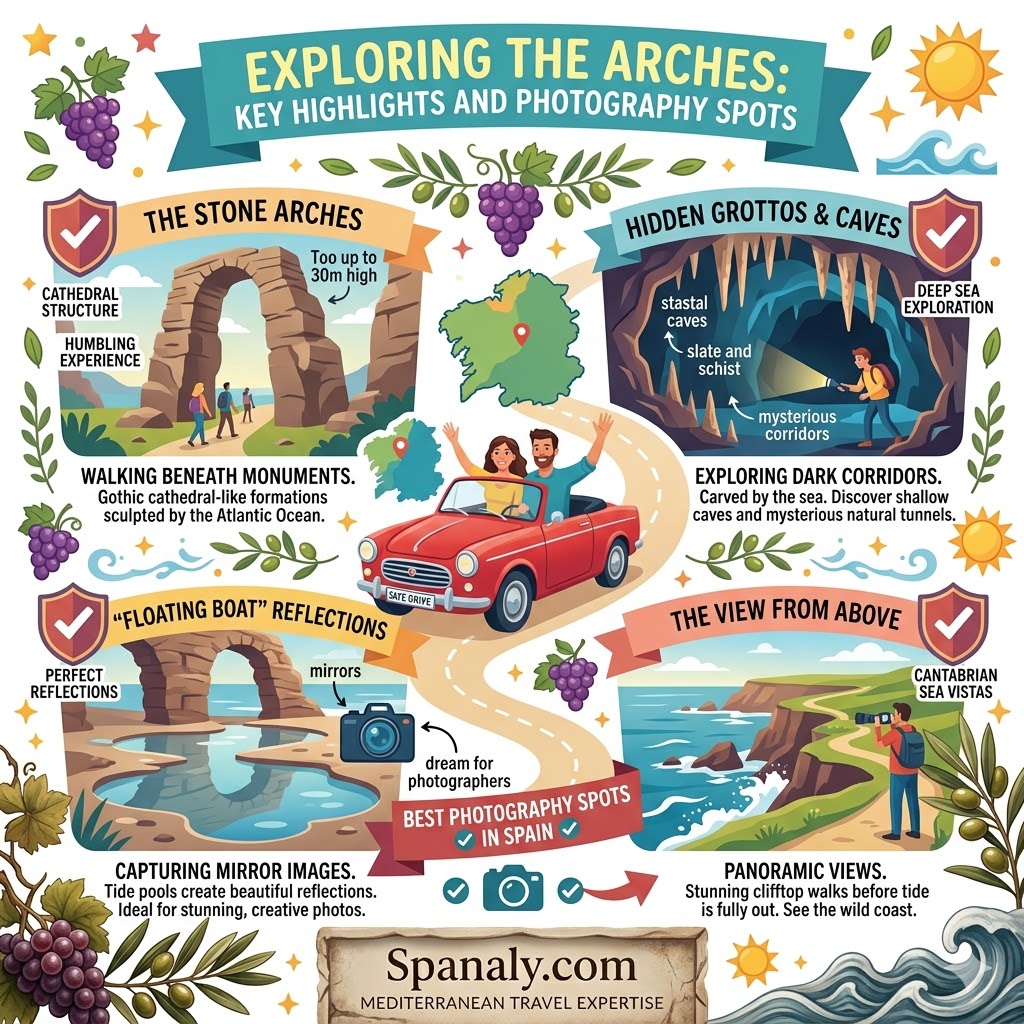
Once you step down onto the sand during low tide, the scale of Playa de las Catedrales truly comes to life. It’s like walking through a natural museum where every corner offers a new perspective. Here is what you should look for during your stroll:
The Stone Arches: These are the stars of the show. Some reach over 30 meters in height, resembling the intricate architecture of a cathedral. Walking beneath them is a humbling experience that highlights the power of the Atlantic.
Hidden Grottos and Caves: As you explore, you’ll find deep sea caves carved into the slate and schist. Some are shallow, while others lead into dark, mysterious corridors that are perfect for curious explorers.
The “Floating Boat” Reflections: Keep an eye out for the shallow tide pools left behind by the receding ocean. On a calm day, these pools act like mirrors, creating perfect reflections of the arches—a dream for anyone with a camera.
The View from Above: If you arrive before the tide is fully out, take a walk along the clifftop paths. The panoramic views of the Cantabrian Sea and the waves crashing against the rocks are just as beautiful as the beach itself.
Photography Tip: For the best light, try to catch a low tide that coincides with the early morning or late afternoon. The low sun casts long shadows and brings out the warm textures of the rocks.
Exploring these formations is a highlight of any trip to the region, much like discovering the best photography spots in Spain in cities like Madrid or Seville.
🚗 Getting There: Navigation Tips from Lugo, Ribadeo, and Beyond

Reaching Playa de las Catedrales is part of the Galician adventure. The beach is located on the northwestern tip of Spain, and while it feels like a world of its own, it is well-connected to nearby hubs.
From Ribadeo (The Nearest Hub): If you are staying in the charming town of Ribadeo, you are only about 15 minutes away by car. During the summer, the local “Bus das Catedrais” is a fantastic option, as it takes you straight to the entrance and often solves the permit requirement.
From Lugo City: The drive from Lugo takes about an hour via the A-64 and N-634. It’s a scenic route that transitions from the green inland hills to the rugged Atlantic coastline.
By Train (The FEVE): For a more slow-travel experience, you can take the narrow-gauge FEVE train. The “Esteiro” stop is the closest to the beach, followed by a pleasant 10-minute walk.
Driving from Asturias: If you are coming from the east (like Gijón or Oviedo), the A-8 highway (Autovía del Cantábrico) provides a fast and smooth connection with stunning sea views along the way.
Parking Logistics: Once you arrive, you’ll find organized parking areas. Even with plenty of space, arriving early during low-tide windows is the best way to avoid a long walk from the overflow lots.
Navigating the roads here is straightforward, and for more general advice on road trips in the region, you can check our guide on driving in Spain to feel fully prepared for the local mountain and coastal routes.
🧥 Weather & Attire: Practical Comfort for the Atlantic Coast
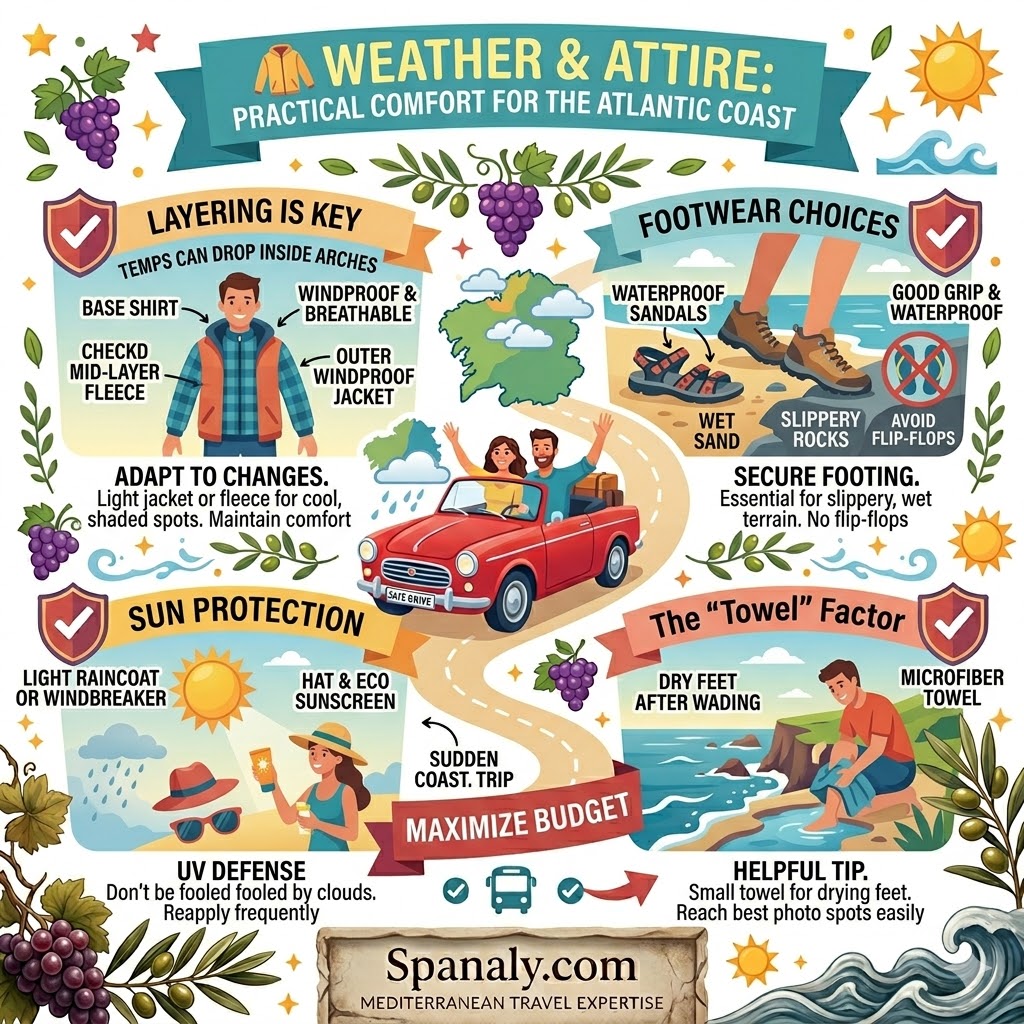
The weather in Galicia is famously changeable, with a refreshing Atlantic breeze and frequent light mist known locally as sirimiri. Preparing what to wear for Playa de las Catedrales is all about staying comfortable and dry while exploring the beach and rocky areas.
Layering is Key: Even on a sunny day, the temperature can drop noticeably inside the stone arches where the sun doesn’t reach. A light windproof jacket or a breathable fleece is a smart addition to your base layer.
Footwear Choices: You’ll be walking on wet sand, through shallow tide pools, and over slippery rocks. Footwear with good grip is essential — waterproof sandals with straps or light hiking shoes work best. Avoid flip-flops, as they offer little traction on the wet slate surfaces.
Prepare for the Mist: A compact, lightweight raincoat or windbreaker is highly recommended. It protects you from sudden coastal spray and the humid sea air.
Sun Protection: Don’t be fooled by the clouds — the Atlantic sun can still be strong. Bring a hat and reef-safe sunscreen, especially if you’ll be outdoors for several hours.
The “Towel” Factor: Even if you don’t plan to swim, a small microfiber towel is useful for drying your feet after walking through the tidal pools or reaching the best photo spots.
Being well prepared for the weather lets you focus on enjoying the dramatic cliffs and arches instead of dealing with discomfort.
Pro Tip: If you’re visiting early in the morning for low tide, the rocks can be especially cold and damp. Consider wearing convertible trousers or rolling up your jeans before stepping onto the beach. Wet denim hems soaked in salty water are surprisingly uncomfortable on the walk back to the car.
🌿 Preserving the Magic: Safety and Eco-Friendly Guidelines

Playa de las Catedrales is more than just a beach; it is a protected natural monument. Because of its fragile geology and unique ecosystem, the local authorities enforce specific rules to ensure that the millions of visitors who walk its sands every year leave no trace behind.
Stay on the Designated Paths: When walking along the clifftops, always use the wooden walkways. These are designed to prevent soil erosion and protect the native flora that stabilizes the cliffs.
Look, Don’t Touch: It is strictly forbidden to take rocks, shells, or sand from the beach. Each piece of slate and every shell plays a role in the coastal balance.
No Climbing: While the arches look like natural playgrounds, climbing on them is dangerous and illegal. The rock is brittle and prone to small landslides, so stay on the ground for your safety.
Leave No Trace: There are no trash bins on the sand to avoid them being washed away by the tide. Whatever you bring with you—including organic waste—must leave with you.
Wildlife Respect: You may spot rare seabirds nesting in the cliffs. Keep a respectful distance and avoid making loud noises that could disturb their natural habitat.
By following these simple steps, you contribute to the sustainability of Galicia’s coast, much like the efforts seen in other Spanish attractions that prioritize conservation over mass tourism.
Spanaly Insight: Safety isn’t just about the environment; it’s about you too. Every year, visitors get “trapped” by the tide because they venture too far into the narrowest caves. A good rule of thumb is to start heading back toward the main exit stairs the moment you see the tide beginning to turn, even if your 4-hour window isn’t officially over. The Atlantic doesn’t wait!
🧭 Beyond the Beach: Top Nearby Attractions in Ribadeo
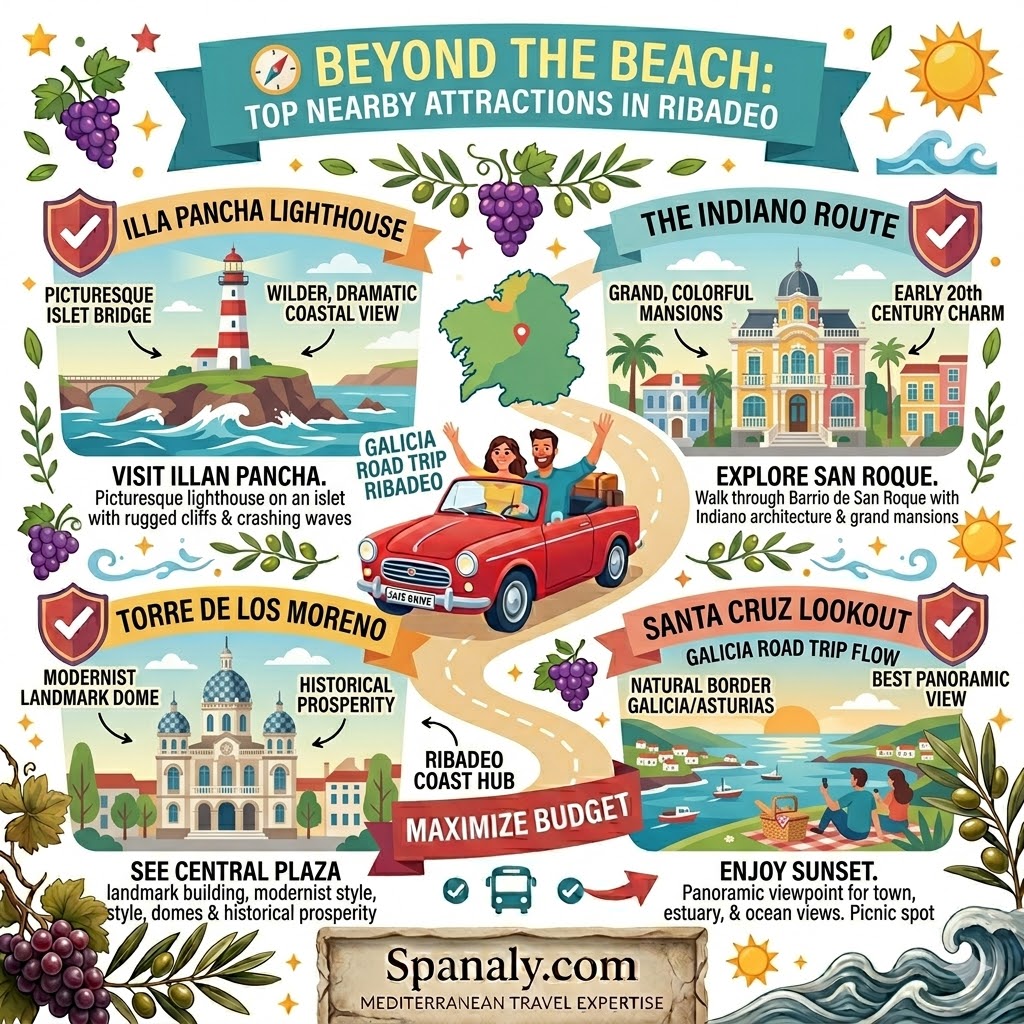
While the arches are the main draw, the surrounding area of Ribadeo offers a wonderful blend of maritime history and coastal charm. After the tide comes back in, these nearby spots are perfect for continuing your Galician journey:
Illa Pancha Lighthouse: Located on a small islet connected by a bridge, this is one of the most picturesque lighthouses in Spain. The rugged cliffs and the crashing waves here offer a wilder, more dramatic coastal view than the beach itself.
The Indiano Route (Barrio de San Roque): Ribadeo is famous for its “Indiano” architecture—grand, colorful mansions built by emigrants who returned from the Americas with great wealth. Walking through these streets feels like a trip back to the early 20th century.
Torre de los Moreno: This iconic building, with its modernist style and elegant domes, is a landmark of the town’s central plaza and a testament to its historical prosperity.
The Ribadeo Estuary (Ría de Ribadeo): This natural border between Galicia and Asturias is ideal for a peaceful walk or a boat trip. The views of the small white villages on the Asturian side are simply beautiful.
Santa Cruz Lookout: For the best panoramic view of the town, the estuary, and the ocean, drive up to this viewpoint. It’s a favorite spot for locals to enjoy the sunset with a picnic.
Exploring these local gems adds layers to your trip, similar to how you might discover hidden corners when following our Seville Travel Guide or other regional Spanish hubs.
Pro Tip: If you have an extra hour, cross the bridge (Puente de los Santos) into the neighboring region of Asturias to visit the tiny fishing village of Castropol. It’s only a 5-minute drive from Ribadeo, but it offers a completely different perspective of the estuary and some of the freshest oysters in the area!
🍽️ Galician Gastronomy: Where to Eat Near Playa de las Catedrales

No visit to the Galician coast is complete without indulging in its world-renowned seafood. Ribadeo is a culinary sanctuary where the freshness of the Atlantic meets traditional recipes passed down through generations. After a morning of exploring the arches, these local delicacies are the perfect reward.
Pulpo à Feira (Galician Octopus): The undisputed star of the region. Tender octopus served on a wooden plate, seasoned with sea salt, olive oil, and a generous dusting of pimentón (Spanish paprika).
Empanada Gallega: A savory pie filled with tuna, cod, or even local scallops (zamburiñas). It is the perfect hearty snack to take for a clifftop picnic.
Fresh Seafood Platters: Look for mariscadas featuring spider crabs, goose barnacles (percebes), and razor clams, all sourced directly from the nearby estuary.
Lacón con Grelos: For those seeking something from the land, this traditional dish of ham hock with turnip tops and chorizo is a comforting Galician classic.
Tarta de Mondoñedo: A local sweet treasure from the nearby town of Mondoñedo, made with puff pastry, almond cream, and candied fruits—ideal with a cup of coffee.
Dining here is about slow-paced enjoyment. To truly eat like a local, pair your meal with a crisp glass of Albariño or Ribeiro white wine, both of which are essential components of the Spanish Cuisine experience in the north
Pro Tip: While there are a few restaurants right next to the beach parking lot, they can get very crowded and pricey during peak season. For a more authentic (and wallet-friendly) experience, drive the 10 minutes back into Ribadeo’s town center. Look for the small tabernas around the Plaza de España where the “Menu del Día” offers three courses of fresh local food for a fixed, reasonable price.
🕒 The Perfect Day: Combining the Beach with Ribadeo Exploration
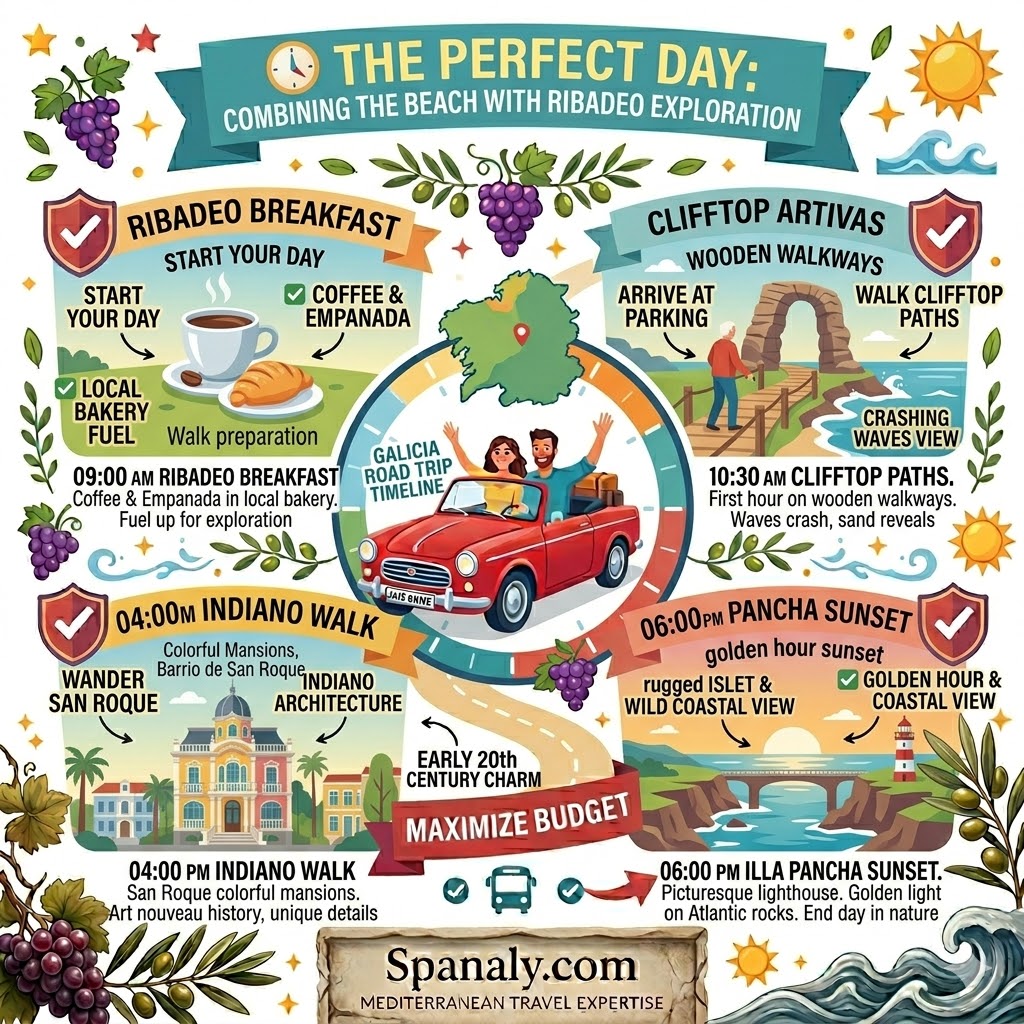
To make the most of your trip, you need to sync your watch with the Atlantic Ocean. While the exact times change daily, here is how a perfect day in this corner of Galicia looks when built around a midday low tide:
09:00 AM – The Ribadeo Breakfast: Start your day in the center of Ribadeo. Grab a coffee and a slice of Empanada at a local bakery to fuel up for the walk ahead.
10:30 AM – Clifftop Arrival: Arrive at the Playa de las Catedrales parking lot. Spend the first hour walking the wooden clifftop paths. This is the best time to see the waves crashing against the arches before the sand is revealed.
11:30 AM – The Descent (Low Tide Window): As the water recedes, head down the stairs. Spend the next two hours wandering through the stone corridors, taking photos of the reflections, and exploring the deeper caves.
02:00 PM – Galician Lunch: Drive back to Ribadeo. Find a traditional taberna for a plate of Pulpo à Feira and fresh seafood. This is the time to relax and review your photos.
04:00 PM – The Indiano Walk: Wander through the San Roque neighborhood to admire the colorful mansions and the iconic Torre de los Moreno.
06:00 PM – Illa Pancha Sunset: End your day at the Illa Pancha Lighthouse. The golden hour light hitting the rugged islet is the perfect farewell to the Galician coast.
This balanced approach ensures you experience both the natural wonders and the cultural heart of the region, much like our recommended Spain itineraries for other historic coastal areas.
🛡️ Tactical Secrets for a Savvy Galician Visit

Forget generic advice. These niche details distinguish a tourist from a true expert at Playa de las Catedrales. Master these “Spanaly Hacks” to stay ahead of the crowds and the elements.
⏳ The 90-Minute Edge: Don’t wait for peak low tide. Start your descent exactly 90 minutes before the lowest point. The water recedes from the largest arches first. This window allows for “people-free” photos before the masses arrive.
📎 The Carabiner Trick: Walking barefoot on Galician sand is amazing. However, don’t carry your shoes in your hand. This ruins your balance and photos. Instead, use a carabiner to clip sandals to your backpack. It keeps your hands free for the camera.
🏝️ The Secret Escape: Is the main beach too crowded? Walk 10 minutes east along the clifftop to Playa de Esteiro. It shares the same stunning slate geology. However, it is often completely empty and perfect for a quiet picnic.
🌬️ The Nordés Strategy: In Galicia, a North Wind (Nordés) brings clear skies but chilly air. If the wind bites, hide inside the deep, south-facing caves. They act as natural heaters by trapping sun warmth. It is a cozy “T-shirt only” sanctuary.
👻 The Midnight Ghost Slots: Is the official website sold out? Check the portal at midnight exactly two days before your visit. The system often releases “ghost slots” from canceled group tours. These reservations rarely show up during normal hours.
📸 Saline Lens Defense: The Atlantic mist is highly saline. A standard dry microfiber cloth will only smear salt crystals. This can scratch your expensive lens. Always use pre-moistened wipes to dissolve the salt safely and keep your shots sharp.
These small adjustments transform a good visit into a seamless, expert-level experience. By mastering these details, you ensure a stress-free day in one of Spain’s most rugged environments.
🛡️ Visitor FAQs – Playa de las Catedrales Logistics
🐾 Are dogs allowed on Playa de las Catedrales?
Generally, dogs are not permitted on the sand during the peak season (July, August, and September) or during Easter week due to its status as a protected Natural Monument. However, you can walk your leashed pet along the clifftop wooden walkways anytime to enjoy the panoramic views of the arches from above.
♿ Is the beach accessible for visitors with limited mobility?
The clifftop walkways are fully accessible and offer magnificent views. However, reaching the sand requires descending a long flight of stairs, which is not wheelchair accessible. For the best experience, we recommend enjoying the accessible viewpoints near the main parking area which provide a clear sight of the massive stone formations.
📸 Can I use a tripod for professional photography on the sand?
Yes, tripods are allowed for personal photography. However, you must be extremely mindful of the rapidly rising tide and other visitors. Professional commercial shoots or those requiring heavy equipment typically need a special permit from the Xunta de Galicia. Remember to wipe your tripod legs with fresh water immediately after to prevent saltwater corrosion.
🏊 Is it safe to swim at As Catedrais during low tide?
While swimming is permitted, it is not recommended inside the caves or near the arches. The currents in the Cantabrian Sea are unpredictable, and the presence of submerged rocks can be dangerous. Most visitors prefer wading in the shallow tidal pools, which is much safer and better for enjoying the unique geology of the site.
🛜 Is there reliable mobile signal and Wi-Fi at the beach?
Mobile signal is generally stable in the parking areas and on the clifftops. However, connectivity drops significantly once you are deep inside the stone caves and under the high cliffs. There is no public Wi-Fi on the beach, so make sure to download your digital entry permit and offline maps before you arrive at the site.
Playa de las Catedrales Guide by Spanaly.com
In short: Absolutely. Playa de las Catedrales is more than just a beach. It is a living cathedral sculpted by the raw power of the Atlantic.
✨ The Wow Factor: Walking through 30-meter-high arches is a humbling experience. Photos simply cannot capture the true scale of these rocks.
🌊 The Experience: It offers a unique blend of geological wonder and maritime history. You will feel the true pulse of the Ribadeo coast.
🛡️ The Trade-off: Planning for permits and tides requires effort. However, this ensures the beach remains preserved and never feels overcrowded.
If you appreciate raw natural beauty, this is a must-visit landmark. It belongs on every professional Spain itinerary.
After exploring these northern arches, you might want a warmer escape. Discover the pristine turquoise waters of Menorca next. Our comprehensive Cala Macarella and Macarelleta Guide covers everything for your Mediterranean getaway.
Galicia rewards those who plan thoughtfully and travel respectfully. Arrive early, watch the tides, and let the “Stone Cathedral” take your breath away.
Safe travels, and enjoy every Atlantic echo! 🥂🛡️🌊