Table of Contents
Toggle🏁 Why Drive Across Northern Spain?
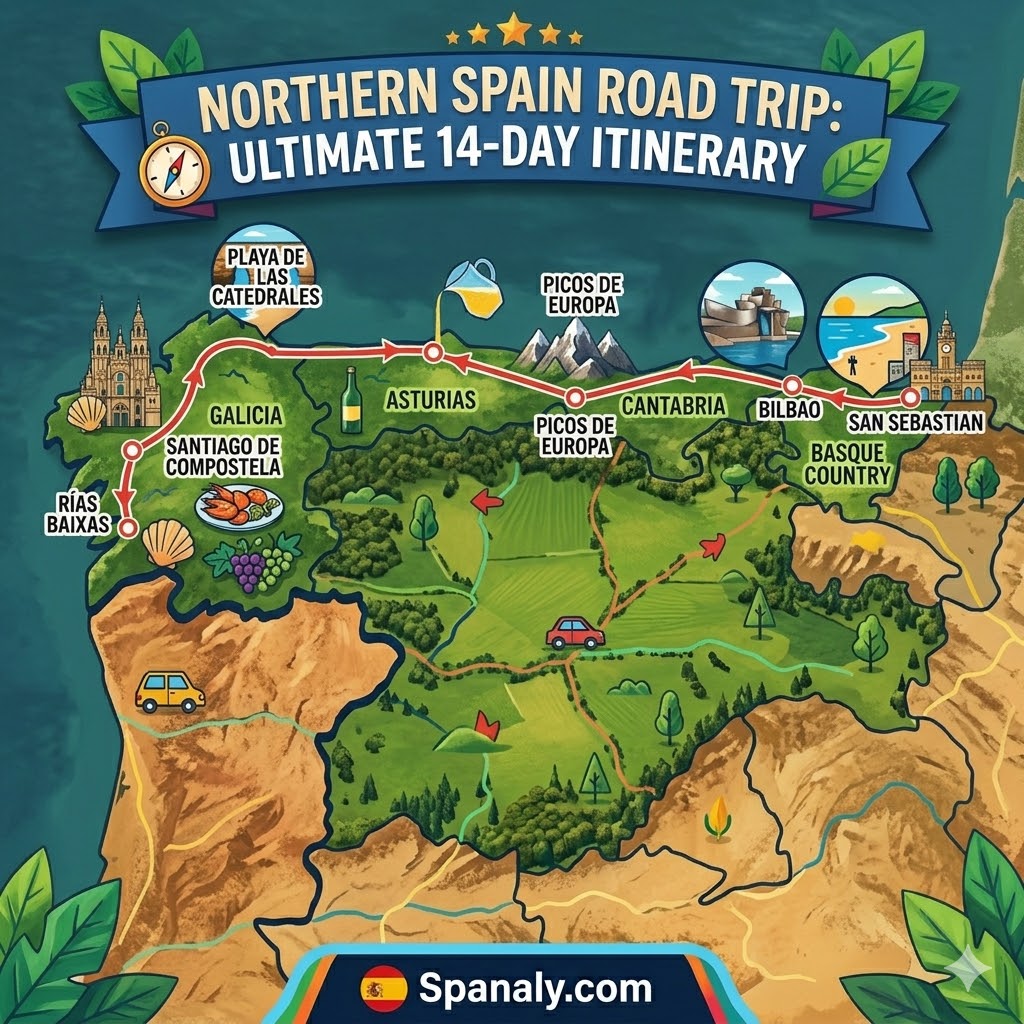
Driving 2,000 kilometers across Spain’s Atlantic coast is the best way to escape the scorched southern plains. This 14-day route takes you through “Green Spain”—from the industrial-cool streets of Bilbao to the seafood havens of Galicia. Forget the high-speed highways; the real magic of the North is found behind the wheel on winding coastal roads.
Total Freedom: Stop at hidden coves or mountain viewpoints whenever you want.
The Scenic Route: Skip the expensive AP-8 tolls and take the N-634 for stunning ocean views.
Emerald Landscapes: Experience the raw beauty of Picos de Europa and the wild Asturian cliffs.
This region feels different from the rest of the country, with misty mornings and cooler temperatures. If you need a regional overview before starting, check our Ultimate Northern Spain Travel Guide. Grab your map; it’s time to explore the Atlantic side of Spain like a local.
🗺️ 14-Day Route Map & Trip Logistics
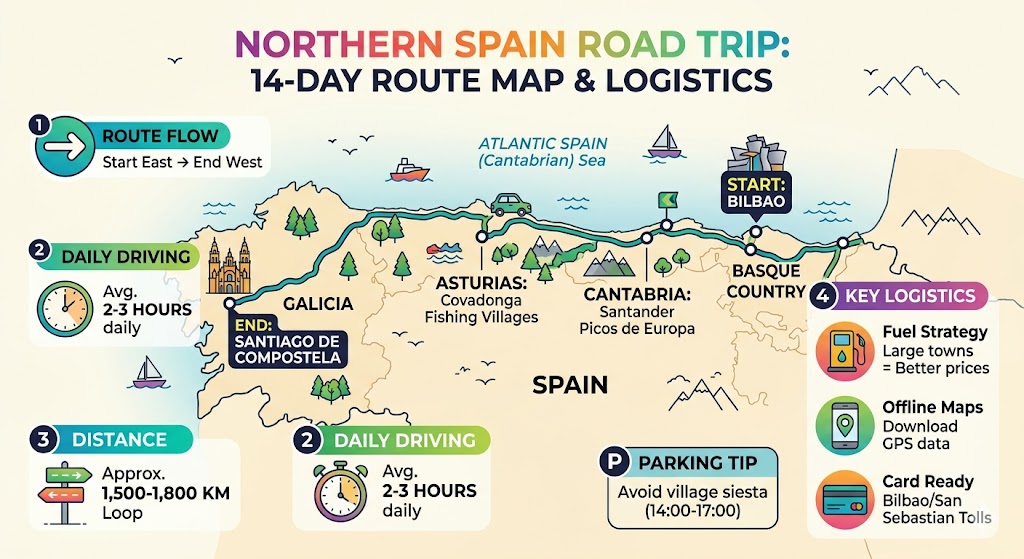
This 1,800-kilometer loop is designed to keep you moving without spending your entire day behind the wheel. You will start in Bilbao and head west, finishing your journey in the historic Santiago de Compostela. Since you’ll be crossing remote mountain passes and coastal villages, a little preparation goes a long way to keep the trip stress-free.
🧭 Route Flow: Travel West from the Basque Country toward the Galician coast.
⏱️ Daily Driving: Expect an average of 2 to 3 hours of active driving per day.
⛽ Fuel Strategy: Fill up in larger towns to avoid the higher prices found in isolated mountain stations.
📡 Offline Maps: Always download GPS data before entering deep Asturian valleys where mobile signals often drop.
To avoid “driving burnout,” keep your pace steady and plan your stops around the local rhythm. In small Galician villages, try to arrive before 14:00, as the afternoon siesta (14:00 to 17:00) makes parking nearly impossible. If your budget feels tight, check our guide on how to plan your trip to Spain for smart cost-cutting tips.
🚗 Car Rental & Driving Tips for Spain
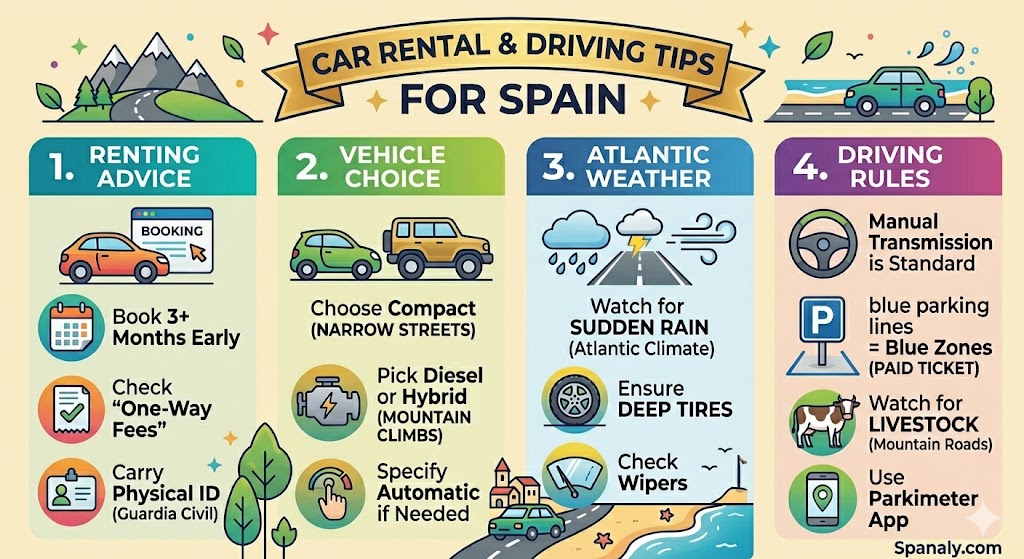
Renting a vehicle remains the only practical way to explore the hidden corners of España Verde. Public transport rarely reaches the most dramatic Asturian cliffs or Galician coves. To avoid high prices and limited stock, make sure to book your car at least three months in advance.
⚖️ Vehicle Size: Pick a compact car to navigate narrow medieval streets without stress.
⛽ Fuel Efficiency: Choose diesel or hybrid engines to handle steep mountain inclines affordably.
🌧️ Road Conditions: Watch for sudden Atlantic rain; ensure your tires have deep treads.
🅿️ Parking Rules: Look for blue street lines which indicate paid parking zones.
The process of picking up your vehicle can be tricky if you aren’t prepared for local insurance laws. Read our detailed guide on renting a car in Spain to avoid hidden fees at the airport counter. Be aware that manual cars are the standard; always specify “Automatic” during your search if needed.
🌟 Days 1-4: Bilbao, San Sebastian & Basque Coast
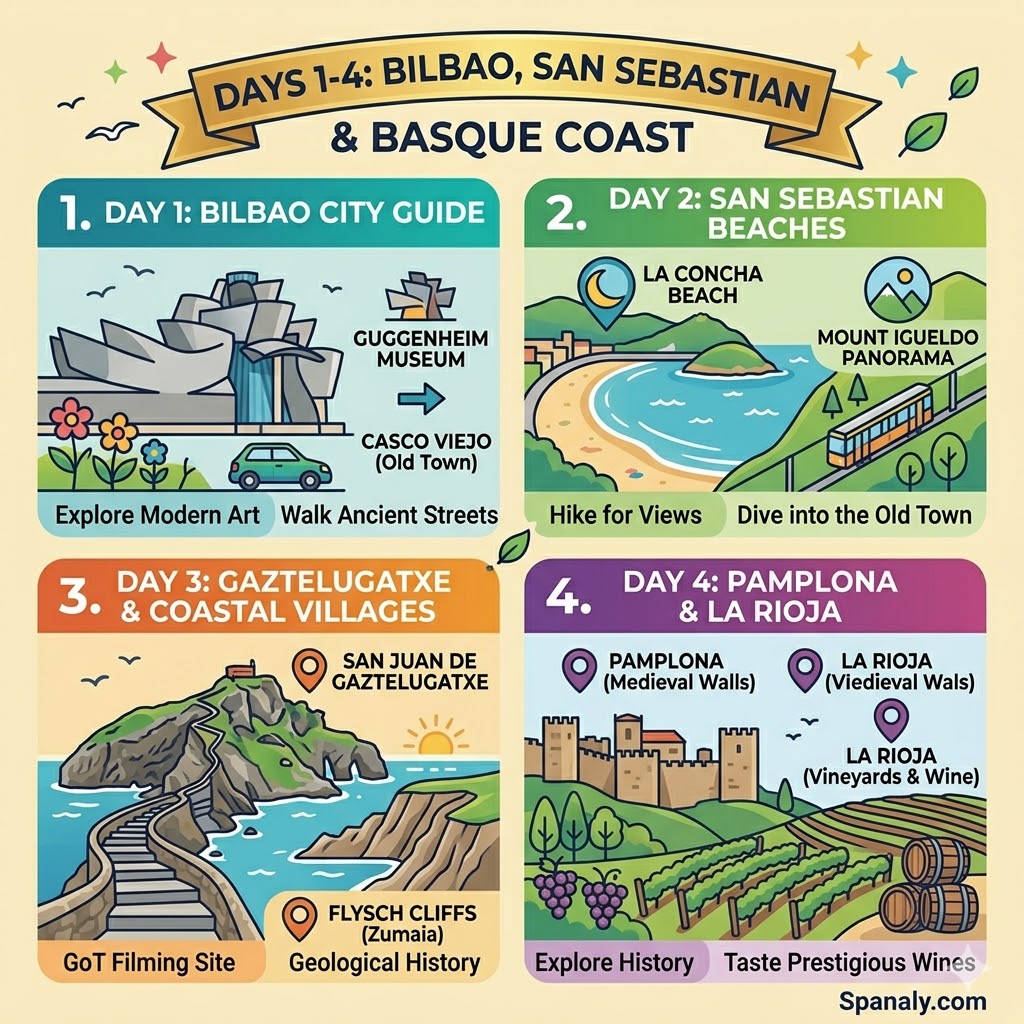
The Basque Country welcomes you with a mix of industrial grit and a world-class culinary scene. Unlike the scorched south, expect a refreshing light mist known as sirimiri to follow you along the coast. Since parking in San Sebastian is notoriously expensive and difficult, save your nerves by heading straight for underground car parks.
Day 1: Bilbao City Guide. Start at the Guggenheim Museum for its titanium architecture. To explore more local spots, check the best things to do in Bilbao.
Day 2: San Sebastian Beaches. Drive an hour east to reach the elegant La Concha Beach. There are many things to do in San Sebastian, including the hike up Mount Igueldo.
Day 3: Gaztelugatxe & Coastal Villages. Visit the rocky islet of San Juan de Gaztelugatxe, then continue to the ancient Flysch Cliffs in Zumaia.
Day 4: Pamplona & La Rioja. Explore the medieval walls of Pamplona before ending your day in the prestigious vineyards of La Rioja.
The local social life revolves around Pintxos and cold Txakoli wine. Keep in mind that most traditional bars in San Sebastian don’t provide seats; you eat standing up and move to the next spot after a drink or two. To master this ritual like a local, review our Spanish Cuisine guide before you arrive.
🏔️ Days 5-7: Cantabria & Picos de Europa Mountains
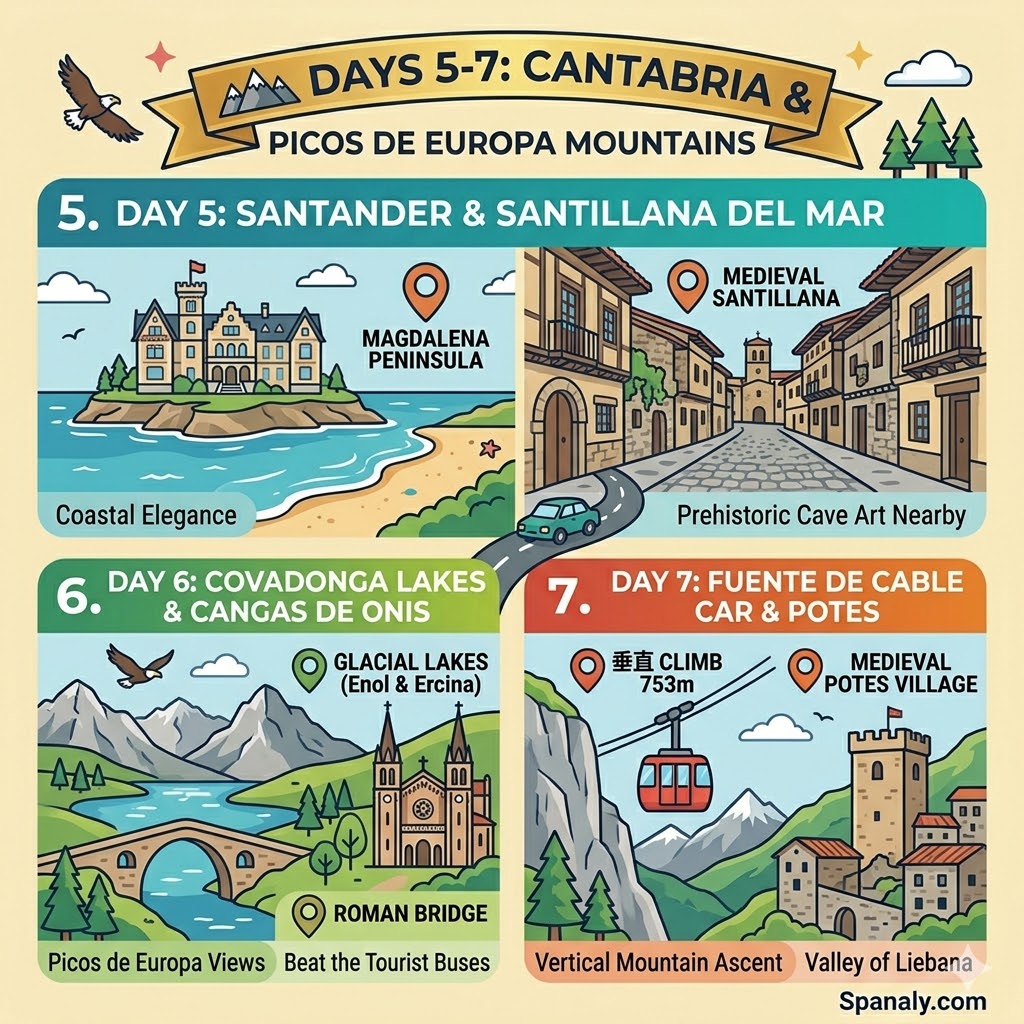
Leaving the Basque Country, you enter Cantabria, where limestone peaks meet the Atlantic. The scenery changes quickly from urban art to raw, prehistoric nature as you head into the mountains. Keep in mind that mountain roads here are narrow with 180-degree hairpin turns, so take your time and stay alert.
Day 5: Santander & Santillana del Mar. Explore the elegant Magdalena Peninsula in Santander. Later, walk the cobblestone streets of Santillana del Mar, famously known as the “Town of Three Lies.”
Day 6: Covadonga Lakes & Cangas de Onís. Enter the Picos de Europa National Park. Drive up to the glacial Enol and Ercina Lakes early in the morning to beat the tourist buses, as access is often restricted later in the day.
Day 7: Fuente Dé Cable Car & Potes. Experience a vertical climb of 753 meters at the Fuente Dé cable car. Spend your afternoon in Potes, a medieval stone village surrounded by towering peaks.
If you enjoy historical landmarks, don’t miss the prehistoric cave art nearby. Check our guide to Spanish Attractions to see which caves require booking in advance. For the best experience at Covadonga, check the local bus schedules if you aren’t arriving at sunrise.
🍃 Days 8-11: Asturias – Cities & Best Beaches
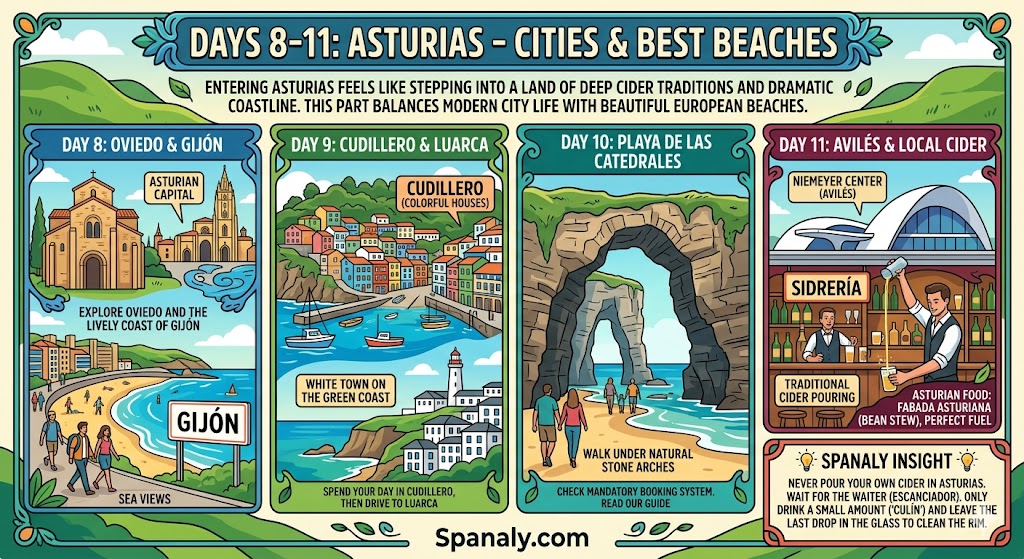
Entering Asturias feels like stepping into a land of deep cider traditions and dramatic coastline. This part of the Northern Spain Road Trip balances modern city life with some of the most beautiful beaches in Europe.
Day 8: Oviedo & Gijón. Explore the Asturian capital and the lively coast of Gijón. To see the best of both worlds, follow our Oviedo and Gijon itinerary to discover pre-Romanesque gems and sea views.
Day 9: Cudillero & Luarca. Spend your day in Cudillero, where colorful houses “hang” from the cliffs. Later, drive to Luarca, known as the white town on the Green Coast.
Day 10: Playa de las Catedrales. Walk under natural stone arches that look like gothic cathedrals during low tide. Make sure to read our Playa de las Catedrales guide regarding the mandatory booking system.
Day 11: Avilés & Local Cider. Explore the futuristic Niemeyer Center in Avilés. End your day in a local Sidrería (cider house) to watch the traditional “pouring” of Asturian cider.
Asturian food is designed for mountain weather and hearty appetites. The undisputed king of the table is the Fabada Asturiana, a rich bean stew that provides the perfect fuel after a long day of driving.
Spanaly Insight: Never pour your own cider in Asturias. Wait for the waiter (Escanciador) to pour it from a height to aerate the drink. Only drink a small amount at a time (“culín”) and leave the last drop in the glass to “clean” the rim, as is local custom.
⛪ Days 12-14: Galicia – Santiago & Coastal Route
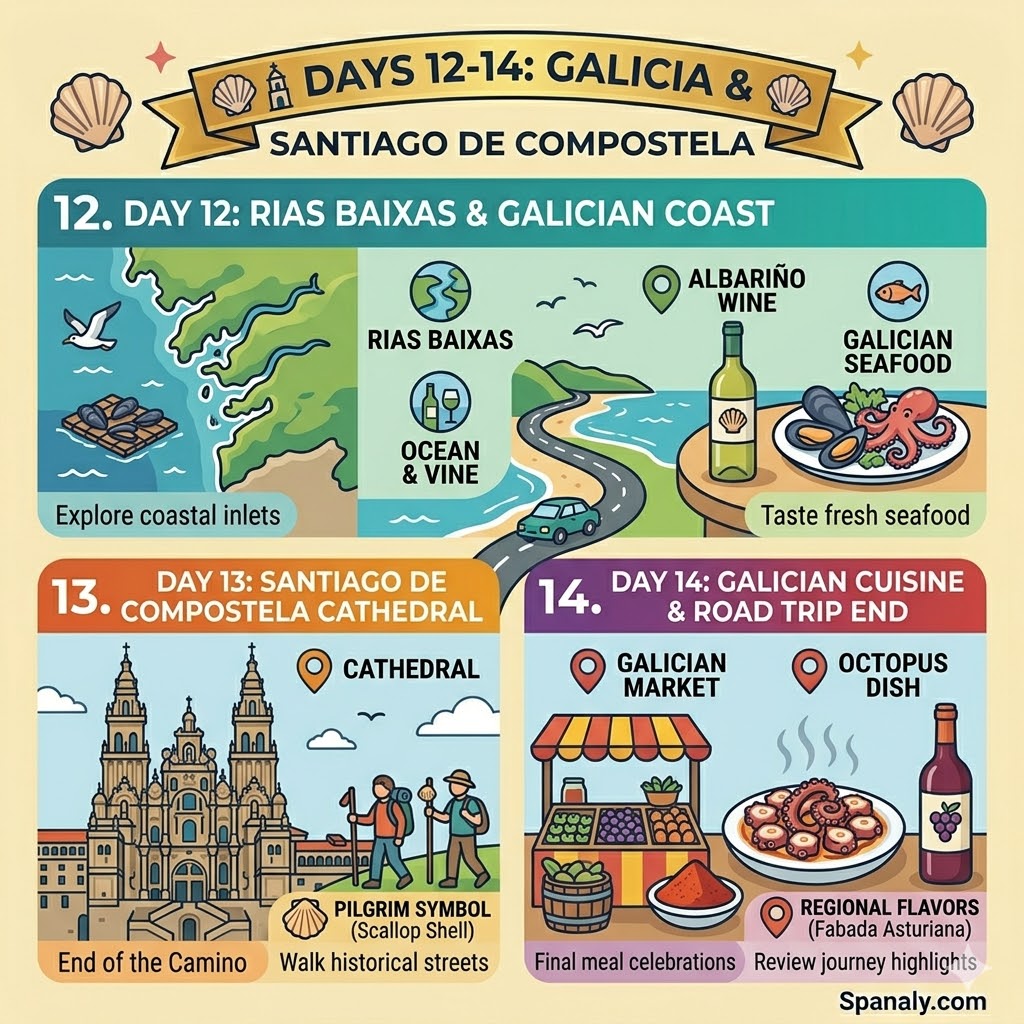
The final leg of your Northern Spain Road Trip takes you into Galicia, a land of Celtic roots, mystical mist, and the freshest seafood in Europe. Here, the landscape softens into deep river canyons and coastal inlets known as Rías.
Day 12: Ribeira Sacra & Sil Canyon Boat Trip. Start your Galician chapter by exploring the Ribeira Sacra. Take a boat trip through the dramatic Sil Canyon, where vineyards are planted on nearly vertical slopes.
Day 13: Santiago de Compostela Cathedral Guide. Reach the spiritual heart of the region. Navigating the end of the Camino can be overwhelming, so follow our Santiago de Compostela Cathedral guide to learn about the rituals, the Botafumeiro, and the best views of the Plaza del Obradoiro.
Day 14: Rias Baixas, Seafood & Wine Tasting. End your journey in the Rías Baixas. This area is world-famous for its white Albariño wine and granite villages like Combarro.
Galician gastronomy is a celebration of the Atlantic. You cannot leave without trying Pulpo a la Gallega (octopus with paprika). For a complete list of what to eat in this final stage, our guide to Spanish Cuisine covers everything from Empanada to Padrón peppers.
Spanaly Insight: If you plan to attend the Pilgrim’s Mass at the Cathedral to see the giant incense burner (Botafumeiro) swing, arrive at least 45 minutes early. It only operates on specific feast days or if a group has paid a donation in advance, so check the Cathedral’s official schedule the morning of your visit.
💡 Planning Your Trip: Practical Advice
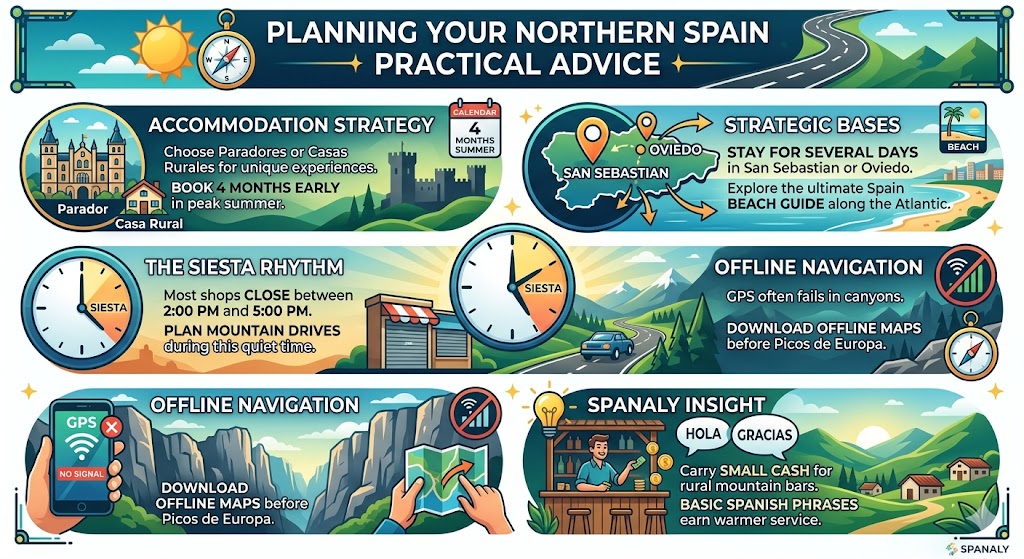
Northern Spain is raw and authentic, which means you’ll need to adapt to a slower, more local pace. To avoid common travel headaches, focus on how the locals move and where they stay. Use these tips to keep your journey across the Atlantic coast smooth and enjoyable.
Accommodation Strategy: Choose Paradores or Casas Rurales for a unique experience. Book these at least 4 months in advance during the summer peak.
Smart Hubs: Don’t change hotels every night. Stay in San Sebastian or Oviedo for several days and use them as bases to explore the ultimate Spain beach guide.
The Siesta Rhythm: Most shops close between 14:00 and 17:00. Plan your mountain drives or long stretches of road during this quiet time.
Navigation & Cash: GPS signals often fail in deep limestone canyons, so always download offline maps. Carry small cash for rural mountain bars, as many remote villages don’t accept credit cards yet.
Learning basic Spanish phrases will also earn you much warmer service in the more traditional villages.
☀️ Best Time for a Northern Spain Road Trip
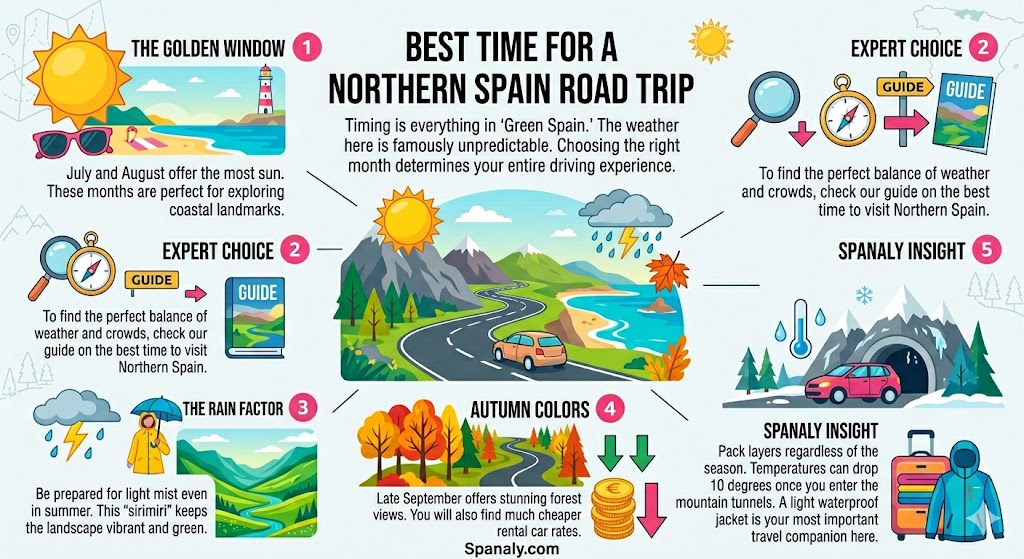
Timing is everything in “Green Spain.” The weather here is famously unpredictable. Choosing the right month determines your entire driving experience.
The Golden Window: July and August offer the most sun. These months are perfect for exploring coastal landmarks.
Expert Choice: To find the perfect balance of weather and crowds, check our guide on the best time to visit Northern Spain.
The Rain Factor: Be prepared for light mist even in summer. This “sirimiri” keeps the landscape vibrant and green.
Autumn Colors: Late September offers stunning forest views. You will also find much cheaper rental car rates.
Spanaly Insight: Pack layers regardless of the season. Temperatures can drop 10 degrees once you enter the mountain tunnels. A light waterproof jacket is your most important travel companion here.
🥘 Best Local Food to Try in Each Region
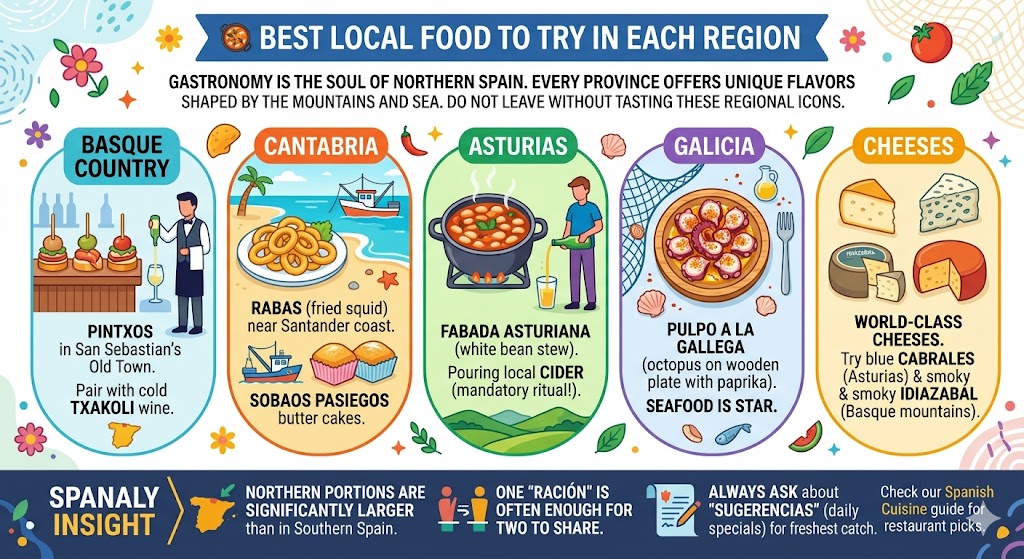
Gastronomy is the soul of Northern Spain. Every province offers unique flavors shaped by the mountains and sea. Do not leave without tasting these regional icons.
Basque Country: Start with Pintxos in San Sebastian’s Old Town. Pair these small bites with a glass of cold Txakoli wine.
Cantabria: Try the Rabas (fried squid) near the Santander coast. For dessert, the buttery Sobaos Pasiegos are a local treasure.
Asturias: You must try the famous Fabada Asturiana, a rich white bean stew. Pouring local cider from a height is a mandatory ritual.
Galicia: Seafood is the star here. Order the Pulpo a la Gallega served on a wooden plate with paprika.
The north is also home to world-class cheeses. Try the blue Cabrales from Asturias or the smoky Idiazabal from the Basque mountains. To explore more about these regional delicacies, check our Spanish Cuisine guide for the best restaurant picks.
Spanaly Insight: Northern portions are significantly larger than in Southern Spain. One “Ración” is often enough for two people to share. Always ask the waiter about the “Sugerencias” (daily specials) to taste the freshest catch of the day.
🎒 Packing List for Northern Spain Weather
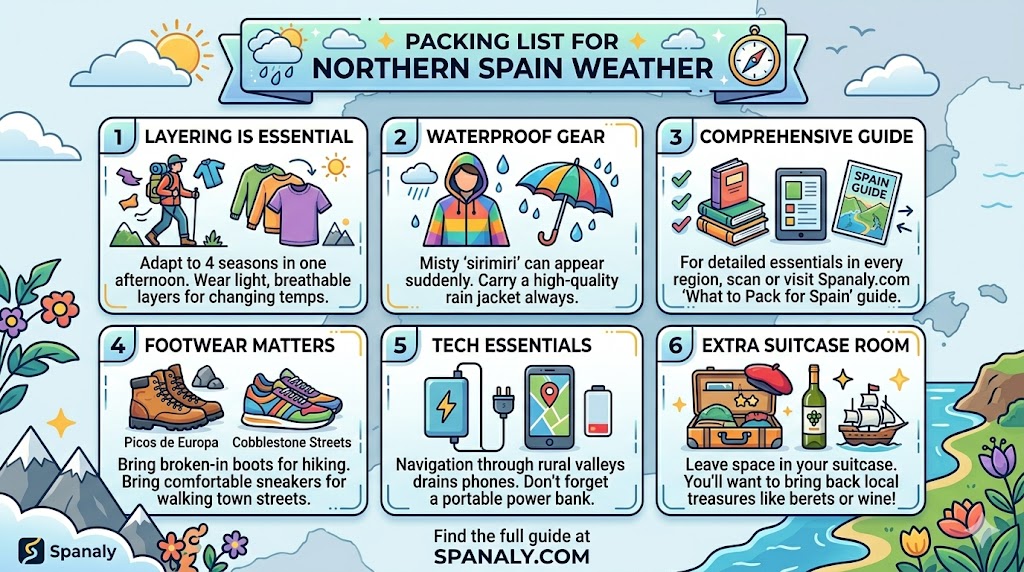
The Atlantic climate is famous for shifting through four seasons in a single afternoon. Packing for Northern Spain is all about versatility—you need gear that handles both the humid coast and the crisp mountain air without weighing you down.
Dress Like an Onion: Wear light, breathable layers to easily adapt to changing temperatures between the coast and the Picos de Europa.
The “Sirimiri” Essential: A high-quality, lightweight rain jacket is mandatory, as misty Atlantic rain can appear even on a sunny summer day.
Footwear Strategy: Bring broken-in hiking boots for mountain trails and comfortable sneakers for navigating medieval cobblestone streets.
Tech Backup: Don’t forget a portable power bank, as using GPS for navigation through rural valleys drains phone batteries quickly.
For a complete breakdown of every essential item, check our what to pack for Spain guide to ensure you’re covered for every region.
✅ Expert Tips for the Road
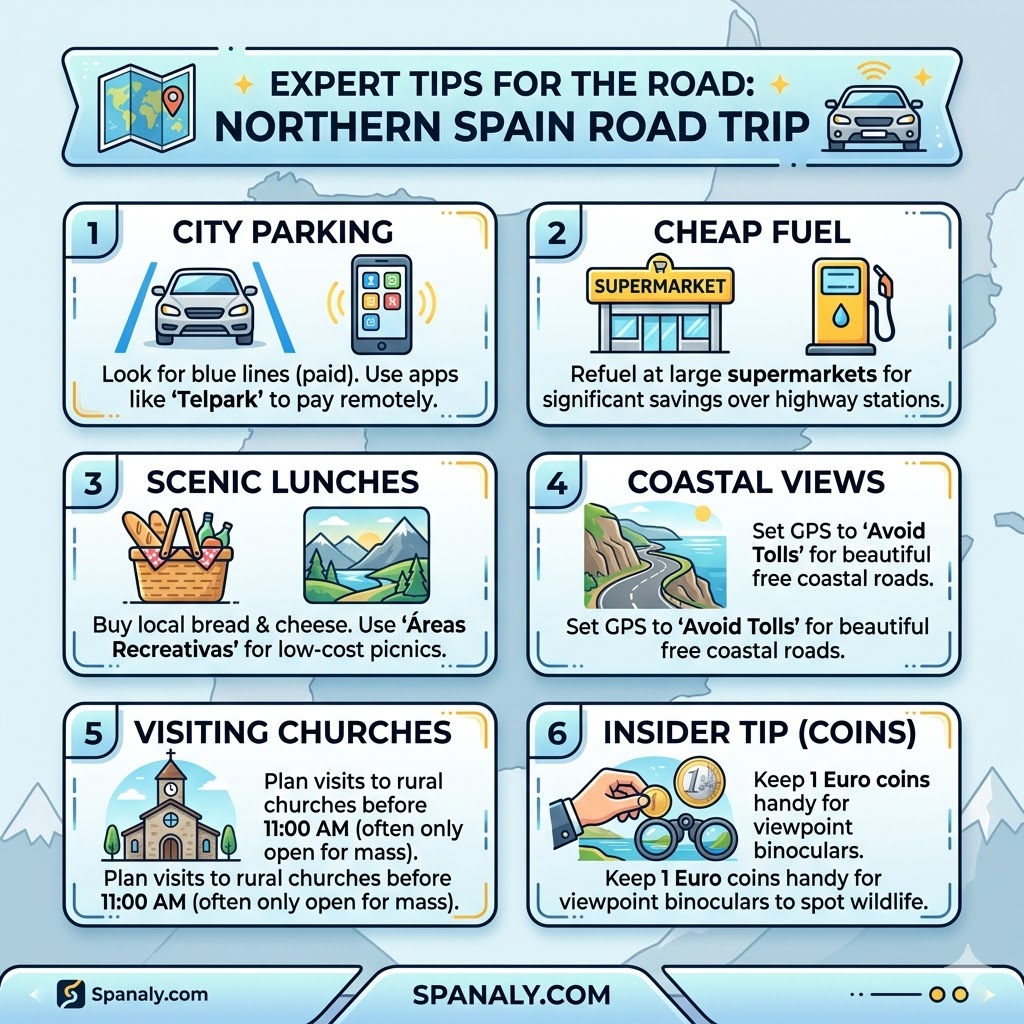
Completing a Northern Spain Road Trip is a transformative experience. To make your journey flawless, consider these “insider-only” secrets gathered from veteran travelers and local communities.
The “Blue Zone” Parking: In cities like Gijón or Santander, blue lines mean paid parking. Download the “Telpark” or “ElParking” apps to pay and extend time remotely without returning to your car.
Supermarket Fuel: Save money by refueling at gas stations attached to large supermarkets like E.Leclerc or Eroski. They often offer significantly lower prices than highway stations.
The Picnic Strategy: Northern Spain has incredible “Áreas Recreativas” with stunning views. Buy fresh local cheese and bread from a village “Panadería” for the most scenic, low-cost lunches.
Toll-Free Beauty: Set your GPS to “Avoid Tolls” between Bilbao and Santander. The N-634 coastal road is slower but offers breathtaking views that the AP-8 highway skips entirely.
Church Etiquette: Many rural Galician churches only open for morning mass. Plan your visits before 11:00 AM if you want to see the interior gold-leaf altars.
🛡️ Visitor FAQs – Northern Spain Road Trip Logistics
🚗 Is it difficult to find parking for a rental car in Basque villages?
Yes, parking in historic villages like Cudillero or Getaria is strictly limited. It is best to use the large "Disuasorio" parking lots located at the town entrance. These are often free or very cheap, and walking just 10 minutes saves you from the stress of narrow, one-way medieval streets.
⛽ What is the difference between "Gasolina" and "Gasoil" at the pump?
This is a common mistake that can ruin your trip. Gasolina is unleaded petrol (usually Green nozzle), while Gasoil is Diesel (Black nozzle). Always check the sticker inside your rental car’s fuel flap. If you put the wrong fuel, do not start the engine; call your roadside assistance immediately.
🐾 Can I bring my dog on a road trip through Picos de Europa?
Northern Spain is very pet-friendly, but National Park rules are strict. In the Picos de Europa, dogs must be kept on a leash at all times to protect local wildlife and livestock. Note that many "Alsa" shuttle buses to the Covadonga Lakes only allow small pets in carriers in the luggage compartment.
📶 Will my GPS work in the remote valleys of Asturias and Galicia?
Satellite signal is generally good, but mobile data (4G/5G) often drops in deep limestone canyons like the Sil or Cares. We highly recommend downloading "Offline Maps" on Google Maps or using a dedicated GPS device provided by your car rental company to avoid getting lost in rural areas.
💳 Do I need to carry a lot of cash for tolls and small bars?
While most tolls and restaurants accept contactless payments, carrying 20-50 Euros in cash is wise. Small mountain taverns (Tabernas) or rural parking meters sometimes only accept coins or physical cards. Also, keep coins for public restrooms or small tips in local cider houses.
Latest Road Trip Update by Spanaly.com
Northern Spain isn’t just a place to check off a list; it’s a region that rewards curiosity. Whether you’re navigating Asturian cliffs or Galician villages, every kilometer offers something authentic. Your engine is ready, and the green roads are waiting for you.
Don’t Over-plan: Leave an hour each day to follow an unmarked trail or visit a local bakery.
Stay Flexible: The North’s beauty lies in its unpredictable mist and hidden corners.
Beyond the North: If your journey continues toward the Mediterranean, don’t miss our guide on the best things to do in Barcelona.
Pack your raincoat, grab your camera, and embrace the raw beauty of “Green Spain”. The road is yours enjoy every turn.