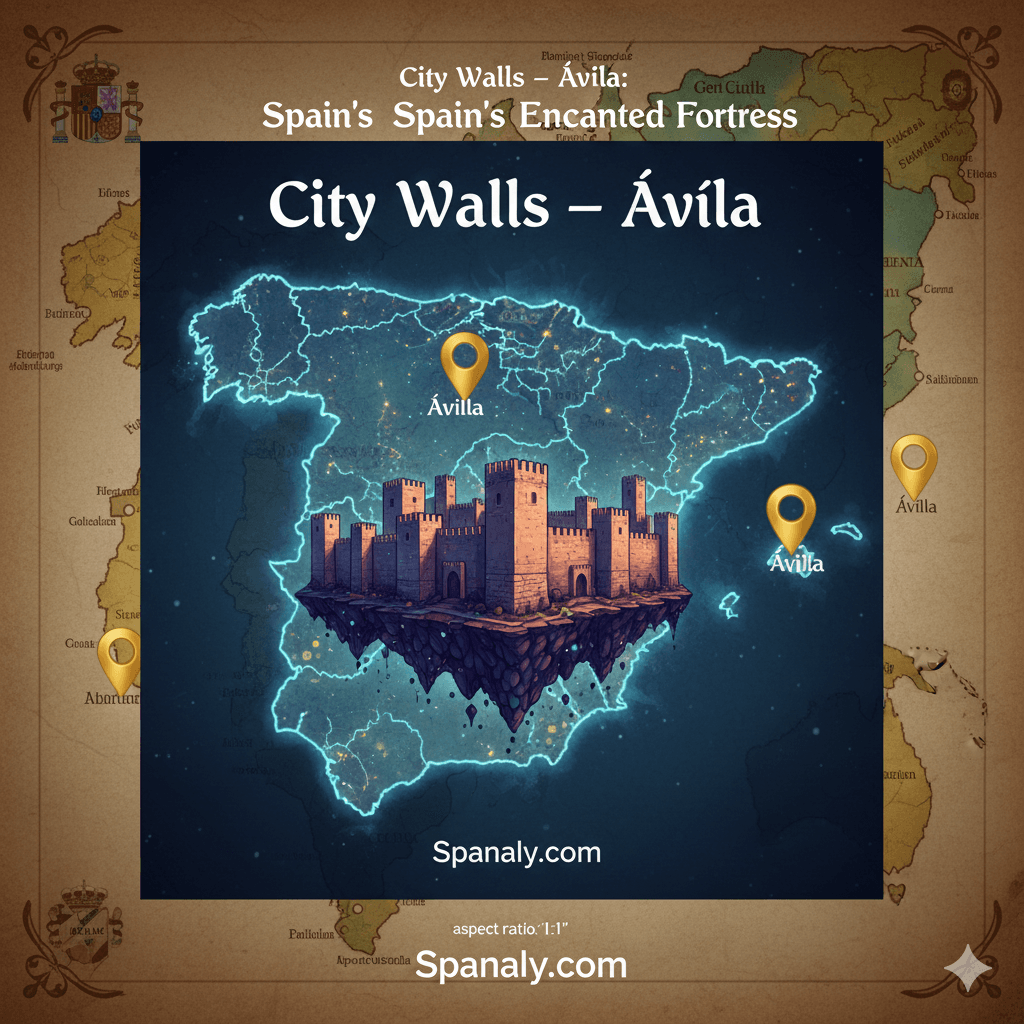
📜 The City Walls of Ávila rise majestically from the Castilian plateau. These walls are more than stone; they unite faith, defense, and art. Built in the 11th century, they stretch over 2.5 kilometers. Today, they preserve Ávila’s medieval soul.
As a top Spanish Attraction, every tower reflects a deep history. Walking these ramparts lets you feel centuries of life. It is the perfect trip for anyone following our Ultimate Madrid Travel Guide.
Table of Contents
Toggle⚔️ Origins and Historical Layers
King Alfonso VI ordered the construction in 1090. This happened shortly after the Christian reconquest. The walls served as a bastion of faith on a dangerous frontier.
🏗️ Master Builders: Legend says Castrillo designed the walls. He led a team of Christian and Mozarabic builders.
⛪ Sacred Frontier: The walls separated sacred inner streets from the outside world.
🛡️ Defensive Power: These fortifications projected strength, similar to those in our Ultimate Seville Travel Guide.
💎 Architectural Details Few Notice
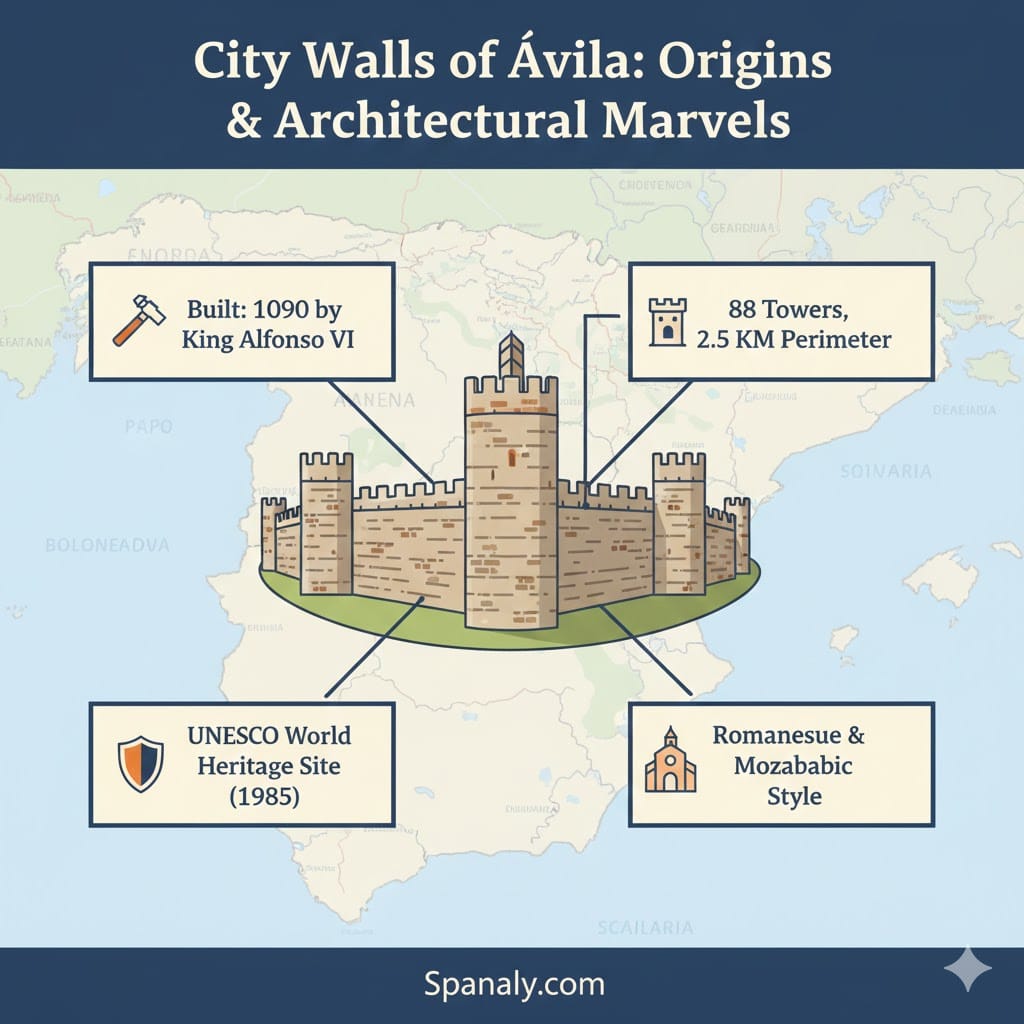
Ávila’s walls showcase incredible medieval engineering:
🗼 Variable Towers: The 88 towers vary in height to fit the terrain. This creates perfect visual harmony.
⚒️ Mason Marks: Look closely at the stones. You will see stars and animals etched by 12th-century workers.
🛡️ Fortress-Cathedral: The Cathedral of Ávila integrates directly into the wall. Its apse serves as a defensive tower. This design is unique in Europe.
⛪ The Sacred City Within
Ávila is the “City of Saints and Stones.” The inner streets hide many treasures:
🕍 Cathedral of the Saviour: This building was the first Gothic cathedral in Spain. It served both God and the military.
🙏 Saint Teresa of Ávila: This famous mystic was born here. Her influence remains strong. The spiritual heritage here rivals that of our Ultimate Barcelona Travel Guide.
🎭 Legends and Stories Hidden in the Stones
The walls are not just granite; they are a repository of folklore that brings the medieval era to life:
👻 Rampart Spirits: Local legends whisper about the spirits of ancient builders who still guard the city on stormy nights.
🧿 Stone of the Moor: Located near Puerta del Carmen, touching this ancient stone is said to bring luck to travelers.
🎉 Living History: To see the walls in their full glory, visit during the Spanish Festivals in summer, when the entire city returns to the Middle Ages with knights and artisans.
🥘 Exploring the Walls Today
Follow these tips to enjoy your visit:
🚶 Walking Routes: Three routes exist. The path from Puerta del Alcázar to Puerta del Carmen offers the best views.
🍴 Local Gastronomy: Taste the best of Spanish Cuisine. You must try “Yemas de Santa Teresa,” a local sweet.
🌅 Golden Hour: Visit at sunset. The granite walls glow with a golden light. It is perfect for photos.
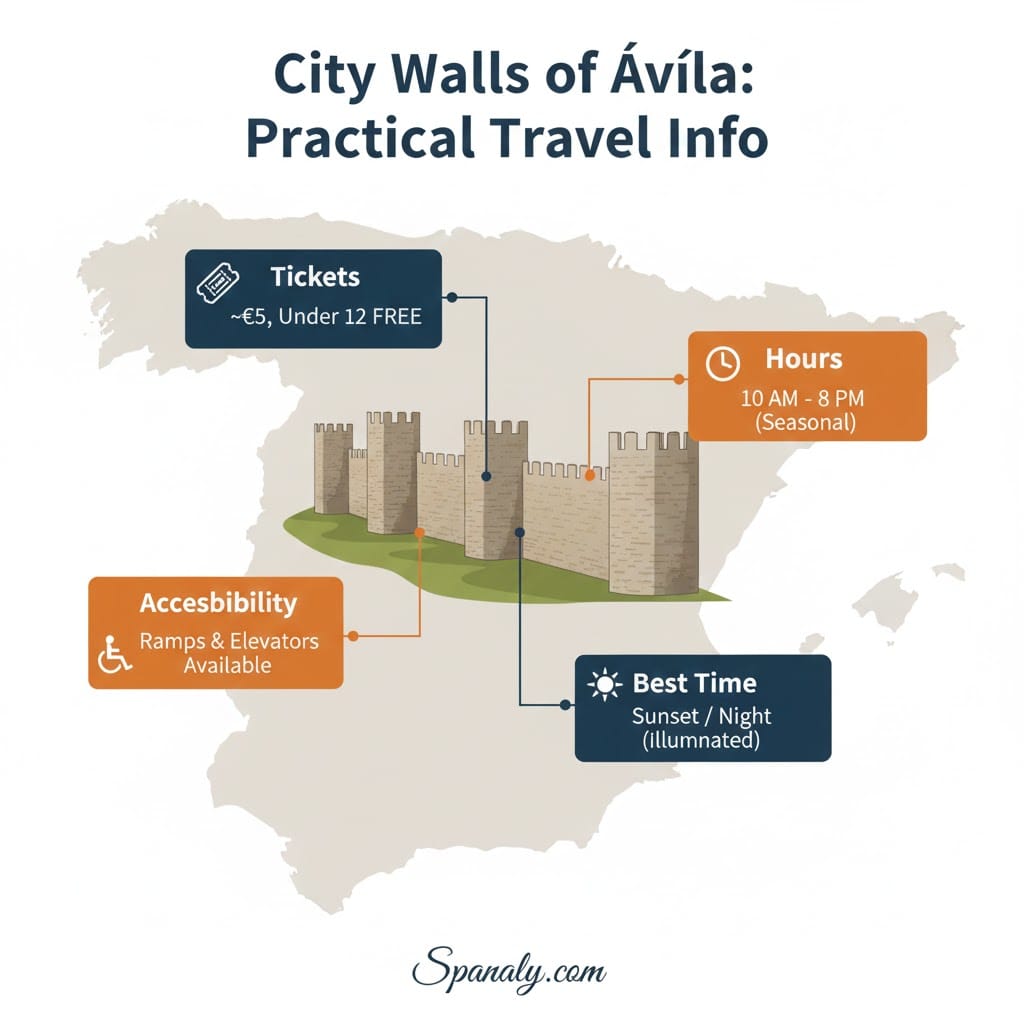
🖼️ Practical Travel Info: Visiting the Walls
To help you plan the perfect visit to the City Walls of Ávila, we have gathered the essential details you need. This landmark is a highlight of any trip to the region and is highly recommended for those following our Ultimate Madrid Travel Guide.
📍 Location: The walls encircle the entire old town. The main visitor centers are at Casa de las Carnicerías and Puerta del Alcázar.
🕒 Opening Hours: Generally open from 10:00 AM to 8:00 PM (Seasonal changes apply; closed on some Mondays in winter).
🎟️ Tickets: General admission is approximately €5. Children under 12 usually enter for free.
👟 Travel Tip: Wear comfortable walking shoes! The stone path atop the walls is 2.5km long with several stairs and uneven surfaces.
🌅 Best Time to Visit: Arrive an hour before sunset to see the granite stones turn a deep golden orange—a photographer’s dream.
♿ Accessibility: While the walls are ancient, elevators and ramps have been installed at specific points (like the Bridge Gate) to ensure inclusivity for all visitors.
🌍 UNESCO World Heritage Status
Designated in 1985, Ávila’s old town and its spectacular walls are recognized for their:
🛡️ Remarkable Conservation: The most complete medieval fortification in Spain.
⛪ Christian Stronghold: A perfect representation of the medieval military and religious architecture.
✅ Authenticity: The defensive line is 100% traceable, preserving the original spirit of the 11th century.
🛡️ City Walls of Ávila: Visitor FAQ
1. Can you walk all the way around the Walls of Ávila?
While the walls form a complete 2.5km circuit around the city, the walkable path on top (the ramparts) is divided into two main sections. You can walk approximately 1.7km of the total perimeter, offering breathtaking views of the Cathedral and the surrounding Castilian countryside.
2. How much does it cost to enter the Ávila Walls?
General admission is €5. There are reduced rates for students and seniors (€3.50), and children under 12 can enter for free. On Tuesday afternoons (usually from 2:00 PM to 4:00 PM), entry is often free for everyone, but it is best to check at the visitor center for seasonal updates.
3. Is it possible to visit the walls at night?
During the summer months, special night visits are often organized, allowing you to walk the illuminated ramparts under the stars. Even if the path is closed, the exterior of the walls is beautifully lit every night, providing a stunning backdrop for a walk outside the perimeter.
4. Why is the Cathedral of Ávila part of the wall?
The Cathedral of San Salvador was designed as a fortress-church. Its apse (the Cimborrio) forms the strongest tower in the eastern section of the wall. This dual-purpose architecture allowed the city to save on materials while ensuring the most sacred site was also the most heavily defended.
5. How much time should I spend at the City Walls?
We recommend at least 90 minutes to 2 hours to comfortably walk the open sections and take photos. If you plan to visit the nearby Romanesque churches and the Cathedral as well, a full-day trip is highly encouraged.
WALLS
City Walls – Ávila
Overview: The City Walls of Ávila stretch for 2.5 km with 88 towers and 9 monumental gates. They represent a perfect union of defensive strength and spiritual heritage — with the cathedral itself built into the wall.
Highlights included in the tourist card:
- The walkable City Walls of Ávila.
- Catedral del Salvador – a cathedral integrated into the wall.
- Royal Monastery of Santo Tomás and Monastery of La Encarnación.
- Basilica of San Vicente and the Museum of Ávila.
Local Legends & Hidden Details: Ancient mason marks can still be seen on the stones, and local folklore speaks of the “Stone of the Moor” near Puerta del Carmen — said to bring luck to travelers who touch it before leaving the city.
The City Walls of Ávila are more than stone fortifications; they are Spain’s open-air chronicle—a conversation between eternity and time. To stand on those ancient ramparts is to witness the fusion of architecture, mysticism, and human perseverance. They remain one of the most essential Spanish Attractions, proving that Ávila is not just a city surrounded by walls—it is a wall that has become a city.
Plan your visit to Ávila and discover the soul of Spain behind its timeless walls, perhaps as a perfect detour while exploring the treasures in our Ultimate Madrid Travel Guide.