🚗 Extremadura to Seville
The rolling dehesa oaks of Extremadura surrender to the sun-drenched horizons of Andalusia. This journey is a transition from Spain’s silent, ancient heart into the vibrant, rhythmic streets of Seville.
🗺️ Route Highlights
The Transition: Trade high-altitude tranquility for the bustling, sun-drenched spirit of Andalusia.
Expert Planning: Utilize our Extremadura Travel Guide for a perfectly polished departure.
Cultural Bridge: Connect the historic Roman legacy of the north to the iconic, Moorish-influenced architecture of the south.
🛡️ Expert Logistics
Direct Access: The A-66 highway provides an efficient artery, while hidden secondary roads reveal authentic, untouristed treasures.
Landscape Evolution: Witness the dramatic shift from granite-strewn mountains to fertile, expansive olive groves.
Seamless Transit: Transform a routine commute into a curated exploration of the Spanish interior.
By balancing the A-66 efficiency with deliberate stops, you turn a standard transfer into the highlight of your adventure.
📊 Quick Travel Snapshot: Extremadura to Seville
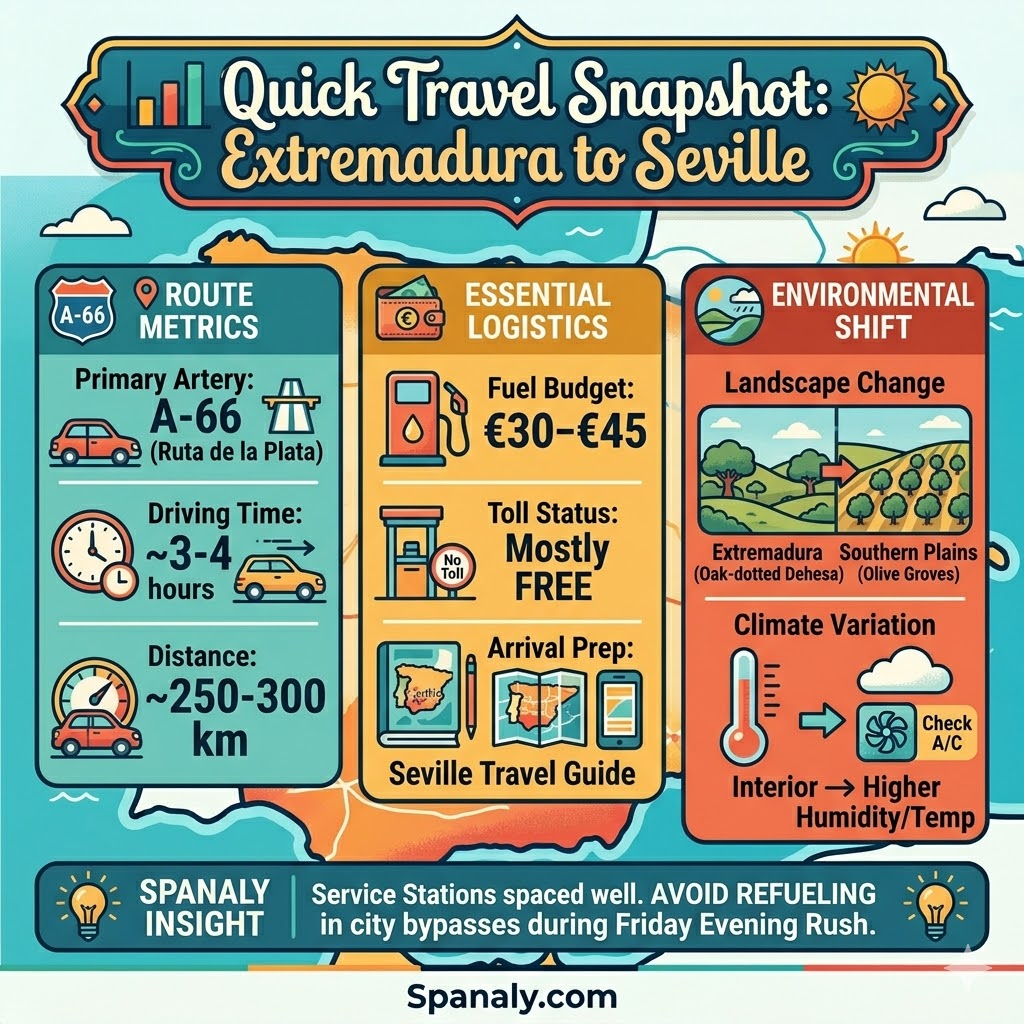
Efficiency is the cornerstone of a great road trip. Use these essential metrics to manage your transition from Extremadura to the heart of Andalusia seamlessly.
Primary Route: The A-66 (Ruta de la Plata) is your most direct, toll-free highway connection.
Travel Time: Expect 3 to 4 hours of driving time to cover the 250–300 km distance.
Fuel Budget: Plan for €30–€45 depending on your vehicle’s efficiency and current pump prices.
Climate & Comfort: Southern Andalusia is more humid than the Extremaduran interior; ensure your vehicle’s air conditioning is fully serviced.
Refueling Tip: Avoid refueling inside major city bypasses during Friday evening rush hour to avoid delays.
🛣️ Choosing Your Route: The A-66 and Scenic Detours

The path you choose determines whether your trip is a simple commute or a deep cultural exploration. Compare your options to match your pace and interests.
🏁 Option 1: The A-66 (Ruta de la Plata)
The Experience: This is the most efficient highway link. It follows the ancient Roman path connecting the north to the south.
Why Choose It: You value direct travel, consistency, and minimal navigation stress. It is the safest and fastest option for all vehicles.
Trade-off: You miss the intimate details of the smaller, hidden mountain villages that lie just beyond the highway’s reach.
⛰️ Option 2: The Scenic Sierra Route (via Aracena)
The Experience: Divert through the Sierra de Aracena mountain range. Expect winding roads, lush chestnut forests, and dramatic elevation changes.
Why Choose It: You want immersive nature, traditional mountain gastronomy, and photogenic stops that the main highway simply cannot provide.
Trade-off: High driving effort. You must focus on narrow paths and frequent turns; your total journey time will increase significantly.
🏛️ Option 3: The Roman Heritage Detour (via Italica)
The Experience: Stick to the A-66 but schedule a mandatory exit at Santiponce to explore the massive Roman ruins of Italica.
Why Choose It: It bridges the gap between Extremadura’s Roman history and Seville’s urban landscape perfectly. It is the ultimate “best of both worlds” route.
Trade-off: Adds an extra 2 hours to your schedule, requiring a well-planned morning departure to arrive in Seville before sunset.
💡 Spanaly Insight: If you feel the drive is too monotonous, choose the A-66 for the morning leg, then exit into the Sierra for a long lunch. Merge back onto the highway refreshed and ready for the final Seville approach.
🏛️ Essential Stops Between Extremadura and Seville
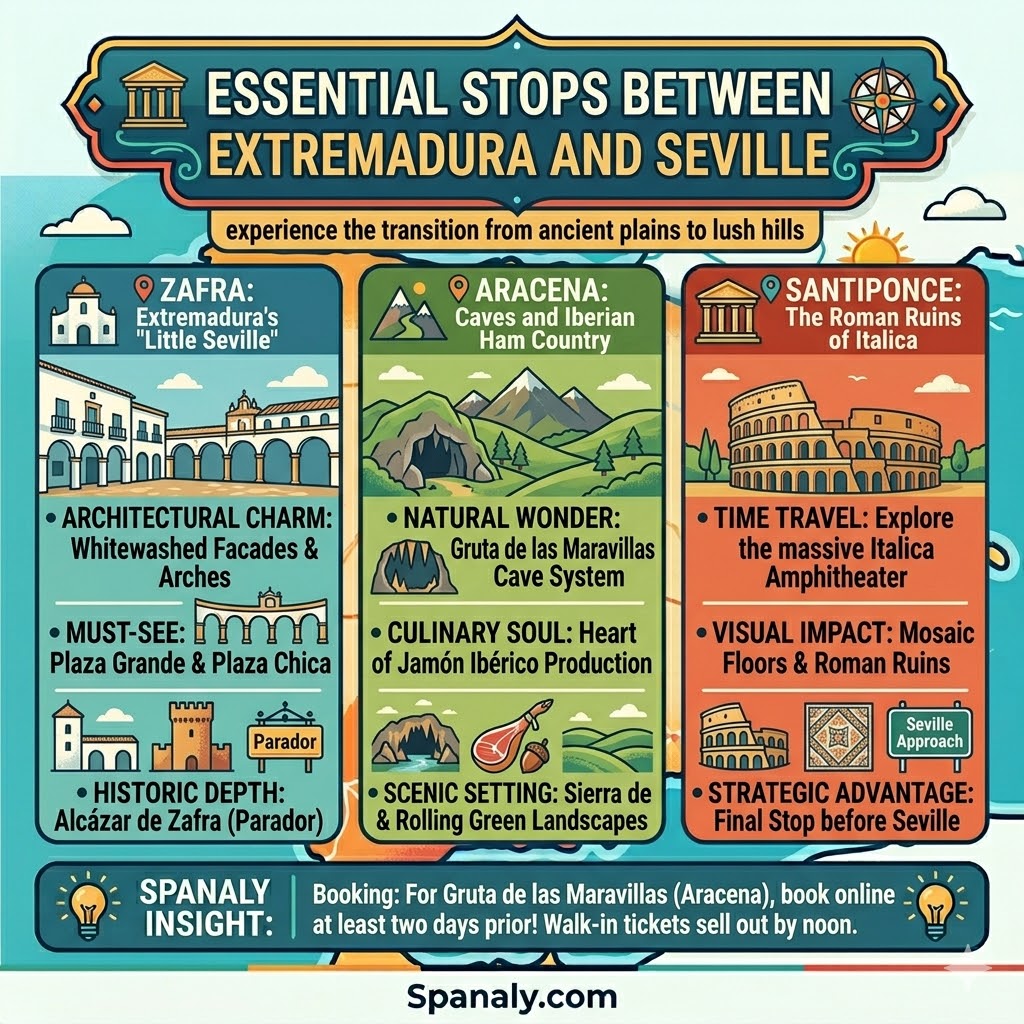
Break your drive at these three pivotal locations to experience the smooth transition from Extremaduran plains to Andalusian hills.
🏛️ Zafra: Extremadura’s “Little Seville”
Southern Aesthetics: Zafra’s whitewashed facades and vibrant arcaded squares provide a gentle, beautiful introduction to southern Spain.
Must-See Squares: Wander the Plaza Grande and Plaza Chica; their traditional arcades offer perfect relief during midday heat.
Historic Parador: Visit the 15th-century Alcázar de Zafra, a fortress that blends defensive history with modern comfort.
🌿 Aracena: Caves and Iberian Ham
Natural Wonder: Explore the Gruta de las Maravillas, a spectacular cave system filled with crystalline lakes and intricate rock formations.
Culinary Soul: Aracena is the heart of Jamón Ibérico production; sample local cured meats in an authentic mountain tavern.
Scenic Setting: The town sits in the lush Sierra de Aracena, offering green landscapes contrasting sharply with northern plains.
🏺 Santiponce: The Roman Ruins of Italica
Ancient History: Explore the massive amphitheater of Italica, the birthplace of Roman emperors Trajan and Hadrian, before reaching Seville.
Tangible Links: Mosaic floors and extensive ruins provide a clear connection to the Roman history found earlier in Mérida.
Strategic Stop: This is the perfect final destination to appreciate the region’s ancient foundations before entering Seville’s urban core.
💡 Spanaly Insight: Book Gruta de las Maravillas tickets online at least two days prior. Visitor numbers are strictly limited, and walk-in spots often sell out by noon.
🏨 Where to Stay: Best Hotels en Route

Selecting the right base transforms your transit into a restful experience. Use these verified locations to anchor your journey from Extremadura to Seville.
📍 Zafra: Historic Comfort
Parador de Zafra: Housed in a 15th-century castle, this hotel allows you to sleep within defensive battlements while enjoying modern amenities.
Hotel Plaza Grande: Located directly on the town’s famous square, it offers an authentic atmosphere steps away from local dining.
Expert Tip: For a broader selection of boutique stays throughout the region, explore our curated Where to Stay in Extremadura guide.
📍 Aracena: Mountain Retreats
Hotel Convento Aracena & SPA: A restored 17th-century convent providing a serene environment perfect for relaxing after mountain driving.
Barceló Aracena & Spa: Ideal if you prefer 4-star comfort with panoramic views of the Sierra de Aracena natural reserve.
Booking Advice: These properties fill up quickly on weekends; secure your room well in advance, especially during the autumn chestnut harvest.
📍 Seville: Heart of the City
Hotel Alfonso XIII: An iconic luxury landmark, perfect for travelers seeking the ultimate historical immersion near the Real Alcázar.
Hotel Amadeus: A highly-rated boutique hotel in the historic center, offering a unique musical theme and stunning rooftop views.
Planning Guide: For a comprehensive list of neighborhoods from the vibrant Triana to the historic Santa Cruz see our Where to Stay in Seville guide.
💡 Spanaly Insight: If you stay in Zafra or Aracena, prioritize properties with secure parking. Historic town centers often feature narrow, labyrinthine streets where street parking is stressful and risky for rental vehicles.
🥘 Gastronomy Guide: From Dehesa to Tapas
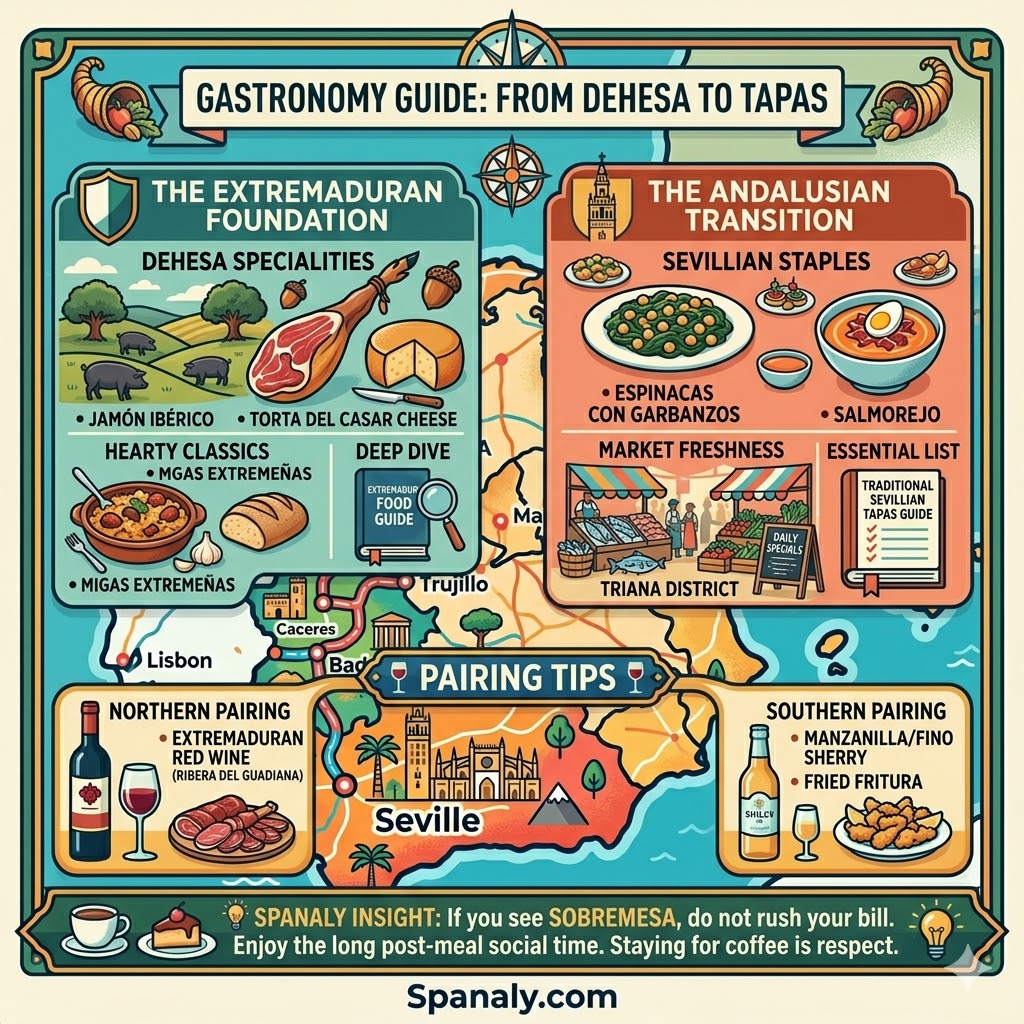
This route bridges two distinct culinary worlds. Master the flavors of the road by understanding what to order at every stop from the north to the south.
🥩 The Extremaduran Foundation
Dehesa Specialties: Begin your journey by prioritizing products derived from the dehesa ecosystem. This includes acorn-fed Jamón Ibérico and intensely flavored Torta del Casar cheese.
Hearty Classics: Look for Migas Extremeñas, a traditional shepherd’s dish made with breadcrumbs, garlic, and local chorizo, perfect for refueling.
Deep Dive: For a full breakdown of the region’s culinary heritage, explore our Extremadura Food Guide.
🥗 The Andalusian Transition
Sevillian Staples: Once you cross into Andalusia, your focus shifts to tapas culture. Order Espinacas con Garbanzos (spinach with chickpeas) or Salmorejo, a chilled tomato cream topped with egg and ham.
Market Freshness: Always ask for the “daily market special” in Seville’s Triana district. Chefs utilize seasonal produce that never appears on standard tourist menus.
Essential List: Our Traditional Sevillian Tapas guide outlines exactly what to order to navigate any authentic taberna.
🍷 Pairing Tips
Northern Pairing: Extremaduran red wines from the Ribera del Guadiana region pair perfectly with the intensity of local cured meats.
Southern Pairing: In Seville, shift to a chilled Manzanilla or Fino sherry; these crisp wines balance the fried, savory flavors of Sevillian fritura.
🚗 Essential Driving Tips for the A-66 Highway
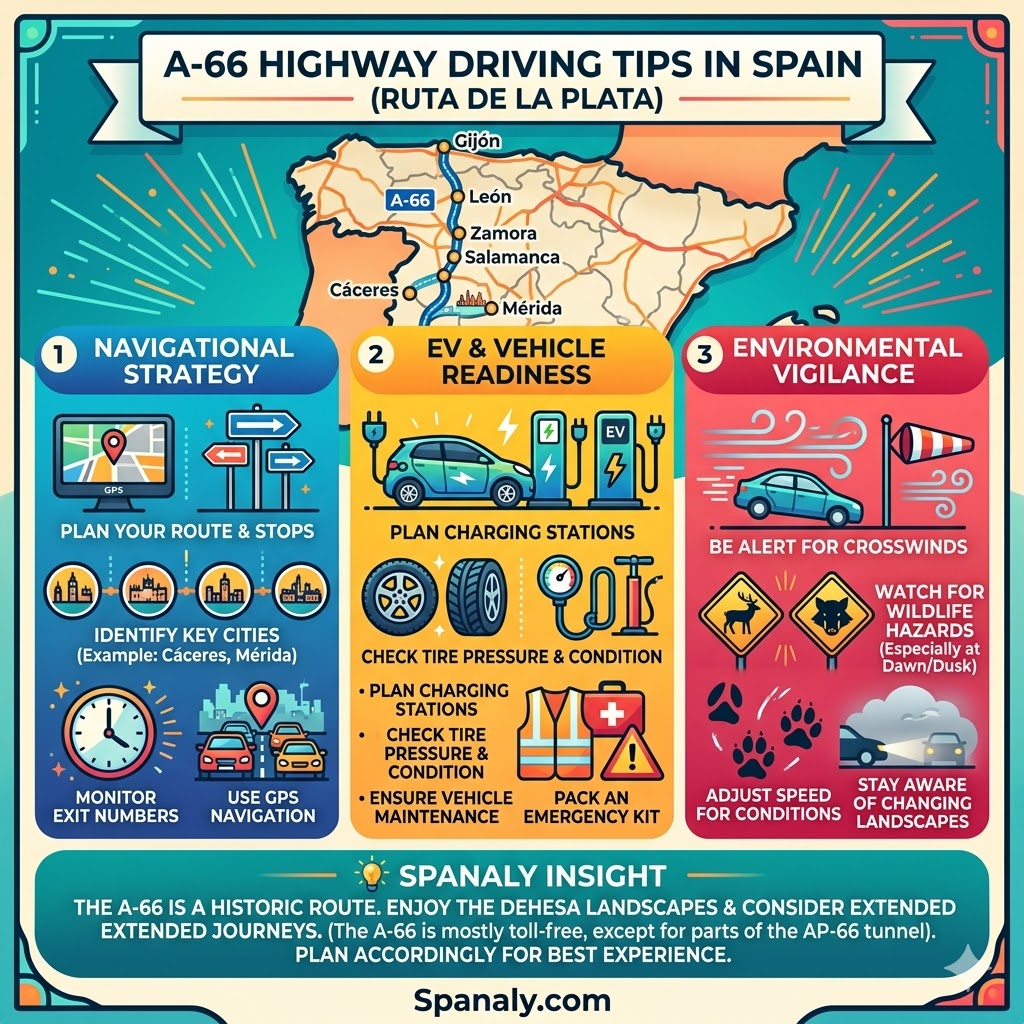
The A-66, known as the Ruta de la Plata, is a modern motorway, but navigating it demands awareness of regional conditions. Use these expert tips to ensure a safe transition.
🛣️ Navigational Strategy
The “Silver Route”: The A-66 is generally well-maintained and toll-free. However, be prepared for heavy truck traffic, as it is a major logistics corridor for Spain.
Offline Mapping: Cellular signal fluctuates significantly in the mountain passes near the border of Extremadura and Andalusia. Download your maps before departing.
Speed Management: Radar cameras are frequently positioned near urban bypasses. Pay close attention to signposted limits when approaching Zafra or Mérida.
🔋 EV & Vehicle Readiness
Charging Infrastructure: Electric vehicle chargers are available in major hubs like Mérida, Zafra, and Seville. Use apps like Electromaps to verify station status before exiting the motorway.
Tire Check: The asphalt surface can reach extreme temperatures during the summer months. Check your tire pressure before leaving to prevent blowouts during long stretches of heat.
Emergency Kit: Always keep a high-visibility vest and a warning triangle in the cabin, not the trunk, as required by Spanish law for roadside stops.
🌬️ Environmental Vigilance
Crosswinds: The high plateau near the Extremadura-Andalusia border can experience sudden, strong gusts. Keep both hands on the steering wheel when traversing open viaducts.
Wildlife Awareness: Livestock, particularly near the dehesa grazing areas, can occasionally wander close to the fence lines. Stay alert during the dawn and dusk hours.
💡 Spanaly Insight: If you encounter a heavy rainstorm in the mountains, pull over at a Gasolinera. The A-66 can develop dangerous hydroplaning patches quickly; waiting 15 minutes for the intensity to drop is safer than maintaining highway speeds.
🗓️ Best Time to Drive: Weather and Seasonal Travel

Timing your journey ensures both comfort and visual splendor. Balancing the rugged Extremaduran climate with the Andalusian heat requires careful planning.
🌸 The Golden Window: Spring (April to June)
Ideal Landscapes: The dehesa is lush, green, and vibrant with wildflowers. This is the prime season for photography and outdoor exploration.
Mild Temperatures: Experience pleasant driving weather without the risk of summer heatwaves.
Regional Strategy: For a deep dive into local festivals and regional climate trends, visit our Best Time to Visit Extremadura guide.
🍂 The Harvest Season: Autumn (September to October)
Comfortable Transit: The intense summer heat fades into crisp, cool mornings and warm afternoons—perfect for road trips.
Culinary Energy: Autumn is the season of the chestnut harvest in Aracena and the start of the olive oil production, making local markets particularly vibrant.
Plan Your Arrival: Check our Best Time to Visit Seville guide to align your trip with the best cultural events in the Andalusian capital.
☀️ The Summer Caution (July and August)
Heat Management: Interior Spain and Andalusia experience extreme temperatures, often exceeding 38°C.
Driving Advice: Plan your transit for early mornings (departing by 7:00 AM) or late evenings to avoid the peak sun intensity on the A-66.
Vehicle Care: Ensure your cooling system is serviced. Never leave electronic devices, especially cameras or power banks, in direct sunlight on the dashboard.
💰 Suggested Itinerary: A 3-Day Southern Adventure
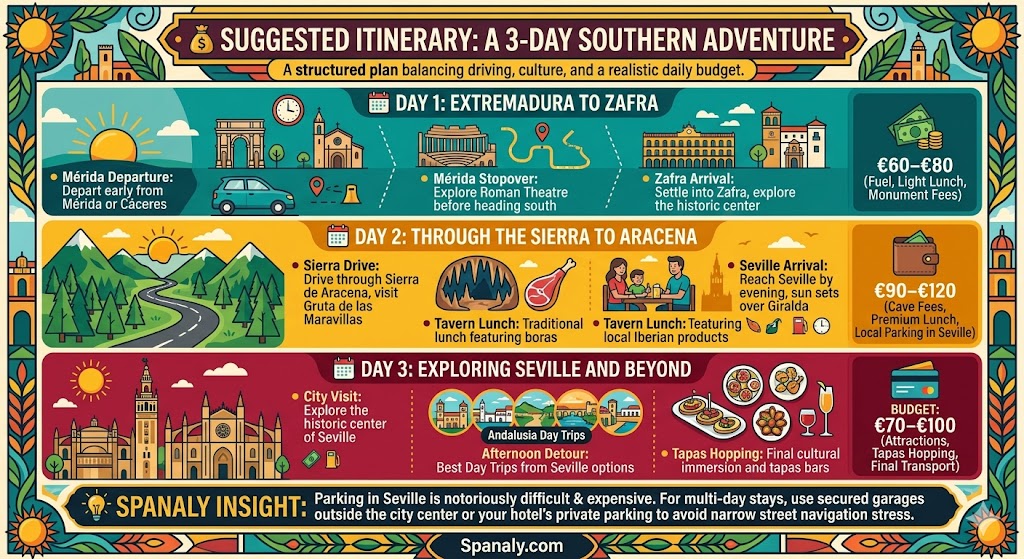
A structured plan maximizes your experience. This itinerary balances driving time with essential cultural immersion while maintaining a realistic daily budget.
📅 Day 1: Extremadura to Zafra
Morning Departure: Depart from Mérida or Cáceres early to avoid mid-day heat.
Stopover: Spend your morning exploring the Roman legacy of Mérida before heading south.
Afternoon Arrival: Settle into Zafra and walk the historic Plaza Grande.
Budget: Allocate €60–€80 for fuel, a light lunch, and entrance fees to local monuments.
📅 Day 2: Through the Sierra to Aracena
Morning Nature: Drive through the Sierra de Aracena. Stop in Aracena to visit the Gruta de las Maravillas.
Afternoon Exploration: Enjoy a traditional lunch featuring local Iberian products in a mountain tavern.
Arrival: Reach Seville by evening to witness the city as the sun sets over the Giralda.
Budget: Plan for €90–€120 to cover cave entrance fees, a premium lunch, and local parking costs in Seville.
📅 Day 3: Exploring Seville and Beyond
Morning Visit: Explore the historic center of Seville.
Afternoon Detour: Use the afternoon to discover the nearby beauty of Andalusia. Our guide on Best Day Trips from Seville provides the perfect options for your final hours.
Budget: Budget €70–€100 for city attractions, tapas hopping, and final transport expenses.
⚠️ Common Mistakes to Avoid

Avoid these frequent errors to ensure your southern road trip remains smooth and stress-free:
Ignoring Siesta Hours: Shops and restaurants close between 14:00 and 17:00. Plan your meals and fuel stops before early afternoon.
Over-Scheduling Daily Stops: Visiting too many towns leads to rushing. Pick one main location to fully enjoy the historic atmosphere.
Entering Historic Centers: Medieval streets are extremely narrow. Park in designated peripheral lots to avoid getting stuck or damaging your vehicle.
Trusting GPS Blindly: Basic GPS systems often suggest agricultural dirt paths. Always stick to clearly marked main roads for your safety.
Visible Luggage Risk: Never leave bags visible inside your car. Use a trunk cover or keep valuables out of sight when parked.
💡 Spanaly Insight: Flexibility is your best tool. If a destination captures your interest, stay longer and adjust your schedule accordingly.
🤫 Spanaly Pro Tips: Hidden Detours
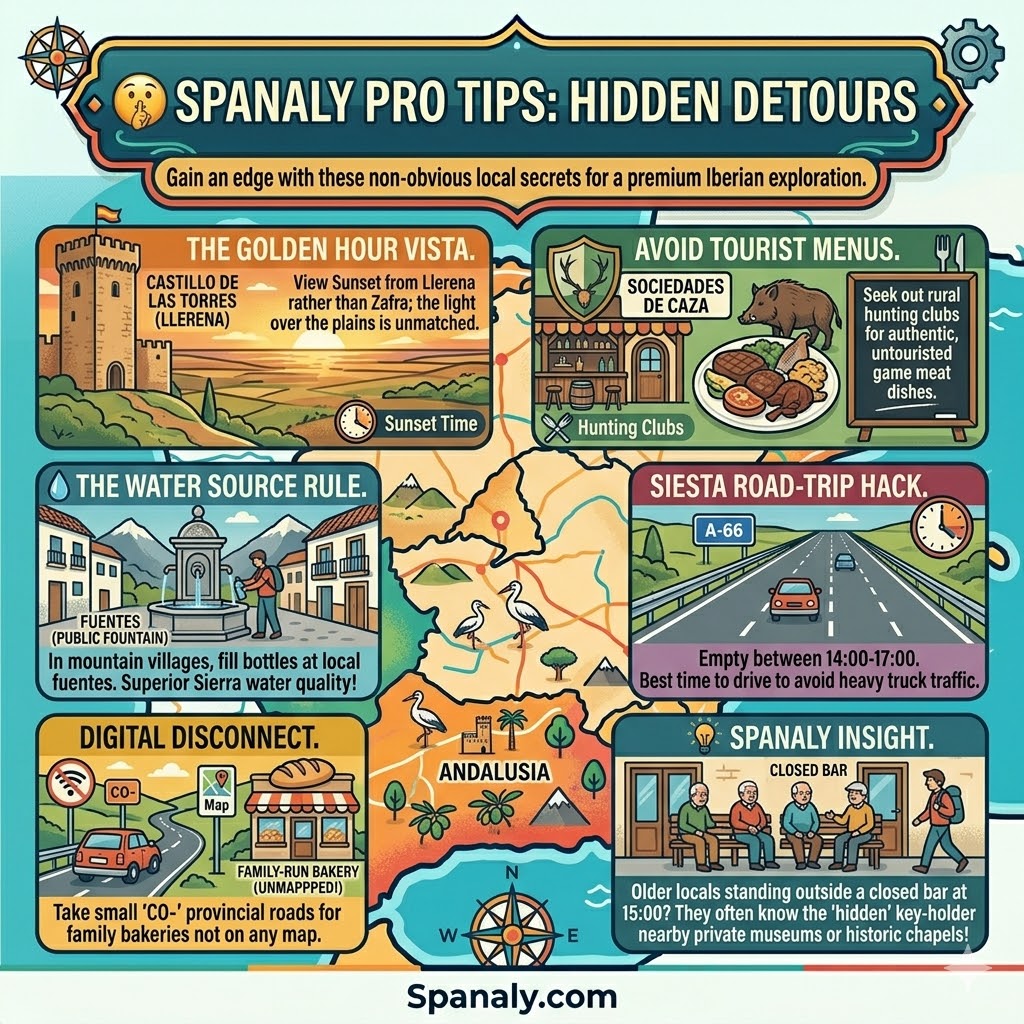
Gain an edge with these non-obvious local secrets that turn a standard transit into a premium Iberian exploration.
The Golden Hour Vista: View the sunset from the Castillo de las Torres in Llerena rather than Zafra; the light over the plains is unmatched.
Avoid Tourist Menus: Seek out small “Sociedades de Caza” or hunting clubs in rural villages. They serve the most authentic, untouristed game meat dishes.
The Water Source Rule: In mountain villages, fill your bottles at local fuentes (public fountains). The water quality in the Sierra is significantly superior to bottled varieties.
Siesta Road-Trip Hack: Between 14:00 and 17:00, the highway is empty. This is the absolute best time to drive if you want to avoid heavy truck traffic.
Digital Disconnect: Ignore the main highway exits for coffee. Take the smallest “CO-” marked provincial roads; they lead to family-run bakeries that aren’t on any map.
💡 Spanaly Insight: If you see a group of older locals standing outside a closed bar at 15:00, approach them politely. They often know where the “hidden” key-holder lives for a nearby private museum or historic chapel.
As you reach Seville, take a moment to reflect on your journey. This drive is more than a transit; it is a profound lesson in Spain’s rhythmic transition from silent, ancient plains to the golden heart of Andalusia.
🌿 Carry the Spirit Forward
Embrace the Pace: Rushing blurs the landscape. Keep the sobremesa spirit alive by lingering long after every meal.
Beyond the Map: True memories aren’t found on the highway, but in quiet detours, local markets, and hidden stone villages.
Keep Exploring: Extremadura is an untapped frontier. Continue your quest for authenticity with our Badajoz Travel Guide.
🏁 Your Next Step
Stay Curious: Apply the local awareness you gained here to navigate other Spanish regions with newfound confidence.
Share the Story: Roads like the A-66 tell stories of endurance. Carry this appreciation for the land into all future travels.