🏺 Mérida
Walking through Mérida feels like stepping directly into a living history book. As the site of the ancient Roman colony Emerita Augusta, this city holds the most impressive collection of classical architecture in all of Spain. You will find towering theaters, silent aqueducts, and stone bridges that have survived two millennia of change.
Planning your visit to this “Rome of Spain” requires a bit of local strategy to skip the crowds and see the best ruins at the right time. Our guide covers everything from the iconic amphitheater to hidden archaeological corners that most travelers miss.
🏛️ Roman Legacy: Explore world-class ruins recognized for their incredible state of preservation.
🎭 Cultural Depth: Experience a unique blend of Roman engineering and vibrant modern Spanish life.
📍 Regional Hub: Use this city as the perfect anchor for your wider explorations through our Extremadura Travel Guide.
Whether you are here for a quick day trip or a deep historical dive, Mérida offers an experience you simply cannot find anywhere else in the country.
📊 Mérida Snapshot: Fast Facts
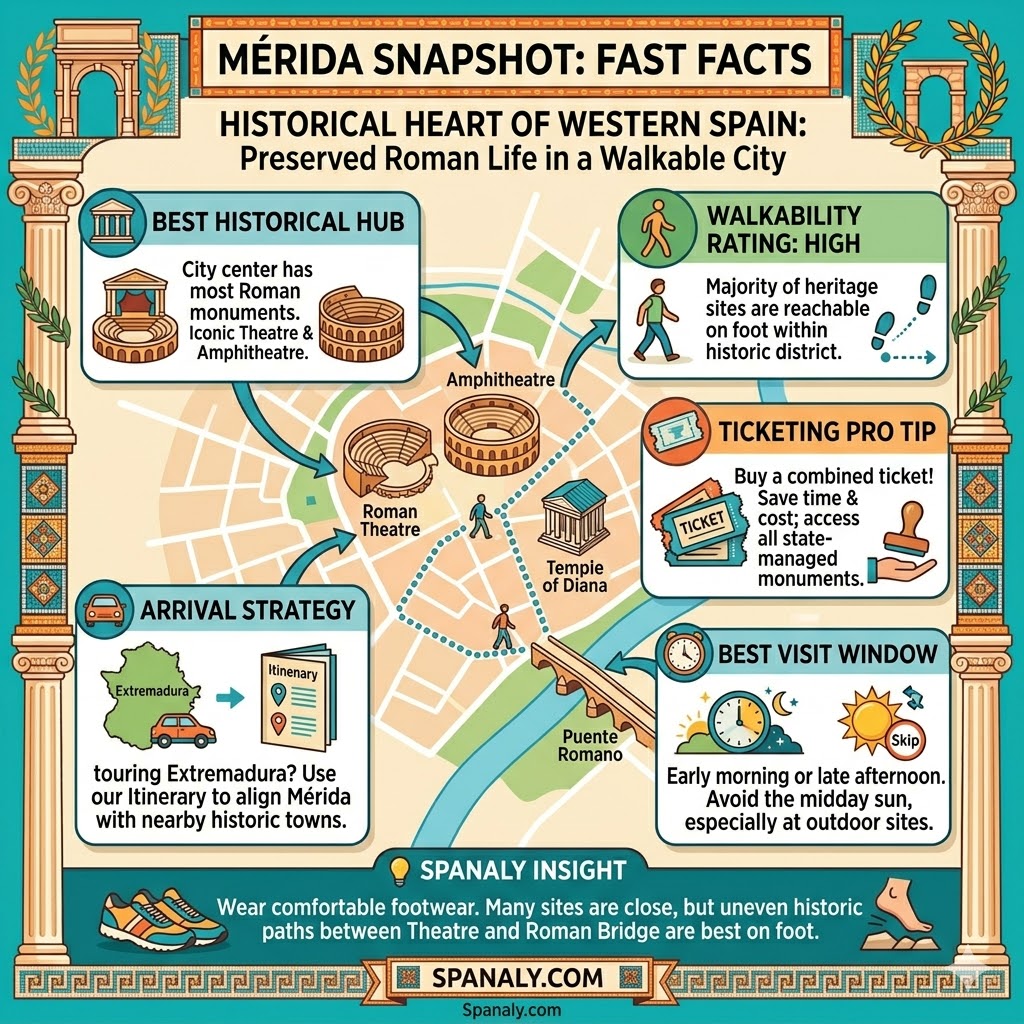
Mérida serves as the historical heart of Western Spain, offering a unique opportunity to explore preserved Roman life in a compact, walkable city. This quick-reference guide condenses the most essential visitor information to help you manage your time effectively between the major archaeological zones.
🏛️ Best Historical Hub: The city center contains the most concentrated collection of Roman monuments, including the iconic Theatre and Amphitheatre.
🚶 Walkability Rating: High. You can reach the majority of heritage sites on foot within the historic district.
🎟️ Ticketing Pro Tip: Purchasing a combined ticket at any major site entrance grants you access to all state-managed monuments, saving you time and cost.
🚗 Arrival Strategy: If you are touring through the wider region, our Extremadura Itinerary helps you align your stop in Mérida with other nearby historic towns.
⏰ Best Visit Window: Aim for the early morning or late afternoon to avoid the midday sun, especially if you plan on exploring outdoor archaeological parks.
⚖️ Mérida vs. Other Historic Cities
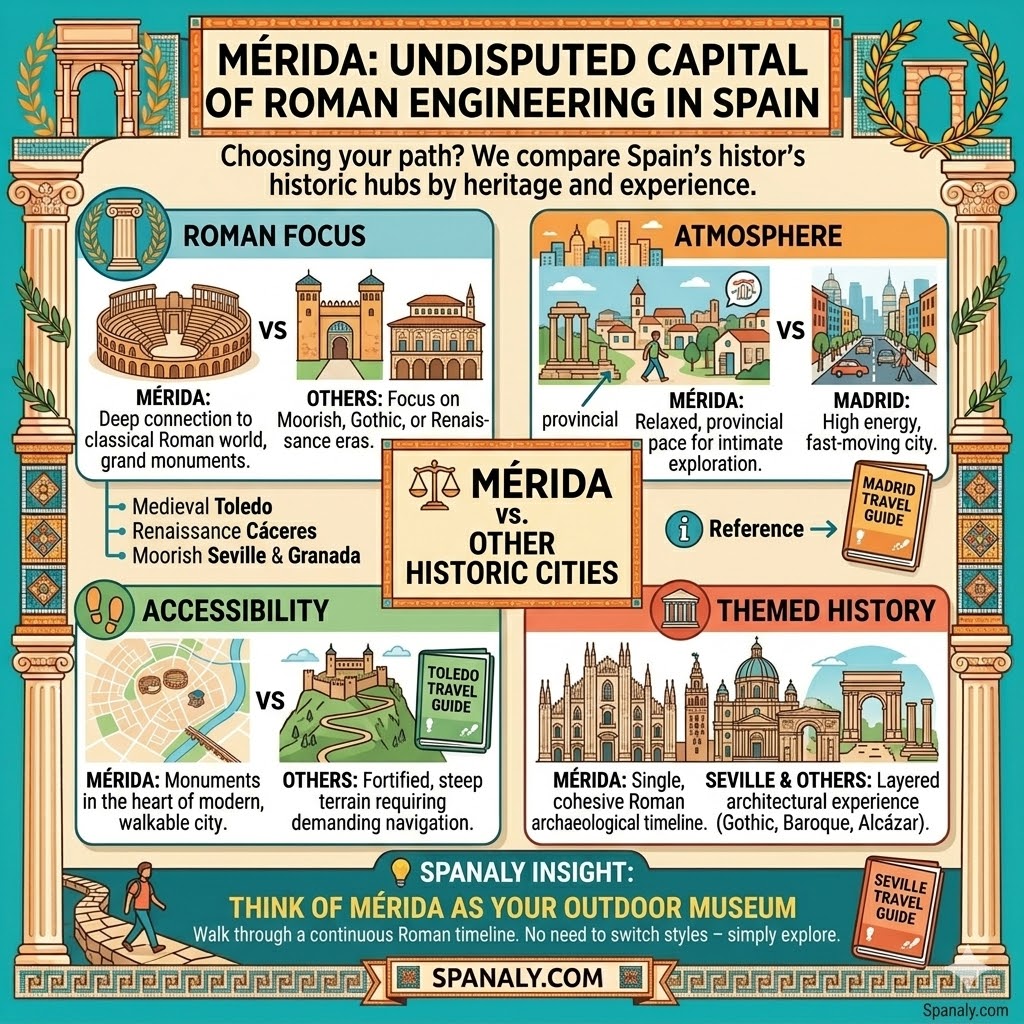
Choosing between Spain’s historic hubs often depends on the specific era of history you prefer to explore. While cities like Seville or Granada draw crowds for their Moorish and Renaissance heritage, Mérida offers a deeper, more direct connection to the classical Roman world.
Roman Focus: Unlike the medieval focus of Toledo or the Renaissance stone palaces of Cáceres, Mérida remains the undisputed capital of Roman engineering in the country.
Atmosphere: You will find a more relaxed, provincial pace here compared to the fast-moving energy found in Madrid Travel Guide, allowing for a more intimate exploration of ancient ruins.
Accessibility: Many of the monuments stand in the heart of the modern city, whereas heritage sites in cities like Toledo Travel Guide often sit atop steep, fortified hills that require more demanding physical navigation.
Themed History: If your itinerary leans toward Gothic cathedrals and Alcázar palaces, hubs like Seville Travel Guide provide a more layered architectural experience than the focused archaeological layout of Mérida.
🤔 Why You Should Visit Mérida
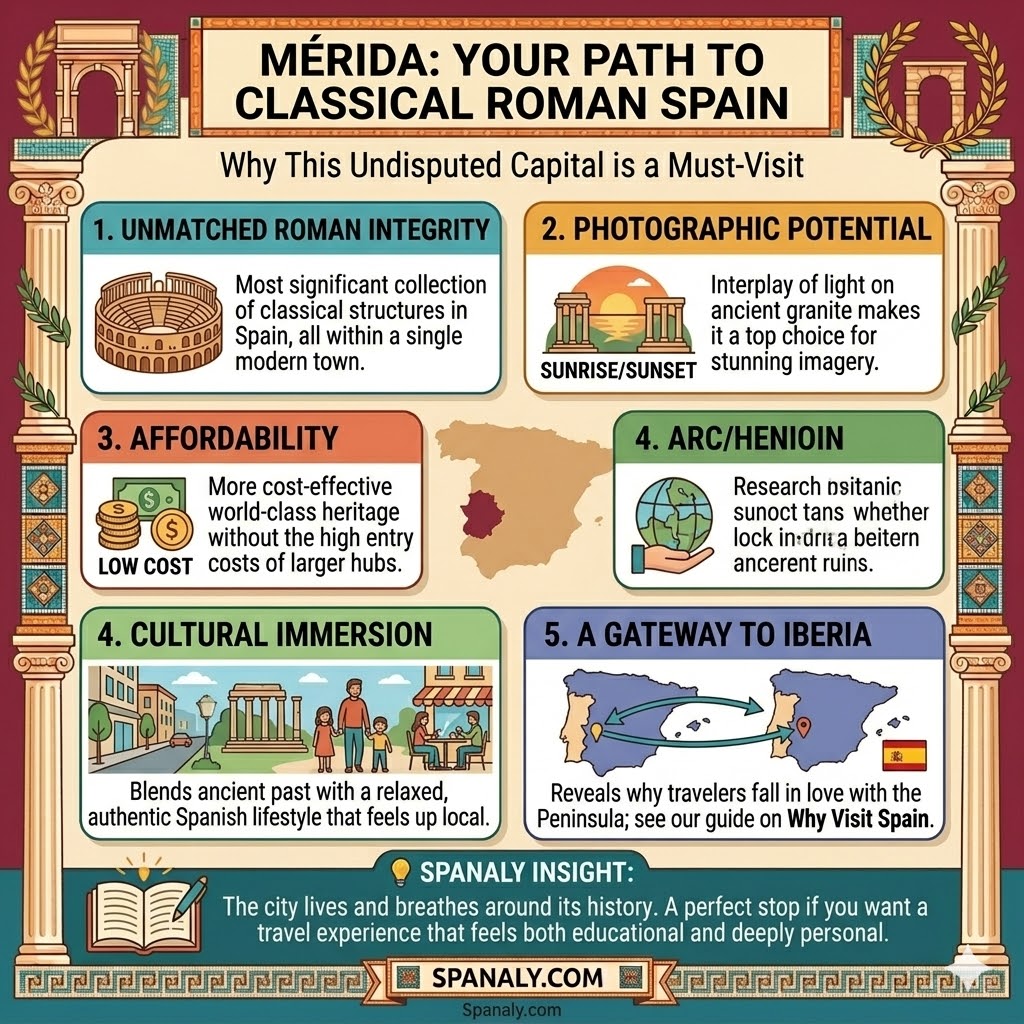
You won’t find ropes keeping you back here. Mérida is one of the few places where you walk the Roman Empire’s heartbeat. You do not just stare at the Amphitheatre. You stand in the same corridors where gladiators prepped for battle.
Roman Reality, Not Just Ruins: Most sites are fragmented shells. Here, structures remain sound. You walk through a cohesive urban layout, not just scattered granite piles.
Budget-Friendly Heritage: You get world-class heritage without the capital city price hike. Your daily spend buys more value and authentic local interaction.
Authentic Local Pace: Mérida isn’t a theme park. It is a functional Spanish town. You hear neighbors chatting in plazas that hosted markets for millennia.
The Logistical Anchor: Mérida acts as a bridge between North and South. It provides the historical context that makes our Why Visit Spain guide click.
The Light Factor: Photographers prize this city. Local granite holds light perfectly. Even smartphone cameras capture incredible depth without needing aggressive filters.
💡 Spanaly Insight: Skip the museum fatigue of major cities. In Mérida, history isn’t behind glass. It is the wall you lean against while you eat.
🏰 Top 5 Must-See Landmarks in Mérida
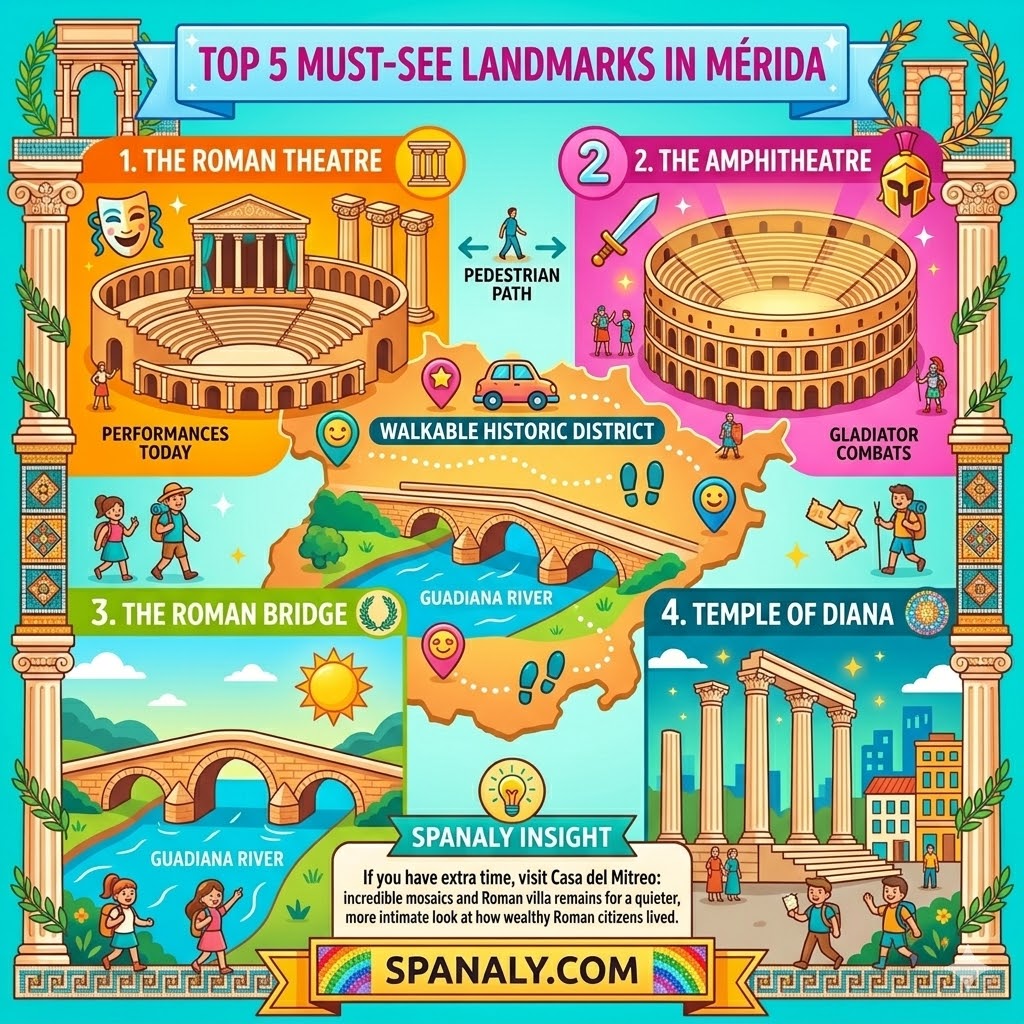
Mérida packs its major historical monuments into a manageable area, allowing you to cover the essential classical sites in a single, well-planned day. Use this planning layer to organize your route effectively.
Quick Planning Table
| Landmark | Time Needed | Ticket Type | Walking Difficulty |
| Roman Theatre | 60 min | Combined | Easy |
| Amphitheatre | 45 min | Combined | Easy |
| Roman Bridge | 20 min | Free | Easy |
| Temple of Diana | 15 min | Free | Very Easy |
| The Alcazaba | 45 min | Combined | Moderate |
Landmark Highlights
🎭 The Roman Theatre: This represents the jewel of the city. Built in the late 1st century BC, it remains one of the best-preserved structures of its kind and still hosts live performances today.
⚔️ The Amphitheatre: Located right next to the theatre, this massive arena once held brutal gladiator combats and public spectacles. You can still walk the corridors where the fighters prepared for battle.
🌉 The Roman Bridge: Spanning the Guadiana River, this stone giant stands as one of the longest surviving Roman bridges in the world. It perfectly demonstrates the sheer scale and durability of imperial engineering.
🏛️ Temple of Diana: Positioned in the heart of the modern city, these towering granite columns once formed the center of the imperial cult. It serves as a beautiful contrast between ancient history and contemporary urban life.
⛲ The Alcazaba: While built later by the Moors, this fortress sits directly atop Roman foundations. It provides a unique look at how different civilizations reused the same strategic riverfront location over centuries.
🎨 Hidden Gems and Local Secrets
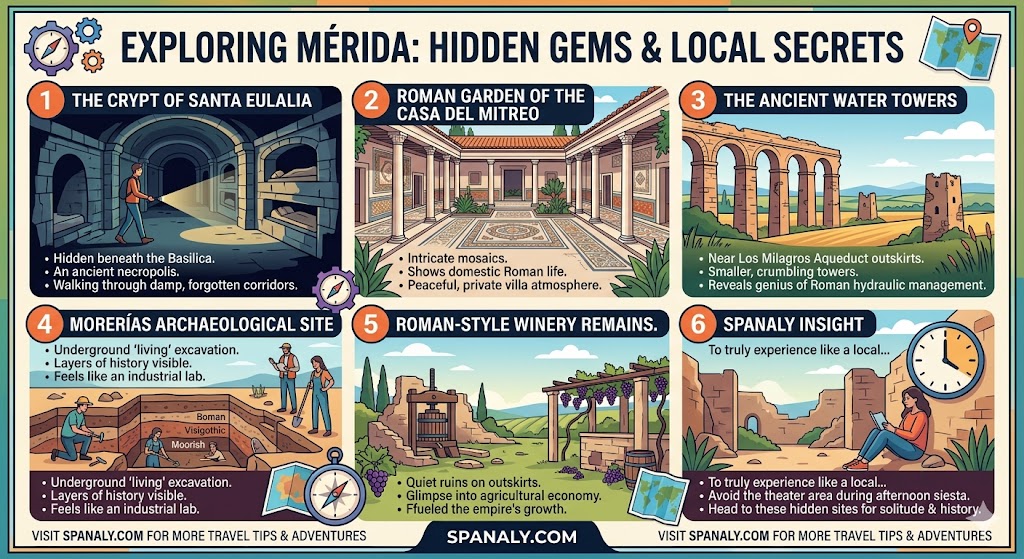
Skip the theater crowds. Mérida hides quiet corners that reveal the daily life of ancient inhabitants, far from mass tourism trails.
🏺 Crypt of Santa Eulalia: Hidden beneath the Basilica, this necropolis features damp, stone-lined corridors. You enter a forgotten chapter of early Christian history.
🌿 Garden of Casa del Mitreo: This site is part of a private villa complex. Mosaics here show the domestic side of Roman life.
🧱 Los Milagros Water Towers: Follow the aqueduct path into the fields. You will find small, crumbling distribution towers showing genius Roman hydraulic management.
🖼️ Morerías Archaeological Site: Observe layers of history stacked together. It feels like an industrial archaeological lab rather than a polished tourist site.
🍷 Roman-Style Winery: Located in the outskirts, these ruins show old wine presses. They offer a glimpse into the empire’s agricultural economy.
💡 Spanaly Insight: Avoid the main theater area during the afternoon siesta. Head to these hidden sites instead. You will find history in total silence.
🍽️ Gastronomy: The Flavors of Mérida

Mérida offers a robust culinary scene where ancient traditions meet high-quality regional produce. The food here is hearty, authentic, and deeply connected to the land, making every meal a discovery of local heritage.
What to Eat in Mérida
Migas Extremeñas: A traditional shepherd’s dish made of fried breadcrumbs, garlic, peppers, and savory chorizo or pork.
Jamón Ibérico: Famous locally sourced acorn-fed ham, known for its deep, rich flavor and melt-in-the-mouth texture.
Caldereta Extremeña: A classic, slow-cooked lamb stew seasoned with garlic, onions, and local peppers.
Torta del Casar: A unique, creamy sheep’s milk cheese with a characteristic intense aroma and smooth, velvety finish.
Iberian Pork Cuts: Various premium pork preparations, often grilled to perfection, showcasing the region’s renowned livestock heritage.
Local Food Hub
Mercado de Calatrava: Visit this bustling spot early in the morning to see where local chefs source their fresh ingredients. It provides a genuine feel for the city’s daily culinary rhythm.
Spanaly Recommendations
Restaurante A de Arco: Located near the Roman Arch of Trajan, this spot excels at elevating local ingredients into modern, refined dishes without losing their rustic charm.
Mesón El Yantar: A classic choice for those seeking an authentic, traditional environment. It is widely regarded as one of the best places to sample regional cheeses and cured meats.
Taberna La Milanesa: Perfect for a casual, high-quality tapas experience. It offers a lively local crowd and a great selection of seasonal small plates.
To broaden your culinary exploration and learn more about the unique recipes and vineyard regions that define this province, explore our complete Extremadura Food Guide.
💡 Spanaly Insight: Many of the best restaurants in Mérida are family-run establishments. If you find a place crowded with locals on a weekday afternoon, you have likely struck gold—grab a table and order the “menú del día” for an excellent value.
🏨 Where to Stay in Mérida
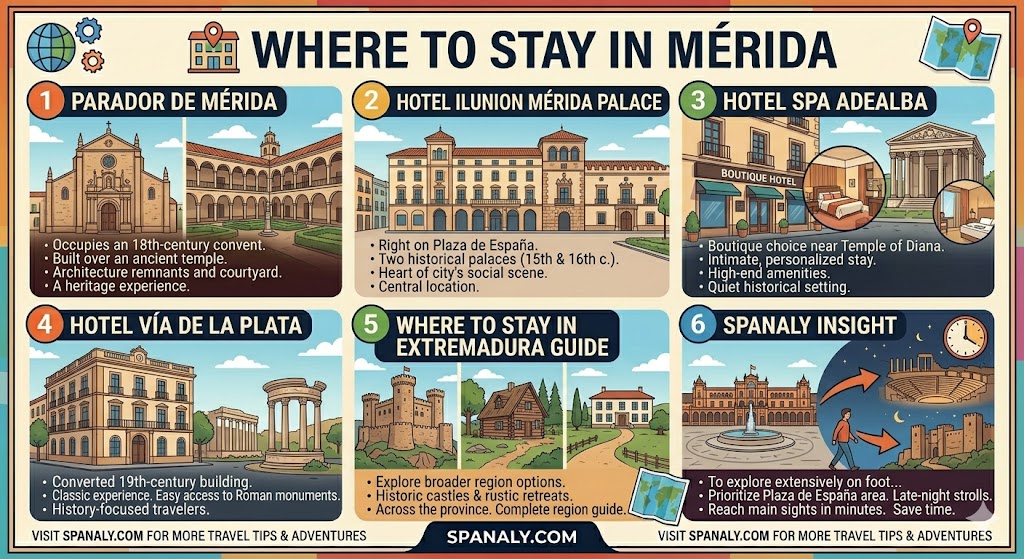
Where you base yourself defines your Mérida experience. Choose an area that matches your travel pace:
📍 The Historic Center (Plaza de España): The city’s beating heart. Staying here guarantees maximum walkability to all social hubs and the best dining options.
🏛️ Near the Roman Theatre: Perfect for those prioritizing direct, early access to monuments. You will be the first to enter the ruins each morning.
🌿 Quiet Local Areas: Ideal for travelers seeking a slower atmosphere. These pockets provide a restful retreat while keeping you within a short, pleasant walk of the action.
Recommended Hotels
Parador de Mérida (Historic Center): An 18th-century convent built over a former temple. It offers a truly immersive heritage stay with a cloistered courtyard.
Hotel Ilunion Mérida Palace (Historic Center): Housed in two combined 15th-century palaces. Choose this if you want to stay in the middle of the city’s social scene.
Hotel Spa Adealba (Near Temple of Diana): A boutique, intimate choice. It is perfect for travelers looking for high-end amenities in a quieter, highly personalized setting.
Hotel Vía de la Plata (Near Roman Monuments): A converted 19th-century building. It remains a reliable, classic choice for history-focused travelers wanting easy monument access.
For a broader look at the region’s accommodation landscape, including historic castles and rustic retreats across the province, check our Where to Stay in Extremadura guide.
💡 Spanaly Insight: If you plan to explore the city extensively on foot, prioritize hotels around the Plaza de España. Staying in this central hub allows you to reach the Roman Theatre and the Alcazaba within minutes, saving you time for late-night strolls among the illuminated ruins.
📸 Best Photo Spots in Mérida
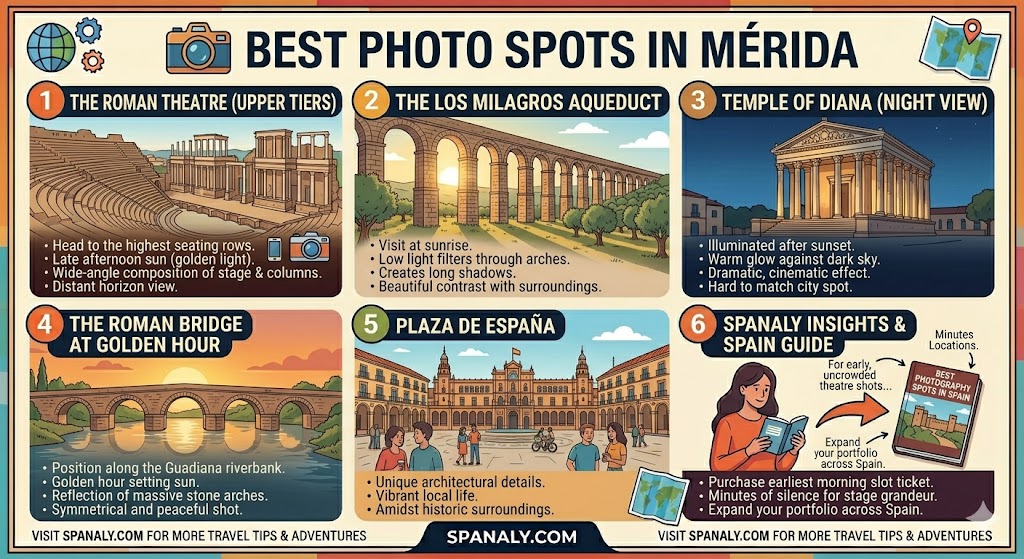
Mérida pairs ancient granite with the soft, golden light of Extremadura. Use these specific angles for the most evocative shots.
Roman Theatre (Upper Tiers): Climb to the highest seating rows in late afternoon. You capture the stage, massive columns, and horizon in one frame.
Los Milagros Aqueduct: Visit at sunrise. Low light filters through the towering arches, creating sharp shadows against the backdrop of local olive groves.
Temple of Diana (Night): The stone glows warmly against the night sky. Use a stable surface to capture the dramatic, cinematic contrast clearly.
Roman Bridge (Golden Hour): Position yourself along the riverbank at sunset. You catch symmetrical reflections of the arches in the calm Guadiana water.
Plaza de España: This square offers vibrant local life. It is the ideal spot for candid street photography amidst historic building details.
For more iconic locations, browse our guide to Best Photography Spots in Spain.
💡 Spanaly Insight: Want the theatre without crowds? Book the earliest morning slot. You get a few minutes of total silence before groups arrive.
🧳 Essential Travel Logistics
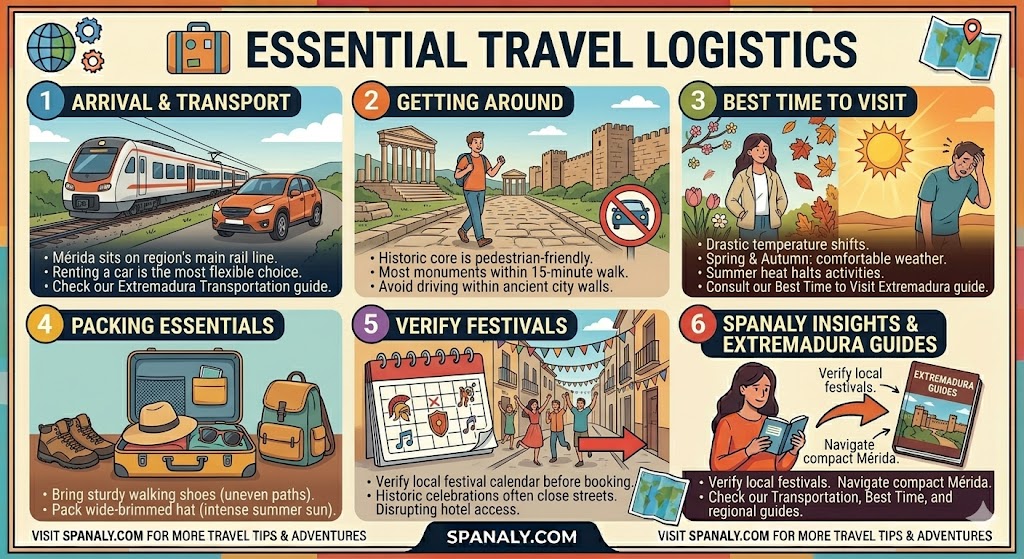
Managing logistics well lets you focus on exploration. Mérida is highly compact, making it straightforward to navigate if planned correctly.
Arrival & Transport: Mérida sits on the region’s main rail line. Renting a car remains the most flexible choice for travelers. Check our Extremadura Transportation guide for regional rail and bus details.
Getting Around: The historic core is pedestrian-friendly. Most monuments sit within a 15-minute walk. Avoid driving within ancient city walls to prevent fines.
Best Time to Visit: Temperatures shift drastically here. Spring and autumn offer the most comfortable walking weather. Summer heat often halts outdoor activities. Consult our Best Time to Visit Extremadura guide for seasonal tips.
Packing Essentials: Bring sturdy walking shoes for uneven stone paths. If visiting in summer, pack a wide-brimmed hat to manage intense sun exposure.
🗺️ Suggested Mérida Itineraries
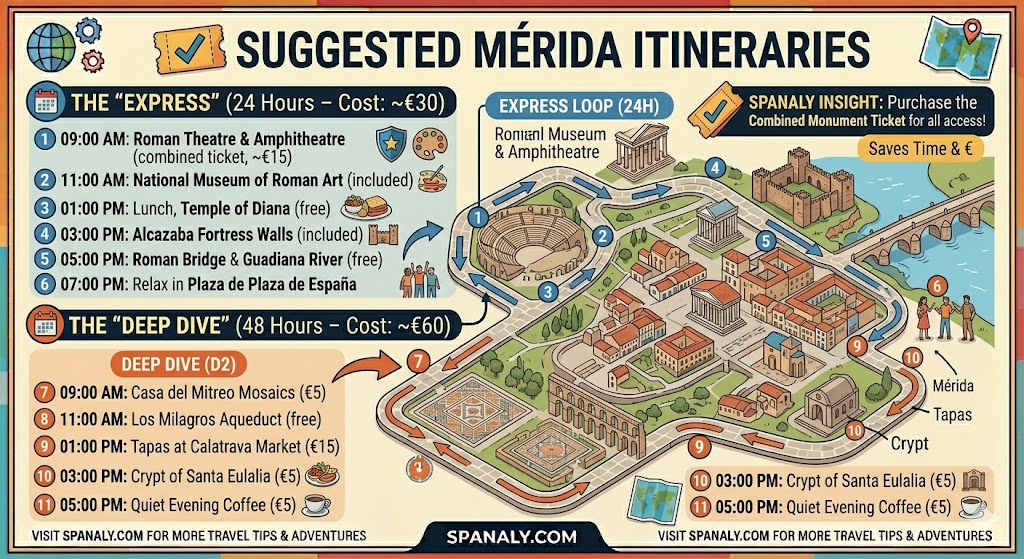
Mapping your time here keeps stress low. Use these plans to link major sites into a simple, logical loop.
📅 The “Express” (24 Hours – Cost: ~€30):
09:00 AM: Enter the Roman Theatre and Amphitheatre (€15 combined ticket).
11:00 AM: Walk to the National Museum of Roman Art (included in ticket).
01:00 PM: Enjoy a traditional lunch near the Temple of Diana (€15).
03:00 PM: Explore the Alcazaba fortress walls (included in ticket).
05:00 PM: Walk the Roman Bridge at the Guadiana River (free).
07:00 PM: Relax in the lively Plaza de España.
📅 The “Deep Dive” (48 Hours – Cost: ~€60):
Day One: Follow the 24-hour express loop above (~€30).
Day Two – 09:00 AM: Visit the Casa del Mitreo mosaics (€5).
Day Two – 11:00 AM: Walk to the Los Milagros Aqueduct (free).
Day Two – 01:00 PM: Taste local tapas at the Calatrava Market (€15).
Day Two – 03:00 PM: View the Crypt of Santa Eulalia (€5).
Day Two – 05:00 PM: Enjoy a quiet evening coffee (€5).
For broader regional plans, review our Extremadura Itinerary. Compare these timeframes using Spain Travel Itineraries Plans.
⚔️ Choosing Your Next Stop
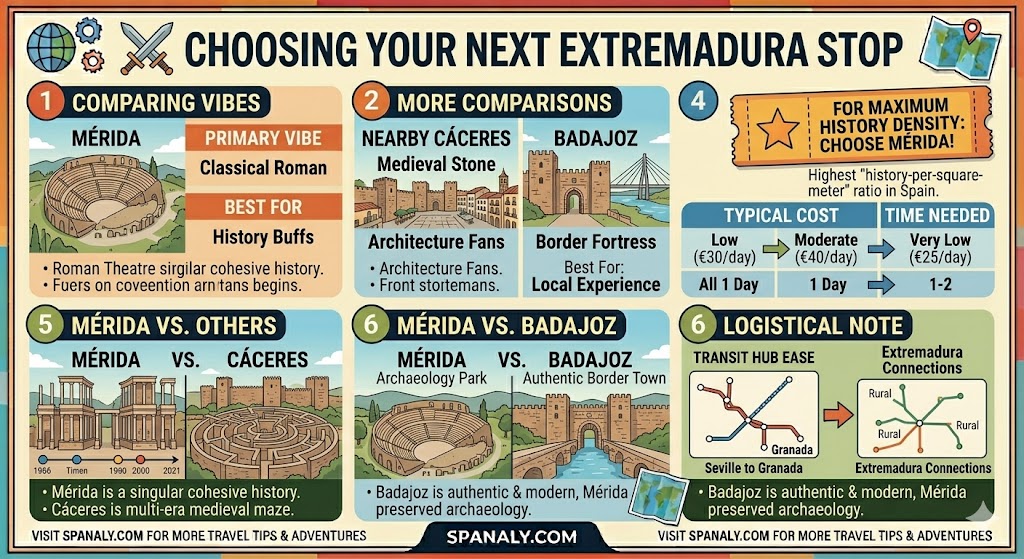
If you are torn between Mérida and other regional destinations, this quick comparison helps you align your next move with your travel style.
| Feature | Mérida | Nearby Cáceres | Badajoz |
| Primary Vibe | Classical Roman | Medieval Stone | Border Fortress |
| Best For | History Buffs | Architecture Fans | Local Experience |
| Typical Cost | Low (€30/day) | Moderate (€40/day) | Very Low (€25/day) |
| Time Needed | 1-2 Days | 1 Day | 1 Day |
Mérida vs. Cáceres: Mérida offers a singular, cohesive historical timeline. Cáceres features a sprawling, multi-era medieval maze that feels entirely different.
Mérida vs. Badajoz: Badajoz provides a more authentic, modern Spanish border town experience, while Mérida focuses almost exclusively on its preserved archaeological parks.
Logistical Note: If you prefer complex route planning, comparing transit hubs is key. For instance, travelers often compare the transit ease of Seville to Granada against the shorter rural connections found here in Extremadura.
💡 Spanaly Insight: If you only have one day in Extremadura, choose Mérida for its sheer density of monuments. It offers the highest “history-per-square-meter” ratio in the entire country.
🚫 Common Mistakes to Avoid in Mérida
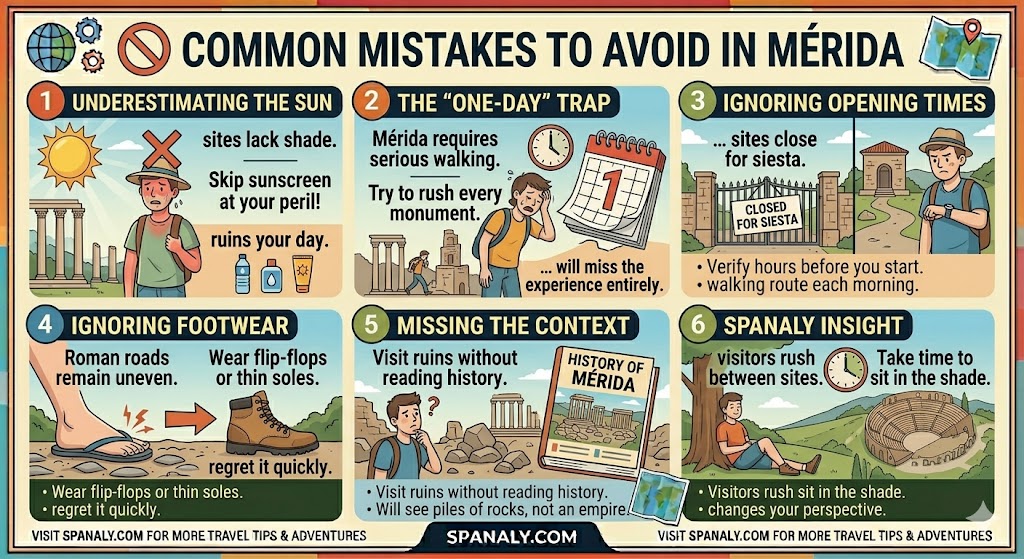
Planning a trip to a historic city often hides common pitfalls. Avoid these errors to keep your visit smooth and enjoyable.
Underestimating the Sun: Many sites lack shade. Do not skip sunscreen or extra water, even during mild spring afternoons. Heat exhaustion ruins your day quickly.
The “One-Day” Trap: Mérida requires serious walking. Do not try to rush every single monument in four hours. You will miss the experience entirely.
Ignoring Opening Times: Some smaller sites close during the afternoon siesta. Always verify current operating hours before you start your walking route each morning.
Ignoring Footwear: These Roman roads remain uneven. Do not wear flip-flops or thin-soled shoes. You will regret it within the first hour of walking.
Missing the Context: Do not visit the ruins without reading basic history first. You will see piles of rocks rather than an ancient empire.
💡 Spanaly Insight: Many visitors rush between sites without stopping to breathe. Take time to sit in the shade near the Roman Theatre. It changes your perspective.
💡 Spanaly Pro Tips
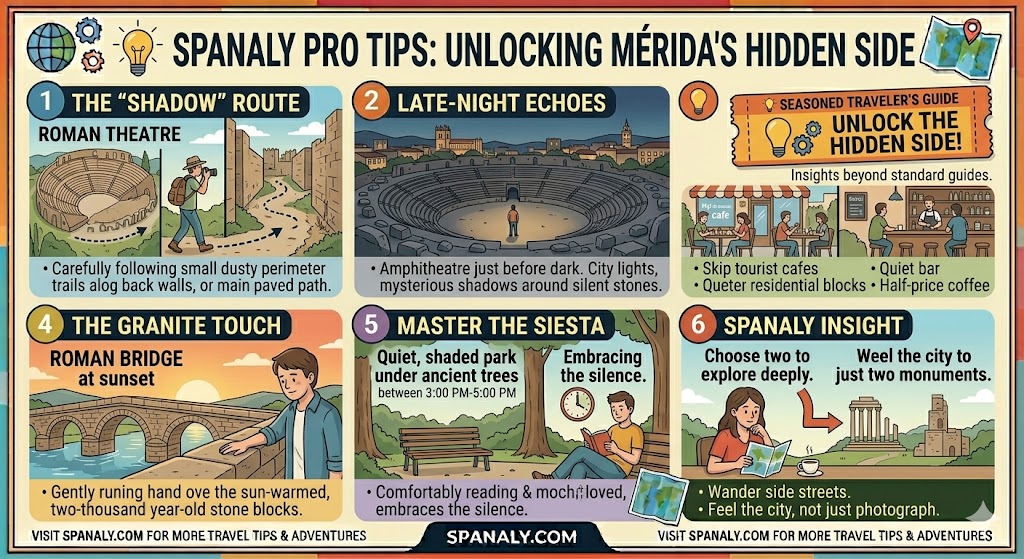
These actionable tips prioritize efficiency and authentic discovery, ensuring you maximize your experience while respecting the site’s preservation rules.
Secure the Combo Ticket: Purchase the combined monument entry at your first stop. It saves time, grants immediate access to all Roman locations, and remains the most cost-effective way to tour.
Prioritize Morning Visits: Arrive at the Roman Theatre and Amphitheatre as soon as gates open. You avoid the largest tour groups and experience the morning light before the midday glare.
Strategize Midday Rest: Mérida effectively shuts down for the traditional siesta between 3:00 PM and 5:00 PM. Plan your indoor museum visits or hotel breaks during this window to avoid the region’s intense heat.
Follow the Shaded Routes: During summer afternoons, prioritize walking paths through the city’s parks and riverfront areas. The foliage provides essential shade, keeping your transit between ruins significantly cooler.
Seek Local Dining Beyond Plazas: While Plaza de España is convenient, the best-value authentic cuisine often sits two to three blocks away. Look for spots where the daily menú del día is written on a chalkboard rather than a printed tourist menu.
Engage with Surfaces Mindfully: While history is tactile, always respect the signage at archaeological sites. Observe the texture of the granite on the Roman Bridge, which remains an excellent, accessible spot to appreciate the scale of imperial engineering.
💡 Spanaly Insight: Do not attempt to visit every site in one day. Choose two monuments for a deep, guided-style exploration, then dedicate the remainder of your time to wandering the city’s authentic residential historic core. Mérida is a city you feel, not just a city you photograph.
🏛️ UNESCO Status: Why Mérida Matters
Mérida holds a prestigious place on the global heritage map, recognized for its exceptional preservation of Roman imperial life. The Archaeological Ensemble of Mérida earned its UNESCO World Heritage status because it serves as an unparalleled living laboratory of ancient engineering and urban planning.
Exceptional Preservation: Unlike many Roman sites that exist only as fragments, Mérida’s ruins—including the theatre, amphitheatre, and aqueduct—remain largely intact and structurally sound.
Historical Continuity: The site does not just showcase Roman history; it reveals how consecutive civilizations utilized and adapted these monumental structures over two millennia.
Global Significance: UNESCO recognizes the site as one of the most important centers of the Roman Empire on the Iberian Peninsula, providing critical insights into provincial imperial administration.
💡 Spanaly Insight: UNESCO status isn’t just a label; it’s a guarantee of historical integrity. When you walk through the ensemble, you are viewing the most authentic Roman experience available in Western Europe today.
🛡️ Visitor FAQs – Mérida Guide
🎭 Can I see the Roman Theatre shows at night?
Yes, the Classical Theatre Festival takes place annually during the summer months. Performances occur within the theatre after sunset. Due to high demand, booking tickets through the official festival platform well in advance is essential to guarantee your seat.
🐕 Are pets allowed inside the Roman archaeological sites?
General access for pets is restricted within the fenced archaeological areas to protect the ruins. However, the outdoor pathways around the aqueduct and certain sections of the riverfront parks are pet-friendly. Always keep your pet on a leash and carry water, as the area can get quite warm.
📸 Is professional photography equipment permitted?
Casual photography for personal use is fully encouraged. If you are planning a commercial shoot or using tripods/drones, you must apply for a specific permit from the Mérida City Council or the monument management office. Drones are strictly prohibited over the Roman Theatre without prior authorization.
🚆 How far is the train station from the city center?
The Mérida train station is located about a 15-minute walk from the historic center. Taxis are readily available outside the station if you have heavy luggage. The walk is straightforward, but if you are traveling during the peak afternoon sun, a short taxi ride is a much more comfortable option.
🛒 Where can I buy local Roman-inspired souvenirs?
Avoid the generic souvenir shops near the main entrance. Instead, visit the artisan workshops near the Plaza de España. Many local craftspeople create high-quality replicas of Roman jewelry and ceramics using traditional techniques. These items are authentic, meaningful, and directly support the local economy.
Mérida Guide by Spanaly.com
Mérida offers more than just ruins. It provides a rare mix of historical awe and authentic Spanish tranquility. Start your journey today.
🏛️ Start Planning: Take these insights and turn them into reality. Mérida is waiting for you to walk its ancient paths right now.
🌍 Expand Your Scope: Use this city as a launchpad for regional adventures. Discover more by checking our Extremadura Attractions guide.
✨ Embrace the Experience: Whether you visit for Roman engineering or local cuisine, stay curious. Every corner of this city offers a new discovery.
🚀 Your Next Move: Pack comfortable walking shoes. Keep your camera ready. Prepare for an unforgettable step back into the classical Roman past today.
💡 Spanaly Insight: Do not leave Mérida wondering “what if.” Spend that extra hour sitting among the ruins at sunset. That memory defines your trip.