🚶 The Vía de la Plata
Walking the Vía de la Plata offers more than a trail; it is a timeless journey through Spain’s ancient Roman heartland. Whether you seek spiritual clarity or historical discovery, the “Silver Route” provides an unparalleled path across the Iberian Peninsula.
Ancient Heritage: Experience a route that connected Roman empires, now serving as a serene pilgrimage for modern adventurers.
Diverse Landscapes: Traverse everything from sun-drenched plains to rugged mountains, experiencing the true, untamed spirit of Spain.
Expert Logistics: Navigating this historic path requires careful planning. Start your preparation by exploring our comprehensive Extremadura Travel Guide to master the region’s unique terrain.
Cultural Immersion: Sleep in historic villages, taste authentic local cuisine, and walk the same stones as legions and pilgrims before you.
Spanaly Insight: Do not treat this walk as a race. The Vía de la Plata reveals its true beauty in the quiet moments between the bustling Roman ruins and the peaceful, rolling countryside.
🗺️ Quick Travel Snapshot: Vía de la Plata Essentials
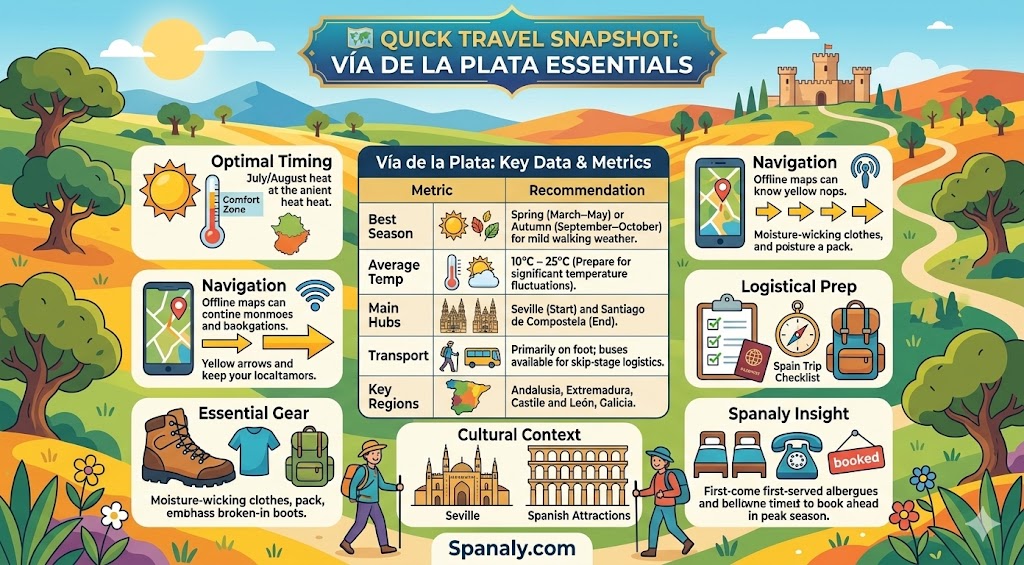
Planning your journey along the historic Silver Route requires minimal complexity if you organize the right logistics beforehand. Use this snapshot to ensure your pilgrimage remains smooth, professional, and culturally rewarding.
| Metric | Recommendation |
| Best Season | Spring (March–May) or Autumn (September–October) for mild walking weather. |
| Average Temp | 10°C – 25°C (Prepare for significant temperature fluctuations). |
| Main Hubs | Seville (Start) and Santiago de Compostela (End). |
| Transport | Primarily on foot; buses available for skip-stage logistics. |
| Key Regions | Andalusia, Extremadura, Castile and León, Galicia. |
Optimal Timing: Weather patterns dictate your pace. Avoid the intense heat of the southern plains in July and August. For regional weather insights, check our Best Time to Visit Extremadura guide before scheduling your stages.
Navigation: While the route is well-marked with yellow arrows, carry offline GPS maps. Navigational tools are essential for remote sections in the countryside.
Essential Gear: Footwear is your most critical investment. Break in your boots months before departing and pack lightweight, moisture-wicking layers for varied elevations.
Logistical Prep: Ensure you are fully prepared for the journey by reviewing our Spain Trip Checklist to cover all pilgrim essentials before leaving home.
Cultural Context: The Silver Route offers a deep dive into heritage. For a broader understanding of what makes the country special, refer to our Ultimate Seville Travel Guide or explore our Spanish Attractions database for site-specific details.
Spanaly Insight: Many pilgrim hostels (albergues) operate on a first-come, first-served basis. During peak season, consider calling ahead or booking private rooms in advance to secure your rest after long walking days.
🏛️ History and Significance of The Silver Route
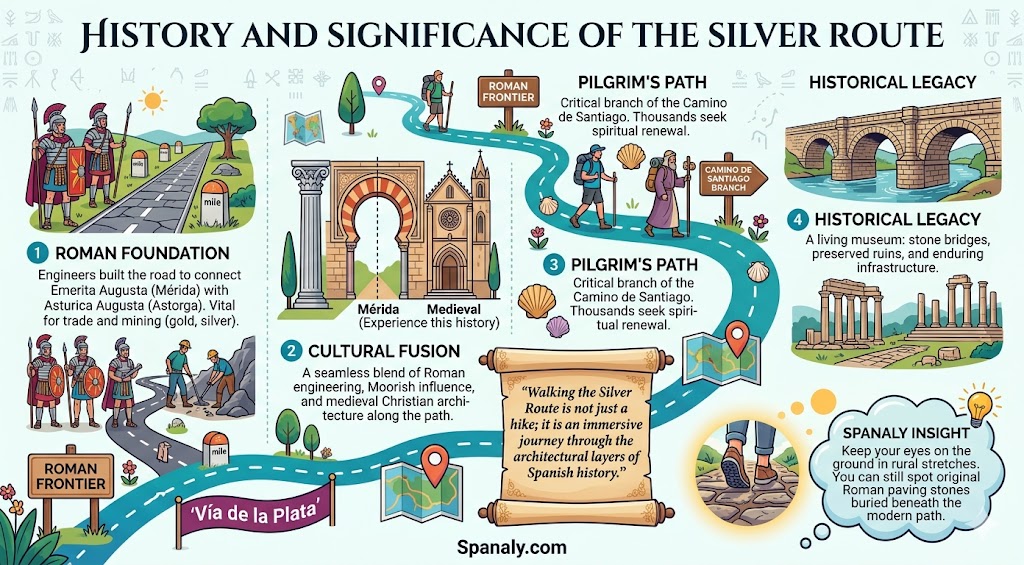
The Vía de la Plata is an ancient artery connecting Roman southern and northern frontiers. It originally facilitated military movement and vital trade.
Roman Foundation: Engineers built the road to connect Emerita Augusta with Asturica Augusta. It served as a lifeline for precious metal mining.
Cultural Fusion: The route showcases a seamless blend of Roman engineering, Moorish influence, and medieval Christian architecture. Experience this history in Mérida.
Pilgrim’s Path: The route eventually became a critical branch of the Camino de Santiago. Thousands walk these stones seeking spiritual renewal.
Historical Legacy: From stone bridges to preserved ruins, the path remains a living museum. It demonstrates the endurance of Roman infrastructure today.
“Walking the Silver Route is not just a hike; it is an immersive journey through the architectural layers of Spanish history.”
🗺️ The Complete Vía de la Plata Route Map
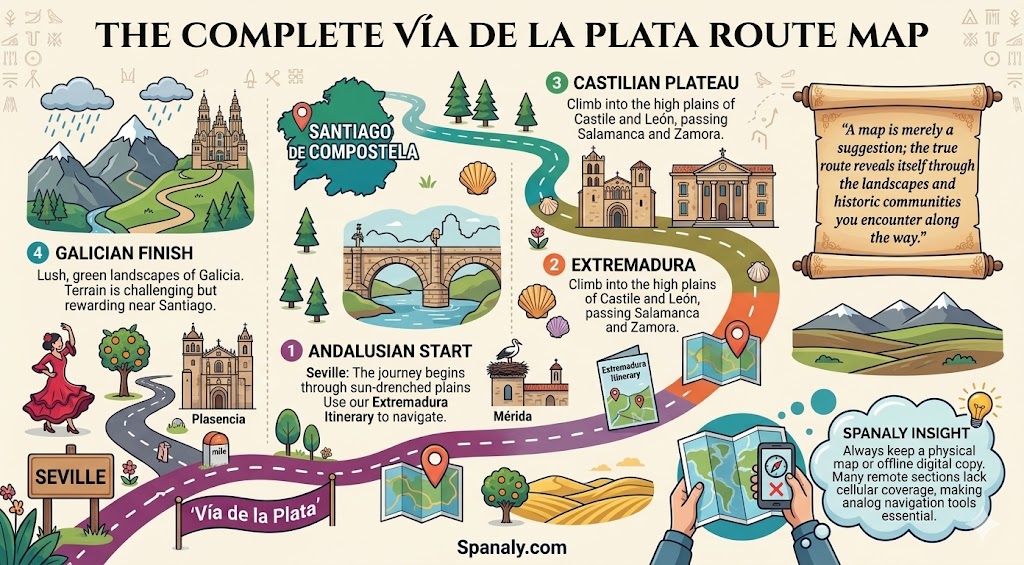
The Silver Route stretches over 1,000 kilometers from Seville in the south to Santiago de Compostela in the north.
Andalusian Start: The journey begins in Seville, guiding you through the sun-drenched plains of Andalusia toward the border of Extremadura.
Extremadura Passage: You will cross historic cities like Mérida, Cáceres, and Plasencia. Navigate this section efficiently using our Extremadura Itinerary.
Castilian Plateau: The trail climbs into the high plains of Castile and León, passing through Salamanca and the beautiful city of Zamora.
Galician Finish: The final stretch enters the lush, green landscapes of Galicia. The terrain becomes challenging yet rewarding as you approach Santiago.
“A map is merely a suggestion; the true route reveals itself through the landscapes and historic communities you encounter along the way.”
☀️ Best Time of Year to Walk The Silver Route
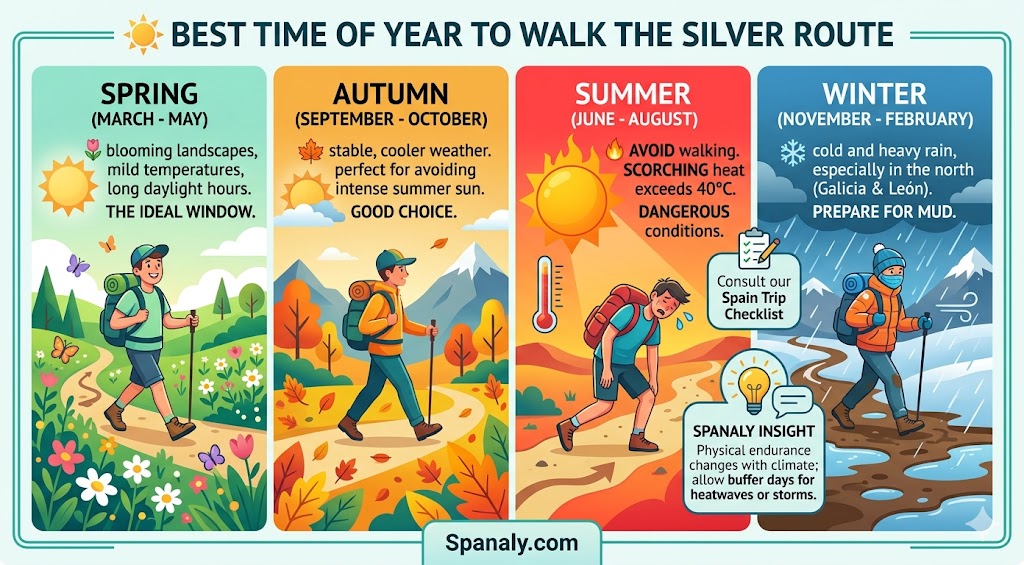
Choosing the right season is crucial for your comfort. The route spans extreme climates, ranging from scorching southern heat to northern rain.
Spring (March – May): This is the ideal window. You will encounter blooming landscapes, mild temperatures, and long, comfortable daylight hours for walking.
Autumn (September – October): These months offer stable, cooler weather. It is perfect for avoiding the intense summer sun found in the southern plains.
Summer Caution: Avoid walking from June to August. Temperatures often exceed 40°C, creating dangerous conditions. Always consult our Best Time to Visit Spain guide before finalizing your start date.
Winter Realities: Northern sections, especially in Galicia and León, experience heavy rain and cold. If you plan to walk then, prepare for mud.
🎒 Essential Preparation and Gear for The Silver Route
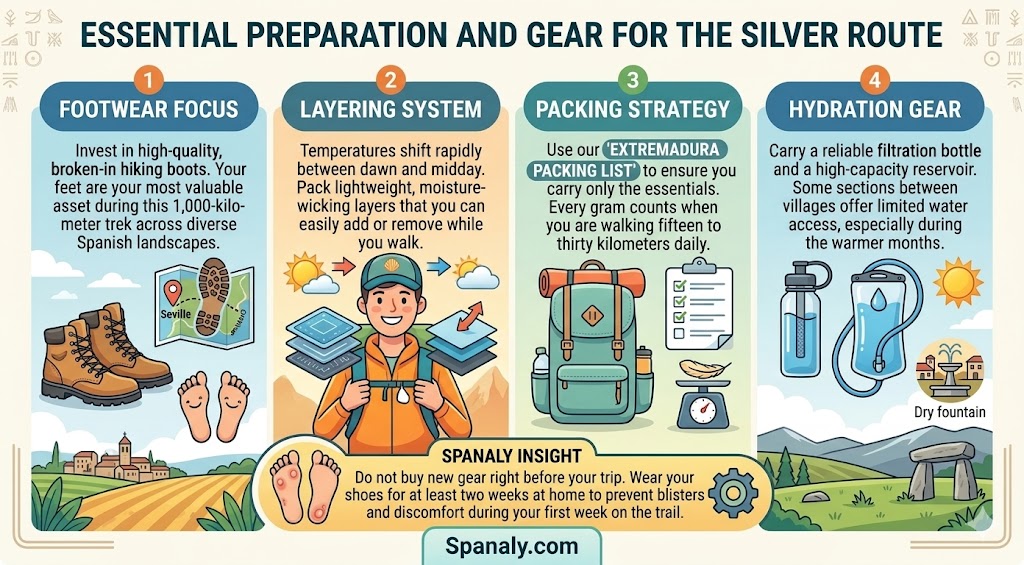
Preparation determines your success on this long-distance trail. You must balance packing light with carrying enough supplies for remote, rugged terrain.
Footwear Focus: Invest in high-quality, broken-in hiking boots. Your feet are your most valuable asset during this 1,000-kilometer trek across diverse Spanish landscapes.
Layering System: Temperatures shift rapidly between dawn and midday. Pack lightweight, moisture-wicking layers that you can easily add or remove while you walk.
Packing Strategy: Use our Extremadura Packing List to ensure you carry only the essentials. Every gram counts when you are walking fifteen to thirty kilometers daily.
Hydration Gear: Carry a reliable filtration bottle and a high-capacity reservoir. Some sections between villages offer limited water access, especially during the warmer months.
Spanaly Insight: Do not buy new gear right before your trip. Wear your shoes for at least two weeks at home to prevent blisters and discomfort during your first week on the trail.
📜 The Pilgrim’s Protocol: Credibility & Essentials
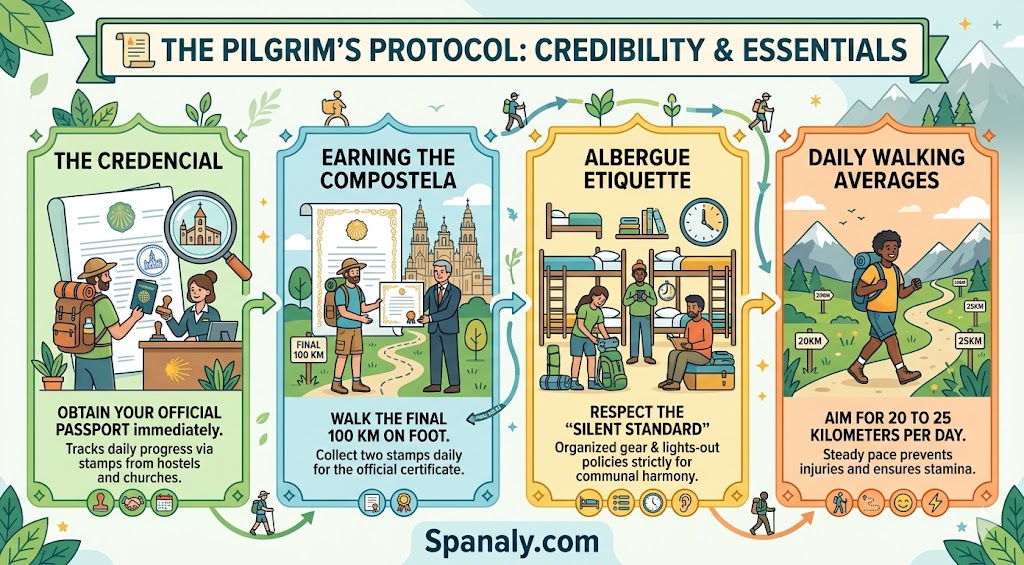
Understanding the logistical framework is vital for every serious pilgrim. Follow these professional standards to master your journey.
The Credencial: Obtain your official pilgrim passport immediately. It tracks your daily progress via mandatory stamps from hostels and churches.
Earning the Compostela: Walk the final 100 kilometers on foot. Collect two stamps daily to verify your journey for the official certificate.
Albergue Etiquette: Respect the “silent standard.” Keep your gear organized and observe lights-out policies strictly to maintain communal harmony at night.
Daily Walking Averages: Aim for 20 to 25 kilometers per day. This steady pace prevents overuse injuries and ensures sustainable long-term stamina.
📍 Key Stages of the Vía de la Plata
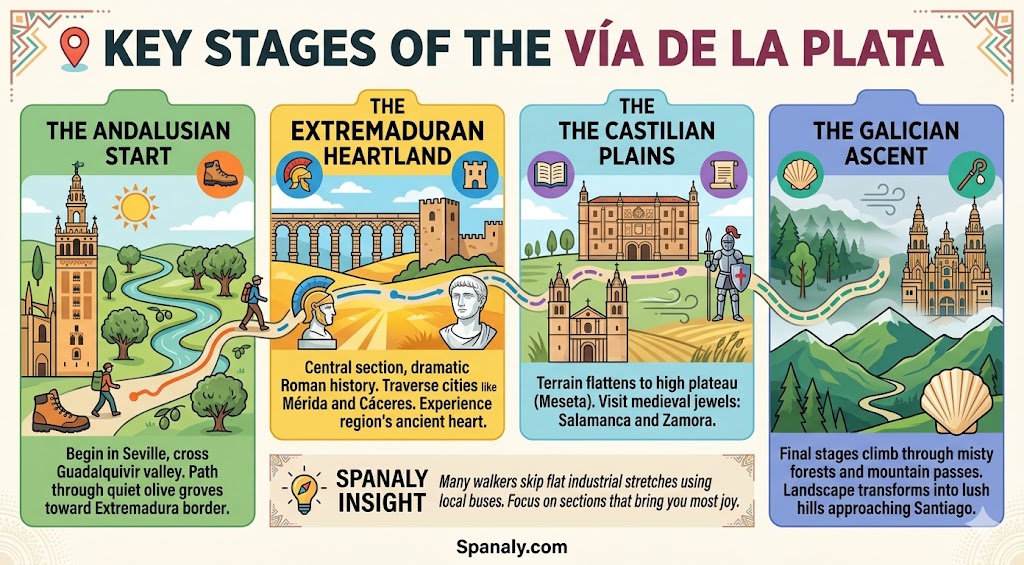
The route divides into four distinct geographical sections. Breaking the 1,000-kilometer journey into these manageable stages ensures better pacing and recovery.
The Andalusian Start (Seville – Extremadura Border):
Distance: 220 km | Avg. Time: 9–11 Days
Difficulty: Moderate | Elevation: Low (Flat Plains)
Highlights: Crossing the Guadalquivir valley and transitioning through quiet olive groves.
The Extremaduran Heartland (Mérida – Plasencia):
Distance: 240 km | Avg. Time: 10–12 Days
Difficulty: Moderate | Elevation: Rolling Terrain
Highlights: Experiencing dramatic Roman history in Mérida and the ancient stone streets of Cáceres.
The Castilian Plains (Salamanca – Zamora):
Distance: 250 km | Avg. Time: 10–12 Days
Difficulty: Easy to Moderate | Elevation: High Plateau (Meseta)
Highlights: Visiting medieval architectural jewels and traversing the expansive, open landscape of the Meseta.
The Galician Ascent (Ourense – Santiago):
Distance: 290 km | Avg. Time: 12–14 Days
Difficulty: Challenging | Elevation: High (Mountain Passes)
Highlights: Climbing through misty forests and lush, green mountain passes before your final arrival at the Cathedral.
📊 Vía de la Plata: Elite Stage Summary
| Section | Distance | Avg. Walking Time | Difficulty Level |
|---|---|---|---|
| Andalusian Start | 220 km | 9–11 Days | Moderate |
| Extremaduran Heartland | 240 km | 10–12 Days | Moderate |
| Castilian Plains | 250 km | 10–12 Days | Easy/Moderate |
| Galician Ascent | 290 km | 12–14 Days | Challenging |
🏛️ Top Roman Ruins and Historical Attractions Along the Way
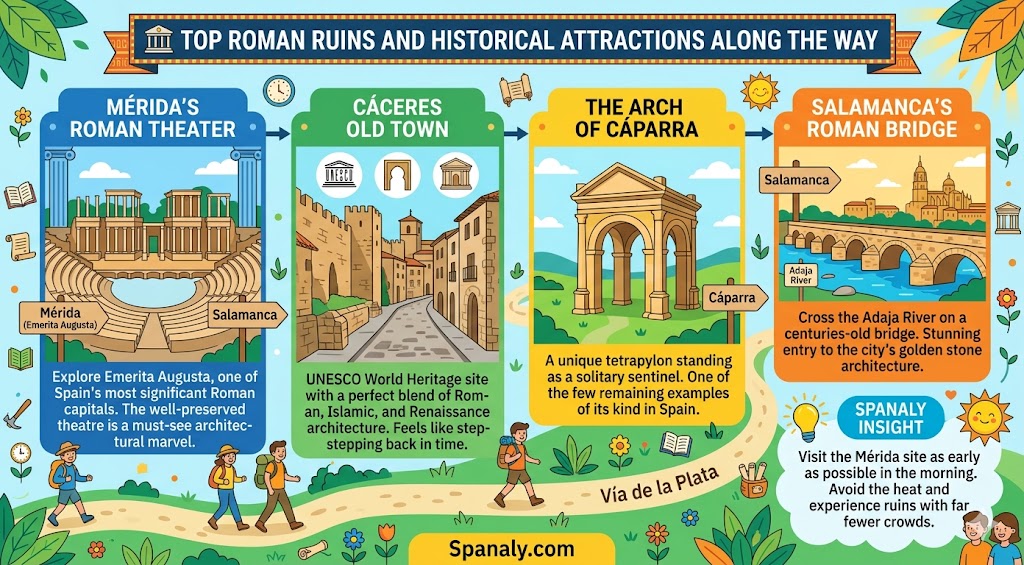
The Vía de la Plata acts as a physical timeline of the Iberian Peninsula. You will encounter remarkable engineering feats and sites that reveal Spain’s rich archaeological heritage.
Mérida’s Roman Theater: Explore Emerita Augusta, one of the most significant Roman capitals in Spain. The well-preserved Roman Theatre of Mérida remains a must-see architectural marvel.
Cáceres Old Town: This UNESCO World Heritage site features a perfect blend of Roman, Islamic, and Renaissance architecture. Walking its stone streets feels like stepping back in time.
The Arch of Cáparra: This unique tetrapylon stands as a solitary sentinel in the countryside. It is one of the few remaining examples of its kind in Spain.
Salamanca’s Roman Bridge: Cross the Adaja River on a bridge that has withstood centuries of traffic. It serves as a stunning entry point to the city’s golden stone architecture.
✨ Starlight Experiences Along The Silver Route
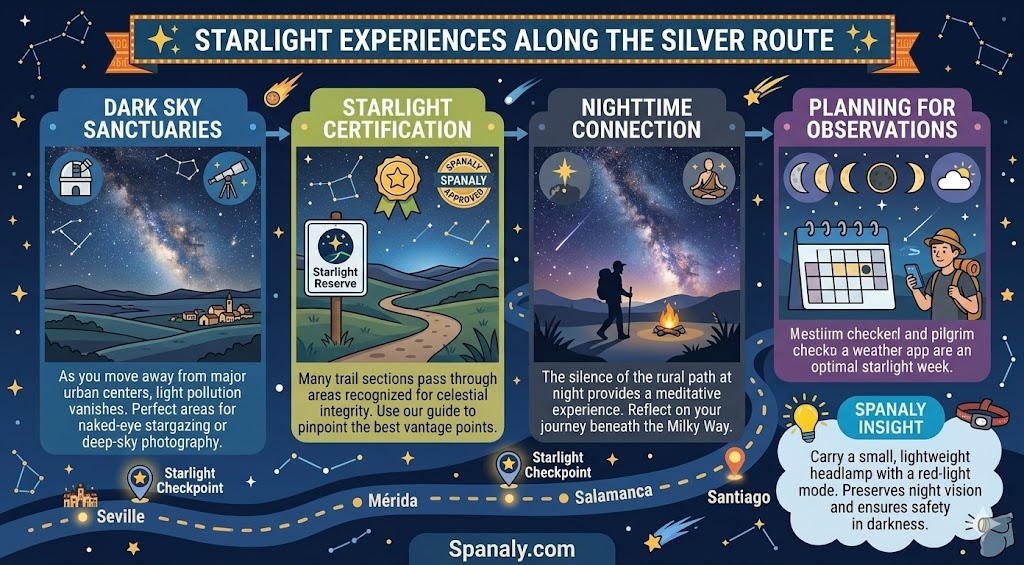
Beyond its historical and architectural wonders, the Vía de la Plata offers some of the clearest night skies in Europe. Much of the route, especially through the rural stretches of Extremadura, is designated as prime territory for celestial observation.
Dark Sky Sanctuaries: As you move away from major urban centers, light pollution vanishes. You will find vast, pristine areas perfect for naked-eye stargazing or deep-sky photography.
Starlight Certification: Many sections of the trail pass through areas recognized for their celestial integrity. Use our Star Gazing Extremadura guide to pinpoint the best vantage points along your path.
Nighttime Connection: The silence of the rural path at night provides a meditative experience. It is the perfect opportunity to reflect on your journey beneath the Milky Way.
Planning for Observations: Stargazing is best on clear, moonless nights. Plan your stage stops near protected rural zones to maximize your time under the cosmos.
Spanaly Insight: Carry a small, lightweight headlamp with a red-light mode. It preserves your night vision while allowing you to check your map or equipment safely in total darkness.
🛌 Accommodation and Where to Stay on The Silver Route
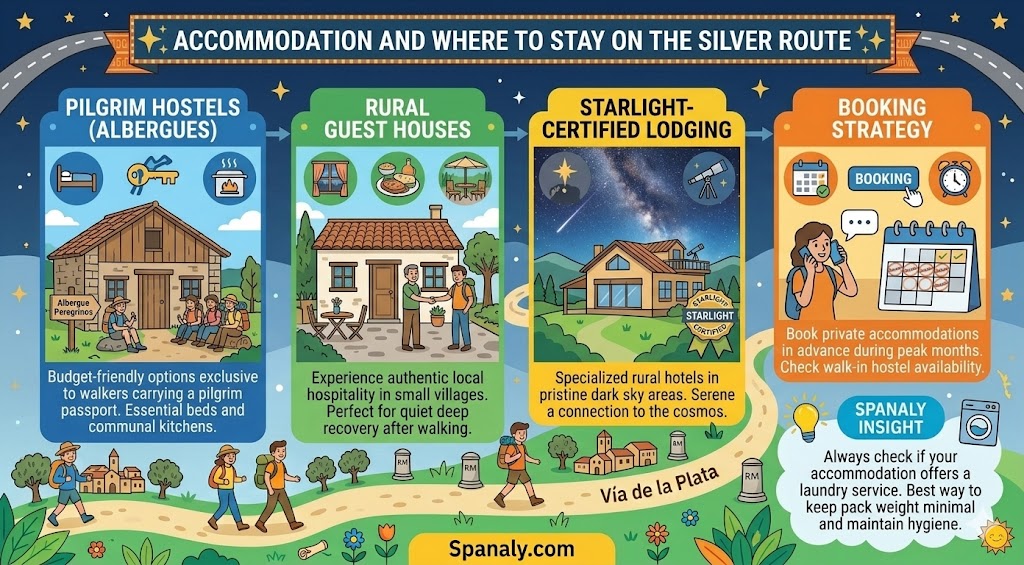
Your rest strategy is vital for sustaining energy over long distances. Options range from traditional pilgrim hostels to historic rural manor houses.
Pilgrim Hostels (Albergues): These budget-friendly options are exclusive to walkers carrying a pilgrim passport. They provide essential beds and communal kitchens for weary travelers.
Rural Guest Houses: Experience authentic local hospitality in small villages. These properties often offer quiet settings that are perfect for deep recovery after walking.
Starlight-Certified Lodging: Many areas along the route now feature specialized rural hotels. Plan your comfort stops using our Where to Stay Extremadura guide to find the most serene bases.
Booking Strategy: While some hostels operate on a walk-in basis, always book private accommodations in advance during peak spring and autumn months.
🥘 Gastronomy Along The Silver Route
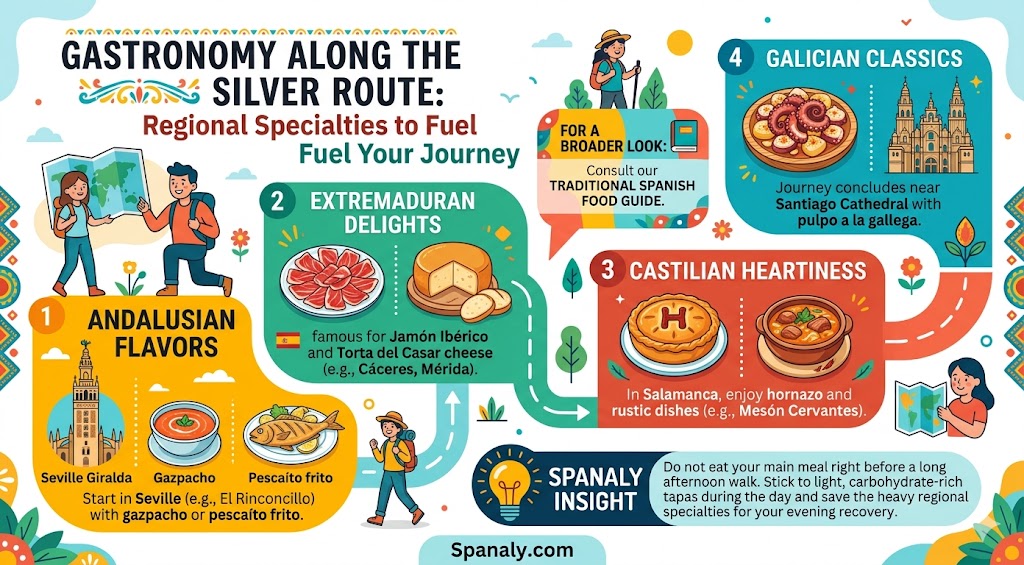
Fueling your journey with regional specialties is essential. The Silver Route traverses diverse landscapes, each offering a distinct culinary identity rooted in tradition.
Andalusian Flavors: Start in Seville with gazpacho or pescaíto frito. Experience these at El Rinconcillo, one of the city’s oldest and most iconic tapas bars.
Extremaduran Delights: This region is famous for Jamón Ibérico and Torta del Casar cheese. For an authentic taste, visit Restaurante Atrio in Cáceres or local spots in Mérida.
Castilian Heartiness: As you reach Salamanca, enjoy hornazo, a traditional meat pie. Dine at Mesón Cervantes to experience rustic, high-quality local cuisine.
Galician Classics: Your journey concludes with pulpo a la gallega. Seek out traditional taverns near the Cathedral in Santiago de Compostela to celebrate your successful arrival.
For a broader look at the country’s culinary landscape, consult our Traditional Spanish Food Guide to master how to order and enjoy dishes like a local.
Spanaly Insight: Do not eat your main meal right before a long afternoon walk. Stick to light, carbohydrate-rich tapas during the day and save the heavy regional specialties for your evening recovery.
⚠️ Common Mistakes to Avoid When Walking the Roman Road
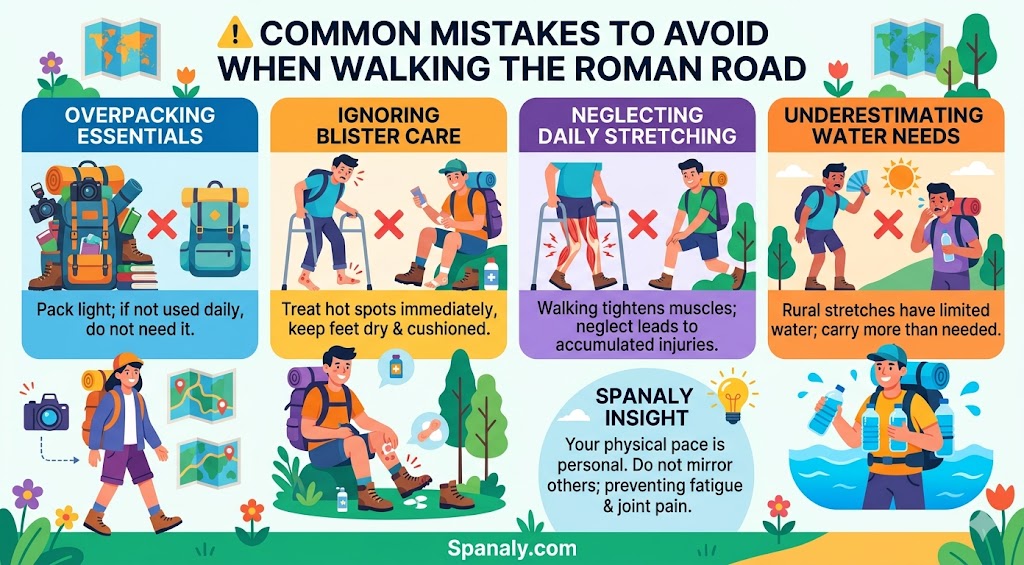
Learning from the errors of previous pilgrims will save you unnecessary physical and mental strain. Avoid these common pitfalls to keep your journey on track.
Overpacking Essentials: Many pilgrims carry heavy, unnecessary gear. Pack light; if you do not use an item daily, you likely do not need it.
Ignoring Blister Care: A small blister can end a walk prematurely. Stop immediately to treat hot spots, keeping your feet dry and properly cushioned at all times.
Neglecting Daily Stretching: Walking long distances tightens muscles quickly. Neglecting your post-walk stretch routine leads to injuries that accumulate over time.
Underestimating Water Needs: Rural stretches between villages offer limited hydration points. Always carry more water than you think you require, especially during the hotter midday hours.
Spanaly Insight: Your physical pace is personal. Do not mirror the speed of other walkers; sticking to your own rhythm prevents fatigue and keeps your joints healthy.
💡 Pro Tips for a Successful Pilgrimage
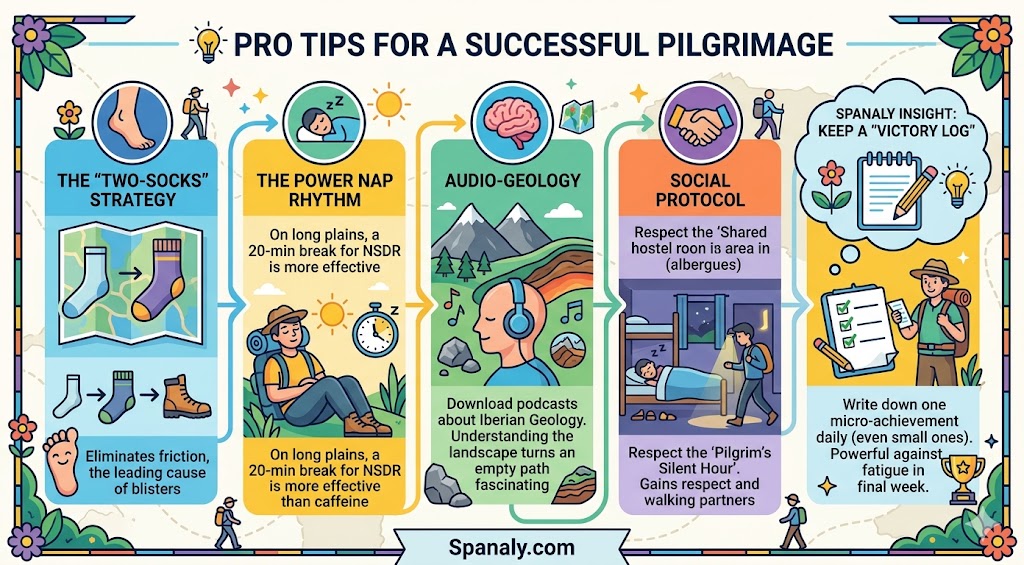
True mastery of the Vía de la Plata requires unconventional tactics that go beyond basic hiking guides. Use these community-tested insights to elevate your experience.
The “Two-Socks” Strategy: Wear a thin synthetic liner sock beneath a wool hiking sock. This setup eliminates friction, which is the leading cause of blisters on long-distance routes.
The Power Nap Rhythm: On the long, flat plains of the Meseta, take a 20-minute “non-sleep deep rest” (NSDR) break at midday. This mental reset is more effective for stamina than a caffeine boost.
Audio-Geology: Download podcasts or audiobooks about the geology of the Iberian Peninsula. Understanding how the landscape formed beneath your boots turns an empty path into a fascinating geological narrative.
Social Protocol: If you stay in albergues, learn the “Pilgrim’s Silent Hour.” Being the one who respects the quietude of others gains you deep respect and potential walking partners for the following stages.
Spanaly Insight: Keep a “victory log.” Write down one micro-achievement every single day—even if it is just “walked 15km despite the heat.” It is a powerful psychological tool against the inevitable fatigue of the final week.
The Vía de la Plata is not merely a path; it is a profound journey through the soul of Spain. By choosing this route, you embrace history, silence, and the raw beauty of the Iberian landscape.
Final Reflection: Whether you walk for spiritual growth or historical discovery, every kilometer leaves a lasting impact on your perspective.
Embrace the Journey: Focus on the small moments—the local hospitality, the ancient stones beneath your feet, and the vast, clear night skies.
Extend Your Adventure: If you have time to explore the region beyond the walking path, consider our Extremadura to Seville Road Trip for a deeper dive into these iconic landscapes.
Your Next Step: Start your preparations today, respect the rhythm of the trail, and allow the Silver Route to change you.
Spanaly Insight: Your pilgrimage does not truly end when you reach the cathedral in Santiago. You will carry the lessons of the Silver Route with you long after you return home.