The quiet sound of boots on historic cobblestones echoes through the morning mist. Packing for this wild region requires a balance between walking in historic towns and exploring countryside trails.
📋 The Focus: Light layers, comfortable walking shoes, and reliable sun protection define your basic luggage list.
🏛️ For History Lovers: Ancient stone paths and ruins demand sturdy shoes with good grip and a secure daypack.
🌲 For Nature Lovers: Shifting weather across the natural parks means you need breathable clothing and clear maps.
Interior Spain rewards travelers who pack light rather than carrying heavy bags. To learn about local routes and transport before finalizing your gear, our comprehensive Extremadura Travel Guide outlines how to plan your journey easily. You can keep your items safe while moving between villages.
Spanaly Insight: Pack for strong sunshine rather than just high temperatures. The dry air makes it easy to get sunburned even on cooler days, making a wide-brimmed hat much better than a standard cap.
📊 Extremadura Packing Snapshot: Quick Essentials
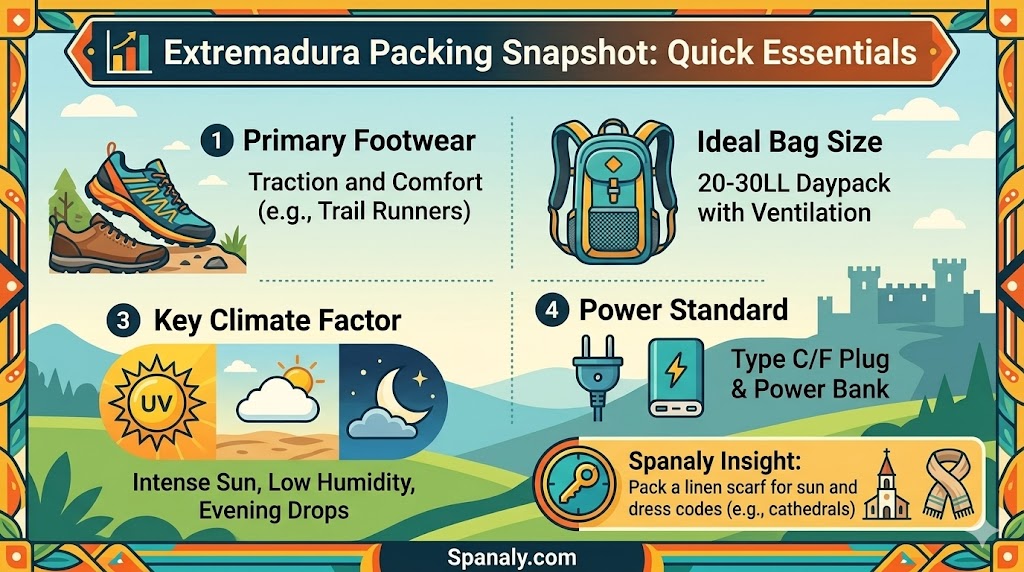
Looking at the local weather and terrain helps you pack your bags efficiently. Visiting this part of Spain requires practical items rather than fancy outfits.
🥾 Best Footwear: Comfortable walking shoes or broken-in trail sneakers.
🎒 Daypack Choice: A 20–30L lightweight daypack to carry your daily essentials comfortably.
☀️ Main Climate Factor: Strong sunshine, low humidity, and cooler evening temperatures.
🔌 Power Standard: Standard European plugs and a compact portable power bank.
Traveling through the inland countryside is highly enjoyable when you carry the right gear. Many visitors regret bringing flimsy city footwear when walking on historical stone pavements. To see how these packing choices fit into your broader journey planning across the peninsula, our foundational guide on Plan Your Trip breaks down essential travel check-lists and domestic travel logic. You can stay comfortable while exploring different provinces.
Spanaly Insight: Keep a light linen scarf inside your bag. Beyond protecting you from the midday sun, some churches and monasteries may expect visitors to cover their shoulders.
⚖️ Extremadura vs. Andalusia: The Gear Divide
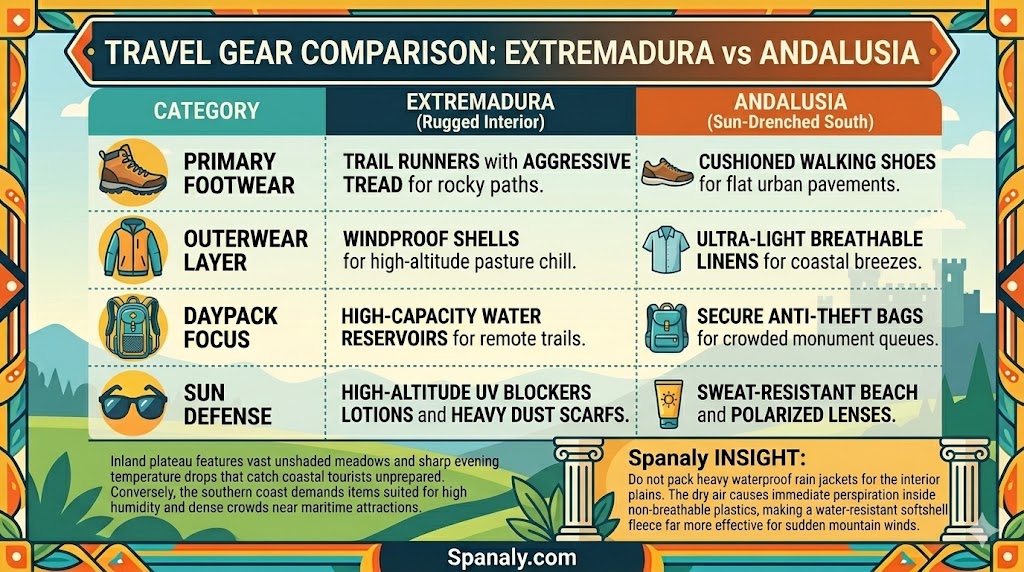
Choosing clothing for the dry inland plains requires a slightly different approach than packing for the southern coast. While both regions enjoy plenty of sunshine, their environments alter your daily travel priorities.
| Travel Need | Extremadura (The Inland Plains) | Andalusia (The Sunny South) |
| Footwear | Sneakers with good grip for countryside paths. | Cushioned shoes for flat city pavements. |
| Layering | A light jacket for breezy evenings. | Thin breathable linen items for coastal air. |
| Bag Essentials | A reliable water bottle for longer walks. | Secure bags for busy city monument lines. |
| Sun Protection | Wide-brimmed hats and sunblock. | Polarized sunglasses and beach lotions. |
The inland plateau features open meadows and temperature drops that can surprise coastal tourists. Because of this, walkers often need a warm layer handy alongside their cooling summer tops. On the other hand, the southern coast feels more humid and features larger crowds near maritime spots. To see how these southern clothing adjustments fit into a wider route, our comprehensive Ultimate Seville Travel Guide breaks down local transport tips and urban dress codes. You can balance your luggage weight easily between both destinations.
🏛️ Essential Clothing and Footwear for Historical Exploration
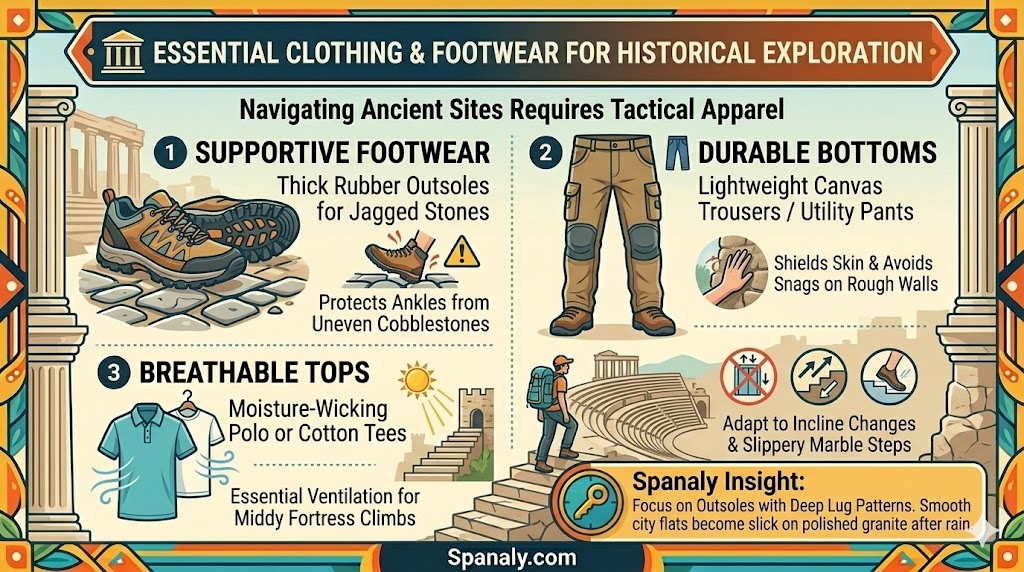
Walking through ancient Roman theaters and old medieval quarters requires comfortable clothing choices designed for long days on your feet. Choosing the wrong footwear can lead to tired feet quickly on Spain’s uneven, historic stone surfaces.
👟 Comfortable Footwear: Sturdy walking shoes or sneakers with a good grip protect your feet from hard stones. Old town streets often have small gaps between the cobblestones that can easily strain unprotected ankles.
👖 Practical Bottoms: Lightweight canvas trousers or flexible casual pants protect your legs when exploring old ruins. Try to avoid delicate fabrics that can snag easily when walking through narrow castle passages.
👕 Breathable Tops: Light polo shirts or classic cotton tees help you stay cool during the day. Historic stone fortresses can trap warmth, making good ventilation essential during sunny afternoon walks.
Old monument areas in the interior villages usually lack modern elevators or flat walkways. Because of this, visitors should be prepared for steady uphill walks and smooth, worn steps. To see how these practical footwear choices help you explore beautiful archaeological ruins, our dedicated guide on Spanish Attractions outlines key historic routes and highlights across the country. You can keep your walks comfortable while touring complex heritage sites.
Spanaly Insight: Choose shoes with patterned rubber soles rather than smooth city flats. Polished stone pavements inside historic centers like Cáceres can become quite slippery after a light morning shower, making reliable traction very helpful.
🎒 Outdoor Gear for Nature Lovers and Trail Hiking
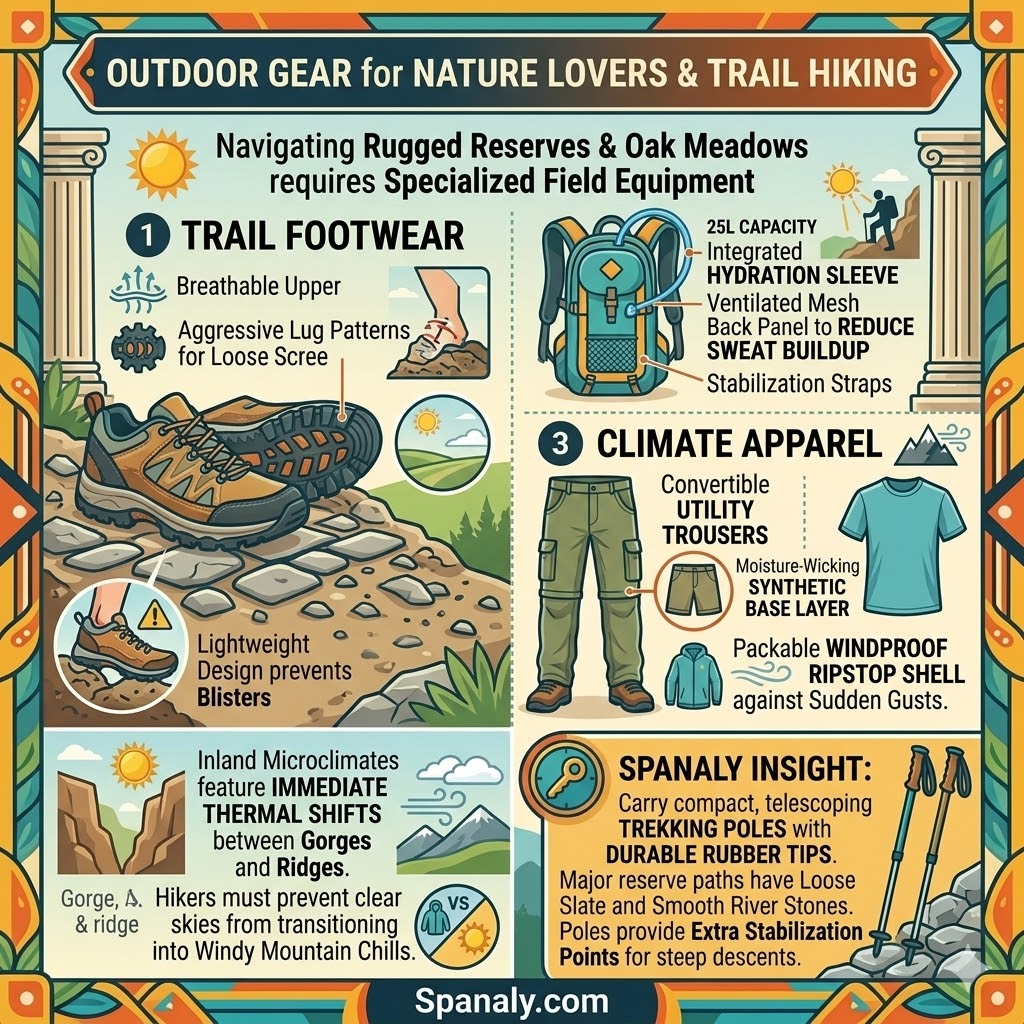
Exploring natural parks and green meadows requires reliable, practical clothing designed for a full day outside. Standard gym clothes or thin lifestyle sneakers can wear out quickly when facing the rocky paths and brushwood of Western Spain.
🥾 Trail Footwear: Sturdy trail running shoes or light hiking boots with deep rubber soles keep your feet steady on loose gravel. Breathable designs help prevent blisters during long uphill walks in open country areas.
🎒 Technical Pack: A 20–30L lightweight daypack keeps your essential items stable on the move. Look for options with ventilated straps or mesh back panels to reduce sweat buildup during warm afternoon walks.
👕 Layered Clothing: Casual hiking trousers and light synthetic shirts help regulate your body temperature easily. Pack a thin windproof jacket to stay warm if you encounter sudden breezes on higher ridges.
Inland weather can shift quickly between deep valleys and open hills. Walkers sometimes find that clear skies turn into cool, breezy conditions within an hour. To see how these packing choices compare to the items needed for the damp Atlantic coast, our detailed guide on the Northern Spain Packing List outlines the essential rain items and warm clothing required for wetter climates. You can easily organize your bags when traveling between different regions.
Spanaly Insight: Bring a pair of telescoping trekking poles if you plan to tackle steep hills. The paths inside major parks often feature loose stones and smooth river rocks, making extra balance points very helpful for saving your knees on the way down.
💧 Hydration Gear and Water Logistics for Dry Trails
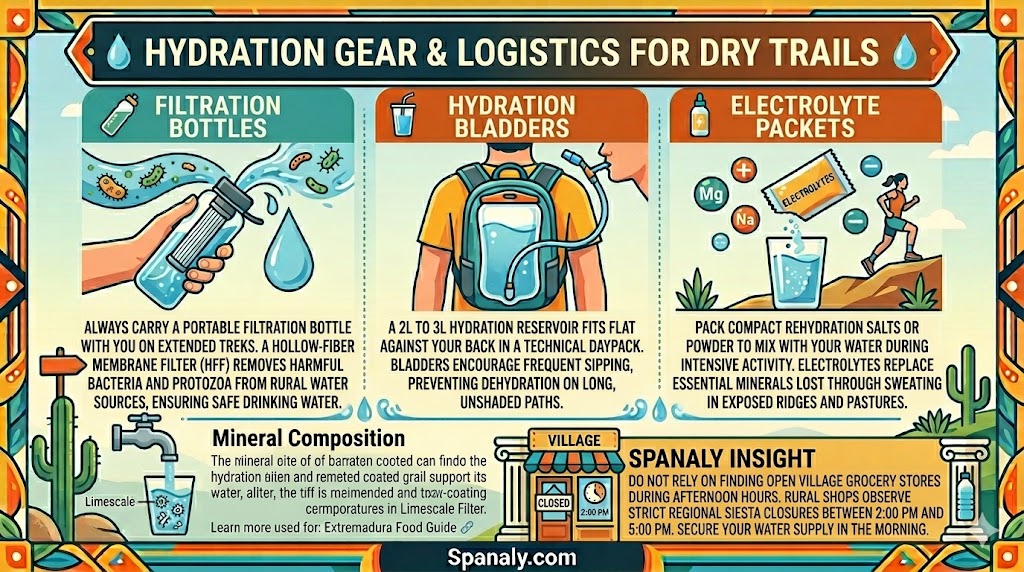
Keeping a steady water supply handy is a smart safety step when walking through the warm inland plains. Country trails often lack frequent drinking fountains, and summer weather can dry up smaller country streams.
🥤 Refillable Bottle: Carry a sturdy, lightweight water bottle that you can top up at your hotel each morning. Having a reliable container ensures you stay comfortable during afternoon walks between villages.
🎒 Hydration Bladder: A 2–3L water bladder fits flat inside most standard backpacks if you prefer hands-free sipping. These lightweight inserts are very convenient for longer walks in open countryside areas.
🧪 Electrolyte Powders: Pack a few electrolyte powders or rehydration sachets to mix into your water during warmer days. These simple additions help refresh your body and replace essential minerals after walking under the sun.
The taste of tap water in smaller interior villages can sometimes surprise international visitors. While it is perfectly safe to drink, the local water often has a noticeable mineral flavor that tastes slightly bitter. For this reason, many travelers prefer using bottled water or a filter water bottle to keep their drinks tasting fresh. To see how these daily drinks fit into your broader regional tasting plans, our comprehensive Extremadura Food Guide outlines traditional tavern customs and popular local beverages. You can coordinate your fluid choices with authentic regional meals.
Spanaly Insight: Do not expect to find open village grocery stores during the middle of the day. Small country shops usually close for a traditional afternoon break between 2:00 PM and 5:00 PM, so it is best to buy your morning water supply early.
☀️ Seasonal Weather Guide and Layering Strategies
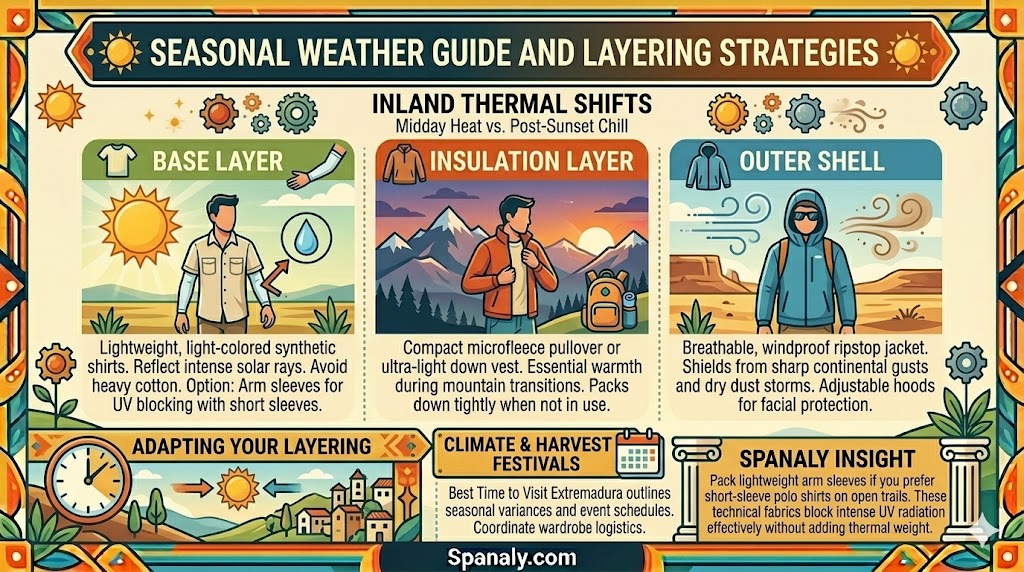
Inland areas feature temperature shifts that can catch unprepared visitors by surprise. Sun-baked plains experience strong afternoon sunshine, while higher countryside zones can turn quite cool immediately after sunset.
👕 Basic Top: Light, light-colored cotton or synthetic t-shirts help you stay cool during sunny daytime walks. Try to avoid heavy fabrics that trap sweat against your skin, as they can make you feel chilled later in the day.
🧥 Light Sweater: A fleece pullover or a thin cardigan provides comfortable warmth if the weather changes. This middle layer packs away easily inside your small bag when the sun comes out.
💨 Windbreaker: A lightweight jacket shields your body from cool afternoon breezes on open plains. Choosing an option with a hood is very practical for keeping dust and wind away during outdoor tours.
Adjusting your clothes throughout the day ensures you stay comfortable during long country drives. Because of this, it is best to keep a spare layer handy in your car or daypack. To see how these clothing choices match local holiday schedules and seasonal weather patterns, our detailed breakdown on the Best Time to Visit Extremadura outlines temperature changes and outdoor events. You can organize your wardrobe easily for your trip.
📱 Tech, Navigation, and Photography Gear for Remote Areas
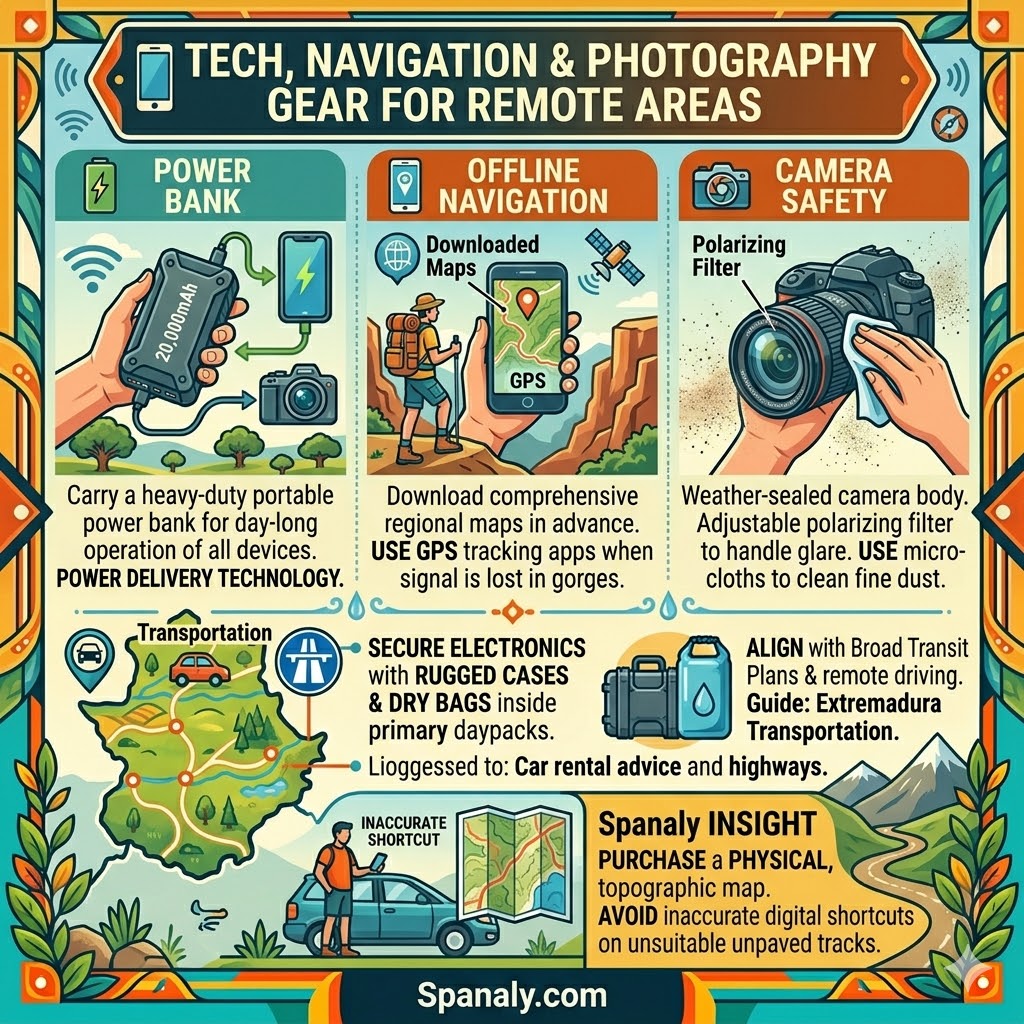
Using a few digital tools helps you stay on track when visiting older countryside villages. Cellular coverage can become unreliable in some remote valleys and protected natural areas, making it smart to prepare a few things before you leave your hotel. To optimize your smartphone setup, installing the top tourist apps for Spain ensures you have all essential travel and transit tools ready.
🔋 Compact Power Bank: Carry a reliable portable power bank to charge your phone on the go. This easy backup ensures your map applications and camera remain active during full-day sightseeing trips.
🗺️ Offline Navigation: Download local regional maps onto your smartphone while you have internet access. Using offline Google Maps or specialized GPS applications helps you find your way smoothly even when mobile signals drop.
📷 Camera Essentials: Pack your camera or smartphone with a clean microfiber cloth to wipe away fine dust. Keeping your lenses clear ensures you get bright, sharp photos of the beautiful historic architecture.
Keeping your daily electronics safe from dust and heat makes your trip much smoother. Because of this, many visitors prefer using protective cases or small zip bags inside their packs. To see how these digital preparation choices match your broader travel plans and driving routes, our comprehensive guide on Extremadura Transportation outlines vehicle rentals and road connectivity. You can check your routes easily across different town borders.
Spanaly Insight: Grab a standard paper road map from a local tourism office before driving deep into the countryside. Phone navigation apps can sometimes suggest confusing shortcuts through narrow dirt farm tracks that are not suitable for standard cars.
🧴 Health, Sun Protection, and First-Aid Essentials
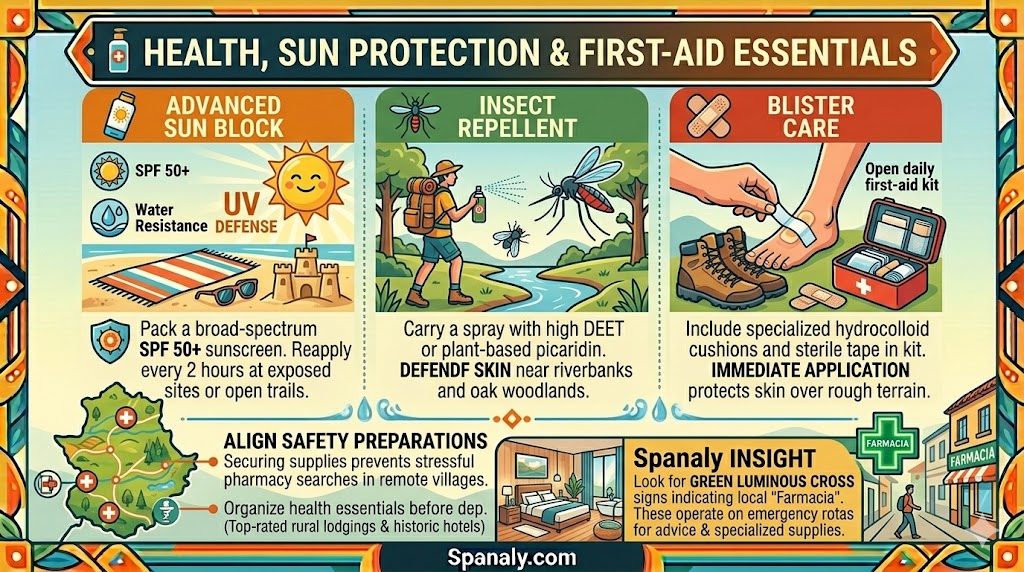
Keeping a few basic health items handy ensures a smooth journey through the western countryside. The dry climate can make you feel thirsty and cause sunburns easily, so it is smart to take a few steps before heading out for a full day of sightseeing.
☀️ Standard Sun Cream: Pack a regular sun block with good UV protection. Reapply the cream every couple of hours when you are exploring unshaded historic ruins or walking along country paths.
🦟 Insect Spray: Carry a small bottle of standard bug repellent. Applying a quick spray helps keep away seasonal insects if your walks take you near slow-moving rivers or shaded woods.
🩹 Blister Plasters: Put a few standard plasters and medical tape inside your purse or daypack. Putting a plaster on early protects your feet and lets you continue walking comfortably over older streets.
Organizing your basic personal supplies early saves you the trouble of looking for an open shop in tiny agricultural villages. Because of this, many visitors prefer to check their bags before leaving larger towns each morning. To see how these safety steps match your evening rest and travel choices, our comprehensive guide on Where to Stay in Extremadura outlines excellent rural guest houses and comfortable historic hotels. You can select a nice base with great amenities for your trip.
Spanaly Insight: Keep an eye out for the glowing green cross signs that show where a local Farmacia (pharmacy) is located. Even in small country towns, these traditional shops work on weekend rotation schedules to provide easy access to basic plasters and health advice.
🧺 Local Market and Day-Trip Packing Hacks
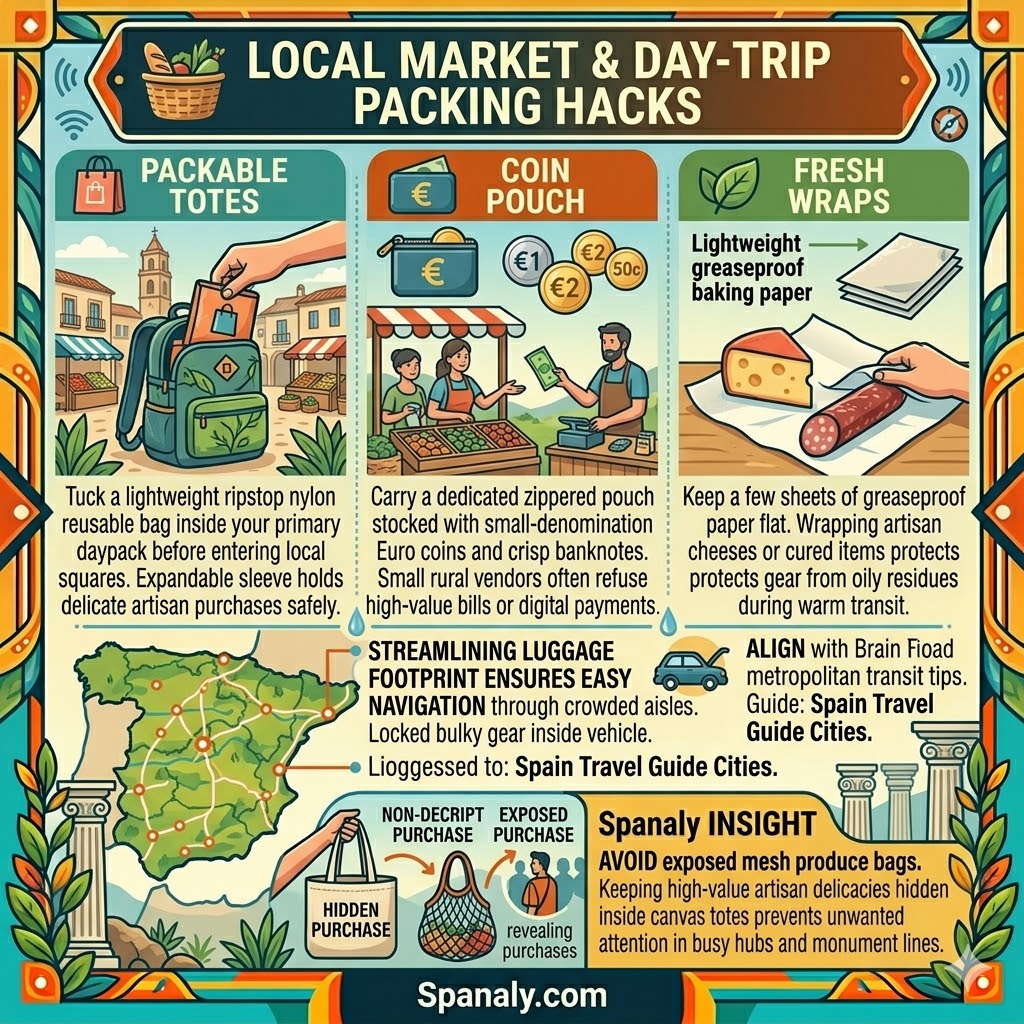
Moving from countryside paths to historic town squares requires a quick adjustment to your daily gear. Large outdoor backpacks can feel bulky and awkward inside small traditional shops or busy indoor markets.
🛍️ Lightweight Tote Bag: Tuck a simple, foldable reusable fabric bag inside your small purse or pocket before entering the squares. This extra bag holds delicate local food purchases safely without crushing your main items.
🪙 Small Coin Pouch: Carry a basic zippered pouch stocked with small Euro coins and low-value cash bills. Many family-run market stalls and small village vendors do not accept modern digital mobile phone payments.
📜 Clean Wax Paper: Keep a few sheets of greaseproof paper flat inside your daily bag. Wrapping local artisan cheeses or cured items protects your other belongings from oily marks during your drive back.
Keeping your daily bags light and makes it much easier to walk through narrow market aisles. Because of this, many travelers prefer to leave their larger travel items packed inside their vehicles when spending an afternoon in town. To see how these city ideas adapt when visiting larger trading spots across the country, our foundational overview of Spain Travel Guide Cities breaks down local transport tips and district navigation. You can move around easily in any market environment.
Spanaly Insight: Use standard, solid canvas tote bags rather than open mesh bags that show your purchases to everyone. Keeping your artisan delicacies out of sight is a smart, way to avoid unwanted attention in busy train stations or crowded monument lines.
📥 Ultimate Extremadura Packing Checklist
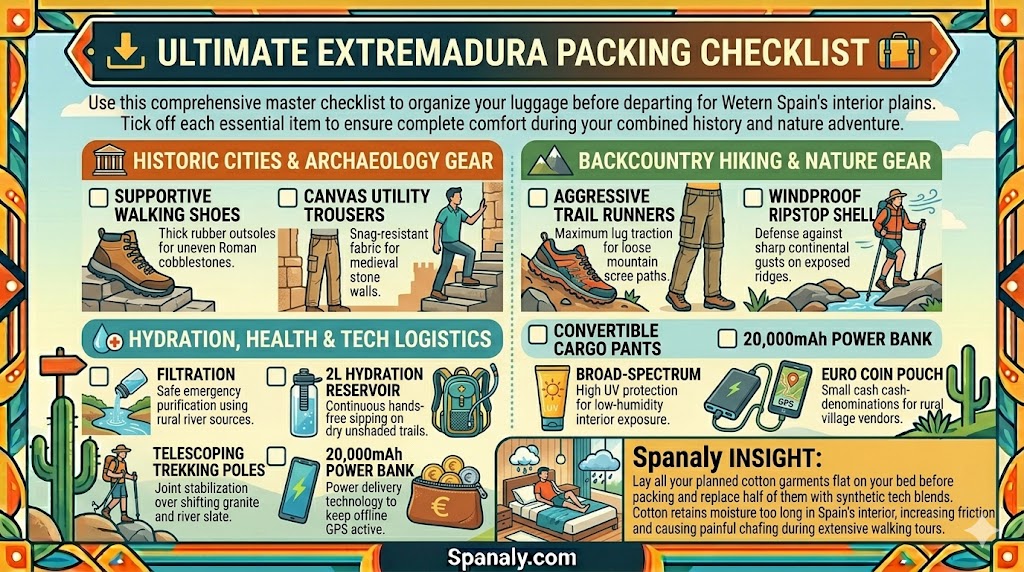
Use this packing guide to organize your bags before departing for the interior plains. You can easily copy or print this quick list for a fast final luggage check.
🖨️ Printable Quick Checklist
□ Passport & ID            □ Small Power Bank         □ Light Scarf (Monasteries)
□ EU Plug Adapter          □ Offline Google Maps      □ Comfortable Walking Shoes
□ Regular Sun Cream        □ Small Cash Coins & Bills □ Thin Windproof Jacket
🏛️ Historic Cities & Archaeology Gear
| Packed | Item Name | Purpose / Use |
| ☐ | Walking Shoes | Regular comfortable sneakers for uneven town cobblestones. |
| ☐ | Casual Trousers | Lightweight canvas or denim pants for walking near old ruins. |
| ☐ | Light Polo Shirts | Breathable cotton tops to stay cool during afternoon monument tours. |
| ☐ | Small Purse or Pack | A bag with secure zippers for holding your daily items. |
🎒 Countryside Hiking & Nature Gear
| Packed | Item Name | Purpose / Use |
| ☐ | Trail Sneakers | Lightweight running shoes with good rubber grip for gravel paths. |
| ☐ | Hiking Trousers | Flexible casual pants that allow you to move freely outside. |
| ☐ | Windbreaker Jacket | A thin outerwear layer to protect against cool afternoon breezes. |
| ☐ | Walking Poles | collapsible sticks to help maintain balance on steep hills. |
💧 Hydration, Health & Tech Essentials
| Packed | Item Name | Purpose / Use |
| ☐ | Refillable Bottle | A sturdy container to top up with fresh water each morning. |
| ☐ | Standard Sun Cream | Regular sun block to prevent sunburns during open countryside walks. |
| ☐ | Portable Power Bank | A basic backup battery to keep your smartphone maps active all day. |
| ☐ | Small Coin Pouch | Pocket change and small cash bills for family-run village shops. |
⚠️ Common Packing Mistakes Travelers Should Avoid
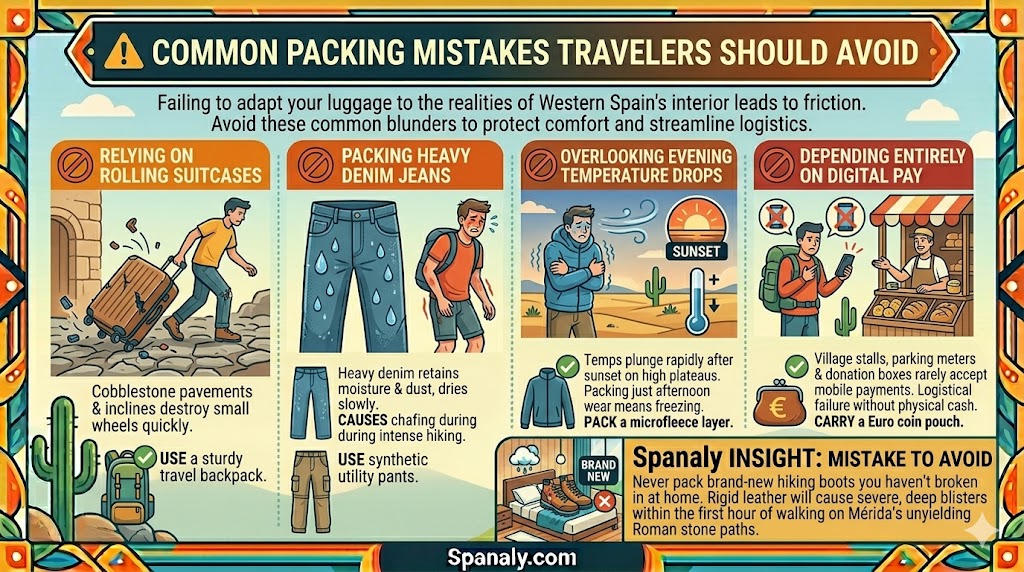
Preparing your bags without considering the local countryside can lead to a few travel surprises. Avoiding these packing slip-ups helps you stay comfortable and keeps your daily trips moving smoothly.
🚫 Using Heavy Rolling Suitcases: Bringing large rolling bags into historical town centers can be a bit of a challenge. Cobblestone pavements and steep medieval streets can wear down small wheels quickly, making a lightweight backpack a much easier option.
🚫 Choosing Heavy Denim Jeans: Thick denim jeans tend to hold onto moisture and dust, and they can take a long time to dry in cooler valleys or after unexpected showers. This can cause uncomfortable skin chafing during long walks on countryside trails, so thin casual trousers are usually a better choice.
🚫 Forgetting About Cooler Evenings: Do not assume the warm afternoon sunshine lasts all night across the open plains. Temperatures often drop quickly after sunset on the high plateaus, meaning you might feel chilly without a light sweater or fleece layer.
🚫 Relying Only on Mobile Phone Payments: Leaving your hotel without physical coins can cause minor issues when buying small items. Tiny village bakeries, parking meters, and small historic chapels rarely accept modern digital or card payments.
Spanaly Insight: Try to avoid packing brand-new shoes that you have not worn at home first. Stiff new footwear can cause painful blisters within the first hour of walking on the old, hard stone paths of Mérida or Cáceres.
🛡️ Visitor FAQs – Extremadura Packing & Travel Logistics Guide
🎒 Can I bring my standard overhead cabin suitcase on regional buses?
Yes, regional buses allow standard cabin luggage. However, you must store larger bags in the cargo compartment underneath the bus before boarding. Keep your phone, travel apps, and valuable items with you at your seat inside a small daypack.
🥾 Do I need specialized outdoor hiking gear for walking in Monfragüe?
No, specialized outdoor gear is not necessary for marked trails and viewpoints. Regular tourists can stay comfortable by wearing long trousers and sturdy sneakers. Applying standard bug spray provides good protection when walking near trees or riverbanks.
🧣 Should I pack formal attire for dining in historic regional paradores?
Strict formal dress codes do not apply to these historic dining halls. Most luxury paradores welcome a clean smart-casual style. Wearing nice trousers paired with a polo shirt or a light sweater fits in perfectly.
🔋 Is it easy to charge devices and find electronics shops locally?
Major towns feature standard phone stores, but remote villages lack electronic repair shops. Carrying a compact portable power bank ensures your smartphone maps remain active. Bringing a simple microfiber cloth keeps your lenses clean from dust.
🌂 Do I need to carry a heavy storm umbrella during the spring months?
Traditional umbrellas can be impractical against sudden breezes on the open plains. A lightweight windproof jacket with a hood is a much better choice. This keeps your hands completely free for walking and exploring old town walls.
Extremadura Packing Guide by Spanaly.com
When you start walking through Extremadura, you quickly realize that packing light isn’t optional; it’s the only way to enjoy the trip. Traveling with fewer things gives you complete freedom when moving between spectacular Roman monuments and beautiful countryside trails.
🎒 Move Lean: Stick to light clothing and comfortable sneakers instead of packing heavy, unnecessary outfits.
🪙 Stay Flexible: Always keep low-value Euro coins in your pocket for local markets and traditional village taverns.
☀️ Shield Smarter: Grab a practical wide-brimmed hat and regular sunblock to handle the clear, dry afternoon sunshine safely.
You will have a much better time here if you focus on simplicity and spontaneous exploration. Securing a comfortable central base lets you drop your bags easily and rest after a long day outside. To find your rustic retreat before finalizing your luggage space, our selected breakdown on Where to Stay in Extremadura highlights the top boutique heritage hotels. Pack your basic items, lace up your boots, and enjoy the beautiful interior plains.