🎒 Northern Spain Packing List
The mist rolls over the Picos de Europa while a sudden Atlantic breeze chills the air. You hear the rhythmic patter of rain against stone streets in Santiago. Northern Spain, or España Verde, demands a strategic suitcase that balances rugged durability with effortless coastal style.
The Vibe: Lush landscapes, misty mornings, and sophisticated city dinners.
The Challenge: Weather that changes from sunny to rainy within minutes.
The Goal: Packing light without missing a single essential for the Atlantic climate.
Mastering the “Green Spain” look is about smart layering. To start your journey with the right foundation, explore our Northern Spain Travel Guide for regional insights. Consequently, you will be prepared for everything from the jagged cliffs of Asturias to the chic bars of San Sebastian.
⚡ Northern Spain Packing Snapshot: Quick Essentials
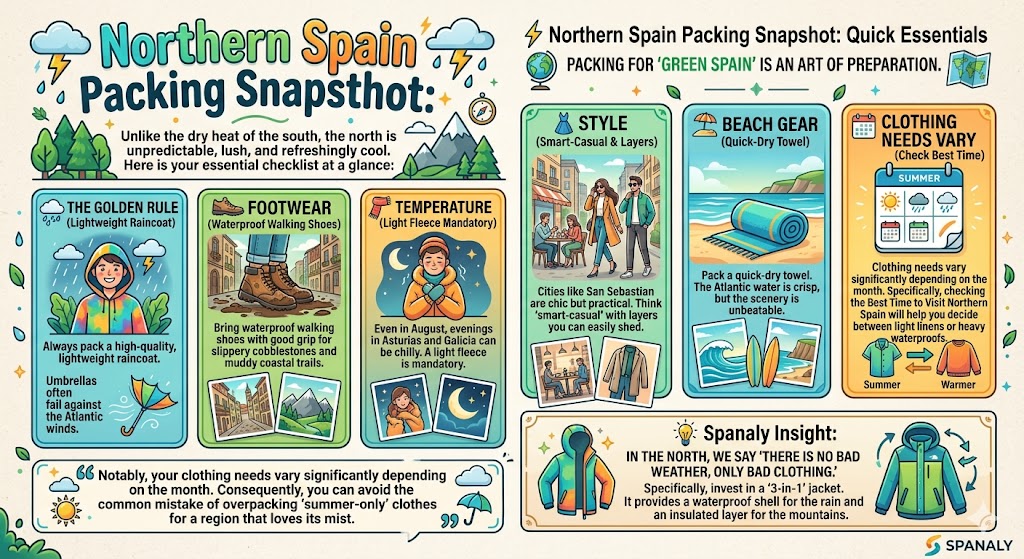
Packing for “Green Spain” is an art of preparation. Unlike the dry heat of the south, the north is unpredictable, lush, and refreshingly cool. Here is your essential checklist at a glance:
🌦️ The Golden Rule: Always pack a high-quality, lightweight raincoat. Umbrellas often fail against the Atlantic winds.
👟 Footwear: Bring waterproof walking shoes with good grip for slippery cobblestones and muddy coastal trails.
🧣 Temperature: Even in August, evenings in Asturias and Galicia can be chilly. A light fleece is mandatory.
👗 Style: Cities like San Sebastian are chic but practical. Think “smart-casual” with layers you can easily shed.
🏖️ Beach Gear: Pack a quick-dry towel. The Atlantic water is crisp, but the scenery is unbeatable.
Your clothing needs vary significantly depending on the month. Checking the Best Time to Visit Northern Spain will help you decide between light linens or heavy waterproofs. Consequently, you can avoid the common mistake of overpacking “summer-only” clothes for a region that loves its mist.
💡 Spanaly Insight: In the north, we say “there is no bad weather, only bad clothing.” Invest in a “3-in-1” jacket. It provides a waterproof shell for the rain and an insulated layer for the mountains.
⚖️ Packing for the North vs. the South: A Tale of Two Spains
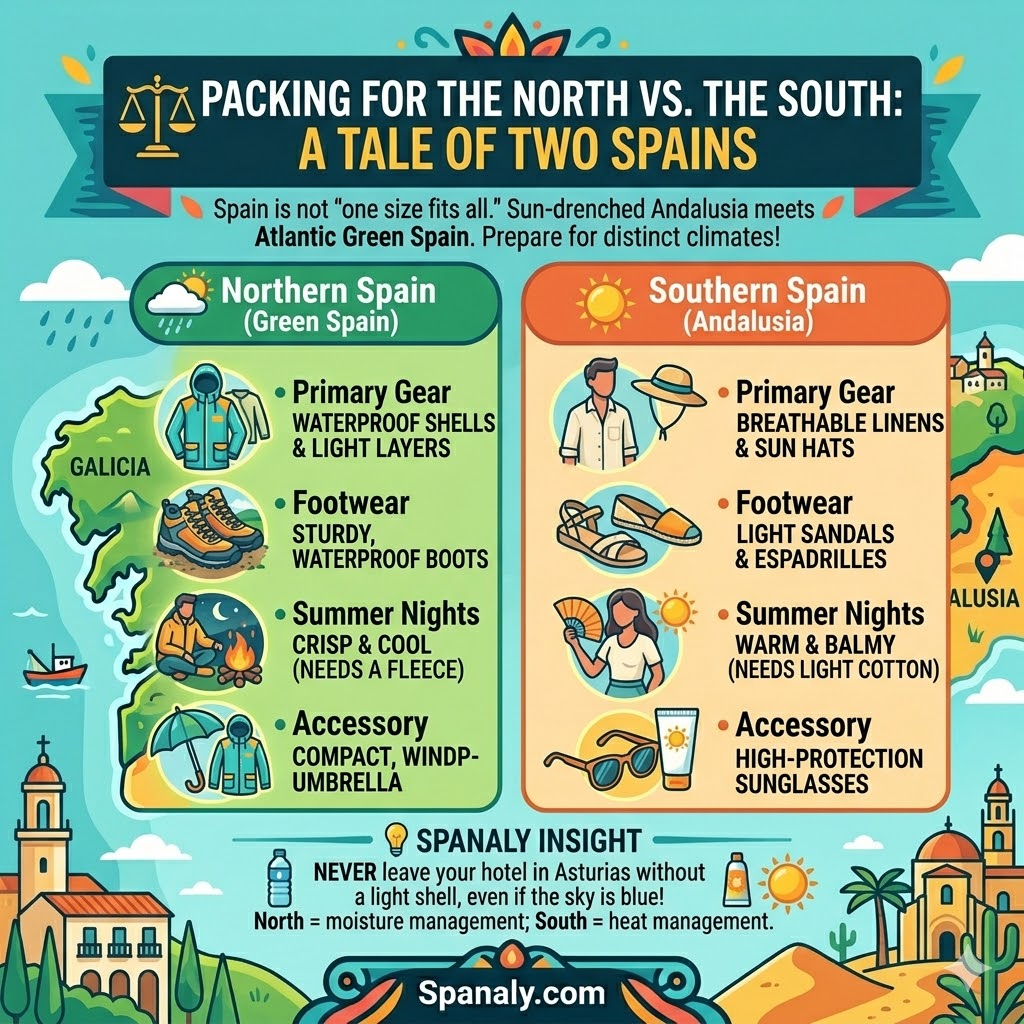
Packing for Spain is not a “one size fits all” task. While the South (Andalusia) is a land of sun-drenched plazas, the North (Green Spain) is a realm of Atlantic mists and rugged peaks. Understanding these differences is crucial for your comfort.
| Feature | 🌦️ Northern Spain (Green Spain) | ☀️ Southern Spain (Andalusia) |
| Primary Gear | Waterproof shells and light layers | Breathable linens and sun hats |
| Footwear | Sturdy, waterproof walking boots | Light sandals and espadrilles |
| Summer Nights | Crisp and cool (needs a fleece) | Warm and balmy (needs light cotton) |
| Accessory | Compact, windproof umbrella | High-protection sunglasses |
🧣 The “Layering” Divide
Andalusia demands “heat management.” You pack to stay cool under a 40°C sun in Seville. Northern Spain requires “moisture management.” Notably, even in July, a sudden Santiago downpour can drop temperatures by 10 degrees in minutes. While a Southern suitcase focuses on UV protection, a Northern one prioritizes staying dry.
If your trip includes the capital, check our Madrid Travel Guide to see how the central plateau bridges these two climates. While the South is predictable, the North is a rewarding challenge for those who pack for versatility rather than just sunshine.
💡 Spanaly Insight: In the South, “water” means the pool or the beach. In the North, “water” is something that falls from the sky or mists up from the cliffs. Specifically, never leave your hotel in Asturias without a light shell, even if the sky is blue!
🧥 The Layering System: Essentials for Every Season
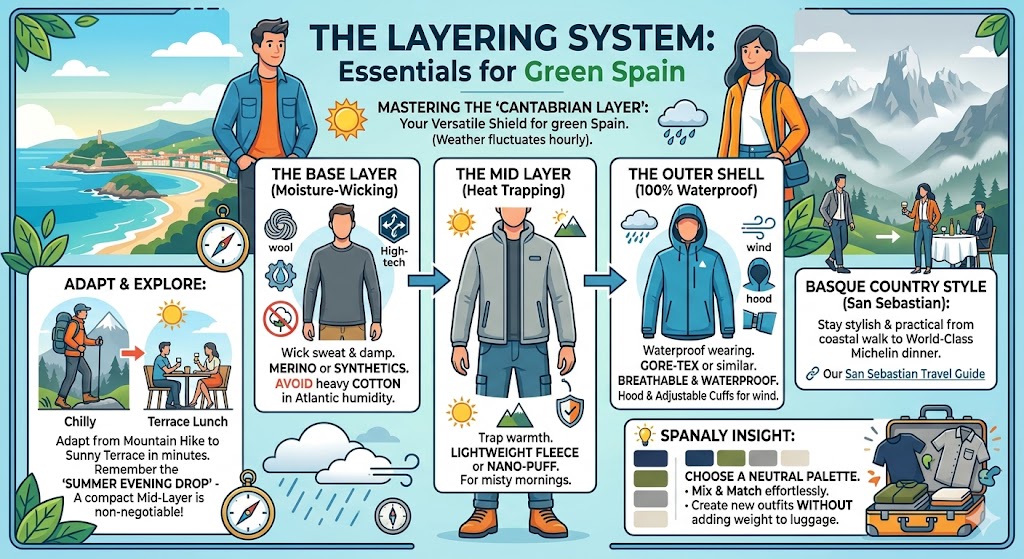
Mastering the “Cantabrian Layer” is the secret to staying comfortable in Green Spain. Because the weather fluctuates hourly, your clothing must act as a versatile shield rather than a static outfit.
The Base Layer: Wear moisture-wicking fabrics like merino wool or high-tech synthetics. Avoid heavy cotton as it stays damp in the Atlantic humidity.
The Mid Layer: A lightweight fleece or a “Nano-puff” jacket is essential. Specifically, this layer traps heat during misty mornings in the Picos de Europa.
The Outer Shell: This must be 100% waterproof and breathable (Gore-Tex or similar). It should have a hood and adjustable cuffs to keep the wind out.
Layering allows you to adapt from a chilly mountain hike to a sunny terrace lunch in minutes. Summer visitors often forget the “evening drop.” Crucially, even in August, temperatures can plummet once the sun sets over the Bay of Biscay. Consequently, having a compact mid-layer in your daypack is a non-negotiable rule for the North.
If you are heading to the Basque Country, our San Sebastian Travel Guide highlights how to stay stylish while navigating these practical layers. You can transition perfectly from a coastal walk to a world-class Michelin dinner.
💡 Spanaly Insight: Choose a “neutral” color palette for your layers (navy, olive, or grey). Specifically, this allows you to mix and match every item in your suitcase, creating “new” outfits without adding weight to your luggage.
🥾 Best Footwear for Cities, Cliffs, and Trails
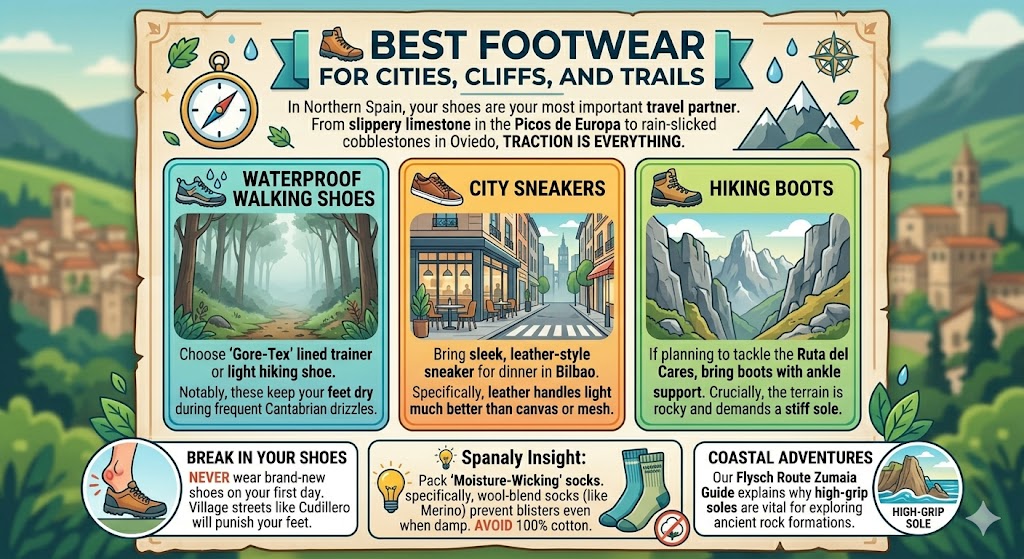
In Northern Spain, your shoes are your most important travel partner. From the slippery limestone of the Picos de Europa to the rain-slicked cobblestones of Oviedo, traction is everything.
Waterproof Walking Shoes: Choose a “Gore-Tex” lined trainer or a light hiking shoe. These keep your feet dry during the frequent Cantabrian drizzles.
City Sneakers: Bring a sleek, leather-style sneaker for dinner in Bilbao. Leather handles light rain much better than canvas or mesh.
Hiking Boots: If you plan to tackle the Ruta del Cares, bring boots with ankle support. The terrain is rocky and demands a stiff sole.
Never wear brand-new shoes on your first day. The steep streets in villages like Cudillero will punish your feet if your shoes aren’t broken in. Notably, if you are planning a coastal adventure, our Flysch Route Zumaia Guide explains why high-grip soles are vital for exploring those ancient rock formations. You will avoid slips and focus on the breathtaking views.
💡 Spanaly Insight: Pack “Moisture-Wicking” socks. Specifically, wool-blend socks (like Merino) prevent blisters even when your feet get slightly damp. Avoid 100% cotton socks; they trap moisture and cause friction.
🎒 Packing for the Atlantic Coast: Beach & Coastal Essentials
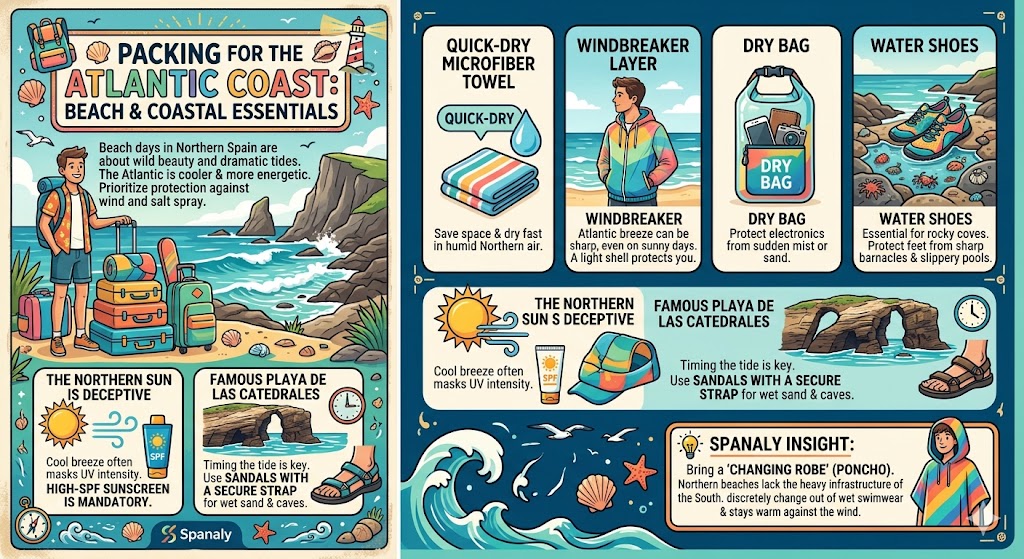
Beach days in Northern Spain are about wild beauty and dramatic tides. Because the Atlantic is cooler and more energetic, your packing list should prioritize protection against wind and salt spray.
Quick-Dry Microfiber Towel: These save space and dry fast in the humid Northern air.
Windbreaker Layer: Even on sunny days, the Atlantic breeze can be sharp. A light shell protects you while you lounge.
Dry Bag: Use a small 5L or 10L dry bag to protect your electronics from sudden mist or sand.
Water Shoes: Essential for rocky coves. These protect your feet from sharp barnacles and slippery tide pools.
The sun in the North is deceptive. The cool breeze often masks the UV intensity, so high-SPF sunscreen is mandatory. Crucially, if you are visiting the famous Playa de las Catedrales, remember that timing the tide is as important as what you wear. You will need sandals with a secure strap to navigate the wet sand and caves safely.
💡 Spanaly Insight: Bring a “Changing Robe” (Poncho). Northern beaches lack the heavy infrastructure of the South. A poncho allows you to change out of wet swimwear discretely and stays warm against the wind.
🏔️ Hiking Gear for Picos de Europa and Rural Asturias
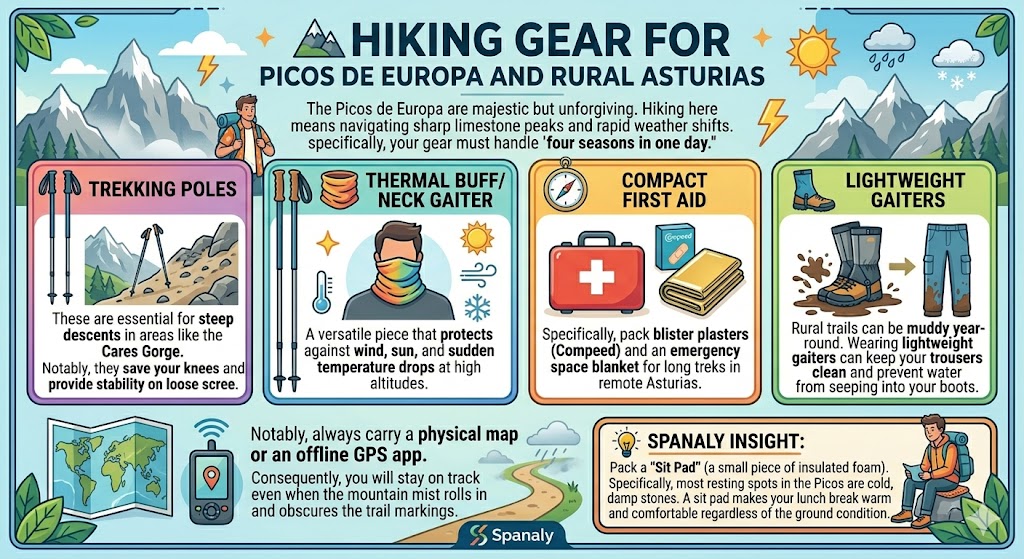
The Picos de Europa are majestic but unforgiving. Hiking here means navigating sharp limestone peaks and rapid weather shifts. Your gear must handle “four seasons in one day.”
Trekking Poles: These are essential for steep descents in areas like the Cares Gorge. They save your knees and provide stability on loose scree.
Thermal Buff/Neck Gaiter: A versatile piece that protects against wind, sun, and sudden temperature drops at high altitudes.
Compact First Aid: Pack blister plasters (Compeed) and an emergency space blanket for long treks in remote Asturias.
The rural trails can be muddy year-round. Wearing lightweight gaiters can keep your trousers clean and prevent water from seeping into your boots. Notably, if you are planning to explore the Picos de Europa Asturias, always carry a physical map or an offline GPS app. You will stay on track even when the mountain mist rolls in and obscures the trail markings.
💡 Spanaly Insight: Pack a “Sit Pad” (a small piece of insulated foam). Most resting spots in the Picos are cold, damp stones. A sit pad makes your lunch break warm and comfortable regardless of the ground condition.
🏙️ Smart-Casual Style: What to Wear in Bilbao and San Sebastian
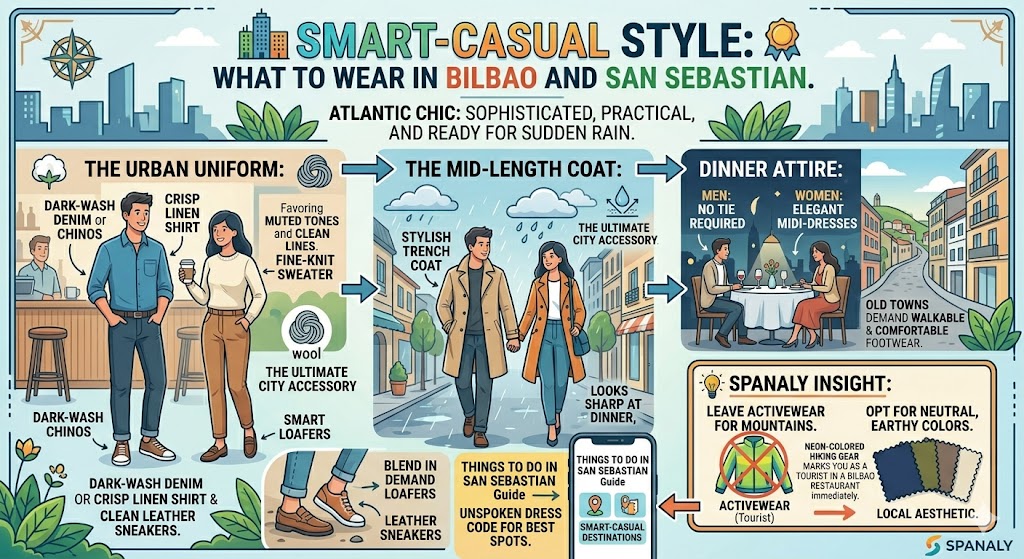
Cities like San Sebastian and Bilbao have a distinct “Atlantic Chic” vibe. It is a style that looks sophisticated but remains ready for a sudden rain shower. Locals value quality over flashiness, favoring muted tones and clean lines.
The Urban Uniform: Pair dark-wash denim or chinos with a crisp linen shirt or a fine-knit sweater.
The Mid-Length Coat: A stylish trench coat or a “Mac” is the ultimate city accessory. It looks sharp at dinner and keeps you dry.
Dinner Attire: Men rarely need a tie, and women often opt for elegant midi-dresses with light cardigans.
Your footwear should still be “walkable.” The hilly streets of the Old Towns demand comfortable loafers or leather sneakers. Crucially, if you are planning a night out, our Things to Do in San Sebastian guide highlights the best spots where “smart-casual” is the unspoken dress code. You will blend in perfectly with the locals while enjoying the world’s best tapas.
💡 Spanaly Insight: Leave the “Activewear” for the mountains. Wearing neon-colored hiking gear in a high-end Bilbao restaurant will mark you as a tourist immediately. Opt for neutral, earthy colors to master the local aesthetic.
🌂 Rain Protection: Umbrellas vs. Raincoats in the North
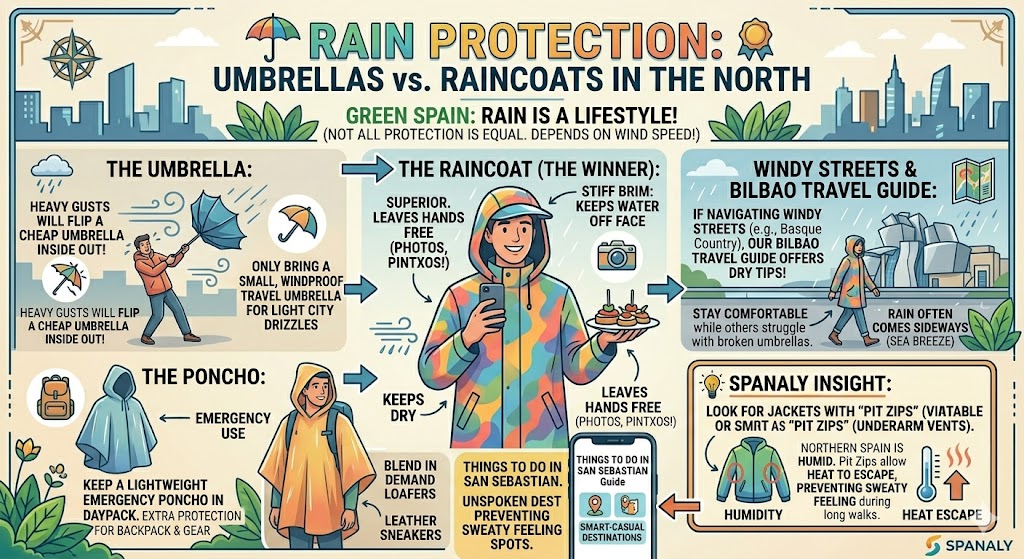
In Green Spain, rain is not a weather event; it is a lifestyle. Not all rain protection is created equal. The choice between an umbrella and a raincoat depends entirely on the wind speed.
The Raincoat (The Winner): A high-quality, breathable raincoat is superior. It leaves your hands free for taking photos or eating Pintxos.
The Umbrella: Only bring a small, windproof travel umbrella for light city drizzles. Heavy Atlantic gusts will flip a cheap umbrella inside out in seconds.
The Poncho: Keep a lightweight emergency poncho in your daypack. It provides an extra layer of protection for your backpack and gear during sudden downpours.
The rain here often comes sideways due to the sea breeze. A raincoat with a stiff brim on the hood is essential to keep water off your face. Crucially, if you are navigating the windy streets of the Basque Country, our Bilbao Travel Guide offers more tips on staying dry while exploring the Guggenheim area. You will remain comfortable while others are struggling with broken umbrellas.
💡 Spanaly Insight: Look for jackets with “Pit Zips” (underarm vents). Northern Spain is humid. These vents allow heat to escape while keeping the rain out, preventing that “sweaty” feeling during long walks.
🔋 Essential Gadgets and Accessories for Your Trip
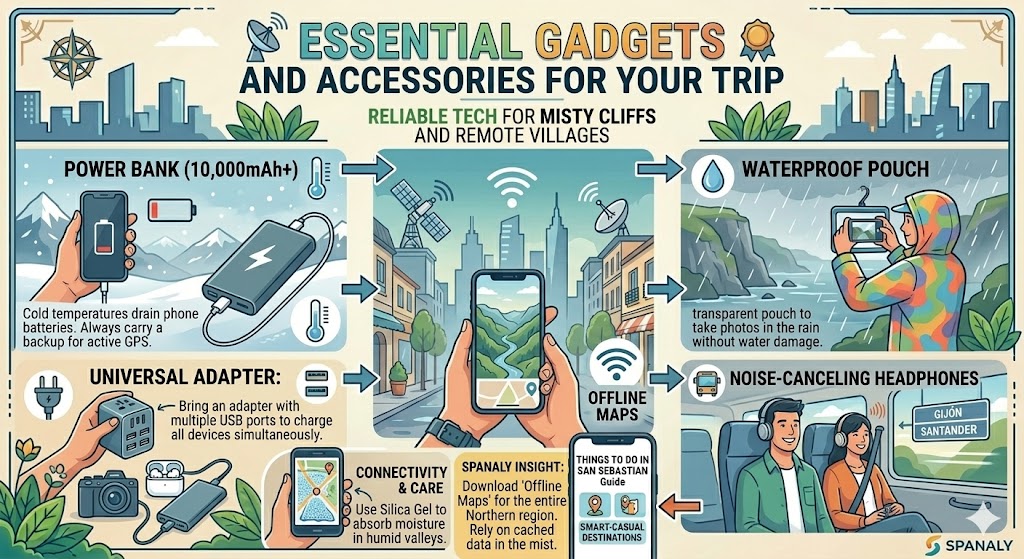
Modern travel in Northern Spain requires more than just a camera. Because you will be navigating misty cliffs and remote villages, your tech setup must be resilient and long-lasting.
Power Bank (10,000mAh+): Cold temperatures in the mountains drain phone batteries faster. Always carry a backup to keep your GPS active.
Waterproof Phone Pouch: Use a transparent pouch to take photos in the rain without risking water damage.
Universal Travel Adapter: Spain uses Type F plugs. Bring an adapter with multiple USB ports to charge all devices simultaneously.
Noise-Canceling Headphones: Perfect for long bus rides between cities like Gijón and Santander.
Managing your connectivity is essential for a smooth trip. Our guide on Internet and SIM Cards in Spain helps you stay connected even in the deep valleys of Asturias. Crucially, remember that high humidity can affect electronic charging ports. Using a small bag of silica gel in your tech pouch is a smart move to absorb moisture.
💡 Spanaly Insight: Download “Offline Maps” for the entire Northern region. Mobile signal often drops to zero in the deep canyons of Picos de Europa. Relying on cached data ensures you never lose your way in the mist.
💊 Health and Personal Care Checklist
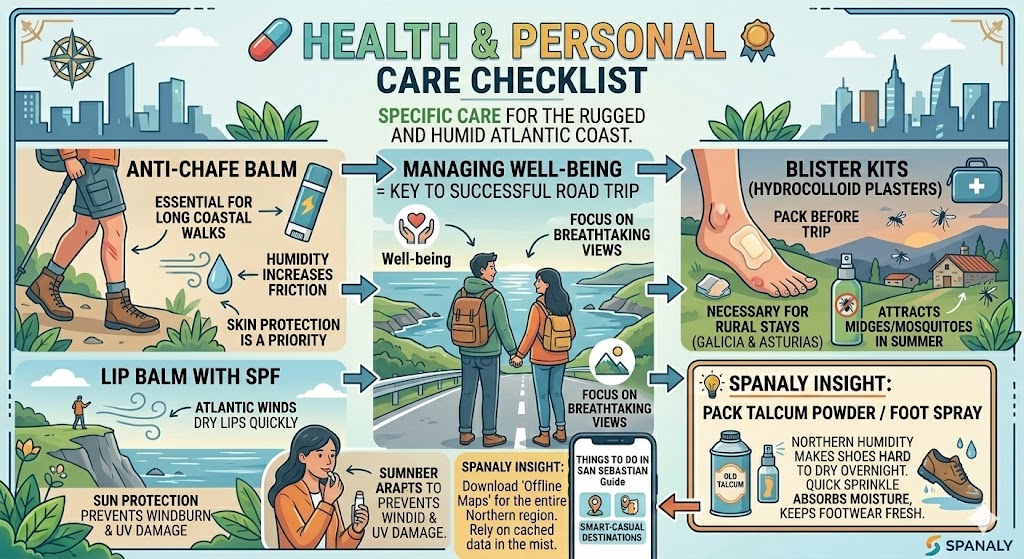
The humid Atlantic air and rugged terrain require specific care for your skin and stamina. Preparing a small, specialized kit ensures that minor irritations don’t interrupt your exploration of Green Spain.
Anti-Chafe Balm: Essential for long coastal walks. Humidity increases friction, making skin protection a priority for hikers.
Lip Balm with SPF: Atlantic winds dry out lips quickly. Choose a formula with sun protection to prevent windburn and UV damage.
Blister Kits (Hydrocolloid Plasters): Pack these before you start your trip. They are more effective than standard bandages for steep mountain descents.
Insect Repellent: Necessary for rural stays in Galicia and Asturias. The lush greenery attracts midges and mosquitoes during summer evenings.
Managing your physical well-being is the key to a successful road trip. Our Essential Spain Travel Tips offer broader advice on staying healthy and safe across the country. You can focus on the breathtaking views of the Bay of Biscay rather than nursing a blister.
💡 Spanaly Insight: Pack a small bottle of “Talcum Powder” or foot spray. The Northern humidity makes it hard for shoes to dry overnight. A quick sprinkle absorbs moisture and keeps your footwear fresh for the next day.
📋 Northern Spain Packing Checklist: A Quick Summary
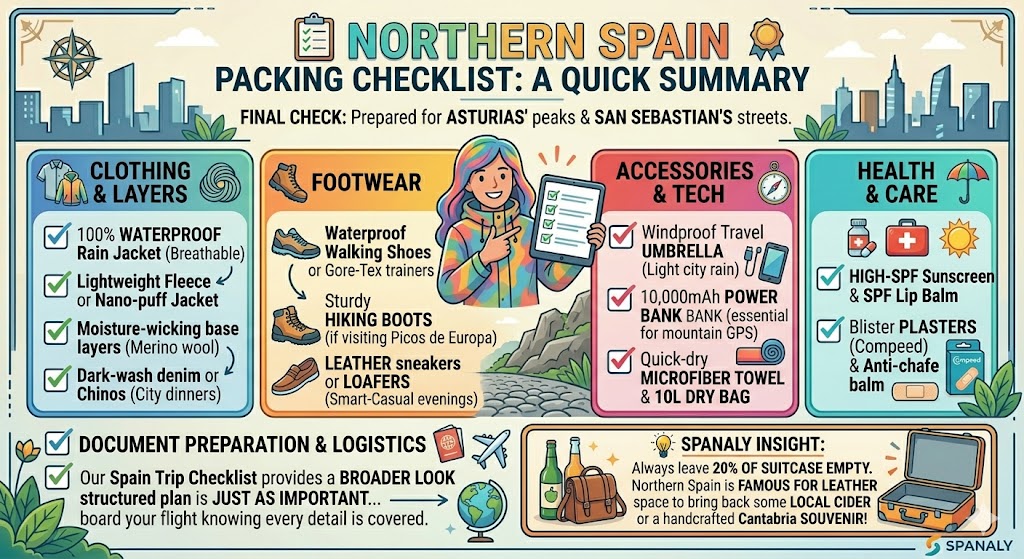
Use this list as your final check before heading to the airport. This selection ensures you are prepared for both the jagged peaks of Asturias and the chic streets of San Sebastian.
Clothing & Layers:
[ ] 100% Waterproof Rain Jacket (Breathable).
[ ] Lightweight Fleece or Nano-puff Jacket.
[ ] Moisture-wicking base layers (Merino wool).
[ ] Dark-wash denim or Chinos for city dinners.
Footwear:
[ ] Waterproof walking shoes or Gore-Tex trainers.
[ ] Sturdy hiking boots (if visiting Picos de Europa).
[ ] Leather sneakers or loafers for “Smart-Casual” evenings.
Accessories & Tech:
[ ] Windproof travel umbrella (for light city rain).
[ ] 10,000mAh Power Bank (essential for mountain GPS).
[ ] Quick-dry microfiber towel and 10L dry bag.
Health & Care:
[ ] High-SPF sunscreen and SPF lip balm.
[ ] Blister plasters (Compeed) and anti-chafe balm.
Having a structured plan is just as important as having the right gear. Our Spain Trip Checklist provides a broader look at document preparation and logistics. You can board your flight knowing every detail is covered.
💡 Spanaly Insight: Always leave 20% of your suitcase empty. Northern Spain is famous for its leather goods and artisanal food. You will want space to bring back some local cider or a handcrafted souvenir from Cantabria!
🎒 The "Daypack" Strategy: Your Mobile Survival Kit

In Northern Spain, you are often away from your hotel for 10+ hours. Because the weather shifts rapidly, your daypack is not just a bag; it is your mobile base camp.
The Spare Socks Rule: Pack one extra pair of dry socks. If you step in a puddle in the Picos, changing your socks will save your entire day.
The Waterproof Cover: Ensure your daypack has a built-in rain cover. Atlantic rain can soak through standard zippers in minutes.
Hydration & Snacks: Carry a reusable bottle. The mountain water in the North is pristine, and you can refill at public fountains.
Keeping your bag light is a skill. Our Northern Spain Road Trip guide explains how to manage your luggage when moving between different coastal towns. Your daypack should only contain the essentials to keep you dry and energized without weighing you down.
💡 Spanaly Insight: Always carry a small plastic “Ziploc” bag for your passport and cash. Even if your jacket is waterproof, constant humidity can make paper documents damp and fragile over time.
⚠️ Common Packing Mistakes for Green Spain
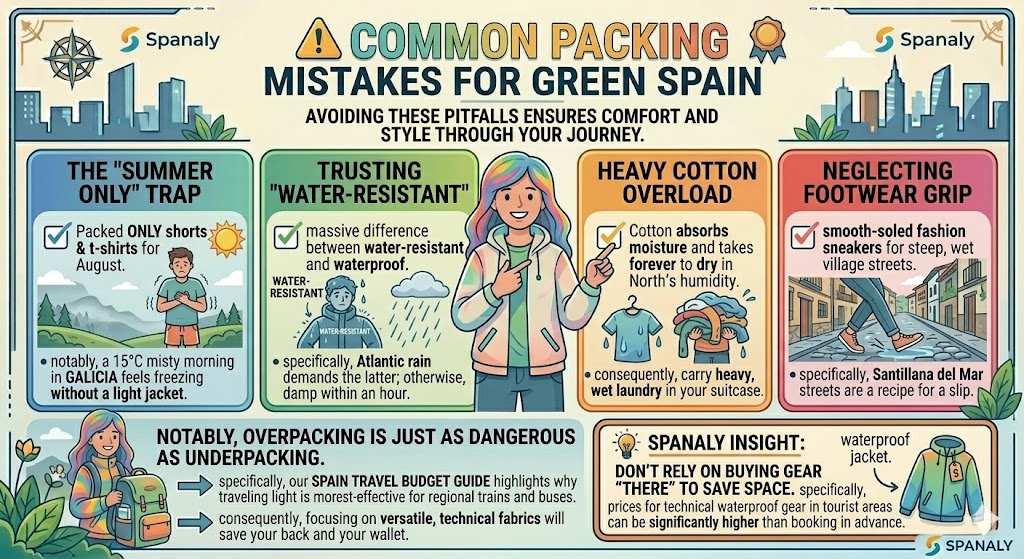
Even seasoned travelers often treat Northern Spain like the Mediterranean coast. Avoiding these common pitfalls will ensure you remain comfortable and stylish throughout your journey.
The “Summer Only” Trap: Many pack only shorts and t-shirts for August. A 15°C misty morning in Galicia will feel freezing without a light jacket.
Trusting “Water-Resistant”: There is a massive difference between water-resistant and waterproof. Atlantic rain demands the latter; otherwise, you will be damp within an hour.
Heavy Cotton Overload: Cotton absorbs moisture and takes forever to dry in the North’s humidity. You’ll end up carrying heavy, wet laundry in your suitcase.
Neglecting Footwear Grip: Bringing smooth-soled fashion sneakers for the steep, wet streets of villages like Santillana del Mar is a recipe for a slip.
Overpacking is just as dangerous as underpacking. Our Spain Travel Budget guide highlights why traveling light is more cost-effective for regional trains and buses. Focusing on versatile, fabrics will save your back and your wallet.
💡 Spanaly Insight: Don’t rely on buying gear “there” to save space. While cities like Santander have great shops, prices for waterproof gear in tourist areas can be significantly higher than booking in advance.
💡 Spanaly Tips: Elite Hacks for Packing Light
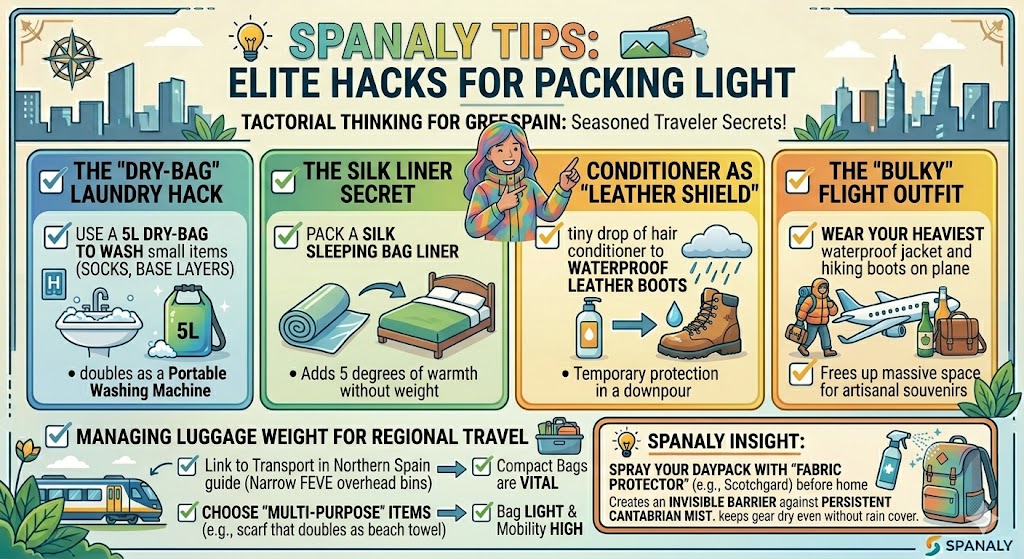
Mastering Green Spain requires thinking. These elite tips aren’t found in standard brochures; they are the “secret sauce” from seasoned travelers who have tackled the Atlantic coast’s unique challenges.
The “Dry-Bag” Laundry Hack: Use a 5L dry-bag to wash small items like socks or base layers in your hotel sink. It doubles as a portable washing machine.
The Silk Liner Secret: Pack a silk sleeping bag liner. It adds 5 degrees of warmth to any bed without adding weight to your suitcase.
Conditioner as “Leather Shield”: A tiny drop of hair conditioner can temporarily waterproof leather boots if you are caught in a surprise Oviedo downpour.
The “Bulky” Flight Outfit: Wear your heaviest waterproof jacket and hiking boots on the plane. You free up massive space for artisanal souvenirs.
Managing your luggage weight is essential for regional travel. Our Transport in Northern Spain guide highlights why compact bags are vital for the narrow overhead bins on regional FEVE trains. Consequently, choosing “Multi-purpose” items like a scarf that doubles as a beach towel will keep your bag light and your mobility high.
💡 Spanaly Insight: Spray your daypack with a “Fabric Protector” (like Scotchgard) before leaving home. This creates an invisible barrier against the persistent Cantabrian mist, keeping your gear dry even without a rain cover.
🎒 Visitor FAQs – Northern Spain Packing Guide
🧥 Can I use a denim jacket as my main outer layer?
We do not recommend it. Denim is heavy and absorbs moisture easily in the Atlantic humidity. If it gets wet during a drizzle in Bilbao, it can take days to dry. It is much better to pack a synthetic shell or a treated trench coat that repels water.
👞 Do I need formal clothes for Michelin-star restaurants in San Sebastian?
Most high-end restaurants in Northern Spain follow a "Smart-Casual" dress code. Men usually wear chinos and a collared shirt, while women opt for elegant dresses. You don't need a tuxedo or evening gown, but avoid shorts, flip-flops, or neon hiking gear for these venues.
🧺 Is it easy to find laundromats (Lavanderías) in the North?
Yes, self-service laundromats are very common in cities like Santander and Gijón. Because clothes dry slowly due to the humidity, using a tumble dryer at a local lavandería is often faster than hanging clothes in your hotel room. Look for "Lavandería Autoservicio" on Google Maps.
🌂 Should I buy an umbrella in Spain or bring one?
If you want a high-quality, windproof umbrella, it is best to bring one from home. Local street vendors often sell cheap umbrellas that break easily in the Atlantic gusts. Alternatively, you can find professional rain gear in local shops like "El Corte Inglés" once you arrive.
🎒 Is a suitcase or a backpack better for Northern Spain?
If you are doing a road trip, a suitcase is fine. However, if you are traveling by train or bus, a large travel backpack is superior. Many old towns have steep, narrow, and wet cobblestone streets where rolling a suitcase can be noisy and physically exhausting.
Northern Spain Packing Guide by Spanaly.com
Northern Spain is not just a destination; it is a sensory journey. Packing correctly ensures you focus on the lush mountains and cider houses rather than the weather.
The Mindset: Embrace the mist. It is what makes Green Spain so magical and unique.
The Strategy: Trust your layers. Versatility is your greatest ally from Bilbao to Santiago.
The Reward: Unforgettable cliffs and world-class food. You will return with memories, not just wet clothes.
Planning a trip to Green Spain is simpler when you have the right logistics. Check our Ultimate Spain Trip Planner to organize your flights and accommodation seamlessly. Consequently, you can travel with peace of mind and a perfectly balanced suitcase.
Enjoy the crisp Atlantic breeze and the stunning Cantabrian views. Safe travels!