🏰 Castles in Extremadura
Have you ever dreamed of walking through medieval history where legends come to life? The best castles in Extremadura offer exactly that, standing as silent witnesses to centuries of strategic battles and royal ambition.
Timeless Architecture: Extremadura features some of Spain’s most well-preserved fortresses, ranging from rugged hilltop strongholds to grand ducal residences.
Strategic History: These massive structures tell the story of the Reconquista and the complex shifts in power that shaped the Spanish frontier.
Untamed Landscapes: Set against dramatic valleys and sweeping plains, visiting these sites provides an immersive experience far beyond the typical tourist trail.
Whether you are a history enthusiast or a photographer seeking the perfect perspective, our complete Extremadura Travel Guide helps you navigate these monumental sites with ease. Prepare to step back in time as we explore the most majestic castles in this historic region.
📊 Snapshot: Exploring Extremadura’s Fortresses

Planning a castle-hopping tour requires practical logistics. Use this quick reference to optimize your historical route and ensure a smooth journey through the region.
| Metric | Recommendation |
| Best Season | Spring (March–May) or Autumn (October–November) to avoid extreme heat. |
| Travel Style | Independent driving; essential for reaching remote hilltop sites. |
| Access Difficulty | Low to Moderate; most castles have well-marked access paths. |
| Average Stay | 3–5 days to visit major fortresses across the region. |
| Key Districts | Cáceres, Zafra, and the La Vera region. |
Logistical Tip: Many fortresses are situated far from city centers. Having a reliable vehicle is the most efficient way to see multiple sites in one day.
Essential Navigation: Before heading out, review our Extremadura Transportation guide to understand regional road conditions and parking access at historical sites.
Comfort Strategy: Wear sturdy shoes for uneven stone staircases and bring plenty of water, as many castle grounds offer limited shade.
Flexible Planning: Always check the opening times of individual castles, as rural historic sites often have seasonal hours or mandatory guided-tour schedules.
Spanaly Insight: Many regional castles offer free entry on specific weekdays. Check local tourism office websites a few days prior to your visit to save on admission costs.
⚔️ Fortress Comparison: Which Castle Matches Your Style?

Extremadura’s fortresses vary significantly in their architecture and purpose. Use this comparison to decide which site best suits your travel preferences, whether you prioritize panoramic photography or deep historical immersion.
| Castle Type | Best Feature | Ideal For | Climb Difficulty | Best Time |
| Hilltop Fortresses | 360-degree views | Photographers | Moderate Hike | Spring Morning |
| Palatial Castles | Luxury & Architecture | History Buffs | Easy Access | Any Season |
| Templar Strongholds | Legends & Mystery | Adventure Seekers | Moderate | Autumn Afternoon |
| Frontier Watchtowers | Raw, Silent History | Solo Travelers | Challenging | Winter Midday |
Spanaly Insight: If you are visiting during the peak heat of summer, prioritize Palatial Castles, as their thick stone walls and shaded courtyards provide much better natural cooling than exposed Hilltop Fortresses.
🏰 Top 5 Must-Visit Castles in Extremadura
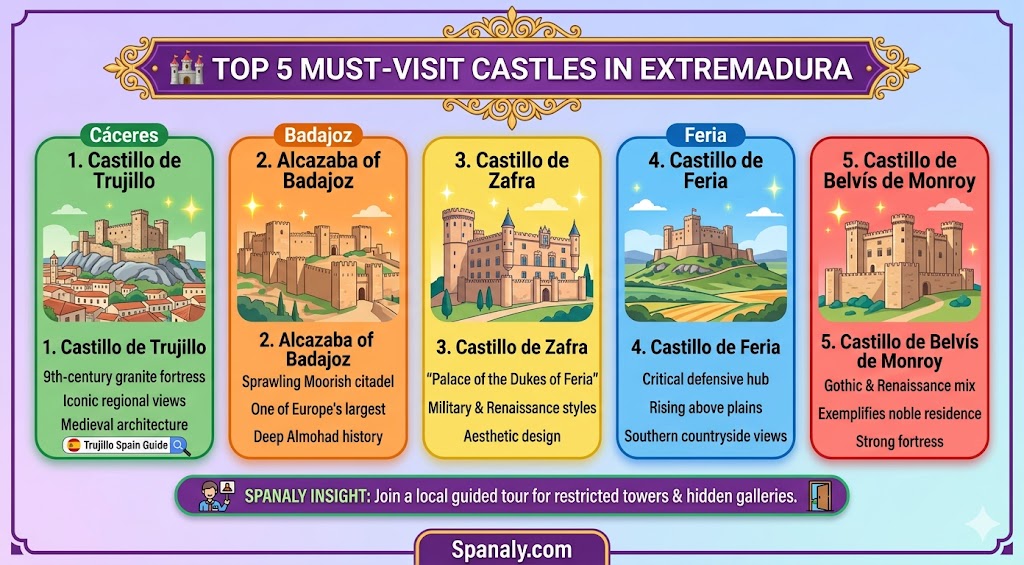
These five fortresses define the region’s historical landscape. Each offers unique perspectives on the power struggles and legends that shaped Extremadura.
Castillo de Trujillo: Perched atop the town’s granite hill, this 9th-century fortress offers iconic regional views. Its towers perfectly capture medieval architecture.
Alcazaba of Badajoz: This sprawling Moorish citadel remains one of Europe’s largest. Its massive walls provide a deep, immersive look into the Almohad period.
Castillo de Zafra: Often called the “Palace of the Dukes of Feria,” this castle balances military defense with elegant Renaissance interiors. It is remarkably aesthetic.
Castillo de Feria: Rising above the plains, this critical defensive hub offers unmatched perspectives of the southern Extremaduran countryside. The climb is truly rewarding.
Castillo de Belvís de Monroy: This site features a fascinating mix of Gothic and Renaissance styles. It exemplifies a noble residence turned into a strong fortress.
For deeper context on local heritage, explore our Trujillo Spain Guide. It helps you integrate these monumental visits into your broader regional discovery.
Spanaly Insight: Join a local guided tour. It is the best way to access restricted towers and hidden galleries within these ancient structures.
📸 Photography Highlights: Best Captures

Extremadura’s fortresses offer spectacular visuals. Use these specific viewpoints to ensure your travel gallery stands out with professional-grade shots.
Best Sunset Castle: Head to Castillo de Trujillo. The setting sun bathes the granite towers in a warm, golden glow every evening.
Best Drone Views: The Alcazaba of Badajoz features massive, geometric walls. Aerial shots perfectly capture its scale and incredible Moorish architectural design.
Best Panoramic Site: The Castillo de Montánchez offers unrivaled, expansive views. You can capture the rolling plains stretching endlessly toward the horizon.
Spanaly Insight: Use a polarizing filter during mid-day. It cuts the glare from the harsh Extremaduran sun, making stone textures pop in photos.
⛰️ Hilltop Strongholds: The Most Strategic Extremadura Castles
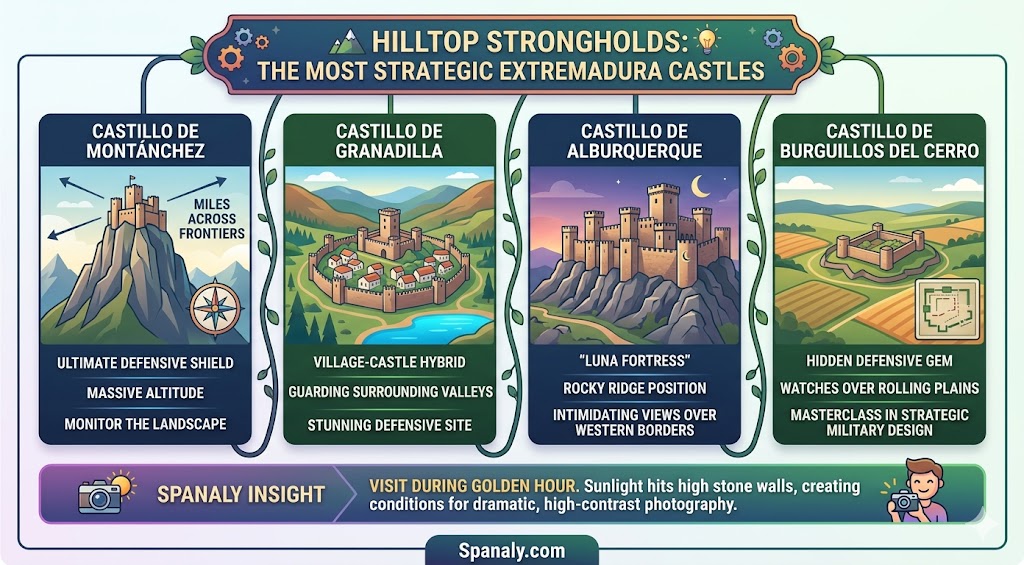
These fortresses served as vital lookout points. Their elevation allowed leaders to monitor the landscape and control movement across the rugged frontiers.
Castillo de Montánchez: Sitting at a massive altitude, this fortress offers views stretching for miles. It acted as the ultimate defensive shield.
Castillo de Granadilla: This village-castle hybrid guards the surrounding valleys perfectly. Its unique location makes it one of the most stunning defensive sites.
Castillo de Alburquerque: Known as the “Luna Fortress,” this site sits on a rocky ridge. It provides an intimidating view over the western borders.
Castillo de Burguillos del Cerro: This hidden defensive gem watches over the rolling plains. Its layout is a masterclass in strategic military design.
To make the most of your trip, check out our Extremadura Attractions guide. It helps you map out these strategic sites alongside other regional wonders.
Spanaly Insight: Visit during the golden hour. The sunlight hits the high stone walls, creating perfect conditions for dramatic, high-contrast photography.
📖 Castles with Legends: History and Folklore Revealed

Many Extremaduran castles are shrouded in mystery. Local folklore breathes life into these ancient walls, turning history into captivating, enduring tales.
The Ghost of Montánchez: Locals speak of spectral lights flickering in the upper towers. Many believe it recalls the castle’s intense, battle-hardened past.
The Templar Secrets of Jerez: Legends suggest hidden treasures lie beneath the fortress floors. These stories continue to intrigue historians and curious travelers alike.
The Maid of Trujillo: A tragic romantic legend follows the castle’s ramparts. It adds a layer of sorrow to the otherwise stern military architecture.
The Enchanted Fountain of Zafra: Folklore claims the castle’s hidden springs hold magical properties. Visitors still toss coins into the nearby stones today.
These sites are often missed by mainstream tours. Discover more secret spots in our Hidden Gems of Extremadura guide to uncover the region’s most mysterious and quietest corners.
Spanaly Insight: Ask local elders about “leyendas” near the castle gates. They often share versions of the stories you will never find in books.
🏘️ Castle-Town Pairing: Combining History with Local Life
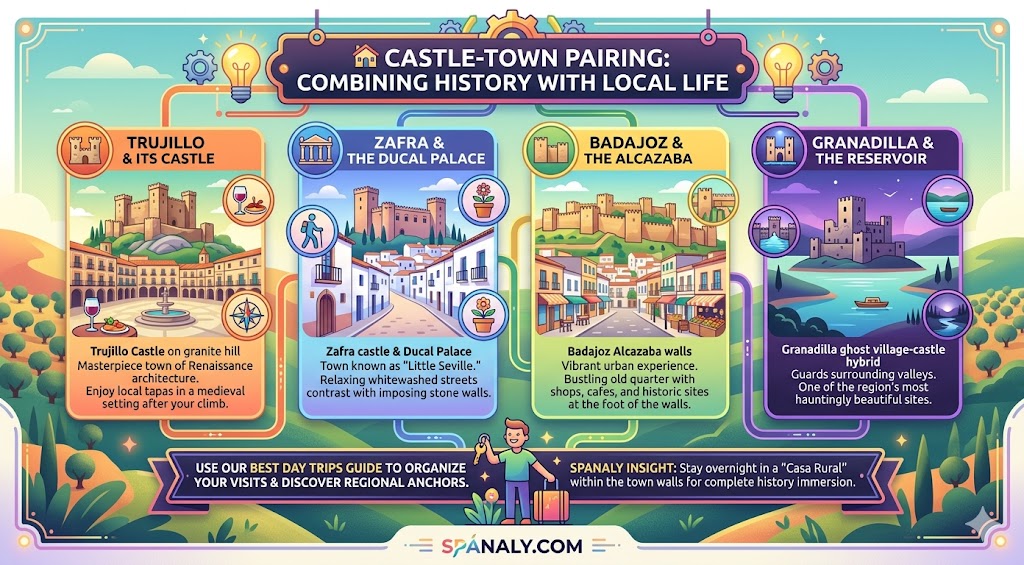
A visit to an Extremaduran fortress is most rewarding when paired with the town it protects. The architecture and culture of these settlements are deeply intertwined with the defensive history of the castle above.
Trujillo & Its Castle: The town below the fortress is a masterpiece of Renaissance architecture. Wander the main plaza after your climb to enjoy local tapas in a medieval setting.
Zafra & The Ducal Palace: The town is known as “Little Seville.” Its whitewashed streets offer a perfect, relaxing contrast to the imposing stone walls of the castle.
Badajoz & The Alcazaba: This city provides a vibrant urban experience. Explore the bustling old quarter to find shops, cafes, and historic sites that sit right at the foot of the massive walls.
Granadilla & The Reservoir: This ghost village-castle hybrid is unique. It remains one of the most hauntingly beautiful sites in the region.
These towns are perfect for extended exploration. Use our Best Day Trips in Extremadura guide to organize your visits and discover how these castle-town pairings can anchor your entire regional itinerary.
Spanaly Insight: Stay overnight in a “Casa Rural” within the town walls. It transforms a simple castle visit into a complete immersion in local history and tradition.
🗺️ Extremadura Castle Routes: Planning Your Itinerary
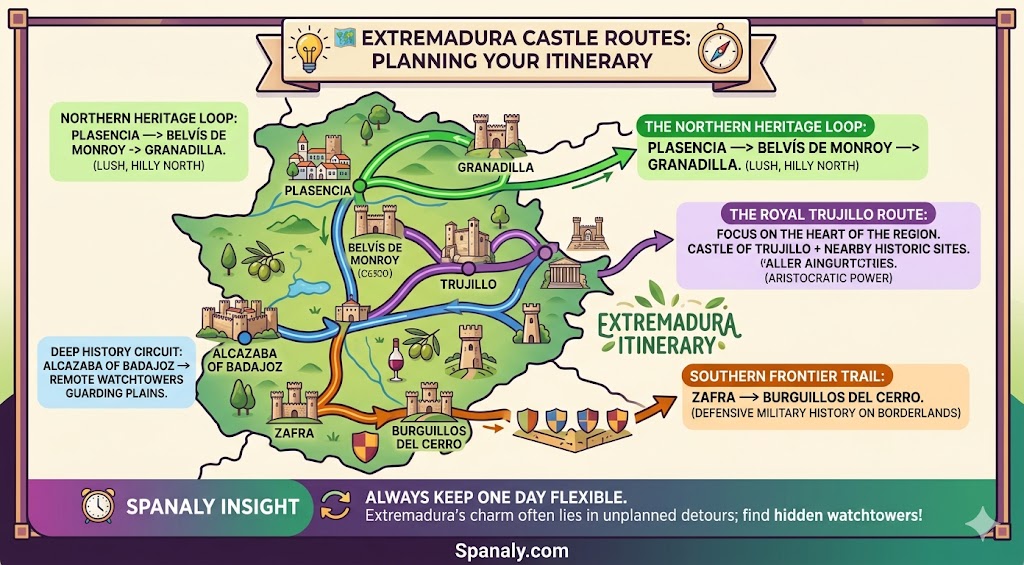
Creating a smooth route saves time and fuel. Use these structured circuits to connect the most impressive fortresses without unnecessary backtracking across the region.
The Northern Heritage Loop: Start in Plasencia, move to the fortress of Belvís de Monroy, and finish at Granadilla. This route covers the lush, hilly landscapes of the north.
The Royal Trujillo Route: Focus on the heart of the region. Combine the castle of Trujillo with nearby historic sites to experience the pinnacle of aristocratic power.
The Southern Frontier Trail: Travel from Zafra to Burguillos del Cerro. This path highlights the defensive military history along the borderlands with Portugal.
The Deep History Circuit: Visit the Alcazaba of Badajoz before heading inland to explore the more remote watchtowers that guard the plains.
Ready to connect these routes into a complete experience? Follow our Extremadura Itinerary to blend your castle visits with nature, food, and culture for a perfectly balanced trip.
Spanaly Insight: Always keep one day flexible. Extremadura’s charm often lies in unplanned detours; you will likely find a hidden watchtower that warrants an extra hour of exploration.
🗓️ Best Time to Visit Extremadura Castles
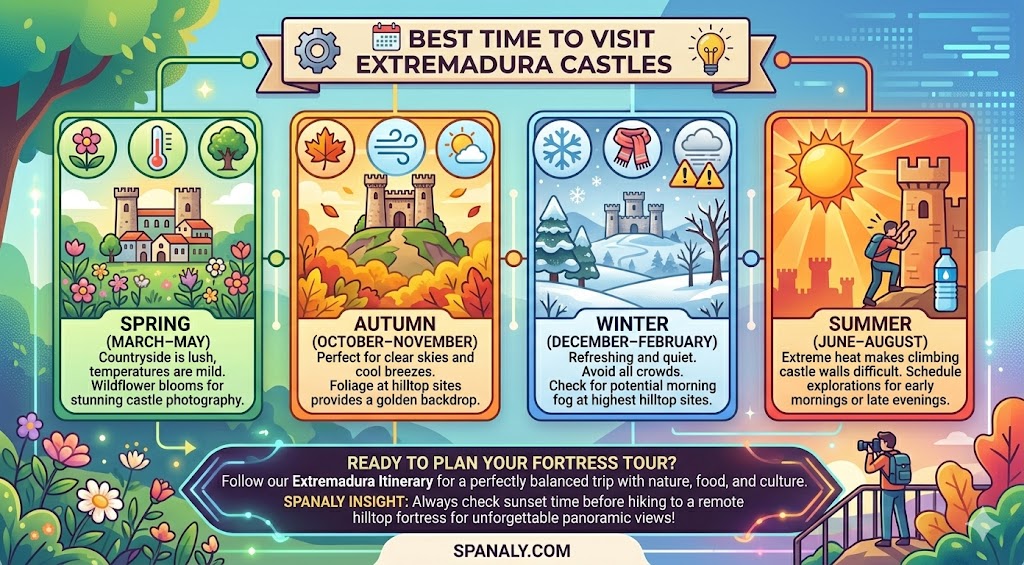
Timing your trip is crucial for comfort. These fortresses are often exposed to the elements, so choosing the right season changes your experience from exhausting to extraordinary.
Spring (March–May): The absolute best time. The countryside is lush, temperatures are mild, and the wildflower blooms make castle photography stunning.
Autumn (October–November): Perfect for clear skies and cool breezes. The foliage around hilltop sites provides a beautiful golden backdrop for explorers.
Winter (December–February): Refreshing and quiet. While cold, you avoid all crowds. Ensure you check for potential morning fog at the highest hilltop sites.
Summer (June–August): Extreme heat makes climbing castle walls difficult. If visiting, schedule your explorations for early mornings or late evenings to stay safe.
For detailed weather insights and seasonal advice, our Best Time to Visit Extremadura guide helps you align your fortress tour with the most comfortable regional climate.
Spanaly Insight: Always check the sunset time before hiking to a remote hilltop fortress. The panoramic view of the Extremaduran plains during the final light is an unforgettable experience.
⚠️ Common Mistakes to Avoid
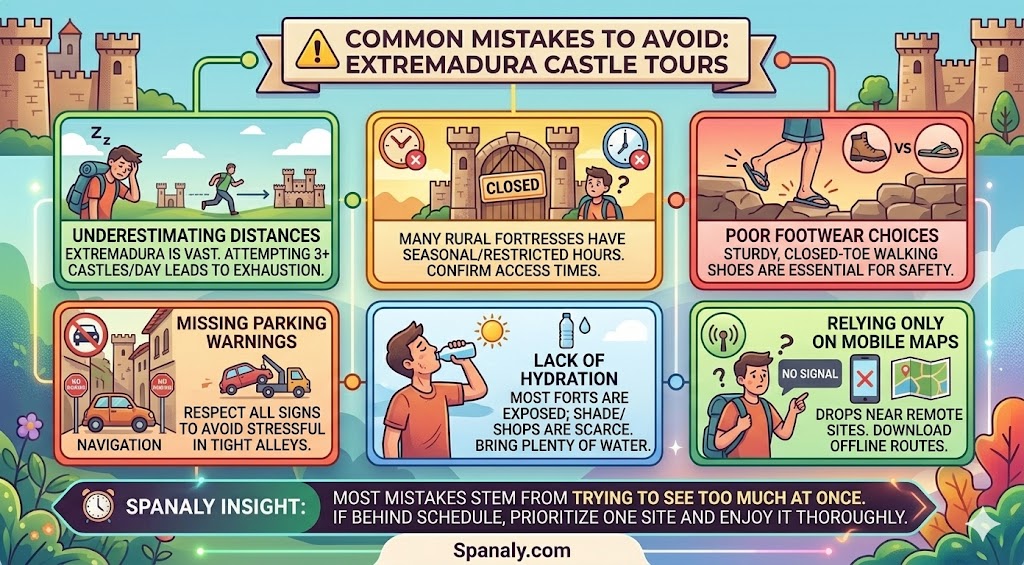
Even seasoned travelers face challenges at these historic sites. Avoid these frequent pitfalls to keep your castle-hopping tour smooth and stress-free.
Underestimating Distances: Extremadura is vast. Attempting to visit three major castles in one day often leads to exhaustion and rushed experiences.
Ignoring Opening Schedules: Many rural fortresses operate on seasonal or restricted hours. Always confirm the specific daily access times before departing.
Poor Footwear Choices: Castle grounds feature uneven stone, steep stairs, and slippery ramparts. Sturdy, closed-toe walking shoes are essential for safety.
Missing Parking Warnings: Village streets leading to castles are notoriously narrow. Respect all “No Parking” signs to avoid stressful navigation in tight medieval alleys.
Lack of Hydration: Most fortress grounds are exposed. Without shade or shops, you can quickly become dehydrated during long explorations.
Relying Only on Mobile Maps: Signal can drop near remote hilltop sites. Download your route offline to ensure you can find your way back to civilization.
Spanaly Insight: Most mistakes stem from trying to see too much at once. If you are behind schedule, prioritize one site and enjoy it thoroughly rather than forcing a second visit.
💡 Pro Tips: The Insider’s Edge
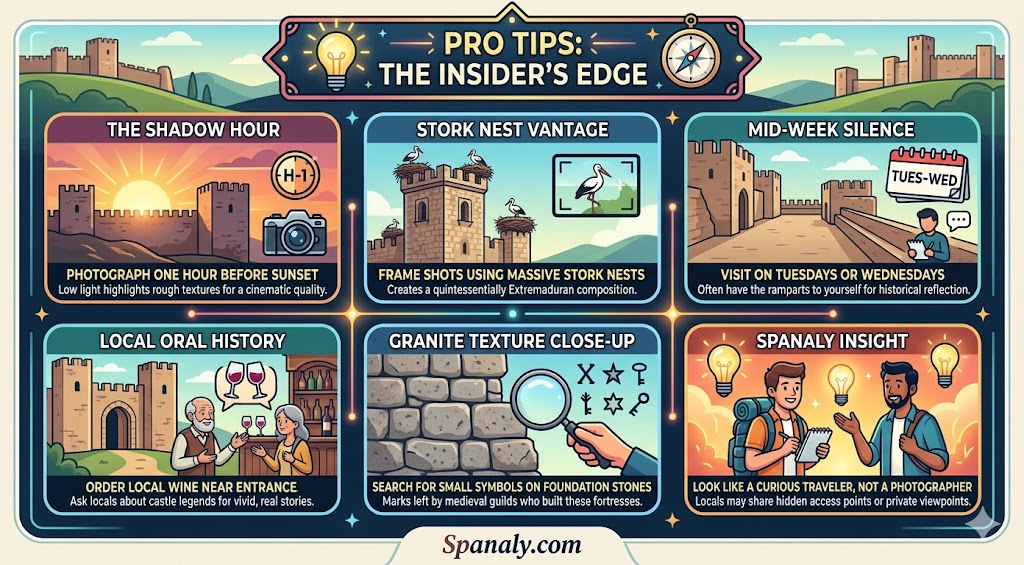
Elevate your castle exploration with these tactical insights. These tips focus on the “unseen” side of Extremadura, beyond standard guidebooks.
The Shadow Hour: Photograph castle walls one hour before sunset. Low light highlights rough textures, giving your photos a cinematic, professional quality.
Stork Nest Vantage: Frame shots using massive stork nests on towers. This creates a quintessentially Extremaduran composition that most tourists ignore.
Mid-Week Silence: Visit on Tuesdays or Wednesdays. You will often have the ramparts entirely to yourself, allowing for true historical reflection.
Local Oral History: Order local wine near the entrance. Ask locals about castle legends. Their stories are far more vivid than official plaques.
Granite Texture Close-up: Search for small symbols on foundation stones. These are mason marks left by the medieval guilds who built these fortresses.
Spanaly Insight: Look like a curious traveler, not a photographer. Locals will often share hidden access points or private viewpoints if you seem patient.
🏰 Visitor FAQs – Extremadura Castles Guide
🛡️ Are most Extremadura castles free to enter?
🚗 Is a car necessary to visit these fortresses?
👟 What footwear is best for castle exploration?
🌤️ Can I visit these sites during the summer heat?
Extremadura is more than just a region; it is an open-air museum where every stone tells a story. From the soaring peaks of remote strongholds to the quiet charm of medieval town plazas, your journey through these fortresses offers an unmatched window into the past.
Timeless Exploration: These majestic structures provide a rare opportunity to connect with history in its raw, authentic state.
A Unique Perspective: Exploring these sites allows you to see Spain beyond the crowded coastal hubs, revealing the true heart of the Iberian frontier.
Plan Your Journey: Whether you seek photography, legends, or hiking, Extremadura’s castles wait to be discovered on your own terms.
As you conclude your historical adventure, consider timing your next visit to coincide with local heritage events. Explore our Festivals in Extremadura guide to learn how to celebrate regional culture, dance, and music right in the shadow of these legendary stone walls.
Spanaly Insight: History is not just seen; it is felt. Take a moment at your final castle stop to stand quietly, look out over the plains, and imagine the history that unfolded beneath those same skies.