✨ Uncovering Extremadura
Are you tired of the endless crowds in Spain’s popular coastal hubs? You are not alone. Hidden gems in Extremadura offer the authentic, quiet experience you crave.
Discover Secret Villages: Wander through stone-walled streets that have remained unchanged for centuries.
Explore Untouched Nature: Breathe in the fresh mountain air of silent landscapes far from typical tourist paths.
Experience Authentic Culture: Connect with local traditions in places where mass tourism hasn’t left a mark.
This guide reveals the best-kept secrets of the region. Whether you seek ancient architecture or serene wilderness, these hidden gems in Extremadura await your discovery.
Spanaly Insight: Before you venture deep into these secret spots, ensure you have a solid grasp of the region’s logistics by reviewing our Extremadura Travel Guide. It is your essential companion for navigating this beautiful, rugged territory with ease.
🗺️ Quick Travel Snapshot: Extremadura’s Hidden Gems
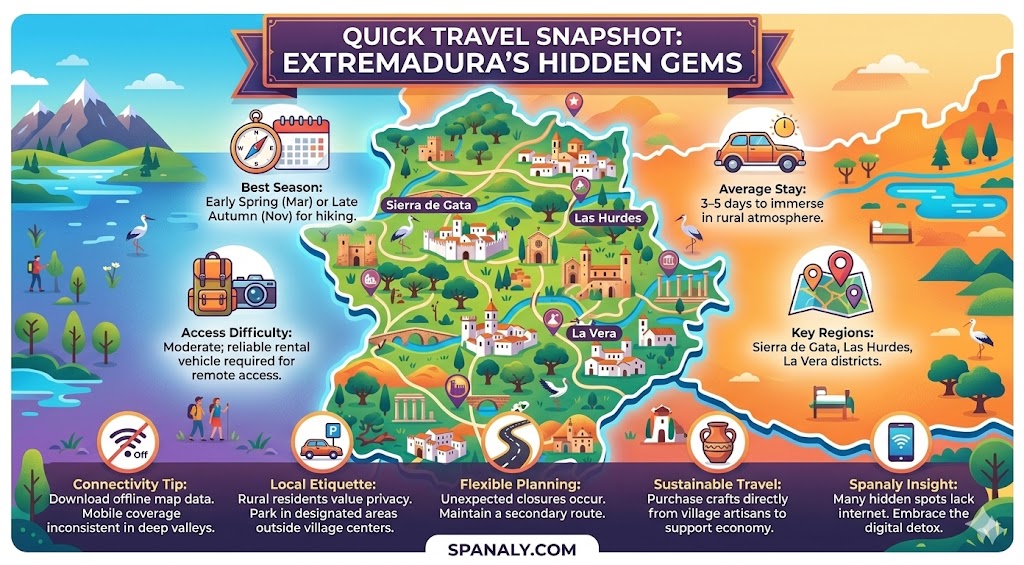
This snapshot covers the essential logistics for exploring the most secluded and authentic corners of the region.
| Metric | Recommendation |
| Best Season | Early Spring (March) or Late Autumn (November) for optimal hiking conditions. |
| Travel Style | Independent exploration; perfect for slow travelers and photographers. |
| Access Difficulty | Moderate; requires a reliable rental vehicle for remote village access. |
| Average Stay | 3–5 days to fully immerse in the rural atmosphere. |
| Key Regions | Sierra de Gata, Las Hurdes, and La Vera districts. |
Connectivity Tip: Download offline map data. Mobile coverage is highly inconsistent throughout the deep, remote mountain valleys.
Local Etiquette: Rural residents value privacy. Always park your vehicle in designated areas outside of narrow village centers.
Flexible Planning: Unexpected road closures occur in remote areas. Always maintain a secondary route option for your daily excursions.
Deep Exploration: These hidden spots are just the beginning. Browse our Extremadura Attractions guide to find more wonders beyond the beaten path.
Sustainable Travel: Purchase handmade crafts directly from village artisans to support the local economy and preserve regional traditions.
🏘️ Why Visit Extremadura’s Secret Villages?

Exploring Extremadura’s hidden villages offers a rare window into a Spain that remains untouched by time and commercial tourism.
Linguistic & Cultural Relics: Some isolated towns preserve ancient dialects and pre-Roman traditions. You witness living history found nowhere else.
Architectural Purity: These villages feature original slate, granite, and adobe structures. Modern development hasn’t altered their ancient, rustic aesthetic.
Complete Solitude: You explore cobblestone plazas and medieval alleyways in total peace. No queues, no crowds, and no distractions.
Unfiltered Hospitality: Local residents interact with genuine curiosity. You experience a warmth and friendliness rarely found in high-traffic tourist destinations.
The Perfect Balance: While the secret villages offer quiet, they serve as ideal starting points for broader regional adventures. Use these villages as your base to plan your Best Day Trips in Extremadura for a perfect blend of isolation and exploration.
Spanaly Insight: Don’t look for souvenirs in these villages. Look for stories. The best memories here come from brief conversations with local elders in the village square.
🏰 Most Beautiful Hidden Villages in Extremadura
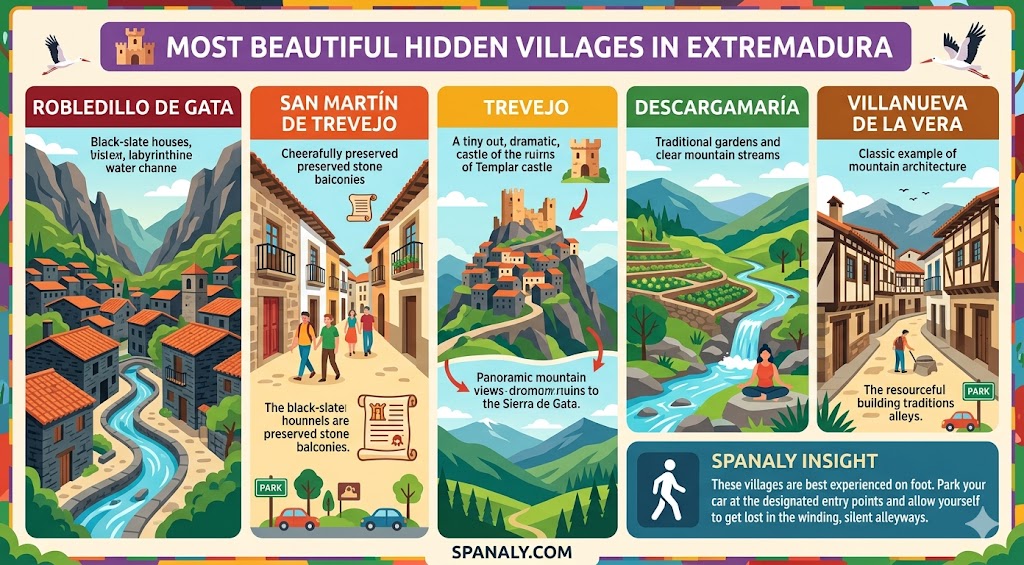
These settlements represent the architectural soul of the region. They offer a striking, serene alternative to the more polished historic cities.
Robledillo de Gata: This village clings to a steep mountain gorge. Its black-slate houses and labyrinthine water channels create a unique, moody atmosphere.
San Martín de Trevejo: Famous for its preserved stone balconies and local dialect. Walking its streets feels like stepping back into the medieval era.
Trevejo: A tiny, dramatic village crowned by the ruins of a Templar castle. It offers panoramic views of the entire Sierra de Gata.
Descargamaría: Known for its traditional terraced gardens and clear mountain streams. It is a haven for those seeking silence and natural beauty.
Villanueva de la Vera: A classic example of mountain architecture. Its timber-framed houses and narrow, winding alleys showcase the region’s resourceful building traditions.
🧭 Sierra de Gata Hidden Route
The Circuit: Trevejo ➔ San Martín de Trevejo ➔ Robledillo de Gata
Focus: Medieval architecture and slate-stone villages.
Time Required: 1 Full Day.
Best For: Photography and historical immersion
🏛️ Underrated Historical Sites in Extremadura
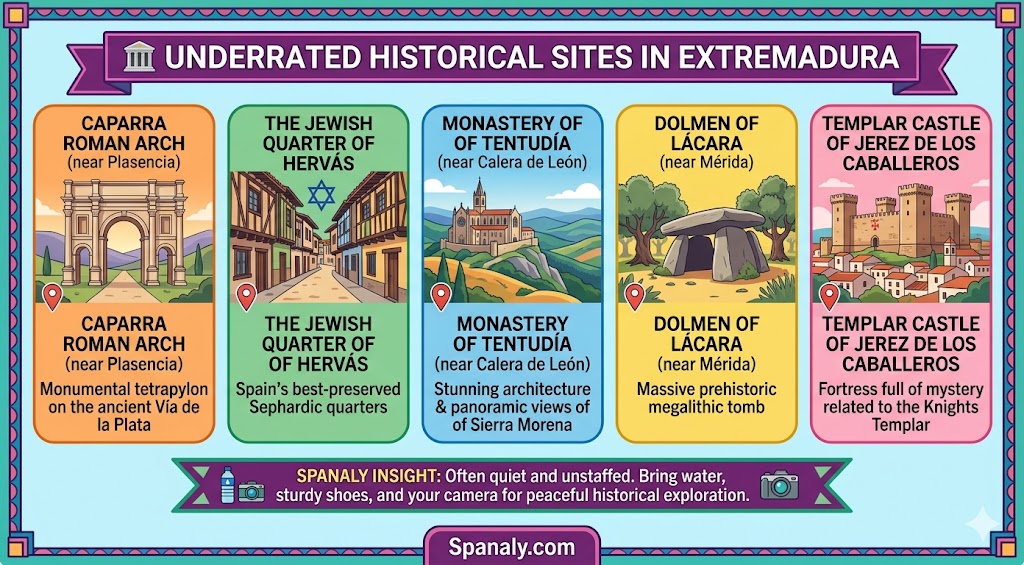
While the major cities draw the crowds, these hidden historical sites within and around the region’s towns reveal the true depth of our past.
Caparra Roman Arch (near Plasencia): This monumental tetrapylon stands alone in a quiet valley. It marks the ancient Vía de la Plata, offering a serene look at Roman engineering.
The Jewish Quarter of Hervás: Explore one of Spain’s best-preserved Sephardic quarters. Its unique chestnut-wood architecture and narrow alleys tell a rich, somber story of heritage.
Monastery of Tentudía (near Calera de León): Sitting at the highest point of the Sierra Morena, this site combines stunning Gothic architecture with panoramic views of the entire region.
Dolmen of Lácara (near Mérida): Hidden among olive groves, this massive megalithic tomb is one of the most impressive prehistoric monuments in the entire peninsula.
The Templar Castle of Jerez de los Caballeros: This fortress dominates the town. Its four iconic towers hold centuries of mystery related to the Knights Templar and their regional power.
🏛️ The Vía de la Plata Explorer
The Circuit: Caparra Roman Arch ➔ Hervás Jewish Quarter ➔ Plasencia
Focus: Roman history and Sephardic heritage.
Time Required: 1 Full Day.
Best For: Heritage lovers and history buffs.
🌿 Untouched Natural Wonders and Landscapes

Extremadura’s wild terrain remains largely unexplored by mainstream tourism. These natural escapes provide deep tranquility and a chance to witness untouched ecosystems.
Garganta de los Infiernos (Valle del Jerte): Discover natural stone pools carved by waterfalls. It is a refreshing, stunning geological playground for hikers and swimmers.
Monfragüe National Park: Witness the largest colony of black vultures in the world. Its dramatic cliffs and river scenery create a true bird-watching paradise.
The Meander of the Melero: Experience one of the most spectacular river bends in Spain. This natural wonder offers a perfect photo opportunity from the scenic viewpoint.
Sierra de Gata Forests: Wander through ancient, dense forests. These hidden trails offer complete solitude and are perfect for those seeking a deep connection with nature.
Star-Gazing in Extremadura: The region’s lack of light pollution makes its night skies legendary. Explore our dedicated Star-Gazing in Extremadura guide to find the best spots to watch the celestial wonders in total silence.
🌿 The Wild Extremadura Loop
The Circuit: Monfragüe National Park ➔ Valle del Jerte (Garganta de los Infiernos) ➔ Meander of the Melero
Focus: Birdwatching, waterfalls, and panoramic landscapes.
Time Required: 1.5 Days.
Best For: Nature enthusiasts and hikers.
👣 Off-the-Beaten-Path Experiences

Authentic travel in Extremadura means moving beyond sightseeing to truly engaging with the region’s living traditions and local rhythm.
Follow the Pilgrims: Walk a section of the historic route. Even a short distance offers profound insight into the region’s soul; check our Via de la Plata Walking Guide for the best scenic stretches.
The A Fala Dialect: Visit the valley of Jálama. Here, locals speak a unique linguistic relic that has survived for centuries, creating a distinct cultural identity.
Traditional Artisan Markets: Seek out small-scale craft markets in remote villages. You find handmade ceramics and textiles that reflect centuries of regional mastery.
Village Fiestas: Rural festivals are raw, loud, and incredibly welcoming. They offer an unfiltered glimpse into the agricultural and spiritual history of these mountain communities.
Mountain Grazing Paths: Trek the ancient cañadas (sheep droving paths). These historic trails offer the most authentic views of the wild, untamed countryside.
Spanaly Insight: Don’t just be a spectator. If you see a local event or market, ask about it. A simple question often leads to an invitation to share a meal or a story.
🥘 Culinary Secrets: Taste the Authentic Extremadura

True Extremaduran cuisine is born from the land. In these remote villages, recipes rely on high-quality, seasonal ingredients and ancient traditions, far from the influence of modern commercialized menus.
Torta del Casar: This world-famous creamy cheese is a must-try. Visit Quesería Doña Francisca in Casar de Cáceres to see the traditional craft behind this intense, liquid-gold delicacy.
Dehesa-Fed Iberico Ham: Extremadura produces Spain’s finest ham. In towns like Jerez de los Caballeros, visit local secaderos to taste acorn-fed ham that melts instantly on the palate.
Pimentón de la Vera: This smoked paprika is the soul of regional cooking. Explore the mills in Jaraíz de la Vera to smell the intense, wood-fired aroma that defines authentic stews.
Traditional Migas: This shepherd’s dish is elevated in mountain taverns. Look for local spots in Garganta la Olla where migas are served with crispy chorizo, peppers, and fried grapes.
Explore Further: Our comprehensive Extremadura Food Guide helps you identify seasonal specialties and the best regional pairings for your daily exploration.
Spanaly Insight: Whenever you see a menu listing “Plato del día” in a remote village, order it without hesitation. It is almost always a slow-cooked, ancestral dish made with ingredients sourced that very morning.
🏨 Where to Stay in Extremadura’s Hidden Areas
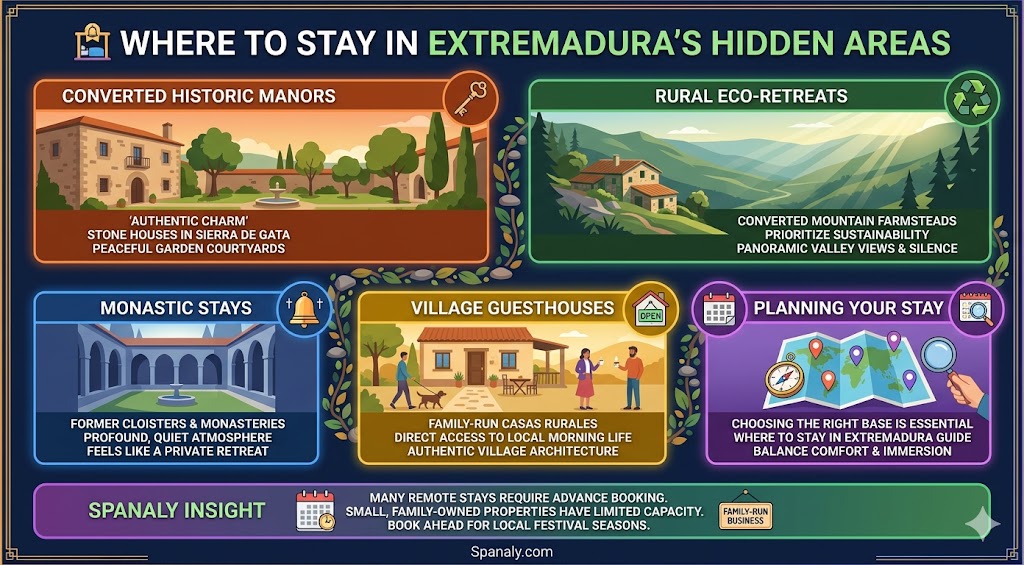
Finding the right accommodation enhances your connection to the landscape. Skip the standard hotels for stays that reflect the region’s rustic soul.
Converted Historic Manors: Choose a casona in the Sierra de Gata. These stone houses provide authentic charm, thick walls, and peaceful garden courtyards for ultimate rest.
Rural Eco-Retreats: Stay in converted mountain farmsteads near Las Hurdes. These spots prioritize sustainability, panoramic valley views, and silence broken only by nature.
Monastic Stays: Several former cloisters and monasteries have been transformed into unique lodging. They offer a profound, quiet atmosphere that feels like a private retreat.
Village Guesthouses: Opt for family-run casas rurales in remote centers like Robledillo de Gata. You get direct access to local morning life and authentic village architecture.
Planning Your Stay: Choosing the right base is essential for navigating remote areas efficiently. Refer to our Where to Stay in Extremadura guide for hand-picked locations that balance comfort with complete immersion.
Spanaly Insight: Many remote stays require advance booking. These properties are often small, family-owned businesses with limited capacity, especially during local festival seasons.
⚠️ Common Mistakes to Avoid

Even seasoned travelers face challenges in remote regions. Avoid these common pitfalls to keep your exploration of Extremadura’s hidden gems seamless and stress-free.
Underestimating Mountain Roads: Rural routes are often narrow and winding. Never push your driving speed; maintain a slow pace to stay safe on curves.
Assuming Constant Connectivity: Signal loss is frequent in deep valleys. Always download offline maps before leaving your base to avoid losing your way.
Ignoring Local Meal Times: Restaurants in small villages operate on strict schedules. Plan your dining around the 1:30 PM–3:30 PM window to avoid hunger.
Scheduling Too Much: Trying to visit three remote villages in one day leads to exhaustion. Prioritize one area to truly absorb the atmosphere.
Overlooking Fuel Stops: Gas stations are rare in the high mountain districts. Keep your tank at least half-full at all times to prevent unnecessary stress.
💡 Pro Tips: The Insider’s Edge

Elevate your experience with these tactical insights gathered from local explorers and regional enthusiasts who know the deepest secrets of the Extremaduran backcountry.
The “Valley Echo” Timing: In valleys like Las Hurdes, visit small stone bridges exactly at 9:00 AM. The temperature inversion creates a low-lying mist that makes for world-class, moody photography.
The Shepherd’s Coffee: If you spot a village taberna with a group of elderly locals sitting outside, walk in and ask for “café de puchero.” This traditional, pot-boiled coffee is rare and typically not on the menu.
The Granular Map Trick: Use “Wikiloc” to filter routes by “hidden” or “less popular.” Locals often upload secret access points to natural pools that you will never find on Google Maps.
The Sunday Trading Secret: In remote villages, Sunday is for the Mercadillo. Even if it’s not a major festival, the small exchange of local honey or mountain herbs in the square is where the real community heartbeat is found.
The Window Shadow Strategy: Avoid the harsh afternoon glare by photographing village alleys during the “shadow hour.” This is when the sun dips below the canyon walls, providing soft, natural contrast that highlights the texture of ancient slate.
Spanaly Insight: Don’t be afraid to look like a tourist who is slightly lost. Locals in these areas are far more likely to offer a hidden recommendation if they see you genuinely taking the time to explore their village slowly.
🛡️ Visitor FAQs – Hidden Gems of Extremadura Guide
🚗 Are the roads in remote mountain villages safe for international rental cars?
Yes, the roads are paved and safe. However, they are often narrow and winding. Drive slowly, respect the terrain, and use designated parking areas at the village entrances to avoid tight maneuvers in historical centers.
📶 Will I have mobile signal while exploring these hidden gems?
Signal is inconsistent in deep mountain valleys like Las Hurdes or Sierra de Gata. Always download offline maps before starting your journey to ensure you can navigate back to your base without stress.
🗣️ Is basic Spanish enough to visit these underrated locations?
Yes, basic Spanish is perfectly sufficient. Locals in remote areas are incredibly welcoming and appreciate the effort to communicate in their language, even if you just know a few polite phrases.
🎒 What is the best way to handle lunch while off the beaten path?
Small villages have limited dining options that follow strict local hours. Always carry snacks and water, and plan your main meal for the 1:30 PM–3:30 PM window to avoid finding local taverns closed.
⏳ How long should I stay to truly experience these hidden gems?
We recommend a minimum of 3 to 5 days. This allows you to explore the villages at a relaxed pace without the fatigue of constant driving, letting you absorb the authentic rhythm of rural Extremaduran life.
Hidden Gems Guide by Spanaly.com
Extremadura is more than just a destination; it is an invitation to slow down and rediscover the raw, authentic spirit of Spain. By venturing into these hidden villages and untouched landscapes, you bypass the noise of mass tourism and connect with a heritage that feels truly timeless.
Start Your Journey: Every great adventure begins with the right path. For a seamless start to your trip, use our Madrid to Extremadura A5 Stops guide to transform your drive into an exploration of iconic landmarks before you even reach the region.
Embrace the Unexpected: The true beauty of Extremadura lies in the unplanned detour, the local tavern conversation, and the silent mountain view. Allow yourself the freedom to wander off-map.
Support Local Heritage: Every purchase, meal, and stay in these remote villages helps preserve these ancient traditions for future explorers. Your visit makes a tangible difference.
The heart of Spain is waiting for you in the quiet valleys and stone-walled streets of Extremadura. Pack your bags, bring an open mind, and prepare for an experience that stays with you long after you return home.