Table of Contents
Toggle📷 Extremadura
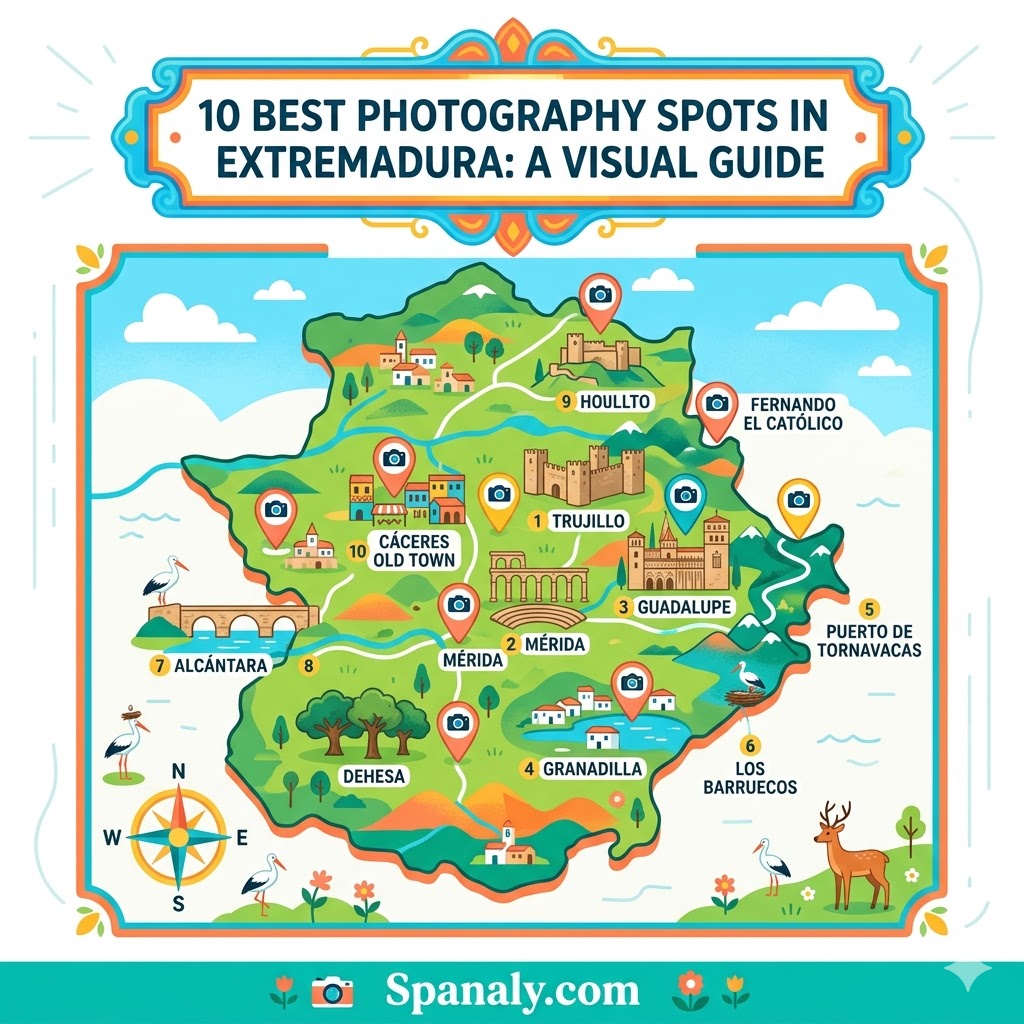
Have you ever searched for a place where history meets untouched nature? Extremadura is a photographer’s dream, offering dramatic vistas that remain largely hidden from mainstream tourism.
Diverse Frames: Capture everything from crumbling medieval castles to vast, rolling dehesa landscapes.
Unique Lighting: Specifically, the golden hour in these high-altitude villages creates shadows you cannot find elsewhere in Spain.
Unspoiled Beauty: Because crowds are rare, you can finally focus on your composition without distractions.
Whether you are a professional seeking the perfect shot or a hobbyist building your portfolio, this guide provides the essential locations. Furthermore, for all your logistical needs, our Extremadura Travel Guide helps you navigate these rugged, breathtaking terrains with ease.
Let’s explore the most stunning locations that define this Spanish treasure.
📸 Snapshot: Extremadura’s Diverse Landscapes for Photographers
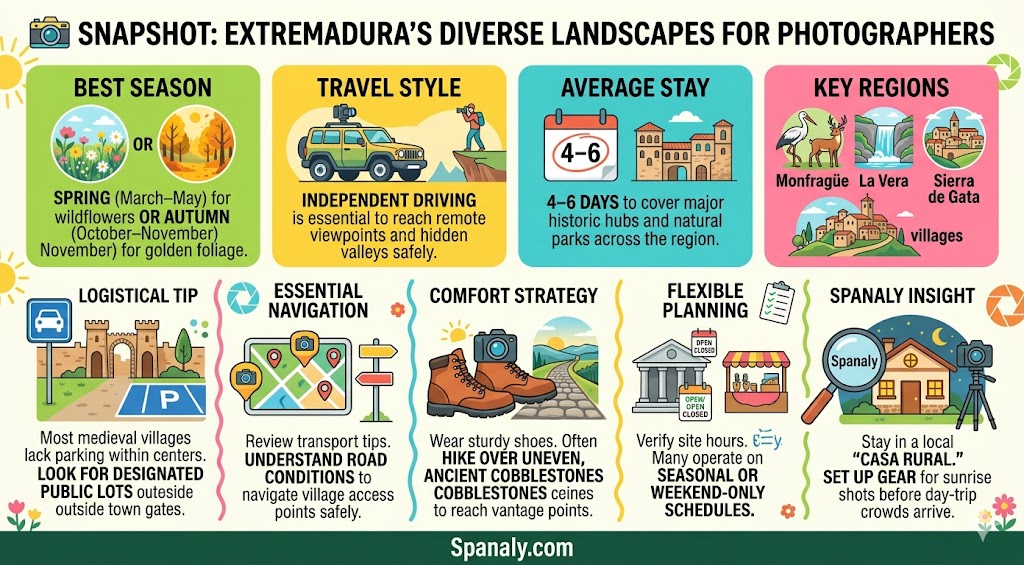
Planning a photography trip to this region requires foresight. Use this quick reference to optimize your schedule and ensure you capture the most rewarding light.
| Metric | Recommendation |
| Best Season | Spring (March–May) for wildflowers or Autumn (October–November) for golden foliage. |
| Travel Style | Independent driving is essential to reach remote viewpoints and hidden valleys safely. |
| Average Stay | 4–6 days to cover major historic hubs and natural parks across the region. |
| Key Regions | Monfragüe for wildlife, La Vera for water features, and Sierra de Gata for villages. |
Logistical Tip: Most medieval villages lack parking within their centers. Always look for designated public lots outside the main town gates.
Essential Navigation: Before heading out, review our regional transport tips. Understand road conditions to navigate village access points safely.
Comfort Strategy: Wear sturdy, closed-toe walking shoes. You will often hike over uneven, ancient cobblestones to reach the best vantage points.
Flexible Planning: Always verify individual site hours. Many artisan shops and small museums operate on seasonal or weekend-only schedules.
Spanaly Insight: Many locations are best enjoyed by staying in a local “Casa Rural.” This allows you to set up your gear for sunrise shots long before the day-trip crowds arrive.
🏔️ Top 5 Iconic Landmarks for Landscape Photography
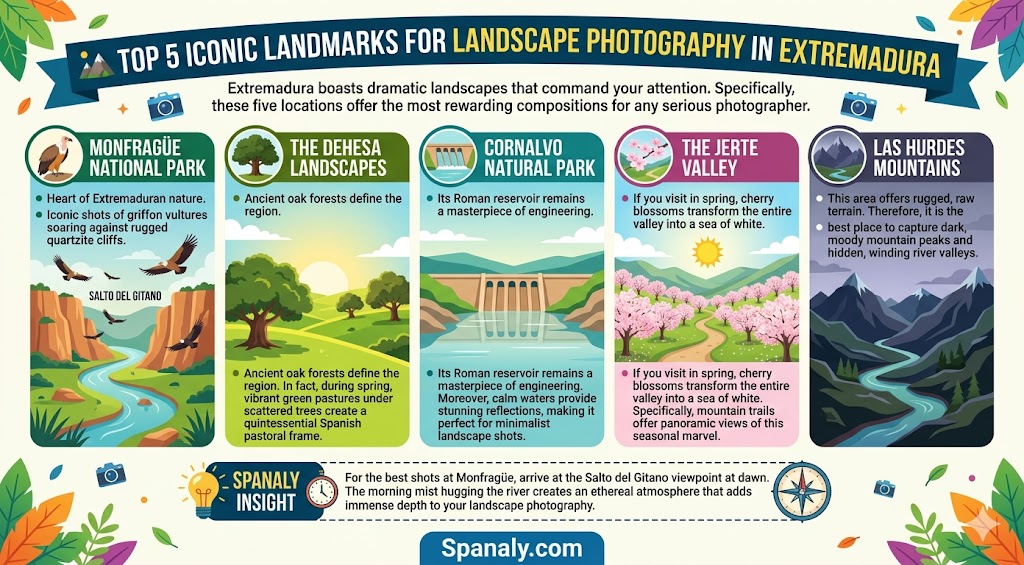
Extremadura boasts dramatic landscapes that command your attention. These five locations offer the most rewarding compositions for any serious photographer. Furthermore, for a wider look at what the region offers, our Extremadura Attractions guide is an essential resource.
| Landmark | Walking Difficulty | Best Lens |
| Monfragüe Park | Moderate (Hilly) | 400mm Telephoto |
| Dehesa Forests | Easy (Flat) | 16-35mm Wide |
| Cornalvo Park | Easy (Gentle) | 24-70mm Zoom |
| Jerte Valley | Moderate (Steep) | 70-200mm Zoom |
| Las Hurdes | Hard (Rugged) | 16-35mm Wide |
Monfragüe National Park: This is the heart of Extremaduran nature. The “Salto del Gitano” viewpoint offers iconic shots of griffon vultures.
The Dehesa Landscapes: These vast, ancient oak forests define the region. Spring pastures create a quintessential Spanish pastoral frame.
Cornalvo Natural Park: Its Roman reservoir remains a masterpiece of engineering. The calm waters provide stunning reflections for minimalist shots.
The Jerte Valley: Spring cherry blossoms transform the valley into white. Mountain trails offer panoramic views of this seasonal marvel.
Las Hurdes Mountains: This area offers rugged, raw terrain. It is the best place to capture dark, moody mountain peaks.
Spanaly Insight: For the best shots at Monfragüe, arrive at the Salto del Gitano viewpoint at dawn. The morning mist hugging the river creates an ethereal atmosphere that adds immense depth.
🏰 Best Medieval Villages for Architectural Photography
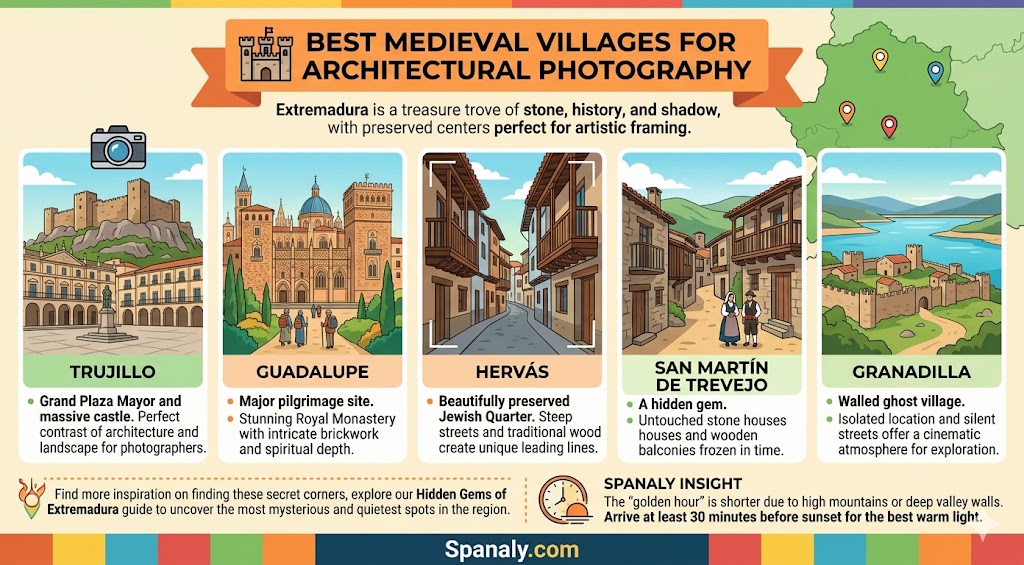
Extremadura is a treasure trove for those who love capturing stone, history, and shadow. Specifically, its preserved medieval centers offer textures and narrow corridors that are perfect for artistic framing.
Trujillo: Famous for its grand Plaza Mayor and massive castle. The contrast between the Renaissance facades and the rugged hilltop fortress makes it a photographer’s paradise.
Guadalupe: This village is a major pilgrimage site. The stunning Royal Monastery preserves medieval Mudéjar architecture that provides intricate brickwork and spiritual depth to your shots.
Hervás: Known for its beautifully preserved Jewish Quarter. The steep, narrow streets and traditional chestnut-wood architecture create unique, leading lines that draw the viewer into the frame.
San Martín de Trevejo: A hidden gem in the Sierra de Gata. It remains virtually untouched, featuring ancient stone houses and traditional wooden balconies that feel frozen in time.
Granadilla: A walled ghost village overlooking a reservoir. Its isolated location and hauntingly silent streets offer a dramatic, cinematic atmosphere for urban exploration photography.
To plan your architecture tour efficiently, you can explore our complete Medieval Villages in Extremadura guide. It helps you integrate these monumental visits into your broader photography route.
Spanaly Insight: In these villages, the “golden hour” is often shorter because the sun disappears behind high mountain ridges or deep valley walls. Try to arrive at your specific architectural subject at least 30 minutes before sunset to capture the best warm light.
💎 Hidden Gems: Secret Photography Locations Off the Beaten Path
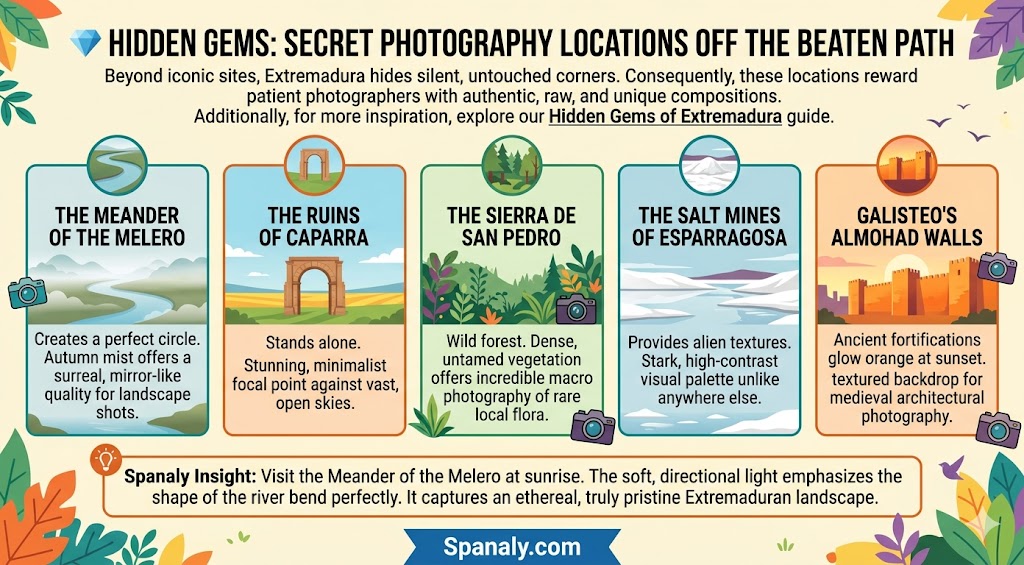
Beyond iconic sites, Extremadura hides silent, untouched corners. These locations reward patient photographers with authentic, raw, and unique compositions. Additionally, for more inspiration, explore our Hidden Gems of Extremadura guide.
The Meander of the Melero: This river bend creates a perfect circle. Autumn mist here offers a surreal, mirror-like quality for landscape shots.
The Ruins of Caparra: This Roman arch stands alone in a field. It provides a stunning, minimalist focal point against vast, open skies.
The Sierra de San Pedro: This forest remains largely wild. Its dense, untamed vegetation offers incredible macro photography opportunities of rare local flora.
The Salt Mines of Esparragosa: These provide alien, white-crusted textures. They create a stark, high-contrast visual palette unlike anywhere else in the region.
Galisteo’s Almohad Walls: These ancient fortifications glow deep orange at sunset. They offer a powerful, textured backdrop for authentic medieval architectural photography.
Spanaly Insight: Visit the Meander of the Melero at sunrise. The soft, directional light emphasizes the shape of the river bend perfectly. It captures an ethereal, truly pristine Extremaduran landscape.
🦅 Wildlife and Nature Photography: Monfragüe National Park
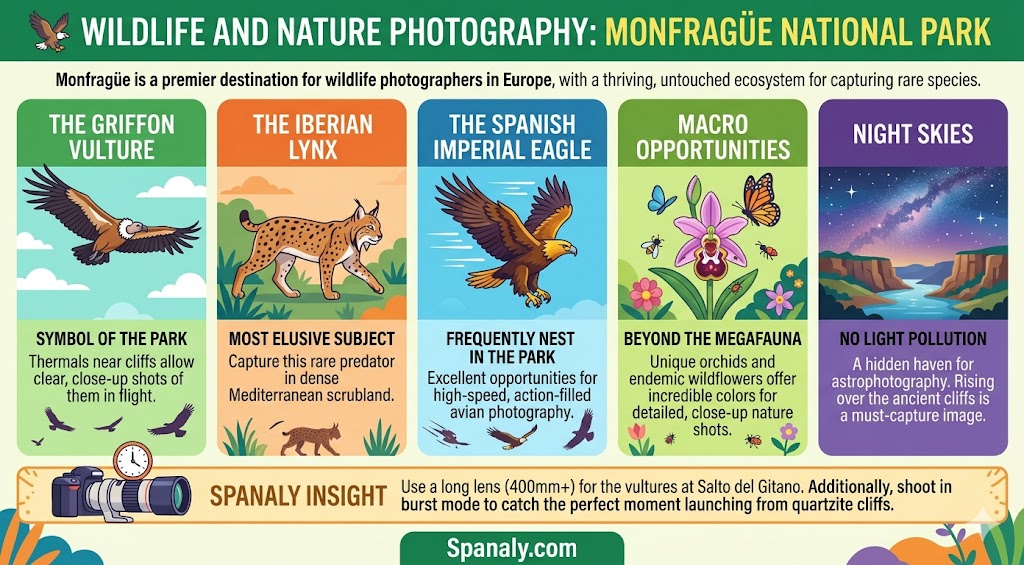
Monfragüe is a premier destination for wildlife photographers in Europe. Specifically, its protected status ensures a thriving ecosystem that remains virtually untouched. You can capture rare species in their natural, wild environment.
The Griffon Vulture: These massive birds are the park’s symbol. The thermals near the cliffs allow for clear, close-up shots of them in flight.
The Iberian Lynx: This is the most elusive subject. Patient photographers occasionally capture this rare predator moving through the dense Mediterranean scrubland.
The Spanish Imperial Eagle: These majestic birds frequently nest in the park’s higher reaches. They provide excellent opportunities for high-speed, action-filled avian photography.
Macro Opportunities: Beyond the megafauna, the park’s diverse flora is stunning. Furthermore, the unique orchids and endemic wildflowers offer incredible colors for detailed, close-up nature shots.
Night Skies: Because light pollution is non-existent here, the park is a hidden haven for astrophotography. The Milky Way rising over the ancient river cliffs is a must-capture image.
Spanaly Insight: Use a long lens (400mm or more) for the vultures at Salto del Gitano. Shoot in burst mode to catch the perfect moment as they launch from the quartzite cliffs.
📍 Strategic Photography Itineraries
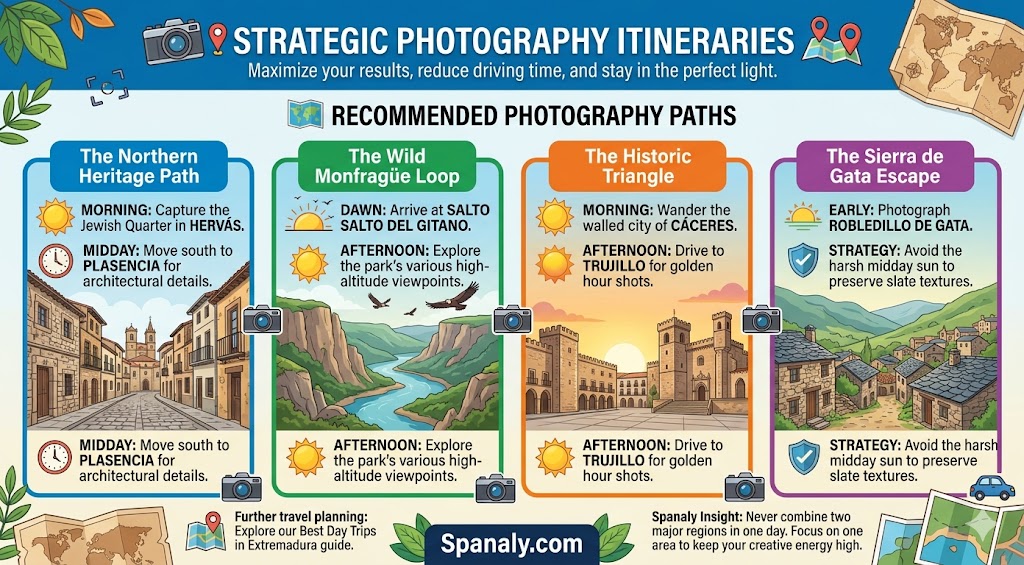
Maximize your results by following these optimized paths. You reduce driving time and stay in the perfect light. Our Best Day Trips in Extremadura guide provides additional routes for your travel planning.
🗺️ Recommended Photography Paths
The Northern Heritage Path:
Morning: Capture the Jewish Quarter in Hervás.
Midday: Move south to Plasencia for architectural details.
The Wild Monfragüe Loop:
Dawn: Arrive at Salto del Gitano.
Afternoon: Explore the park’s various high-altitude viewpoints.
The Historic Triangle:
Morning: Wander the walled city of Cáceres.
Afternoon: Drive to Trujillo for golden hour shots.
The Sierra de Gata Escape:
Early: Photograph Robledillo de Gata.
Strategy: Avoid the harsh midday sun to preserve slate textures.
Spanaly Insight: Never combine two major regions in one day. Focus on one area to keep your creative energy high.
🌤️ Best Time of Day and Season for Lighting Extremadura
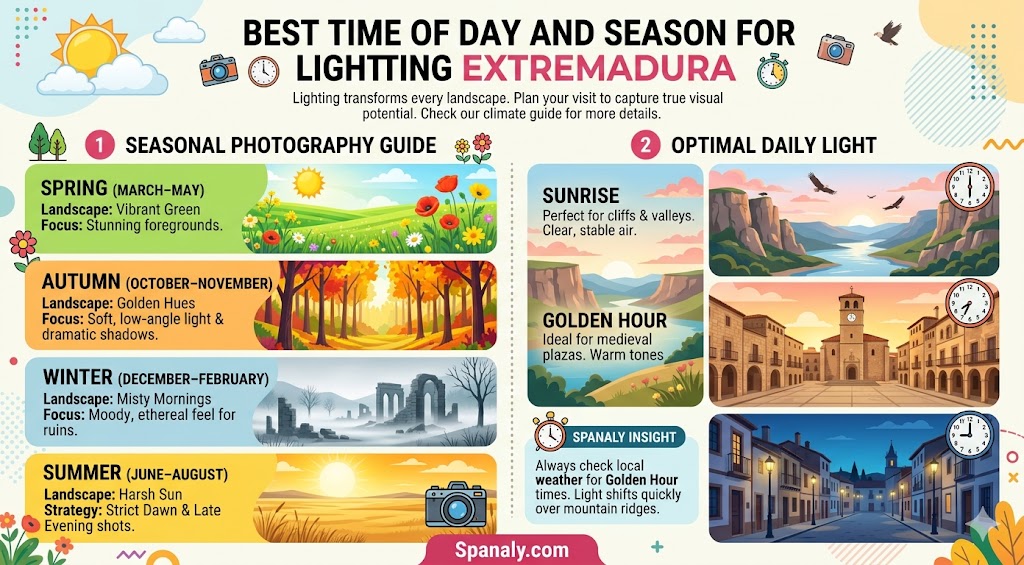
Lighting transforms every landscape. Therefore, timing your visit ensures you capture the region’s true visual potential. For climate details, check our Best Time to Visit Extremadura guide.
📅 Seasonal Photography Guide
Spring (March–May):
Landscape: Fields turn vibrant green.
Focus: Wildflowers provide stunning foregrounds for your shots.
Autumn (October–November):
Landscape: Forests shift to golden hues.
Focus: Soft, low-angle light creates long, dramatic shadows.
Winter (December–February):
Landscape: Misty mornings appear frequently.
Focus: Low clouds add a moody, ethereal feeling to ruins.
Summer (June–August):
Landscape: The sun is harsh.
Strategy: Shoot strictly at dawn or late evening.
🕒 Optimal Daily Light
Sunrise: Perfect for Monfragüe cliffs and river valleys. The air is clear and stable.
Golden Hour: Ideal for medieval plazas like Trujillo. Warm tones highlight ancient granite textures beautifully.
Blue Hour: Best for urban shots. The soft glow complements the historic, quiet village streetlights.
Spanaly Insight: Always check the local weather app for “Golden Hour” times. Light shifts quickly over the high mountain ridges here.
🎒 Essential Photography Gear for Extremaduran Terrain
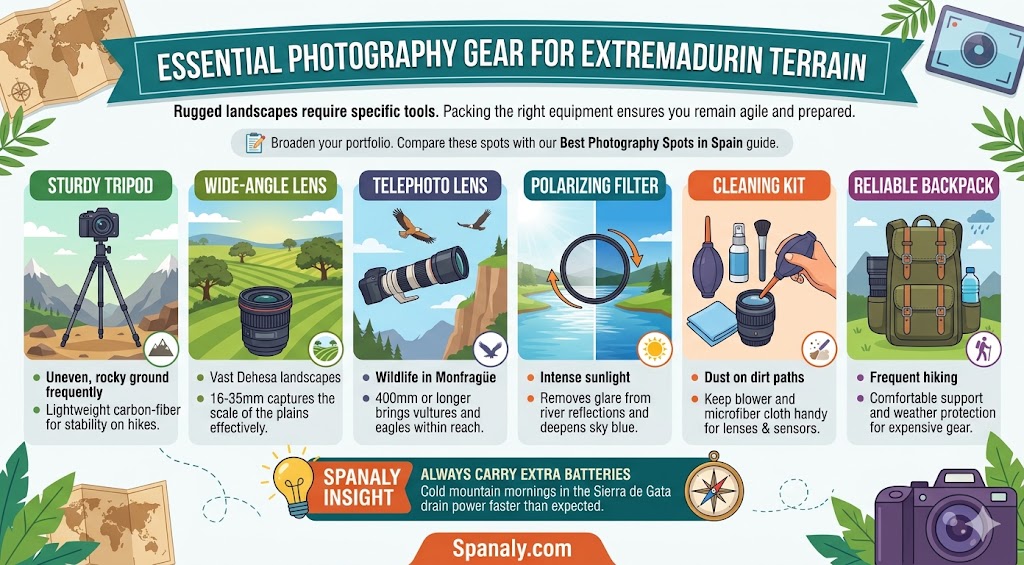
Rugged landscapes require specific tools. Packing the right equipment ensures you remain agile and prepared for every shot. Furthermore, if you are planning a broader tour, compare these spots with our Best Photography Spots in Spain guide to broaden your portfolio.
⚙️ The Photographer’s Kit
Sturdy Tripod: You will face uneven, rocky ground often. Choose a lightweight, carbon-fiber model for stability on hikes.
Wide-Angle Lens: Essential for capturing the vast Dehesa landscapes. A 16-35mm lens captures the scale of the plains effectively.
Telephoto Lens: Vital for wildlife in Monfragüe. A 400mm or longer lens brings vultures and eagles within reach.
Polarizing Filter: The sunlight here is intense. Thus, a polarizer removes glare from river reflections and deepens the sky’s blue.
Cleaning Kit: Dust is common on dirt paths. Keep a blower and microfiber cloth handy for your lenses and sensors.
Reliable Backpack: You will hike frequently. Ensure your bag offers comfortable support and weather protection for your expensive gear.
Spanaly Insight: Always carry extra batteries. The cold mountain mornings in the Sierra de Gata drain power much faster than expected.
❌ Common Mistakes to Avoid

Even seasoned photographers often struggle in Extremadura. These common pitfalls can ruin a perfectly planned shoot. Avoid them to keep your workflow smooth and your results professional.
Ignoring the Siesta Rhythm: Many village plazas are lively at 1:00 PM but deserted by 3:00 PM. You lose your human subjects. Plan your architectural sessions for mornings or late evenings instead.
Overestimating Driving Speeds: Extremaduran backroads are winding, steep, and often unpaved. Google Maps estimates often fail to account for slow rural traffic. Always add 30 minutes to your travel schedule.
Underestimating Sun Exposure: You might feel a cool breeze, but the high-altitude sun is intense. Always protect your gear with covers. Overheating causes sensor noise and battery failure quickly.
Relying Solely on GPS: Remote valleys have zero signal. If you lose your way, you are stranded. Always download offline maps before leaving your hotel base.
Neglecting Local Manners: You are shooting in private, living spaces. Always ask before pointing your lens at locals or private courtyards. A simple smile builds instant trust.
Spanaly Insight: Many photographers forget to check local “Festivales.” A small town may be crowded with stages and decor during a celebration. Always verify local event calendars to ensure your historic shots remain clutter-free.
🚀 Pro Tips: The Insider’s Edge

Elevate your work with these tactical insights. Capture the “unseen” side of the region that most visitors completely overlook.
Follow the “Lavadero” Trails: Ancient stone washing basins hide in village lowlands. Morning steam against stone walls creates ethereal, moody compositions.
The “Shadow-Gate” Technique: Focus on deep, dark alleys. The high contrast between bright sun and black doorways emphasizes medieval stone weight.
Track Bakery Vans: These vehicles navigate the most inaccessible alleys. They lead you to vibrant, hidden plazas far from tourist paths.
Capture “Stone Signatures”: Look for etched symbols on door lintels. These micro-details add a powerful storytelling element to your architectural series.
The “Vertical Dehesa”: Aim your lens straight up at the branches. Tangled oak shapes provide an artistic, chaotic natural abstract painting.
Spanaly Insight: Carry a small reflector cloth. Bouncing light into dark alleys reveals hidden textures in the deep shadows.
📸 Visitor FAQs – Best Photography Spots Guide
🛡️ Is drone photography allowed in historic centers?
🐕 Are there restrictions for photographing pets in ruins?
⚡ Can I use external lighting gear in churches?
🎒 Is there a secure way to leave gear in the car?
Extremadura is more than a destination; it is a canvas waiting for your lens. Its combination of untamed nature and ancient architecture offers endless creative potential for every photographer.
Final Perspective: You now have the knowledge to navigate this rugged, beautiful region with confidence.
Essential Preparation: Before you depart, ensure your kit is ready for the unique terrain. Review our Extremadura Packing List to confirm you have everything for a smooth, productive trip.
Take Action: Start planning your routes today. The best shots in these hidden valleys are waiting for the right light and your unique eye.
Pick your favorite region, pack your gear, and begin capturing the soul of Spain. Your visual journey through this timeless territory starts now.