Table of Contents
Toggle📍 Cuenca
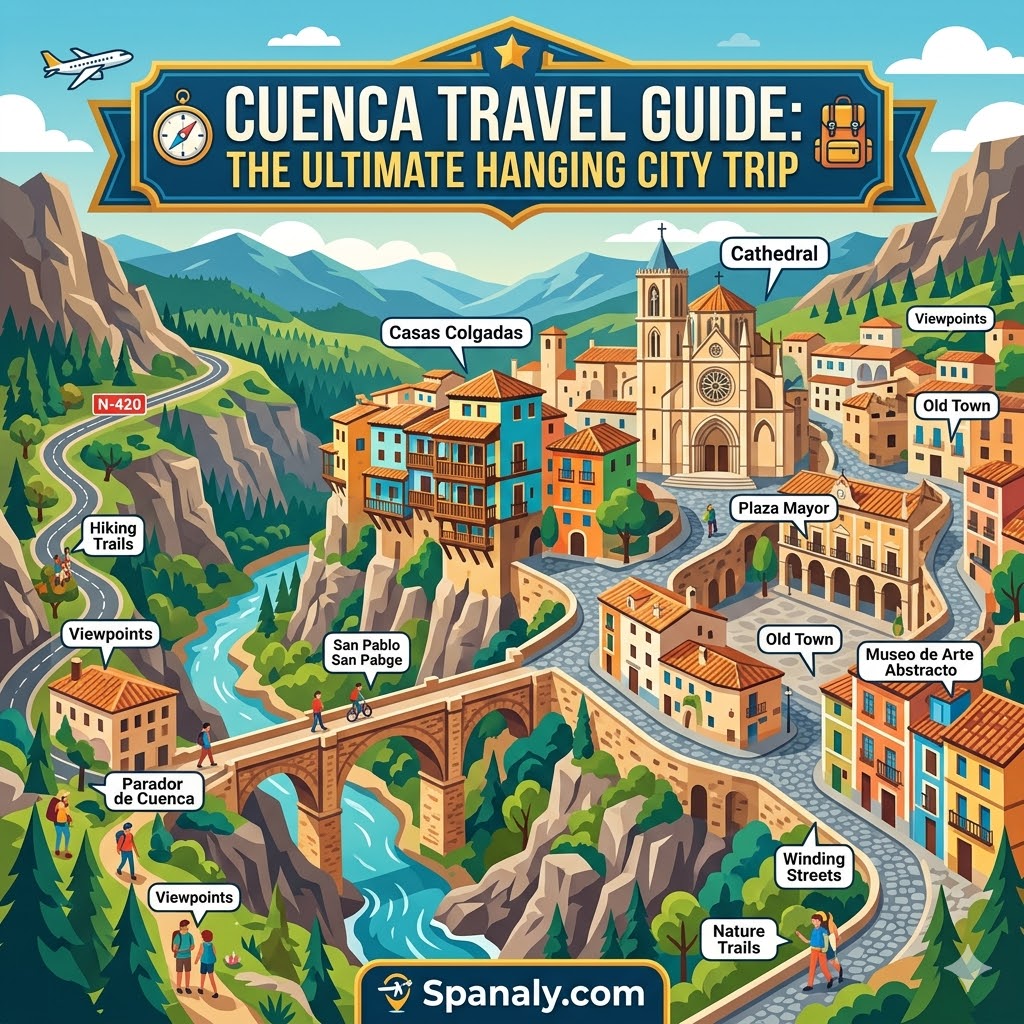
Cuenca is where history meets the gorge. Known for its gravity-defying “Hanging Houses” and dramatic limestone cliffs, this city offers an authentic Spanish experience. Specifically, it remains a mandatory stop for travelers seeking ancient architecture, breathtaking vistas, and a tranquil escape from the urban rush.
A Historic Gateway: Wander through stone-paved streets where medieval history resonates from every cliffside corner.
The Ultimate Connection: Whether you are planning a grand tour across the peninsula or focusing on the heart of Castile, our Best Cities in Spain guide helps you position Cuenca within your perfect travel itinerary.
Why Stay Here? Unlike crowded tourist hubs, Cuenca offers a sophisticated atmosphere. You get to enjoy genuine heritage at a comfortable, human pace.
Spanaly Insight: Cuenca is not just a destination for sightseeing; it is a masterclass in vertical living. The city reveals its true character best when you trade the main viewing decks for the narrow, winding paths that hug the Júcar and Huécar gorges.
📊 Cuenca at a Glance: Essential Facts
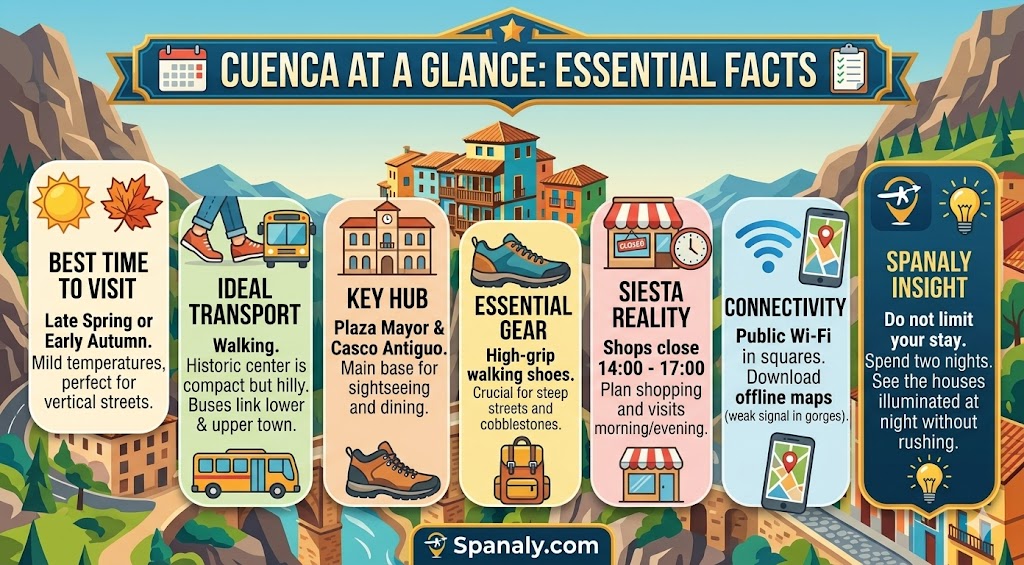
Navigating a unique cliffside city like Cuenca requires a quick grasp of its logistics. This snapshot provides the core data you need to move efficiently. Furthermore, for those crafting a larger route, our Plan a Trip to Spain Guide helps you integrate this mountain gem into your broader peninsular itinerary.
Best Time to Visit: Aim for late spring or early autumn. You enjoy mild temperatures that are perfect for climbing the city’s vertical streets.
Ideal Transport: Walking. The historic center is compact but hilly. Use local buses to connect the lower modern city with the high medieval district.
Key Hub: The Plaza Mayor and the Casco Antiguo. These areas serve as your main base for both landmark sightseeing and local dining.
Essential Gear: Wear high-grip walking shoes. The combination of steep streets and cobblestones demands reliable footwear for every traveler.
Siesta Reality: Shops frequently pause operations between 14:00 and 17:00. Consequently, plan your retail shopping and major visits for the morning or evening hours.
Connectivity: Public Wi-Fi exists in major squares. However, download offline maps before reaching the gorges, as deep limestone cliffs can occasionally weaken mobile signals.
Spanaly Insight: Do not limit your stay to a single afternoon. Spending two nights allows you to see the hanging houses illuminated at night without feeling rushed by the train schedules.
⚖️ Cuenca vs. Toledo: Which City Fits Your Trip?
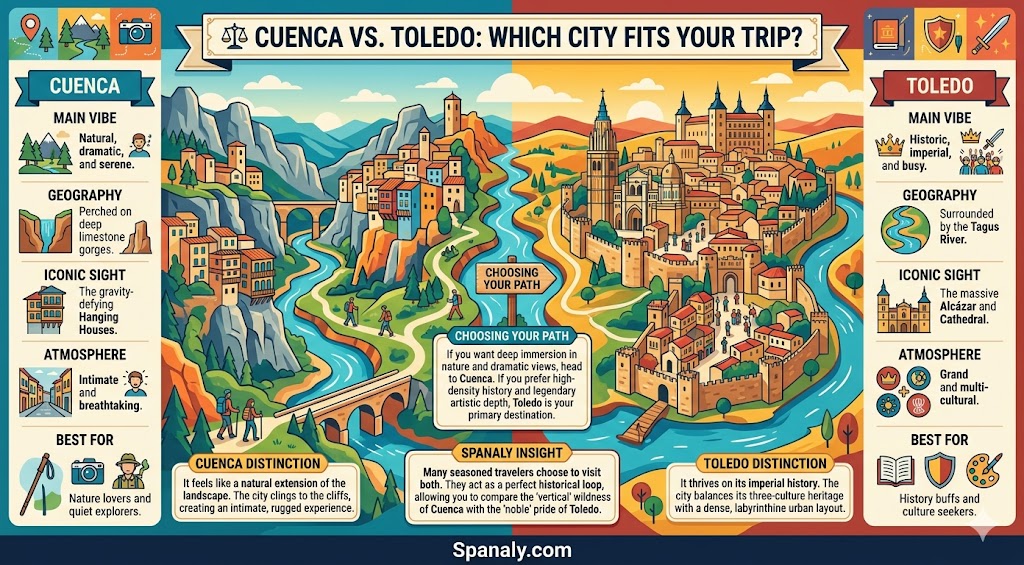
Many travelers exploring the heart of Castile struggle to choose between these two iconic cliffside cities. While both offer stunning medieval heritage and dramatic landscapes, they provide distinct atmospheres. Furthermore, if you are still weighing your options, our Toledo Spain Travel Guide helps you decide which Castilian character suits your travel style best.
| Feature | Cuenca | Toledo |
|---|---|---|
| Main Vibe | Natural, dramatic, and serene | Historic, imperial, and busy |
| Geography | Perched on deep limestone gorges | Surrounded by the Tagus River |
| Iconic Sight | The gravity-defying Hanging Houses | The massive Alcázar and Cathedral |
| Atmosphere | Intimate and breathtaking | Grand and multi-cultural |
| Best For | Nature lovers and quiet explorers | History buffs and culture seekers |
Cuenca Distinction: It feels like a natural extension of the landscape. The city clings to the cliffs, creating an intimate, rugged experience.
Toledo Distinction: It thrives on its imperial history. The city balances its three-culture heritage with a dense, labyrinthine urban layout.
Choosing Your Path: If you want deep immersion in nature and dramatic views, head to Cuenca. If you prefer high-density history and legendary artistic depth, Toledo is your primary destination.
Spanaly Insight: Many seasoned travelers choose to visit both. They act as a perfect historical loop, allowing you to compare the “vertical” wildness of Cuenca with the “noble” pride of Toledo.
✨ Why Visit Cuenca? The Jewel of Castile-La Mancha
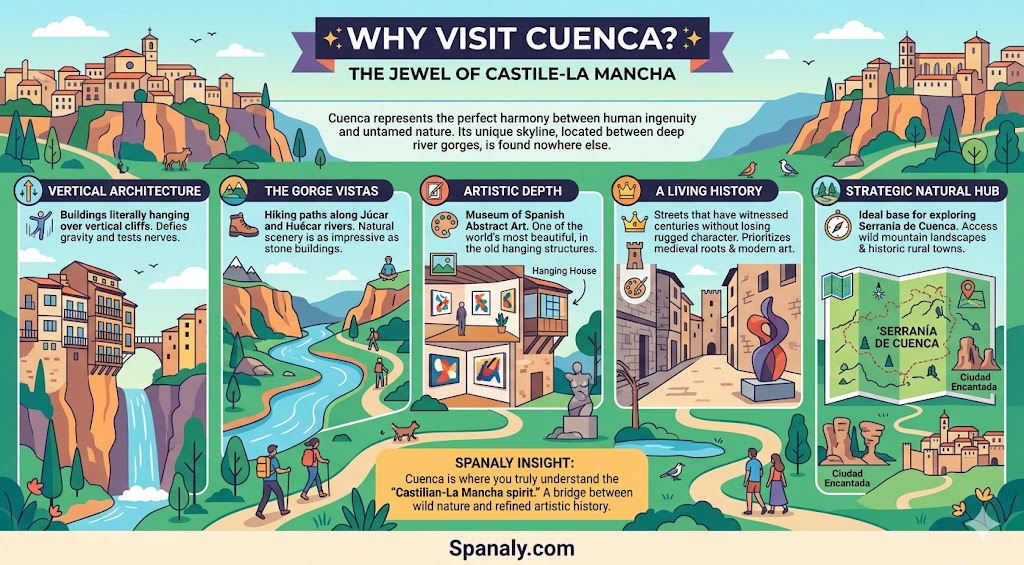
Cuenca represents the perfect harmony between human ingenuity and untamed nature. Specifically, its location between two deep river gorges creates a skyline that is impossible to find elsewhere. If you are still exploring the broader reasons to choose this country for your next adventure, our Why Visit Spain guide offers a perfect perspective on why Cuenca serves as such a vital piece of the Spanish mosaic.
Vertical Architecture: Nowhere else will you see buildings literally hanging over vertical cliffs. The architecture here defies gravity and tests the nerves of those looking down.
The Gorge Vistas: The natural scenery is just as impressive as the stone buildings. Hiking the paths along the Júcar and Huécar rivers offers a serene escape from urban life.
Artistic Depth: The city hosts the Museum of Spanish Abstract Art. Moreover, this gallery is widely considered one of the most beautiful in the world due to its setting in the old hanging structures.
A Living History: You walk on streets that have witnessed centuries of change without losing their rugged character. The city prioritizes its medieval roots while remaining surprisingly modern in its artistic output.
Strategic Natural Hub: Cuenca is the ideal base for exploring the Serranía de Cuenca. You are positioned perfectly to reach wild mountain landscapes, unique rock formations, and quiet, historic rural towns.
Spanaly Insight: Cuenca is the place where you truly understand the “Castilian-La Mancha spirit.” It provides a bridge between the wild, natural landscapes of inland Spain and the refined artistic history of its medieval centers.
🏰 Top 5 Must-See Landmarks in Cuenca
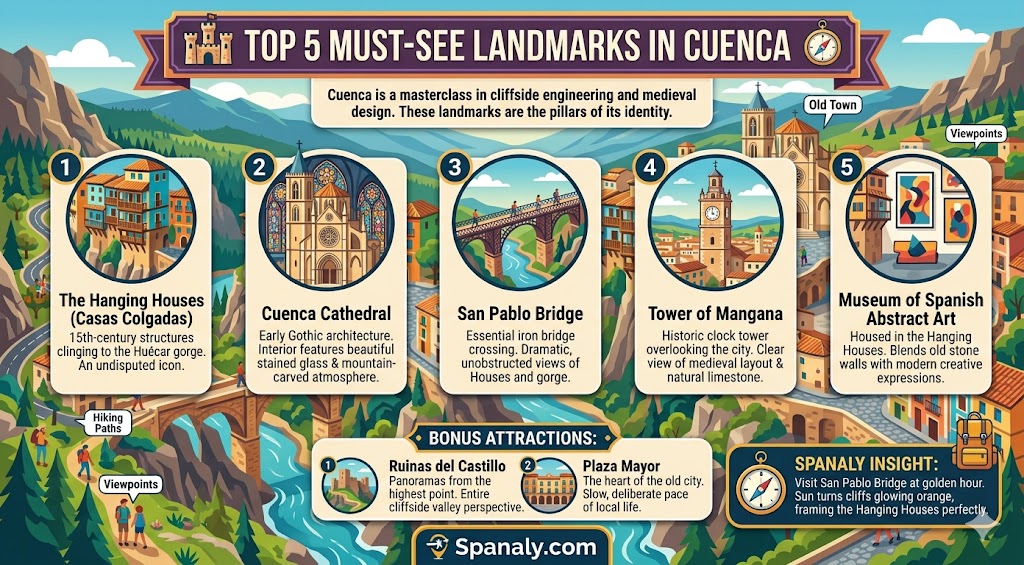
Cuenca is a masterclass in cliffside engineering and medieval design. These landmarks stand as the pillars of the city’s identity. For a wider look at the country’s varied architectural wealth, our Extremadura Attractions guide provides excellent context for comparing these mountain sites with other regional Spanish treasures.
The Hanging Houses (Casas Colgadas): These 15th-century structures are the city’s undisputed icon. They cling precariously to the cliff edge above the Huécar gorge.
Cuenca Cathedral: A stunning example of early Gothic architecture in Spain. The interior features beautiful stained glass and a unique atmosphere that feels carved directly from the mountain.
San Pablo Bridge: Crossing this iron bridge is an essential experience. It offers the most dramatic, unobstructed views of the Hanging Houses and the gorge below.
Tower of Mangana: This historic clock tower overlooks the city and offers a clear view of how the medieval layout integrates with the surrounding natural limestone.
Museum of Spanish Abstract Art: Housed within the Hanging Houses themselves. In fact, it perfectly blends centuries-old stone walls with modern creative expressions.
Bonus Attractions:
Ruinas del Castillo: Climb to the highest point of the old town for a panoramic perspective of the entire cliffside valley.
Plaza Mayor: The colorful, uneven heart of the old city. It is the perfect spot to observe the slow, deliberate pace of local life.
Spanaly Insight: Visit the San Pablo Bridge at golden hour. The setting sun turns the limestone cliffs into a deep, glowing orange that perfectly frames the Hanging Houses.
🎨 Hidden Gems & Local Secrets in Cuenca
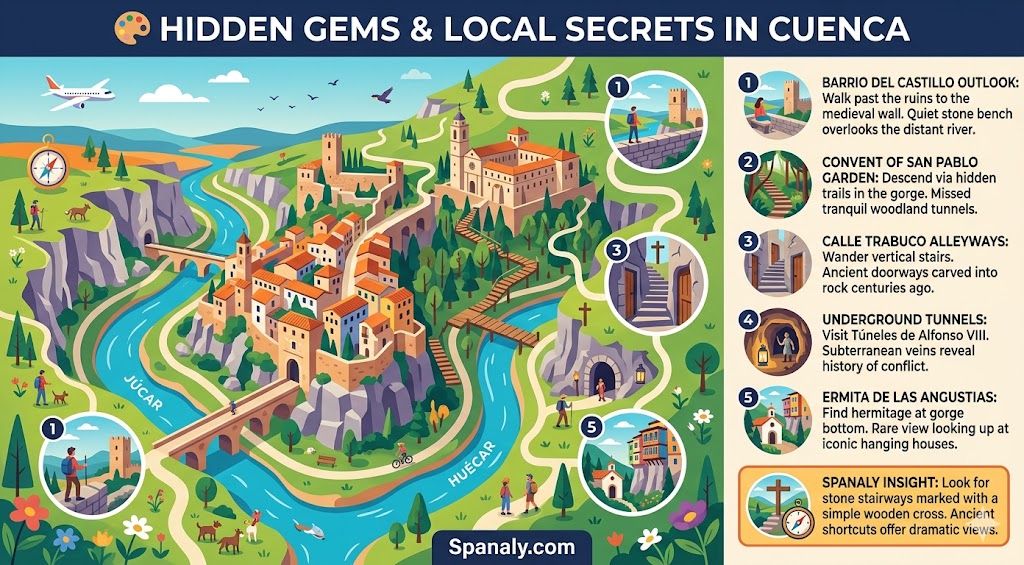
Most tourists crowd the main bridge, but Cuenca’s true pulse beats in forgotten corners. Explore these spots to feel the mountain’s raw essence. In fact, Check our Spain Attraction Tickets Guide for access info on these unique sites.
Barrio del Castillo Outlook: Walk past the ruins to the medieval wall. You will find a quiet stone bench overlooking the distant river.
Convent of San Pablo Garden: Descend into the gorge via these hidden trails. Most visitors stay in the lobby, missing these tranquil woodland tunnels.
Calle Trabuco Alleyways: Wander these vertical stairs at noon. You will spot ancient doorways carved directly into the rock face centuries ago.
Underground Tunnels: Visit the Túneles de Alfonso VIII. These subterranean veins reveal how the city hid from conflict throughout its long history.
Ermita de las Angustias: Find this hermitage at the gorge’s bottom. It offers a rare view looking up at the iconic hanging houses.
Spanaly Insight: Look for stone stairways marked with a simple wooden cross. These ancient shortcuts offer the most dramatic views of the gorge walls.
🏨 Where to Stay in Cuenca: Best Hotels and Neighborhoods
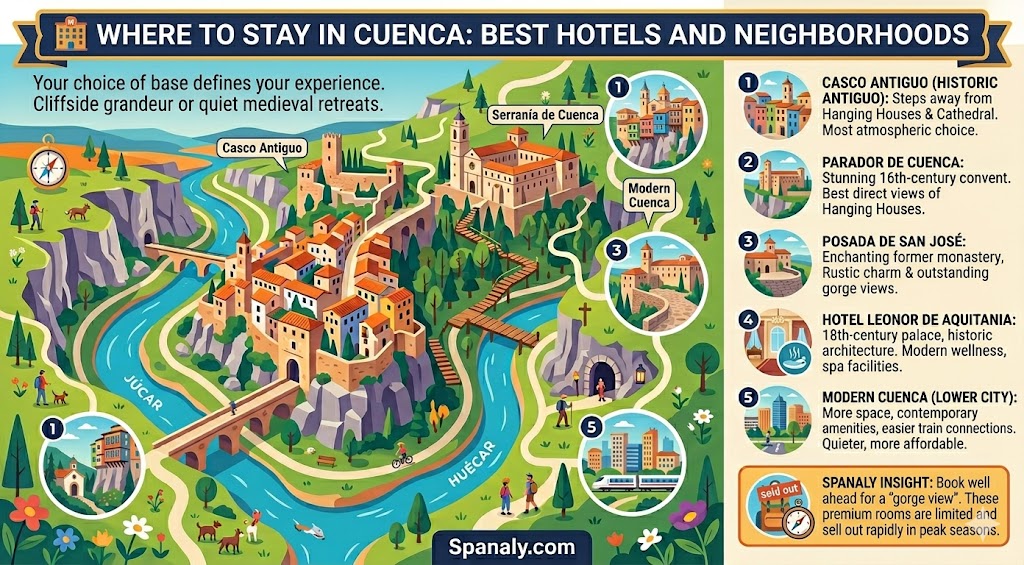
Your stay defines your pace. Whether you seek cliffside grandeur or quiet medieval retreats, Cuenca offers exceptional options. For broader advice, our Accommodation in Spain guide helps you choose the perfect match for your style.
The Historic Center (Casco Antiguo): Stay here to be steps away from the Hanging Houses and the Cathedral. It is the most atmospheric choice for a deep dive into medieval life.
Parador de Cuenca: Housed in a stunning former 16th-century convent, this property is legendary. It offers arguably the best direct, unobstructed views of the Hanging Houses across the gorge.
Posada de San José: An enchanting former monastery perched on the cliff edge. Its rustic charm, uneven stone floors, and terrace views make it a local favorite for authentic seekers.
Hotel Leonor de Aquitania: Located in an 18th-century palace residence near the Plaza Mayor. It beautifully blends historic architecture with modern amenities like a Finnish sauna and Turkish bath.
Hotel Convento del Giraldo: Situated in a converted convent, this hotel offers a peaceful, upscale stay right in the heart of the old town, perfect for those wanting proximity to the city’s main cultural institutions.
Modern Cuenca (Lower City): Choose this area for contemporary amenities, spacious rooms, and easier access to the train station. It is often quieter and more convenient if you have a car.
Spanaly Insight: If you choose a hotel in the Old Town, confirm your parking situation beforehand. Streets here are incredibly narrow and often restricted; booking a stay with dedicated parking saves significant time and stress.
🍽️ Gastronomy and Best Places to Eat in Cuenca
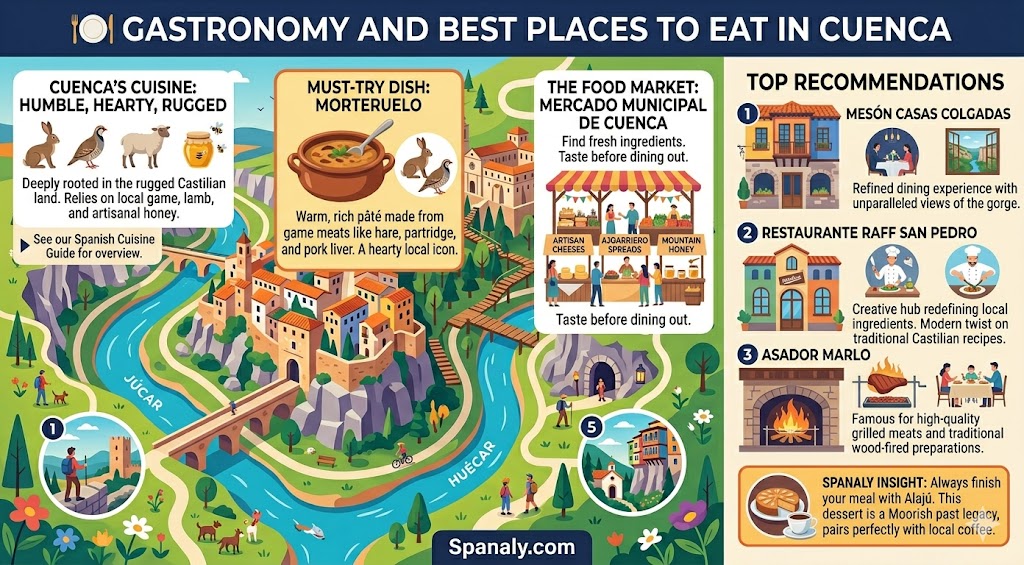
Cuenca’s cuisine is humble, hearty, and deeply rooted in the rugged Castilian land. It relies on local game, lamb, and artisanal honey. For context on how these flavors fit into the national table, our Spanish Cuisine Guide provides the perfect overview.
Must-Try Dish: Morteruelo. This is a warm, rich pâté made from game meats like hare, partridge, and pork liver. It is a hearty local icon.
The Food Market: Visit Mercado Municipal de Cuenca. You will find fresh artisan cheeses, local ajoarriero spreads, and mountain honey. Taste these ingredients before dining out.
Top Recommendations:
Mesón Casas Colgadas: Located right inside the Hanging Houses. It offers a refined dining experience with unparalleled views of the gorge.
Restaurante Raff San Pedro: A creative hub that redefines local ingredients. It is perfect if you want a modern twist on traditional Castilian recipes.
Asador Marlo: Famous for high-quality grilled meats and traditional wood-fired preparations. It is a favorite among locals for Sunday family lunches.
Spanaly Insight: Always finish your meal with Alajú. This traditional almond and honey cake is a legacy of the region’s Moorish past and pairs perfectly with local coffee.
🧳 Essential Travel Logistics for Cuenca
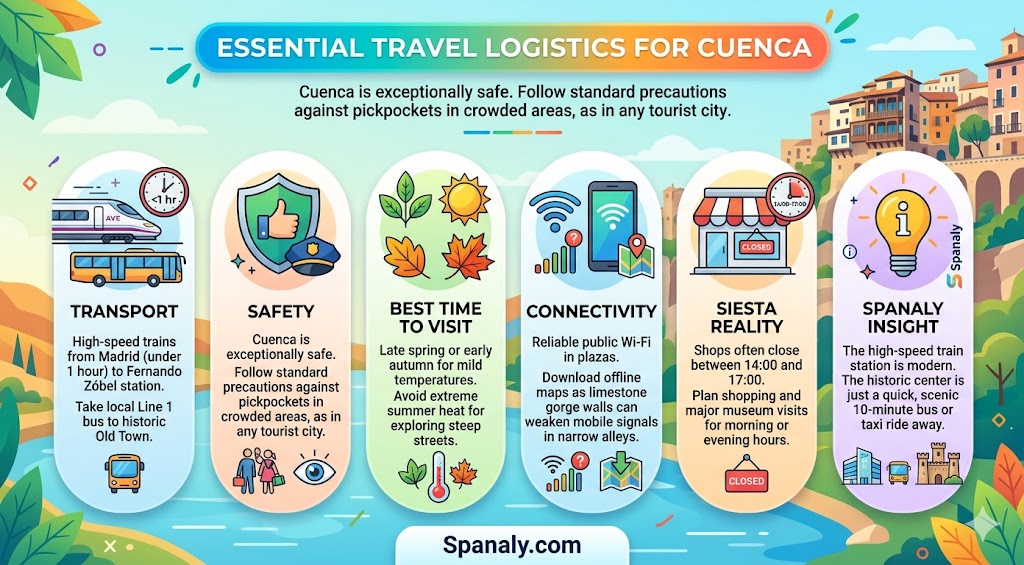
Navigating Cuenca requires careful preparation to maximize your limited time. Furthermore, our guides on Getting Around Spain and Travel Safety in Spain provide frameworks to keep your journey seamless.
🚆 Transport and Arrival
High-speed trains connect Madrid to Cuenca’s Fernando Zóbel station in under one hour. Specifically, take the local Line 1 bus to reach the historic Old Town easily.
🛡️ Staying Safe
Cuenca remains exceptionally safe for all travelers. However, follow standard precautions in crowded areas to avoid opportunistic pickpockets, just as you would in any major tourist city.
🗓️ Best Time to Visit
Aim for late spring or early autumn. You will enjoy mild temperatures perfect for exploring the steep, stone streets without extreme summer heat.
📱 Connectivity and Siesta
Public Wi-Fi is reliable in plazas. Download offline maps before reaching narrow alleys; thick limestone walls occasionally weaken mobile signals. Shops often pause between 14:00 and 17:00. Therefore, plan your major museum visits for the morning or evening hours.
Spanaly Insight: If you arrive by train, do not panic seeing the modern station surroundings. The historic center is a quick, scenic 10-minute bus ride or taxi away from the high-speed hub.
📸 Best Photo Spots in Cuenca
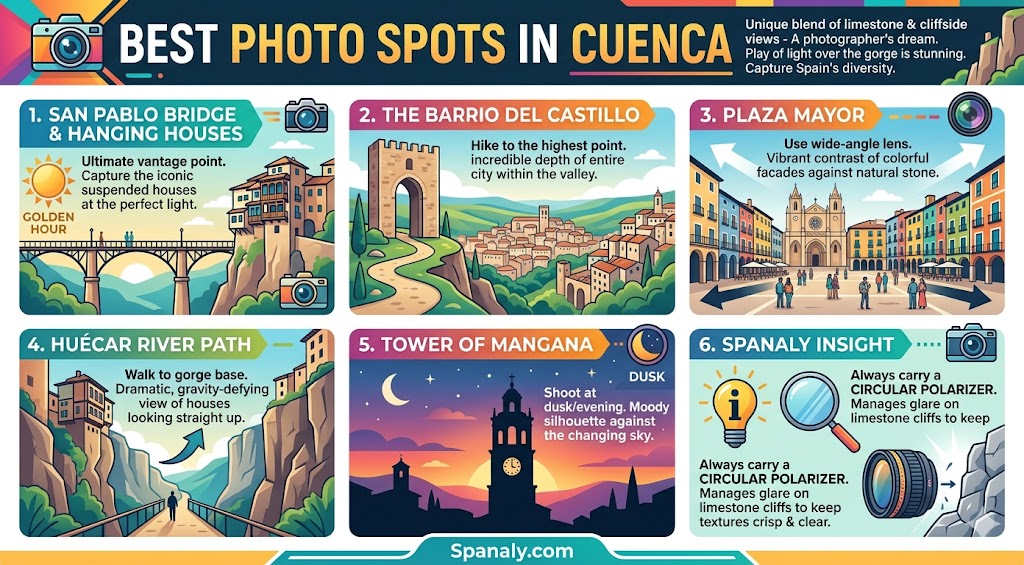
Cuenca offers a unique mix of limestone textures and dramatic cliffside views. Specifically, the play of light over the gorge creates a photographer’s dream. Consequently, For broader inspiration, our Best Photography Spots in Spain guide covers essential techniques for capturing the country’s diverse landscapes.
San Pablo Bridge: This is the ultimate vantage point. Capture the Hanging Houses suspended over the gorge at golden hour for the most iconic Cuenca shot.
The Barrio del Castillo: Hike to the highest point of the old town. You will capture the entire city nestled against the valley floor with incredible depth.
Plaza Mayor: Use a wide-angle lens here. The colorful, uneven facades provide a vibrant contrast to the surrounding natural stone cliffs.
The Path along the Huécar River: Walk down to the base of the gorge. Looking straight up at the Hanging Houses creates a dramatic, gravity-defying perspective.
Tower of Mangana: Shoot from the nearby streets at dusk. The tower silhouetted against the changing evening sky offers a moody, historical aesthetic.
Spanaly Insight: Always carry a circular polarizer lens filter. The limestone cliffs reflect intense sunlight, and the filter helps you manage the glare to keep the textures of the old stone crisp and clear.
🚗 Best Day Trips From Cuenca
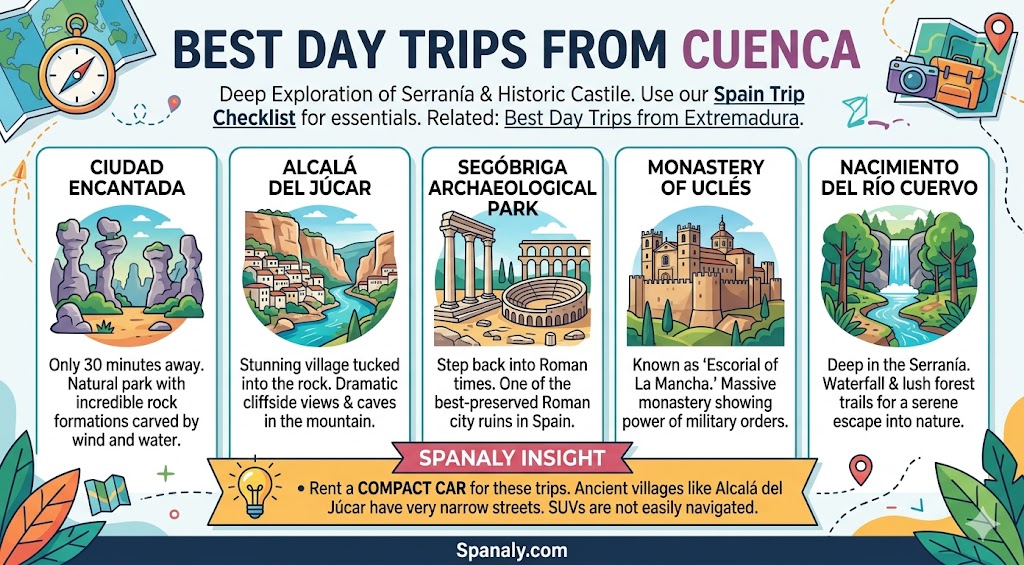
Cuenca is perfectly positioned for deep exploration of the Serranía and historic Castile. Before you head out, use our Spain Trip Checklist to ensure you have all essentials for your road adventures. For broader regional ideas, our Best Day Trips from Extremadura guide offers a perfect comparison for those venturing further west.
Ciudad Encantada: Only 30 minutes away. This natural park features incredible rock formations carved by wind and water into whimsical shapes.
Alcalá del Júcar: Visit this stunning village tucked into the rock. It offers dramatic cliffside views and caves built directly into the mountain.
Segóbriga Archaeological Park: Step back into Roman times. This site remains one of the best-preserved Roman cities in all of Spain.
Monastery of Uclés: Known as the “Escorial of La Mancha.” This massive, monumental monastery highlights the former power of the military orders.
Nacimiento del Río Cuervo: Head deep into the Serranía. The waterfall and lush forest trails offer a serene, cool escape into nature.
Spanaly Insight: Rent a compact car for these trips. Many ancient villages like Alcalá del Júcar have extremely narrow streets that large SUVs cannot easily navigate.
🗺️ Suggested Itineraries: The "Express" (24 Hours in Cuenca)
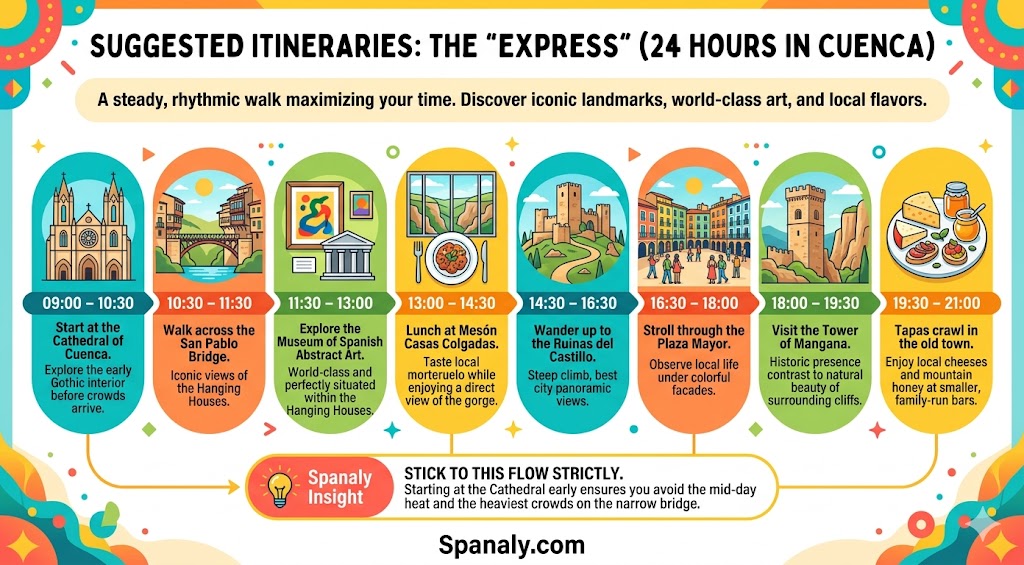
Cuenca is best experienced through a steady, rhythmic walk. This 24-hour plan maximizes your time in the city. Therefore, For more regional inspiration, our Spain Travel Itineraries & Plans guide helps you structure your full vacation across the country.
09:00 – 10:30: Start at the Cathedral of Cuenca. Explore the early Gothic interior before the tour groups arrive.
10:30 – 11:30: Walk across the San Pablo Bridge. This provides the most iconic views of the Hanging Houses.
11:30 – 13:00: Explore the Museum of Spanish Abstract Art. It is world-class and perfectly situated within the Hanging Houses.
13:00 – 14:30: Lunch at Mesón Casas Colgadas. Taste local morteruelo while enjoying a direct view of the gorge.
14:30 – 16:30: Wander up to the Ruinas del Castillo. The climb is steep, but the panoramic views offer the best city perspective.
16:30 – 18:00: Stroll through the Plaza Mayor. Observe local life under the colorful facades of the historic buildings.
18:00 – 19:30: Visit the Tower of Mangana. Its historic presence provides a great contrast to the natural beauty of the surrounding cliffs.
19:30 – 21:00: Tapas crawl in the old town. Enjoy local cheeses and mountain honey at smaller, family-run bars.
Spanaly Insight: Stick to this flow strictly. Starting at the Cathedral early ensures you avoid the mid-day heat and the heaviest crowds on the narrow bridge.
🚫 Common Mistakes to Avoid in Cuenca
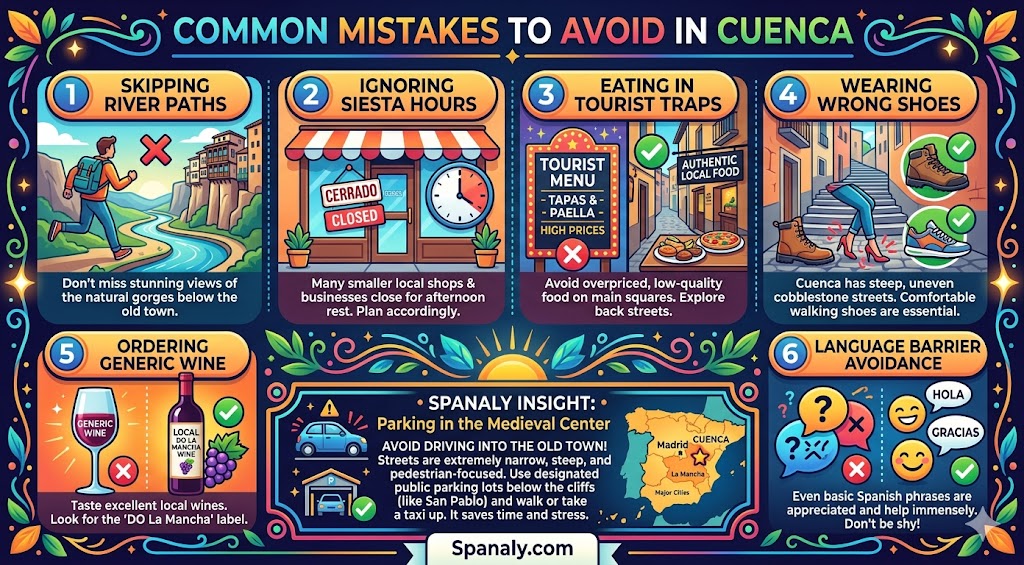
Even experienced travelers often overlook this city’s unique vertical geography. Avoid these pitfalls to ensure your visit feels seamless and truly local.
🧗 Don’t Rush the Gorge Floor
Most visitors stay high on the cliffs, missing the river-level paths. You must descend to understand the true scale of the architecture.
⏳ Respect the Siesta
Finding open shops or monuments at 15:00 brings guaranteed frustration. Instead, plan your mid-afternoon for park strolls or extended coffee breaks.
🧭 Beyond the Plaza Mayor
The best food and atmosphere hide in the winding alleys behind it. Avoid “tourist menu” signs and seek out local spots.
👟 Mind the Altitude
Cuenca is physically demanding. Do not attempt the steep castle climb in formal shoes, as you will struggle with the uneven cobblestones.
🍷 Taste Local Produce
Many tourists order generic wine. Always ask for a regional La Mancha wine or local honey treats to match the area’s culinary identity.
🗣️ Learn Basic Spanish
While top museums cater to international guests, venturing off the path requires basic Spanish phrases. Locals appreciate the effort and share secrets.
Spanaly Insight: Confirm parking before booking a hotel. The medieval center restricts cars, and finding parking later will cost you significant time and stress.
💡 Spanaly Pro Tips for Cuenca
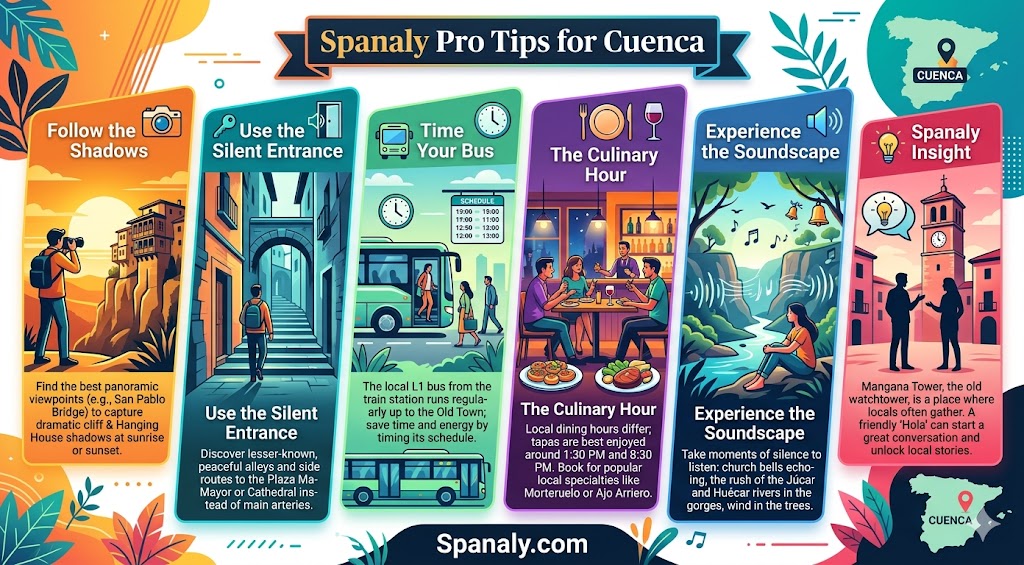
Master Cuenca by looking beyond guidebooks. These unique insights offer you a distinct advantage for exploring the city’s hidden veins.
Follow the Shadows: During summer, stay in the gorge’s shade. Crossing the street keeps you cool compared to the sunny side.
Use the Silent Entrance: Enter the Cathedral through the small side door. It offers a more intimate transition from light to dark.
Time Your Bus: Don’t trust posted signs. Ask a local shopkeeper for the true, current bus rhythm to save precious time.
The Culinary Hour: Arrive at tapas bars at 13:30 sharp. Fresh dishes arrive then, just before the local work-lunch crowd arrives.
Experience the Soundscape: Visit the bridge base at dawn. You will hear the gorge’s rare, natural acoustic amplification before the wind rises.
Spanaly Insight: Chat with locals sitting near the Mangana Tower. They are the city’s unofficial curators and often reveal secrets hidden from maps.
Cuenca is more than a stopover; it is an experience that changes how you view gravity and history. Its dramatic cliffs and timeless streets create memories that linger long after you leave.
Reflect on the Heights: Carry the silence of the gorges with you. The city teaches us that beauty often thrives in the most challenging places.
Keep Exploring: If the medieval charm of Cuenca captivated your spirit, you will find a similar allure in the north. Our Burgos Travel Guide is the perfect companion for your next deep dive into Spain’s historic heart.
Plan Your Return: Cuenca changes with every season. Whether you visit during the golden autumn light or the crisp, snowy winters, the city always reveals a new secret.
Final Advice: Travel slowly. Let the rhythm of the mountains guide your steps rather than a strict clock.
Spanaly Insight: You have now mastered the essentials of this cliffside gem. Keep this guide handy as you build your ultimate Spanish itinerary, and always look for the path less traveled.