Table of Contents
Toggle📍 Estepona
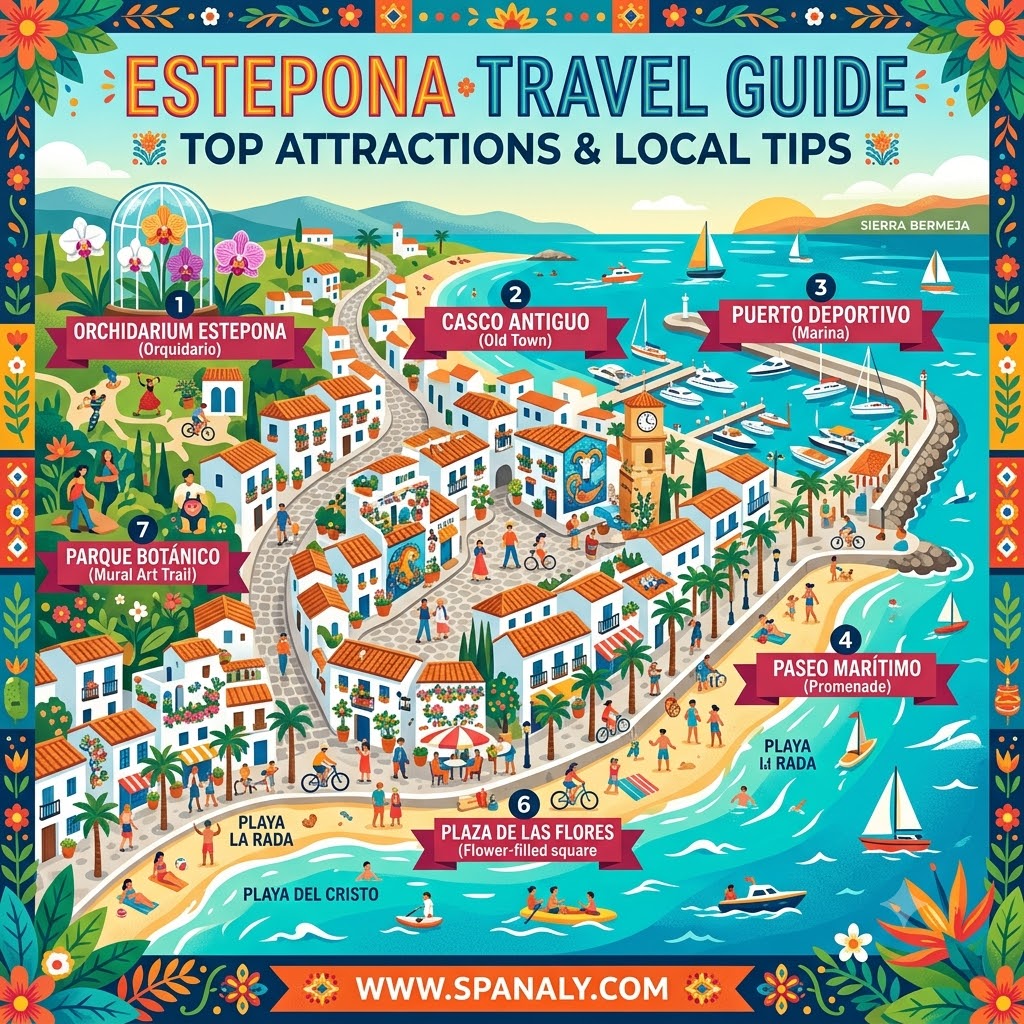
Estepona is where Andalusian tradition meets the Mediterranean sun. Unlike its busier neighbors, this coastal town preserves a quiet, authentic charm, defined by its flower-lined streets and white-washed facades.
Whether you are looking for a relaxed beach holiday, a deep dive into Spanish history, or a base for coastal exploration, Estepona delivers a perfect balance.
The Garden Vibe: Wander through a historic center famous for vibrant geraniums and beautifully preserved plazas.
Coastal Paradise: Enjoy miles of pristine coastline that stretch along the stunning Costa del Sol.
Cultural Depth: Experience a town that values its roots, offering art murals, local markets, and traditional tapas bars.
Still finalizing your travel bucket list? Browse our curated collection of cities in Spain to discover more coastal gems and inland treasures that match your style.
Spanaly Insight: Most tourists stick to the beach, but the magic of Estepona lies in the backstreets of the Old Town. Grab a coffee in the Plaza de las Flores before the afternoon rush and watch the town slowly come to life.
📍 Estepona at a Glance
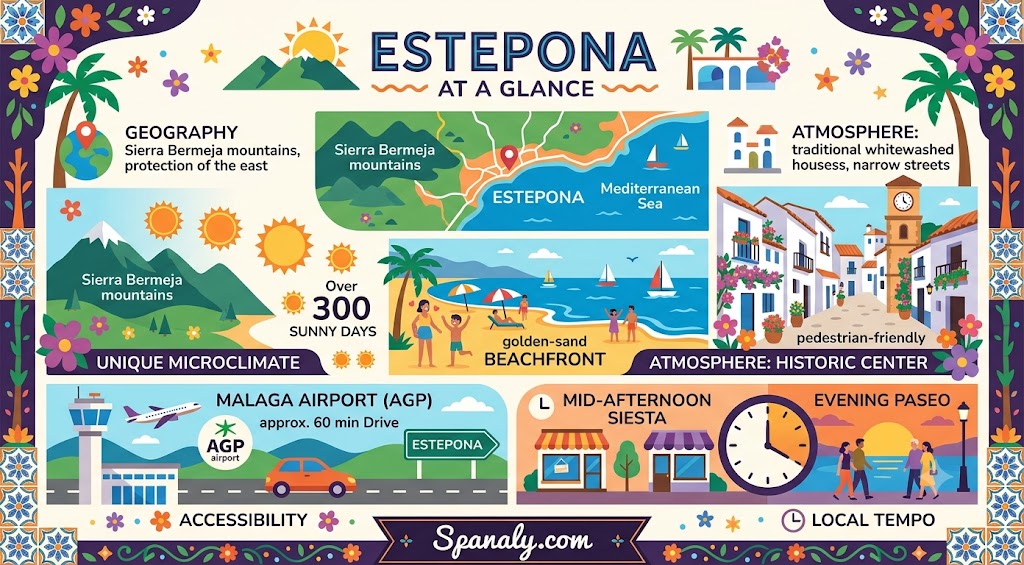
Estepona serves as the refined, quieter sibling to the glitz of the Costa del Sol. It manages to feel both like a modern resort town and a centuries-old Andalusian village.
Geography: Nestled between the Mediterranean Sea and the Sierra Bermeja mountains, the town enjoys a dramatic natural backdrop that protects its unique microclimate.
Atmosphere: The town divides into two distinct zones: the traditional, pedestrian-friendly historic center and the expansive, golden-sand beachfront.
Climate: Expect over 300 days of sunshine annually. The mountain range keeps winters mild and summers comfortably breezy.
Accessibility: Malaga-Costa del Sol Airport (AGP) is the main entry point, located approximately a 60-minute drive away. For travelers mapping their route along the coast, check our guide on getting around Spain for stress-free transport options.
Local Tempo: Life here moves slowly. Shops often close for a mid-afternoon siesta, and the evening “paseo” (leisurely stroll) is a cherished daily ritual.
Estepona is perfect for travelers who want world-class coastal amenities without the intense pace of larger nearby cities.
Spanaly Insight: Don’t let the “resort” label fool you. The local municipality invests heavily in floral maintenance, making it one of the cleanest and most visually striking towns in all of southern Spain.
📍 Estepona vs. Marbella: Which Andalusian Escape Suits You?
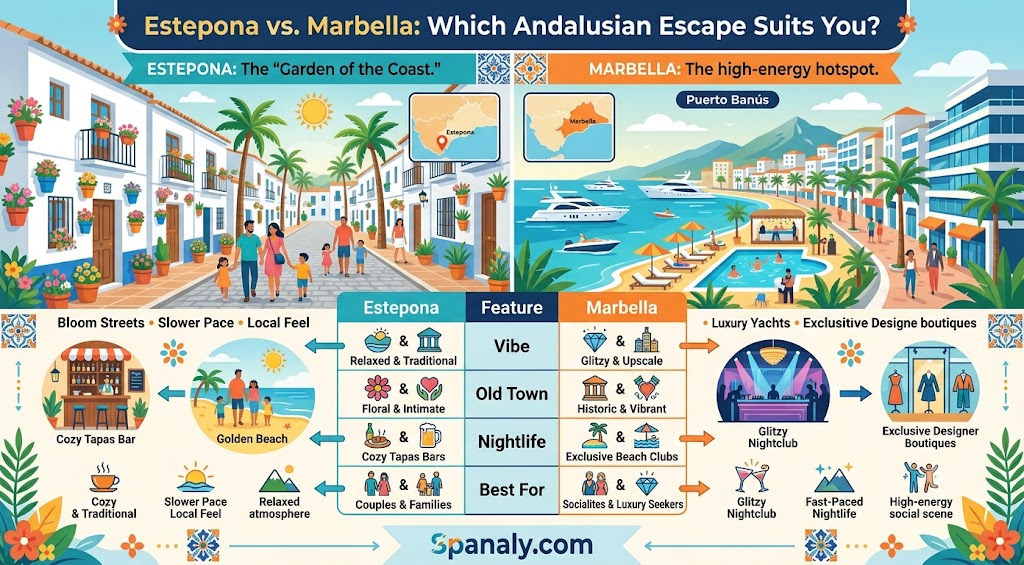
Choosing between Estepona and Marbella depends entirely on the type of energy you seek for your coastal holiday. Both are iconic, but they offer distinct experiences.
Estepona: The “Garden of the Coast.” It prioritizes authentic charm, pedestrian-friendly streets, and a relaxed, family-oriented atmosphere.
Marbella: The high-energy hotspot. It is famous for luxury yacht marinas, exclusive beach clubs, and a fast-paced, glamorous nightlife.
| Feature | Estepona | Marbella |
|---|---|---|
| Vibe | Relaxed & Traditional | Glitzy & Upscale |
| Old Town | Floral & Intimate | Historic & Vibrant |
| Nightlife | Cozy Tapas Bars | Exclusive Beach Clubs |
| Best For | Couples & Families | Socialites & Luxury Seekers |
Choose Estepona if you want to walk through blooming streets and experience a slower, more “local” version of Spain. Opt for Marbella if you want to be in the center of the region’s most famous social and luxury scenes.
Spanaly Insight: Many travelers choose to base themselves in the quieter Estepona while taking a short 30-minute drive to visit Marbella. This way, you enjoy the best of both worlds without the noise of the glitzy clubs at night.
🏰 Top 5 Must-See Landmarks in Estepona
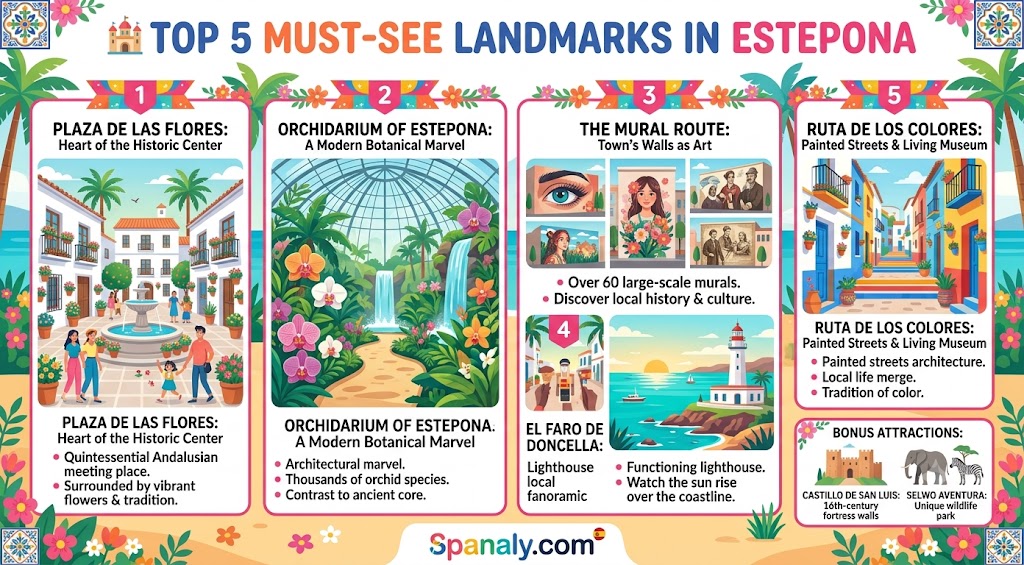
Estepona successfully bridges the gap between historical preservation and modern botanical beauty. Explore these five sites to capture the true identity of the town.
Plaza de las Flores: The heart of the historic center. Surrounded by vibrant flowers and traditional architecture, it is the quintessential Andalusian meeting place.
Orchidarium of Estepona: An architectural marvel featuring a glass dome and thousands of orchid species. It is a stunning, modern contrast to the town’s ancient core.
The Mural Route: Estepona transforms its walls into art. Wander through the town to discover over 60 large-scale murals that reflect local history and culture.
El Faro de Punta Doncella: A functioning lighthouse offering panoramic views of the Mediterranean. It is the perfect spot to watch the sun rise over the coastline.
Ruta de los Colores: A collection of painted streets where the architecture and local life merge into a living museum of color and tradition.
Bonus Attractions:
Castillo de San Luis: The remaining walls of this 16th-century fortress provide a brief, powerful glimpse into Estepona’s defensive past.
Selwo Aventura: A unique wildlife park that offers a different pace, showcasing vast semi-wild habitats just outside the main town area.
For those planning ahead, navigating entry requirements for popular sites can be tricky. Consult our Spain attraction tickets guide to learn how to secure your entry, avoid long queues, and find the best time to visit major cultural points.
Spanaly Insight: The Orchidarium is best visited during the morning hours when the light through the glass dome is soft and the park is less crowded, allowing for perfect photography.
🎨 Hidden Gems & Local Secrets
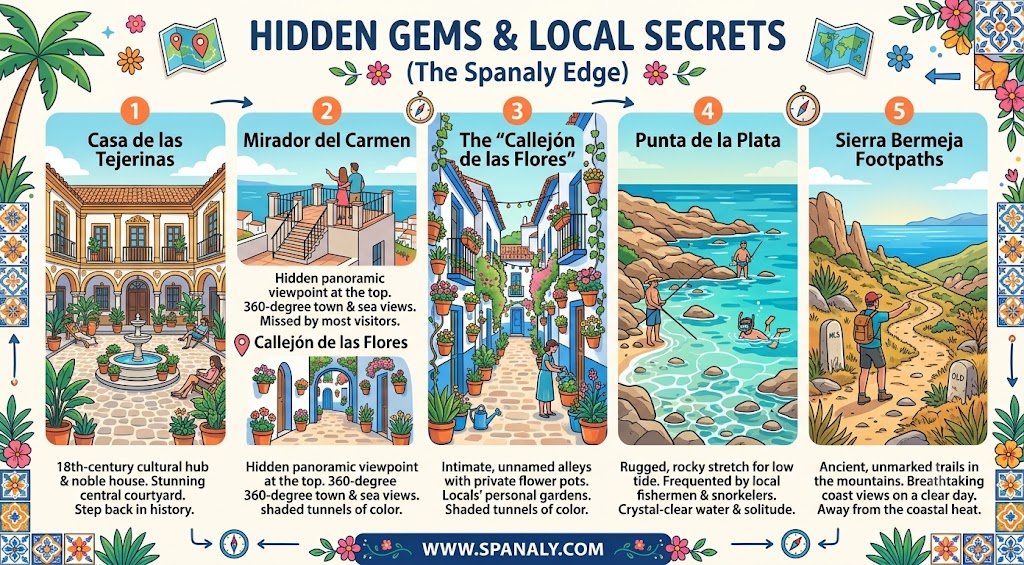
Move beyond the main promenade to find the quiet corners where Estepona’s true character hides from the crowds.
Casa de las Tejerinas: An 18th-century noble house turned into a cultural hub. It features a stunning central courtyard that feels like stepping back into a quieter, more refined era of Spanish history.
Mirador del Carmen: Located at the top of the Casa de las Tejerinas building, this spot offers a 360-degree view of the town’s white roofs and the sea. Most visitors miss it entirely.
The “Callejón de las Flores”: While everyone flocks to the main plaza, find these narrow, unnamed alleys nearby. They are where locals tend to their private flower pots, creating intimate, shaded tunnels of color that rarely appear on tourist maps.
Punta de la Plata: Skip the main city beach and head here at low tide. It is a rugged, rocky stretch favored by local fishermen and snorkelers seeking crystal-clear water and absolute solitude.
Sierra Bermeja Footpaths: Drive just 15 minutes up into the mountains. You will find ancient, unmarked trails that lead to viewpoints where you can see the African coast on a clear day, miles away from the coastal heat.
Spanaly Insight: If you find yourself in the Calle del Cid, look for the small, unassuming artisan workshops. You can often find local potters and painters working behind closed doors who are happy to discuss their craft if you approach them with respect for their work.
🏨 Where to Stay in Estepona
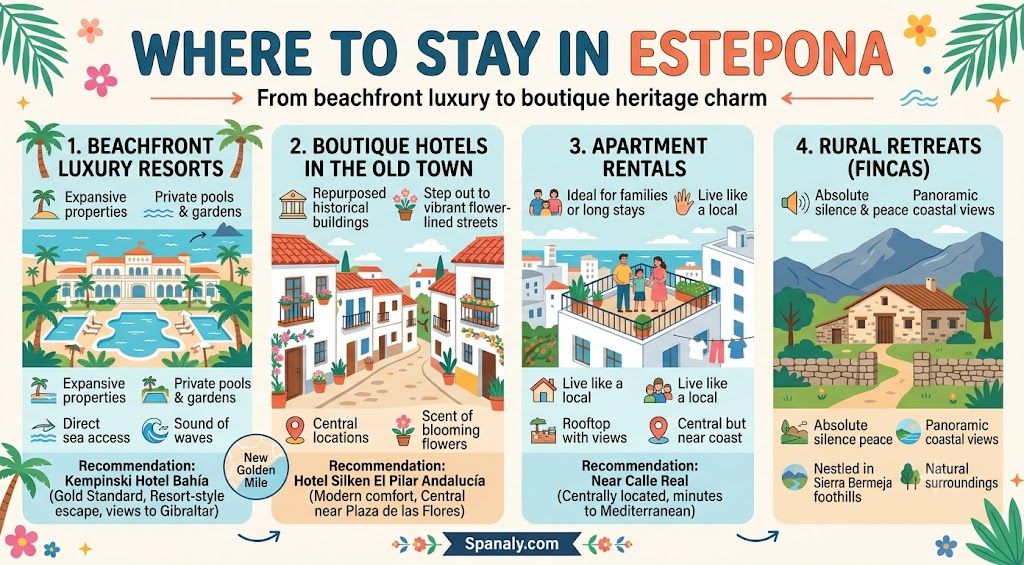
Estepona offers a variety of stays that cater to different travel moods, from beachfront luxury to boutique heritage charm in the town’s heart. Choose your base based on whether you prefer to wake up to the sound of waves or the scent of blooming flowers.
Beachfront Luxury Resorts: Located along the “New Golden Mile,” these expansive properties offer private pools, extensive gardens, and direct access to the sea.
Recommendation: Kempinski Hotel Bahía is the gold standard here, providing a sophisticated, resort-style escape with views stretching all the way to Gibraltar.
Boutique Hotels in the Old Town: Stay in repurposed historical buildings in the center. These hotels are perfect for travelers who want to step out of their door directly into the town’s vibrant flower-lined streets.
Recommendation: Hotel Silken El Pilar Andalucía offers a perfect blend of modern comfort and central location, putting you within walking distance of the Plaza de las Flores.
Apartment Rentals: Ideal for families or longer stays, these allow you to live like a local. Many feature rooftop terraces that overlook the white-washed roofs of the old town.
Recommendation: Look for properties near Calle Real to ensure you are centrally located but still within a few minutes’ stroll of the Mediterranean.
Rural Retreats (Fincas): Nestled in the foothills of the Sierra Bermeja, these homes offer absolute silence and panoramic views of the coastline.
Finding the right property determines the rhythm of your trip. Before you finalize your booking, review our guide on accommodation in Spain to understand the nuances of local tax rates, booking seasons, and how to verify the authenticity of private rental listings.
Spanaly Insight: Always check if your accommodation includes private parking. Parking in the narrow streets of the Old Town is extremely challenging, and public lots fill up rapidly during the peak summer months.
🍽️ Gastronomy & Dining Guide
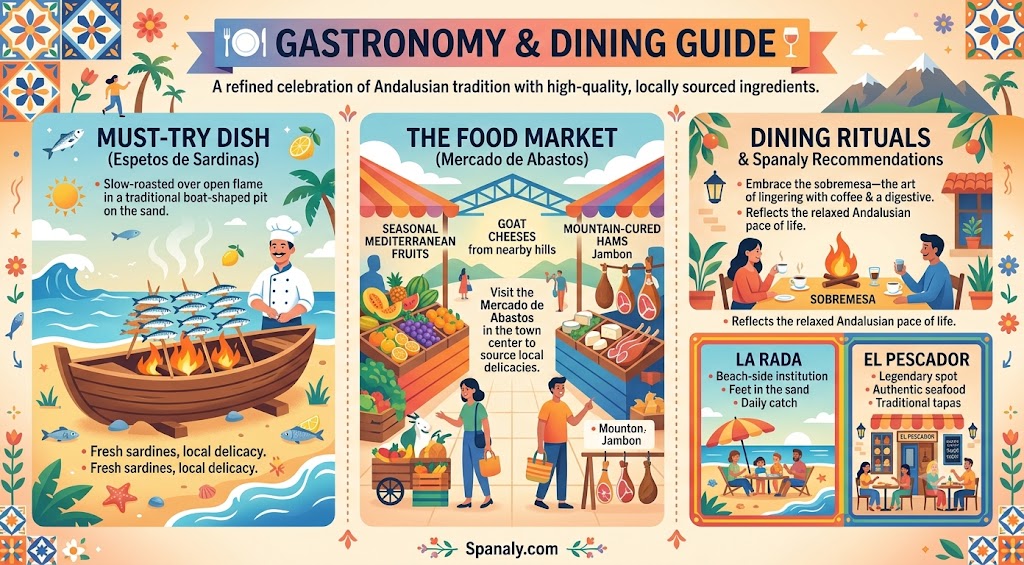
Estepona’s dining scene is a refined celebration of Andalusian tradition, focusing on the simplicity of high-quality, locally sourced ingredients from both the mountain and the sea.
Must-Try Dish (Espetos de Sardinas): You cannot visit the Costa del Sol without tasting these skewers of fresh sardines, slow-roasted over an open flame in a traditional boat-shaped pit on the sand.
The Food Market: Visit the Mercado de Abastos in the town center. It is the best place to source local delicacies like mountain-cured hams, goat cheeses from the nearby hills, and seasonal Mediterranean fruits.
Dining Rituals: Embrace the sobremesa—the art of lingering at the table after a meal with coffee or a local digestive, reflecting the relaxed Andalusian pace of life.
Spanaly Recommendations:
La Rada: A beach-side institution where you can enjoy the freshest daily catch while your feet are practically in the sand.
El Pescador: Tucked away in the Old Town, this spot is legendary for its authentic, non-touristy approach to Spanish seafood and traditional tapas.
To master the art of dining like a local, explore our Spanish cuisine guide. It covers regional etiquette, the secret meanings behind tapas terminology, and how to identify authentic produce in any Spanish market.
Spanaly Insight: For the best espetos, head to the “chiringuitos” (beach bars) during the early evening. Watching the chefs skillfully roast the sardines over the fire is a cultural experience in itself, and the flavor is unbeatable when served straight from the flame.
🧳 Essential Logistics for Your Visit

Navigating Estepona effectively allows you to balance the town’s pedestrian-friendly historic core with the sprawling coastline of the Costa del Sol. Proper logistics ensure you spend your trip exploring rather than managing transit.
Transport: While the historic center is highly walkable, exploring the broader Sierra Bermeja mountains or neighboring coastal towns requires a vehicle. For expert advice on navigating local roads and insurance tips, consult our renting car in Spain guide.
Safety & Neighborhoods: Estepona is remarkably secure, even by Spanish standards. The historic Old Town is safe at all hours, but remain mindful of your belongings in crowded beach areas during the peak summer months.
Best Time to Visit: The town shines from May through October. For those seeking fewer crowds and cooler temperatures for hiking the nearby mountains, April and November are the “secret” months to visit.
Connectivity: Public Wi-Fi is accessible in most cafes and parks within the town center. However, download offline maps if you plan to explore the mountain foothills, as cellular signal can fluctuate in deep valleys.
Efficiency is key to enjoying a coastal escape. Prioritize booking your transport before arrival to avoid peak-season surcharges and availability issues.
Spanaly Insight: If arriving via Malaga Airport (AGP), the A-7 toll road is faster but significantly more expensive. The N-340 coastal road is slower due to traffic, but it offers stunning sea views that are worth the extra time if you are not in a hurry.
📸 Best Photo Spots in Estepona
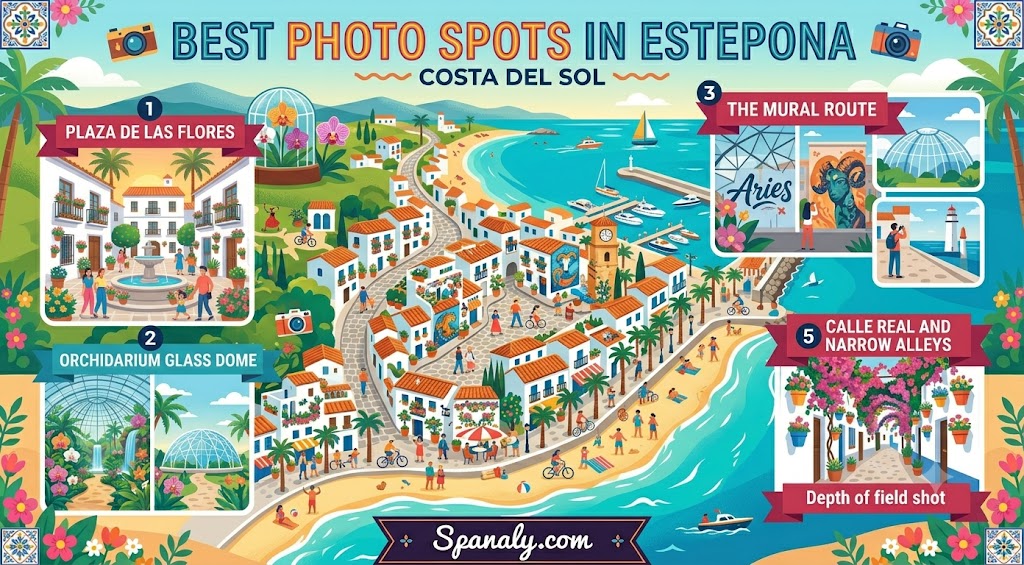
Estepona is a visual delight, where the stark white of Andalusian walls meets the vibrant color of endless floral displays. Capture the town’s unique aesthetic at these curated locations:
Plaza de las Flores: The ultimate shot of Estepona. Frame the vibrant flowers against the backdrop of traditional architecture during the golden hour to capture the town’s warm, welcoming energy.
Orchidarium Glass Dome: Shoot from inside for a futuristic, geometric perspective, or from the outside to capture the impressive glass structure rising against the blue sky.
The Mural Route: Select one of the large-scale murals in the historic center. These pieces of urban art provide a striking, colorful background that tells a story of local history.
El Faro de Punta Doncella: Capture the contrast of the modern lighthouse against the vast, deep blue of the Mediterranean. It is an ideal spot for dramatic, clean-lined landscape photography.
Calle Real and Narrow Alleys: Use the depth of the narrow streets to capture the “tunnel” effect of blooming bougainvillea and colorful flower pots lining the white-washed walls.
For professional tips on framing, lighting, and uncovering hidden angles across the country, consult our best photography spots in Spain guide. It provides the technical edge you need for every region.
Spanaly Insight: Bring a wide-angle lens for the streets and a polarizer for your coastal shots. The Mediterranean glare can be intense, and a polarizer is essential to make the sea’s turquoise tones pop against the bright white town.
🚗 Best Day Trips from Estepona
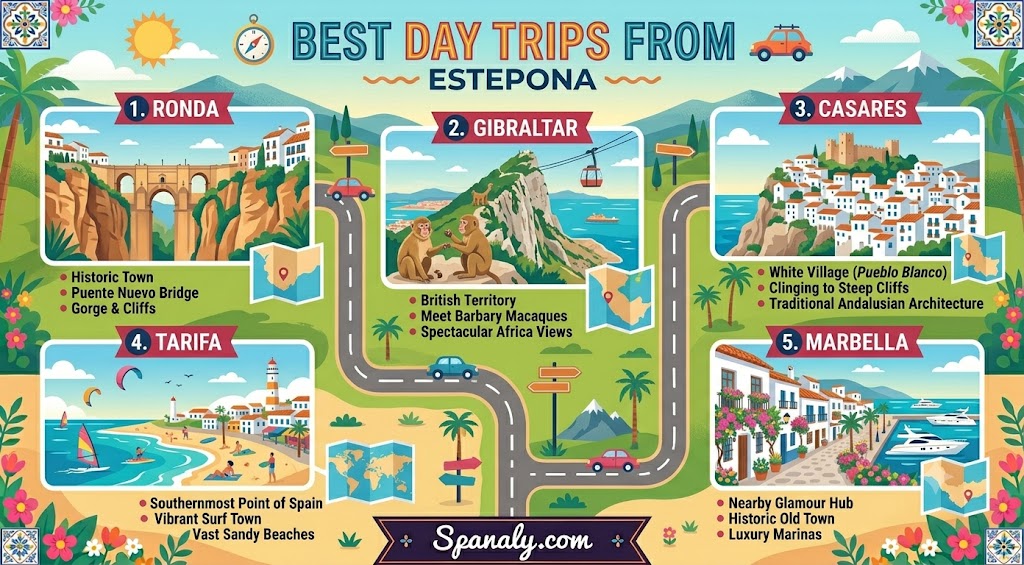
Estepona serves as an ideal base for exploring Andalusia. These curated trips keep travel time low while maximizing your experience.
Ronda: Visit this historic town to see the famous Puente Nuevo bridge spanning a massive, dramatic gorge.
Gibraltar: Explore this unique British Overseas Territory. Meet the famous Barbary macaques and enjoy spectacular views of Africa.
Casares: Discover this stunning white village. Its houses cling precariously to steep cliffs, showcasing traditional Andalusian architecture perfectly.
Tarifa: Head to the southernmost point of Spain. This vibrant surf town offers vast sandy beaches and bohemian coastal charm.
Marbella: Experience a sharp contrast by visiting this nearby glamour hub for its historic old town and luxury marinas.
Choose Ronda for breathtaking landscapes. Select Tarifa if you prefer wide, open spaces and a wild, coastal atmosphere.
Spanaly Insight: Drive the A-397 road toward Ronda. The mountain scenery is incredible, but the curves require focus; plan for breaks.
🗺️ Estepona 24-Hour Itinerary
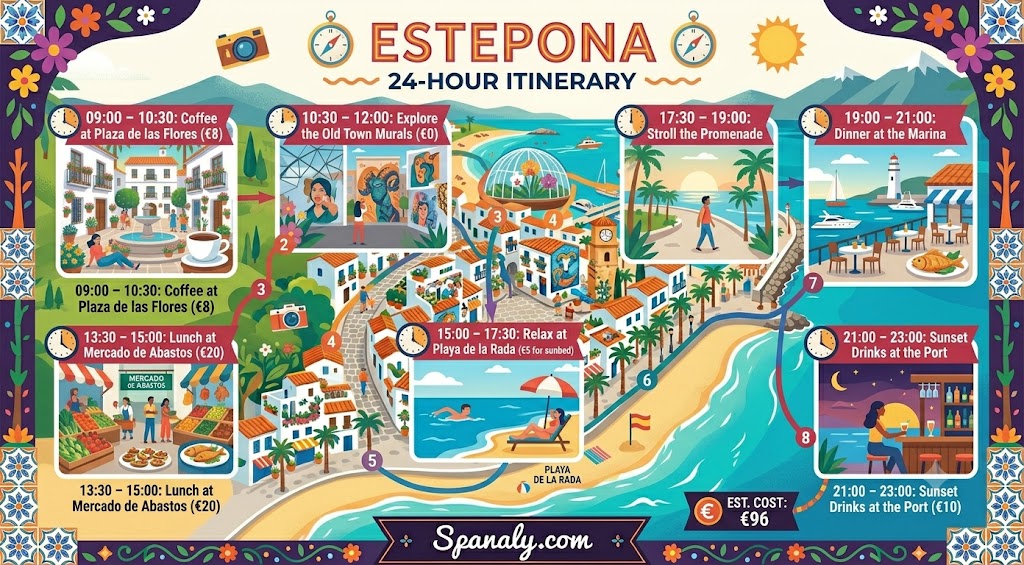
This optimized route focuses on the heart of Estepona, ensuring you experience the historic charm and coastal beauty without wasting time on transit.
09:00 – 10:30: Coffee at Plaza de las Flores (€8). Start in the town’s iconic, flower-filled heart to soak up the morning local atmosphere.
10:30 – 12:00: Explore the Old Town Murals (€0). Wander the pedestrian streets, following the vibrant Mural Route that turns the city into an open-air gallery.
12:00 – 13:30: Visit the Orchidarium (€3). Marvel at the massive glass dome and exotic plant collection; it is an architectural gem located just steps away.
13:30 – 15:00: Lunch at Mercado de Abastos (€20). Experience the lively food market, sampling fresh local produce and authentic Andalusian tapas in a social setting.
15:00 – 17:30: Relax at Playa de la Rada (€5 for sunbed). Walk a few minutes to the town’s main beach for a refreshing afternoon swim in the Mediterranean.
17:30 – 19:00: Stroll the Promenade (Free). Walk along the wide, palm-lined Paseo Marítimo, enjoying the sea breeze as the late afternoon sun softens the light.
19:00 – 21:00: Dinner at the Marina (€40). Continue to the port to enjoy fresh pescaíto frito (fried fish) overlooking the yachts and the calm evening sea.
21:00 – 23:00: Sunset Drinks at the Port (€10). Conclude your day at a harborside bar, watching the boats bob in the water under the stars.
This path moves logically from the historic interior to the cooling coast. For more multi-day inspiration, view our Spain travel itineraries plans to extend your journey across the region.
Spanaly Insight: Most of the town is walkable, so keep your car parked at your hotel. Walking between these spots is not only faster than fighting for parking—it is essential to discovering the small, hidden floral alleys.
🚫 Common Mistakes to Avoid in Estepona
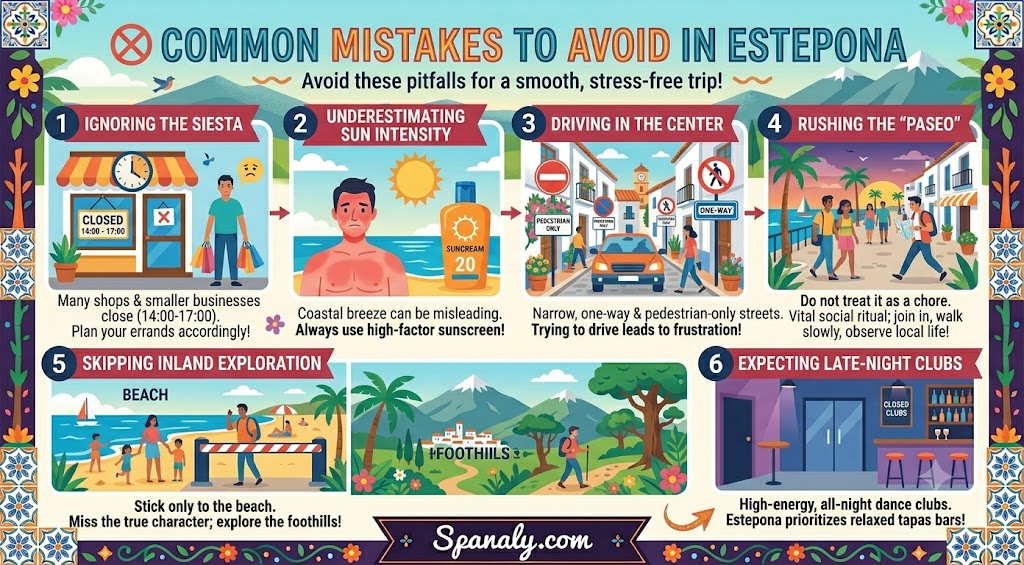
Avoid these frequent pitfalls to maintain a smooth, stress-free experience during your visit to this coastal gem.
Ignoring the Siesta: Many shops and smaller businesses close between 14:00 and 17:00. Plan your shopping and errands accordingly to avoid disappointment.
Underestimating Sun Intensity: The coastal breeze can be misleading. Always use high-factor sunscreen, even during shorter walks, to avoid severe sunburns.
Driving in the Center: The old town features narrow, one-way, and pedestrian-only streets. Trying to drive through these areas leads to immediate frustration.
Rushing the “Paseo”: Do not treat the evening stroll as a chore. It is a vital social ritual; join in, walk slowly, and observe local life.
Skipping Inland Exploration: Many tourists stick to the beach. You miss the true character of the town by failing to explore the mountain foothills.
Expecting Late-Night Clubs: If you seek high-energy, all-night dance clubs, you will be disappointed. Estepona prioritizes relaxed tapas bars and quiet harborside drinks.
Spanaly Insight: If you plan to visit during July or August, make dinner reservations in advance. The best local restaurants are small and fill up very quickly with local residents.
🛡️ Visitor FAQs – Estepona Guide
🚗 Is a rental car necessary to explore Estepona?
The historic town center is highly walkable and pedestrian-friendly. However, a rental car is highly recommended if you plan to explore the Sierra Bermeja mountains, visit nearby white villages like Casares, or enjoy flexible day trips along the Costa del Sol.
☀️ When is the best time to visit Estepona?
Estepona enjoys over 300 days of sunshine. Spring (April–May) and Autumn (September–October) are ideal, offering perfect warm weather for hiking and exploring without the intense heat and heavy crowds of the peak summer months.
🏖️ Which beach is best for families?
Playa del Cristo is a favorite for families. It is a sheltered, sandy cove with calm, shallow waters that are safe and perfect for small children, providing a much quieter experience compared to the larger La Rada beach.
🍽️ What is the "sobremesa" tradition?
The sobremesa is a cherished Spanish ritual of lingering at the table after a meal. Instead of rushing to leave, locals stay to converse over coffee or a digestive. We highly recommend embracing this relaxed pace to truly experience the Andalusian lifestyle.
🚑 What should I do in a minor medical emergency?
For minor health issues, look for a Farmacia marked by a glowing green cross; pharmacists here are highly trained. For serious emergencies, dial 112, the universal emergency number in Spain, which provides professional assistance for all visitors.
Estepona Guide by Spanaly.com
Estepona captures the authentic soul of the Costa del Sol. It is a rare destination that balances the vibrancy of a modern coastal resort with the intimate, flower-drenched quiet of a traditional Andalusian village.
Find Your Rhythm: From the morning bustle of the food market to the slow, golden sunsets at the marina, Estepona invites you to stop rushing and start living.
Embrace the Contrast: Whether you are wandering through the white-washed alleyways of the old town or hiking the rugged peaks of the Sierra Bermeja, every corner reveals a new story.
Explore Further: If you appreciate this blend of coastal relaxation and mountain adventure, you will feel right at home with our Adeje travel guide. It offers a similar balance of volcanic beauty and refined seaside leisure.
Estepona is more than just a beach destination; it is a place to reconnect with the simple joys of Spanish life. Pack your camera, bring your most comfortable walking shoes, and prepare for an escape that stays with you long after the flight home.
Spanaly Insight: The true magic of Estepona is not found on a map. It is found in the moments you spend lingering in a plaza or chatting with a local shopkeeper. Be present, stay curious, and enjoy the journey.