🏛️ the Roman Theatre of Mérida
In the quiet plains of Extremadura rises one of the most majestic relics of the Roman Empire — the Roman Theatre of Mérida. Built around 16–15 BC by order of Marcus Vipsanius Agrippa, this structure was more than just a venue. Specifically, it served as a grand stage for Roman propaganda and cultural supremacy.
Why Mérida’s Theatre is a 2026 Must-Visit:
🏺 Imperial Grandeur: It remains one of the best-preserved Roman theatres worldwide, seating over 6,000 spectators.
🎭 Living History: Every summer, the ancient stones come alive with world-class classical performances.
🌍 UNESCO Heritage: Since 1993, this site has been a cornerstone of Spain’s archaeological pride.
✨ Architectural Brilliance: The acoustics and marble columns represent the pinnacle of Roman engineering.
In fact, standing in its semicircular seats, visitors don’t just see history; they step inside a living story. Furthermore, if you are traveling from the capital after following our Ultimate Madrid Travel Guide, the contrast between urban energy and Roman silence is breathtaking. Ultimately, Mérida offers a multi-sensory journey that every history lover must experience in 2026.
🏗️ A Stage Built for Empire: History & Power
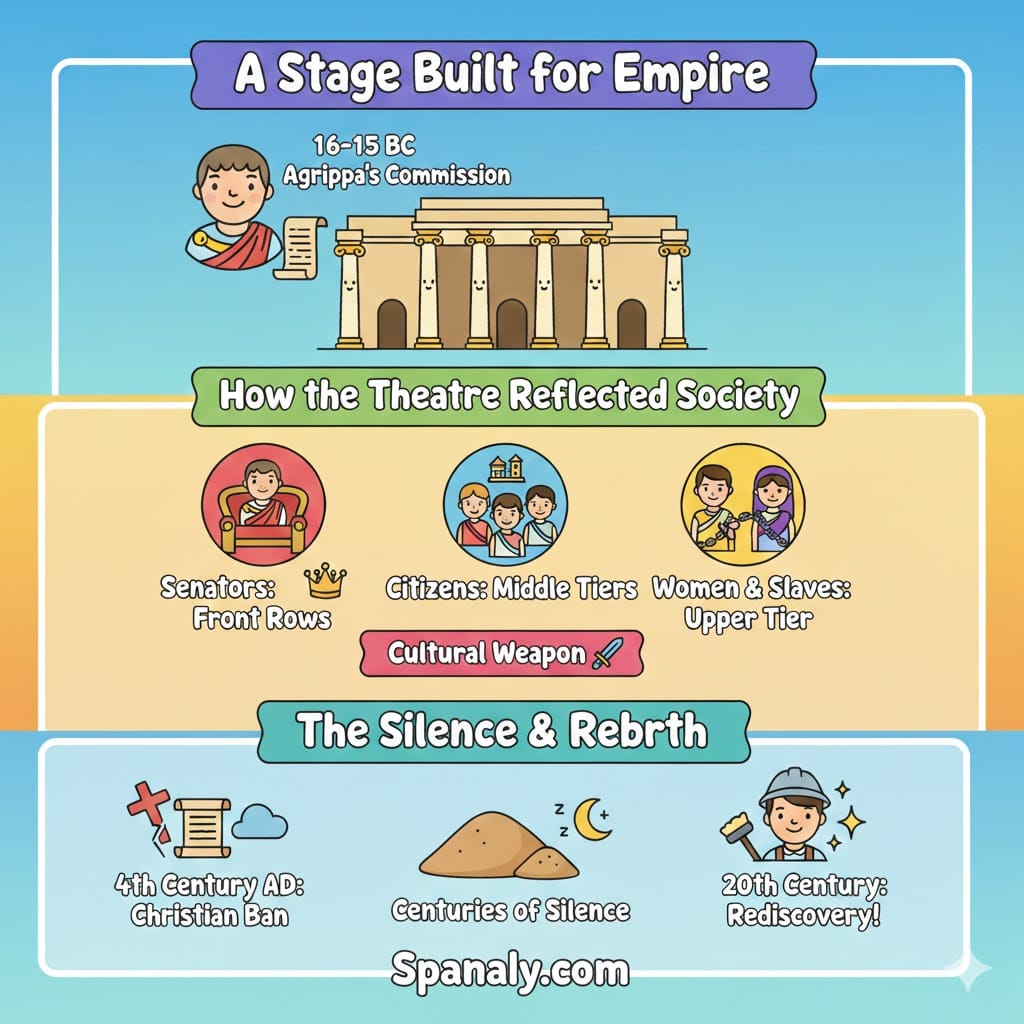
The Roman Theatre of Mérida was a cornerstone of the ancient city of Emerita Augusta, the capital of the Roman province of Lusitania. Specifically, Marcus Vipsanius Agrippa commissioned its construction to project Emperor Augustus’s power and refinement to the edge of the Empire. This grand venue symbolized both architectural beauty and a strict social order.
How the Theatre Reflected Roman Society:
🏛️ Seating Hierarchy: Senators sat closest to the stage, while ordinary citizens occupied the middle tiers.
⛓️ Social Segregation: Women and slaves were restricted to the uppermost tier, reflecting the rigid layers of the Roman world.
🎭 Cultural Weapon: The performances were not just for fun; they were tools of Romanization used to spread imperial values.
Eventually, the theatre fell silent during the 4th century AD as Christianity spread and banned “pagan” spectacles. Consequently, the site was abandoned and gradually covered by sand and debris for centuries. Furthermore, if you are planning a trip through Spain’s Roman heartland, the historical depth here perfectly complements the Moorish and Gothic grandeur found in our Ultimate Seville Travel Guide. Ultimately, it wasn’t until the early 20th century that archaeologists rediscovered this masterpiece, preserved almost perfectly beneath the Extremaduran earth.
📐 Architectural Wonders: Acoustics & The Scaenae Frons
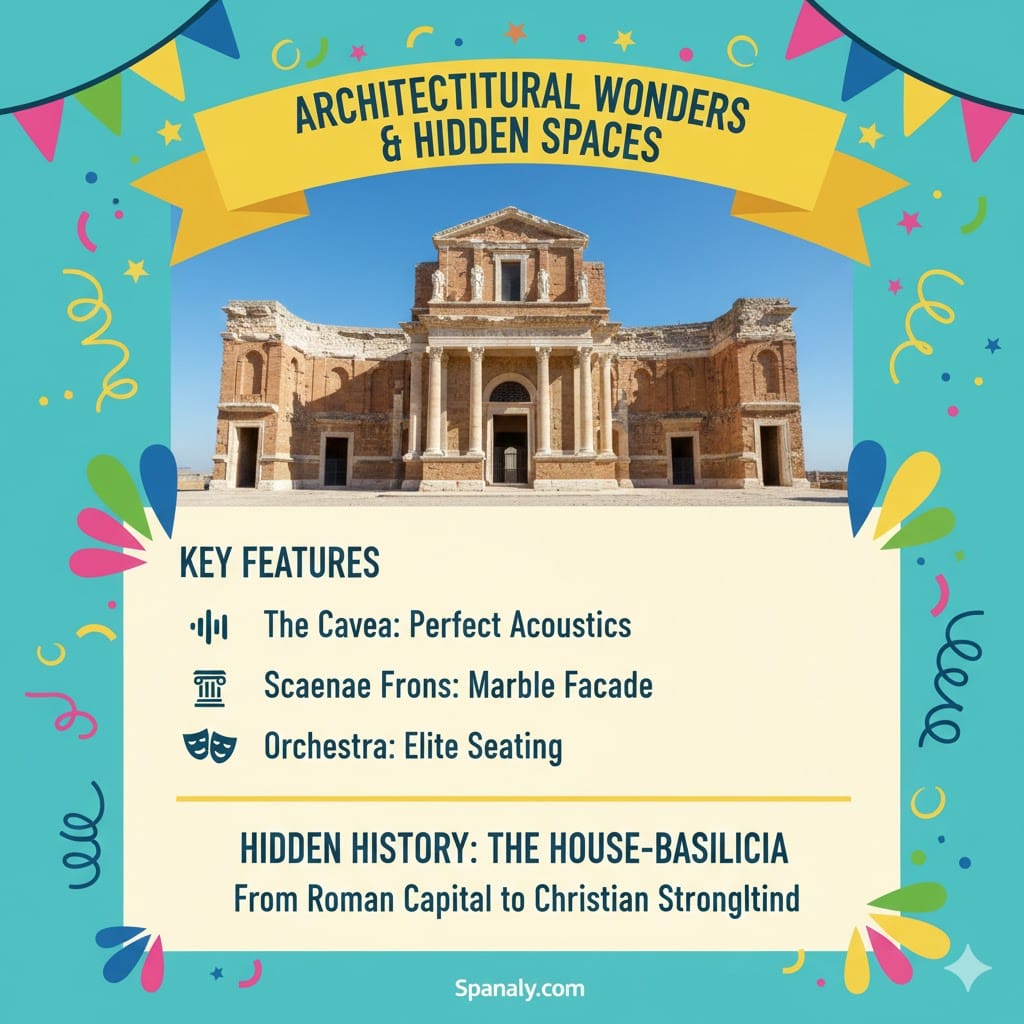
The Roman Theatre of Mérida is a masterpiece of ancient design and acoustic engineering. Specifically, every element was crafted to ensure that the glory of Rome could be heard by all. Consequently, the structure successfully blends functional efficiency with monumental elegance.
Key Architectural Features:
🔊 The Cavea: The semicircular seating was carved directly into the hillside. Notably, this design provides perfect sound projection to the last row.
🏛️ The Scaenae Frons: This stunning two-tiered façade features blue marble Corinthian columns. Indeed, it remains the most iconic sight for travelers today.
🎭 The Orchestra: This semicircular space was reserved for elite citizens. Moreover, its shape further enhanced the natural acoustics of the venue.
In fact, walking through these spaces feels like exploring the peak of Roman creativity. Furthermore, if you admire the grandeur found in our Spanish Attractions, you will find Mérida’s theatre truly breathtaking.
Ultimately, beneath the western side, archaeologists discovered a House-Basilica. Therefore, this specific area shows the city’s evolution from a Roman capital into a Christian stronghold.
✨ Legends of the "Seven Chairs": Myths & Folklore

Mérida’s legends give the Roman Theatre a magical aura that transcends time. Specifically, local folklore has long connected these ancient stones to stories of mystery and transition. Consequently, the theatre is not just a relic of engineering, but a vessel for the city’s collective memory.
Captivating Legends of Mérida:
🪑 The Seven Chairs: Locals once called the upper seating “Siete Sillas.” Notably, folklore tells of seven Moorish kings who met there to decide the city’s fate.
✝️ Shift of Faith: Another tale recalls how Christian parables replaced Roman comedies. Indeed, this reflected the dramatic cultural shift from art to faith in late antiquity.
🏺 Hidden Treasures: Local myths often speak of Roman treasures buried deep beneath the stage. Moreover, these stories have kept the spirit of Mérida alive for generations.
In fact, these legends connect the theatre’s Roman heritage to local imagination. Furthermore, if you enjoy exploring such mystical sites, you should check our guide on Spain’s Historical Monuments. Ultimately, preserving these stories is what makes Mérida’s spirit so unique across the centuries. Therefore, a visit in 2026 offers more than just sightseeing; it is an encounter with the mythical soul of the Atlantic.
🏛️ The Hidden House-Basilica: A Journey of Faith

The Roman Theatre of Mérida holds secrets that go far beyond its marble stage. Specifically, beneath its western side lies the House-Basilica, a discovery that reshaped our understanding of the city. Consequently, this site reveals Mérida’s dramatic transition from a Roman cultural capital into a Christian stronghold.
Inside the House-Basilica:
🏺 Roman Roots: Archaeologists found marble pools and frescoed walls that once belonged to a high-status Roman residence.
✝️ Early Christian Meeting Place: Indeed, researchers believe this was one of the earliest Christian gathering spots in the region.
🏛️ Architectural Layering: The site shows how columns and materials were reused as faith replaced imperial spectacles.
In fact, this area is a physical timeline of Extremadura’s history. Furthermore, if you have explored the religious evolution in our Ultimate Seville Travel Guide, you will find these ruins equally fascinating. Ultimately, the House-Basilica proves that Mérida never truly died; it simply transformed. Therefore, walking through these hidden rooms in 2026 offers a quiet, spiritual contrast to the grandeur of the main stage.
🎭 The Theatre Reborn: Mérida Classical Theatre Festival

The Roman Theatre of Mérida truly comes to life when the sun sets and the stage lights ignite. Specifically, since 1933, the International Festival of Classical Theatre has transformed these ancient ruins into a vibrant cultural hub. Consequently, witnessing a performance here in 2026 is a sensory bridge between the Roman past and the modern present.
Why the Festival is Unforgettable:
🌌 A Night Under the Stars: Watching Sophocles or Seneca on the original marble stage is a transformative experience. Notably, the natural acoustics designed 2,000 years ago still function perfectly today.
🎭 World-Class Performances: The festival attracts international stars and innovative directors. Indeed, every summer, the “Scaenae Frons” serves as a breathtaking backdrop for Greco-Roman dramas.
✨ Modern Technology meets Antiquity: Sophisticated 3D lighting enhances the Corinthian columns during shows. Moreover, this blend of history and tech makes it one of the most prestigious Spanish Festivals you can attend.
In fact, the energy of thousands of spectators cheering in the same seats as ancient Romans is palpable. Furthermore, this living heritage ensures that Mérida remains a global capital of performing arts. Ultimately, the festival is the reason why the theatre was never meant to be a silent museum. Therefore, if you visit between July and August 2026, booking your tickets early is essential for this once-in-a-lifetime journey.
🆕 The Theatre vs. The Amphitheatre: Art vs. Spectacle

Many visitors to Mérida often confuse the Roman Theatre with the neighboring Roman Amphitheatre. Specifically, while they stand side by side, they were built for entirely different purposes. Consequently, understanding these differences is key to appreciating the architectural diversity of Augusta Emerita.
The Major Differences at a Glance:
🎭 The Roman Theatre (Art): Designed for Greco-Roman dramas, comedies, and musical recitals. Notably, it features the iconic Scaenae Frons and was a place for intellectual and cultural gathering.
⚔️ The Roman Amphitheatre (Spectacle): Built for gladiatorial combats and wild beast hunts. Indeed, this elliptical arena focused on raw entertainment and displays of imperial power.
📐 Structural Contrast: The Theatre is semicircular for perfect acoustics, whereas the Amphitheatre is fully enclosed and oval to hold larger, more chaotic crowds.
In fact, visiting both sites together offers a complete view of Roman social life. Furthermore, making the most of your trip requires knowing these subtle cultural details, as highlighted in our Essential Spain Travel Tips. Ultimately, while the Theatre celebrated the voice and the arts, the Amphitheatre celebrated strength and survival. Therefore, we highly recommend purchasing a combined ticket to explore this unique “double venue” in 2026.
📸 Pro Tips for Photography & Best Views

Capturing the majesty of the Roman Theatre of Mérida requires more than just a camera; it requires perfect timing. Specifically, the way light interacts with the blue marble columns can change your entire gallery. Consequently, following a few professional tips will ensure your 2026 photos stand out.
Top Photography Spots & Tips:
🌅 The Golden Hour: Aim to visit during the last hour before closing. Notably, the low sun casts a warm, golden glow over the Scaenae Frons, creating deep textures and dramatic shadows.
🏛️ The High Cavea View: Climb to the very top of the seating area. Indeed, this panoramic angle allows you to capture the entire stage with the modern city of Mérida in the distant background.
👗 Contrast Your Colors: Wear solid, bright colors to contrast against the gray and blue stones. Moreover, checking our Spain Packing Guide will help you choose the best outfits for historical site excursions.
In fact, many photographers miss the “hidden” details, like the intricate carvings at the base of the columns. Furthermore, using a wide-angle lens is essential to fit the massive scale of the theatre into one frame. Ultimately, Mérida is one of the most photogenic ruins in Europe. Therefore, arriving early or staying late is the best way to avoid crowds and capture the “soul” of the Roman Empire in 2026.
🗺️ Planning Your 2026 Visit: Practical Tips & Logistics

Organizing a trip to the Roman Theatre of Mérida requires careful timing to avoid the Extremaduran heat. Specifically, the site is part of a larger archaeological ensemble, meaning you should plan for at least a half-day exploration. Consequently, having the right logistics in place will make your 2026 visit seamless and enjoyable.
Essential Visitor Information:
🕒 Opening Hours: Generally, the site opens from 9:00 AM to 9:00 PM during the summer months (April–September). Notably, winter hours are slightly shorter, closing at 6:30 PM.
🎫 Combined Tickets: We strongly recommend the “Mérida Full Ticket.” Indeed, for around €15, it grants access to the Theatre, Amphitheatre, and several other Roman ruins.
🚆 Getting There: Mérida is well-connected by train from Madrid and Seville. Moreover, consulting our guide on Getting Around Spain will help you find the fastest regional rail options.
In fact, the best way to experience the ruins is by walking, as the main sites are clustered together. Furthermore, always check for special closures during the Classical Theatre Festival performances. Ultimately, Mérida is a city built for explorers who appreciate history at a slower pace. Therefore, booking your tickets online in advance is the smartest way to bypass long queues in the 2026 peak season.
🏨 Where to Stay & Eat Near the Ruins

Completing your journey to the Roman Theatre of Mérida involves more than just sightseeing; it requires immersing yourself in local hospitality. Specifically, staying near the archaeological zone allows you to witness the ruins under different lighting throughout the day. Consequently, choosing the right base and table will elevate your 2026 travel experience.
Top Recommendations for 2026:
🏨 Stay with History: For a luxury experience, the Parador de Mérida is unbeatable. Notably, it is housed in a former 18th-century convent and is just a short walk from the theatre. Indeed, you can find more diverse lodging options in our Accommodation in Spain Guide.
🍽️ Taste the Local Flavors: Don’t miss the chance to try Jamón Ibérico from the nearby Dehesas. Moreover, restaurants like Rex Numitor offer terrace views of the Guadiana River. In fact, exploring our Spanish Cuisine Guide will help you identify the best regional dishes to order.
☕ The Plaza Experience: Spend your afternoon at Plaza de España. Furthermore, this vibrant square is perfect for a coffee while soaking in the local Extremaduran atmosphere.
Ultimately, Mérida offers a perfect blend of rustic charm and Roman grandeur. Therefore, whether you are looking for a boutique hotel or a traditional tavern, booking in the “Casco Antiguo” (Old Town) ensures you are always steps away from the marble columns.
💡 Insider Tips for an Unforgettable Mérida Experience

To truly master your visit to the Roman Theatre, you need more than just a ticket; you need local insight. Specifically, there are small details that can transform a standard tour into a remarkable journey. Consequently, these expert tips for 2026 are designed to help you avoid common mistakes and discover hidden gems.
What You Need to Know:
🧥 The Midnight Chill: If you attend the Summer Festival, bring a light jacket or pashmina. Notably, even after a scorching day, the stone theatre can get surprisingly chilly late at night.
👟 Forget the Heels: The Roman stones are original and uneven. Indeed, wearing sturdy walking shoes is a must to navigate the steep steps safely. Moreover, checking our Seville Travel Tips will give you more ideas on how to prepare for the Andalusian and Extremaduran climate.
⛲ The Secret Cistern: When visiting the nearby Alcazaba, look for the small building in the courtyard. In fact, it leads to a hidden underground Roman cistern where goldfish still swim today.
🤫 The Acoustic Sweet Spot: Stand at the very center of the orchestra floor and whisper. Ultimately, you’ll be amazed at how your voice carries to the highest seats without any effort.
Therefore, by paying attention to these subtle nuances, you ensure that your trip to Augusta Emerita is both comfortable and culturally rich. Furthermore, these “pro-level” insights are what separate a tourist from a true explorer in the heart of Spain.
🎭 Visitor FAQs – Roman Theatre of Mérida (2026)
🛡️ Is there a specific dress code for evening festival performances?
Specifically, there is no formal dress code, but most attendees opt for "smart casual." Consequently, since you will be sitting on ancient stone bleachers, we recommend bringing a small cushion and a light wrap, as the Extremaduran night air can turn surprisingly cool after sunset.
🐾 Are pets allowed inside the archaeological site?
In fact, pets are not permitted within the fenced ruins to ensure the preservation of the 2,000-year-old structures. Notably, only certified assistance dogs are allowed. Therefore, it is best to check for local pet-boarding services in Mérida city center before starting your tour.
🎒 Can I bring large bags or backpacks into the theatre?
Notably, small backpacks are allowed after a security check, but large suitcases are prohibited. Indeed, there are no official lockers at the gate. Consequently, we suggest using the luggage storage at the nearby train or bus stations to enjoy a hands-free experience.
⛲ Is drinking water available inside the monument?
Specifically, there are very few water fountains inside the ruins. Moreover, the summer heat in Mérida can be intense. Ultimately, carrying a reusable water bottle is highly recommended to stay hydrated while exploring the extensive archaeological park.
🛸 Can I fly a drone to capture the Scaenae Frons?
In fact, flying drones over Mérida’s Roman ruins is strictly prohibited without professional permits. Furthermore, the area is a protected airspace due to its UNESCO status. Therefore, stick to high-resolution ground photography to capture your 2026 memories safely.
Created by Spanaly.com
🏛️ Why Mérida Must Be Your 2026 Highlight
The Roman Theatre of Mérida is not merely a collection of silent stones. Specifically, it is a living testament to human creativity. Consequently, visiting this UNESCO site in 2026 offers a unique bridge between the Roman past and our modern world.
Why you should visit now:
🌟 Living History: The theatre still hosts world-class performances today. Notably, it remains one of the few ancient stages that hasn’t lost its original purpose.
📸 Visual Grandeur: The blue marble columns provide a breathtaking backdrop. Indeed, it is arguably the most photogenic Roman ruin in the entire Iberian Peninsula.
🇪🇸 Authentic Culture: Mérida offers a slower, more traditional Spanish pace. Moreover, it is a perfect escape from the overcrowded tourist hubs of the coast.
In fact, standing in the center of the stage is a transformative experience. Furthermore, by following our expert logistics and timing tips, your journey will be seamless. Ultimately, Mérida is where the grandeur of the Roman Empire meets the warmth of Extremadura. Therefore, we highly recommend making it your top priority for your 2026 Spanish itinerary.