Table of Contents
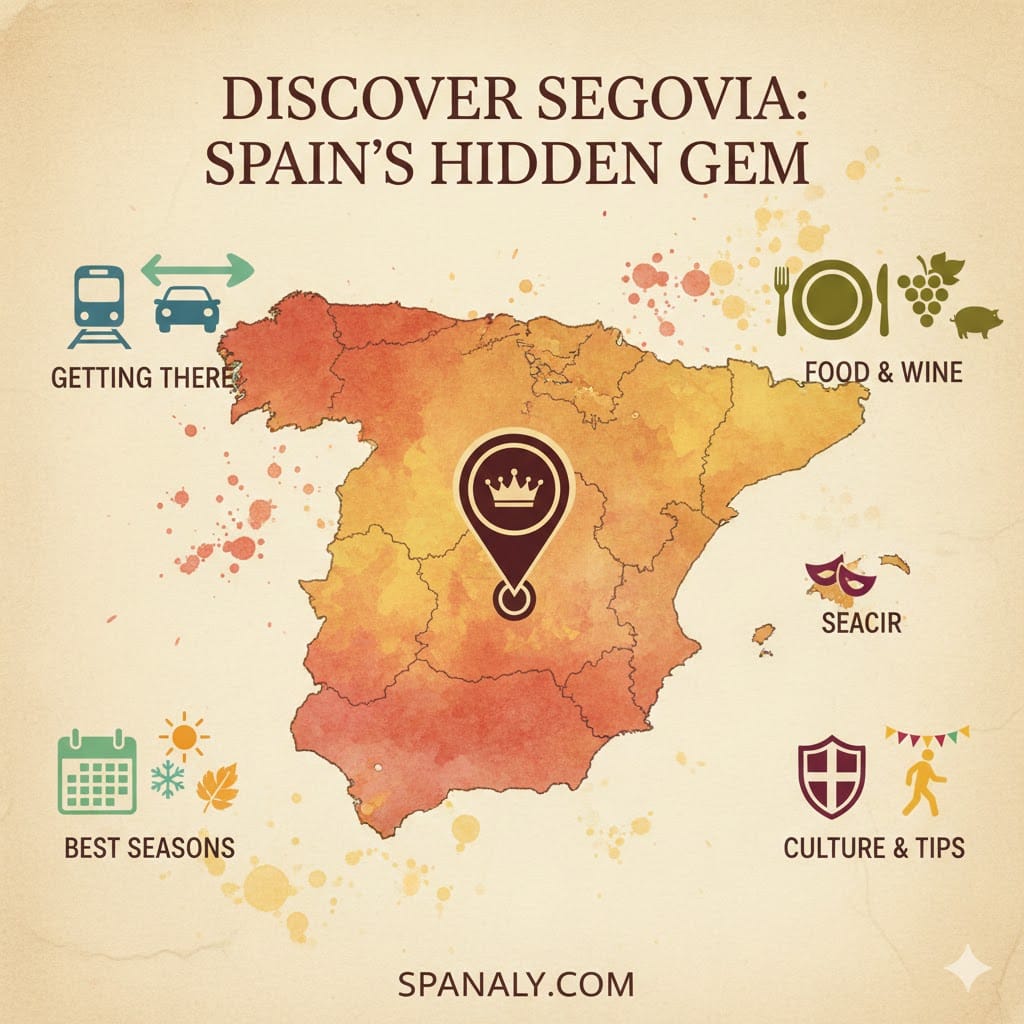
Toggle Perched on a rocky hilltop, Segovia is a masterpiece frozen in time. It is a city where Roman engineering, medieval dreams, and Castilian charm blend seamlessly into one breathtaking panorama.
✨ A City of Icons
Segovia captures the essence of Spain’s golden age through its legendary skyline. From the towering Roman aqueduct to the fairytale Alcázar and the grand Gothic cathedral, every corner tells a story of architectural splendor.
This guide uncovers everything you need to experience Segovia to the fullest—from its historic landmarks and vibrant festivals to its world-famous culinary delights.
📍 Planning Tip: As Segovia is located just a short distance from the capital, it makes for the perfect day trip addition to your Ultimate Madrid Travel Guide itinerary.
📍 The Soul of Segovia: A Journey Through Time
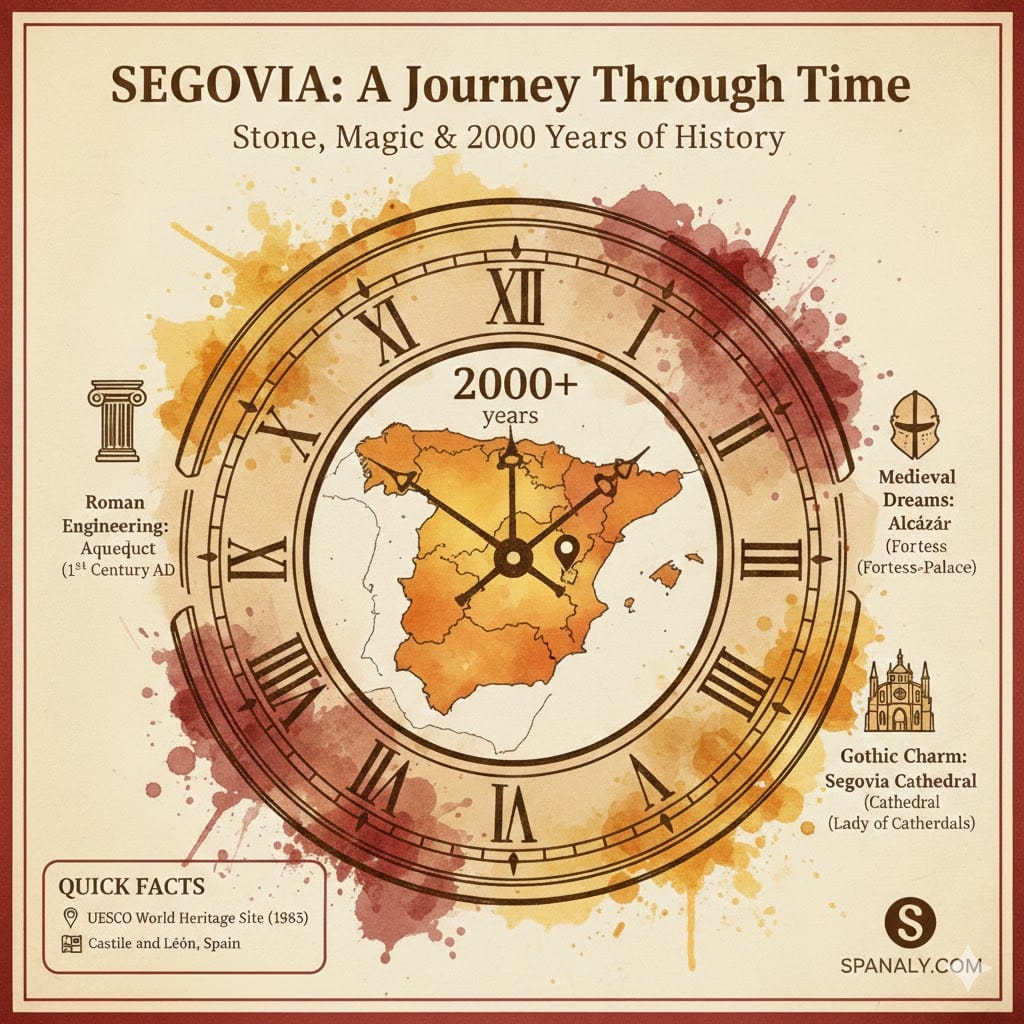
Declared a UNESCO World Heritage Site, Segovia’s story stretches back over 2,000 years. The city flourished under the Romans, evolved during the Middle Ages, and eventually became a jewel of Spanish heritage and a favorite residence for Castilian monarchs.
📜 A Living History Lesson
Wandering through its cobbled streets feels like walking through history itself. Every stone in the old town tell a story of cultural fusion. To understand the city’s pulse, look at these highlights:
Roman Foundation: Home to one of the best-preserved aqueducts in the world.
Medieval Splendor: A fortress that inspired legends and housed kings.
Gothic Grandeur: The final masterpiece of Spain’s Gothic era.
| Quick Fact | Details |
| Status | UNESCO World Heritage Site since 1985 |
| Location | Castile and León (Central Spain) |
| Highlight | The iconic 1st-century Roman Aqueduct |
Spanaly Insight: Don’t just look at the big monuments; Segovia’s true charm lies in its hidden courtyards, medieval towers, and the silent city walls that whisper stories of the past.
📍 Must-See Landmarks and Attractions
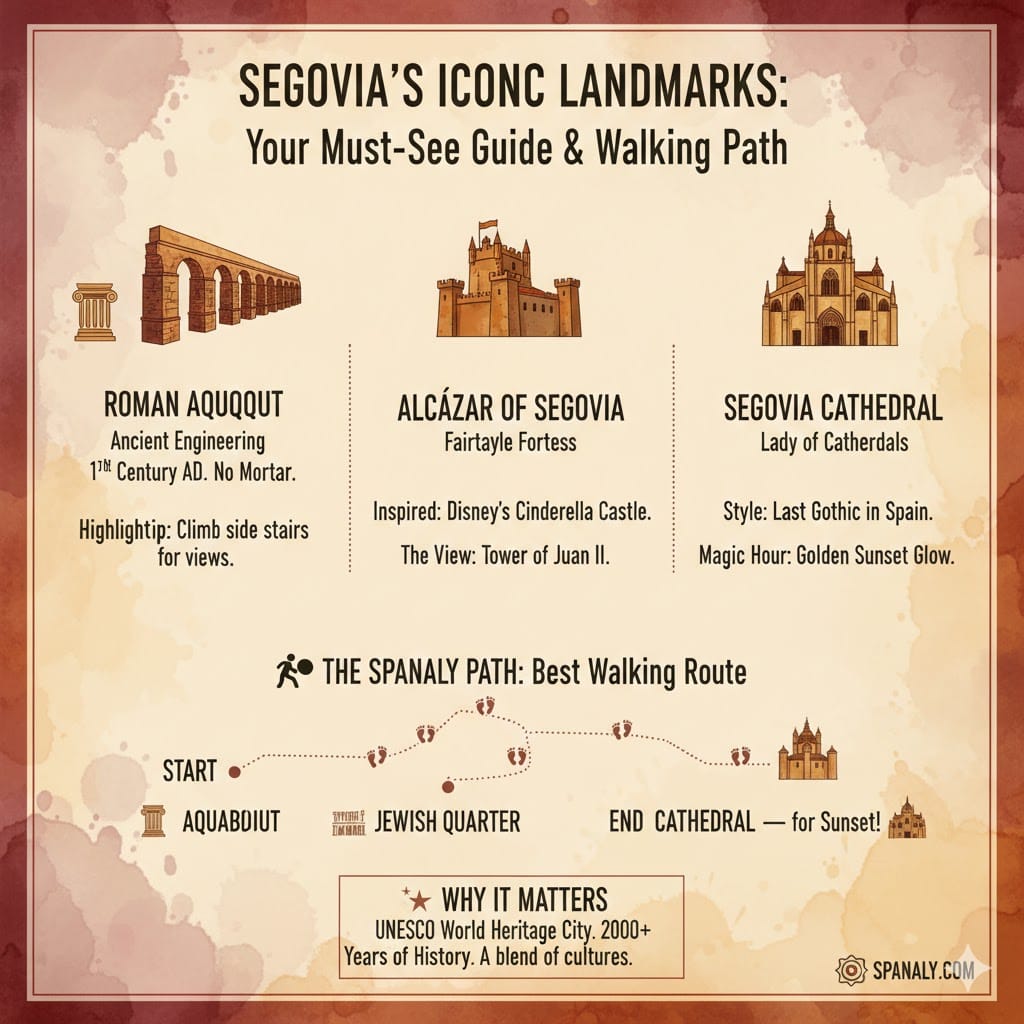
Segovia’s landmarks are legendary, each representing a different era of its glorious past. In fact, these monuments are consistently ranked among the top Spanish Attractions due to their incredible state of preservation and historical depth.
To see them all, we recommend following the natural path from the lower plaza up to the rocky cliff.
🏛️ The Roman Aqueduct
Standing proudly in Plaza del Azoguejo, this is the city’s eternal symbol. Built in the 1st century AD without a single drop of mortar, it is a masterclass in ancient engineering.
Highlight: It remains one of the best-preserved Roman structures in the world.
Photo Tip: Climb the stairs at the side for an elevated view of the towering arches.
🏰 Alcázar of Segovia
Rising dramatically above the Eresma River, this fortress-palace looks like it was plucked from a storybook. It famously served as a royal residence and inspired the design of Disney’s Cinderella Castle.
Explore: Don’t miss the royal halls and the impressive armory exhibit.
The View: Climb the Tower of Juan II for a 360-degree panorama of the old city.
⛪ Segovia Cathedral
Known as the “Lady of Cathedrals,” this Gothic marvel stands at the heart of Plaza Mayor. Its golden stone creates a magical glow at sunset, making it a favorite for photographers.
🚶 The Spanaly Path: Best Walking Route
Most visitors feel lost between monuments. Specifically, the best way to experience Segovia is to start at the Aqueduct, walk up through the hidden alleys of the Jewish Quarter, stop at the Cathedral, and end your journey at the Alcázar just in time for sunset.
🍴 Taste of Tradition: What to Eat in Segovia
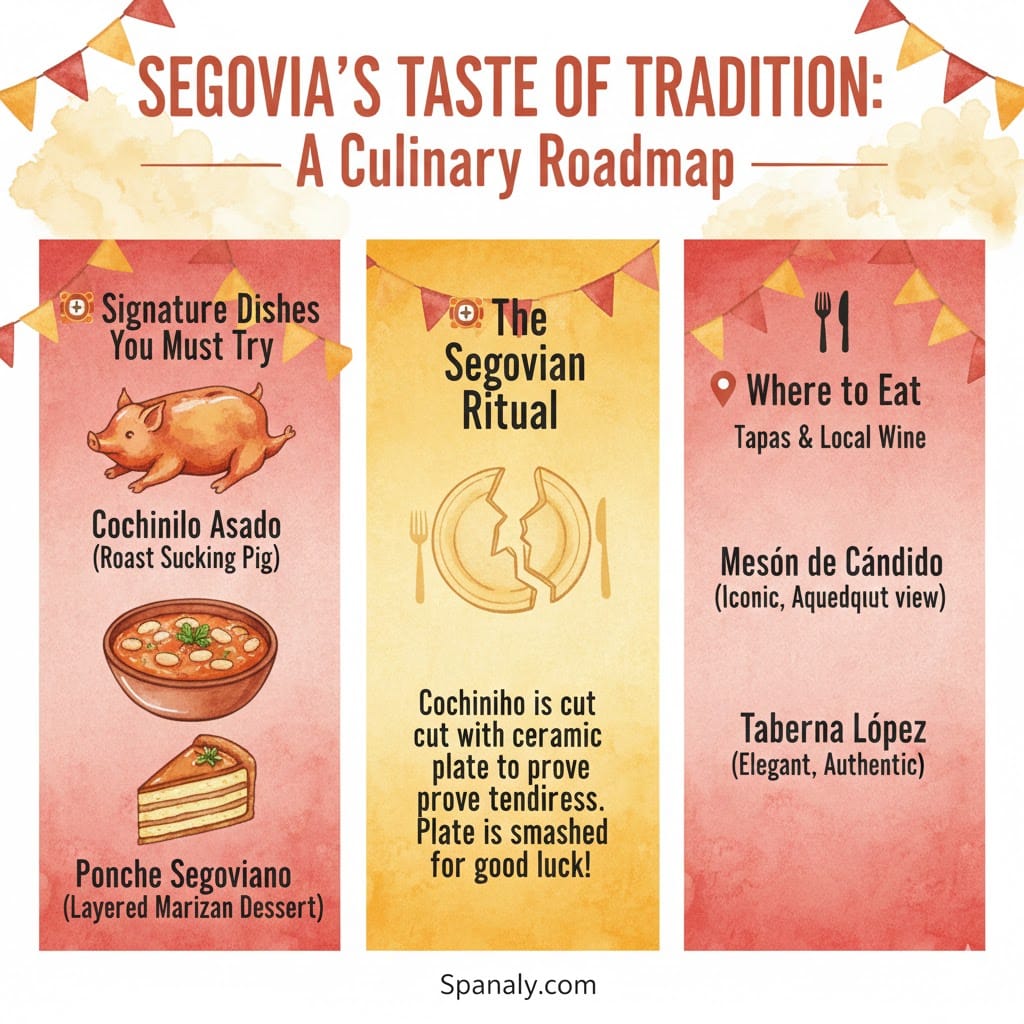
Food in Segovia is a celebration of Castilian flavors—bold, rustic, and deeply satisfying. To truly understand the local soul, you must dive into the world of Spanish Cuisine, where traditional roasting methods have remained unchanged for centuries.
🥘 Signature Dishes You Must Try
Cochinillo Asado (Roast Suckling Pig): The undisputed star. It features a skin as crispy as glass and meat so tender it melts.
Judiones de la Granja: Hearty, creamy white beans slow-cooked with chorizo and pork—perfect for a cool Castilian afternoon.
Ponche Segoviano: A unique local dessert made of layers of sponge cake and marzipan, topped with a caramelized pattern.
🍽️ The Segovian Ritual (Missing Insight)
In Segovia, eating is a performance. Specifically, at famous spots like Mesón de Cándido, the host performs a ritual where the Cochinillo is cut using only the edge of a ceramic plate to prove its tenderness. Afterward, the plate is traditionally smashed on the floor!
📍 Where to Eat
Mesón de Cándido: Historic and iconic, located right under the arches of the Aqueduct.
Restaurante José María: A local favorite known for its high-quality ingredients and modern touch on tradition.
Taberna López: Tucked away in the San Millán neighborhood, perfect for authentic tapas and local wine.
📍 Getting There and Around

Segovia is strategically located, making it arguably the most convenient day trip from Spain’s capital. Whether you are looking for lightning-fast transit or a scenic road trip through the mountains, here is exactly how to handle your journey.
🚆 The High-Speed AVE Experience (Fastest Route)
The high-speed AVE and AVANT trains depart from Madrid’s Chamartín Station and will whisk you to Segovia in a mere 28 minutes. This is the preferred choice for most travelers because it saves hours of travel time.
Station Logistics: The train arrives at Segovia-Guiomar, which is located outside the city center. Don’t worry about the distance; Bus 11 is perfectly timed with train arrivals to take you directly to the Aqueduct for a small fee.
Booking Tip: These trains are popular! We recommend booking your tickets at least 48 hours in advance through the Renfe website to secure your seat and the best price.
🚌 Road Trips & Regional Buses (The Scenic Way)
If you prefer a more budget-friendly option or enjoy driving, the journey offers a beautiful transition from the urban sprawl of Madrid to the rugged Sierra de Guadarrama mountains.
By Bus: Regular buses depart from Madrid’s Moncloa Interchange. The trip takes about 1 hour and 15 minutes, arriving at the Segovia Bus Station, which is just a 5-minute walk from the Aqueduct.
By Car: Taking the A-6 and AP-61 highways gives you the freedom to explore the surrounding Castilian countryside. Just be mindful that parking in the historic center is limited; we suggest using the public parking lots near Plaza de Toros.
🔗 The UNESCO “Double Header” (Segovia & Ávila)
One of the most frequent questions we receive is: “Can I visit Segovia and Ávila in one day?” Specifically, yes, it is entirely possible and highly rewarding.
The Route: Direct bus lines (like Avanza) connect the two cities in about 1 hour.
The Itinerary: We suggest starting your morning by walking the medieval walls of Ávila, then heading to Segovia for a late lunch of Cochinillo and a sunset view of the Alcázar. It’s a long day, but it covers two UNESCO World Heritage gems in one go.
🚶 Navigating the Stone City
Once you step into the historic district, put your map away and follow the cobblestones. Segovia is a walking city by design.
The Terrain: The old town is mostly pedestrianized, but it does involve some uphill walking and uneven surfaces. Wear comfortable shoes as you’ll be traversing everything from Roman plazas to narrow medieval Jewish alleys.
Local Transport: If your legs get tired, the “Urbanos de Segovia” bus system is efficient, but honestly, the city’s magic is best discovered by getting lost in its stone corridors.
📍 Best Time to Visit Segovia
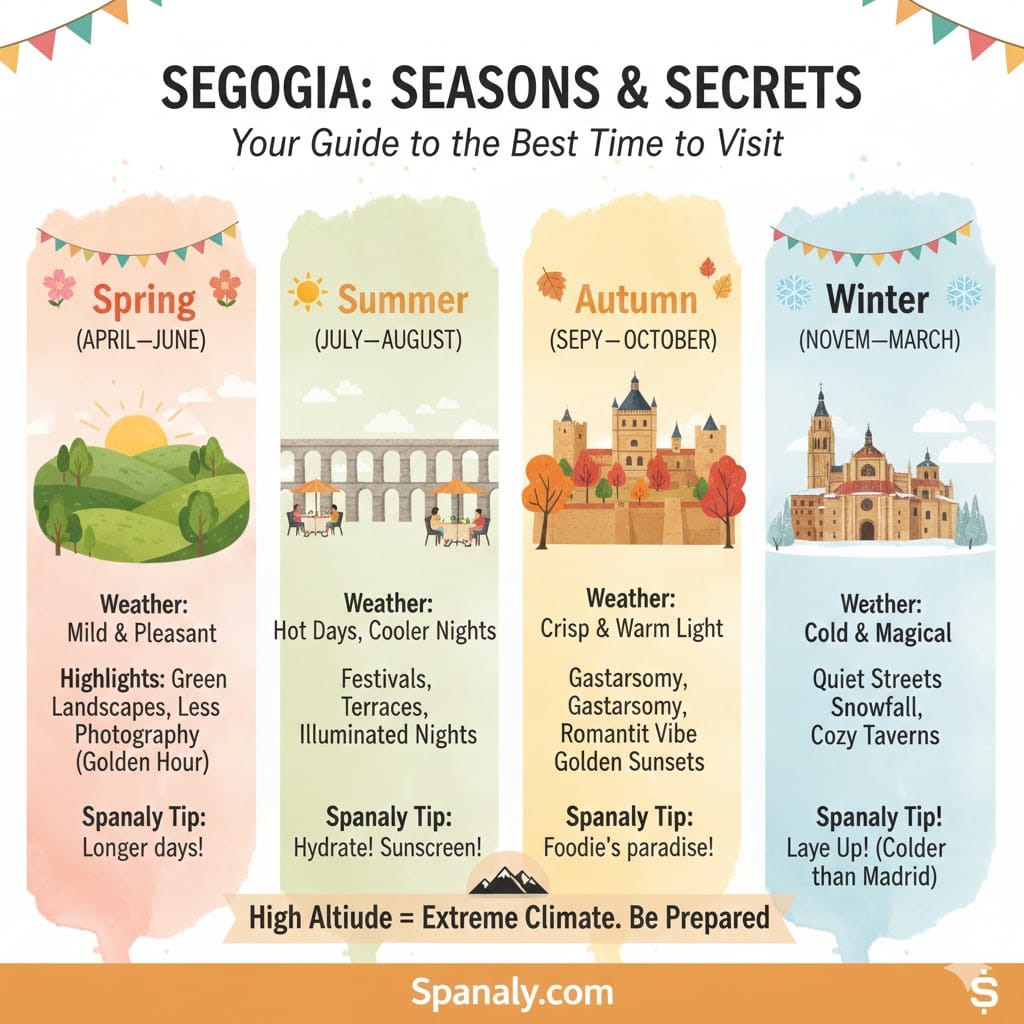
Segovia’s high altitude (1,000 meters above sea level) creates a unique climate that is often much cooler than Madrid. To ensure you catch the city at its best, it is essential to align your trip with the best time to visit Spain, as the Castilian seasons have a dramatic impact on your experience.
🌸 Spring (April – June): The Photographer’s Dream
Spring is widely considered the ultimate window to explore Segovia. The surrounding plains of Castile turn a vibrant green, providing a stunning contrast to the city’s golden stone monuments.
The Atmosphere: Mild temperatures make climbing the stairs of the Aqueduct or the Tower of Juan II a pleasant breeze rather than a sweat-inducing hike.
Why now: You’ll enjoy the longest daylight hours, perfect for capturing the Alcázar during the “Golden Hour” without the overwhelming summer heat.
☀️ Summer (July – August): Vibrant Nights & Sunny Days
Summer in Segovia is lively and full of energy, though the mid-day sun can be intense. This is the season of outdoor terraces (terrazas) and late-night walks under the illuminated arches of the Aqueduct.
Expert Insight: While the days are hot, Segovia’s altitude means the evenings are much more refreshing than in the southern cities.
Spanaly Advice: Always plan your monument visits for the early morning and save your heavy Cochinillo lunch for a shaded, air-conditioned tavern during the peak afternoon heat.
🍂 Autumn (September – October): The Gastronomy Peak
As the leaves in the Eresma valley turn to shades of ochre and gold, Segovia enters its most romantic phase. This is arguably the best season for food lovers.
The Experience: The crisp air is the perfect companion for the city’s rustic cuisine. There is nothing like wandering the Jewish Quarter in a light jacket before sitting down for a steaming bowl of Judiones.
Photography: The autumn light is soft and warm, making the Cathedral look like it’s glowing from within.
❄️ Winter (November – March): A Quiet Fairytale
Winter transforms Segovia into a peaceful, medieval sanctuary. If you are lucky, you might see the Alcázar dusted in white snow, looking exactly like the fairytale castle that inspired Disney.
Traveler’s Warning: Do not be fooled by a sunny day in Madrid! Segovia can be 5-10 degrees colder.
🧥 Smart Packing: Based on our experience, we recommend “The Layering Rule”—bring a heavy coat, a scarf, and thermal layers if you plan to stay out after sunset to see the city walls illuminated.
📍 Festivals and Cultural Events
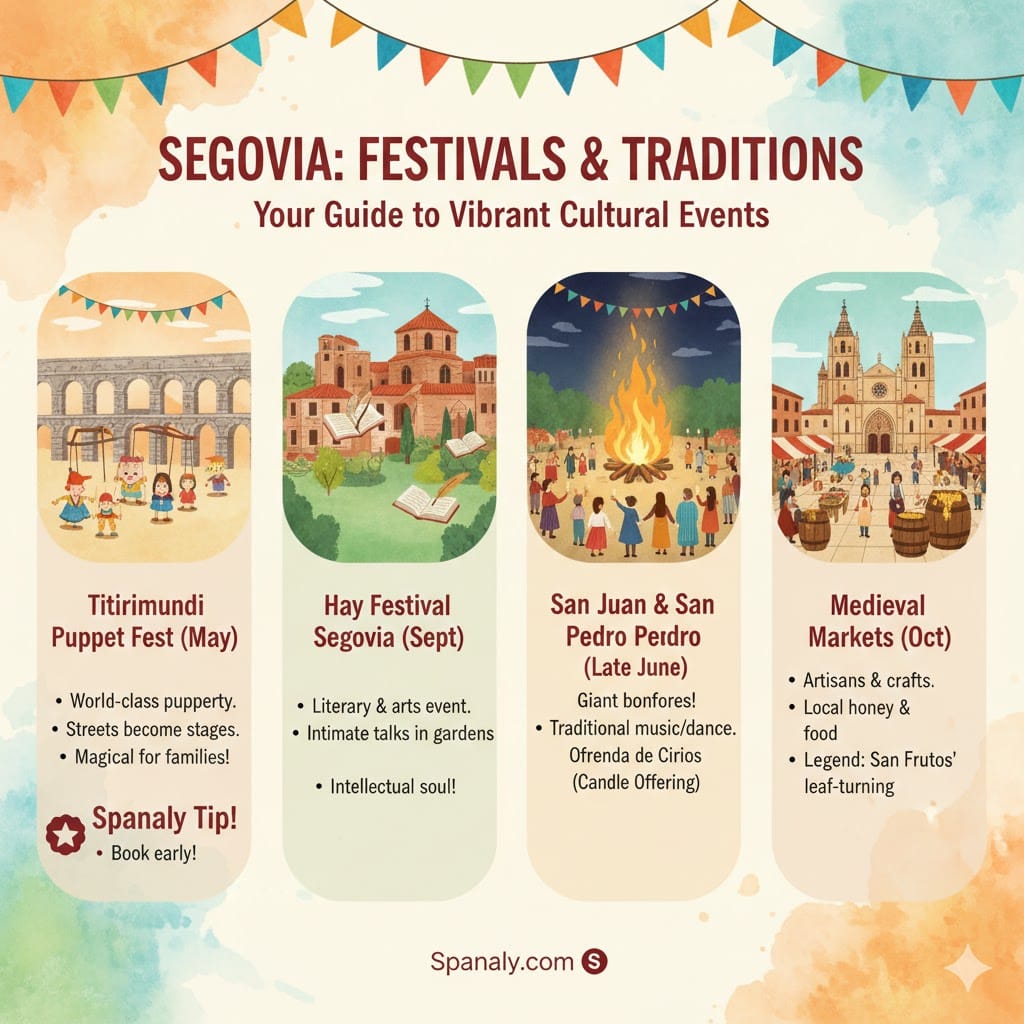
Segovia is not just a city of stone; it is a city of celebration. Throughout the year, its plazas transform into stages for some of the most vibrant Spanish Festivals, blending ancient traditions with modern artistic expression.
🎭 Titirimundi: The International Puppet Festival (May)
If you visit in May, you’ll witness the city turning into a giant theater. Specifically, Titirimundi is one of the most prestigious puppet festivals in the world.
The Experience: Streets, courtyards, and even the base of the Aqueduct become stages for world-class puppeteers. It’s a magical time for families and photography lovers alike.
Spanaly Tip: Accommodations fill up months in advance for this week, so book early!
🎶 Hay Festival Segovia (September)
For the culturally inclined, the Hay Festival brings together international writers, artists, and thinkers.
The Atmosphere: The city’s historic convents and gardens open their doors for intimate talks and debates. It’s the perfect event for those who want to experience the “intellectual soul” of Castile.
🔥 The Missing Tradition: San Juan & San Pedro (Late June)
One of the most authentic local experiences occurs during the Fiestas de San Juan y San Pedro.
The Ritual: This is when Segovia celebrates its patron saints with giant bonfires, traditional music, and outdoor dances.
Don’t Miss: The “Ofrenda de Cirios” (Candle Offering), a beautiful and solemn procession that highlights the deep-rooted religious and cultural heritage of the region.
🏰 Medieval Markets & San Frutos (October)
In late October, Segovia celebrates its patron saint, San Frutos.
The Highlights: You can enjoy medieval markets in the Plaza Mayor where artisans sell local crafts and honey.
The Legend: On the night of October 24th, locals gather at the Cathedral to witness the “Miraculous Leaf-Turning” of the saint’s statue—a quirky local tradition you won’t find in standard guidebooks.
📍 Where to Stay: Your Segovia Accommodation Guide
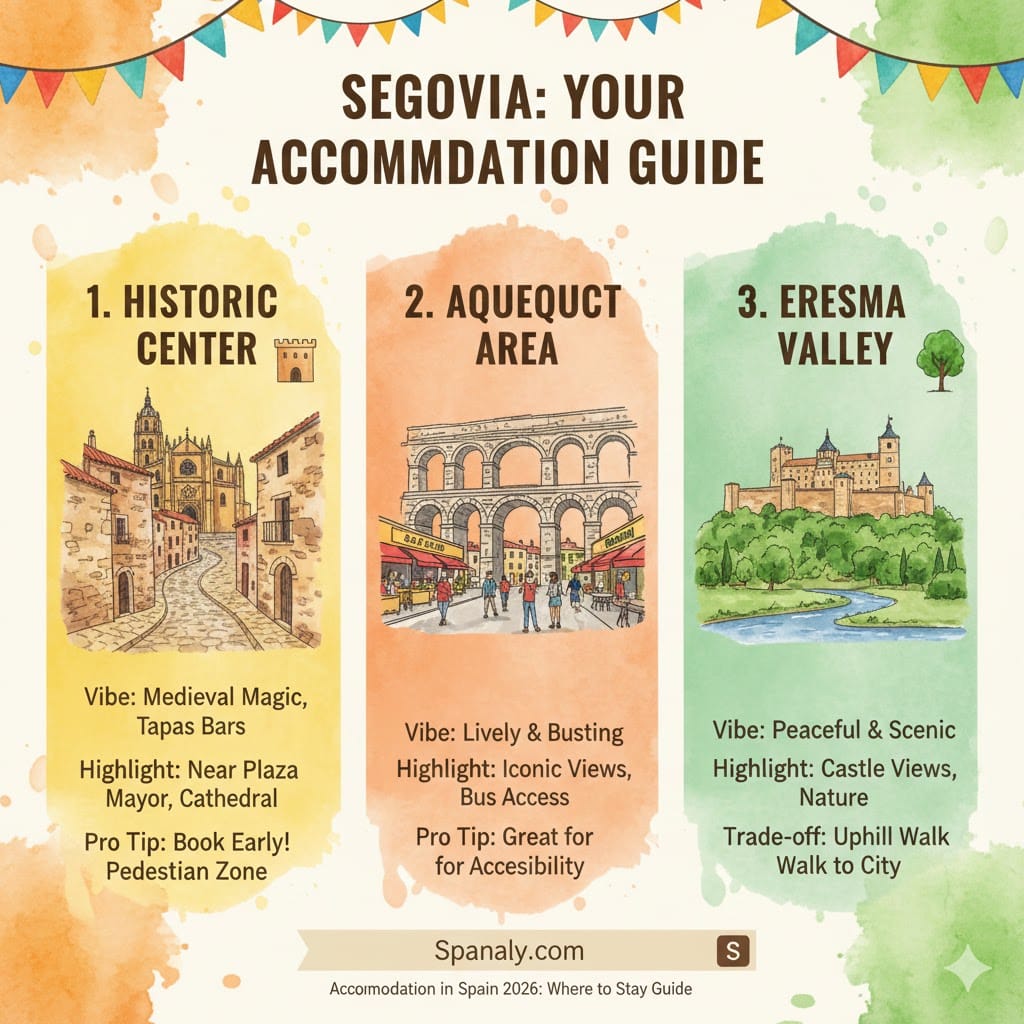
Deciding where to spend the night in Segovia depends on the atmosphere you desire. While many visit as a day trip, staying overnight allows you to see the monuments illuminated without the crowds. To get the best value, we recommend checking our comprehensive guide on Accommodation in Spain, which covers everything from booking secrets to choosing the right type of lodging.
🏰 The Historic Center (Heart of the Action)
Staying within the old city walls, near the Plaza Mayor or the Cathedral, puts you in the center of the medieval magic.
The Vibe: Noble stone buildings, narrow alleys, and being steps away from the best tapas bars.
Spanaly Recommendation: Look for converted palaces or “Casas Nobles.” Even if they are smaller, the historical charm is unmatched. Be aware that most hotels here are in pedestrian zones, so you may need to walk a short distance with your luggage.
⛲ The Aqueduct Area (Iconic Views)
If you want to wake up and see the Roman arches from your window, this is the place to be. This area is lively and serves as the gateway to the city.
The Vibe: More modern and bustling, with easy access to the bus station and plenty of cafes.
Pro Tip: Hotels in this area are perfect for those arriving by bus or those who prefer to be close to the main shopping streets. It is also the most “accessible” area for travelers with mobility concerns.
🌿 Eresma Valley (The Romantic Retreat)
For a quieter, more scenic experience, look for accommodation in the valley below the Alcázar, near the Eresma River.
The Vibe: Peaceful, green, and offering the absolute best views of the “Fairytale Castle” rising above the trees.
The Trade-off: While beautiful, you will have to walk uphill to reach the main landmarks. It’s ideal for couples or those seeking a retreat-like atmosphere.
🏨 Stay Smarter: A 2026 Insider Tip
Segovia is incredibly popular on weekends. Specifically, if you plan to stay between Friday and Sunday, you must book at least 3-4 weeks in advance. Many boutique hotels are family-run and have limited rooms, so waiting until the last minute often means staying far from the historic center.
📍 Practical Tips for a Smooth Trip
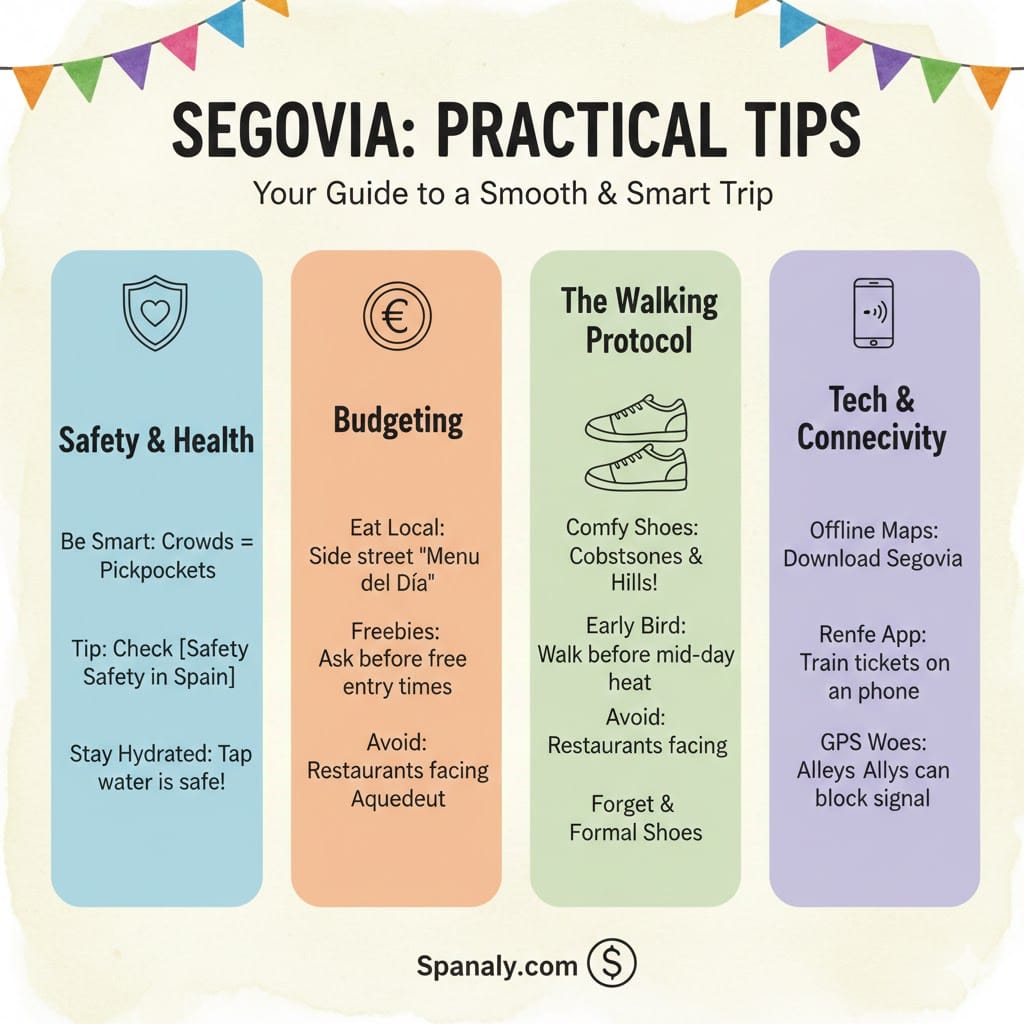
Before you set off for the “City of Victory,” here is a curated list of golden rules to ensure your Segovian adventure is seamless, budget-friendly, and stress-free.
🛡️ Safety & Peace of Mind
Segovia is incredibly safe, but being a smart traveler is always a plus.
Spanaly Advice: While violent crime is non-existent, busy spots like the base of the Aqueduct can attract pickpockets. To stay fully protected, check our essential guide on [Safety in Spain] for tips on securing your belongings in crowded tourist zones.
Hydration: At 1,000 meters altitude, you’ll dehydrate faster than you think. Specifically, carry a reusable bottle; Segovia’s tap water is fresh, icy-cold, and perfectly safe to drink.
💰 Budgeting: Spend Smart
You don’t need to spend a fortune to enjoy Castile’s finest.
The “Side Street” Rule: Restaurants directly facing the Aqueduct or Plaza Mayor are the most expensive. Walk just 5 minutes into the Jewish Quarter to find a Menu del Día (3-course lunch) at a fraction of the price.
Free Entry Windows: Many monuments offer free entry on specific days (often Sunday mornings). Visit the Tourist Office near the Aqueduct first thing to grab the updated schedule and save on tickets.
👟 The Walking Protocol
Segovia is a city of slopes, stairs, and cobblestones.
Footwear is Key: This is not the place for heels or stiff dress shoes. A high-quality pair of sneakers or walking boots is non-negotiable for navigating the medieval terrain.
Beat the Heat: If visiting in summer, start your outdoor walk at 9:00 AM. This allows you to finish the steep climb to the Alcázar before the intense Castilian sun hits its peak at mid-day.
📱 Tech & Connectivity
Offline Maps: Download Segovia on Google Maps for offline use. The narrow, stone-walled alleys can occasionally scramble your GPS signal.
Transport Apps: Keep your Renfe (train) or Avanza (bus) tickets on your phone to skip the printing kiosks and head straight to your platform.
🏰 Segovia Insider: Your Questions Answered
🚆 How do I get from the Segovia-Guiomar station to the Aqueduct?
🍽️ What is the ritual of cutting the "Cochinillo" with a plate?
🕒 Can I visit Segovia and Ávila in one day?
🎟️ Is it necessary to buy tickets for the Aqueduct?
🍰 What is "Ponche Segoviano"?
🏰 Your Segovian Fairytale Awaits
Segovia is more than just a pin on a map; it is a living, breathing testament to Spain’s glorious past. From the architectural genius of the Roman Aqueduct to the regal halls of the Alcázar, every stone here tells a story that has spanned centuries.
Why We Love Segovia
The Contrast: Where else can you see Roman grit, Medieval charm, and Gothic elegance in a single afternoon?
The Flavor: The legendary Cochinillo is a culinary experience that stays with you long after you’ve left Castile.
The Accessibility: It’s the easiest escape from Madrid’s bustle into a world of legends and knights.
Final Spanaly Thought
Don’t just rush through the monuments. Specifically, take a moment to sit in the Plaza Mayor, enjoy a slice of Ponche Segoviano, and watch the sunset turn the Cathedral into a beacon of gold. Segovia is best enjoyed slowly, one cobblestone at a time.