Table of Contents
Toggle🌟 The Hidden Capital of Aragon
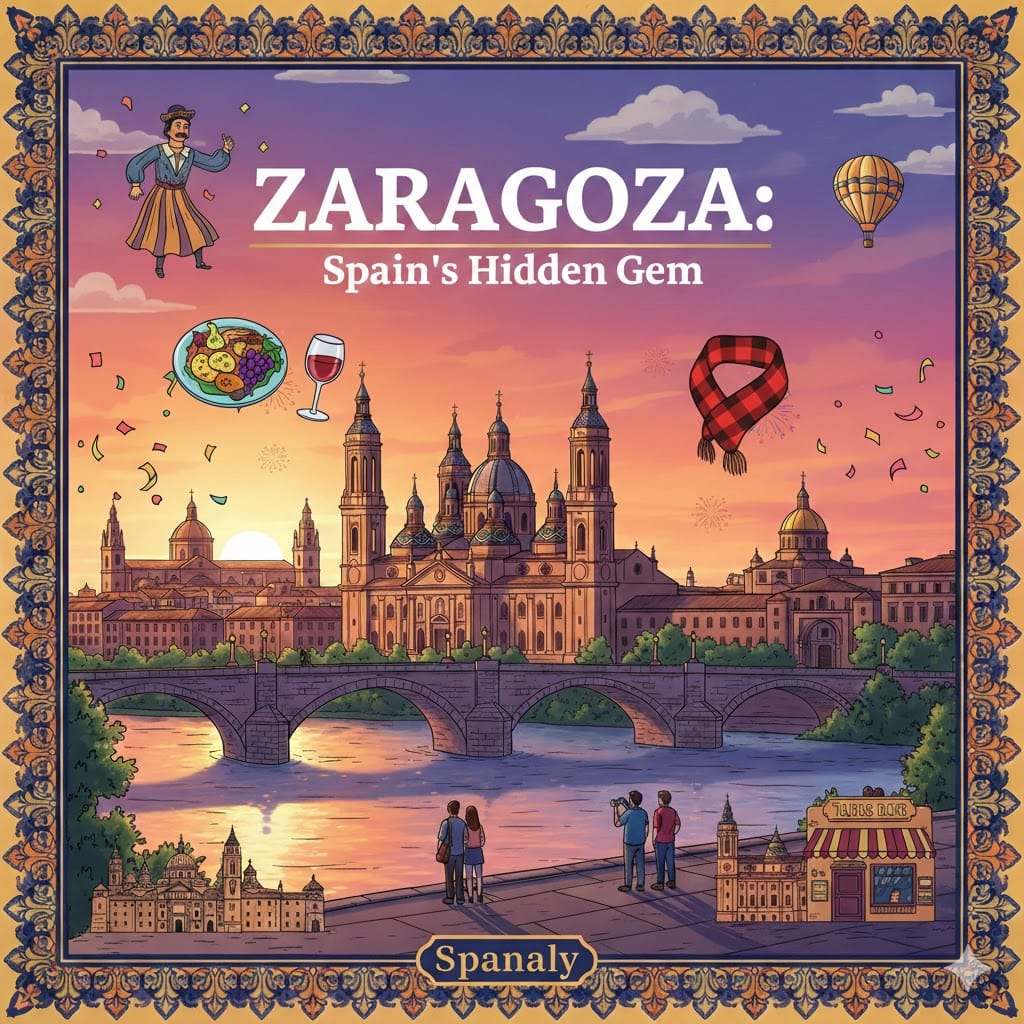
Nestled halfway between the bustling streets of the capital and the coastal charm of the Mediterranean, Zaragoza is Spain’s best-kept secret. Often overlooked, this city is a vibrant mosaic of four distinct civilizations, offering an authentic experience without the overwhelming crowds.
What makes Zaragoza a must-visit?
🏛️ A Cultural Crossroads: It is one of the few places where Roman ruins, Moorish palaces, and Baroque cathedrals sit side by side.
🇪🇸 Authentic Vibe: Discover the “real Spain” in its lively tapas alleys and majestic plazas.
📍 Perfect Stopover: Ideally located for those traveling between an Ultimate Madrid Travel Guide itinerary and the artistic wonders of Barcelona.
From its breathtaking riverside views to its deep-rooted Aragonese soul, Zaragoza is a city that doesn’t just show you history—it makes you feel it.
Spanaly Thought: If you want the grandeur of Spain’s major hubs but with a local, laid-back atmosphere, Zaragoza should be at the top of your list.
📜 Historical Overview: A City of Four Cultures
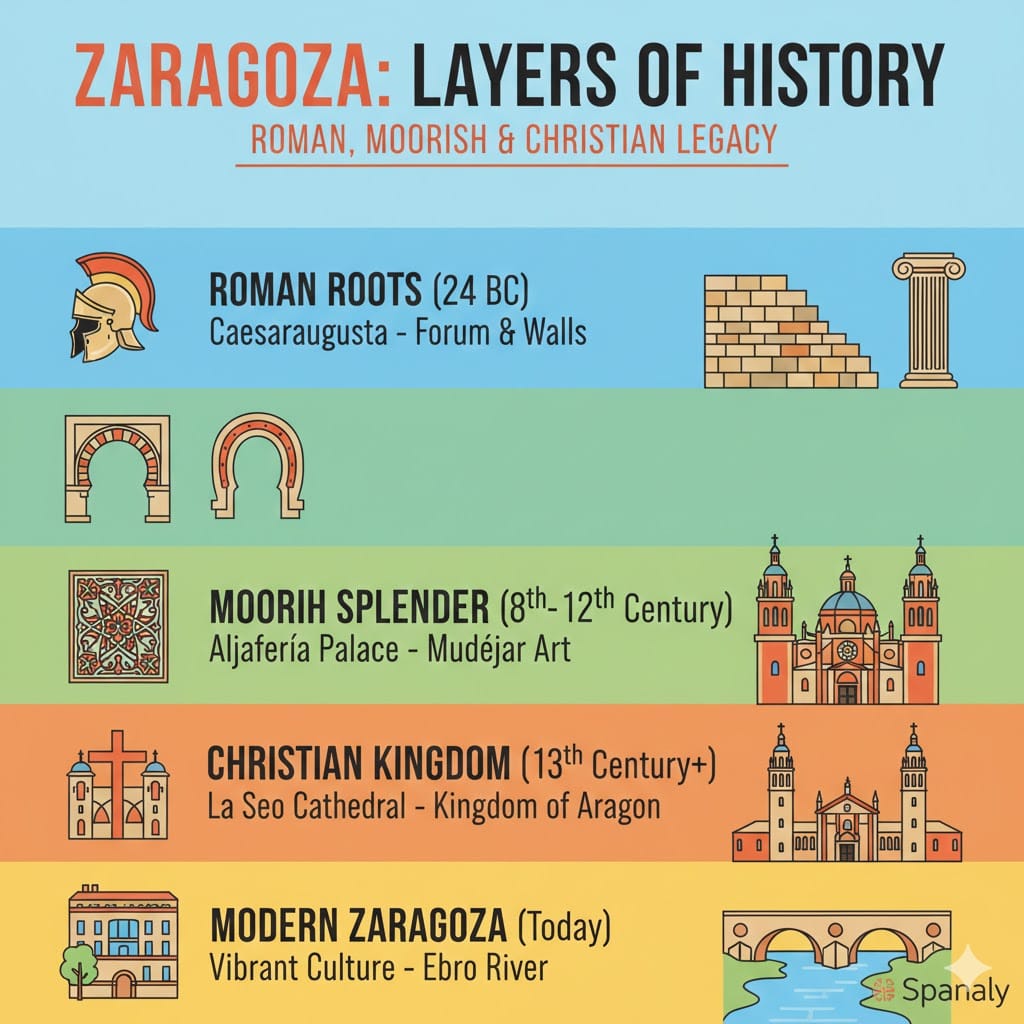
Zaragoza is a living museum, where each layer of the city reveals a different civilization. It is one of the few places in Spain where you can witness the seamless transition from Roman military power to Islamic artistic brilliance and Christian grandeur.
The Four Pillars of Zaragoza’s Past:
🏛️ Roman Roots: Founded in 24 BC as Caesaraugusta, the city served as a vital strategic hub. Today, you can still touch the original defensive walls and explore the ancient forum.
☪️ Islamic Splendor: Under Moorish rule, the city became a beacon of culture. The stunning intricate designs found in its palaces are essential highlights of the Spain Historical Monuments Guide.
⛪ The Christian Kingdom: As the historic capital of the Kingdom of Aragon, Zaragoza flourished with Gothic and Renaissance cathedrals that dominated the skyline.
🎨 The Modern Spirit: Throughout the centuries, the city has maintained a resilient spirit, surviving famous sieges and evolving into the modern, welcoming hub it is today.
Spanaly Thought: Zaragoza is unique because these cultures didn’t just replace one another; they blended. This “Mudéjar” fusion is why the city’s architecture feels like nowhere else in the world.
🏛️ The Icons of Zaragoza: Must-See Landmarks
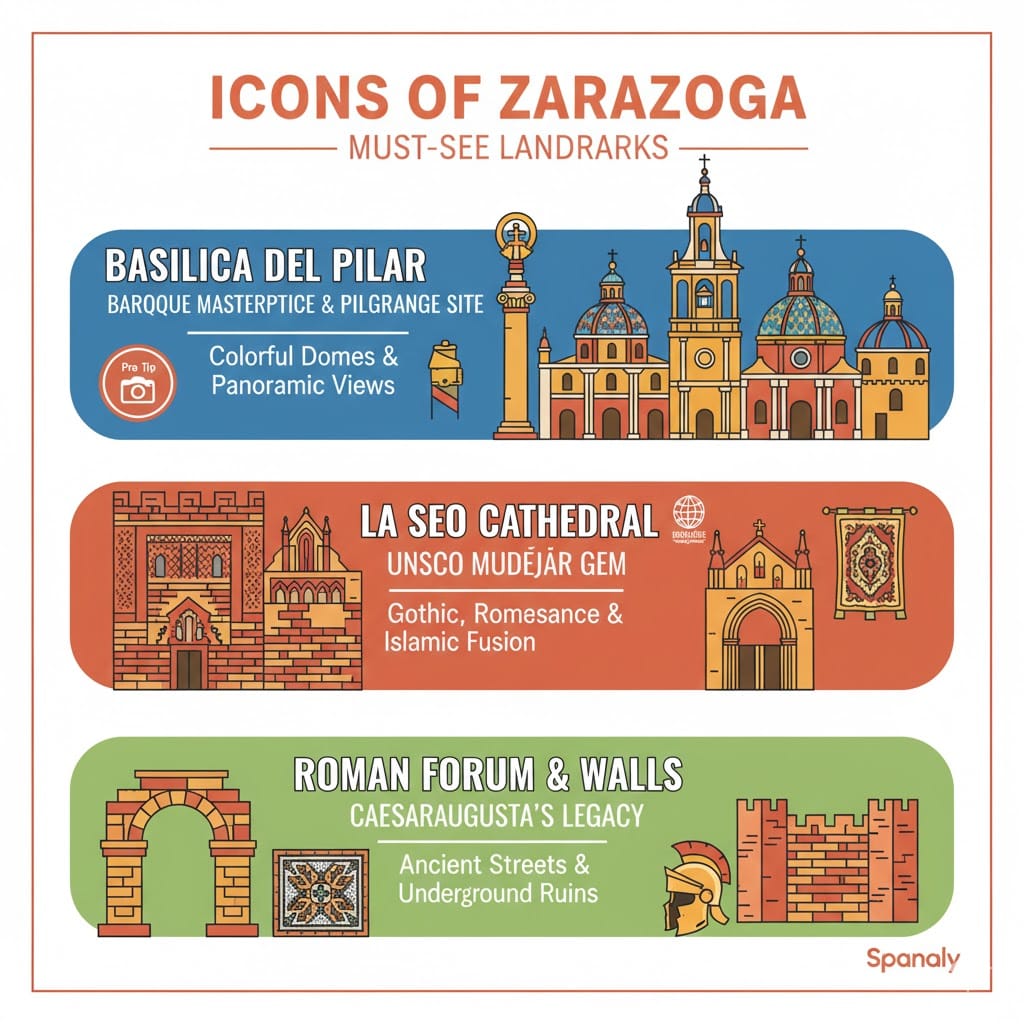
Zaragoza’s skyline is a breathtaking dialogue between different eras. From the majestic Baroque domes reflecting in the Ebro River to the ancient stones of its Roman past, these landmarks define the city’s unique character among the top destinations in our Spain Travel Guide Cities.
The Unmissable Big Three:
🏰 Basilica del Pilar: A Baroque masterpiece and a global pilgrimage site. Its eleven colorful tiled domes are the most photographed spot in the city.
Pro Tip: Take the elevator to the tower’s peak for a bird’s-eye view of the river and the terracotta rooftops.
⛪ La Seo Cathedral: This UNESCO gem sits on the foundations of a former mosque. Its North wall is an incredible display of Mudéjar brickwork and ceramics—a must-see for art lovers.
🛡️ Roman Forum & Walls: Walk through the remains of Caesaraugusta. These ancient defensive walls once protected the city and now serve as a gateway to understanding Zaragoza’s 2,000-year history.
Spanaly Thought: Everything revolves around the Plaza del Pilar. As one of the largest pedestrian squares in Europe, it offers a peaceful, car-free environment to soak in the grandeur of Aragon’s capital.
🕌 The Aljafería Palace: A Moorish Jewel in Aragon
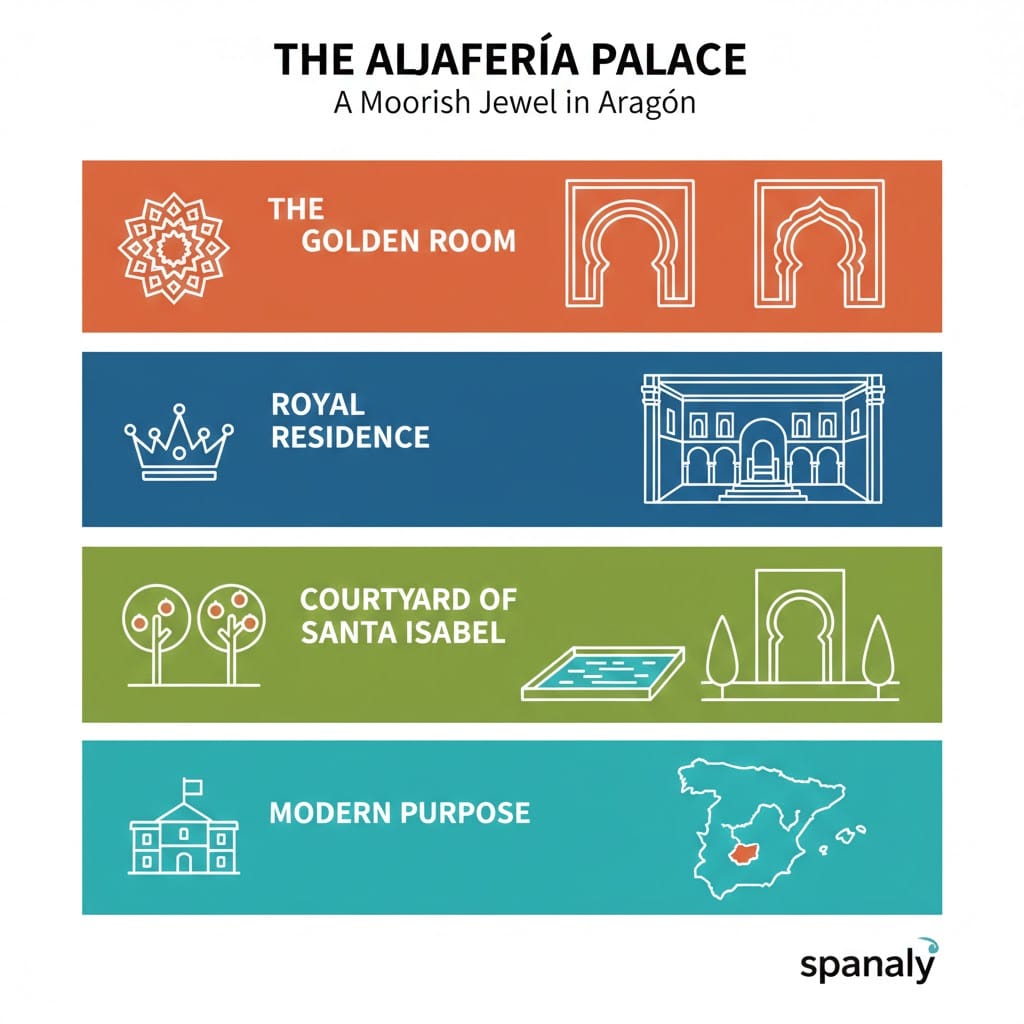
If you think you need to travel to the south to see breathtaking Islamic architecture, the Aljafería Palace will surprise you. Built in the 11th century, it is the finest example of Moorish design outside of Andalusia, echoing the same intricate soul found in Granada’s Moorish Past.
Why the Aljafería is Unmissable:
✨ The Golden Room: Discover the intricate geometric carvings and arches that inspired the later builders of the Alhambra.
👑 A Royal Residence: After the Reconquista, it became the palace of the Catholic Monarchs, adding a stunning Renaissance throne room to its medieval structure.
🌿 The Courtyard of Santa Isabel: A peaceful oasis of orange trees and horseshoe arches that feels like stepping back into the era of the Taifa kingdoms.
🏛️ Modern Purpose: Today, it uniquely houses the Aragonese Parliament, blending ancient heritage with modern democracy.
Spanaly Thought: The Aljafería is a “silent” masterpiece. Unlike the crowded monuments in other cities, here you can often enjoy the intricate shadows of the arches in peace—a dream for photography lovers who want to capture Spain’s Islamic legacy without the queues.
🧱 The Mudéjar Heritage: UNESCO World Art
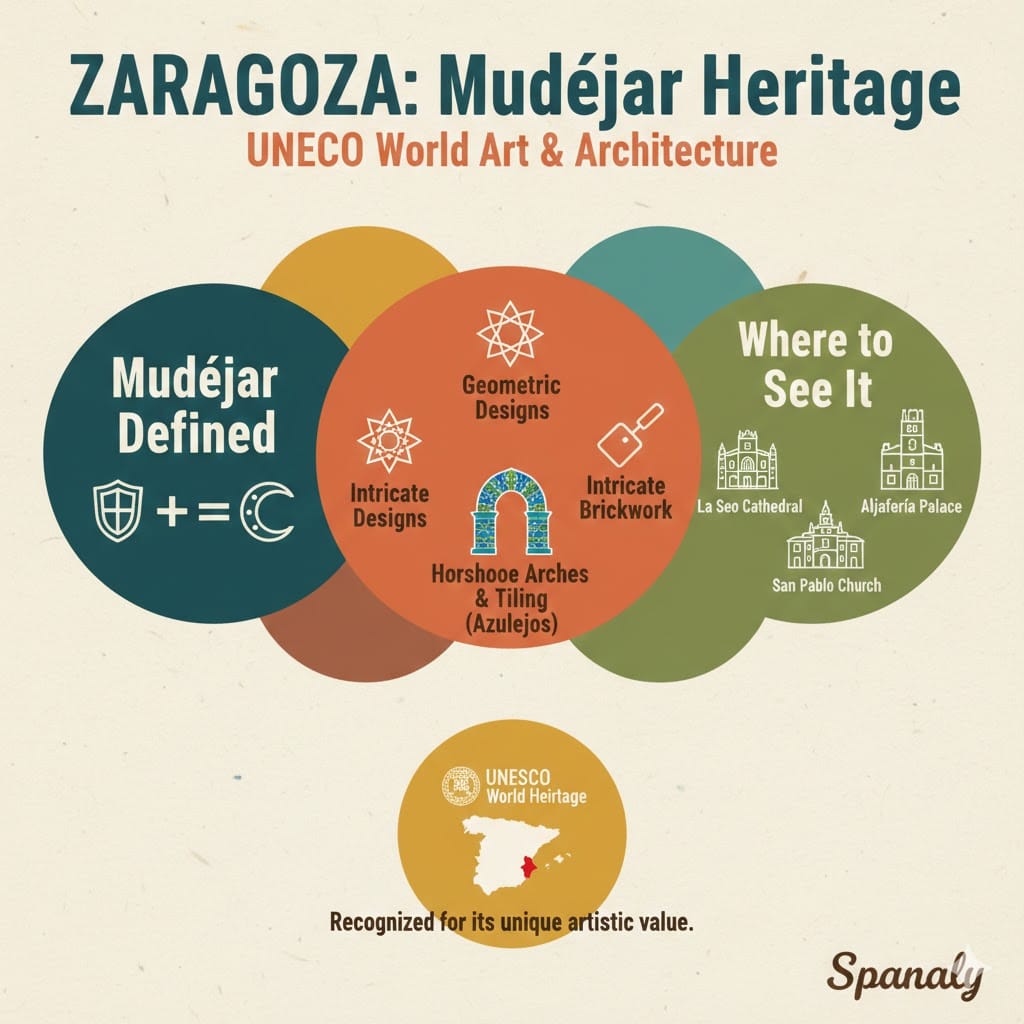
If Zaragoza had a signature style, it would undoubtedly be Mudéjar. This UNESCO-protected art form is a beautiful “hybrid”—the result of Muslim craftsmen staying in Spain after the Reconquista and applying their incredible brickwork and ceramic skills to Christian buildings. It’s a style you won’t even find in our Barcelona Travel Guide!
How to Spot Mudéjar in Zaragoza:
🧱 Geometric Brickwork: Look for complex, lace-like patterns on the exterior walls of churches. No mortar is visible—just pure geometric perfection.
💠 Glazed Ceramics (Azulejos): Vibrant green, white, and blue tiles that catch the sun and add a splash of color to the earthy brick tones.
🔔 Slender Towers: The bell towers of Zaragoza often resemble Islamic minarets, a nod to the city’s multi-layered architectural soul.
📍 Where to Look: The exterior wall of La Seo Cathedral (Parroquia de San Salvador) is widely considered the finest Mudéjar wall in the world.
Spanaly Thought: Mudéjar is the ultimate symbol of coexistence. It’s the sound of different cultures speaking the same artistic language, and in Zaragoza, this language is written on every corner.
🎨 The Goya Trail: Walking with a Master
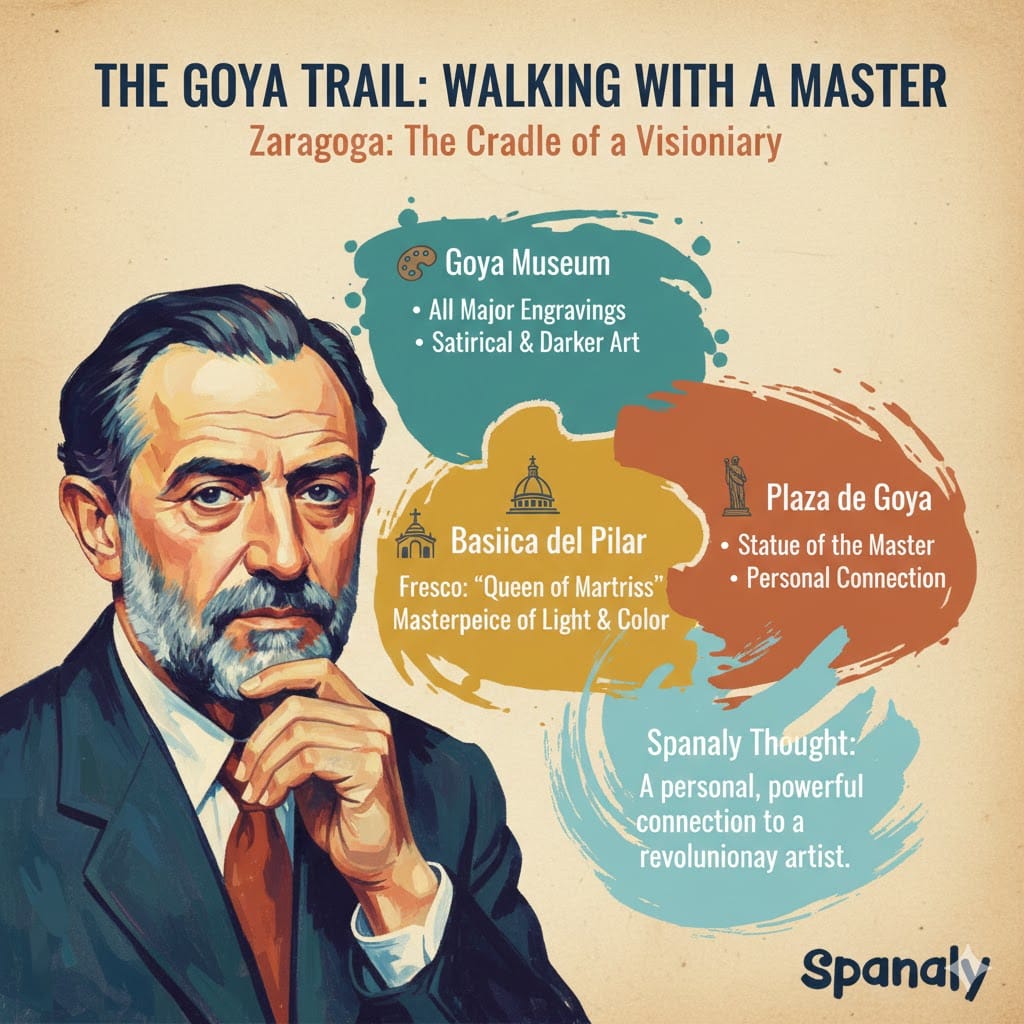
Zaragoza is the proud cradle of Francisco de Goya, the visionary painter who bridged the gap between old masters and modern art. Walking through the city feels like visiting an open-air gallery dedicated to his genius, a journey that rivals the artistic depth of our Madrid Travel Guide.
Where to find Goya’s Soul:
🎨 The Goya Museum (Museo Camón Aznar): This is the only place in the world that houses all of Goya’s major engraving series. It’s an intimate look into the darker, more satirical side of his imagination.
⛪ Basilica del Pilar Vaults: Look up! Goya painted two of the massive domes. His fresco “The Queen of Martyrs” is a masterpiece of light and color that dominates the sacred space.
🗿 Plaza de Goya: A beautiful square featuring a statue of the master himself, surrounded by the shadows of the buildings where he once lived and dreamed.
Spanaly Thought: Goya wasn’t just a painter; he was a revolutionary. Seeing his work in his hometown gives you a raw, personal connection to his art that you simply won’t feel in the crowded halls of the Prado.
🍷 El Tubo: The Ultimate Tapas Adventure
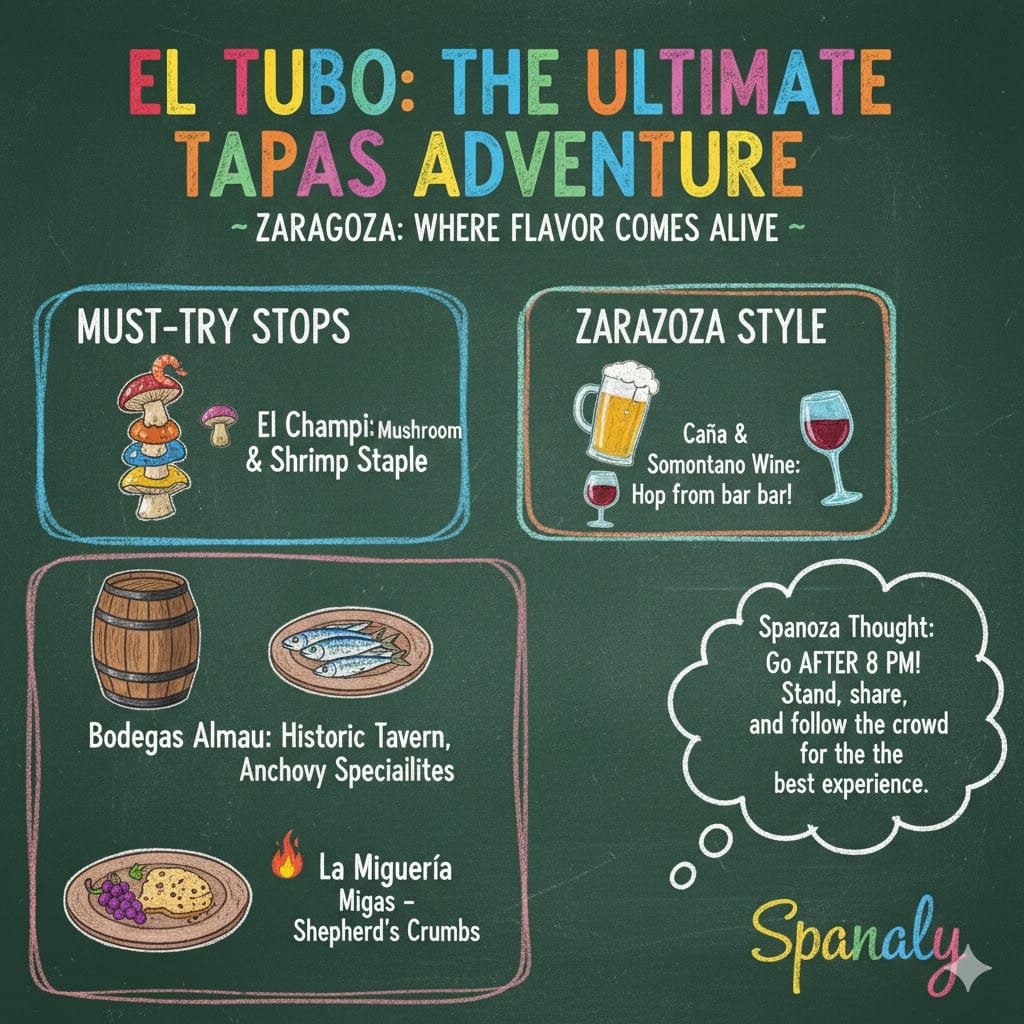
No visit to Zaragoza is complete without getting lost in the narrow, labyrinthine alleys of El Tubo. This is more than just a dining area; it’s a living tradition where locals and travelers unite over small plates and great wine. If you enjoyed the food scene in our Seville City Guide, you will find El Tubo to be a more intimate, hidden gem.
The “Must-Try” Stops in El Tubo:
🍄 El Champi: Famous for one thing only—their stacked mushroom tapas topped with a single shrimp. Simple, legendary, and always fresh.
🥘 Bodegas Almau: Step back in time in this historic tavern. Their specialty is anchovies (boquerones), served in ways you’ve never imagined.
🔥 La Miguería: Taste the heart of Aragon with a plate of Migas—traditional shepherd’s crumbs sautéed with garlic, chorizo, and grapes for a sweet and salty explosion.
🍷 The “Zaragoza Style”: Order a caña (small beer) or a glass of local Somontano wine at each stop, and move from one bar to the next just like a local.
Spanaly Thought: The magic of El Tubo happens after 8:00 PM. Don’t plan a sit-down dinner; instead, let your senses guide you. The best tapas are often found in the most crowded corners where people are standing and sharing stories.
🏨 Where to Stay: Your Base in the Heart of Aragon
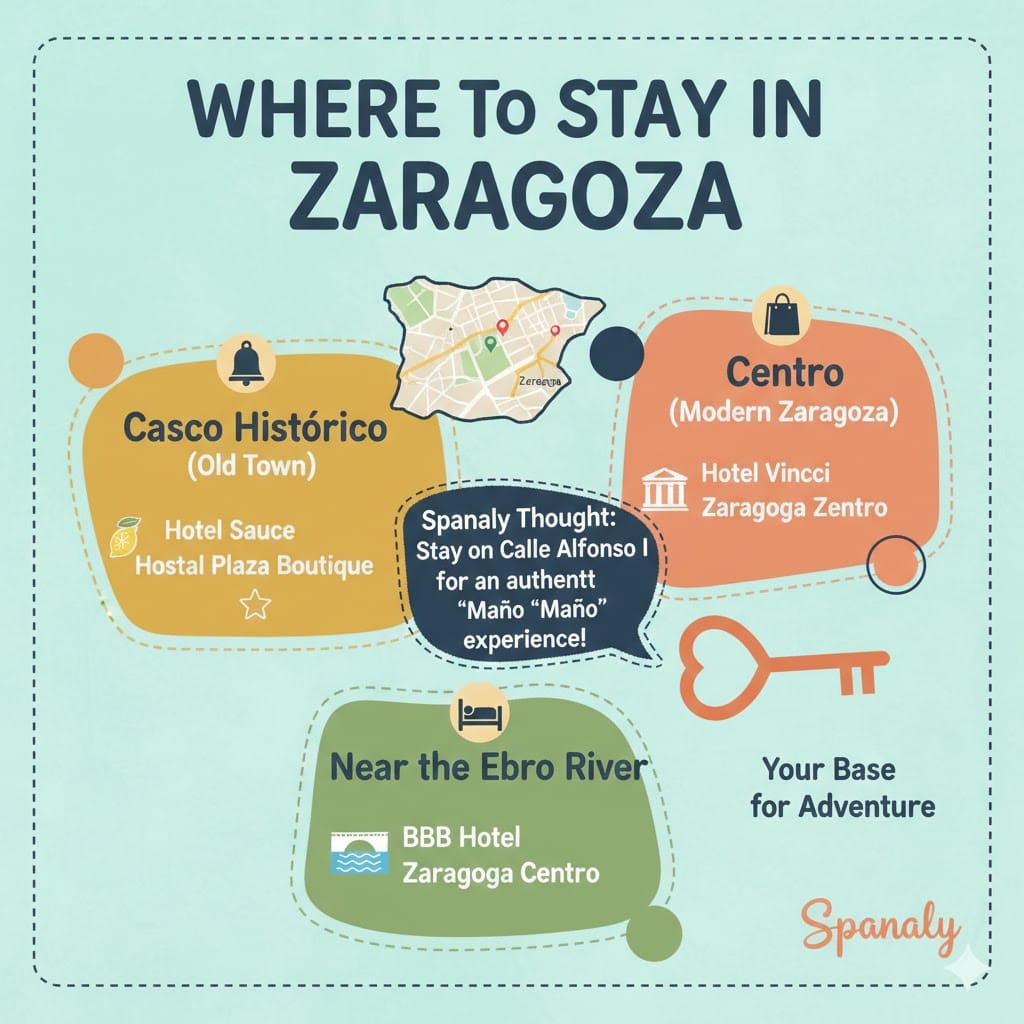
Choosing the right neighborhood in Zaragoza is key to enjoying the city’s blend of history and nightlife. Whether you’re looking for a luxury suite or a charming boutique stay, being close to the Plaza del Pilar ensures you’re never more than a few minutes away from the main sights and the best tapas in El Tubo.
Top Neighborhoods & Stays:
📍 Casco Histórico (The Old Town): For those who want to wake up to the sound of cathedral bells.
Hotel Sauce: A family-run gem known for its incredible breakfast and “lemon” themed decor. It’s right in the heart of the action.
Hostal Plaza Boutique: Modern, chic, and located steps away from the Basilica.
🛍️ Centro (Modern Zaragoza): Ideal for shopping and a more cosmopolitan vibe, while still walking distance to history.
Hotel Vincci Zaragoza Zentro: A 4-star haven with a stunning avant-garde design, built inside a historic palace facade.
🌉 Near the Ebro River: For a more peaceful stay with stunning sunset views over the water.
B&B Hotel Zaragoza Centro: Great value and located just across the Stone Bridge, offering the best skyline views.
Spanaly Thought: If you want the authentic “Maño” experience, stay as close to Calle Alfonso I as possible. It’s the pedestrian artery of the city and perfect for late-night strolls after a Tapas adventure.
🎉 Festivals: The Fiestas del Pilar and Beyond

If you want to see Zaragoza truly “explode” with life, mid-October is your window. The Fiestas del Pilar isn’t just a local party; it’s a week-long cultural phenomenon that rivals the energy of any major Spanish Festival. During this time, the city’s heart beats to the sound of drums, traditional songs, and the laughter of millions.
The Highlights of the Pillar Festival:
💐 Ofrenda de Flores (The Flower Offering): The emotional peak of the festival on October 12th. Imagine hundreds of thousands of locals in stunning traditional Aragonese costumes offering millions of flowers to the Virgin, creating a massive, fragrant floral pyramid in the main square.
🥁 Giants and Big-Heads (Gigantes y Cabezudos): A whimsical parade of towering figures and “big-headed” characters that dance through the streets, chasing children and delighting families—a tradition that feels like stepping back in time.
🎆 Fireworks & Concerts: Every night, the Ebro River reflects spectacular pyrotechnic displays while the city’s plazas turn into open-air concert halls for everyone to enjoy.
Beyond the Big Week:
🎭 Holy Week (Semana Santa): Zaragoza hosts one of Spain’s most soul-stirring Holy Weeks. It is world-renowned for the thunderous, synchronized beating of over 7,000 drums that vibrate through the city’s stone walls.
🎬 Zaragoza Film Festival: A sophisticated late-autumn event for cinema buffs, showcasing the best national and international short films.
Spanaly Thought: If you plan to visit during the Fiestas del Pilar, book your hotel at least 6 months in advance! The city’s population doubles, and finding a room becomes a challenge even for the most seasoned travelers.
🥘 Aragonese Flavors: What to Eat & Drink
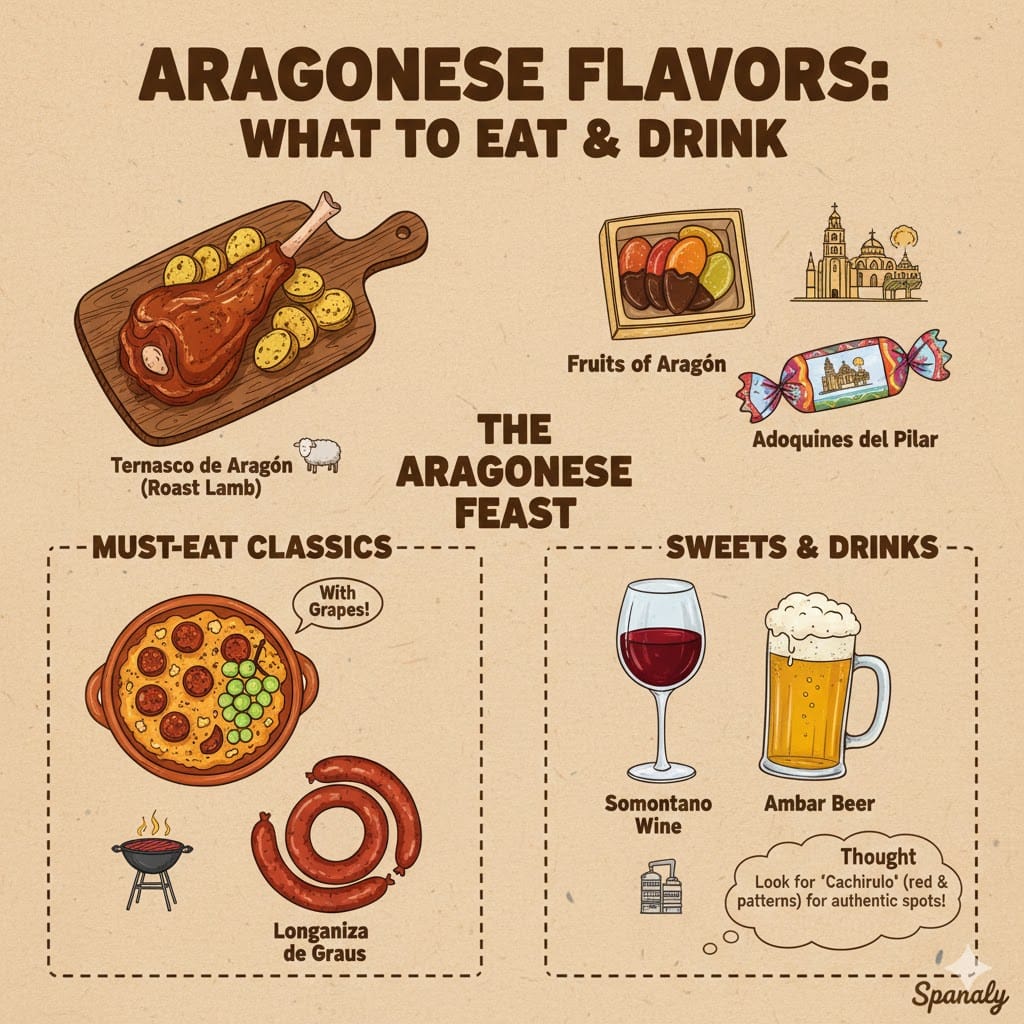
While El Tubo is the place for social snacking, Zaragoza’s sit-down culinary scene is where the true heart of Aragon lies. The local cuisine is honest, hearty, and deeply connected to the land. If you think you’ve tasted everything in our Spanish Food Guide, wait until you try these local specialties!
The “Must-Eat” Aragonese Classics:
🐑 Ternasco de Aragón (Roast Lamb): This is the undisputed king of the table. A young, tender lamb roasted with potatoes and garlic until the skin is perfectly crisp. It’s a protected regional product and a true delicacy.
🥘 Migas Aragonesas: Originally a humble shepherd’s meal, these fried breadcrumbs are elevated with garlic, longaniza (local sausage), chorizo, and—most importantly—sweet grapes to balance the salt.
🥖 Longaniza de Graus: A spicy, flavorful pork sausage that is a staple in every Aragonese kitchen. You’ll find it grilled, in stews, or even as a pizza topping!
🍫 Borrachitos & Fruits of Aragon: For the sweet tooth, don’t miss “Frutas de Aragón”—candied fruits dipped in rich dark chocolate. Also, look for Adoquines del Pilar, the legendary oversized hard candies that come with a comic strip inside!
What to Drink:
🍷 Somontano Wine: Zaragoza is surrounded by world-class vineyards. A glass of Somontano red or white is the perfect companion to a hearty Ternasco.
🍺 Ambar Beer: The pride of Zaragoza. This local brewery produces one of the best beers in Spain. Visiting the old factory is a treat in itself!
Spanaly Thought: When ordering Migas, always ensure they serve them with grapes! The sweet-and-salty explosion is what makes the Aragonese version superior. Also, keep an eye out for Cachirulo (the red and black checkered patterns) in restaurants—it’s a sign of a place that takes local tradition seriously.
🏰 Day Trips: Exploring the Wild Side of Aragon
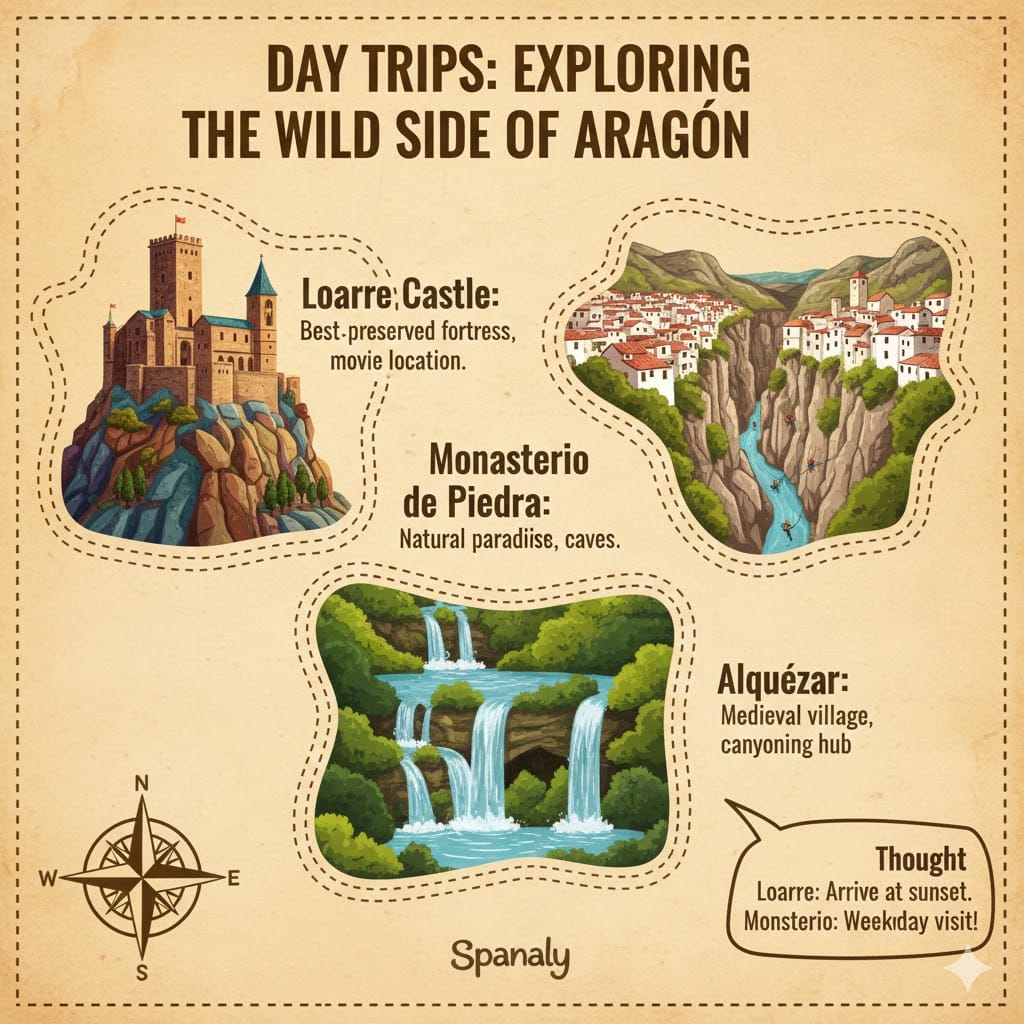
While Zaragoza can keep you busy for days, its surroundings offer some of the most dramatic landscapes and historical sites in Spain. If you’ve enjoyed the urban energy of Spain’s major hubs, these day trips into the rugged Aragonese countryside will steal your heart.
Top 3 Excursions from Zaragoza:
🛡️ Castle of Loarre: About an hour’s drive away, this is the best-preserved Romanesque fortress in Europe. Perched on a rocky peak, its golden limestone walls have defended the kingdom for a millennium. You might recognize it as the primary filming location for the movie Kingdom of Heaven!
🌿 Monasterio de Piedra: A natural paradise. This former monastery is surrounded by a lush park filled with cascading waterfalls, hidden caves, and crystal-clear lakes. It’s the perfect “green” escape from the city’s heat.
🏘️ Alquézar: A stunning medieval village suspended over the Vero River canyon. It’s a hub for adventure seekers (canyoning) and those who love wandering through cobblestone streets that haven’t changed in centuries.
Spanaly Thought: For Loarre Castle, try to arrive just before sunset. The way the light hits the fortress while looking out over the endless plains of Huesca is a spiritual experience. Also, the Monasterio de Piedra is very popular on weekends—visit on a weekday if you want the waterfalls all to yourself.
🛡️ Practical Travel Tips: Weather, Safety, & Transport
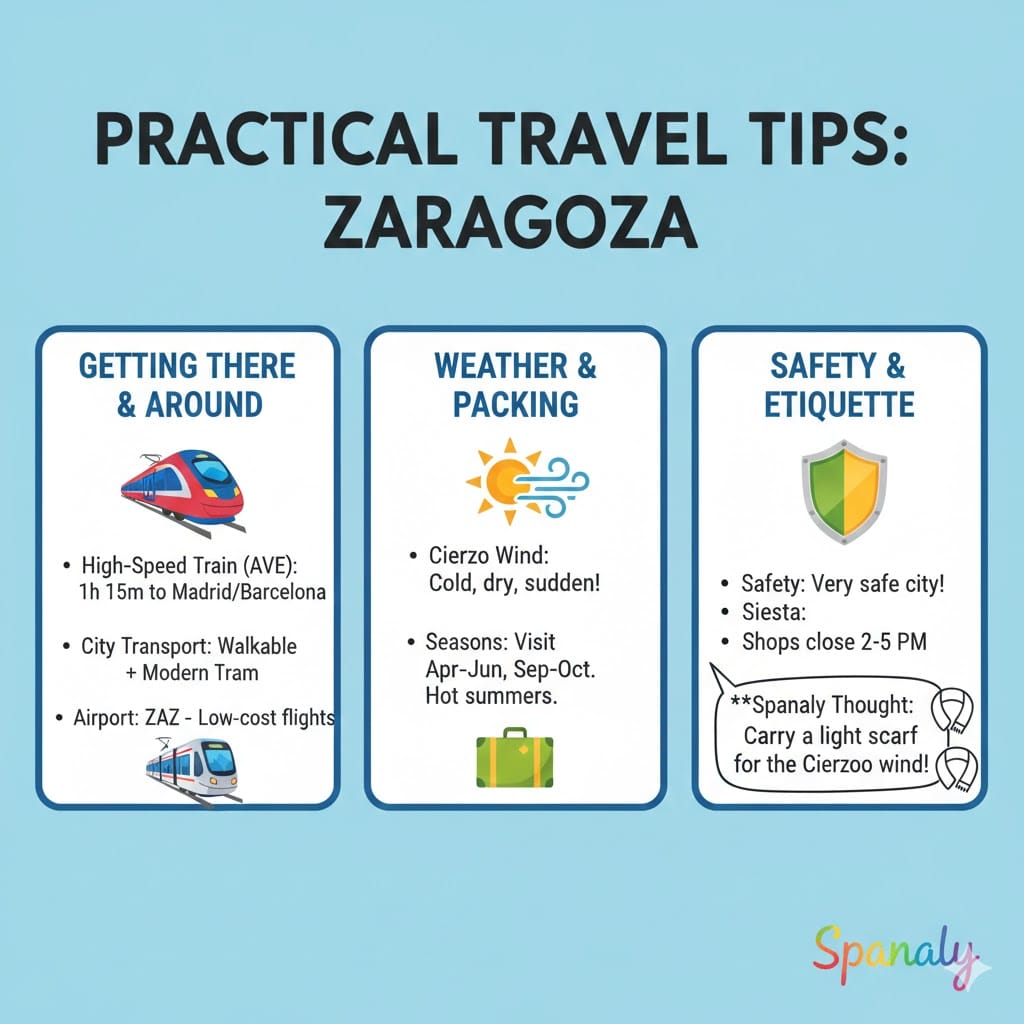
Planning your trip to Zaragoza is straightforward, but a few “insider” logistics can make your experience much smoother. Since you’ll likely be arriving from other major hubs, knowing how to navigate the city and what to pack is essential.
Getting There & Around:
🚆 High-Speed Train (AVE): Zaragoza is perfectly positioned halfway between Madrid and Barcelona. The AVE train gets you here in about 1 hour and 15 minutes from either city. If you’re coming from the capital, check our guide on Getting Around Madrid for station tips.
🚌 Within the City: Zaragoza is a very walkable city, especially the historic center. For longer distances, the modern tram system is sleek, efficient, and easy to use.
✈️ Flights: Zaragoza Airport (ZAZ) has great connections with low-cost carriers across Europe.
Weather & Packing:
🌬️ The Cierzo Wind: Zaragoza is famous for a dry, cold wind called the Cierzo. Even in spring or autumn, it can feel chilly.
☀️ Seasons: Summers are hot and dry, while winters can be foggy. The best times to visit are April to June and September to October. Not sure what to bring? See our ultimate guide on What to Pack for Spain.
Safety & Local Etiquette:
✅ Safety: Zaragoza is generally very safe, even at night. Unlike larger hubs, you can walk around with peace of mind. For general precautions, you can glance at our tips on Night Safety in Barcelona as they apply to any urban Spanish environment.
⏰ The Siesta: Remember that many local shops (outside the main shopping street, Calle Alfonso) still close between 2:00 PM and 5:00 PM.
Spanaly Thought: Always carry a light scarf, even in the summer. The Cierzo wind can appear out of nowhere, and you’ll be glad to have that extra layer while crossing the Ebro bridges!
💡 Pro Insider Tips: Experience Zaragoza Like a "Maño"
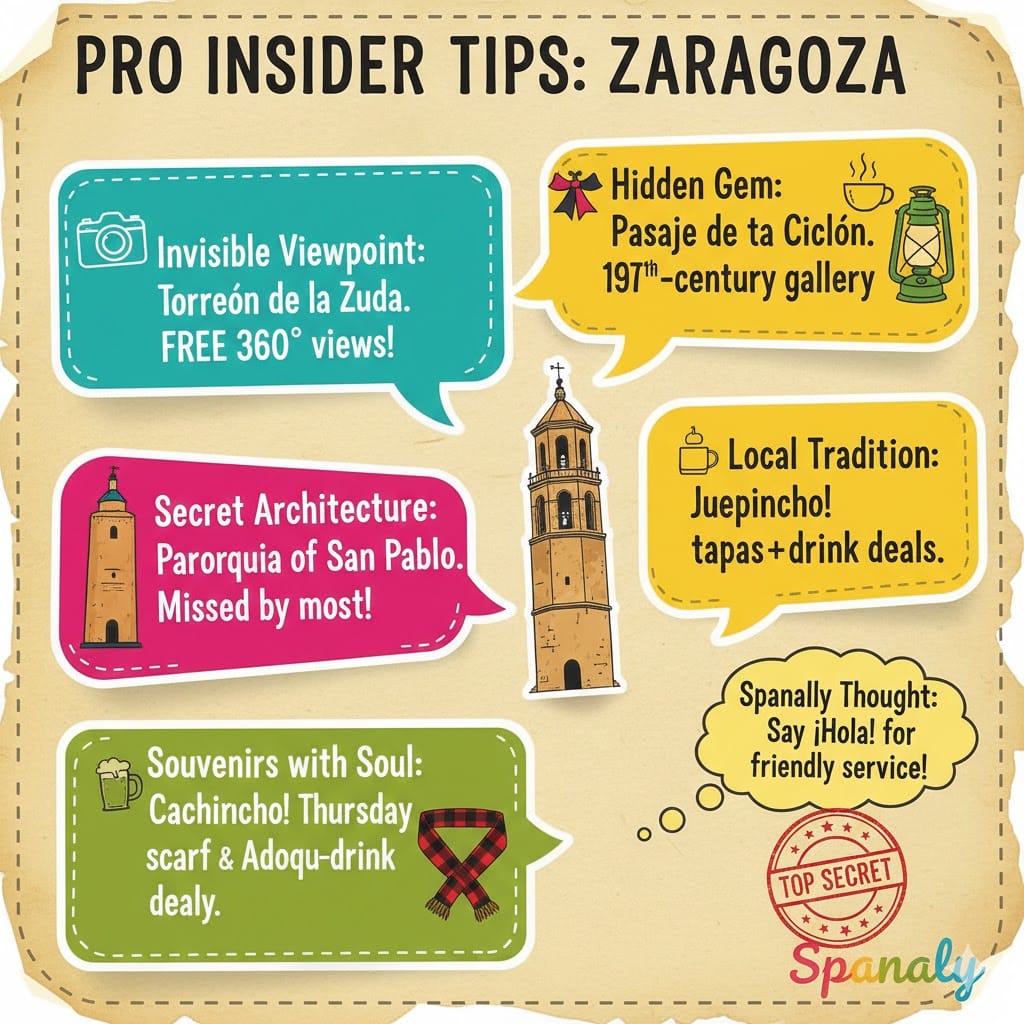
To truly unlock the soul of Zaragoza, you need to go beyond the guidebooks. Here are our exclusive Spanaly secrets to make your visit unforgettable and smooth:
📸 The “Invisible” Viewpoint: While everyone crowds the Basilica’s towers, head to the Torreón de la Zuda. It’s a medieval tower that houses the tourist office, but many don’t know you can go to the top floor for a free and stunning 360-degree view of the city and the river.
🎭 The “Pasaje de la Ciclón”: Tucked away right next to Plaza del Pilar, this is a hidden 19th-century shopping gallery. It’s incredibly photogenic, filled with vintage-style cafes, and is the perfect spot for a quiet “Café con Leche” away from the plaza’s wind.
⛪ Hidden Mudéjar Gem: Don’t just look at the Cathedral from the outside. Find the Parroquia de San Pablo. It’s often called the “third cathedral” of Zaragoza and its Mudéjar tower is a masterpiece that most tourists completely miss.
🍽️ The “Juepincho” Tradition: If you happen to be in Zaragoza on a Thursday, you’re in luck! Many bars in the “Magdalena” neighborhood offer a Pincho + a drink (beer or wine) for a very low fixed price. It’s a local tradition that fills the streets with young energy.
🛒 Souvenirs with Soul: Avoid the generic plastic icons. Head to La Mar de Cookies for artisan local sweets or look for a Cachirulo (the traditional red and black checkered scarf) in a local textile shop—it’s the ultimate symbol of Aragonese pride.
Spanaly Thought: When you enter a local bar, don’t be shy to say “¡Hola!” or “Buenas” loudly. Zaragoza is known for having some of the friendliest people in Spain, and a little local greeting goes a long way in getting the best service!
🏛️ Visitor FAQs – Discover Zaragoza
⏳ How many days are enough to see Zaragoza?
To cover the main icons like the Basilica, Aljafería, and enjoy the tapas scene, 2 days (one night) is perfect. However, if you plan to explore the nearby Loarre Castle or Monasterio de Piedra, we recommend staying for 3 days.
⛪ Are there free things to do in the city?
Yes! Entry to the Basilica del Pilar is free. You can also walk across the Stone Bridge for the best skyline views or visit the Torreón de la Zuda viewpoint at no cost. Many city museums also offer free entry on the first Sunday of every month.
🛍️ Do shops close on Sundays in Zaragoza?
Most traditional shops and markets close on Sundays. However, restaurants, cafes, and major attractions remain open. If you need to shop, large malls like Puerto Venecia (one of Europe’s largest) are your best bet on weekends.
🗣️ Is English widely spoken?
In major hotels and the main tourist information centers, yes. However, Zaragoza is a truly authentic Spanish city, so in smaller tapas bars or local shops, a few basic Spanish phrases will go a long way. People here are famously friendly and helpful!
🚍 How do I get from the Train Station to the center?
The Delicias Train Station is about 3km from the historic center. You can take the Bus Line 34 or Ci1/Ci2, which takes about 15 minutes. Alternatively, a taxi is affordable (around €10-12) and very convenient if you have luggage.
Refined by Spanaly.com
✨ Why Zaragoza Deserves a Spot on Your Map
Zaragoza doesn’t need to shout to be heard. Its charm lies in the perfect balance between grand history and local soul. Here is why it should be your next stop:
A Living History: From Roman walls to Moorish arches, it’s a city that wears its past with pride.
Authentic Vibes: Unlike the crowded tourist hubs, Zaragoza offers a genuine Spanish experience.
The Perfect Link: If you enjoyed the Islamic heritage in our Cordoba Spain Travel Guide, you will find the Aljafería Palace equally soul-stirring.
Culinary Heaven: Between the tapas of El Tubo and the roast lamb of Aragon, your taste buds are in for a treat.
Zaragoza is more than just a stop between Madrid and Barcelona—it is a destination where time slows down, the food tastes like home, and every corner tells a story.
Final Spanaly Thought: Stand on the Stone Bridge at sunset and watch the lights dance on the Ebro River. In that moment, you’ll understand why this city is the hidden heart of Spain. ¡Buen viaje!