
Table of Contents
Toggle🏛️ Córdoba 3-Day Itinerary
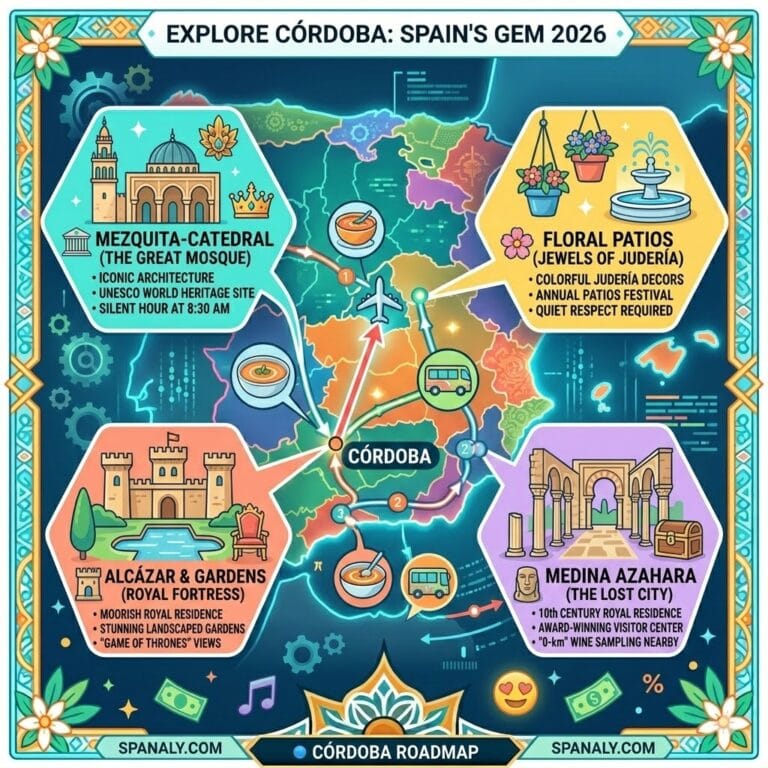
Stepping into Córdoba feels like a direct voyage to the 10th century. Once the global heart of science and culture, this city now blends its glorious past with 2026 Smart-City innovation. To experience this transformation, you need a plan that respects both the ancient stones and modern pace.
✨ What Awaits You in 72 Hours
📜 UNESCO Heritage: Explore a city that holds four world-class heritage titles.
🌸 The Floral Soul: Wander through whitewashed alleys blooming with vibrant geraniums.
📱 Digital Navigation: Use our 2026 interactive roadmap to bypass the tourist crowds.
These elements combine to create an atmosphere found nowhere else in Spain. Consequently, our itinerary focuses on maximizing your time while maintaining a relaxed, Mediterranean rhythm.
💡 Spanaly Insight: Most travelers treat this city as a quick stopover. However, to truly grasp the local soul, read our Córdoba Spain Travel Guide before you arrive. This preparation helps you appreciate the deep Islamic and Roman layers that define every street corner.
⚖️ The Córdoba Contrast: Floral Patios vs. Monumental Grandeur
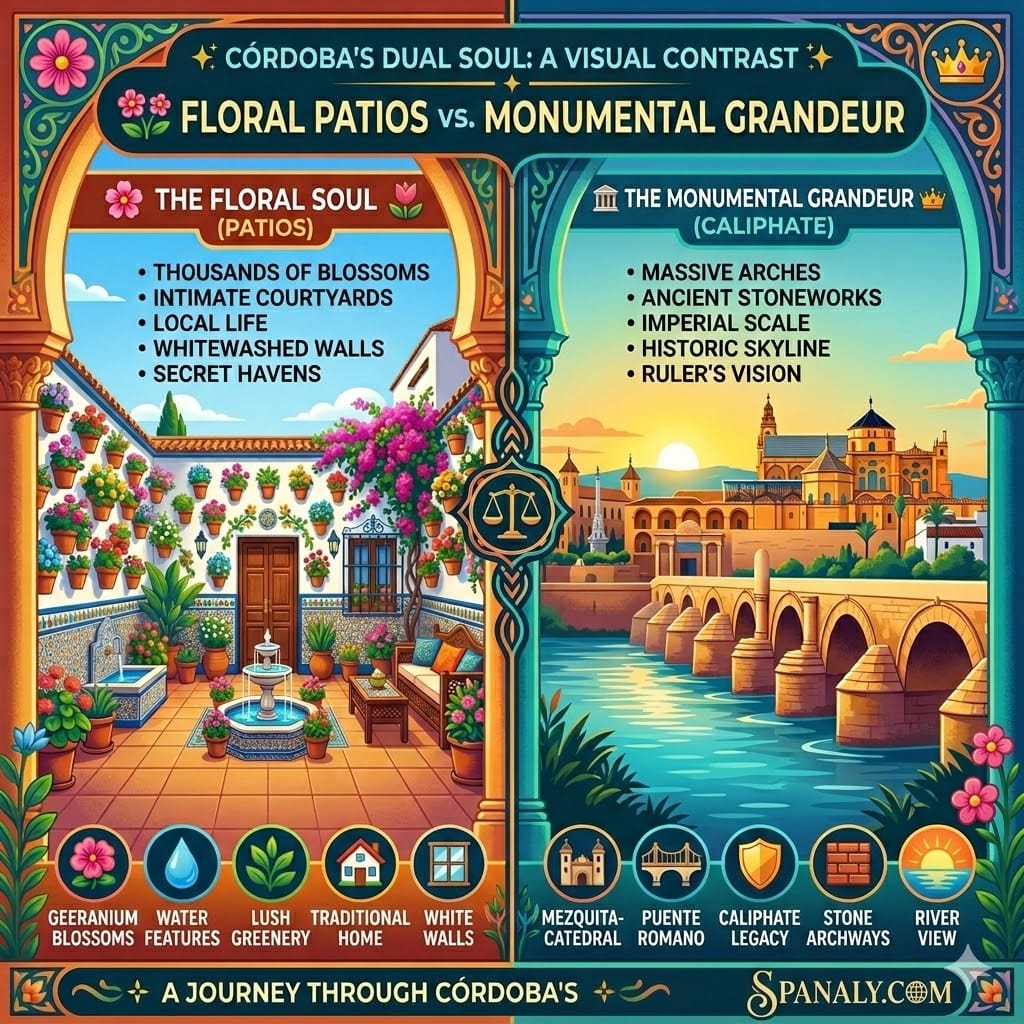
Choosing where to spend your golden hours in Córdoba can be a delightful challenge. The city offers two distinct atmospheres that define its unique identity, moving between intimate beauty and imperial scale.
🌸 The Floral Soul (Patios): Wander through the San Basilio neighborhood. Here, life moves slowly amidst whitewashed walls and thousands of blooming geraniums. It is intimate, quiet, and deeply personal.
🏛️ The Monumental Caliphate: Stand beneath the massive arches of the Mezquita or cross the Roman Bridge of Córdoba. This iconic stone structure provides the most dramatic entrance to the old city, especially when the 2026 smart-lighting illuminates its ancient curves at twilight.
These elements combine to create a rhythmic travel experience. Consequently, our itinerary balances these two worlds, ensuring you feel the humble charm of a flower-filled courtyard before witnessing the architectural power that once ruled Al-Andalus.
💡 Spanaly Insight: Do not rush through either side of the city. In 2026, many private patios now offer digital insights into their floral history. However, for the monumental side, always head to the far end of the Roman Bridge for a panoramic view that most tourist groups miss.
🎒 Essential Packing: The 2026 Córdoba Smart Gear
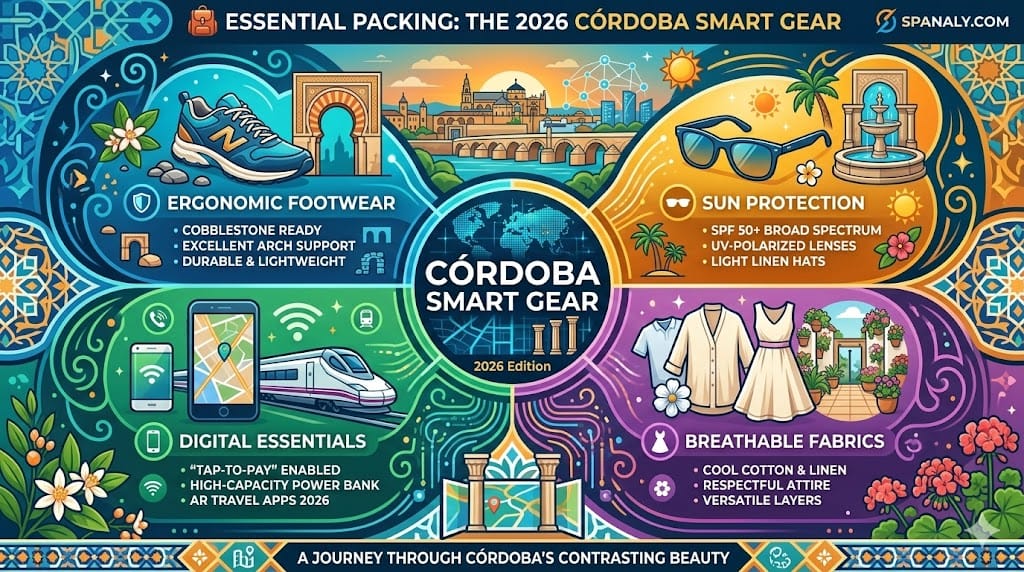
Preparing for a 3-day journey through the Caliphate requires a blend of comfort and modern technology. Since the historic center consists mostly of uneven cobblestone paths, your footwear choice remains the most critical decision. Furthermore, the intense Andalusian sun demands high-quality protection, even during the cooler months of the 2026 Smart-City season.
🛡️ The Traveler’s Survival Kit
👟 Ergonomic Footwear: Pack durable walking shoes or sandals with excellent arch support for the Jewish Quarter’s stone-paved alleys.
🕶️ Sun Protection: Bring polarized sunglasses and broad-spectrum SPF 50+ to combat the brilliant white reflection of the city’s lime-washed walls.
📱 Digital Essentials: Ensure your smartphone supports “Tap-to-Pay” for seamless transit and carry a lightweight power bank for GPS navigation.
👗 Breathable Fabrics: Choose linen or light cotton outfits to stay cool during the day while maintaining a respectful appearance for religious sites.
These items ensure you navigate the city without physical fatigue. In fact, many visitors underestimate the amount of walking involved between the Mezquita and the outlying patios. Consequently, keeping your daypack light and functional allows you to focus on the beauty around you rather than your gear.
💡 Spanaly Insight: Before you start filling your suitcase, take a moment to review our comprehensive guide on What to Pack for Spain. This list provides specific 2026 updates on eco-friendly travel gear and the latest tech requirements for Spanish high-speed trains (AVE) and local monuments.
🏨 Where to Stay: Finding Your Home in the Caliphate
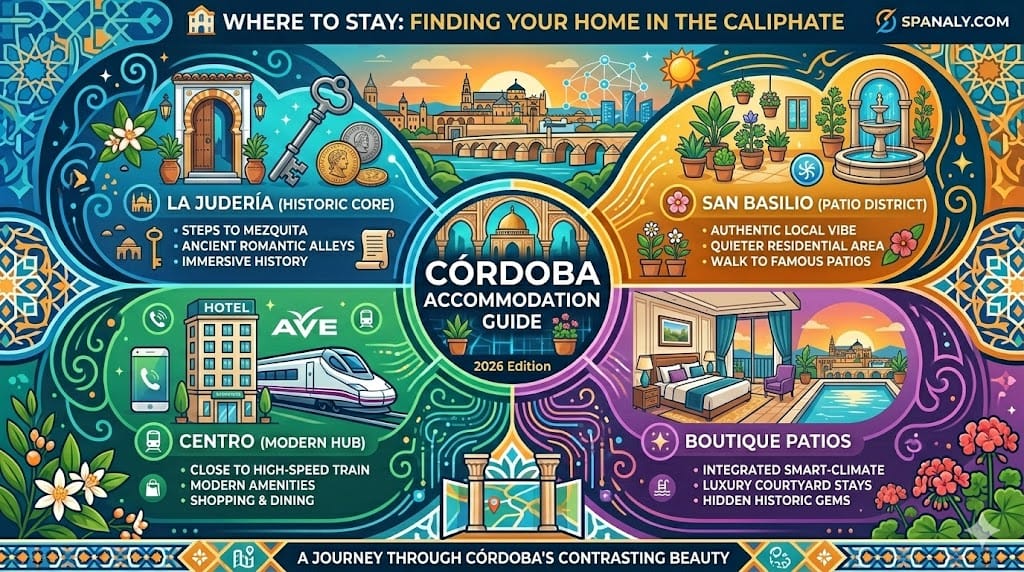
Choosing the right base in Córdoba significantly impacts your 72-hour experience. While the city is walkable, each neighborhood offers a distinct atmosphere tailored to different travel styles and 2026 smart-city preferences.
📍 Top Neighborhoods for 2026
La Judería (Historic Core): Stay here to wake up steps away from the Mezquita. It is perfect for those who prioritize history and evening strolls through ancient alleys.
San Basilio: Choose this area for a traditional vibe. It sits close to the famous patios and offers a quieter, more authentic residential feel.
Centro (Modern Hub): Ideal for travelers arriving by train. This district connects you to high-end shopping and modern 2026 amenities while remaining a short walk from the monuments.
Selecting your district depends on your desired pace. In fact, staying in the historic center allows you to witness the Roman Bridge at sunrise before the day-trippers arrive. Consequently, your choice of accommodation acts as the anchor for your entire Andalusian roadmap.
💡 Spanaly Insight: For the best 2026 experience, look for “Boutique Patios” that have integrated smart-climate control. However, before booking, check our guide on Accommodation in Spain to understand local booking etiquette and how to find hidden gems with traditional courtyards.
🚲 Getting Around: Navigating the Whitewashed Alleys
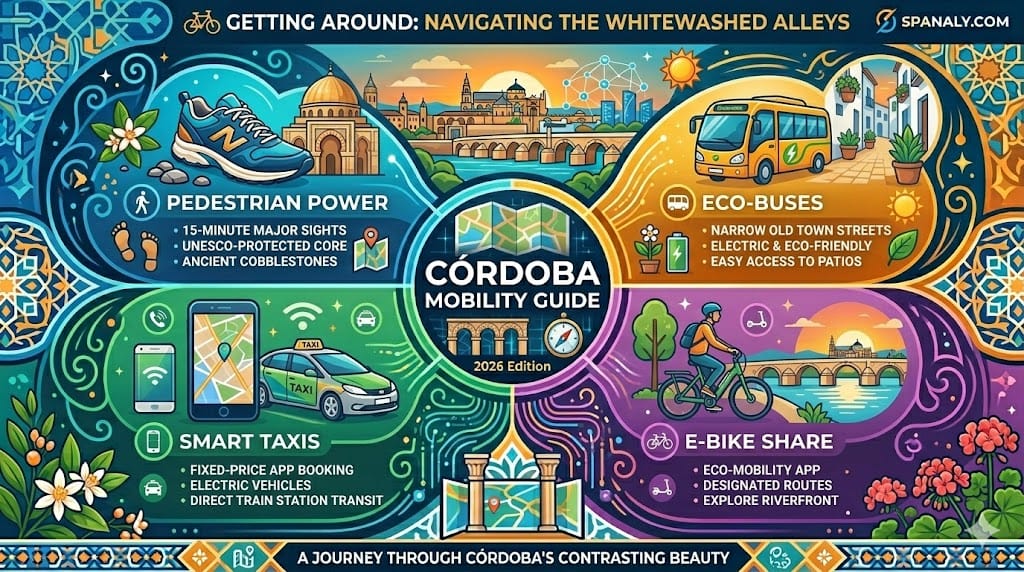
Córdoba is a city best explored on foot, especially within the UNESCO-protected core. In 2026, the city has expanded its eco-friendly transit, making it easier than ever to reach outlying attractions like Medina Azahara while keeping the historic center quiet and pedestrian-friendly.
📱 2026 Transit Options
Pedestrian Power: Most major sights (Mezquita, Alcázar, Jewish Quarter) are within a 15-minute walk of each other.
Eco-Buses: Use the bright yellow “Micro-buses” designed specifically to navigate the narrowest streets of the old town.
Smart Taxis: Download the local 2026 mobility app for fixed-price electric taxi rides between the train station and your hotel.
Navigating these ancient streets requires a bit of planning. In fact, many visitors find that the best way to see the city is to combine morning walks with late-afternoon bus rides. Consequently, choosing a “base” in the center minimizes your need for motorized transport.
💡 Spanaly Insight: If you plan on exploring more of the region, check our guide on Getting Around Spain. It covers the 2026 high-speed rail updates and eco-transit tips that will save you both time and money during your Andalusian adventure.
🔴 Day 1: The Caliphate’s Core & Roman Echoes
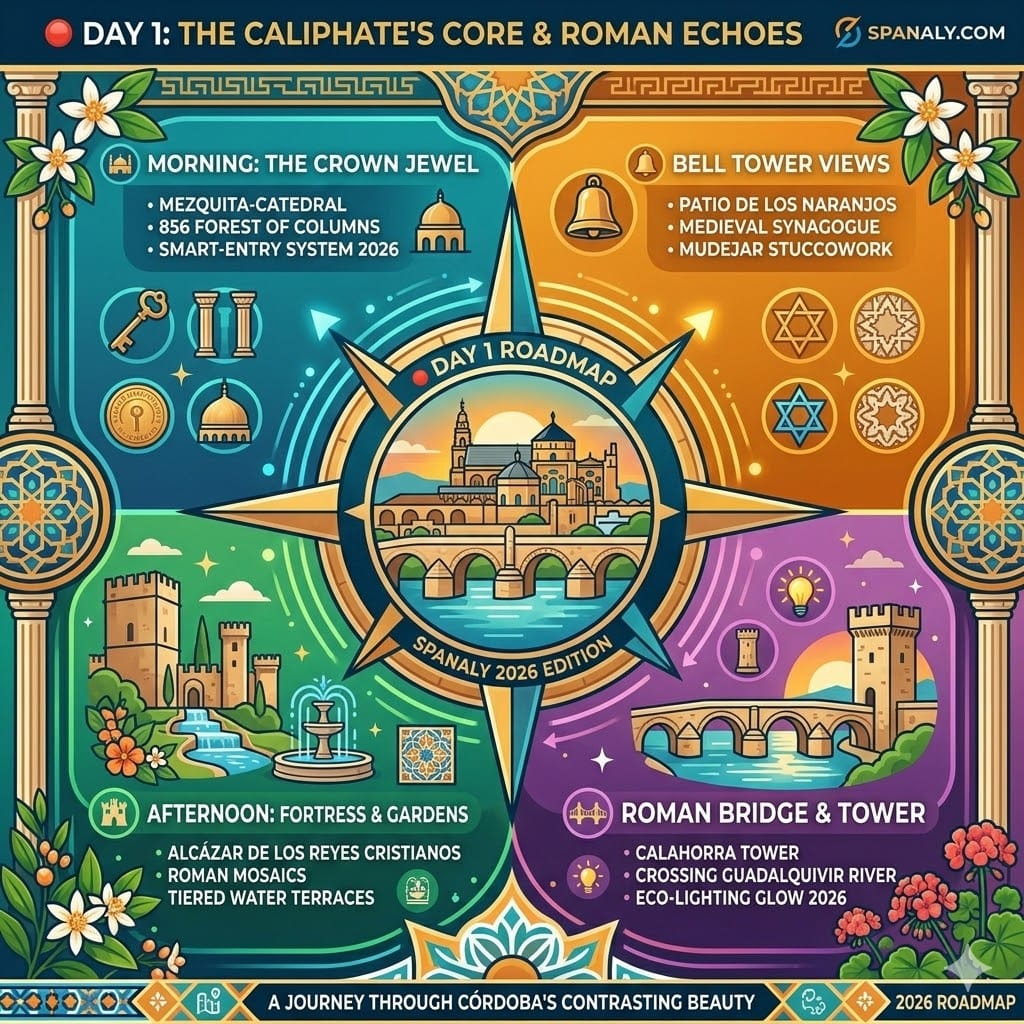
Your first day is dedicated to the monumental wonders that once made Córdoba the most advanced city in Europe. We focus on the historic triangle where Roman engineering meets Islamic artistry, all within walking distance of the city’s heart.
🏛️ Morning: The Crown Jewel
🕌 Mezquita-Catedral: Start early at the Great Mosque. In 2026, the Smart-Entry System allows you to scan your digital ticket for immediate access to the forest of 856 columns.
🔔 Bell Tower: Climb for a panoramic view of the orange tree courtyard (Patio de los Naranjos) and the surrounding sea of terracotta roofs.
🕍 The Synagogue: A short walk into the Jewish Quarter reveals one of the few remaining medieval synagogues in Spain, showcasing exquisite Mudejar stuccowork.
🌉 Afternoon: Fortresses and Bridges
🏰 Alcázar de los Reyes Cristianos: Explore the tiered gardens and Roman mosaics. The water terraces offer a perfect, cool retreat during the midday sun.
🌉 The Roman Bridge: Cross this ancient stone giant to reach the Calahorra Tower. In fact, this bridge remains the most iconic photography spot in the city.
This dense historical immersion requires a relaxed evening. Consequently, we recommend ending your day with a slow walk along the Guadalquivir river as the 2026 eco-lighting begins to glow.
💡 Spanaly Insight: To avoid the largest crowds at the Mezquita, aim for the 8:30 AM “Silent Hour” (check local 2026 schedules for updates). If you are coming from the capital, our Madrid Travel Guide explains how to coordinate your high-speed train arrival to maximize this first day.
🔵 Day 2: Floral Patios & The Art of Courtyards
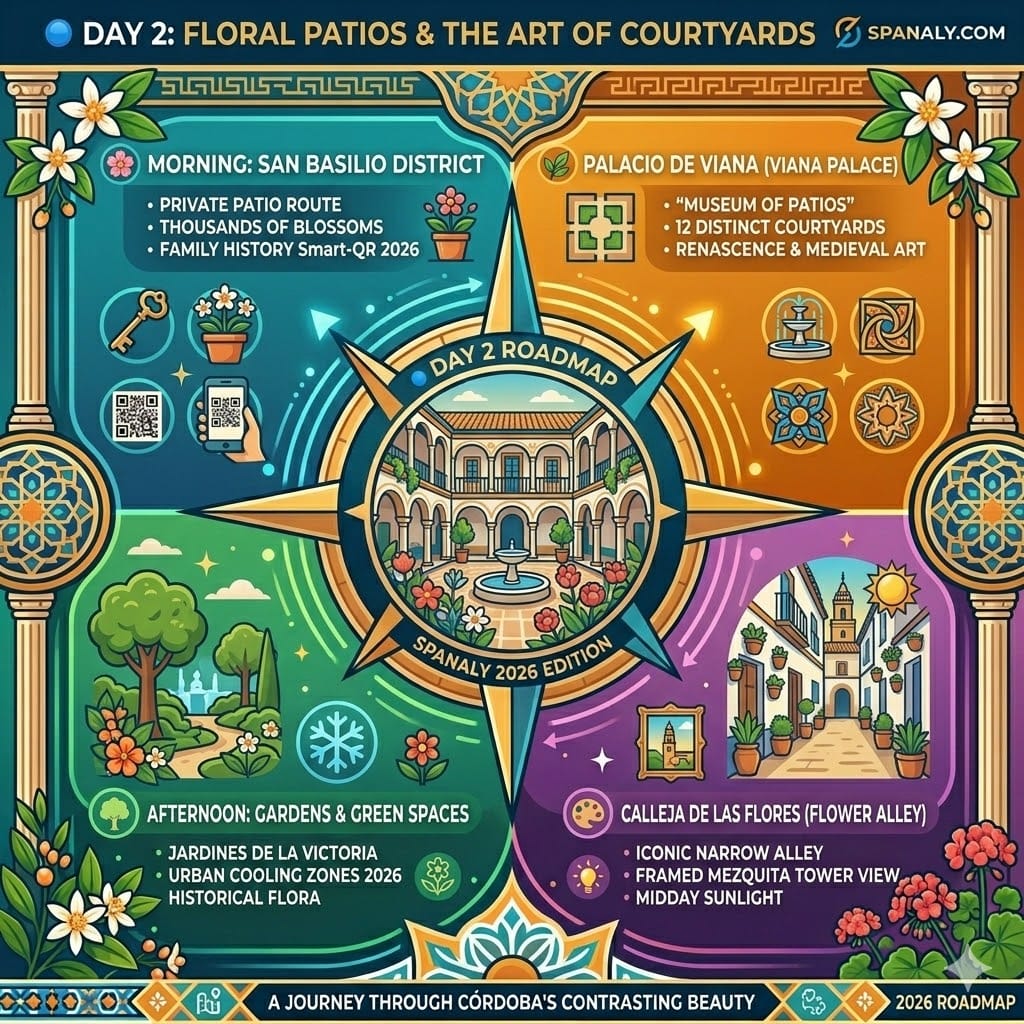
While Day 1 focused on imperial power, your second day explores the intimate soul of the city. Córdoba’s patios are more than just gardens; they are a centuries-old climate solution and a vibrant social tradition that peaks during the 2026 Spring Season.
🌸 Morning: The San Basilio District
Patio Route: Start in the San Basilio neighborhood. In 2026, many private courtyards remain open year-round. Look for the “Smart-QR” at the entrance of each patio to read the family’s history.
Viana Palace (Palacio de Viana): Known as the “Museum of Patios,” this estate features 12 distinct courtyards. In fact, it offers the best evolution of gardening styles from the medieval era to the Renaissance.
🌿 Afternoon: Gardens and Hidden Squares
Jardines de la Victoria: Walk through these sprawling green spaces to see how 2026 urban planning integrates historical flora with modern cooling zones.
Calleja de las Flores: Visit this iconic narrow alley in the afternoon. Furthermore, ensure you reach the tiny square at the end for the most famous “framed” view of the Mezquita tower.
This floral immersion provides a refreshing contrast to the stone monuments. Consequently, your evening should be spent in a local bodega, sampling Montilla-Moriles wine amidst the scent of jasmine.
💡 Spanaly Insight: If you fall in love with the greenery, you might want to extend your Andalusian tour. Check our guide on Maria Luisa Park in Seville to see how the regional passion for botanical design continues in the neighboring capital.
🟢 Day 3: The Lost City & Bohemian Vibes
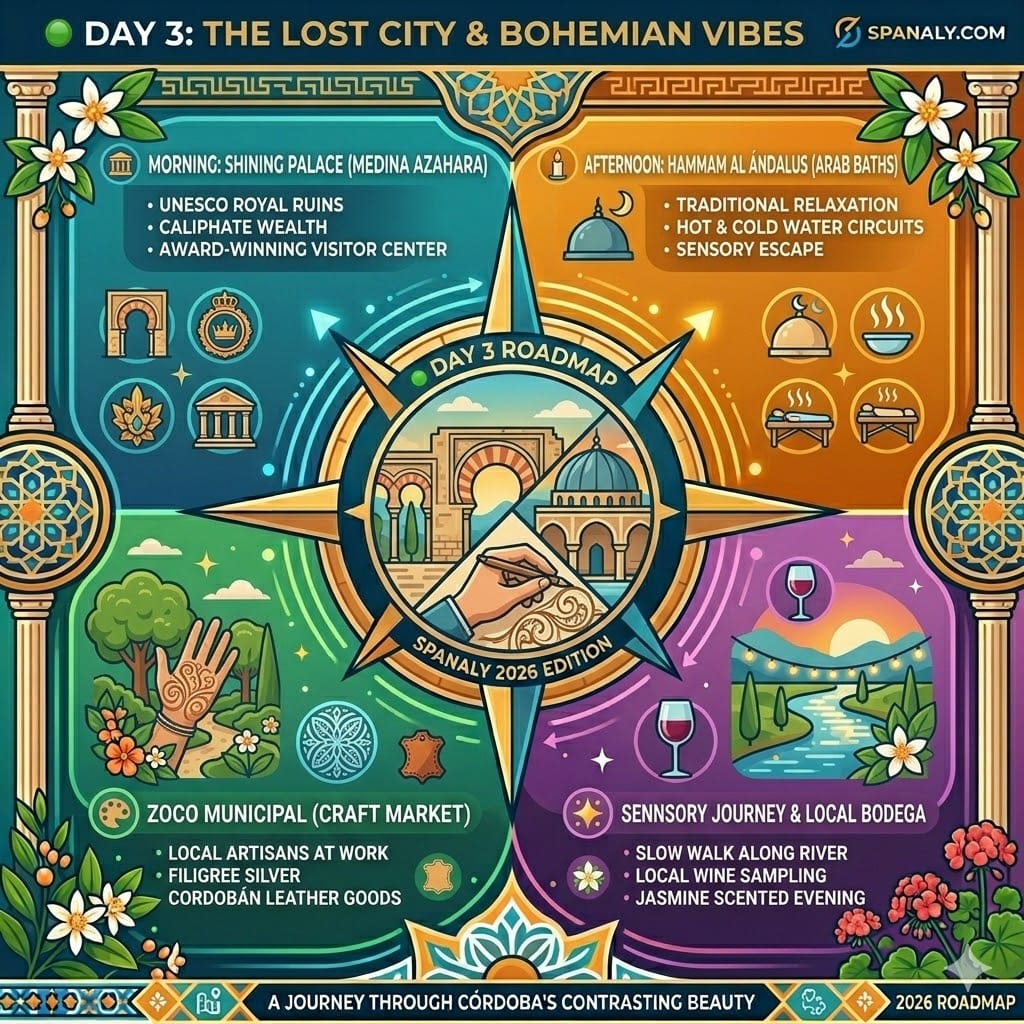
Your final day bridges the gap between the ruins of a fallen empire and the modern bohemian lifestyle of Córdoba. We head outskirts to witness the “Versailles of Al-Andalus” before returning for a sensory afternoon of relaxation.
🏛️ Morning: Medina Azahara (The Shining City)
The Royal Ruins: Take the specialized 2026 Shuttle Bus to this UNESCO site. These remains of the 10th-century palatine city showcase the sheer wealth of the Caliphate.
Visitor Center: In fact, the underground museum here is an architectural masterpiece itself, winning numerous awards for its immersive digital storytelling.
🕯️ Afternoon: Relaxation and Crafts
Hammam Al Ándalus: Return to the city for a traditional Arab bath experience. Furthermore, the combination of hot and cold water circuits is the perfect way to reset after three days of walking.
Zoco Municipal (Craft Market): End your journey by watching local artisans create Filigree silver and Cordobán leather. It is the most authentic place to pick up a piece of the city’s living history.
This blend of archaeological wonder and physical wellness creates a lasting memory of your Andalusian journey. Consequently, you leave Córdoba not just having seen its stones, but having felt its ancient rhythm.
💡 Spanaly Insight: If you find the architecture of Medina Azahara fascinating, you will be stunned by the scale of the Nasrid kingdom. Take a look at our Alhambra Granada Guide to compare the two greatest architectural achievements of Islamic Spain.
🏰 Proximity Guide: Day Trips to the Andalusian Countryside
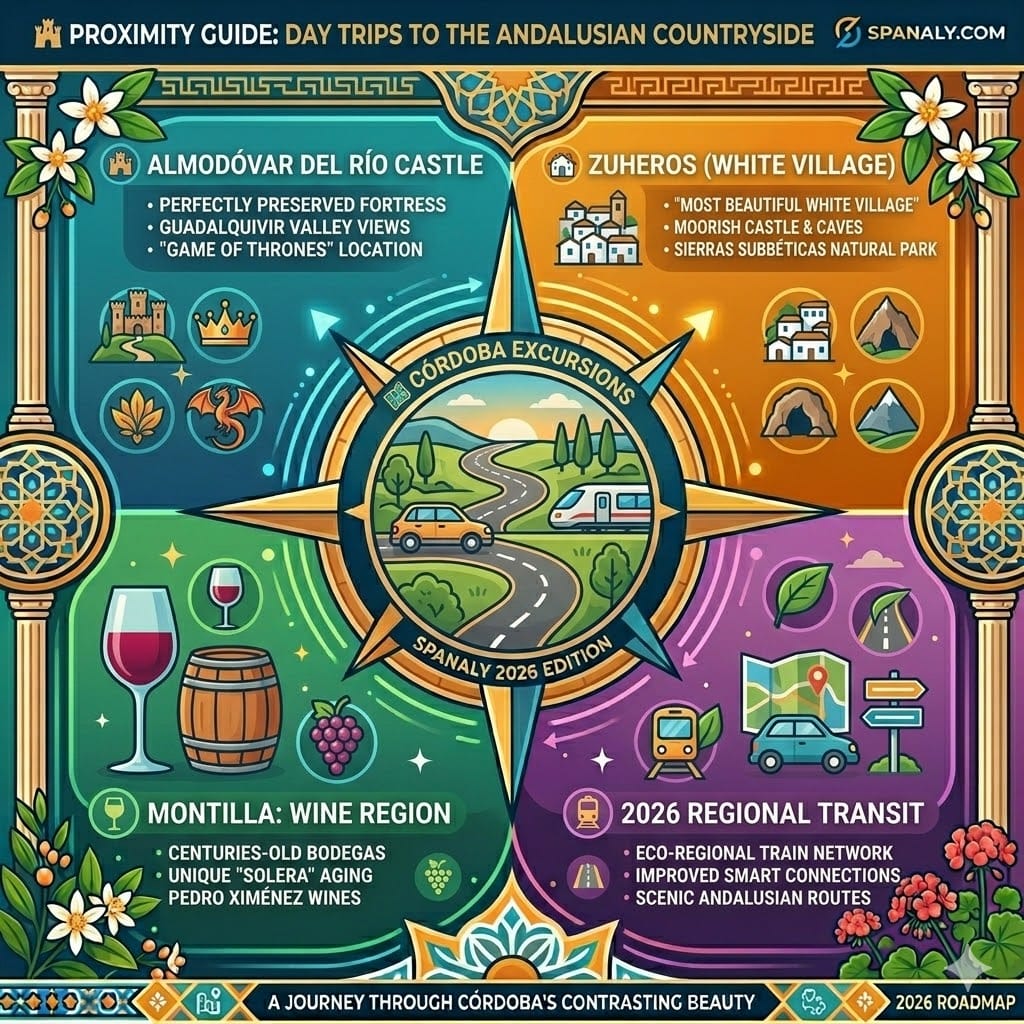
If your 72-hour journey leaves you craving more, the province of Córdoba hides medieval fortresses and white-washed villages just a short drive or train ride away. In 2026, improved regional connections make these excursions effortless for smart travelers.
📍 Top Excursions for 2026
Almodóvar del Río Castle: Located 22km from the city, this perfectly preserved fortress is a must-see for history buffs. In fact, it served as a filming location for Game of Thrones, offering stunning views over the Guadalquivir valley.
Zuheros: Often cited as one of Spain’s most beautiful white villages. It is ideal for those looking to combine a visit to a Moorish castle with a hike in the Sierras Subbéticas natural park.
Montilla: The heart of Córdoba’s wine region. Notably, you can visit centuries-old bodegas to learn about the unique “solera” aging process of Pedro Ximénez wines.
These nearby gems provide a rugged contrast to the city’s polished monuments. Consequently, they offer a deeper look into the rural traditions that have shaped Andalusia for centuries.
💡 Spanaly Insight: Many of these locations are accessible via the 2026 Eco-Regional Train network. However, if you prefer the freedom of the open road, our guide on Driving in Spain provides everything you need to know about car rentals and navigating the scenic Andalusian routes.
💰 Budgeting for the Caliphate: 2026 Price Guide
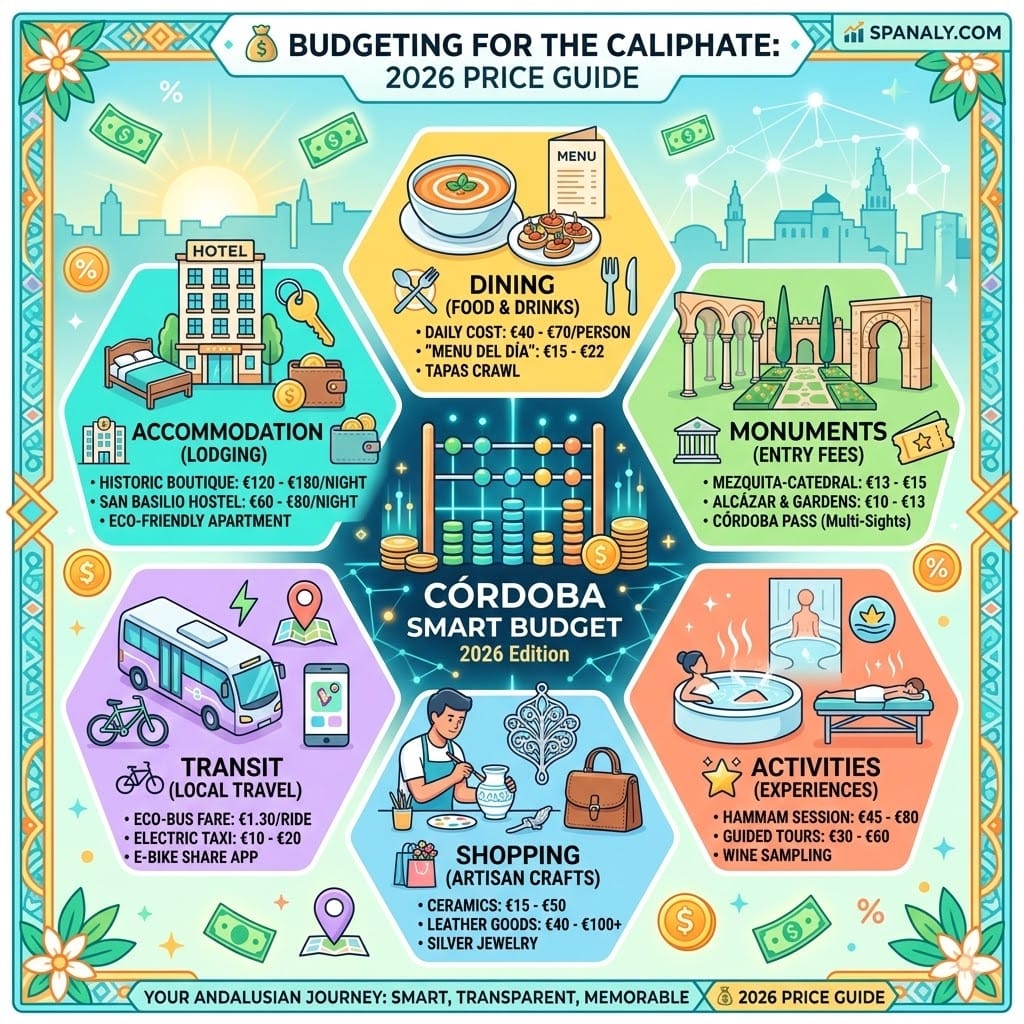
Planning your finances is key to a stress-free Andalusian adventure. While Córdoba remains more affordable than Madrid or Barcelona, the 2026 Smart-Tourism season has introduced tiered pricing for monuments and eco-transit. Understanding these costs helps you allocate your budget effectively.
📊 Estimated Daily Expenses (Per Person)
| Category | Budget (€) | Mid-Range (€) | Grok’s Tip 🛡️ |
| 🏨 Stay | €60 – €80 | €120 – €180 | Stay in San Basilio for better value. |
| 🥘 Food | €25 – €35 | €50 – €70 | Look for the €15 Menu del Día. |
| 🏛️ Entry | €10 – €15 | €25 – €40 | Pre-book the Mezquita to avoid surcharges. |
| 🚲 Transit | €0 – €5 | €10 – €20 | Walk the core; use apps for late-night taxis. |
Most travelers find that a daily budget of €95 to €140 covers a high-quality experience. In fact, many of the city’s most beautiful sights, such as the Roman Bridge and the exterior of the floral patios, are completely free. Consequently, investing your savings into a high-end Hammam session or a guided tour of Medina Azahara is often the smartest financial move.
💡 Spanaly Insight: To maximize your 2026 budget, consider purchasing the “Córdoba Pass” if you plan on visiting more than four monuments. However, always check our Travel Costs in Spain guide for real-time updates on inflation and seasonal price shifts across Andalusia.
👨👩👧👦 Family & Kids: Making History Fun
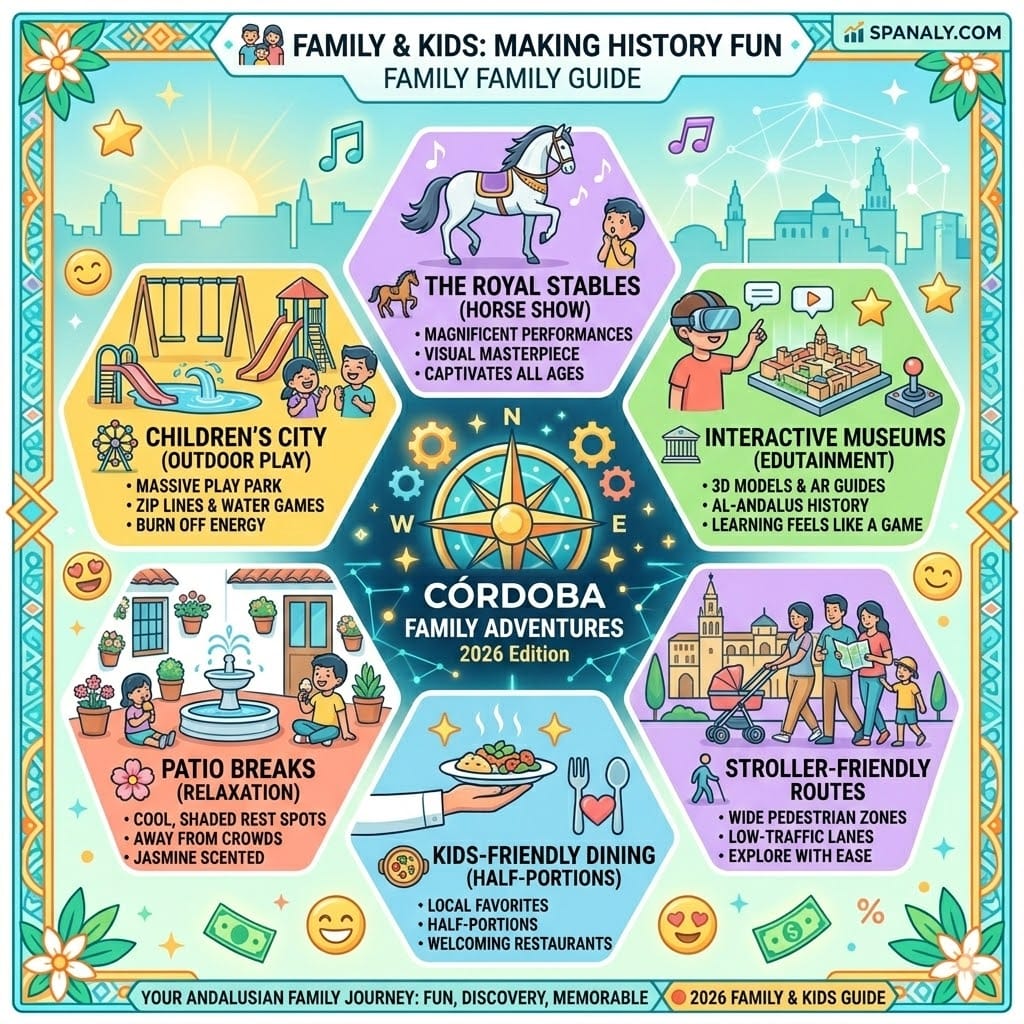
Córdoba is surprisingly family-friendly, offering wide pedestrian zones and interactive experiences that keep younger travelers engaged. In 2026, the city has integrated more “Edutainment” (Education + Entertainment) into its historic sites to ensure kids enjoy the journey as much as the adults.
🎡 Top Activities for Little Explorers
Children’s City (Ciudad de los Niños): A massive outdoor park with zip lines, water games, and themed play areas. It is the perfect place for kids to burn off energy after a morning of sightseeing.
The Royal Stables (Las Caballerizas Reales): Watch the magnificent Andalusian horses perform. The “Passion and Spirit of the Andalusian Horse” show is a visual masterpiece that captivates all ages.
Interactive Museums: Visit the Living Museum of Al-Andalus at Calahorra Tower. Notably, the 3D models and wireless headsets make learning about medieval history feel like a game.
Planning frequent breaks is essential. In fact, most traditional patios offer cool, shaded spots where families can rest away from the crowds. Consequently, your family trip becomes a balanced mix of cultural discovery and joyful play.
💡 Spanaly Insight: Most restaurants in Córdoba are very welcoming to children and often provide half-portions of local favorites like Flamenquín. However, for more general tips on traveling with kids, check our guide on Family Travel in Spain to discover the best stroller-friendly routes and kid-approved destinations across the country.
🥘 Gastronomy: A Taste of Ancient Al-Andalus
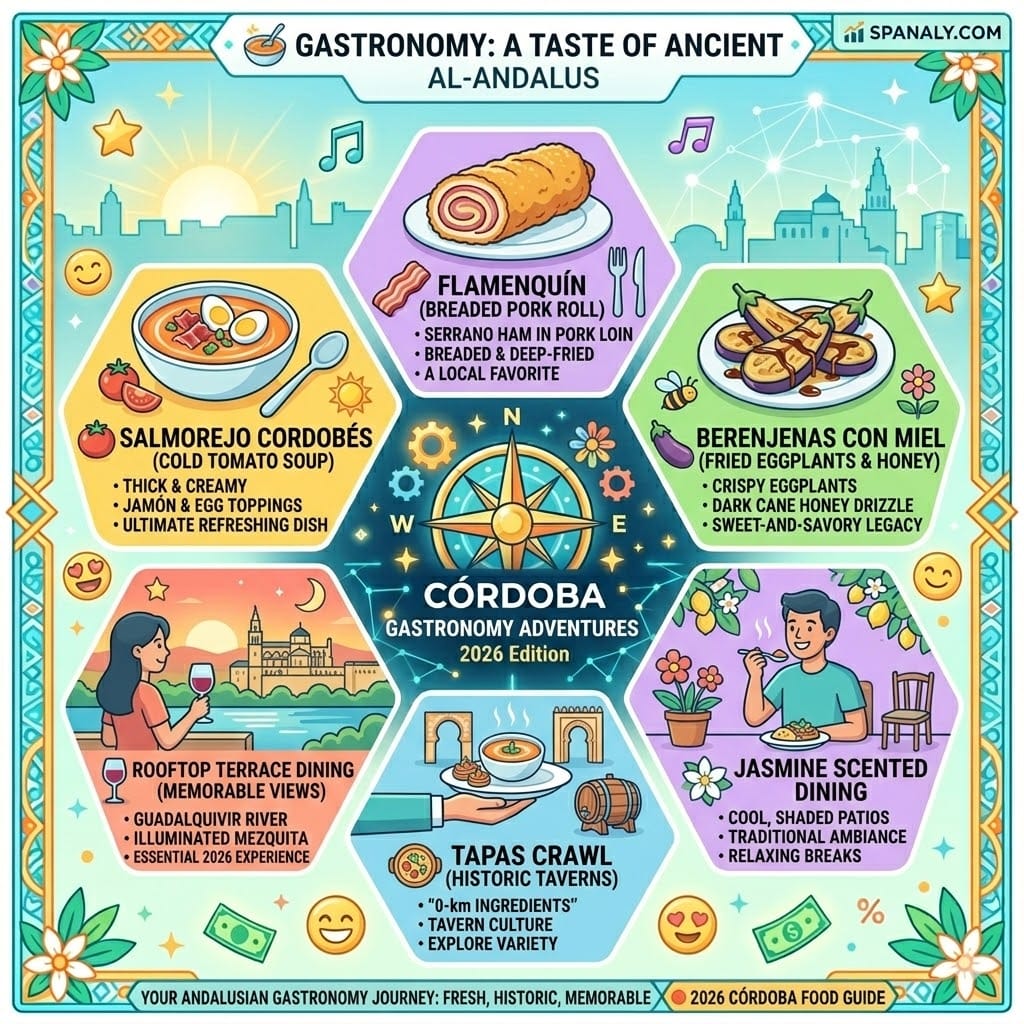
Córdoba’s culinary scene is a savory bridge between its Roman past and Islamic heritage. In 2026, the city’s gastronomy focuses on “0-km ingredients” and historic recipes served with a modern twist, making every meal a journey through time.
🍽️ Iconic Cordobés Flavors
Salmorejo Cordobés: A thick, creamy cold tomato soup topped with jamón and hard-boiled eggs. It is the ultimate refreshing dish for a sunny Andalusian afternoon.
Flamenquín: A local favorite consisting of serrano ham wrapped in pork loin, breaded, and deep-fried to golden perfection.
Berenjenas con Miel: Fried eggplants drizzled with dark cane honey—a perfect sweet-and-savory legacy of the Al-Andalus era.
For the most memorable experience, head to the rooftop terraces near the Guadalquivir River or the Judería. Dining while overlooking the illuminated Mezquita as the sun sets is an essential 2026 highlight.
💡 Spanaly Insight: Córdoba is famous for its Montilla-Moriles wines, which are similar to Sherry but uniquely made from Pedro Ximénez grapes. If you’re a food lover, don’t miss our Spanish cuisine guide to discover how Córdoba’s tavern culture compares to the rest of the country.
🛡️ 10. Safety & Local Etiquette: Stay Smart, Stay Local
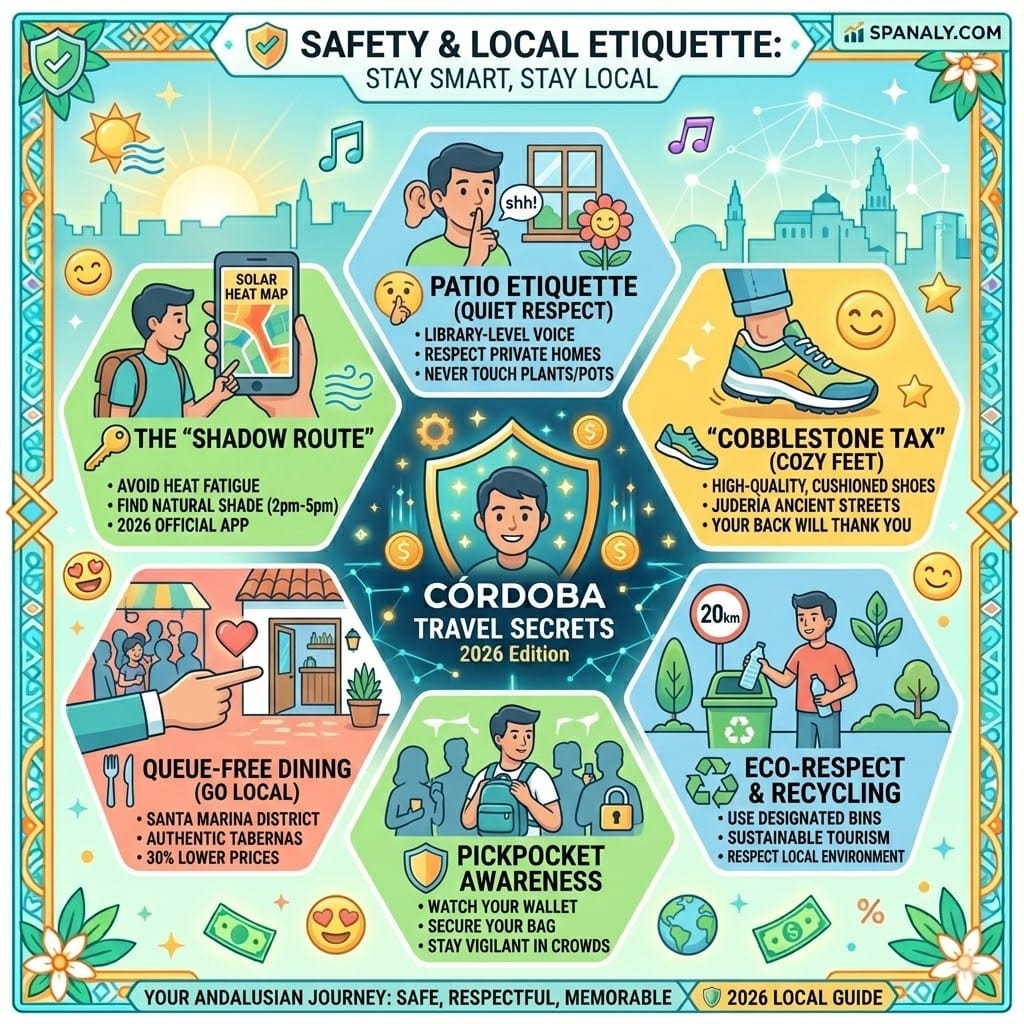
While Córdoba is remarkably safe, navigating its 2026 “Smart-Tourism” landscape requires more than just watching your wallet. Understanding the local unwritten rules ensures a seamless and respectful journey.
🔑 Pro-Tips for the 2026 Traveler
The “Shadow Route”: In 2026, the city uses a Solar Heat Map on its official app. Always check it to find the streets with the most natural shade during the 2:00 PM – 5:00 PM peak. It’s not just about comfort; it’s about avoiding heat fatigue.
Patio Etiquette: When visiting private patios, remember these are people’s homes. Keep your voice at a “Library Level” and never touch the plants or ceramic pots. Local residents deeply appreciate this quiet respect.
The “Cobblestone Tax”: Many travelers ruin their trip by wearing fashionable but thin-soled shoes. The ancient stone streets of the Judería act like a “tax” on your feet. Stick to high-quality, cushioned footwear—your back will thank you by Day 3.
Queue-Free Dining: If a restaurant has a long line of tourists, walk two blocks further into the Santa Marina district. You’ll find authentic “Tabernas” where locals eat, often at 30% lower prices and with much faster service.
By syncing your rhythm with the city’s natural pace, you avoid the friction that most tourists face. Consequently, you’ll find that Córdoba’s true charm reveals itself only when you stop rushing.
💡 Spanaly Insight: If you’re planning a longer stay in Spain, understanding these subtle cultural cues is vital. Take a look at our Spain Local Etiquette Guide to master everything from tipping culture to the “over-the-shoulder” bag rule in crowded metros.
🤝 Visitor FAQs – Essential Córdoba Guide 2026
🕒 Is the "Free Entry" morning at the Mezquita still available?
Yes, but with a 2026 twist. Individual visitors can often enter for free between 8:30 AM and 9:30 AM (except on Sundays). However, groups are not allowed during this time, and you must maintain strict silence as it's a place of worship.
💳 Do I need to book the Roman Bridge in advance?
No, the bridge is a public pedestrian thoroughfare and completely free 24/7. For the best photos without the 2026 crowds, we recommend visiting at sunrise or very late at night when the bridge is beautifully illuminated.
🥘 What is the "Tipping Etiquette" in local Córdoba taverns?
Tipping is not mandatory in Spain. In 2026, for a casual tapas meal, leaving the small change is sufficient. For a formal sit-down dinner with excellent service, a 5-10% tip is appreciated but never expected.
🛍️ Are shops open on Sundays in the Old Town?
Souvenir shops in the Judería usually stay open, but traditional local businesses and supermarkets close on Sundays. Plan your shopping for artisan leather or silver jewelry between Monday and Saturday to avoid disappointment.
🚉 Can I use the AVE train for a day trip from Madrid?
Absolutely! The high-speed AVE train connects Madrid to Córdoba in just 1 hour and 45 minutes. It’s perfect for a day trip, though we always recommend staying at least one night to experience the city's magical evening atmosphere.
Smart Traveler Guide by Spanaly.com
🏁 Your Journey Begins Here
Córdoba isn’t just a city; it’s a living bridge through a thousand years of history. From the golden arches of the Mezquita to the silent beauty of a hidden patio, every corner tells a story of the “Pearl of Al-Andalus.”
🏛️ Experience: Don’t just sightsee—feel the echoes of the Caliphate.
🥘 Taste: Savor the Salmorejo; it’s the savory soul of the city.
👟 Rhythm: Walk the Judería to find the magic that maps can’t show.
💡 Spanaly Insight: For the most authentic experience in 2026, visit the Mezquita during the early “silent hour” (8:30 AM) to avoid the digital tour groups and truly connect with the monument’s spiritual history.
Ready to trade the golden stone for the Mediterranean breeze? 🌊 Discover our next stop: The Ultimate Málaga 3-Day Itinerary to continue your 2026 Andalusian adventure!