🏖️ Playa de Cofete
There is a specific moment when you first see Playa de Cofete from the top of the mountains, and the world suddenly feels much bigger. Stretching for over 12 kilometers along the rugged coast of Fuerteventura, this isn’t your typical resort beach with umbrellas and music. It is a place of raw power, golden sand, and ancient volcanic peaks.
The Vibe: Complete isolation and natural silence, broken only by the crashing waves.
The Experience: A journey through a desert landscape that leads to the edge of the ocean.
The Reality: A stunning protected area where nature is still the boss.
While it is often ranked among the best beaches in Spain, Cofete is unique because it remains almost exactly as it was centuries ago. It’s the kind of place you visit when you want to disconnect from the world and reconnect with the elements.
Spanaly Insight: If you are looking for a place to swim and relax in the water, this might not be it. The currents here are notoriously strong and unpredictable. Most people come here for the scenery, the solitude, and the incredible feeling of standing on a beach that seems to go on forever.
✨ Snapshot: Cofete at a Glance
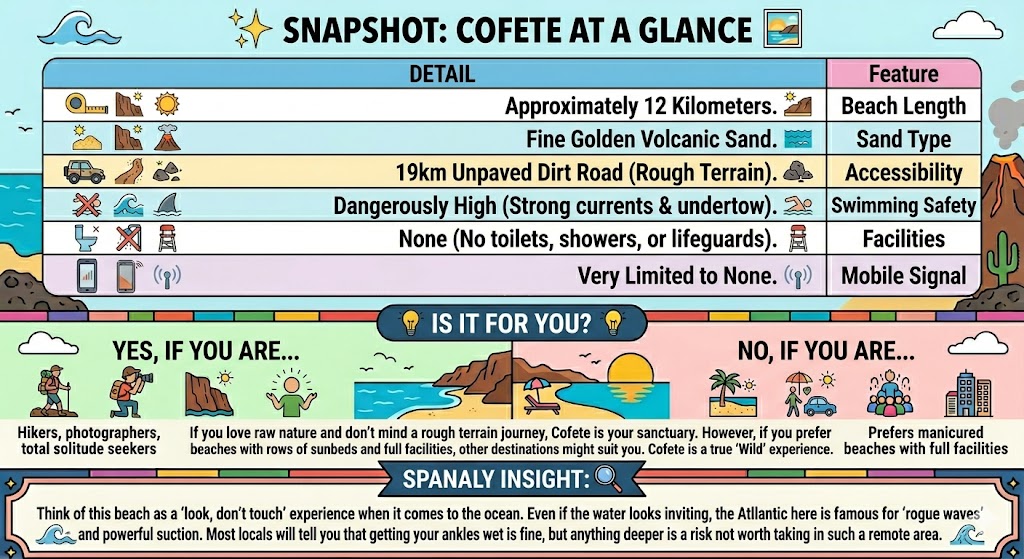
Before you start your car, it’s helpful to know exactly what to expect. Playa de Cofete is magnificent, but it requires a bit of mental preparation because of its remote location.
| Feature | Details |
|---|---|
| Beach Length | Approximately 12 Kilometers |
| Sand Type | Fine Golden Volcanic Sand |
| Accessibility | 19km Unpaved Dirt Road (Rough Terrain) |
| Swimming Safety | Dangerously High (Strong currents & undertow) |
| Facilities | None (No toilets, showers, or lifeguards) |
| Mobile Signal | Very Limited to None |
Best for: Hikers, photographers, and those seeking total solitude.
The Vibe: Wild, windy, and incredibly peaceful.
Access Fee: Completely free to enter the Natural Park.
Spanaly Insight: Think of this beach as a “look, don’t touch” experience when it comes to the ocean. Even if the water looks inviting near the shore, the Atlantic here is famous for “rogue waves” and powerful suction. Most locals will tell you that getting your ankles wet is fine, but anything deeper is a risk not worth taking in such a remote area.
⚖️ Cofete vs. Sotavento: Two Sides of Fuerteventura
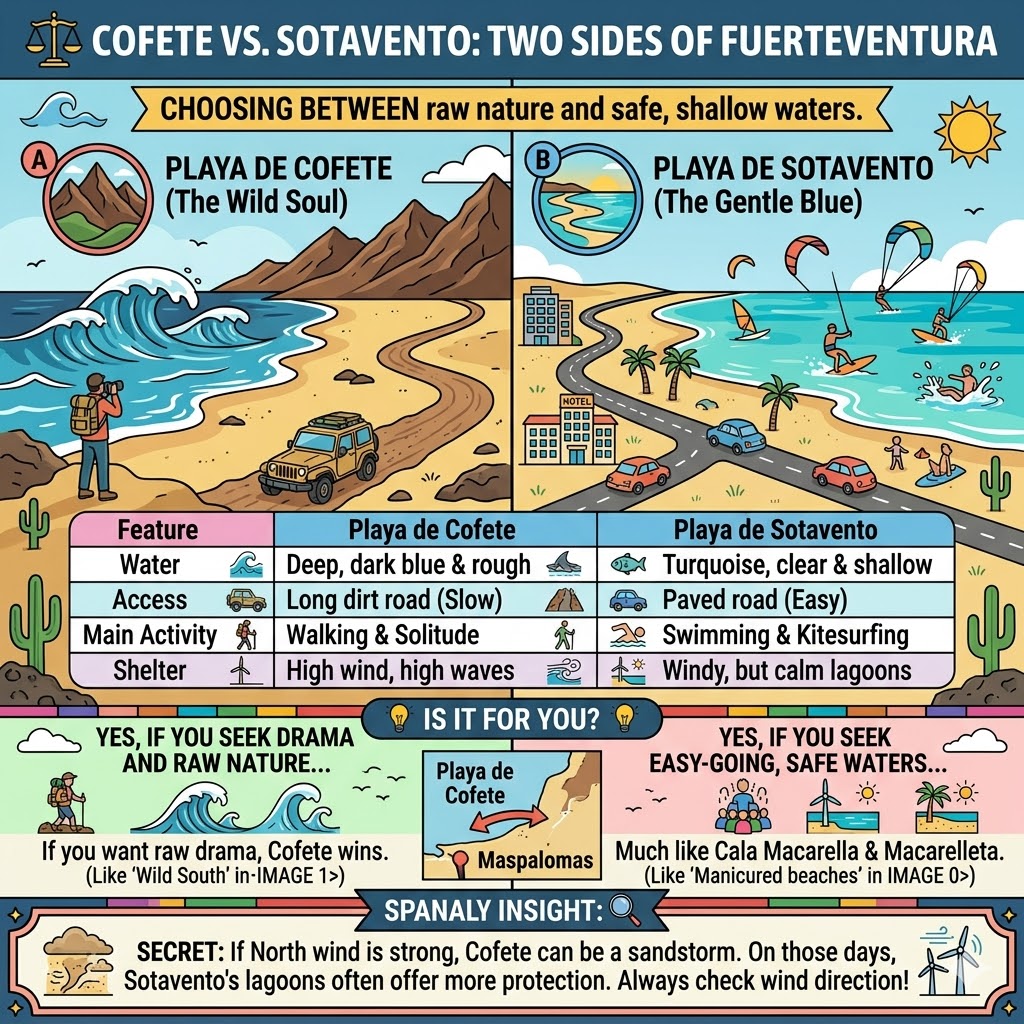
Choosing between these two is like choosing between an epic mountain adventure and a luxury desert oasis. While both are iconic, they offer completely different energy.
Playa de Cofete (The Wild Soul): This is for the person who wants to feel small in a big world. There are no bars, no sunbeds, and almost no people. It’s all about the massive Jandia mountains and the raw Atlantic.
Playa de Sotavento (The Gentle Blue): Famous for its shifting lagoons and turquoise shallow waters. It is much easier to reach and is a paradise for windsurfers and families who want a safe place to splash around.
If you enjoy the easy-going, crystal-clear waters of the Mediterranean more than the wild Atlantic, you might find a similar vibe in our guide to Cala Macarella & Macarelleta. But if you want drama, Cofete wins every time.
| Feature | Playa de Cofete | Playa de Sotavento |
|---|---|---|
| Water | Deep, dark blue & rough | Turquoise, clear & shallow |
| Access | Long dirt road (Slow) | Paved road (Easy) |
| Main Activity | Walking & Solitude | Swimming & Kitesurfing |
| Shelter | High wind, high waves | Windy, but calm lagoons |
Spanaly Insight: Here is a little secret: If the wind is blowing too hard from the North, Cofete can feel like a sandstorm. On those days, Sotavento’s lagoons often offer a bit more protection for a casual beach day. Always check the wind direction before you decide which side of the island to visit.
🚗 The Journey: Navigating the 19km Dirt Road
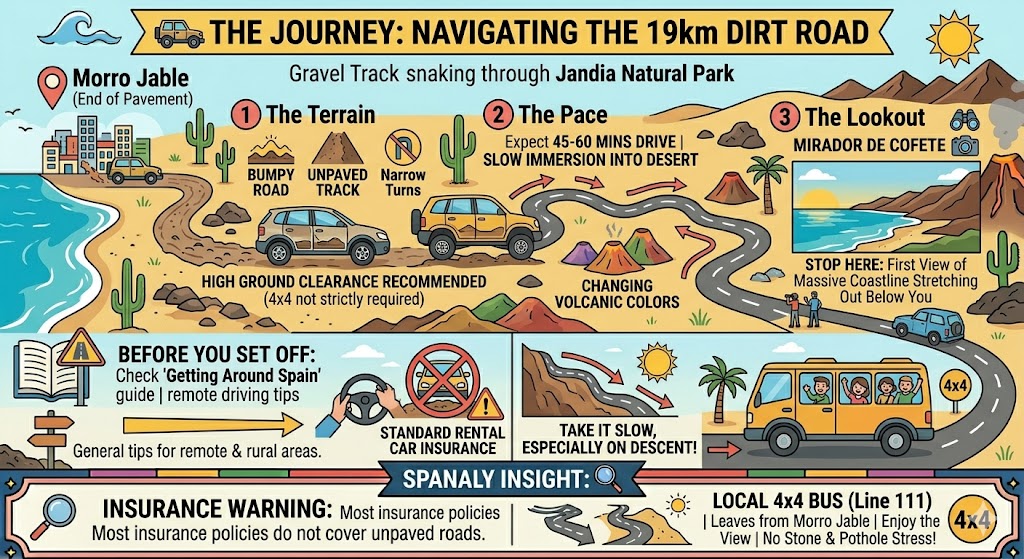
Getting to Playa de Cofete is half the story. The road starts where the pavement ends in Morro Jable, turning into a winding gravel track that snakes through the Jandia Natural Park. It’s not a race; it’s a slow immersion into the desert.
The Terrain: It is a bumpy, unpaved road with some narrow turns. While a 4×4 isn’t strictly required, a car with higher ground clearance will make your life much easier.
The Pace: Expect the 19-kilometer drive to take about 45 to 60 minutes. Moving slowly allows you to appreciate the changing colors of the volcanic hills.
The Lookout: About halfway through, you’ll reach the Mirador de Cofete. Stop here. It’s the first time you’ll see the massive coastline stretching out below you.
Before you set off, it’s a good idea to check our Getting Around Spain guide for general tips on driving in more remote or rural areas of the country.
Spanaly Insight: If you are using a standard rental car, be aware that most insurance policies in Spain do not cover damage sustained on unpaved roads. Take it very slow, especially on the descent. If the idea of driving this road makes you nervous, there is a local “4×4 Bus” (Line 111) that leaves from Morro Jable. It’s a great way to enjoy the view without having to keep your eyes on every stone and pothole!
⚠️ Safety First: Understanding the Atlantic Currents
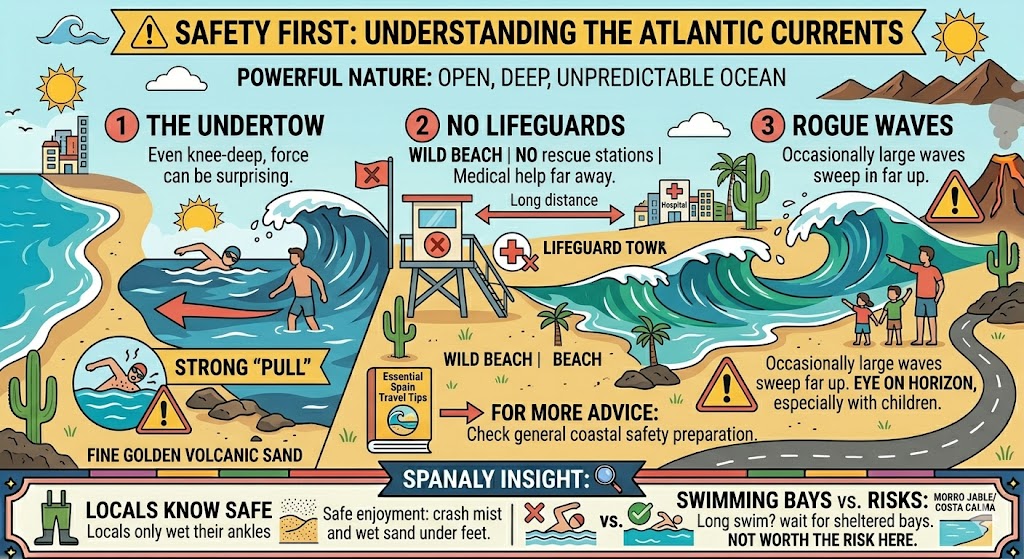
Nature is beautiful at Playa de Cofete, but it is also incredibly powerful. Unlike the calm lagoons on the other side of the island, the ocean here is open, deep, and unpredictable. Understanding the water is the most important part of your visit.
The Undertow: The waves here create a strong “pull” back into the ocean. Even if the water only reaches your knees, the force can be surprising.
No Lifeguards: This is a wild beach. There are no rescue stations or medical help nearby. If you get into trouble, help is a long way away.
Rogue Waves: Occasionally, a much larger wave can sweep much further up the sand than expected. Always keep an eye on the horizon, especially if you have children with you.
For more advice on staying safe while exploring the Spanish coast, you can look through our Essential Spain Travel Tips to help you prepare for any environment.
Spanaly Insight: You will notice that even the locals rarely go deeper than their ankles here. The “safe” way to enjoy Cofete is to appreciate the mist from the crashing waves and the feeling of the wet sand under your feet. If your heart is set on a long swim, wait until you get back to the sheltered bays of Morro Jable or Costa Calma—it’s just not worth the risk here.
🏠 Villa Winter: The Desert’s Biggest Mystery
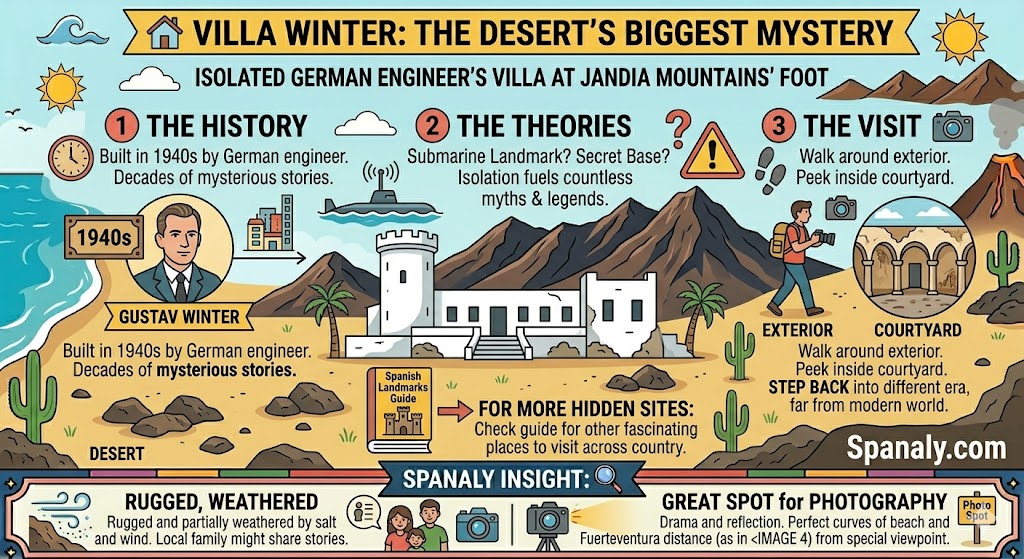
In the middle of nowhere, sitting at the foot of the dark Jandia mountains, stands a lonely building known as Villa Winter. It looks like something out of a movie—a stark, white structure with a circular tower that has sparked countless local legends and theories.
The History: Built in the 1940s by Gustav Winter, a German engineer, the house has been at the center of mysterious stories for decades.
The Theories: Some say it was a secret base, while others believe it was a landmark for submarines. While most of these are just myths, the house’s isolation certainly fuels the imagination.
The Visit: Today, you can often walk around the exterior and sometimes peek inside the courtyard. It feels like stepping back into a different era, far removed from the modern world.
If you enjoy exploring historical sites that feel a bit hidden or off the beaten path, you might find our guide to Spanish Landmarks full of other fascinating places to visit across the country.
Spanaly Insight: Don’t expect a polished museum experience. Villa Winter is rugged and partially weathered by the salt and wind. There is a local family that often looks after the place and might share a story or two if you are lucky. It’s a great spot for photography, especially with the dramatic mountains reflecting the shadows behind the white walls.
📸 Photography Gold: Capturing the 12-Kilometer Horizon
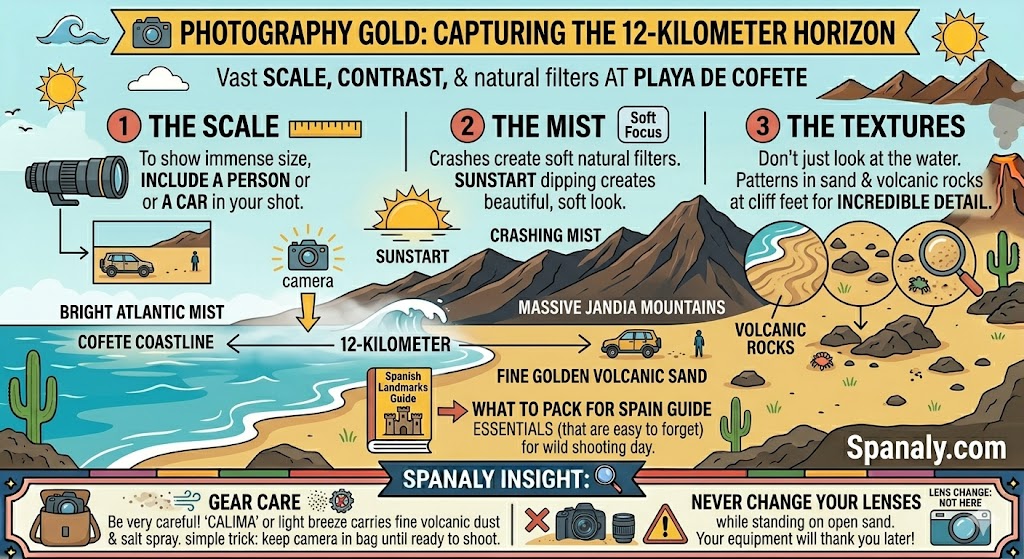
If you bring a camera to Playa de Cofete, you are in for a treat. The scale of the landscape is so vast that it can be hard to capture in a single frame. The contrast between the dark, jagged mountains and the bright Atlantic mist creates a natural filter that you won’t find anywhere else.
The Scale: To show how big the beach really is, try to include a person or a car in your shot. It helps your viewers understand the massive size of the cliffs and the shore.
The Mist: The crashing waves create a fine salty mist. This adds a beautiful, soft look to your photos, especially when the sun starts to dip lower in the sky.
The Textures: Don’t just look at the water. The patterns in the sand and the volcanic rocks at the foot of the mountains offer incredible detail for close-up shots.
To make sure you have everything you need for a day of shooting in the wild, take a quick look at our guide on What to Pack for Spain. It includes essentials that are easy to forget when you are focused on your lens.
Spanaly Insight: Be very careful with your gear here. The “Calima” or even a light breeze can carry fine volcanic dust and salt spray that isn’t friendly to camera sensors. A simple trick is to keep your camera inside a bag until the moment you are ready to shoot, and never change your lenses while standing on the open sand. Your equipment will thank you later!
🐢 The Turtle Hatchery: A Hidden Nature Mission
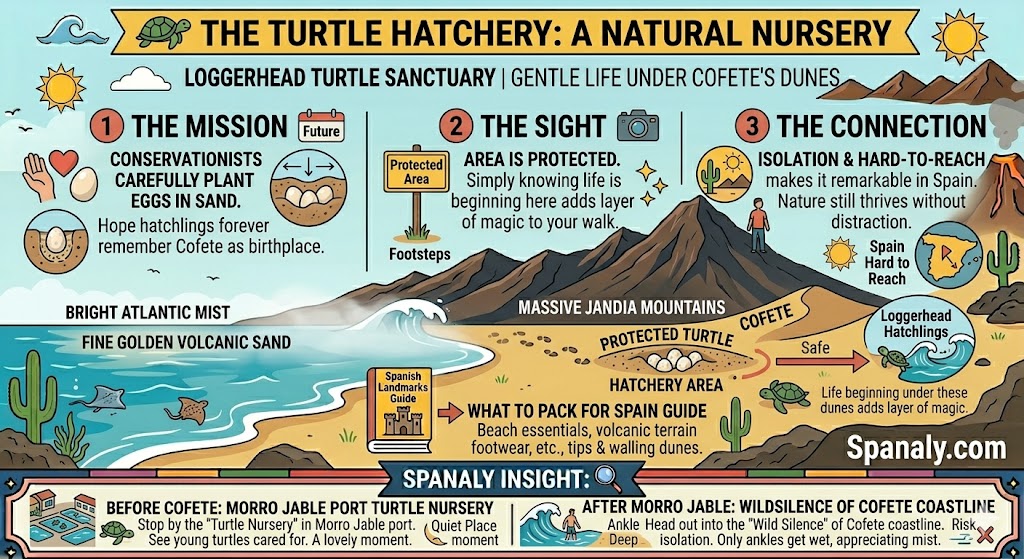
Beyond the dramatic cliffs and waves, Playa de Cofete holds a gentle secret. This remote stretch of sand is a vital sanctuary for the Loggerhead turtle. Because humans are rare here, the beach provides the perfect, quiet environment needed for conservation efforts to bring these beautiful creatures back to Fuerteventura’s shores.
The Mission: Conservationists carefully plant eggs in the sand, hoping the hatchlings will forever remember Cofete as their birthplace.
The Sight: While the area is protected, simply knowing that life is beginning under these dunes adds a layer of magic to your walk.
The Connection: This isolation is what makes it one of the most remarkable hard to reach beaches in Spain, where nature still thrives without distraction.
Spanaly Insight: If you want to see the turtles before they make their big journey to the ocean, stop by the “Turtle Nursery” in the Morro Jable port. It’s a small, quiet place where you can see the young turtles being cared for. It’s a lovely, human moment to experience before you head out into the wild silence of the Cofete coastline.
🎒 Preparation Essentials: Surviving the Wild South
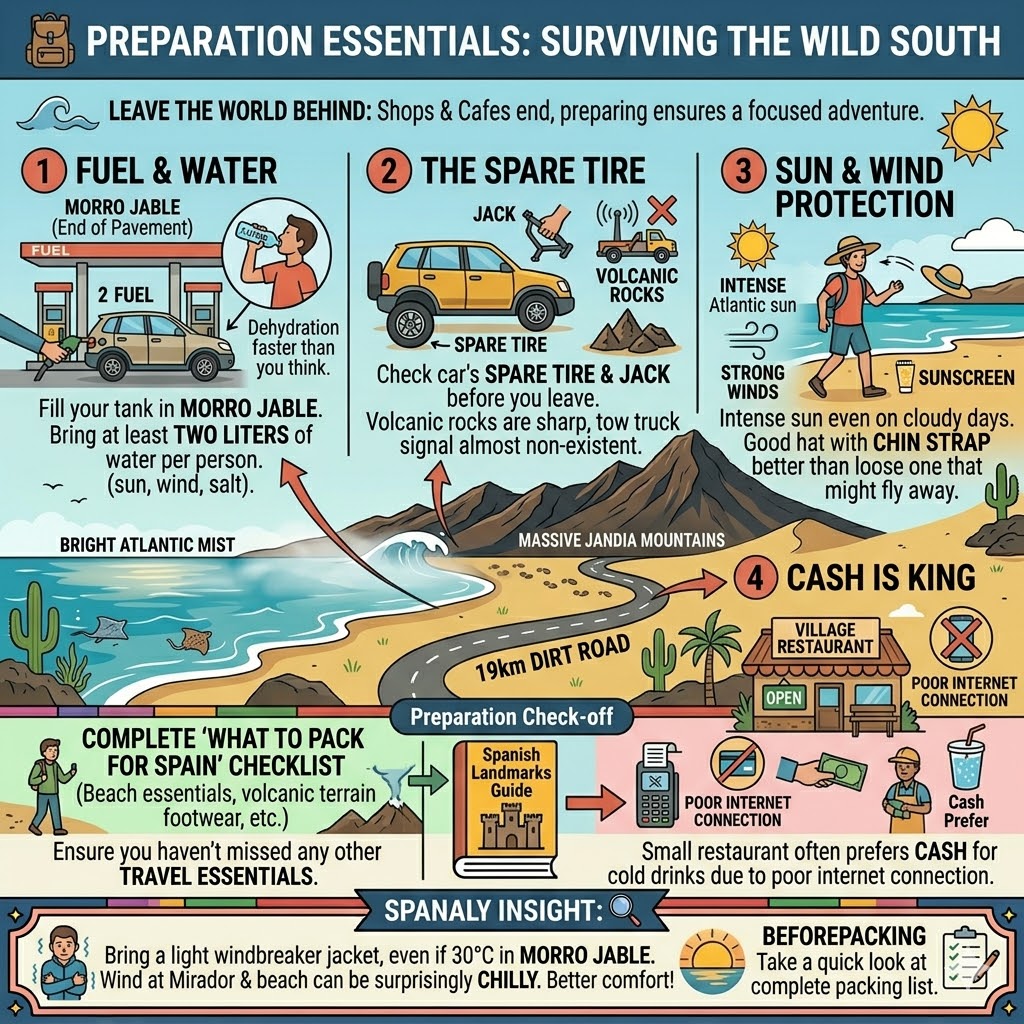
When you head to Playa de Cofete, you are leaving the world of shops and cafes behind. There are no vending machines or convenience stores once you pass the mountain ridge. Being prepared means you can focus on the beauty of the landscape instead of worrying about your supplies.
Fuel and Water: Fill your tank in Morro Jable. Bring at least two liters of water per person; the combination of sun, wind, and salt will dehydrate you faster than you think.
The Spare Tire: Check your car’s spare tire and jack before you leave. The volcanic rocks on the dirt road can be sharp, and mobile signal for a tow truck is almost non-existent.
Sun and Wind Protection: Even on cloudy days, the Atlantic sun is intense. A good hat with a chin strap is better than a loose one that might fly away into the ocean.
Cash is King: If the small restaurant in the village is open and you want a cold drink, they often prefer cash due to the poor internet connection for card machines.
Before you start packing your bags, take a look at our complete what to pack for Spain checklist to ensure you haven’t missed any other travel essentials.
Spanaly Insight: Here is a small tip from experience: bring a light windbreaker jacket, even if it’s 30°C in Morro Jable. The wind at the Mirador (the viewpoint) and on the beach itself can be surprisingly chilly because of the “funnel effect” created by the mountains. You’ll be much more comfortable watching the sunset if you aren’t shivering!
🏜️ The Landscape: Where the Mountains Meet the Atlantic
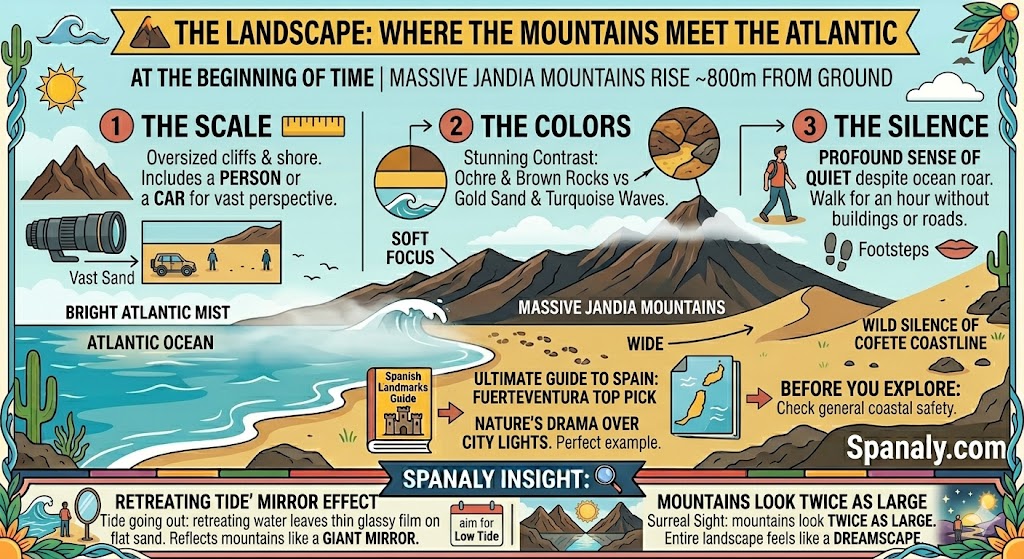
Standing on the sands of Playa de Cofete feels like standing at the beginning of time. To your back, the massive Jandia mountains rise nearly 800 meters straight up from the ground, their dark volcanic peaks often touched by low-hanging clouds. To your front, the Atlantic Ocean stretches infinitely toward the horizon.
The Scale: Everything here is oversized. The beach is so wide and the mountains so tall that you quickly lose your sense of perspective in the best way possible.
The Colors: The contrast is stunning—the deep ochre and brown of the rocks against the brilliant gold of the sand and the white foam of the turquoise waves.
The Silence: Despite the roar of the ocean, there is a profound sense of quiet. It is one of the few places left where you can walk for an hour and not see a single building or road.
This raw beauty is a perfect example of why Fuerteventura is a top pick in our ultimate guide to Spain, especially for those who prefer nature’s drama over city lights.
Spanaly Insight: If you can, try to be here when the tide is going out. The retreating water leaves a thin, glassy film on the flat sand that reflects the mountains like a giant mirror. It is a surreal sight that makes the mountains look twice as large and the entire landscape feel like a dreamscape.
🍽️ Lunch at the Edge of the World: Restaurante Cofete
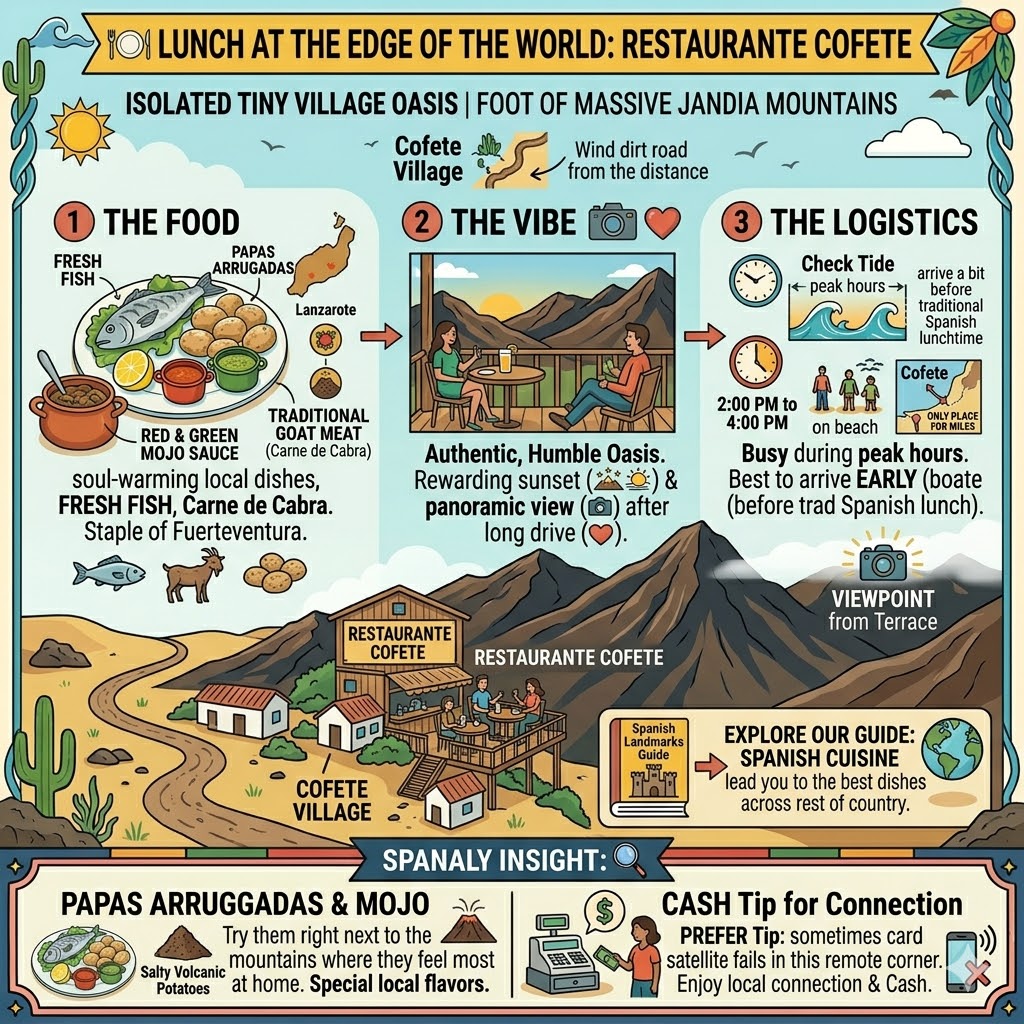
In the tiny, wind-swept village of Cofete—which consists of only a few rustic houses—you will find a single place to eat: Restaurante Cofete. It is a simple, family-run spot that feels like a welcoming oasis after the long, dusty drive.
The Food: Don’t expect fine dining; expect soul-warming local dishes. They are famous for their fresh fish and traditional goat meat (carne de cabra), a staple of Fuerteventura.
The Vibe: It is humble and authentic. Sitting on the terrace with a cold drink while looking out at the mountains you just crossed is a rewarding feeling.
The Logistics: Since it is the only place for miles, it can get busy during peak hours. If you plan to eat here, it’s best to arrive a bit before the traditional Spanish lunchtime.
After a hearty local meal, you might find yourself dreaming of other iconic flavors. If so, our guide to Spanish Cuisine will lead you to the best dishes across the rest of the country.
Spanaly Insight: Make sure to try the Papas Arrugadas (wrinkled potatoes) with red and green mojo sauce here. There is something about eating these salty, volcanic potatoes right next to the mountains where they feel most at home. Also, remember the tip about cash—sometimes the satellite connection for card machines fails in this remote corner of the island!
⏱️ A Day in the Wild: Your Cofete Itinerary
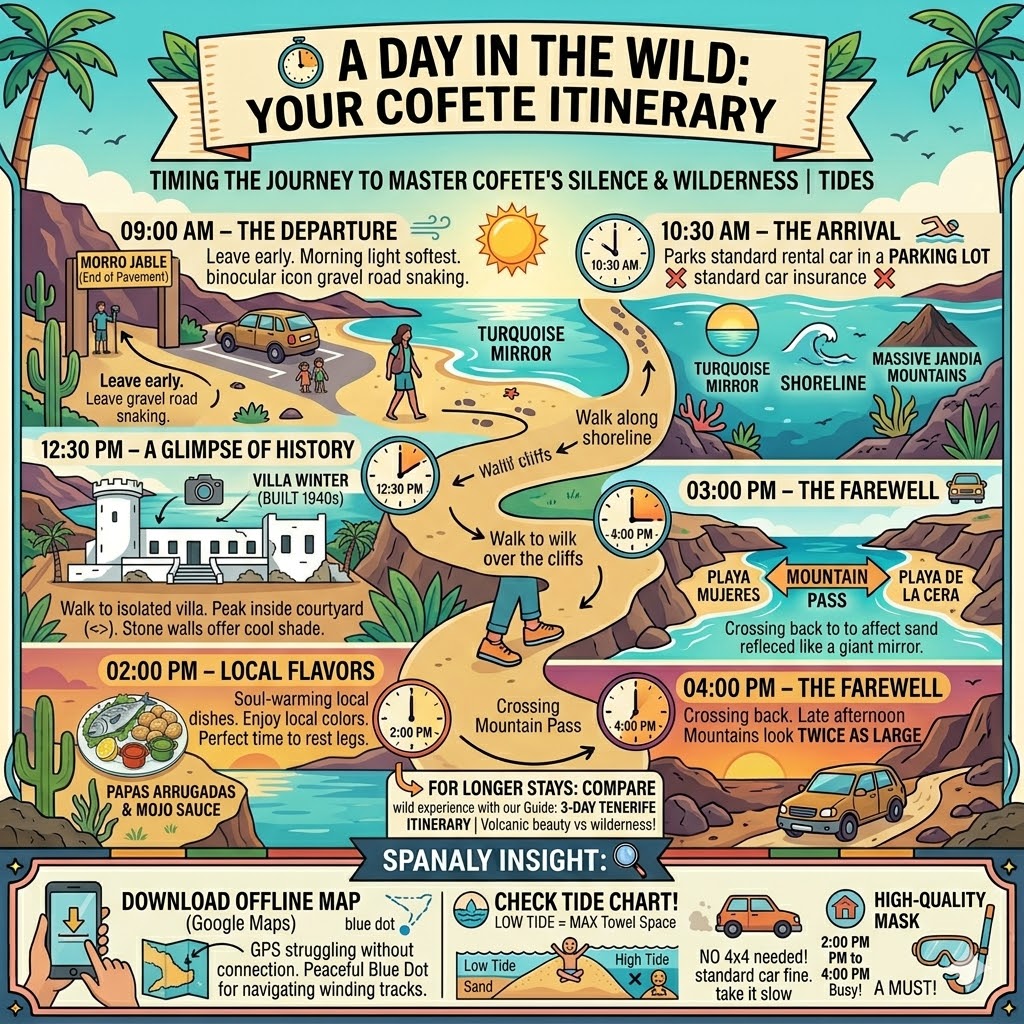
To truly enjoy the silence of Playa de Cofete, you don’t need a complicated plan. It’s all about timing your arrival to beat the midday heat and giving yourself enough space to simply “be.”
09:00 AM – The Departure: Leave Morro Jable early. This ensures you have the road mostly to yourself and reaches the viewpoint (Mirador) when the morning light is softest for photos.
10:30 AM – The Arrival: Park your car and head straight to the water. Spend your morning walking along the 12km shoreline. The further you walk towards the north, the more the few remaining people disappear.
12:30 PM – A Glimpse of History: Walk back towards the cliffs to visit Villa Winter. It’s a nice break from the sun and offers a bit of cool shade near its stone walls.
02:00 PM – Local Flavors: Head to the village for lunch at the local restaurant. It’s the perfect time to rest your legs and enjoy those famous wrinkled potatoes.
04:00 PM – The Farewell: Start your drive back. Crossing the mountain pass in the late afternoon provides a completely different perspective as the shadows of the peaks stretch over the valley.
If you are planning a longer stay on the island, you might want to compare this wild experience with our 3-day Tenerife itinerary, which offers a different kind of volcanic beauty.
Spanaly Insight: Download an offline map of the Jandia Peninsula on Google Maps before you leave your hotel. Once you cross the mountain ridge, your GPS might struggle without a data connection. Having that little blue dot on an offline map will give you peace of mind while navigating the winding dirt tracks.
💡 Spanaly Insight: The "Pro" Secrets of Cofete
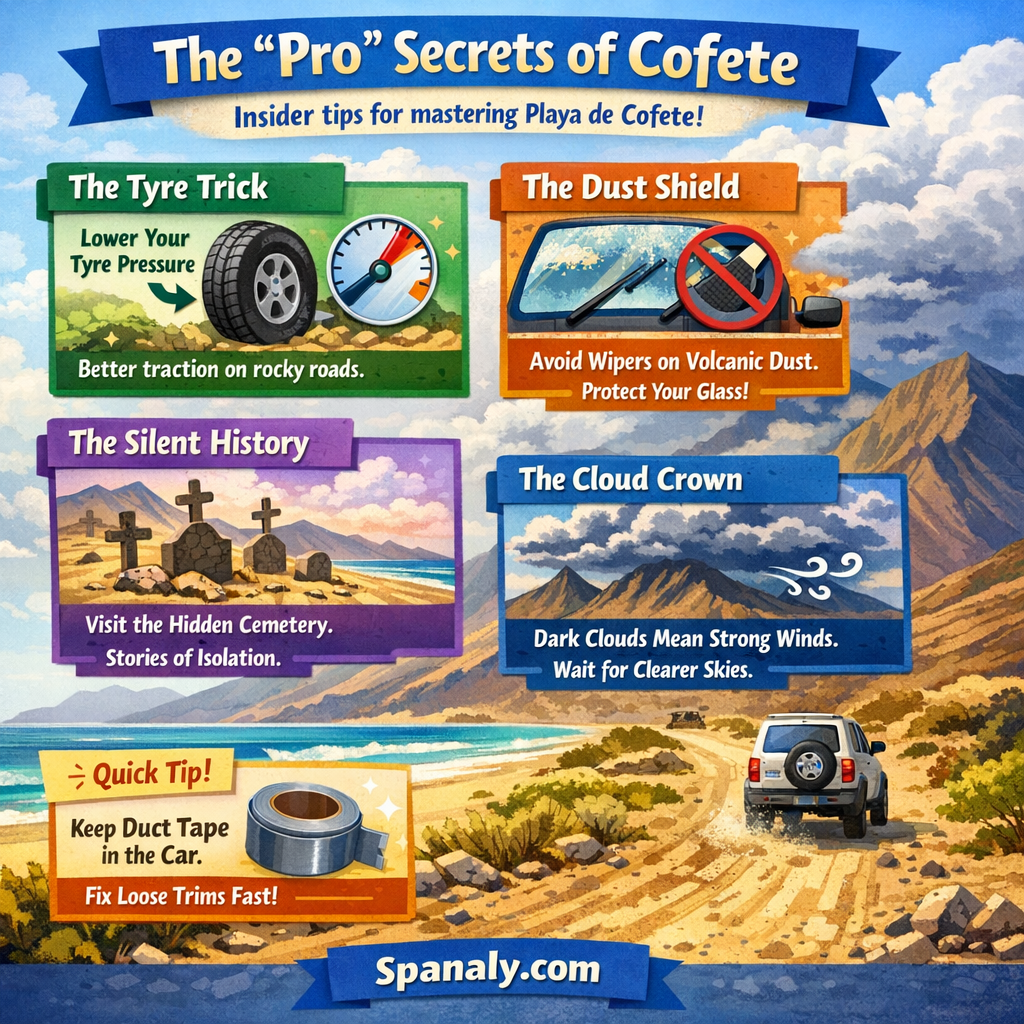
While most guides mention water, true veterans of Fuerteventura know the hidden rules of Playa de Cofete. These insider tips come from those who have faced the mountain and the dust firsthand.
The Tyre Trick: Lower your tyre pressure slightly before the dirt road. This gives you much better traction on the loose volcanic stones.
The Dust Shield: Avoid using windshield wipers on the dry volcanic dust. It acts like sandpaper and can easily scratch your rental car glass.
The Silent History: Visit the small, half-buried cemetery near the shore. It tells a moving story of the families who lived here in total isolation.
The Cloud Crown: If the peaks are covered in dark clouds, expect high winds. It might be better to wait for a clearer day.
Planning for these small details is essential. While the beach is free, our guide on the Spain travel budget helps you calculate hidden costs like fuel and 4×4 rentals.
Spanaly Insight: Keep a small roll of duct tape in your glove box. The constant vibrations of the 19km road can sometimes loosen plastic car trims. A quick fix can save you from a stressful insurance claim later!
🛡️ Visitor FAQs – Playa de Cofete Experience & Logistics
🛡️ Is it safe to drive to Cofete with a small economy car?
Technically yes, but it requires extreme caution. The road is unpaved with many sharp volcanic rocks. While many tourists use small cars, a vehicle with higher ground clearance is much safer to avoid damaging the oil pan or the underside of the car, which is usually not covered by insurance.
🚌 Is there any public transport that goes to the beach?
Yes, there is a special 4x4 bus service (Line 111) that departs from Morro Jable twice a day. It is an excellent option if you don't want to risk a rental car on the dirt roads. The bus is sturdy, affordable, and provides a high vantage point to enjoy the mountain views safely.
🐕 Are dogs allowed on Playa de Cofete?
Yes, dogs are generally welcome as it is a wide, wild space. However, because it is a protected Natural Park and a nesting site for turtles, you must keep your pet under control and away from marked conservation zones to protect the delicate local ecosystem.
⛽ Where is the last place to get fuel before the beach?
The last petrol stations are located in Morro Jable. Once you enter the dirt track, there are absolutely no services for the next 50 kilometers (round trip). Always ensure you have at least half a tank of fuel before starting the mountain crossing.
⛺ Can I camp overnight on the sand at Cofete?
No, wild camping is strictly prohibited within the Jandia Natural Park. Local authorities frequently patrol the area, and fines can be very high. To enjoy the stars, it is better to stay late for sunset and then drive back to authorized accommodations in the nearby towns.
Playa de Cofete Guide by Spanaly.com
Playa de Cofete is not just a destination; it is a feeling. It’s the silence of the mountains, the salt on your skin, and the humbling scale of the Atlantic. While the road is dusty and the waves are wild, the sense of peace you find here is something that stays in your heart long after you leave the island.
Final Tip: Take a deep breath, put your phone away for a moment, and just listen to the ocean.
Leave no trace: Keep this desert paradise pristine by taking everything back with you.
Hungry for more? If you loved the raw power of Cofete but want to see a calmer, turquoise side of the Canary Islands, don’t miss our guide to Playa de Papagayo Lanzarote. It is the perfect next step for your island hopping adventure.
Fuerteventura has a way of calling you back. We hope your journey to the wild south is as magical as the landscape itself. Safe travels! 🇪🇸✨