
Table of Contents
Toggle🍷 More Than Just a Drink
Few beverages in the world capture the vibrant essence of Spain like Sangria. Notably, with its deep crimson color and chilled sweetness, it has evolved from a simple refreshment into a global symbol of Spanish joy and hospitality. Specifically, it represents the “art of slow living” that defines the Mediterranean lifestyle.
✨ A Cultural Icon: Whether served at a seaside chiringuito or a high-end rooftop, it reflects Spain’s passion for communal celebration.
🍎 Nature’s Infusion: In fact, the magic of Sangria lies in the marriage of robust Spanish reds and the freshest seasonal fruits.
🌍 Global Ambassador: While popular worldwide, the authentic experience is rooted in the local plazas of Madrid, Seville, and Valencia.
🥘 The Perfect Pair: Ultimately, no traditional feast is complete without a pitcher to complement a steaming plate of Paella Valenciana.
Indeed, understanding Sangria is the first step toward mastering the Spanish table. If you are a true food lover, you might want to explore our Spanaly Gastronomy Hub for more traditional recipes and regional secrets. Specifically, while the wine provides the body, the spirit of the drink comes from the shared laughter it inspires. Ultimately, Sangria is Spain in a glass—warm, colorful, and endlessly inviting.
💡 Spanaly Insight: Most travelers think Sangria is the “everyday” drink for Spaniards. In fact, locals often save it for festive occasions or family Sundays. Notably, for a quick daily refresher in the heat, many opt for its lighter cousin, Tinto de Verano.
📜 The Ancient Origins of Sangria: From Roman Survival to Spanish Art
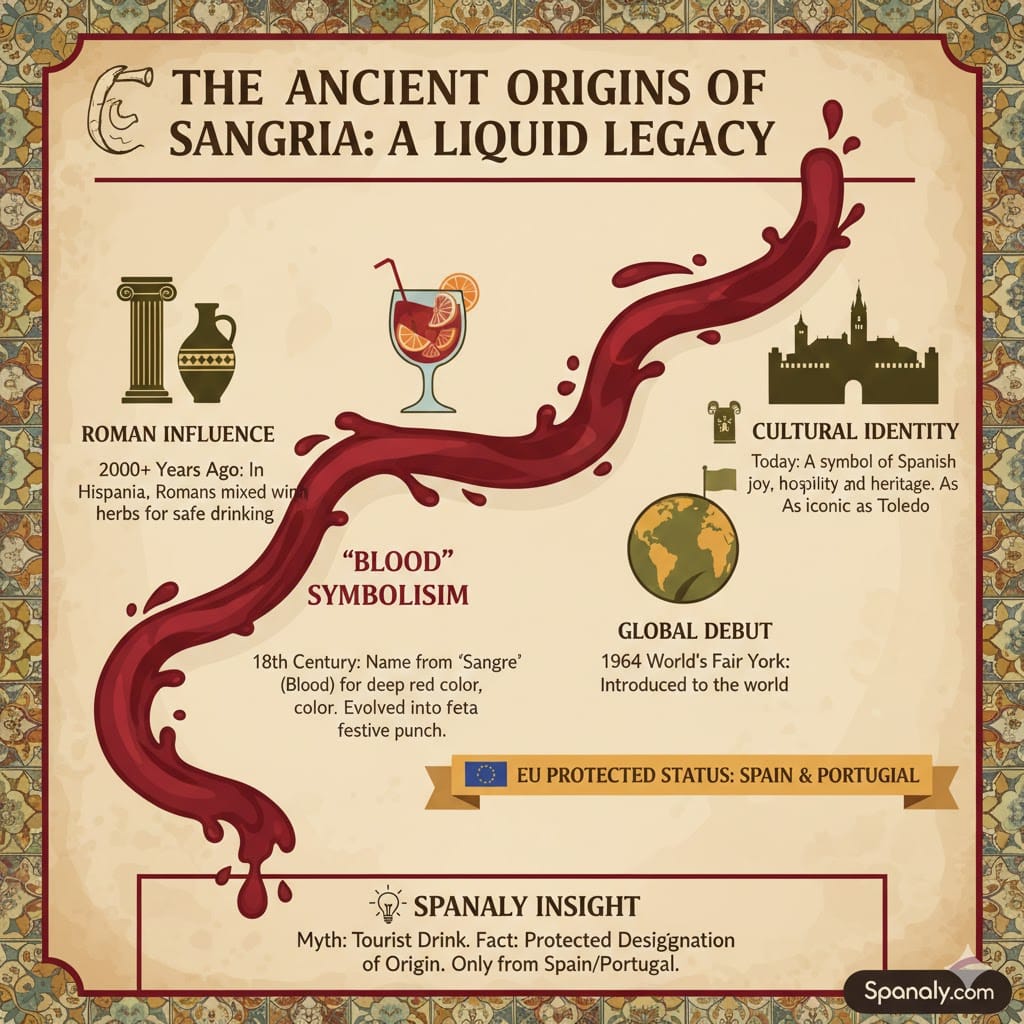
The history of Sangria stretches back over 2,000 years. Notably, it began as a survival necessity during the Roman occupation of the Iberian Peninsula. Specifically, because water was often unsafe, Romans mixed wine with fruits and spices to purify it.
🏛️ The Roman Influence: Early settlers in Hispania created wine infusions that laid the foundation for modern recipes.
🍷 The “Blood” Symbolism: In fact, the name “Sangria” comes from the Spanish word sangre, referring to its deep crimson color.
🌍 Global Debut: While enjoyed locally for centuries, it gained worldwide fame at the 1964 World’s Fair.
🏰 Cultural Identity: Ultimately, this drink has become as central to Spain’s story as the Historic City of Toledo.
Indeed, the evolution of this beverage is a key part of Why Visit Spain for history lovers. Specifically, it represents the country’s talent for turning simple ingredients into a cultural masterpiece. Ultimately, every chilled pitcher is a tribute to Spain’s enduring traditions.
💡 Spanaly Insight: Many believe Sangria is just a tourist drink. In fact, it holds a “Protected Designation of Origin” status. Notably, only Sangria produced in Spain or Portugal can legally carry the name in the EU, preserving its authentic heritage.
⚔️ Sangria vs. Tinto de Verano: The Local Dilemma
One of the most common mistakes for travelers is assuming Sangria is the only wine mix in Spain. Notably, while tourists reach for the pitcher, locals often order Tinto de Verano. Specifically, understanding the difference between these two icons is essential for anyone trying to How to Order Food Like a Local in Spain.
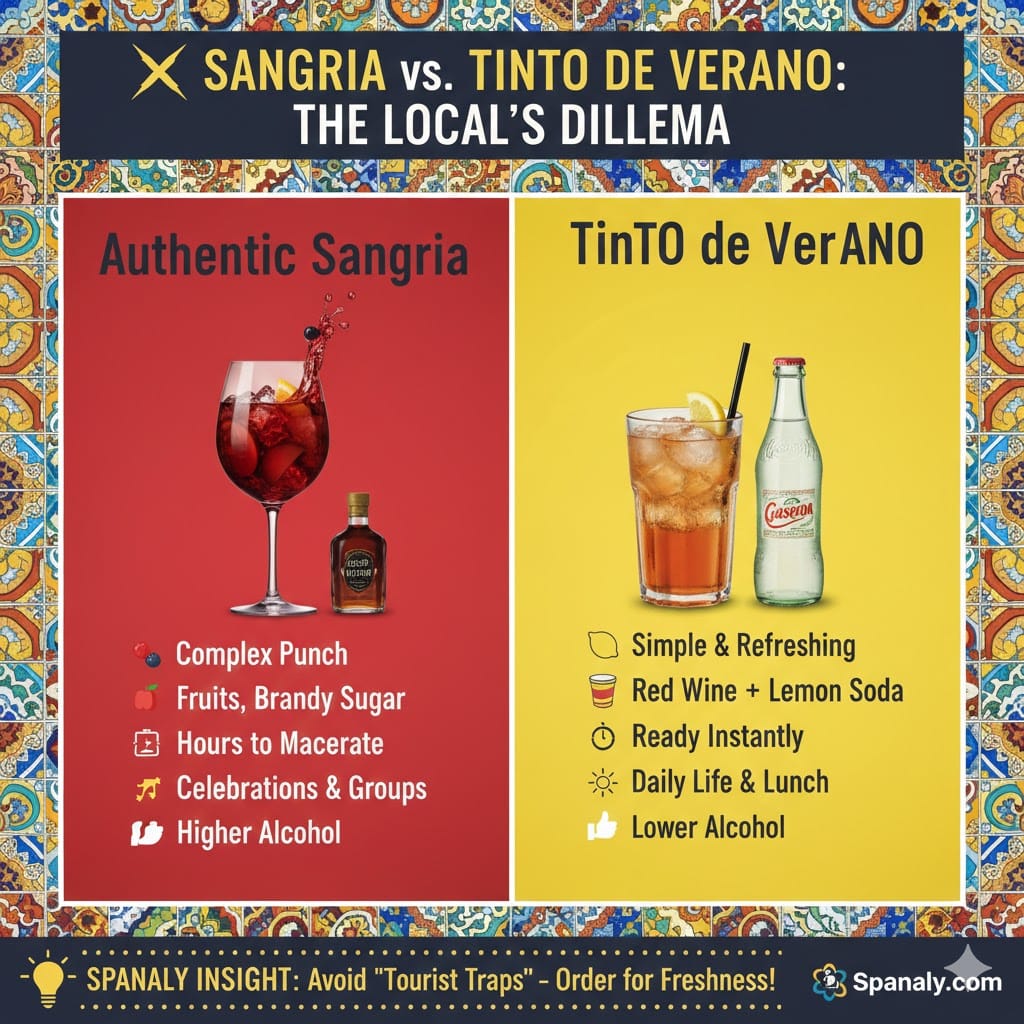
🍷 Authentic Sangria: A complex punch mixed with brandy, sugar, and sliced fruits. In fact, it requires hours of maceration to reach its full potential.
🍋 Tinto de Verano: A simple, refreshing blend of red wine and lemon soda (Gaseosa). Specifically, it is the lighter choice for a casual lunch under the sun.
🍹 Alcohol Content: Sangria is typically stronger due to the added spirits. Ultimately, Tinto de Verano is favored for its sessionability during long afternoons.
📍 Social Context: You will find Sangria at celebrations and big dinners. Notably, the “Summer Wine” is the everyday hero of the Spain Daily Rhythm & Siesta.
Indeed, both drinks have their place on the Spanish table. Specifically, if you are looking for a celebratory experience with friends, Sangria is the winner. Ultimately, choosing between them depends on whether you want a sophisticated craft cocktail or a quick, icy refresher.
💡 Spanaly Insight: Want to spot a “tourist trap”? In fact, if a restaurant only serves pre-made Sangria from a carton, order a Tinto de Verano instead. Notably, it is almost always made fresh on the spot with better quality wine and much less added sugar.
🍷 The Anatomy of Authentic Sangria: Balancing the Pitcher
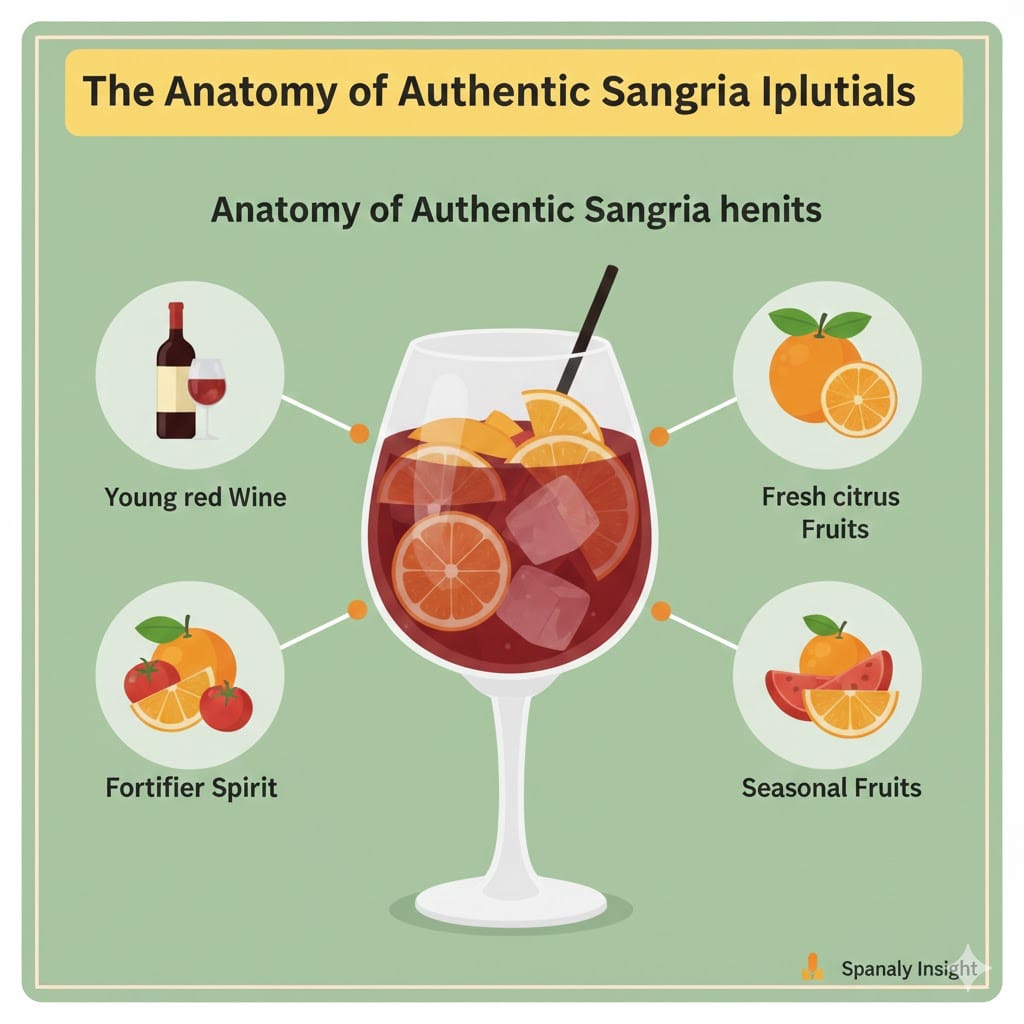
Creating an authentic Spanish Sangria is an art of balance. Notably, it is not just a random mix of leftover wine and fruit. Specifically, the magic happens when you harmonize the robust tannins of the wine with the natural acidity of citrus and the warmth of Spanish spirits.
🍇 The Wine Base: Choose a young, fruity red like Tempranillo or Garnacha. In fact, these varieties provide the perfect crimson body without overwhelming the fruit.
🍊 The Citrus Kick: Always use fresh oranges and lemons. Specifically, the zest and juices are essential to cut through the sweetness of the sugar.
🥃 The Fortifier: A splash of brandy or orange liqueur (like Cointreau) adds depth. Ultimately, this is what differentiates a craft Sangria from a simple wine cooler.
🍎 The Seasonal Crunch: Beyond citrus, add chopped apples or peaches. Notably, these fruits act as “flavor sponges,” soaking up the wine for a delicious finish.
Indeed, mastering these components is as vital as knowing the Essential Spain Travel Tips before you land. Specifically, using high-quality, local ingredients will elevate your drink from “tourist-grade” to “palace-worthy.” Ultimately, the perfect Sangria should be refreshing, slightly potent, and beautifully aromatic.
💡 Spanaly Insight: Never use an expensive Reserva or aged wine for Sangria. In fact, the complex oak flavors of aged wines often clash with the fresh fruit. Notably, a simple, high-quality “Joven” (young) wine is the professional’s choice for a vibrant and clean taste.
🥄 Step-by-Step: Crafting the Perfect Pitcher
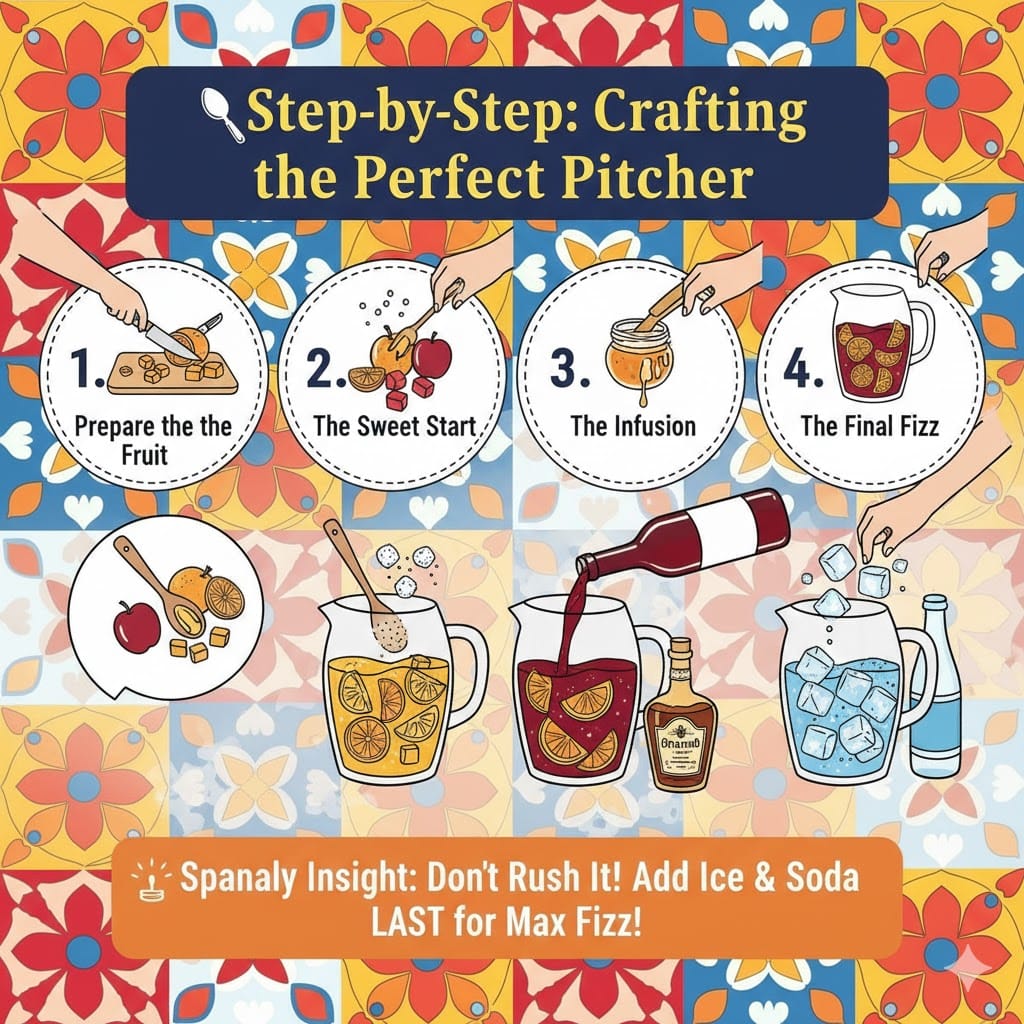
Making Sangria at home is simple, but the order of operations matters. Notably, to achieve that professional “macerated” taste, you must allow the ingredients to harmonize. Specifically, mastering this process is a vital skill for anyone exploring the Traditional Spanish Food Guide.
🔪 Prepare the Fruit: Chop oranges, lemons, and apples into small, uniform cubes. Specifically, leave the skins on the citrus for those essential aromatic oils.
🍯 The Sweet Start: Place the fruit in a large pitcher and sprinkle with sugar. In fact, muddle them gently for two minutes to release the natural juices before adding liquid.
🍷 The Infusion: Pour in your young red wine and the splash of brandy. Notably, stir well and let it rest in the fridge for at least 4 hours (ideally overnight).
❄️ The Final Fizz: Just before serving, add plenty of ice and a splash of sparkling water or lemon soda. Ultimately, this preserves the bubbles and keeps the drink crisp.
Indeed, preparing your own Sangria is as rewarding as discovering the Madrid Hidden Gems off the beaten path. Specifically, the patience you show during the chilling process will be rewarded with a much deeper, more complex flavor. Ultimately, a great Sangria should never feel rushed; it should feel like a Spanish summer afternoon.
💡 Spanaly Insight: Never add the ice or the sparkling soda during the resting phase in the fridge. In fact, the ice will dilute the wine, and the soda will go flat. Notably, always add these “active” ingredients at the very last second before the pitcher hits the table.
🍷 The Secret is in the Wine: Choosing Your Base
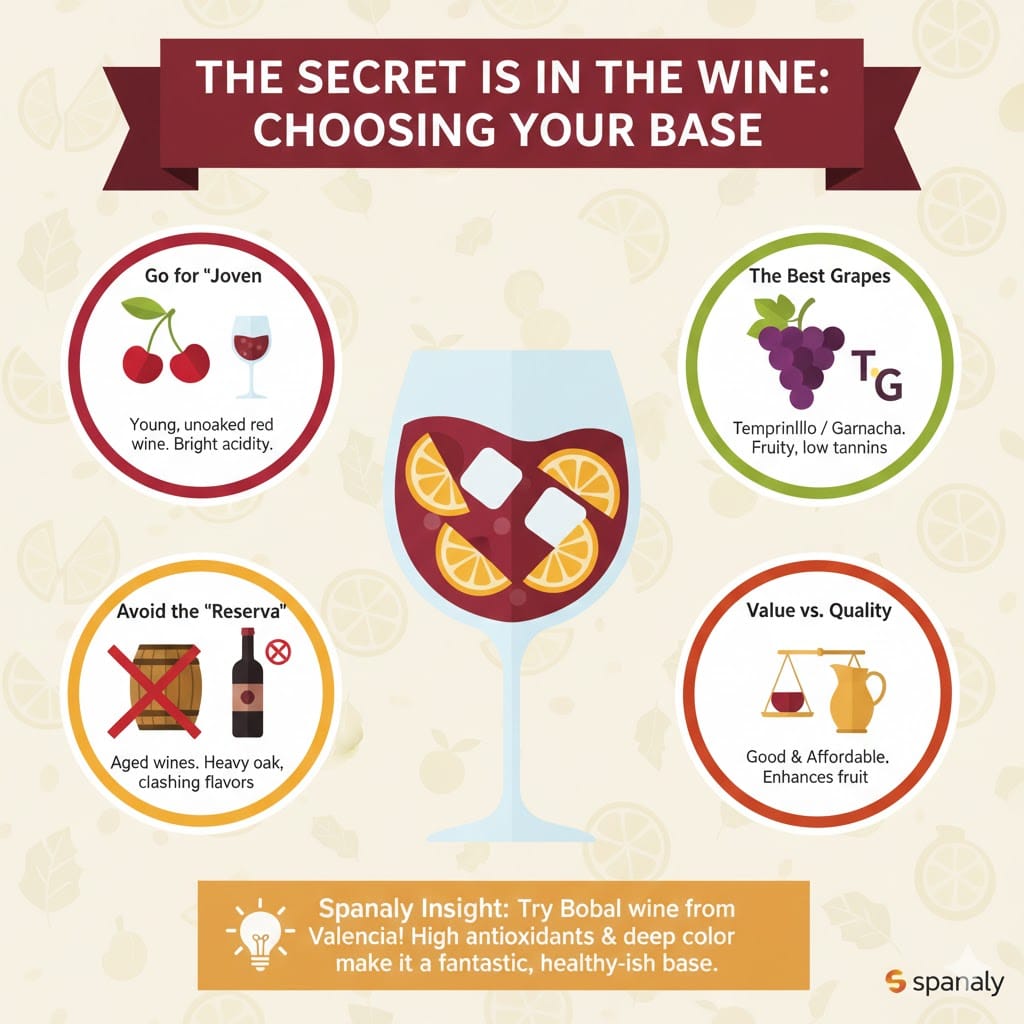
The soul of any Sangria lies in the bottle of wine you uncork. Notably, you don’t need an expensive vintage to create a masterpiece. Specifically, understanding the different Spanish Wine Regions is the key to finding a bottle that balances fruitiness with the right amount of tannins.
🍒 Go for “Joven”: Select a young, unoaked red wine. In fact, young wines from La Rioja or Ribera del Duero provide a bright acidity that doesn’t get lost when mixed.
🍇 The Best Grapes: Look for Tempranillo for a classic taste, or Garnacha if you prefer a softer, fruitier profile. Specifically, these grapes are naturally low in tannins, making them ideal for chilling.
🚫 Avoid the “Reserva”: Never use aged wines with heavy oak notes. Notably, the vanilla and leather flavors of a Reserva often clash with the fresh citrus of the Sangria.
⚖️ Value vs. Quality: Ultimately, you want a wine that is good enough to drink on its own but affordable enough to mix in a large pitcher.
Indeed, the wine you choose sets the stage for the entire experience. Specifically, picking a regional bottle adds an extra layer of authenticity to your gathering. Ultimately, whether it’s a robust red from the heart of Spain or a lighter blend, the wine should enhance the fruit, not overpower it.
💡 Spanaly Insight: If you want to try something different, look for a Bobal wine from the Valencia region. In fact, its high antioxidant levels and deep color make it a fantastic and healthy-ish base for a vibrant Sangria. Notably, it’s a local secret that many professional bartenders swear by!
⏳ The Science of Maceration: Why the Wait is Worth It

The difference between a “wine punch” and an authentic Sangria is time. Notably, the process of maceration is where the magic happens. Specifically, when you allow the fruit to sit in the wine, the alcohol acts as a solvent, extracting the essential oils and natural sugars. This is as essential to the experience as choosing the right Accommodation in Spain is to your trip.
⏱️ The Golden Window: For the best flavor, aim for 4 to 6 hours of refrigeration. In fact, letting it rest overnight is even better for a deeply infused profile.
🧪 Sugar Chemistry: Sugar doesn’t just sweeten; it draws moisture out of the fruit. Specifically, this creates a concentrated “fruit syrup” within the pitcher that bonds with the wine.
🌡️ Keep it Cold: Always macerate in the fridge. Notably, keeping the temperature low prevents the fruit from fermenting or losing its crisp texture.
🍋 Acid Balance: Over time, the citrus acidity mellows the wine’s tannins. Ultimately, the result is a smooth, rounded drink where no single ingredient overpowers the other.
Indeed, patience is the most important ingredient in this recipe. Specifically, rushing the process means missing out on the complex layers of flavor that define a true Spanish masterpiece. Ultimately, a well-rested Sangria is a testament to the slow, enjoyable pace of Mediterranean life.
💡 Spanaly Insight: If you are in a hurry, muddle the fruit with the sugar and a tiny splash of brandy before adding the wine. In fact, this “express maceration” can cut your waiting time in half by jump-starting the juice extraction. Notably, it’s a handy trick for unexpected guests!
🌍 Regional Variations: More Than Just Red Wine
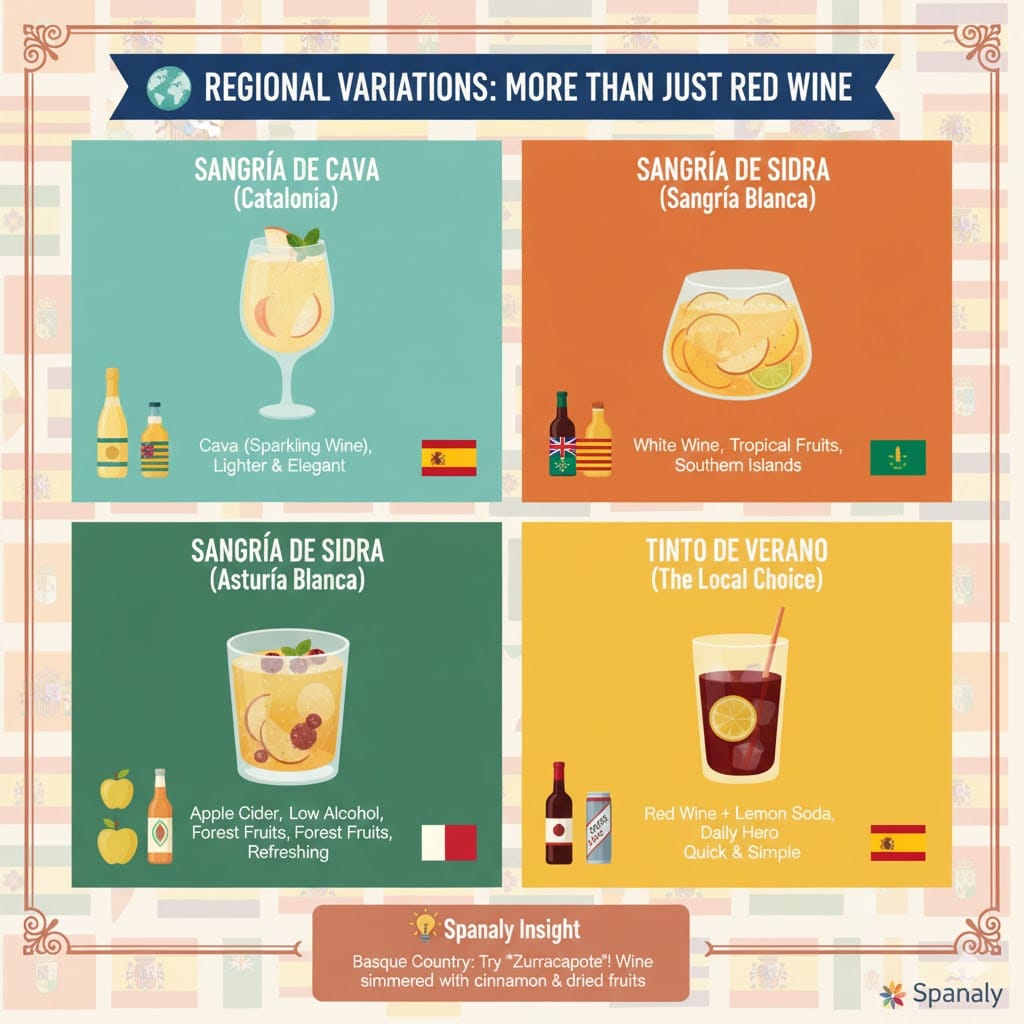
While the classic red version is iconic, Spain’s diverse geography has birthed several fascinating regional twists. Notably, each area uses its local pride to reinvent the pitcher. Specifically, understanding these variations is as important as knowing the Essential Spain Travel Tips for a truly authentic experience.
🥂 Sangría de Cava (Catalonia): In Barcelona and the coast, red wine is often swapped for Cava, the famous Spanish sparkling wine. In fact, it is lighter, more elegant, and perfect for high-end seafood dinners.
🍏 Sangría de Sidra (Asturias & Basque Country): The north of Spain uses its crisp, natural apple cider as a base. Specifically, it’s mixed with forest fruits and is much lower in alcohol, making it incredibly refreshing.
🍹 White Sangria (Sangría Blanca): Popular in the southern islands, this version uses crisp white wines like Albariño. Notably, it usually features tropical fruits like peaches and apricots for a sun-drenched flavor profile.
🍋 Tinto de Verano (The Local Choice): As we’ve seen, this simple mix is the daily hero across the country. Ultimately, it remains the gold standard for anyone who wants to How to Order Food Like a Local in Spain.
Indeed, exploring these regional styles is like taking a liquid tour of the peninsula. Specifically, each glass tells a story of the local soil and traditions. Ultimately, whether you prefer the bubbles of the Mediterranean or the cider of the Atlantic north, there is a Sangria for every palate.
💡 Spanaly Insight: If you find yourself in the Basque Country, ask for a Zurracapote. In fact, it’s their local version of Sangria where the wine is simmered with cinnamon and dried fruits, then chilled. Notably, it has a much richer, “spiced” soul than the standard version!
🧀 Pairing Secrets: What to Eat with Sangria
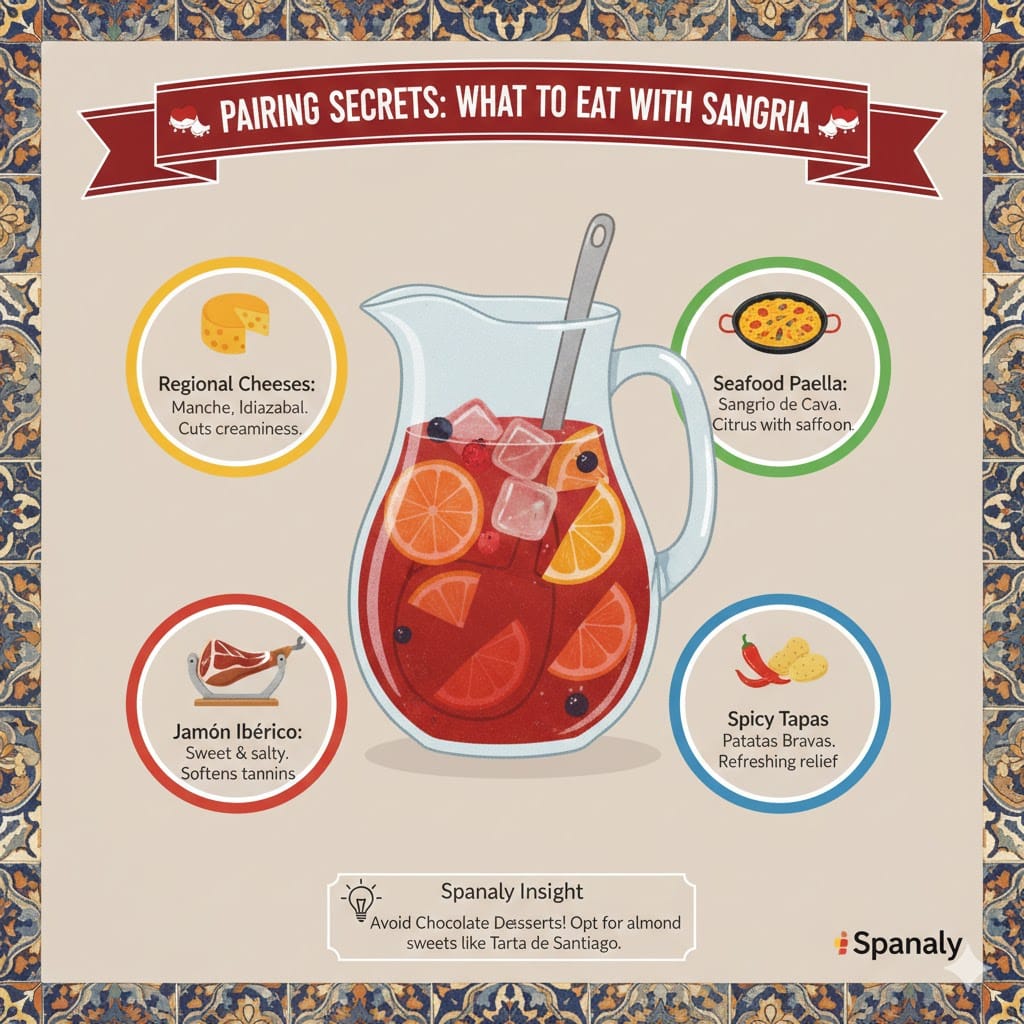
Sangria is a social drink, and in Spain, it never sits on the table alone. Notably, its high acidity and fruity sweetness make it a versatile partner for salty, savory, and rich flavors. Specifically, to create a balanced Mediterranean feast, you should explore the Traditional Spanish Food Guide for the perfect culinary matches.
🧀 Regional Cheeses: The crispness of Sangria cuts beautifully through the creaminess of sheep and goat cheeses. In fact, serving it alongside various Regional Spanish Cheeses like Manchego or Idiazabal is a guaranteed crowd-pleaser.
🥘 Seafood Paella: The citrus notes in the pitcher act like a fresh squeeze of lemon over the rice. Specifically, a chilled Sangría de Cava is the ultimate companion for a rich, saffron-infused seafood platter.
🥓 Jamón Ibérico: The saltiness of Spanish cured ham creates a “sweet and salty” explosion when paired with red wine Sangria. Notably, the fat of the ham softens the wine’s tannins instantly.
🍤 Spicy Tapas: If you enjoy Gambas al Ajillo (garlic shrimp) or Patatas Bravas, the cold fruitiness of the drink provides a refreshing relief from the heat. Ultimately, it cleanses the palate between every spicy bite.
Indeed, the right pairing elevates the drink from a simple refreshment to a gourmet experience. Specifically, when you match the regionality of the wine with local snacks, you are eating like a true Spaniard. Ultimately, the goal is to balance the bold fruit flavors with textures that are salty, crunchy, or creamy.
💡 Spanaly Insight: Avoid pairing Sangria with heavy chocolate desserts. In fact, the sugar in the dessert can make the wine taste bitter or overly acidic. Notably, stick to almond-based sweets like Tarta de Santiago if you want a sweet finish that complements the fruit!
💃 Sangria in Spanish Culture: Beyond the Tourist Pitcher
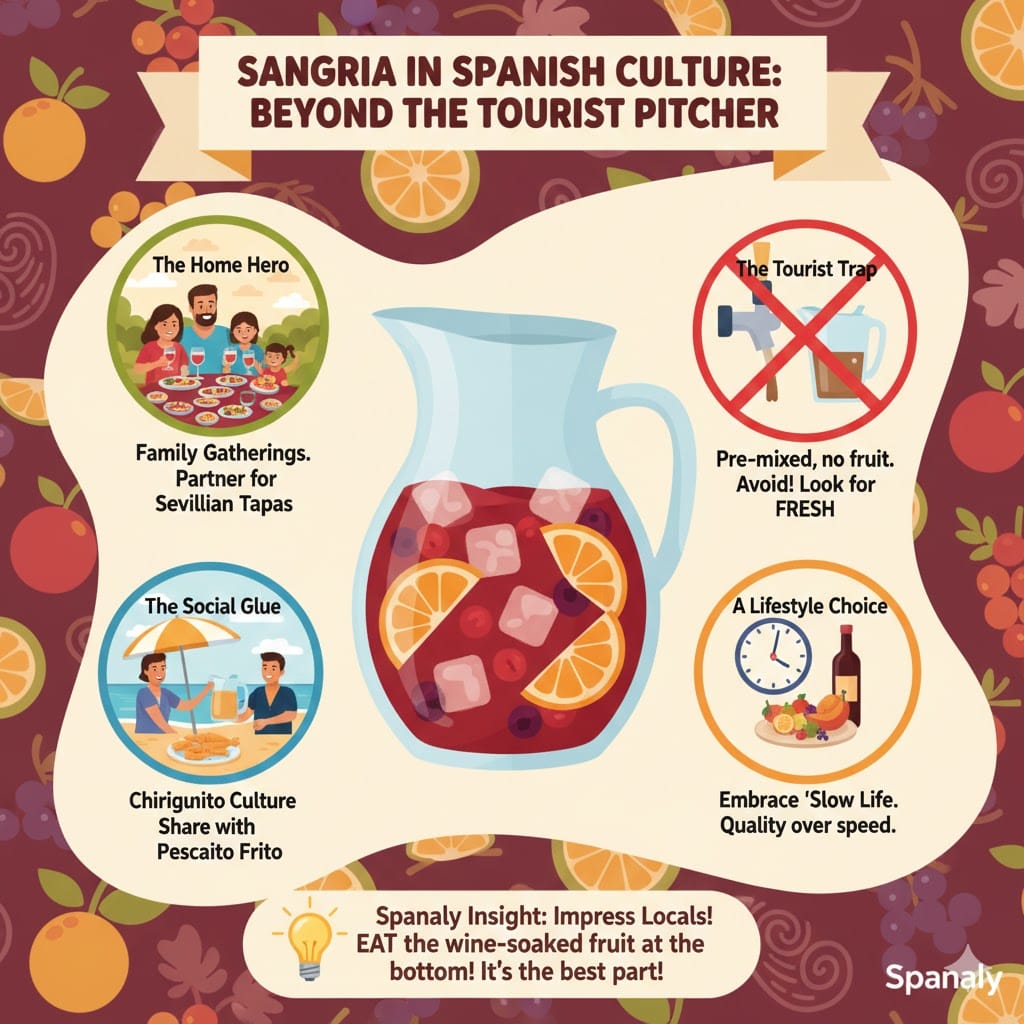
In Spain, Sangria is more than just a drink; it is a symbol of convivencia (living together) and celebration. Notably, it is a communal experience designed for sharing during family gatherings and vibrant summer festivals. Just as you would seek out the Top Paella & Seafood Restaurants in Barcelona for an authentic meal, finding real Sangria requires knowing where the locals gather.
🏡 The Home Hero: Most Spaniards enjoy Sangria at home or private garden parties. In fact, it is the ultimate partner for a spread of Traditional Sevillian Tapas served during a long weekend lunch.
🚩 The Tourist Trap: Many bars in high-traffic plazas serve pre-mixed, overly sweet Sangria from a tap. Specifically, look for pitchers with fresh, macerated fruit at the bottom; if it’s served without fruit, it’s likely a mass-produced version.
🎉 The Social Glue: It is the centerpiece of the Chiringuito (beach bar) culture. Notably, there is nothing more Spanish than sharing a cold pitcher while enjoying a plate of crispy Pescaito Frito.
🍹 A Lifestyle Choice: Choosing Sangria is about embracing the “slow life.” Ultimately, it represents the same culinary pride found in our Traditional Spanish Food Guide, where quality ingredients are never sacrificed for speed.
Indeed, Sangria represents the relaxed, joyful essence of Spanish life. Specifically, it’s a drink that demands you slow down and enjoy the company you are with. Ultimately, whether it’s a high-end version at a rooftop bar or a rustic red mix at a family lunch, it remains the ultimate liquid celebration of the Mediterranean soul.
💡 Spanaly Insight: If you want to impress your Spanish hosts, don’t just drink the liquid. In fact, eating the wine-soaked fruit at the bottom of the pitcher is the best part! Notably, it holds the most concentrated flavor and is considered a treat for those sharing the pitcher.
📍 Where to Drink the Best Sangria: Local Favorites
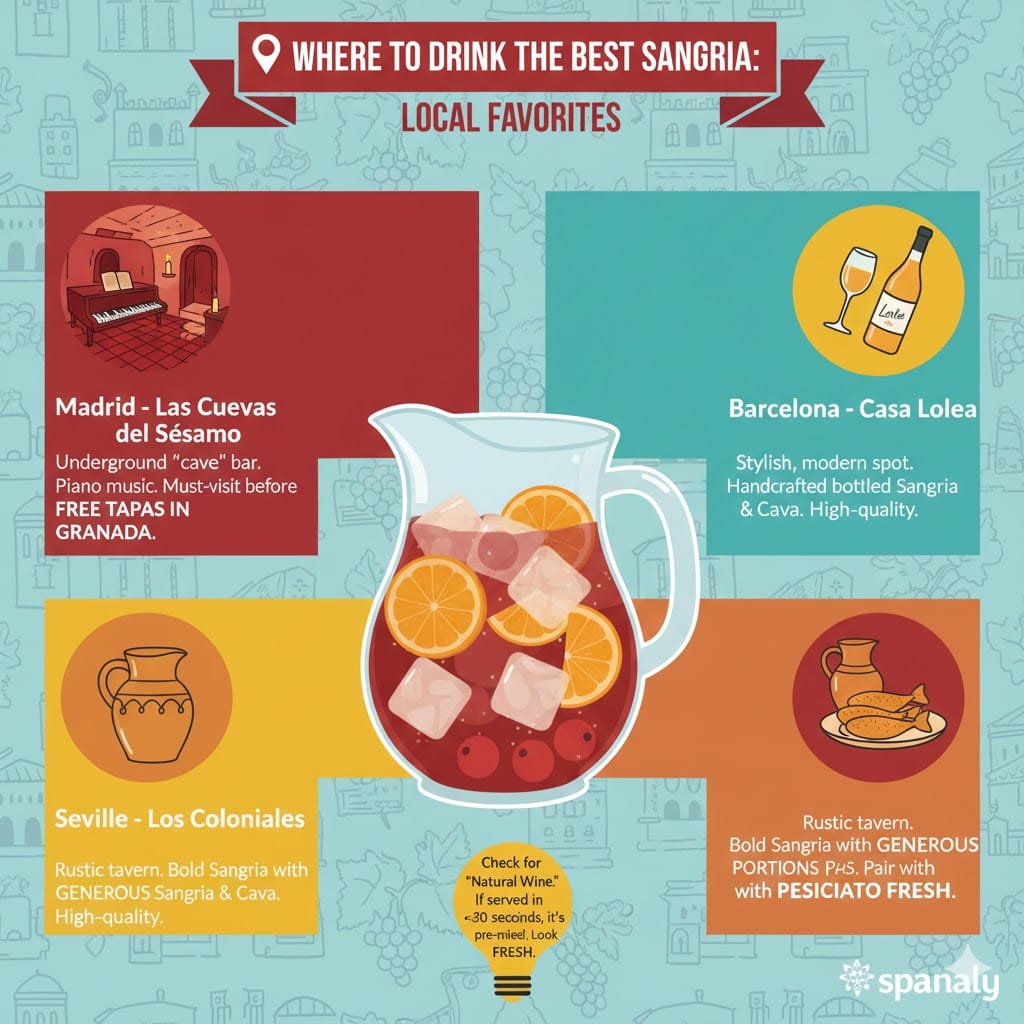
Finding an authentic pitcher in major cities can be a challenge, but some iconic spots have kept the tradition alive. Notably, while it’s tempting to stop at the first terrace you see, knowing where the locals gather is the key to a true Spanish experience.
🍷 Madrid – Las Cuevas del Sésamo: Tucked away near Puerta del Sol, this underground “cave” bar is legendary. In fact, they only serve Sangria in large pitchers, accompanied by piano music. It is a must-visit before heading south to discover the culture of Free Tapas in Granada.
🥂 Barcelona – Casa Lolea: This stylish spot has revolutionized the drink. Specifically, they specialize in high-quality, handcrafted bottled Sangria and sparkling Cava versions, served in a chic, modern atmosphere.
🏺 Seville – Los Coloniales: A rustic, traditional tavern where the Sangria is bold and the portions are generous. Ultimately, there is no better way to enjoy a cold glass than pairing it with a crispy plate of Pescaito Frito in Seville.
Indeed, each city offers a different “vibe” for your pitcher. Specifically, from the moody caves of Madrid to the breezy terraces of the south, the setting changes the experience. Ultimately, the best Sangria is the one shared in a place that feels like a true piece of local Spain.
💡 Spanaly Insight: Always check if the bar uses “Natural Wine” or a “House Blend.” In fact, the best places pride themselves on their wine base. Notably, if the Sangria arrives in less than 30 seconds, it’s likely pre-mixed and lacks the depth of a freshly prepared batch.
✨ Expert Tips for a Flawless Pitcher
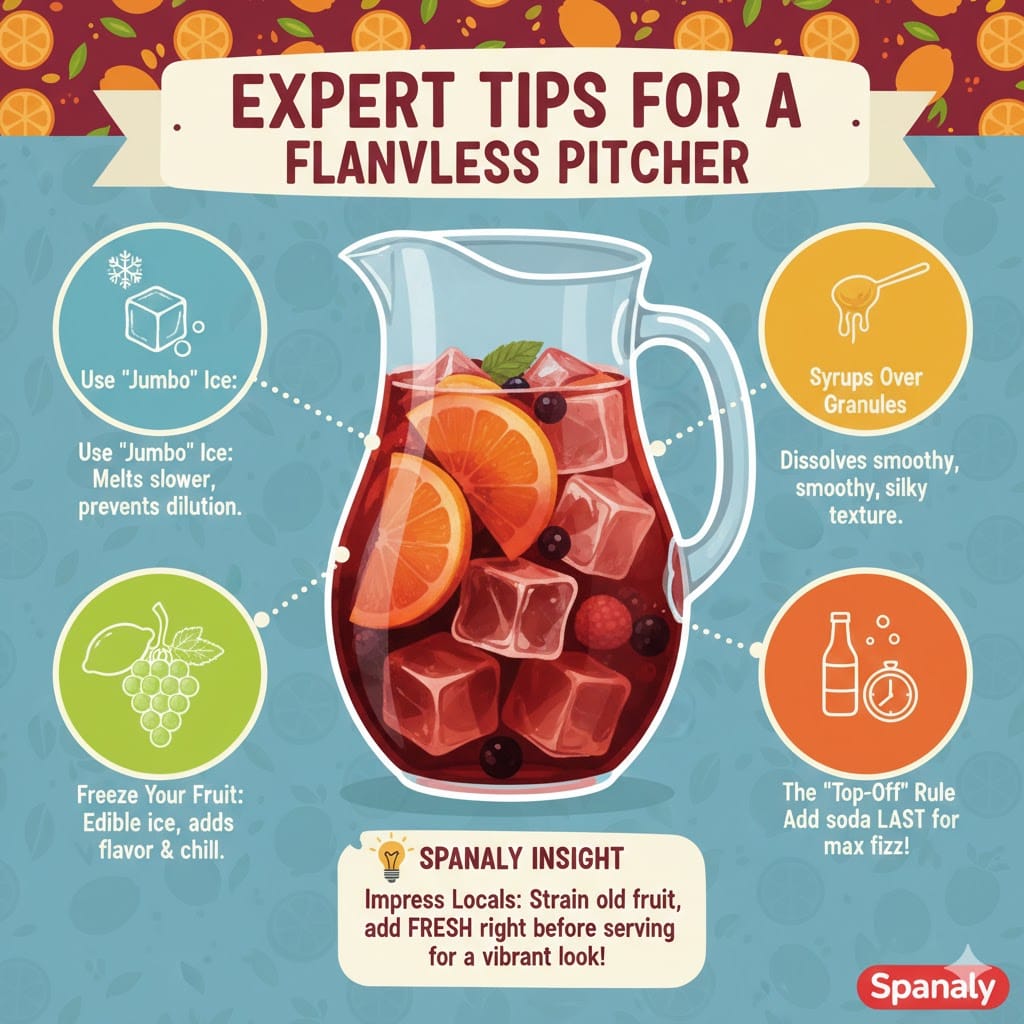
Creating a masterpiece is about mastering the details that others overlook. Notably, small technical adjustments can prevent your drink from becoming a watery mess. Specifically, follow these pro-secrets to ensure every glass is as bold as the first.
🧊 Use “Jumbo” Ice: Small cubes melt too fast. In fact, using large, solid ice blocks keeps the drink chilled without diluting the wine.
🍯 Syrups Over Granules: Never pour raw sugar into cold wine; it won’t dissolve. Specifically, use simple syrup or agave nectar to ensure a silky texture throughout the pitcher.
🍋 Freeze Your Fruit: Instead of just chilling them, use frozen grapes or citrus slices as “edible ice cubes.” Notably, they keep the pitcher cold while slowly releasing flavor.
🧪 The “Top-Off” Rule: Only add sparkling water or soda at the very last second. Ultimately, adding it too early kills the bubbles and leaves the Sangria tasting flat.
Indeed, these refinements separate the “tourist traps” from the authentic home-style experience. Specifically, focusing on temperature and texture is what keeps the flavors vibrant. Ultimately, the goal is a pitcher that stays cold, crisp, and concentrated until the very last drop.
💡 Spanaly Insight: If you want a clear, professional look, strain the fruit used for maceration and replace it with fresh, bright fruit just before serving. In fact, this keeps the drink looking vibrant and prevents the fruit from appearing “mushy” in the glass. Notably, it’s the secret behind those Instagram-perfect pitchers in high-end Spanish bars!
🍷 Visitor FAQs – The Truth About Spanish Sangria
📉 Is Sangria a "diet-friendly" or healthy option?
It is not a low-calorie drink due to the added sugars and fruit fructose. However, if you use a Bobal wine base and minimize added syrup, you gain high levels of antioxidants. Notably, homemade Sangria is far superior to sugary sodas because it lacks artificial preservatives and dyes.
🚫 Can I make a "Virgin" Sangria (Non-Alcoholic)?
Absolutely! Simply replace the red wine with unsweetened dark grape juice or a strong, chilled Hibiscus tea. In fact, adding lemon-flavored sparkling water provides the same refreshing "fizz" without the alcohol, making it an excellent choice for children and non-drinkers.
⏳ How long does Sangria stay fresh after preparation?
Sangria is best enjoyed within 12 to 24 hours. Beyond that, the fruit begins to ferment and lose its texture, which can turn the wine slightly sour or "mushy." Specifically, if you plan to keep it longer, strain the old fruit out and add a fresh batch right before serving.
⚖️ Are there legal protection laws for the name "Sangria"?
Yes! Under European Union law, only drinks produced in Spain and Portugal can be commercially labeled as "Sangria." Ultimately, this protected status ensures that when you buy a bottle in Europe, you are getting a product that respects the traditional Iberian heritage and quality standards.
🧠 Why does Sangria sometimes cause a headache?
Often, the headache comes from the high sugar content used in tourist-trap bars rather than the wine itself. Specifically, the combination of sugar and alcohol speeds up dehydration. To avoid this, stick to natural sweeteners and always alternate each glass of Sangria with a glass of water.
🧊 Can I freeze Sangria into a "Slushy"?
Yes, this is known as Frozen Sangria and it's a massive trend for 2026. In fact, you can blend your prepared Sangria with extra ice to create a "slushy" texture. It is arguably the most refreshing way to serve the drink during a scorching Mediterranean beach day.
Created by Spanaly.com
🍷 Raise Your Glass & Say ¡Salud!
Mastering the art of Sangria is your first step into the vibrant soul of Spanish hospitality. Notably, it’s not just a drink; it’s an invitation to slow down and savor life.
✨ Perfection in a Pitcher: Remember, the secret is quality wine, fresh fruit, and the patience of maceration.
🥘 Complete the Feast: No summer table is truly Spanish without a chilled bowl of Salmorejo: The Ultimate Cold Soup to start your meal.
🥗 Local Tradition: For a more rustic, earthy pairing, we highly recommend trying the classic Espinacas con Garbanzos alongside your pitcher.
🙌 The Golden Rule: Whether you’re on a rooftop in Madrid or in your own backyard, the best Sangria is always the one shared with good company.
Indeed, Spain’s culinary world is vast and full of surprises. Specifically, from the first sip of a fruity red to the last bite of a tapas plate, every flavor tells a story. Ultimately, we hope this guide helps you recreate that Mediterranean magic wherever you are.
¡Salud y buen provecho! 🇪🇸