
Table of Contents
Toggle🏛️ Why Santiago de Compostela in 2026?
Why do millions of souls feel an irresistible pull toward this rain-kissed corner of Northwest Spain? The answer lies in the rhythm of the granite streets and the ancient mist that clings to its towers.
The Spiritual Apex: Witnessing the Botafumeiro swing is one of the most powerful Spanish Festivals and rituals in the world.
The Culinary Soul: Experience the undisputed capital of seafood and the legendary “Polbo á feira.”
The Timeless Stones: Every plaza stands as a silent witness to centuries of history and Galician tradition.
Whether you’re finishing the 800km Camino or seeking a cultural retreat, Santiago in 2026 offers a sanctuary of peace. If you’ve already explored the south through our 3-day Seville itinerary, prepare for a different magic—where emerald forests replace the sun and the haunting Gaita (bagpipes) replaces flamenco.
SPANALY TIP: Santiago’s rain is part of its charm. In 2026, upgraded eco-transit and restored tours of the Cathedral of Santiago de Compostela make it the ultimate year-round destination for soul-seekers.
📍 Santiago Interactive Guide 2026
Explore city landmarks curated by our experts
⚖️ The Santiago Face-Off: Medieval Pilgrimage vs. Modern Culture
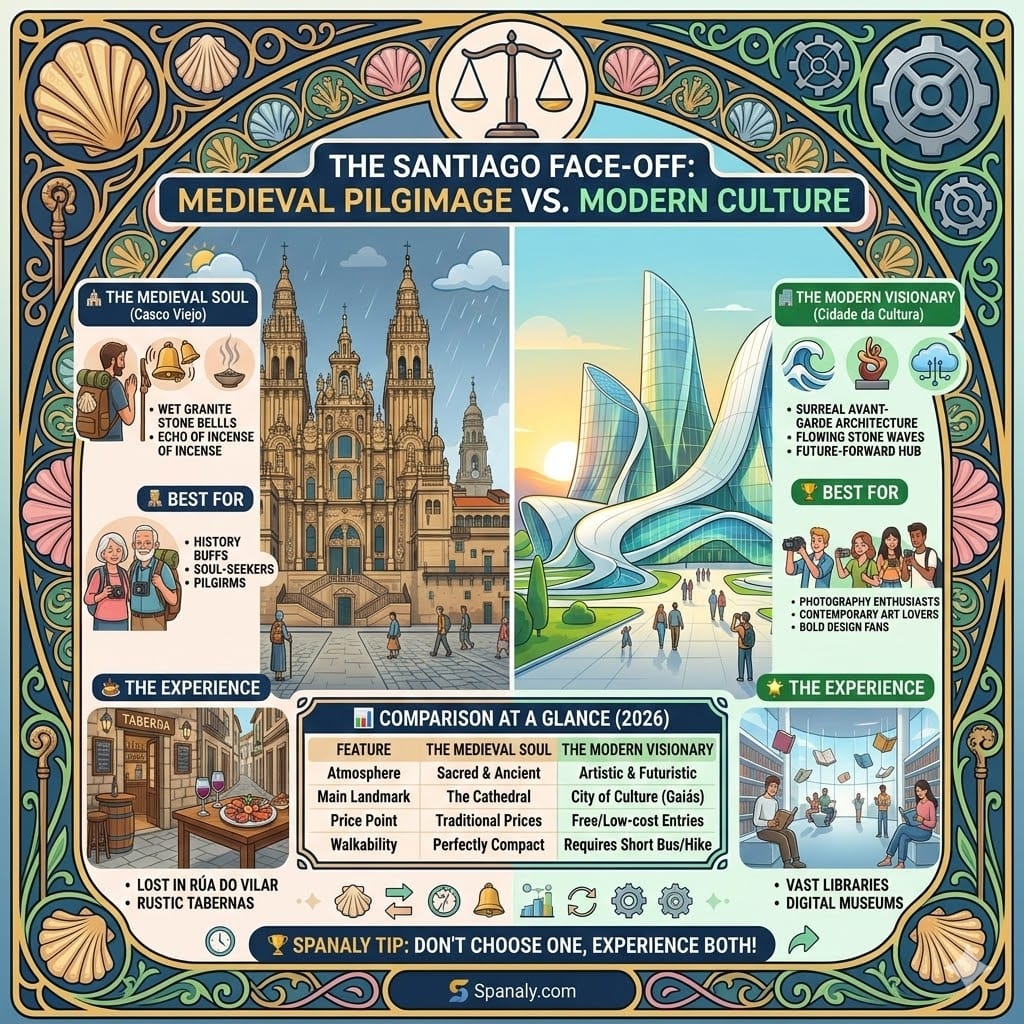
Before you begin your journey, you must understand that Santiago de Compostela lives in two worlds at once. It’s not just the end of an ancient trail; it’s a city where a thousand years of faith meet 21st-century visionary architecture.
⛪ The Medieval Soul (Casco Viejo)
Vibe: Wet granite stones, the echo of church bells, and the scent of incense drifting through narrow alleys.
Best For: History buffs, soul-seekers, and pilgrims looking to soak in centuries of tradition.
The Experience: Getting lost in the “Rúa do Vilar” and dining in rustic tabernas that haven’t changed in generations.
🏢 The Modern Visionary (Cidade da Cultura)
Vibe: Surreal, avant-garde architecture by Peter Eisenman. A series of “stone waves” rising from Mount Gaiás.
Best For: Photography enthusiasts, contemporary art lovers, and fans of bold architectural design.
The Experience: Exploring vast libraries and digital museums that position Galicia as a future-forward cultural hub.
📊 Comparison at a Glance (2026)
| Feature | The Medieval Soul | The Modern Visionary |
| Atmosphere | Sacred & Ancient | Artistic & Futuristic |
| Main Landmark | The Cathedral | City of Culture (Gaiás) |
| Price Point | Traditional Prices | Free/Low-cost Entries |
| Walkability | Perfectly Compact | Requires a Short Bus/Hike |
SPANALY TIP: Don’t choose one over the other! The ultimate 2026 experience is spending your morning in the silence of the Cathedral of Santiago de Compostela and your afternoon watching the sunset hit the glass curves of the Cidade da Cultura.
🧥 Northern Style: What to Pack for the Galician Climate

Packing for Santiago de Compostela in 2026 is an art of layering. Unlike the dry heat of the south, Galicia is lush, green, and famously misty. Whether you are a pilgrim or a cultural explorer, your suitcase needs to handle the “four seasons in one day” reality.
The Galician Survival Kit:
The “Rain-Ready” Outerwear: A high-quality, lightweight waterproof jacket is your best friend. In Santiago, umbrellas are often useless against the Atlantic winds; a sturdy hood is the local way to go.
The Granite-Proof Footwear: You’ll be walking on ancient, sometimes slippery, granite stones. Opt for comfortable, water-resistant sneakers or boots with a solid grip.
Smart Layers (The Onion Method): Even in summer, the mornings can be chilly and the afternoons humid. Pack breathable base layers and a light wool sweater or fleece.
The “Sacred” Accessory: A stylish scarf or pashmina. It’s perfect for the cool Galician evenings and essential for showing respect when entering the Cathedral of Santiago de Compostela.
Tech Protection: A waterproof cover for your backpack or camera bag. Galician mist (Sirimiri) is beautiful but very persistent!
If you’re extending your trip beyond the north, make sure to cross-reference our ultimate packing guide for Spain to balance your luggage for both the rainy north and the sunny Mediterranean.
SPANALY TIP: Don’t bother packing heavy rain boots. They take up too much space and aren’t practical for long city walks. Instead, invest in high-quality waterproof sprays for your regular walking shoes—it’s the secret hack of seasoned Camino pilgrims!
🏨 Where to Sleep: From Pilgrims' Palaces to Modern Retreats
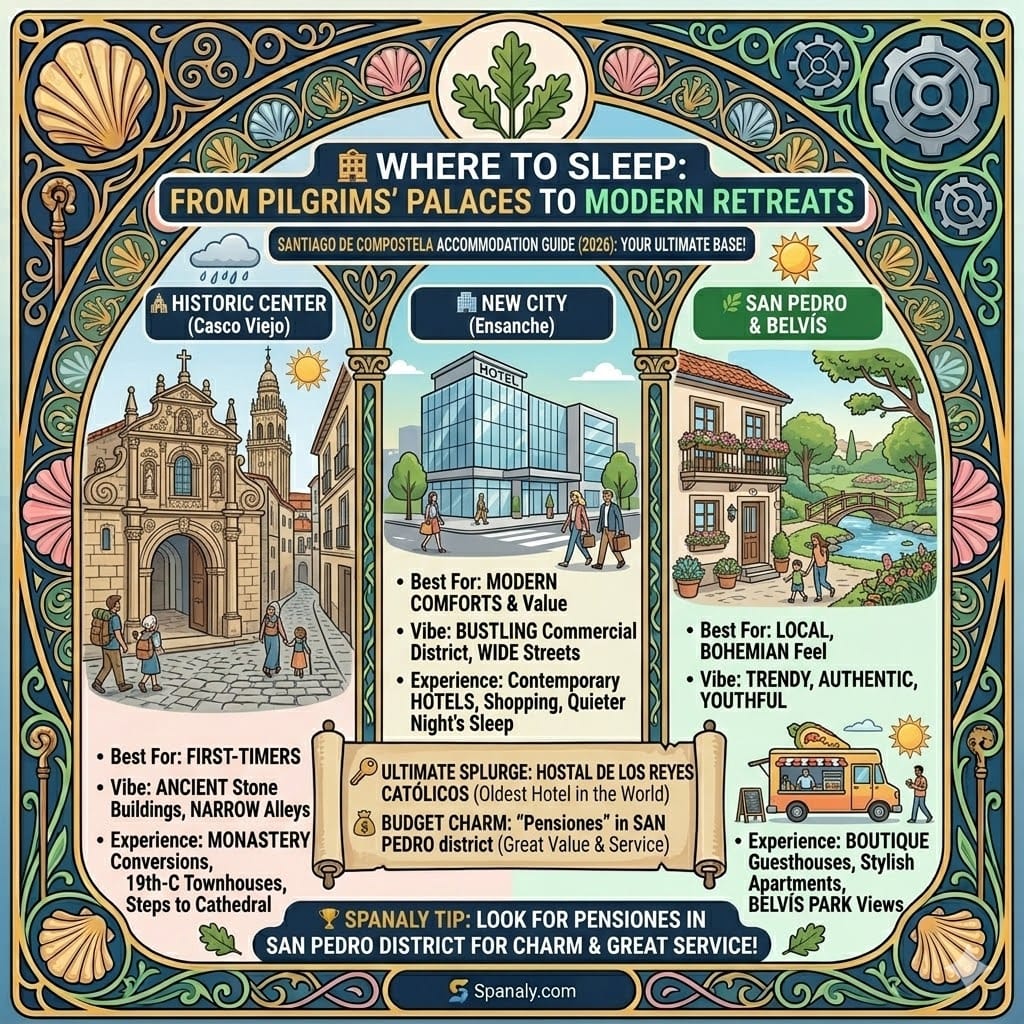
Finding the perfect base in Santiago depends on whether you want to wake up to the sound of cathedral bells or the peaceful silence of the Galician countryside. For your 2026 trip, these are the top areas to consider:
Casco Viejo (The Historic Center)
Best For: First-timers and those who want to be in the heart of the magic.
Vibe: Ancient stone buildings, narrow alleys, and immediate access to the best tapas bars.
The Experience: Staying in a converted monastery or a 19th-century townhouse. You are steps away from the Cathedral of Santiago de Compostela.
Ensanche (The New City)
Best For: Travelers seeking modern comforts, high-end shopping, and better value for money.
Vibe: A bustling, walkable commercial district with wider streets and contemporary hotels.
The Experience: Perfect for those who want a quieter night’s sleep away from the pilgrim crowds but still within a 10-minute walk of the historic core.
San Pedro & Belvís
Best For: A local, bohemian feel with stunning park views.
Vibe: Trendy, authentic, and youthful. This area is famous for its creative food scene and the beautiful Belvís Park.
The Experience: Boutique guesthouses and stylish apartments that offer a “local” Galician lifestyle.
For more insights on finding the right accommodation in Spain, including luxury paradores and charming boutique stays, check our comprehensive guide.
SPANALY TIP: In 2026, the legendary Hostal de los Reyes Católicos (the oldest hotel in the world) remains the ultimate splurge. However, if you’re on a budget, look for “Pensiones” in the San Pedro district—they offer incredible charm and personal service for a fraction of the price of the big hotels!
🚉 Seamless Travel: Navigating the Galician Triangle
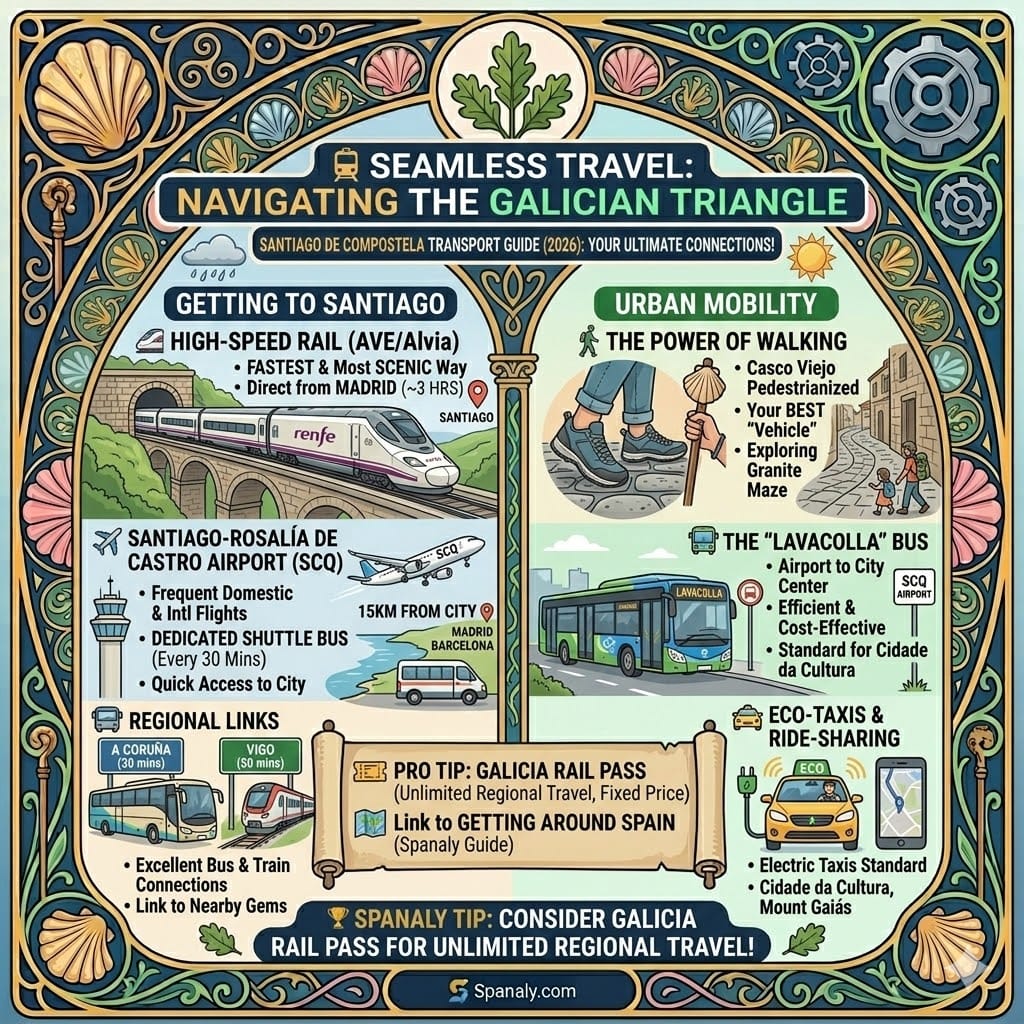
Getting to the “Edge of the World” is no longer the arduous trek it was in the Middle Ages. In 2026, Santiago de Compostela is one of the most accessible and eco-friendly hubs in Northern Spain.
Getting to Santiago:
The High-Speed Rail (AVE/Alvia): The fastest and most scenic way. Direct trains from Madrid Chamartín reach Santiago in just over 3 hours. It’s comfortable, features free Wi-Fi, and drops you right in the city center.
Santiago-Rosalía de Castro Airport (SCQ): Located 15km from the city, it offers frequent flights from Madrid, Barcelona, and major European cities. A dedicated shuttle bus runs every 30 minutes.
Regional Links: Excellent bus and train connections link Santiago with nearby gems like A Coruña (30 mins) and Vigo (50 mins).
Urban Mobility:
The Power of Walking: Santiago’s Casco Viejo is almost entirely pedestrianized. Your feet are your best “vehicle” for exploring the granite maze.
The “Lavacolla” Bus: This efficient bus line connects the airport to the city center for a few Euros.
Eco-Taxis & Ride-Sharing: In 2026, electric taxis are standard for reaching the Cidade da Cultura or Mount Gaiás.
For more details on mastering the Spanish transit network, don’t miss our guide on getting around Spain for 2026.
SPANALY TIP: In 2026, if you are planning to explore the surrounding Galician countryside, consider the “Galicia Rail Pass.” It offers unlimited regional train travel for a fixed price, allowing you to hop between coastal villages without the stress of driving in Spain.
Day 1: Sacred Stones & Swinging Incense
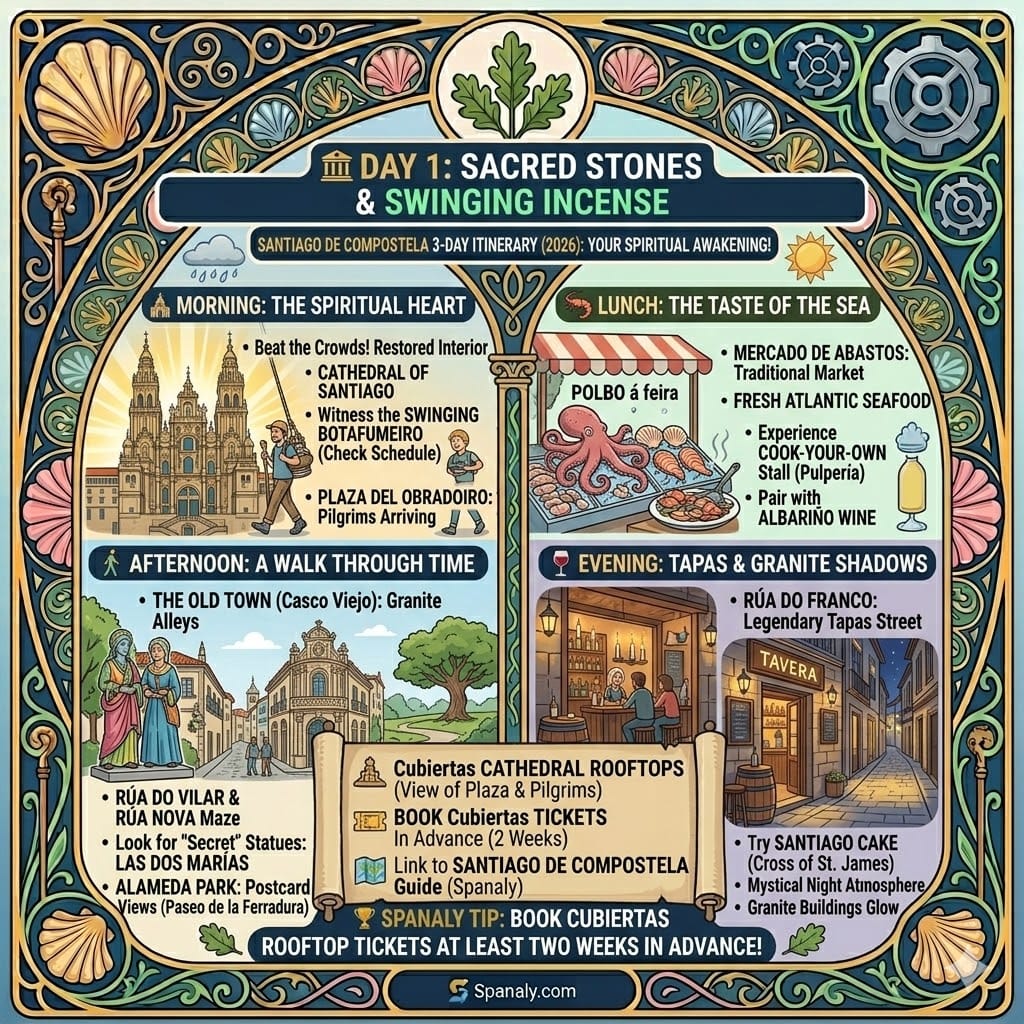
Today is about the heart of the pilgrimage. Whether you walked for weeks or arrived by train, the energy of Plaza del Obradoiro will move you. We start with the sacred and end with the legendary Galician flavors.
Morning: The Spiritual Heart
The Cathedral of Santiago: Start early to beat the crowds. In 2026, the newly restored interior glows with a golden hue. Don’t miss the Pórtico da Gloria, a masterpiece of Romanesque art. If you’re lucky (or check the liturgical schedule), you might witness the Botafumeiro—the giant incense burner—swinging dramatically across the transept.
Plaza del Obradoiro: Take a moment to sit on the granite floor of the square. Watch the pilgrims arrive, many in tears of joy. It is one of the most powerful sights in all of Europe.
Lunch: The Taste of the Sea
Mercado de Abastos: Head to the city’s second most visited spot. This traditional market is where locals and chefs buy the freshest Atlantic seafood.
The Experience: Buy some fresh scallops or octopus at the stalls and take them to the market’s “Pulpería” (octopus bar) to have them cooked on the spot. Pair it with a cold glass of Albariño wine.
Afternoon: A Walk Through Time
The Old Town (Casco Viejo): Get lost in the narrow granite alleys of Rúa do Vilar and Rúa Nova. Look for the “secret” statues, like the two colorful sisters (Las Dos Marías) at the entrance of Alameda Park.
Alameda Park: For the ultimate postcard view of the Cathedral of Santiago de Compostela, walk to the “Paseo de la Ferradura.” The view of the towers framed by ancient oak trees is breathtaking.
Evening: Tapas & Granite Shadows
Rúa do Franco: This is the legendary “Tapas Street.” Every door leads to a cozy tavern.
The Ritual: Try the Santiago Cake (Almond cake with the cross of St. James) for dessert. As night falls, the granite buildings glow under the streetlights, creating a mystical atmosphere you won’t find anywhere else in Spain.
SPANALY TIP: > In 2026, tickets for the Cathedral rooftops (Cubiertas) must be booked at least two weeks in advance. The view from the top of the stone roof, looking down at the pilgrims in the square, is a highlight you cannot miss!
Day 2: Avant-Garde Waves & Garden Serenity
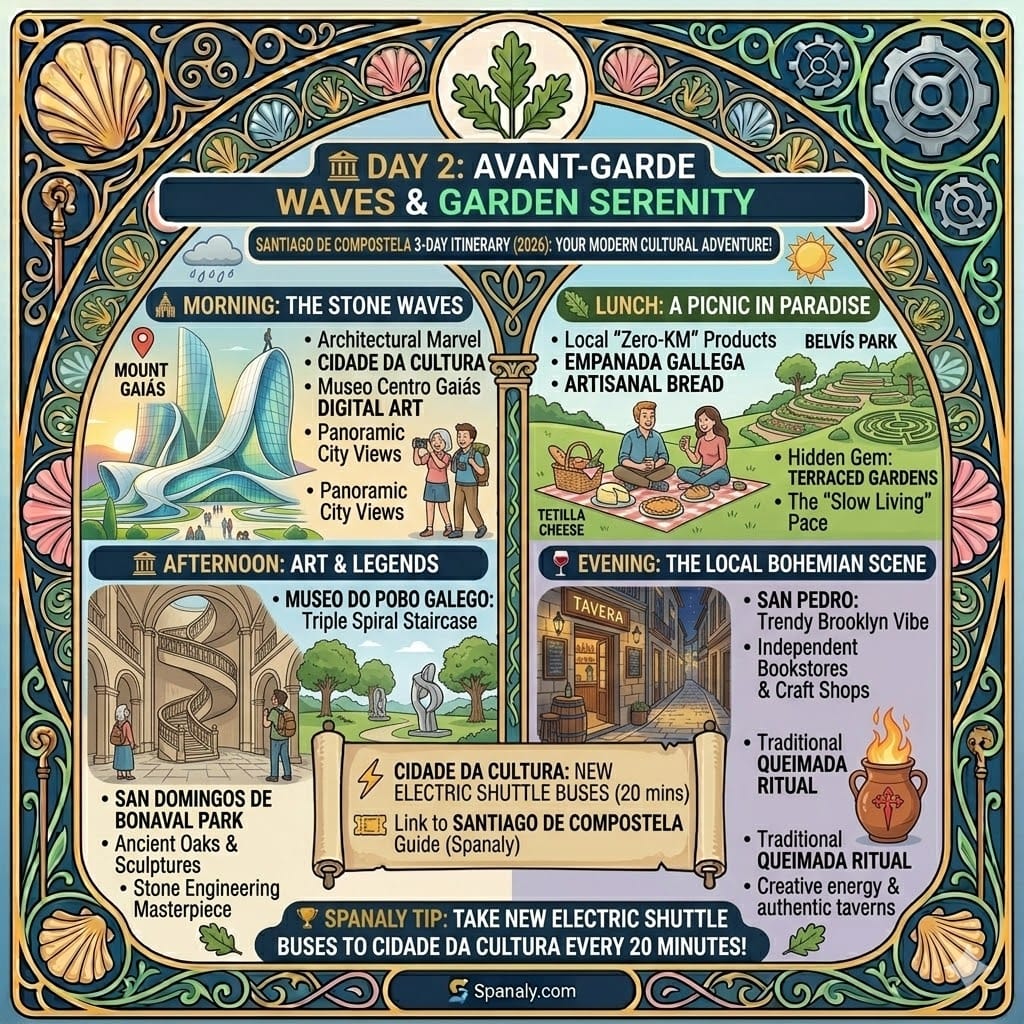
After the spiritual intensity of Day 1, today we explore the artistic and green lungs of Santiago. We’ll witness how the city bridges its medieval past with a futuristic vision, all while enjoying the freshest “Zero-KM” Galician products.
Morning: The Stone Waves
Cidade da Cultura (City of Culture): Head to Mount Gaiás to see this architectural marvel. In 2026, it stands as a surreal landscape of stone and glass that mimics the rolling hills of Galicia.
The Experience: Walk across the rooftops (yes, you can!) and visit the Museo Centro Gaiás for its cutting-edge digital art exhibitions. The panoramic view of Santiago from here is the best way to understand the city’s scale.
Lunch: A Picnic in Paradise
Belvís Park: Pick up some local Tetilla cheese, artisanal bread, and Empanada Gallega from a local bakery and head to Belvís Park.
The Setting: This park is a hidden gem, featuring ancient terraced gardens and a labyrinth. It’s the perfect spot to experience the “Slow Living” pace of the North.
Afternoon: Art & Legends
Museum of the Galician People (Museo do Pobo Galego): Located in a stunning former convent, don’t miss the famous triple spiral staircase—a masterpiece of stone engineering.
San Domingos de Bonaval Park: Right next to the museum, this park offers a peaceful atmosphere with ancient oak trees and contemporary sculptures, perfect for a quiet afternoon stroll.
Evening: The Local Bohemian Scene
San Pedro Neighborhood: As the sun sets, head to the San Pedro district. This is the “Brooklyn” of Santiago—trendy, authentic, and full of creative energy.
The Vibe: Explore the independent bookstores and craft shops before settling into a cozy tavern for a Queimada ritual (a traditional flaming Galician drink) to ward off “evil spirits” according to local legend.
SPANALY TIP: > In 2026, the Cidade da Cultura is connected to the city center by a new fleet of electric shuttle buses. They run every 20 minutes from the bus station, making it easier than ever to visit this mountaintop masterpiece without a car.
🌊 Day 3: The Edge of the World & Misty Memories
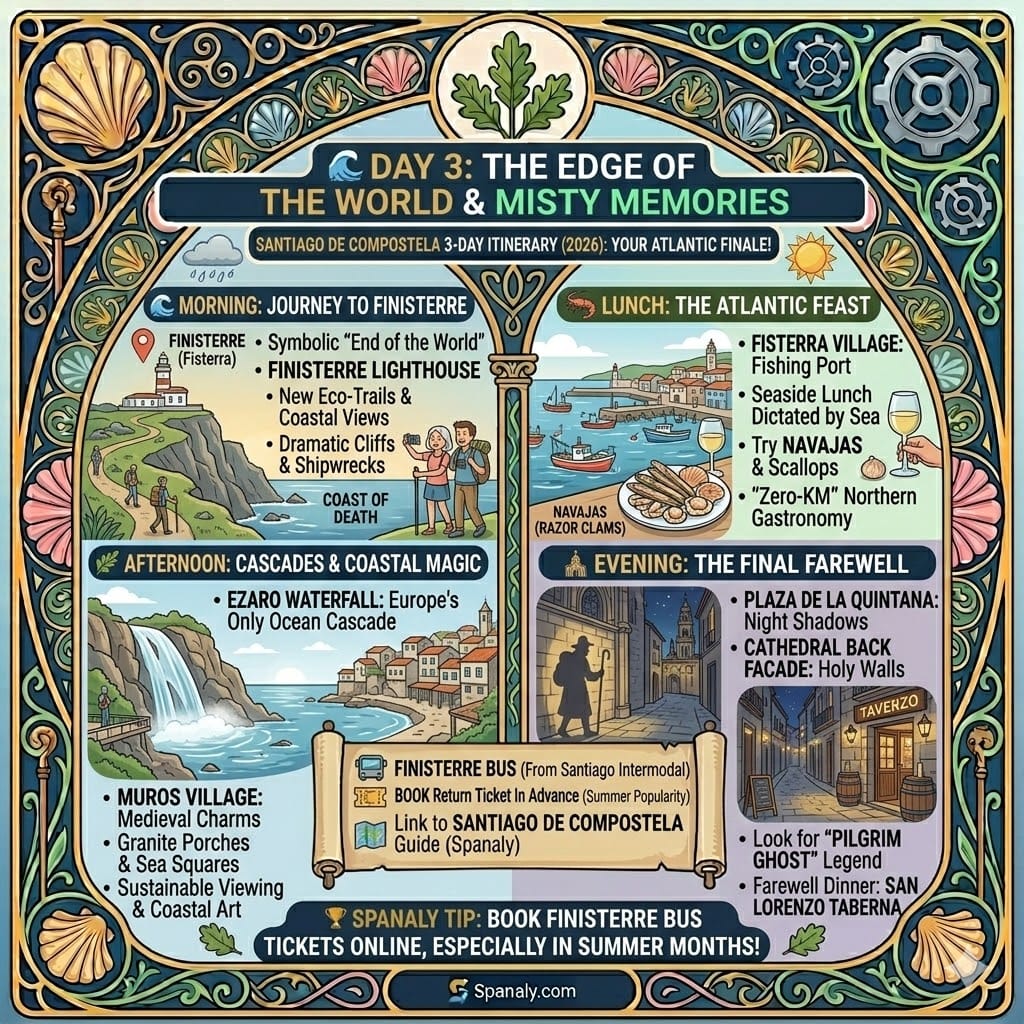
On your final day, we follow the sun to the Atlantic coast. For centuries, pilgrims continued their journey beyond the city to witness the sun disappear into the “Sea of Darkness.” This coastal escape is a vital part of understanding the diverse Spanish Culture that defines the North.
Morning: Journey to Finisterre
Cape Finisterre (Fisterra): Travel to the rugged Galician coast, the symbolic “End of the World.”
The Experience: Visit the Finisterre Lighthouse perched on dramatic cliffs. In 2026, new eco-trails offer views of the “Coast of Death,” a landscape as legendary as the rugged terrains found in our Spanish Islands guide.
Lunch: The Atlantic Feast
Fisterra Village: Enjoy a seaside lunch where the Atlantic dictates the menu.
The Dish: You cannot leave without trying “Navajas” (Razor Clams) or the famous Galician Scallops. This is the heart of northern gastronomy—fresh, simple, and unmatched.
Afternoon: Cascades & Coastal Magic
Ezaro Waterfall: Witness the only waterfall in Europe that flows directly into the ocean. In 2026, new sustainable platforms offer a front-row seat to this natural wonder.
Muros Village: Stroll through this medieval fishing village. Its granite porches and sea-facing squares are a dream for photographers.
Evening: The Final Farewell
Plaza de la Quintana: Return to Santiago for one last evening. Stand in the shadows of the holy walls and look for the “Pilgrim Ghost” shadow—a mystical farewell to your 3-day adventure.
Farewell Dinner: Choose a small “Taberna” in the San Lorenzo district to savor your final Galician wine.
SPANALY TIP: > In 2026, the “Finisterre Bus” is the most eco-friendly way to reach the coast. Book your tickets online to ensure you have a seat for the sunset return journey!
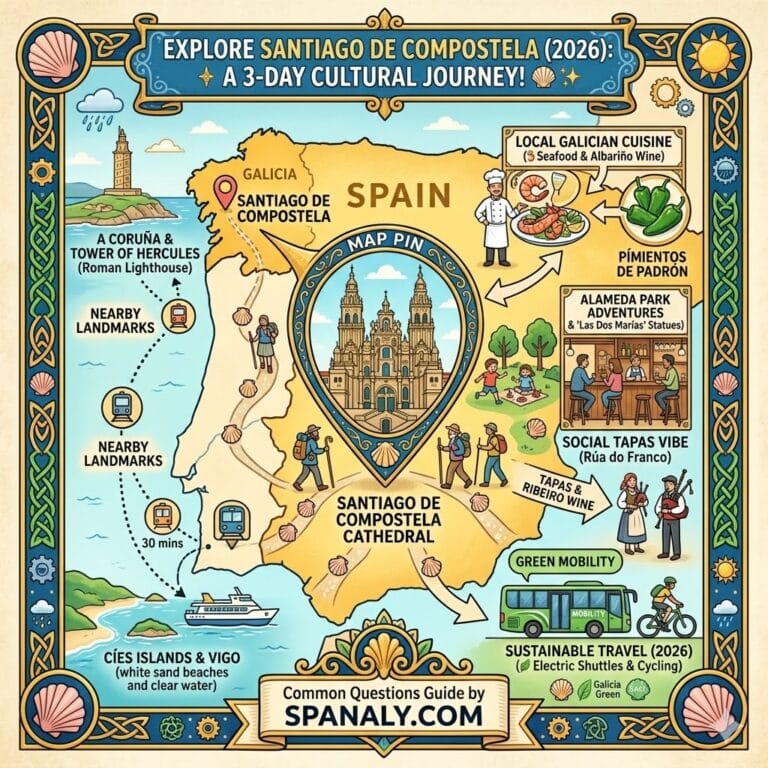
📍 Nearby Landmarks: Beyond the Granite Walls
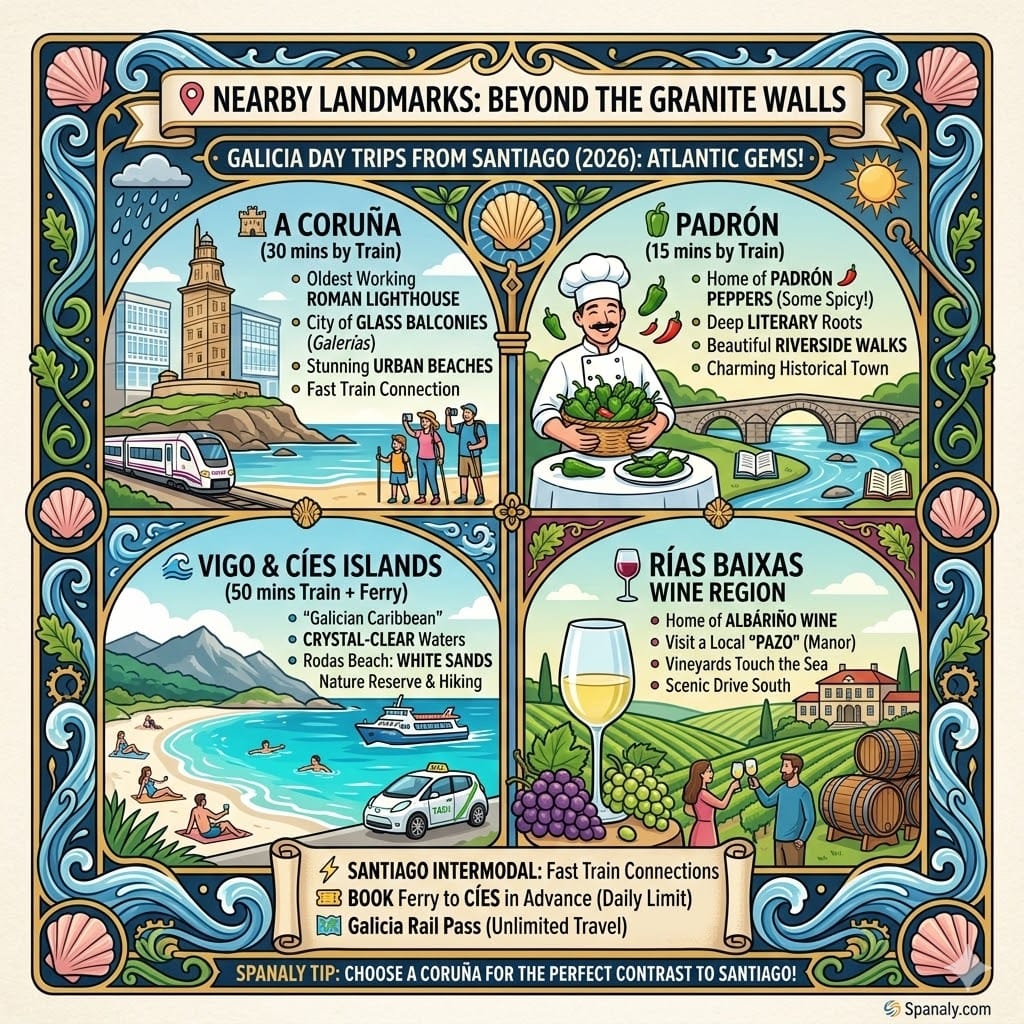
While Santiago is the heart of Galicia, its surroundings offer treasures that are too good to miss. In 2026, improved regional rail links make these day trips easier than ever, connecting you to some of the most unique Spanish Attractions found in the northern Atlantic coast.
The Atlantic Gems:
A Coruña (30 mins by train): Home to the Tower of Hercules, the oldest Roman lighthouse still in use. It’s a city of glass balconies (Galerías) and stunning urban beaches.
Padrón (15 mins by train): Famous for its “Padrón Peppers” (some are spicy, most are not!). It’s a charming town with deep literary roots and beautiful riverside walks.
Vigo & Cíes Islands (50 mins by train + Ferry): Known as the “Galician Caribbean,” the Cíes Islands offer crystal-clear turquoise waters and white sands that feel worlds away from the medieval city.
The Rías Baixas Wine Region: A short drive south takes you to the home of Albariño wine. Visit a local “Pazo” (manor house) to walk through vineyards that touch the sea.
SPANALY TIP: > If you only have time for one trip, choose A Coruña. The contrast between Santiago’s mystical granite and A Coruña’s bright Atlantic “City of Glass” vibe is the perfect way to see the two faces of Galicia.
👨👩👧 Family & Kids Travel: A Granite Playground

Santiago de Compostela is a surprisingly welcoming destination for families. Its pedestrianized streets and abundance of green spaces make it an easy city to navigate with strollers or energetic toddlers. Beyond the history, it’s a place where kids can experience the magic of diverse Spanish Culture through local legends and interactive museums.
Best Family Activities:
The Toy Museum (Museo do Xoguete): A nostalgic journey for parents and a world of wonder for kids, featuring traditional Galician toys and games.
Train Tour (Tren Turístico): This bright red train departs from Plaza del Obradoiro and offers a fun, effortless way for kids to see the city’s main landmarks.
Alameda Park Adventures: Let the children run free in this sprawling park. Don’t forget to take a photo with the colorful “Las Dos Marías” statues!
The Natural History Museum: Located in Vista Alegre Park, it’s the perfect spot for curious minds to learn about Galician wildlife and geology.
Dining with Kids:
Galician hospitality is legendary. Most restaurants are very accommodating to children, and the Empanada Gallega (savory pie) is usually a massive hit with even the pickiest eaters.
SPANALY TIP: > In 2026, many hotels in the Ensanche (New City) district offer specialized family suites with kitchenettes. If you’re traveling with small children, this area provides easier access to modern supermarkets and pharmacies while remaining just a short walk from the historic center.
🤝 Social Vibes: Solo & Group Travel
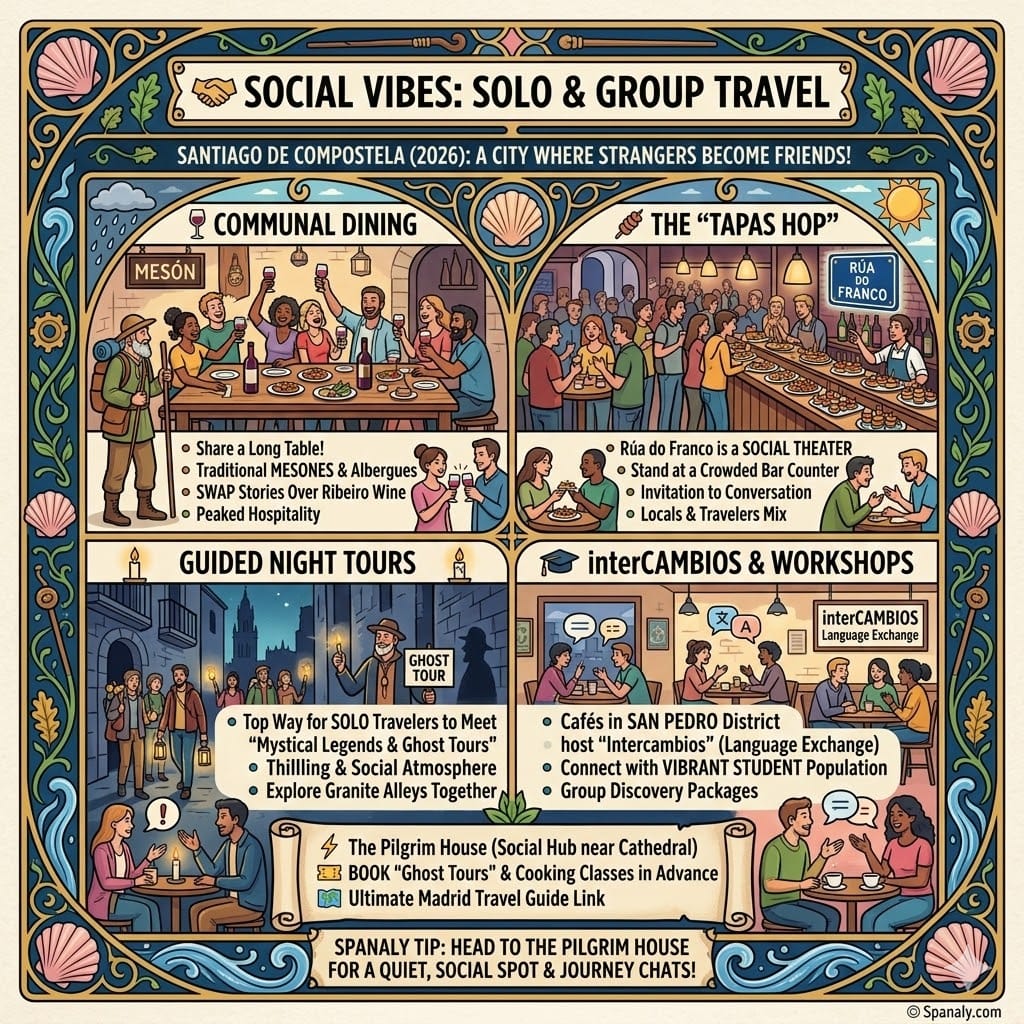
Santiago is a city where strangers quickly become friends. The pilgrimage spirit creates a unique atmosphere of openness and shared history.
Whether you are a solo adventurer or traveling with a pack, you’ll find a welcoming community here. It shares the same bustling energy found in our Ultimate Madrid Travel Guide, but with a much more relaxed, spiritual pace.
The Social Map:
Communal Dining: Many traditional Mesones offer long, shared tables—perfect for swapping stories over Galician wine.
The “Tapas Hop”: Rúa do Franco is a social theater. Standing at a crowded bar is an open invitation to strike up a conversation.
Guided Night Tours: In 2026, “Ghost Tours” are the top way for solo travelers to meet and explore the granite alleys together.
For Groups:
Santiago offers a perfect mix of culture and nightlife. To maximize your group experience, check the best time to visit Spain to align with local street festivals.
SPANALY TIP: > Visit The Pilgrim House near the Cathedral. It’s a social hub where you can share a coffee and chat with volunteers about their journeys.
🌿 Conscious Journeys: Sustainable Travel
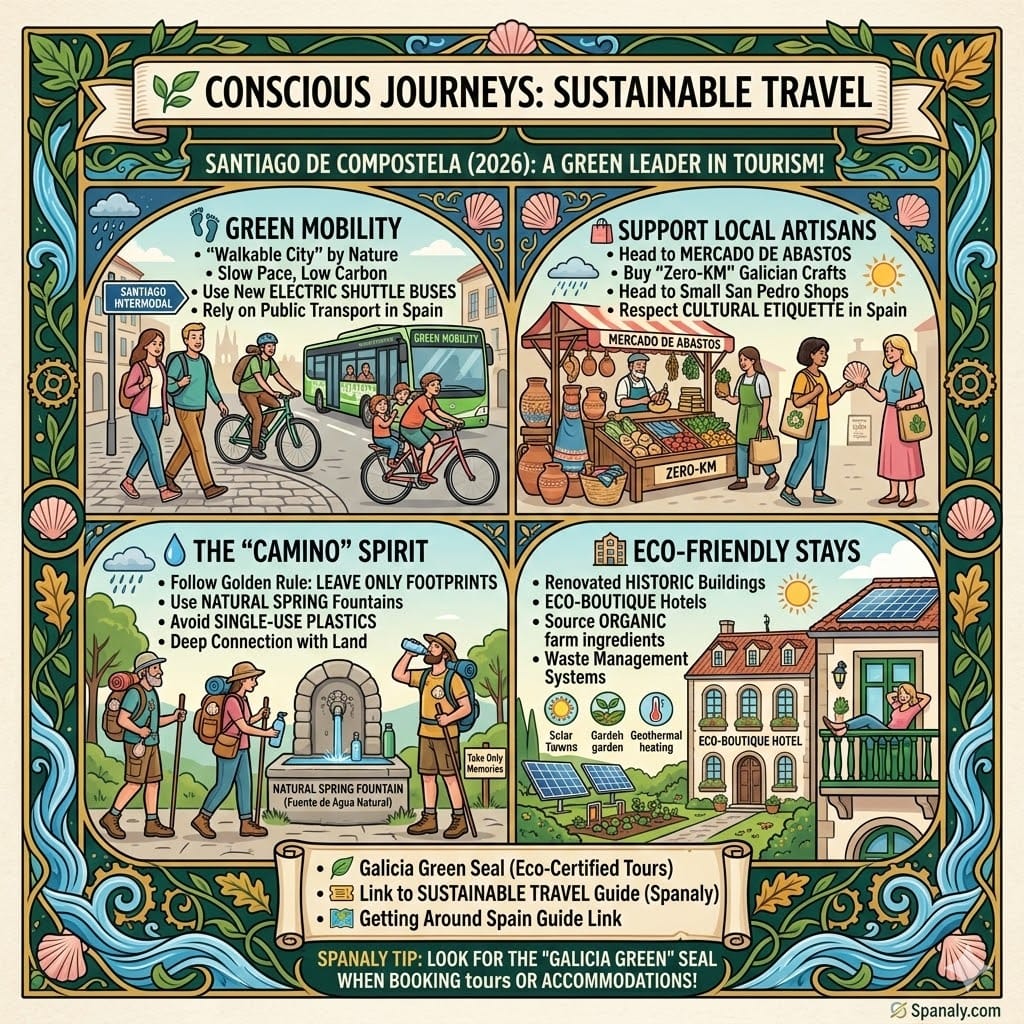
In 2026, Santiago leads the way in green tourism. Being a “walkable city” by nature, it encourages a slow pace that respects both the environment and local traditions.
Adopting a sustainable mindset here is as essential as knowing the cultural etiquette in Spain to ensure a respectful and deep connection with the land.
How to Travel Responsibly:
Support Local Artisans: Skip the mass-produced souvenirs. Head to the Mercado de Abastos or small shops in San Pedro to buy “Zero-KM” Galician crafts and food.
Green Mobility: Use the new fleet of electric shuttle buses for longer distances. When exploring the region, rely on the efficient public transport in Spain to reduce your carbon footprint.
The “Camino” Spirit: Follow the golden rule—”Take only memories, leave only footprints.” Avoid single-use plastics and use the many natural spring water fountains scattered around the city.
Eco-Friendly Stays:
Many historic buildings in the Old Town have been renovated into eco-boutique hotels. These stays use geothermal heating and source their breakfast ingredients from nearby organic farms.
SPANALY TIP: > Look for the “Galicia Green” seal when booking tours or accommodations. It’s a 2026 certification that guarantees the business adheres to strict waste management and local employment standards.
💰 Detailed Budget & Expenses: Santiago 2026

Planning your finances is the key to a stress-free journey. Santiago offers a wide spectrum of costs, from humble pilgrim meals to luxury historical stays. To keep your overall trip costs down, don’t forget to check our guide on how to save money while traveling in Spain.
Daily Estimates (Per Person):
| Travel Style | Daily Budget | Includes… |
| Budget (The Pilgrim) | €45 – €65 | Hostels (Albergues), Menu del Día, and free walking tours. |
| Mid-Range (Comfort) | €110 – €160 | Boutique hotels, seafood dinners, and paid museum entries. |
| Luxury (Elite) | €350+ | Stays at the Parador, private tours, and fine dining. |
Breakdown of Costs:
Accommodation: A bed in a clean, modern hostel starts at €20, while a mid-range double room in the historic center costs around €90–€120. For the ultimate experience, consider accommodation in Spain options like the Parador de los Reyes Católicos.
Food & Drink: A coffee and a slice of Santiago cake is about €4. A high-quality “Menu del Día” (3-course lunch) is around €14–€18. A fine seafood dinner for two with wine will range from €70–€100.
Transport: The city is walkable, so transport costs are minimal. A one-way electric shuttle bus to the City of Culture is around €1.50.
Attractions: Cathedral rooftop tours are approximately €12, while many smaller churches and parks are free to enter.
SPANALY TIP: > Use the “Santiago Pass” if you plan to visit more than three museums. It includes skip-the-line access to the Cathedral museum and discounts on several guided day trips to the coast.
💡 Exclusive Insider Hacks: Santiago Like a Local

Experience Santiago beyond the tourist shell. These secrets help you find the city’s soul. They work best if you already know the essential Spain travel tips.
The Hidden Gems:
Secret Cathedral View: Visit the University General Library. Its balcony offers a rare, eye-level view of the Cathedral towers.
The Ghost Pilgrim: Head to Plaza de la Quintana after 10:00 PM. Look for the famous shadow on the Cathedral wall.
Free Bagpipe Music: Listen under the Berenguela Tower arch. Local gaiteros play there at noon and sunset for free.
Authentic Tarta de Santiago: Buy it from the nuns at San Paio. They sell handmade cakes through a traditional rotating window.
Pro Strategic Moves:
Track the Botafumeiro: Use the Cathedral’s 2026 app. It confirms swinging times so you can avoid the midday crowds.
Weather Proofing: Galician rain is legendary but light. Check our guide on what to pack for Spain to stay dry and stylish.
SPANALY TIP: > For a local dinner, walk to the San Lorenzo district. It’s 5 minutes away but offers authentic food at local prices.
❓ Visitor FAQs – Common Questions: Everything You Need to Know
🎒 Can I enter the Cathedral with a large backpack?
🌬️ How do I know if the Botafumeiro will swing?
🎟️ Is the Pórtico de la Gloria entry free?
🚕 Does Santiago have Uber or Bolt in 2026?
Common Questions Guide by Spanaly.com
✨ Your Galician Adventure Awaits!
Santiago de Compostela is more than a destination; it’s a feeling. Whether you arrive with a backpack or a suitcase, the city’s granite heart will leave an imprint on your soul.
Quick Takeaways:
🏛️ The Core: Santiago is where history, spirituality, and gastronomy meet.
🌊 The Edge: Don’t miss the dramatic cliffs of Finisterre.
🥘 The Flavor: Let the fresh Atlantic seafood be your daily reward.
🤝 The Vibe: You might arrive as a stranger, but you’ll leave as a local.
What’s Next?
If the misty charm of Galicia has captured your heart, why not continue your journey across the lush Green Spain? Your next perfect stop is exploring the Basque country with our Bilbao & San Sebastian 3-Day Itinerary.
¡Buen Camino! See you in the squares of Santiago. 🐚🏛️🥂✨