
Table of Contents
Toggle🏛️ Best Things to Do in Tarragona
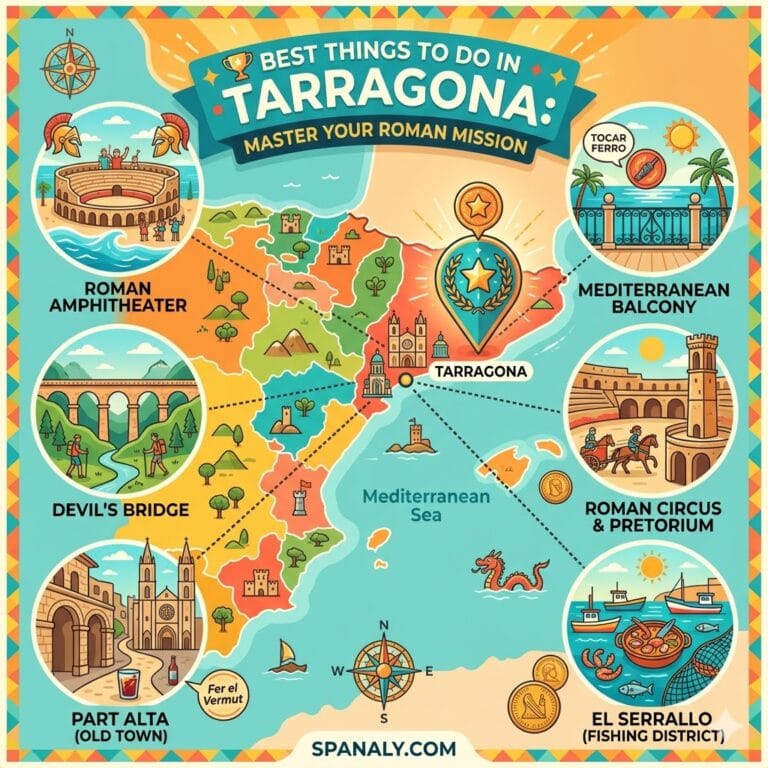
If you are scouting for the best things to do in Tarragona, your adventure starts at the breathtaking Roman Amphitheater. In fact, this seaside city is a powerful living museum where ancient history meets the Mediterranean breeze. Consequently, to fully grasp the imperial soul of Spain, you must explore its UNESCO ruins and golden coastal paths.
🏺 The Vibe Check
The Energy: Imperial, salty, and authentically Mediterranean.
The Look: Colossal Roman stone arches standing proudly against turquoise sea horizons.
The Experience: Touching 2,000-year-old walls before dining on fresh seafood in the El Serrallo district.
📍 Travel Briefing: Tarragona at a Glance
Spanaly Insight: Specifically, if you have already explored the medieval labyrinth in our guide on the Things to Do in Girona, you will find that Tarragona offers a more ancient, Roman contrast that is absolutely essential for your Spanish journey.
📍 Why Visit Tarragona? The Strategic Value
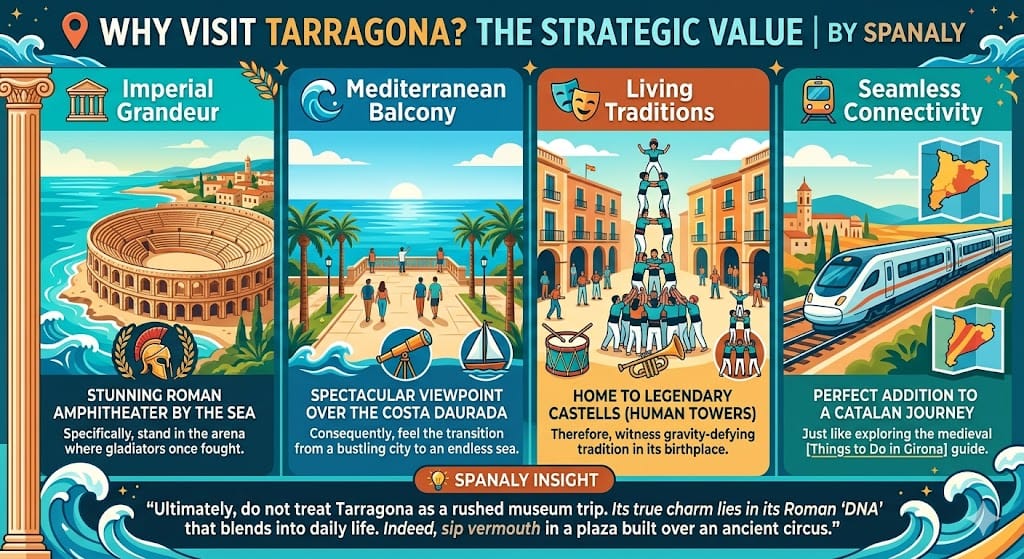
Mastering the best things to do in Tarragona provides a level of ancient Roman depth that very few European cities can rival. While many travelers overlook it for the buzz of Barcelona, in fact, Tarragona stands as a true powerhouse of UNESCO-listed imperial history and Mediterranean soul. It is a vital component of the broader Spanish Attractions map that every history enthusiast must complete.
🏛️ Imperial Grandeur: It features the most stunning Roman amphitheater built right against the turquoise sea. Specifically, standing in the arena where gladiators once fought offers a breathtaking view where 2,000-year-old stone and modern waves meet.
🌊 Mediterranean Balcony: Moreover, the city serves as a spectacular viewpoint over the Costa Daurada. Consequently, walking the Rambla Nova to reach the “Balcony” feels like a scenic transition from a bustling city to an endless blue horizon.
🎭 Living Traditions: Home to the legendary Castells (human towers), the city offers a profound cultural immersion. Therefore, witnessing this gravity-defying tradition in its authentic plazas is a mandatory experience for any heritage seeker.
🚉 Seamless Connectivity: Additionally, located just an hour from Barcelona via high-speed train, it is the perfect strategic addition to a broader Catalan journey.
Spanaly Insight: Ultimately, do not treat Tarragona as a rushed museum trip. Its true charm lies in its Roman “DNA” that blends into daily life. Indeed, once you sip vermouth in a plaza built over an ancient circus, the city’s historical intensity becomes much more rewarding for those who appreciate authentic layers of time.
🏰 Top 5 Must-See Landmarks: The Roman Icons
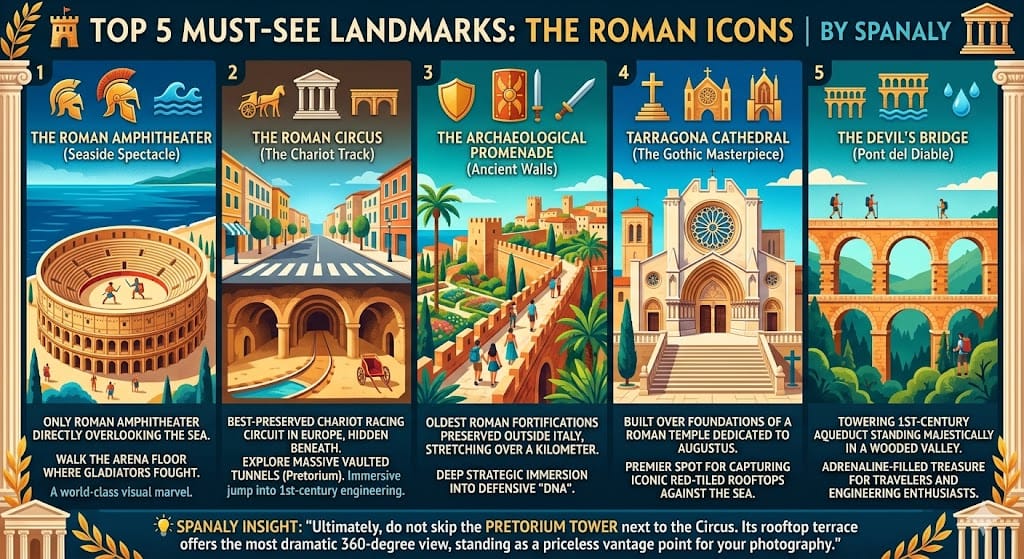
To truly appreciate the best things to do in Tarragona, you should focus your journey on these five imperial landmarks. Furthermore, for a deeper understanding of the region’s Roman past, these sites are essential components that rival even the Gothic wonders in our Ultimate Barcelona Travel Guide.
🏟️ The Roman Amphitheater (Seaside Spectacle): In fact, it is the only Roman amphitheater in the world built directly overlooking the Mediterranean waves. Moreover, you should walk the arena floor where gladiators once fought. Consequently, the contrast between the ancient golden stones and the turquoise sea is a world-class visual marvel.
🏛️ The Roman Circus (The Chariot Track): Specifically, it remains one of the best-preserved chariot racing circuits in Europe, hidden beneath the modern city. Therefore, exploring its massive vaulted tunnels (Pretorium) provides a chilling, immersive leap into 1st-century engineering and daily life.
🛡️ The Archaeological Promenade (Ancient Walls): In essence, these are the oldest Roman fortifications preserved outside Italy, stretching for over a kilometer. While the path is lined with lush gardens, it offers a deep, strategic immersion into the defensive “DNA” of the ancient capital.
⛪ Tarragona Cathedral (The Gothic Masterpiece): Interestingly, this massive structure was built over the foundations of a Roman temple dedicated to Augustus. As a result, climbing to its highest point remains the premier spot for capturing the iconic red-tiled rooftops against the sea.
⛲ The Devil’s Bridge (Pont del Diable): Actually, this towering 1st-century aqueduct still stands majestically in a nearby wooded valley. Notably, walking across its 249-meter upper tier is an exceptional adrenaline-filled treasure for any traveler and engineering enthusiast.
🌟 Bonus Highlights Worth Visiting:
El Serrallo District: A beautiful maritime neighborhood featuring a stunning daily fish market and authentic seafood vibe.
Plaza del Forum: Additionally, this vibrant square is the perfect zone for enjoying local Vermouth while sitting on actual Roman ruins.
Spanaly Insight: Ultimately, do not skip the Pretorium Tower next to the Circus. Indeed, its rooftop terrace offers the most dramatic 360-degree view of the city, standing as a priceless vantage point for your travel photography.
🎨 Hidden Gems & Local Secrets (The Spanaly Edge)
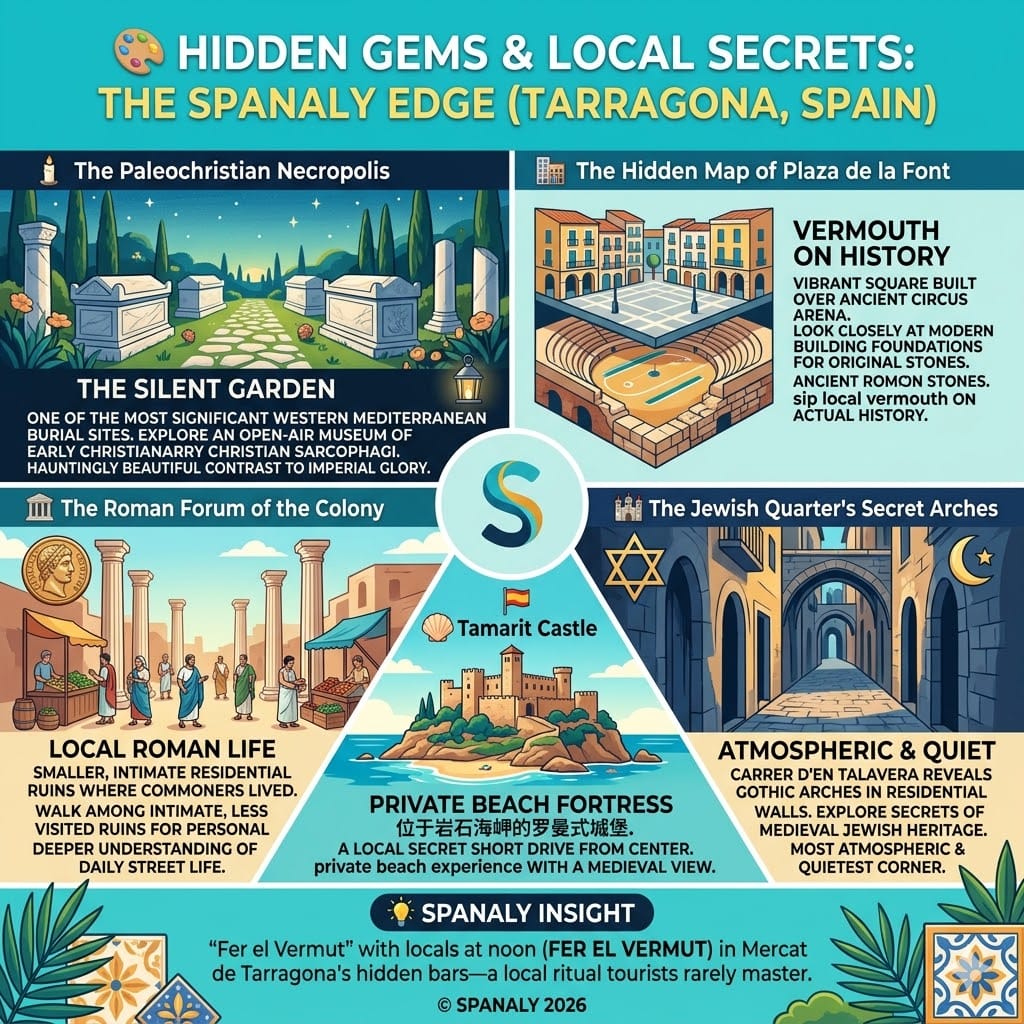
To truly master the best things to do in Tarragona, you must look beneath the surface of the common tourist maps. While the amphitheater is iconic, the city’s true soul is hidden in its shadowed alleys and forgotten Roman foundations. Furthermore, discovering these secrets is what separates a standard visit from an elite cultural immersion.
🕯️ The Paleochristian Necropolis (The Silent Garden): In fact, this is one of the most significant early Christian burial sites in the Western Mediterranean. Specifically, you should explore this open-air museum to see intricate marble sarcophagi. Consequently, it offers a hauntingly beautiful contrast to the city’s imperial Roman glory.
🏛️ The Roman Forum of the Colony (Local Life): Interestingly, while most tourists flock to the Provincial Forum, this smaller “Colonial Forum” is where everyday Romans lived. Therefore, walking among these intimate residential ruins provides a much more personal connection to ancient Tarraco’s daily street life.
🏙️ The Hidden Map of Plaza de la Font: Actually, this vibrant square sits directly on top of the ancient Roman Circus arena. Notably, if you look closely at the building foundations in the surrounding cafes, you will find original Roman stones. Specifically, it is the best place to sip vermouth while literally sitting on history.
🏰 The Jewish Quarter’s Secret Arches (Call Jueu): In essence, Tarragona’s medieval Jewish heritage is often overshadowed by Girona. However, navigating the narrow Carrer d’en Talavera reveals Gothic arches hidden within residential walls. As a result, this area remains the most atmospheric and quietest corner of the upper town.
🐚 Tamarit Castle (The Coastal Fortress): Located just a short drive from the center, this Romanesque fortress sits dramatically on a rocky headland. Specifically, it remains a “local secret” for those seeking a private beach experience under the shadows of a medieval castle.
Spanaly Insight: Honestly, do not miss the Mercat de Tarragona at noon. Indeed, while the architecture is stunning, the real “gem” is the local tradition of Fer el Vermut (having a vermouth) in the market’s hidden corner bars—a ritual tourists rarely master.
🍽️ Gastronomy: The Mediterranean Soul on a Plate
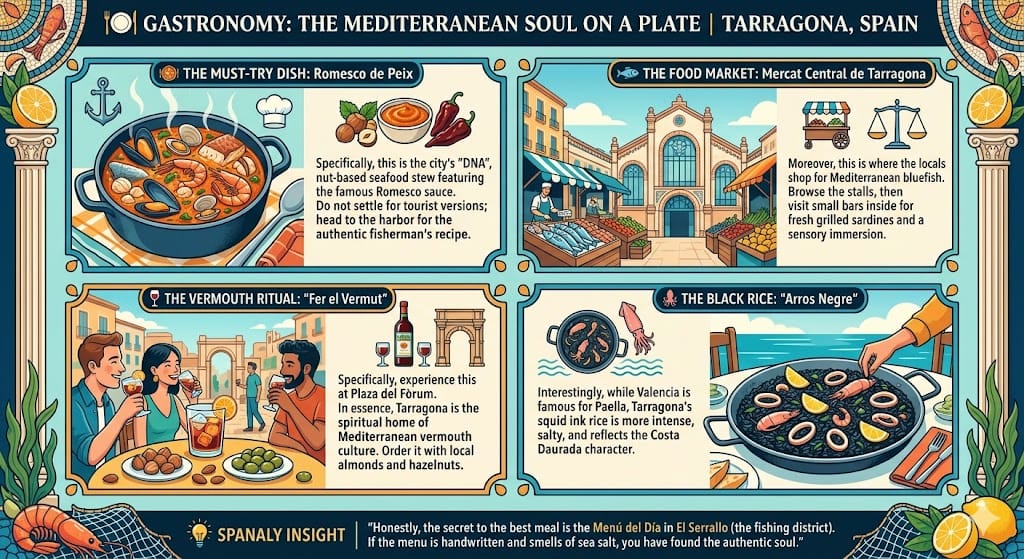
To master the best things to do in Tarragona, you must understand that the city eats from the sea. While Barcelona offers variety, Tarragona offers purity. In fact, the fishing district of El Serrallo is the undisputed heart of the city’s culinary identity. Furthermore, for a deeper understanding of the regional flavors, these dishes are essential components of our comprehensive Spanish Cuisine guide.
🥘 The Must-Try Dish (Romesco de Peix): Specifically, this is the “DNA” of Tarragona in a bowl. It is a rich, nut-based seafood stew featuring the famous Romesco sauce made of toasted hazelnuts and dried peppers. Moreover, you should head to the harbor for the authentic fisherman’s recipe. Consequently, the depth of flavor in this slow-cooked masterpiece is a world-class culinary marvel.
🐟 The Food Market (Mercat Central): Specifically, this Modernist masterpiece is where the locals shop for the freshest Mediterranean bluefish. Therefore, browsing its vibrant stalls provides a deep, sensory immersion into the city’s daily gastronomic “DNA” and local traditions.
🍷 The Vermouth Ritual (Fer el Vermut): In essence, Tarragona is the spiritual home of Mediterranean vermouth culture. While the plazas are many, you should experience this ritual at Plaza del Fòrum. As a result, sipping local vermouth while sitting on actual Roman ruins is an exceptional and atmospheric treasure for any traveler.
🦑 The Black Rice (Arros Negre): Interestingly, while Valencia is famous for Paella, Tarragona’s squid ink rice is more intense and salty. Notably, ordering this dish in El Serrallo remains the premier choice for capturing the true, briny character of the Costa Daurada.
Spanaly Insight: Ultimately, do not settle for tourist menus in the upper town. Indeed, the real “gem” is the Menú del Día in the hidden harbor taverns. Specifically, if the menu is handwritten and smells of sea salt, you have found the authentic soul of Tarragona.
📸 Best Photo Spots: Capturing the Imperial Soul
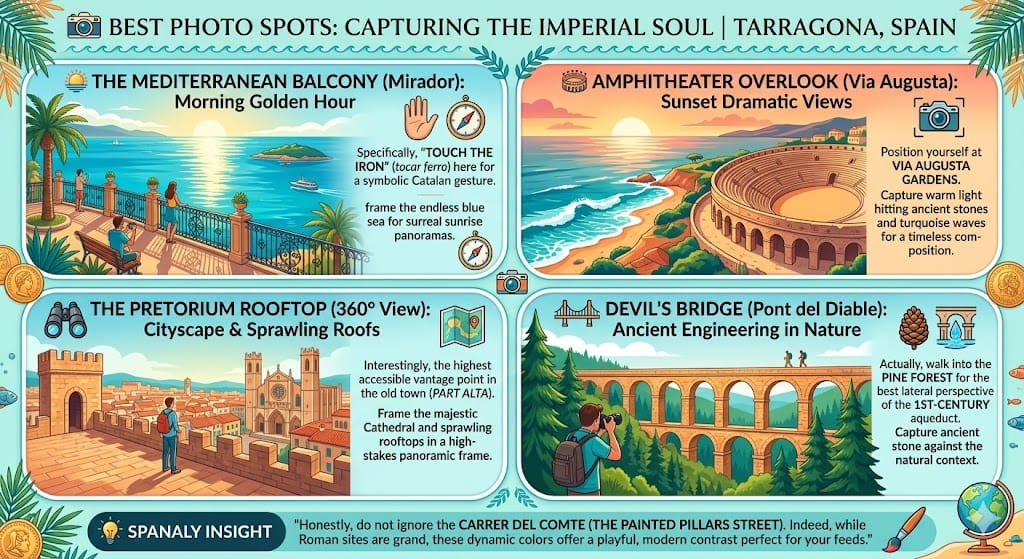
To truly master the best things to do in Tarragona, you must capture its unique light where ancient stone meets the turquoise horizon. While most tourists take random snapshots, the elite traveler knows that timing and perspective are everything. Consequently, these spots are essential for creating a world-class travel portfolio.
🌅 The Mediterranean Balcony (Mirador de la Mediterrània): In fact, this is the most iconic sunrise spot in the city. Specifically, you should “touch the iron” (tocar ferro) of the railing while framing the endless blue sea. Consequently, the morning golden hour here provides a surreal, glowing backdrop for any panoramic shot.
🏟️ Amphitheater Overlook (Via Augusta): Specifically, the upper gardens offer a dramatic bird’s-eye view of the Roman arena against the crashing waves. Therefore, positioning yourself here at sunset allows you to capture the warm Mediterranean light hitting the ancient arches, creating a timeless visual masterpiece.
🏛️ The Pretorium Rooftop (360° View): Interestingly, this tower offers the highest accessible vantage point in the old town (Part Alta). As a result, it remains the premier spot for capturing the sprawling red-tiled roofs and the majestic Cathedral silhouette in one single, high-stakes frame.
⛪ The Cathedral Stairs (Plaça de Santiago Rusiñol): In essence, the wide stone steps leading to the Cathedral are a photographer’s dream for architectural depth. Notably, framing the massive Gothic rose window from the bottom of the stairs provides an exceptional sense of grandeur and historical scale.
🌉 Devil’s Bridge (Pont del Diable): Actually, walking into the surrounding pine forest offers the best lateral perspective of the 1st-century aqueduct. Specifically, using the green trees as a natural frame against the weathered Roman stone is a mandatory technique for capturing the raw power of ancient engineering.
Spanaly Insight: Honestly, do not ignore the Carrer del Comte (The Painted Pillars street). Indeed, while the Roman sites are grand, the vibrant, colorful street art on these stone pillars offers a playful, modern contrast that is perfect for your Instagram and Pinterest feeds.
🗺️ Suggested Itineraries: Master Your Time
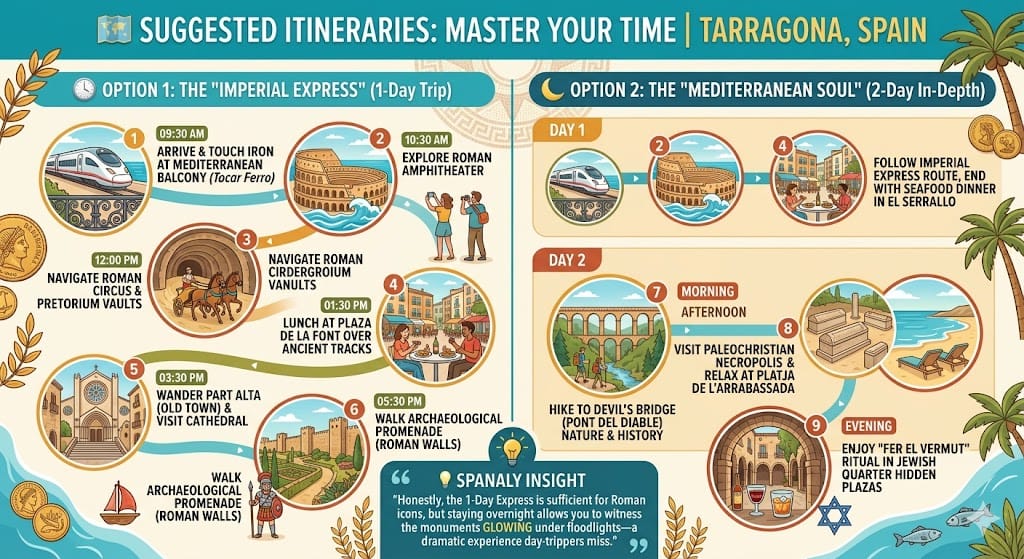
To truly appreciate the best things to do in Tarragona, you must balance your pace between Roman exploration and Mediterranean relaxation. Whether you are on a quick day trip or a multi-city tour, following a structured plan is essential. Furthermore, for those continuing their coastal adventure, these routes perfectly complement our Valencia 3-Day Itinerary for a complete Spanish seaside experience.
⏱️ Option 1: The “Imperial Express” (1-Day Trip)
09:30 AM: Arrive at the station and walk to the Mediterranean Balcony to “touch the iron” for good luck.
10:30 AM: Explore the Roman Amphitheater while the morning light remains perfect for professional photography.
12:00 PM: Navigate the Roman Circus and the underground Pretorium vaults for a deep historical immersion.
01:30 PM: Head to Plaza de la Font for a traditional lunch sitting over ancient chariot tracks.
03:30 PM: Wander through the Part Alta (Old Town) and visit the majestic Tarragona Cathedral.
05:30 PM: Walk the Archaeological Promenade (Roman Walls) during the cooler, golden afternoon hours.
🌙 Option 2: The “Mediterranean Soul” (2-Day In-Depth)
Day 1: Follow the Imperial Express route but end your evening with a seafood dinner in El Serrallo.
Day 2 Morning: Take a short ride to the Devil’s Bridge (Pont del Diable) for a nature-meets-history hike.
Day 2 Afternoon: Visit the Paleochristian Necropolis and relax at Platja de l’Arrabassada, the city’s premier urban beach.
Day 2 Evening: Enjoy the “Fer el Vermut” ritual in the hidden, atmospheric plazas of the Jewish Quarter.
Spanaly Insight: Ultimately, do not treat Tarragona as a rushed museum trip. Its true charm lies in its morning and evening calm. Indeed, once the day-trippers depart, the city’s ancient “DNA” becomes much more intense and rewarding for those who appreciate quiet beauty.
🧳 Essential Logistics: The Tactical Setup
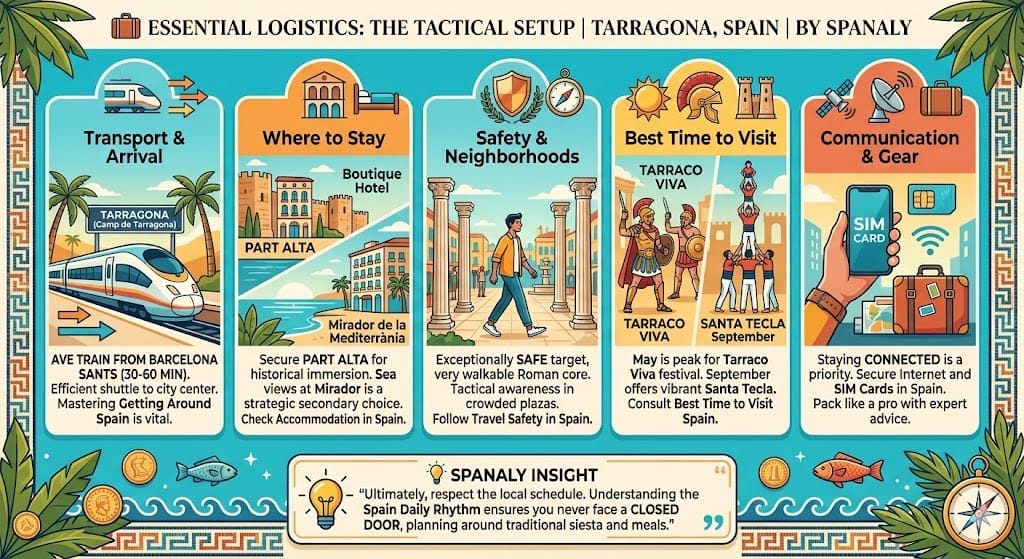
To master the best things to do in Tarragona, you must ensure your logistical supply chain is flawless. In fact, preparing your essentials beforehand is the secret to a high-ROI mission. Specifically, we recommend checking our Essential Spain Travel Tips for a complete overview before you depart.
🚆 Transport & Arrival: Specifically, the high-speed AVE train from Barcelona Sants takes only 30 to 60 minutes. Moreover, for those planning a wider mission, understanding Getting Around Spain is vital for efficient movement between the city and the Camp de Tarragona station.
🏨 Where to Stay: Ideally, secure a boutique hotel within the Part Alta (Old Town) for maximum historical immersion. However, if you prefer sea views, the area near Mirador de la Mediterrània is a strategic secondary choice. Consequently, you should review our guide on Accommodation in Spain to find your perfect coastal base.
🛡️ Safety & Neighborhoods: Overall, Tarragona is an exceptionally safe target with a very walkable Roman core. Nevertheless, always maintain tactical awareness in crowded plazas like Plaza de la Font. Therefore, staying updated on Travel Safety in Spain ensures your mission remains incident-free.
☀️ Best Time to Visit: Notably, May is the peak for the Tarraco Viva Roman festival, while September offers the vibrant Santa Tecla celebrations. Indeed, for a broader seasonal strategy, consult our briefing on the Best Time to Visit Spain.
📶 Communication & Gear: Actually, staying connected is a priority to navigate the Roman ruins. Specifically, make sure to secure Internet and SIM Cards in Spain upon arrival. Furthermore, ensure your kit is ready by following our expert advice on What to Pack for Spain.
Spanaly Insight: Ultimately, respect the local schedule. Indeed, understanding the Spain Daily Rhythm will help you plan your meals and breaks around the traditional siesta, ensuring you never face a closed door while hunting for Roman treasures.
⚔️ Tactical Comparison: Tarragona vs. Girona
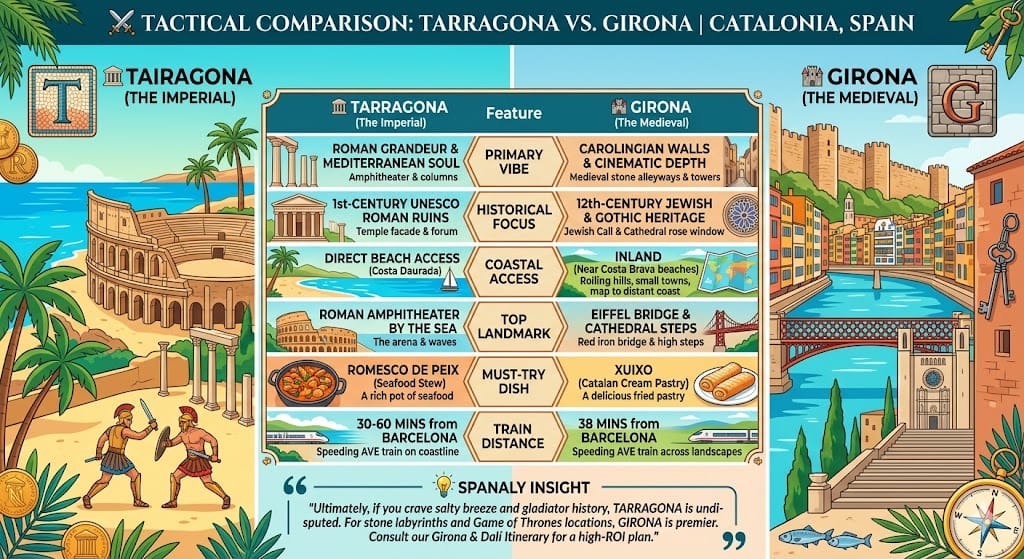
To truly master the best things to do in Tarragona, you must understand its unique position in the Catalan landscape. While many travelers debate between a Roman or a Medieval immersion, the strategic choice depends on your personal “mission” objectives. Furthermore, if you decide the medieval allure fits your style better, you should consult our Girona & Dalí Itinerary for a complete high-ROI Northern Catalonia plan.
| Feature | 🏛️ Tarragona (The Imperial) | 🏰 Girona (The Medieval) |
| Primary Vibe | Roman Grandeur & Mediterranean Soul | Carolingian Walls & Cinematic Depth |
| Historical Focus | 1st-Century UNESCO Roman Ruins | 12th-Century Jewish & Gothic Heritage |
| Coastal Access | Direct beach access (Costa Daurada) | Inland (Near Costa Brava beaches) |
| Top Landmark | Roman Amphitheater by the sea | Eiffel Bridge & Cathedral steps |
| Must-Try Dish | Romesco de Peix (Seafood Stew) | Xuixo (Catalan Cream Pastry) |
| Train Distance | 30-60 mins from Barcelona | 38 mins from Barcelona |
Spanaly Insight: Ultimately, if you crave the salty breeze and ancient gladiator history, Tarragona is your undisputed target. However, for those seeking narrow stone labyrinths and “Game of Thrones” locations, Girona remains the premier choice. In fact, both cities offer exceptional and distinct layers of the complex Catalan identity.
💡 Spanaly Pro Tips: The Elite Strategy
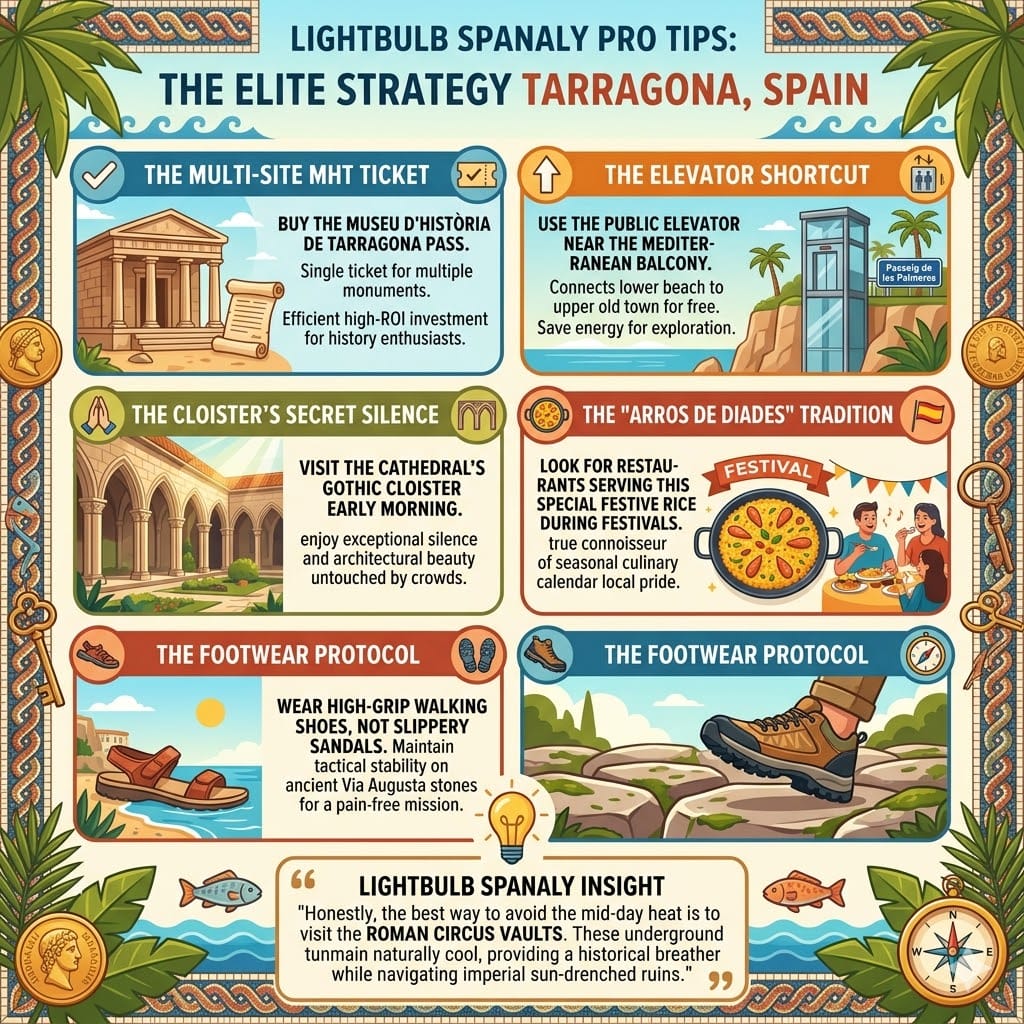
To master the best things to do in Tarragona, you must look beyond the standard tour guides. In fact, these tactical secrets are what transform a basic visit into an elite cultural mission. Specifically, following these expert directives ensures you experience the city’s true Roman and Mediterranean DNA without the typical tourist friction.
🎟️ The Multi-Site “MHT” Ticket: Specifically, you should buy the Museu d’Història de Tarragona pass. Instead of paying for each monument, this single ticket grants access to the Circus, Amphitheater, and Forum. Consequently, it is the most efficient high-ROI investment for history enthusiasts.
🚠 The Elevator Shortcut: Actually, the climb to the Part Alta can be taxing. Specifically, you should use the public elevator located near the Mediterranean Balcony (Passeig de les Palmeres). Notably, it connects the lower beach area to the upper historic town for free, saving your energy for exploration.
⛪ The Cloister’s Secret Silence: Interestingly, while the Cathedral is grand, its Gothic Cloister is the true sanctuary. Specifically, you must visit during the early morning hours. As a result, you will enjoy a level of silence and architectural beauty that remains untouched by the crowds.
🥘 The “Arros de Diades” Tradition: Notably, if your visit aligns with a local festival, look for restaurants serving Arros de Diades. In fact, this special festive rice is a local pride. Therefore, ordering it marks you as a true connoisseur of Tarragona’s seasonal culinary calendar.
👟 The Footwear Protocol: Specifically, the Roman stones are polished and slippery. You should wear high-grip walking shoes rather than stylish sandals. Consequently, maintaining tactical stability on the ancient Via Augusta stones is vital for a pain-free mission.
Spanaly Insight: Honestly, the best way to avoid the mid-day heat is to visit the Roman Circus vaults. Indeed, these underground tunnels remain naturally cool even in July. Specifically, they provide a literal and historical “breather” while you navigate the city’s imperial sun-drenched ruins.
🛡️ Visitor FAQs – Essential Tarragona Travel Guide
🏛️ Is the Roman Amphitheater accessible for visitors with limited mobility?
While the site is ancient, Tarragona has improved accessibility significantly. Most of the upper viewing areas are accessible via ramps. However, the lower arena and steep stone steps remain challenging. For the best experience, we recommend using the upper gardens' entrance for a panoramic, barrier-free view of the monument.
🎫 Can I visit all Roman sites with a single ticket?
Yes, the MHT (Museu d’Història de Tarragona) offers a combined ticket. This pass includes the Amphitheater, Roman Circus, Pretorium, and the Forum. It is much more cost-effective than buying individual entries. You can purchase it at the first monument you visit or via the official municipal tourism portal to skip the queues.
🚆 How far is the train station from the historic center?
The Tarragona City Station (Regional trains) is just a 10-minute walk from the Mediterranean Balcony. However, high-speed AVE trains arrive at Camp de Tarragona, located about 15km outside the city. From there, you should take the dedicated shuttle bus which drops you at the central bus station in roughly 20 minutes.
🥘 Is it necessary to book a table for dinner in El Serrallo?
During weekends and summer months, reservations are highly recommended. The fishing district is the city's culinary hotspot, and authentic seafood taverns fill up quickly with locals. If you haven't booked, we suggest arriving early (around 8:00 PM) to secure a table before the traditional Spanish dinner rush begins.
⚓ Can I swim in the sea right next to the city center?
Absolutely. Platja del Miracle is Tarragona’s main urban beach, located directly below the Roman Amphitheater. It is safe, clean, and easily accessible via the public elevator or the seaside walkway. For a quieter experience, a short walk further north leads to the golden sands of L'Arrabassada beach.
Ultimate Guide by Spanaly.com
Mastering the best things to do in Tarragona is an essential step for any serious explorer of Spain. From the gladiator arenas to the fresh harbor markets, the city offers a profound Mediterranean depth. Furthermore, if you crave more golden-stone history, you should definitely explore our guide on Things to do in Salamanca for a stunning inland contrast.
🏛️ History Reborn: Tarragona isn’t just a museum; it is a living Roman legacy.
🌊 Coastal Soul: The blend of ancient ruins and salty breezes is truly unique.
🥘 Culinary Mastery: From Romesco to Vermouth, the flavors here are authentic.
📸 Visual Gold: Every corner offers a high-ROI shot for your travel portfolio.
Spanaly Final Insight: Ultimately, do not rush your exit. Specifically, stay for the sunset at the Mediterranean Balcony. Indeed, watching the sky turn purple over the Roman ruins is the ultimate, priceless reward for your Spanish adventure.