Table of Contents
Toggle🚍 Traveling Spain by Bus
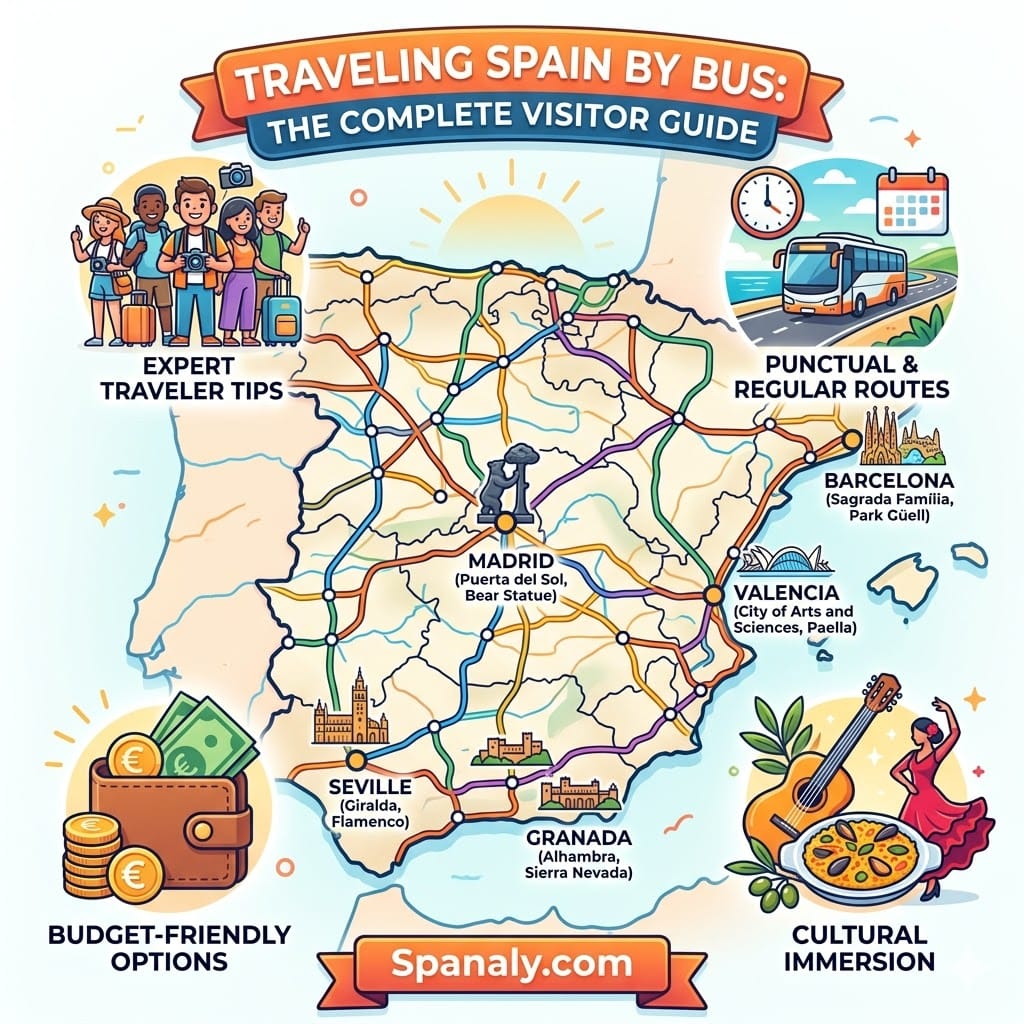
Traveling Spain by bus is often the smartest choice for savvy explorers. While trains are fast, buses are the true kings of the road. They reach every hidden white village and sun-drenched coast that rails simply cannot touch.
💰 Budget-Friendly: Travel between major cities for as little as €5 to €20.
📍 Total Coverage: Access remote gems in Andalusia or the rugged northern coast.
📱 Modern Comfort: Enjoy free Wi-Fi, USB chargers, and reclining leather seats.
🔄 High Frequency: Buses run almost every hour on the most popular routes.
Whether you are arriving via Flights to Spain or crossing from Portugal, the bus network is your ticket to freedom. It is reliable, incredibly cheap, and perfect for those who want to see the real Spain without breaking the bank.
Spanaly Insight: Don’t assume the train is always faster. On many regional routes, a direct bus is quicker and drops you right in the historic city center, saving you an extra taxi fare!
⚡ Spain Bus Network: The Snapshot Guide
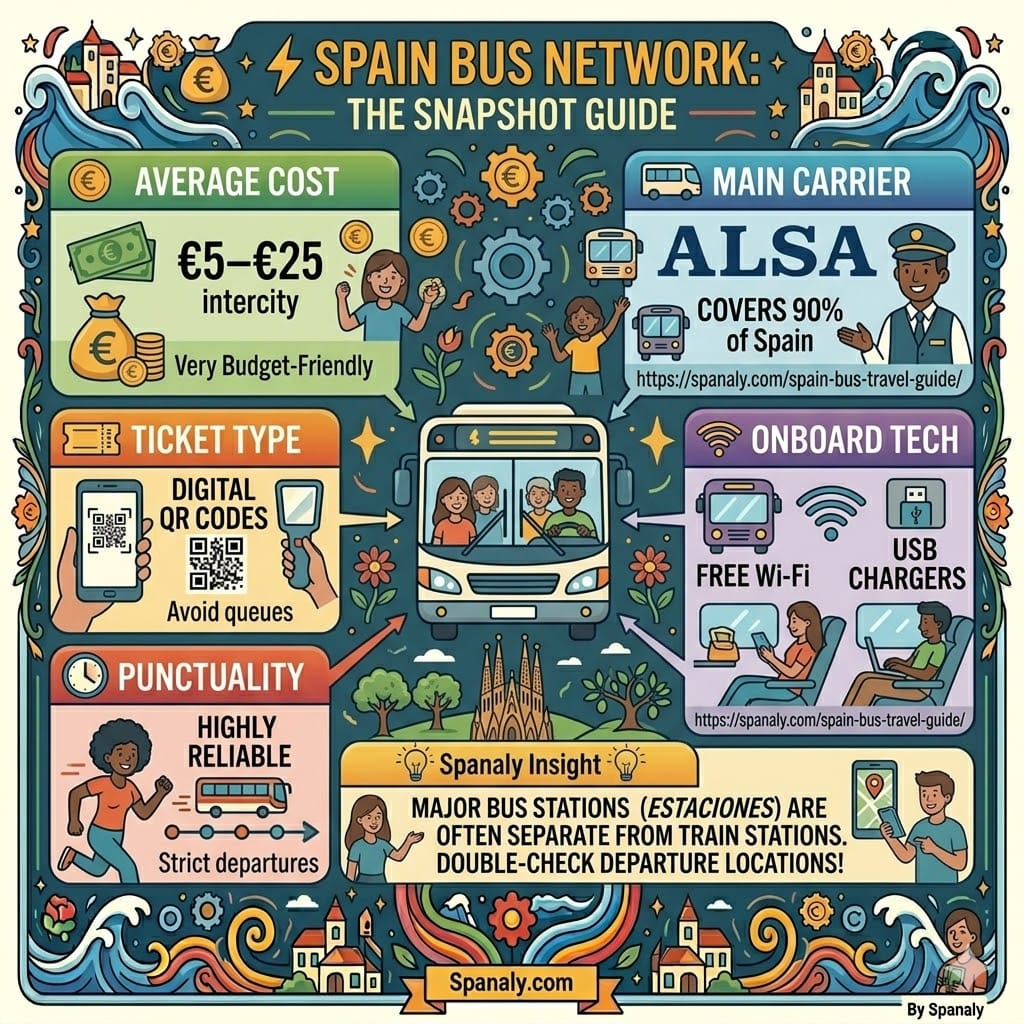
Traveling Spain by bus is surprisingly efficient and modern. If you want a quick overview of what to expect on the Spanish roads, this snapshot is for your travel notebook. It covers the basics from speed to cost and booking habits.
📊 Essential Spain Bus Facts
| Service Feature | What You Need to Know |
| Main Carrier | ALSA (Covers 90% of the country). |
| Average Cost | €5 – €25 for most intercity routes. |
| Ticket Type | Digital QR codes on your phone are standard. |
| Onboard Tech | Free Wi-Fi and USB ports are common. |
| Punctuality | Highly reliable with strict departure times. |
🕒 Quick Booking Rules
Book Early: Popular routes (like Madrid to Granada) sell out fast.
Go Digital: Use the official apps to avoid station queues.
Print Backup: Always have a screenshot of your ticket offline.
Arrival Time: Be at the station at least 15 minutes before.
Spanaly Insight: While traveling Spain by bus, remember that most major stations (Estaciones de Autobuses) are separate from train stations. Always double-check your departure location on Google Maps to avoid missing your ride!
🌍 Why Choose Buses in Spain?
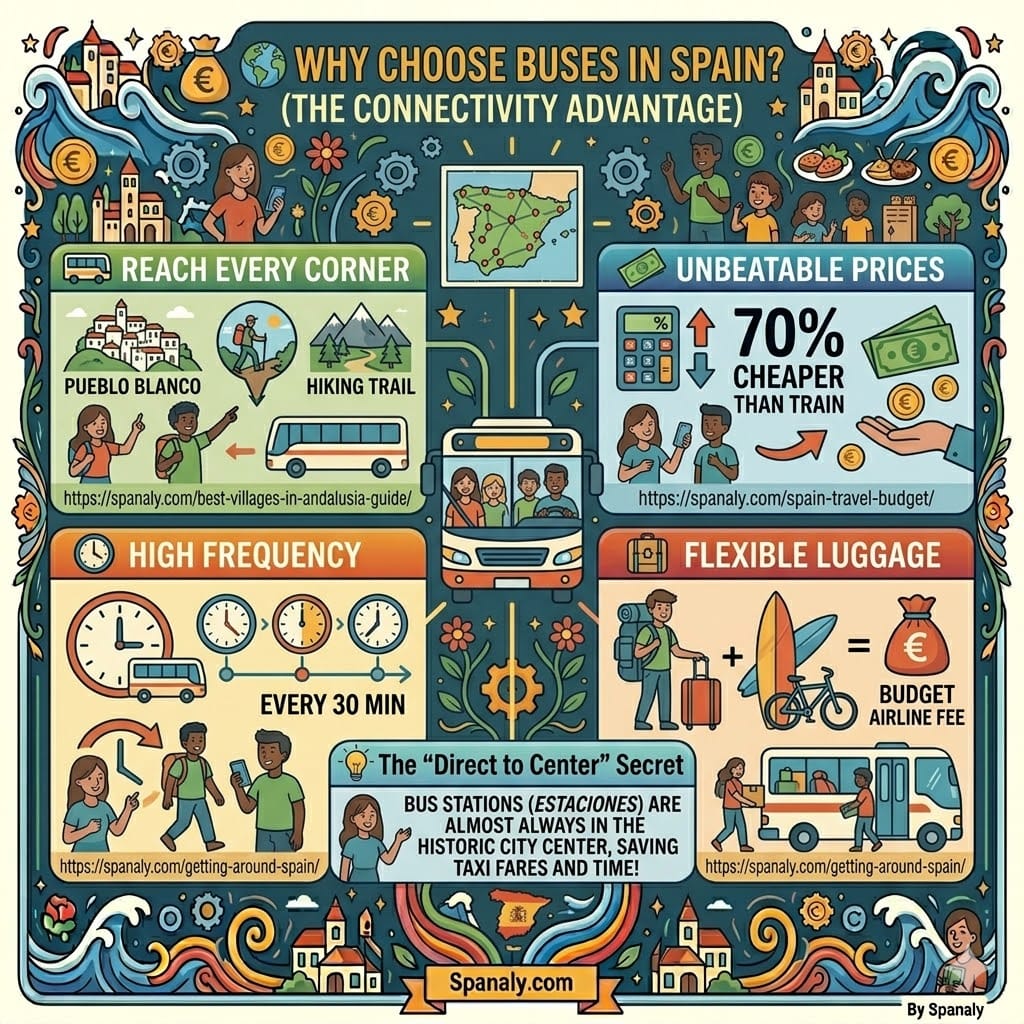
While Spain is famous for its high-speed trains, traveling Spain by bus remains the backbone of national tourism. It is not just about saving money; it is about reaching the places where tracks don’t exist. Buses offer a level of flexibility that trains cannot match, especially when you are checking items off your Spain trip checklist.
🚌 Reach Every Corner: Buses connect over 8,000 municipalities, including tiny white villages and remote coastal gems.
💸 Unbeatable Prices: Bus tickets are often 70% cheaper than last-minute train fares, making it easy to save money while traveling in Spain.
🕒 High Frequency: On major routes like Madrid to Toledo, buses depart every 30 minutes for total freedom.
🎒 Flexible Luggage: Unlike budget airlines, most Spanish buses allow generous luggage without hidden fees.
The “Direct to Center” Secret
One of the biggest perks of traveling Spain by bus is the station location. While many airports or high-speed stations are miles away, bus stations (Estaciones de Autobuses) are usually in the historic heart. According to the Official ALSA Website, their network alone covers the vast majority of the Iberian Peninsula, dropping you exactly where the action is.
Spanaly Insight: If you are planning to explore rural areas or hidden beaches, the bus is your only option. Trains simply do not reach these spots. The journey itself often doubles as a scenic tour through olive groves and mountain passes!
🏢 The Big Players: ALSA, Avanza & Regional Giants
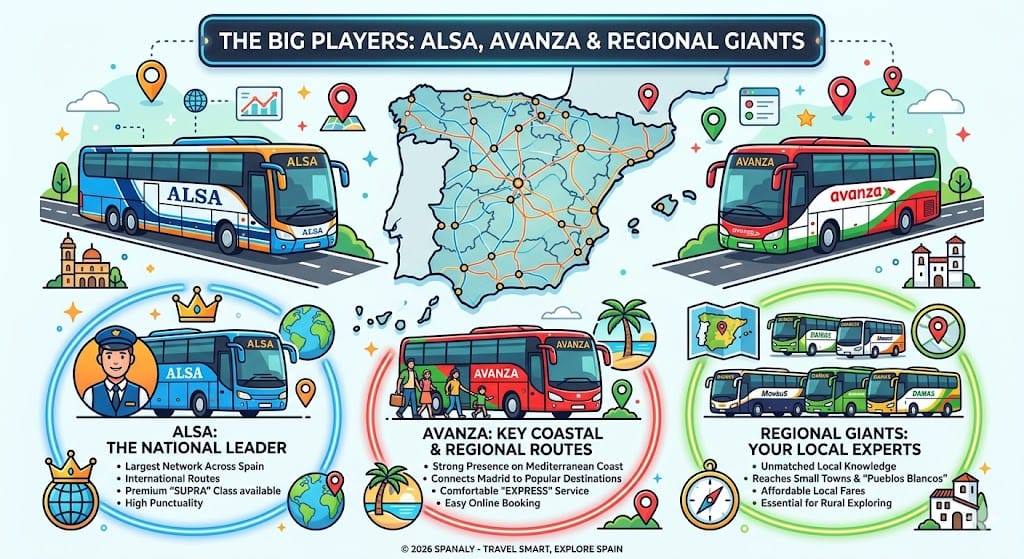
Navigating the Spanish bus network is easy once you know the “Kings of the Road.” While dozens of regional companies exist, a few major players handle most intercity travel. Knowing which one to book can significantly impact your Spain travel budget.
👑 ALSA: The National Leader
As the largest operator, ALSA covers 90% of the country. They offer different comfort levels to suit every traveler:
Standard (Normal): Comfortable reclining seats, Wi-Fi, and onboard toilets.
Supra (Economy & Plus): Extra legroom, leather seats, and snacks on some routes.
Premium: The “First Class” of buses. Expect touchscreens, VIP lounges, and special menus on routes like Madrid to Bilbao or Granada.
🚍 Other Key Operators
Avanza: The go-to for travel from Madrid to the west (Salamanca, Extremadura) and the south (Marbella).
Socibus: Specializes in long-distance routes connecting Madrid to Andalusia (Seville, Cádiz, Huelva).
Monbus & Daibus: Essential for reaching the lush green landscapes of Northern Spain, while you can find more options in our complete getting around Spain guide.
📍 Regional Powerhouses
In many areas, local companies rule. For example, Sagalés and Sarfa are kings in Catalonia (Costa Brava), while Damas handles most coastal travel in Huelva. Check the Official ALSA Website for the most extensive route map available in the country.
Spanaly Insight: If you are traveling on a route longer than 4 hours, always check for Supra or Premium options. For just €5–€10 more, the extra space and private screens make a world of difference for your comfort!
🎫 Booking Secrets: €5 Tickets & App Shortcuts
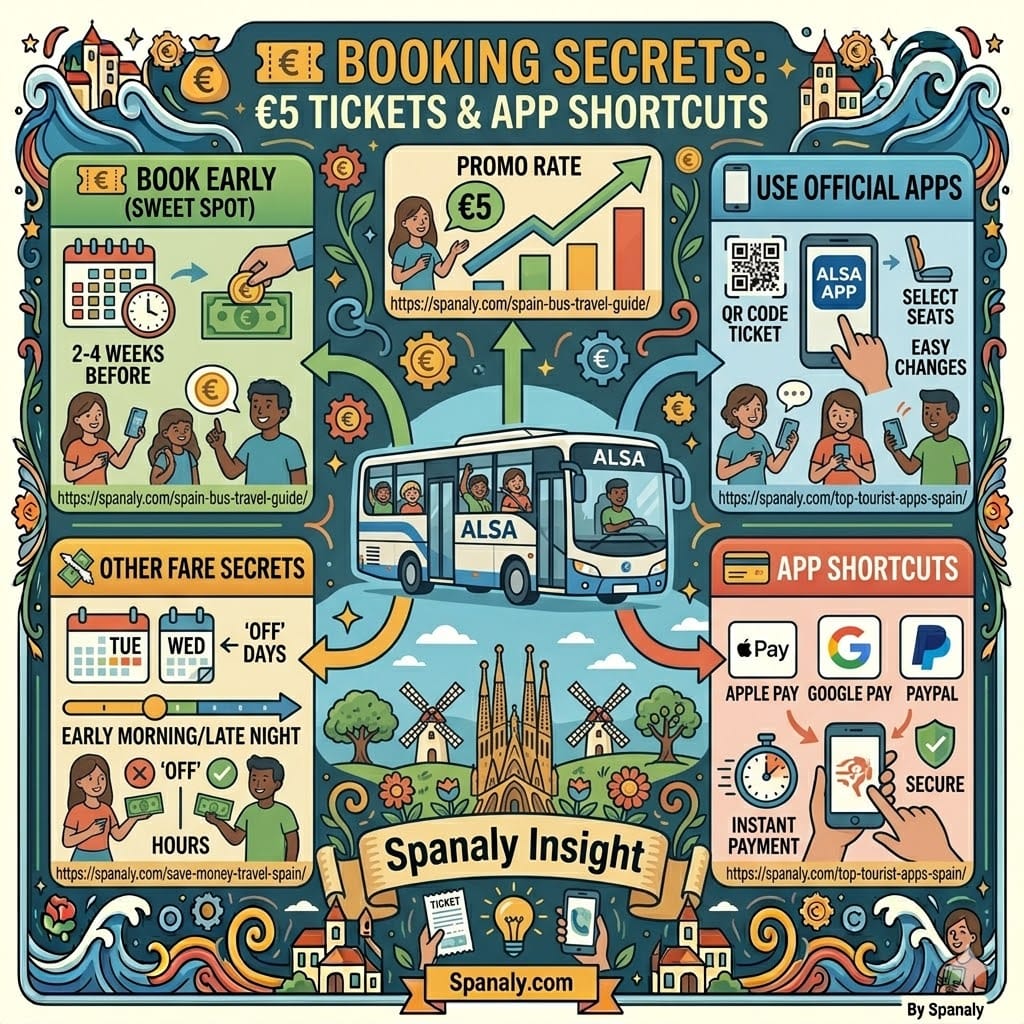
Getting the best deal on Spanish buses is an art. While prices are generally low, knowing the insider secrets can help you secure impossible rates, like €5 for a 3-hour journey. If you want to save money while traveling in Spain, mastering the booking process is step number one.
The Gold Rule: Book in Advance (But Not Too Early)
Unlike trains, where prices skyrocket, bus prices have a “sweet spot.” For major carriers like ALSA, booking 2 to 4 weeks in advance usually offers the lowest promotional fares. Last-minute tickets (same day) are almost always sold at the full “Normal” rate.
📱 App Shortcuts & Digital Tipping
Skip the station queues! Using top tourist apps in Spain is the standard for savvy travelers.
Official Apps: Download the Official ALSA App. It allows you to select seats, change bookings easily, and carry your ticket as a QR code.
Apple Pay/Google Pay: Most apps integrate these seamlessly, making payment instant and secure.
PayPal: A great option if you have issues with international credit cards on Spanish gateways.
Other Secrets to Lower Your Fare
Travel on “Off” Days: Tuesdays and Wednesdays are significantly cheaper than Fridays or Sundays.
Avoid Peak Hours: Early morning (before 7 AM) or late night (after 9 PM) buses often have lower demand and prices.
Check Return Tickets: Sometimes booking a round-trip (Ida y Vuelta) offers a small discount compared to two one-way tickets.
Spanaly Insight: Always carry a printed copy or a screenshot of your digital ticket. While QR codes are the standard, phone batteries die, and sometimes scanners at remote stations fail. Being prepared prevents last-minute panic!
🌙 Night Buses: Save on Hotels While You Travel
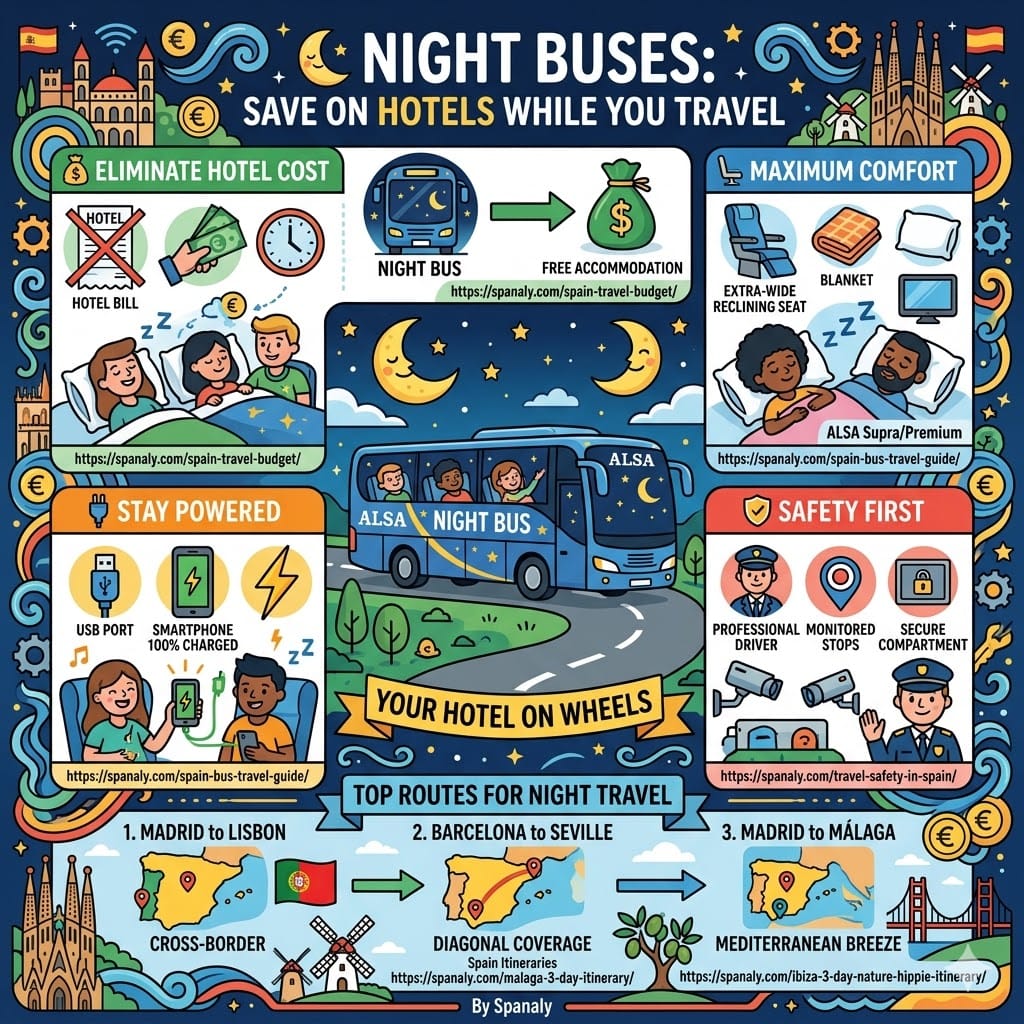
Traveling across Spain at night is the ultimate “life hack” for savvy tourists. Not only do you cover huge distances while you sleep, but you also eliminate the cost of a hotel night. If you are managing a tight Spain travel budget, the night bus is your best financial ally.
The “Hotel on Wheels” Experience
Major companies like ALSA operate dedicated night services (Bus Nocturno) on long-haul routes. For example, on the popular Madrid to Barcelona travel guide route, night buses depart around midnight and arrive early morning, giving you a full day of sightseeing ahead.
💺 Maximum Comfort: Look for “Supra” or “Premium” night classes. They offer extra-wide reclining leather seats (almost like a bed).
🔌 Stay Powered: Every seat has a USB port to ensure your phone is 100% charged by sunrise.
🛡️ Safety First: Night buses are highly secure, with professional drivers and monitored stops at well-lit service stations.
Top Routes for Night Travel
Madrid to Lisbon: A classic cross-border sleeper route.
Barcelona to Seville: Covers the entire diagonal of Spain while you dream.
Madrid to Málaga: Perfect for waking up to the Mediterranean breeze.
Spanaly Insight: Pack a small “Night Kit” in your carry-on: an inflatable neck pillow, high-quality earplugs, and a light eye mask. While the buses are modern, these small items transform a standard seat into a private sanctuary, ensuring you wake up refreshed and ready to explore!
📍 Major Hubs & Local Passes: Navigating Stations
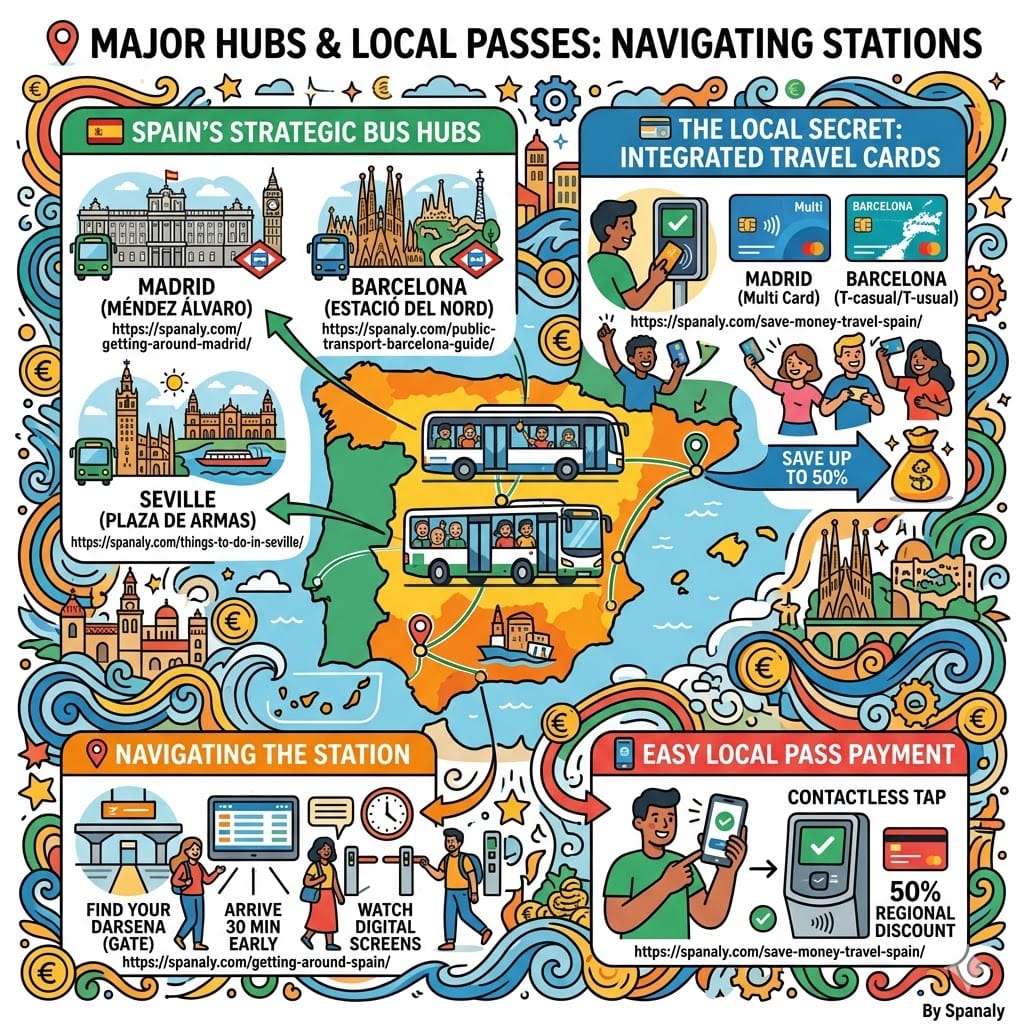
Finding your way through Spanish bus stations (Estaciones de Autobuses) is straightforward once you know the main hubs. Unlike airports, these stations are often integrated with local metro lines, making it easy to reach your hotel using official travel cards.
🇪🇸 Spain’s Strategic Bus Hubs
Madrid (Méndez Álvaro & Avenida de América): The central heart of the network. If you are getting around Madrid, these stations connect you to every corner of the Iberian Peninsula.
Barcelona (Estació del Nord): The main international and national gateway. It is perfectly linked to the public transport Barcelona guide system via the Arc de Triomf metro stop.
Seville (Plaza de Armas & Prado de San Sebastián): Crucial for reaching the stunning white villages of Andalusia.
💳 The Local Secret: Integrated Travel Cards
To save money, never pay for individual bus tickets inside the city. Each region has an integrated card that works for both local buses and metros:
Madrid: Use the Tarjetas Multi (Contactless).
Barcelona: Look for the T-casual or T-usual cards for the best rates.
Regional Passes: Many intercity buses now allow you to pay with a simple “tap” of your credit card or phone, but regional cards often offer a 50% discount.
Spanaly Insight: Large stations like Méndez Álvaro in Madrid are massive. Always arrive 30 minutes early to find your specific “Darsena” (boarding gate). Unlike airports, bus gates can change at the last minute, so keep an eye on the digital screens!
🧳 Onboard Life: Wi-Fi, Luggage & Sports Gear
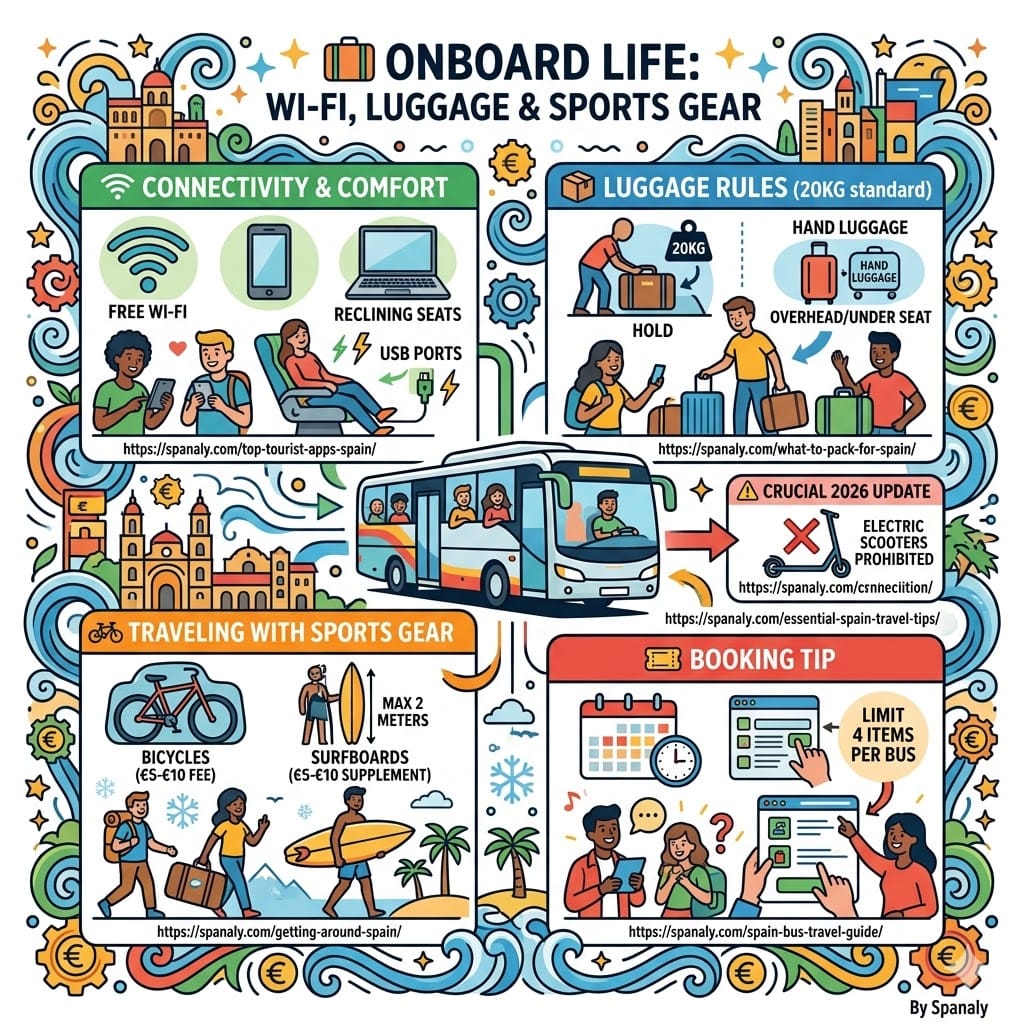
Modern Spanish buses are designed for comfort, acting more like “planes on wheels” than old-fashioned coaches. Whether you are wondering what to pack for Spain or how to transport your surfboard, the rules are clear and traveler-friendly.
📶 Connectivity & Comfort
Most long-distance buses (especially ALSA and Avanza) offer:
Free Wi-Fi: Reliable for messaging and light browsing, though it can dip in mountain tunnels.
USB Ports: Standard at every seat to keep your devices charged.
Reclining Seats: Spacious enough for a nap, especially in “Supra” classes.
📦 Luggage Rules (The 20kg Standard)
Most tickets include one piece of hold luggage (up to 20kg-30kg depending on the fare) and one small carry-on.
Hold Luggage: Must be checked in at the bus side before boarding.
Hand Luggage: Must fit in the overhead compartments or under your seat.
⚠️ Crucial Update: Electric scooters and battery-powered mobility devices (except for disabled travelers) are now strictly prohibited on many lines like ALSA for safety reasons.
🚲 Traveling with Sports Gear
Spain is an outdoor paradise, and buses make it easy to bring your equipment:
Bicycles: Must be wrapped or in a travel bag (ALSA sells bags for €15). Expect a small fee of €5 to €10 per journey.
Surfboards & Skis: Usually allowed for a €5-€10 supplement. Surfboards should not exceed 2 meters in length.
Booking Tip: You must add sports equipment during your online purchase, as space is limited to 4 items per bus.
Spanaly Insight: Always tag your luggage with your name and phone number. While bus travel is safe, stations can be hectic, and a simple essential Spain travel tips hack like a colorful ribbon on your suitcase will help you spot it instantly at the stop!
🗺️ Scenic Routes: The Most Beautiful Bus Journeys in Spain
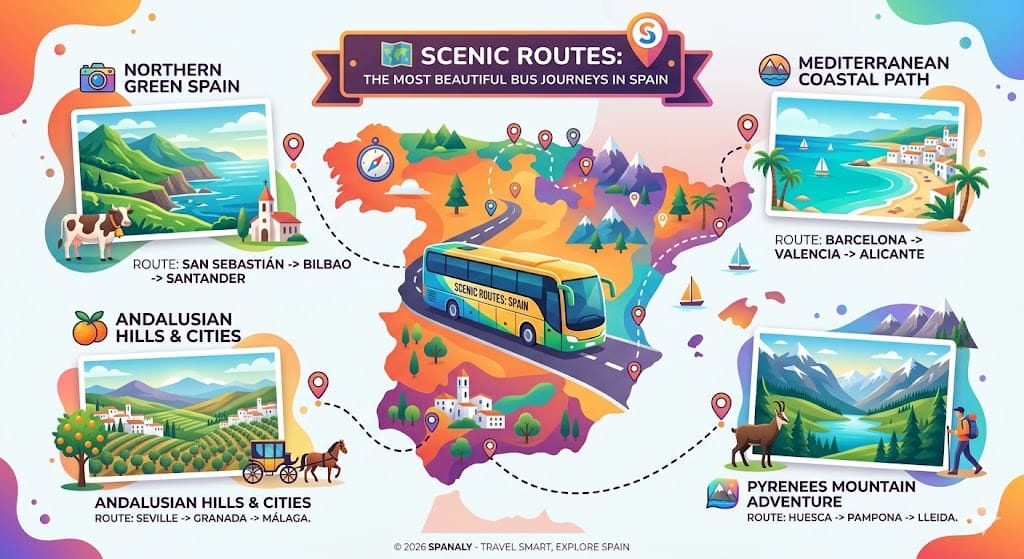
One of the greatest joys of traveling Spain by bus is the front-row seat to the country’s diverse landscapes. Buses wind through mountain passes and hug coastal cliffs, offering views that make the journey as exciting as the destination itself.
🌵 1. The Andalusian Heartland (Seville to Granada)
Traveling across the rolling hills of the South is a visual feast. As you move between cities, you will see endless olive groves and ancient fortresses. This route is a perfect introduction before exploring the many things to do in Granada and its Moorish heritage.
Best View: Look for the snow-capped Sierra Nevada mountains as you approach the city.
Pro Tip: Book a morning bus to catch the golden light on the olive trees.
🌊 2. The Cantabrian Coast (Santander to Bilbao)
This northern route is a masterpiece of nature. The bus travels along the rugged coastline where emerald green mountains meet the deep blue Bay of Biscay. It is one of the most refreshing Spain travel itineraries for nature lovers and photographers.
Best View: The dramatic cliffs of the Basque Country.
Pro Tip: Sit on the right side of the bus when traveling east for the best sea views.
🏔️ 3. The Picos de Europa (Leon to Oviedo)
For mountain enthusiasts, this is the ultimate climb. The bus navigates through high limestone gorges and offers panoramic views of Spain’s most dramatic peaks. It is a journey that feels like a slow-motion mountain tour.
Spanaly Insight: Always keep your camera or phone ready! Unlike trains, buses often pass through the centers of charming historic towns and over scenic bridges that are inaccessible by rail. A front-row seat on the upper deck (if available) is the best “theater” in Spain!
♿ Accessibility: Traveling with Reduced Mobility
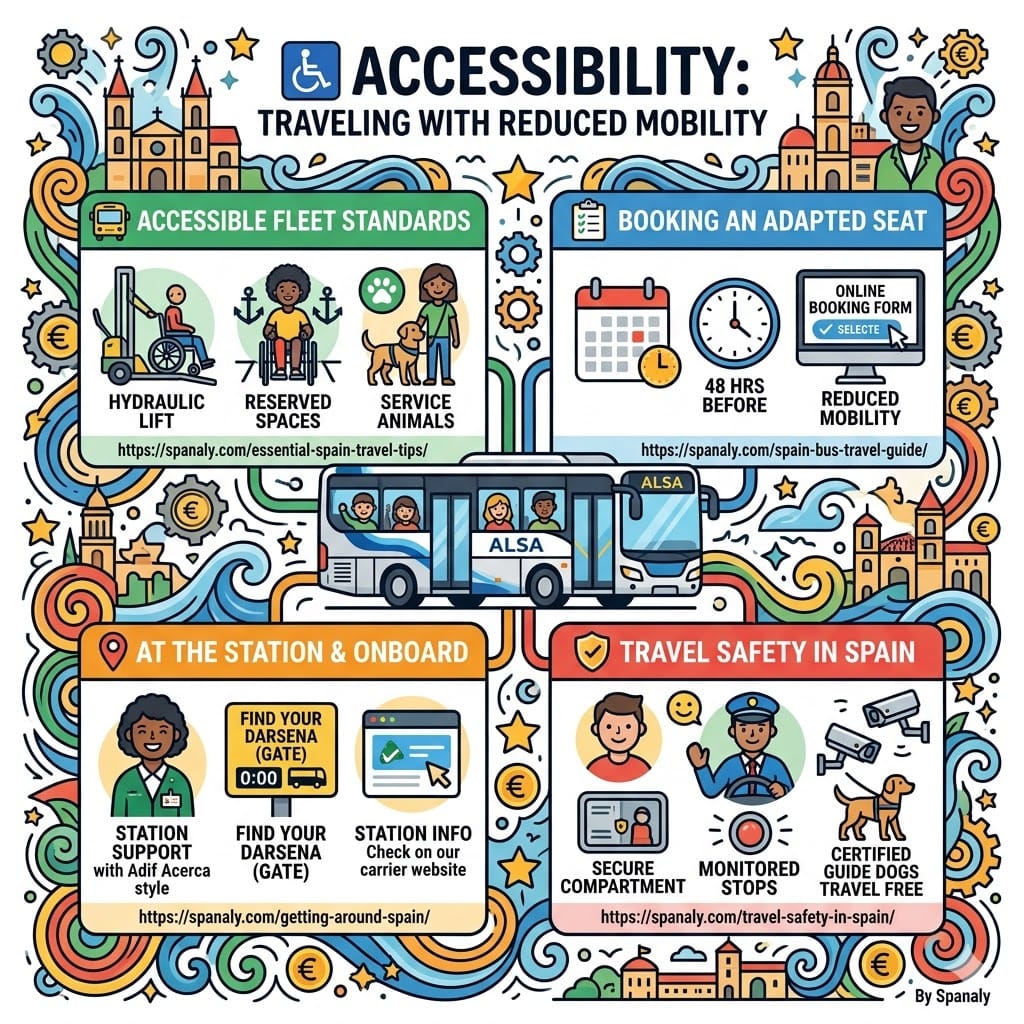
Spain is a European leader in accessible tourism, and its bus network is no exception. Modern coaches are equipped to ensure that traveling Spain by bus is a dignified and comfortable experience for everyone, regardless of physical challenges.
🚍 Accessible Fleet Standards
The majority of intercity buses (especially ALSA and Avanza) are fully adapted:
Hydraulic Lifts: Most long-distance buses feature motorized lifts to assist wheelchair users in boarding safely.
Reserved Spaces: Each adapted bus has 1 or 2 dedicated spaces where wheelchairs can be securely anchored.
Service Animals: Certified guide dogs travel for free and can stay with their owners inside the cabin.
📋 How to Book an Adapted Seat
To ensure a seamless journey, follow these essential Spain travel tips for accessibility:
Book in Advance: You must select the “Reduced Mobility” option during your online purchase at least 48 hours before departure.
Arrive Early: Reach the station 30 minutes before the bus leaves so the driver can prepare the lift and secure the seat.
Station Support: Most major hubs offer “Adif Acerca” or similar assistance services to help you navigate the terminal safely, enhancing your overall travel safety in Spain.
Spanaly Insight: While the buses are modern, some older stations in tiny villages might still have architectural barriers. Always check the “Station Info” on the carrier’s website to ensure your destination stop is as accessible as the bus itself!
🧭 Final Verdict: Is Traveling Spain by Bus Worth It?

After covering thousands of kilometers across the Iberian Peninsula, the answer is a resounding yes—but with a strategic twist. While Spain’s high-speed trains are legendary for their speed, the bus network remains the undisputed champion of flexibility, budget, and reaching the “hidden” Spain.
The “Bus Advantage” Summary
If your goal is to explore the best cities to visit in Spain while keeping your expenses low, the bus is your best friend. It bridges the gaps where tracks don’t reach and offers a level of frequency that trains simply can’t match on secondary routes.
When to Choose the Bus:
Budget is Priority: You can often travel across half the country for the price of a single fancy dinner.
Hidden Gems: Essential for reaching white villages, coastal retreats, and mountain trails.
Last-Minute Travel: Bus prices stay relatively stable compared to the surging costs of last-minute flight or train tickets.
When to Reconsider:
Ultra-Long Distances: For a journey like Barcelona to Seville, the 12-hour bus ride is only for the brave (or those using the night bus hack), whereas the train takes just 5.5 hours.
The Spanaly Conclusion
For a truly authentic and comprehensive Spain travel guide experience, we recommend a hybrid approach. Use the high-speed trains for the “Big Three” (Madrid, Barcelona, Seville) and switch to the bus for everything else. It is the most efficient way to see the real Spain without breaking the bank.
Spanaly Insight: Don’t view the bus as a “cheap alternative,” but as a “discovery tool.” Some of the most beautiful sunsets and local interactions happen at roadside stops and small-town terminals. Embrace the slow travel, and Spain will reveal its true magic to you!
⚠️ The Master List: Common Mistakes & Spanaly Pro Tips
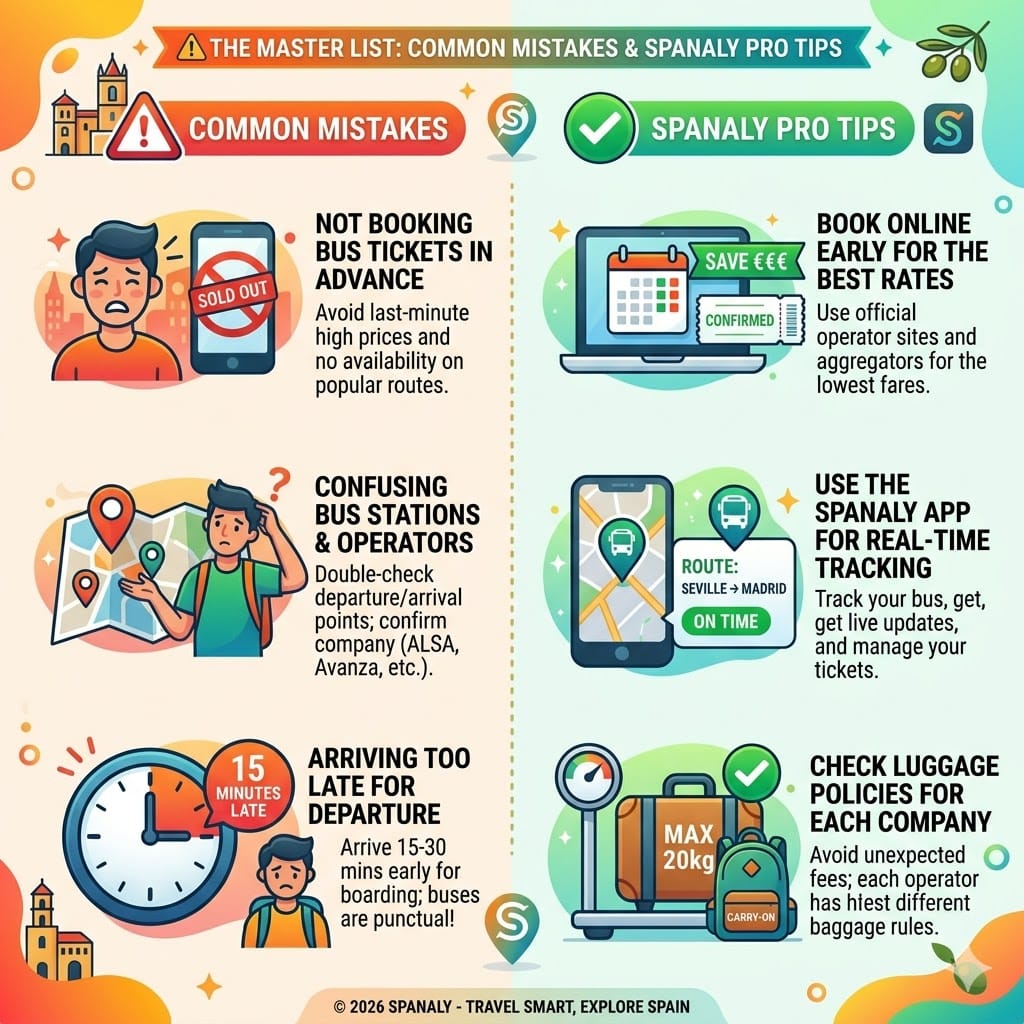
Even the most seasoned travelers can get caught in local traps. To ensure your journey is as smooth as a Spanish sunset, avoid these frequent blunders and adopt our expert hacks.
❌ Common Mistakes to Avoid
Ignoring the “Darsena” Number: In big stations like Madrid’s Estación Sur, there are over 60 gates. Never assume the bus will be at the front; always check the digital screens for your specific Darsena.
Expecting Food Onboard: Unlike trains, most Spanish buses do not have a cafeteria. If you are traveling during lunch hours to explore the best of Spanish cuisine, buy your Bocadillo (sandwich) and water at the station beforehand.
Missing the Seatbelt Rule: It is legally mandatory to wear your seatbelt on Spanish buses. Fines are high, and drivers are increasingly strict about this to ensure maximum safety for all passengers.
Not Validating the Ticket: For regional buses, simply showing the ticket isn’t enough; you must “tap” your QR code or card at the machine next to the driver.
💎 Spanaly Pro Tips (The Insider Hacks)
The Festival Buffer: If you are visiting during major Spanish festivals and events like Semana Santa or Feria de Abril, bus stations become chaotic. Always add a 1-hour buffer to your arrival time to navigate the crowds.
Screenshot Everything: Station Wi-Fi can be notoriously “hit or miss.” Always take a high-resolution screenshot of your QR code ticket and your platform number before entering the terminal.
The “Middle Door” Rule: On long-distance buses, the toilet is usually located near the middle door, not the back. Avoid sitting in the row directly behind it if you want maximum legroom and less foot traffic.
The “Bono” Secret: If you plan to travel the same route twice (like Madrid to Toledo and back), ask for a Bono or a round-trip ticket. It is often 10% to 20% cheaper than two one-way tickets.
Spanaly Insight: If your bus has a 15-minute “rest stop” at a service station, never leave the bus without your phone and wallet. These stops are quick, and if you lose track of time, the bus will leave without you. Always keep an eye on the driver!
🚍 Visitor FAQs – Spain Bus Travel & Logistics Guide
🎫 Is it mandatory to print my bus ticket before boarding?
No, printing is rarely necessary nowadays. Most major operators like ALSA and Avanza allow you to show the QR code on your smartphone. Just ensure your device has enough battery, or keep a digital copy in your "Wallet" app for quick access at the gate.
🧳 Are there strict luggage weight limits on Spanish buses?
Generally, you can carry up to 30kg of luggage for free on long-distance routes. Unlike low-cost airlines, bus drivers rarely weigh every bag, but they do enforce size limits for the under-bus compartment. Always keep your valuables and passports in a small carry-on bag with you inside the cabin.
🕒 How early should I arrive at the bus station?
We recommend arriving at least 15 to 20 minutes before your scheduled departure. Spanish buses are remarkably punctual. If you are departing from large hubs like Madrid Estación Sur or Barcelona Nord, allow extra time to locate your specific boarding platform (Dársena).
🌐 Is there reliable Wi-Fi available on all bus routes?
Most modern "Premium" or "Supra" classes offer free Wi-Fi and USB charging ports. While standard buses also aim to provide connectivity, the signal can be intermittent when traveling through mountainous regions like the Sierra Nevada. It is best to download your offline maps or entertainment in advance.
🚻 Do long-distance buses in Spain have toilets on board?
Most long-haul buses (trips over 3 hours) are equipped with on-board restrooms. Additionally, for very long journeys, drivers make scheduled 15-minute breaks at designated service stations where you can stretch your legs and grab a quick snack or coffee at a Cafetería.
Bus Travel Guide by Spanaly.com
Choosing the bus for your Spanish adventure is a smart and rewarding decision for any modern traveler. It offers a unique perspective of the countryside that high-speed trains often bypass entirely. You will find that the flexibility of the routes allows you to reach those charming “Pueblos Blancos” with ease.
Furthermore, the modern fleet and punctual schedules make it a stress-free experience for everyone. Consequently, you can focus more on the scenery and less on the logistics of your trip. Specifically, being prepared with the right payment methods will make your station stops much smoother.
Make sure to read our full Money in Spain: Cash, Cards & ATM Fees Guide to handle your travel budget like a local expert.
💡 Spanaly Insight
We always recommend keeping a small amount of physical cash (under €20) when traveling by bus. While most major stations accept cards, some smaller local operators or rural station cafes still prefer cash for quick transactions and snacks.