
Table of Contents
Toggle🏰 Zaragoza: The Golden Heart of Aragon
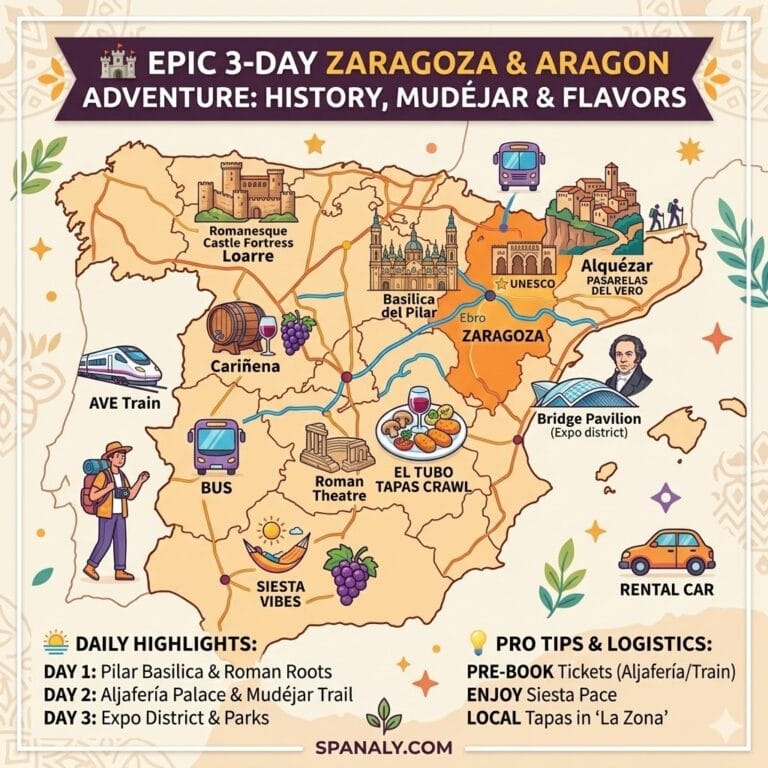
Nestled halfway between Madrid and Barcelona, Zaragoza is often overlooked by the average tourist. However, for those who seek authentic Spain, it is a treasure trove of ancient history and architectural marvels.
Mudejar Magic: Explore UNESCO-listed wonders where Islamic and Christian art collide.
Tapas Heaven: Lose yourself in the narrow, flavor-packed alleys of El Tubo.
Modern Soul: Experience a city that honors its Roman past while embracing a vibrant, modern future.
Furthermore, if you want to understand why this city is the ultimate “best-kept secret,” check out our deep dive into Zaragoza: The Hidden Capital of Aragon. It is the perfect companion for this itinerary.
Spanaly Insight: 💡 Don’t rush through the Basilica del Pilar! Instead, take the elevator to the top of the tower just before sunset. Consequently, you will witness the Ebro River and the city’s red-tiled roofs glowing in a spectacular golden light that most visitors miss.
📍 Zaragoza & Aragon Adventure: Interactive Route (2026) - Spanaly.com
Live MapSource: Spanaly.com
🏛️ Zaragoza: The Grand Plaza vs. The Secret Alleys
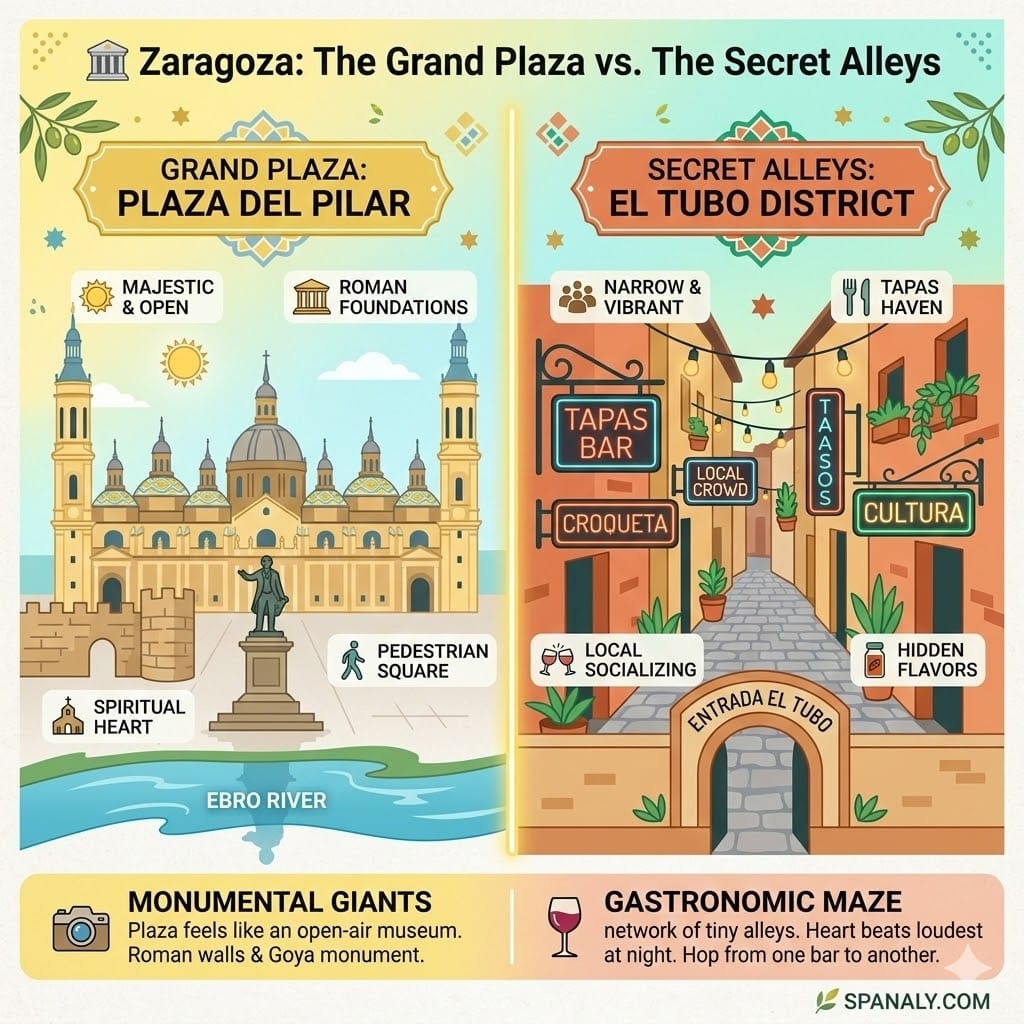
To understand Zaragoza, you must experience its two contrasting souls. While one side of the city is defined by majestic monuments, the other is hidden in a labyrinth of flavors.
| Feature | The Grandeur: Plaza del Pilar | The Soul: El Tubo District |
| Vibe | Majestic, open, and spiritual. | Narrow, vibrant, and social. |
| Main Attraction | Basilica del Pilar & Roman Walls. | Tapas bars & local “Zaragozano” life. |
| Best Time | Morning for the best light. | Evening for the ultimate food crawl. |
| Photo Spot | The reflection in the Ebro river. | The colorful neon signs and tiled walls. |
✨ The Monumental Giants
The Plaza del Pilar is one of the largest pedestrian squares in Europe. Consequently, it feels like an open-air museum. Moreover, standing before the Roman walls and the Goya monument gives you a profound sense of Spain’s 2,000-year history.
🍷 The Gastronomic Maze
On the other hand, just a few minutes away, El Tubo offers a completely different world. Instead of wide-open spaces, you’ll find a network of tiny alleys. In fact, this is where the city’s heart beats loudest at night, with locals hopping from one bar to another for the famous “Tapas” culture.
Spanaly Insight: 💡 Don’t pick one over the other! Rather, spend your afternoon exploring the monuments and then head straight to El Tubo for dinner. Therefore, you will experience the perfect balance of Zaragoza’s history and its legendary hospitality.
🚆 Zaragoza Logistics: Pack, Stay & Move Like a Local
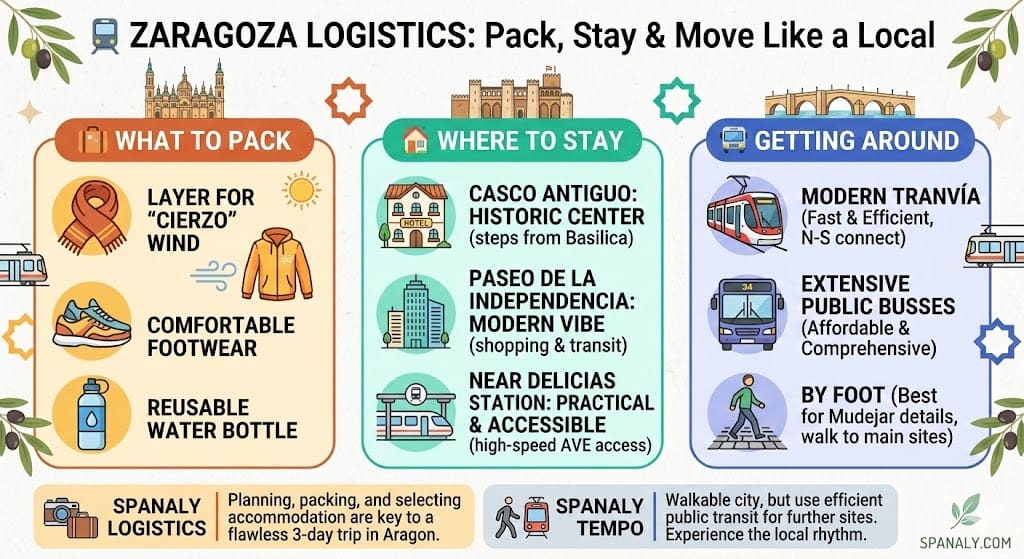
Planning a trip to Aragon’s capital requires a bit of strategy. Therefore, we have summarized the essential logistics to ensure your 3-day journey is as smooth as the Ebro river.
🧳 What to Pack: Seasonality Matters
Zaragoza is famous for its “Cierzo” (a strong, dry wind). Consequently, your packing list should adapt to the local climate. In fact, deciding what to pack for Spain depends heavily on your specific destination and the season.
Layering is Key: Even in spring, the wind can be chilly. Bring a light windbreaker or a stylish scarf.
Comfortable Footwear: You will be walking on cobblestones. Thus, leave the heels at home and opt for supportive sneakers.
Hydration: The air is quite dry. Moreover, carrying a reusable water bottle is essential as you explore Spanish Attractions.
🏠 Where to Stay: Finding Your Base
While Zaragoza is a large city, most “Mudejar” treasures are concentrated in the center. Choosing the right accommodation in Spain is the first step to a flawless trip.
The Historic Center (Casco Antiguo): Best for those who want to be steps away from the Basilica.
Near Paseo de la Independencia: Ideal for a more modern vibe. Notably, it offers great access to high-end shopping and transit.
Proximity to Delicias Station: If you are following a wider Spain Itinerary, staying near the station is very practical for early departures.
🚌 Getting Around: Modern & Ancient Paths
Fortunately, Zaragoza is a very walkable city. Nevertheless, you might need transport for further sites. Understanding how getting around Spain works will save you time and stress:
The Tram (Tranvía): Clean, fast, and efficient. Specifically, it connects the north and south of the city perfectly.
Public Busses: Much like the system explained in our Madrid travel guide, Zaragoza’s network is extensive and affordable.
By Foot: The best way to see the Mudejar details. Clearly, walking allows you to spot the intricate brickwork you’d miss from a bus window.
Spanaly Insight: 💡 If you are arriving by the AVE high-speed train, you will land at Delicias Station. Instead of taking a taxi, use the “Cercanías” train. Consequently, you will reach the city center in less than 15 minutes! To master the local tempo, don’t forget to check our guide on Spain’s daily rhythm and mealtimes.
🏛️ Day 1: The Giants of the Ebro & Roman Roots
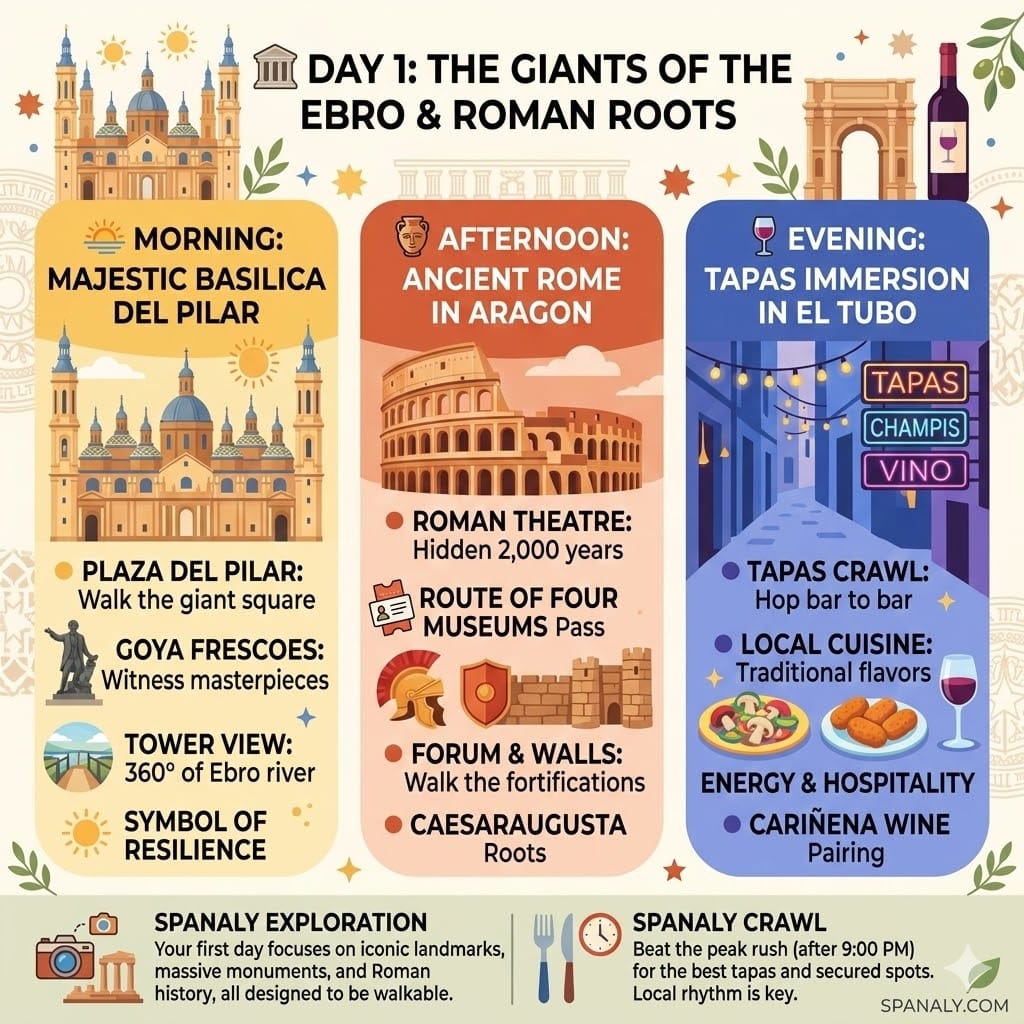
Your first day in Zaragoza is dedicated to the city’s most iconic skyline. Specifically, we will focus on the massive monuments that have defined the capital of Aragon for centuries. This route is designed to be walkable, allowing you to soak in the atmosphere of the Ebro river.
🌅 Morning: The Majestic Basilica del Pilar
Start your journey at the Plaza del Pilar, one of the largest pedestrian squares in Europe. Immediately, you will be struck by the sheer scale of the Basilica de Nuestra Señora del Pilar.
The Experience: Step inside to witness the frescoes painted by Goya. Furthermore, you should visit the “Holy Pillar” itself, which is a significant site for pilgrims.
The Tower View: Consequently, you must take the elevator to the top of the tower. From there, you will enjoy a 360-degree view of the city’s mud-tiled roofs and the winding Ebro river.
Historical Note: This Basilica is a masterpiece of Baroque architecture. Notably, it stands as a symbol of Spanish resilience and faith.
🏺 Afternoon: Ancient Rome in the Heart of Spain
After a riverside lunch, it is time to travel back 2,000 years. Zaragoza was once a thriving Roman colony named Caesaraugusta. Therefore, exploring its ruins is essential to understanding the city’s layout.
The Roman Theatre: Visit the Museo del Teatro de Caesaraugusta. Surprisingly, this massive theatre was hidden under residential buildings until 1972.
The Forum & Walls: In addition, walk toward the Roman Walls near the Central Market. Clearly, these stone fortifications tell the story of a city that has survived countless sieges.
Pro Tip: Buy a “Route of the Four Roman Museums” pass. As a result, you will save money while seeing the Forum, Thermal Baths, and River Port.
🍷 Evening: Tapas Immersion in El Tubo
Finally, as the sun sets, follow the locals to El Tubo. This is a labyrinth of narrow alleys packed with the best Spanish Cuisine in the region.
The Tapas Crawl: Hop from bar to bar. For instance, try the famous “Champis” (mushrooms) at El Champi or the legendary croquettes at Doña Casta.
The Atmosphere: Moreover, the energy here is contagious. While the streets are narrow, the hospitality is wide and welcoming.
Local Drink: Order a glass of Cariñena wine. Notably, it is the perfect pairing for the bold flavors of Aragon.
Spanaly Insight: 💡 However, remember that El Tubo gets extremely crowded after 9:00 PM. To enjoy a more relaxed experience, aim to start your tapas crawl around 8:00 PM. Consequently, you will beat the peak rush and secure a spot at the most popular bars!
🏰 Day 2: The Mudejar Dream & Palace Secrets
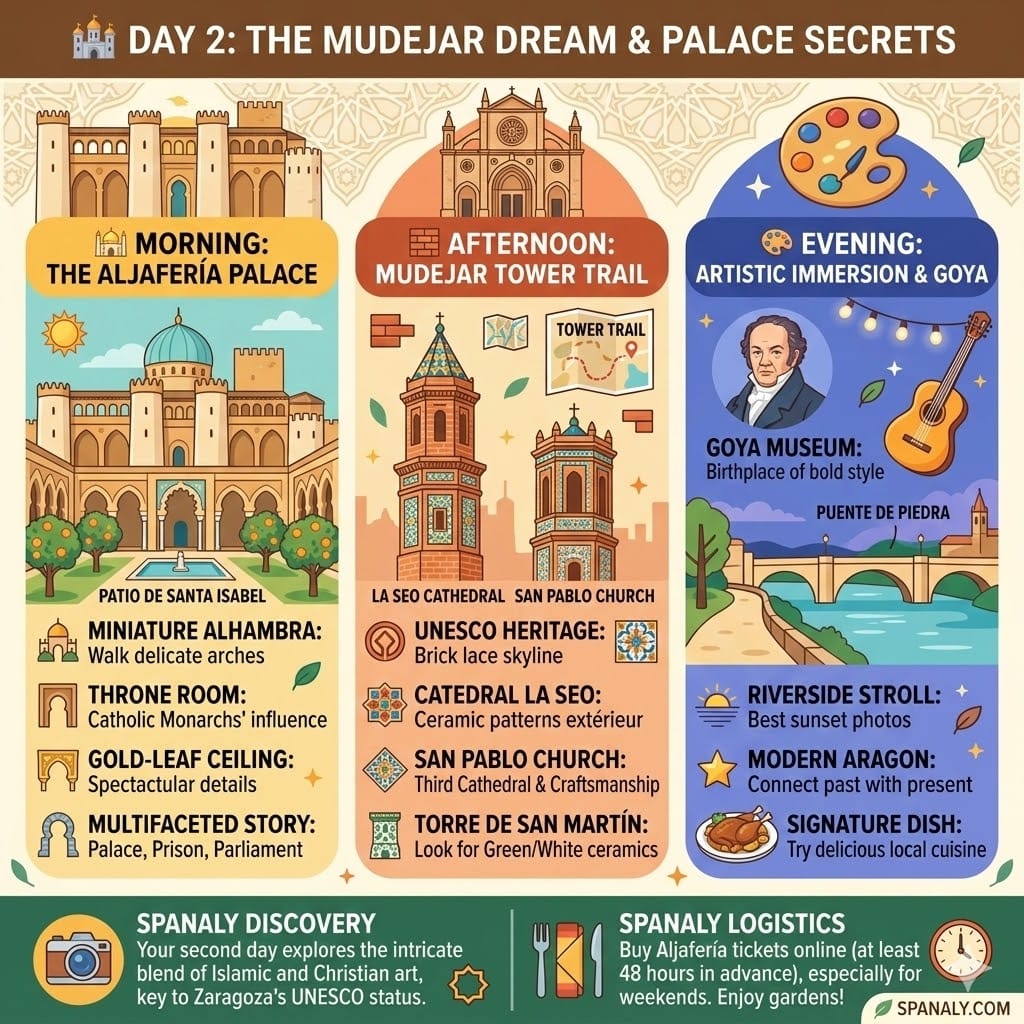
Your second day is dedicated to the architectural soul of the city. Specifically, you will discover why Zaragoza is famous for its remarkable Mudejar heritage, with several monuments forming part of the UNESCO-listed Mudejar Architecture of Aragon. This style, which blends Islamic and Christian aesthetics, is visible in the intricate brickwork and tiled towers across the city.
🕌 Morning: The Aljafería Palace
Start your morning at the Aljafería Palace, the most northerly Islamic palace in Europe. Immediately, you will feel like you have stepped into a miniature version of the Alhambra in Granada.
The Courtyard: Walk through the Patio de Santa Isabel. Furthermore, admire the delicate arches that reflect the glory of the 11th-century Taifa kingdom.
The Throne Room: Head upstairs to see the Catholic Monarchs’ influence. Notably, the gold-leaf ceiling is one of the most spectacular in Spain.
The Contrast: This building has served as a palace, a prison, and now a regional parliament. Consequently, its walls tell a multifaceted story.
🧱 Afternoon: The Mudejar Tower Trail
After a leisurely lunch, head back toward the center to spot the “brick lace” of Zaragoza. Indeed, the city’s skyline is punctuated by towers that look like geometric embroidery.
La Seo Cathedral: Visit Catedral del Salvador. Unlike the Basilica del Pilar, this cathedral is a mix of Gothic and Mudejar styles. Specifically, the exterior wall is a masterpiece of ceramic tiles.
The Castle Connection: If you love this rugged stone aesthetic, you might also enjoy exploring the Castle of Loarre in Aragon, which is a perfect day trip from the city.
San Pablo Church: Often called the “Third Cathedral,” this church is located in a vibrant neighborhood. In addition, its octagonal tower is one of the finest examples of Mudejar craftsmanship.
🎨 Evening: Artistic Immersion & Modern Aragon
Finally, end your day by connecting the past with the present. Zaragoza is the birthplace of Goya, and his influence is everywhere.
The Goya Museum: Explore the collection of his famous etchings. Moreover, you will understand how his bold style paved the way for modern art.
Riverside Stroll: Walk along the Puente de Piedra. Clearly, this is the best spot to photograph the city as the lights begin to twinkle.
Dinner: Try the “Ternasco de Aragón” (roasted lamb). Notably, this is the region’s signature dish and the perfect way to end a day of cultural discovery.
Spanaly Insight: 💡 However, please note that the Aljafería Palace requires a pre-booked ticket, especially on weekends. To avoid disappointment, buy your tickets online at least 48 hours in advance. Consequently, you will breeze through the entrance and have more time to enjoy the gardens!
🌱 Day 3: Modern Soul, Expo Legacy & Green Escapes
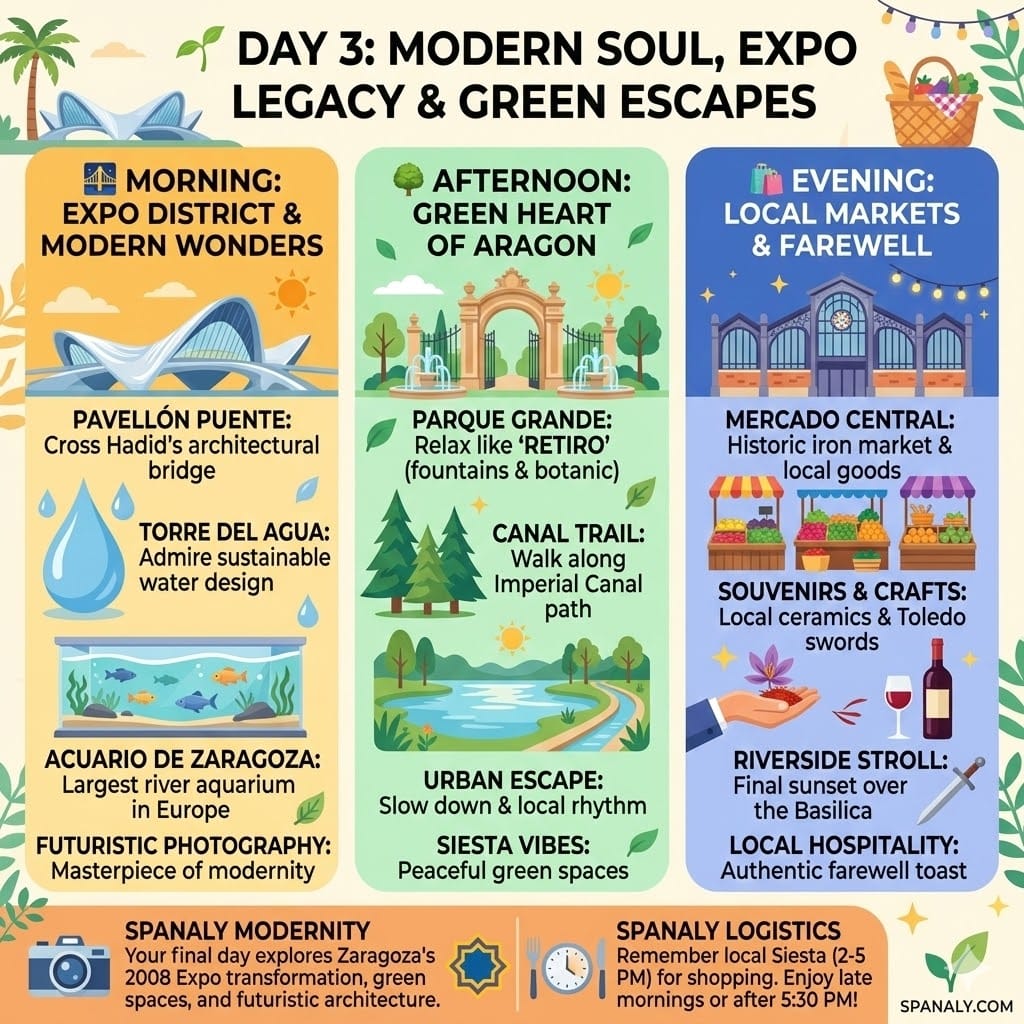
Your final day in Zaragoza is all about the city’s transformation. Specifically, we will explore the futuristic side of the capital, born from the Expo 2008, and enjoy the local rhythm of life in its parks and markets.
🌉 Morning: The Expo 2008 District & Modern Wonders
Start your morning by crossing the Ebro river to the Expo District. Immediately, you will notice a stark contrast to the Mudejar towers.
The Bridge Pavilion: Walk across the Pabellón Puente, designed by Zaha Hadid. Furthermore, admire the Torre del Agua, a transparent water-drop-shaped building.
The Aquarium: Visit the Acuario de Zaragoza, the largest river aquarium in Europe. Notably, it focuses on five great rivers of the world.
The Atmosphere: This area is a masterpiece of sustainable architecture. Consequently, it is the perfect spot for futuristic photography.
🌳 Afternoon: The Green Heart of Aragon
After exploring the modern side, it is time to slow down. Indeed, Zaragoza offers some of the most beautiful green spaces in Spain.
Parque Grande José Antonio Labordeta: This is the city’s “Retiro.” Much like the Retiro Park in Madrid, this park is filled with fountains, botanical gardens, and locals enjoying a “Siesta” walk.
The Canal Trail: Walk along the Imperial Canal of Aragon. In addition, this path offers a peaceful escape from the urban hustle.
Pro Tip: If you enjoy these grand green spaces, you should also visit the Maria Luisa Park in Seville on your next trip!
🛍️ Evening: Local Markets & Final Farewell
Finally, wrap up your 3-day itinerary by indulging in some local shopping and one last authentic meal.
Mercado Central: Visit the renovated Central Market. Specifically, admire its iron architecture and pick up some local saffron or Aura wine.
Souvenirs: For a unique gift, look for Toledo steel swords or local ceramics in the nearby craft shops.
The Final Toast: Head back to the riverside for a sunset view. Clearly, watching the lights of the Basilica reflect in the Ebro is the ultimate way to say goodbye.
Spanaly Insight: 💡 However, don’t forget that many local shops and some market stalls close for the traditional Siesta (usually between 2:00 PM and 5:00 PM). To make the most of your shopping, aim for the late morning or after 5:30 PM. Consequently, you will find the city vibrant and full of life!
🏰 Beyond the City: Top Day Trips from Zaragoza
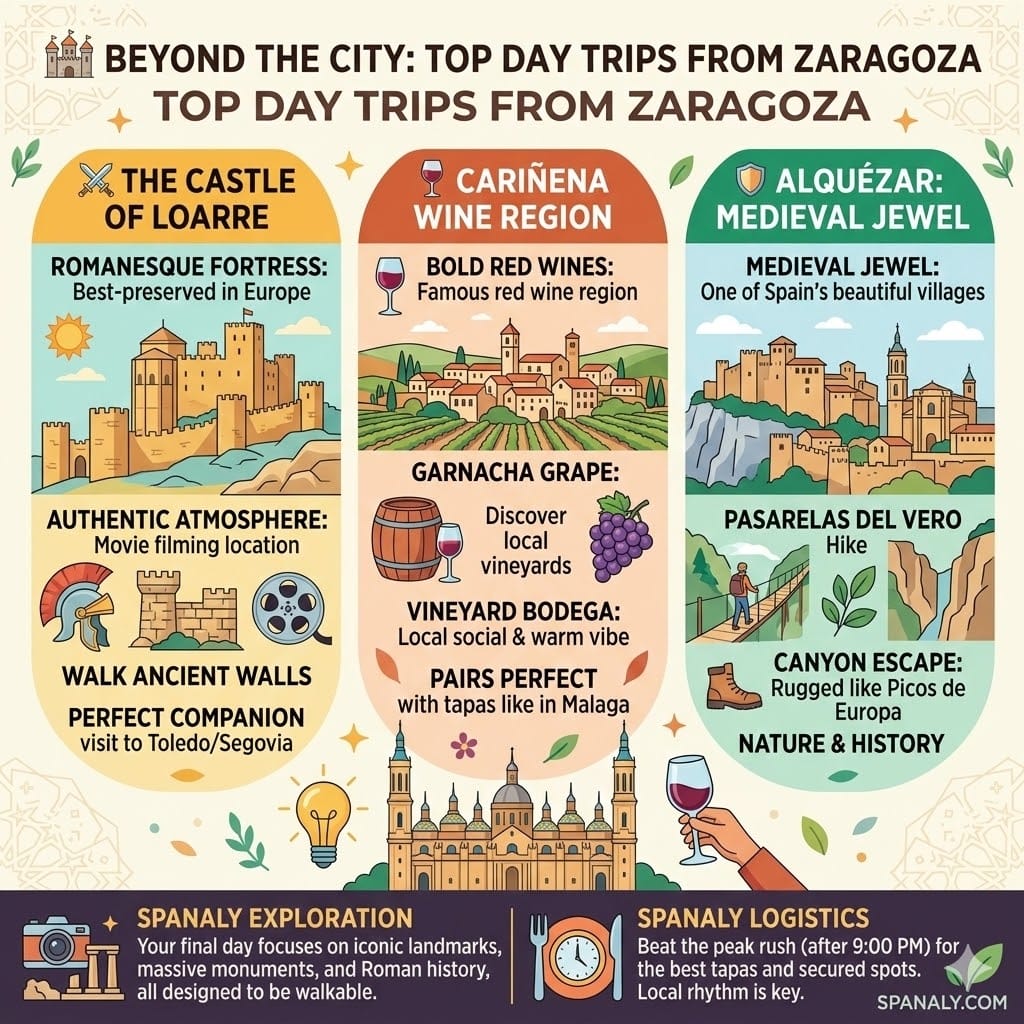
If you have an extra day or two, Zaragoza’s location is unbeatable for exploring the rugged beauty of Aragon. Specifically, these nearby gems offer a mix of medieval history and dramatic landscapes that most tourists never see.
⚔️ The Castle of Loarre (Castillo de Loarre)
Located about an hour north, this is arguably the best-preserved Romanesque fortress in Europe.
The Experience: Walk through its ancient walls and look out over the Huesca plains. Indeed, its stone architecture is so authentic that it was used as a filming location for Hollywood movies.
Travel Tip: This is a perfect companion visit if you enjoyed our Toledo and Segovia itinerary.
🍷 The Wine Region of Cariñena
Zaragoza is surrounded by world-class vineyards. Specifically, the town of Cariñena is famous for its bold red wines.
Wine Tasting: Visit a local bodega to learn about the Garnacha grape. Consequently, you will understand why Aragonese wines are gaining international fame.
Local Vibe: Much like the traditional bars in our Malaga travel guide, the atmosphere here is warm and deeply rooted in local culture.
🛡️ Alquézar: The Medieval Jewel
Perched on a limestone cliff, Alquézar is often voted one of the most beautiful villages in Spain.
The Footbridges: Hike the Pasarelas del Vero. Furthermore, admire the collegiate church that dominates the skyline.
Nature Escape: If you loved the rugged vibes of the Picos de Europa, the canyons of Alquézar will surely captivate you.
Spanaly Insight: 💡 However, public transport to these rural areas can be limited. To fully explore the Aragonese countryside, we highly recommend renting a car for a day. Consequently, you will have the freedom to stop at hidden viewpoints and tiny villages that busses simply don’t reach!
💰 Zaragoza Trip Budget: From Budget to Luxury
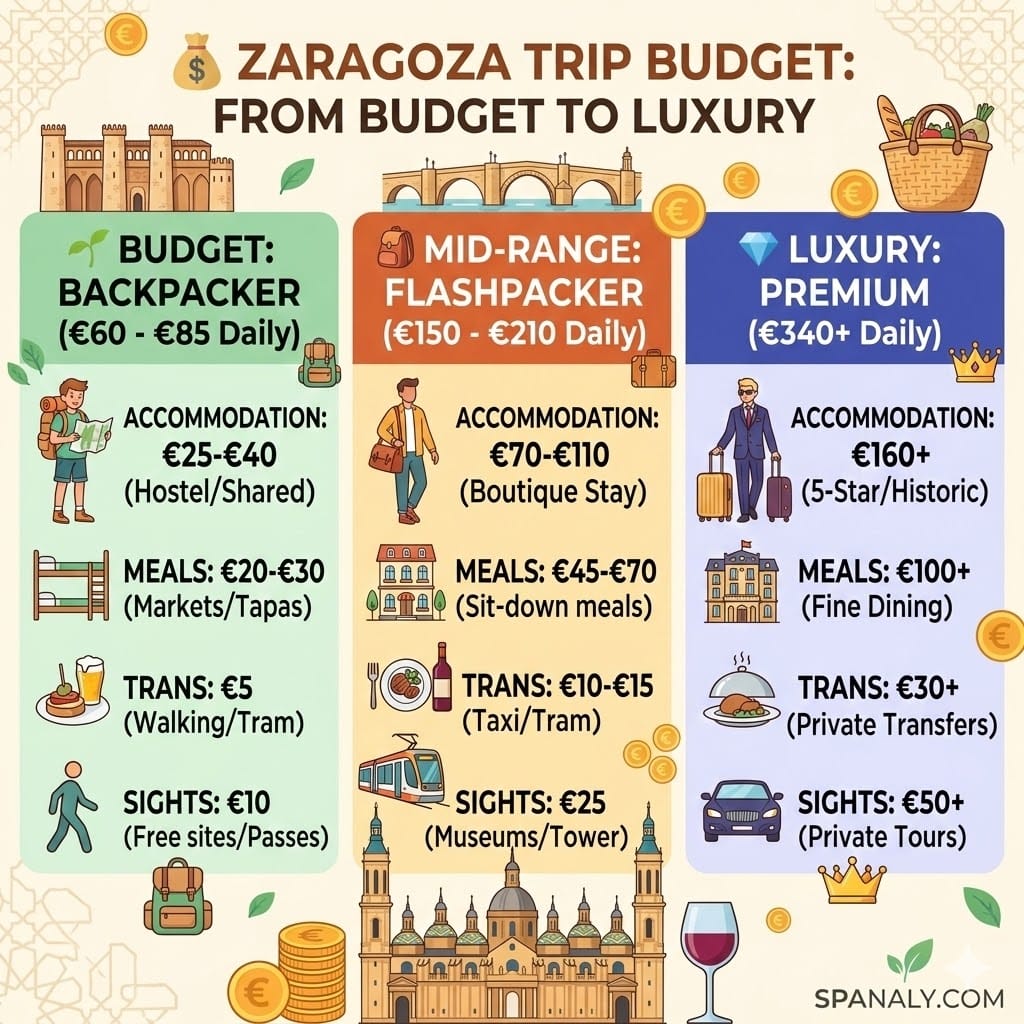
Whether you are a backpacker or looking for a premium experience, Zaragoza accommodates all styles. Specifically, here is what you can expect to spend daily:
| Category | Budget (Backpacker) | Mid-Range (Flashpacker) | Luxury (Premium) |
| Accommodation | €25 – €40 (Hostel/Shared) | €70 – €110 (Boutique Hotel) | €160+ (5-Star/Historic) |
| Meals & Food | €20 – €30 (Markets/Tapas) | €45 – €70 (Sit-down meals) | €100+ (Fine Dining) |
| Transportation | €5 (Walking/Tram) | €10 – €15 (Taxi/Tram) | €30+ (Private Transfers) |
| Attractions | €10 (Free sites/Passes) | €25 (Museums/Tower) | €50+ (Private Tours) |
| Daily Total | €60 – €85 | €150 – €210 | €340+ |
🍴 Food & Dining Costs
Aragonese cuisine is hearty and affordable. In fact, eating out is one of the highlights of the trip:
Tapas in El Tubo: Expect to pay €2.50 – €4.00 per tapa with a small drink (Caña).
Menu del Día: A full 3-course lunch usually costs between €12 and €18. Notably, this is the best way to save money while eating like a local.
Coffee & Breakfast: A “Café con leche” and a pastry will cost you around €3.50.
🎟️ Sightseeing & Entry Fees
Fortunately, many of Zaragoza’s treasures are accessible. However, some key sites have fees:
Basilica del Pilar: Entry is free, but the Tower Elevator costs about €5.
Aljafería Palace: Tickets are approximately €5, with discounts for students and seniors.
Roman Museums Pass: A combined ticket for the 4 Roman sites costs around €7 – €9. Consequently, it is much cheaper than buying them individually.
🚉 Transportation Expenses
Since the city is very walkable, your transport costs will be minimal.
Tram/Bus Trip: A single ticket is about €1.40 – €1.50.
AVE Train: If you are coming from Barcelona, check our Public Transport Barcelona Guide for tips on booking high-speed trains early to save up to 50%.
Spanaly Insight: 💡 However, remember that many museums in Zaragoza are Free on the first Sunday of every month or on certain local holidays. Therefore, if you plan your trip accordingly, you can see the best Mudejar art without spending a single Euro on tickets!
💡 Spanaly Insider: Pro Tips for a Flawless Zaragoza Trip
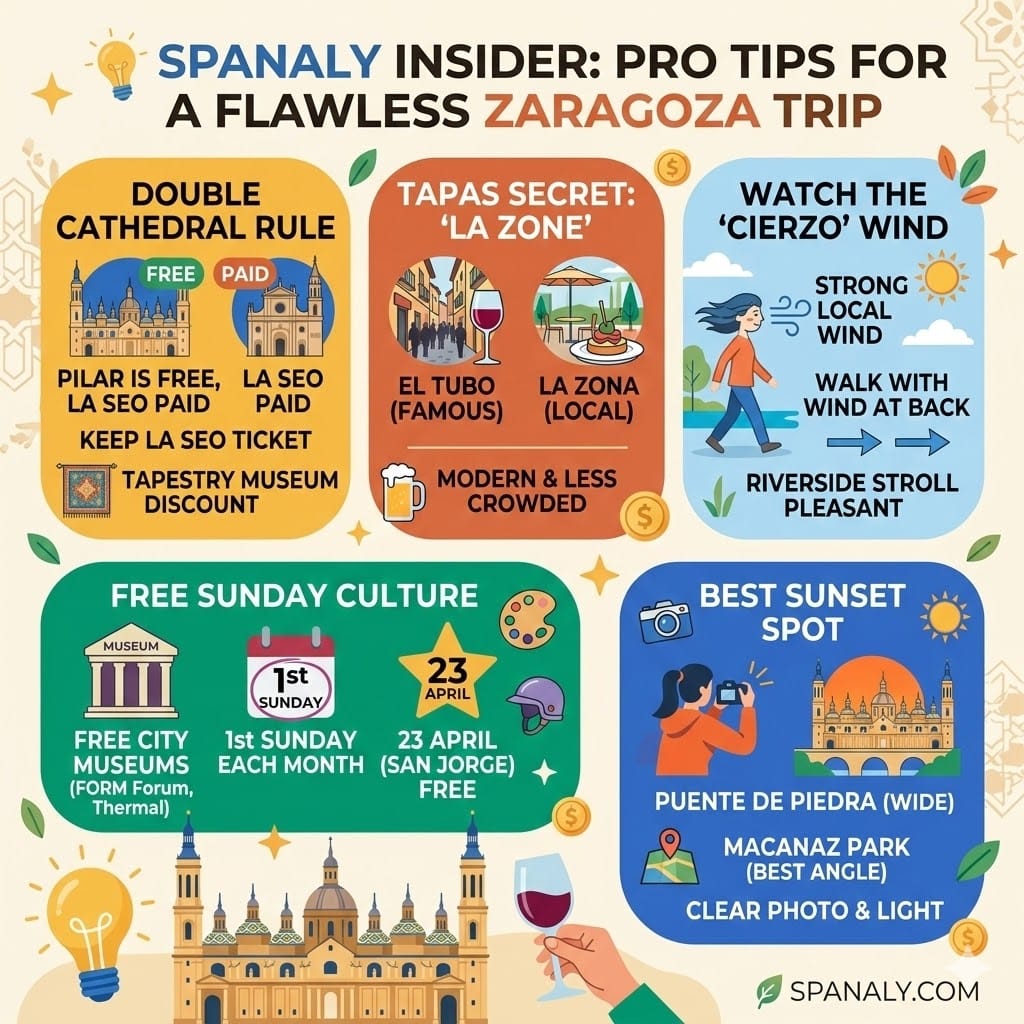
To truly master Zaragoza, you need to know the small details that make a big difference. Specifically, these insider tips will help you save time, avoid crowds, and experience the city like a true Maño (local).
The “Double Cathedral” Rule: Zaragoza is unique for having two co-cathedrals. Notably, while the Basilica del Pilar is free, the La Seo Cathedral has a small fee. However, if you visit La Seo first, keep your ticket! Consequently, you often get a discount for the Tapestry Museum inside, which houses one of the best collections in the world.
The Tapas Secret (El Tubo vs. La Zona): While El Tubo is the most famous spot for tourists, locals often head to “La Zona” (around Calle Zurita). Indeed, if you want a more modern and less crowded atmosphere for your Spanish Cuisine experience, this is the place to be.
Watch the “Cierzo” Wind Direction: As we mentioned in our essential Spain travel tips, the wind here is no joke. Therefore, when walking along the Ebro river, try to walk with the wind at your back. It sounds simple, but it makes your riverside stroll much more pleasant!
Free Sunday Culture: Many city-run museums, like the Roman Forum and the Pablo Gargallo Museum, offer Free Entry on the first Sunday of every month. Additionally, they are often free on the 23rd of April (San Jorge), the patron saint of Aragon.
The Best Sunset Spot: For the ultimate photo of the Basilica, don’t just stay on the Puente de Piedra. Instead, walk to the Macanaz Park on the opposite bank. Clearly, this offers a wider angle and much better lighting for your sunset shots.
Spanaly Insight: 💡 However, be aware that Zaragoza is a hub for business conferences. To avoid high hotel prices, always check if there is a major “Feria” (trade fair) happening during your dates. Consequently, booking just one week earlier or later could save you up to 30% on your stay.
🛡️ Visitor FAQs – Zaragoza Travel Safety & Logistics
🛡️ Is the Ebro riverside safe for evening walks in 2026?
Yes, the Ebro riverbanks are very safe and popular. In 2026, the city has expanded the "Riberas del Ebro" lighting project, making the paths vibrant and well-monitored. It is a favorite spot for local families and joggers until late at night. Just exercise the standard caution you would in any major European city.
🎫 Do I need a physical ticket for the Aljafería Palace?
No, in 2026, Zaragoza has fully embraced digital ticketing. You can simply show the PDF or QR code on your smartphone. However, because the palace serves as the regional parliament, security checks are mandatory. Always carry a digital copy of your ID or Passport to match the name on your ticket.
💳 Is cash still necessary for small Tapas bars in El Tubo?
Rarely. In 2026, even the smallest bars in El Tubo accept contactless payments and mobile wallets (Apple/Google Pay). However, carrying a few small Euro coins is useful for public lockers at museums or if you want to leave a small tip for exceptional service in traditional taverns.
🔌 What is the power plug type used in Zaragoza hotels?
Zaragoza uses the standard Type F (Schuko) and Type C plugs with a 230V supply. By 2026, most renovated hotels in the city center also include USB-C charging ports directly in the wall sockets, but we still recommend bringing a universal adapter if your devices are from the UK or US.
🚌 How reliable is the bus to the Airport (ZAZ) in 2026?
Very reliable. The Airport Bus (Line 501) runs every 30 minutes from the city center. In 2026, you can track the bus in real-time via the Avanza Zaragoza app. The journey takes about 20-30 minutes, making it a very cost-effective alternative to taxis for international travelers.
Last updated for 2026 by Spanaly.com
✨ Why Zaragoza is Your Next Must-Visit
A Timeless Blend: From Roman ruins to the futuristic Expo district, Zaragoza is a city that travels through time. 🏛️➡️🌉
The Foodie’s Paradise: Whether it’s the mushrooms of El Tubo or the Ternasco lamb, your taste buds will thank you. 🍷🍴
Unbeatable Value: Enjoy a world-class European capital without the overwhelming crowds or the “big city” prices. 💰✨
Aragonese Spirit: The warmth of the local people (the Maños) is what truly makes this city unforgettable. ❤️🤝
🗺️ Where to Next?
If you have enjoyed the rugged stone castles and historical depth of inland Spain, why not switch gears for your next adventure?
Explore the white sands and bohemian vibes with our Ibiza 3-Day Nature & Hippie Itinerary – the perfect coastal contrast to your Aragonese journey! 🌊🏝️✌️
Spanaly Insight: 💡 However, don’t try to see everything in a rush. To truly feel the magic of Zaragoza, spend at least one afternoon just sitting at a terrace in Plaza del Pilar with a cold drink. Consequently, you’ll realize that the city’s true beauty lies in its relaxed, rhythmic pace of life! 🥂✨