🍷 The Heart of Spanish Socializing
Spanish Drinks Guide is your gateway to understanding why locals rarely drink without a vibrant social purpose. In Spain, every glass tells a story of tradition, regional pride, and the legendary Spanish Cuisine Guide pairings.
🍹 Beyond Sangria: Discover authentic flavors that locals actually order in traditional Tabernas.
🥂 Social Rituals: Learn the “Aperitivo” culture where drinks and conversation flow together perfectly.
🍇 Regional Gems: Explore unique beverages from Basque cider to Andalusian Sherry and Madrid’s Vermouth.
🕒 Perfect Timing: Master the Spanish drinking clock, from morning coffee to late-night digestive liqueurs.
Consequently, drinking like a local means embracing a lifestyle centered on quality and sharing moments. Specifically, you will find that the right beverage transforms a simple meal into a cultural celebration. Moreover, this guide ensures you avoid overpriced tourist traps and sip like a true Spaniard.
💡 Spanaly Insight
In Spain, “going for a drink” is a marathon, not a sprint. Locals almost always pair their beverages with a small “Tapa” to balance the alcohol and prolong the social experience.
⚡ Spanish Drinks at a Glance: Quick Guide
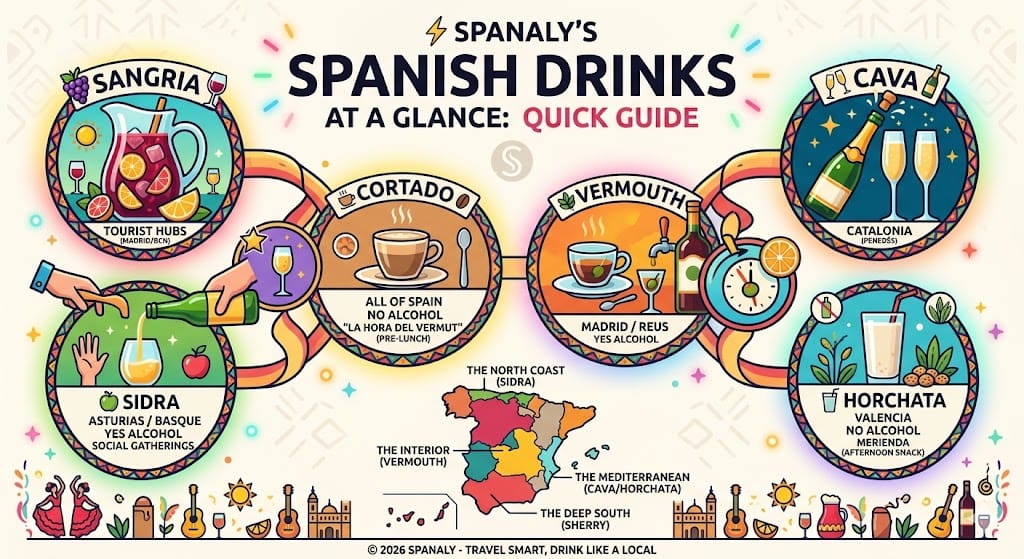
Spanish Drinks Guide aims to simplify the vast landscape of local beverages into a single, easy-to-read reference. Specifically, you will find that the drinking culture varies significantly between the sun-drenched south and the lush, green north. Consequently, knowing the “where” and “when” is just as important as knowing the “what.”
📋 Essential Drinks Cheat Sheet
| Drink Name | Main Region | Alcoholic? | Best Time to Drink |
|---|---|---|---|
| 🍷 Sangria | Tourist hubs (Madrid/BCN) | Yes | Lunch / Warm Afternoons |
| 🥂 Cava | Catalonia (Penedès) | Yes | Celebrations / Dinner |
| 🍏 Sidra | Asturias / Basque | Yes | Social Gatherings |
| 🌿 Vermouth | Madrid / Reus | Yes | “La Hora del Vermut” (Pre-lunch) |
| 🥤 Horchata | Valencia | No | Merienda (Afternoon Snack) |
| ☕ Cortado | All of Spain | No | Breakfast / Post-meal |
🗺️ Regional Flavor Map
The Mediterranean: Focuses on refreshing Horchata and sparkling Cava or sweet Mistela.
The North Coast: Famous for naturally fermented Sidra and crisp, white Txakoli.
The Interior: Deeply rooted in the “Vermouth culture” and robust red Rioja wines.
The Deep South: Home to Sherry (Jerez) and the festive, minty Rebujito.
💡 Spanaly Insight
We always recommend ordering “Vino de la casa” (House Wine) or “Vermut de grifo” (Vermouth on tap). These options are usually local, exceptionally fresh, and significantly cheaper than bottled premium brands.
🍹 The Icons: Most Famous Spanish Alcoholic Drinks
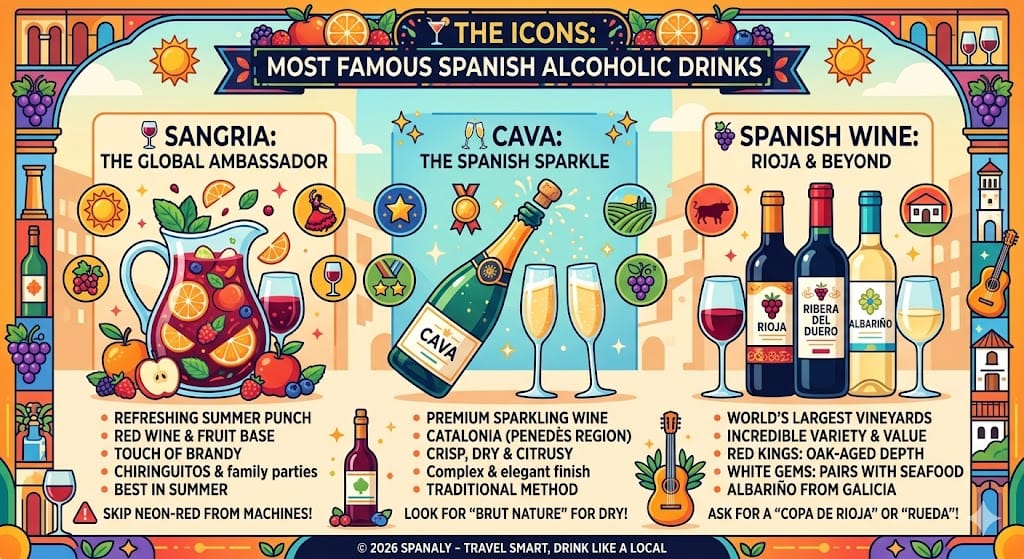
Spanish Drinks Guide is your key to discovering the beverages that define the Mediterranean soul. However, the secret to drinking like a local is knowing the difference between tourist mixtures and authentic serves. Specifically, many visitors find that traditional recipes often differ from what they see on beachfront menus.
🍷 Sangria: The Global Ambassador
Sangria is undoubtedly the most requested drink in Spain, yet locals rarely order it in fancy city restaurants. In fact, it is traditionally a refreshing punch made for summer gatherings and family parties.
The Secret: Authentic Sangria uses a decent red wine base, fresh chopped fruit, and a touch of brandy.
Where to Drink: Enjoy it at “Chiringuitos” (beach bars) or authentic local Taverns away from the main squares.
Spanaly Tip: If the Sangria looks neon-red and comes from a machine, skip it for a Tinto de Verano.
🥂 Cava: The Spanish Sparkle
Often compared to Champagne, Cava is Spain’s premium sparkling wine, produced primarily in the Catalonia region. Specifically, the Penedès area creates these bubbles using the “Traditional Method” for a complex and elegant finish.
Flavor Profile: Expect crisp, dry, and citrusy notes that pair perfectly with salty appetizers.
Expert Tip: Look for “Brut Nature” if you prefer a very dry, sugar-free sparkling experience.
🍇 Spanish Wine: Rioja & Beyond
Spain has more vineyard acreage than any other country, offering an incredible variety of world-class reds and whites. Consequently, you can find exceptional quality at surprisingly affordable prices in every local bar.
Red Kings: Rioja and Ribera are the global standards for oak-aged depth and berry aromas.
White Gems: Don’t miss Albariño from Galicia, the ultimate partner for the fresh ingredients found in the Traditional Spanish Food Guide.
💡 Spanaly Insight
When ordering wine, don’t just say “Vino.” Ask for a Copa de Rioja (Red) or Copa de Rueda (White). This simple change shows you know your stuff and often gets you the better “house” selection.
🌿 The Locals' Secret: Vermouth & Txakoli Culture
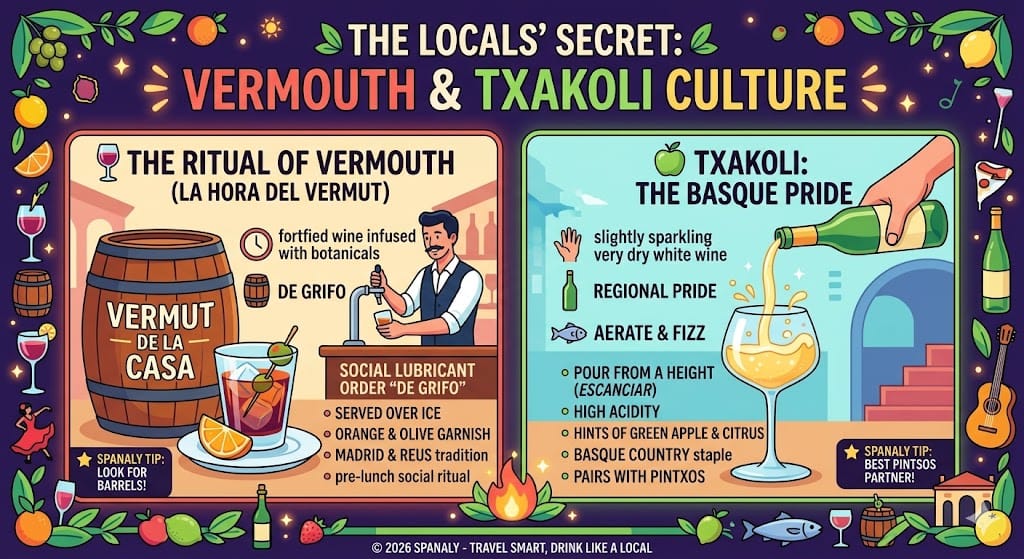
Spanish Drinks Guide wouldn’t be complete without mentioning the true local favorites that often escape the average tourist radar. While Sangria gets the fame, these drinks hold the true cultural heart of Spain’s social life. Specifically, you will find that these beverages are deeply tied to specific times of the day and regional identities.
🍷 The Ritual of Vermouth (La Hora del Vermut)
In cities like Madrid and Reus, “the hour of Vermouth” is a sacred pre-lunch tradition. This fortified wine, infused with botanicals, is the ultimate social lubricant and the perfect companion for salty snacks.
The Serve: Always ordered “de grifo” (on tap), served over ice with an orange slice and a green olive.
The Experience: It is a must-try activity in our Ultimate Madrid Travel Guide, where historic Tabernas have served it for over a century.
Pairing: Its bitter-sweet profile cuts perfectly through the richness of canned seafood or spicy olives.
🍏 Txakoli: The Basque Pride
Travel to the north, and you will find Txakoli, a slightly sparkling, very dry white wine that is a source of immense regional pride. Specifically, the ritual of pouring it is as important as the taste itself.
The Pour: Bartenders pour it from a height to aerate the wine and create a natural, temporary fizz.
Where to Find It: It is a staple in the Basque Country and a highlight for those following our Ultimate Barcelona Travel Guide who seek out specialized northern wine bars.
Flavor Profile: Expect a high acidity with hints of green apple and citrus, making it the perfect partner for Pintxos.
💡 Spanaly Insight
When visiting a traditional Vermutería, always look for the barrels behind the bar. Ordering “Vermut de la casa” ensures you are getting a local blend rather than a commercial bottled brand, offering a much more authentic and robust flavor profile.
🍏 The Northern Ritual: Sidra Natural (Asturian Cider)
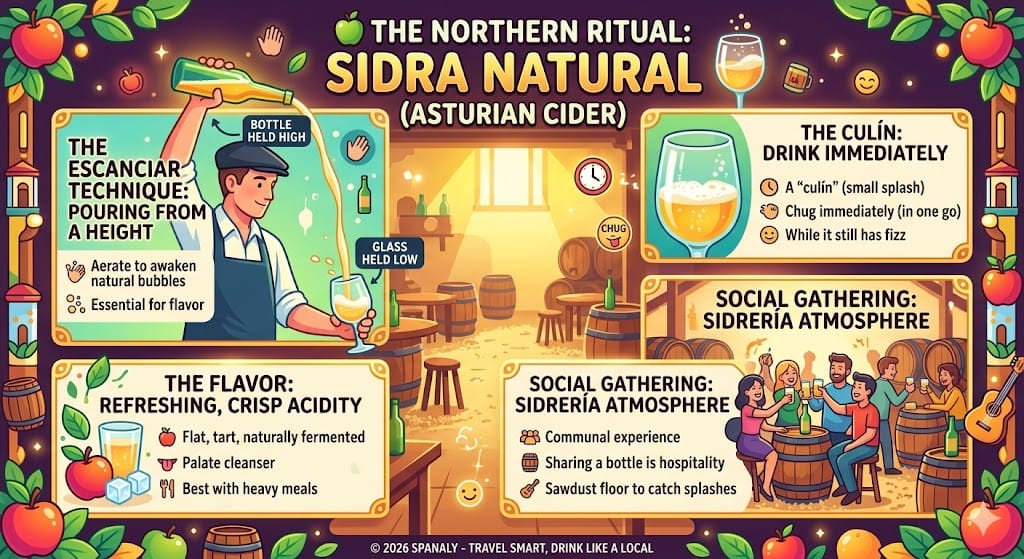
Spanish Drinks Guide wouldn’t be complete without the theatrical experience of northern Spain’s natural cider. Unlike the sweet, carbonated ciders found elsewhere, Spanish Sidra is flat, tart, and traditionally fermented. Specifically, the ritual of Escanciar (pouring from a height) is essential to aerate the liquid and awaken its natural bubbles.
The Escanciar Technique: The “Escanciador” holds the bottle high above their head while the glass stays low.
The Culín: Locals only pour a small splash, called a “Culín,” which must be drunk immediately in one go.
The Flavor: Expect a refreshing, crisp acidity that acts as a palate cleanser between heavy meals.
Social Gathering: It is the soul of celebrations, often featured in our Major Spanish Festivals Guide across Asturias and the Basque Country.
Consequently, visiting a traditional “Sidrería” (Cider House) is a sensory adventure involving sound, sight, and taste. Specifically, you will notice sawdust on the floors to soak up the inevitable splashes from the high-pour technique. Furthermore, this tradition fosters a communal atmosphere where sharing a bottle is a sign of true northern hospitality.
💡 Spanaly Insight
Never pour your own Sidra if there is a professional “Escanciador” nearby. Also, remember to leave the last few drops in the glass and toss them onto the sawdust floor—this is a traditional way to “clean” the glass for the next round.
☕ The Coffee Dictionary: How to Order Like a Spaniard
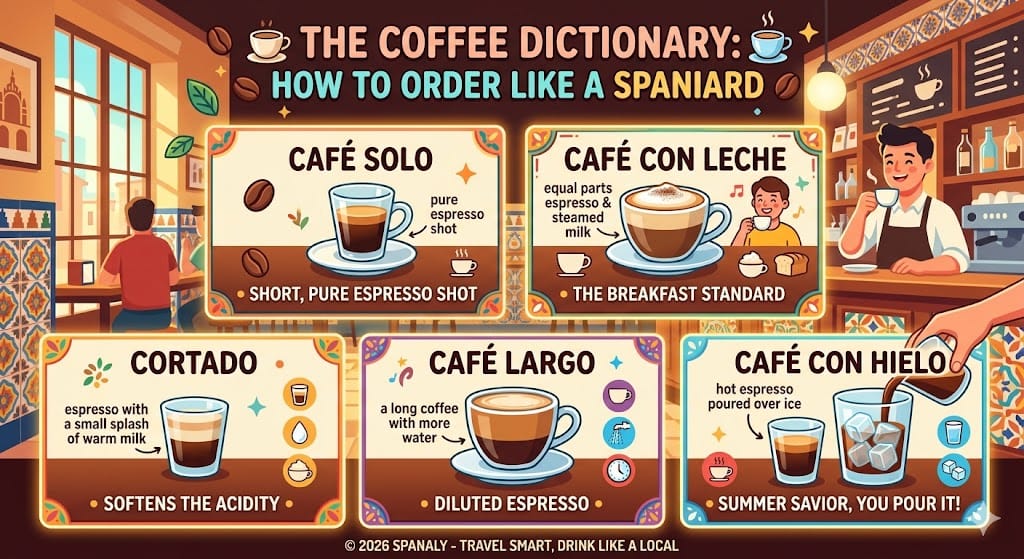
Spanish Drinks Guide highlights that coffee in Spain is not just a morning fix; it is a fundamental pillar of the daily social rhythm. Consequently, walking into a busy bar and ordering a simple “coffee” might lead to a confused look from the waiter. Specifically, you need to know the precise names for the milk-to-espresso ratios to get your perfect cup.
Café Solo: A short, powerful shot of pure espresso served in a small glass or cup.
Café con Leche: The gold standard of Spanish breakfasts, consisting of equal parts espresso and steamed milk.
Cortado: An espresso “cut” with just a small splash of warm milk to soften the acidity.
Café Largo: A “long” coffee where more water is allowed to pass through the espresso grounds.
Café con Hielo: A summer savior where you receive a hot espresso and a separate glass of large ice cubes.
Furthermore, if you are exploring the capital using our Ultimate Madrid Travel Guide, you will notice locals enjoying their coffee slowly at outdoor terraces. Specifically, the “Café con Hielo” ritual involves pouring the hot coffee over the ice yourself—a skill every traveler should master. Moreover, this caffeine culture is the perfect energy boost before diving into the Best Things to Do in Madrid.
💡 Spanaly Insight
In most traditional Spanish bars, the coffee served is often a “Mezcla” (a blend of natural and sugar-roasted beans). If you prefer a smoother, more modern taste, look for specialty coffee shops that specify “100% Arábica” or “Tueste Natural.”
🥤 Refreshment Without Alcohol: Beyond the Vine
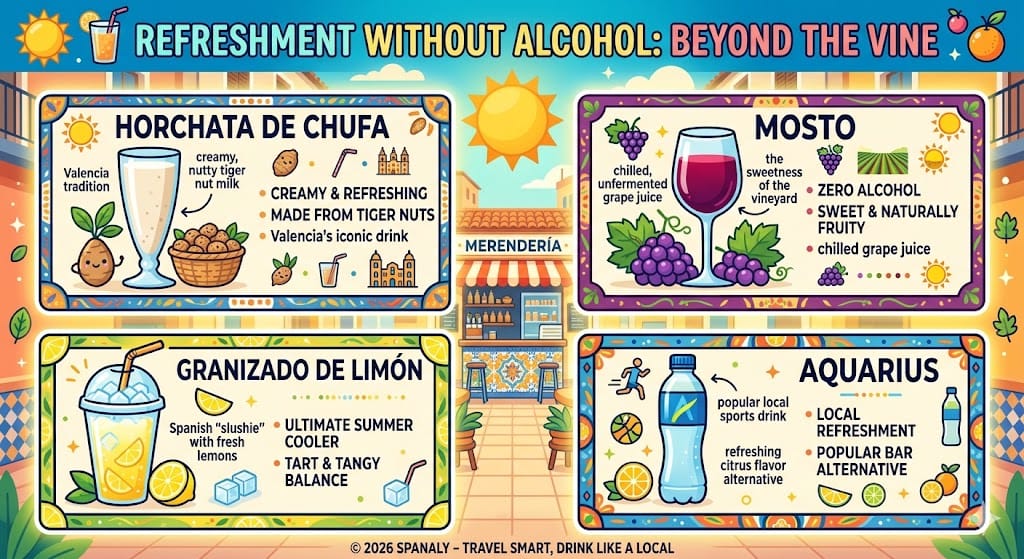
Spanish Drinks Guide also celebrates the refreshing non-alcoholic options that keep locals hydrated during the Mediterranean heat. These traditional drinks are often craft-made and deeply rooted in specific agricultural regions like Valencia and Andalusia. Specifically, you will find that these beverages offer a sophisticated alternative for those seeking local flavor without the alcohol.
Horchata de Chufa: A creamy, nutty milk made from tiger nuts, originally from the Valencia region.
Mosto: A chilled, unfermented grape juice that provides the sweetness of the vineyard with zero alcohol content.
Granizado de Limón: The ultimate Spanish “slushie,” made with fresh lemons, water, and just enough sugar to balance the tartness.
Aquarius: A popular local sports drink often ordered in bars as a refreshing, citrus-flavored soda alternative.
Consequently, enjoying a “Merienda” (afternoon snack) with a cold Horchata is a quintessential Spanish experience. Specifically, if you are following our Valencia 3-Day Itinerary, visiting a traditional “Horchatería” is an absolute must. Moreover, these drinks are the perfect way to stay cool while exploring Spain’s outdoor attractions during the warmer months.
💡 Spanaly Insight
When ordering Horchata, always check if the establishment makes it “Artesana” (artisanal). Mass-produced versions are often overly sweet, whereas the fresh version has a distinct, earthy nuttiness that is much more authentic.
🥃 The After-Dinner Tradition: Licores & Digestives
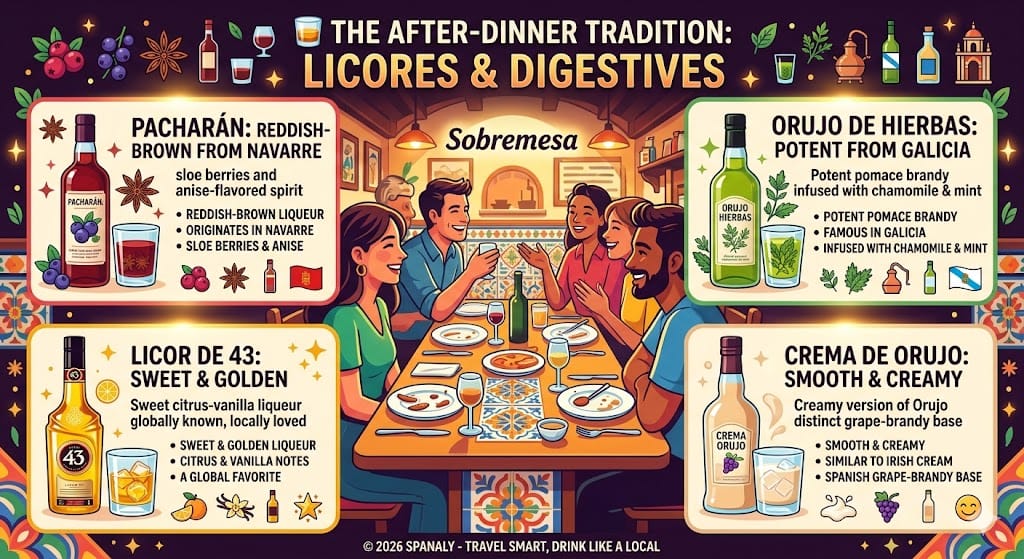
Spanish Drinks Guide wouldn’t be complete without explaining the concept of Sobremesa. Specifically, this is the cherished Spanish tradition of staying at the table long after the meal has ended to talk and socialize. Furthermore, this ritual is almost always accompanied by a “Chupito” (a small shot) of a traditional digestive liqueur.
Pacharán: A reddish-brown liqueur from Navarre, made by soaking sloe berries in anise-flavored spirit.
Orujo de Hierbas: A potent pomace brandy from Galicia, infused with various herbs like chamomile and mint.
Licor de Cuarenta y Tres (43): A sweet, golden citrus-vanilla liqueur that is famous globally but loved locally.
Crema de Orujo: A smooth, creamy version of Orujo, similar to Irish cream but with a distinct Spanish grape-brandy base.
Consequently, these liqueurs are designed to aid digestion after a heavy meal of Traditional Spanish Food. Specifically, if you are dining in the north, following our Bilbao to San Sebastian Itinerary, you will likely be offered a house-made Orujo. Moreover, many traditional restaurants still offer these “Chupitos” as a complimentary gesture (invitación) at the end of the night.
💡 Spanaly Insight
When offered a digestive, you can choose “con hielo” (with ice) or “frío de la nevera” (chilled from the fridge). If the Orujo is served in a bottle with no label, it’s likely “Casero” (homemade)—proceed with caution as these versions are often significantly stronger!
🗺️ Regional Specialties: A Liquid Map of Spain
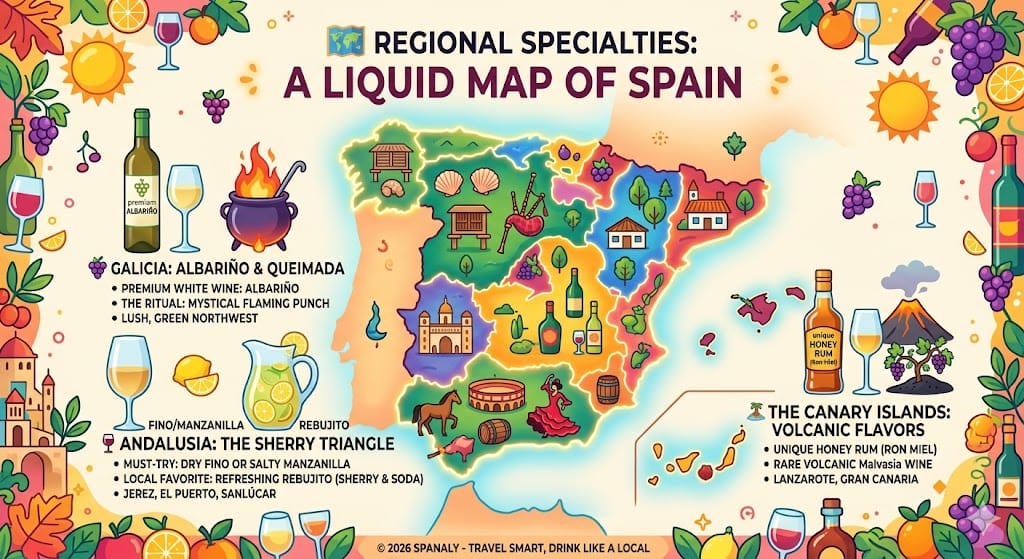
Spanish Drinks Guide takes you beyond the basics to explore Spain’s regional treasures. Specifically, Spain’s diverse geography means local drinks differ vastly from north to south. Consequently, understanding these specialties is the key to traveling like a true connoisseur.
🍷 Andalusia: The Sherry Triangle
The cities of Jerez, El Puerto, and Sanlúcar form the world-famous Sherry Triangle.
Must-Try: Order a dry Fino or a salty Manzanilla to pair with fresh seafood.
Local Favorite: Try the refreshing Rebujito (Sherry and lemon-lime soda) during any Spanish Festivals.
Seville Tip: Discover these unique flavors while exploring our Seville Travel Guide.
🍇 Galicia: Albariño & Queimada
The lush northwest is home to premium Albariño white wine, known for its floral notes.
The Ritual: Don’t miss the Queimada, a mystical flaming punch made of Orujo and sugar.
The Goal: This ancient ritual is traditionally performed to ward off evil spirits.
Pairing: Albariño is the undisputed soul of the Traditional Spanish Food Guide.
🏝️ The Canary Islands: Volcanic Flavors
Following our Gran Canaria Travel Guide? Specifically, look for the unique Honey Rum (Ron Miel).
Volcanic Wine: Lanzarote produces rare Malvasia wines with a distinct, smoky mineral finish.
Unique Soil: These grapes grow in volcanic ash, creating flavors unlike anything else in Spain.
💡 Spanaly Insight
Visit “Tabancos” in Jerez to buy Sherry directly from the barrel. Specifically, ask for a Palo Cortado for a rare, complex experience between dry and rich.
🍱 Perfect Pairings: What to Drink with Your Food
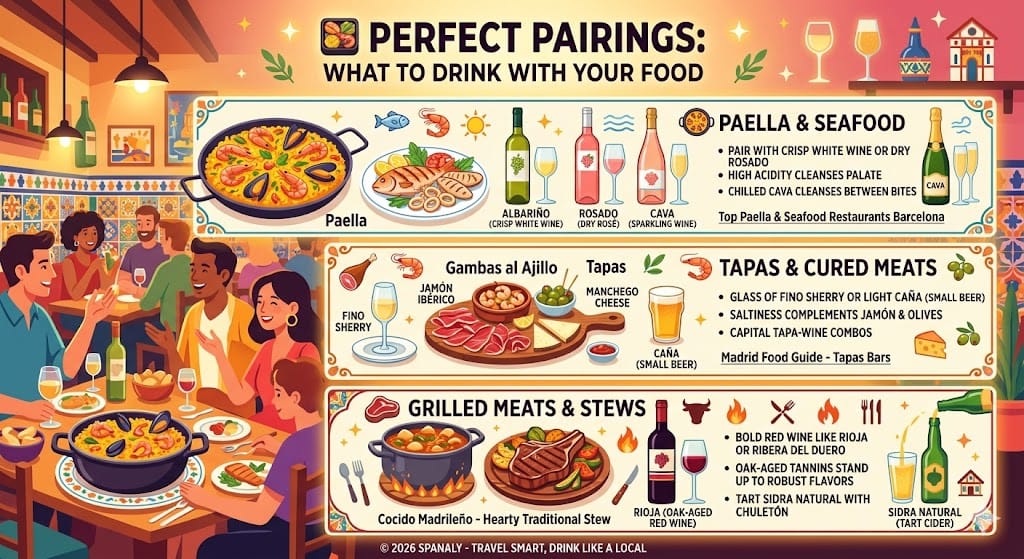
Spanish Drinks Guide aims to elevate your dining experience by matching the right glass with the right plate. Specifically, the Mediterranean diet relies on acidity and freshness to balance rich, savory flavors. Consequently, choosing a local beverage that complements your meal is the secret to an authentic culinary journey.
🥘 Paella & Seafood
Pairing your rice with the right liquid is essential for a balanced meal.
The Match: A crisp, cold White Wine like Albariño or a dry Rosado (Rosé).
Why it Works: The high acidity cuts through the richness of the saffron and seafood.
Alternative: Try a chilled Cava to cleanse the palate between every delicious bite.
Explore More: Discover these pairings in our Top Paella & Seafood Restaurants Barcelona.
🍤 Tapas & Cured Meats
Tapas culture requires versatile drinks that can handle a variety of intense flavors.
The Match: A glass of Fino Sherry or a light Caña (small beer).
Why it Works: The saltiness of Fino perfectly complements Jamón Ibérico and salty olives.
Local Choice: In the capital, follow our Madrid Food Guide to find the best wine-and-tapas combos.
🥩 Grilled Meats & Stews
Heavy Spanish stews and grilled meats demand a drink with structure and depth.
The Match: A bold red wine like Rioja or Ribera del Duero.
Why it Works: Oak-aged tannins stand up to the robust flavors of a Cocido Madrileño.
Basque Choice: In the north, a tart Sidra Natural is the traditional partner for a massive T-bone steak (Chuletón).
💡 Spanaly Insight
When eating fried fish (Pescaito Frito) in the south, skip the red wine. Specifically, a very cold Manzanilla Sherry is the local “gold standard” because its saline notes enhance the fresh taste of the sea.
🕒 The Spanish Drinking Clock: Aperitivo to Nightlife
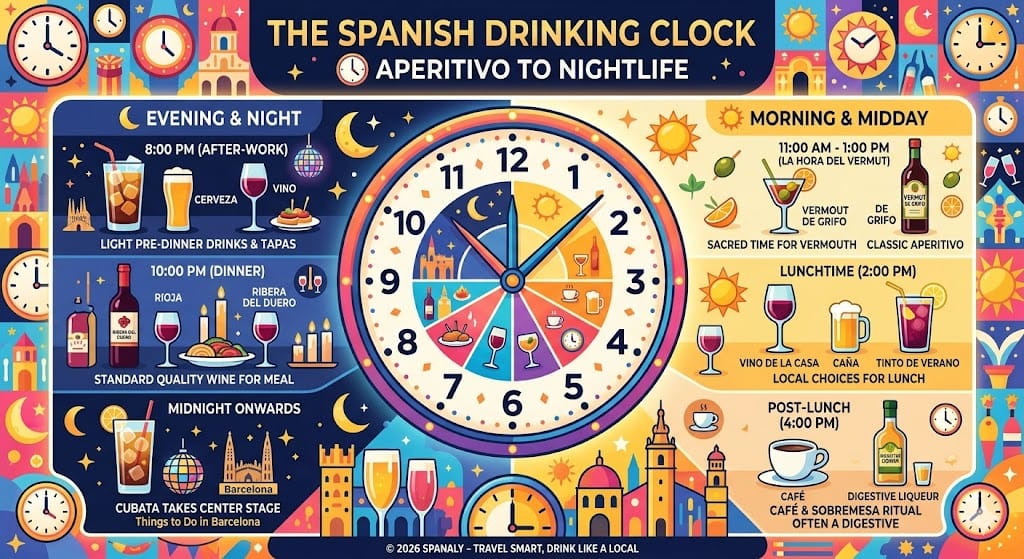
Spanish Drinks Guide emphasizes that “what” you drink is often dictated by “when” you drink it. Specifically, Spain follows a unique social schedule where specific beverages mark the transition between different parts of the day. Consequently, knowing the local clock will help you blend in and avoid ordering a heavy drink at the wrong hour.
☀️ The Morning & Midday
Spanish mornings start slow, but the transition to lunch is a dedicated social ritual.
11:00 AM – 1:00 PM (La Hora del Vermut): This is the sacred time for Vermouth. Specifically, it is the classic “Aperitivo” to open the appetite before a late lunch.
Lunchtime (14:00 PM): Locals typically choose Vino de la Casa (house wine), Caña (small beer), or a refreshing Tinto de Verano.
Post-Lunch (16:00 PM): The time for Café and the Sobremesa ritual, often accompanied by a digestive liqueur.
🌙 The Evening & Night
As the sun sets, the drinking culture shifts from refreshment to celebration.
8:00 PM (After-Work): This is for a light Cerveza or Vino while enjoying a pre-dinner tapa.
10:00 PM (Dinner): A bottle of quality Rioja or Ribera del Duero is the standard for a sit-down meal.
Midnight onwards: If you are exploring the Best Things to Do in Barcelona at night, the “Cubata” (spirit and mixer) takes center stage.
💡 Spanaly Insight
Never order a “Sangria” during the morning Vermouth hour; it’s a clear sign of a tourist. Specifically, locals stick to Vermut de Grifo (tap vermouth) with an olive and a slice of orange to respect the traditional clock.
🗣️ Ordering Like a Local: Essential Vocabulary
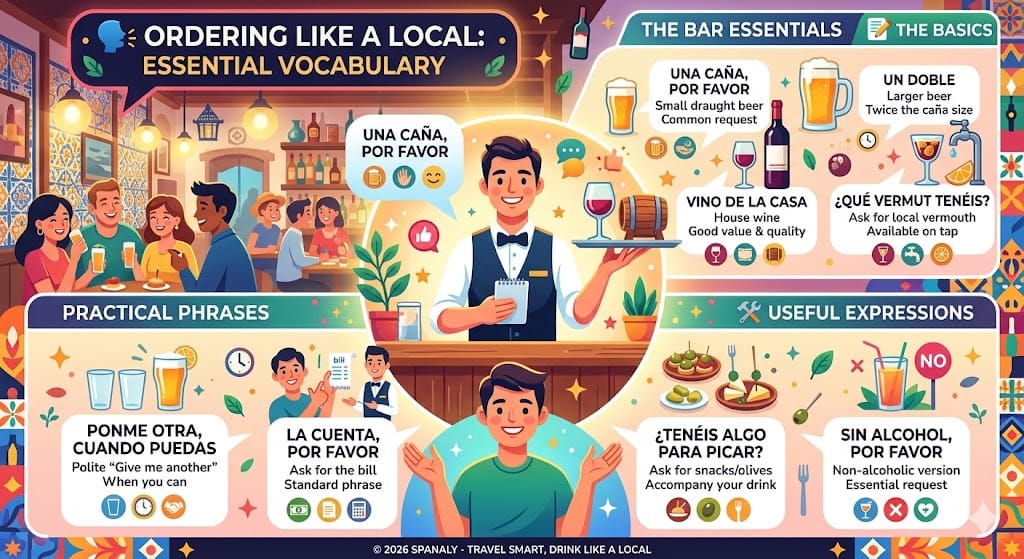
Spanish Drinks Guide is not just about what to drink, but how to ask for it. Specifically, Spanish bar service is incredibly fast-paced. Knowing these short, punchy terms will help you get served much quicker. Consequently, mastering this “secret” vocabulary will instantly elevate you from a tourist to a savvy traveler.
📝 The Bar Essentials
“Una caña, por favor”: The most common way to order a small, cold draught beer.
“Un doble”: A larger glass of beer, usually double the size of a caña.
“Vino de la casa”: Asking for the house wine often provides the best value and quality.
“¿Qué vermut tenéis?”: A smart way to ask which local vermouths are available on tap.
🛠️ Practical Phrases
“Ponme otra, cuando puedas”: A polite, local way to say “Give me another one when you can.”
“La cuenta, por favor”: The standard, clear phrase to ask for the bill.
“¿Tenéis algo para picار?”: A key question to ask for small snacks or olives.
“Sin alcohol, por favor”: Essential for requesting the non-alcoholic version of any beverage.
Furthermore, knowing how to interact with the waiter goes beyond just beverages. Specifically, we highly recommend checking our guide on How to Order Food Like a Local in Spain to master ordering tapas and meals. Moreover, being direct and using short phrases is considered efficient rather than rude in busy Spanish taverns.
💡 Spanaly Insight
Avoid using “Yo quiero” (I want). Instead, use “Ponme…” (Put me/Give me) or “Me pones…”. It sounds much more natural and local. Also, don’t forget to say “Gracias” with a smile—it goes a long way in a crowded bar!
🛑 Expert Advice: Avoiding Tourist Traps & Overpriced Drinks
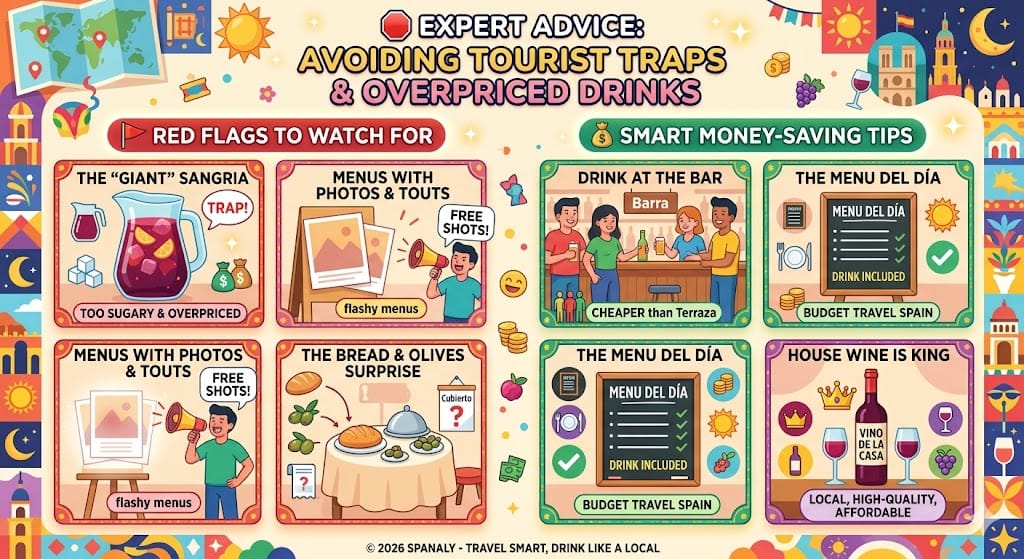
Spanish Drinks Guide aims to ensure you get the best quality without the “tourist tax.” Specifically, many establishments in high-traffic areas rely on flashy menus rather than authentic flavors. Consequently, learning to spot these red flags will save you money and protect your palate from mediocre beverages.
🚩 The Red Flags to Watch For
The “Giant” Sangria: If you see massive plastic pitchers of Sangria on every table, it’s likely a trap. Specifically, these are often pre-mixed, overly sugary, and overpriced.
Menus with Photos: Authentic local bars rarely use large, faded photos of drinks on their outdoor signage. Furthermore, avoid places where “touts” try to pull you inside with “free shots” offers.
The Bread & Olives Surprise: Some places place drinks and snacks on your table without you asking. Specifically, always check if these carry a “Cubierto” or service charge to avoid surprises on the bill.
💰 Smart Money-Saving Tips
Drink at the Bar: In many traditional cities, drinking at the “Barra” (bar counter) is cheaper than sitting at a “Terraza” (outdoor table).
The Menu del Día: Always check if your lunch menu includes a drink. Specifically, most Budget Travel Spain strategies rely on these all-inclusive deals.
House Wine is King: Don’t be afraid to order “Vino de la Casa.” It is usually a local, high-quality wine served at a fraction of the price of branded bottles.
💡 Spanaly Insight
If you are in a major plaza and see a “Service Charge” for sitting outside, walk just two blocks into the side streets. Specifically, you will often find a local “Taberna” where the same drink costs 30% to 50% less and comes with a better atmosphere.
📊 Quick Comparison: Choosing Your Perfect Drink
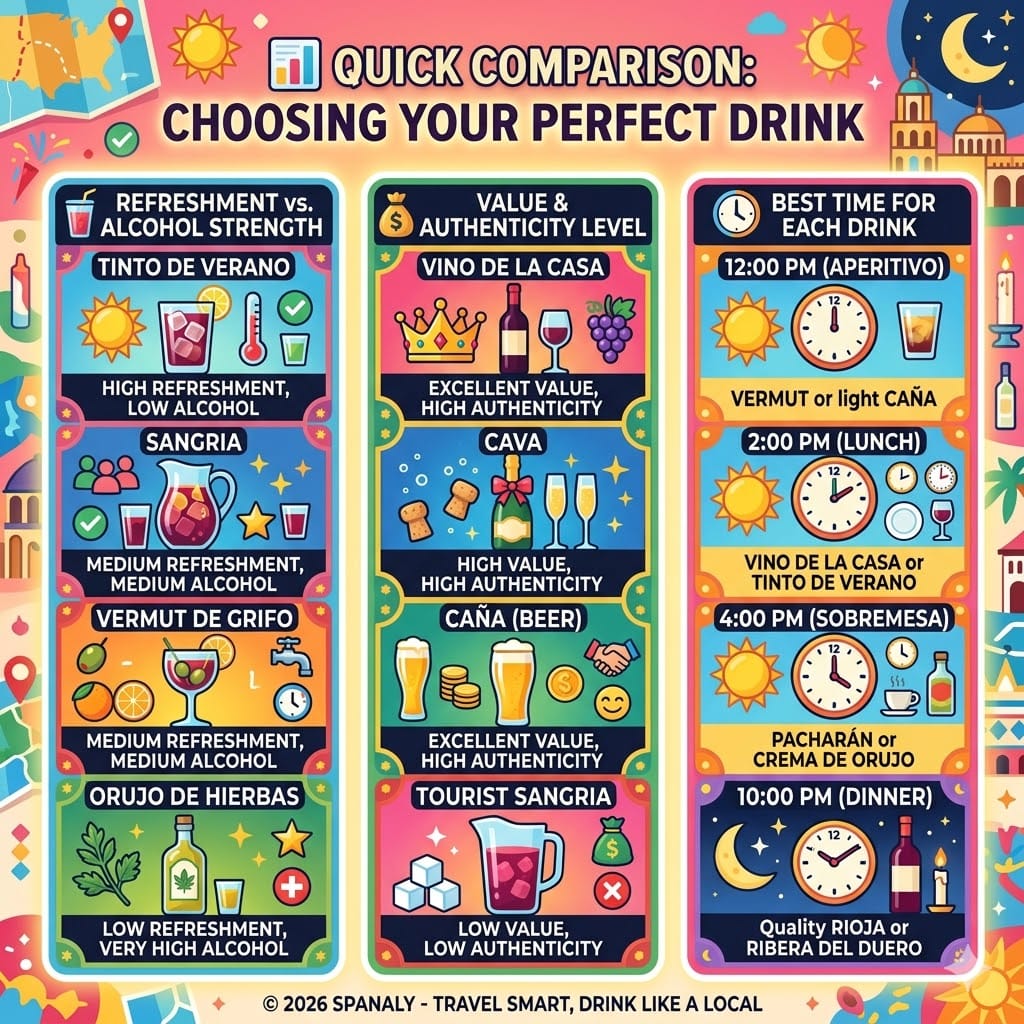
Spanish Drinks Guide provides this fast-reference comparison to help you choose based on the occasion. Specifically, whether you want something refreshing, strong, or traditional, this breakdown ensures you order exactly what you need. Consequently, you can avoid the confusion of a long beverage menu.
🥤 Refreshment vs. Alcohol Strength
Tinto de Verano: High refreshment, low alcohol. Specifically, it is the best choice for a hot sunny afternoon.
Sangria: Medium refreshment, medium alcohol. Ideally, it is a social drink for sharing with groups.
Vermut de Grifo: Medium refreshment, medium alcohol. Specifically, it is the undisputed king of the midday aperitivo.
Orujo de Hierbas: Low refreshment, very high alcohol. Consequently, it is strictly for post-dinner digestion.
💰 Value & Authenticity Level
Vino de la Casa: Excellent value, high authenticity. Specifically, it is the local’s secret for quality at a low price.
Cava: High value, high authenticity. Specifically, it is the perfect affordable alternative to Champagne.
Caña (Beer): Excellent value, high authenticity. It is the cheapest and most common way to enjoy a cold drink.
Tourist Sangria: Low value, low authenticity. Specifically, it is often overpriced and prepared for tourists.
🕒 Best Time for Each Drink
12:00 PM: Vermut or a light Caña.
2:00 PM (Lunch): Vino de la Casa or Tinto de Verano.
4:00 PM (Sobremesa): Pacharán or Crema de Orujo.
10:00 PM (Dinner): Quality Rioja or Ribera del Duero.
💡 Spanaly Insight
If you are on a budget, always look for the “Vino del Mes” (Wine of the Month) or “Vino de la Casa.” Specifically, most Budget Travel Spain experts recommend these because restaurants take pride in selecting a house wine that reflects their quality.
💡 Spanaly Pro Tips: Mastering the Spanish Bar Scene
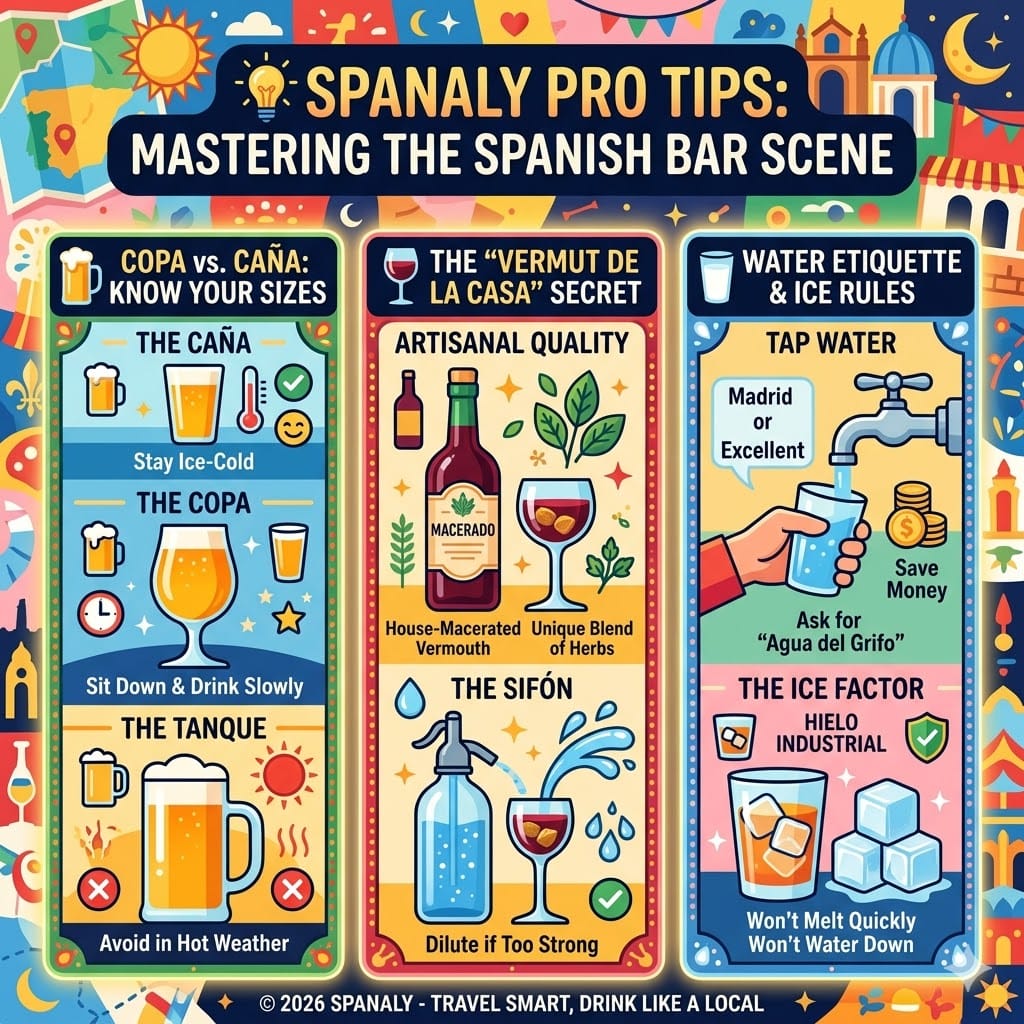
Spanish Drinks Guide concludes with these expert-level insights that distinguish a savvy traveler from a first-time tourist. Specifically, these nuances in ordering and etiquette will ensure you get better service and higher quality. Consequently, following these tips will help you navigate even the most crowded Spanish “Tabernas” with ease.
🍺 Copa vs. Caña: Know Your Sizes
When ordering beer, size matters for temperature and price.
The Caña: The standard small glass. Specifically, order this if you want your beer to stay ice-cold until the last sip.
The Copa: A larger, stemmed glass. Generally, locals only order this if they plan to sit down and drink more slowly.
The Tanque: A large mug or pint. Specifically, avoid this in hot weather as the beer will get warm before you finish it.
🍷 The “Vermut de la Casa” Secret
Don’t just ask for a “Vermouth”; be specific about the preparation.
Artisanal Quality: Many bars have their own “Macerado” (house-macerated) vermouth. Specifically, ask for “Vermut de la casa” to taste a unique blend of local herbs.
The Sifón: If the vermouth is too strong, ask for a Sifón (carbonated water) to dilute it. Moreover, this is the traditional way to enjoy a long midday aperitivo sessions.
🥛 Water Etiquette & Ice Rules
Tap Water: In most Spanish cities (especially Madrid), tap water is excellent. Specifically, ask for “Un vaso de agua del grifo” instead of bottled water to save money.
The Ice Factor: If you order a “Combinado” (spirit and mixer), the quality of the ice matters. Specifically, high-end bars use “Hielo Industrial” (large, crystal-clear cubes) that won’t melt quickly and water down your drink.
💡 Spanaly Insight
If you see a plate of olives or chips on the bar, they are usually a “detallito” (small gift) with your drink. Specifically, don’t ask for them—if the bar provides free tapas, they will appear automatically. Moreover, if you are in Granada or Almería, a substantial free tapa is guaranteed with every single drink you order!
🍷 Visitor FAQs – Spanish Drinks & Social Etiquette Guide
🍹 Can I drink alcohol on the streets in Spain (Botellón)?
🍺 What is the difference between "Clara" and "Shandy"?
🍷 Is it rude to ask for ice in my red wine?
💳 Do I need to carry cash for drinks at traditional taverns?
🍼 Are there traditional non-alcoholic drinks for children?
Latest Spanish Drinks Guide by Spanaly.com
Spanish Drinks Guide comes to an end, but your journey is just beginning. Specifically, Spain’s drinking culture is about more than just the liquid in the glass. It is about the social bond, the slow pace, and the joy of shared moments. Consequently, following these local traditions will transform your trip into a truly authentic experience.
🌟 Experience the Soul: Don’t just drink; embrace the Sobremesa and the Aperitivo rituals.
📍 Stay Local: Venture away from the main plazas to find the most authentic “Tabernas”.
🍷 Taste the Diversity: From Sherry in the south to Sidra in the north, explore every regional flavor.
💸 Budget Smart: Remember that drinking at the bar and ordering house wine saves you money.
Furthermore, being prepared for the practical side of your trip is just as important as knowing what to order. Specifically, we recommend reading our Money in Spain Guide to learn about tipping etiquette, cash vs. card use, and managing your travel budget like a pro.
💡 Spanaly Insight
Raise your glass and say “¡Salud!” (Health) or “¡Chin-chin!”. Specifically, make sure to look the other person in the eye while clinking glasses—it is a Spanish tradition that ensures good luck for years to come!