🌊 Cala del Moraig
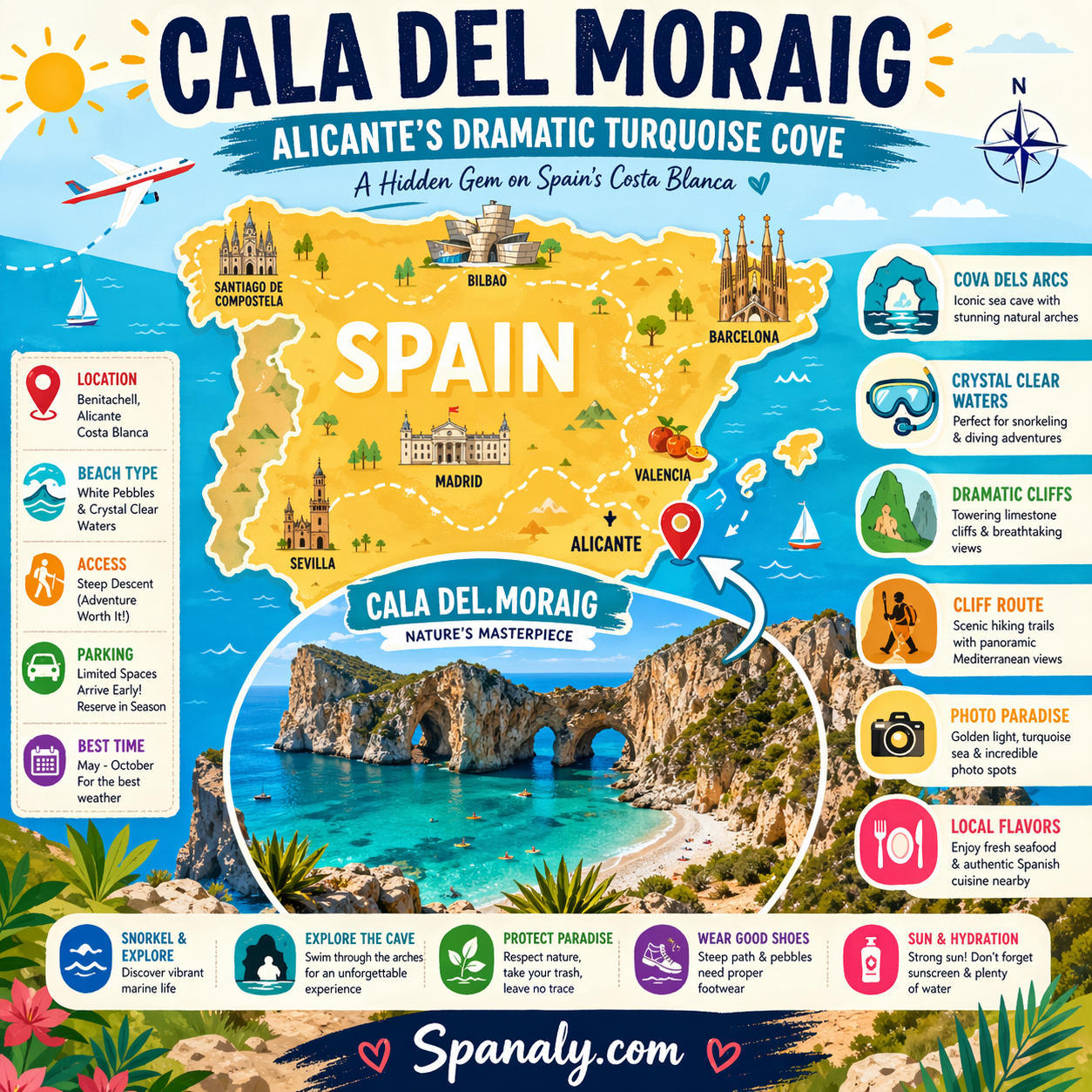
Think your brakes—or your legs—can handle a 20% asphalt incline? This is the reality of reaching Cala del Moraig, a rugged Mediterranean masterpiece hidden beneath the cliffs of Benitachell. Unlike the sandy stretches found in most best beaches in Spain guides, this is a wild, pebbled cove where the Earth meets the sea in a dramatic vertical embrace.
Why travelers fall in love with this spot:
The Iconic Sea Cave: Cova dels Arcs serves as a natural stone cathedral over the turquoise water.
Electric Blue Waters: The world-class clarity makes it a premier destination for snorkeling and diving.
Cliffside Scenery: Towering limestone walls provide a backdrop unlike any other in the Alicante province.
Pure Nature: It retains a raw, untouched spirit despite its popularity among coastal explorers.
While many people overlook the rugged charm of the Costa Blanca, reaching this paradise requires specific local know-how. You must navigate a steep descent and strictly follow seasonal parking rules to enjoy the view.
Is Cala del Moraig worth visiting? Yes — it is arguably the most photogenic cove in Alicante. Between the turquoise depths and the prehistoric arches of the Cova dels Arcs, the visual reward far outweighs the effort of the steep walk.
Table of Contents
Toggle📋 Quick Facts: Everything you need to know

Before you begin your descent to this Alicante gem, it is vital to understand the logistical “DNA” of the cove. Unlike the wide city stretches in our Playa del Postiguet guide, Cala del Moraig is a rugged, vertical environment. Respecting this natural setting requires careful preparation and local knowledge.
| Feature | Essential Detail |
|---|---|
| Best For | Snorkeling, Sea Caves, and Photography |
| Access | Very Steep Asphalt Walk (20% Incline) |
| Parking | Limited; Digital Reservation Often Required |
| Footwear | Water Shoes Mandatory (Sharp Pebbles) |
| Crowd Level | Extremely High in Summer; Quiet in Winter |
| Facilities | Basic Toilets and Seasonal Chiringuito |
Visiting this cove means trading easy accessibility for dramatic Mediterranean beauty. The high limestone cliffs act as a natural shield, keeping the turquoise water remarkably calm for swimming. However, you are entering a protected marine space where nature always comes first.
💡 Spanaly Insight Don’t underestimate the “mandatory” nature of water shoes here. The white pebbles are beautiful but can reach high temperatures and feel like walking on broken glass. A pair of sturdy, rubber-soled water shoes will transform your experience from painful to perfect.
🗺️ The Descent: How to reach the shore
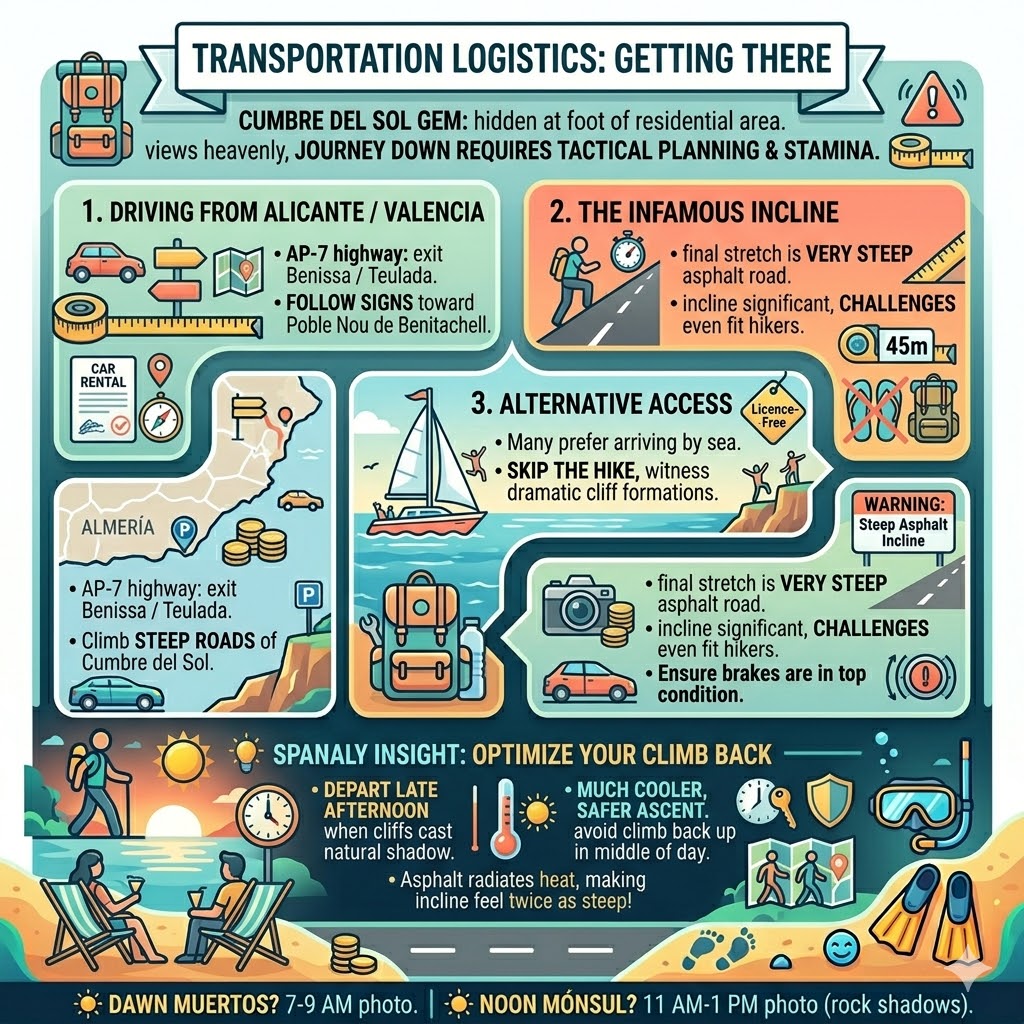
Reaching this coastal masterpiece is an adventure in itself, as the cove sits hidden at the foot of the Cumbre del Sol residential area. While the views from the top are heavenly, the physical journey down to the water requires tactical planning and a bit of stamina.
Driving from Alicante or Valencia: Take the AP-7 highway and exit at Benissa or Teulada. Follow the signs toward Poble Nou de Benitachell and then climb the steep roads of Cumbre del Sol.
The Infamous Incline: The final stretch to the shore is a very steep asphalt road. While paved, the incline is significant enough to challenge even fit hikers on their way back up.
Alternative Access: Many elite travelers prefer arriving by sea. This allows you to skip the hike and witness the dramatic cliff formations from the best possible perspective.
Navigating these vertical landscapes is a common theme when exploring hard to reach beaches in Spain. If you are driving, ensure your brakes are in top condition, as the descent is constant and sharp. For those without a vehicle, local shuttle buses sometimes operate during peak months, though they are not always guaranteed.
💡 Spanaly Insight Don’t attempt the climb back up in the middle of the day. The asphalt radiates heat, making the incline feel twice as steep. Instead, time your departure for the late afternoon when the cliffs cast a natural shadow over the road, providing a much cooler and safer “ascent” to your car.
🚗 Parking Guide: Where to leave your car

Finding a parking spot at Cala del Moraig is a strategic mission during warmer months. Because the cove sits at a cliff’s base, space is limited and strictly regulated by local authorities.
The Upper Lot: This primary area at the hill’s peak offers the most spaces but requires a long walk.
The Mid-Level Zone: This small area near the descent fills up almost instantly after sunrise.
Digital Reservations: Access rules change seasonally, often requiring a pre-booking app or a digital check-in.
Official Updates: Always verify current requirements on the official Benitachell City Council website before traveling.
If you are driving in Spain, avoid parking on road shoulders. Local police frequently issue fines or tow vehicles obstructing emergency access routes. Success depends on your arrival; reaching the lot after 09:30 AM usually means missing a “prime” spot.
💡 Spanaly Insight Look for designated spaces near the start of the “Ruta de los Acantilados” (Cliff Route) if the main lot is full. This “secret” area adds a few minutes of walking but offers a scenic path that saves you from parking frustration.
🏨 Places to Stay: Best areas nearby
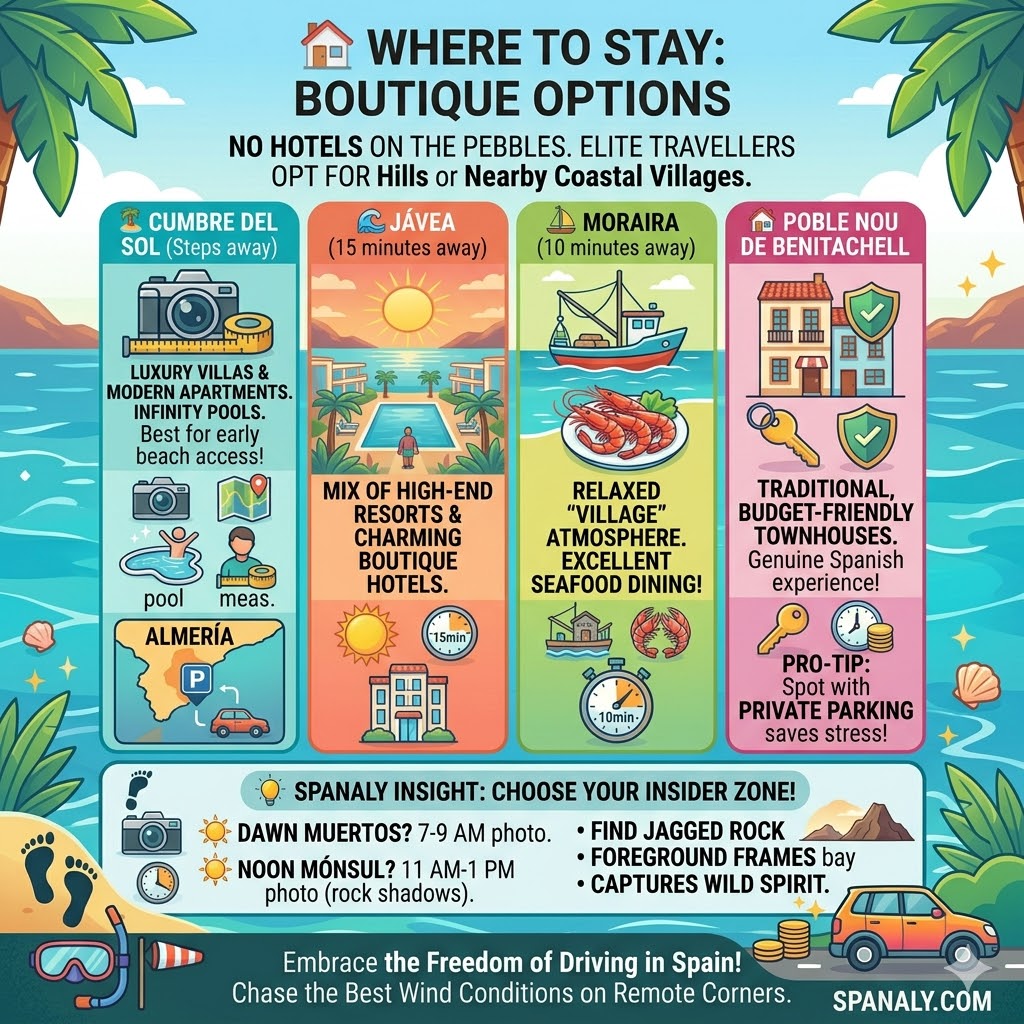
Choosing the right base is essential for a stress-free visit, as there are no hotels directly on the pebbles of Cala del Moraig. Most elite travelers opt for boutique stays in the surrounding hills or nearby coastal villages to balance natural seclusion with Mediterranean comfort.
Cumbre del Sol (Steps away): This residential area offers luxury villas and modern apartments with infinity pools overlooking the cove. It is the best choice if you want to be the first one at the beach in the morning.
Jávea (15 minutes away): A vibrant hub with a mix of high-end resorts and charming boutique hotels. Staying here allows you to easily visit other iconic spots like Cala Granadella.
Moraira (10 minutes away): This upscale fishing village is perfect for those seeking a more relaxed, “village” atmosphere with excellent seafood dining options.
Poble Nou de Benitachell: The local town offers more traditional, budget-friendly townhouses that provide a genuine Spanish living experience.
Finding the perfect accommodation in Spain often involves choosing between a sea view and town convenience. For Cala del Moraig, prioritizing a spot with private parking is a “pro-tip” that will save you significant stress during the summer months.
🎒 What to Pack: Essential gear for pebbles
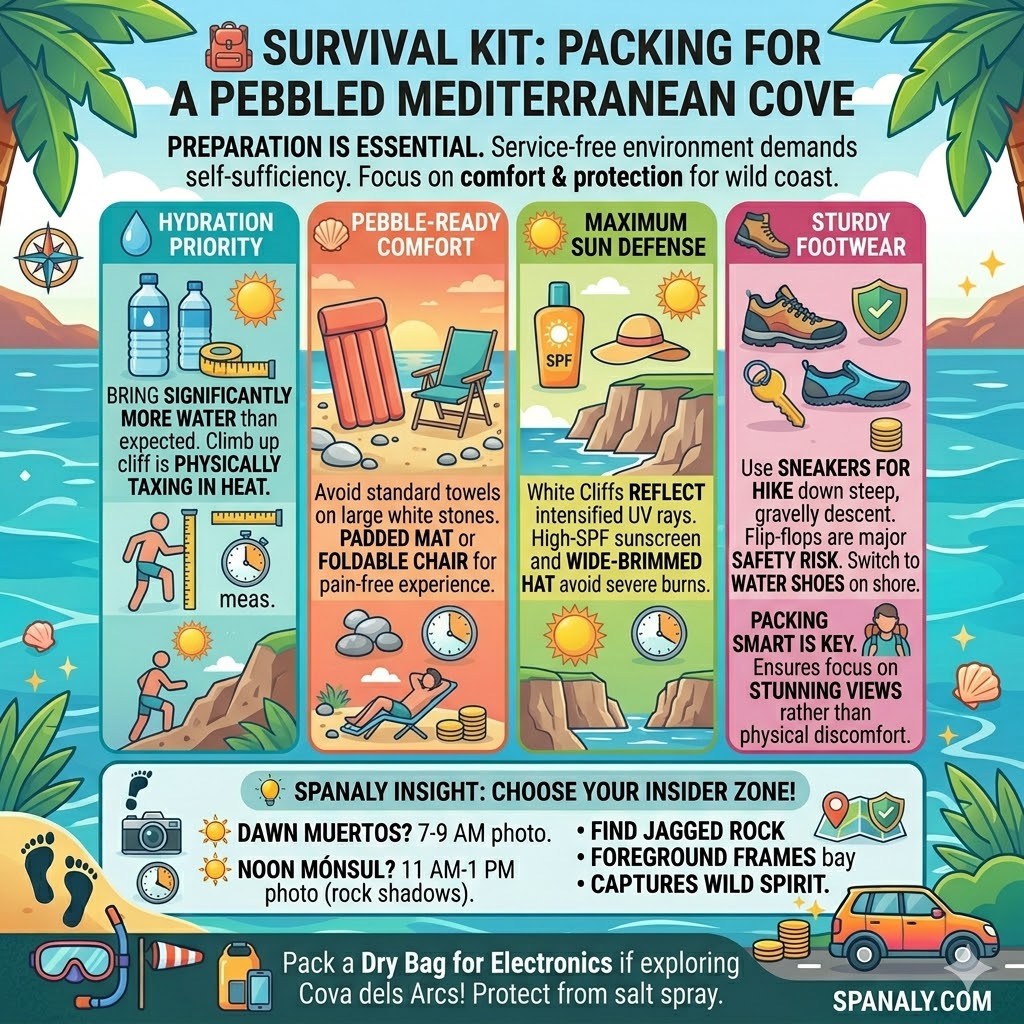
Preparation is essential for a day at Cala del Moraig, as the rugged terrain and service-free environment demand a higher level of self-sufficiency. Your packing strategy should focus on comfort for the steep hike and protection against the sharp limestone landscape.
Hydration Priority: Bring significantly more water than you expect to drink, as the climb back up the cliff is physically taxing in the heat.
Pebble-Ready Comfort: Standard beach towels offer zero protection against the large white stones; instead, bring a thick padded mat or a lightweight foldable chair for a pain-free experience.
Maximum Sun Defense: The white cliffs act as natural reflectors, intensifying the UV rays. Ensure you have high-SPF sunscreen and a wide-brimmed hat to avoid severe burns.
Sturdy Footwear: Flip-flops are a major safety risk on the steep, gravelly descent. Use sneakers for the hike and switch to water shoes once you reach the shore.
Packing smart is the key to enjoying this wild location without stress. Having the right gear is a core part of any what to pack for Spain checklist, especially when visiting coves that lack traditional commercial facilities. This ensures you remain focused on the stunning views rather than physical discomfort.
🌀 Cova dels Arcs: Tips for the perfect photo
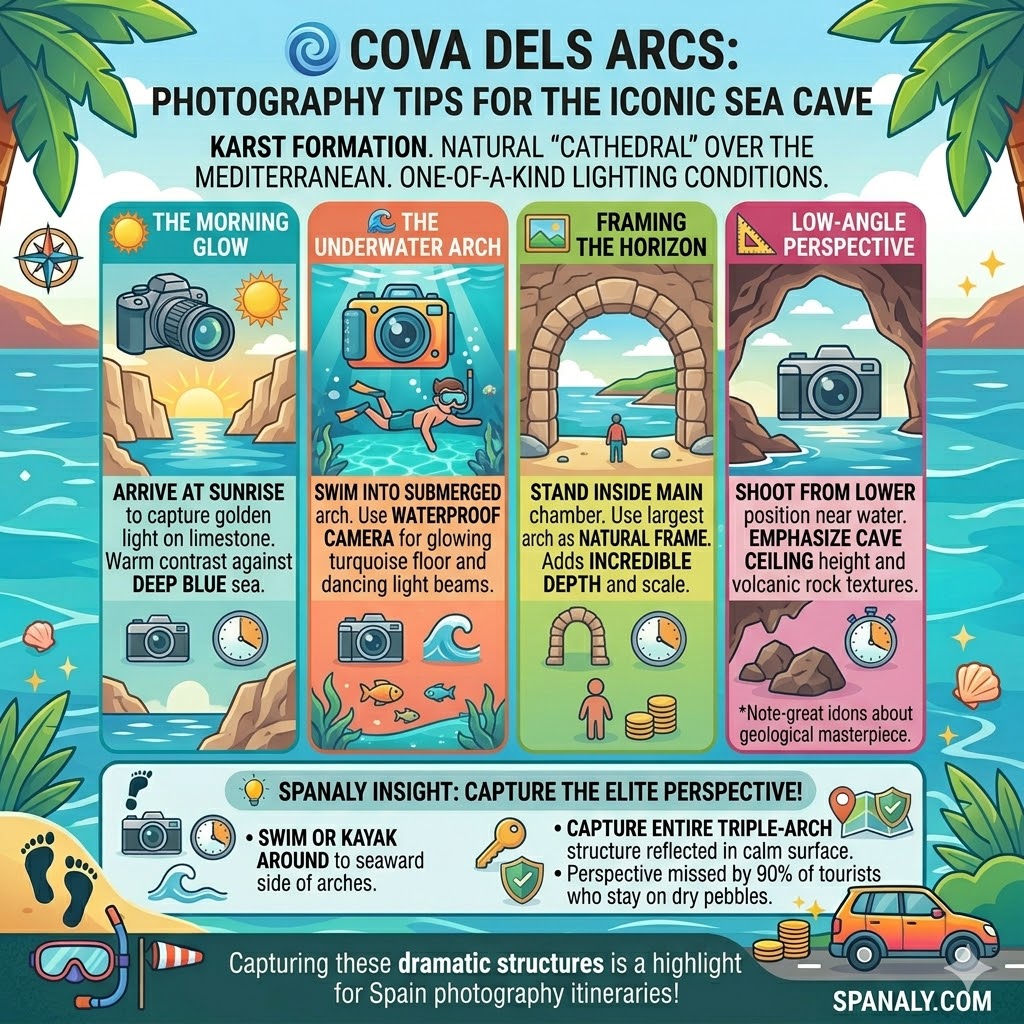
The Cova dels Arcs is the undisputed crown jewel of Cala del Moraig. This karst formation features three massive limestone arches that create a natural cathedral over the Mediterranean. Capturing its beauty requires understanding the specific light windows of the Costa Blanca.
The Neon Blue Window: Arrive before 10:00 AM to witness the sun illuminating the sea floor through the roof. This creates a glowing, neon-blue effect that looks like natural CGI.
Morning Glow: Sunrise offers the best golden light on the limestone walls.
Framing the Horizon: Stand inside the main chamber and use the largest stone arch as a natural frame.
Low-Angle Perspective: Shoot from near the water’s edge to emphasize the height of the cave ceiling.
Capturing these structures is a highlight for anyone following a best photography spots in Spain itinerary. The cave is a geological masterpiece reflecting the raw power of Mediterranean erosion over thousands of years.
💡 Spanaly Insight For an “elite” shot, swim or kayak to the seaward side of the arches. From the water, you can capture the entire triple-arch structure reflected in the calm surface. This is a perspective that 90% of tourists miss because they stay on the pebbles.
🤿 Snorkeling & Diving: Explore the blue water
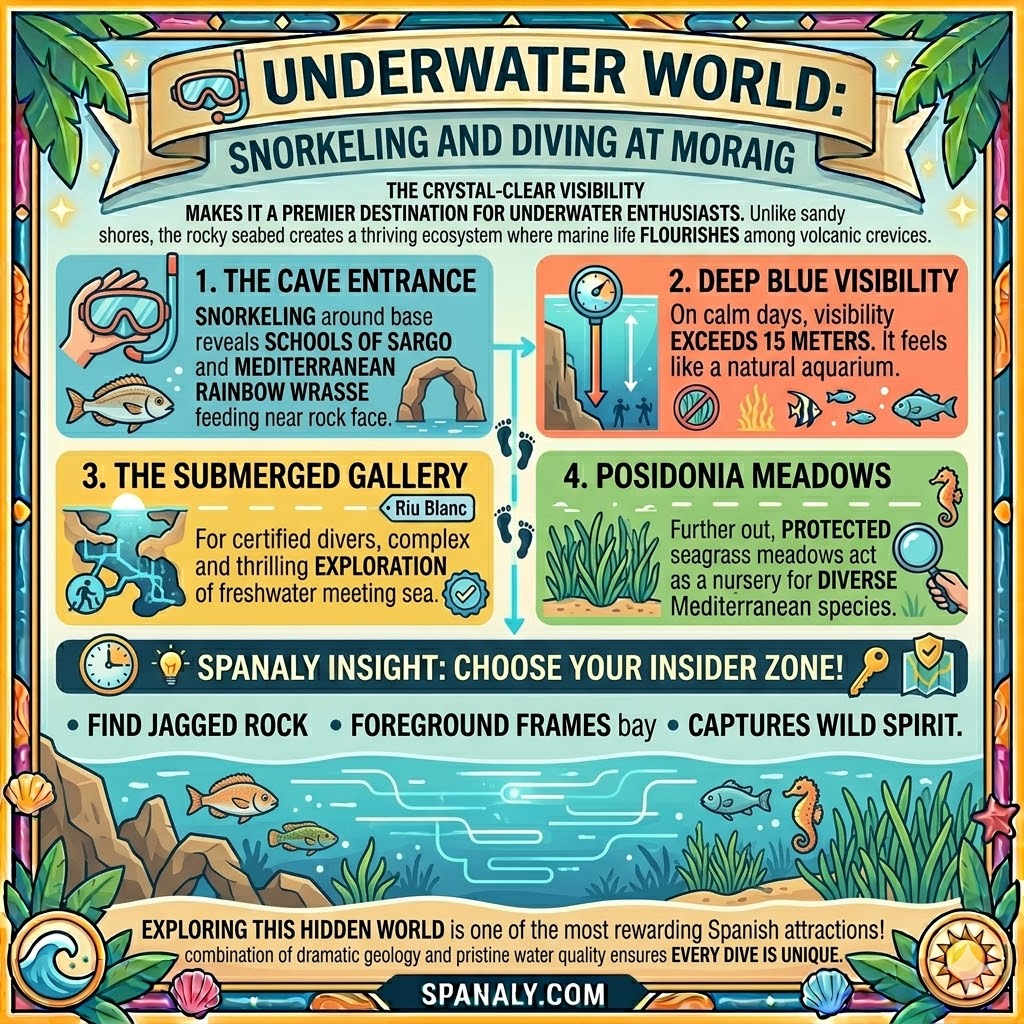
The crystal-clear visibility at Cala del Moraig makes it a premier destination for underwater enthusiasts. Unlike the sandy shores of the Costa Blanca, the rocky seabed here creates a thriving ecosystem where marine life can hide and flourish among the volcanic crevices.
The Cave Entrance: Snorkeling around the base of Cova dels Arcs reveals schools of sargo and Mediterranean rainbow wrasse feeding near the rock face.
Deep Blue Visibility: On calm days, the vertical underwater cliffs allow for visibility exceeding 15 meters, making it feel like a natural aquarium.
The Submerged Gallery: For certified divers, the “Riu Blanc” underwater cave system offers a complex and thrilling exploration of freshwater meeting the sea.
Posidonia Meadows: Further out, you will find protected seagrass meadows that act as a nursery for diverse Mediterranean species.
Exploring this hidden world is one of the most rewarding Spanish attractions for nature lovers. The combination of dramatic geology and pristine water quality ensures that every dive offers something unique, from tiny colorful invertebrates to larger predatory fish patrolling the depths.
💡 Spanaly Insight The best snorkeling is actually found on the far left side of the cove, away from the main cave. Follow the cliff wall toward the “Testos” area; the water is shallower here, and the natural light reflects off the white limestone floor, making the marine colors appear much more vivid for your underwater photos.
🥾 The Cliff Path: Hiking with a view

For those who prefer heights over depths, the Ruta de los Acantilados (Cliff Route) offers the most spectacular panoramic views in the Alicante province. This ancient trail connects Cala del Moraig with the neighboring Cala Llebeig, winding along the edge of massive limestone precipices that tower over the Mediterranean.
The Path Layout: The trail is relatively flat but narrow, hugging the cliffside and passing through several natural caves once used by local fishermen.
Visual Highlights: You will witness a dramatic bird’s-eye view of the turquoise waters and the white wake of boats passing below.
Historical Shelters: Explore the “Coves de Teulada,” small stone constructions built into the rock that tell the story of the coast’s rugged past.
Trail Difficulty: While not technically difficult, the path requires a steady head for heights and closed-toe shoes to handle the loose stones.
Completing this hike is one of the top things to do in Alicante for active travelers. It provides a sense of scale and isolation that you simply cannot feel while sitting on the crowded shore below.
💡 Spanaly Insight Start the hike approximately 90 minutes before sunset. As the sun dips behind the mountains, the limestone cliffs turn a deep honey-gold color, and the shadow of the cliffs stretches across the sea. It is the most “cinematic” moment of the day and offers a much cooler temperature for the walk back to your car.
🍴 Where to Eat: Local food in Benitachell

While there is a seasonal chiringuito directly on the shore, the most authentic culinary experiences are found just a few minutes away in the heart of Poble Nou de Benitachell. Moving away from the beach for lunch or dinner allows you to escape the crowds and enjoy traditional Alacantí dishes in a more relaxed, local atmosphere.
Traditional Rice Dishes: Seek out restaurants serving Arroz del Senyoret, a local favorite where all the seafood is peeled and ready to eat.
Mediterranean Fusion: Several boutique eateries in the village combine fresh local produce with modern culinary techniques, offering a sophisticated alternative to beach snacks.
Mountain and Sea: Benitachell is famous for its “Mar i Muntanya” flavors, where fresh Mediterranean fish is paired with inland ingredients like almonds and raisins.
Cozy Tapas Bars: The town center is dotted with small bars where you can enjoy local olives, cheeses, and cured meats after a long day of swimming.
Exploring these local flavors is an essential part of understanding Spanish Cuisine. The proximity of the town to the coast ensures that the seafood is always the catch of the day, while the inland influence adds a unique depth to every plate.
🛡️ Protecting the Cove: Eco-friendly tips
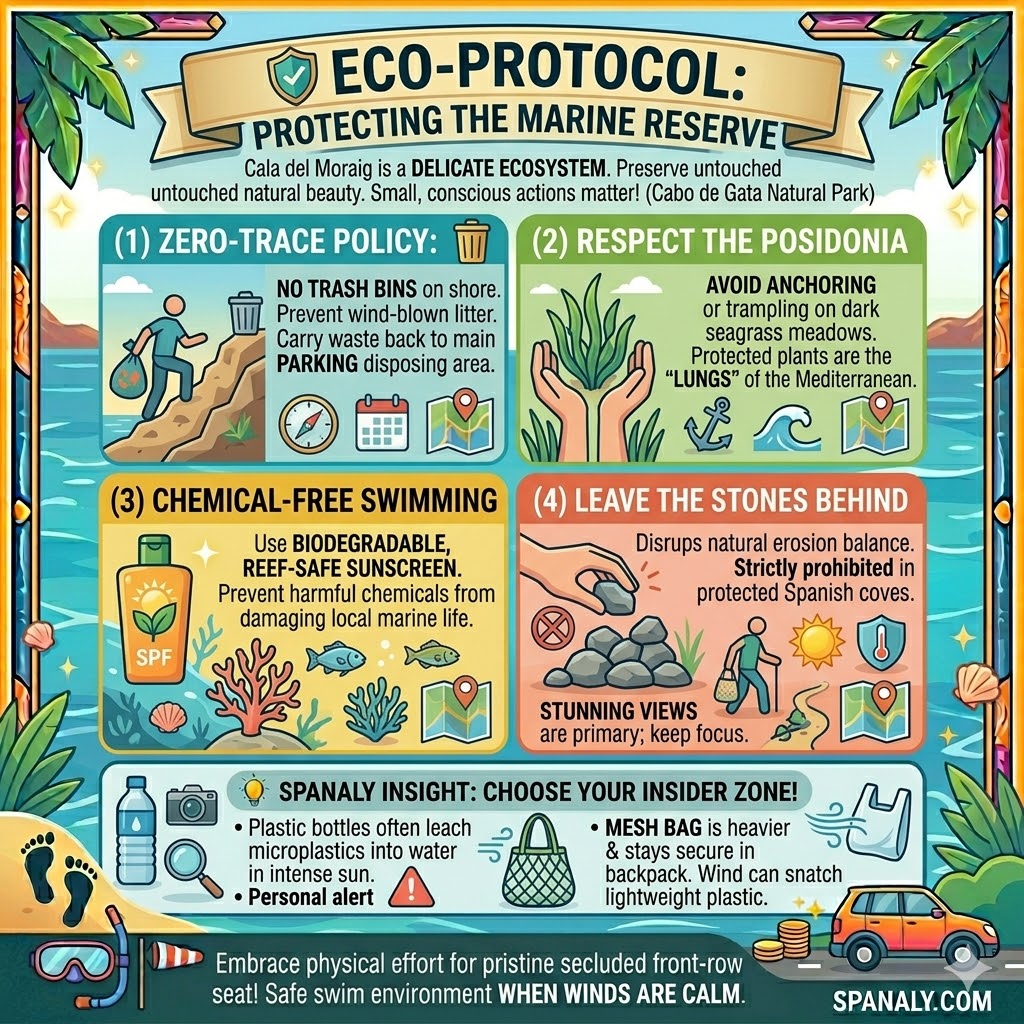
Cala del Moraig is a delicate ecosystem within a protected marine area. Preserving this volcanic paradise ensures that the crystal-clear water remains a pristine sanctuary for everyone. By acting as a guardian, you protect the sensory beauty that makes this cove so special.
Breathe the Purity: No trash bins on the shore means fresher air and natural sea scents without litter.
Protect the Lungs: Respecting the Posidonia seagrass meadows keeps the Mediterranean water oxygenated and brilliantly clear.
Safe Immersion: Using reef-safe sunscreen ensures you swim in chemical-free water alongside vibrant, healthy marine life.
Preserve the Landscape: Leaving pebbles in place maintains the natural white balance of this ancient limestone shore.
Adopting these habits is as crucial as knowing the best Spanish festivals to visit. This responsible approach defines an elite traveler who values nature’s raw beauty over commercial convenience. By staying on paths, you ensure this paradise stays untouched for future generations.
💡 Spanaly Insight Use a stainless steel water bottle to keep your drink cold and microplastic-free under the intense sun. The coastal wind easily snatches plastic items, so heavy reusable gear protects both you and the sea caves.
⚠️ Staying Safe: Tides and cliff warnings
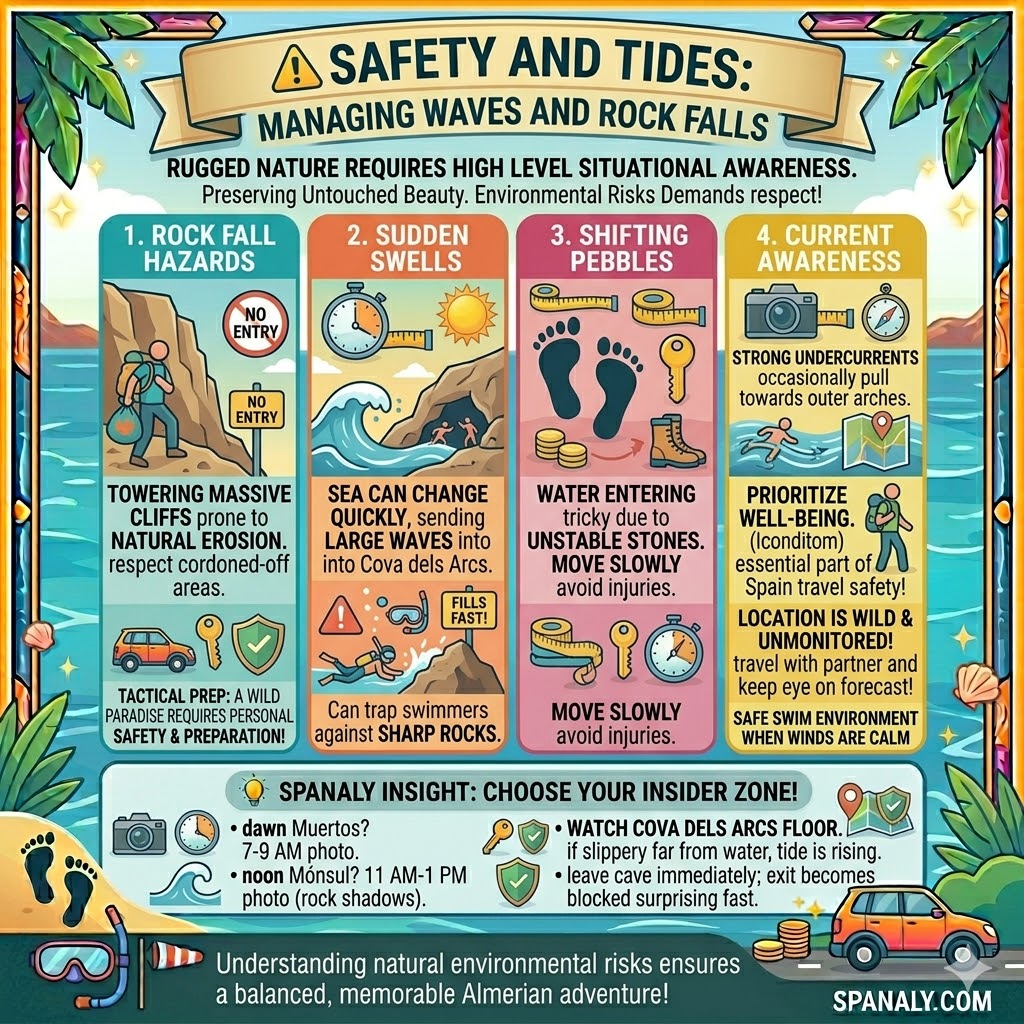
While Cala del Moraig is breathtaking, its rugged nature requires a high level of situational awareness. The combination of towering limestone cliffs and the open Mediterranean means that safety should always be your top priority. Understanding the local environmental risks is the difference between a perfect day and a dangerous situation.
Rock Fall Hazards: The massive cliffs are beautiful but prone to natural erosion; always respect the “No Entry” signs in cordoned-off areas near the cliff base.
Sudden Swells: Even on sunny days, the sea can change quickly, sending large waves into the Cova dels Arcs that can trap swimmers against the sharp rocks.
Shifting Pebbles: Entering and exiting the water can be tricky due to the unstable nature of the smooth stones; move slowly to avoid ankle injuries.
Current Awareness: Strong undercurrents can occasionally pull swimmers toward the outer arches of the cave, making it difficult to return to the shore.
Prioritizing your physical well-being is a fundamental part of travel safety in Spain. This location is wild and unmonitored for most of the year, so traveling with a partner and keeping a close eye on the weather forecast is essential for a stress-free experience.
💡 Spanaly Insight Pay close attention to the “Cova dels Arcs” floor. If you notice the pebbles inside the cave are wet and slippery far from the water’s edge, it means the tide is rising or the swell is increasing. This is your cue to leave the cave immediately, as the exit can become blocked by waves surprisingly fast, leaving you with no dry ground to stand on.
📅 One Day Itinerary: The Perfect Visit to Cala del Moraig
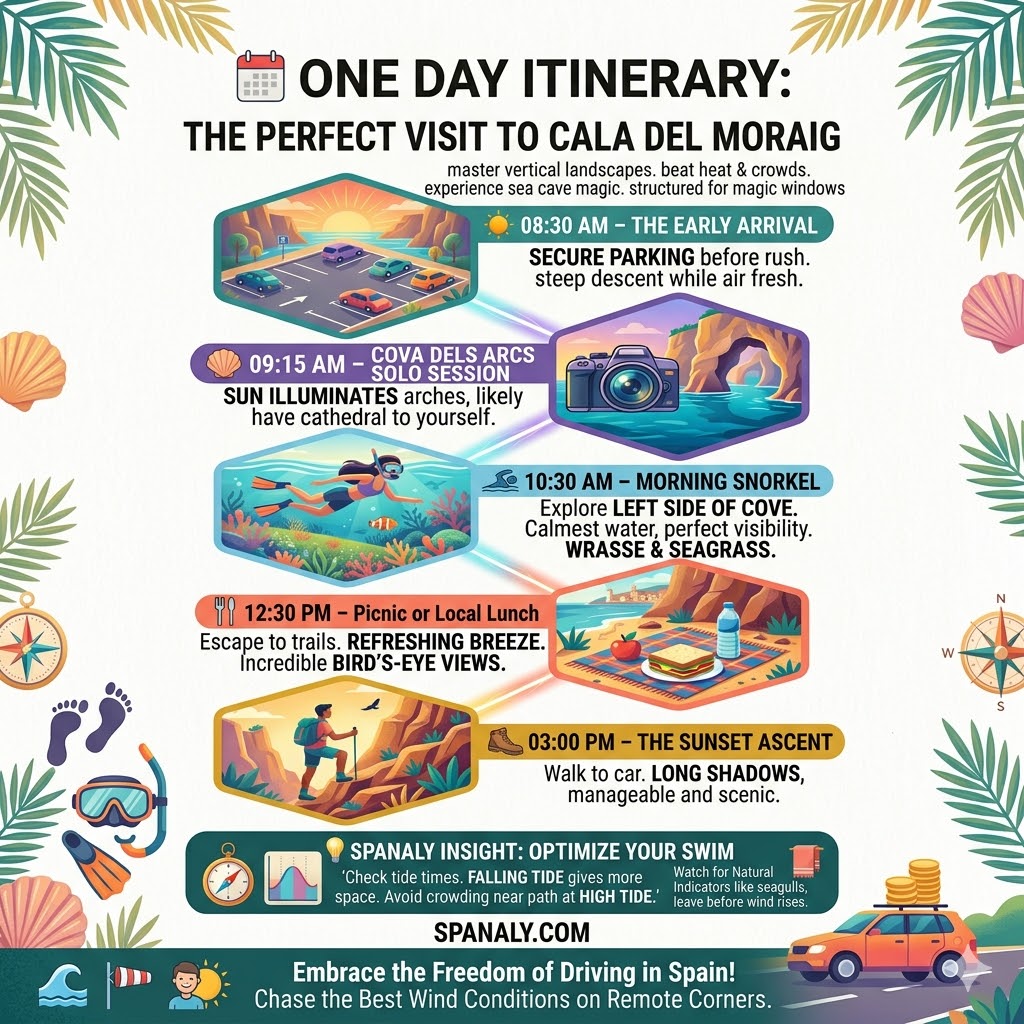
This hour-by-hour plan is designed to help you master the vertical landscape of Benitachell. By following this rhythm, you will beat the heat, secure the best parking, and experience the sea cave in its most “Instagrammable” light.
08:30 AM – The Early Arrival: Secure your parking spot at the upper lot before the mid-morning rush begins. This is the best time to handle the steep descent while the air is still fresh.
09:15 AM – Cova dels Arcs Solo Session: Head straight to the cave. At this hour, the sun begins to illuminate the arches, and you’ll likely have the limestone “cathedral” to yourself for photography.
10:30 AM – Morning Snorkel: Gear up and explore the left side of the cove. The water is calmest now, providing perfect visibility to see the vibrant Mediterranean wrasse and seagrass meadows.
12:30 PM – Cliffside Picnic or Local Lunch: Retreat to the shade of the cliffs for a light snack, or head back up to Poble Nou de Benitachell for a traditional Arroz del Senyoret.
03:00 PM – The “Ruta de los Acantilados” Hike: As the beach reaches peak capacity, escape to the trails. The path toward Cala Llebeig offers a refreshing breeze and incredible bird’s-eye views.
05:30 PM – Golden Hour Swim: Return to the water for a final dip. The light turns soft and golden, making the turquoise water look even more surreal against the white pebbles.
07:00 PM – The Sunset Ascent: Begin your walk back to the car. As the cliffs cast long shadows over the road, the climb becomes much more manageable and scenic.
Following a structured plan like this is a core part of our Spain travel itineraries. It ensures you don’t miss the “magic windows” of light and temperature that make this rugged location so special.
💡 Practical Tips from Real Travelers
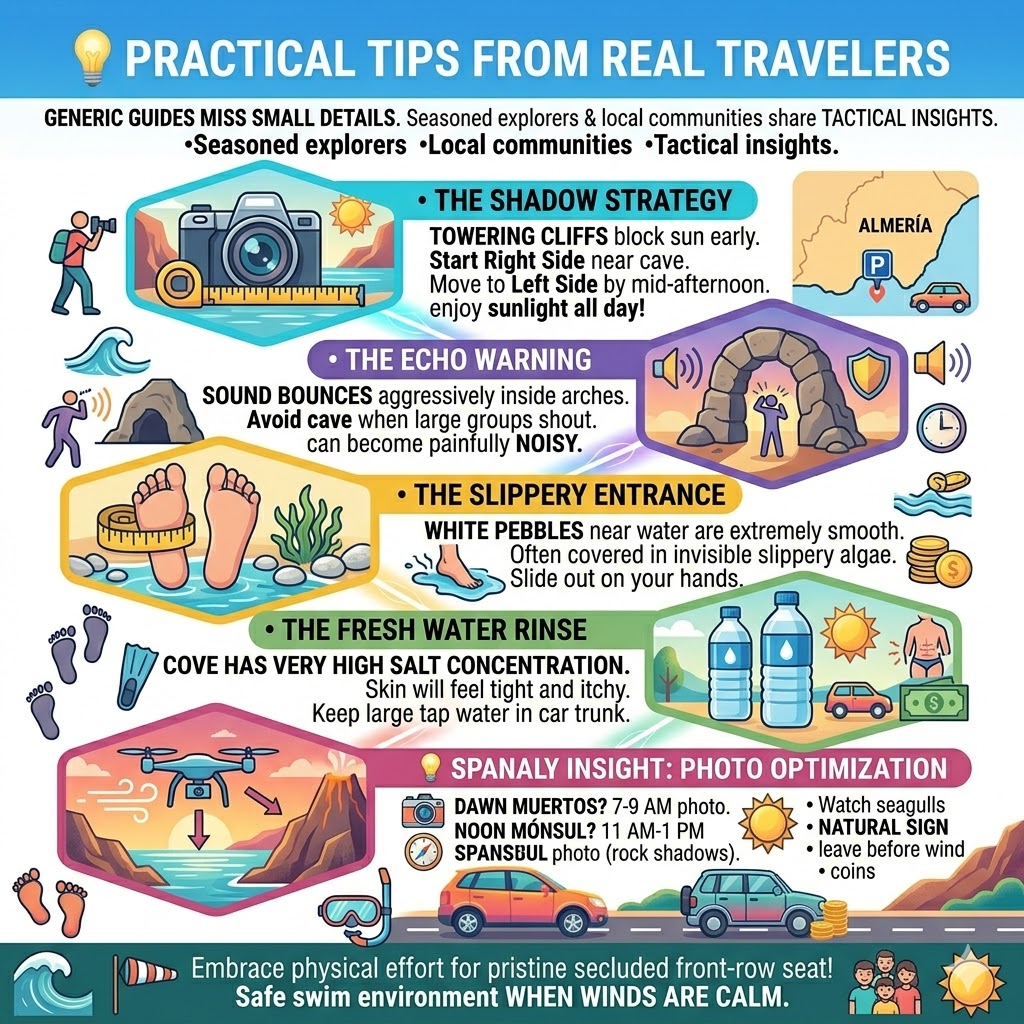
Generic guides often miss the small details that define a trip. These “pro” insights come from seasoned explorers and local Mediterranean communities.
The Shadow Strategy: The towering cliffs block the sun surprisingly early. Start on the right side near the cave. Move to the left side by mid-afternoon. This ensures you enjoy the sunlight all day long.
The Echo Warning: Sound waves bounce aggressively inside the stone arches. Avoid the cave when large groups are shouting. The noise can become physically painful for your ears. Wait for a quiet moment to enter.
The Slippery Entrance: The white pebbles near the water are extremely smooth. They are often covered in invisible, slippery algae. Don’t try to stand while exiting the waves. Instead, slide out on your hands to stay safe.
The Fresh Water Rinse: This cove has a very high salt concentration. Your skin will feel tight and itchy once you dry off. Keep a large container of tap water in your car trunk. Use it for a quick post-swim rinse.
The Drone Hazard: Strong winds often swirl downward near the vertical cliff face. These “down-drafts” can easily crash small drones into the sea. Keep your flight path at least thirty meters away from the rocks.
Mastering these specific tactics is what separates a tourist from a true explorer. While you might enjoy the sandy shores of Cala Macarella, the rugged nature of Moraig requires a more tactical approach. Preparation always leads to a better experience.
💡 Spanaly Insight Use the “Visual Anchor” trick for your photography. Place a friend or a bright object near the cave entrance. This provides a sense of scale. Without a human element, the massive arches often look smaller in photos than they actually are.
🛡️ Visitor FAQs – Cala del Moraig Guide
🐾 Is Cala del Moraig dog-friendly for a summer visit?
No, dogs are prohibited on the pebbles during high season. However, they are welcome on the Ruta de los Acantilados hiking trail if kept on a leash.
📱 Is there reliable mobile signal at the bottom?
Signal is very weak or non-existent due to the high cliffs. Always download your offline maps and parking reservations before starting the steep descent.
🤿 Can I rent snorkeling gear on the beach?
No, there are no rentals available at the cove. You must bring your own snorkeling or diving equipment from Benitachell or Jávea.
🚑 Are there lifeguards on duty?
Lifeguards are only present seasonally (mid-June to mid-September). Outside this window, swimming is unmonitored and at your own risk.
💰 Is there an entrance fee for the cave?
Access is completely free. You only pay for parking during peak months, which sometimes requires a digital reservation through the town's app.
👶 Is it suitable for families with strollers?
No, the terrain is too steep and rocky for strollers. We recommend using a baby carrier and ensuring children wear high-quality water shoes.
Cala del Moraig Guide by Spanaly.com
Cala del Moraig is more than just a beach; it is a raw encounter with nature’s power. Whether you are diving into the neon-blue depths of the cave or conquering the steep cliffs, the memories you make here will be as solid as the limestone walls.
Respect the Wild: Keep the cove pristine by following the eco-protocols.
Safety First: Always watch the tides and the cliff signs for a worry-free day.
Stay Curious: This is just one chapter of the incredible Spanish coastline.
If you enjoy the rugged, untouched vibe of Benitachell, you absolutely cannot miss the volcanic beauty of Playa de los Muertos. It offers a similar “off-the-beaten-path” experience that true explorers crave.
Spain’s coast is full of secrets—go out there and find yours!