🌊 Why Caló des Moro is a Must-Visit
If you’ve seen photos of a turquoise mirror tucked between dramatic white cliffs, you’ve likely seen Caló des Moro. This tiny cove is often called the most beautiful spot in Mallorca, and for a good reason. However, visiting this paradise requires more than just a GPS; it needs a bit of local insider knowledge.
Caló des Moro isn’t your typical sandy resort. It is a wild, raw, and incredibly blue slice of the Mediterranean that feels like a dream. To help you enjoy it without the stress, we’ve gathered everything you need to know about this iconic shore.
What makes this cove so special?
Turquoise Clarity: The water is so clear it feels like swimming in a giant natural pool.
Wild Scenery: Tall limestone cliffs and Mediterranean pines frame the tiny sandy beach.
Pure Nature: There are no bars or shops here, just you and the Mediterranean sea.
Photographer’s Dream: Every angle offers a postcard-perfect shot of the Balearic Islands.
Finding the best beaches in Spain often means going off the beaten path, and this cove is the perfect example. While it’s no longer a secret, it remains a breathtaking experience if you know how to visit properly.
💡 Spanaly Insight Don’t be fooled by the calm photos; space on the sand is very limited. If you want a spot for your towel, try to arrive shortly after sunrise to enjoy the silence before others arrive.
📊 Caló des Moro by the Numbers: Facts for Your Visit
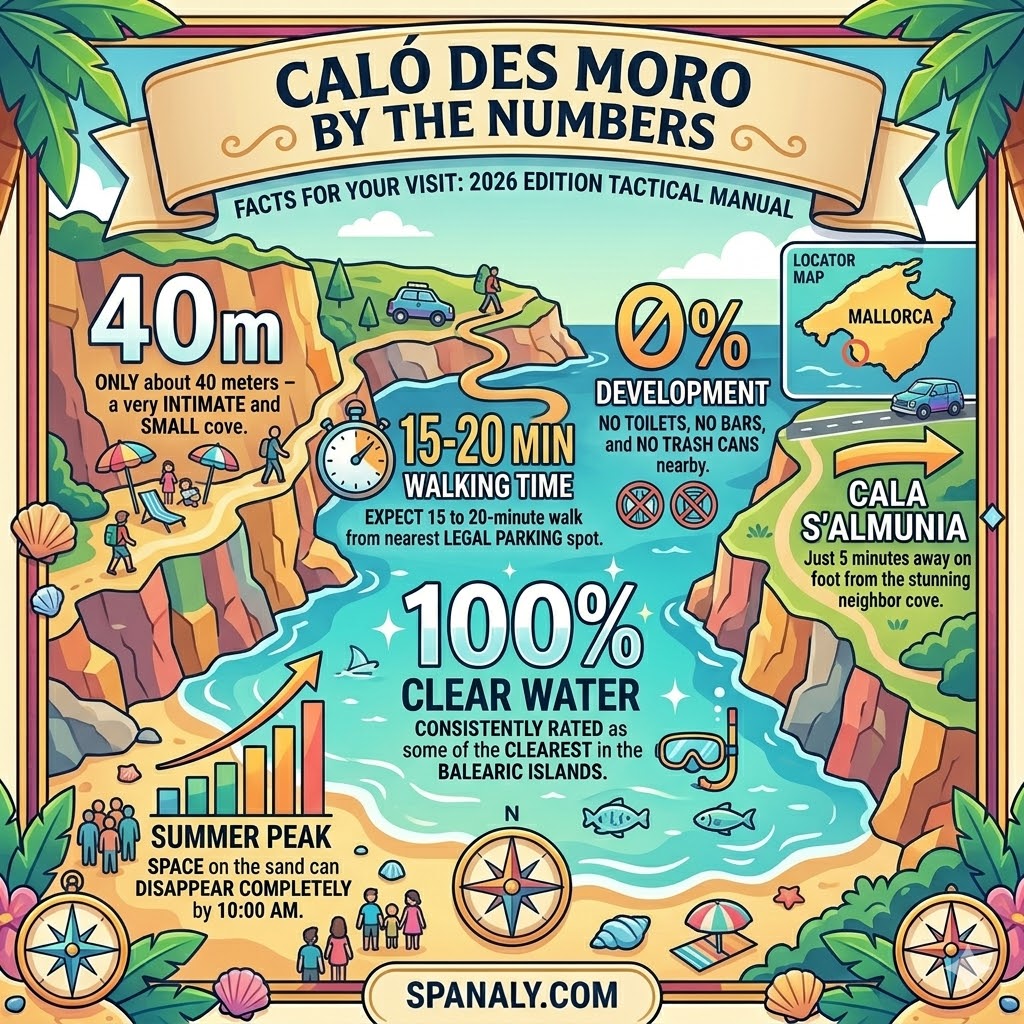
To plan the perfect trip to Caló des Moro, it helps to understand the scale of this tiny paradise. It isn’t a massive stretch of sand, and its unique geography is exactly what makes it so famous. Here are the key figures that will help you set the right expectations for your day.
| What to Know | The Practical Reality |
|---|---|
| Beach Width | Only about 40 meters—it’s a very intimate and small cove. |
| Walking Time | Expect a 15 to 20-minute walk from the nearest legal parking spot. |
| Water Quality | Consistently rated as some of the clearest in the Balearic Islands. |
| Crowd Peak | Space on the sand can disappear completely by 10:00 AM in summer. |
| Service Level | 0% development—no toilets, no bars, and no trash cans nearby. |
| Nearby Gem | Just 5 minutes away on foot from the stunning Cala S’Almunia. |
🆚 Caló des Moro vs. Nearby Gems: Which One is for You?
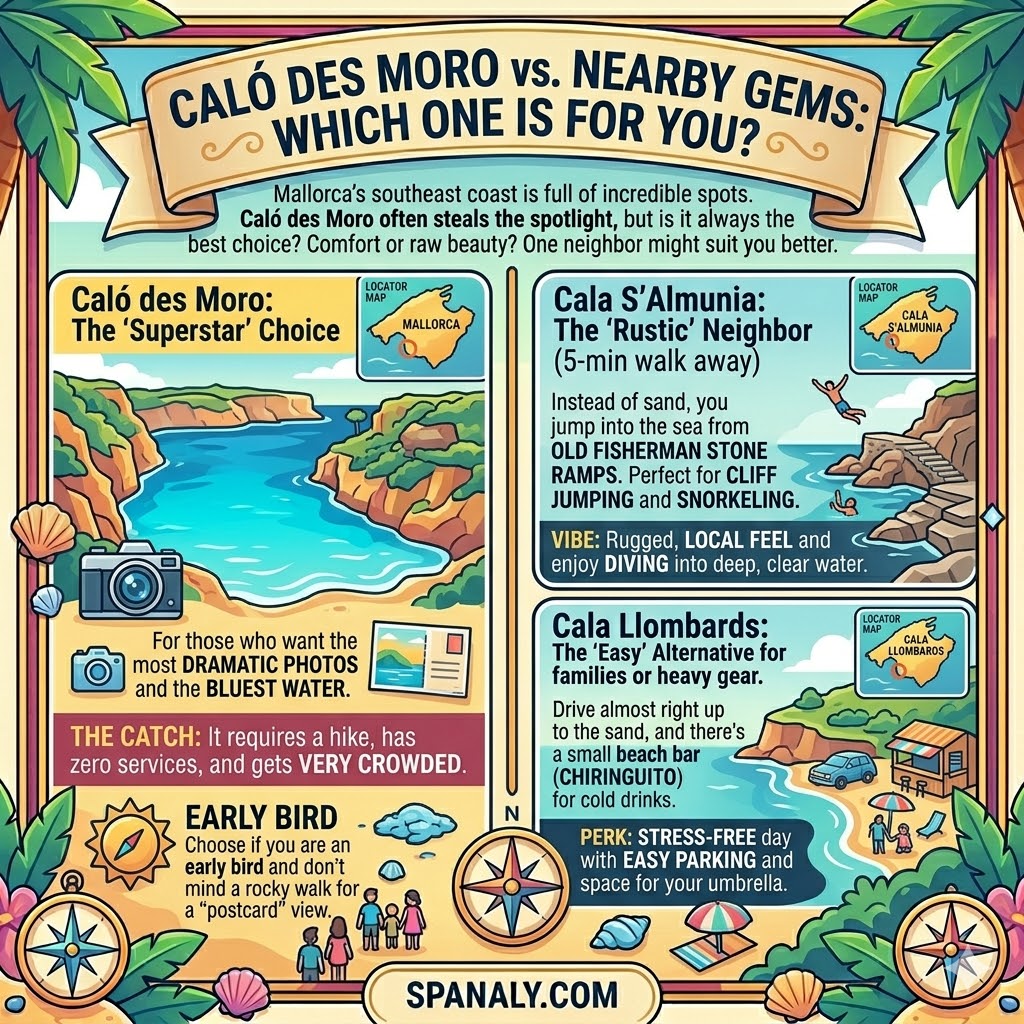
Mallorca’s southeast coast is full of incredible spots, and Caló des Moro often steals the spotlight. But is it always the best choice for your day? Depending on whether you want comfort or raw beauty, one of its “neighbors” might actually suit you better.
The Comparison at a Glance:
Caló des Moro: The “Superstar” choice for those who want the most dramatic photos and the bluest water.
The Catch: It requires a hike, has zero services, and gets very crowded.
Cala S’Almunia: The “Rustic” neighbor located just a 5-minute walk away.
The Vibe: Instead of sand, you jump into the sea from old fisherman stone ramps. It’s perfect for cliff jumping and snorkeling.
Cala Llombards: The “Easy” alternative for families or those with heavy gear.
The Perk: You can drive almost right up to the sand, and there’s a small beach bar (chiringuito) for cold drinks.
Which should you pick?
Your decision often depends on your home base. If you stay nearby, you can be the first on the sand, but if you’re traveling from afar, you’ll need a solid plan for your accommodation in Spain to ensure you’re close to the action.
Choose Caló des Moro if you are an early bird and don’t mind a rocky walk for a “postcard” view.
Choose Cala S’Almunia if you prefer a rugged, local feel and enjoy diving into deep, clear water.
Choose Cala Llombards if you want a stress-free day with easy parking and space for your umbrella.
💡 Spanaly Insight Many travelers try to see all three in one day. Our advice? Park once at Cala Llombards early in the morning, enjoy the services, and then take the scenic coastal path to visit Caló des Moro for a quick midday dip.
🏖️ The Reality Check: What to Expect When You Arrive
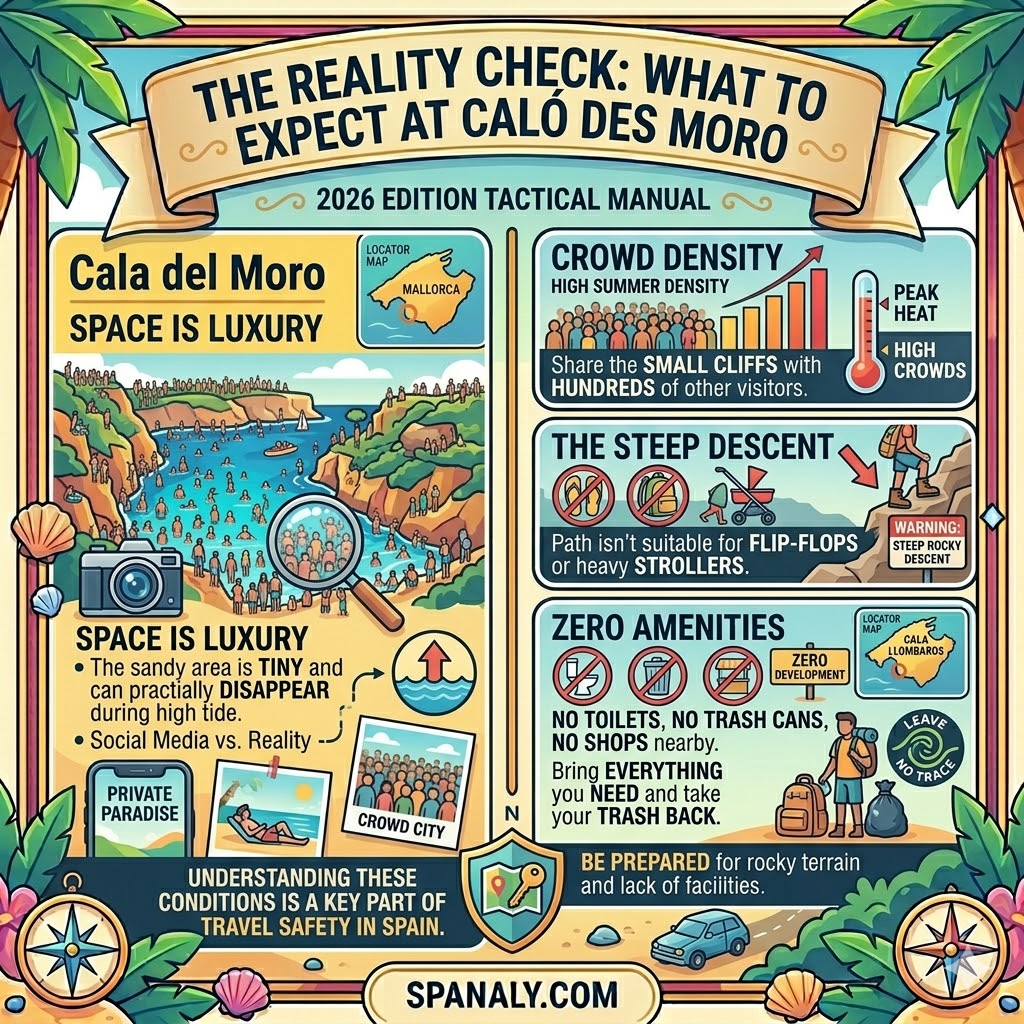
Social media often portrays Caló des Moro as a silent, private getaway, but the real experience is a mix of breathtaking beauty and wild challenges. While this cove is a Mediterranean dream, it is important to remember that its “untouched” nature comes with specific conditions that require a bit of physical effort to overcome.
Space is a Luxury: The sandy shoreline is remarkably intimate and can almost vanish during high tide, making the surrounding cliffs your primary lounge area.
The Physical Descent: Reaching the turquoise water involves navigating a steep, rocky path; it is a short but demanding trek that serves as a natural gateway to this hidden gem.
Pure Crowd Energy: As one of Mallorca’s most iconic spots, you will likely share the cliffs with fellow explorers, especially during the vibrant summer peak.
A Truly Wild Site: To keep the water so pristine, there are zero amenities like toilets or shops; this lack of development is exactly what preserves its raw charm.
Understanding these local conditions is a key part of travel safety in Spain. By preparing for the rugged terrain and the absence of facilities, you ensure that your visit remains a rewarding highlight rather than a stressful ordeal.
☀️ Best Time to Visit: Outsmarting the Crowds
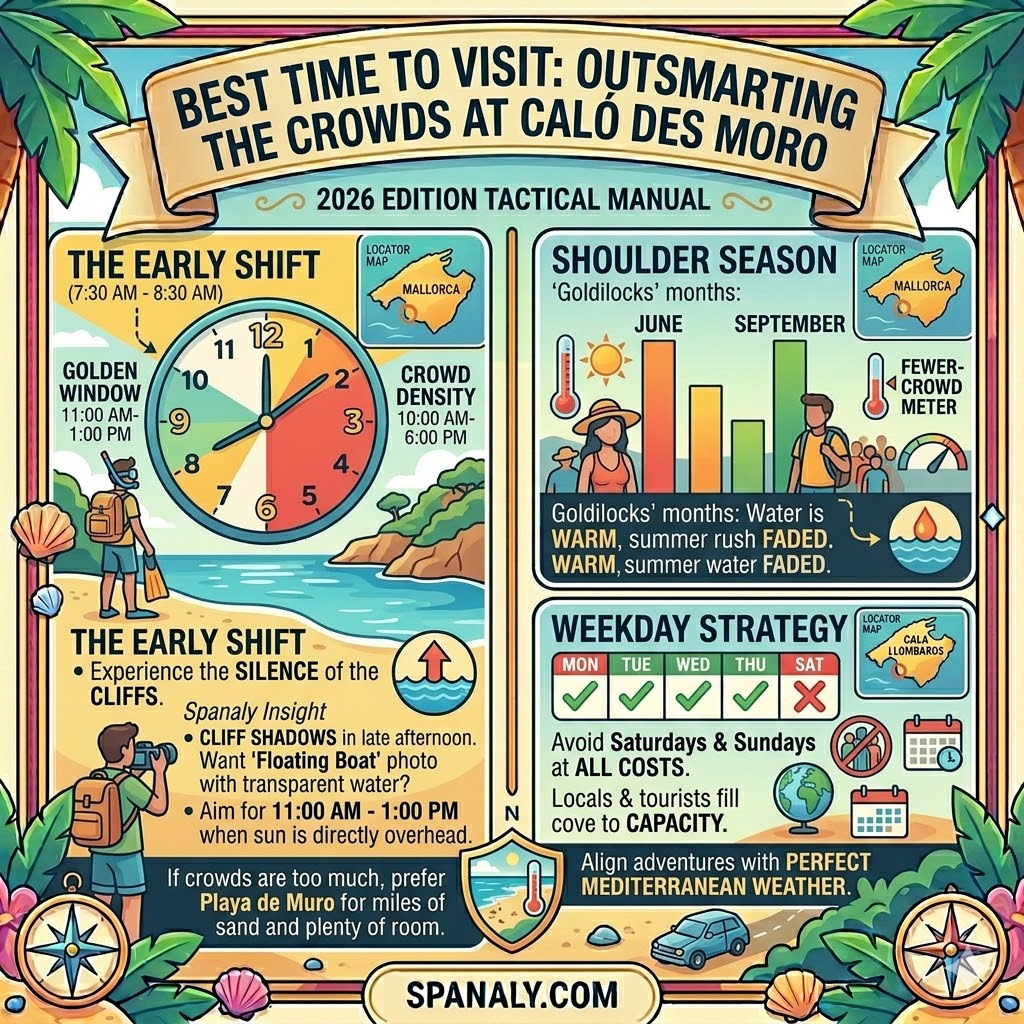
Choosing when to visit Caló des Moro is the difference between a peaceful swim and a crowded struggle for space. Because this cove is so small, timing is the most important factor in your planning. To see the water at its bluest, you need the sun to be high, but to see the beach at its quietest, you need to be an early bird.
The Golden Window:
The Early Shift: Arriving between 7:30 AM and 8:30 AM is the only way to experience the silence of the cliffs.
The Shoulder Season: June and September are the “Goldilocks” months—the water is warm, but the intense summer rush has faded.
The Weekday Strategy: Avoid Saturdays and Sundays at all costs, as locals and tourists alike fill the cove to capacity.
If you find that the crowds here are a bit too much for your liking, you might prefer the wide-open space of Playa de Muro, which offers miles of sand and plenty of room even in peak season. No matter when you choose to go, checking the best time to visit Spain will help you align your coastal adventures with the perfect Mediterranean weather.
💡 Spanaly Insight Don’t forget that the cliffs cast long shadows in the late afternoon. If you want that perfect “floating boat” photo where the water looks transparent, aim to be there between 11:00 AM and 1:00 PM when the sun is directly overhead.
🚗 The Scenic Path: Parking & Getting to the Water
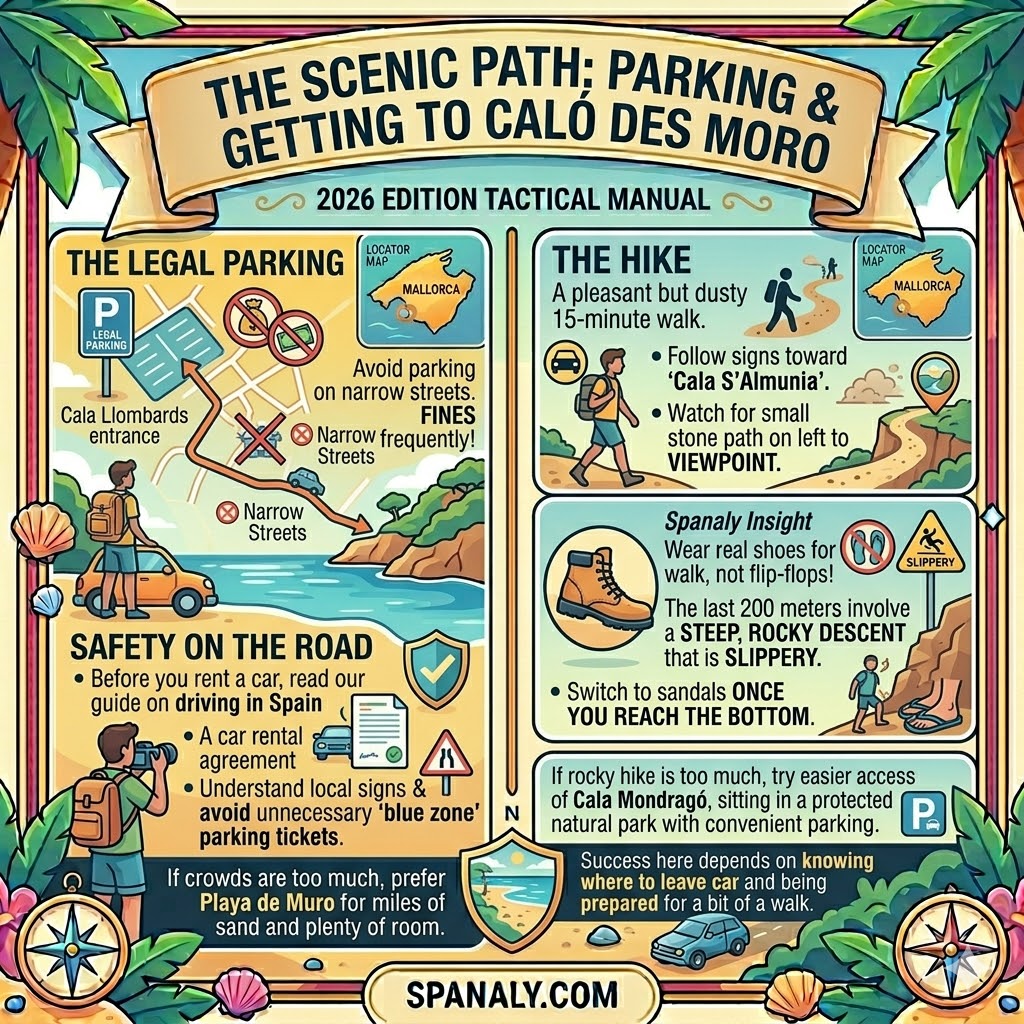
Reaching Caló des Moro is a small adventure that requires both planning and the right gear. Since authorities have tightened access to protect the cliffs, you cannot drive directly to the shore, making your arrival strategy the most important part of the day.
Mastering the Arrival:
The Legal Parking: Look for the free public parking lot near the entrance of the “Cala Llombards” residential area. Avoid parking on the narrow streets, as fines are frequent and strictly enforced to keep the roads clear.
The Trekking Gear: This is the most critical tip: wear sturdy sneakers or hiking sandals for the journey. The final 200 meters consist of a steep, vertical rocky descent that is often slippery due to loose dust and smooth stone. Attempting this in flip-flops is a safety risk you should avoid.
The Dusty Trail: From the parking lot, follow the signs toward “Cala S’Almunia” for a pleasant 15-minute walk. Keep an eye out for the small stone path on your left; it leads to the breathtaking viewpoint before you begin the climb down.
Road Logistics: Before you rent a car, make sure to read our guide on driving in Spain to understand local signs and avoid unnecessary “blue zone” parking tickets.
If the idea of a demanding rocky hike feels like too much, you might enjoy the easier access of Cala Mondragó, which sits in a protected natural park with much more convenient parking and flat walking paths.
💡 Spanaly Insight Treat the descent like a mini-hike. Once you successfully reach the bottom and find your spot on the sand or rocks, you can finally switch to your beach sandals and dive into the water. Carrying your gear in a backpack rather than a shoulder bag will keep your hands free for balance on the steeper sections.
🎒 Beach Day Essentials: Packing for a Wild Cove
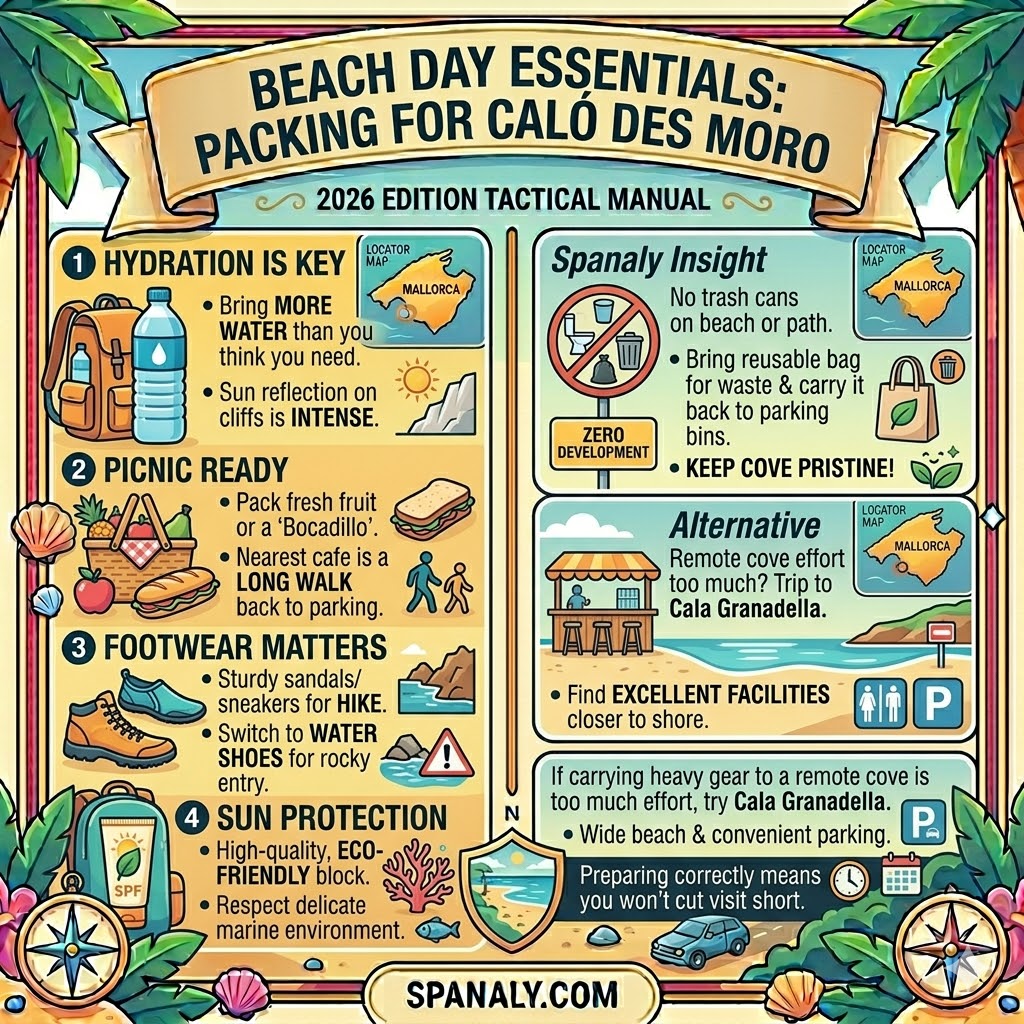
Since Caló des Moro has zero facilities no bars, no shops, and no umbrellas what you carry in your bag will define your entire day. Preparing correctly means you won’t have to cut your visit short because of hunger or the intense Mediterranean sun. It is all about bringing the right fuel and protection to stay comfortable in this raw environment.
Your Packing Checklist:
Hydration is Key: Bring significantly more water than you think you need; the reflection of the sun on the white limestone cliffs can be intense.
Picnic Ready: Pack fresh fruit or a traditional “Bocadillo” (Spanish sandwich), as the nearest cafe is a long walk back toward the residential area.
Sun Shielding: Choose a high-quality, eco-friendly block to keep your skin safe while respecting the delicate marine life of the Balearic Islands.
Smart Shade: Since umbrellas are heavy to carry down the cliffs, consider a lightweight UV-protected beach tent or a large sarong to create your own shade.
For a complete list of coastal necessities, make sure to check our guide on what to pack for Spain to ensure you don’t leave any essentials behind. If you find that carrying gear to such a remote cove is too much effort, you might prefer a trip to Cala Granadella, where you can find excellent facilities closer to the shore.
💡 Spanaly Insight There are no trash cans on the beach or the path. Bring a small reusable bag to store your waste and carry it back to the bins at the parking lot. Keeping this cove pristine is a collective effort to protect Mallorca’s natural beauty!
🏘️ Beyond the Water: Exploring Nearby Cala S’Almunia
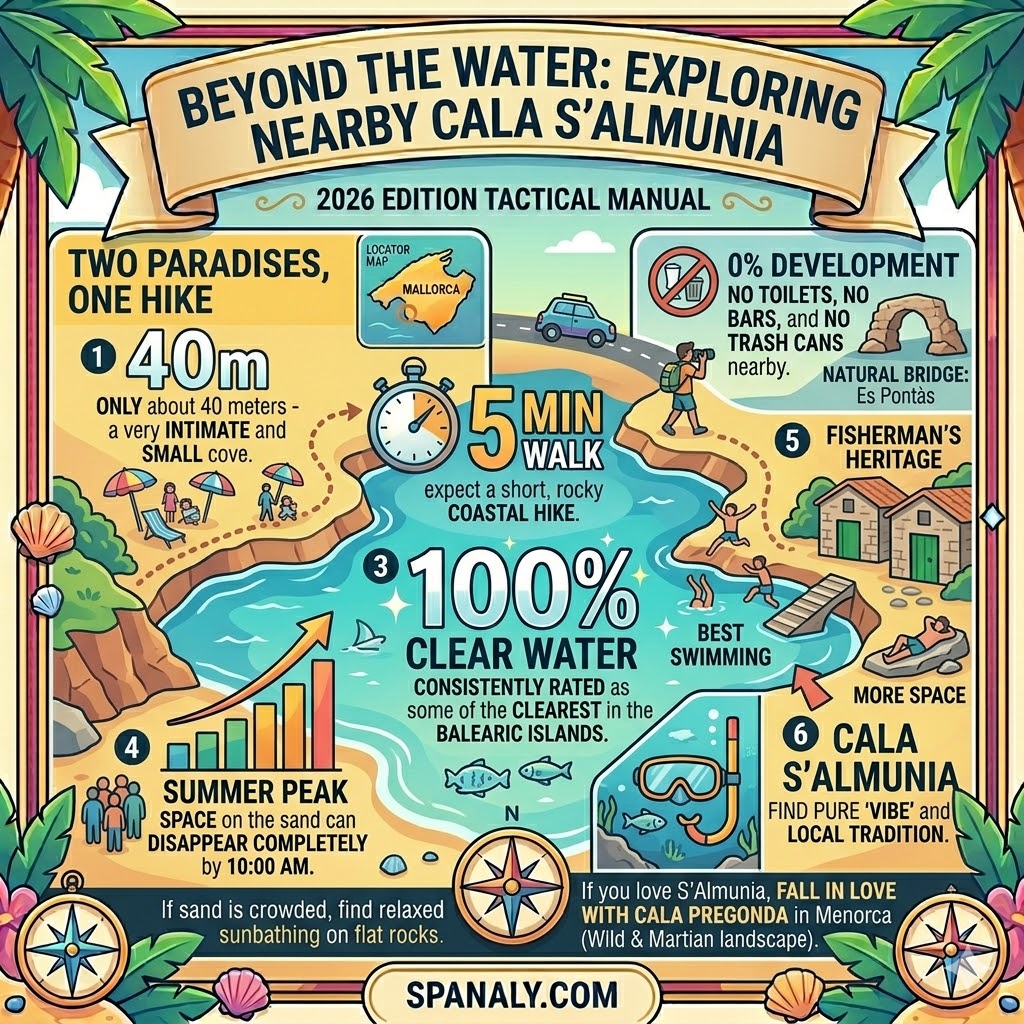
One of the best things about visiting Caló des Moro is that you actually get two paradises for the price of one hike. Just a 5-minute walk along the rocky coast lies Cala S’Almunia, a spot that feels like a time capsule of old Mallorca. While Caló des Moro is about the “view,” S’Almunia is all about the “vibe” and local tradition.
Why you should make the short walk:
Fisherman’s Heritage: You’ll find tiny, picturesque stone houses with green doors built directly into the rocks.
The Best Swimming: Instead of sand, you have ancient stone ramps and deep, crystal-clear water perfect for jumping and diving.
A Natural Bridge: Look for the “Es Pontàs” nearby, a massive natural stone arch rising out of the sea that is a favorite for photographers.
More Space: If the sand at the main cove is too crowded, the flat rocks here offer a more relaxed place to sunbathe.
Exploring these coastal gems is one of the most rewarding things to do in Spain if you love raw, undeveloped nature. If you enjoy the rugged, rocky charm of S’Almunia, you will likely fall in love with Cala Pregonda in Menorca, which offers a similarly wild and martian-like landscape.
💡 Spanaly Insight S’Almunia is the best spot for snorkeling in the area. The rocky seabed is full of life and underwater caves that you won’t find at the sandy Caló des Moro. Don’t forget your goggles!
🌿 Protecting the Magic: Eco-Tips for a Fragile Ecosystem

The beauty of Caló des Moro is its greatest asset, but also its biggest vulnerability. This tiny cove is a protected natural area, and its ecosystem is incredibly fragile due to the high volume of visitors. Staying sustainable isn’t just about rules; it’s about ensuring this turquoise dream remains pristine for those who visit after you.
How to be a conscious traveler:
Leave No Trace: There are no trash collection services here, so everything you bring in must go back out with you.
Stick to the Paths: Wandering off the marked stone trails causes soil erosion and destroys the native Mediterranean flora.
Respect the Posidonia: You might see dried seagrass on the shore; this is essential for protecting the beach from winter storms—please leave it undisturbed.
Chemical-Free Swimming: Use reef-safe sunscreen to prevent harmful chemicals from damaging the underwater life.
Following these simple steps is part of our essential Spain travel tips for anyone exploring the wild side of the country. If you appreciate strictly protected environments, you will also love the untouched beauty of Playa de los Genoveses in Almería, which is managed with the same level of care and respect for nature.
🏠 Where to Stay: Best Bases Near Santanyí
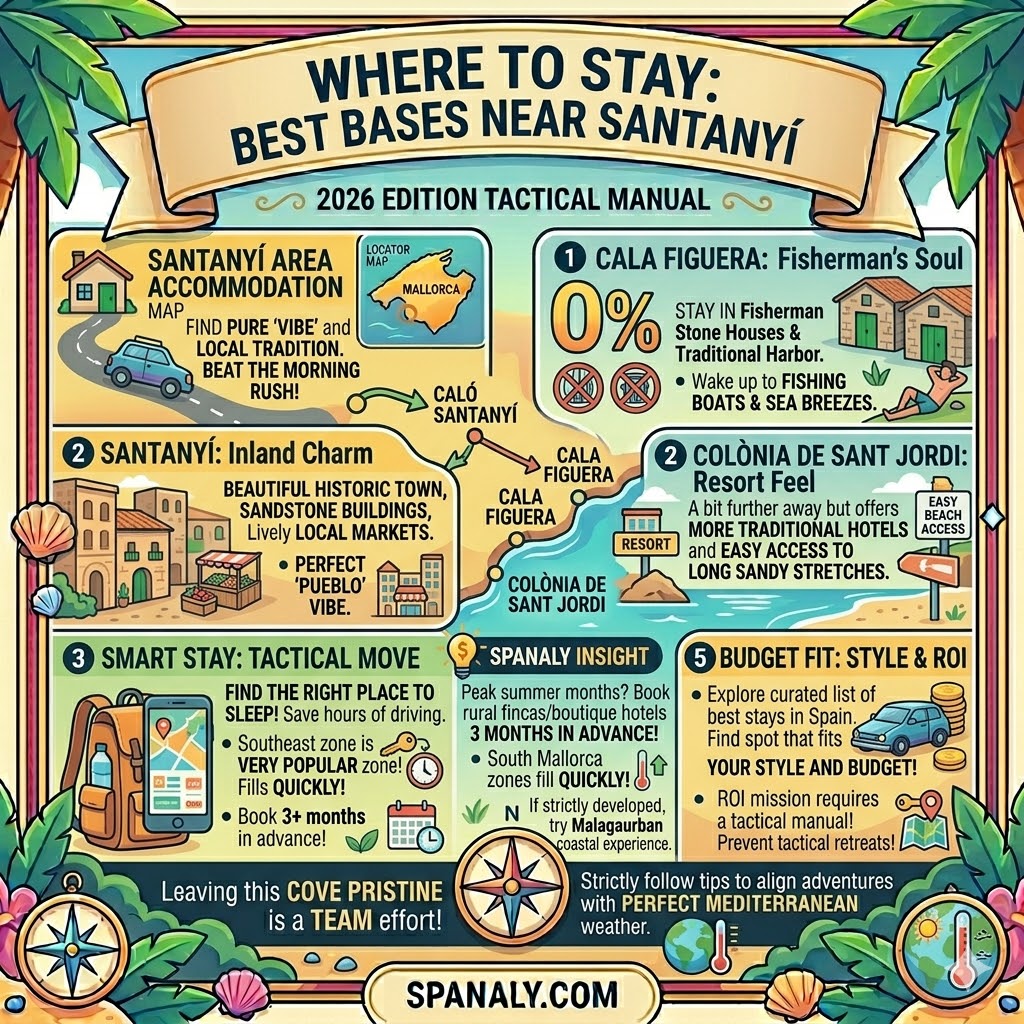
Finding the right place to sleep is a tactical move that can save you hours of driving. Because Caló des Moro is located in the southeastern corner of Mallorca, staying in the nearby town of Santanyí or the coastal village of Cala Figuera is your best bet for beating the morning rush. These areas offer a blend of traditional Balearic charm and high-quality Mediterranean hospitality.
Top Areas to Consider:
Santanyí (Inland Charm): A beautiful historic town known for its sandstone buildings and lively local markets. It’s perfect for those who want a “pueblo” vibe.
Cala Figuera (Fisherman’s Soul): A stunning working harbor just minutes away. Staying here allows you to wake up to the sound of fishing boats and sea breezes.
Colònia de Sant Jordi (Resort Feel): A bit further away but offers more traditional hotels and easy access to long sandy stretches.
To explore a curated list of the best stays in the region, check out our guide on accommodation in Spain to find a spot that fits your style and budget. If you prefer staying in a more established resort area with direct beach access, you might enjoy the high-end hotels near Playa de la Malagueta in Málaga, which offers a completely different urban coastal experience.
💡 Spanaly Insight If you are visiting during the peak summer months, book your stay at least three months in advance. The southeast of Mallorca is one of the most popular zones on the island, and the best boutique hotels and rural fincas fill up very quickly!
🤿 Active Adventures: Snorkeling and Hidden Caves
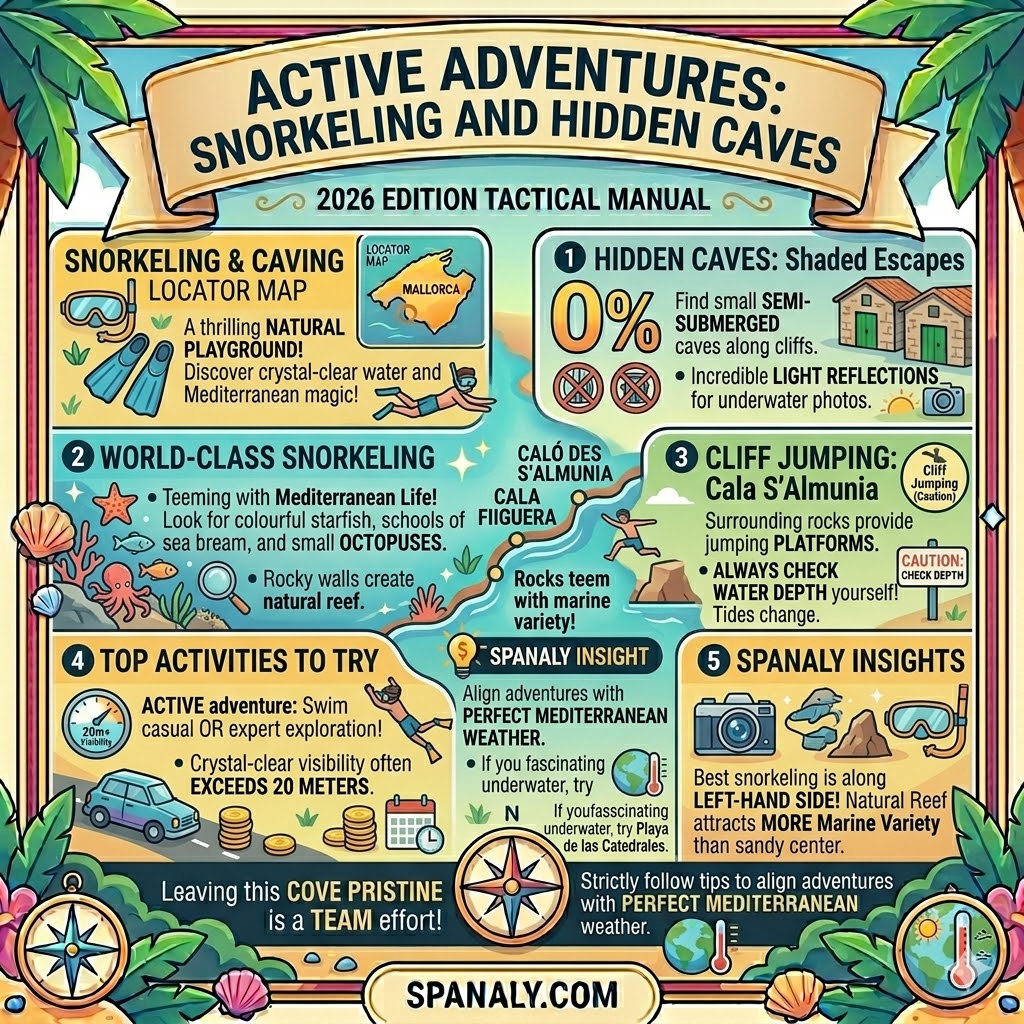
While many come to Caló des Moro just to relax on the sand, the real magic happens once you put on a mask and fins. This cove is one of the most exciting natural playgrounds in Mallorca, offering crystal-clear visibility that often exceeds 20 meters. Whether you are a casual swimmer or an underwater explorer, there is plenty to discover beneath the turquoise surface.
Top Activities to Try:
World-Class Snorkeling: The rocky walls of the cove are teeming with Mediterranean life. Look for colorful starfish, schools of sea bream, and small octopuses hiding in the crevices.
Cave Exploration: Swim along the cliffs toward the open sea to find small semi-submerged caves. These natural grottos offer a cool, shaded escape and incredible light reflections for underwater photos.
Cliff Jumping (With Caution): The surrounding rocks at nearby Cala S’Almunia provide several platforms for jumping. Always check the water depth yourself before taking the plunge, as tides can change.
Experiencing these water-based adventures is one of the top things to do in Spain for nature lovers. If you find the underwater world here fascinating, you shouldn’t miss the sea caves and stone arches of Playa de las Catedrales, where the Atlantic Ocean has sculpted a completely different kind of coastal masterpiece.
💡 Spanaly Insight The best snorkeling is actually along the left-hand side of the bay (facing the sea). The water is deeper there, and the rock formations create a natural reef that attracts more marine variety than the sandy center.
⚠️ Safety Tips: Cliffs, Waves, and Sun Protection
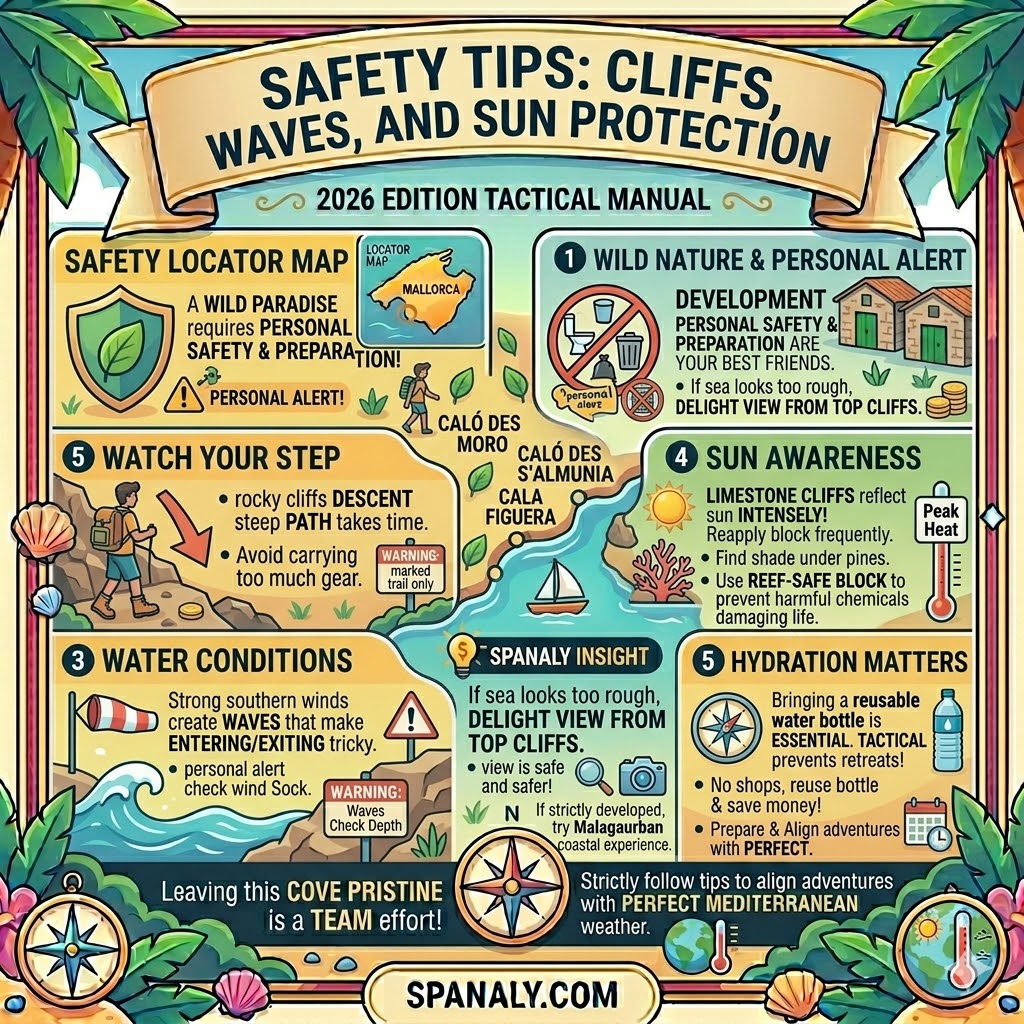
While Caló des Moro is a slice of paradise, its wild nature means you need to stay alert to ensure your day remains stress-free. There are no lifeguards on duty here, so personal safety and preparation are your best friends. By following a few simple precautions, you can focus entirely on the beauty of the Mediterranean without any worries.
How to stay safe on the coast:
Watch Your Step: As mentioned in our arrival guide, pay close attention to your footing on the rocks.
Sun Awareness: The white limestone cliffs reflect the sun intensely, so reapply your block frequently and try to find some shade under the pines.
Water Conditions: Check the wind before you go; strong southern winds can create waves that make entering and exiting the rocky shore quite tricky.
Hydration Matters: Since there are no shops, bringing a reusable bottle with plenty of water is one of the most essential Spain travel tips for remote beach days.
Being aware of your surroundings is a fundamental part of travel safety in Spain. If the sea looks too rough for a swim at this narrow cove, it is always better to wait or simply enjoy the view from the safety of the upper cliffs.
💡 Spanaly Insight If you are traveling with very young children or people with limited mobility, the descent here might be too challenging. In that case, the view from the top is still spectacular and much safer than trying to reach the tiny sandy area below.
📅 The Perfect Day: Your Caló des Moro Sample Itinerary
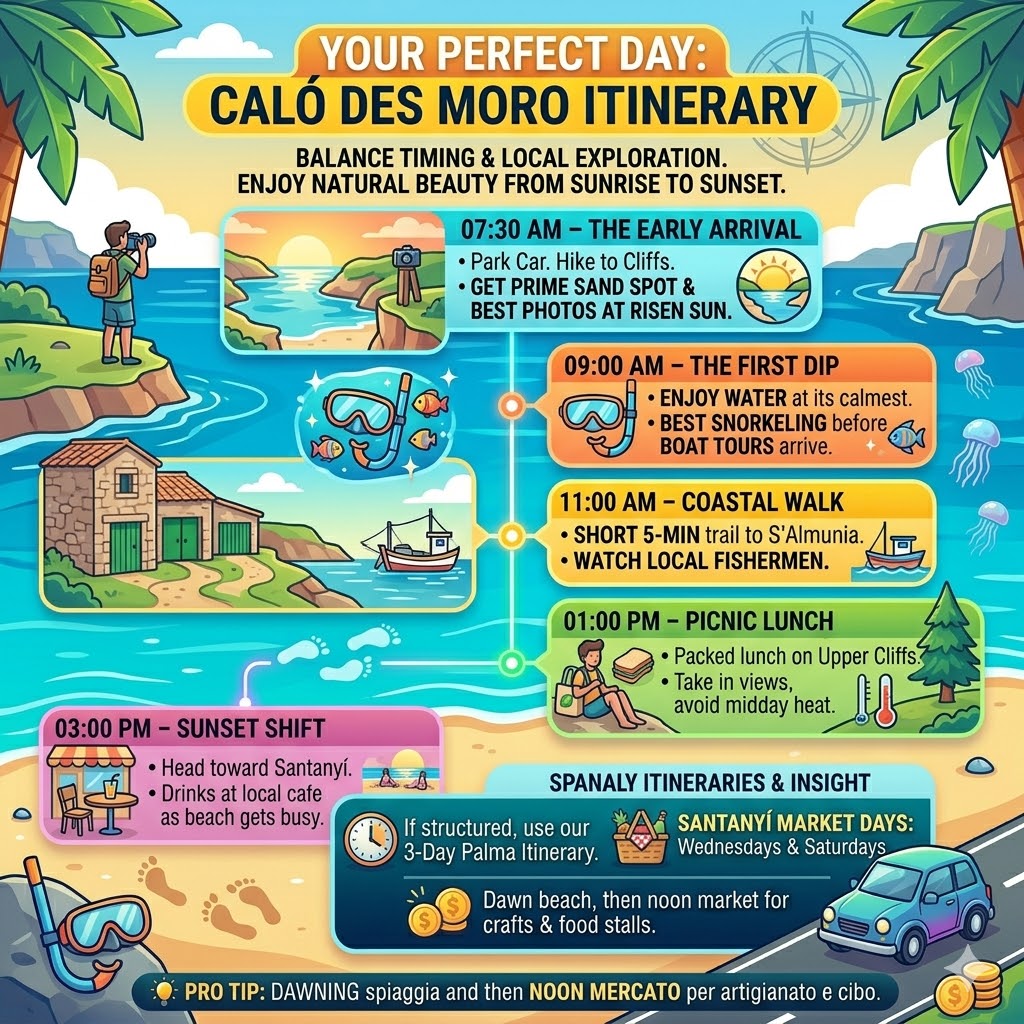
To truly capture the magic of the southeast without the stress of crowds, you need a strategy that balances early timing with evening relaxation. A visit here is more than just a quick swim; it is a full-day immersion into the natural beauty and local flavors of Mallorca’s rugged coast.
Your Step-by-Step Plan for Success:
07:30 AM – The Early Arrival: Secure your parking spot and begin the walk before the heat peaks. Reaching the cliffs as the sun rises ensures the best lighting for photos and your choice of a spot on the sand.
09:00 AM – The First Dip: Enjoy the crystal-clear water at its calmest point. This is the golden hour for snorkeling before the midday boat tours arrive.
11:00 AM – Coastal Exploration: Follow the short 5-minute trail to admire the rustic fisherman houses of Cala S’Almunia and the traditional stone ramps.
01:00 PM – Cliffside Picnic: Find a shaded spot under the pine trees on the upper cliffs for a light lunch with a world-class view.
05:00 PM – Sunset at Es Pontàs: Head back toward the car but stop at the nearby “Es Pontàs” viewpoint. Watching the sunset through this massive natural stone arch is a spectacular way to end the coastal part of your day.
07:30 PM – Dinner in Santanyí: Finish your journey in the historic heart of Santanyí. The town square comes alive at night, offering the perfect atmosphere for a traditional Mediterranean dinner at a local cellar or terrace.
Having a structured Spain travel itineraries like this helps you maximize every hour and avoid the busiest midday shifts. If you enjoy this type of organized adventure, our 3-day Palma de Mallorca itinerary is a perfect companion for the rest of your trip.
💡 Spanaly Insight Wednesdays and Saturdays are market days in Santanyí. If your trip aligns with these days, visit the beach at dawn and head to the town by noon to explore vibrant local crafts and gourmet food stalls before your evening dinner.
💎 Spanaly Pro Tips: Secrets for an Elite Visit
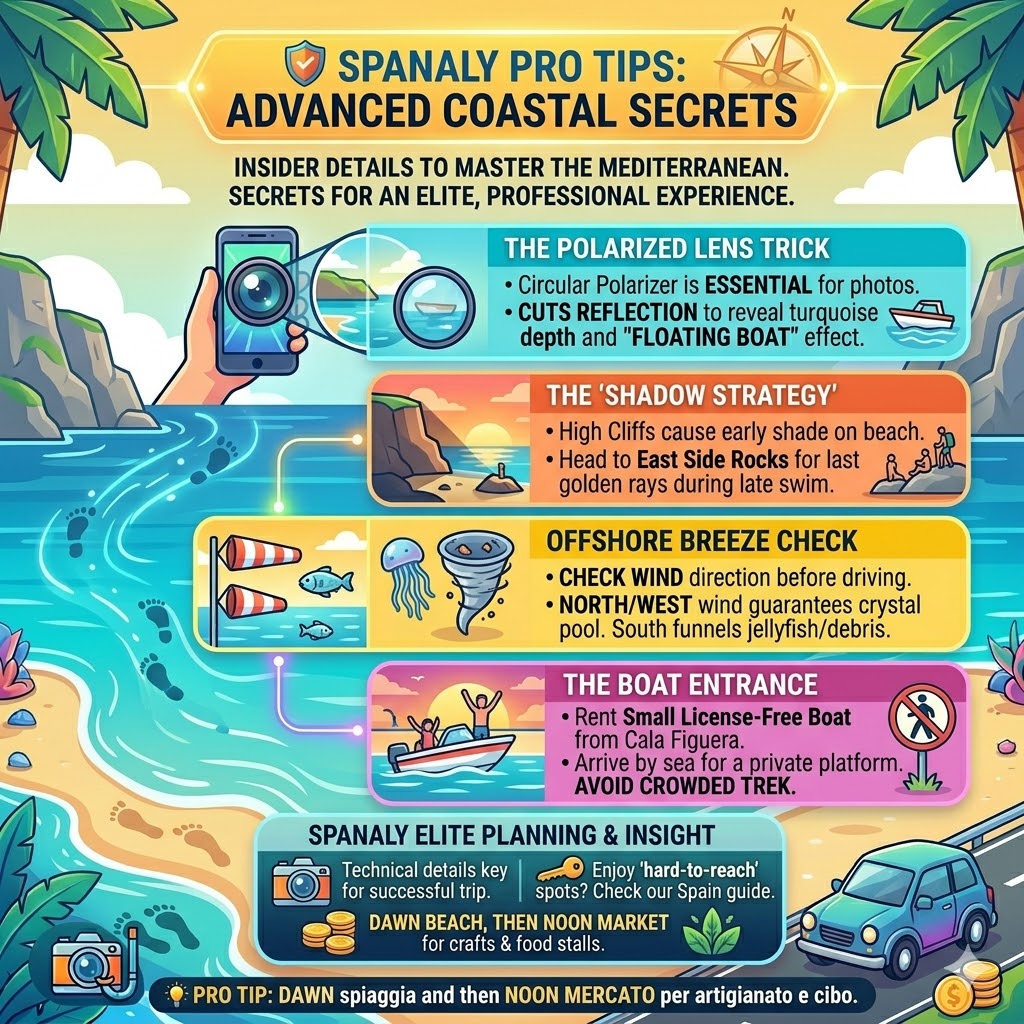
Beyond the basics of parking and packing, there are small details that separate a stressful tourist trip from a professional Mediterranean experience. These “insider secrets” are rarely mentioned in standard guides but will make a world of difference when you are standing on those cliffs.
The Polarized Lens Trick: If you want that famous “floating boat” effect in your photos, a circular polarizer for your camera or phone is essential. It cuts the surface reflection of the water, revealing the incredible turquoise depth that the naked eye sometimes misses in bright glare.
The “Shadow Strategy”: Because of the high cliffs, the beach loses direct sunlight earlier than other spots. If you want a late afternoon swim, head to the rocks on the East side to catch the last golden rays while the sandy area is already in the shade.
The Offshore Breeze Check: Before you drive down, check the wind direction. If there is a strong Sirocco (South) wind, the cove acts like a funnel, bringing in jellyfish and floating debris. A North or West wind, however, guarantees that “crystal pool” look.
The Boat Entrance: If the hike feels too daunting, consider renting a small “Licence-Free” boat from nearby Cala Figuera. Arriving by sea gives you a private platform to jump from and avoids the crowded trek down the rocky path entirely.
Planning these technical details is what makes for a successful plan trip to Spain. If you enjoy discovering these “hard-to-reach” spots with professional precision, you should also explore our guide to other hard to reach beaches in Spain for your next adventure.
💡 Spanaly Insight Look for the “secret” natural bathtub! Between Caló des Moro and Cala S’Almunia, there are small depressions in the flat rocks that fill with seawater and get naturally warmed by the sun. They are perfect for a private “thermal” soak with a view of the open sea.
🛡️ Visitor FAQs – Caló des Moro Essentials & Logistics
📶 Is there mobile phone signal or Wi-Fi at the beach?
Connectivity is extremely limited once you descend into the cove. Due to the high limestone cliffs, signal bars often disappear completely. It is best to download your offline maps and parking location beforehand to avoid getting lost on your way back to the car.
🐾 Can I bring my dog to Caló des Moro?
Unfortunately, pets are not allowed on this specific beach, especially during the peak summer months. Local regulations are strict to protect the fragile ecosystem and the limited space on the sand. If you are traveling with a dog, nearby wild coastal paths are great for walks, but the cove itself remains off-limits for furry friends.
🛸 Are drones allowed for photography?
Mallorca has strict regulations regarding drone usage. Caló des Moro is often within restricted airspace due to its environmental protection status and proximity to private residential areas. Flying a drone without a specific permit can lead to heavy fines. Always check the official local flight maps before launching.
🚲 Can I reach the cove by bicycle?
Yes, cycling is a great way to bypass some of the parking stress. However, you must lock your bike at the designated areas near the residential entrance. Do not attempt to take your bike down the rocky descent to the beach; the terrain is too steep and dangerous for anything other than walking.
🛥️ Is there a limit on boats entering the bay?
While private boats can anchor in the deeper turquoise waters, they must respect the buoy lines that protect swimmers. During busy days, maritime authorities may monitor the area to ensure boats stay at a safe distance from the shore to preserve the clarity of the water and swimmer safety.
Caló des Moro Guide by Spanaly.com
In a word: Yes. Despite the crowds and the rocky hike, standing on those cliffs and seeing that impossible shade of blue is a travel memory that stays with you forever. It is a place that reminds us why the Mediterranean is so special.
To make the most of your visit:
Be Early: Respect the sunrise to claim your piece of paradise.
Be Prepared: Wear the right shoes and bring plenty of water.
Be Respectful: Help us keep this fragile cove clean for the next traveler.
If you are looking for more coastal inspiration, don’t miss our complete Spain beach guide to discover other hidden gems across the country. Whether you crave wild coves or wide sandy shores, Spain always has a perfect spot waiting for you.
Safe travels, and enjoy every turquoise minute! 🌊📸