Table of Contents
Toggle💰 Cost of Travel in Northern Spain
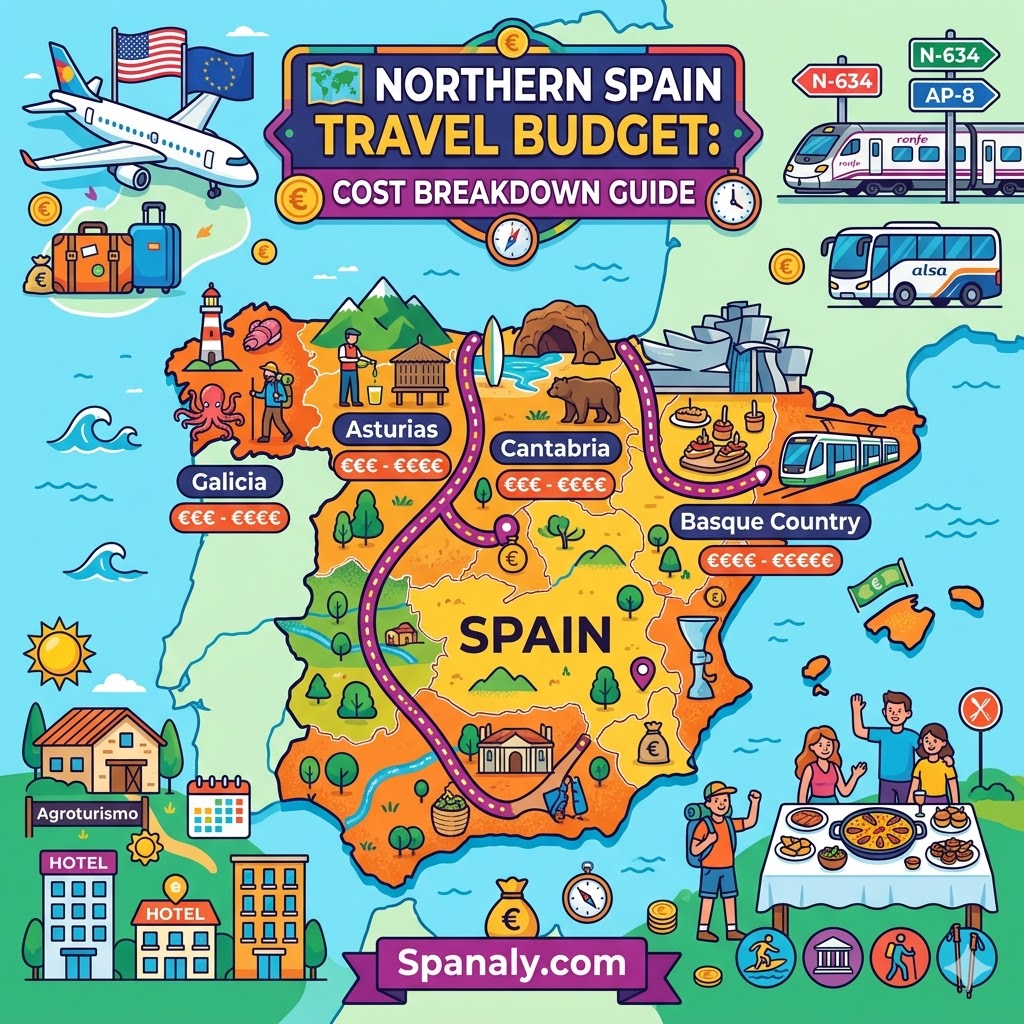
Stop comparing the North to Madrid or Marbella. España Verde operates on a different financial scale. While the Mediterranean coasts drain your wallet, Northern Spain offers elite quality at a 20% discount. To survive financially, you must balance San Sebastian’s luxury with Galicia’s rugged affordability.
The Reality: Asturias and Galicia remain the best value regions in Western Europe.
The Exception: San Sebastian is a “budget-killer.” Prepare for premium prices in the culinary capital.
Price Gap: Expect to pay 30% less for world-class seafood than in Barcelona or Ibiza.
Northern Spain is affordable if you skip the peak summer price-spikes. Getting your math wrong early leads to a painful “budget-burn” by day three. Align your wallet with our Ultimate Northern Spain Travel Guide to ensure every Euro buys a real experience. Don’t let the green landscapes fool you; quality here is high, but the costs are manageable.
📊 Northern Spain Expenses: Financial Snapshot
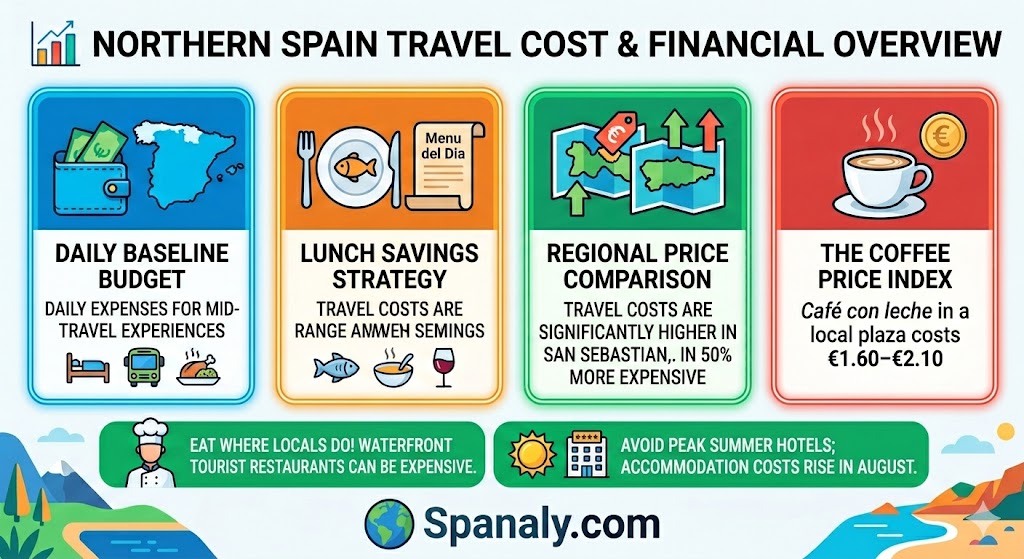
The North isn’t a “one-price” zone. Costs fluctuate wildly between Basque luxury and Galician grit. Use this snapshot to anchor your financial expectations before spending a single Euro.
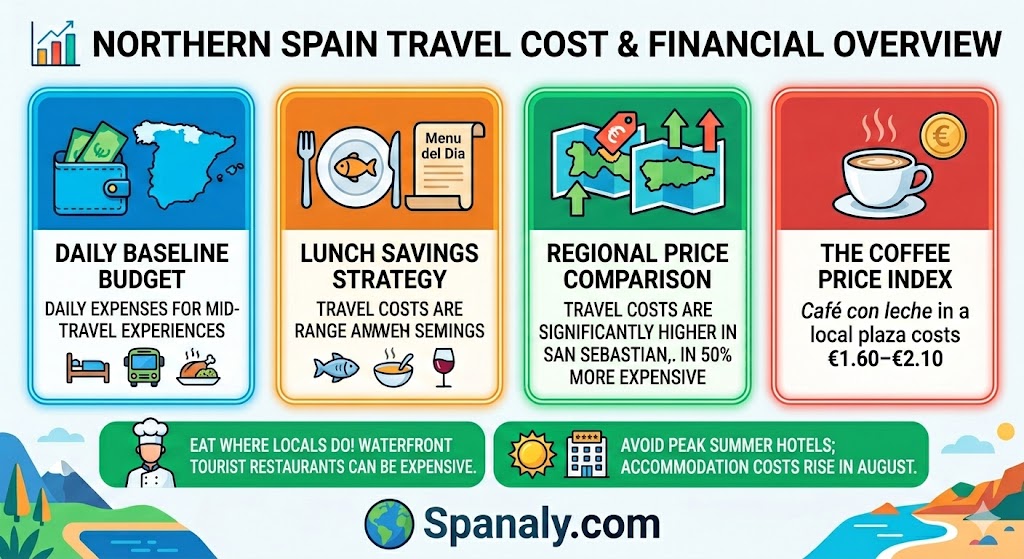
Daily Baseline: Budget €75–€95 for a comfortable mid-range Atlantic experience.
Lunch Strategy: The Menú del Día is your financial savior, costing only €12–€18.
Regional Gap: San Sebastian can be 50% more expensive than rural Asturias.
The Coffee Index: A Café con leche in a local plaza costs €1.60–€2.10.
Northern Spain rewards those who eat like locals. If you dine only at tourist-facing waterfronts, your food costs will double. Avoid the “price-blindness” of peak summer; hotels in August can triple in cost. Balance your spending with our Spain travel budget guide to ensure your funds last the entire journey.
🏙️ Regional Price Comparison: Luxury Hubs vs. Rural Value
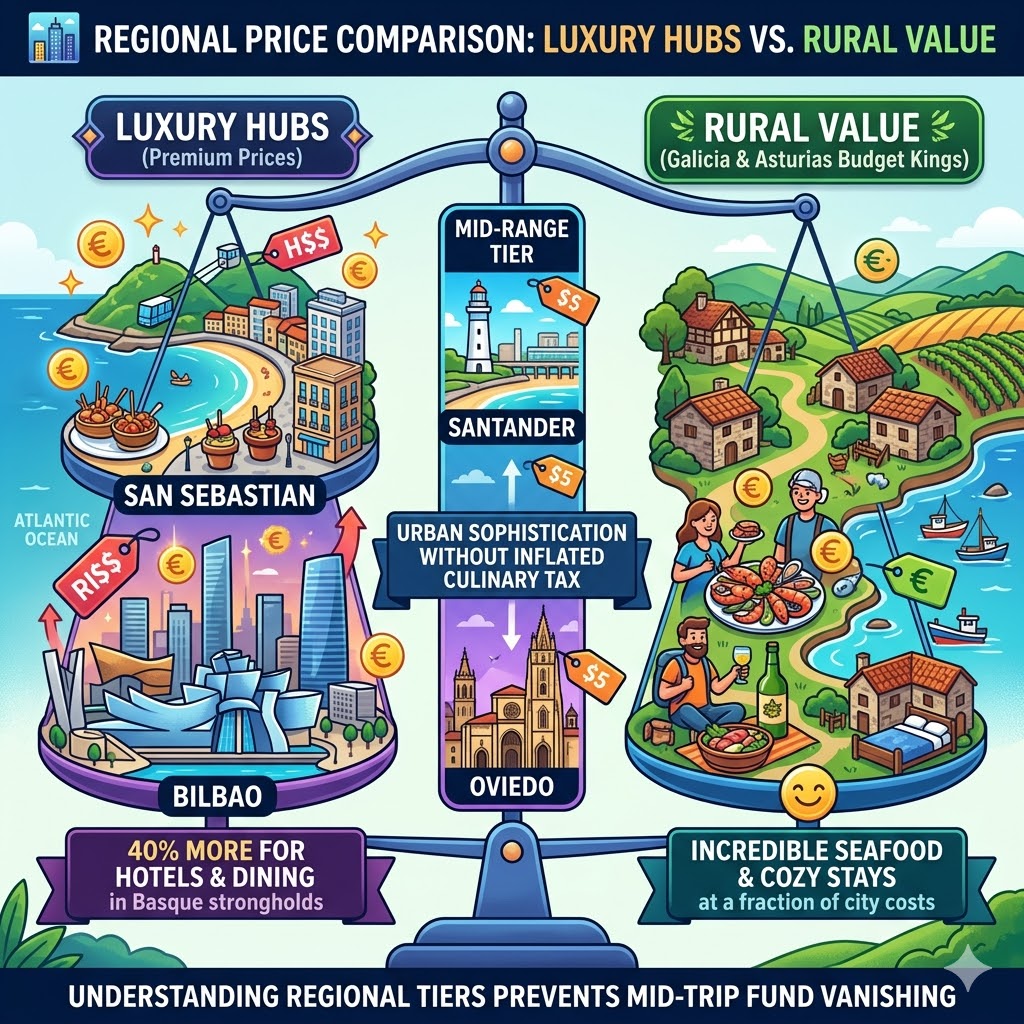
Geography dictates your Atlantic budget. You will face a “price shock” moving from Galicia’s rustic villages to San Sebastian’s high-end streets. Understanding these regional tiers is essential to prevent your funds from vanishing mid-trip.
The High-End Tier: San Sebastian and Bilbao command premium prices. Expect to pay 40% more for hotels and dining in these Basque strongholds.
The Mid-Range Tier: Santander and Oviedo offer a perfect balance. You get urban sophistication without the inflated “culinary tax” of their neighbors.
The Value Tier: Galicia and Asturias are the budget kings. Rural areas here provide incredible seafood and cozy stays at a fraction of city costs.
Don’t treat the North as a single expense zone. If you spend too long in the Basque Country, your daily average will skyrocket. To keep costs down in expensive hubs, learn how to order food like a local in Spain and avoid “tourist-priced” menus. Balance your itinerary by pairing expensive city stays with affordable rural retreats.
🗓️ Trip Totals: Estimated Costs for 7-Day & 14-Day Itineraries
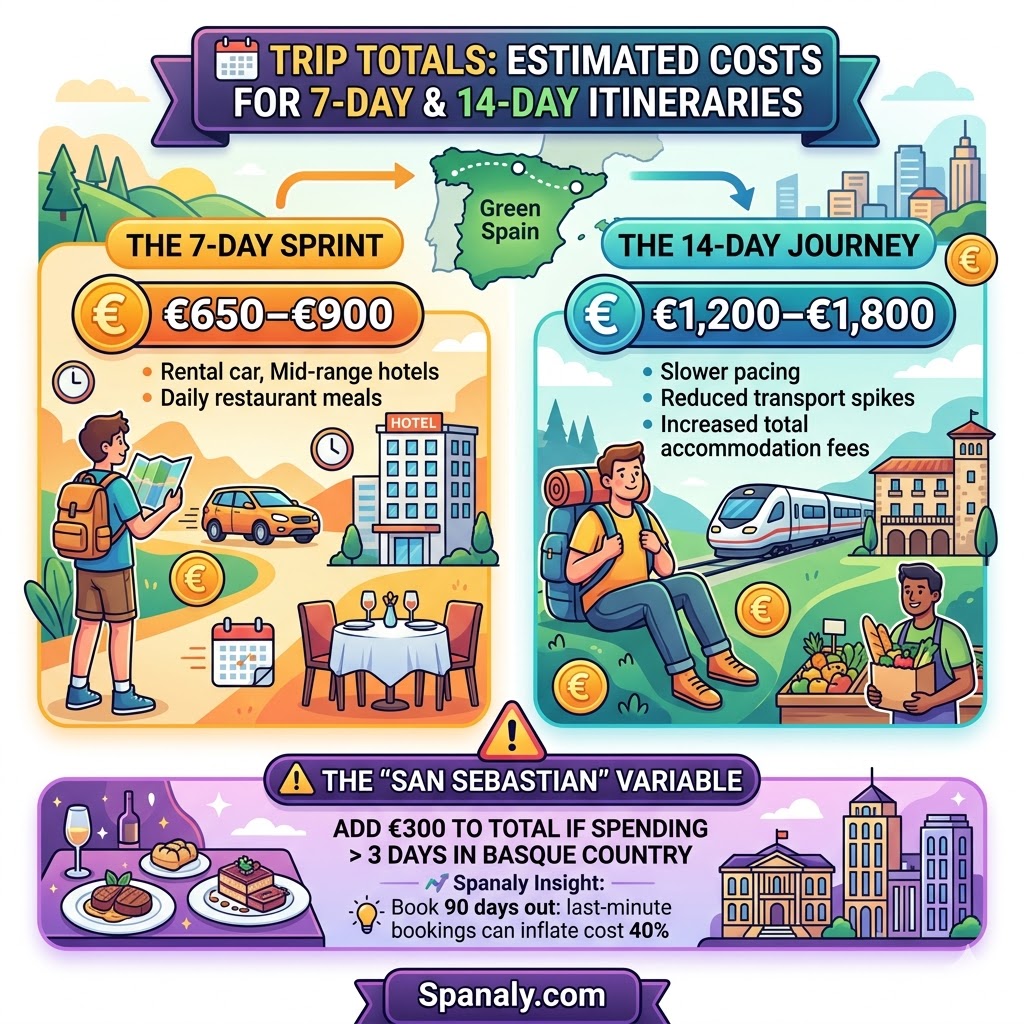
Your total spend depends on your “Atlantic Strategy.” Short trips often cost more per day due to fast-paced transport. Long-term stays allow for slow travel and grocery savings in rural Galicia.
The 7-Day Sprint: Budget €650–€900 per person. This covers a rental car, mid-range hotels, and daily restaurant meals.
The 14-Day Journey: Expect €1,200–€1,800 per person. Slower pacing reduces transport spikes but increases total accommodation fees.
The “San Sebastian” Variable: Add €300 to your total if spending more than three days in the Basque Country.
Don’t guess your final bill. Use our Spain travel itinerary to align your route with these financial tiers. Northern Spain is affordable only if you track your “invisible” costs like parking and highway tolls. Getting these totals right early ensures you won’t face a credit card shock at the airport.
🛡️ Spanaly Insight: Book your car and “Paradores” hotels exactly 90 days out. Last-minute bookings in the North during peak months can inflate your total trip cost by 40%.
🚆 Flights & Transport Costs: From Arrivals to Local Transit
Transport is your biggest Atlantic expense. International flights to Bilbao or Santiago often cost 20% more than landing in Madrid. You must balance the convenience of a direct “North” landing with the savings of a high-speed train connection from the capital.
Airfare Baseline: Expect €550–€850 for round-trip flights from the USA. European budget carriers like Vueling offer local hops for €40–€90.
Regional Trains: Renfe and Feve tickets range from €15–€45. Booking “Promo” rates 60 days early is essential to avoid price spikes.
Bus Network: Alsa is the local king. Inter-city tickets cost €12–€25 and offer the most reliable coverage for rural villages.
City Transit: Metros in Bilbao or buses in Santander cost roughly €1.50–€2.10 per single ride.
Don’t let airport taxi lines drain your first-day budget. Check our best flights to Spain guide to find the cheapest entry points into the North. Using a rechargeable “Barik” card in Bilbao drops transit fares by 40% immediately. Rushing your transport planning leads to “last-minute taxes” that can inflate your travel bill by hundreds of Euros.
🛡️ Spanaly Insight: Many airports in the North, like Santander or Asturias, are small and lack 24-hour transit. If your flight lands after 11:00 PM, budget €30–€50 for a taxi, as public shuttle buses will have stopped running.
🚘 Road Trip Logistics: Car Rentals, Fuel, Tolls & Parking Prices
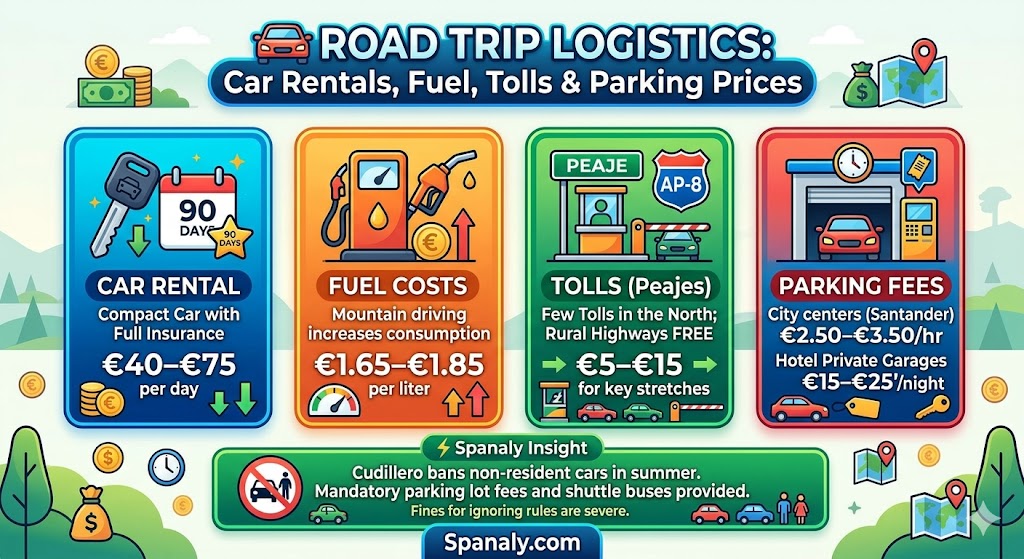
A car is essential to unlock Northern Spain’s Atlantic coast. The freedom to explore Picos de Europa comes with fixed logistical expenses you must calculate. Relying on last-minute rentals in the North is a guaranteed budget-killer during peak summer months.
Car Rental: Budget €40–€75 per day for a compact car with full insurance. Book through our renting car Spain guide exactly 90 days early to secure the best rates.
Fuel Costs: Fuel in Spain costs roughly €1.65–€1.85 per liter. Northern routes involve mountain driving, which increases your overall consumption.
Tolls (Peajes): The North has few tolls. Expect €5–€15 for key stretches like the AP-8 between Bilbao and San Sebastian. Rural highways are free.
Parking Fees: Parking in city centers like Santander costs €2.50–€3.50 per hour. Budget hotels with private garages often charge €15–€25 per night.
Don’t guess your driving costs. Use our driving in Spain guide to understand local rules and avoid expensive fines. Northern Spain rewards early planners with cheaper rentals and guaranteed parking slots.
🏨 Accommodation Guide: Prices for Hostels, Apartments & Luxury Stays
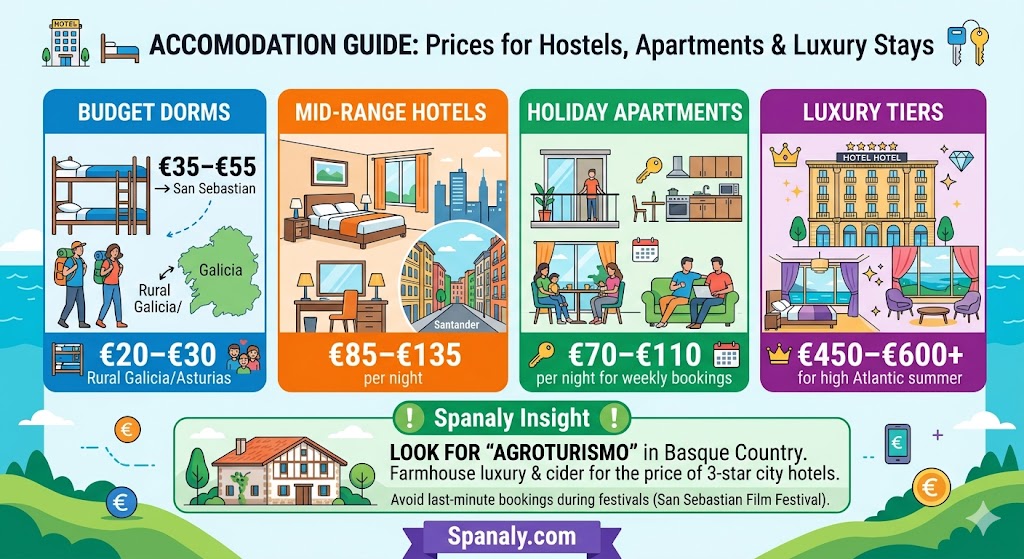
Sleeping in the North ranges from rustic stone huts to Michelin-starred hotel suites. Your pillow price fluctuates wildly between the Basque coast and Galician valleys. Secure your stay through our accommodation in Spain guide to avoid the “no-vacancy” panic of July and August.
Budget Dorms: Expect €35–€55 in San Sebastian, but only €20–€30 in rural Galicia or Asturias.
Mid-Range Hotels: A comfortable double room in Santander or Oviedo costs €85–€135 per night.
Holiday Apartments: Booking a flat for a week drops your nightly rate to €70–€110 in most cities.
Luxury Tiers: 5-star icons like Hotel Maria Cristina start at €450–€600 during the high Atlantic summer.
Northern Spain is famous for “Posadas” and “Pazos” (historic country houses). These offer better value and more authenticity than generic city hotels. Avoid last-minute bookings in San Sebastian; prices can spike by 200% during the September film festival.
🛡️ Spanaly Insight: Look for “Agroturismo” stays in the Basque Country. You get a luxury farmhouse experience with local cider and breakfast for the price of a basic 3-star city hotel.
🍽️ Dining & Food Costs: Restaurants, Tapas, Bars & Groceries
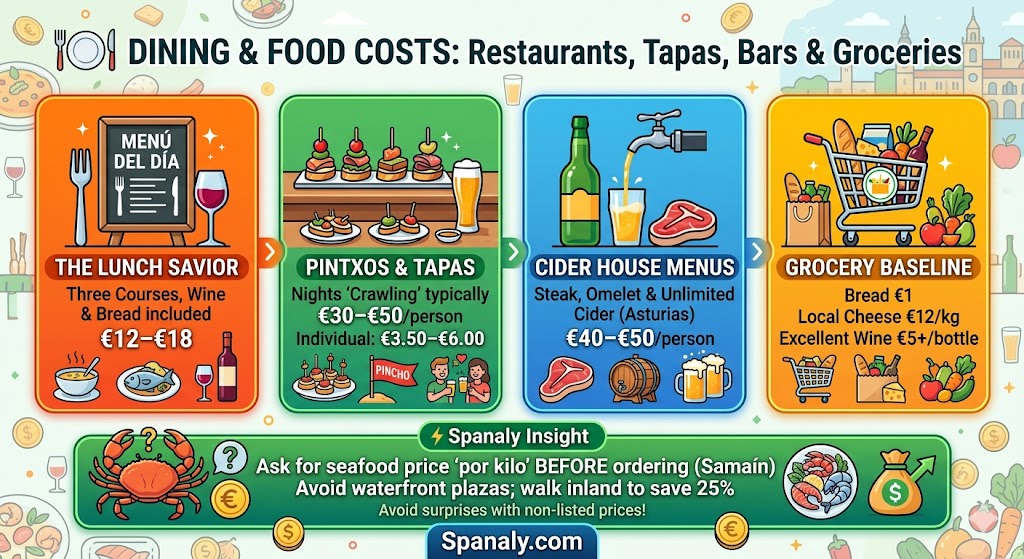
Eating in Northern Spain is a strategic game of timing and geography. You will find that Atlantic seafood quality is unmatched, but the bill varies wildly by city. Mastering the local dining rhythm is the only way to avoid the “tourist-price trap” in popular coastal hubs.
The Lunch Savior: A Menú del Día costs €12–€18 and includes three courses, wine, and bread. This is the most efficient way to eat high-quality food on a budget.
Pintxos & Tapas: Individual Pintxos in San Sebastian cost €3.50–€6.00 each. A night of “crawling” through bars typically totals €30–€50 per person with drinks.
Cider House Menus: In Asturias, a full Sidería menu (steak, omelet, and unlimited cider) averages €40–€50 per person.
Grocery Baseline: Shopping at Mercadona or Eroski is cheap. Fresh bread costs €1, local cheese €12/kg, and excellent wine starts at €5 per bottle.
Northern Spain’s Atlantic diet is heavy on seafood and beef. To navigate the local bars like a pro, consult our Spanish drinks guide to pair your meal with the right Sidra or Txakoli. Avoid dining on the main waterfront plazas; walking just two blocks inland can drop your bill by 25% immediately.
🛡️ Spanaly Insight: Many traditional Galician seafood spots (Samaín) don’t list prices for “Marisco del día” on the menu. Always ask for the price “por kilo” before ordering to avoid a triple-digit surprise when the check arrives.
📅 Seasonal Pricing: High Season vs. Low Season Impact
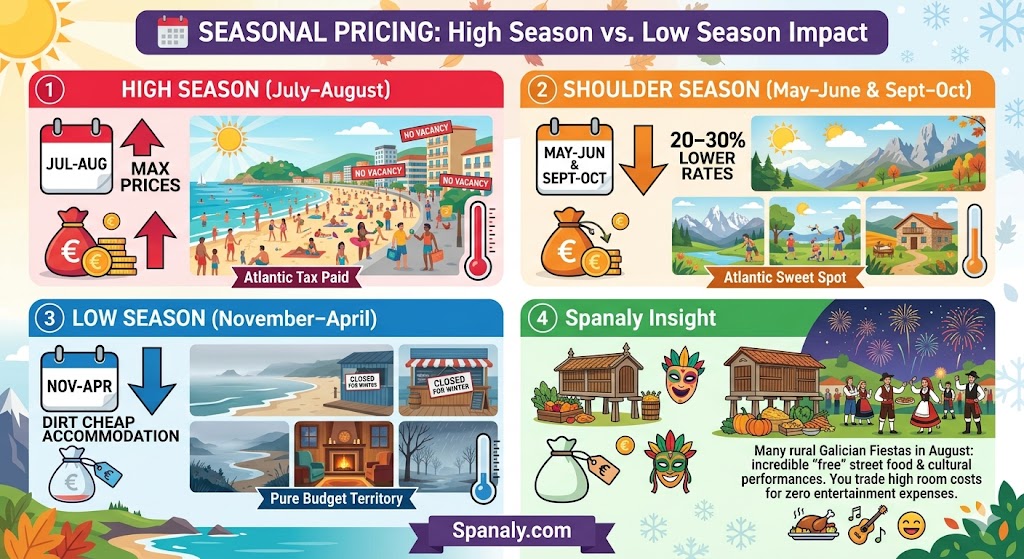
The Atlantic calendar dictates your final bill. Northern Spain is seasonal; prices for a seaside room in San Sebastian can triple between January and August. Timing your arrival is the most effective way to slash your “Atlantic tax” without sacrificing the experience.
High Season (July–August): This is the “budget-burn” period. Expect maximum prices for hotels and car rentals. Coastal towns are packed, and the “no-vacancy” sign is king.
Shoulder Season (May–June & Sept–Oct): The Atlantic “Sweet Spot.” You get mild weather and 20–30% lower hotel rates. Most attractions remain open without the summer crowds.
Low Season (November–April): Pure budget territory. Accommodation is dirt cheap, but rural “Agroturismos” and coastal seafood shacks often close for the winter.
Don’t let the weather surprise your wallet. Consult our best time to visit Northern Spain guide to balance sunshine with savings. Visiting the Picos de Europa in late September offers peak beauty at a fraction of the August cost. Avoid the mistake of booking “last minute” for July; you will pay a premium for the remaining low-quality rooms.
🛡️ Spanaly Insight: Many rural Galician festivals (Fiestas) occur in August. While hotels are expensive, these festivals offer incredible “free” street food and cultural performances. You trade high room costs for zero entertainment expenses.
🎟️ Activity & Outdoor Costs: Attractions, Surfing & Camino Budget
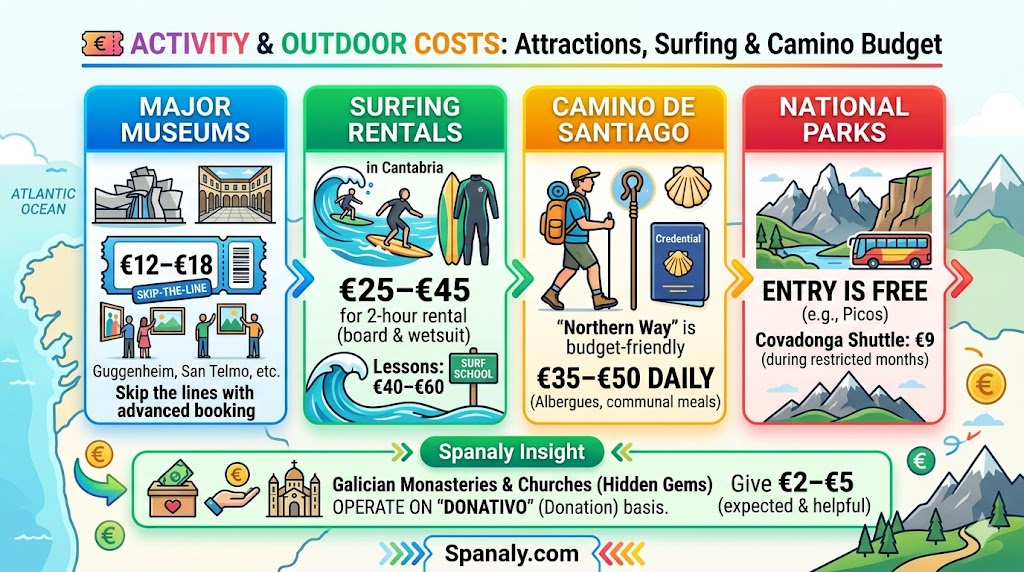
Adventure in the North is often “free” but requires logistical investment. While the Cantabrian peaks and Galician cliffs cost nothing to view, specific gear and entry fees add up. Navigating these costs effectively ensures your outdoor Atlantic dream doesn’t become a financial nightmare.
Major Museums: Tickets for the Guggenheim (Bilbao) or San Telmo (San Sebastian) cost €12–€18. Book through our Spanish attractions guide to skip the lines.
Surfing Rentals: Expect €25–€45 for a 2-hour rental including a wetsuit and board. Lessons in Cantabria usually start at €40–€60.
Camino de Santiago: Walking the “Northern Way” is budget-friendly. Plan for €35–€50 daily for Albergues, communal meals, and Credential fees.
National Parks: Entry to Picos de Europa is free. However, the Covadonga shuttle bus costs €9 during restricted peak months.
Don’t let “gear fatigue” drain your wallet. Renting hiking poles or wetsuits locally is often cheaper than paying extra airline baggage fees. Northern Spain rewards the active traveler with incredible value, provided you book technical activities like canyoning or guided treks at least 30 days in advance.
🛡️ Spanaly Insight: Many Galician monasteries and Romanesque churches in rural villages operate on a “Donativo” (donation) basis. Giving €2–€5 is culturally expected and helps maintain these “hidden” UNESCO-worthy sites that don’t have formal ticket booths.
👨👩👧👦 Traveling Styles: Family, Couple & Backpacker Budget Profiles
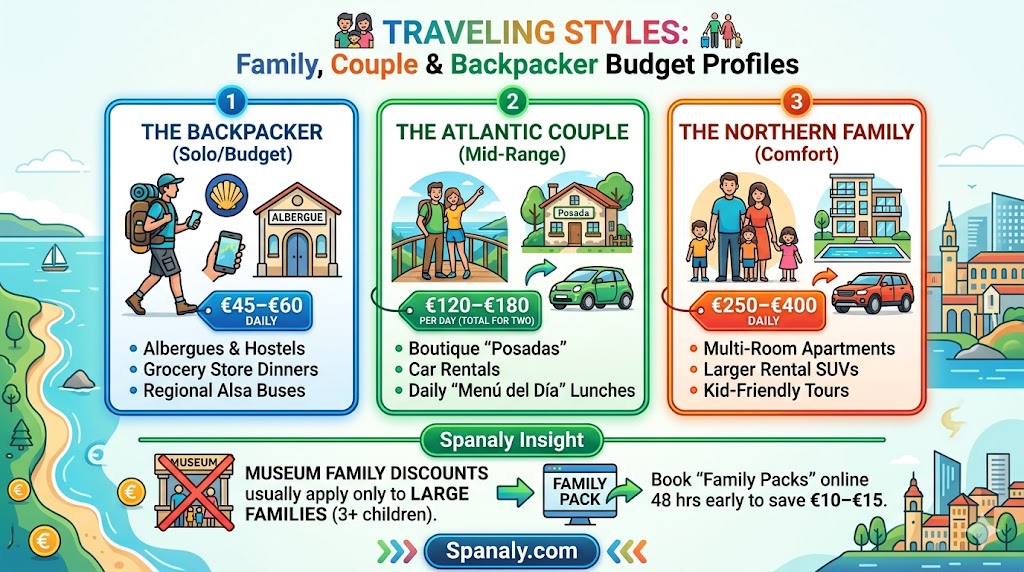
Your Atlantic budget isn’t universal; it shifts based on your travel party’s needs. A solo hiker on the Camino faces different financial pressures than a family exploring Bilbao. Tailoring your expectations to your “traveler profile” is the first step in our plan trip to Spain strategy to avoid overspending.
The Backpacker (Solo/Budget): Plan for €45–€60 daily. You rely on Albergues, grocery store dinners, and regional Alsa buses.
The Atlantic Couple (Mid-Range): Budget €120–€180 per day (total for two). This covers boutique “Posadas,” car rentals, and daily “Menú del Día” lunches.
The Northern Family (Comfort): Expect €250–€400 daily for a family of four. You need multi-room apartments, larger rental SUVs, and kid-friendly tours.
Don’t force a backpacker budget on a family trip. Northern Spain rewards those who match their spending to their lifestyle. Families should prioritize apartments with kitchens to save 30% on food costs. Couples should mix high-end Basque dining with affordable Asturian retreats to maintain a healthy average.
🛡️ Spanaly Elite: Reddit-Tested Budget Secrets for the North

Forget the generic advice about booking early. These “underground” tips come from seasoned road-trippers and local residents who know how to exploit the Atlantic system to save hundreds.
The “Barik” Hack for Groups: In Bilbao, don’t buy individual tickets. One Barik Card (rechargeable) can be used for up to 10 people simultaneously. Tap it once for each person to access the lowest possible transit rates.
Avoid the “San Sebastian” Toll Trap: Google Maps often defaults to the AP-8 toll road between Bilbao and San Sebastian (€13+). Manually select the N-634. It takes 30 minutes longer but offers stunning coastal cliff views for €0.
The Pharmacy Sunscreen Strategy: Tourist shops in coastal Cantabria mark up sunscreen by 300%. Buy your SPF at a local “Farmacia.” The quality is pharmaceutical grade, and the price is regulated, saving you €15 per bottle.
Late-Night “Raciones” Hack: In small Galician towns, avoid the formal dinner menu. Order “Media Raciones” (half portions) at the bar. You get 80% of the food for 50% of the price.
The Supermarket “Pescadería” Secret: Many large supermarkets (like Alimerka) will clean and steam your fresh seafood for free. Buy a kilo of Atlantic mussels for €4, have them steamed, and eat them at a scenic viewpoint.
Don’t let “hidden fees” ruin your Atlantic mood. Use these field-tested secrets to keep your budget lean while living like a local aristocrat. Northern Spain is only expensive for those who follow the crowds.
🛡️ Spanaly Insight: Many coastal viewpoints (Miradores) have high-quality binocular stands that only accept 50-cent or 1-Euro coins. Keep a small pouch of coins in your car. Don’t miss the chance to spot whales or hidden coves from the cliffs because you didn’t have “old-fashioned” cash.
🛡️ Visitor FAQs – Northern Spain Travel Budget & Costs Guide
🛡️ Is it customary to tip in Northern Spanish restaurants?
Tipping is not mandatory but appreciated. Locals usually leave small change (spare coins) for coffee or drinks. For a full meal, leaving 2-5 Euros is considered a generous gesture. Service charges are already included in the menu price, so there is no pressure to calculate percentages.
🎫 Can I use my credit card for small payments in rural villages?
Yes, Spain is highly digitized. Most bars and shops in Asturias and Galicia accept contactless payments (Apple Pay/Google Pay) even for a 1.50 Euro coffee. However, we recommend carrying at least 20 Euros in cash for remote mountain "Refugios" or small village bakeries where signal might be weak.
💧 Do I need to pay for water at restaurants in the North?
By law, restaurants in Spain must provide free tap water (Agua del grifo) if requested. The water in Northern Spain is exceptionally clean and high-quality. If you prefer bottled water, expect to pay 1.50 to 2.50 Euros for a glass bottle.
🚑 Is travel insurance mandatory for visiting the Atlantic coast?
While not legally required for all visas, it is highly recommended. Northern Spain involves outdoor activities like hiking and surfing where minor accidents can happen. Private medical consultations for tourists can start at 80 Euros, so having insurance ensures you are covered at local private clinics.
🏰 Are museums and attractions cheaper on certain days?
Absolutely. Many state-owned museums in the North offer free entry on Sunday afternoons or specific days of the week (often Wednesdays). Additionally, the first Sunday of every month is usually free for many historical sites. Check the official "Cultura" website of each region to plan your visits around these free windows.
Northern Spain Budget Guide by Spanaly.com
Northern Spain isn’t just a destination; it’s a high-value experience that rewards the smart traveler. Whether you’re chasing Michelin stars in San Sebastian or hidden coves in Galicia, your budget is now your superpower.
🛡️ Be a Local Insider: Use our “Reddit hacks” to avoid the tourist-price traps.
🍏 Taste the Value: Prioritize the Menú del Día for high-end food at low-end prices.
🚆 Master the Map: Don’t let logistics stress you out. Check our comprehensive guide on transport in Northern Spain to lock in your routes.
📅 Time it Right: Choose the shoulder season to get 5-star views at 3-star rates.
The green coast of Spain is ready for you. Pack your rain jacket, bring your appetite, and prepare for a journey where every Euro spent creates a lifelong memory.
Safe travels, and see you on the Atlantic road! ✂️🛡️🩺