🎭 Aste Nagusia
Imagine the scent of grilled talos mixing with the roar of thousands. The iconic Marijaia raises her arms, signaling nine days of pure Basque energy. This isn’t just a party; it is the soul of Bilbao unleashed.
The Vibe: Non-stop concerts, giant puppets, and world-class fireworks.
The Heart: Centered around the txosnas (festive tents) along the Nervión River.
The Experience: A vibrant blend of ancient Basque traditions and modern street revelry.
Whether you seek rural sports or late-night dancing, this festival defines the spirit of Northern Spain. To plan your broader journey, check our Northern Spain Travel Guide for expert regional tips.
Aste Nagusia offers a unique window into local identity. You will feel the city’s pulse through every drumbeat and communal toast. Get ready to experience the biggest street festival in the Bay of Biscay.
⚡ Aste Nagusia Snapshot: Essential Visitor Info
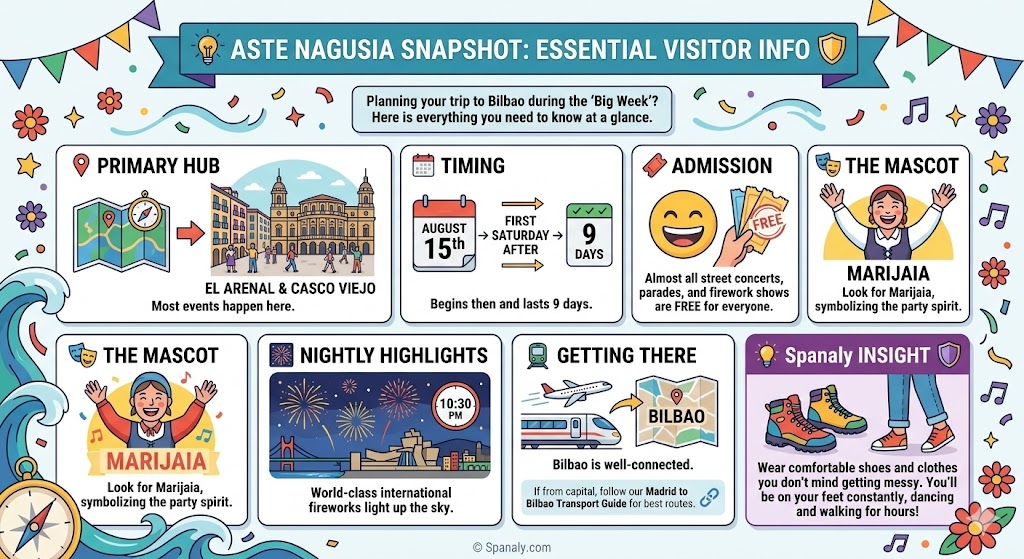
Planning your trip to Bilbao during the “Big Week” requires a bit of strategy. From transport to traditions, here is everything you need to know at a glance:
📍 Primary Hub: Most events happen at El Arenal and the Casco Viejo (Old Town).
📅 Timing: The festival begins on the first Saturday after August 15th and lasts 9 days.
🎟️ Admission: Almost all street concerts, parades, and firework shows are free for everyone.
🎭 The Mascot: Look for Marijaia, the giant lady with raised arms who symbolizes the party spirit.
🎆 Nightly Highlights: World-class international fireworks light up the sky every night at 10:30 PM.
🚆 Getting There: Bilbao is well-connected. If you are coming from the capital, follow our Madrid to Bilbao Transport Guide for the best routes.
💡 Spanaly Insight: Wear comfortable shoes and clothes you don’t mind getting messy. Between the crowds, the occasional flour toss, and hours of dancing, you’ll be on your feet constantly!
⚖️ Aste Nagusia vs. San Fermín: Which Festival is for You?
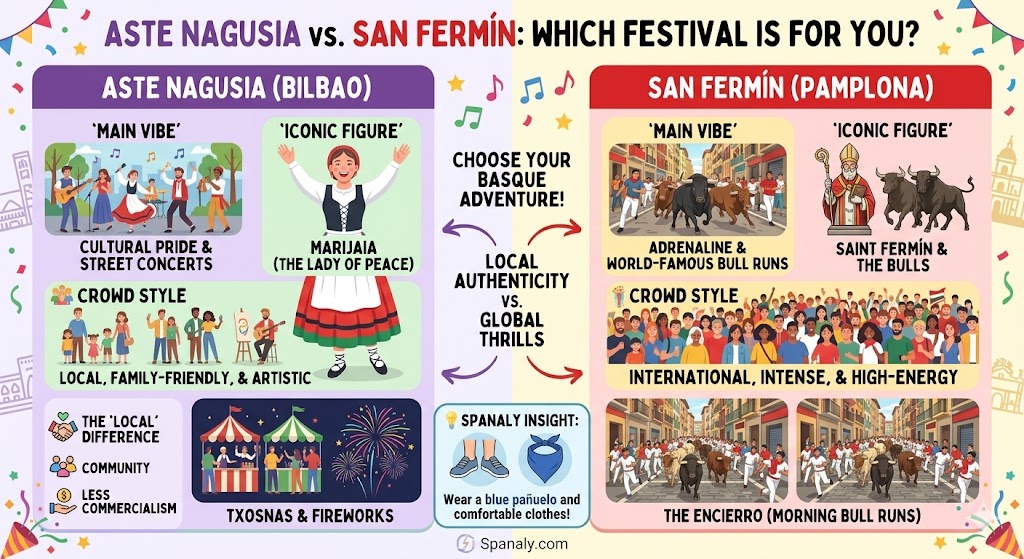
While both festivals showcase the fierce spirit of the Basque Country, they offer vastly different experiences. Choosing between them depends on your appetite for adrenaline versus cultural immersion.
| Feature | 🎭 Aste Nagusia (Bilbao) | 🐂 San Fermín (Pamplona) |
| Main Vibe | Cultural pride & street concerts | Adrenaline & world-famous bull runs |
| Iconic Figure | Marijaia (The lady of peace) | Saint Fermín & the Bulls |
| Crowd Style | Local, family-friendly, & artistic | International, intense, & high-energy |
| Core Activity | Txosnas (social tents) & Fireworks | The Encierro (morning bull runs) |
🧬 The “Local” Difference
Crucially, Aste Nagusia feels like a city-wide house party where everyone is invited. The lack of a “commercial” feel makes it one of the most authentic Spanish Festivals you can attend. While San Fermín focuses on a singular, high-stakes event, Bilbao spreads its energy across nine days of diverse street theater and music.
Bilbao’s festival is built on the concept of Konpartsak (local groups). Consequently, the atmosphere is more about community solidarity than international tourism. If you prefer a celebration where you can actually talk to locals over a drink, Bilbao is your winner.
💡 Spanaly Insight: Unlike San Fermín where white and red is the mandatory “uniform,” Bilbao has no strict dress code. However, wearing a blue neckerchief (pañuelo) will make you look like a seasoned local!
📅 When is Semana Grande Bilbao? Dates and Duration
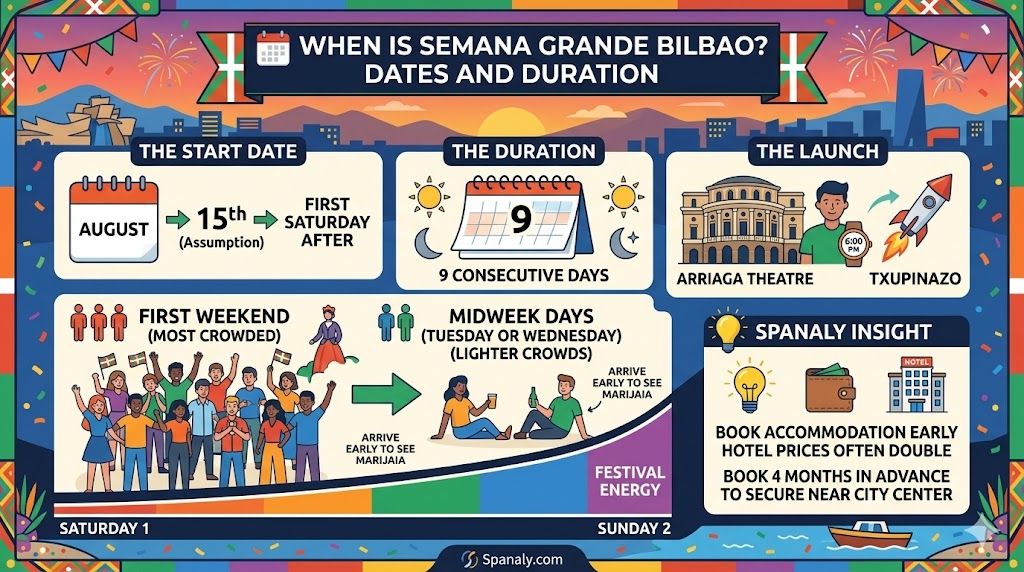
Timing is everything when planning your visit to Bilbao. Unlike fixed-date holidays, Aste Nagusia follows a traditional calendar rule that keeps the city buzzing for nine consecutive days.
The Start Date: The festival officially kicks off on the first Saturday after August 15th (the Assumption of Mary).
The Duration: Celebrations last exactly nine days, ending on the following Sunday.
The Launch: Everything begins at 6:00 PM with the Txupinazo (the ceremonial rocket) at the Arriaga Theatre.
The city never sleeps during this period. Specifically, the first weekend is the most crowded, as locals and visitors alike flock to see the arrival of Marijaia. Crucially, if you prefer slightly smaller crowds, consider visiting during the midweek days (Tuesday or Wednesday).
If you are coordinating your trip with other regional events, check the Best Time to Visit Northern Spain for a complete seasonal breakdown. Consequently, you can align your Bilbao experience with the perfect weather and nearby coastal festivities.
💡 Spanaly Insight: Hotels in Bilbao often double their prices during these nine days. Book your accommodation at least four months in advance to secure a spot near the city center without breaking the bank.
📍 Best Places to Celebrate: The Txosnas and El Arenal
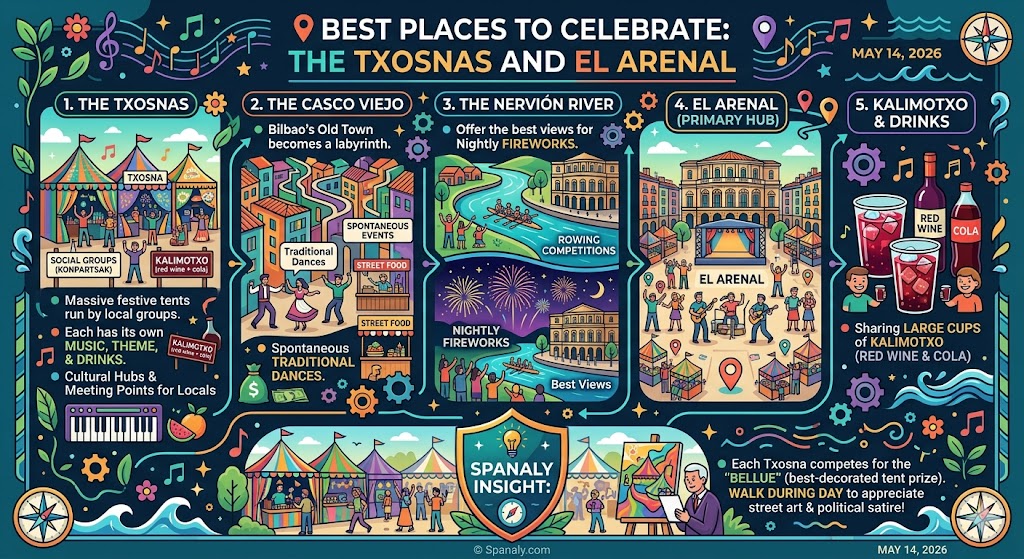
To find the soul of Aste Nagusia, follow the sound of drums toward the river. The area around El Arenal and the Arriaga Theatre transforms into a massive, open-air celebration zone.
The Txosnas: These are massive festive tents run by local groups (Konpartsak). Each has its own music, theme, and drinks.
The Casco Viejo: Bilbao’s Old Town becomes a labyrinth of street food and spontaneous traditional dances.
The Nervión River: The waterfront offers the best views for the nightly fireworks and the rowing competitions.
The txosnas are not just bars; they are cultural hubs. Crucially, they serve as the primary meeting point for locals. Notably, the atmosphere is electric, with people of all ages sharing large cups of Kalimotxo (red wine and cola).
If you want to explore this area beyond the festival madness, our Bilbao Spain Travel Guide offers a deeper look at the historic landmarks. Consequently, you can balance the party with some classic sightseeing in the city’s oldest streets.
💡 Spanaly Insight: Each txosna competes for the “Bellue” (the prize for the best-decorated tent). Take a walk during the day to appreciate the incredible street art and political satire displayed on their facades.
🎡 Top Things to Do During Aste Nagusia
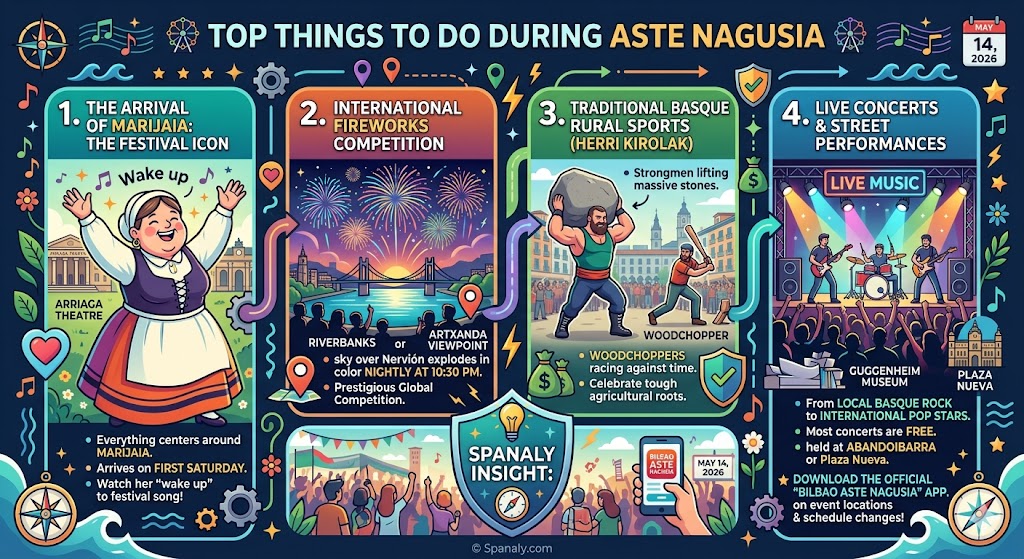
Aste Nagusia is a marathon of culture, not a sprint. Focus on these iconic traditions to capture the true essence of Bilbao:
🎭 Meet Marijaia: Witness the arrival of the festival’s cheerful icon at the Arriaga Theatre. Watching her “wake up” to the official song is a core human moment.
🎆 Nightly Fireworks: Every night at 10:30 PM, the Nervión River sky explodes in color. Specifically, this prestigious international competition offers the best views from the Zubizuri Bridge.
💪 Rural Sports: Experience the raw power of Herri Kirolak in the city squares. You will see strongmen lifting massive stones and woodchoppers racing against the clock.
🎸 Live Music: Enjoy free concerts ranging from Basque rock to international pop stars. Major stages are located at Abandoibarra and Plaza Nueva throughout the week.
🏟️ Local Culture: Beyond the party, explore the city’s landmarks. Discover more Things to Do in Bilbao to balance your festive itinerary with iconic sightseeing.
💡 Spanaly Insight: Download the official “Bilbao Aste Nagusia” app for real-time updates. It tracks schedule changes and event locations, which is essential during this hectic week.
🍴 What to Eat: Best Pintxos and Street Food in Bilbao
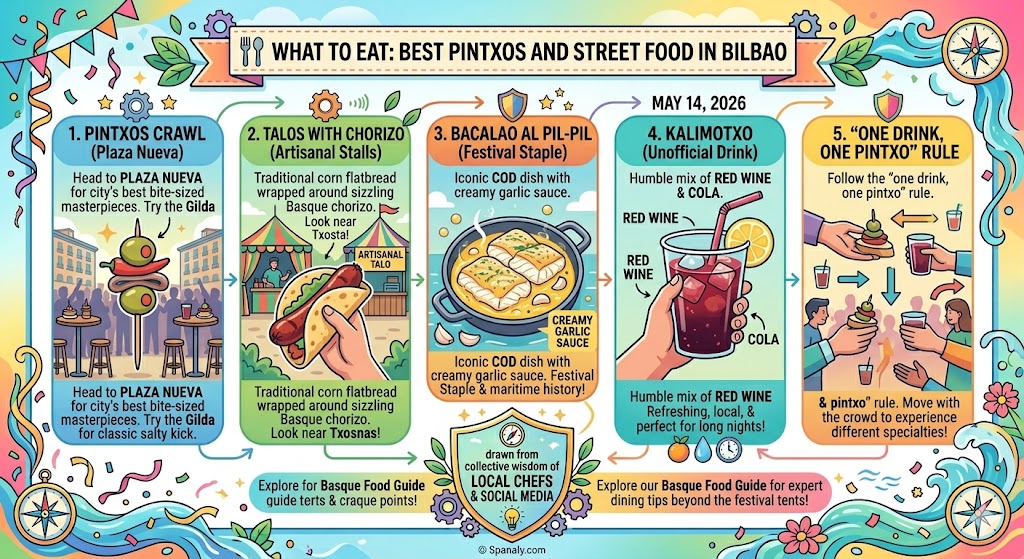
During Aste Nagusia, the city becomes a massive banquet. While restaurants offer traditional menus, the true festival spirit lives in the street food and the crowded bars of the Casco Viejo.
Pintxos Crawl: Head to Plaza Nueva for the city’s best bite-sized masterpieces. Try the Gilda (olive, anchovy, and pepper) for a classic salty kick.
Talos with Chorizo: You must try Talo. It is a traditional corn flatbread wrapped around sizzling Basque chorizo. Look for the artisanal stalls near the txosnas.
Bacalao al Pil-Pil: This iconic cod dish with its creamy garlic sauce is a festival staple. It represents the heart of Bilbao’s maritime history.
Kalimotxo: This humble mix of red wine and cola is the unofficial drink of the week. It is refreshing, local, and perfect for long nights.
The quality of ingredients here is world-class. To fully understand the culinary depth of the region beyond the festival tents, explore our Basque Food Guide for expert dining tips. Consequently, you will discover why this corner of Spain is a global gastronomic capital.
💡 Spanaly Insight: Follow the “one drink, one pintxo” rule. Locals rarely stay in one bar for more than 20 minutes. Move with the crowd to experience different house specialties and atmospheres!
🍷 Spanaly’s Festival Vocabulary: Speak Like a Bilbaíno
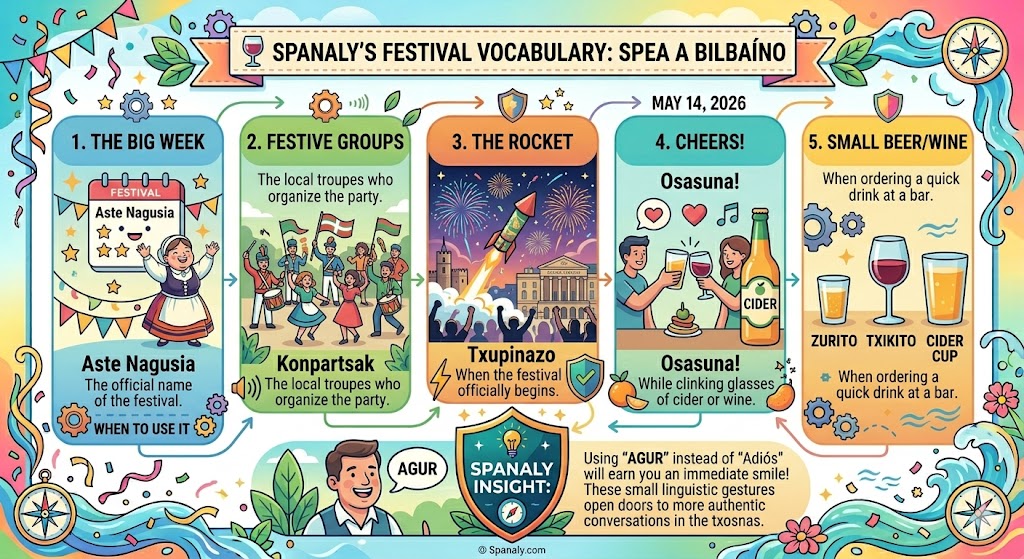
Mastering a few local terms will transform your experience from a tourist to a guest. In Bilbao, the language is a source of immense pride, especially during the Big Week.
| English | Basque / Local Term | When to Use It |
| The Big Week | Aste Nagusia | The official name of the festival. |
| Festive Groups | Konpartsak | The local troupes who organize the party. |
| The Rocket | Txupinazo | When the festival officially begins. |
| Cheers! | Osasuna! | While clinking glasses of cider or wine. |
| Small Beer/Wine | Zurito / Txikito | When ordering a quick drink at a bar. |
| Goodbye | Agur | The most common way to say farewell. |
Using “Agur” instead of “Adiós” will earn you an immediate smile from any local. Specifically, these small linguistic gestures open doors to more authentic conversations in the txosnas.
🏨 Where to Stay in Bilbao for Semana Grande
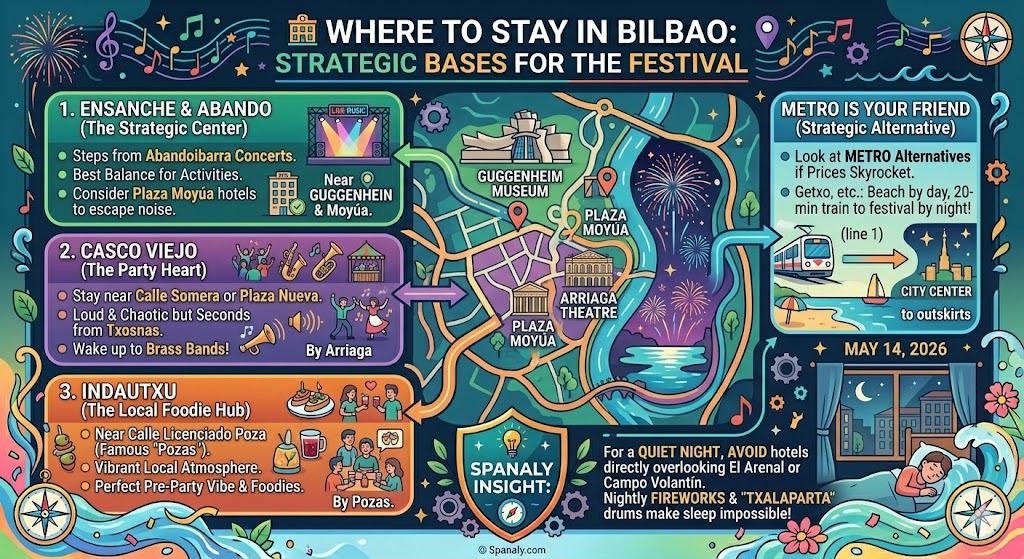
Finding a room during Aste Nagusia is a logistical race. Since the city hits 100% occupancy fast, you must choose your neighborhood based on how much “rest” you actually want.
Ensanche & Abando (The Strategic Center): This is the best balance. You are steps away from the concerts at Abandoibarra and the fireworks. Consider hotels near Plaza Moyúa for a quick escape from the noise.
Casco Viejo (The Party Heart): If you want to wake up to the sound of brass bands, stay near Calle Somera or Plaza Nueva. It is loud and chaotic, but you are seconds away from the best txosnas.
Indautxu (The Local Foodie Hub): A bit further out but vibrant. Staying near Calle Licenciado Poza (the famous “Pozas”) puts you in the middle of the best pre-party atmosphere.
If central prices skyrocket, the Metro is your best friend. Look at the Best Neighborhoods to Stay in Northern Spain for alternatives like Getxo, where you can enjoy the beach by day and take a 20-minute train to the festival by night. Consequently, you get the best of both worlds without the city-center price tag.
💡 Spanaly Insight: For a quiet night, avoid hotels directly overlooking El Arenal or Campo Volantín. The nightly fireworks and the “txalaparta” drums will make sleep impossible before dawn!
🗺️ Aste Nagusia Itinerary: 24 Hours of Non-Stop Celebration
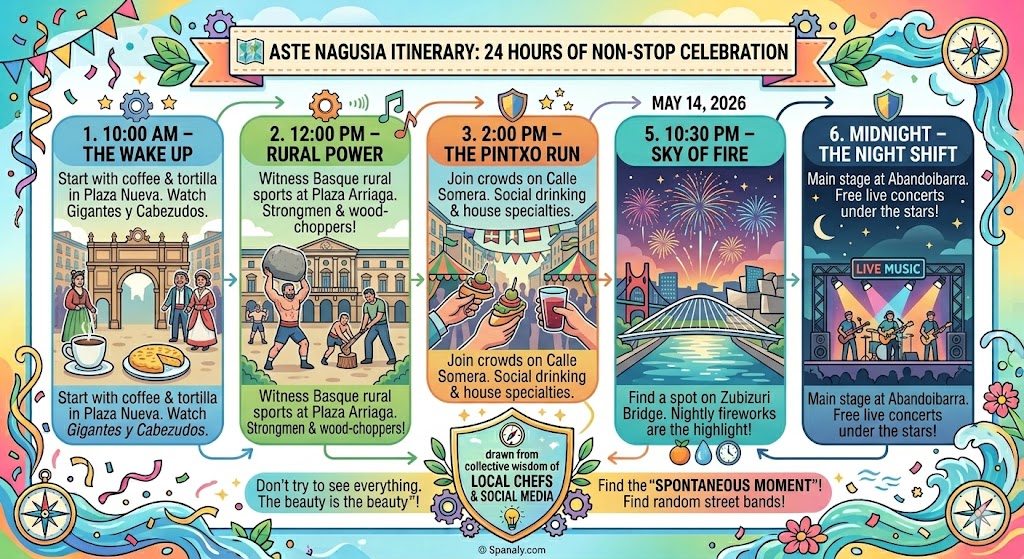
To survive and enjoy Aste Nagusia, you need a rhythm. This hour-by-hour guide ensures you don’t miss the cultural soul of Bilbao while keeping your energy high.
10:00 AM – The Wake Up: Start at Plaza Nueva with a coffee and a tortilla de patatas. Watch the Gigantes y Cabezudos (giants and big-heads) parade through the narrow streets.
12:00 PM – Rural Power: Head to Plaza Arriaga to witness the Basque rural sports. Watching wood-choppers and stone-lifters is a raw, authentic cultural immersion.
2:00 PM – The Pintxo Run: Join the local crowds at Calle Somera. This is the peak hour for social drinking and trying different house specialties.
5:00 PM – Afternoon Beats: Walk towards the txosnas in El Arenal. Each tent has a different vibe; find one playing your style of music and grab a zurito.
10:30 PM – Sky of Fire: Find a spot on the Zubizuri Bridge for the nightly fireworks. It is the undisputed highlight of every evening.
Midnight – The Night Shift: Head to the main stage at Abandoibarra (near the Guggenheim) for free live concerts under the stars.
This day is just a taste of the region’s energy. If you are planning a broader adventure, our Northern Spain One-Week Itinerary helps you connect Bilbao with other coastal gems. Crucially, if you prefer more freedom, a Northern Spain Road Trip is the best way to explore the rugged Basque mountains between festival days.
💡 Spanaly Insight: Don’t try to see everything in one day. The beauty of Aste Nagusia is the “spontaneous moment” that random street band or dance circle you find when you’re not looking for it!
⚠️ Common Mistakes to Avoid During Aste Nagusia
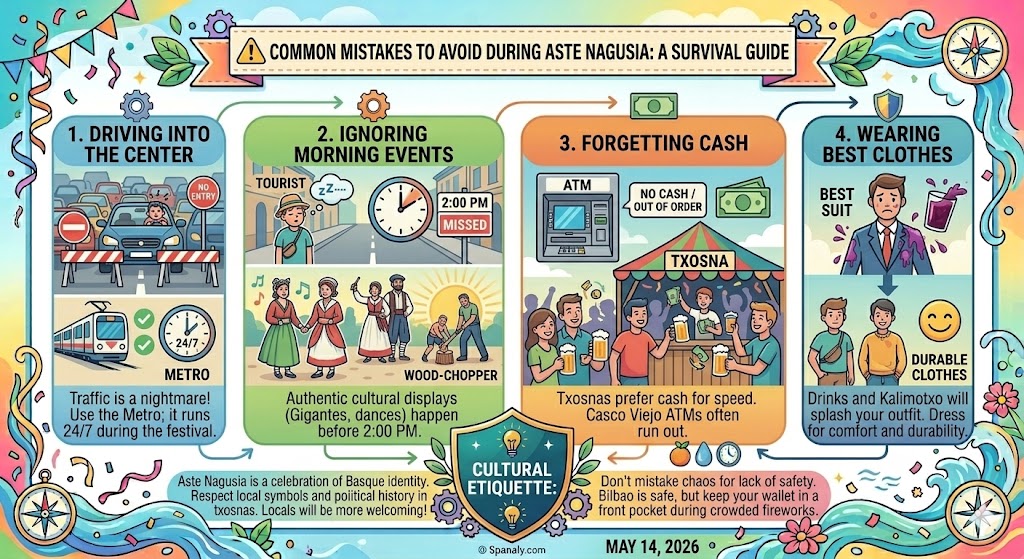
Even seasoned travelers can feel overwhelmed by the scale of Bilbao’s Big Week. Avoid these frequent pitfalls to ensure your experience is legendary for the right reasons.
Driving into the Center: Traffic is a nightmare and most streets near El Arenal are closed. Use the Metro; it runs 24/7 during the festival.
Ignoring the Morning Events: Many tourists only come out at night. Notably, the most authentic cultural displays, like the Basque dances and giant parades, happen before 2:00 PM.
Forgetting Cash: While Spain is tech-savvy, many busy txosnas (festival tents) prefer cash for quick transactions. Crucially, ATMs in the Casco Viejo often run out of bills by the weekend.
Wearing Your Best Clothes: Between spilled drinks and “Kalimotxo” splashes in the crowd, your outfit will suffer. Dress for comfort and durability.
🧬 Cultural Etiquette
Remember that Aste Nagusia is a celebration of Basque identity. Respect the local symbols and the political history often displayed in the txosnas. Consequently, you will find the locals much more welcoming and open to sharing their traditions with you.
💡 Spanaly Insight: Don’t mistake the “festive chaos” for lack of safety. Bilbao is generally safe, but keep your wallet in a front pocket during the fireworks when the crowds are most dense.
💡 Spanaly Elite Tips: Insider Secrets for Aste Nagusia
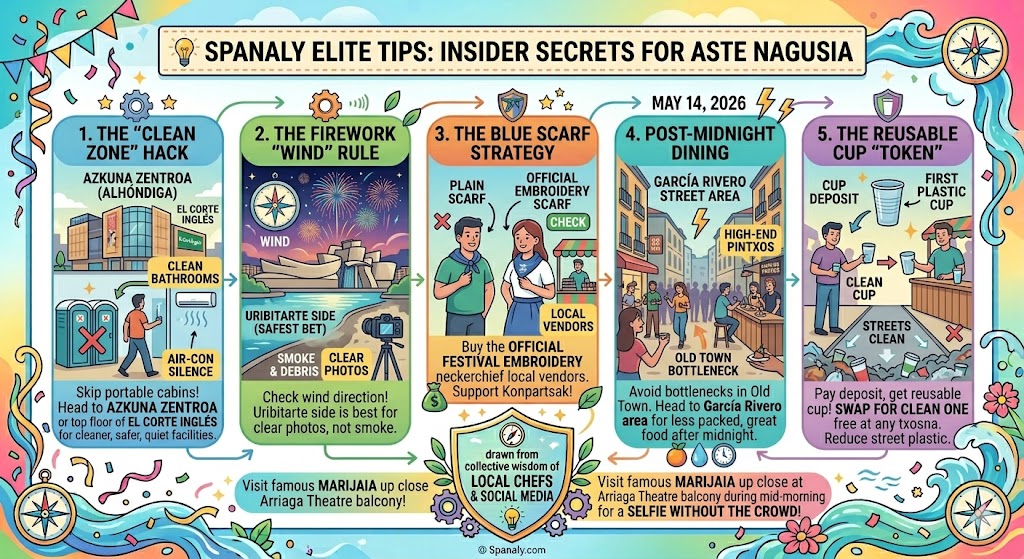
Forget the generic advice. To truly master the festival like a Bilbaíno, you need to know the unwritten rules and hidden hacks shared only in local circles.
The “Clean Zone” Hack: For a high-quality bathroom break, skip the portable cabins. Head to the Azkuna Zentroa (Alhóndiga) or the top floor of the El Corte Inglés. They are cleaner, safer, and offer a moment of air-conditioned silence.
The Firework “Wind” Rule: Before picking a spot for the 10:30 PM show, check the wind direction. If the wind is blowing towards you, you’ll be engulfed in smoke and debris. Specifically, the Uribitarte side is usually the safest bet for clear photos.
The Blue Scarf Strategy: Don’t just buy any blue neckerchief (pañuelo). If it doesn’t have the official festival embroidery, you’ll look like a day-tripper. Buy the official one from local street vendors to support the Konpartsak.
Post-Midnight Dining: When the bars are too packed to breathe, head to the García Rivero street area. It is slightly further from the noise but stays alive with high-end pintxos long after the Old Town becomes a bottleneck.
The Reusable Cup “Token”: You’ll pay a deposit for your first plastic cup. Crucially, don’t lose it! You can swap it for a clean one at any txosna for free. It’s the local way to keep the streets from becoming a sea of plastic.
Notably, the best way to end the night isn’t with a taxi (which are impossible to find). Instead, join the “human train” heading towards the San Mamés metro station. Specifically, the energy there is often more fun than the concerts themselves.
💡 Spanaly Insight: If you want to see the famous “Marijaia” up close without the 50,000-person crush, visit her at the Arriaga Theatre balcony during the mid-morning hours. It’s the perfect time for a selfie without the elbows!
🎭 Visitor FAQs – Aste Nagusia Bilbao Guide
📢 Is the festival suitable for families with young children?
Absolutely. While the nights are wild, the mornings feature the Gargantua, a giant statue that "swallows" children (it's actually a slide!). There are also dedicated puppet shows and workshops at Doña Casilda Park specifically designed for younger visitors.
🚆 Does the Bilbao Metro close during the festival week?
No, the Metro Bilbao runs 24 hours a day during the entire nine days of the festival. This makes it the most reliable and safest way to travel between the city center and peripheral neighborhoods or coastal towns like Getxo after the late-night concerts.
🐂 Are there bullfights during Aste Nagusia?
Yes, daily bullfights take place at the Vista Alegre bullring. However, unlike San Fermín, there are no bull runs in the streets. If you prefer to avoid these events, you can easily stay around the Guggenheim or Arenal areas, where the focus remains on street theater and music.
🌦️ What happens if it rains during the fireworks?
The fireworks competition usually proceeds unless there is a severe electrical storm or very high winds. Bilbao is used to the Sirimiri (light rain). Most locals simply open their umbrellas and wait—the show is rarely canceled for typical Basque weather.
👗 Is there a specific dress code for the festival?
There is no mandatory uniform, but wearing a blue checkered neckerchief (pañuelo) is the local tradition. You can buy them at almost any street stall for a few euros. It’s a great way to show your festival spirit and blend in with the thousands of celebrants.
Aste Nagusia Guide by Spanaly.com
Aste Nagusia is more than just a date on a calendar. It is a nine-day masterclass in Basque joy, resilience, and community. Specifically, the energy of the txosnas and the nightly fireworks will stay with you long after you leave.
Be Spontaneous: Let the sound of the drums guide your steps through the Casco Viejo.
Be Bold: Try a new pintxo, learn a Basque greeting, and dance with the giants.
Be Prepared: Plan your logistics early to enjoy the festival without any unnecessary stress.
The Basque Country is a land of endless adventure. If you crave more excitement after Bilbao, consider heading to Asturias for the legendary Descenso del Sella. Notably, it is another iconic Spanish celebration that perfectly blends nature, sport, and festival culture.
We hope this guide helps you navigate the “Big Week” like a local. Now, pack your blue neckerchief and get ready for an unforgettable journey. Gora Aste Nagusia!