Table of Contents
Toggle🏰 Villages in Extremadura
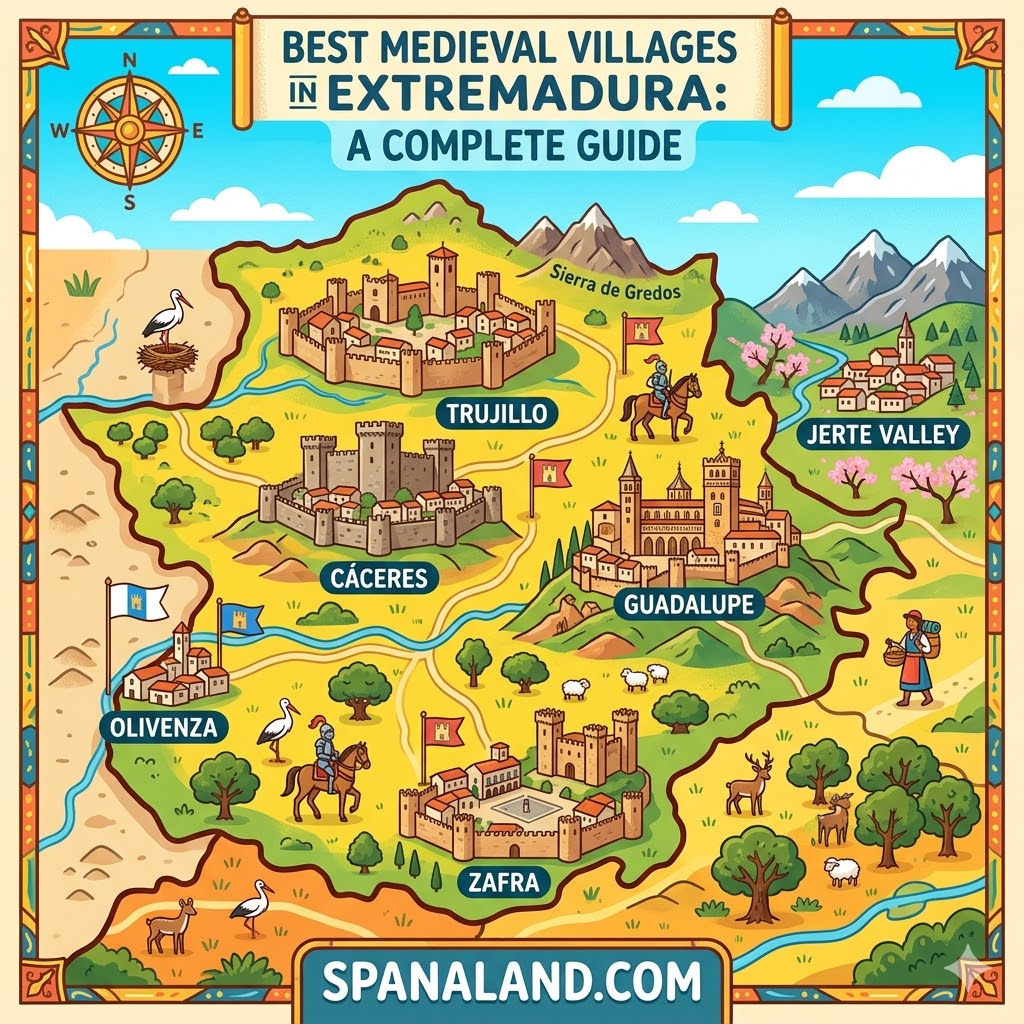
Have you ever imagined walking through cobblestone streets where history feels frozen in time? The best medieval villages in Extremadura offer an authentic journey into Spain’s past, far from the crowds.
Timeless Architecture: These villages feature preserved stone walls, ancient arches, and traditional houses that have stood for centuries.
Cultural Immersion: Wander through quiet plazas to experience local life, slow-paced traditions, and the legendary hospitality of the region.
Strategic Beauty: Many towns sit atop granite hills or guard river valleys, offering views that once defined the fate of the Iberian frontier.
Whether you are a history enthusiast or a photographer seeking the perfect shot, our Extremadura Travel Guide provides the essential logistics to navigate these monumental sites with ease. Prepare to step back in time as we explore the most charming historic towns in this hidden Spanish treasure.
📸 Snapshot: Exploring Extremadura’s Historic Villages
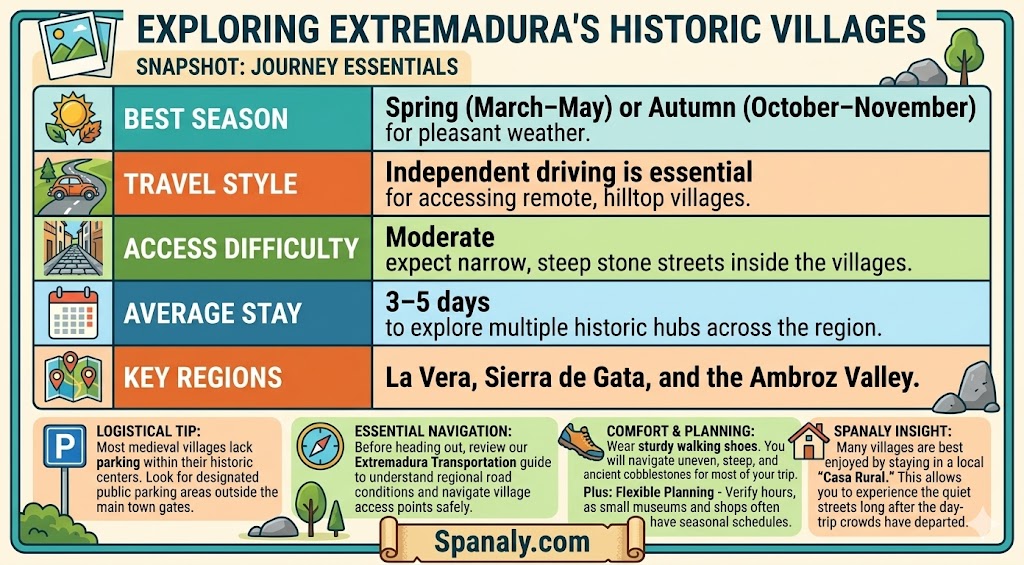
Planning a journey to these preserved settlements requires thoughtful logistics. Use this quick reference to optimize your route and ensure a smooth, rewarding experience through the region.
| Metric | Recommendation |
| Best Season | Spring (March–May) or Autumn (October–November) for pleasant weather. |
| Travel Style | Independent driving is essential for accessing remote, hilltop villages. |
| Access Difficulty | Moderate; expect narrow, steep stone streets inside the villages. |
| Average Stay | 3–5 days to explore multiple historic hubs across the region. |
| Key Regions | La Vera, Sierra de Gata, and the Ambroz Valley. |
Logistical Tip: Most medieval villages lack parking within their historic centers. Look for designated public parking areas outside the main town gates.
Essential Navigation: Before heading out, review our Extremadura Transportation guide to understand regional road conditions and navigate village access points safely.
Comfort Strategy: Wear sturdy walking shoes. You will navigate uneven, steep, and ancient cobblestones for most of your trip.
Flexible Planning: Always verify individual site hours. Many local artisan shops and small museums operate on seasonal or weekend-only schedules.
🏘️ Village Comparison: Which Style Suits You?

Extremaduran villages fall into distinct categories. Use this comparison to decide which type of destination aligns best with your travel preferences and desired atmosphere.
| Village Type | Atmosphere | Ideal For | Best Feature |
| Fortified Hilltop Towns | Dramatic & Stern | History Enthusiasts | Panoramic defensive views |
| Rustic Valley Hamlets | Quiet & Green | Nature Lovers | Lush landscapes & silence |
| Artisan Craft Villages | Vibrant & Cultural | Creative Travelers | Traditional local workshops |
| Ghost & Ruined Towns | Haunting & Still | Urban Explorers | Untouched medieval ruins |
🏛️ Top 5 Medieval Villages to Visit in Extremadura
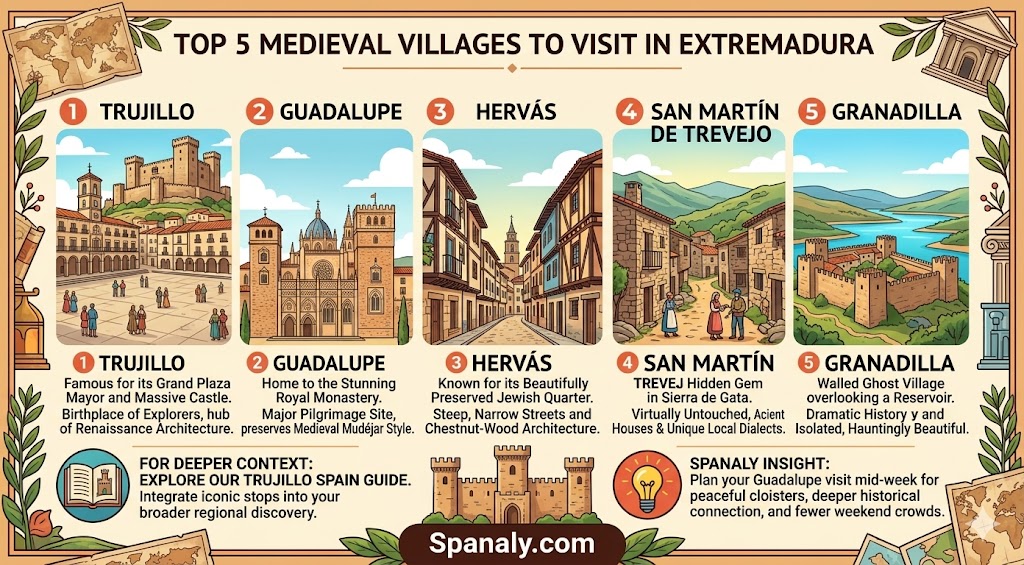
These five locations define the region’s historical character. Consequently, each offers a unique perspective on the power struggles, artistic traditions, and legends that shaped Extremadura.
📍 Trujillo and Guadalupe
Trujillo is famous for its grand Plaza Mayor and massive castle. In fact, it is the birthplace of explorers and a hub of Renaissance architecture. Furthermore, Guadalupe houses the stunning Royal Monastery. This village is a major pilgrimage site that perfectly preserves its medieval Mudéjar style.
Spanaly Insight: Plan your visit to Guadalupe during the mid-week. You will often experience the monastery’s peaceful cloisters without the weekend crowds, allowing for a deeper historical connection.
📍 Hervás, San Martín de Trevejo, and Granadilla
Hervás features a beautifully preserved Jewish Quarter. Its steep streets and chestnut-wood architecture make it truly unforgettable. Additionally, San Martín de Trevejo is a hidden gem in the Sierra de Gata. It remains virtually untouched, with ancient stone houses. Finally, Granadilla is a walled ghost village overlooking a reservoir. Its isolated location offers a hauntingly beautiful experience.
🗺️ Recommended Mountain Route
If you enjoy mountain exploration, follow the Sierra de Gata Route.
The Path: Trevejo → San Martín de Trevejo → Robledillo de Gata.
The Experience: This loop takes you through the most pristine mountain architecture. You will encounter dramatic crags, chestnut forests, and villages where time has truly stood still.
Moreover, for deeper context on the most iconic stop in this list, explore our Trujillo Spain Guide. It helps you integrate these monumental visits into your broader regional discovery.
💎 Hidden Gems: Off-the-Beaten-Path Villages
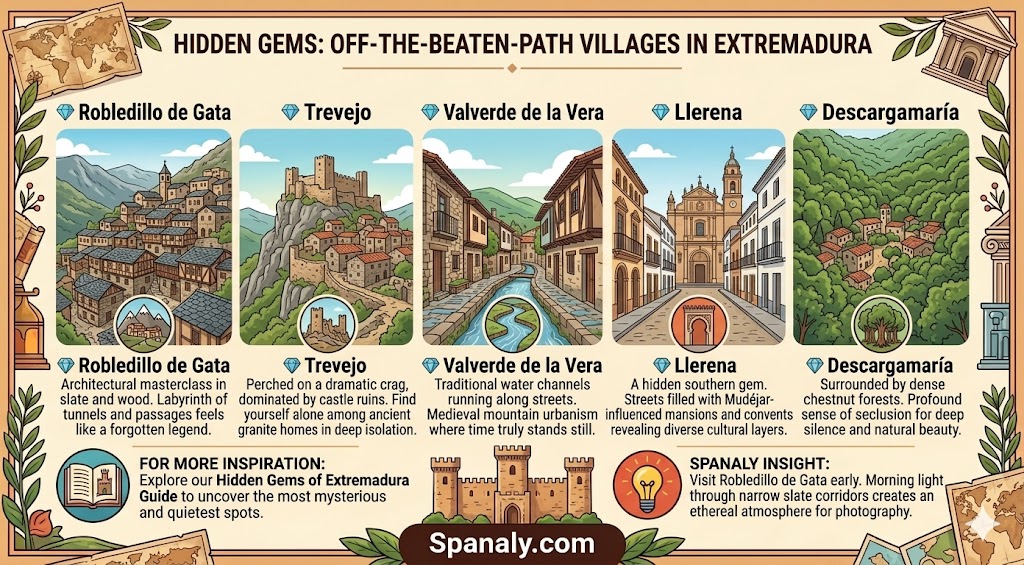
While major sites draw crowds, Extremadura hides silent, medieval pockets. Consequently, these villages reward curious travelers with raw history and authentic atmospheres.
🏛️ Silent Pockets of History
Discover these largely untouched settlements that remain unchanged by modern tourism:
Robledillo de Gata: An architectural masterclass in slate and wood. Its labyrinth of tunnels feels like a scene from a forgotten legend.
Trevejo: Perched on a dramatic crag. In fact, this isolated hamlet is dominated by castle ruins amidst ancient granite homes.
Valverde de la Vera: Famous for traditional street water channels. It stands as a stunning example of preserved medieval mountain urbanism.
Llerena: Often overlooked in the south. Its streets feature Mudéjar-influenced mansions that reveal the region’s diverse, rich cultural layers.
Descargamaría: Surrounded by dense chestnut forests. Thus, it provides a profound sense of seclusion for those seeking deep, natural silence.
Spanaly Insight: If you visit Robledillo de Gata, arrive early. The morning light filtering through narrow slate corridors creates perfect high-contrast photography.
🗺️ Curated Exploration Routes
To master these secret corners, explore our Hidden Gems of Extremadura guide. Additionally, follow this specialized path for a deeper experience:
La Vera Heritage Route:
The Path: Valverde de la Vera → Villanueva de la Vera → Cuacos de Yuste.
The Experience: Explore a lush valley famous for mountain water channels, traditional timber architecture, and connections to Emperor Charles V.
🏰 Village-Castle Pairing: Historical Routes
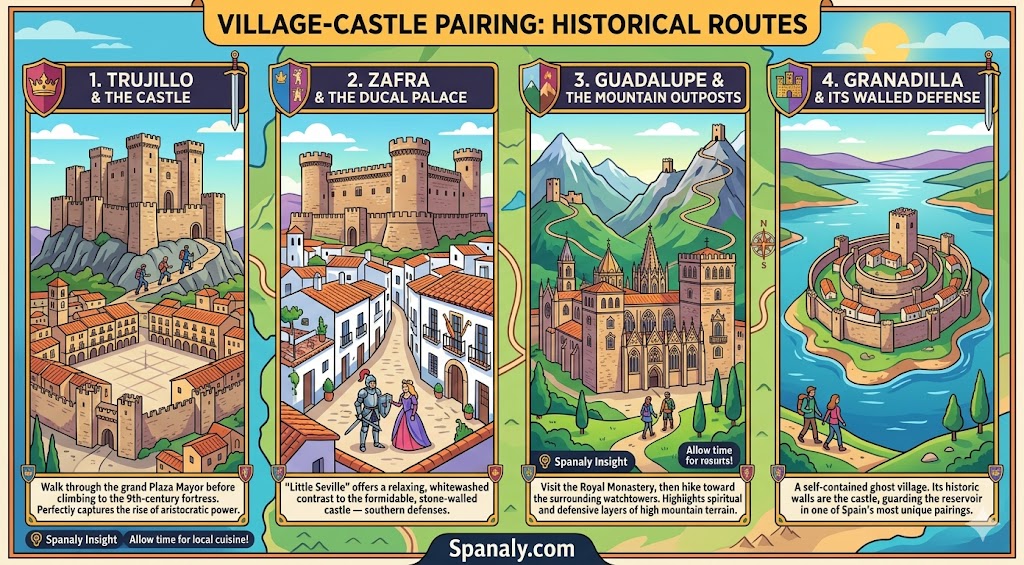
The most rewarding way to experience Extremadura is to pair your village explorations with the fortresses that once protected them. These pairs reveal the deep connection between noble residences and the strategic military outposts overlooking them.
Trujillo & The Castle: Walk through the massive plaza before climbing to the 9th-century fortress. This pairing perfectly captures the rise of aristocratic power in the region.
Zafra & The Ducal Palace: The “Little Seville” offers a relaxing, whitewashed urban contrast to the formidable, stone-walled castle that anchors the town’s southern defenses.
Guadalupe & The Mountain Outposts: Visit the Royal Monastery, then hike toward the surrounding watchtowers. This route highlights the spiritual and defensive layers of the high mountain terrain.
Granadilla & Its Walled Defense: This ghost village is a self-contained unit. Its historic walls are the castle, guarding the reservoir in one of the most unique pairings in Spain.
To master these connections and create a seamless journey, follow our guide to blend your village visits with the region’s most impressive historic architecture.
Spanaly Insight: When pairing these sites, allow time for lunch in the village after the castle climb. You will find that the local cuisine often features ingredients unique to the specific valley or mountain range you are exploring.
🏛️ Architecture and History of Extremadura’s Villages
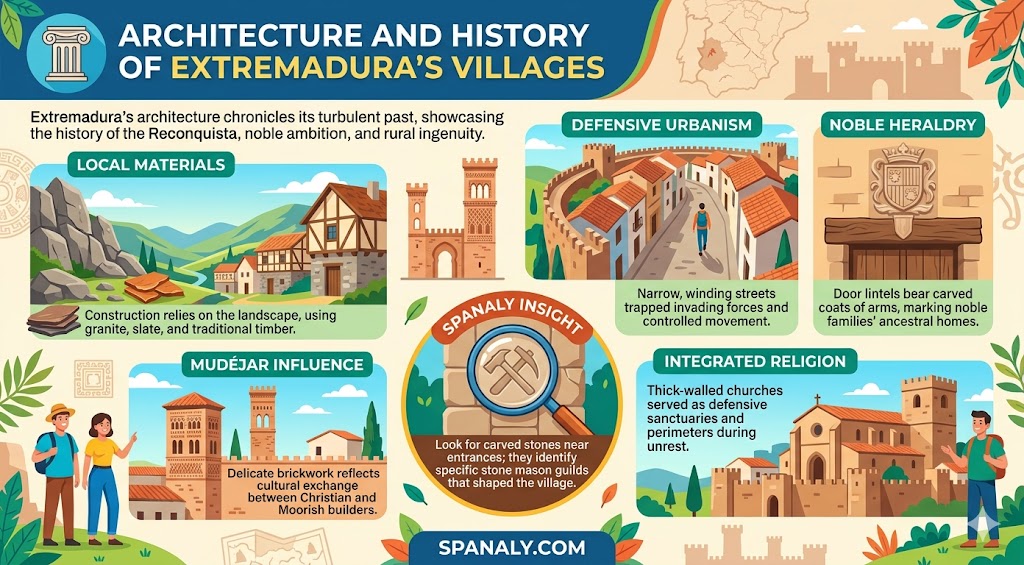
Extremadura’s architecture chronicles its turbulent past. You observe the history of the Reconquista, noble ambition, and the ingenuity of rural builders.
Local Materials: Construction relies on the landscape. You will find rugged granite, warm slate, and traditional timber framing in deep valleys.
Mudéjar Influence: Many villages display delicate brickwork. These reflect the cultural exchange between Christian and Moorish builders during the medieval period.
Defensive Urbanism: Narrow, winding streets historically served to trap invading forces and control movement through the town center effectively.
Noble Heraldry: Look at door lintels for carved coats of arms. These mark ancestral homes of families who once wielded power.
Integrated Religion: Churches were built as part of the defensive perimeter. Thick walls suggest these sites doubled as sanctuaries during unrest.
🌤️ Best Time to Visit Extremadura’s Historic Towns
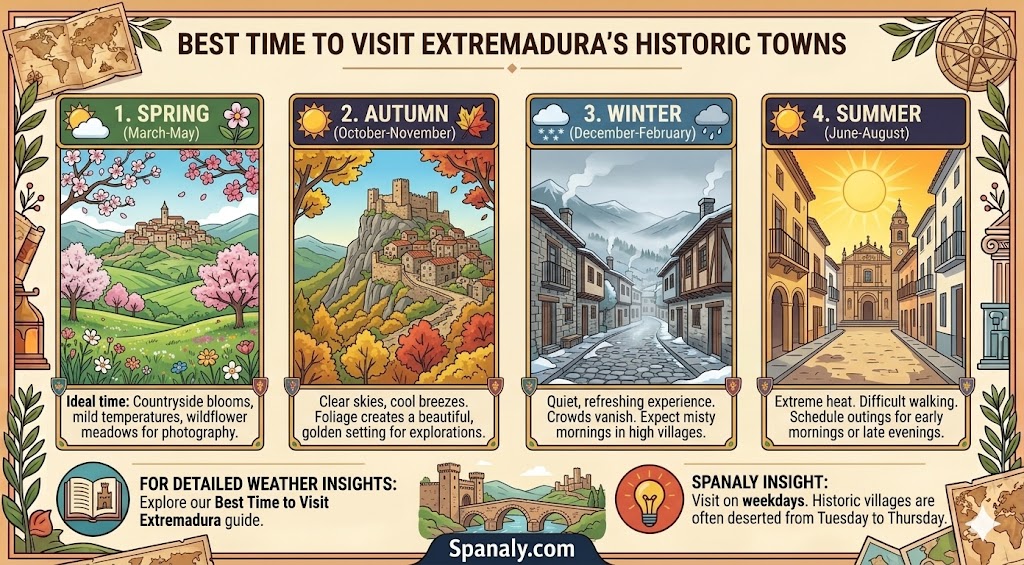
Timing your trip ensures comfort. These historic towns are often exposed to the elements, so choosing the right season transforms your experience.
Spring (March–May): This is the ideal time. The countryside blooms, temperatures stay mild, and wildflower meadows create stunning backdrops for photography.
Autumn (October–November): Enjoy clear skies and cool breezes. Foliage around hilltop villages provides a beautiful, golden setting for your explorations.
Winter (December–February): Visit for a quiet, refreshing experience. Crowds vanish, though you should expect misty mornings in higher mountain villages.
Summer (June–August): Extreme heat makes walking narrow streets difficult. If you visit, schedule your outings for early mornings or late evenings.
For detailed weather insights and seasonal advice, our Best Time to Visit Extremadura guide helps you align your village tour with the most comfortable regional climate.
Spanaly Insight: Visit on weekdays. Historic villages are often deserted from Tuesday to Thursday, giving you complete peace to wander ancient alleys alone.
🥘 Local Gastronomy: What to Eat in Medieval Villages
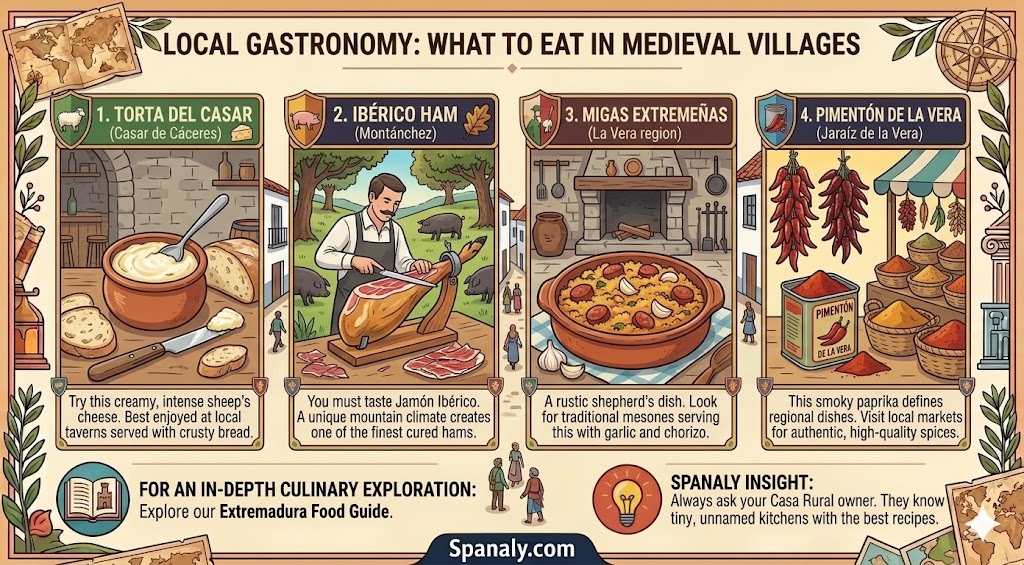
Food in these historic villages is a reflection of the land. Farmers, shepherds, and local artisans define the flavors you will encounter daily.
Torta del Casar: Try this creamy, intense sheep’s cheese. It is best enjoyed at local taverns in Casar de Cáceres, served with crusty bread.
Ibérico Ham: You must taste Jamón Ibérico from Montánchez. The village’s unique mountain climate creates one of the finest cured hams in Spain.
Migas Extremeñas: A rustic shepherd’s dish made from breadcrumbs, garlic, and local chorizo. Look for traditional mesones in the La Vera region.
Pimentón de la Vera: This smoky paprika defines regional dishes. Visit local markets in Jaraíz de la Vera to purchase authentic, high-quality spices.
For an in-depth exploration of these culinary traditions and regional delicacies, explore our Extremadura Food Guide. It helps you identify must-try dishes and find the best local eateries during your journey.
Spanaly Insight: Always ask the owner of your Casa Rural for their favorite local spot. They often know tiny, unnamed kitchens serving the best traditional recipes.
⚠️ Common Mistakes to Avoid
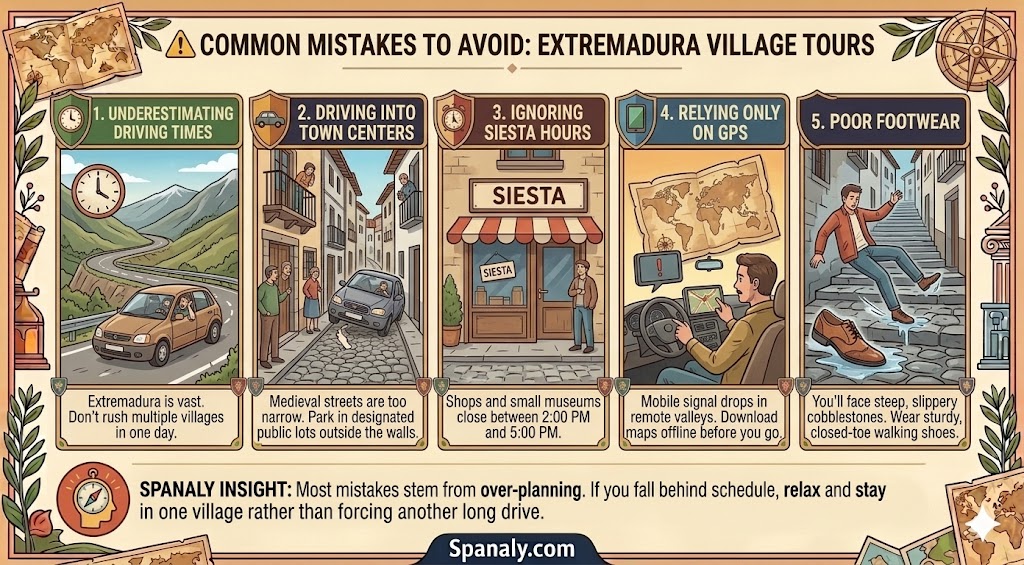
Even seasoned travelers face challenges in these historic sites. Avoid these frequent pitfalls to keep your village tour smooth and stress-free.
Underestimating Driving Times: Extremadura is vast. Attempting to visit three villages in one day leads to exhaustion and rushed, superficial experiences.
Driving into Town Centers: Many medieval streets are too narrow for standard cars. Always park in designated public lots outside the walls.
Ignoring Siesta Hours: Most local shops and small museums close between 2:00 PM and 5:00 PM. Plan your sightseeing around these times.
Relying Only on GPS: Mobile signal often drops in remote mountain valleys. Download your maps offline to ensure you can find your way.
Poor Footwear: You will face steep, slippery cobblestones and uneven stone stairs. Wear sturdy, closed-toe walking shoes to stay safe and comfortable.
💡 Pro Tips: The Insider’s Edge

Elevate your exploration with these tactical insights. These tips focus on the “unseen” side of rural life, drawn from local community wisdom.
Follow the Bells: Church bells often signal gatherings. Follow the sound to find the oldest, most authentic parts of the town center.
Visit the Lavaderos: Ancient stone washing basins are social hubs. Visit mornings to hear residents sharing stories about the village’s hidden history.
Follow the Shadows: Oldest buildings maximize shade. Walking through the deepest shadows naturally guides you through the historic, medieval core of town.
Find the Bakery Van: Delivery vans know the narrowest shortcuts. Following them reveals hidden squares without getting your car stuck in alleys.
Greet the Locals: Elderly residents sitting in doorways are gatekeepers. A polite “Hola” often grants access to beautiful, private hidden courtyards.
Spanaly Insight: Look for symbols etched into stone doorframes. These historical “lucky charms” protected homes from bad luck centuries ago.
Extremadura is a region where time slows down. Its medieval villages are more than just destinations; they are immersive experiences that connect you to the roots of Spanish history.
Embrace the Pace: Forget your watch and follow the rhythm of the local streets. The true magic lies in the quiet plazas and sunset vistas.
Support Local Craft: From stone-carved art to traditional flavors, your visit directly preserves the heritage of these resilient mountain communities.
Plan Your Journey: Use the insights in this guide to build a trip that balances historical wonder with authentic rural relaxation.
Expand Your Adventure: History enthusiasts should continue their discovery by exploring our Best Castles in Extremadura guide, which perfectly complements your village tours with breathtaking defensive architecture.
Ready to start your journey? Pack your walking shoes, charge your camera, and prepare to uncover the timeless beauty of rural Spain.