🇪🇸 Planning Your Dream Spanish Adventure
Plan your trip to Spain with the confidence of a local expert. Spain offers a mesmerizing blend of sun-drenched coastlines, Gothic cathedrals, and world-class gastronomy. However, navigating this diverse country requires more than just a plane ticket.
Specifically, a poorly planned itinerary often leads to “travel burnout” or missing out on authentic regional gems. For a complete inventory of regional logistics and field data, explore our Ultimate Spain Planning Hub. This master resource ensures you dominate every detail of your journey.
💡 Why Strategic Planning Matters
Maximize Your Time: Spain is larger than most travelers realize.
Smart Budgeting: Avoid tourist traps with our Essential Spain Travel Tips.
Authentic Experiences: Move beyond basic postcards to find the real soul of the Iberian Peninsula.
Spanaly Insight: Do not try to see “everything” in ten days. It is a common mistake that ruins the experience. Instead, pick two iconic regions and dive deep into their unique rhythms.
🚀 Your Roadmap to Success
We have simplified the entire process into eight actionable stages. This guide functions as your personal consultant. You will find everything from visa logistics to hidden tapas bars. Ready to transform your Spanish travel dreams into a perfectly executed reality? Let’s begin.
📸 Spain Travel Snapshot: Essential Quick Facts
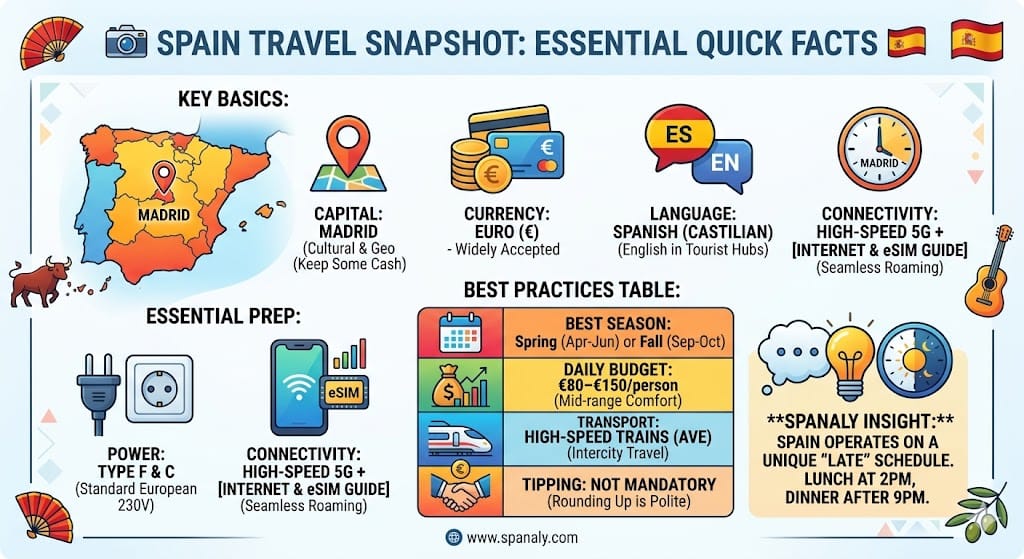
Before you plan your trip to Spain, master these fundamental basics. This quick reference helps you align your expectations with the local reality instantly.
📍 Capital: Madrid (The geographical and cultural heart).
🇪🇺 Currency: Euro (€) – Cards are widely accepted, but keep some cash.
🗣️ Language: Spanish (Castilian) is official; English is common in tourist hubs.
🕒 Time Zone: Central European Time (CET).
🔌 Power: Type F and C plugs (Standard European 230V).
📞 Connectivity: High-speed 5G is everywhere; get an Internet & eSIM Guide for seamless roaming.
| Category | Quick Expert Advice |
|---|---|
| Best Season | Spring (April–June) or Fall (September–October). |
| Daily Budget | €80–€150 per person (Mid-range comfort). |
| Transport | Use High-Speed Trains (AVE) for intercity travel. |
| Tipping | Not mandatory; rounding up is a polite gesture. |
Spanaly Insight: Spain operates on a unique “late” schedule. Lunch starts at 2:00 PM, and dinner rarely begins before 9:00 PM. Adjust your hunger levels early!
🏛️ Stage 1: Research & Inspiration (The Vision)
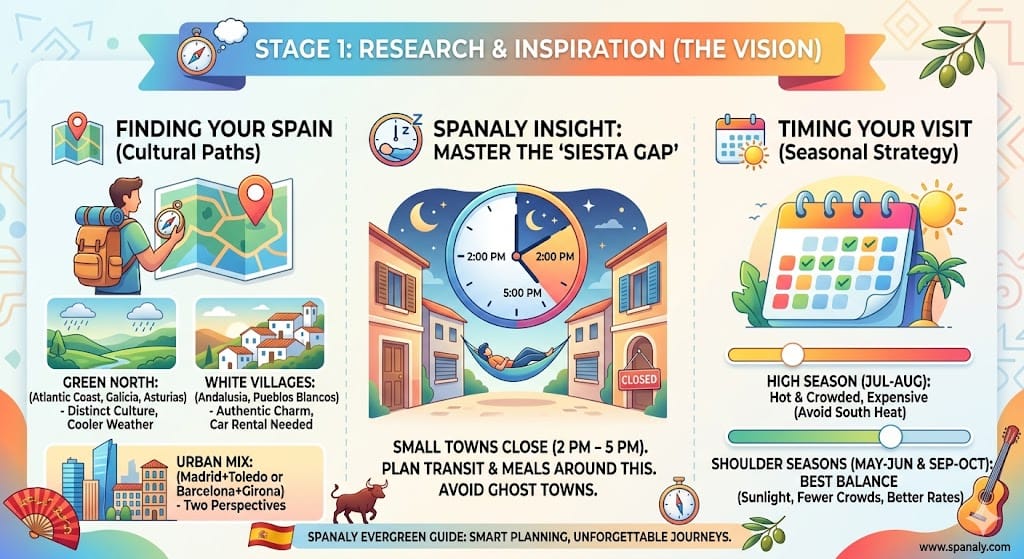
To plan your trip to Spain like a seasoned traveler, you must move beyond the “Barcelona-Madrid-Seville” triangle. While these cities are iconic, Spain’s true soul often hides in its regional diversity. Researching with a strategic mindset prevents the “copy-paste” itinerary syndrome that many tourists suffer from.
🌟 Defining Your Cultural Path
The Green North: If you dislike intense heat, explore the Atlantic coast (Galicia, Asturias, Cantabria). It feels more like Ireland than the typical Spanish postcard.
The White Villages: For authentic Andalusia, skip the tourist buses and rent a car for the Pueblos Blancos.
The Urban Mix: Combine a major hub with a nearby “secondary” city (e.g., Madrid with Toledo or Barcelona with Girona) for a richer perspective.
Spanaly Insight: Most travelers ignore the “Siesta Gap.” Small towns literally shut down between 2:00 PM and 5:00 PM. If you don’t plan your transit or meals around this, you will find yourself in a ghost town with no open cafes.
📅 The Seasonality Strategy
Timing is everything. High season (July-August) isn’t just expensive; it’s often too hot for comfortable sightseeing in the south. Instead, aim for the “May-June” or “September-October” windows. You’ll get the same sunlight with 40% fewer crowds and much better hotel rates.
Before booking, consult our Why Visit Spain guide to align your interests with the right region. Then, cross-reference your dates with our Ultimate Seasonal Guide to avoid local holidays that might close major attractions unexpectedly.
💰 Stage 2: Budgeting & Digital Prep (The Strategy)
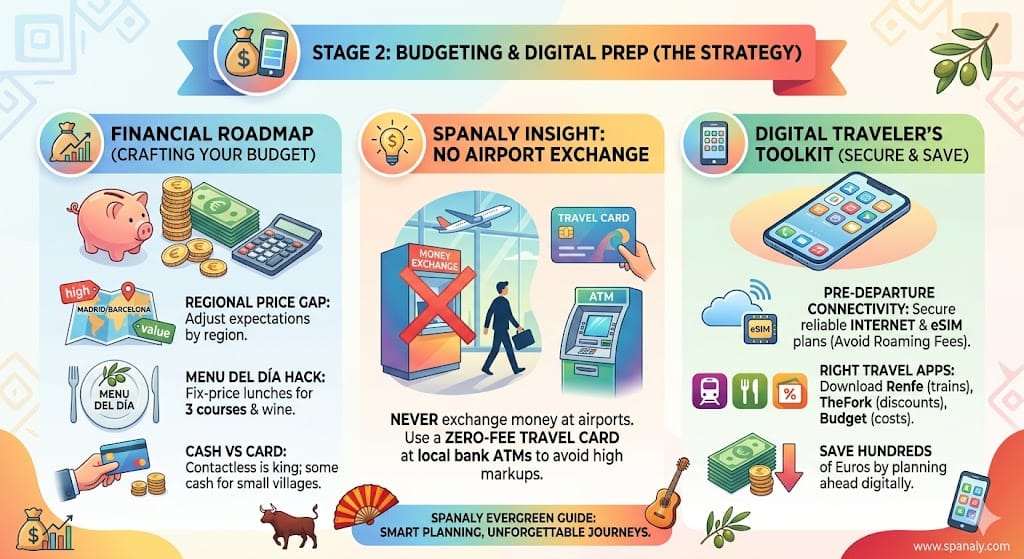
Financial planning is where most travelers lose control. To plan your trip to Spain efficiently, you must distinguish between “tourist prices” and “local reality.” Spain can be incredibly affordable or surprisingly expensive depending on your digital tools and booking habits.
💸 Crafting Your Financial Roadmap
The Regional Price Gap: Budget more for Madrid and Barcelona. Conversely, regions like Andalusia or Galicia offer much higher value for your Euro.
The “Menu del Día” Hack: Look for fixed-price lunch menus (usually 3 courses with wine). It is the most cost-effective way to eat high-quality Spanish food.
Cash vs. Card: While Spain is highly digitized, “Contactless” is king. However, small villages and traditional markets still require physical Euros.
Spanaly Insight: Never exchange money at the airport. Use a “Travel Card” with zero transaction fees and withdraw from local ATMs attached to major banks to avoid predatory 10-15% conversion markups.
📱 The Digital Traveler’s Toolkit
In 2026, your smartphone is your most important travel companion. Do not wait until you land to figure out connectivity. Secure a reliable Internet & eSIM plan before departure to avoid expensive roaming fees.
Furthermore, downloading the right Travel Apps for Spain—like Renfe for trains or TheFork for restaurant discounts—can save you hundreds of Euros. For a deep dive into daily costs, consult our Spain Travel Budget Guide to see exactly how much you should allocate per day.
🛡️ Stage 3: Legalities & Safety (Peace of Mind)
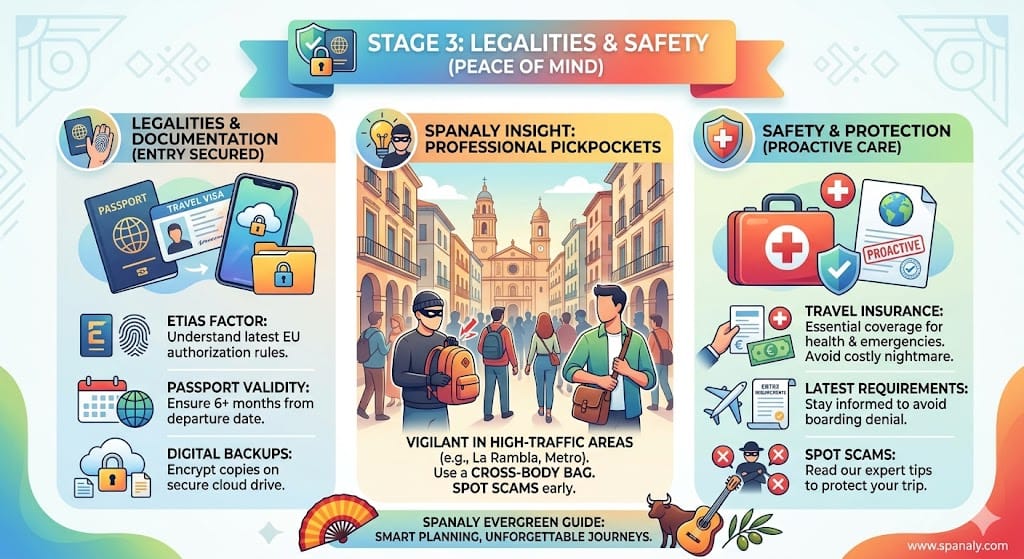
To plan your trip to Spain with total confidence, you must secure your legal and physical safety long before you pack. Ignoring entry requirements or skipping insurance can turn a dream vacation into a costly nightmare. In modern travel, being proactive is your best defense against unexpected setbacks.
🛂 Navigating Entry & Documentation
The ETIAS Factor: Ensure you understand the latest European travel authorization requirements for non-EU citizens.
Passport Validity: Check that your passport is valid for at least six months beyond your planned departure date.
Digital Backups: Always keep encrypted digital copies of your documents on a secure cloud drive.
Spanaly Insight: Never rely solely on your hotel for safety. While Spain is generally very safe, “Pickpocketing” in high-traffic areas like Barcelona’s La Rambla or Madrid’s Sol is a professional trade. Use a cross-body bag and remain vigilant in crowded metro stations.
🏥 Health & Protection Strategy
Do not treat travel insurance as an optional expense. A minor medical emergency in a foreign country can cost thousands of Euros. Consult our guide on Travel Insurance for Spain to find coverage that actually works.
Furthermore, stay informed about the latest Spain Entry Requirements to avoid any boarding denials at the airport. Finally, review our Spain Travel Safety expert tips to learn how to spot common tourist scams before they happen.
🚉 Stage 4: Logistics - Getting There & Around
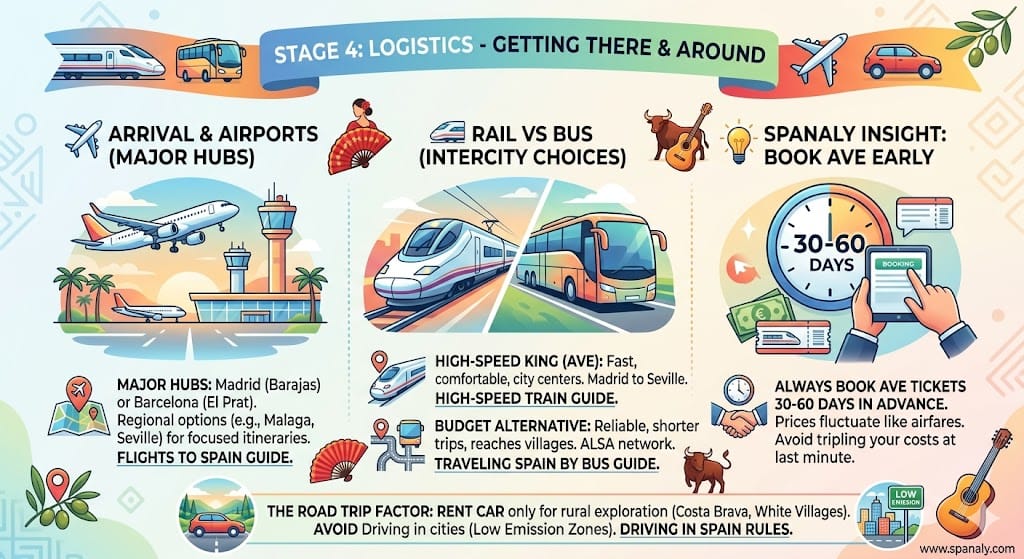
Mastering the Spanish transport network is the secret to a seamless journey. To plan your trip to Spain effectively, you must understand that the country is highly interconnected, but each mode of transport serves a different strategic purpose. Choosing the wrong method can result in lost hours and unnecessary stress.
✈️ Arrival: Navigating the Major Hubs
Most international travelers land in Madrid (Barajas) or Barcelona (El Prat). However, don’t overlook regional airports like Malaga or Seville if your itinerary focuses on the south. To find the most efficient routes and avoid arrival confusion, check our Flights to Spain & Airport Guide.
🚄 Moving Between Cities: The Rail vs. Bus Debate
The High-Speed King (AVE): For long distances (e.g., Madrid to Seville), the high-speed train is unbeatable. It is fast, comfortable, and drops you in the city center. Learn the nuances of booking in our Spain High-Speed Train Guide.
The Budget Alternative: For shorter regional hops or budget-conscious travelers, buses are highly reliable and reach villages trains cannot. See our Traveling Spain by Bus guide for tips on the ALSA network.
The Road Trip Factor: Renting a car is only recommended for rural exploration (like the Costa Brava or White Villages). Avoid driving inside major cities like Madrid or Granada due to strict “Low Emission Zones.” Review our Driving in Spain rules before you rent.
Spanaly Insight: Always book your AVE train tickets at least 30-60 days in advance. Unlike local trains, high-speed prices fluctuate like airfares; waiting until the last minute can triple your costs.
For a complete overview of all your options, including domestic flights, consult our Getting Around Spain master guide.
🧳 Stage 5: Accommodation & Packing (Setting Up)
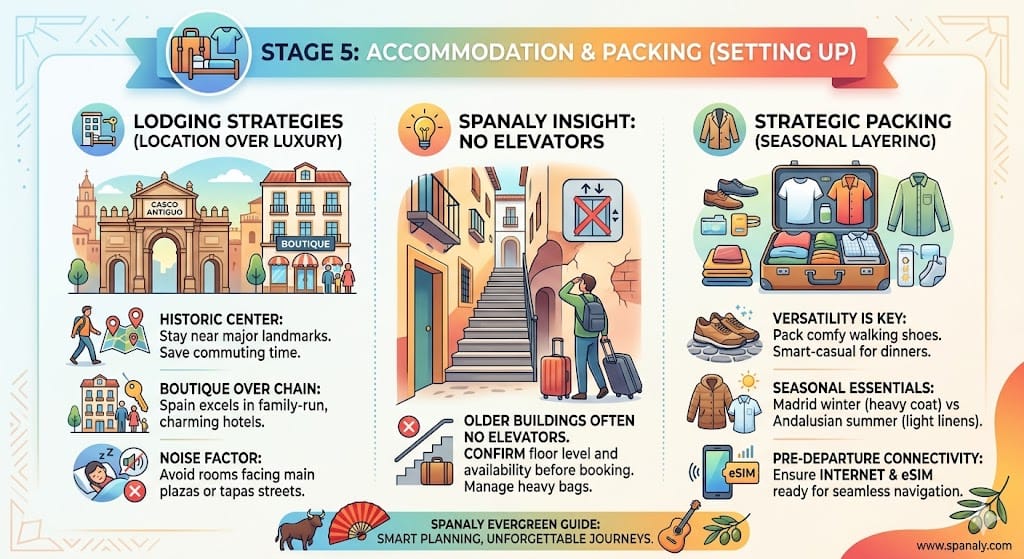
Choosing where to lay your head and what to carry in your bag can make or break your daily comfort. To plan your trip to Spain like a pro, you must prioritize location over luxury. A five-star hotel far from the city center will cost you more in transit time and taxi fares than a boutique hostel in the historic heart.
🏨 Smart Lodging Strategies
The Historic Center (Casco Antiguo): Always try to stay within walking distance of major landmarks. You will save hours of commuting.
Boutique over Chain: Spain excels in charming, family-run boutique hotels and restored “Paradores” (historic castles or monasteries).
The Noise Factor: Spanish nightlife is vibrant. If you are a light sleeper, avoid rooms facing main plazas or busy tapas streets. Check our Ultimate Lodging Guide for regional recommendations.
Spanaly Insight: Many older buildings in historic districts (like Seville’s Santa Cruz) do not have elevators. If you have heavy luggage, always confirm the “floor level” and elevator availability before booking your stay.
🧥 The Strategic Packing List
Spain’s climate varies drastically between the Atlantic north and the Mediterranean south. Packing requires a “layering” mindset.
Versatility is Key: Pack comfortable walking shoes (cobblestones are unforgiving) and a “smart-casual” outfit for evening dinners.
Seasonal Essentials: Consult our Seasonal Packing Guide to see if you need a heavy coat for Madrid’s winter or light linens for an Andalusian summer.
Lastly, ensure you have your Internet & eSIM ready so you can navigate to your hotel seamlessly upon arrival.
🥘 Stage 6: Local Immersion (The Soul of Spain)
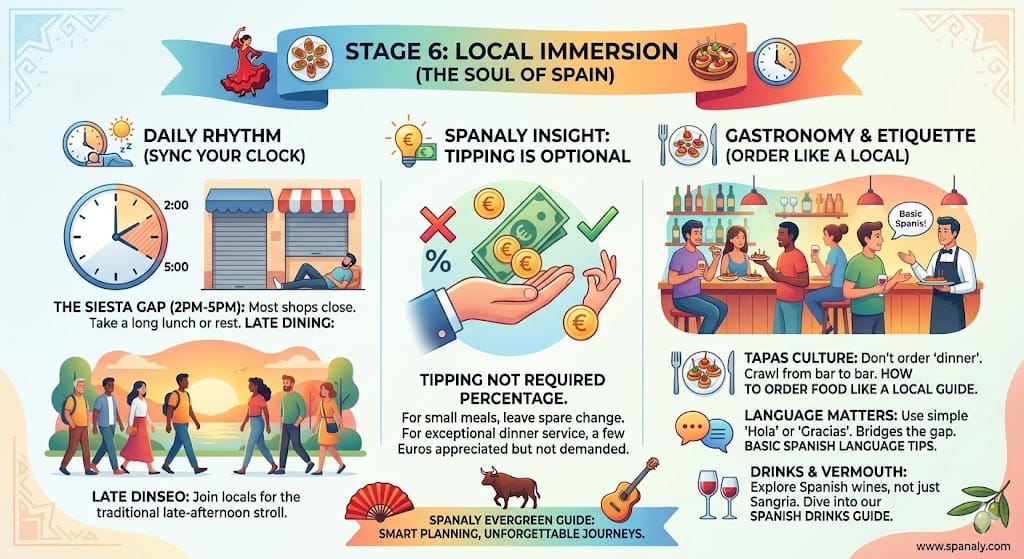
To plan your trip to Spain like a true insider, you must adapt to the local rhythm. Spain is not just a destination; it is a lifestyle. Understanding the “unwritten rules” of social etiquette and dining will open doors to authentic experiences that most tourists miss.
🕒 Mastering the Daily Rhythm
The Siesta Gap: Most shops close between 2:00 PM and 5:00 PM. Use this time for a long lunch or a rest.
Late Dining: Dinner before 9:00 PM is rare. If you go to a restaurant at 7:00 PM, you will likely eat alone in an empty dining room.
The Paseo: Join the locals for their late-afternoon stroll (Paseo) before heading to the tapas bars. Check our Daily Rhythm & Siesta Guide to sync your internal clock.
🍷 Gastronomy & Etiquette
Tapas Culture: In many regions, you don’t “order” dinner; you crawl from bar to bar. Learn the subtle art of Ordering Food Like a Local.
Language Matters: You don’t need to be fluent, but a simple “Hola” or “Gracias” goes a long way. Use our Basic Spanish Language Tips to bridge the gap.
Drinks & Vermouth: Beyond Sangria, explore the world of Spanish wines and the “Hora del Vermut.” Dive into our Spanish Drinks Guide for expert recommendations.
Spanaly Insight: Tipping in Spain is not a percentage-based obligation like in North America. For small meals, leaving the spare change is enough. For exceptional service at dinner, a few Euros are appreciated but never demanded.
Respecting Cultural Etiquette in Spain ensures you are treated as a guest rather than just another tourist.
⏳ Stage 7: The Booking Timeline (Strategic Timing)
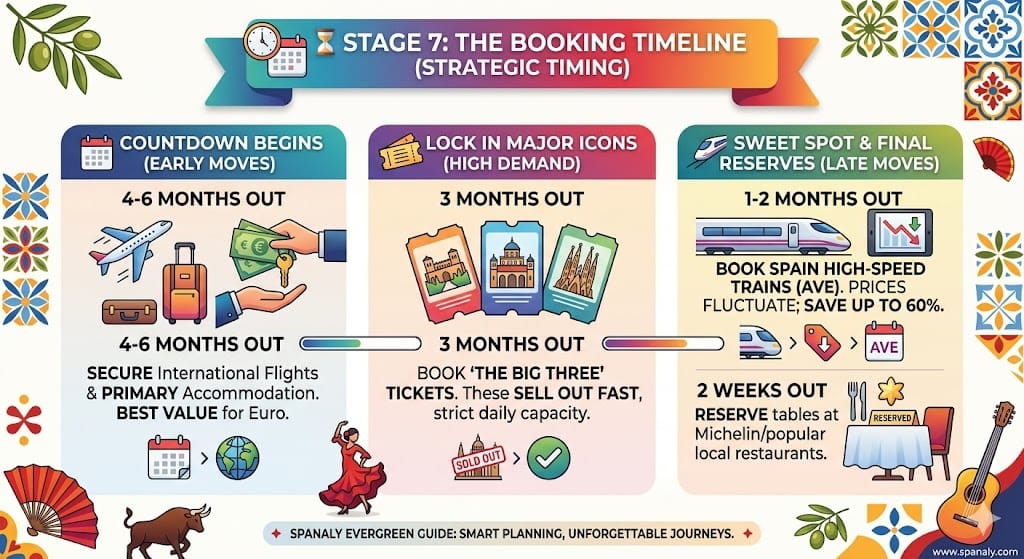
Timing is the invisible factor that separates a stressful trip from a seamless one. To plan your trip to Spain like an expert, you must work backward from your departure date. Many of Spain’s crown jewels, like the Alhambra in Granada or the Sagrada Família in Barcelona, have strict daily capacities and sell out weeks in advance.
📅 Your Step-by-Step Countdown
4–6 Months Out: Secure your international flights and primary city accommodations. This is when you find the best value for your Euro.
3 Months Out: Book “The Big Three” tickets: The Alhambra (Granada), The Royal Alcázar (Seville), and the Sagrada Família (Barcelona). Do not wait; these are non-negotiable for most itineraries.
1–2 Months Out: This is the “Sweet Spot” for booking your Spain High-Speed Trains. Prices fluctuate like airfares, so locking them in early can save you up to 60%.
2 Weeks Out: Reserve tables at popular Michelin-starred or high-demand local restaurants. Check out our Dining Reservations Guide for the best platforms to use.
Spanaly Insight: If you miss out on official tickets for a major landmark, look for “Guided Tours” through third-party providers. They are slightly more expensive, but they often have a separate ticket allocation that remains available longer than general admission.
🎫 The “Skip-the-Line” Rule
Never show up at a major Spanish monument expecting to buy a ticket at the gate. You will either face three-hour queues or, more likely, a “Sold Out” sign. Always prioritize digital tickets with QR codes on your phone. For a complete list of what to book and when, see our Spain Booking Checklist.
📸 Stage 8: Entertainment & Memories (The Fun)
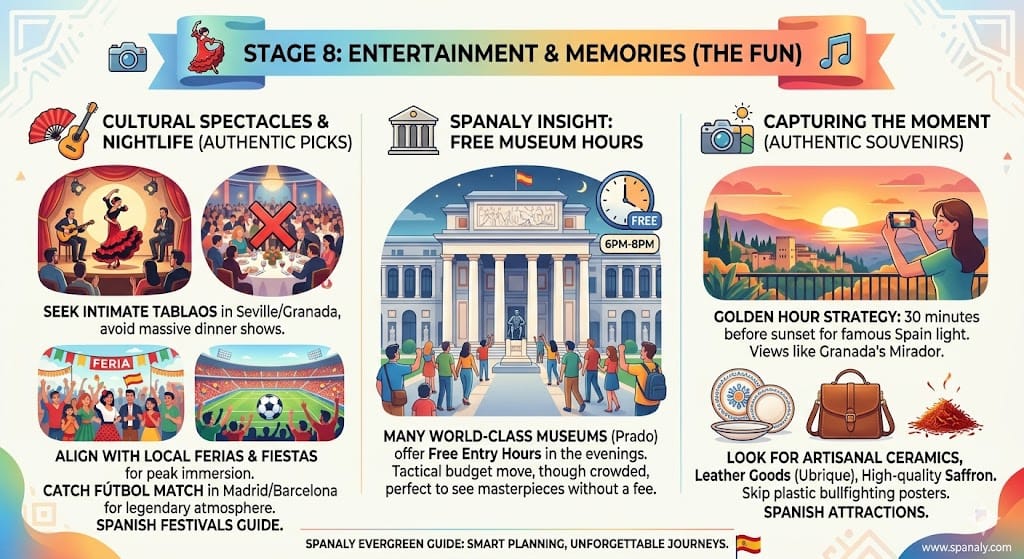
The final layer of your journey is the experiences that stick with you long after you’ve returned home. To plan your trip to Spain like an expert, you must balance iconic landmarks with local, high-energy entertainment. However, not all “tourist attractions” are created equal; choosing authentic experiences over commercial traps is essential for a high-quality trip.
🎭 Cultural Spectacles & Nightlife
Flamenco: Beyond the Show: Seek out intimate Tablaos in Seville or Granada rather than massive dinner shows. The intensity of a small venue is incomparable.
The Festival Factor: Align your trip with a local Feria or Fiesta. From the horse fair in Jerez to the light shows in Madrid, these events are free and offer peak immersion. Check our Spanish Festivals Guide for a calendar of events.
Soccer (Fútbol) Fever: Catching a match at the Santiago Bernabéu or Camp Nou is a religious experience in Spain. Even if you aren’t a fan, the atmosphere is legendary.
Spanaly Insight: Many world-class museums, such as the Prado in Madrid, offer “Free Entry Hours” in the evenings. While crowded, it is a perfect tactical move for budget travelers who want to see the masterpieces without the entry fee.
🤳 Capturing the Moment
Golden Hour Strategy: Spain’s light is famous among photographers. Plan your visits to viewpoints (like the Mirador de San Nicolás in Granada) exactly 30 minutes before sunset.
Local Souvenirs: Skip the plastic bullfighting posters. Instead, look for artisanal ceramics, leather goods from Ubrique, or high-quality Saffron.
For more inspiration on unique activities, browse our curated Spanish Attractions list. Remember, the best memories are often found in the unplanned moments between the major sites.
🛍️ Stage 9: Shopping & The Return (Final Review)
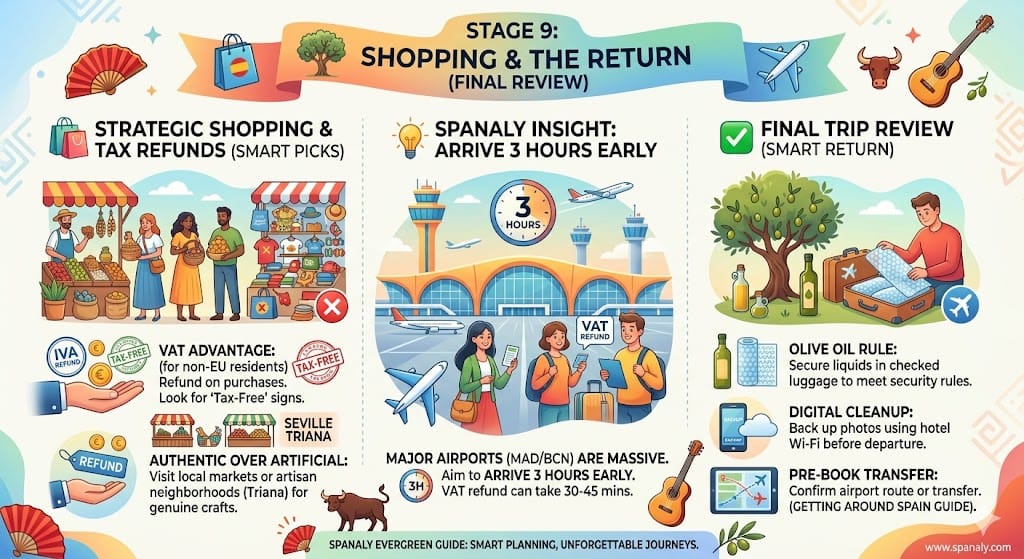
The final stage to plan your trip to Spain is ensuring a smooth transition from your holiday back to reality. Smart shopping and a strategic departure plan prevent last-minute stress and ensure you don’t leave any money—or essential memories—behind at the airport.
🛍️ Strategic Shopping & Tax Refunds
The VAT Advantage: If you are a non-EU resident, you are entitled to a VAT (IVA) refund on most purchases. Look for “Tax-Free” signs in shops and ensure you get the digital forms validated at the airport before you check your bags.
Authentic Over Artificial: Avoid the souvenir shops directly adjacent to major monuments. Instead, visit local markets or dedicated artisan neighborhoods like Triana in Seville for genuine craftsmanship.
The Olive Oil Rule: If buying liquids like premium Olive Oil or Sherry, ensure they are securely bubble-wrapped and placed in your checked luggage to meet airline security rules. Check our Shopping in Spain Guide for the best regional brands.
Spanaly Insight: Many travelers forget that Spanish airports, especially Madrid and Barcelona, are massive. Aim to arrive at least 3 hours before an international flight. The VAT refund process alone can take 30–45 minutes depending on the queues.
✅ The Final Trip Review
Before you leave, take a moment to review your expenses and document your favorite spots.
Digital Cleanup: Back up your photos to the cloud using your hotel’s Wi-Fi one last time.
Transportation to Airport: Pre-book your airport transfer or check the last train/bus schedules. For detailed routes, refer back to our Getting Around Spain guide.
By following this Spanaly travel protocol, your return home will be as organized as your arrival.
💡 Spanaly Pro Tips: Expert Secrets for Spain
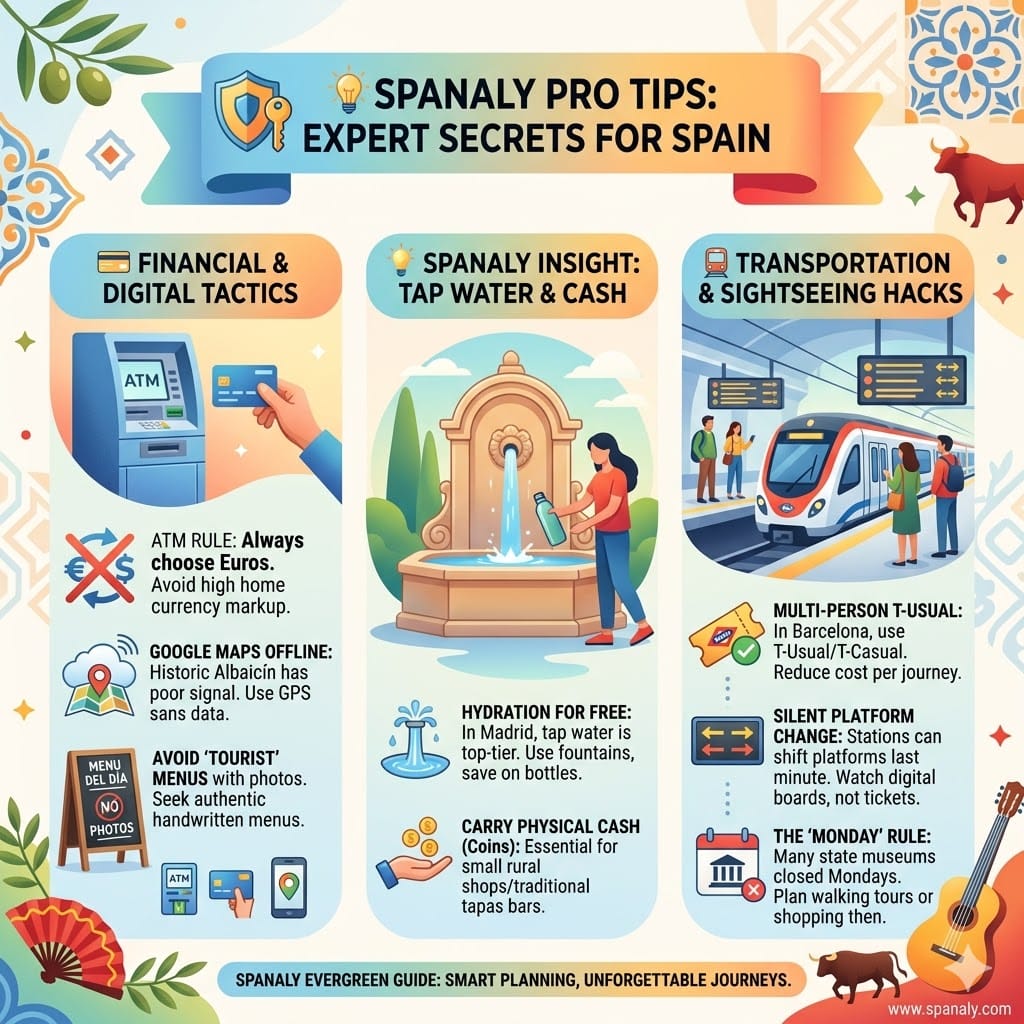
To truly plan your trip to Spain like a local expert, you need to look beyond the guidebooks. These “insider” tactics will save you money, protect your time, and elevate your cultural experience from a standard visit to a professional-grade journey.
💳 Financial & Digital Tactics
The “No-FX” ATM Rule: When an ATM asks if you want to be charged in your home currency or Euros, always choose Euros. Choosing your home currency triggers “Dynamic Currency Conversion,” which often carries a hidden 5–10% markup.
Google Maps Offline: Large parts of historic neighborhoods (like the Albaicín in Granada) have poor signal and confusing alleys. Download the offline map of your city to ensure GPS works without draining your data.
Avoid “Tourist” Menus: If a restaurant has photos of food on a board outside, walk away. Professional travelers look for the Menu del Día handwritten on a chalkboard, usually tucked away in a side street.
🚉 Transportation Hacks
The Multi-Person T-Usual: In cities like Barcelona, don’t buy single tickets. Look for the T-Usual or T-Casual cards which can significantly reduce the cost per journey on the Metro and Bus networks.
The “Silent” Platform Change: Spanish train stations can change platforms at the last minute. Keep your eyes on the digital boards rather than the platform number printed on your initial ticket.
🏛️ Sightseeing Strategy
The “Monday” Rule: Most state-owned museums in Spain are closed on Mondays. Plan your “walking tours” or shopping days for Mondays and reserve the rest of the week for cultural visits.
Hydration for Free: In cities like Madrid, the tap water is among the best in Europe. Carry a reusable bottle and look for public “Fuentes” (fountains) to save on bottled water costs.
Spanaly Insight: Always carry a small amount of physical cash (coins). While Spain is highly digital, many traditional tapas bars or small rural shops still operate on a “Cash Only” basis for transactions under €10.
🛡️ Visitor FAQs – Step-by-Step Spain Planning Guide
🎫 Can I visit major monuments for free on certain days?
Yes, many state-owned museums and monuments offer free entry windows, usually on Sunday afternoons or specific weekday evenings (like the Prado in Madrid). However, these slots are high-demand and often require a digital "zero-euro" ticket booked online in advance to guarantee entry.
📱 Is it better to buy a physical SIM or an eSIM for Spain?
For modern travelers, an eSIM is the superior choice. You can activate it before you land, ensuring you have GPS and translation tools the moment you exit the plane. Physical SIMs often require visiting a store and showing your passport, which can waste precious hours of your first day.
🚆 Should I buy a "Spain Rail Pass" or individual tickets?
Unless you are traveling extensively every single day, individual "Promo" tickets are usually cheaper than a Rail Pass. Spain’s high-speed network (AVE) uses dynamic pricing; booking individual journeys 60 days out can save you significantly more than the flat rate of a pass.
💊 Are pharmacies open 24/7 for emergencies?
Standard pharmacies follow normal business hours, but every district has a Farmacia de Guardia (on-call pharmacy) that stays open all night. You can find the address of the nearest 24-hour pharmacy posted on the front door of any closed pharmacy in the neighborhood.
☕ What is the secret to ordering coffee like a local?
Avoid asking for a "large latte." For a classic coffee with milk, ask for a Café con Leche. If you want a small hit of espresso with a drop of milk, ask for a Café Cortado. Remember, in traditional bars, you often pay at the end of your visit, not when you order.
Spain Strategic Planning Guide by Spanaly.com
Congratulations! You are now equipped with a professional-grade strategy to master every stage of your Spanish adventure. From the first euro saved to the final souvenir packed, your preparation is the foundation of a legendary trip.
🌟 Why This Matters
Control: You are no longer just a tourist; you are a savvy traveler in command.
Savings: By following our booking timelines, you have maximized your budget.
Memories: You are ready to skip the lines and dive straight into the culture.
🗺️ Your Next Step
If you are looking for the perfect way to test your new planning skills, don’t miss our detailed Toledo & Segovia 3-Day Itinerary. It is the ideal extension for anyone starting their journey in Madrid.
Spanaly Pro Tip: The best travel plans are those that leave a little room for the unexpected. Use this guide as your compass, but don’t be afraid to follow a side street that smells of fresh churros!
Safe travels, and we look forward to hearing about your Spanish stories at Spanaly.com!