Table of Contents
Toggle🚆 Getting Around Northern Spain
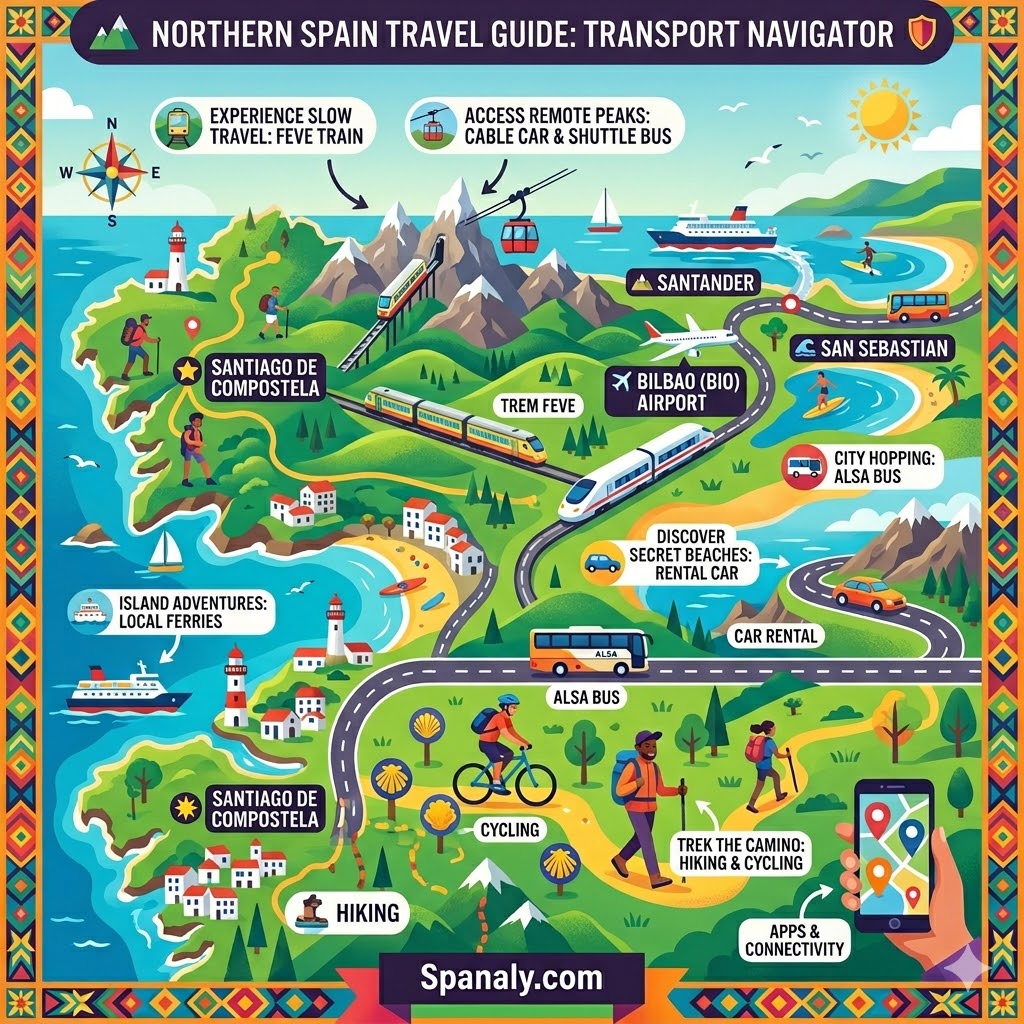
Forget the sun-drenched plains of Andalusia. “Green Spain” (España Verde) demands a tactical shift. Here, the landscape is defined by jagged Atlantic cliffs and emerald valleys that high-speed rail simply cannot pierce. To master the North, you must trade velocity for scenery, shifting between narrow-gauge tracks and hidden coastal roads.
Total Autonomy: Renting a car remains the only way to touch secret Galician coves.
Scenic Immersion: The Feve train offers a rhythmic, slow-motion tour of the Cantabrian coastline.
Tactical Hubs: Alsa buses dominate city-to-city connections with reliable, budget-friendly speed.
Mastering these logistics saves you from hours of frustration in remote Asturian valleys. If you are still mapping your route, align your transport with our Ultimate Northern Spain Travel Guide. Never rely on the Renfe AVE here; the terrain is too rugged for a bullet train. Embrace the Atlantic pace.
📌 Northern Spain Transport: At a Glance
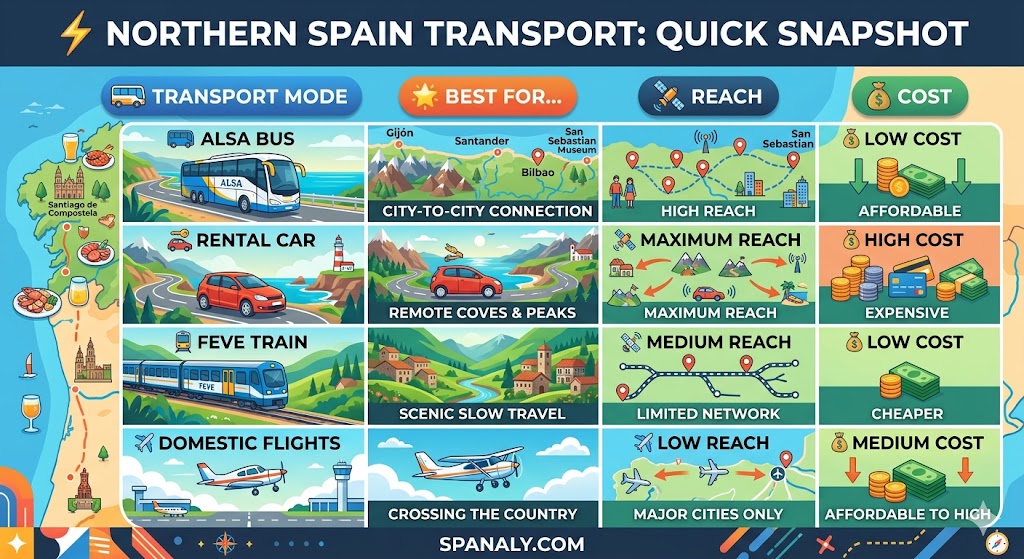
Your speed in the North is dictated by the mountains, not your schedule. Unlike the flat plateaus of central Spain, the Atlantic coast requires a hybrid strategy. Use the table below to pick your “Primary Mover” based on your tactical need for either speed or scenery.
| Transport Mode | Best For… | Reach | Cost |
|---|---|---|---|
| Rental Car | Remote Coves & Peaks | Maximum | High |
| Alsa Bus | City-to-City Connection | High | Low |
| Feve Train | Scenic Slow Travel | Medium | Low |
| Domestic Flights | Crossing the Country | Low | Medium |
⚠️ The “Hybrid” Strategy: Never apply a one-size-fits-all approach. Rent a car for the rugged Picos de Europa, but switch to the bus for city hops like San Sebastian to avoid impossible parking fees.
Before booking, ensure your travel insurance for Spain is active for local rentals. If starting from the capital, check the best ways to travel from Madrid to Bilbao to begin your northern chapter without delays.
🚆 The Feve Train: Slow Travel Through Green Landscapes
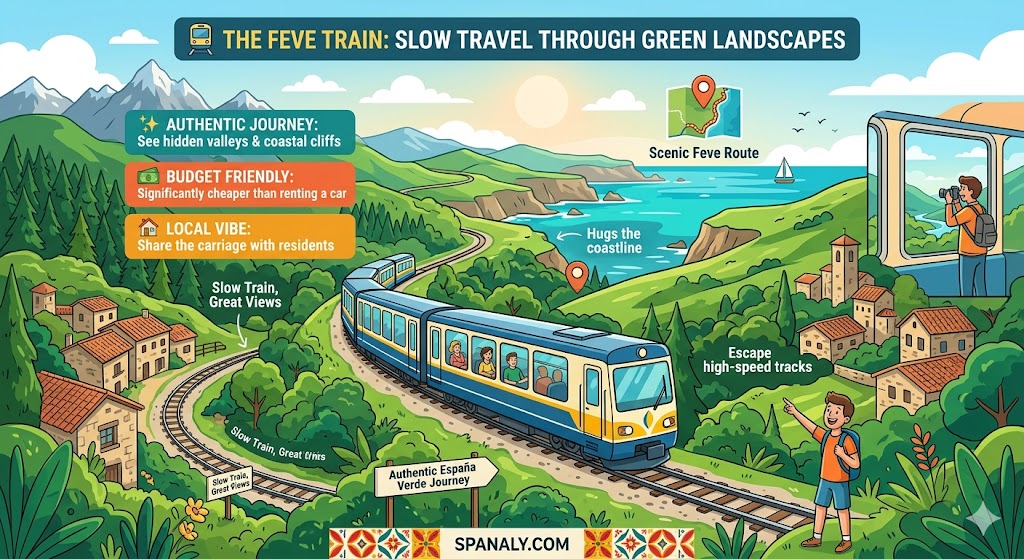
Forget the rapid AVE if you want to actually see the North. The Feve narrow-gauge rail is a rhythmic, clanking journey through Cantabria’s “Emerald forests.” It doesn’t just pass the scenery; it lives inside it, hugging cliffs and backyard gardens. While our Spain high-speed train guide focuses on velocity, the Feve prioritizes the Atlantic breeze.
Coastal Immersion: The Santander-to-Gijón line offers Europe’s most dramatic window views for just a few Euros.
Rural Access: Stop at tiny, unnamed stations that rental cars and big buses simply cannot find.
The “Cercanías AM” Hack: You won’t find “Feve” on modern departure boards anymore. Look for Cercanías AM (Ancho Métrico) tucked away in a separate wing of the main stations.
This is “Slow Travel” in its purest, most unpredictable form. It aligns perfectly with the best time to visit Northern Spain when the lush greenery is at its peak. Don’t check your watch here; the Feve is famous for its beauty, never its punctuality. Make sure to double-check the physical platform, as these narrow tracks often hide behind the main terminal walls.
🚘 Car Rental: Why a Vehicle is Essential for the Coast
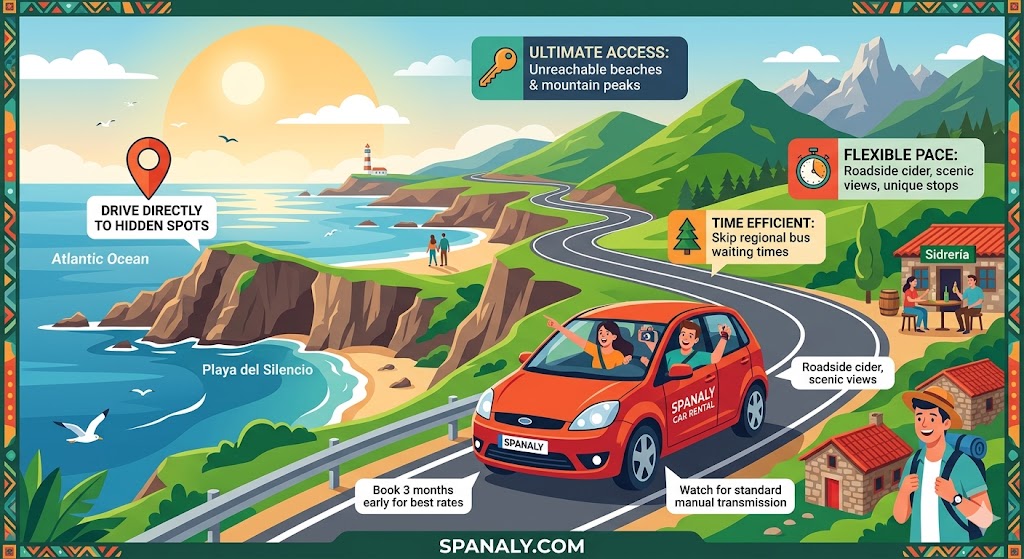
Renting a vehicle is the only practical way to explore the hidden corners of Northern Spain. Public transport rarely reaches the most dramatic Asturian cliffs or secret Galician coves. To avoid high prices and limited stock, make sure to book your car at least three months in advance.
Ultimate Access: Drive directly to isolated spots like Playa del Silencio or the Picos de Europa peaks.
Time Efficiency: Skip the long wait times for regional buses that only run a few times a day.
Flexible Pace: Stop at any roadside Sidrería or viewpoint without checking a train schedule.
Before you sign any papers, check our guide on renting a car in Spain to understand fuel policies and deposit requirements. Knowing the local rules is vital, so review the basics of driving in Spain to avoid unexpected fines. Remember that manual cars are the standard; always specify “Automatic” during your search if needed.
💰 Money-Saving Hack: Most northern rental companies hit you with a €150 “One-Way Fee” if you pick up in Bilbao and drop off in Santiago. To keep that cash for local seafood, plan a circular route or verify if your credit card’s premium insurance absorbs these specific surcharges.
🚌 Alsa Bus Network: The Reliable Backbone of the North
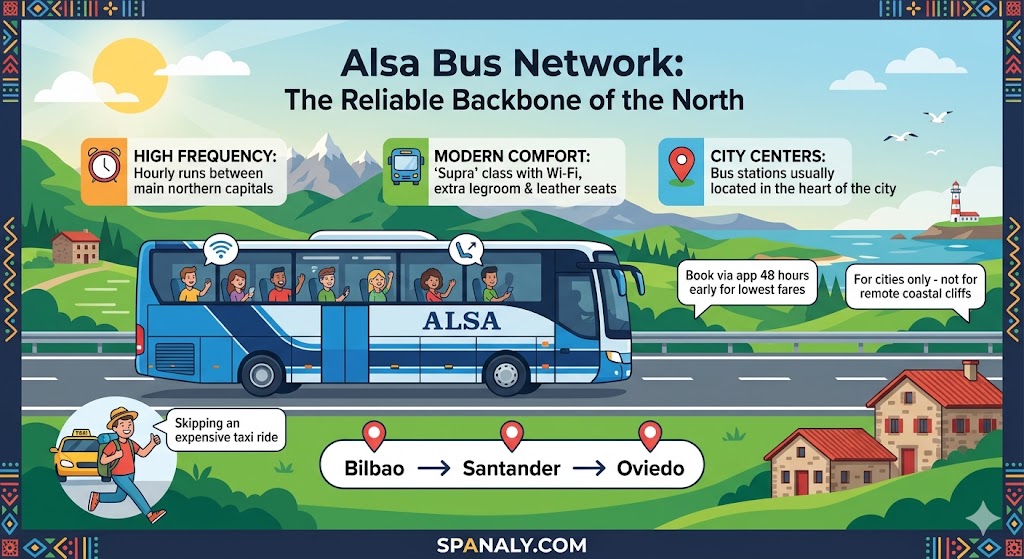
If you prefer to avoid driving, the Alsa bus network is your best alternative for city-to-city travel. These buses connect major hubs like Bilbao, Santander, and Oviedo more efficiently than the regional train system. For long-distance legs, checking traveling Spain by bus will help you master the booking process and luggage rules.
High Frequency: Buses run almost every hour between the main northern capitals.
Modern Comfort: Most “Supra” class buses offer Wi-Fi, leather seats, and extra legroom for longer journeys.
City Centers: Bus stations are usually located in the heart of the city, saving you expensive taxi fares.
While the bus is great for cities, it won’t take you to the remote Atlantic cliffs. To understand the cost difference, compare your bus tickets with our Spain travel budget guide. Booking through the Alsa app at least 48 hours early often secures significantly lower fares.
🚨 The “Plan B” Secret: Northern routes between San Sebastian and Bilbao sell out fast on weekends. If you’re stuck at a “Sold Out” screen, don’t panic. Switch to the BlaBlaCar app; it is the secret weapon for locals here, offering safe and frequent car-pooling seats when the buses are full.
✈️ Key Airports: Where to Land for an Atlantic Start
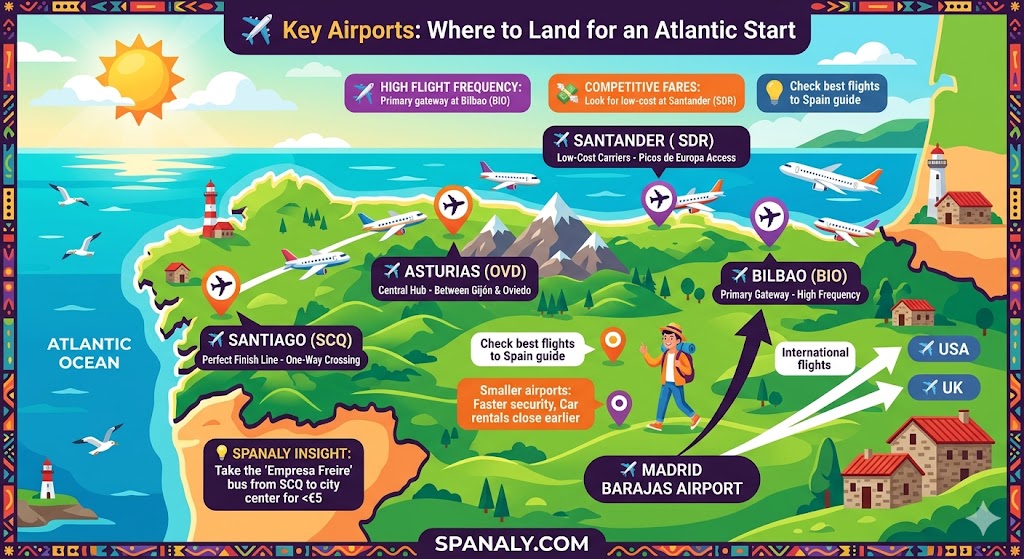
Landing at the wrong airport can cost you two days of needless backtracking. Bilbao (BIO) is your strategic heavy-lifter, but smaller Atlantic hubs offer “surgical” entry points directly into the mountain heart or the Galician finish line.
Bilbao (BIO): The undisputed gateway for 14-day road trips heading west toward the cliffs.
Santander (SDR): The low-cost stronghold and your fastest ticket to the Picos de Europa.
Santiago de Compostela (SCQ): The perfect “one-way” finish line after crossing the entire North.
Asturias (OVD): A central tactical hub sitting between the cider-loving cities of Gijón and Oviedo.
Compare fares early via our best flights to Spain guide. Remember that northern airports are compact; while security lines move faster, rental desks often close early. Don’t expect “big city” 24/7 service here.
💶 Local Transit Win: Don’t let private transfer companies at Santiago (SCQ) talk you into a €30 taxi. Look for the “Empresa Freire” bus stop directly outside the terminal. It runs every 30 minutes, costs less than €5, and drops you in the city center faster than most shared shuttles.
🚴 Cycling & Hiking: Moving at the Speed of the Camino
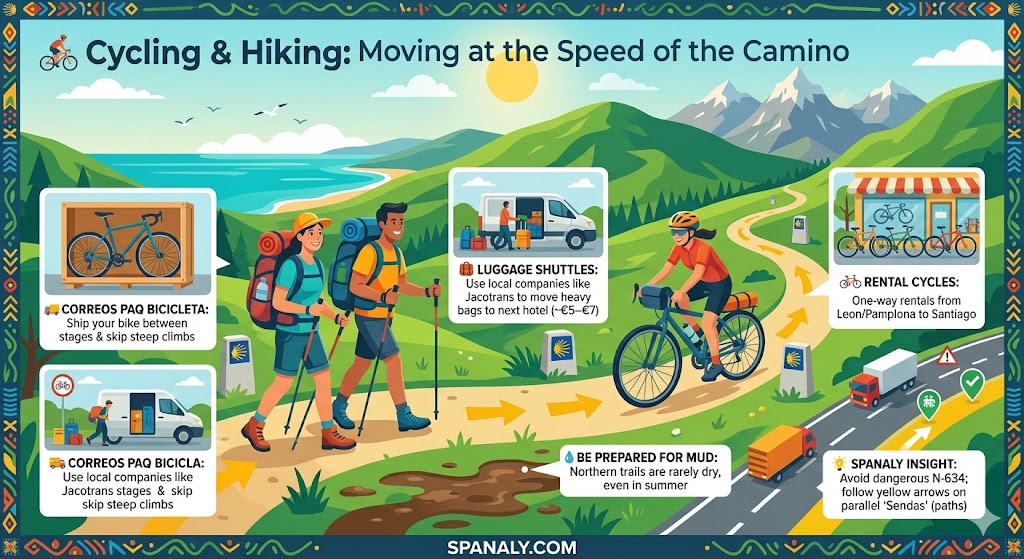
In the North, trekking isn’t a hobby; it’s a logistics system. Thousands navigate the Atlantic coast using only their boots or two wheels. This rugged terrain demands more than just stamina. To survive the unpredictable Galician mist, check our guide on what to pack for Spain for essential waterproof gear.
The N-634 Danger: Never cycle the main N-634 highway. It’s a narrow, truck-heavy trap. Always follow the yellow arrows onto the “Sendas” (parallel paths) for a safe, car-free experience.
The “Paq Bicicleta” Hack: Use the Correos (Post Office) bike service to ship your cycle ahead, skipping the brutal 12% mountain inclines.
Logistical Shuttles: Services like Jacotrans move your 15kg pack for €7, allowing you to walk with only water and a camera.
Expect mud even in August; the northern trails are “Atlantic-wet” year-round. Most cyclists start in Leon or Pamplona using one-way rentals that end at the Cathedral. Once you reach the finish line, use our Santiago de Compostela itinerary to navigate the cobblestone pedestrian zones without getting lost in the pilgrim crowds.
🚇 Urban Transit: Navigating Bilbao and San Sebastian
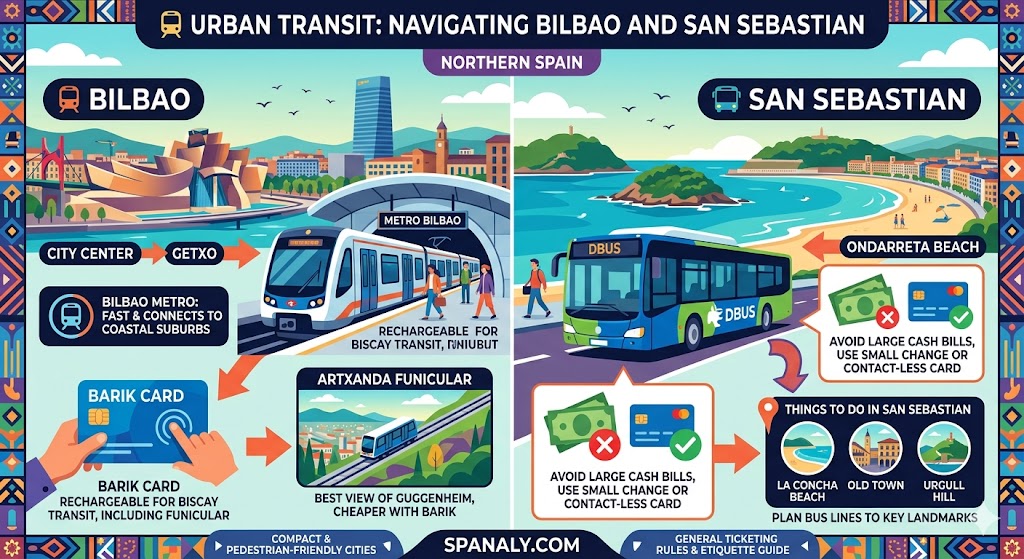
Northern Spanish cities are compact and highly pedestrian-friendly. However, using the local transit systems is essential when moving between distant neighborhoods or hilly areas. To master the local flow, check our guide on getting around Spain for general ticketing rules and etiquette.
Bilbao Metro: A fast, Norman Foster-designed system connecting the city center to coastal suburbs like Getxo.
Dbus (San Sebastian): One of Spain’s most efficient bus networks; use it to reach the far end of Ondarreta beach.
The Barik Card: This rechargeable card works on almost all transport in the Biscay region, including the Bilbao funicular.
While walking is the best way to see the historic centers, public transport is vital for reaching specific landmarks. Review the things to do in San Sebastian to plan which bus lines match your itinerary. Be aware that most city buses in the north do not accept large cash bills; keep small change or use a contact-less card.
🎡 The Insider View Trick: In Bilbao, don’t pay for expensive “tourist viewpoints.” Instead, use your Barik card at the Artxanda Funicular. It’s technically public transport, so you get the city’s best panoramic view of the Guggenheim for a fraction of the cost of a private tour or a tourist ticket.
🚢 Coastal Ferries: Exploring the North by Sea
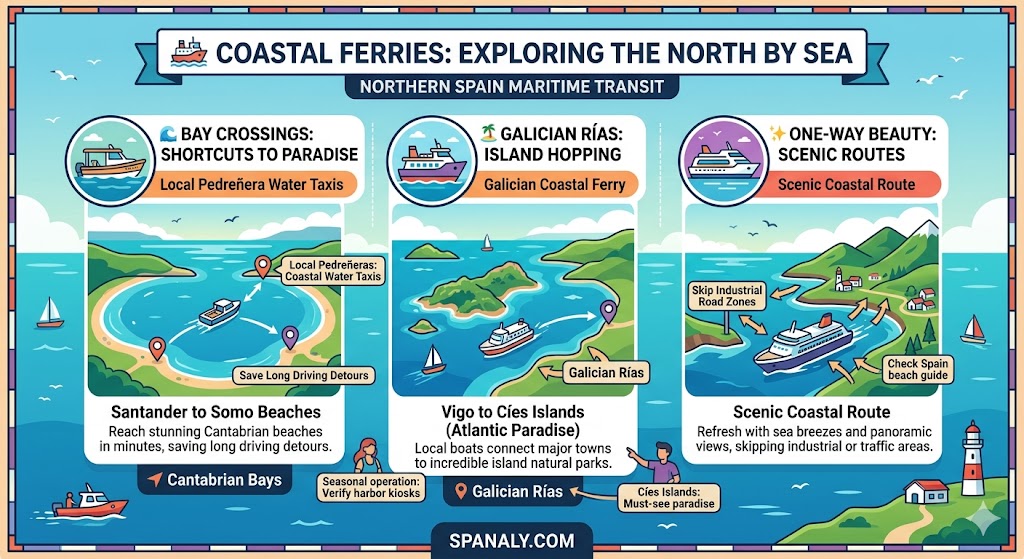
Stop driving around the bays; start crossing them. The Atlantic coastline is jagged, and local “Pedreñeras” (water taxis) are the ultimate secret to skipping industrial traffic jams. These small boats turn a frustrating 40-minute detour through gray outskirts into a salt-sprayed 10-minute shortcut.
The Santander Bypass: Skip the bus. Take the Los Reginas ferry to Somo. It’s the cheapest “mini-cruise” in Spain, offering a royal view of Magdalena Palace from the waves.
Galician Rías: You cannot drive to paradise. Local boats from Vigo or Baiona are the only legal gateway to the protected Cíes Islands.
The Santoña Hack: Use the small Laredo-Santoña ferry to bypass the heavy truck traffic and dock chaos of the fishing ports.
Consult our Spain beach guide to sync your ferry times with the best coastal stops. Most routes are seasonal; verify schedules at harbor kiosks, especially during stormy months. If the Bay of Biscay looks choppy, prepare for significant motion; these waters are famously unforgiving to the unprepared.
⛰️ Mountain Transport: Reaching the Picos de Europa Peaks
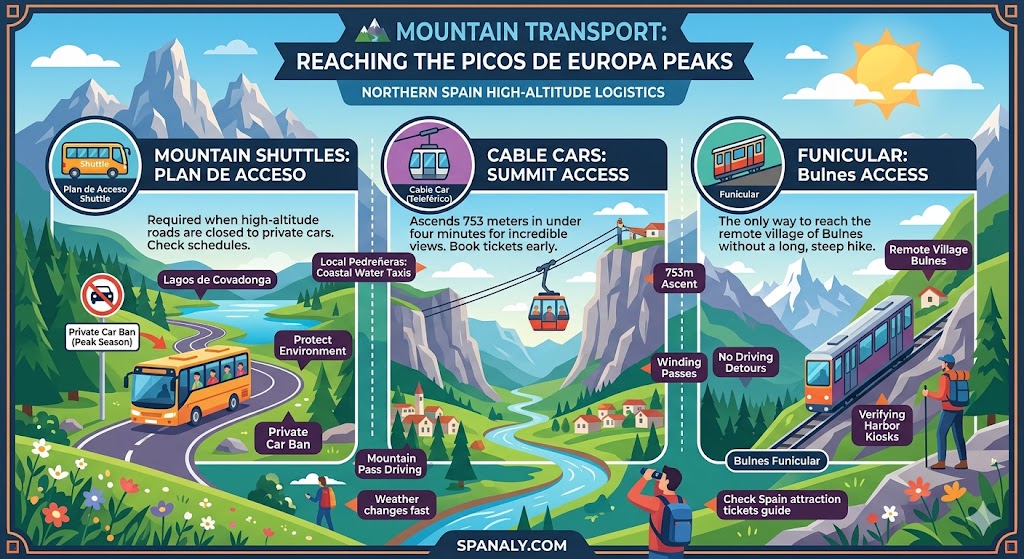
Navigating the northern mountain ranges requires specific knowledge of local restrictions. In peak seasons, private cars are often banned from high-altitude roads to protect the environment. To ensure you reach the summits, check our Spain attractions tickets guide for cable car bookings.
Mountain Shuttles: Use the “Plan de Acceso” buses to reach Lagos de Covadonga when private cars are restricted.
Cable Cars: The Fuente Dé cable car in Cantabria whisks you 753 meters up in under four minutes.
Funicular Access: The Bulnes Funicular is the only way to reach the remote village of Bulnes without a 2-hour hike.
If you plan to drive through these winding passes, make sure to review our driving in Spain guide for mountain safety tips. Be aware that weather changes fast at high altitudes; heavy fog can halt cable car operations without prior notice.
⏱️ The “7:55 AM” Golden Rule: At Lagos de Covadonga, the road closes to private vehicles at 8:00 AM sharp during peak months. If you pass the checkpoint at 7:55 AM, you can drive your own car up and stay all day. Arrive at 8:01 AM, and you’re forced to park below and wait for the expensive shuttle bus. Aim for a pre-dawn start to win total freedom.
💼 Logistics Checklist: Tickets, Apps, and Connectivity
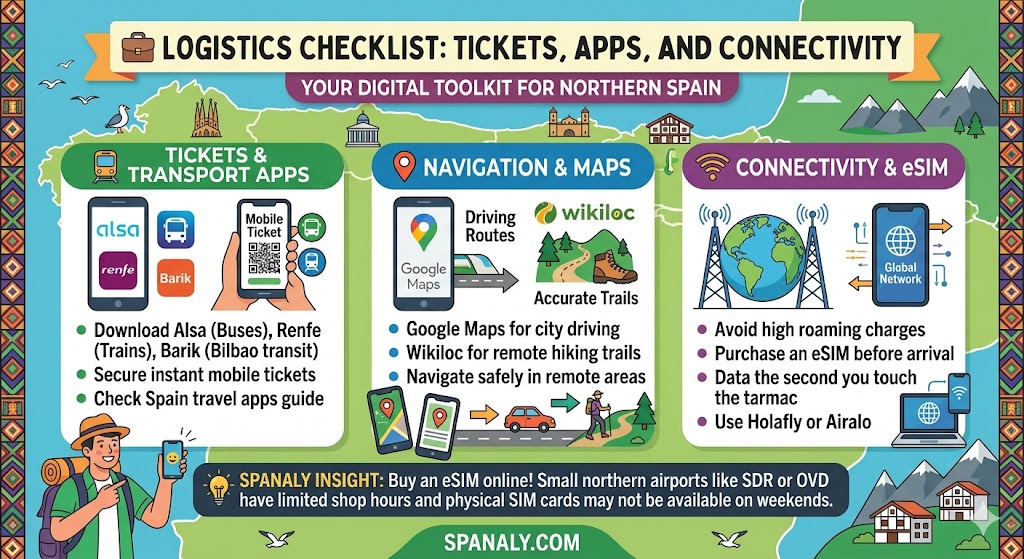
Your smartphone is your navigator in the Atlantic North. Without the right apps, you’ll struggle with rural schedules and ticketless kiosks. Before landing, sync your devices using our Spain travel apps guide to ensure zero downtime on the road.
Instant Ticketing: Skip the lines. Install Alsa (Buses), Renfe (Trains), and the Barik app (Bilbao) for seamless mobile boarding.
The eSIM Strategy: Don’t hunt for SIM cards at small airports like Santander; they are often closed. Use Holafly or Airalo for data the moment you land.
Rural Navigation: Google Maps fails in deep Asturian valleys. Download Wikiloc for offline hiking trails and precise mountain GPS.
Paperwork is still king in the mountains. Verify your Spain travel requirements to confirm your license and insurance are valid for regional rentals. Always keep offline PDF backups of your bookings; northern “dead zones” will leave you without signal exactly when you need your hotel address.
📊 Transport Comparison: Speed vs. Scenic Beauty
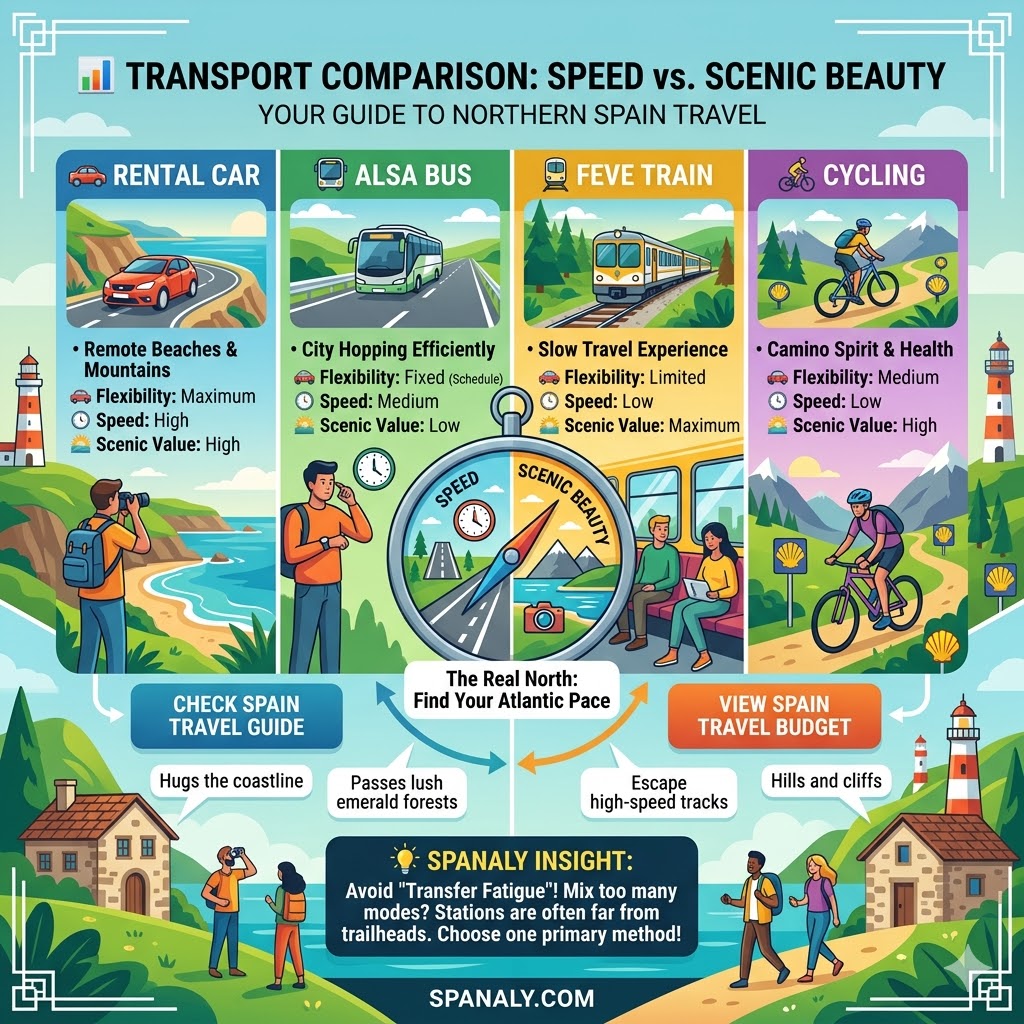
Choosing the right transport is a balance between your clock and your camera. Some travelers value reaching their destination fast, while others prefer the winding coastal tracks. To help you decide, we have mapped out the best options based on typical northern routes.
| Transport Mode | Best For… | Speed | Scenic Value | Flexibility |
|---|---|---|---|---|
| Rental Car | Remote Beaches | High | High | Maximum |
| Alsa Bus | City Hopping | Medium | Low | Fixed |
| Feve Train | Slow Travel | Low | Maximum | Limited |
| Cycling | Camino Spirit | Low | High | Medium |
If you are on a tight schedule, stick to the highway networks mentioned in our Spain travel guide. However, if you want to discover “The Real North,” a rental car or the slow Feve train is unbeatable. Always compare these choices with your Spain travel budget to avoid overspending on luxury transfers.
💡 Spanaly Insight: Don’t try to mix too many modes in one day. The “Transfer Fatigue” in Northern Spain is real because stations are often far from scenic trailheads. Pick one primary method (like a car) for your base, and use the others only for specific day-trip experiences.
💡 Local Secrets: Inside Tips from Real Travelers

The best northern routes aren’t found in official brochures. Veteran travelers use “hacks” that bypass the standard tourist queues and save hours of travel time. To complement these tactics, explore our Spain travel tips for more undercover advice.
The Unofficial Stop: On the Feve train, hikers can often signal the driver for a “Middle of Nowhere” drop-off. Ask the conductor nicely to hop off near specific rural trailheads.
The Leon-Madrid Shortcut: Skip the 300km “highway slog” from Madrid. Take the 2-hour high-speed train to Leon and rent your car there to start directly at the Asturian gateway.
Rural Rideshare: In Galicia, where buses are a myth, Blablacar is the real king. It’s the most reliable way to hop between small villages for the price of a coffee.
Distances here are deceptive. Coastal roads take twice as long as Google Maps predicts due to sudden Atlantic fog. Review our Spain travel itinerary to avoid the “over-planning” trap.
⚠️ The Cathedral Beach Trap: Visiting Playa de Las Catedrales? A bus ticket isn’t enough. You must register on the official Xunta de Galicia website. Many tourists arrive only to be blocked at the gate because they missed this free, mandatory digital permit.
🛡️ Visitor FAQs – Northern Spain Transport Guide
🛡️ Is it safe to drive on northern mountain roads at night?
While roads are well-maintained, night driving in Asturias and Galicia is not recommended. Dense Atlantic fog and roaming wildlife (like wild boars or deer) are common. Stick to daylight hours to enjoy the views and ensure a safer journey through the winding mountain passes.
🎫 Can I use one transport card for all northern cities?
Unfortunately, no. Spain’s north is divided into autonomous regions. Use the Barik card for Bilbao, but you will need the Mugi card for San Sebastian. For inter-city buses like Alsa, your best bet is using their mobile app to store all digital tickets in one place.
🚆 Are Feve train stations located inside the city centers?
Usually, yes. However, in smaller villages, the Feve station might be a 15-minute walk from the historic center. Unlike the high-speed AVE stations which are sometimes on the outskirts, Feve trains pride themselves on "Slow Travel" and generally drop you near the local plazas.
⛽ Are there enough gas stations in the Picos de Europa?
Gas stations are sparse once you enter the deep valleys. Always refuel in larger towns like Cangas de Onís or Potes before heading into the heart of the national park. Electric vehicle (EV) charging points are expanding but remain limited in rural Galician villages.
🚲 Is it difficult to take a bicycle on northern buses?
It requires planning. On Alsa buses, you must pay a small supplement and book your bike's spot in advance. Space is limited to 2-4 bikes per bus. Ensure your front wheel is removed and the bike is properly packed if the driver requests it for luggage safety.
Northern Spain Logistics Guide by Spanaly.com
Northern Spain is not a region to be rushed. Whether you choose the rumble of the Feve train or the freedom of a rental car, the journey itself is the destination.
Embrace the Slow: Don’t be afraid to change your plans if a hidden cove or a mountain mist catches your eye.
Trust the Locals: Apps are great, but a conversation with a Galician fisherman or a Cantabrian baker often leads to the best routes.
Balance is Key: Use the buses for speed, but keep the trains for the memories.
If you are ready to map out your specific stops, our Northern Spain road trip guide offers the perfect day-by-day breakdown to match your new transport knowledge.
⚠️ One Final Tip: Keep your rain jacket in the back seat and your camera ready. The Atlantic coast is unpredictable, beautiful, and waiting for you to discover its secrets. Pack your bags, book that first ticket, and let the green landscapes of the North do the rest.