Table of Contents
Toggle🏔️ Castro Urdiales
Imagine walking along a salty stone harbor where a massive Gothic cathedral towers over fishing boats. The sound of crashing waves mixes with the clink of tapas plates in the old quarter. This is Castro Urdiales, the most dramatic entrance to the Cantabrian coast.
The Sight: A 13th-century church built like a fortress right above the sea.
The Vibe: A perfect blend of medieval stone architecture and vibrant maritime life.
The Location: A strategic stop between Bilbao and Santander in the heart of Northern Spain.
The Plan: Explore the lighthouse, eat fresh anchovies, and relax on golden urban beaches.
Expert Guide: Discover the best routes and hidden gems in our complete guide to Northern Spain.
Whether you are a history lover or a beach seeker, this port offers a unique Atlantic soul. Skip the crowded tourist traps and find out why locals call this the “Jewel of the Cantabrian Sea”.
⚡ Castro Urdiales Snapshot: Essential Facts at a Glance
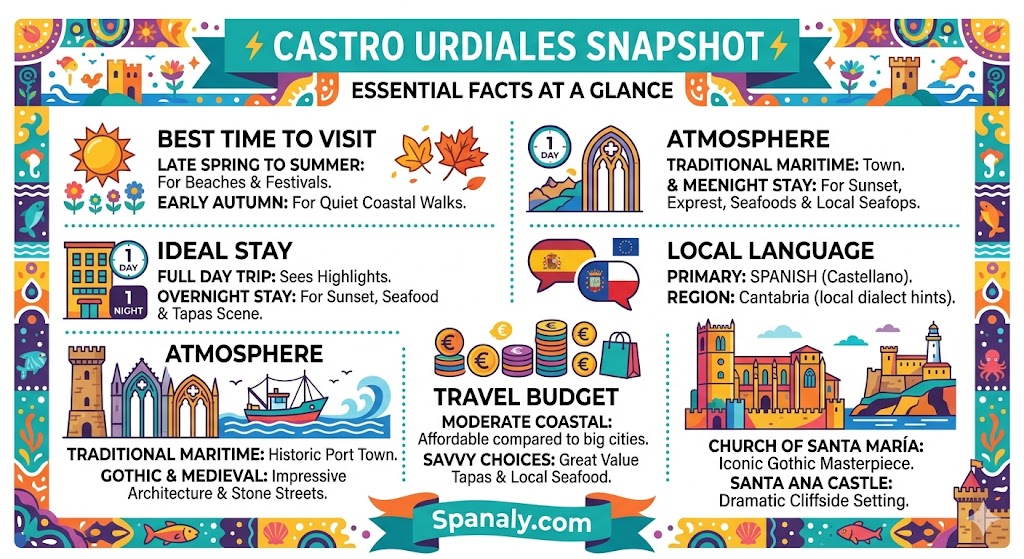
Before exploring the medieval streets, here is everything you need to know to plan your visit effectively. This coastal gem operates at a different rhythm than the big cities, so keep these practical details in mind.
Best Time to Visit: Late spring and summer offer the best beach weather, but early autumn is perfect for quiet harbor walks.
Ideal Stay: A full day trip is enough to see the landmarks, but staying overnight allows you to experience the vibrant seafood tavern scene.
Atmosphere: Traditional maritime spirit meets impressive Gothic architecture.
Local Language: Spanish is the primary language, though the town sits in the Cantabria region.
Travel Budget: For a breakdown of local prices and daily costs in the region, see our guide on Northern Spain travel cost and budget.
Top Landmark: The Church of Santa María de la Asunción, which dominates the entire skyline.
⚖️ Coastal Face-Off: Castro Urdiales vs. Laredo
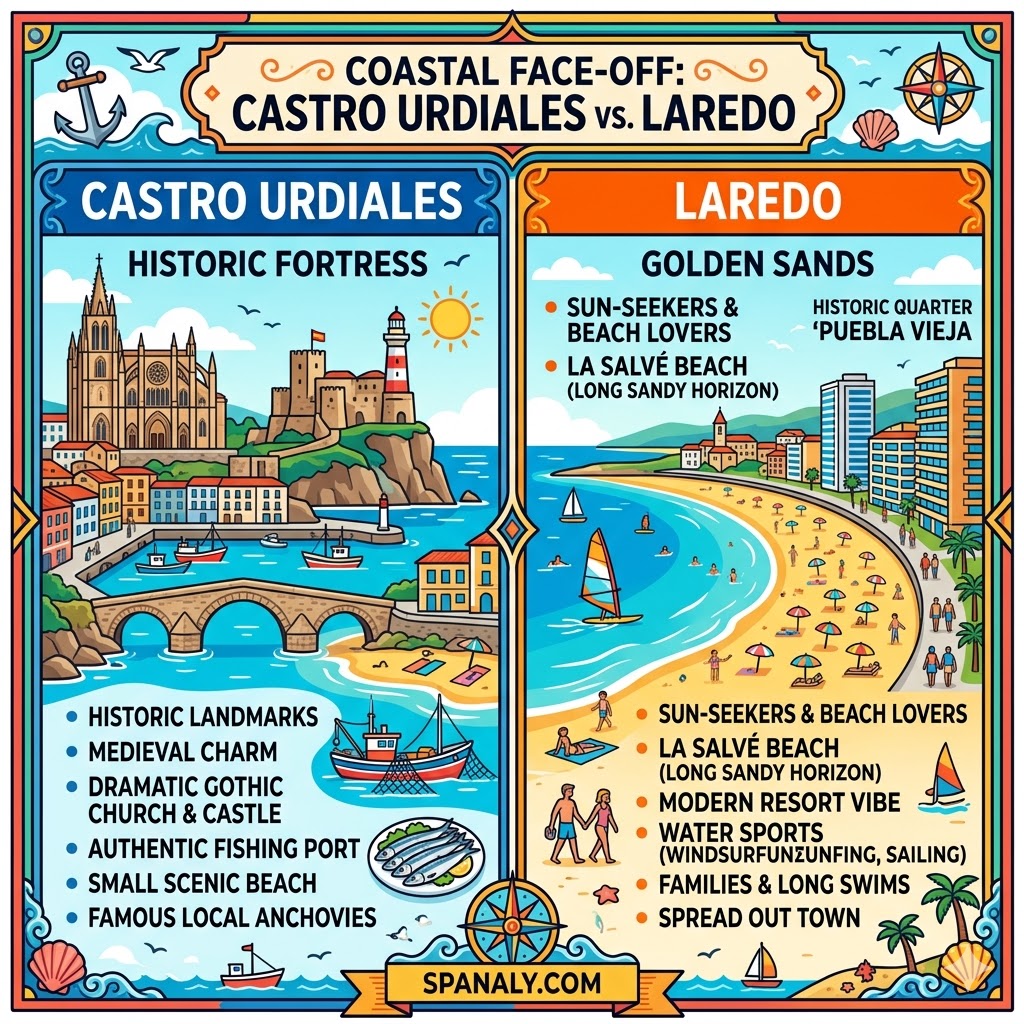
While both towns sit on the stunning Cantabrian coast, they offer completely different vibes. Choosing between them depends on whether you prefer medieval drama or endless sandy horizons.
🏰 Castro Urdiales: The Historic Fortress
Best For: History buffs and photography enthusiasts who love dramatic stone architecture.
The Vibe: A dense, medieval fishing port where the landmarks feel powerful and monumental.
The Beach: Smaller, urban beaches like Ostende that are scenic but can get crowded quickly.
The Food: Focused on authentic harbor taverns and the famous local anchovies.
🏖️ Laredo: The Golden Sands
Best For: Sun-seekers and families who want the ultimate beach day.
The Vibe: A more spread-out resort feel, dominated by “La Salvé,” one of the longest beaches in Northern Spain.
The Layout: While it has a small old quarter (Puebla Vieja), the modern high-rise buildings define the skyline.
The Activity: Perfect for long walks on the sand and water sports like windsurfing.
💡 The Spanaly Verdict
If you only have one day, Castro Urdiales wins for its sheer beauty and historical weight. However, if your main goal is to spend hours lying on a massive beach with plenty of space, Laredo is your go-to spot.
📍 Getting There: How to Reach Castro Urdiales
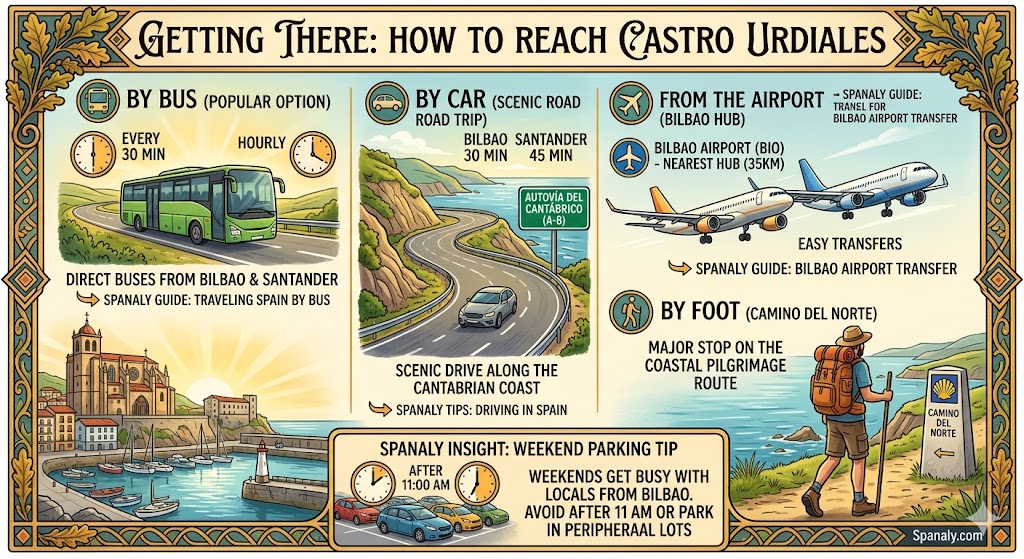
Castro Urdiales is perfectly positioned on the Cantabrian coast, making it one of the easiest day trips from major northern cities. Whether you are flying into the region or driving along the coast, here is the best way to arrive.
By Bus: This is the most popular option. Direct buses run every 30 minutes from Bilbao and hourly from Santander. You can find more details on using public transport in our traveling Spain by bus guide.
By Car: If you prefer a road trip, take the A-8 highway (Autovía del Cantábrico). It is a scenic 30-minute drive from Bilbao or 45 minutes from Santander. For local rules, check our tips on driving in Spain.
From the Airport: The nearest hub is Bilbao Airport (BIO), located just 35km away. For a smooth arrival, review our Bilbao airport guide to plan your transfer.
By Foot: Many travelers arrive via the Camino del Norte (Northern Way). Castro Urdiales is a major stop on this coastal pilgrimage route.
Spanaly Insight: If you are driving on a weekend, avoid arriving after 11:00 AM. The town is a favorite for locals from Bilbao, and finding a parking spot near the port becomes a difficult mission.
⛪ The Gothic Masterpiece: Exploring Santa María de la Asunción
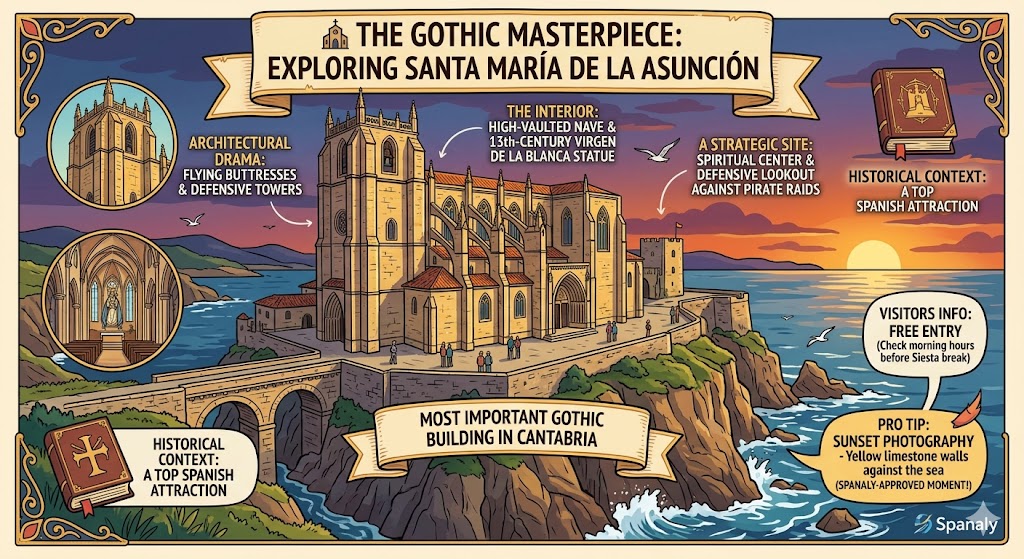
Standing on a rocky cliff overlooking the Atlantic, the Church of Santa María de la Asunción is a sight that stops you in your tracks. This 13th-century monument is considered the most important Gothic building in Cantabria, designed more like a fortress than a simple house of worship.
Architectural Drama: Look up at the massive flying buttresses and the heavy stone towers that have protected the port for centuries.
The Interior: Step inside to discover a high-vaulted nave and the famous 13th-century statue of the Virgen de la Blanca.
A Strategic Site: It was built here to serve as both a spiritual center and a defensive lookout against pirate raids from the sea.
Historical Context: If you love majestic religious sites, this cathedral belongs on your list of top Spanish Attractions.
Visiting this church is free, but we recommend checking the morning hours before the local “Siesta” break. The view of the sunset hitting the yellow limestone walls is a “Spanaly-approved” photography moment you cannot miss.
🏰 Coastal Fortifications: The Castle-Lighthouse of Santa Ana
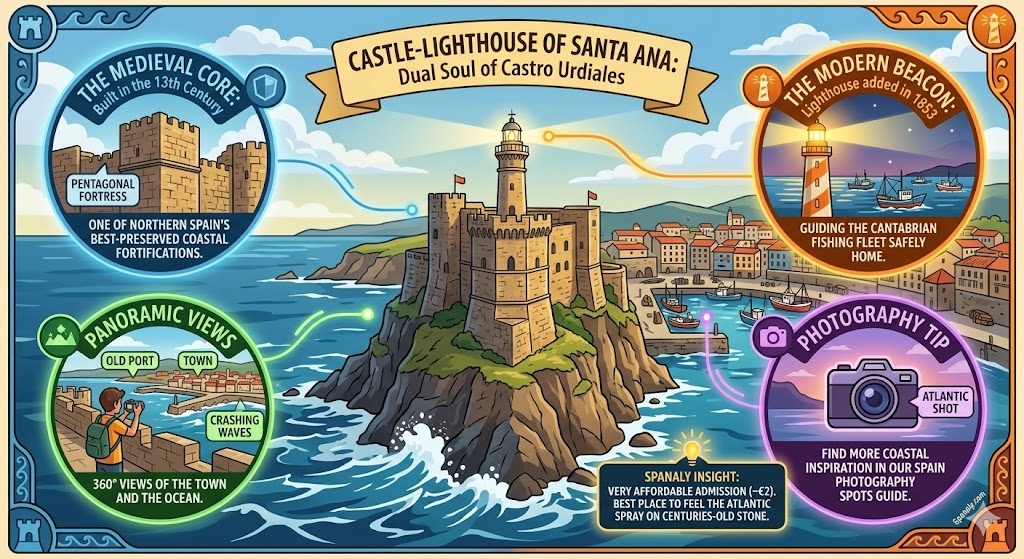
Just a few steps from the cathedral sits the Castle of Santa Ana, a rugged stone fortress that looks like it grew directly out of the cliffs. This site perfectly represents the dual soul of Castro Urdiales: a defensive stronghold turned into a guiding light for sailors.
The Medieval Core: Built in the 13th century, this pentagonal castle is one of the best-preserved coastal fortifications in Northern Spain.
The Modern Beacon: In 1853, a lighthouse was constructed inside the castle walls to guide the massive Cantabrian fishing fleet safely home.
Panoramic Views: Walk along the castle walls for the best 360-degree view of the old port, the crashing waves, and the red roofs of the town.
Photography Tip: For more coastal inspiration, check our guide to the best photography spots in Spain to capture the perfect Atlantic shot.
Spanaly Insight: Admission to the castle is very affordable (usually around €2). It is the best place to feel the spray of the Atlantic Ocean while standing on centuries-old stone—an essential experience for any coastal traveler.
⚓ The Historic Port: Walking through the Old Fishing Quarter
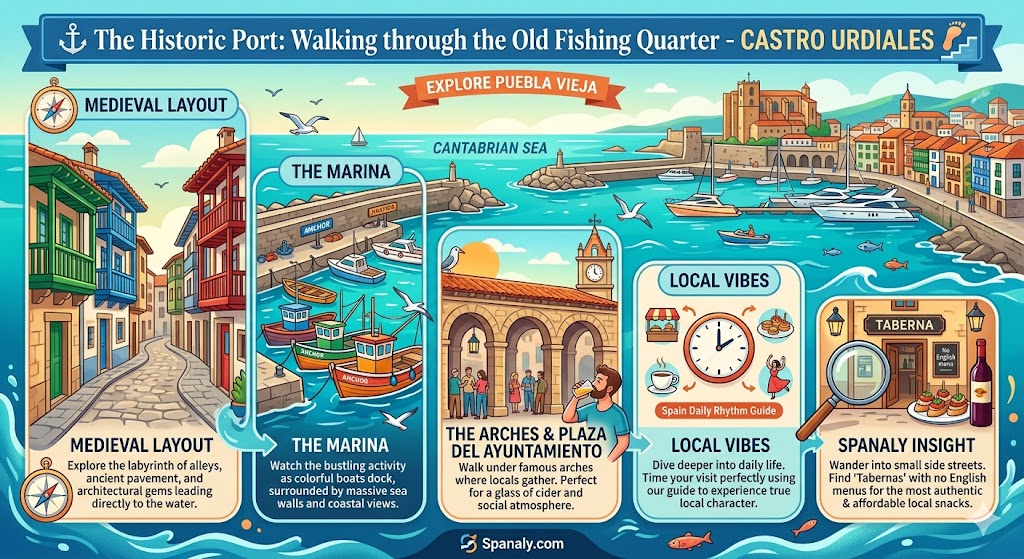
The Puebla Vieja (Old Town) of Castro Urdiales is where the town’s maritime heart beats loudest. Walking through these narrow, paved streets feels like stepping back into a time when the harbor was the primary source of life for the entire region.
Medieval Layout: Explore the labyrinth of alleys filled with traditional houses and wooden balconies that lead directly to the water.
The Marina: Watch the colorful wooden fishing boats dock alongside modern yachts in a harbor protected by massive stone breakwaters.
The Arches: Walk under the famous arches of the Plaza del Ayuntamiento, where locals gather for a glass of cider before lunch.
Local Vibes: If you want to dive deeper into the daily life of Spain, our guide on the Spain daily rhythm will help you time your visit perfectly.
🏖️ Sun and Surf: Best Beaches in Castro Urdiales
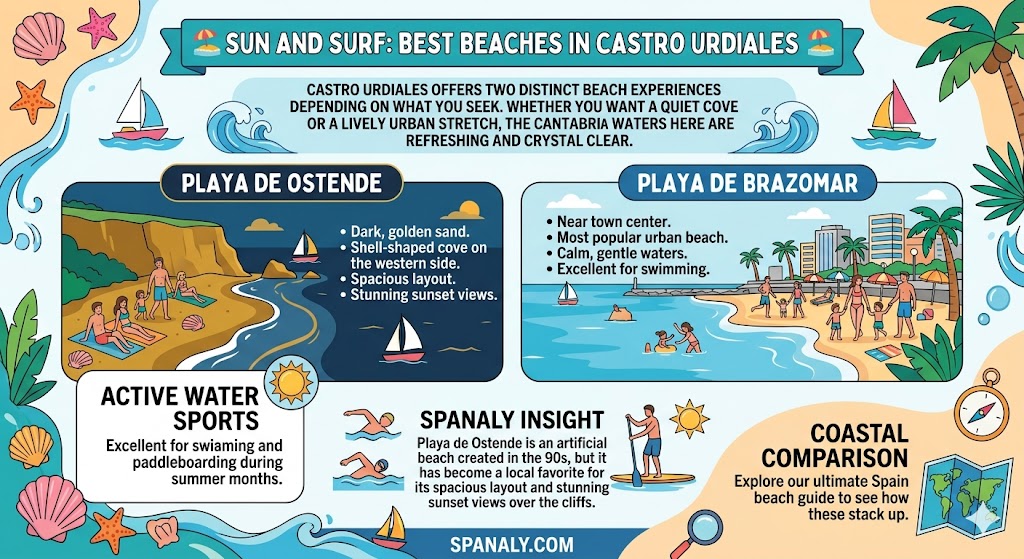
Castro Urdiales offers two distinct beach experiences depending on what you seek. Whether you want a quiet cove or a lively urban stretch, the Cantabrian waters here are refreshing and crystal clear.
Playa de Ostende: This shell-shaped beach sits on the western side and is famous for its dark, golden sand.
Playa de Brazomar: Located near the town center, this is the most popular urban beach with calm waters.
Active Water Sports: Both beaches are excellent for swimming and paddleboarding during the summer months.
Coastal Comparison: For more incredible seaside spots, explore our ultimate Spain beach guide to see how these stack up.
Spanaly Insight: Playa de Ostende is an artificial beach created in the 90s, but it has become a local favorite for its spacious layout and stunning sunset views over the cliffs.
🥘 Maritime Flavors: Must-Try Anchovies and Fresh Seafood
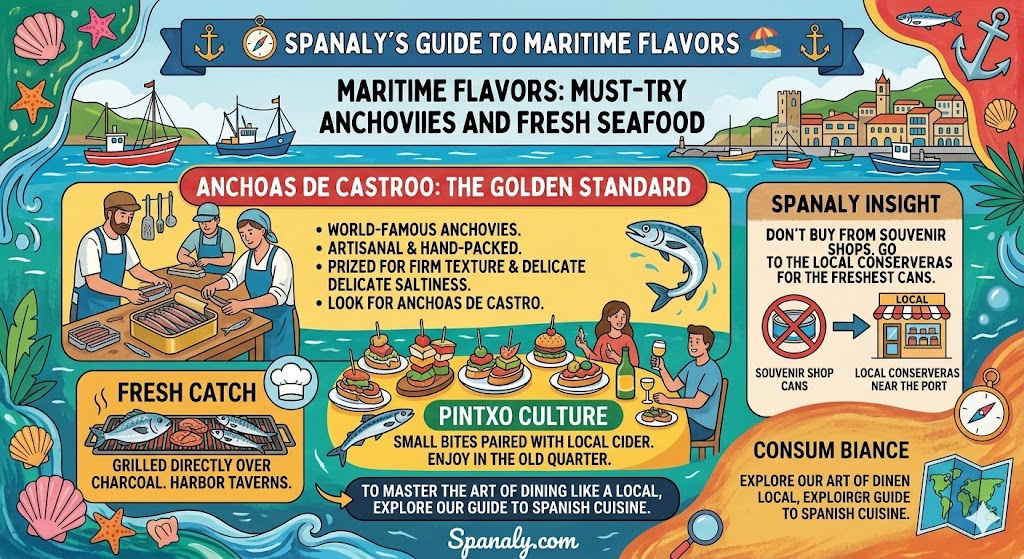
You cannot leave Castro Urdiales without tasting the treasures of the Atlantic. The town is world-famous for its artisanal anchovies, which are still hand-packed by local families using traditional methods.
The Golden Standard: Look for Anchoas de Castro, prized for their firm texture and delicate saltiness.
Fresh Catch: Order the Besugo (Sea Bream) or Sardinas, grilled directly over charcoal in the harbor taverns.
Pintxo Culture: Wander through the old quarter to enjoy small bites paired with a glass of local cider.
Spanish Gastronomy: To master the art of dining like a local, explore our guide to Spanish Cuisine.
Spanaly Insight: Don’t buy anchovies from souvenir shops. Go to the local “Conserveras” near the port for the freshest cans that locals actually buy.
🚶 Coastal Trails: Hiking the Camino del Norte Path
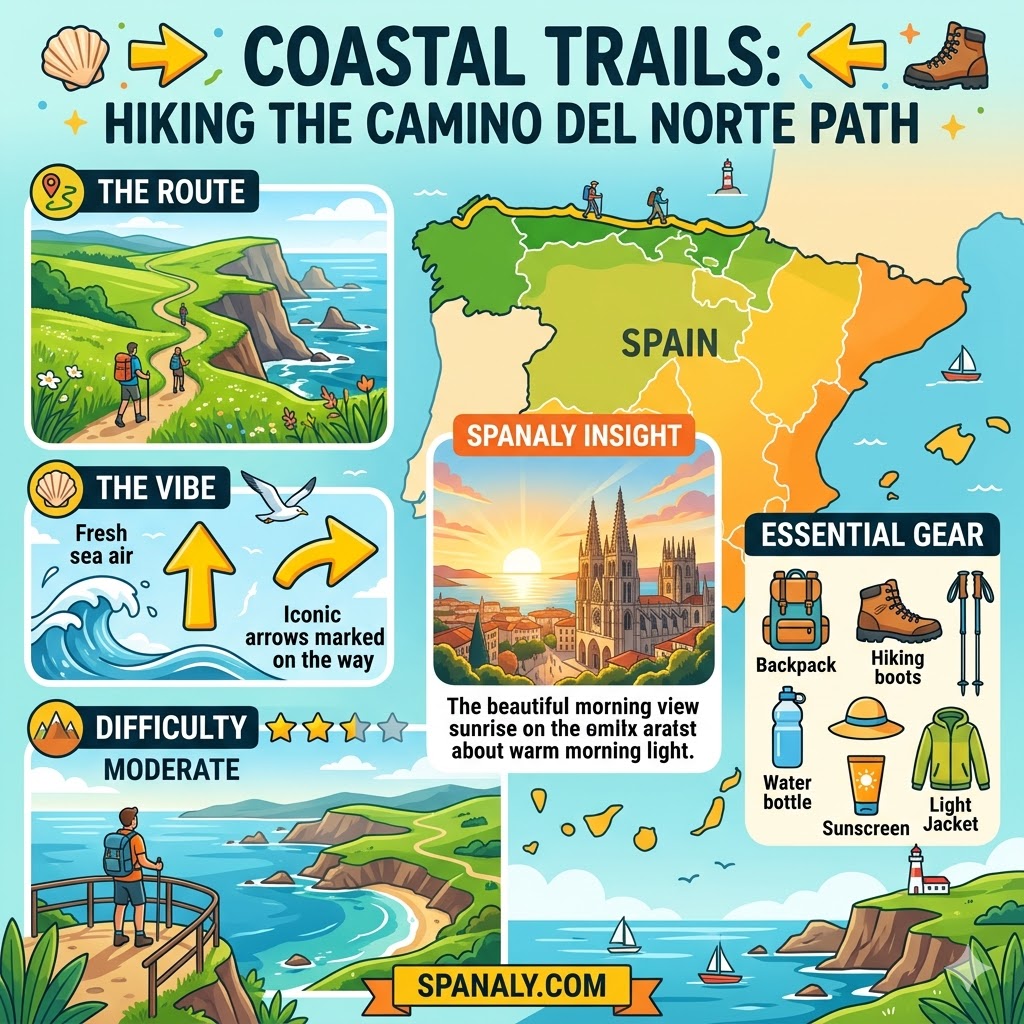
Castro Urdiales is a legendary stop on the Camino del Norte (the Northern Way to Santiago). Even if you are not a pilgrim, walking a small section of this coastal trail offers the best views of the Cantabrian cliffs and the Atlantic horizon.
The Route: The path connects the town to nearby Laredo, winding through green meadows and rugged coastline.
The Vibe: Expect fresh sea air, wild flowers, and the iconic yellow arrows guiding your way.
Difficulty: This section is moderate, featuring some elevation but rewarded with spectacular panoramic lookouts.
Essential Gear: To ensure you are fully prepared for the Atlantic weather, check our guide on what to pack for Spain.
🏡 Beyond the Town: Hidden Roman Ruins and Coastal Cliffs
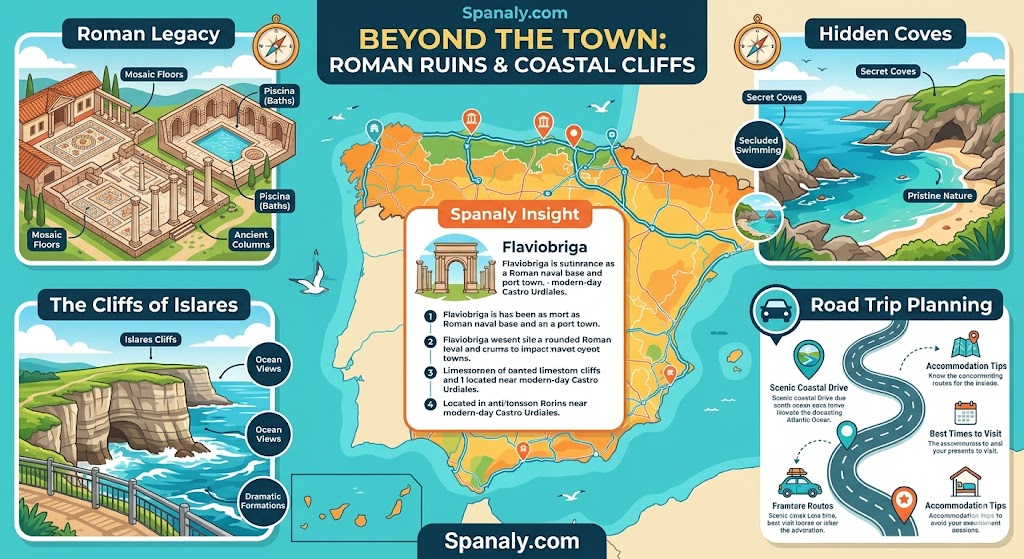
If you think Castro Urdiales is only about medieval churches, you are in for a surprise. Just outside the urban center lies Flaviobriga, the remains of an ancient Roman colony that proves this port has been a strategic hub for millennia.
Roman Legacy: Discover the foundations of villas and thermal baths that date back to the 1st century AD.
The Cliffs of Islares: Hike just a few kilometers west to find dramatic limestone cliffs that plunge directly into the Atlantic.
Hidden Coves: Explore small, rocky inlets tucked between the cliffs, perfect for a quiet moment away from the crowds.
Road Trip Planning: For the best way to explore these outskirts and beyond, see our Northern Spain road trip guide.
Spanaly Insight: The Roman site is partially integrated into the modern town’s basement level in some areas. Visit the local interpretation center to see how the Roman “Flaviobriga” laid the blueprint for the city you see today.
🏨 Where to Stay: Best Seaside Hotels and Apartments
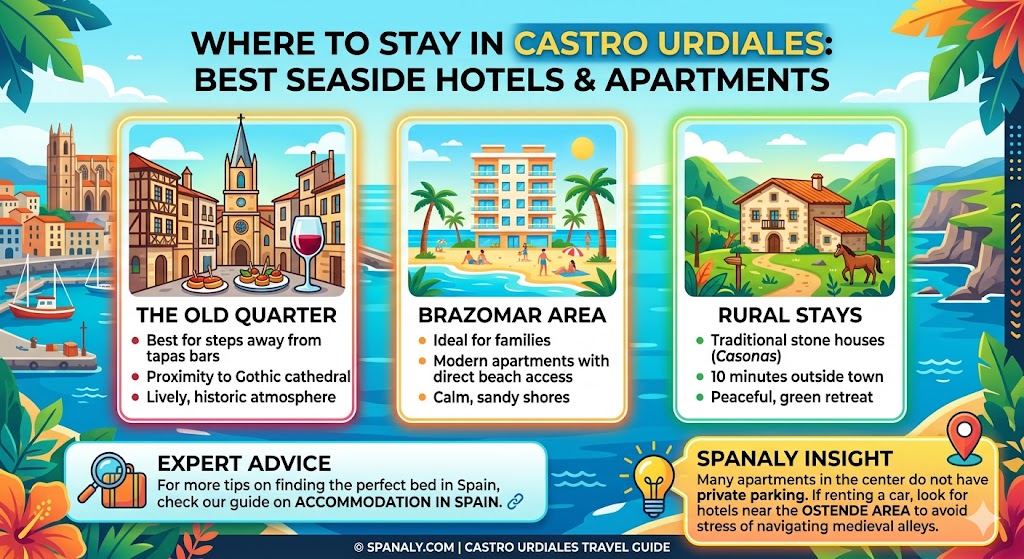
Choosing the right base in Castro Urdiales changes your experience. You can stay in the heart of the medieval noise or opt for a quiet balcony overlooking the Atlantic cliffs.
The Old Quarter: Best for those who want to be steps away from tapas bars and the Gothic cathedral.
Brazomar Area: Ideal for families seeking modern apartments with direct access to the sandy beach.
Rural Stays: Look for “Casonas” (traditional stone houses) just 10 minutes outside town for a peaceful, green retreat.
Expert Advice: For more tips on finding the perfect bed in Spain, check our guide on accommodation in Spain.
Spanaly Insight: Many apartments in the center do not have private parking. If you are renting a car, look for hotels near the Ostende area to avoid the stress of navigating medieval alleys with a vehicle.
📅 Seasonal Guide: When to Enjoy Festivals and Coastal Weather
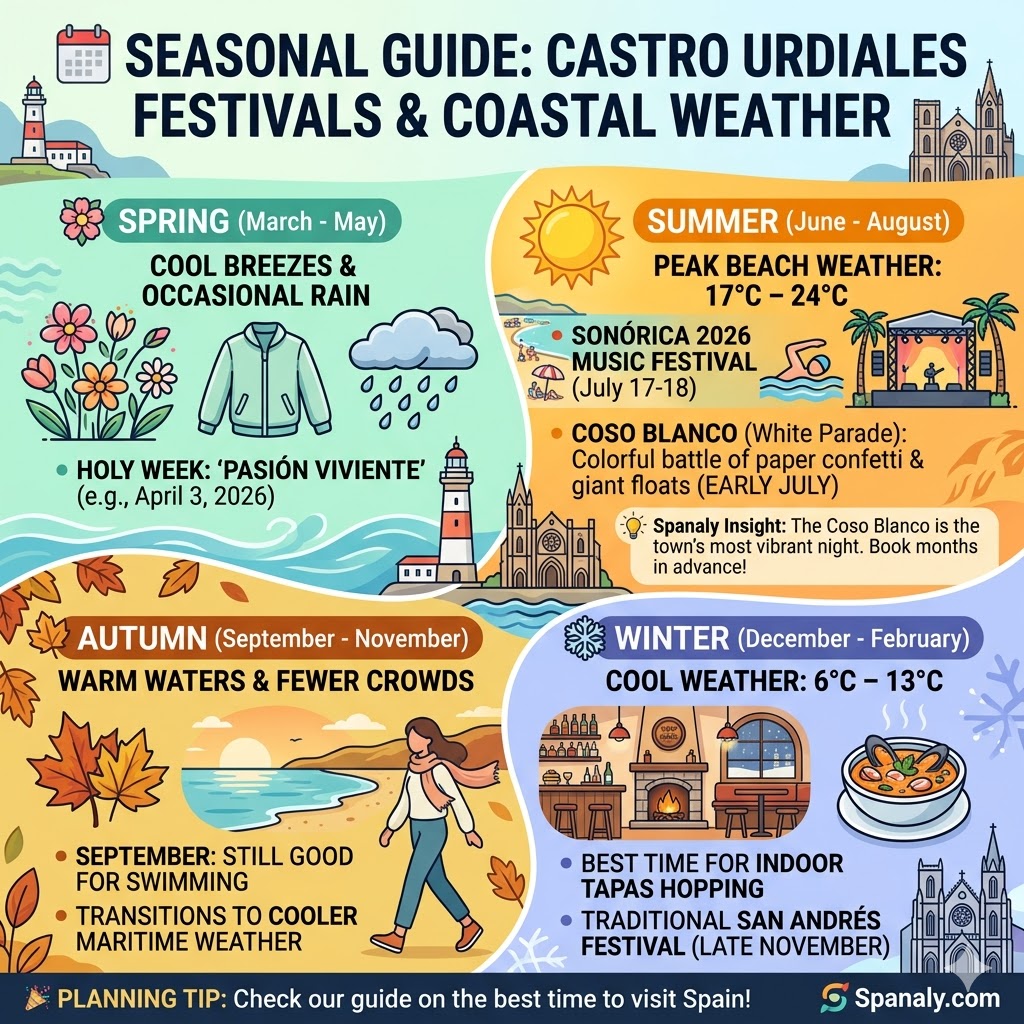
Planning your trip to Castro Urdiales around its local calendar ensures a mix of cultural immersion and perfect Atlantic weather. Whether you seek the summer heat or traditional winter seafood, every season offers a unique reason to visit.
Spring (March – May): Expect cool, breezy days with occasional rain, especially in March. Holy Week features the famous “Pasión Viviente” reenactment, which took place on April 3, 2026.
Summer (June – August): The peak season brings temperatures ranging from 17°C to 24°C, perfect for beaches. Don’t miss the Sonórica 2026 music festival on July 17-18, featuring top Spanish rock and pop acts.
Autumn (September – November): September offers warm waters and fewer crowds, while November transitions into cooler maritime weather.
Winter (December – February): Temperatures drop to around 6°C–13°C. It is the best time for indoor tapas hopping and the traditional San Andrés festival in late November.
Planning Tip: Check our guide on the best time to visit Northern Spain to see how the North compares to the sunny South.
Spanaly Insight: The “Coso Blanco” (White Parade) in early July is the town’s most vibrant night. Book your stay months in advance if you plan to attend this colorful battle of paper confetti and giant floats.
🌉 The "Old Bridge" Mystery: The Roman vs. Medieval Legend
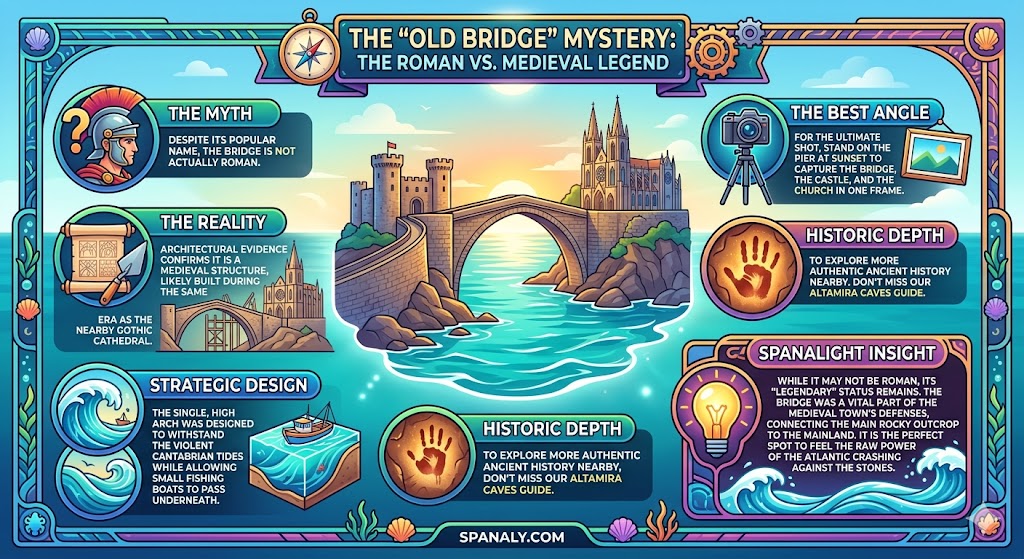
If you search for the most photographed spot in Castro Urdiales, you will find the stunning stone bridge arching over the sea. Locally known as the Puente Romano (Roman Bridge), this landmark hides a historical secret that every savvy traveler should know.
The Myth: Despite its popular name, the bridge is not actually Roman.
The Reality: Architectural evidence confirms it is a Medieval structure, likely built during the same era as the nearby Gothic cathedral.
Strategic Design: The single, high arch was designed to withstand the violent Cantabrian tides while allowing small fishing boats to pass underneath.
The Best Angle: For the ultimate shot, stand on the pier at sunset to capture the bridge, the castle, and the church in one frame.
Historic Depth: To explore more authentic ancient history nearby, don’t miss our Altamira Caves guide.
🛣️ Suggested Itinerary: A Perfect Day Trip to Castro Urdiales
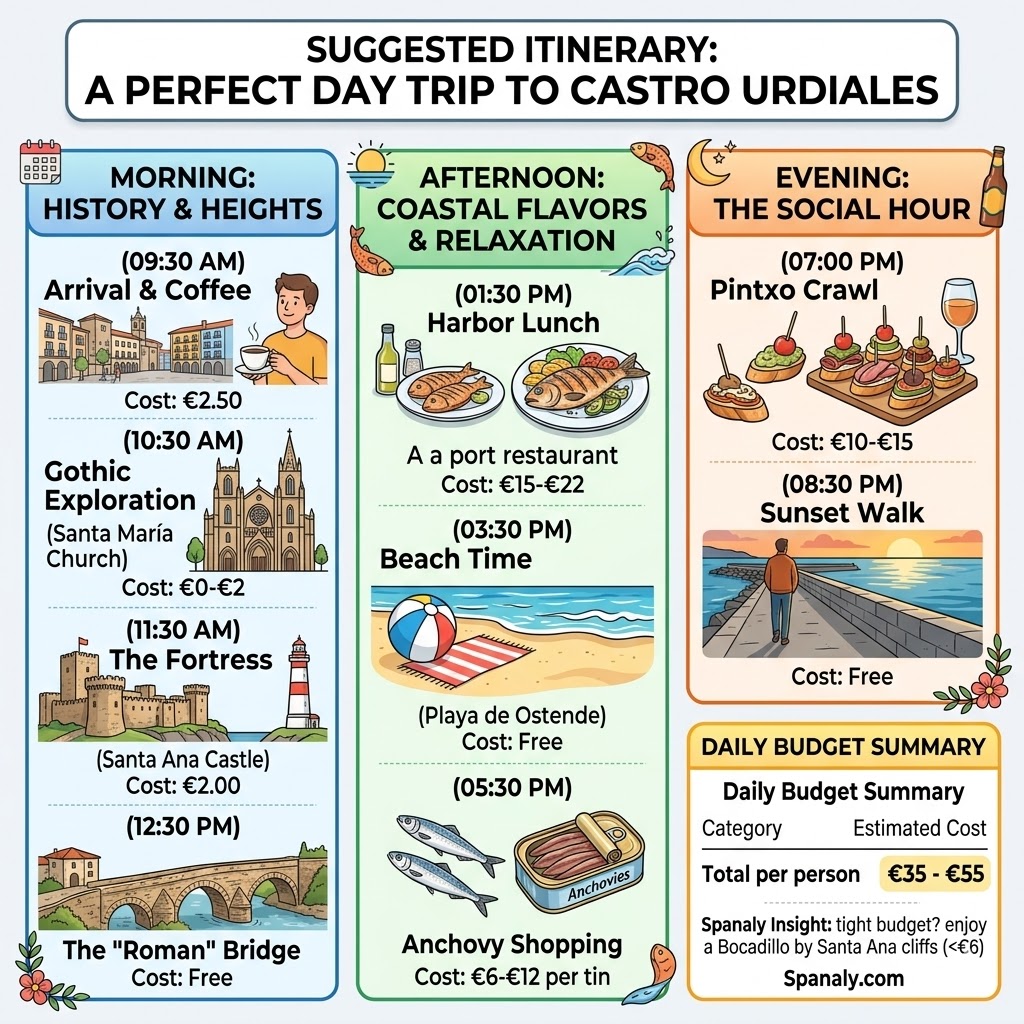
This hour-by-hour guide helps you maximize your time without rushing. For more regional planning, explore our Spain travel itineraries to see how to fit this gem into a larger trip.
🕙 Morning: History and Heights
09:30 AM | Arrival & Coffee: Start at the Town Hall square with a Café solo. (Cost: €2.50).
10:30 AM | Gothic Exploration: Visit the Santa María Church. Entry is free, but a small donation is appreciated. (Cost: €0 – €2).
11:30 AM | The Fortress: Explore Santa Ana Castle and the lighthouse for panoramic views. (Cost: €2.00).
12:30 PM | The “Roman” Bridge: Walk across the medieval arch for the iconic photo op. (Cost: Free).
🕑 Afternoon: Coastal Flavors & Relaxation
01:30 PM | Harbor Lunch: Enjoy grilled sardines or a Menu del Día at a port tavern. (Cost: €15 – €22).
03:30 PM | Beach Time: Walk to Playa de Ostende for a refreshing dip or a coastal stroll. (Cost: Free).
05:30 PM | Anchovy Shopping: Visit a local Conservera to buy authentic artisanal anchovies. (Cost: €6 – €12 per tin).
🕖 Evening: The Social Hour
07:00 PM | Pintxo Crawl: Hop between bars in the Old Quarter for cider and small bites. (Cost: €10 – €15).
08:30 PM | Sunset Walk: End your day at the breakwater wall watching the Atlantic waves. (Cost: Free).
💰 Daily Budget Summary
| Category | Estimated Cost |
| Total per person | €35 – €55 |
For a deeper dive into managing your finances across different regions, check our Spain travel budget guide for 2026.
Spanaly Insight: If you are traveling on a tight budget, swap the sit-down lunch for a “Bocadillo” (Spanish sandwich) from a local bakery and eat it by the cliffs of Santa Ana. The view is five-star, but the price is under €6.
💡 Spanaly Pro Tips: Insider Secrets for Coastal Travelers
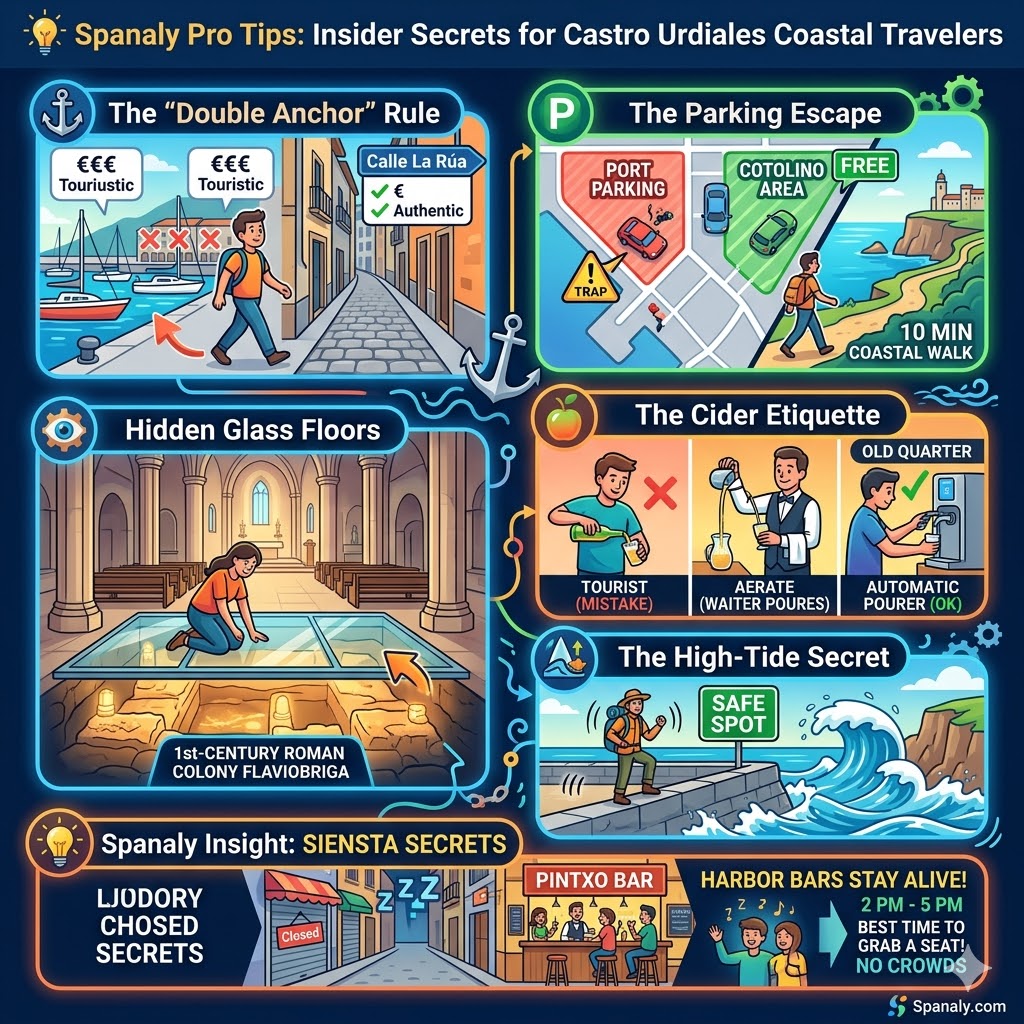
Forget the generic advice you find in mass-market guidebooks. After scouring local forums and Reddit travel communities, here is the real “inside track” on mastering your visit to Castro Urdiales.
The “Double Anchor” Rule: Never eat at the first line of restaurants facing the marina; walk exactly two blocks inland to Calle La Rúa for authentic prices.
The Parking Escape: Avoid the underground parking at the port (it’s a trap for small cars); park for free at the Cotolino area and enjoy a scenic 10-minute coastal walk.
Hidden Glass Floors: Inside the Santa María church, look for the transparent floor sections that reveal the original 1st-century Roman colony of Flaviobriga beneath your feet.
The Cider Etiquette: When ordering Sidra in the old quarter, never pour it yourself; wait for the waiter to “aerate” it or use the automatic pourers to avoid looking like a tourist.
The High-Tide Secret: If the Atlantic is rough, head to the Punta Estebanot breakwater; it’s the best spot to feel the ground shake as waves hit the cliffs—safely.
Spanaly Insight: Most travelers think the town closes during “Siesta” (2 PM – 5 PM). While shops do, the “Pintxo” bars in the harbor stay alive. This is the absolute best time to grab a seat at the most popular taverns without the evening crowds.
🛡️ Visitor FAQs – Castro Urdiales Ultimate Travel Guide
🅿️ Is it difficult to find parking in the historic center?
Yes, the medieval streets are mostly pedestrianized. The best strategy is to use the underground parking at Amestoy Park or look for spots in the newer Cotolino district. Avoid bringing large SUVs into the "Puebla Vieja" as the alleys are extremely narrow and challenging to navigate.
🐶 Is Castro Urdiales a pet-friendly destination?
Absolutely. The town is very welcoming to dogs, especially along the coastal promenade. While pets are restricted from the main sandy areas of Brazomar during peak summer hours, the rocky coves near Ostende and the hiking trails of the Camino del Norte are perfect for walking your furry friends.
🛥️ Can I take a boat tour to see the cliffs from the sea?
Yes, during the summer season, several local maritime companies offer short excursions around the bay. These tours provide the best perspective of the Santa Ana Castle and the Gothic Cathedral perched on the cliffs. Tickets can usually be purchased directly at the wooden kiosks near the fishing port.
🛍️ What is the best authentic souvenir besides anchovies?
Beyond the famous canned seafood, look for handmade ceramics featuring Cantabrian maritime motifs. Another excellent choice is Orujo, a traditional pomace brandy from the region. Many small boutiques in the old quarter sell locally produced honey and artisan sweets that are unique to the Cantabrian coast.
🪪 Do I need to book entrance for the Santa Ana Castle in advance?
In general, no. You can buy your ticket at the entrance for a very low fee. However, if you are visiting during the Coso Blanco festival or major holidays, it is wise to arrive early. The castle has a limited capacity to ensure the preservation of its medieval stone structure and the safety of visitors.
Castro Urdiales Guide by Spanaly.com
Castro Urdiales is more than just a stop on a map; it is where the raw power of the Atlantic meets the elegance of Spanish history. Whether you come for the Gothic spires or the salty taste of fresh anchovies, this town leaves a permanent mark on your soul.
A Timeless Atmosphere: Walking through the old quarter feels like navigating a living museum of maritime heritage.
The Perfect Balance: It offers the energy of a vibrant port alongside the peaceful serenity of rugged coastal cliffs.
Authentic Northern Soul: Unlike crowded Mediterranean resorts, here you experience the true, unpolished beauty of Cantabria.
The Journey Continues: After exploring the coast, head inland to discover the mountain charm of the Picos de Europa in our Potes Spain guide.
Spanaly Insight: Many travelers visit for a day but find themselves wishing they had booked a week. There is a specific magic in watching the lighthouse beam sweep across the medieval stone walls at midnight—don’t rush your exit.