🥘 Northern Spain Food Guide
Forget everything you know about standard tapas. In the north, dining is a sacred ritual where the Bay of Biscay’s freshest catch meets the rich, slow-cooked stews of the Cantabrian peaks. Whether you are chasing Michelin stars in San Sebastian or sharing a cider bottle in a rustic Asturian tavern, the flavors here are as rugged and authentic as the landscape itself.
This guide serves as your professional map to navigating the global food capital of the world, ensuring you eat like a local from the first bite to the last.
🌊 Coastal Freshness: Discover why Galician seafood and Cantabrian anchovies set the gold standard for quality.
🏔️ Mountain Soul: Warm up with hearty Asturian bean stews and artisanal cheeses aged in limestone caves.
🍢 Pintxo Culture: Master the art of the “Basque crawl” through the most innovative bar counters in Europe.
To coordinate your culinary stops with the best sights and logistics, consult our Ultimate Northern Spain Travel Guide for expert regional planning.
🥘 Northern Spain Snapshot: Quick Gastronomic Guide
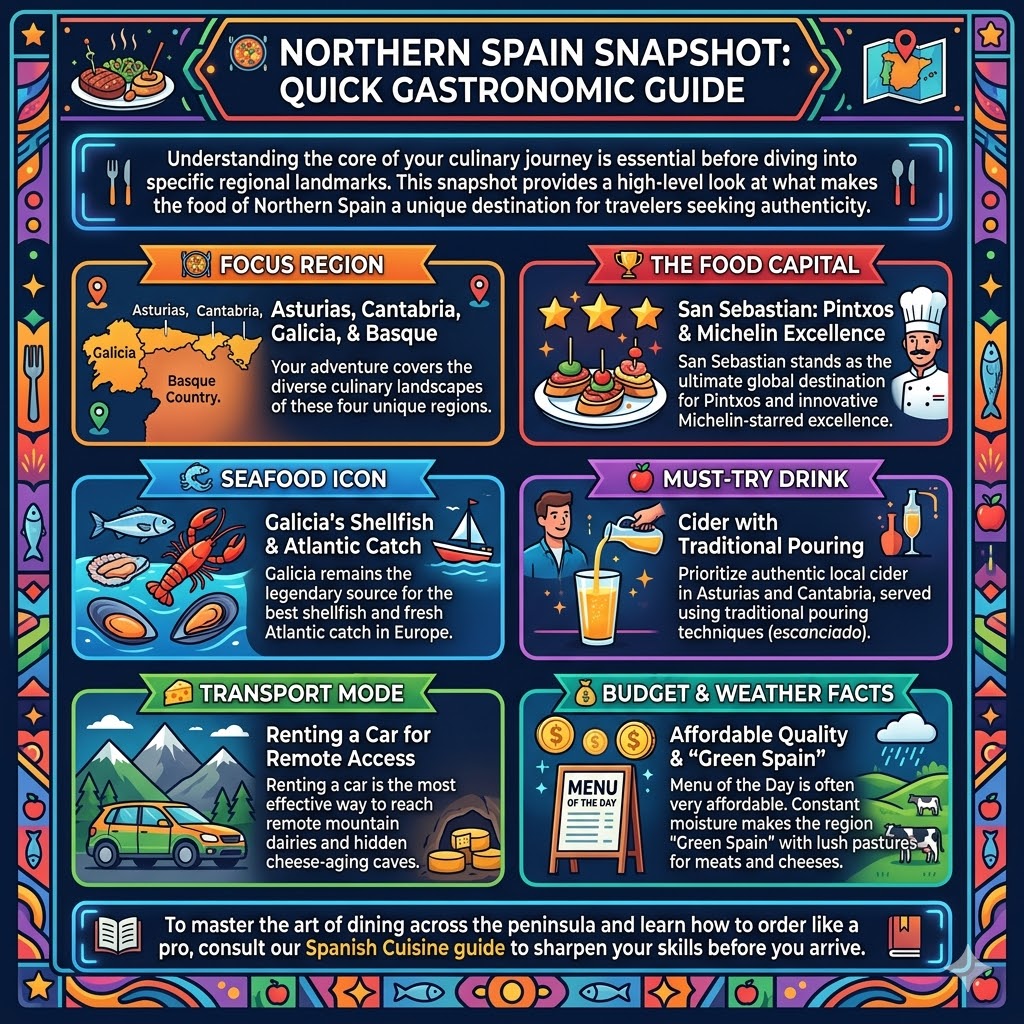
Understanding the core of your culinary journey is essential before diving into specific regional landmarks. This snapshot provides a high-level look at what makes the food of Northern Spain a unique destination for travelers seeking authenticity.
Focus Region: Your adventure covers the diverse culinary landscapes of Asturias, Cantabria, Galicia, and the Basque Country.
The Food Capital: San Sebastian stands as the ultimate global destination for Pintxos and innovative Michelin-starred excellence.
Seafood Icon: Galicia remains the legendary source for the best shellfish and fresh Atlantic catch in Europe.
Must-Try Drink: Prioritize authentic local cider in Asturias and Cantabria, served using traditional pouring techniques.
Transport Mode: Renting a car is the most effective way to reach remote mountain dairies and hidden cheese-aging caves.
Budget Fact: The North offers exceptional quality with “Menu of the Day” options that are often more affordable than in major southern hubs.
Weather Fact: Constant moisture earns the region its “Green Spain” title, providing the lush pastures necessary for world-class meats and cheeses.
To master the art of dining across the peninsula and learn how to order like a pro, consult our Spanish Cuisine guide to sharpen your skills before you arrive.
🍲 Top Must-Try Dishes in Northern Spain (The Classics)
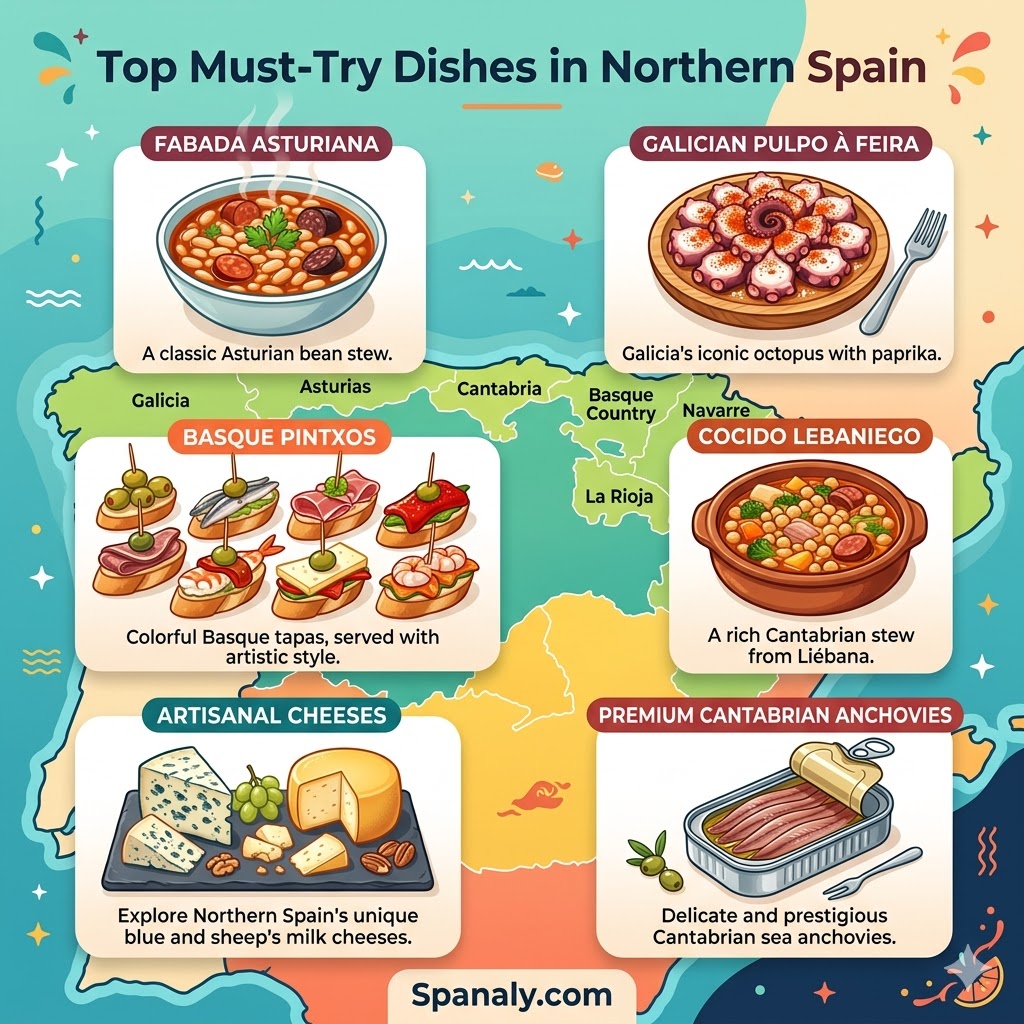
Northern Spanish cuisine is defined by its honesty and the quality of its raw ingredients. From the slow-simmered stews of the valleys to the iconic seafood of the coast, these classic dishes represent the true soul of the region.
🥘 Fabada Asturiana: This rich, slow-cooked bean stew is the ultimate comfort food, featuring large white beans (fabes), chorizo, and blood sausage.
🐙 Pulpo à Feira: A Galician masterpiece where tender octopus is boiled, sliced, and seasoned with olive oil, sea salt, and plenty of pimentón (paprika).
🍢 Pintxos: Small, innovative bites typically served on a slice of bread, representing the artistic heart of Basque gastronomy.
🍲 Cocido Lebaniego: A powerhouse stew from Cantabria’s Liébana Valley made with local chickpeas and mountain meats.
🧀 Artisanal Cheeses: From the spicy blue Cabrales of Asturias to the smoky Idiazabal of the Basque Country.
🐟 Cantabrian Anchovies: Hand-filleted and preserved in olive oil, these are widely considered the finest anchovies in the world.
To ensure you don’t miss out on these flavors during your journey, check our Best Places to Visit in Northern Spain guide to find the top towns for authentic dining.
🥘 Asturian Cuisine: Fabada, Cider, and Mountain Cheeses
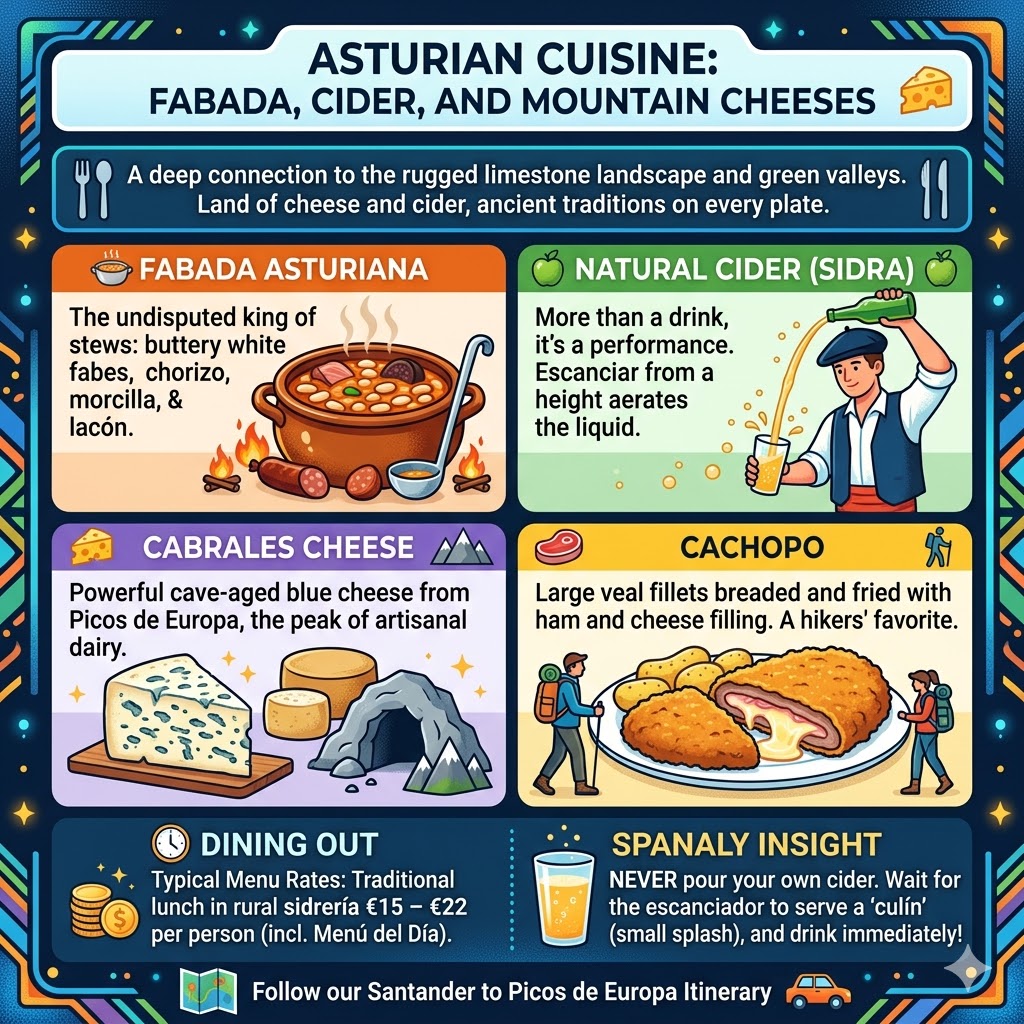
Asturias serves as the rustic soul of Northern Spain, where the limestone peaks of the Picos de Europa meet lush, emerald valleys. Dining here feels like an invitation into a local home, defined by heavy iron pots and the rhythmic splashing of natural cider.
🍲 The Fabada Experience: This buttery white bean stew is a regional masterpiece. For the most authentic version, head to Casa Gerardo (Prendes), where the family has perfected the balance of smoky “compango” for generations.
🍏 Cider Culture: More than a beverage, Sidra is a social ritual. Visit Calle Gascona (Oviedo), specifically Sidrería El Ferroviario, to witness expert waiters “throw” the cider from a height to wake up its natural carbonation.
🧀 Blue Cheese Mastery: Cabrales is the star—a sharp, cave-aged blue cheese that tastes like the mountains.
🥩 The Mighty Cachopo: These oversized breaded veal fillets stuffed with ham and cheese are a staple at Tierra Astur (Gijón/Oviedo), a spot where you can dine inside giant wooden cider barrels.
📍 Where to Eat & Costs A traditional lunch in a rural Sidrería averages €15 – €22, often featuring a generous “Menú del Día”. To combine these flavors with stunning scenery, follow our Santander to Picos de Europa Itinerary for a perfectly timed mountain road trip.
Pro Tip: When served cider, drink your “culín” (small splash) immediately. Leaving it to sit causes it to lose its aeration and flavor—in Asturias, “dead” cider is a cardinal sin.
🐙 Galician Seafood Guide: From Pulpo to Percebes
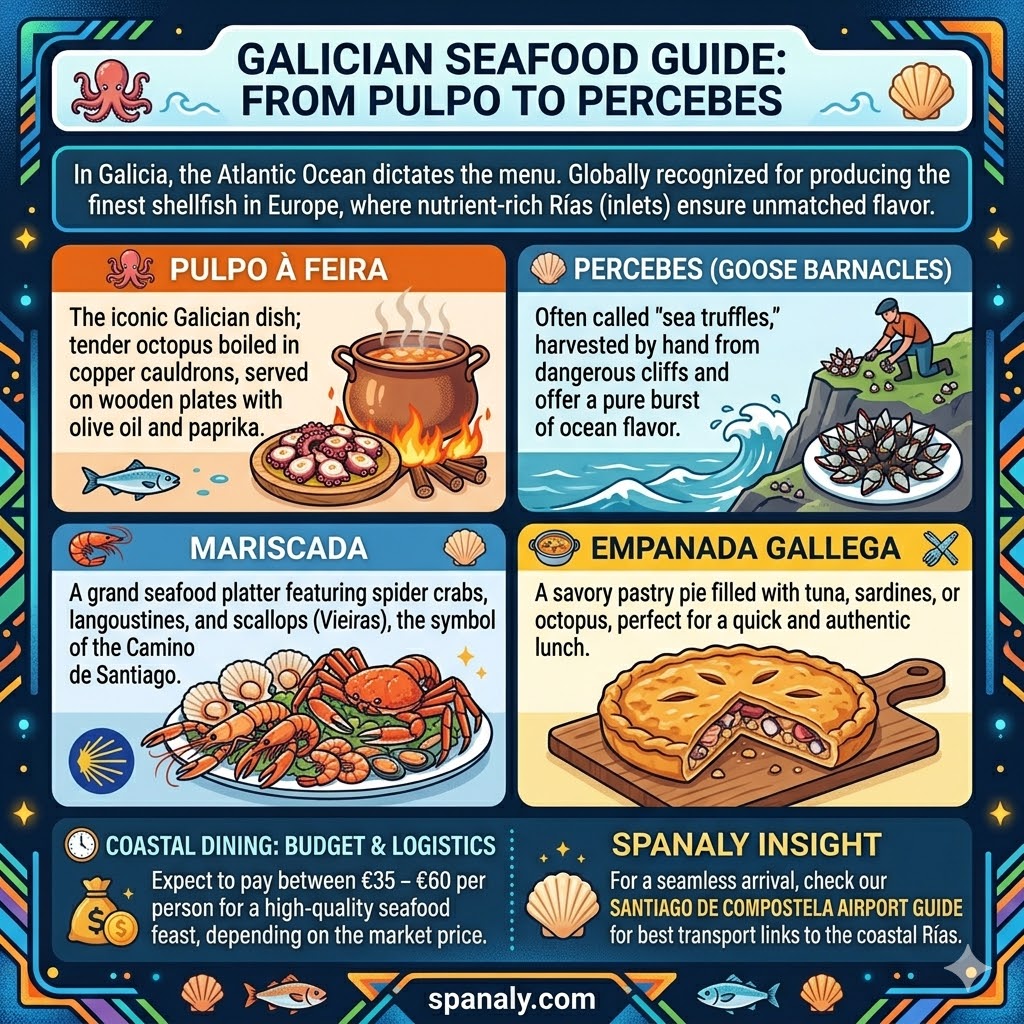
In Galicia, the Atlantic Ocean doesn’t just influence the menu—it dictates it. The nutrient-rich, cold waters of the Rías (coastal inlets) produce shellfish with a flavor intensity that is world-renowned. Dining here is a rugged, maritime experience that rewards those who seek the freshest catch.
🐙 The Octopus Standard: Pulpo à Feira is the region’s soul on a wooden plate. For the most legendary experience, visit A Pulpeira de Melide (A Coruña), where the octopus is still boiled in traditional copper cauldrons to achieve the perfect “al dente” texture.
🐚 Atlantic Treasures: Percebes (Goose Barnacles) are a salty delicacy harvested from dangerous cliffs. Pair them with a grand Mariscada (seafood platter) at O Gaveto (Matosinhos), a spot celebrated for its premium selection of spider crabs and langoustines.
🥘 Market Freshness: The Mercado de Abastos (Santiago) is a culinary cathedral. Buy your seafood fresh from the stalls and head to the onsite bars—they will cook your catch for a small service fee while you enjoy a local wine.
🥧 The Quick Classic: Grab an Empanada Gallega (savory pie) filled with tuna or octopus for an authentic, on-the-go lunch popular with pilgrims and locals alike.
📍 Planning Your Seafood Feast Expect to pay between €35 – €60 for a high-end seafood experience, depending on daily market rates. To reach these coastal gems easily, check our Santiago de Compostela Airport Guide for the best transport links to the Rías.
Local Secret: Galicia’s Pimientos de Padrón are the ultimate “culinary roulette.” Always order a plate to share; as the local proverb says, “Unos pican e outros non”—some are mild, but one in every dozen will provide a spicy surprise!
🍢 Basque Country Gastronomy: The Art of Pintxos and Michelin Stars
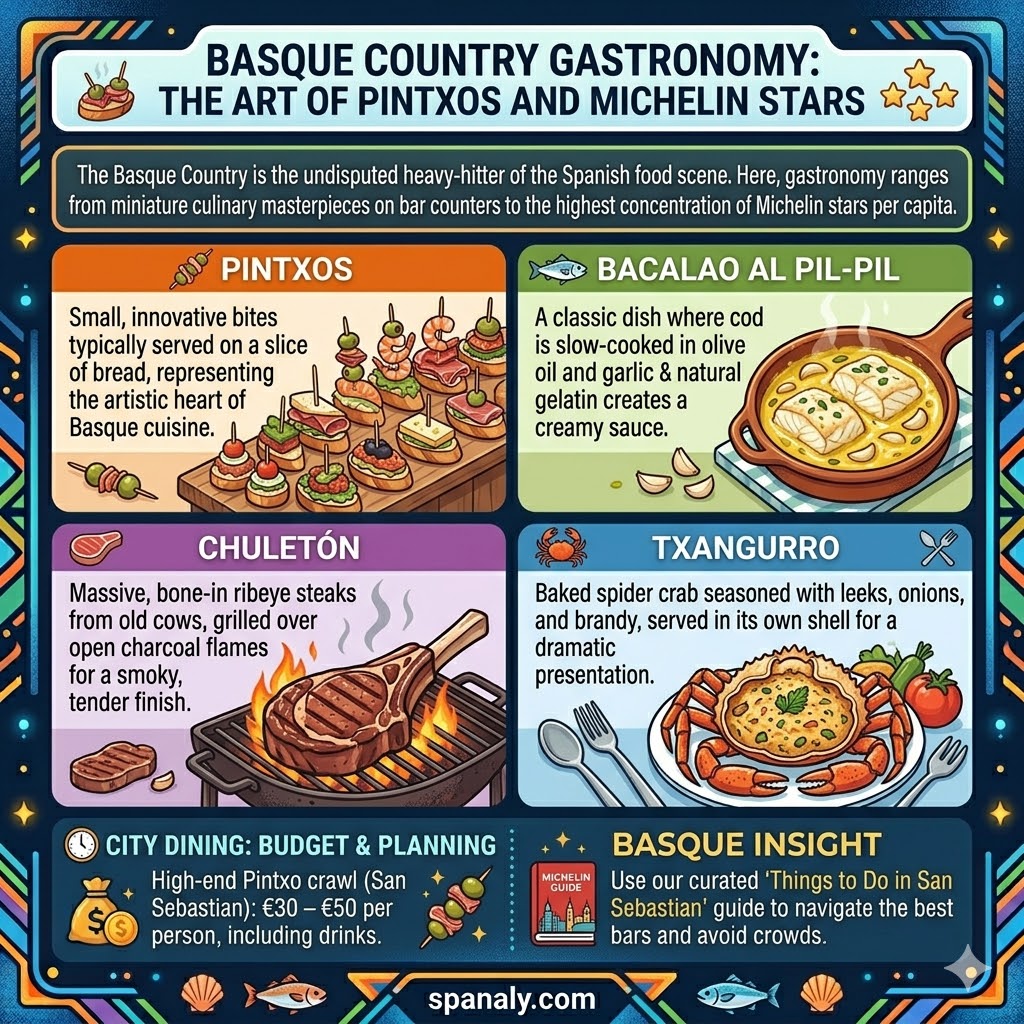
The Basque Country is the undisputed powerhouse of the Spanish food scene. Gastronomy here is an art form, ranging from miniature masterpieces on crowded bar counters to the highest concentration of Michelin stars per capita on the planet.
🍢 The Pintxo Revolution: These innovative bites are the heart of Basque social life. Experience the best of the “Old Town” at La Cuchara de San Telmo (San Sebastian), famous for its melt-in-the-mouth veal cheeks and seared foie gras.
🐟 Seafood Innovation: Bacalao al Pil-Pil (cod in an emulsified garlic sauce) is a local obsession. For a modern twist, visit the “Neo-Taverns” near the Guggenheim in Bilbao, where traditional flavors meet futuristic techniques.
🥩 Fire & Meat: The Chuletón (massive bone-in ribeye) is a ritual best enjoyed at a traditional Sidrería or specialized grill. Borda Berri (San Sebastian) offers a legendary meat-focused menu that captures this smoky, rustic essence.
🦀 Coastal Elegance: Don’t miss Txangurro (baked spider crab), a dramatic and flavorful dish seasoned with brandy and leeks.
📍 Budget & Planning A high-end Pintxo crawl typically totals €30 – €50 per person. To navigate the best counters without the stress of crowds, check our Things to Do in San Sebastian guide for a curated list of local favorites.
🥩 Cantabrian Meats and Anchovies: Flavors of the Coast and Peaks
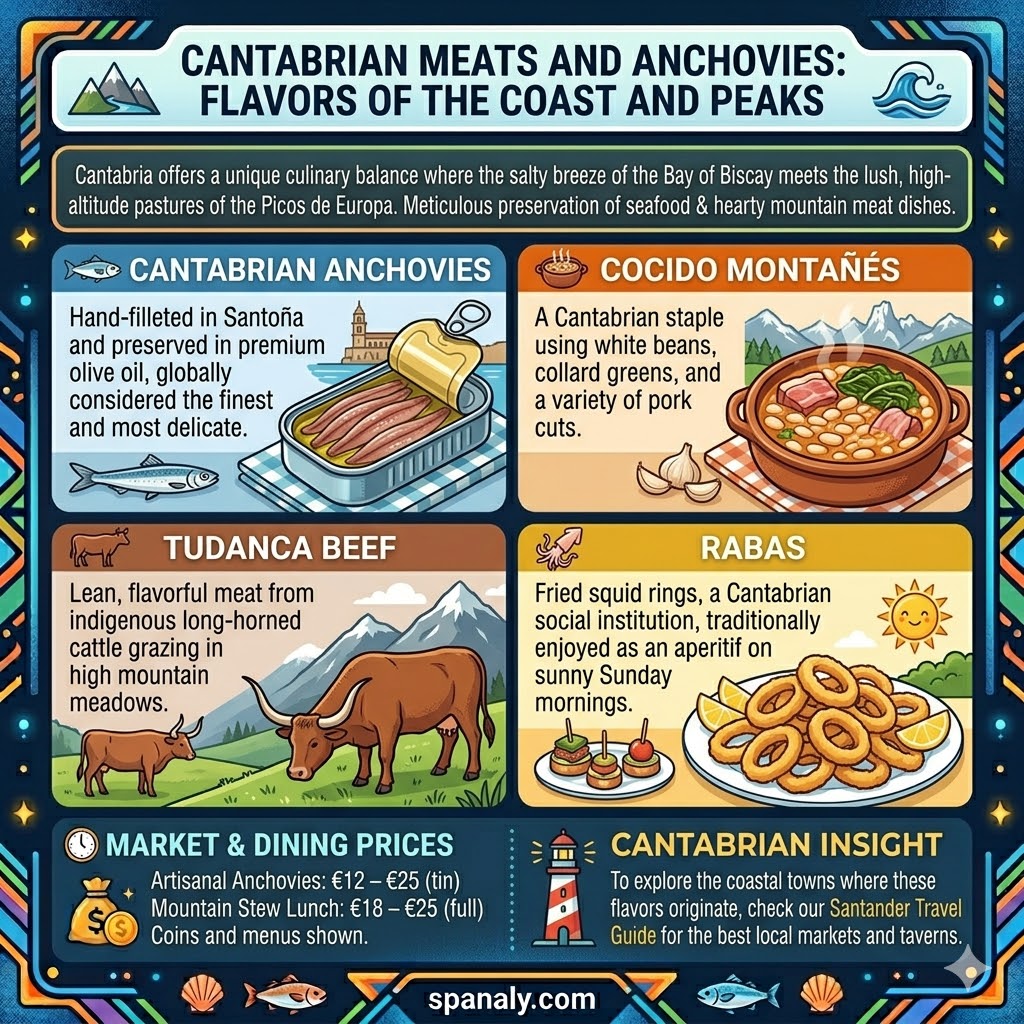
Cantabria is where the salty Atlantic breeze meets the limestone peaks of the Picos de Europa. This geographical duality creates a menu that transitions perfectly from the world’s finest preserved seafood to heavy, mountain-style soul food.
🐟 The Gold of Santoña: Cantabrian anchovies are hand-filleted and preserved in premium olive oil, setting a global standard for delicacy. Visit El Machi (Santander) to taste these artisanal treasures in a historic tavern setting near the port.
🍲 Mountain Power: Cocido Montañés is the ultimate high-altitude fuel, slow-cooked with white beans and collard greens. For a truly authentic bowl, head to Casa Cayo (Potes) in the heart of the Picos de Europa.
🥩 Prime Highland Beef: Taste the lean, mineral-rich Tudanca Beef, sourced from indigenous cattle that graze in the Saja-Nansa valleys.
🦑 The Sunday Ritual: Joining the locals for Rabas (fried squid) is a social institution. The bars surrounding the Mercado de la Esperanza in Santander offer the crispest rings in the city.
📍 Shopping & Dining Tips A premium tin of artisanal anchovies ranges from €12 – €25, while a full mountain stew lunch averages €18 – €25. To discover the best local markets, consult our Santander Travel Guide for expert tavern recommendations.
Spanaly Insight: Cantabrian anchovies are a “semi-preserve,” not a standard tin. Always look for the “Conserva Artesana” seal and keep them refrigerated; heat is the enemy of their delicate texture and silver sheen.
🍷 Best Northern Spanish Wines: Rioja Alavesa, Txakoli, and Albariño
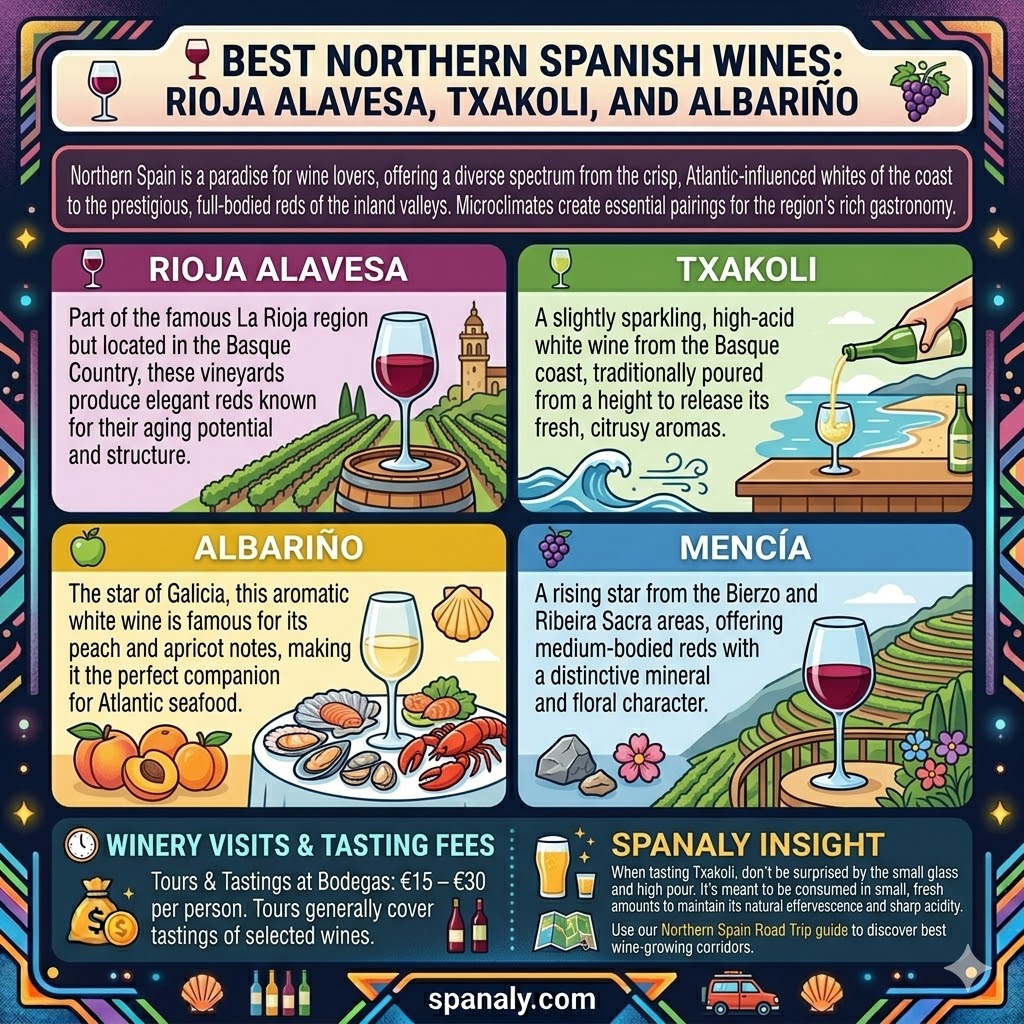
Northern Spain is a liquid paradise where Atlantic breezes and river valleys create a diverse wine map. From the saline whites of the coast to the prestigious reds of the Basque inland, these bottles are the essential heartbeat of northern gastronomy.
🍷 The Basque Red Giants: Rioja Alavesa produces elegant reds with immense aging potential. For a world-class experience, visit the architecturally stunning Marqués de Riscal or the boutique Bodegas Baigorri in Laguardia to see how modern design meets ancient soil.
🥂 Coastal Effervescence: Txakoli is the sharp, slightly sparkling white that defines the Basque coast. Head to the town of Getaria to sip it at Txakoli Elkano, where the wine is poured from a height to release its vibrant citrus notes alongside grilled fish.
🍏 Galicia’s White Star: Albariño is famous for its peach and apricot aromas—the ultimate companion for Atlantic seafood. The vineyards of the Rías Baixas region, particularly around Cambados, offer the most authentic tastings.
🍇 The Rising Red: Keep an eye out for Mencía from the steep terraces of Ribeira Sacra; these mineral-rich reds are fast becoming the favorites of international sommeliers.
📍 Winery Planning & Fees Tours and tastings at boutique Bodegas generally range from €15 – €30 per person. To navigate the most scenic vineyard corridors, follow our Northern Spain Road Trip guide for an expert-led route.
Spanaly Insight: When ordering Txakoli in a local tavern, drink it in small, quick glasses. It’s designed to be consumed fresh and fizzy; once the bubbles settle, you lose the “zing” that makes this coastal wine legendary.
🍰 Famous Northern Spanish Desserts and Sweets
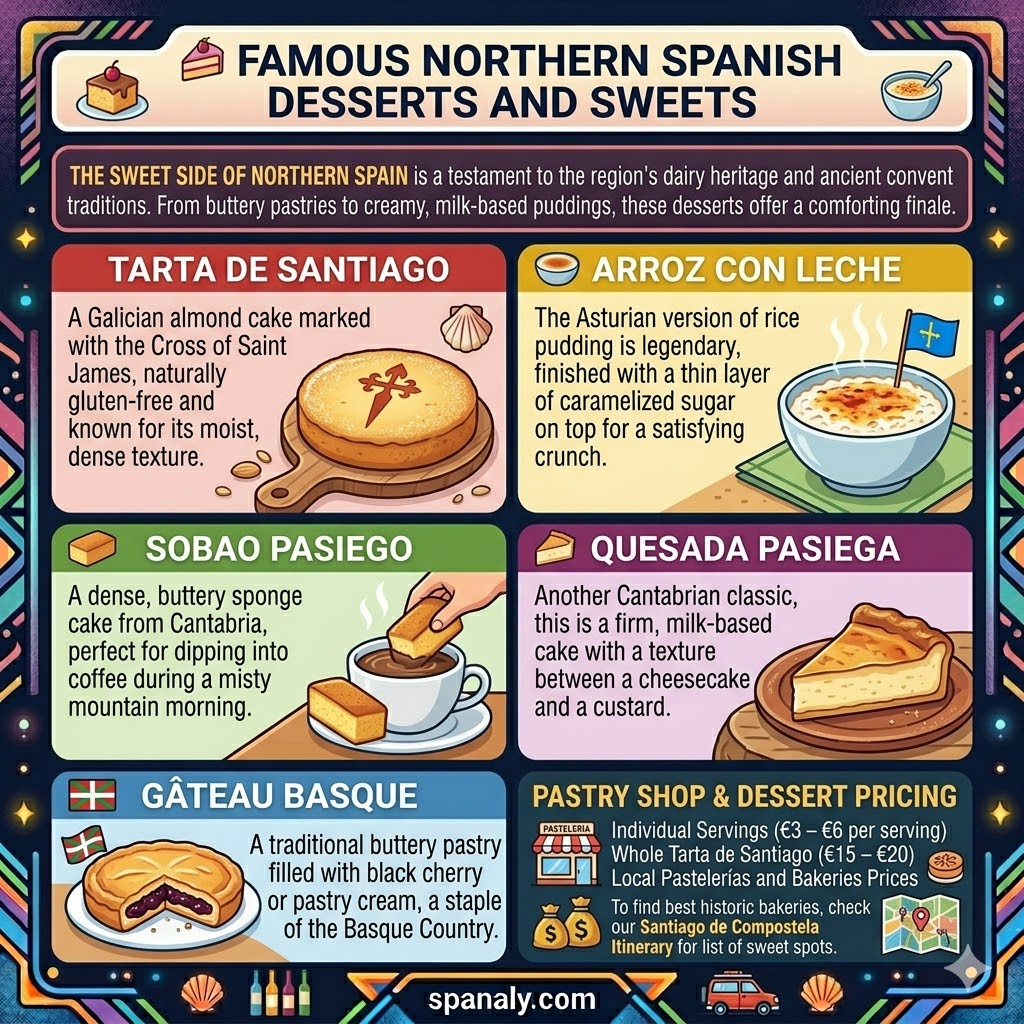
The sweet side of Northern Spain is a delicious tribute to its deep dairy heritage and ancient convent traditions. From buttery pastries in the mountains to creamy, milk-based puddings by the coast, these desserts are the ultimate comfort food.
🍰 The Galician Icon: Tarta de Santiago is a moist, naturally gluten-free almond cake marked with the Cross of Saint James. For an authentic slice, visit Pastelería Mercedes Mora in Santiago de Compostela, a historic spot famous for its traditional recipe.
🍮 The King of Puddings: Asturian Arroz con Leche is legendary for its creamy texture and caramelized sugar crust. You will find the best artisanal versions in the traditional Casas de Comidas of Oviedo and Gijón.
🥐 Cantabrian Butter Staples: The Sobao Pasiego is a dense, buttery sponge cake, while the Quesada Pasiega sits perfectly between a cheesecake and a custard. Head to the bakeries in Selaya or Vega de Pas for the freshest “Pasiego” experience.
🥧 Basque Tradition: Gâteau Basque is a golden, buttery pastry filled with black cherry jam or thick pastry cream. The pastry shops in Saint-Jean-de-Luz or San Sebastian offer the most refined versions of this regional staple.
📍 Sweet Shop Pricing Individual servings in local Pastelerías generally range from €3 – €6, while a full Tarta de Santiago averages €15 – €20. To find the most iconic historic bakeries, explore our Santiago de Compostela Itinerary for a curated list of sweet spots near the cathedral.
Spanaly Insight: In Asturias, specifically ask for “Arroz con Leche Requemado”. The sugar topping is caramelized with a traditional red-hot iron, creating a unique smoky sweetness that you won’t find anywhere else in Spain.
📍 Best Cities for Foodies: San Sebastian, Bilbao, Oviedo, and Santiago
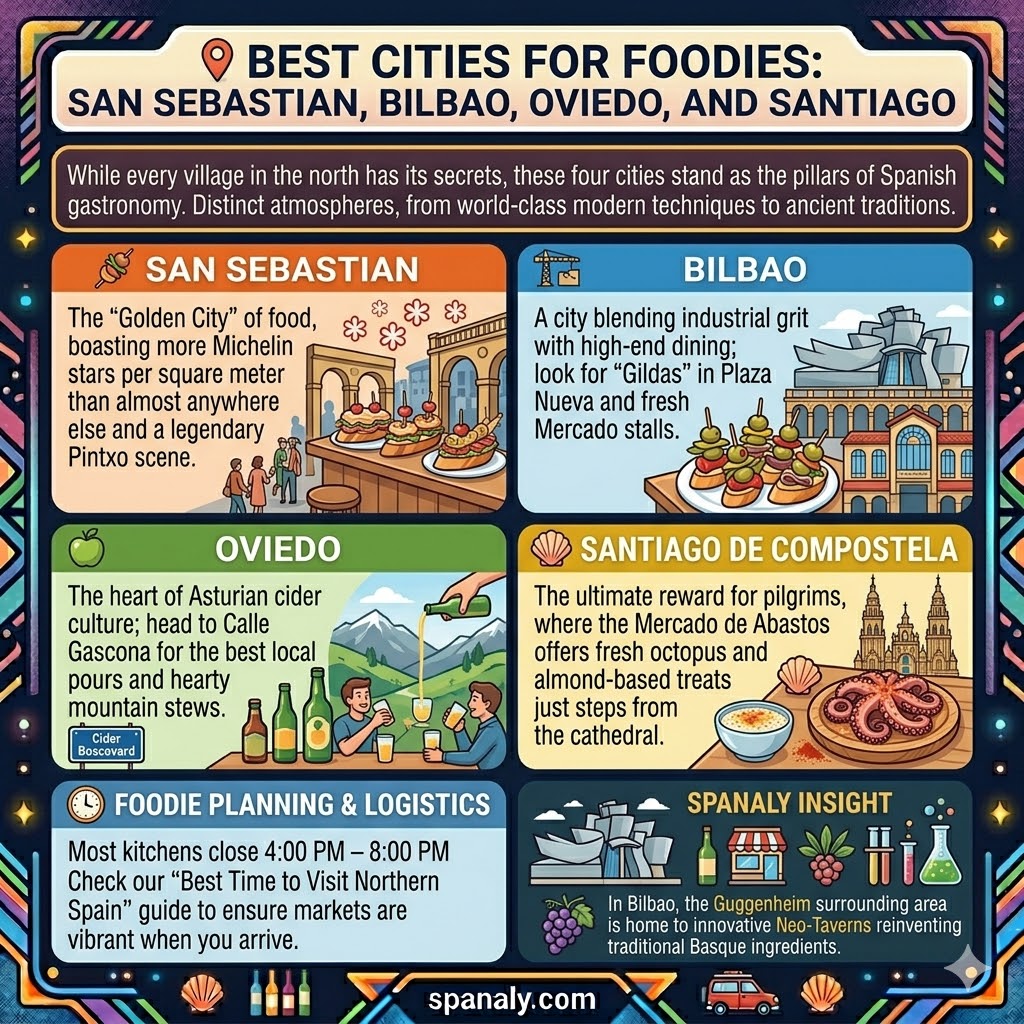
While every northern village hides its own culinary secrets, these four cities are the absolute pillars of Spanish gastronomy. Each city offers a distinct vibe, ranging from futuristic Michelin-starred techniques to ancient, soul-warming traditions that have remained unchanged for centuries.
| City | Best For | Must-Visit Spot |
| San Sebastian | Michelin Stars & Pintxo Crawls | Parte Vieja (Old Town) |
| Bilbao | Modern Basque & Neo-Taverns | Plaza Nueva & Mercado de la Ribera |
| Oviedo | Cider Houses & Mountain Stews | Calle Gascona (Cider Boulevard) |
| Santiago | Atlantic Seafood & Almond Sweets | Mercado de Abastos |
🍢 San Sebastian (Donostia): Known as the “Golden City” of food, it boasts a legendary Pintxo scene. For the ultimate experience, dive into the narrow streets of the Parte Vieja, where every bar counter is a work of art.
🏗️ Bilbao: This city masterfully blends industrial grit with high-end dining. Beyond the Guggenheim, head to Plaza Nueva for the iconic “Gildas” and explore the Mercado de la Ribera, the largest indoor market in Europe.
🍏 Oviedo: The beating heart of Asturian cider culture. Your destination is Calle Gascona, a street lined with traditional Sidrerías where the pouring of cider is a continuous, rhythmic performance.
🐚 Santiago de Compostela: The ultimate reward for pilgrims. The Mercado de Abastos is a culinary cathedral where you can taste fresh octopus just steps away from the iconic Santiago Cathedral.
📍 Foodie Logistics
Most kitchens in these cities close for a break between 4:00 PM and 8:00 PM. To coordinate your meals with vibrant market hours, consult our Best Time to Visit Northern Spain guide to ensure you arrive when the ovens are hot.
🍽️ Dining Etiquette: How to Eat Like a Local in the North
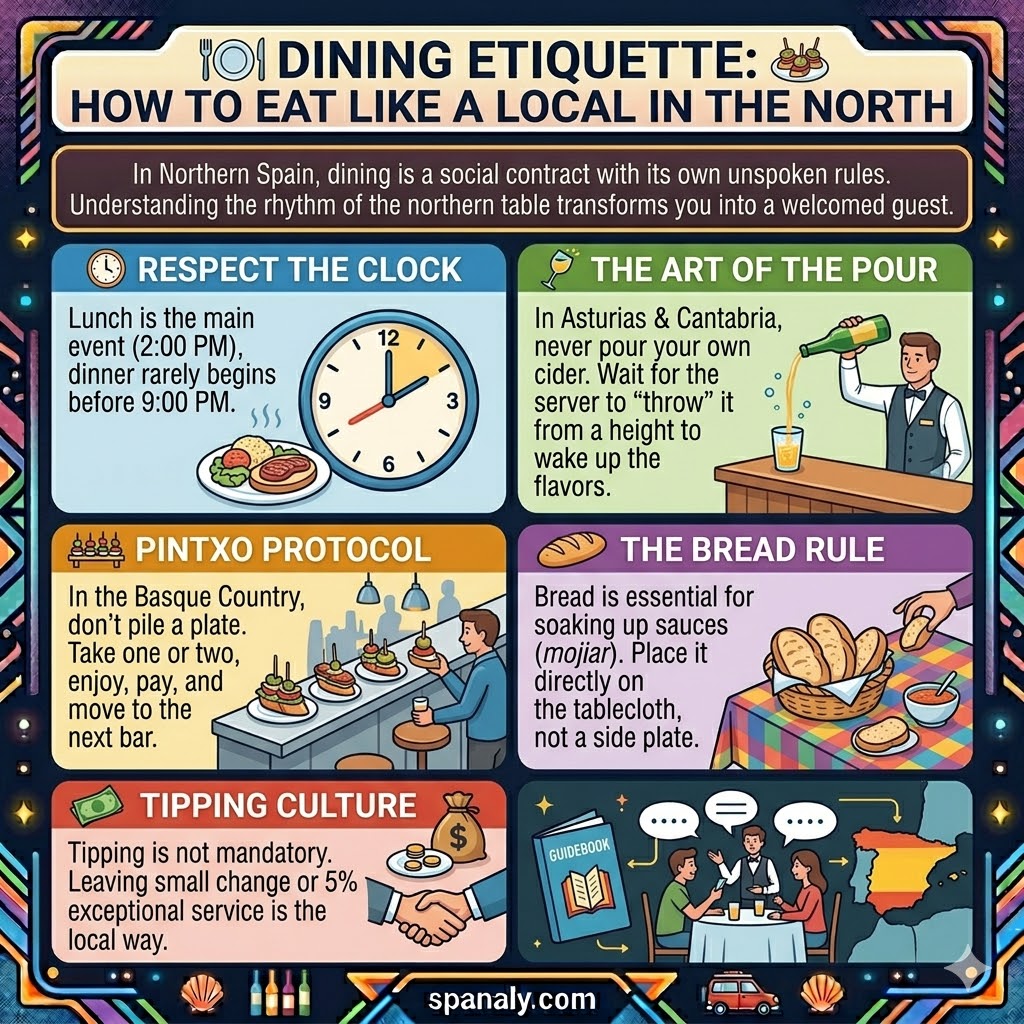
In Northern Spain, dining is a social contract with its own unspoken rules. Understanding the rhythm of the northern table will transform you from a mere tourist into a welcomed guest in the region’s traditional tabernas and sidrerías.
🕒 Respect the Clock: Lunch is the main event, typically starting at 2:00 PM, while dinner rarely begins before 9:00 PM.
🍷 The Art of the Pour: In Asturias and Cantabria, never pour your own cider. Wait for the server to “throw” it from a height to wake up the flavors.
🍢 Pintxo Protocol: In the Basque Country, don’t grab a plate and pile it high. Take one or two, enjoy your drink, pay, and move to the next bar.
🥖 The Bread Rule: Bread is essential for soaking up sauces (mojar). It is almost always placed directly on the tablecloth, not a side plate.
💸 Tipping Culture: Tipping is not mandatory. Leaving the small change or 5% for exceptional service is the local way.
🕒 Master the Menu To avoid common tourist mistakes and communicate effectively with waitstaff, read our guide on How to Order Food Like a Local in Spain for essential phrases and cultural tips.
Spanaly Insight: If you see napkins on the floor in a traditional, old-school northern bar, don’t be alarmed. Historically, this was a sign of a popular, high-quality spot. While modern places are cleaner, the “organized chaos” of a busy lunch hour is a sign you’ve found the right place.
🥦 Vegetarian & Dietary Restrictions in the North
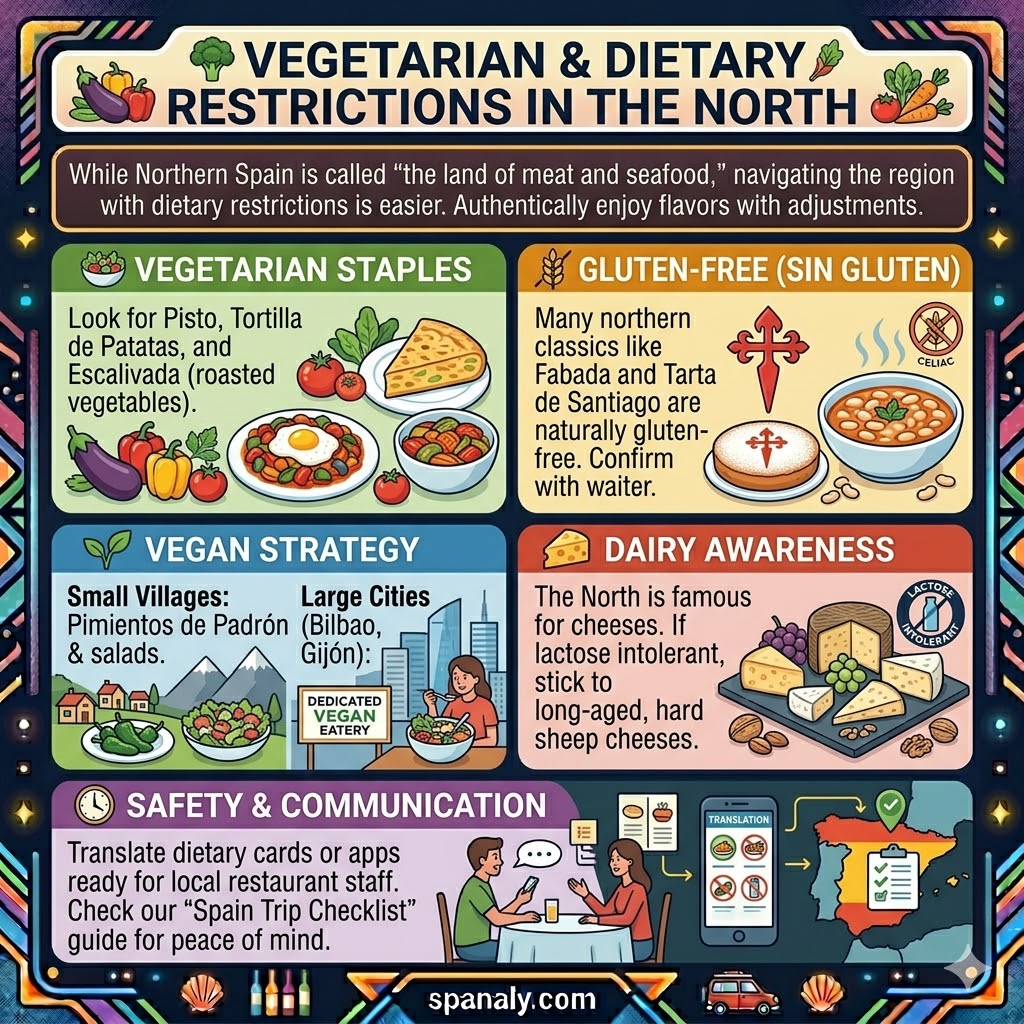
While Northern Spain is often called “the land of meat and seafood,” navigating the region with dietary restrictions has become significantly easier. Whether you are Vegan, Vegetarian, or Gluten-Free, you can still enjoy authentic flavors with a few expert adjustments.
🥗 Vegetarian Staples: Look for Pisto (Spanish ratatouille), Tortilla de Patatas, and Escalivada (roasted vegetables).
🌾 Gluten-Free (Sin Gluten): Many northern classics like Fabada and Tarta de Santiago are naturally gluten-free, but always confirm with the waiter.
🌱 Vegan Strategy: In smaller villages, focus on Pimientos de Padrón and fresh salads; larger cities like Bilbao and Gijón now host dedicated vegan eateries.
🧀 Dairy Awareness: The North is famous for its cheeses; if you are lactose intolerant, stick to the long-aged, hard sheep cheeses which are naturally lower in lactose.
🕒 Safety & Communication To travel with peace of mind, check our Spain Trip Checklist to ensure you have translated dietary cards or apps ready for local restaurant staff.
🛍️ Foodie Souvenirs: What to Pack in Your Suitcase
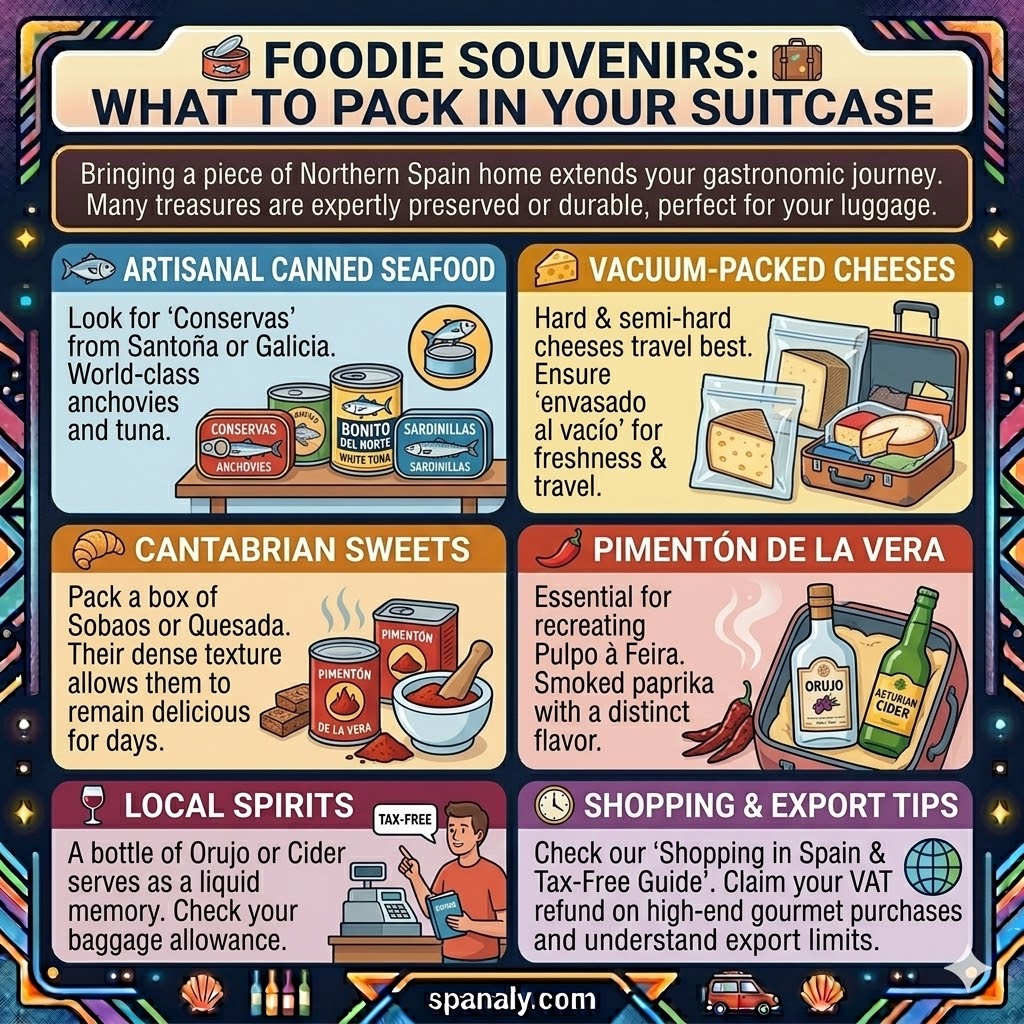
Bringing a piece of Northern Spain home is the best way to extend your gastronomic journey. While fresh seafood stays on the coast, many of the region’s finest treasures are expertly preserved or naturally durable, making them perfect for your luggage.
🐟 Artisanal Canned Seafood: Look for “Conservas” from Santoña or Galicia; premium anchovies, white tuna (Bonito del Norte), and small sardines (Sardinillas) are world-class.
🧀 Vacuum-Packed Cheeses: Hard and semi-hard cheeses like Idiazabal or Manchego travel best; ensure they are vacuum-sealed (envasado al vacío) to maintain freshness and comply with travel regulations.
🥐 Cantabrian Sweets: Pack a box of Sobaos Pasiego or Quesada; their dense texture allows them to remain delicious for several days after purchase.
🌶️ Pimentón de la Vera: While slightly south of the main northern trail, this smoked paprika is essential for recreating Pulpo à Feira at home.
🍷 Local Spirits: A bottle of Orujo from Galicia or Asturian Cider (if your baggage allowance permits) serves as a liquid memory of the mountains.
🕒 Shopping & Export Tips Before stocking up, check our Shopping in Spain & Tax-Free Guide to learn how to claim your VAT refund on high-end gourmet purchases and understand export limits.
Spanaly Insight: If you are buying Cantabrian Anchovies, remember they are a “semi-preserve.” Unlike standard tuna cans, they must be kept cool. Only buy them on your final day and keep them in a cool bag until you reach your home refrigerator to preserve their delicate texture.
🗓️ Gastronomic Calendar: Food Festivals You Can't Miss
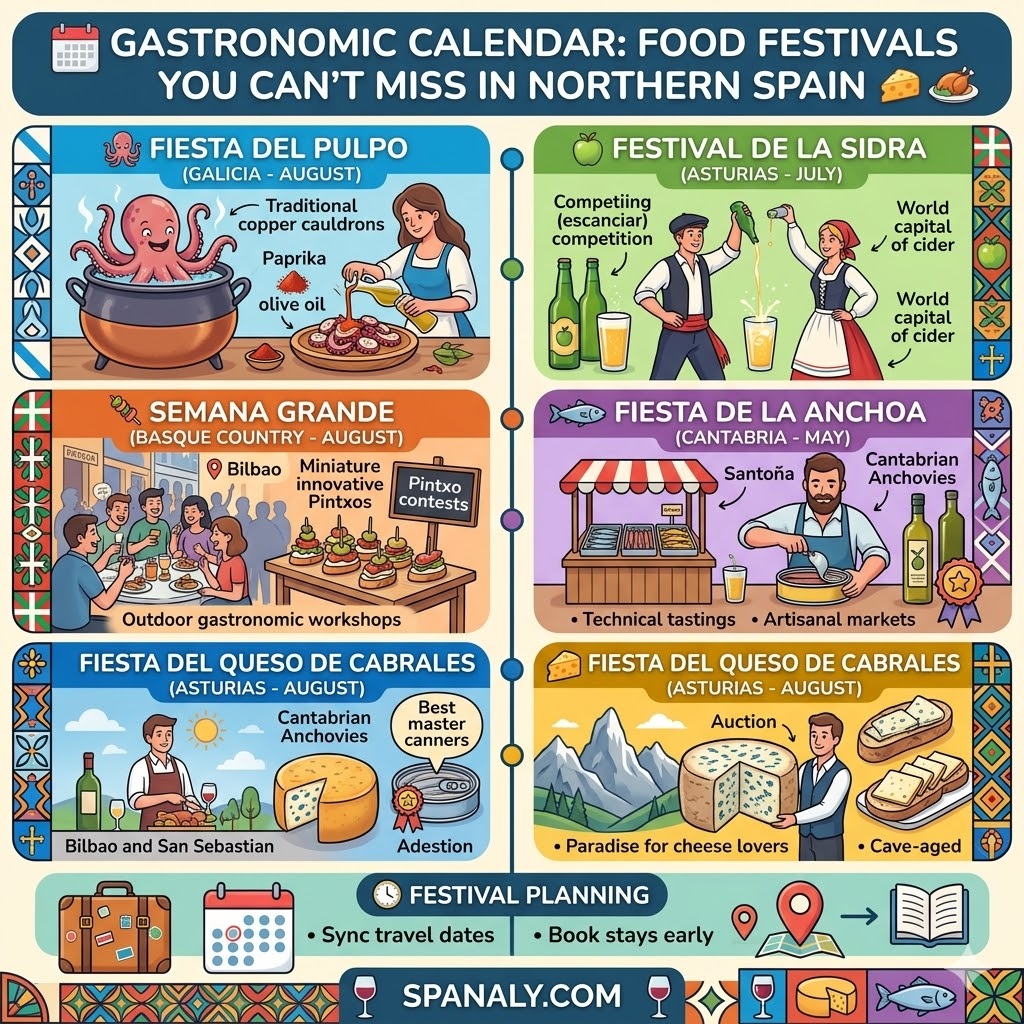
To experience the true soul of Northern Spain, time your visit with one of its legendary food festivals. These “Fiestas Gastronómicas” are more than just meals; they are vibrant cultural celebrations where entire towns gather to honor a single ingredient or tradition.
🐙 Fiesta del Pulpo (Galicia – August): Held in O Carballiño, this is the largest octopus festival in the world, where thousands of kilos of Pulpo à Feira are prepared in traditional copper cauldrons.
🍏 Festival de la Sidra (Asturias – July): Nava becomes the world capital of cider, featuring pouring competitions, free tastings, and an unmatched festive atmosphere.
🍢 Semana Grande (Basque Country – August): During Aste Nagusia in Bilbao and San Sebastian, the streets come alive with specialized Pintxo contests and outdoor gastronomic workshops.
🐟 Fiesta de la Anchoa (Cantabria – May): Santoña celebrates its “blue gold” with technical tastings, artisanal markets, and honors for the best master canners.
🧀 Fiesta del Queso de Cabrales (Asturias – August): A paradise for cheese lovers in the heart of the Picos de Europa, featuring auctions of the year’s best cave-aged blue cheeses.
🕒 Festival Planning These events attract huge crowds, and accommodation fills up months in advance. Check our Major Spanish Festivals Guide to sync your travel dates and book your stays early.
💰 Northern Spain Food Prices: Budgeting for Your Gastronomic Trip
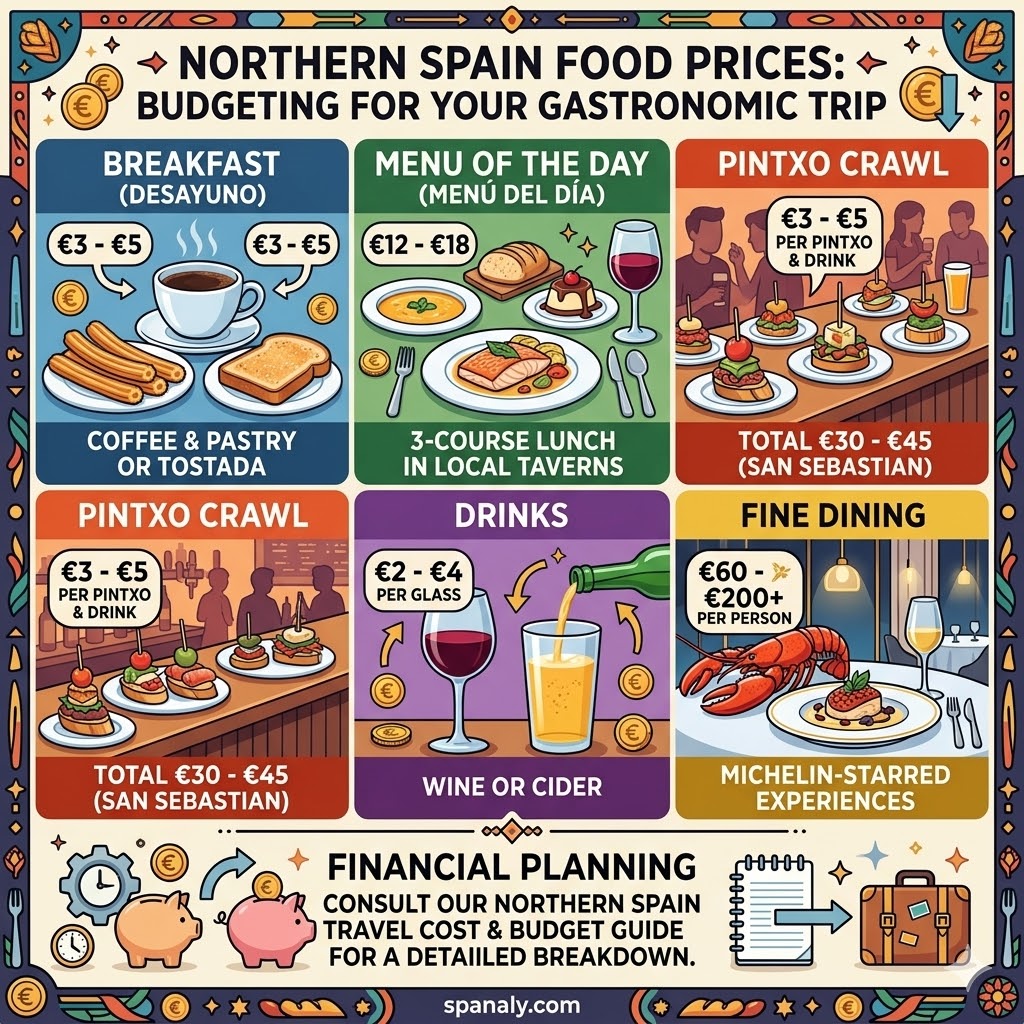
One of the greatest advantages of traveling through Northern Spain is the incredible value for money. While the quality of ingredients is world-class, the cost of dining remains significantly more affordable than in major European hubs.
| Experience | Average Price | Includes |
| Breakfast (Desayuno) | €3 – €5 | Coffee + Pastry or Tostada |
| Menú del Día | €12 – €18 | 3 courses + Wine + Bread |
| Pintxo Crawl | €30 – €45 | Full evening (drinks included) |
| Seafood Feast | €35 – €60 | High-quality Atlantic catch |
☕ Daily Starts: A local breakfast typically costs between €3 – €5.
🍽️ Lunch Strategy: The Menú del Día is the region’s best deal, ranging from €12 – €18 in local taverns.
🍷 Local Drinks: A glass of wine or natural cider is very budget-friendly, costing between €2 – €4.
🦐 Premium Dining: A Michelin-starred experience or grand seafood platter can range from €60 to over €200 per person.
📍 Financial Planning
To get a complete picture of your daily expenses, consult our Northern Spain Travel Cost & Budget guide for a detailed breakdown.
Spanaly Insight: Always check the “Menú del Día” board outside restaurants before 2:00 PM. In the North, these menus often feature high-quality stews and fresh fish that would cost double if ordered à la carte in the evening.
💎 Spanaly Elite Tips: Hidden Food Gems and Secret Taverns
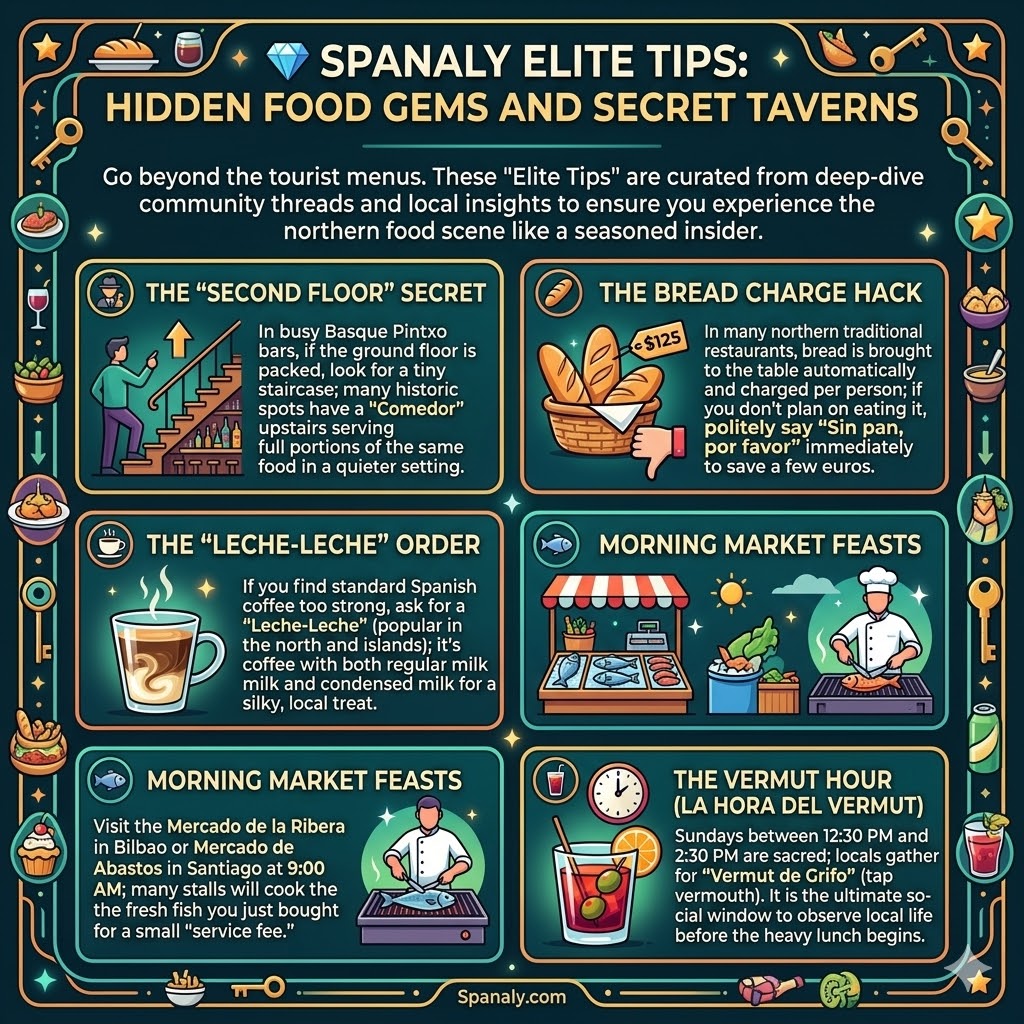
Go beyond the tourist menus. These “Elite Tips” are curated from deep-dive community threads and local insights to ensure you experience the northern food scene like a seasoned insider.
🕵️ The “Second Floor” Secret: In busy Basque Pintxo bars, if the ground floor is packed, look for a tiny staircase; many historic spots have a “Comedor” upstairs serving full portions of the same food in a quieter setting.
🥖 The Bread Charge Hack: In many northern traditional restaurants, bread is brought to the table automatically and charged per person; if you don’t plan on eating it, politely say “Sin pan, por favor” immediately to save a few euros.
☕ The “Leche-Leche” Order: If you find standard Spanish coffee too strong, ask for a “Leche-Leche” (popular in the north and islands); it’s coffee with both regular milk and condensed milk for a silky, local treat.
🐟 Morning Market Feasts: Visit the Mercado de la Ribera in Bilbao or Mercado de Abastos in Santiago at 9:00 AM; many stalls will cook the fresh fish you just bought for a small “service fee.”
🥤 The Vermut Hour (La Hora del Vermut): Sundays between 12:30 PM and 2:30 PM are sacred; locals gather for “Vermut de Grifo” (tap vermouth). It is the ultimate social window to observe local life before the heavy lunch begins.
🕒 Advanced Travel Planning To navigate the complex logistics of reaching these hidden rural taverns, consult our Transport in Northern Spain guide for tips on bus routes and car rental secrets.
Spanaly Insight: Avoid “Pintxo bars” that have photos of the food on the door. The best spots in the north don’t need pictures; they rely on the vibrant, fresh displays on the counter. If the locals are standing outside with a drink in one hand and a napkin in the other, you’ve hit the jackpot.
🛡️ Visitor FAQs – Northern Spain Food & Dining Guide
🕒 What time do restaurants typically open in Northern Spain?
Northern Spain follows traditional Spanish hours: Lunch is served from 1:30 PM to 4:00 PM, while Dinner rarely starts before 8:30 PM or 9:00 PM. However, Pintxo bars in cities like San Sebastian often stay open all day for light snacks.
🍲 What is the most famous food in Northern Spain?
The region is defined by Fabada Asturiana (white bean stew), Pulpo à Feira (Galician octopus), and Pintxos (Basque gourmet bites). For seafood lovers, Cantabrian Anchovies and Percebes (Goose Barnacles) are world-renowned delicacies.
💰 Is Northern Spain expensive for food compared to Madrid or Barcelona?
Actually, Northern Spain offers better value for money. While San Sebastian has high-end prices, most of the North features the Menú del Día (3-course lunch) for as little as €12–€18, which is often cheaper and higher quality than in major southern hubs.
🎫 Are reservations necessary for dining in San Sebastian?
For Michelin-starred restaurants, booking 2–4 months in advance is essential. For Pintxo bars, no reservations are needed—you simply stand at the counter. However, for a sit-down meal in a popular Asador or tavern, we recommend calling at least 48 hours ahead.
🦞 Is seafood safe to eat during a "Red Tide" (Marea Roja)?
Yes, absolutely. Spanish food safety regulations are extremely strict. During a natural Red Tide event, authorities immediately ban harvesting in affected areas. Any seafood found in markets or restaurants is certified safe and comes from unaffected, strictly monitored waters.
🥛 Can I eat traditional cheeses made with raw milk?
Traditional cheeses like Cabrales often use raw milk (leche cruda) for authentic flavor. They are safe for most due to the long aging process. However, pregnant women or those with sensitive immune systems should look for "Pasteurizada" on the label for safety.
Northern Spain Gastronomy Guide by Spanaly.com
Northern Spain is not just a place you visit; it is a profound sensory journey that lingers long after the last culín of cider has been poured. It is the scent of oak-grilled Chuletón in a misty Basque valley and the salty spray of the Atlantic as you crack open a fresh Galician scallop. Here, every bite tells a story of rugged landscapes, ancient traditions, and a people who treat the dinner table as a sacred sanctuary.
🌊 Taste the Ocean: Carry the brine of the Cantabrian coast and the silky texture of legendary anchovies in your memory.
🏔️ Feel the Mountain: Let the warmth of an Asturian Fabada remind you of the slow, rhythmic pace of rural life.
🍷 Raise a Glass: Embrace the social heartbeat of the Pintxo crawl, where strangers become friends over a shared bottle of Txakoli.
The North does not just feed your body; it nourishes your spirit with its authenticity and raw beauty. Whether you are chasing the precision of a Michelin star or the rustic charm of a hidden tavern, you will leave with a hunger to return.
🚀 Ready to Write Your Gastronomic Story? Don’t let these flavors remain a dream. Your perfect culinary adventure requires expert planning. Start mapping out your journey today with our Plan Your Trip to Spain master guide to ensure every logistic is as seamless as a Galician sunset.
Spanaly Insight: The true secret of Northern Spanish cuisine is Time. Do not rush your meals. Follow the local rhythm—linger over your coffee, listen to the clinking of glasses, and let the atmosphere be the final, most important ingredient of your feast.