Table of Contents
Toggle🦀 Galician Cuisine
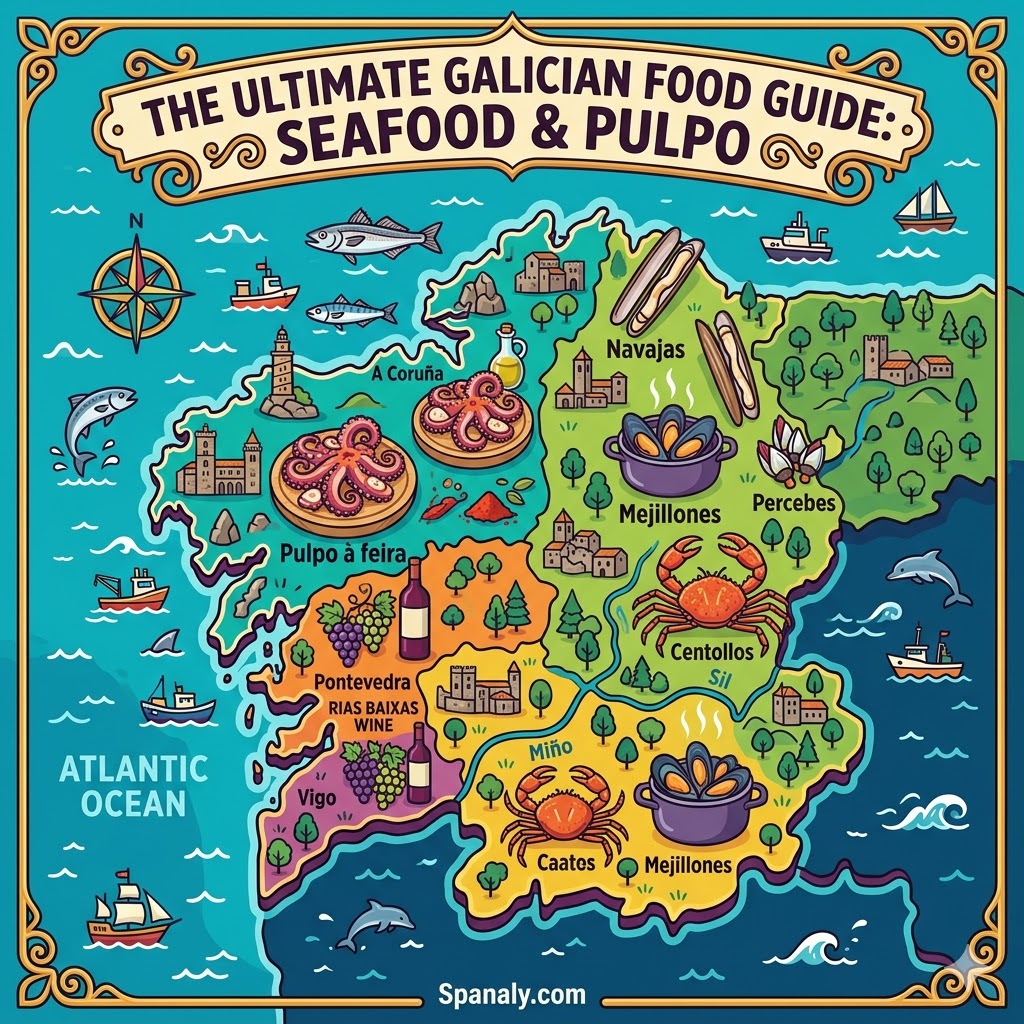
The salty mist of the Atlantic fills the air as a steaming plate of octopus arrives at your wooden table. This is the raw essence of Galician Cuisine, where the ocean dictates the menu and tradition rules the kitchen.
Ocean to Table: Experience the world’s finest seafood, harvested daily from the cold, nutrient-rich Atlantic waters.
The Octopus Ritual: Master the art of eating Pulpo à Feira, a dish that defines the soul of Northern Spain.
Market Secrets: Discover hidden coastal markets where locals trade the freshest shellfish and exotic goose barnacles.
Beyond the Coast: Savor the rich inland flavors of Galician beef and creamy cheeses that balance the salty sea breeze.
Expert Planning: To see how these flavors fit into your broader trip, explore our Northern Spain Travel Guide.
🚀 Snapshot: Essential Galician Cuisine Facts
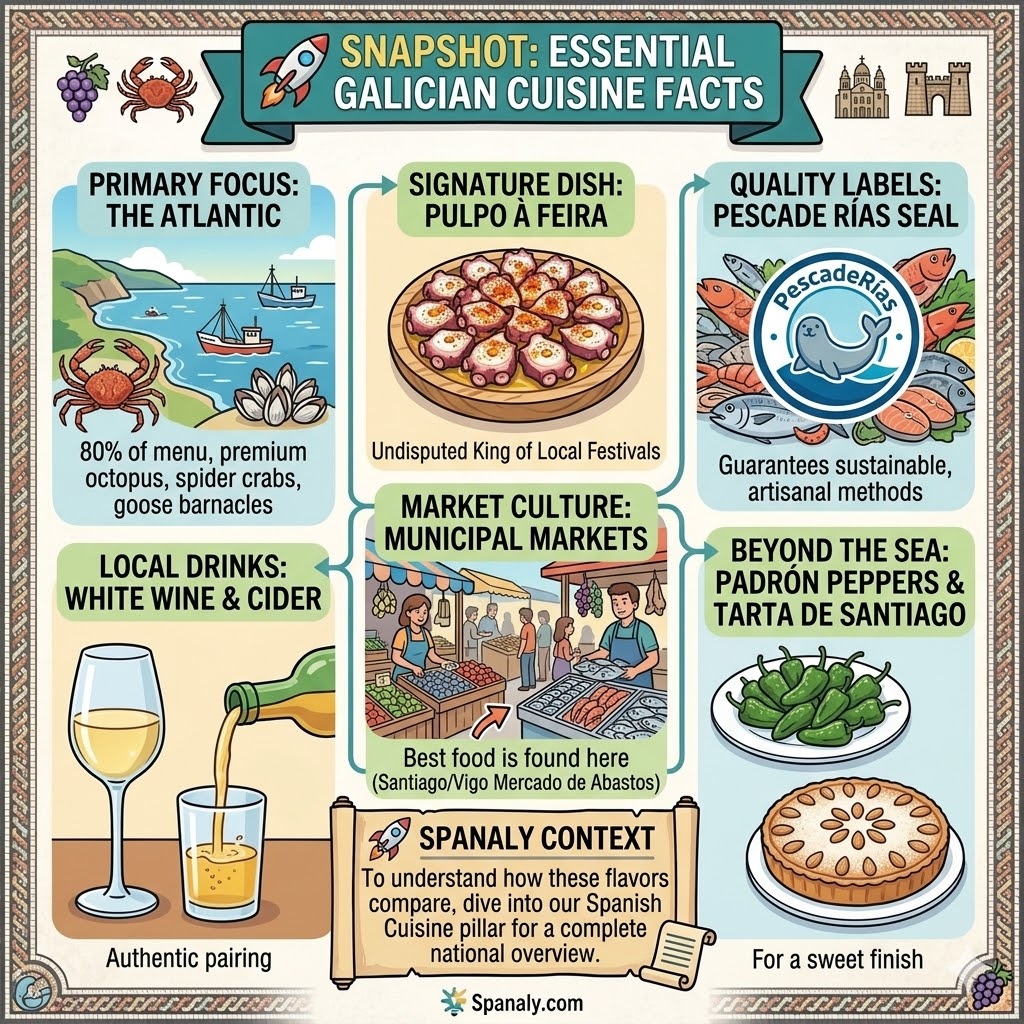
Dining in Galicia requires a different set of rules than in Madrid or Seville. Here is the technical breakdown of what to expect in Spain’s “Green Corner”:
Dining Schedule: Lunch starts late, typically at 14:00. If you arrive at a Pulpería at 13:00, the copper pots may still be warming up.
The “Pan” Factor: In Galicia, bread is not a side dish; it is a primary ingredient. Look for Pan de Cea to soak up the olive oil and paprika from your octopus.
Quality Labels: Search for the PescadeRías seal on restaurant windows. This guarantees the seafood was landed in a local Galician port that same day.
Free Tapas Culture: Unlike Barcelona, many bars in cities like Lugo and Santiago still serve a substantial free tapa (like Empanada or Tortilla) with every drink.
The Ritual Drink: Try Licor Café or Orujo after a heavy seafood meal. Locals use these potent spirits as digestifs to “settle the stomach.”
Market Strategy: Visit the Mercado de Abastos in Santiago before 11:00 AM to see the best catch before it is sold to the city’s top restaurants.
National Context: To see how these Atlantic traditions compare to Mediterranean styles, explore our Spanish Cuisine guide.
Spanaly Insight: Pay attention to the floor. In many traditional Galician tapas bars, it is socially acceptable to drop used paper napkins on the ground. A floor covered in white paper often signals a high-turnover spot with the freshest products.
🍽️ Galician vs. Andalusian Cuisine
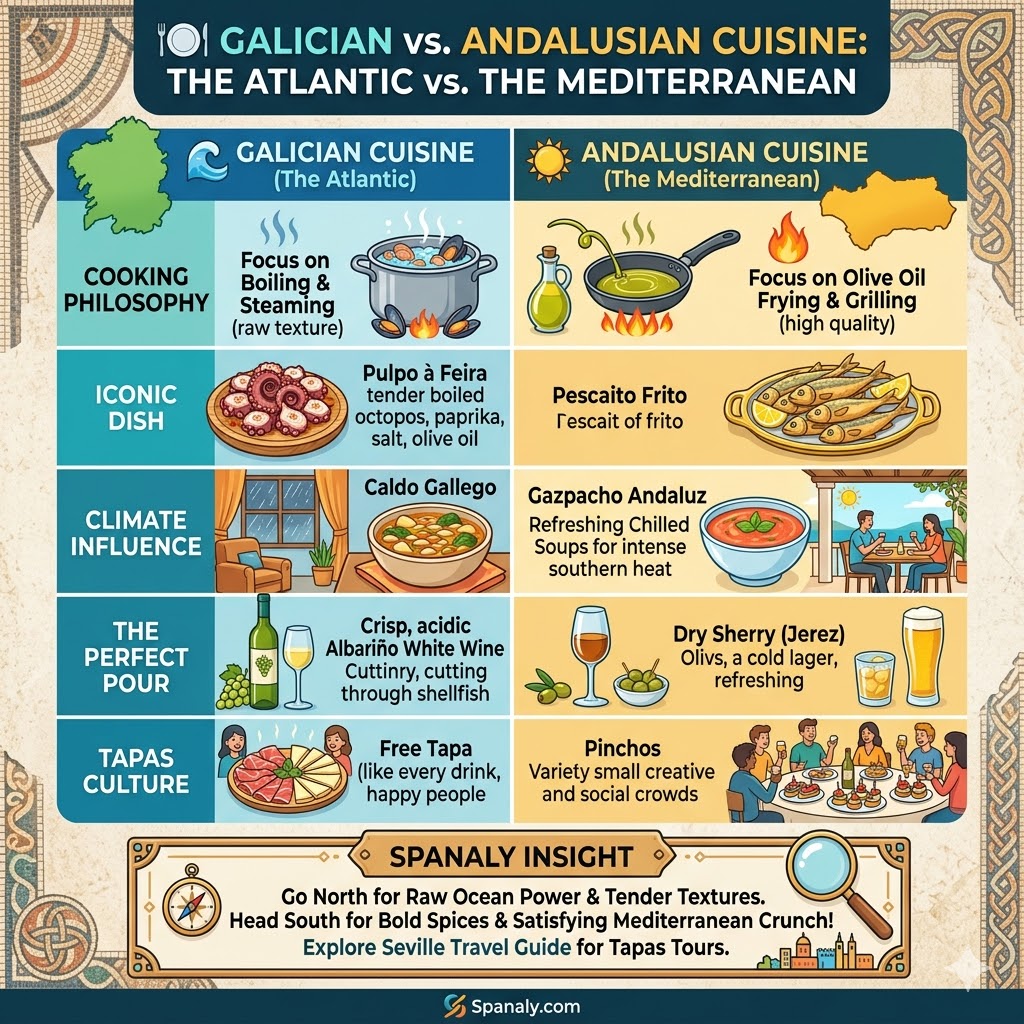
Understanding Spanish food requires comparing the boiling pots of the north with the sizzling pans of the south. Both regions rely on the sea, yet their culinary philosophies remain worlds apart.
| Feature | 🌊 Galician Cuisine (The Atlantic) | ☀️ Andalusian Cuisine (The Mediterranean) |
| Cooking Philosophy | Focuses on boiling and steaming to preserve the natural, raw texture of the product. | Relies on high-quality olive oil frying and open-fire grilling techniques. |
| Iconic Dish | Pulpo à Feira: Tender boiled octopus seasoned with sea salt, paprika, and olive oil. | Pescaito Frito: A crisp, golden assortment of small Mediterranean fish flash-fried to perfection. |
| Climate Influence | Warm, hearty dishes like Caldo Gallego built for misty, rainy Atlantic days. | Refreshing chilled soups like Gazpacho Andaluz designed to beat the intense southern heat. |
| The Perfect Pour | Crisp, acidic Albariño white wine that cuts through the richness of shellfish. | Dry Sherry (Jerez) or ice-cold lager served in small, refreshing glasses. |
| Tapas Culture | Famous for the “Free Tapa” tradition where large portions accompany every single drink. | Focuses on variety and “Pinchos,” emphasizing creative small bites in social city centers. |
Spanaly Insight: Go north for raw ocean power and tender textures. Head south for bold spices and that satisfying Mediterranean crunch. To see how these southern flavors come alive, explore our Seville Travel Guide for an authentic tapas tour.
🐙 Pulpo à Feira: The Secret to Perfect Galician Octopus
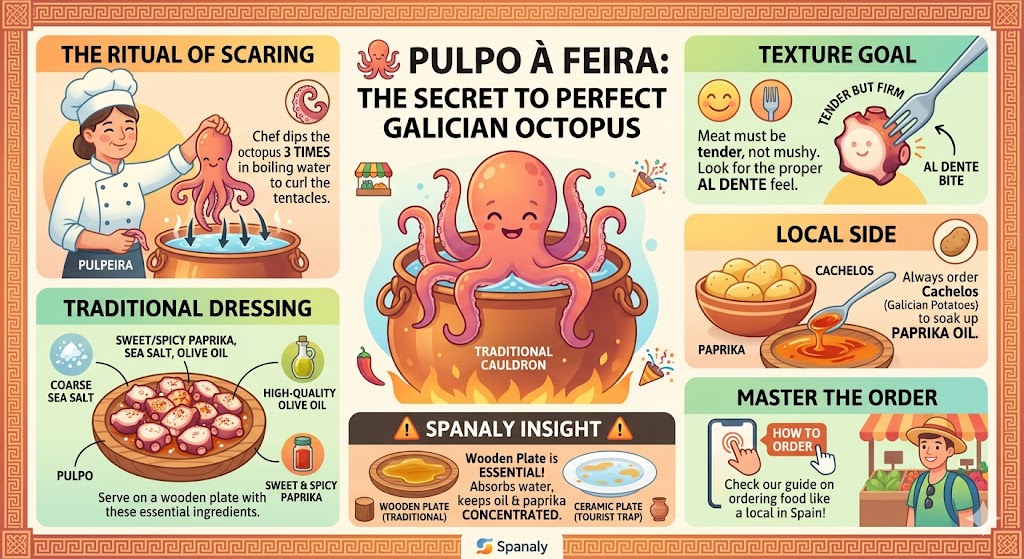
The air in Galician markets is thick with steam and the rhythmic snip-snip of scissors cutting through tender tentacles. Known locally as Polbo á Feira, this dish is more than a meal; it is a sensory ritual that defines the soul of Northern Spain.
“The smell of sweet paprika rising from a hot wooden plate is the true scent of a Galician Sunday.”
The Copper Secret: Traditional “Pulpeiras” use massive copper cauldrons to achieve the perfect thermal conductivity for the water.
The Ritual of Scaring: Chefs “scare” the octopus by dipping it three times into boiling water to curl its tentacles perfectly.
The Texture Goal: We aim for an “Al Dente” bite; the meat must feel firm yet melt-in-your-mouth tender.
Traditional Dressing: Every plate is finished with a generous pour of liquid gold (olive oil) and a dusting of smoky paprika.
Local Side: Always order Cachelos (boiled potatoes) to soak up every drop of the flavorful oil left on your plate.
Master the Order: To order with confidence among the shouting locals, see our guide on how to order food like a local in Spain.
🌊 The steam clears, revealing a deeper, more dangerous side of the Atlantic. Beyond the markets, the ocean hides its most guarded treasures.
Spanaly Insight: Close your eyes and listen for the rhythmic clack of wooden plates hitting the marble counters. The wood isn’t just for tradition; it keeps the octopus warm while the porous surface traps the spicy oil, ensuring the last bite is as flavorful as the first.
🦪 Galician Shellfish: From Rías Baixas Oysters to Mussels
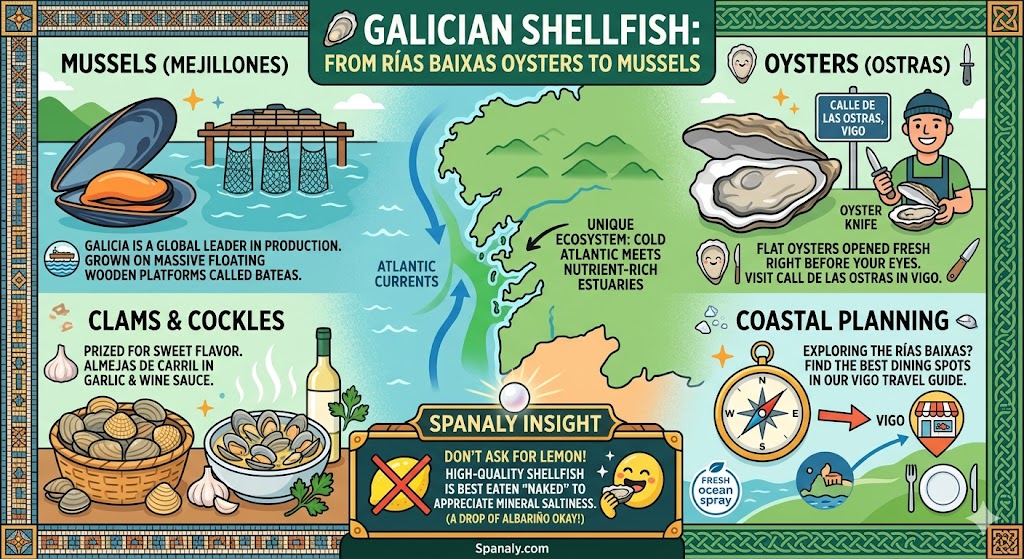
The Galician coast, specifically the Rías Baixas, acts as a natural laboratory for the world’s most flavor-intense shellfish. Cold Atlantic currents meet nutrient-rich river estuaries, creating a unique ecosystem that locals have mastered for centuries.
Mussels (Mejillones): Galicia is a global leader in mussel production, grown on massive floating wooden platforms called Bateas.
Oysters (Ostras): Visit the famous Calle de las Ostras in Vigo to taste flat oysters opened fresh right before your eyes.
Clams & Cockles: Look for Almejas de Carril, prized for their sweet flavor and often served in a simple garlic and wine sauce.
The Freshness Rule: Quality seafood in Galicia should smell like the ocean spray, never like a fish market.
Coastal Planning: If you are exploring the Rías Baixas, make sure to read our Vigo Travel Guide for the best dining spots.
Spanaly Insight: In Galicia, adding lemon to fresh shellfish is often seen as “hiding the ocean.” The real secret is to sip the salty liquid inside the shell first—it is a direct, unfiltered connection to the cold Atlantic currents of the Rías Baixas.
Not all Galician seafood is comfortable. Some dishes are wild, dangerous, and deeply tied to the Atlantic storms.
🦀 Exotic Delicacies: Percebes and Centolla
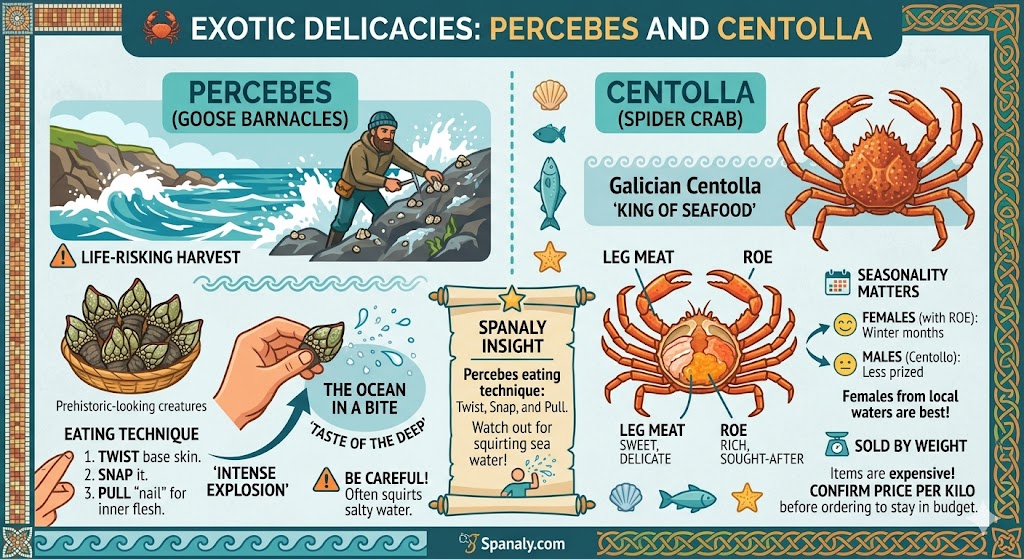
For those seeking the pinnacle of Galician Cuisine, these two delicacies represent the luxury and danger of the Atlantic. They are not just meals; they are cultural symbols of the region’s rugged coastline.
Percebes (Goose Barnacles): These prehistoric-looking creatures are harvested by “Percebeiros” who risk their lives on slippery rocks amidst crashing waves.
The Taste of the Deep: The flavor of a Percebe is an intense explosion of pure sea water, often described as “the ocean in a bite”.
Centolla (Spider Crab): Known as the “King of Seafood,” the Galician spider crab is prized for its sweet, delicate leg meat and rich roe.
Seasonality Matters: Always check if the Centolla is “Ría” (local) or “Centollo” (male), as the females from local waters are the most sought-after during winter months.
The Price of Quality: These items are sold by weight and can be expensive, so always confirm the price per kilo before ordering to stay within your Northern Spain travel budget.
🥩 Beyond Seafood: Galician Beef and Tetilla Cheese
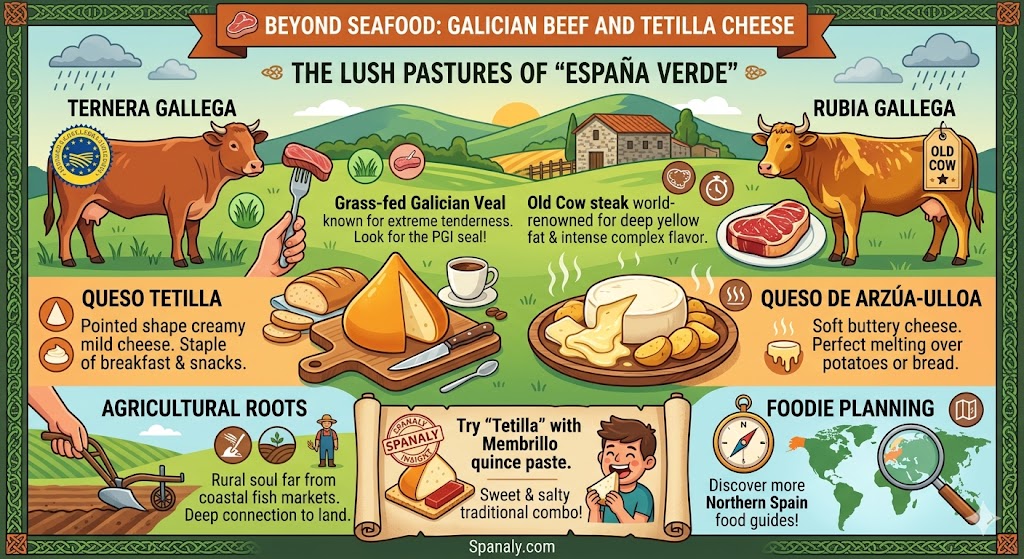
While the ocean grabs headlines, the lush, rainy pastures of inland Galicia produce some of Europe’s finest land-based delicacies. The “España Verde” landscape is the secret behind these rich, organic flavors.
Ternera Gallega: Look for the PGI (Protected Geographical Indication) seal to ensure you are eating authentic, grass-fed Galician veal known for its extreme tenderness.
Rubia Gallega: This “Old Cow” steak is world-renowned among meat connoisseurs for its deep yellow fat and intense, complex flavor.
Queso Tetilla: Named for its unique pointed shape, this creamy, mild cheese is a staple of the Galician breakfast and snack culture.
Queso de Arzúa-Ulloa: A soft, buttery cheese that melts perfectly over warm bread or local potatoes.
Agricultural Roots: These products reflect the rural soul of Northern Spain, far from the bustling coastal fish markets.
Foodie Planning: To discover more about the diverse flavors of this region, check our Northern Spain food guide.
Spanaly Insight: To experience the true creaminess of Tetilla, ask for a slice that has been sitting at room temperature for at least an hour. Pair it with Membrillo (quince paste) to create a sweet-salty bridge that cleanses the palate after a heavy seafood feast.
🍰 Traditional Desserts: Tarta de Santiago and Filloas
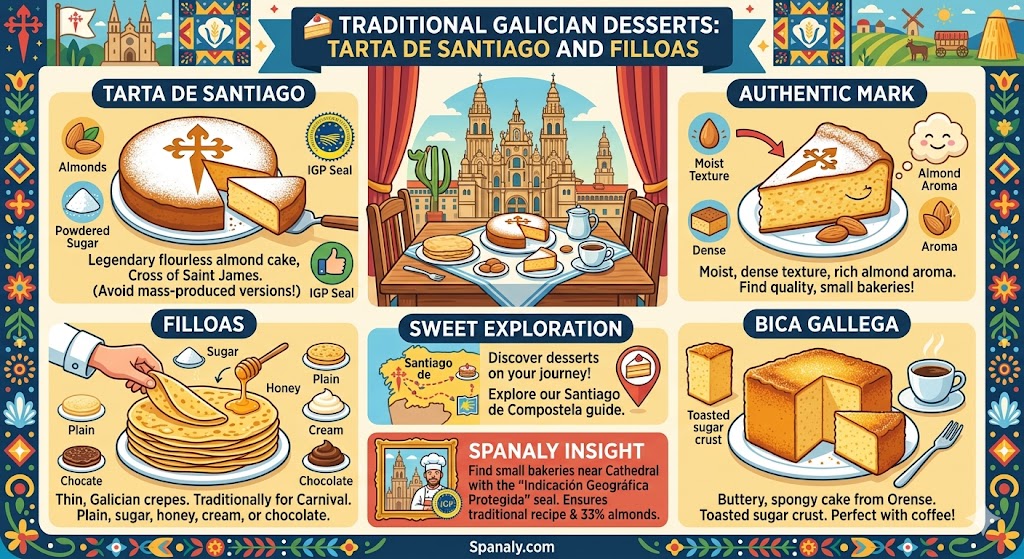
Galician desserts are rooted in pilgrimage history and farm life. These treats rely on local ingredients rather than complex techniques.
Tarta de Santiago: A flourless almond cake decorated with the Cross of Saint James.
The Authentic Mark: Real Tarta de Santiago must have a moist, dense texture and a rich almond aroma; avoid dry, mass-produced versions found in souvenir shops.
Filloas: These are thin, Galician-style crepes made with flour, eggs, and milk, traditionally served during the Carnival season.
Diverse Fillings: While often eaten plain with a sprinkle of sugar or honey, modern versions feature cream or chocolate fillings.
Bica Gallega: A buttery, spongy cake from the Orense region, known for its toasted sugar crust and perfect pairing with coffee.
Sweet Exploration: To see how these desserts fit into your journey through the holy city, explore our Santiago de Compostela guide.
The ocean provides the food; the granite soil provides the spirit. It’s time to pour a glass of Atlantic liquid gold.
🥂 Wine Pairing: Albariño and Ribeiro White Wines
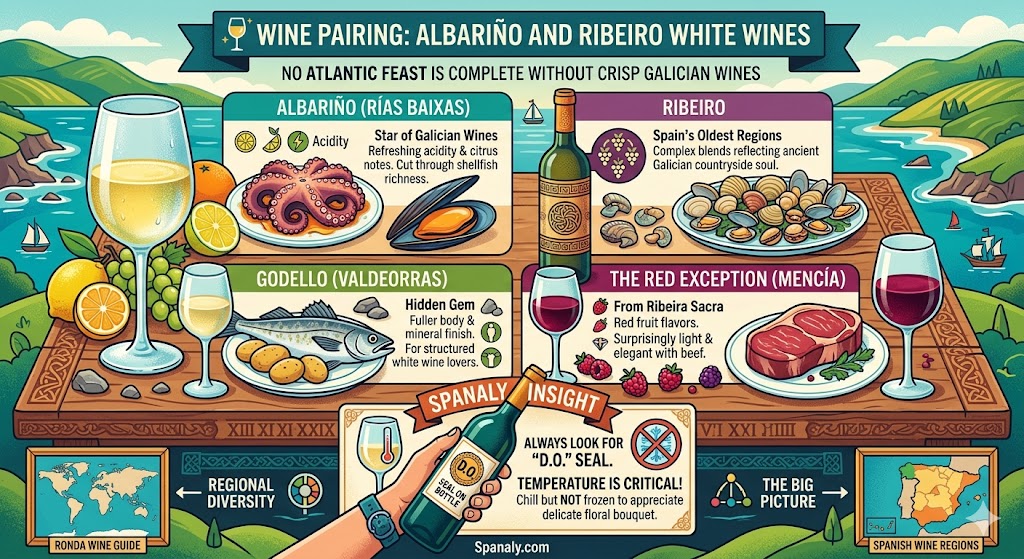
No Atlantic feast is complete without the crisp, acidic wines of Galicia. These vineyards benefit from the humid climate and granite soils, producing white wines that are widely considered the best companions for seafood in the world.
Albariño (Rías Baixas): The star of Galician wines, known for its refreshing acidity and citrus notes that cut perfectly through the richness of shellfish.
Ribeiro: One of Spain’s oldest wine regions, offering complex blends that reflect the ancient soul of the Galician countryside.
Godello: A hidden gem from the Valdeorras region, providing a fuller body and mineral finish for those who prefer a more structured white wine.
The Red Exception (Mencía): If you are eating Galician beef, try a glass of Mencía from the Ribeira Sacra; its red fruit flavors are surprisingly light and elegant.
Regional Diversity: To understand how these Atlantic treasures compare to the sunny vineyards of the south, explore our Ronda wine guide.
The Big Picture: For a complete overview of the country’s viticulture, check our guide to the major Spanish wine regions.
Spanaly Insight: There is a specific joy in watching the condensation frost a bottle of Albariño on a misty afternoon. Look for wines from small family estates (Colleiteiros); they capture the unique granite mineral notes that industrial bottles simply cannot replicate.
📍 Top Places to Eat: Best Seafood Restaurants in Galicia
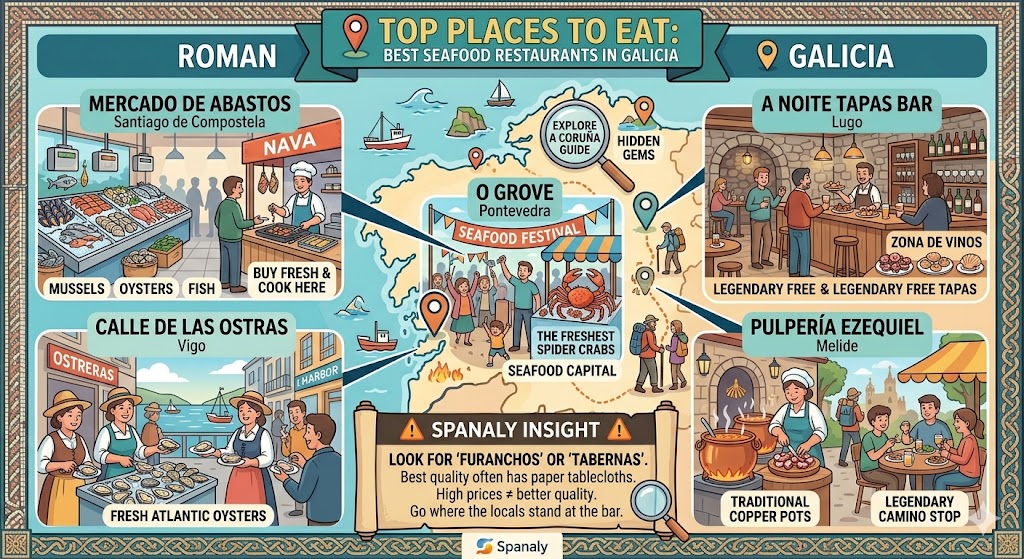
To find the true soul of Galicia, follow the sound of clinking glasses and the salty aroma of steaming shellfish. These iconic spots range from bustling historic markets to hidden, family-run coastal taverns.
“In Galicia’s seafood markets, freshness and speed matter more than luxury décor.”
Mercado de Abastos (Santiago): Walk through the stone arches, buy fresh catch from the stalls, and let the “Navas” cook it for you.
Calle de las Ostras (Vigo): The street smells of saltwater as “Ostreras” open fresh Atlantic oysters right on the sidewalk.
O Grove (Pontevedra): Known as the “Seafood Capital,” this town offers the freshest spider crabs amidst a festive coastal atmosphere.
A Noite Tapas Bar (Lugo): Located in the “Zona de Vinos,” this is where you feel the legendary free tapas culture of the north.
Pulpería Ezequiel (Melide): Watch the steam rise from traditional copper pots at the entrance as pilgrims gather for their legendary octopus.
Coastal Discovery: To find more hidden gems along the rugged shoreline, explore our A Coruña travel guide.
🍷 A Moment of Transition: As the market noise fades, the evening chill sets in. It is time to warm your spirit with the granite-born wines of the countryside.
Spanaly Insight: Follow the locals who are standing near the kitchen entrance rather than sitting at the outdoor tables. The fastest turnover happens at the bar, where the most prized, just-boiled portions of octopus and clams are served first to the regulars.
📅 The Seafood Calendar: When to Eat What?
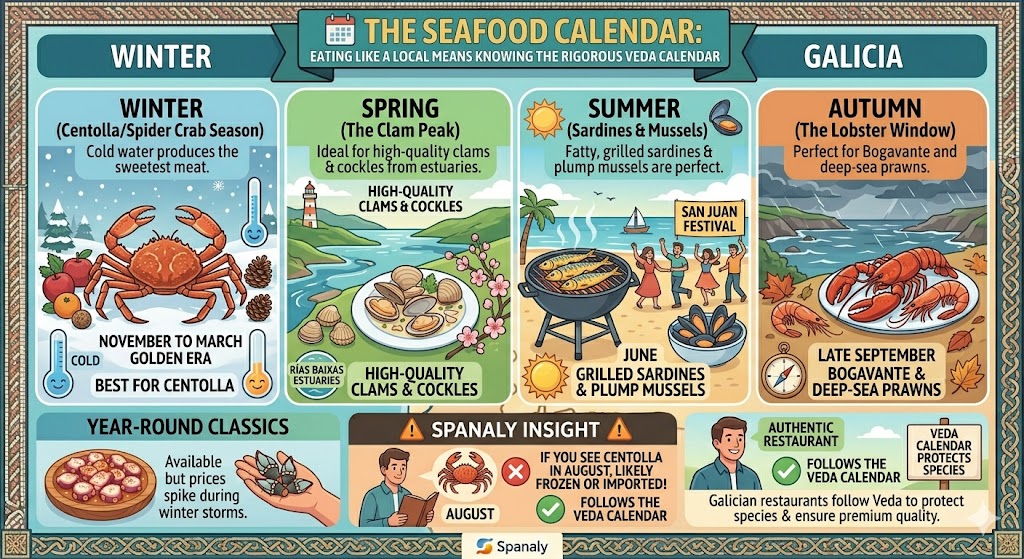
In Galicia, the ocean follows a strict legal and biological rhythm called Veda (closed season). Eating like a local means knowing exactly when each species reaches its peak flavor and size.
Winter (Spider Crab Season): November to March is the golden era for Centolla (Spider Crab), as the cold water produces the sweetest meat.
Spring (The Clam Peak): March and April are ideal for high-quality clams and cockles from the Rías Baixas estuaries.
Summer (Sardines & Mussels): June brings the famous San Juan festival, the best time for fatty, grilled sardines and plump mussels.
Autumn (The Lobster Window): Late September is perfect for Bogavante (European Lobster) and the first harvests of deep-sea prawns.
Year-Round Classics: Pulpo (Octopus) and Percebes (Goose Barnacles) are generally available year-round, though prices spike during winter storms.
Smart Planning: To match your dining goals with the best weather, check our guide on the best time to visit Northern Spain.
⏳ 24-Hour Galician Food Tour: The Atlantic Itinerary
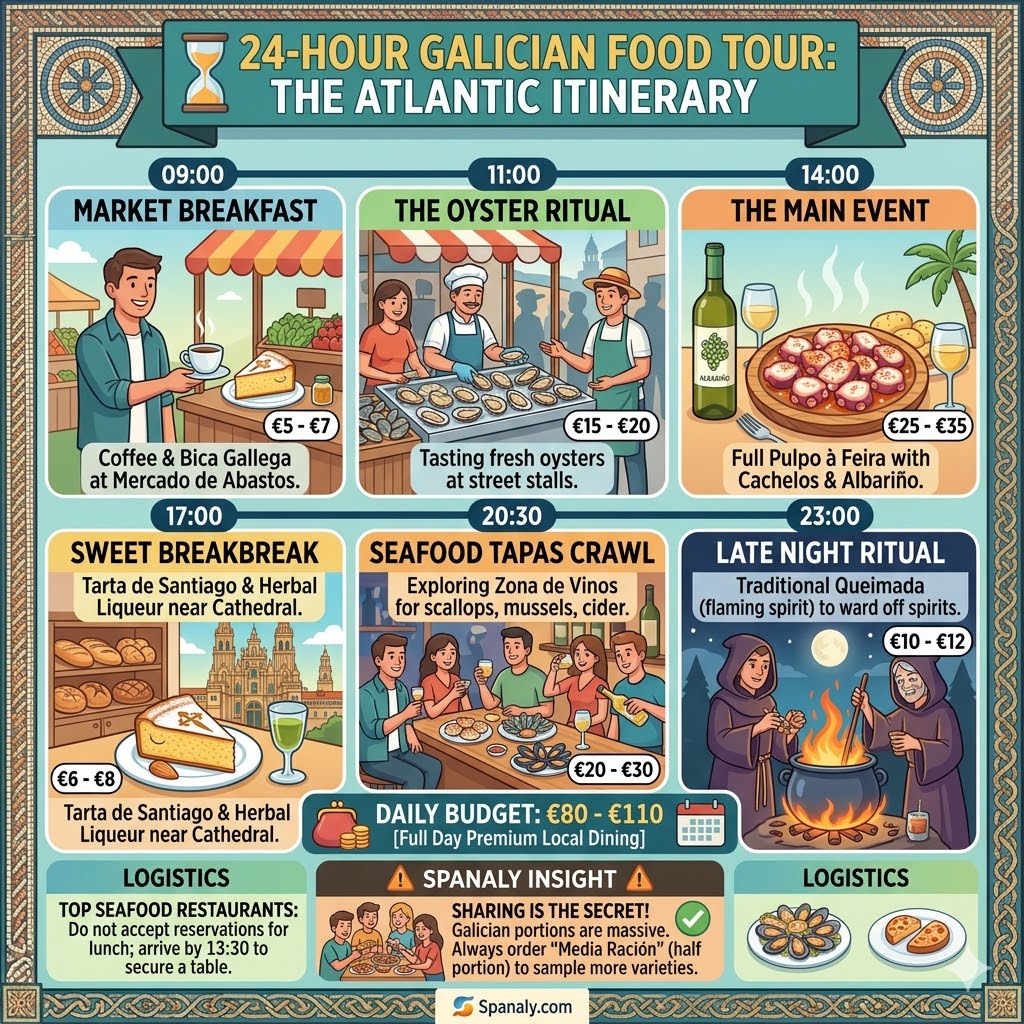
This integrated plan is designed for a perfect day in Santiago de Compostela or Vigo, balancing street food with sit-down feasts.
| Time | Activity & Culinary Stop | Estimated Cost (per person) |
| 09:00 | Market Breakfast: Coffee and a slice of Bica Gallega at the local Mercado de Abastos. | €5 – €7 |
| 11:00 | The Oyster Ritual: Tasting fresh Atlantic oysters at the street stalls in Vigo or Santiago. | €15 – €20 |
| 14:00 | The Main Event: A full Pulpo à Feira lunch with Cachelos and a bottle of Albariño. | €25 – €35 |
| 17:00 | Sweet Break: A slice of Tarta de Santiago near the Cathedral with a local herbal liqueur. | €6 – €8 |
| 20:30 | Seafood Tapas Crawl: Exploring the “Zona de Vinos” for scallops, mussels, and local cider. | €20 – €30 |
| 23:00 | Late Night Ritual: Traditional Queimada (flaming spirit) to ward off evil spirits. | €10 – €12 |
Daily Budget: Expect to spend between €80 – €110 for a full day of premium local dining.
Budgeting Tip: To see how this fits into your overall travel expenses, visit our Northern Spain travel cost & budget guide.
Logistics: Most top-tier seafood restaurants do not accept reservations for lunch; arrive by 13:30 to secure a table.
💡 Spanaly Insider Tips: Master the Galician Seafood Scene
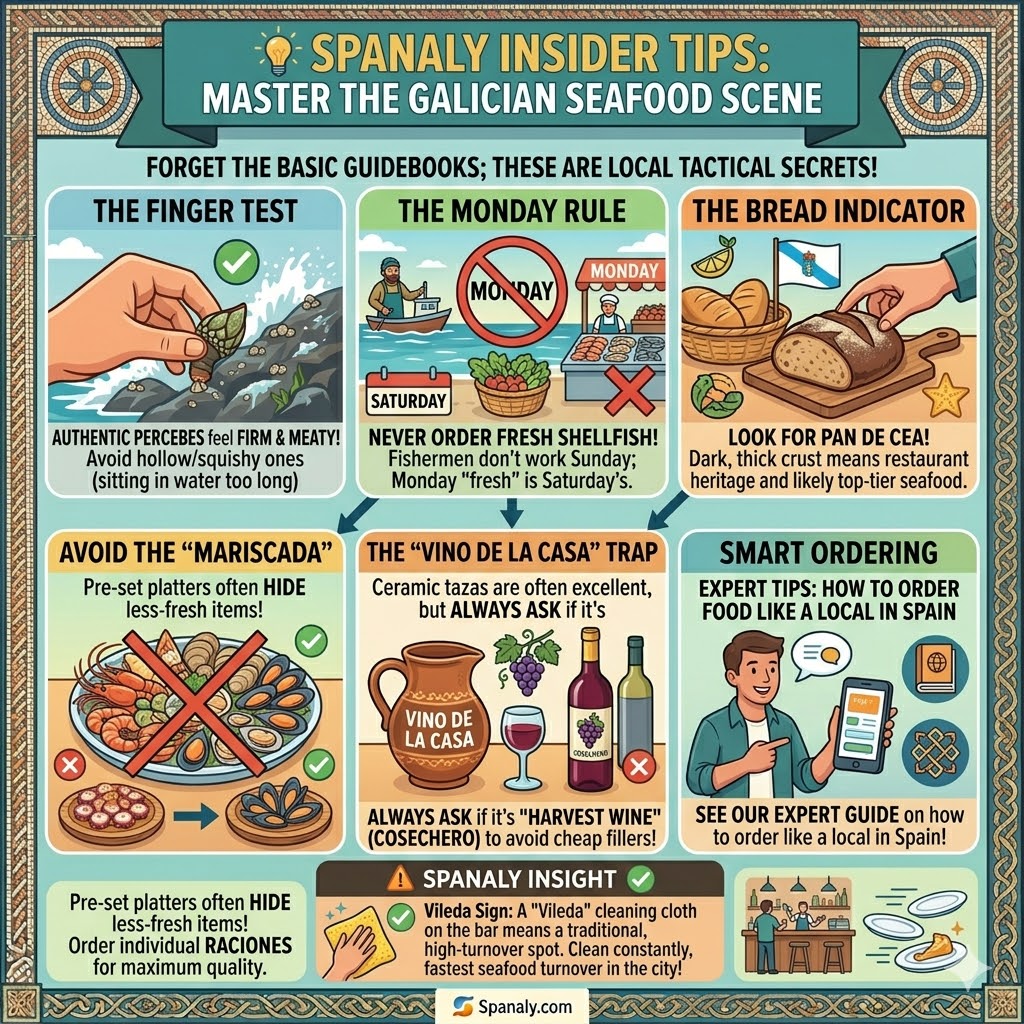
Forget the basic guidebook advice; these are the tactical secrets used by locals and savvy foodies to ensure every bite is worth the price.
The Finger Test: Authentic Percebes should feel firm and “meaty” through the skin; if they feel hollow or overly squishy, they’ve been sitting in water too long.
The Monday Rule: Never order fresh shellfish on a Monday; Galician fishermen don’t work on Sundays, so “fresh” Monday seafood is actually from Saturday.
The Bread Indicator: Look at the bread on the table; if it’s Pan de Cea (dark, thick crust), the restaurant values Galician heritage and likely serves top-tier seafood.
The “Vino de la Casa” Trap: In Galicia, the house wine in a ceramic jug (taza) is often excellent, but always ask if it’s a “harvest wine” (cosechero) to avoid cheap industrial fillers.
Avoid the “Mariscada” Platter: Pre-set seafood platters often hide less-fresh items under the good ones; order individual Raciones for maximum quality control.
Smart Ordering: To master these local nuances and more, see our expert tips on how to order food like a local in Spain.
Spanaly Insight: If you find a restaurant with a “Vileda” (yellow cleaning cloth) sitting prominently on the bar, it’s a sign of a traditional, high-turnover spot where they clean constantly between rapid tapas rounds. It’s not fancy, but the seafood turnover is the fastest in the city!
🚫 Common Tourist Mistakes When Eating Seafood in Galicia
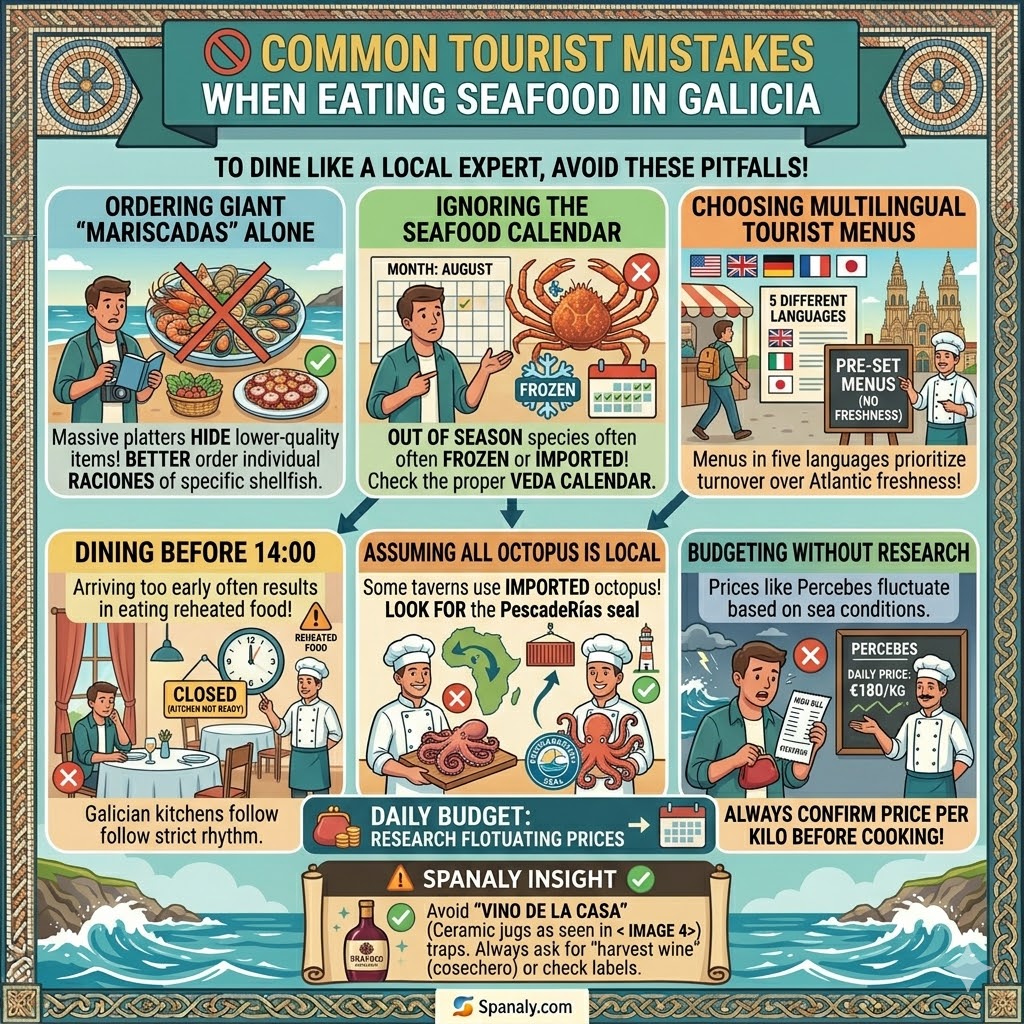
To dine like a local expert and avoid unnecessary costs, steer clear of these frequent pitfalls found in Galician coastal cities:
Ordering Giant “Mariscadas” Alone: Large seafood platters can sometimes include a mix of premium and lower-value shellfish.; it is better to order individual portions (Raciones) of specific shellfish.
Ignoring the Seafood Calendar: Eating species like Spider Crab (Centolla) out of season often means you are being served frozen or imported products.
Choosing Multilingual Tourist Menus: Restaurants displaying menus in five different languages near major cathedrals usually prioritize turnover over Ocean-driven cuisine.
Dining Before 14:00: Galician kitchens follow a strict rhythm; arriving too early for lunch often results in eating reheated food from the previous shift.
Assuming All Octopus is Local: Due to high demand, some taverns use imported octopus; look for the PescadeRías seal to ensure your meal was landed in a Galician port.
Budgeting Without Research: Prices for items like Percebes fluctuate daily based on sea conditions; always confirm the Price per Kilo before the chef starts cooking.
🛡️ Visitor FAQs – Galician Food & Dining Guide
🛡️ Is it safe to eat raw shellfish in Galician local markets?
Yes, Galicia has world-class health standards for seafood. In local markets like Mercado de Abastos, oysters and clams are checked daily for freshness. However, if you have a sensitive stomach, we recommend starting with small portions or choosing steamed varieties like mussels.
🐙 How do I tell the difference between Galician and imported octopus?
Authentic Galician octopus (Pulpo Gallego) is usually darker in skin color and has a much more intense Atlantic flavor. Imported frozen octopus often tastes slightly metallic or "watery". Always check for the price; if it’s suspiciously cheap, it’s likely not local.
🍷 Can I visit Galician wineries (Bodegas) without a car?
Absolutely. Many top Albariño wineries in the Rías Baixas region are accessible by local trains from Vigo or Pontevedra. Several famous estates offer walking tours from the train station, but we recommend booking a specialized day tour if you want to visit multiple remote vineyards in one day.
🚑 What if I have a seafood allergy in Galicia?
Galicia is the seafood capital, but it also excels in meats and cheeses. Most restaurants are very aware of allergens. Always carry a card that says "Soy alérgico al marisco" (I am allergic to shellfish). You can safely enjoy Ternera Gallega (Beef) or Pimientos de Padrón, which are prepared in separate kitchen areas in most modern establishments.
💶 Should I tip at seafood restaurants in Galicia?
Tipping is not mandatory in Spain, but it is appreciated for exceptional service. In traditional Pulperías, rounding up to the nearest Euro or leaving 5% of the total bill is a generous gesture. If you are dining at a high-end seafood restaurant in Vigo or A Coruña, a 10% tip is standard for excellent service.
Galician Cuisine Guide by Spanaly.com
Galicia is more than just a destination; it is a flavor that stays with you long after the meal ends. From the rhythmic boiling of copper pots to the salty breeze of the Rías Baixas, every bite tells a story of Atlantic heritage.
Trust the Ocean: Let the seasonal Veda calendar guide your choices for the freshest experience.
Eat Like a Local: Seek out the noisy markets and hidden taverns where quality speaks louder than decor.
Pair with Tradition: Never skip the Albariño wine or the legendary Tarta de Santiago for a perfect finish.
Continue the Journey: After satisfying your appetite, head inland to explore the ancient Roman Walls of Lugo, where history meets incredible free tapas.
Spanaly Tip: Spain’s north is full of surprises. Don’t rush your meals; in Galicia, the best memories are made during the Sobremesa—that magical time spent talking around the table after the food is gone. Enjoy every second of it!