🍏 Asturias Food Guide
The sharp, rhythmic splash of natural cider hitting a glass echoes through the narrow, steam-filled taverns of Oviedo. The scent of slow-cooked fava beans and pungent blue cheese defines the rugged soul of this Atlantic paradise.
Sidra Culture: Master the unique “pouring from a height” ritual essential for aerating the local apple nectar.
Mountain Soul: Savor the Fabada Asturiana, a rich bean stew that anchors the region’s high-altitude culinary identity.
Cheese Heritage: Discover why the limestone caves of the Picos de Europa produce Europe’s most intense artisan cheeses.
Atlantic Freshness: Explore coastal ports where the morning catch transforms into traditional seafood masterpieces.
Northern Context: These flavors form the backbone of any Northern Spain travel guide, reflecting the rugged spirit of the Atlantic coast.
Spanaly Insight: Look for the “Gijón Goloso” labels in local bakeries. This signals a shop specializing in artisanal Asturias sweets that locals have cherished for generations.
📌 Snapshot: Essential Asturian Food Facts
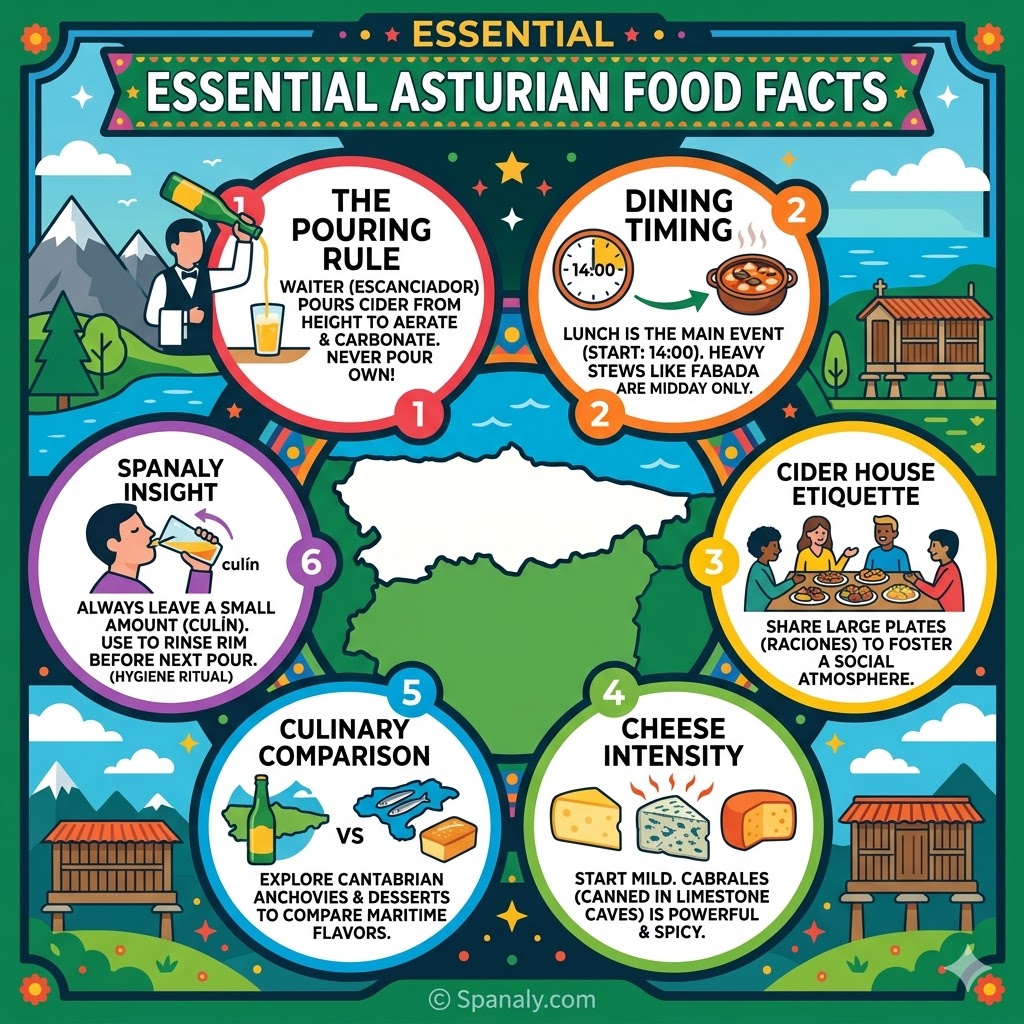
Asturias offers a culinary experience where high-altitude mountain traditions meet the raw power of the Atlantic. Understanding these technical basics will ensure you dine like a true local across the region.
The Pouring Rule: Never pour your own cider; always wait for the waiter (Escanciador) to aerate it from a height to activate the natural carbonation.
Dining Timing: Lunch remains the main event, typically starting at 14:00; heavy stews like Fabada are strictly midday meals to aid digestion.
Cider House Etiquette: In traditional Sidrerías, locals often share large plates (Raciones) rather than individual courses to foster a social atmosphere.
Cheese Intensity: Start with milder varieties before trying Cabrales; this blue cheese is matured in limestone caves and carries a powerful, spicy kick.
Culinary Comparison: Maritime flavors shift toward salty anchovies and buttery pastries as you cross the coastal border into Cantabrian food territory.
Spanaly Insight: Always leave a small amount of cider (the culín) in your glass. This leftover liquid is used to rinse the rim before the next pour, maintaining a centuries-old hygiene ritual.
🥣 Asturias vs. Galicia: A Northern Contrast
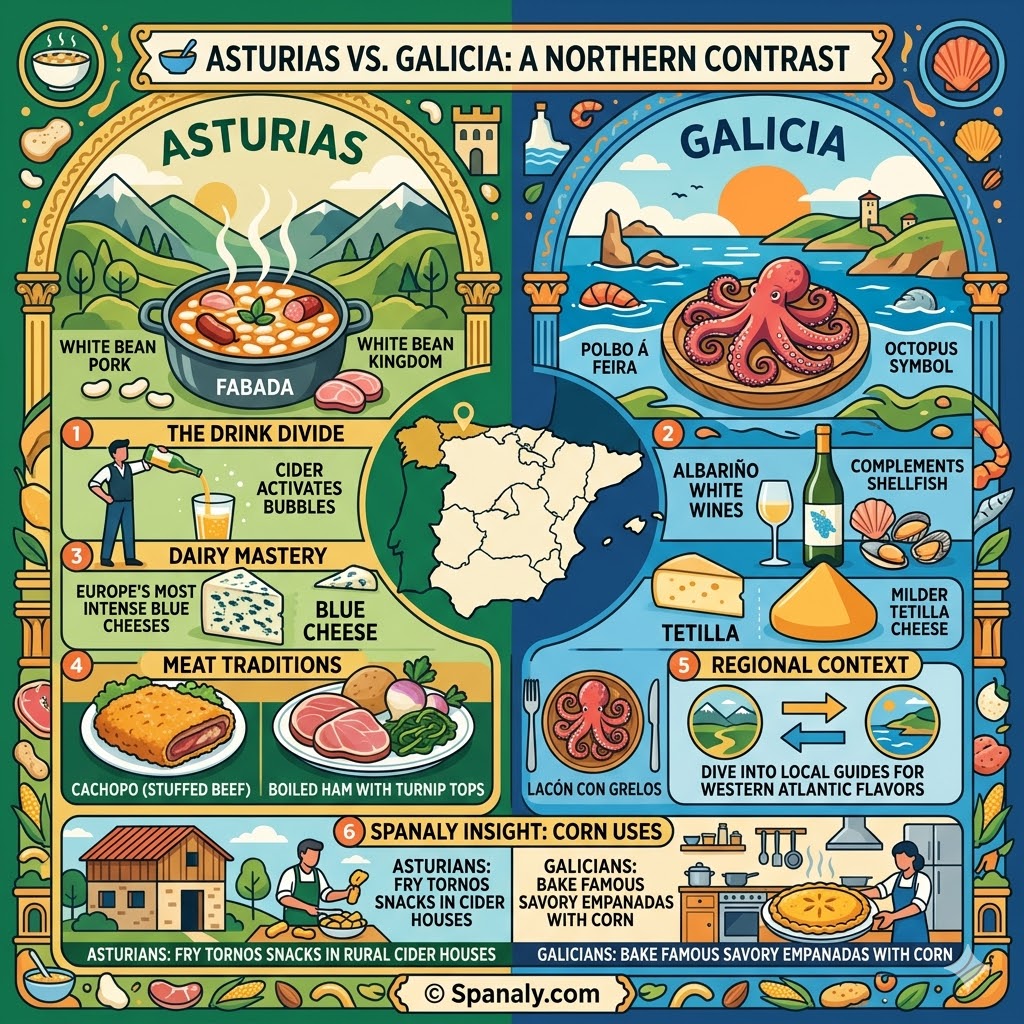
The culinary philosophy of Asturias relies on creamy emulsions and slow-cooked stews. Conversely, Galicia focuses on the raw, saline simplicity of Atlantic seafood.
Bean Stew vs. Octopus: Asturias is the kingdom of the white bean (Fabada). Galicia prioritizes the Polbo á Feira (octopus) as its primary gastronomic symbol.
The Drink Divide: Asturians pour natural cider from a height to activate bubbles. However, Galicians prefer crisp white Albariño wines to complement their shellfish.
Dairy Mastery: Asturias produces Europe’s most intense blue cheeses. Meanwhile, Galicia is famous for the milder, breast-shaped Tetilla cheese.
Meat Traditions: Asturias celebrates the Cachopo (stuffed beef). Galicia focuses on boiled ham with turnip tops (Lacón con Grelos).
Regional Context: To master the flavors of the western Atlantic edge, dive into our Galician cuisine guide to see how these techniques shift.
Spanaly Insight: Pay attention to the corn. Crucially, while Galicians use corn for their famous savory Empanadas, Asturians often use it to make Tornos, a traditional fried snack found in rural cider houses.
🍏 The Sidra Ritual: Asturian Cider Culture
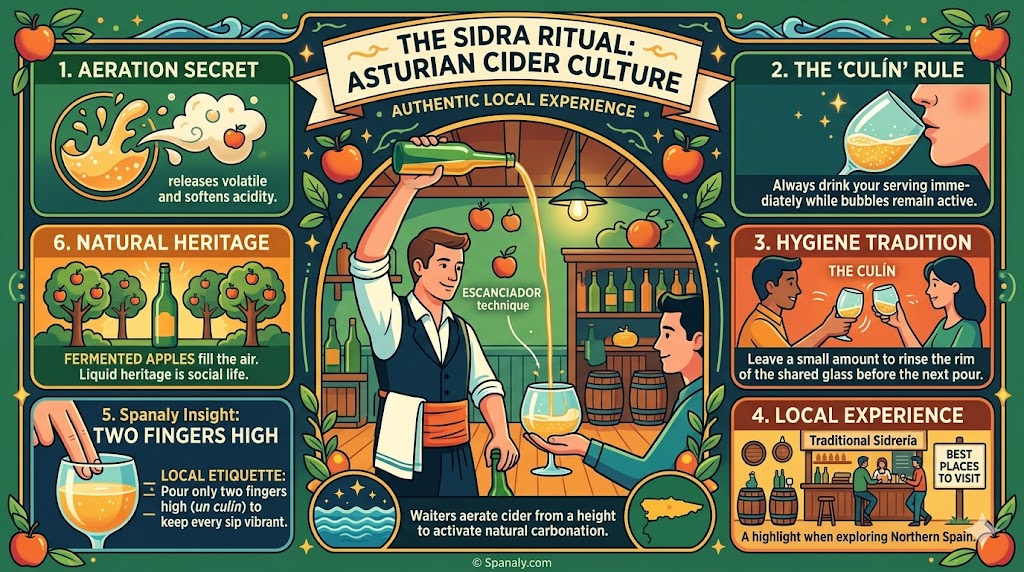
The sharp aroma of fermented apples fills the air as natural cider splashes into wide, flat-bottomed glasses. This liquid heritage is the heartbeat of Asturian social life, defined by a technical pouring ritual that dates back centuries.
The Escanciar Technique: Waiters pour the cider from a stretched arm’s height to activate its natural carbonation.
Aeration Secret: This mechanical splash releases volatile aromas and softens the acidity of the raw apple nectar.
The “Culín” Rule: Always drink your serving immediately while the bubbles and oxygen remain active in the glass.
Hygiene Tradition: Leave a small amount of liquid to rinse the rim of the shared glass before the next pour.
Local Experience: Watching a master pourer in a crowded Sidrería remains one of the best things to do in Northern Spain..
Spanaly Insight: Do not fill your glass to the top. The local etiquette is to pour only two fingers high (un culín) to keep every sip vibrant.
🍲 Fabada Asturiana: The Ultimate Bean Stew Guide
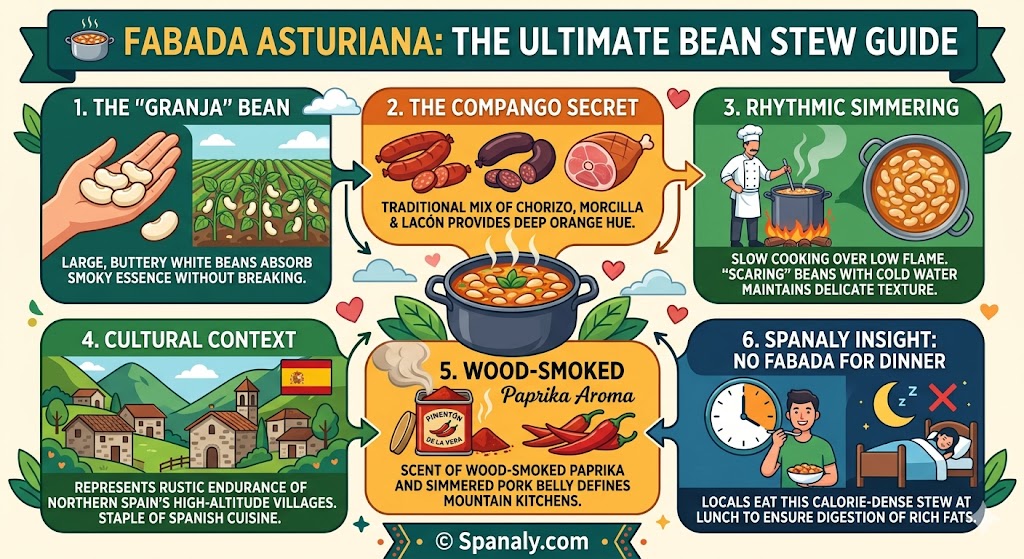
The scent of wood-smoked paprika and slow-simmered pork belly defines the atmosphere of an Asturian mountain kitchen. Notably, this hearty bean stew is a technical masterpiece of balance, combining creamy local legumes with a robust selection of salted meats.
The “Granja” Bean: Authentic Fabada Asturiana relies on large, buttery white beans that absorb the smoky essence of the broth without breaking.
The Compango Secret: A traditional mix of chorizo, morcilla (blood sausage), and lacón (pork shoulder) provides the stew’s signature deep orange hue.
Rhythmic Simmering: Chefs cook the beans slowly over a low flame, occasionally “scaring” them with cold water to maintain their delicate texture.
Cultural Context: This dish reflects the rustic endurance of the highlands and remains the soulful heart of Spanish cuisine.
Spanaly Insight: Never order Fabada for dinner. Locals eat this calorie-dense stew at lunch to ensure the body has time to digest the rich fats.
🧀 Artisan Cheeses: From Cabrales to Gamoneu
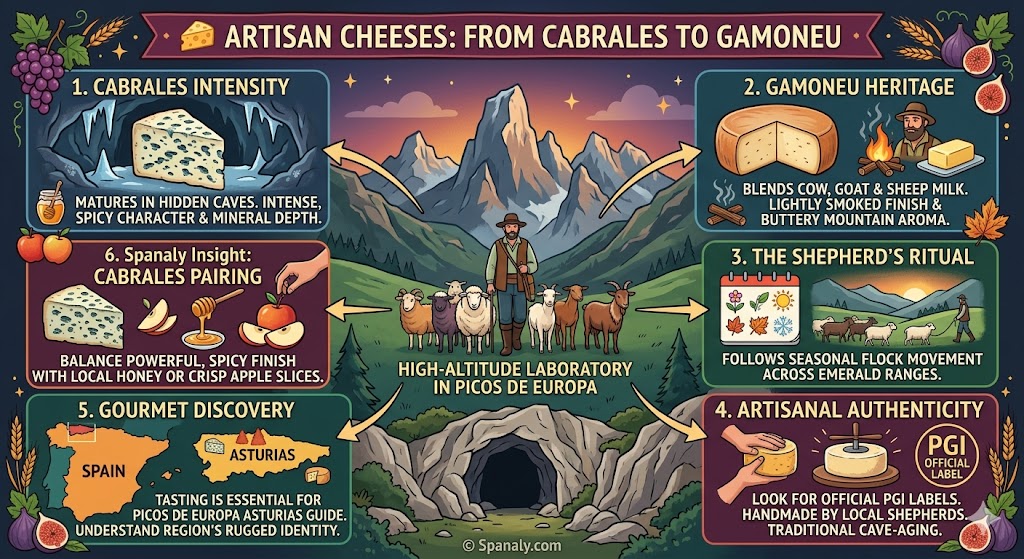
Imagine the smell of cold limestone and damp earth as you enter a natural aging cave deep in the Picos de Europa. This high-altitude “laboratory” is where ancient techniques transform mountain milk into some of Europe’s most complex dairy masterpieces.
Cabrales Intensity: This legendary blue cheese matures in hidden limestone caves to develop its intense, spicy character and mineral depth.
Gamoneu Heritage: A rarer variety that blends cow, goat, and sheep milk, offering a lightly smoked finish and a buttery mountain aroma.
The Shepherd’s Ritual: Production follows the seasonal movement of flocks across the emerald ranges of Northern Spain.
Artisanal Authenticity: Look for the official PGI labels to ensure the cheese was handmade by local shepherds using traditional cave-aging methods.
Gourmet Discovery: Tasting these varieties is essential for anyone exploring the jagged limestone peaks and hiking trails of the Picos de Europa.
Spanaly Insight: Pair your Cabrales with a few drops of local honey or crisp apple slices. This balance helps manage the cheese’s powerful, spicy finish without losing its complex character.
🥩 Asturian Beef: Cachopo & Grass-Fed Meat
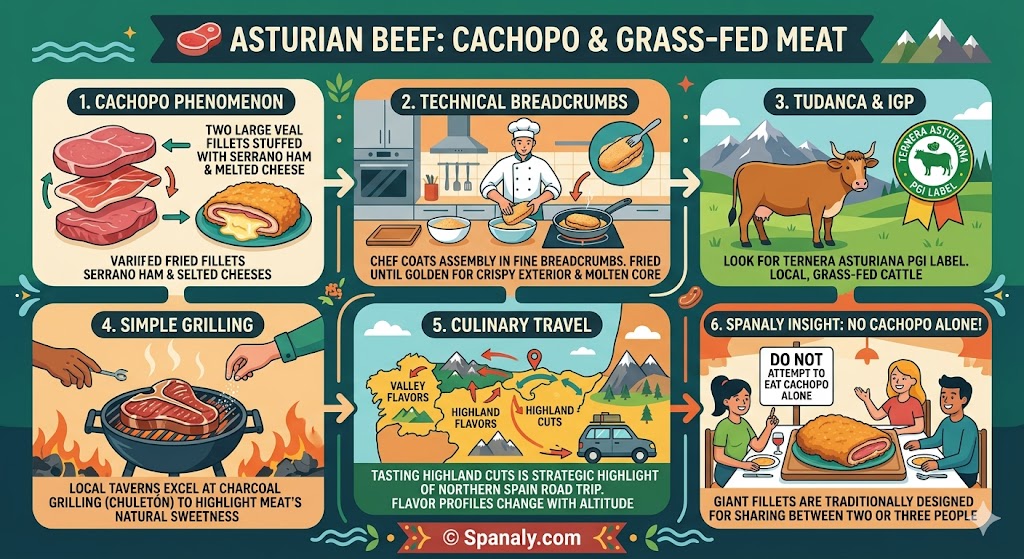
The deep lowing of native cows echoes across the humid, emerald pastures of the Asturian highlands. This humid climate creates a superior, natural beef product that forms the backbone of the region’s hearty meat identity.
The Cachopo Phenomenon: This iconic dish features two large veal fillets stuffed with Serrano ham and melted cheese.
Technical Breadcrumbs: Chefs coat the assembly in fine breadcrumbs and fry it until golden, creating a crispy exterior and a molten core.
Tudanca and IGP: Look for the Ternera Asturiana PGI label to ensure your steak comes from local, grass-fed cattle.
Simple Grilling: Beyond the Cachopo, local taverns excel at simple charcoal grilling (Chuletón) to highlight the meat’s natural sweetness.
Culinary Travel: Tasting these highland cuts is a strategic highlight of any Northern Spain road trip, as flavor profiles change with the altitude.
Spanaly Insight: Do not attempt to eat a Cachopo alone. These giant fillets are traditionally designed for sharing between two or three people during a long social lunch.
🐟 Atlantic Treasures: Best Seafood in Asturias
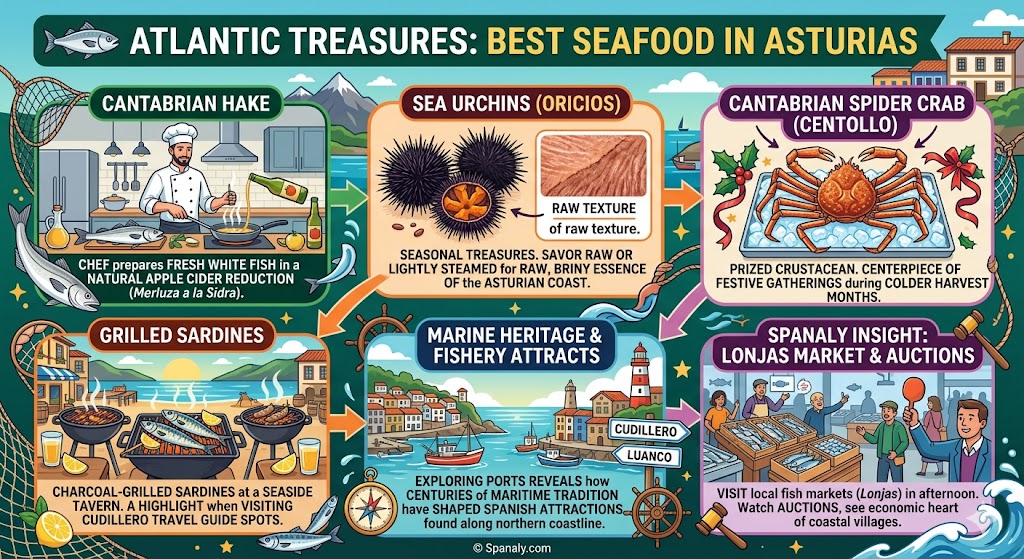
The salt-heavy mist of the Atlantic greets every morning at the historic fishing ports of Cudillero and Luanco. Notably, this cold, turbulent water produces some of the world’s most technical flavor profiles in shellfish and deep-sea fish.
Cantabrian Hake: Local chefs often prepare Merluza a la Sidra, poaching the fresh white fish in a natural apple cider reduction.
Sea Urchins (Oricios): Savor these seasonal treasures raw or lightly steamed to experience the raw, briny essence of the Asturian coast.
Cantabrian Spider Crab: Known locally as Centollo, this prized crustacean is a centerpiece of festive gatherings during the colder harvest months.
Grilled Sardines: Enjoying charcoal-grilled sardines is best experienced while strolling through the amphitheater-like streets of our favorite Cudillero travel guide recommendations.
Marine Heritage: Exploring these ports reveals how centuries of maritime tradition have shaped the Spanish attractions found along the northern coastline.
Spanaly Insight: Visit the local fish markets (Lonjas) in the afternoon. Watching the lively seafood auctions provides a deep look into the economic heart of these coastal villages.
🍰 Traditional Desserts: Rice Pudding & Friuelos
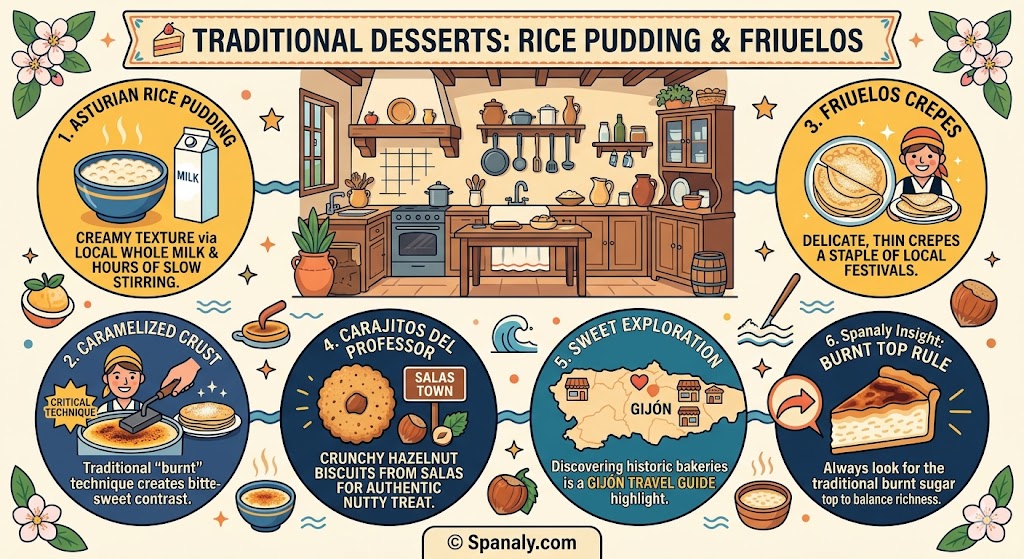
The sweet aroma of burnt sugar and cinnamon often drifts from village kitchens during long Asturian afternoons. Notably, these desserts transform simple farmhouse ingredients into refined masterpieces that define the region’s comforting culinary identity.
Asturian Rice Pudding: This legendary version achieves an incredibly creamy texture through hours of slow stirring and local whole milk.
Caramelized Crust: Chefs finish the Arroz con Leche by scorching a thin layer of sugar with a hot iron.
Friuelos: These delicate, thin crepes are a staple of local festivals and are typically dusted with fine sugar.
Carajitos del Profesor: Seek out these crunchy hazelnut biscuits, in the town of Salas, for an authentic nutty treat.
Sweet Exploration: Savoring these artisanal treasures is a highlight while wandering through Gijón’s historic bakeries..
Spanaly Insight: Always look for the “burnt” top on your rice pudding. This traditional technique creates a bitter-sweet contrast that balances the richness of the creamy rice.
🍽️ Top Places to Eat: Best Restaurants in Asturias
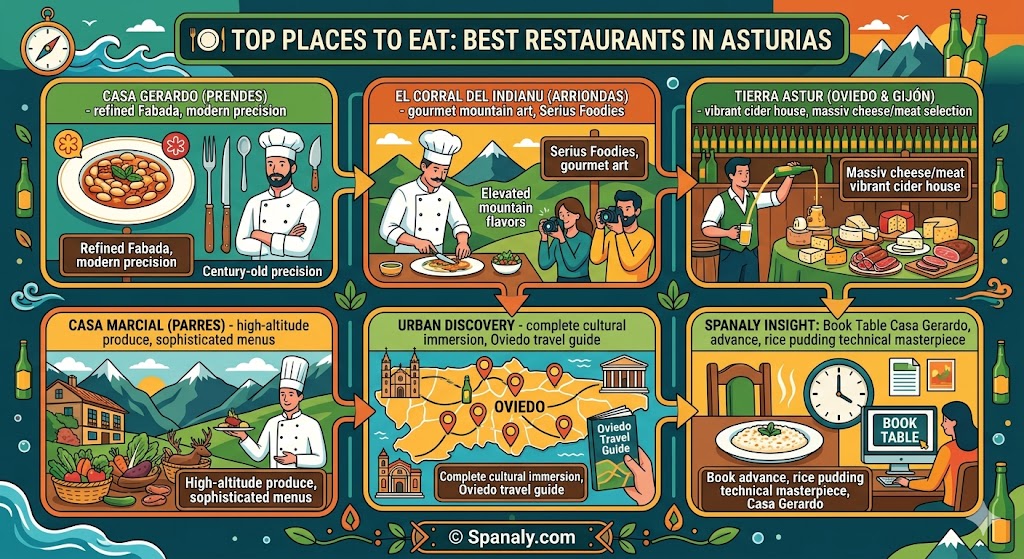
Finding the perfect table in Asturias means balancing historic city taverns with hidden mountain retreats. Notably, these authentic locations prioritize seasonal ingredients and traditional techniques to offer a true taste of the Cantabrian coast.
Casa Gerardo (Prendes): This Michelin-starred landmark is emotionally revered for its “Fabada de Prendes,” a signature dish that feels lighter and more refined than any rustic version. The atmosphere blends high-end elegance with the warmth of a fifth-generation family home.
El Corral del Indianu (Arriondas): Known for transforming traditional stews into elegant tasting menus, this spot captures the essence of the “Indianos” history. Its signature “Encina-smoked butter” provides a sensory bridge between the forest and the table.
Tierra Astur (Oviedo & Gijón): This vibrant cider house offers a theatrical atmosphere under a ceiling of thousands of glowing cider bottles. The signature “Table-side cheese board” allows you to taste the region’s biodiversity in one social, loud, and authentic sitting.
Casa Marcial (Parres): Nestled in a remote mountain village, this restaurant offers a sophisticated, high-altitude journey through the chef’s childhood memories. Its signature “Pitu de Caleya” (free-range rooster) is a technical masterpiece of deep, concentrated flavors.
Urban Discovery: Exploring these award-winning spots is a highlight while soaking up the historic atmosphere and cultural immersion found in an Oviedo travel guide.
Spanaly Insight: Book your table at Casa Gerardo at least two weeks in advance. Specifically, their legendary rice pudding is a technical masterpiece that often sells out daily during the high season.
🗓️ The Seasonal Calendar: When to Eat What
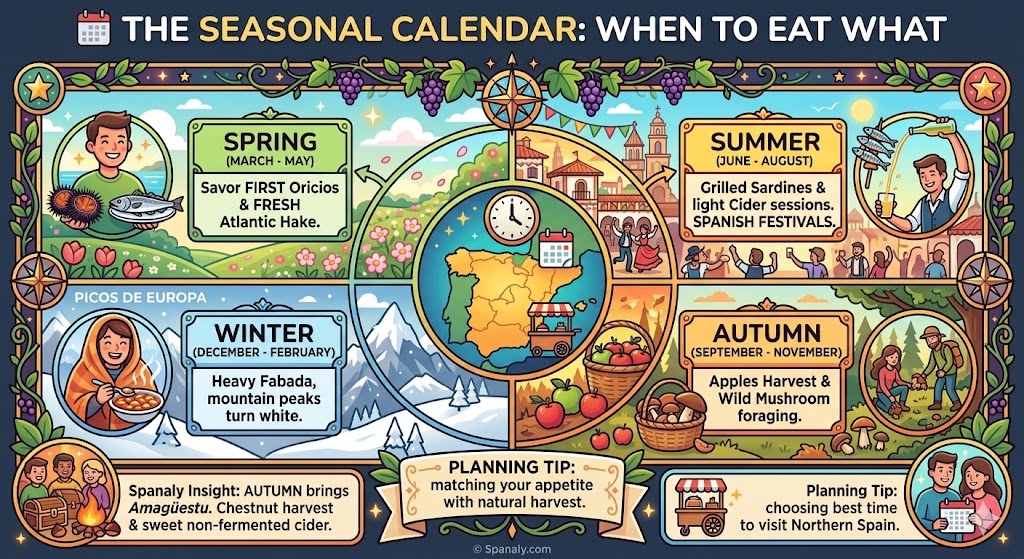
Asturian cuisine shifts beautifully with the rhythmic changes of the Northern Spanish landscape. Aligning your trip with these culinary seasons ensures you taste every ingredient at its absolute peak of freshness.
Spring (March – May): Savor the first of the seasonal Oricios (sea urchins) and fresh Atlantic hake.
Summer (June – August): Enjoy grilled sardines and light cider sessions during the vibrant major Spanish festivals.
Autumn (September – November): This is the harvest season for apples and the perfect time for wild mushroom foraging.
Winter (December – February): Warm up with a heavy Fabada as the mountain peaks of the Picos de Europa turn white.
Planning Tip: Choosing the best time to visit Northern Spain is crucial for matching your appetite with the region’s natural harvest.
Spanaly Insight: Autumn brings the “Amagüestu” festival. Locals gather to celebrate the chestnut harvest with sweet, non-fermented cider a unique seasonal treat you won’t find other times.
🏃 24-Hour Oviedo Food Itinerary
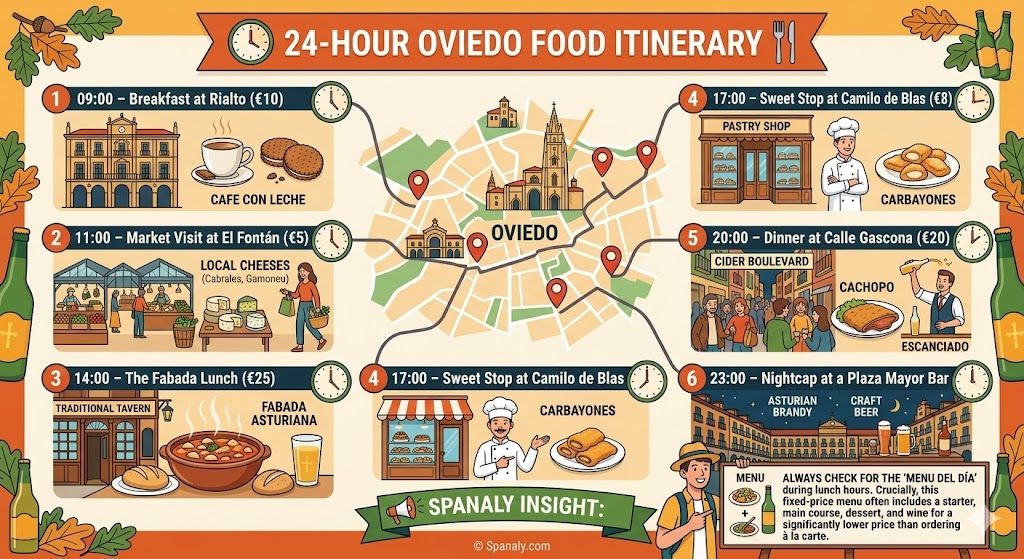
This high-speed culinary journey through the Asturian capital blends historic coffee houses with legendary cider streets. Notably, this itinerary helps you experience the city’s flavors while managing your Northern Spain travel cost effectively.
09:00 – Breakfast at Rialto (€10): Start your day with the famous “Moscovitas” (chocolate almond biscuits) and a café con leche at this historic pastry shop.
11:00 – Market Visit at El Fontán (€5): Explore the vibrant stalls of this traditional market to sample local cheeses like Cabrales and Gamoneu.
14:00 – The Fabada Lunch (€25): Head to a local tavern for a massive bowl of Fabada Asturiana, typically served with bread and a glass of cider.
17:00 – Sweet Stop at Camilo de Blas (€8): Try the “Carbayones,” a sweet almond pastry that is the undisputed edible symbol of Oviedo.
20:00 – Dinner at Calle Gascona (€20): Join the locals on “Cider Boulevard” for shared plates (Raciones) of Cachopo and freshly poured natural cider.
23:00 – Nightcap at a Plaza Mayor Bar (€7): End your night with a local craft beer or a small glass of Asturian brandy in the heart of the old town.
Spanaly Insight: Always check for the “Menu del Día” during lunch hours. This fixed-price menu often includes a starter, main course, dessert, and wine for a significantly lower price than ordering à la carte.
🚫 Common Mistakes to Avoid in Asturian Sidrerías
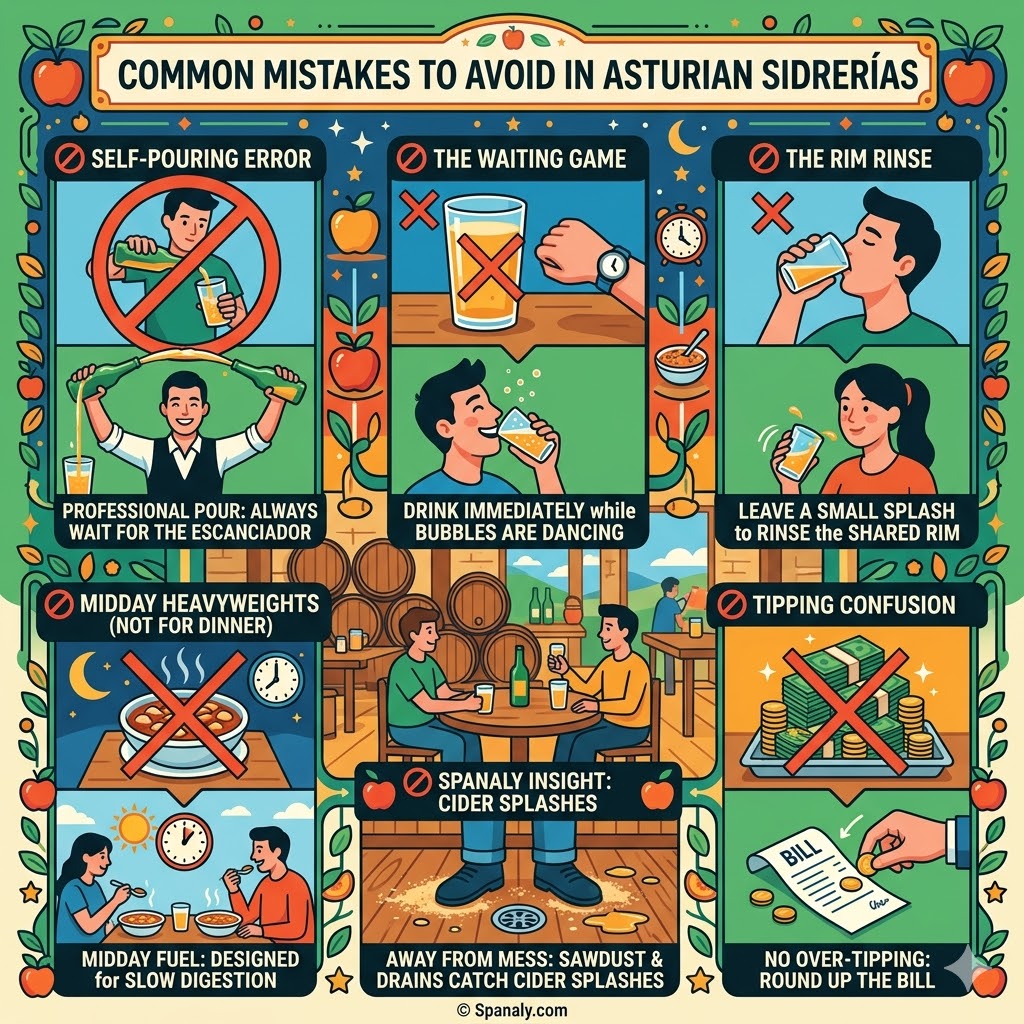
Stepping into a traditional Sidrería requires more than just an appetite; it demands respect for centuries-old social codes. Avoiding these technical cultural errors will distinguish you as a savvy traveler rather than a distracted tourist.
Self-Pouring Error: Never attempt to pour the cider yourself from the bottle. Always wait for the professional Escanciador to perform the high-altitude pour for you.
The Waiting Game: Do not let the cider sit in the glass after it is poured. You must drink the culín immediately while the natural bubbles are still dancing.
The Rim Rinse: Refrain from drinking the very last drop of cider. Locals leave a small splash to rinse the rim where everyone shares the same glass.
Midday Heavyweights: Avoid ordering Fabada Asturiana for dinner. This calorie-dense stew is a technical “midday fuel” designed for slow digestion during the afternoon.
Tipping Confusion: Do not over-tip in traditional taverns. Generally, rounding up the bill is sufficient, as authentic Asturian service focuses on hospitality rather than transactional rewards.
Spanaly Insight: Pay attention to the floor. Traditional cider houses often have sawdust or drains on the ground to catch the inevitable cider splashes; this is a sign of authenticity, not a mess!
💡 Elite Insights: The Insider’s Playbook

Beyond the classic guides, navigating the Asturian food scene like a seasoned local requires a technical understanding of hidden social and sensory cues. Notably, these “street-smart” tips come directly from the vibrant culinary circles of Northern Spain.
The “Natural Temperature” Rule: In crowded Sidrerías, specifically ask for a fresh glass if yours becomes too warm. A cooler glass helps maintain the cider’s volatile esters and crisp acidity during the pouring ritual.
The Cheese Rind Secret: When tasting Gamoneu, look for a slightly blue-grey, dusty rind. This indicates the cheese was aged in a high-humidity cave, ensuring a much creamier interior.
Off-Menu Pote: Many rural taverns prepare Pote Asturiano (cabbage stew) only on specific weekdays or during cold spells. Specifically, call ahead to see if the “pot is on,” as this local favorite is rarely listed on standard tourist menus.
Artisanal Vinegar Sourcing: Ask local tavern owners if they produce their own small-batch cider vinegar. Consequently, you might secure a bottle of “mother” vinegar that far outperforms any commercial gourmet brand.
Table Strategy: In Oviedo, the best tables are often located within the “splash zone” of the Escanciador station. Proximity ensures your culín is poured more frequently, keeping your drink consistently aerated and fresh.
🍴 Visitor FAQs – Asturias Food & Dining Guide
🍏 Can I buy bottled natural cider to take home?
Yes, but be careful. Natural Asturian cider is unfiltered and uncarbonated; it loses its soul if not poured correctly. If you want a souvenir, look for "Sidra de Nueva Expresión" which is filtered and does not require the high-pour technique, making it much easier to enjoy at home.
🥩 Is it possible to find vegetarian options in traditional Asturian taverns?
While Asturias is a meat-heavy region, you can find gems. Look for "Torto de Maíz" topped with local goat cheese and caramelized onions. Also, the local cheeses and vegetable-based Pote (if made without meat) are excellent. Always ask if the soup base contains compango (meat).
⏰ What are the "hidden" hours for Sidrerías?
Asturian cider houses often have a social "dead hour" between 17:00 and 19:30. During this time, the kitchen might be closed for full meals, but it is the absolute best time for tapas and relaxed cider pouring without the chaotic dinner crowds.
📞 Do I really need to call ahead for a "Cachopo"?
In popular family-run spots, yes. Because authentic Cachopos are prepared fresh and hand-breaded, some small taverns have a limited daily stock. A quick phone call ensures they "reserve" one for your table, especially on weekends when locals flock to the coast.
🥖 Is bread included in the menu price?
In Asturias, bread is essential for soaking up the rich juices of a Fabada. Usually, a small basket charge (Pan) is added per person. If you don't want it, tell the waiter immediately when you sit down, though we highly recommend it for the full experience.
Asturias Food Guide by Spanaly.com
The emerald valleys of Asturias do not just feed your body; they nourish your soul with centuries of maritime and mountain heritage. Every meal here is a “Sobremesa” waiting to happen, where the food is the catalyst for unforgettable memories.
Taste the Fog: Each bite of cave-aged cheese carries the mineral essence of the Picos de Europa.
Hear the Ocean: Freshly caught seafood from Cantabrian ports brings the Atlantic directly to your table.
Feel the Tradition: The cider ritual is a social dance that turns strangers into friends in seconds.
Embrace the Slow: Slow-cooked stews remind us that the best things in life require patience and fire.
Broader Horizon: This region is a vital chapter in our Northern Spain food guide, showcasing the rugged diversity of Green Spain.
Spanaly Insight: Do not just eat; observe. Specifically, watch how an Asturian grandmother eyes the “texture” of the rice pudding. That silent look contains more culinary wisdom than any modern cookbook.