📌 Best Things to See in Extremadura
Ancient Roman theaters, hilltop fortress towns, and protected bird sanctuaries define the landscape of western Spain. Figuring out which landmarks to prioritize is essential for planning an efficient road trip through these historic provinces.
🏛️ Roman Heritage: Well-preserved monuments stand continuously across the urban centers.
🏰 Medieval Squares: Walled quarters showcase the stone architecture of past centuries.
🦅 Natural Reserves: Protected mountain valleys offer excellent outdoor exploration.
Navigating these highlights efficiently helps you build a practical sightseeing loop. To coordinate these destinations with regional transportation routes, driving itineraries, and cultural stops, our comprehensive Extremadura Travel Guide serves as your foundational trip-planning resource.
📍 Extremadura Highlights: Interactive Route Map - Spanaly.com
Live MapSource: Spanaly.com
🏰 What are the best attractions in Extremadura?
The best attractions in Extremadura include the Roman ruins of Mérida, Cáceres Old Town, Monfragüe National Park, Guadalupe Monastery, Trujillo Castle, Jerte Valley, and the Monastery of Yuste.
⚡ Extremadura Attractions Quick Summary
- 🏛️ Top Historical Hub: Roman Ruins of Mérida
- 🏰 Medieval Highlights: Cáceres and Trujillo Walled Centers
- 🦅 Best for Nature: Monfragüe National Park
- 🚗 Exploration Advice: A rental car is highly required for rural valleys
💡 Transit Tip: If you want to compare these regional landmarks with other major monuments across Spain, check our foundational Spanish Attractions hub to align your complete touring schedule.
⏱️ Extremadura Attractions Snapshot: Quick Visitor Planner
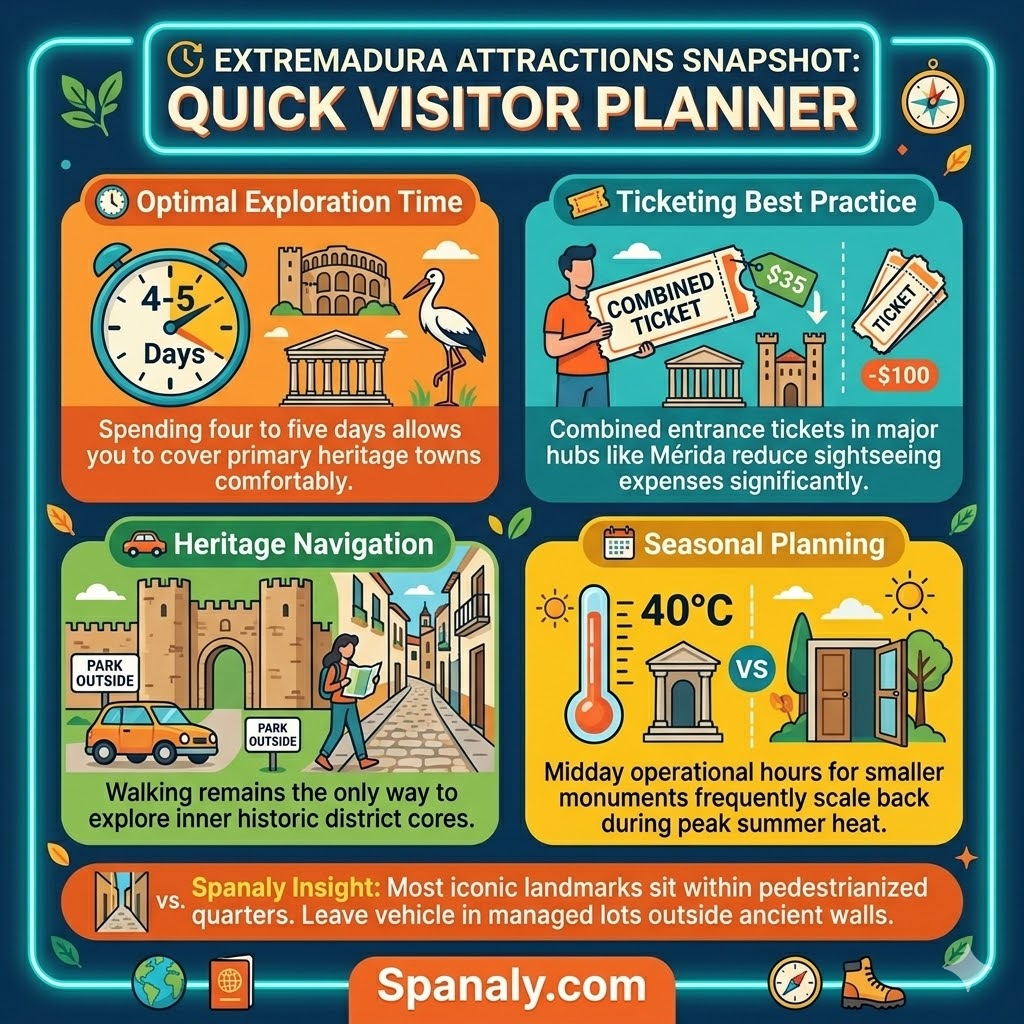
Planning a trip across the western plains takes a bit of strategy to get the most out of your hours. This quick overview gives you the essential details to put together a solid plan for the region.
Optimal Exploration Time: Spending four to five days lets you cover the main heritage towns without rushing.
Ticketing Best Practice: Combined entrance tickets in hubs like Mérida save you quite a bit on costs.
Heritage Navigation: Walking is the only way to really soak in the historic districts.
Seasonal Planning: Midday hours for smaller monuments often shrink during the peak summer heat.
Balancing these details helps you arrive ready before the city gates open. For more advice on how to move around the country, our complete Getting Around Spain manual covers your train links, highway choices, and transit plans.
📊 Extremadura Attractions Comparison: Highlights & Travel Times
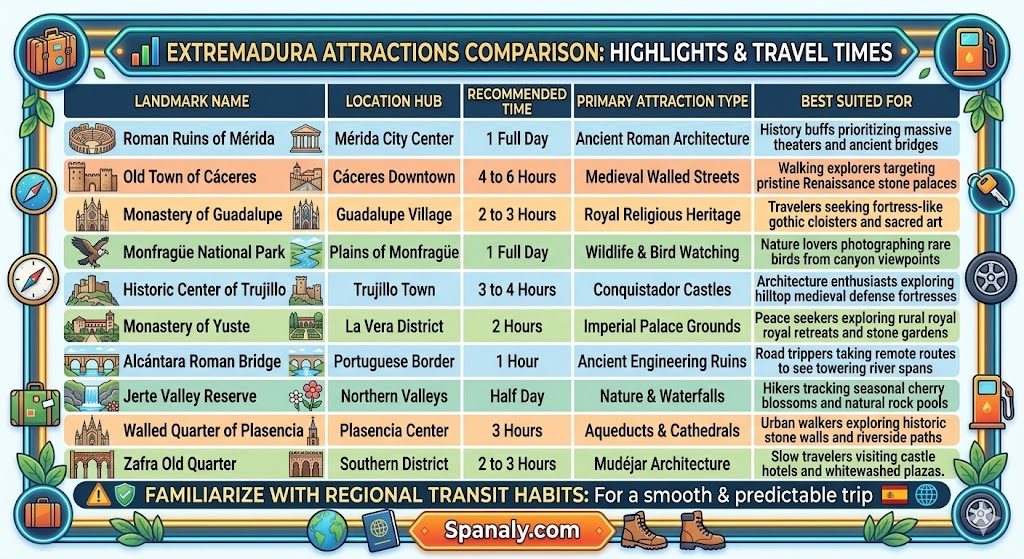
Categorizing your regional itinerary blocks allows you to capture specific travel experiences and align your route with personal interests. This structured division helps independent explorers isolate the top-tier destinations according to their favorite vacation activities.
🏛️ Mérida: This primary hub offers an unmatched look into classical ancient Roman urban planning and monumental theater designs.
🛡️ Cáceres: Pristine Renaissance stone palaces and towering medieval defense structures wall off this monumental city center entirely.
⛪ Guadalupe: A massive hillside fortress-sanctuary displays legendary religious art pieces alongside distinct Gothic and Mudéjar cloisters.
🦅 Monfragüe: Massive quartzite river canyons shield rare avian nesting grounds, making it ideal for targeted wildlife photography.
🌳 Jerte Valley: Cascading mountain waterfalls and deep granite erosion pools slice through these northern seasonal fruit orchards.
🌉 Alcántara: Driving to this remote western border canyon uncovers a colossal granite bridge handling active international traffic.
🏰 Yuste: Peaceful rural highways wind up through forested hills directly to an isolated imperial palace and monastery retreat.
🏢 Zafra: Southern driving routes lead straight to whitewashed market plazas centered around a fortified medieval castle hotel.
📊 Extremadura Landmarks: Quick-Reference Comparison
| Landmark Name | Location Hub | Recommended Time | Primary Attraction Type | Best Suited For |
| Roman Ruins of Mérida | Mérida City Center | 1 Full Day | Ancient Roman Architecture | History buffs prioritizing massive theaters and ancient bridges. |
| Old Town of Cáceres | Cáceres Downtown | 4 to 6 Hours | Medieval Walled Streets | Walking explorers targeting pristine Renaissance stone palaces. |
| Monastery of Guadalupe | Guadalupe Village | 2 to 3 Hours | Royal Religious Heritage | Travelers seeking fortress-like gothic cloisters and sacred art. |
| Monfragüe National Park | Plains of Monfragüe | 1 Full Day | Wildlife & Bird Watching | Nature lovers photographing rare birds from canyon viewpoints. |
| Historic Center of Trujillo | Trujillo Town | 3 to 4 Hours | Conquistador Castles | Architecture enthusiasts exploring hilltop medieval defense fortresses. |
| Monastery of Yuste | La Vera District | 2 Hours | Imperial Palace Grounds | Peace seekers exploring rural royal retreats and stone gardens. |
| Alcántara Roman Bridge | Portuguese Border | 1 Hour | Ancient Engineering Ruins | Road trippers taking remote routes to see towering river spans. |
| Jerte Valley Reserve | Northern Valleys | Half Day | Nature & Waterfalls | Hikers tracking seasonal cherry blossoms and natural rock pools. |
| Walled Quarter of Plasencia | Plasencia Center | 3 Hours | Aqueducts & Cathedrals | Urban walkers exploring historic stone walls and riverside paths. |
| Zafra Old Quarter | Southern District | 2 to 3 Hours | Mudéjar Architecture | Slow travelers visiting castle hotels and whitewashed plazas. |
🏛️ Roman Ruins of Mérida: Theatre, Amphitheatre, and Roman Bridge
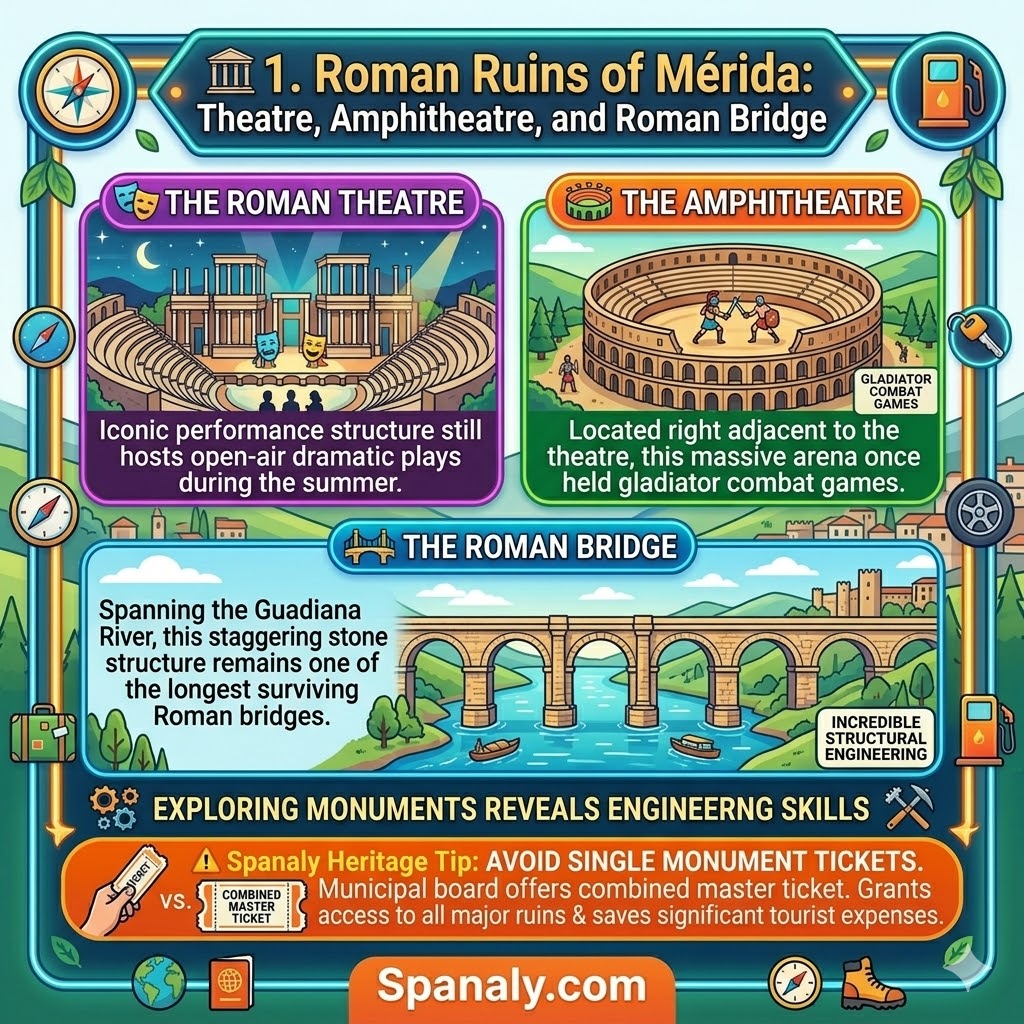
Mérida houses some of the most extensive and well-preserved classical sites in western Spain. Walking through this ancient capital lets you trace the daily life of the Roman Empire firsthand.
The Roman Theatre: This iconic stage still hosts open-air plays during the summer.
The Amphitheatre: Sitting right next to the theatre, this arena once held gladiator combat games.
The Roman Bridge: Spanning the Guadiana River, this stone structure is one of the longest surviving Roman bridges.
Seeing these monuments one after another shows the incredible skill of ancient builders. To skip the long ticket lines and move between the scattered zones with ease, grabbing your entry passes early is a smart way to enjoy your day.
🏛️ Spanaly Heritage Tip: Avoid purchasing single-entry tickets at each individual monument gate. The municipal archaeological board offers a combined master ticket at the main ticket windows, which grants access to all major ruins and saves you significant tourist expenses.
🧱 Old Town of Cáceres and Walled Quarter
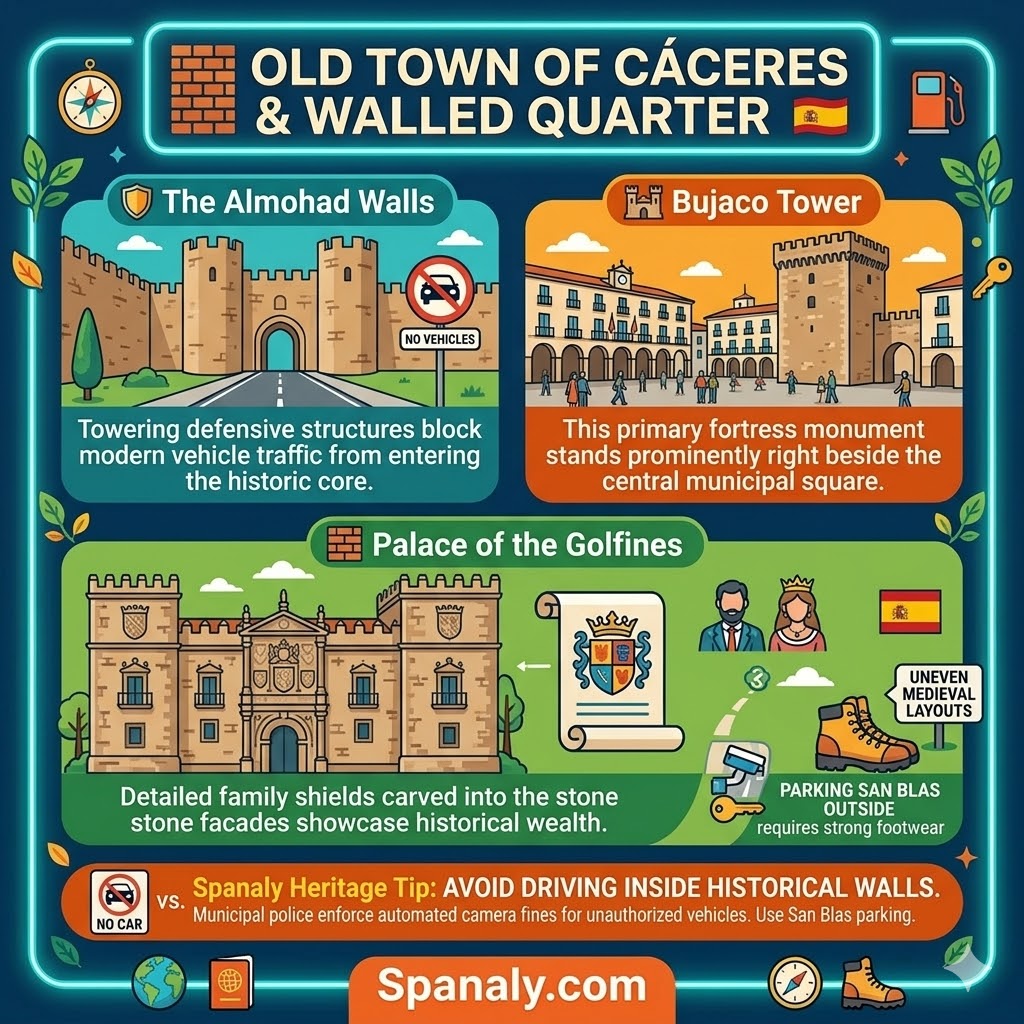
Cáceres boasts a remarkably intact defensive core enclosed by ancient stone bulwarks. Walking past the security gates transports you straight into a dense collection of Renaissance palaces and medieval towers.
🛡️ The Almohad Walls: Towering defensive structures block modern vehicle traffic from entering the historic core.
🏰 Bujaco Tower: This primary fortress monument stands prominently right beside the central municipal square.
🧱 Palace of the Golfines: Detailed family shields carved into the stone facades showcase historical wealth.
Strolling along these cobblestone pathways requires strong footwear due to the uneven medieval street layouts. To integrate this destination into a broader driving route across the western provinces, utilizing our optimized Extremadura Itinerary helps you schedule your sightseeing slots efficiently.
🧱 Spanaly Heritage Tip: Avoid attempting to drive your rental car inside the historical walls. The local municipal police enforce automated camera fines for unauthorized vehicles, making the large parking lots outside San Blas your most reliable alternative.
⛪ Royal Monastery of Santa María de Guadalupe
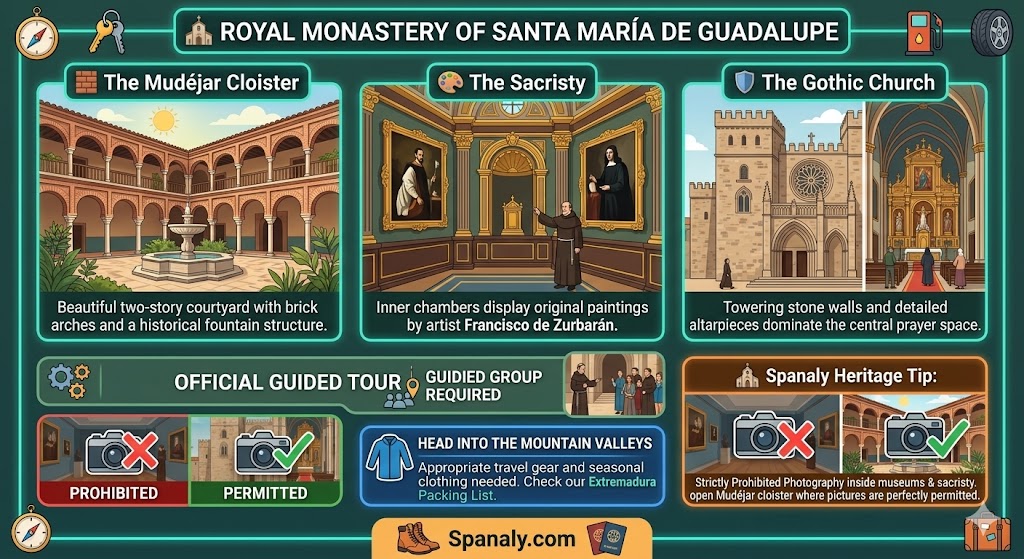
The mountain village of Guadalupe houses a massive fortress-like sanctuary that holds deep historical and cultural importance in Spain. This religious complex showcases a unique architectural blend of Gothic, Mudéjar, and Renaissance styles across its expansive structures.
🧱 The Mudéjar Cloister: This beautiful two-story courtyard features central brick arches and a historical fountain structure.
🎨 The Sacristy: The inner chambers display original masterpiece paintings by the famous Spanish artist Francisco de Zurbarán.
🛡️ The Gothic Church: Towering stone walls and detailed altarpieces dominate the central prayer space inside the complex.
Exploring the interior rooms requires joining an official guided tour led by the resident Franciscan friars. To compare this remote sanctuary with the monumental courtly architecture found in the capital, checking our detailed Madrid Royal Palace & Plaza Mayor Guide highlights the historical connections between Spain’s primary dynastic landmarks.
⛪ Spanaly Heritage Tip: Photography is strictly prohibited inside the main museum rooms and the decorative sacristy. Keep your camera gear packed away until you step out into the open Mudéjar cloister where taking pictures is perfectly permitted.
🦅 Monfragüe National Park and Salto del Gitano Viewpoint
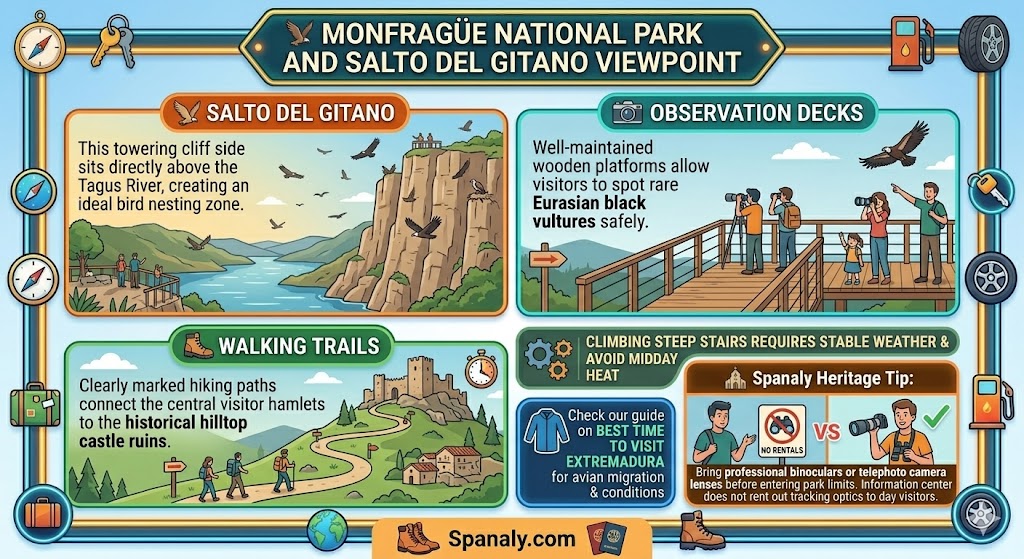
This massive protected biosphere stands as a primary destination for wilderness tracking and outdoor recreation in western Spain. The landscape features deep river canyons, rolling Mediterranean forests, and towering quartzite rock faces.
🦅 Salto del Gitano: This towering cliff side sits directly above the Tagus River, creating an ideal bird nesting zone.
📸 Observation Decks: Well-maintained wooden platforms allow visitors to spot rare Eurasian black vultures safely.
🥾 Walking Trails: Clearly marked hiking paths connect the central visitor hamlets to the historical hilltop castle ruins.
Reaching the top observation spots requires climbing steep stone staircases that can prove challenging during midday hours. To align your outdoor excursion with stable weather patterns and local avian migration seasons, checking our guide on the Best Time to Visit Extremadura ensures optimal wildlife viewing conditions.
🦅 Spanaly Heritage Tip: Bring your own professional binoculars or telephoto camera lenses before entering the park limits. The local information center inside Villarreal de San Carlos does not rent out tracking optics to individual day visitors.
🗺️ Historic Center of Trujillo and Conquistador Castle
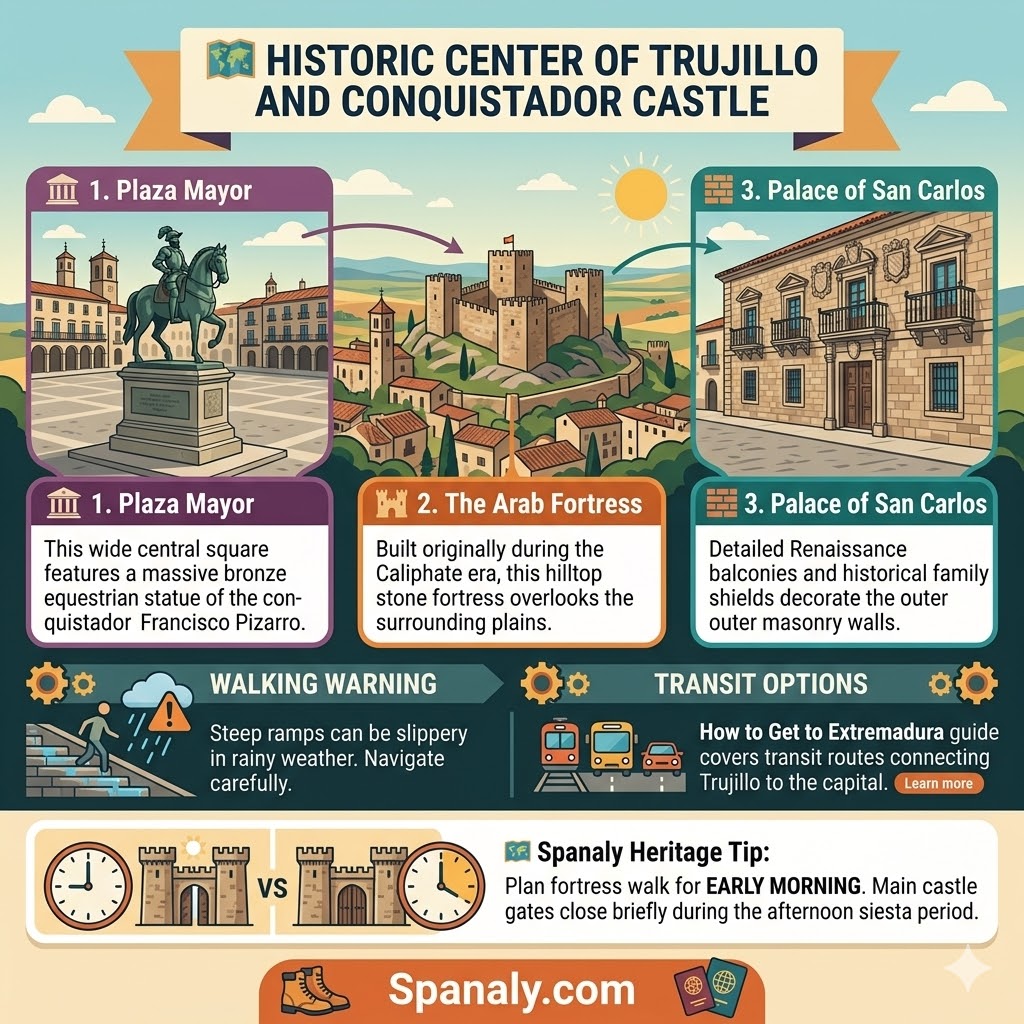
The hilltop town of Trujillo holds a prominent place in Spanish history due to its direct ties to classical exploration. Stone palaces, defensive towers, and ancient manor houses frame the entire urban layout.
🏛️ Plaza Mayor: This wide central square features a massive bronze equestrian statue of the conquistador Francisco Pizarro.
🏰 The Arab Fortress: Built originally during the Caliphate era, this hilltop stone fortress overlooks the surrounding plains.
🧱 Palace of San Carlos: Detailed Renaissance balconies and historical family shields decorate the outer masonry walls.
Walking up to the highest fortress battlements requires navigating steep stone ramps that can become slippery during rainy weather. To understand how this profound exploratory heritage fits into the broader cultural appeal of the Iberian Peninsula, reviewing our definitive guide on Why Visit Spain uncovers the essential driving motivations behind global travel to this Mediterranean nation.
🗺️ Spanaly Heritage Tip: Plan your walk to the hilltop fortress for the early morning hours. The main castle gates close briefly during the afternoon siesta period, which can disrupt your sightseeing schedule if you climb up too late in the day.
⛪ Monastery of Yuste and Imperial Palace
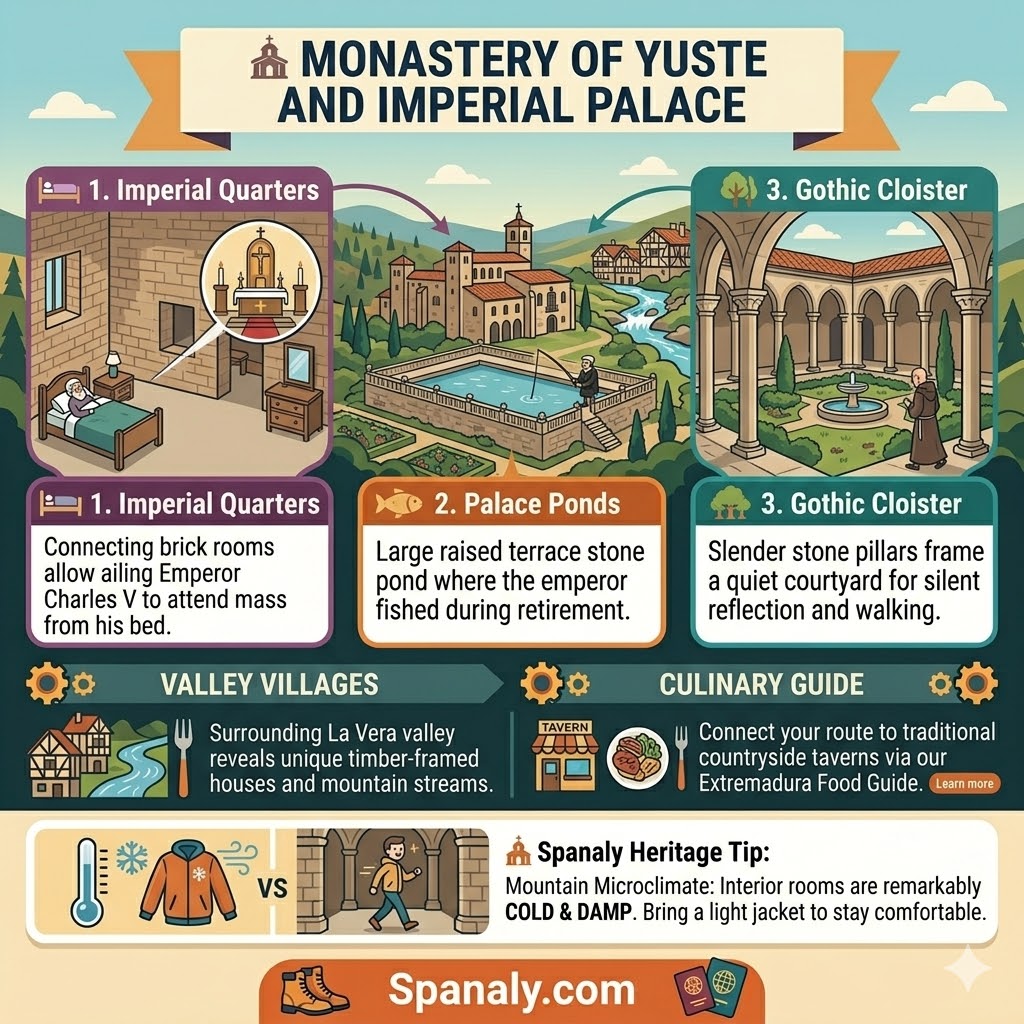
Nestled in the wooded hills of the La Vera district, this historical monastery served as the final residential retreat for Emperor Charles V. The complex combines a simple, austere monastery layout with a dedicated imperial palace wing.
🛏️ The Imperial Quarters: These plain brick rooms connect directly to the main church altar, allowing the ailing emperor to attend mass from his bed.
🐟 The Palace Ponds: A large raised terrace outside the palace features a stone pond where the emperor fished during his retirement.
🌳 The Gothic Cloister: Slender stone pillars frame a quiet inner courtyard designed for silent reflection and walking.
Exploring the surrounding valley villages reveals unique regional architecture characterized by timber-framed houses and rushing mountain streams. To combine this cultural sightseeing with an authentic look into the local culinary scene, checking our curated Extremadura Food Guide connects your driving route straight to traditional countryside taverns.
⛪ Spanaly Heritage Tip: The interior rooms can get remarkably cold and damp even during the clear spring months due to the mountain microclimate. Bring a light jacket along to stay comfortable while walking through the unheated stone corridors of the palace.
🌉 Alcántara Roman Bridge
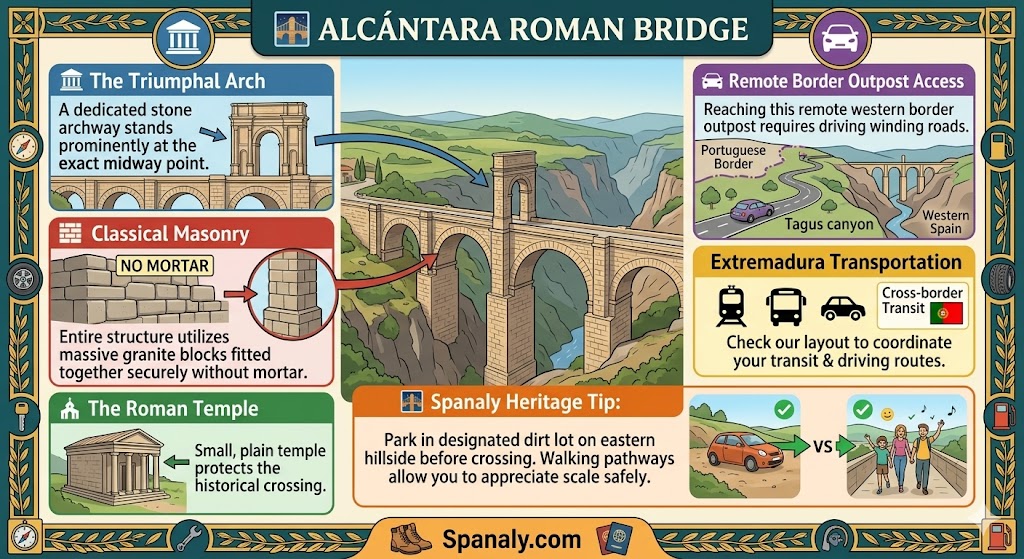
Spanning the deep canyon of the Tagus River near the Portuguese border, this ancient stone monument stands as a triumph of classical engineering. Built originally to honor the Roman Emperor Trajan, the bridge handles regular vehicular traffic to this day.
🏛️ The Triumphal Arch: A dedicated stone archway stands prominently at the exact midway point of the bridge deck.
🧱 Classical Masonry: The entire structure utilizes massive granite blocks fitted together securely without the use of mortar.
⛪ The Roman Temple: A small, plain stone temple stands at the main entrance approach to protect the historical river crossing.
Reaching this remote western border outpost requires driving through winding regional roads that reveal expansive countryside views. To compare this deep-canyon granite monument with other iconic river spans from the classical era in Andalusia, studying our detailed guide on the Roman Bridge of Córdoba highlights the architectural variations across different provincial outposts.
🌉 Spanaly Heritage Tip: Park your vehicle in the small designated dirt lot on the eastern hillside before crossing. Walking across the pedestrian pathways on the bridge deck allows you to appreciate the massive vertical scale of the granite pillars safely.
🌳 Jerte Valley and Garganta de los Infiernos Nature Reserve
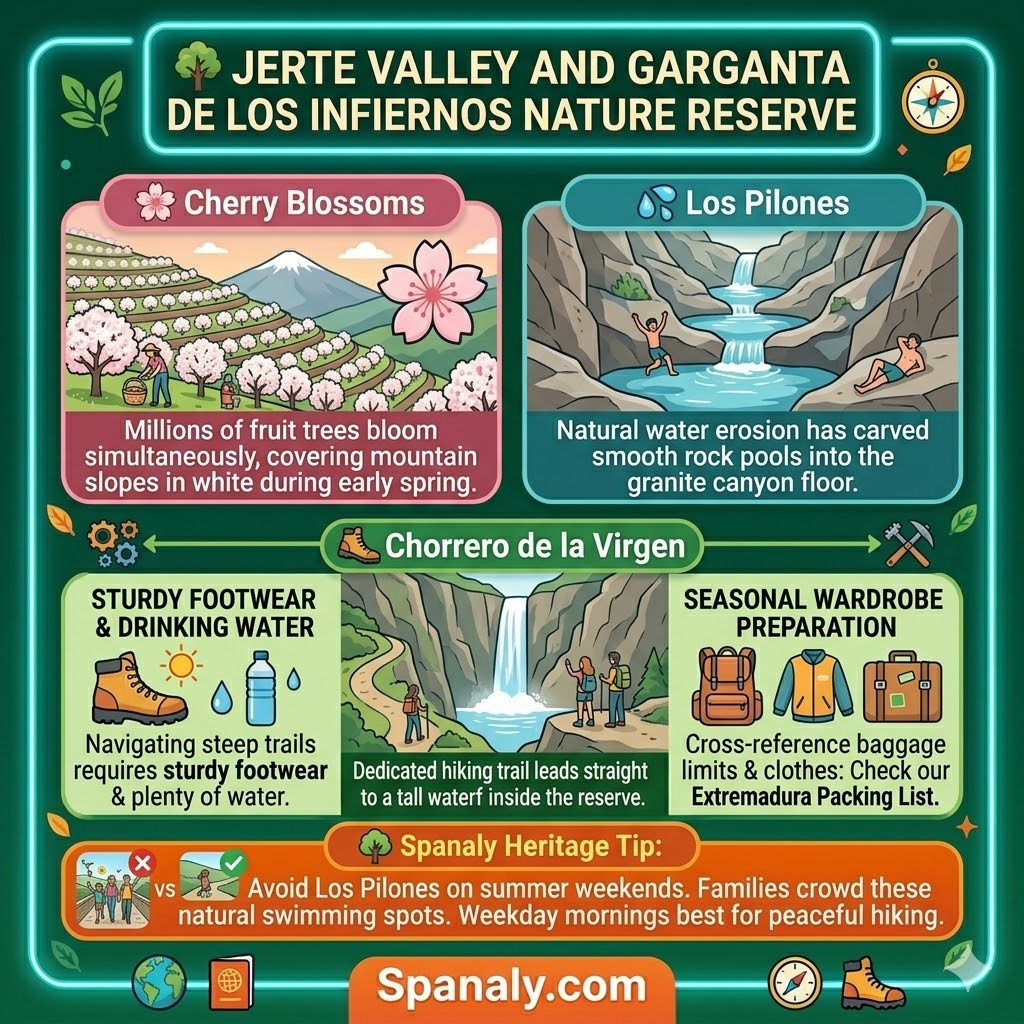
This northern alpine valley offers a complete shift in landscape, characterized by terraced hillsides and rushing mountain waters. The district draws outdoor enthusiasts seeking seasonal agricultural sights and deep granite canyon trails.
🌸 Cherry Blossoms: Millions of fruit trees bloom simultaneously, covering the mountain slopes in white during early spring.
💦 Los Pilones: Natural water erosion has carved a series of large, smooth rock pools into the granite canyon floor.
🥾 Chorrero de la Virgen: A dedicated hiking trail leads visitors straight to a tall waterfall viewpoint inside the reserve.
Navigating the steep hiking paths inside the nature reserve requires sturdy footwear and plenty of drinking water. To cross-reference this natural excursion with your general baggage limitations and clothing requirements before departure, our Extremadura Packing List outlines the essential seasonal wardrobe preparation.
🌳 Spanaly Heritage Tip: Avoid visiting the Los Pilones rock pools during summer weekends if you prefer quiet trails. Local families crowd these natural swimming spots heavily on Saturdays and Sundays, making weekday mornings your best slot for peaceful hiking.
🧱 Walled Quarter of Plasencia and Old Aqueduct
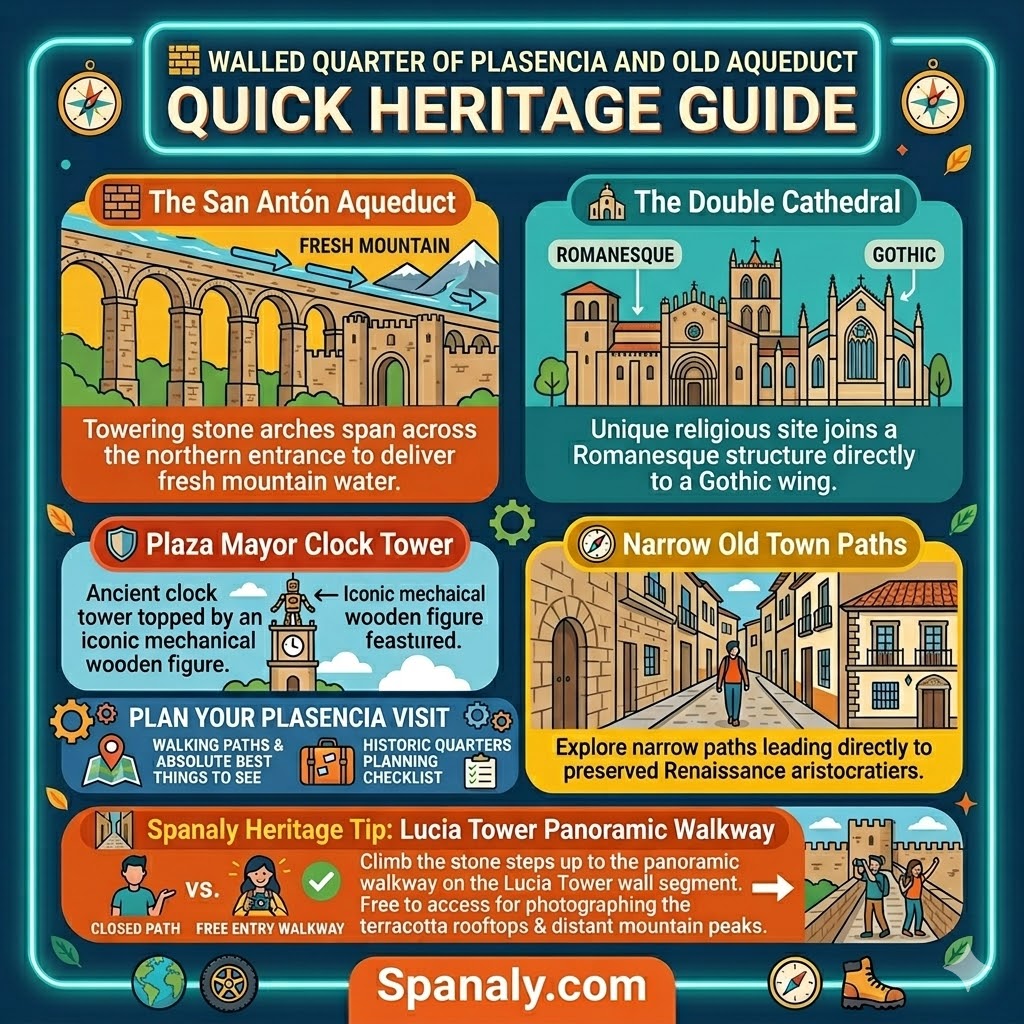
The riverside city of Plasencia features a double layer of medieval stone walls that has protected the historic trade center for centuries. Strategic towers and monumental stone gates punctuate the ancient defensive perimeter.
🧱 The San Antón Aqueduct: Towering stone arches span across the northern entrance to deliver fresh mountain water into the quarter.
⛪ The Double Cathedral: This unique religious site joins a Romanesque structure directly to a newer Gothic cathedral wing.
🛡️ Plaza Mayor: The central historic square features an ancient clock tower topped by an iconic mechanical wooden figure.
Strolling through the old town layout requires exploring narrow paths that lead directly to preserved Renaissance aristocratic manor houses. To discover the absolute best things to see, walking paths, and historic quarters across this specific northern hub, checking our dedicated Plasencia Spain historic attractions layout provides your essential town-level planning checklist.
🧱 Spanaly Heritage Tip: Climb the stone steps up to the panoramic walkway on the Lucia Tower segment of the wall. The municipal board opens this section for free, allowing you to photograph the terracotta rooftops and distant mountain peaks safely.
🏰 Zafra Castle and Historical Old Quarter
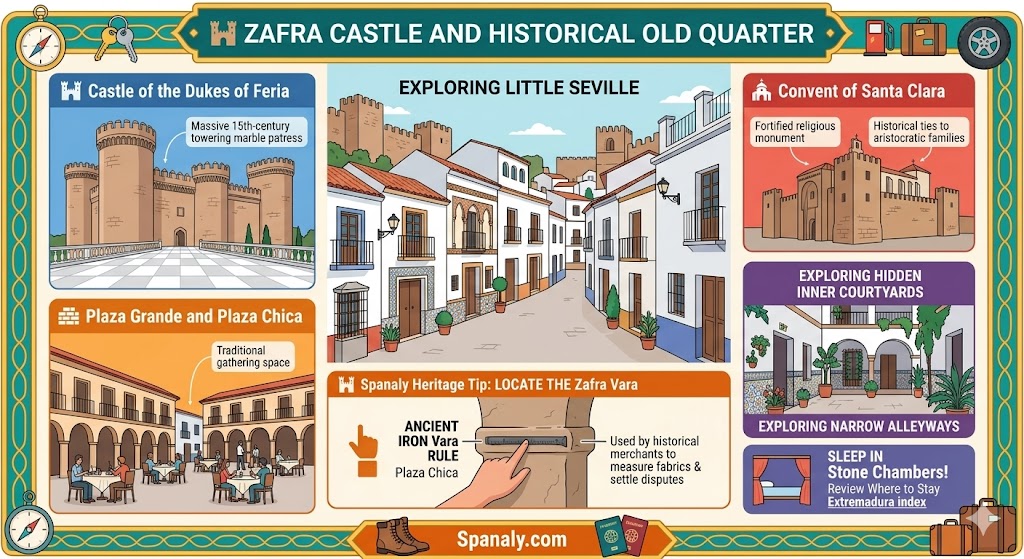
Often called “Little Seville,” the southern town of Zafra features a beautiful network of whitewashed residential streets and quiet trading plazas. Mudéjar architectural influences dominate the historic storefronts and ancient defensive walls.
🏰 Castle of the Dukes of Feria: This massive 15th-century fortress features towering circular bastions and an elegant white marble patio.
🧱 Plaza Grande and Plaza Chica: Arch-lined twin squares connect directly to provide a traditional gathering space for outdoor dining.
⛪ Convent of Santa Clara: This fortified religious monument holds deep historical ties to the founding aristocratic families.
Exploring the narrow alleyways reveals hidden inner courtyards filled with traditional potted plants and decorative tiling work. To turn this sightseeing stop into an overnight experience and sleep inside the authentic stone chambers of the ducal palace itself, reviewing our curated Where to Stay Extremadura lodging index highlights the top heritage accommodation choices.
🏰 Spanaly Heritage Tip: Enter the Plaza Chica to locate the ancient iron “Zafra Vara” carved into a stone pillar. Historical merchants used this exact physical benchmark rule to measure fabrics and settle market trading disputes accurately.
🚗 Getting Around Extremadura Attractions: Local Transit Advice
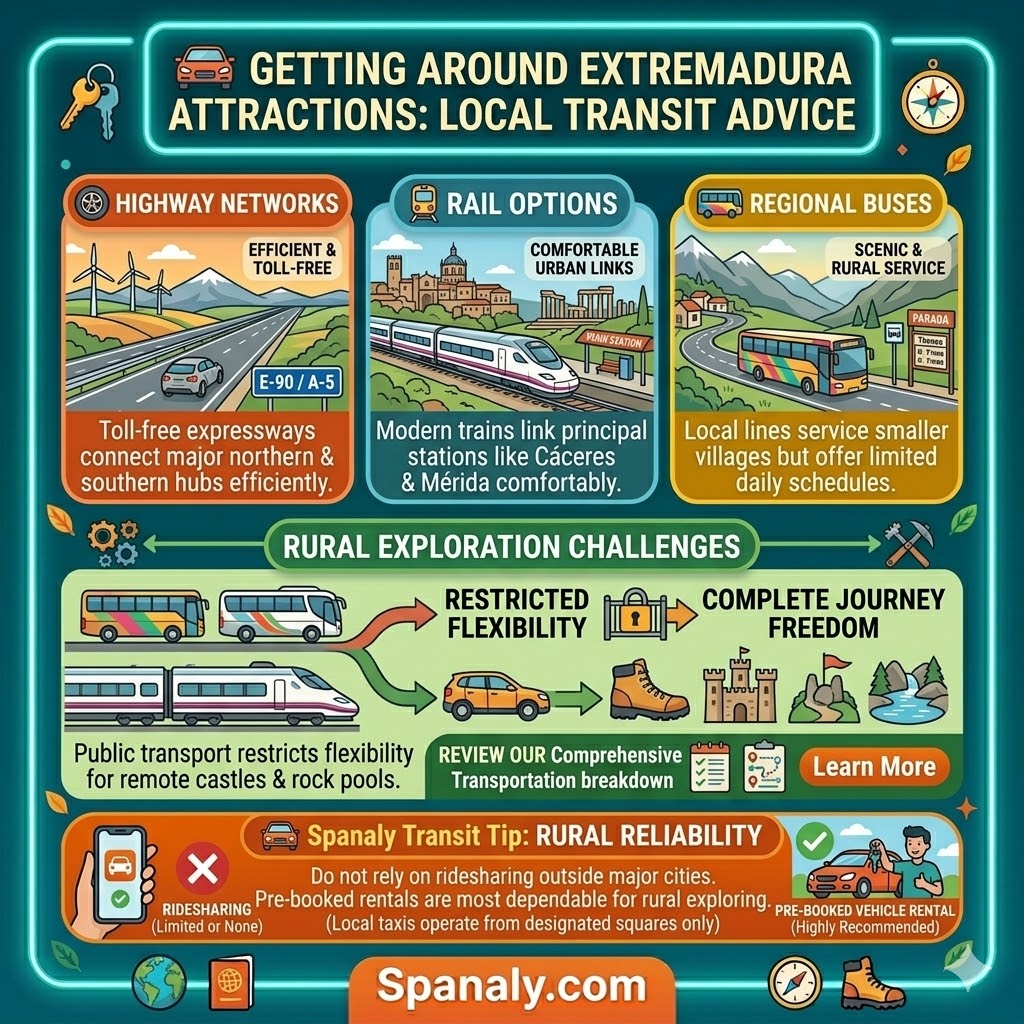
Navigating between ancient ruins and remote mountain valleys requires understanding the physical geography of western Spain. While high-speed rail lines connect the primary urban hubs, accessing rural nature reserves demands a different transit strategy.
🛞 Highway Networks: Toll-free expressways connect major northern and southern hubs efficiently.
🚊 Rail Options: Modern trains link principal stations like Cáceres and Mérida comfortably.
🚌 Regional Buses: Local bus lines service smaller villages but offer limited daily schedules.
Relying solely on public transport can severely restrict your flexibility when visiting remote castles or natural rock pools. To explore the complete grid of regional schedules, driving rules, and train routes available for your journey, reviewing our comprehensive Extremadura Transportation breakdown clarifies your logistical planning.
🚗 Spanaly Transit Tip: Do not rely on ridesharing applications when traveling outside the major city centers. Local taxi services operate strictly from designated town squares, making pre-booked vehicle rentals your most dependable option for rural exploring.
🚗 Suggested 3-Day Attractions Route
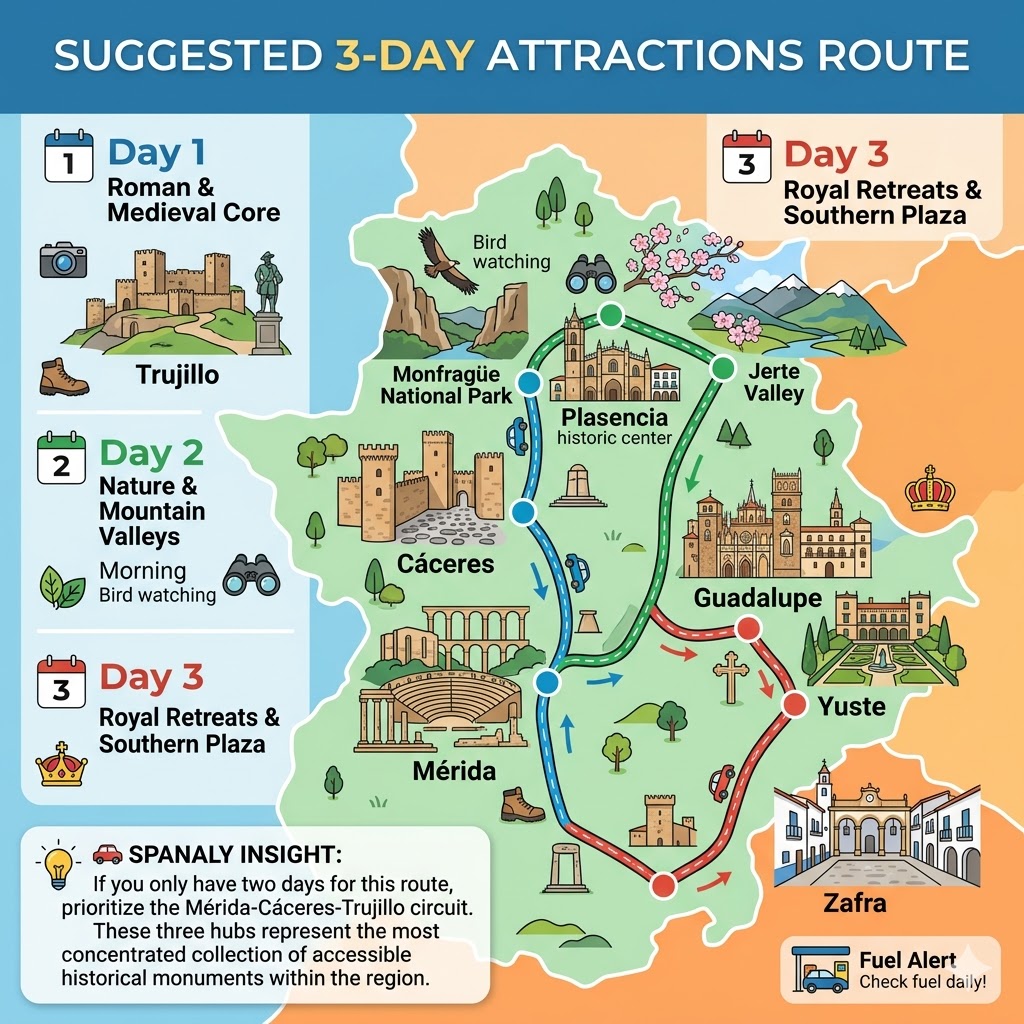
Mapping out these sights takes a little prep work to keep your driving time low and your fun high. This three-day plan links the iconic historic hubs and nature reserves into a simple driving loop.
📅 Day 1: Roman & Medieval Core Start in the ancient theaters of Mérida, head north to the walled town of Cáceres, and wrap up your day among the hilltop castles of Trujillo.
📅 Day 2: Nature & Mountain Valleys Spend your morning bird watching at Monfragüe National Park, move on to the historic center of Plasencia, and finish the loop through the scenic Jerte Valley.
📅 Day 3: Royal Retreats & Southern Plaza Visit the religious complex at Guadalupe, explore the palace grounds at Yuste, and end your route in the whitewashed streets of Zafra.
Following this path cuts down on backtracking across the province. Before you head out on the highways each day, just remember to keep an eye on your fuel levels.
🚗 Spanaly Insight: If you only have two days for this route, prioritize the Mérida-Cáceres-Trujillo circuit. These three hubs represent the most concentrated collection of accessible historical monuments within the region.
🛡️ Common Tourism Mistakes to Avoid in Western Spain
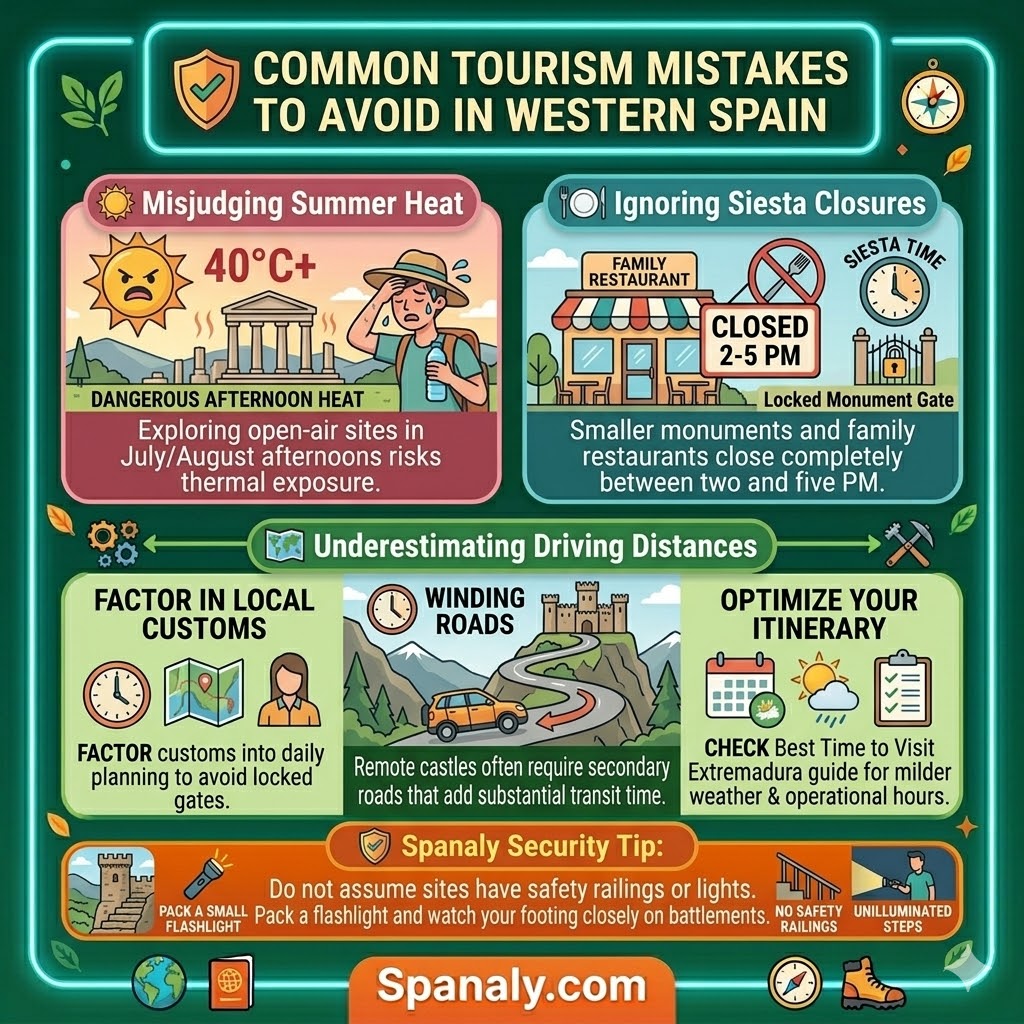
Avoiding frequent logistical missteps helps you conserve precious sightseeing hours and prevent unnecessary travel friction. Many independent travelers overlook the unique regional rhythms and geographical scales of the western provinces.
☀️ Misjudging Summer Heat: Exploring open-air archaeological sites during July and August afternoons risks dangerous thermal exposure.
🍽️ Ignoring Siesta Closures: Smaller monuments and local family restaurants close completely between two and five afternoon hours.
🗺️ Underestimating Driving Distances: Remote castles often require navigating winding secondary mountain roads that add substantial transit time.
Factoring these local operational customs into your daily planning prevents you from arriving at locked monument gates. To coordinate your regional sightseeing windows with the broader national climate patterns and seasonal shift shifts, checking our definitive guide on the Best Time to Visit Spain optimizes your comprehensive vacation itinerary.
🛡️ Spanaly Security Tip: Do not assume that historical castle sites feature safety railings or illuminated steps. Always pack a small pocket flashlight and watch your footing closely when climbing ancient stone battlements in rural fortresses.
🛡️ Visitor FAQs – Extremadura Attractions Guide
🎫 Are there specific days when Extremadura monuments offer free entry?
Many state-owned attractions frequently offer complimentary entry slots. Major sites, including locations in Mérida and Yuste, often provide free access on certain weekday afternoons. Because these policies can shift, it is best to check official municipal websites or visitor centers for the most current schedule before your visit.
✈️ Which airport is closest to the main Extremadura sightseeing hubs?
Extremadura does not currently host a major international commercial airport. Most independent travelers choose to fly into Madrid-Barajas or Lisbon Portela, rent a vehicle at the terminal, and complete the drive—typically two to three hours—to reach the region's main historic provinces.
💳 Can I use contactless credit cards at rural monuments and castles?
While digital payments are standard in major hubs like Cáceres and Mérida, remote landmarks often present challenges. Smaller sites in rural villages or mountain valleys may experience inconsistent network connectivity; carrying small Euro cash notes is a recommended precaution for entry fees and local purchases.
🏛️ Do Extremadura museums close completely on Mondays?
Many primary historical installations across western Spain typically remain closed on Mondays for routine maintenance. To avoid any scheduling conflicts, we recommend reviewing updated hours on official attraction portals while planning your urban walking itineraries.
🥾 Is Monfragüe National Park safe for solo hikers?
The park's main walking loops are generally well-maintained and frequented by hikers. However, mobile network coverage often varies in deeper sections of the reserve. Downloading offline navigation maps is a recommended safety practice, and monitoring weather reports remains essential for any independent trek.
Extremadura Guide by Spanaly.com
From Roman theaters to mountain reserves, Extremadura rewards travelers who enjoy history, quiet landscapes, and slower road trips. Balancing ancient Roman structures with protected natural reserves ensures a diverse and memorable European driving itinerary.
🏛️ Smart Scheduling: Prioritize your outdoor sightseeing during the cooler morning hours to optimize your energy.
🚗 Route Flexibility: Utilizing a rental vehicle remains the most efficient way to link remote stone castles.
📅 Cultural Alignment: Factor in the local afternoon siesta closures when organizing your daily monument visits.
Securing your admissions before you arrive at the town gates saves considerable time and prevents seasonal booking disappointment. To lock in your entry passes for major castles, ruins, and heritage museums across the country, checking our ultimate Spain Attraction Tickets Guide streamlines your complete vacation preparation.